Live from Leaders Gathering: Steve Robinson Talks Soul Leadership
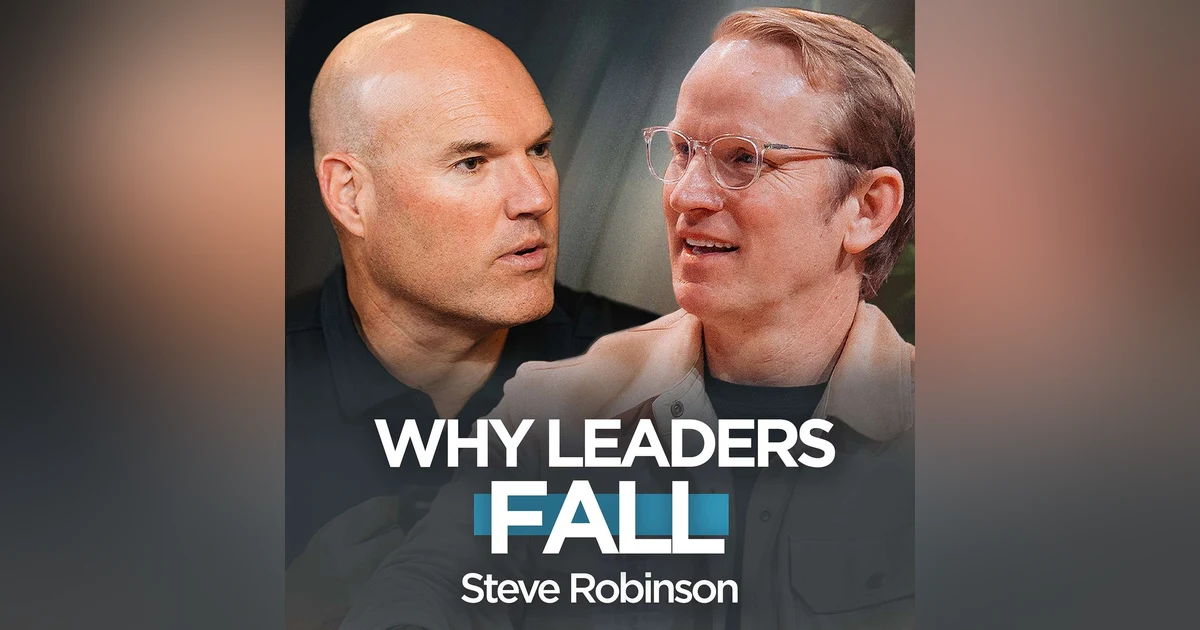

What if the thing holding your leadership back isn’t strategy… but your soul? In this episode, Pastor Jeff sits down with Pastor Steve Robinson to unpack Soul Leadership—how trauma and chronic stress reshape the brain, why leaders get triggered, and how healthy leaders build healthy teams. You’ll learn the difference between self-leadership and soul leadership, why unprocessed pain turns into unhealthy patterns, and how God can bring you from fragmentation to wholeness. If you’re a pastor, ...


What if the thing holding your leadership back isn’t strategy… but your soul?
In this episode, Pastor Jeff sits down with Pastor Steve Robinson to unpack Soul Leadership—how trauma and chronic stress reshape the brain, why leaders get triggered, and how healthy leaders build healthy teams. You’ll learn the difference between self-leadership and soul leadership, why unprocessed pain turns into unhealthy patterns, and how God can bring you from fragmentation to wholeness.
If you’re a pastor, leader, or team builder trying to finish well, this conversation will give you language, tools, and hope.
TIMESTAMPS:
0:00 - Why Soul Leadership Matters
4:25 - The Book’s Big Idea And Audience
8:40 - Katrina, Burnout, And Hitting The Wall
11:30 - The Soul Leadership Cycle
14:20 - Self Leadership vs Soul Leadership
20:00 - Saul’s Wounds, Shame, And Control
29:20 - Moses Triggered: Accusation And Delay
34:20 - Building Resilience Before Crisis
41:00 - You Can’t Pray Trauma Away
LEAD TO WIN RESOURCES
More Resources: https://leadtowin.com/
Win With People: https://leadtowin.com/pages/win-with-...
Register for Leaders Gathering: https://leadersgathering.leadtowin.com/
Information on Milestone Church: https://milestonechurch.com/
FIND US AT: https://leadtowin.com
GET IN TOUCH: Contact us at info@leadtowin.com
FOLLOW PASTOR JEFF
Instagram: https://www.instagram.com/jefflittle/
Facebook: https://www.facebook.com/pastorjefflittle
FOLLOW LEAD TO WIN
Instagram: https://www.instagram.com/leadto.win/
00:00 - Why Soul Leadership Matters
04:25 - The Book’s Big Idea And Audience
08:40 - Katrina, Burnout, And Hitting The Wall
11:30 - The Soul Leadership Cycle
14:20 - Self Leadership vs Soul Leadership
20:00 - Saul’s Wounds, Shame, And Control
29:20 - Moses Triggered: Accusation And Delay
34:20 - Building Resilience Before Crisis
41:00 - You Can’t Pray Trauma Away
0:00 We are so excited about this episode of the Lead to Win podcast. I'm here with Pastor Steve. He and I are close friends. He's been such a mentor to me. We just finished a session. There was about 500 and something churches and a lot of church leaders. A couple thousand. We bought every single person that attended. We gave them a copy of your new book, Soul Leadership. And I know that it's it's really exciting to you now to be able to share this with everybody else. You know, Jeff, we've worked on this book for a number of years. As many of you have heard the story, it's it's my personal story. It's a blend of theology, therapy, neuroscience, leadership.
0:40 Yeah. And how that comes together. My heart's just to really help pastors, leaders. Matter of fact, for-profit, nonprofit leaders, a lot of guys are, a lot of people are getting this for teams, and so man, I'm just, I'm excited about the possibility of really helping people. Well, we were sitting in a room last night, in fact, and multiple leaders saying this is where I struggle. And I think a lot of times, as someone who's giving out to others, you know, there's there's actually something we talk about a lot when the plane is going down. You know, you gotta put the oxygen mask on yourself first. And so maybe there's a leader out there that this episode is gonna inspire you. We're gonna take you live right into the leaders' gathering that we hold every January at leadtowin.com.
1:23 And I'm actually gonna interview Pastor Steve about soul leadership. And one practical thought, not only just for you, but if you want to go to Amazon, you want to order this book today, get it get a handful and go through it with your leadership team because if you help your team be healthy, then the organization is healthy. And here's what I say healthy leaders produce healthy teams, which build healthy organizations, which have great impact. Starts with the soul. So you might want me to grab a handful of these, go through it with your team. I'm excited you're here. You're gonna enjoy this episode, this podcast today. You're gonna enjoy it. We are here at the leaders' gathering, and we wanted this to also be something that we can share with other leaders as well on the Lead to Win podcast.
2:10 But I thought we might take just a moment just because uh for this moment, Pastor Steve is not you know a guest. I want to talk personally for a minute. I think when you look back over your life when you're at our phase of life, you it truly is the relationships where you see the the richness of God's grace. And I I know we've always said 1999, my wife says it's around 2000. Uh we met on a van at something like this. I don't know if you ever think about it, but you could meet someone at this that could be a divine relationship.
2:52 And we had little kids, our wives, and then I was like, I have never met someone who I felt, where's this going? Well, let's just say you were a little high strung, but uh but you you, you know, I just I thought just inside perspective, you were you're one of the I I want to say this, one of the smartest strategic leaders in the body of Christ you've ever met is this guy right here. I'm just telling you. Now, some of y'all know that, some of you may not know that, but it just I don't I don't really have to pray, you know. I just call him and just, you know, if I don't know what to do, he's already thought about it, he's SWOT-analysed it, he's uh he's mapped it, and he's he's already got like seven several different buckets.
3:45 If you don't, you some of y'all don't know him, but he likes buckets. So as we talk today, I'm sure he'll go to his buckets. He usually um will say, I'm gonna give you three buckets, but he only has maybe one and a half, but he'll make the other ones up as he's sharing. And so he he kind of is developing the buckets as he as he gives them to you. Well, single greatest for me, leadership. Obviously, we're very close friends, but here at Milestone, he was here when we started in the cafetorium. He serves on our oversight team. He's a big brother, a leadership uh figure in my life, and really one of my closest friends.
4:25 So, would you guys welcome Pastor Steve Robinson? Would you we're gonna jump into your book, Soul Leadership, but would you talk a little bit about Lead to Win? And you know, we we want to get you some merch and uh let you wear it. And we'll Were you offended I did not wear Lead to Win's? Yeah, really I was. I mean I'm noting who wears the merch, and and that's gonna impact. Well, first of all, I want to just say, and I'm not just saying this, that word just now, I know some people just watching this was a phenomenal pure pastor. How many of y'all appreciated that word from Pastor Jeff? Wasn't that powerful? I I need to know, can they hear me well out there? Can you guys hear me?
5:05 First of all, it's so cold right here. This stage is not built for thin people. I'm serious. Big men burn diesel. Big men burn diesel. Hell is hot, heaven is cold. Embrace it. Look, you can take your jacket, you can take your shacket or whatever that westernware Tacova thing that you got on. You can take that, you can take raw hot, raw hot. Okay, whatever. Well, I want I want to say, I do want to say this, and you know, you go we all go to a lot of conferences, a lot of things, and we're so honored to have all of you here. And uh it's a joy to come alongside Jeff and serve him and serve you guys, but but what I love about you, you you can't listen to you, I know that's a double negative, without getting the impartation of a pastoral grace.
5:55 We we love you, we thank you for the pastoral. How many of y'all sense that pastoral impartation? I'm I'm telling you, it is. And I love leadership. I think leadership's amazing, but leadership was popularized too much in the body of Christ the last 20 years. God's called us first to be shepherds, pastors. Amen. And I want to be a good leader, I believe in that, but thank you for who you are, because we received uh what you are, the foundation of that pastor. So um, yeah, so you asked me to come on to talk about my book. Yes. So let me give a little backstory on it. So all of you got this book, and this is this is the written copy, but really there's so much life here, there's so much experience.
6:36 And I you and I worked with Coach Tom on our doctorates together, and this was actually your study was specifically in the research area of soul leadership. So I want to just get right to it because I want to ask you a series of questions that you'll be proud of me. I actually wrote them down. I've got them right here. Um we're not just gonna freewheel it. We have buckets right here. And so so, so I I I want to I want to just start with, you know, why the book. Research has shown that 93.7 percent of American leaders have experienced trauma, adversity, or prolonged stress.
7:20 That's the statistical evidence, but we've all had people we love. Yeah, we've all been disappointed, discouraged. I think that maybe even young leaders out there could feel like, is it possible to finish well? That is a major discussion going on. Why is this statistic so significant and what does it mean for organizations? Yeah, three things with that. Number one, the book came out of an intersection of three points in my life. Number one, I've been a pastor 26 years, been in ministry over 30, and walking with leaders, and we all know how callings are derailed. Yeah. And how great power, great influence, and then you look, my gosh, what happened?
8:01 There is some common factors attached to that. And so my heart being broken as a pastor, walking with people, uh, walking with leaders, coaching pastors. Number two, my own personal story, which we'll jump into a moment, um, of prolonged cumulative stress. And then number three, Coach Tom, like you said. I know we call him coach, but he's got a PhD and a two-earned doctorates. How many love Coach Tom Mullins? Come on. How many love, Coach? Incredible. And and so, Jeff, for me, my my passion, you know, you spoke about the the head, the heart, and the hands. I want to equip leaders, but I want to first help them care for their hearts. Yeah. Soul leadership, Proverbs 4, you mentioned, Proverbs 4, it's you know, tend your heart, tend your soul.
8:44 The word heart there is your inner self. Right. Your inner reasoning, your soul, your mind, your will, your emotions. And uh the pain that I experience, I uh Pastor Dino Rizzo, dear friends, uh, we're friends. He was pastoring at a city in our Baton Rouge. I was in New Orleans, of course. We went through Hurricane Katrina. Right. And I didn't understand. I know now what I can go back and say what was going on, but I didn't know then. So you had you talk about in here, like the the sort of crisis moment or sort of the apex moment 2010. Yeah. And and take us into that for a moment. Like what happened? Where were you at? What was going on?
9:25 Tell take us into that. 2005, Hurricane Katrina. I go through a five-year prolonged intense stress. The operative word here is stress. PTSD, post-traumatic stress, right, disorder. And I I know now what was going on. I didn't then. I went through Hurricane Katrina, rallying people together, cleaning, gutting houses, all that. And then went into a big, massive building campaign. We lost a bunch of people in church. By the way, loss is big. How you manage loss determines the health of your soul often. And managing disappointment, and we all experience it. And and so for me, that was that was kind of the beginning of it, really put me on a downward slide. Then we go into 2007, 208, this big building campaign trying to raise$40 million.
10:08 We raised 20 million, then we had the crash. Uh, our loan was pulled, and then 2010, it was February 2010, I come out to preach, and and when I start to preach, I'm like, oh my gosh, this is what happens to people when they go crazy. And now literally, I just like, oh my gosh. And it wasn't like I was my body was levitating, but I knew, I thought, I'm I'm I'm not well. And I remember walking off the stage and telling Pastor Randy Craighead, who's been with us for from almost the beginning, I said, Randy, I'm not doing this anymore. Of course, my wife came, she was amazing. We called my pastor, Pastor Jacob, actually, Pastor Jacob, Pastor Jim, and uh went to Mobile, Alabama for three days, cried.
10:50 I said, I've not done anything immoral, I've not, I've not done, I said, nothing's coming out, but I will tell you this. I said, I don't want to do this anymore. It took me about 18 months to go through that process, and then the last 15 years to really understand how to help leaders. Most leaders don't understand how much unprocessed trauma they're carrying. It's true. And what happens is there's three parts of the book. It's called soul leadership cycle. This is in the book. You guys will see this. There's so much information. But the soul leadership cycle is divided into three parts. Number one, traumas, triggers, and terrible habits. That's part one. Okay. Unprocessed trauma, you get triggered, it resurfaces, and if you don't deal with it, we develop negative pathologies to soothe our soul.
11:32 What you soothe with, you will ultimately serve. It better be good things. Really good. What you soothe, you will ultimately serve. What you soothe with, you'll ultimately serve. It better be the presence of God. There you go. If it's alcohol, if it's addictions, if it's spending, whatever soothes your soul. And the more so, so trauma, triggers, and terrible habits, section one. Number two is the resilience equation. I talk about in the book, and this is important. I talk about, you know, when you get on a plane, many of you flew here, when you get on a plane, you better hope there's enough fuel on that plane if it gets rerouted that they don't crash. Yeah. Resilience, you can build it up. Resilience is your ability to respond in crisis and to absorb pain in crisis.
12:16 But here's the thing: you can grow in resilience. So I talk about resilience-building habits, and then I'll talk at the end of the book, it's called the growth model, PTG, post-traumatic growth. I talk about how you can grow on the other side, you can become a better leader on the other side. You're turning your wounds into wisdom. And so the soul leadership cycle kind of outlines the book, and um, and it's it's uh it's been a journey for me, absolutely. And and so this is this is we talk a lot about self-leadership. In fact, this time of year, in fact, we're here at this leaders' gathering and we're all kind of getting our year started, and we we we learn about, you know, don't just work in it, but learn how to work on it. We set goals and stuff.
12:56 Talk about the difference because we do know from leadership teaching your church, your business, your team, your family is a byproduct, obviously, of you as a personal, as a leader, right? You're you're the greatest impact on all of that. So, what what is some of the differences in soul leadership and self-leadership? What does that mean? Great question. So, contemporary business or leadership genre language is self-leadership precedes team leadership, which precedes organizational leadership, which precedes community impact. The reason why I wanted, I wanted to go a step before self-leadership because there's nothing wrong with it.
13:38 It's been a popular topic: self-leadership, make sure you're going on vacation, you know, ladies get manicure, pedicure, all that's good stuff, right? Take care. Physical, but but soul leadership is when you become aware of what's happening in your soul. Awareness is the key. You understand why I am so hyper-vigilant, why am I emotionally dysregulative so quickly? Right, why am I uh numb on the inside? And so awareness is a first step, and I talk about that in the book because here's the thing you do produce what you are as a leader. So in the book, I talk about mirror neurons. Okay. We unconsciously sync with those that are around us. Let me give you an example. If you see somebody yawn, within 60 seconds, 93% chance, you'll yawn as well.
14:23 Because your neuron unconsciously syncs with them. So what's the point? If you're a leader, a calm leader produces calm organizations. A dysregulated leader produces a dysregulated organization. That's good. So you can bring in consultants, you can retweak your values, you can have them look at all your packaging, but if you're jacked up in your soul, you're gonna produce a jacked-up culture in your church. Yeah. Does that make sense? Leaders don't understand that. And they think, well, I just need another consultant. No, you need soul healing, is what you need. Nothing wrong with consultants, and I love consultants, but re tweaking your verbiage doesn't heal the soul. So that that's the premise.
15:04 So so you have this conceptually, you do empirical study, you have yourself, obviously, the process you went through. Um, but then you also like biblically talk to us a moment about the you use King Saul as a biblical model. Talk talk to us about the the biblical connection with this. Yeah, so I want to go back on before I get to Saul, I want to talk about one thing. The one thing it's in the book, it's I think it's on 49 or something, but I talk about the brain. This is really important, and then I want to get into Saul. So the brain, the most, the the parts of your brain, parts, your brain's very sophisticated. I studied it for three years. It's very but the three parts of your brain that are most impacted by stress, trauma, and adversity.
15:49 Number one, your prefrontal cortex, that's your thinking brain. Number two, your limbic system, and inside your limbic system is your amygdala and hippocampus, that's your emotional brain. Your memory is your emotional brain. And then you've got your brain stem, which is your kind of breathing heart rate. So what happens is that when you go through adversity and crisis, your prefrontal cortex literally shrinks. And what becomes activated is your emotional brain. That's why when somebody is activated, they're triggered. That person, their brain. Your brain is a physical organ, your mind needs to be renewed, but your brain needs to be rewired. That's important. Your brain is a physical organ. So what happens is we don't understand.
16:31 We're like, what's going on with me? Well, what's going on with you? Your brain, trauma injures your brain. Yeah. Let's go to Saul. When you grow up, I talk about in Saul's life, I talk about a shame-based nature. And I talk about epigenetics, trans intergenerational trauma, I talk about where he came from, I talk about all those different things. I talk about he went into leadership with a shame-based nature, fear, shame, fear, control. What happens to a leader like Saul that doesn't get healing in their soul? It manifests in their leadership. That's why they're triggered, that's why they overreact. That's why they had an inordinate fear of man, right? What's going on?
17:11 Samuel said, Don't do the sacrifice. Yeah. And he goes, Well, everybody's freaking out, they're leaving me, right? So he's he's led by his emotional brain, not by his logical brain, because he had a traumatic upbringing. And I talk about that all in this book. And so my heart is for leaders, first of all, to understand what's going on. Awareness is the key. What's going on on the inside of me? And uh, matter of fact, I go I went to it, and you've gone to this and brought your kids. I go to that summer camp in California, and I brought our kids and um all my kids, and we go on the blob. This is how trauma affects the brain. So you get a blob, you jump off of one end, right? The goal is you jump off of one end, so you compress one side, and then the other side is overextended, right?
17:57 It's really what happens when adversity hits the human brain. What happens is your prefrontal cortex is pushed down, you're overwhelmed with your ability to cope, so your emotional brain comes up. Does that make sense? Your brain does not watch us separate, but it restructures. Right. Now, here's the cool thing your brain can come back into what's called equilibrium or homeostasis. The power of how God designed the human brain is amazing. It's amazing. So you can process the trauma, you can get healing by the power of Jesus Christ, and you can come back into a place of wholeness. So the the premise of the whole book is moving from fragmentation, that's what trauma does to your soul, to a place of wholeness, that's what Christ does in your soul.
18:44 So it's moving from that to that. So what the point is, is when you uh are uh you know working with a leader, you know, if you've had the experience, or a family member or something, or you yourself, the concept of they're going crazy, they're losing their mind, or there's some truth to it. There's truth to it. Well, here's here's a line that you get in therapy, because the book's really a blend of therapy, theology. By the way, I'm not a therapist. I've had a lot of therapy. I can recommend some therapists if you'd like. But the the book is a blend of therapy, theology, neuroscience, leadership, and my own personal story. Here's a term in therapy. If it's his watch this, if it's hysterical, it's historical.
19:29 So the point is you ever you ever you ever commit a misdemeanor in a relationship and they respond with a felony? How many of y'all are married? Come on, somebody, you know what I'm talking. Okay, so so what's happening is you have stepped into the pain of their past. Yeah. So what happens is a leader that becomes overly controlling with their team, disempowering, and overly critical could be acting out of past wounds that need healing, but not just wounds, a brain that needs to be healed. Yeah. Trauma is a brain injury. I remember as a kid driving down the street and I looked up and there was a hospital.
20:11 I looked, I said, Mom, and it said trauma unit. Matter of fact, I saw one coming here, trauma unit. Okay, that is related to gunshot wounds, brain. Okay, this is important. Yeah, you know, car wrecks. So you get TBI, traumatic brain injury. Psychological, and it there's when you get a TBI, your brain restructures. Psychological trauma, guess what? It's not blunt force like this, but your brain also restructures. So the impact and the fallout becomes the same. Fogginess of your ability to think clearly, your your your higher critical thinking skills, your vision casting ability, all of that as a result of a brain that's not well. That's good. That that's where I felt, Pastor, and it's hard for me to say.
20:54 It was hard for me to say. Matter of fact, when I pastor my my board sent me to go see a counselor in Texas, because I didn't want anybody to know I was crazy in Louisiana. And uh, this was 15 years ago. Now you get extra credit for going to counselors, but but you didn't then, you know. So I went there, had like dark glasses, a hat, you know. And I walk up to the guy and it's like psychotherapist. I'm like, ah, you know, the word psycho. It's like, why don't they call him a life coach? But anyway, so but but what I but but what I realized was this is important, and this is in the book, this is so important for leaders.
21:36 I developed a thing called a stress continuum. And on the stress continuum, there's watch this green, yellow, red. Green stress is eustress. We need a healthy amount of stress in our lives to invigorate us, to grow, to expand. Yellow stress is called chronic stress. Red stress is called traumatic stress. So as As a leader, there are some things that impact us, such as a hurricane, that we didn't have anything to do with. That's called living in a broken cosmos, a broken world. Okay. But as a leader, we often make decisions that can position our soul in traumatic or chronic stress zones by our own volitional acts.
22:19 So what I produce in the book is a grid structure of how you can make decisions. Every yes you say is a no somewhere else. Every yes you say to opportunities is influence growth. So a lot of leaders actually move their souls into chronic and potentially traumatic stress zones, not because of a hurricane, but because of their own poor choices. It's true. So some of what I was saying about pace, some of this is affecting some of that that I was just talking about, right? Is maybe you're you're reacting to past things or you have fear that you won't get, or whatever it is. But I mean, that's wisdom, right? If you're in one of those zones, you don't want to make major decisions in those moments, right?
23:00 Absolutely. Here's what I know. I can feel it in my stomach. I'm aware now, I'm very aware physiologically. Here's I want to say this about trauma. Trauma's not the event, it's what happens to your brain and body inside of you after the event. Right. You carry it after the event. And it's trauma's a buzzword today. You know, trauma, that was trauma. Trauma is just crisis. There's a crisis, is really the word. Trauma is the restructuring of your brain. Does that make sense? So you can't. So here's what's this is why this is so important. I know now when my brain is getting in an unhealthy place, and this is important.
23:40 And the brain and the mind are so closely connected. Incorporeal. The mind is without matter, the brain is with matter. The brain and mind are so connected, this is important. What's that big word you just used? Incorporeal. Without matter. That's powerful. Let's use that today at lunch. Incorporeal. That feels powerful. You make fun of my jacket. You said I'm wearing Western wear, and now you said my words are big. But anyway. But this is important. The brain and the mind are so deeply connected, it's like this. It's like a duplex that shares the same front door. But both of them are changed by neuroplasticity. Neuro is where we get the word from the nervous system, the brain.
24:21 You renew the mind, you rewire the brain. Now, why is this so important, Jeff? As leaders, we have a lot more control over our lives and schedules as we realize. You're not a victim, you can be empowered. Things can be damaging to us, people can hurt us, but our we have control over our responses. We can keep ourselves in that green and yellow zone. I know when I'm making decisions, I'm taking too much on my schedule. I I strategically didn't get my doctorate because I knew with Coach Tom, y'all wanted me to do it, you wanted me to do it. But I knew I had boys in high school, okay, and and I knew the energy output. So I was like, if I do that, something's gonna break.
25:03 Are y'all with me? And as a leader, you've got to be strategic. That's why Paul says, Redeem the time. You you we have to be wise. Right. I want to talk about Moses for a moment. Okay. It's like, can I get into Moses? Yeah. Moses to Saul. I like Saul. You like Saul too? Let me finish with Saul. You're the pastor. Saul had a tragic ending. Because one of the one of the one of the greatest ways to get healed from unprocessed trauma is through processing with safe people.
25:46 He cut off his safe person. 100%. 100%. He cut off his profit. By the way, let me encourage everybody. That is so big what you're talking about. Because I think a lot of people are like, what happened? Usually there's trauma. Yeah. There's coping mechanisms. Yeah. There's isolation. But the root is you stop listening to the people God put in your life. Well, what happens is when your brain is traumatized, you're foggy and you feel threatened. You're hyper-vigilant, your amygdala is hyperactive, so you withdraw. So he withdraws from his prophet. By the way, David went through trauma, but he never cut off Jonathan.
26:28 So what happens is when you cut off your prophet, when you cut off your pastor, when you cut off community, when your brain is traumatized, the only what you end up doing is you end up visiting the witch at Endor. So good. So when you see a leader, what happened to them? They were traumatized, they didn't process with anybody. They cut off people because they perceived him as a threat rather than as a resource to help them, and they end up in deception. Because what you soothe with, you will serve.
27:08 It better be the presence of God. So Saul, in the end of his life, was so tragic, it didn't have to be. I talk about a lot of business people in here and different people that ended up in tragic situations that it doesn't have to be there. By the way, the greatest predictor of people getting through adversity and coming out good on the other side is their social support network that they built beforehand. So I talk about pre-crisis plan. The issue is not whether you're going to go through crisis, it's are you prepared when you go through crisis? Don't wait to put up we're uh we live in hurricane zone, right, where I live. Don't wait to put up hurricane shutters when it's a cat two on the front door category. Does that make sense? Yeah. And what a lot of leaders do is they're going through crisis.
27:50 I need somebody. Oh, you better build the relational framework on the front end before you need somebody so that when you do need somebody, they're actually there. 100%. So And you have to, you have to, you have to be the person who invites. Most leaders are gonna hesitate to really be that where you need them to be. I mean, that's my greatest advice to leaders is also be coachable and be stay in that posture. Yeah, that person's trying to help you. Yes. They have no angle or no reason to not. Yes. So keeping yourself in that position. So in trauma therapy, they do they have a whole therapy called to part of the strategy is reauthoring the story.
28:32 You when you go through something, you don't see it clearly. What healthy processing does is helps you to understand the narrative more clearly. Right. It helps you to, with when you have a godly person in your life, and so I I advocate counseling, but I'll tell you this: through your relationship with God and healthy relationships, most of what you need to regain health is in that right there. There are some, and I talk about in the book. So, when do you need counseling? I talk about the intensity of the trauma, I talk about the duration of it, I talk about when I think you need to step aside and get some healing, but but most of it is can be through healthy processing and healthy relationships. And so um, let's talk about Moses.
29:13 Yeah, and this is this is in the book. Everybody say trauma, everybody say triggers, triggers, everybody say terrible habits, terrible habits. That's the first part of the soul leadership cycle. Because when you're activated and you're triggered, you should become aware. Why am I so quickly dysregulated? Why? So I do a study on Moses. Moses was born into trauma. I mean, he was born. He's I his he's he's you know, has to his mom sends him down the Nile. I mean, he's raising, he's raised in two cultures. He's he's Hebrew, but he's in Egypt, and my gosh, and what am I gonna do? And and and then, of course, through the whole thing, and he kills the you know, the Egyptian, then he's on the backside of the desert, comes back.
29:59 This is important. God, when he starts leading, he leads the people out. And this is why leadership, this book was written two leaders, but it's not only written four leaders. The principles apply to everybody because what happened to Moses is there were three or four things that took place with him in the wilderness. Number one, it's tough on the soul of a leader to live under constant complaint and accusations. So true. And I talk about the the piercing blows of accusation. That's why you better have some people close to you that are telling the truth to you, who love you, that encourage you. True. I'm not suggesting we can't learn from criticism, but the voices I've learned as I've grown, the voices outside my inner circle have gotten, I've got I've gotten really dim to those voices.
30:44 I want to hear those that love me. So, number one, accusation, watch this, and complaints. Number two, delays, disappointment. Yeah. When are we gonna get in? When are we gonna get in? When are we gonna get in the promised land? Why is it taking so long? Why is it why is the building campaign taking so long? What's going on? What's going on? This guy came up to me once. We've been, we're in the we have the longest building project in the history of American Christianity going on right now. We've been building a building for 20 years. We're gonna go in this summer. This guy came up and he goes, When are we gonna get in? And I thought to my, he's very wealthy. I thought to myself, you could solve this problem real quick. Hallelujah. I was triggered, but anyway, so and and and so Moses dealing with delays, dealing with criticism, dealing with accusation.
31:28 Then his sister dies, Miriam. Ah, grief. And then we come to Numbers 20. And the people are thirsty, and God tells Moses, speak to that rock. Take up your staff and speak to that rock. And he goes, and what does he do? You knew that it was gonna be a bad day when he starts off with the you with with the with the beginning introduction of the service, and he goes, You rebels. Isn't that a great pastoral greeting? And he strikes the rock. Bam! And God told him, He says, You know what? You're gonna go up on Mount Nebo, you're gonna see the promised land, but I'm not letting you take them in.
32:12 A leader who gets dysregulated, easily triggered, and acts out. Remember this what you don't work out, you will act out. So good. Let me tell you something, it costs you leadership influence. If you don't work out, you will act out. You'll act out. So good. So I I my passion, Jeff, is to help people, number one, identify, I understand what's going on. Okay, so I'm so I'm traumatized, so I got to deal with my brain. Okay, how do I do this? I give a pathway. There's so much information. That's three, almost 300 footnotes. It's very uh footnoted very well. But but number two, I want to talk about building resilience because I think that we can put enough fuel on the airplane on the front end to be able to deal with crisis.
32:57 You can mitigate the impact of trauma in your brain by building resilience in your soul. Let me say that again. You can mitigate psychological impact. So you can reduce the potentiality of your brain being traumatized by you increasing resilience in your soul. So it's it's kind of the concept of like distant runners. People talk about eating pasta the night before the marathon, but really it's it's the nutrition level for months leading up before the big event. Yeah, I talk so in the book I talk about relationships, how to build resilience through relationships, physical health. Let me give you just one thing that I can teach you, just one thing. The power of walking. And I teach about it in the book.
33:38 You know, EMDR is a is a trauma therapy, and it's all about bilateral stimulation of the brain, and it is it heals the brain. So here's here's what I all this is research in the book. When you walk, say you and your wife are walking and you have positive conversation with your wife, you're actually doing natural, God-given EMDR by the healing of the brain through bilateral stimulation of going right, left, right, left, right, left. So physical exercise, when I went through my burnout, what happened to me, what I realized now is two years I didn't work out well because I got hurt. I went to Israel in 2008, I hurt my right foot, wearing the wrong shoes, which then hurt my left knee, which then caused about an 18-month problem of working out.
34:19 So you'd been a runner. I've been a runner my whole life. So your physical health, we're talking about building resilience to to to watch this, to mitigate, which means to limit the impact. You can't stop the crisis, but you can stop the psychological impact when you have a high resilience quotient. Does that make sense? Physical health is critical. So emotional health, physical health, I talk about relational health and all of these habits. Because when you get on the other side of healing, you need to build up again, right? You need to get fuel on the plane. If you got to be redo, if you're detoured somewhere else, you don't want to crash. Yeah. Crisis is going to happen. So, number one, trauma triggers terrible habits.
35:01 And by the way, let me say this: if you find yourself with what's called maladaptive strategies to meet, to bring peace to your soul through bad habits, I'm telling you, there's things going on in your brain and your body. God wants to heal those. Number two, God wants to help you to build resilience habits, to increase your emotional, mental, physical, and relational strength so that when crisis does come, your brain can stay in a place of homeostasis where it's not triggered. There's not a re- listen, it can stay integrated. I I end the book with what's called PTG. PTG is post-traumatic growth.
35:42 There's a new field in trauma therapy where you've heard this because you've taught on this, talk about fixed mindsets. There is no such thing as a fixed mindset. Your mindset is either increasing or decreasing. It's it's going, it's regressing or it's progressing. Yeah. And that's because of neuroplasticity, right? So what I talk about, so pastor, so I'm traumatized, what do I do? And that that, by the way, was pretty groundbreaking that the idea that the brain had this neuroplasticity and could re that that rewire. That's not like something that 100 years ago, right? Like that's been a relatively last 20 years. 20 years, okay. PTSD, by the way, last 40 years, it was Vietnam veterans came back for the war.
36:25 They could like, what's wrong? Why can't they get traction? Not all. Yeah. And and and so that's been really the last 30 years. And and remember, operative word is stress. And I want to say this your brain can get traumatized not just through an assault, a rape, a hurricane, some abusive situation. But it also can it's called cumulative trauma, a problem with a board member, kid with a kid on drugs, a little marriage bomb. So you're it's a there's there's it's sudden or cumulative. You talk about the evil day, right? Like you have these multiple things coming your way. So I want to talk about healing for a moment.
37:05 So, Pastor, if I'm traumatized, what do I do? Again, I've talked about it. But before you talk about healing, though, let me let me let me sit here for a minute, though. We're talking about hurricane, we're talking about Vietnam War. The reason this is so important, what these people do, yeah, it's it's full on hand-to-hand combat. It's medieval warfare, okay? Like we are, we are we're in. So so just I want to I want to start here for a second because we could kind of exempt ourselves and be like, well, you know, that's for what if you haven't had, if you have a crisis, you're obviously keyed in going, okay, I've had a crisis, I'm having trouble sleeping, I'm medicating this way, I got a problem of marriage.
37:47 But what about just the ongoing stress of being a Christian ministry leader? In the age of social media. Yeah, I get that. Let's talk about this for a minute. Just well, if you if you look at COVID, I know probably the top five most influential pastors that I know of, I won't use their names. Three of them wanted to quit. And here's and here's the issue because of what happened, right? They were they started to assess what it would take, the energy outlet to rebuild and whatnot. So here's the deal. If you're tired, you take a nap. But if you're traumatized, there's a different pathway to healing. And what happens to a lot of people is they don't understand what's going on.
38:29 Right. When you're a pastor and you're navigating the political realities that we're dealing with, all the political and social media. Should I posted that? Should I not posted that? What you're doing is that's called weight. Remember, the operative word is stress. Everybody say stress. Stress. Remember, we want to we want to operate, and this is all in the book, in the green and in the yellow zone. There are times of press, right? You're medical student, you're studying for exams, you're gonna be in the chronic stress. You can't live there, you can't make that your permanent residence. So, what happens to a pastor is a pastor, they get in that yellow zone, and then there's a social media blow up, then there's this, and there's a board problem, and then somebody, and then there's a paper. Now you're starting to move into that red zone.
39:09 Right. Traumatic stress, that's your acute stress disorder, PTSD, complex PTSD zone. People don't understand this is not just spiritual. I want to say this to you. You can't pray trauma away. You can't. And I believe in prayer and I'll and I believe I pray and confess the word and all that. You're talking about physiological, it's an organ, your brain. Okay, so there's a spiritual component, absolutely, but there's a physical component to this. Does that make sense? So for the leader that's going, they don't understand what's going on.
39:50 That's why your emotional health, your physical health, your spiritual health, your relational health is so germane and essential to you both wording, both mitigating the impact of trauma and also in the recovery process. So give us some steps. Talk to us about healing steps. What do we do? One of the things that happened when I was writing my dissertation was, and I really appreciate Dr. Jim V. Hill because he really pushed me on the power of the cross. And he said, Steve, I I you you've got a lot of psychological stuff. I've done a lot of research. He says, but I I want you to interact with the cross. And I'm really grateful for that because I did an in-depth study on the atonement, and uh, as many people have. And what I realized was about the atonement.
40:30 The atonement doesn't just forgive what's been happening, doesn't just forgive what we've done, the blood of Christ. But the atonement also addresses the emotional and psychological dimensions where there's been impact and pain of things that have been done to us. So good. And so I talk about, I talk about uh some Hebrew words in there, and when he talks about, he carries away our sorrows. The word sorrow there is mental anguish and pain. So healing for psychological trauma is actually in the atonement. It's good. It's actually in the atonement. And when I talk about this, when I talk about in the chastisement for our peace, everybody say peace. Peace. The word peace there is the Hebrew word shalom. The word shalom is much greater than just peace, it's actually wholeness.
41:12 So when you're traumatized, you're in fragmentation. When you're in the presence of God, God brings you into wholeness. Why is it that people cry during worship? Why do people cry during worship? It's not because we're playing reruns of old yeller up here. Come on, how many of y'all cried during old yeller? If you didn't raise your hand, you're lying or you're too young. Come on, some. The reason why, listen, let me tell you why they're crying. Here's why they're crying. Because one of the breakthroughs that trauma therapy has really discovered is counselors, please hear this. Counselors were treating the wrong part of the brain. Talk therapy alone, dealing with just talking about the problem, does not bring healing to a traumatized brain. That's dealing with your prefrontal cortex.
41:53 What trauma therapists, skilled trauma therapists realize, I'm gonna tie this together, is that you got to do bottom-up therapy. You got to address the limbic system where the pain is stuck. Your pain is stuck where? In your amygdala, which is your emotional center in your hippocampus, where those memories are. What happens in worship is the presence of God unlocks your amygdala and it unlocks your memories and it disconnects the pain with the memory where you'll remember it, but you won't feel the pain anymore. That happens in the presence of God. So good. That's all in this book. So good. So, so secular counseling can bring you to a measure of healing, just simply processing it with trauma therapists.
42:34 But a Christian who understands how to access the presence of God, apply the atonement to their life, brings not just relief, but healing to the soul. Healing to the soul. So, so having said that, on the recovery side, I talk a lot about the presence of God. I do studies, I talk about the gamma waves. There are studies that I did of literal gamma waves that go through the brain during worship and what happens to your brain in worship. And that's why lost people, they'll come into your church, they'll start crying. Yeah. That they're feeling the presence of God. I have the I have the research of why why that's happening in there.
43:15 And so I want to end with this, Pastor. And um it's PTG. What happens to somebody that's damaged? And I was damaged, and I've walked through a lot of that, both by way of upbringing and in ministry, and and uh thank God for pastors, thank God for friends like you, Jeff, and thank God for good help. But the good news is when when your arm breaks, you know, an orthopedic surgeon will tell you the calcification of the bone marrow, that your your bone gets temporarily stronger, but then it goes back and it just kind of it just equalizes. Resilience is returning to baseline.
43:55 Post traumatic growth is leaping forward and getting better. That's really good. When a leader goes through healing and they experience post-traumatic growth, they become more empathetic, more filled with wisdom, the ability to build teams, the ability to become self-aware, the ability to does that make sense? You can become a better leader, a better father, a better mother, a better all you you can actually grow. We kind of preach messages on, you know, walking with the limp or after you've wrestled with something. I mean, there's there's a concept here of what you're saying is on the back side, you're stronger, but you also have those those deposits of humility and grace.
44:38 And you know, we test is your testimony. That is, there's what's called neuroscientific realities attached to that. Yeah. It it's so it's scripturally borne out, but there's also science attached to why somebody that processes pain and trauma comes out on the other side stronger. So that brings hope to you guys. And I'd like to say that to everybody. There's healing in the presence of God, God will heal your emotional center, God'll heal those memories, and what he'll do is he'll disconnect the pain from that memory. You'll remember it, but you won't feel that pain anymore. Number two, you can build resilience. Number three, you can process. That's why we need the body of Christ. Yeah, that's why we need the church, imperfect that we are. But then number three, you can come out stronger, leader.
45:20 You can come out better on the other side. I'm not believing for traumatic experiences, but I know that when I go through crisis, when I experience pain, if I process it well in the peaceful presence of God with God's people, I can come out stronger on the other side. I don't know. If there's an if there's an emoji, come on, anybody feeling the emoji where your brain's like just right now going, whoa, wow. Such I I know it, I know all of your backstory, I know your process, I know your study. So I want to say thank you to you because like I I know your care for the individual, like your passion really is that you want every person listening to build that resilience, to get that help, to because we we need we need we need every team member, right?
46:10 We need everybody on the team. Pastor, what I'll say, Pastor Jeff, and I want to say this in the end that the main thing that I want to do is I want to remove the stigma from people getting help. Yeah. Because if that leader, that leader, one of the greatest leaders in the body of Christ from years ago, I remember hearing one of the most scary testimonies I've ever heard when he said, Who could I talk to? Yeah. So I don't want to say another thing. You stayed in the game. Yeah, I stayed in the game. I want to say thank you for that. Yeah, you stayed in the game, you know, because I want to hear from somebody that's still in the game. Yeah. I want to, I want, I want to hear from somebody that's kept their faith, kept their the Bible, the word, the truth.
46:52 They'll so thank you. I think you can stay in the game. You don't have to quit ministry. You can stay strong, you can stay in the game, you can get strong. And I'll tell you this, you can still build significant church. Yes. You can, but first, build a significantly strong soul. I want to say thank you for checking out this episode of the Lead to Win podcast. I want you to know that I love and my team loves getting this kind of content into your life so it can help you lead and win at what matters most. So I'd love for you to do me a favor like, comment, especially subscribe if you would, so that we can make sure that we're able to get to you some of the things that are gonna help you lead to win.