Jon Gordon x Jeff Little: If Your Team Isn’t Winning… Start Here
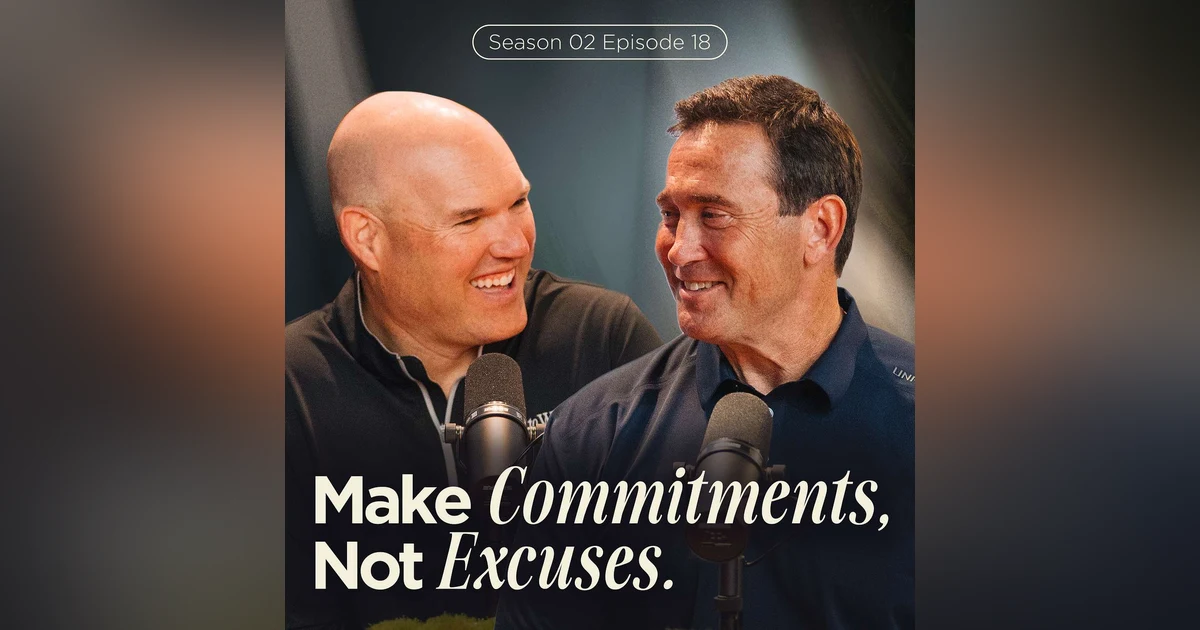


Every leader wants a winning team—but few know how to build one. In this conversation, Jon Gordon and Jeff Little share the real ingredients behind high-trust, high-performing teams: consistency, clarity, and commitment. Discover why culture beats strategy, how to move from “goals” to “commitments,” and why helping others grow is the greatest growth strategy of all.
TIMESTAMPS
3:02 - Why Teams Beat Solo Leaders
7:46 - Principles & Practices of Leadership
9:50 - Culture, Values, and Cascading Leadership
15:40 - Consistency, Trust, And Positive Energy
19:15 - Engagement Over Dictation In Modern Leadership
23:40 - Accessibility, Listening, & Learning
28:10 - Bridging Pastors & Marketplace Leaders
33:20 - The Power of Valuing People
36:20 - Commit to the Person, Moment, Team
40:30 - Culture Fit, Letting People Find The Right Team
44:05 - Clarity Of Vision, Roles, And Buy-In
ADDITIONAL RESOURCES
More Resources: https://leadtowin.com/
Jon Gordon's Resources: https://jongordon.com/
Win With People: https://leadtowin.com/pages/win-with-...
Register for Leaders Gathering: https://leadersgathering.leadtowin.com/
Information on Milestone Church: https://milestonechurch.com/
FIND US AT: https://leadtowin.com
GET IN TOUCH: Contact us at info@leadtowin.com
FOLLOW PASTOR JEFF
Instagram: https://www.instagram.com/jefflittle/
Facebook: https://www.facebook.com/pastorjefflittle
FOLLOW LEAD TO WIN
Instagram: https://www.instagram.com/leadto.win/
00:00 - We Not Me: Opening Idea
00:35 - Welcome And Guest Introduction
03:02 - Why Teams Beat Solo Leaders
07:46 - Principles And Practices Of Leadership
09:50 - Culture, Values, And Cascading Leadership
15:40 - Consistency, Trust, And Positive Energy
19:15 - Engagement Over Dictation In Modern Leadership
23:40 - Accessibility, Listening, And Learning
28:10 - Bridging Pastors And Marketplace Leaders
33:20 - The Power Of Valuing People
36:20 - Commit To The Person, Moment, Team
40:30 - Culture Fit, Letting People Find The Right Team
44:05 - Clarity Of Vision, Roles, And Buy-In
0:01 Commit to the person in front of. Commit to the moment. Like in that moment is a great opportunity to commit. So then you commit to the team. And when you're selfless, when you're selfless, guess what? It's about we not me. And in the we not me, everybody gets better. So we gets better and me gets better. So we live in a world that focuses on self-growth. Yes. So much. Personal self-growth strategies, but the greatest self-growth growth strategy of all is to help others grow. Once again, I want to welcome you to the Lead to Win podcast where we're helping leaders win in the areas that matter most.
0:41 I want to welcome again, as always, Pastor Jeff. And this week, a very special guest, John Gordon. So glad to have you here with us. John is a top three leadership author, speaker, and consultant, you know, author of 30 books. We're going to talk about your newest one in just a second, Pastor Jeff. I know you're excited to talk about that. Tremendous influence. You've probably heard his tips and his content on places like the Today Show, CNBC, Golf Channel, Fox and Friends, all across the place. We're so excited to have you here with us talking about how do we win in the areas that matter most. Well, I'm so excited to have John here with us. John, we're in fact, we're both uh a part of a conference this week, but that's not the only time we've been together.
1:22 We actually got to spend some time together here a few months ago. And I just uh respect you, thankful for you. Thank you for being a light in so many different arenas. I know the sports arena and business arena. And so uh we're just glad to have you here with us. I love the way you coach others and you help them win. I mean, you are a coach when I think about you, and you really impact so many people to be better leaders. Thank you so much. It means a lot coming from you. And uh, and I and and we're we're here at Lead to Win. We're just we're really stepping more into this space, and and and our and our hope is even this podcast can inspire somebody. It's always always, you know, many times when I'm speaking, I I'm thinking about the one.
2:06 There, there's one person out there that maybe what we chat about today, which I love this because we talk about it behind the scenes, and it's the podcast format gives a chance for people to get a window into some of those conversations. And so if there's one person out there that we can help, I'm I'm fired up about you also coming. We'll get all this out of the way. Then I want to talk about something I know everybody's gonna be into today. Right. You're coming in January to our Lead to Win gathering, and so that's at the Lead2Win website, leadtowin.com. And we're we're just excited to have you in that space. I'm fired up to come to speak at that. Can't wait for that. Yeah. Because we'll have pastors, we'll have staff members, you've got you know, people that are leading uh children's ministry and and and they're trying to get volunteers and they're working with teams, and so uh that's gonna happen in January.
2:57 We'd love to have everybody come and join us. You're coming out though with this book this year. Um, we talked several months ago, and so this this book, The Seven Commitments of a Great Team, and man, there's so many things we could talk about, but I would say I don't know if it's at the top. I mean, obviously, your your own personal attitude and heart is gotta be, and you've written about that, talked a lot about that attitude. But if you were to say pragmatically, for a business leader, a pastor, especially, a team leader of some team is huge. Team is everything. Yeah, no one creates success alone.
3:37 Yes, you all need a team to be successful, and you need a team that makes you better. Yeah, it's good. And you need a team that you are pouring into, investing in, and you're making them better. Yes. So as a leader, you have to go first, right? You have to lead the way. And when you demonstrate commitment to your team, you get commitment back. Right. But a lot of times as leaders, we don't know how to build our teams. Yeah. We don't know how to build a strong team. Right. We may lead ourselves, but how do we lead others? And working with all the leaders I have over the years, I've seen the best. I've worked with the best, and I see how they lead teams. I see how they build their teams. And there really is a formula. Okay. There are commitments that you make.
4:18 Okay. There are tools and strategies you can use. You know what's interesting? I was thinking about this the other day. I'm not the best leader. Like I want to be better as a leader. I know I can improve myself in so many ways, but I know that my gift is helping leaders build their teams. Okay, good. Awesome. So what happens is, you know, I'm thinking about the this the setting of speaking to pastors, and a lot of them will be listening to this podcast or an up-and-coming pastor, a church planter, a a person. There's so many teams within the the ministry environments, too. That's not just the person on the stage, right? There's the youth and the and the and the people parking cars, and there's all of that.
5:00 And then also, you know, marketplace leaders. What I find is they they get excited about maybe whatever thing fits their personality or passion. You know what I mean? The the accounting, the accounting person gets excited about the spreadsheet. I have been a senior pastor since I was 21. So I do speak to them very directly because I'm one of them. They get excited about their message. Right. I mean, so many senior pastors, don't get me wrong, the message is important. Right. But my message to them is content will draw them, but it's care, commitment, and connection that keeps them, right? It's all about relationships.
5:40 It's all about relationships. You will never have commitment without connection. Yeah. So the more connected you are, the more commitment you will generate. And so it's all about connection. It's about building those relationships. And in a big way, you have to make sure you're connecting before you're correcting. That's so good. And so when you're when you're connecting with your team, then you can correct. Then you can leave. Because every team needs to get better. Right. Sure. One of the commitments is the commitment to getting better. There you go. So if I have to get my team to improve and help them grow, well, guess what? Correction is going to be a part of it. But you got to have the relationship first. Exactly. So so this template, okay? And maybe maybe all seven or however you want to just someone listening to this and and they say, I got to get better at building a team.
6:24 Right. You know, and and and I know, I mean, I'm continuing to grow because as the organization changes, as we've now gone to multiple sites, I don't, I don't have some of the things that I'm familiar with in terms of my strengths. I don't even have sometimes as much proximity to certain things. So we're all growing. But I do believe that there are people listening that that really are saying, like, I got to get better at leading team. It's just I'm I'm I'm really stalled out or paralyzed, or my church or my ministry or or or my business. What's the template? Okay, give it give us the goods here. Well, the interesting thing is I wrote the energy bus. Right. And that's 10 rules to fuel your life, work, and team with positive energy.
7:06 And then I wrote the power positive leadership, which is practices and principles. And I think first and foremost, leadership, great leadership, is about principles and practices. Yes. I think a lot of people talk about principles. Right, right. And if you have principles without practices, that's like having a set of plans, but you don't have the builders to build the house. So you need to have the builders, the tools. Right. You need to actually have the practices on what it looks like to build a team and build an organization. Yes. And I think we need to give leaders the tools to do that. So it's it's not just a framework. There's a framework there of principles, right? And then there's practices that you do on a daily basis to build your team.
7:47 And for me, it it always starts with culture. Right. Knowing that culture is not just one thing, it's everything. Right. It's not just one person, it's everyone. Right. And the best way to create your culture is to say, what do we stand for? What do we want to be known for? Right. And people often say, well, how do we figure that out? I did this with a football coach the other day, actually. And I said to him, an NFL coach, I said, Who are you looking for in a player? Who are you looking for? What are you looking for? What does that player look like? What do they act like? What kind of values do they have? And those values that you're actually looking for are your core values that you want in your organization. Right.
8:27 It really was an easy way to think about it. There you go. And once you know what you're looking for and who you would want to bring onto your team, those core values that are actually what you're looking for and will drive you in your organization. So what do we stand for? And I think today we have all these organizations with mission statements. Everyone has a mission statement, but only the great ones have people on a mission. There you go. So I'm starting to create my culture. We're going with vision and mission first. And that's actually the first commitment of the seven commitments. It's you must commit to the vision and mission of the team. So the leader is talking about the vision and mission, or perhaps you don't even have one yet. You're coming up with it as a team together.
9:08 Yeah. And everyone now is contributing to the conversation. What do we want to create? Where do we want to go? What do we want to build? And then why do we want to do it? Like what is what is our true mission? What's our our essence that's going to drive us? And that's how you begin the process of this of these commitments. So I I couldn't help but think, because we're here in Texas. Yeah. Okay. So we call that all hat, no cattle. Okay. You know, you you you got a hat, you look the park, you just don't have any cows. Right. Right? So and also I talk about aspirational values versus actual. And it's almost more dangerous to put up a set of values or mission statement.
9:50 You know, we we love people or we care, and you you don't really like people, right? You know, I mean no one else in the organization feels it. Exactly. It's on the wall. Remember Enron? Yes. One of their core values was integrity. Wow. How did that go? Exactly. Didn't work. Exactly. So you'd be better off to not even put a mission or value system that doesn't have congruency or integrity with who you actually are, you know. And I think I think that the the discovery of that is important. We could talk about culture all day because I mean you have to look in the mirror too, right? I mean, as a leader, that's a hard, that's a hard process because you don't you don't get what you want. You you you attract who you are.
10:32 Who you are, right, right, and the essence of you. Right. I always tell leaders when you want to create your culture and you're looking to build your culture and improve your culture, what essence do you want to share? What is the best within you? And then you got to share it. Right. And you got to live it. Yeah. But that culture needs to reflect who you are as a leader. Right. That essence must come from you and your leadership team. And we we call this cascading leadership. Okay. Where you, as a leader, you cascade this to your leadership team. Right. They understand the vision, they understand the mission, they know the core values, they know what the culture stands for. And then they start living it and breathing it. And then they cascade that down to their direct reports.
11:14 Right. We often lose culture along the way because people aren't cascading it down the organization. And we usually lose it around mid-level of the organization. Where you have a manager that's a manager, becomes a taskmaster, not really a leader, doesn't know how to lead, not living the values, not living the mission and vision, and then it doesn't come to life. Right. Often also on the front line as well, which is really important of organizations. That makes sense. It's uh I uh in the energy bus reading about George and the gap between so fixated on outcomes but lacking the self-awareness. I know a lot of times, both ministry and business, there's the gap, right? Like I think I'm this kind of a leader, but I'm so focused on outcomes, I'm not actually thinking about becoming the kind of leader I'm trying to attract or or to have on my team.
12:00 Why do you think it's so hard? We want, like you were saying, even with the coach, we want this kind of a team player in our organization. Why is it hard for us to become that kind of a team player? We want others to be committed, but we're not the committed one. Right. I always tell the leaders, you have to go first. Right. That's good. You lead the way. They're looking around going, they're not committed. So-and-so is not committed. So is so-and-so is not committed. But are you committed? Right. And do they feel your commitment? Yeah. And so commitment recognizes commitment. And we often we often don't see it. I have a lot of people that will email me saying, My boss gave me the energy bus. My boss is the biggest energy vampire around, but said, You need to read this book and say you're either on my bus or off my bus.
12:43 Yeah. And that's not the point of the book. It's not about that. The point is, no, be the leader they want to follow. Yeah. Be the leader that engages them. Yeah. Be positively contagious in a way that it is infectious to those that you're leading. And I was just asked the other day, like, what's the most important characteristic of a leader? And what does Dabbo Sweeney have, the coach of Clemson that Sean McVeigh has, the coach of the Rams, and all these great coaches and leaders I work with? What do they have? And I really believe believe a great leader has that positive, infectious energy. Yeah. Yeah. They may not even be, you know, an extrovert, but they have this energy that they share that people feel. But they also feel the commitment of the leader.
13:24 They know this person, this leader, is actually for me, cares about me. Right. And their agenda is you. Yeah. Their agenda is you is you and your growth, you and how you contribute to the company, you and how you contribute to the organization so that we can all grow together. The minute, the minute they know that a leader is about themselves, they're checked out. They're checked out, yeah. They don't trust, they don't trust. Yeah. True, they don't have buy-in. Nick Sabin, most people in the world know who Nick Sabin is. Right. And the other day I was I was thinking about the fact that I had a coach tell me that they worked for Nick Sabin. They were an assistant for him. They said every day at the same time, he would pull out a candy bar and eat that candy bar the same time every single day.
14:10 Such consistency. Right. They said he was the most consistent person in everything they've ever met. And I realized that's why he was successful. He often wasn't liked by his team. Right. We know Nick Staben is not always likable. Sure. But his team trusted him. Right. Wow. Because he was so consistent. And I think it's more important to be trusted than not than be than be liked. Exactly. Trusted than liked. They trusted him, even though they might have thought, coach, he's negative. He's always yelling at me. I trust him because he's so consistent. I know what to expect from him. Yes. The leader that is positive one day, negative another, has one personality one day, negative the next, or another personality.
14:51 You just don't know what to expect from that leader, then that leader loses trust because they're not consistent. Wow. So good. So good. I mean, culture, we we can it's it's everything because it really is. When you talk about team, teams are are are formed and and and and live within a cultural ethos. You use the word essence. I like that. There's this essence of and and I think you're hitting on something so big that you that if you know I want more for you than I want from you, like that's good. Motives is so big in there. If I know coach is really ultimately about us as a team winning, it's not about him, it's about us.
15:33 Then then you get a major uh sacrificial type environment going on. And and a few things I know this is so basic, but I'm surprised by how many people who manage people don't know this. It's the number one reason why people leave work environments, leave churches. It's it's the direct manager person working with them. It's not even this great organizational whole, it's the culture that they're experiencing at that at that place. People don't leave jobs, they leave people. They leave people. That's true, and we have to understand that. And as a leader, if you're engaged with them, they're gonna be engaged. They know you care about them. It's gonna be hard for them to leave, even if they get a better offer, even if they get more money because of that relationship and that engagement and that trust that you have.
16:19 But you're right, you know, as we know, it really is about the basic things, right? So often we don't do the basic things, right? And we don't lead in the basic fundamentals, right? But you do the fundamentals, even as a football coach. You do the fundamentals, you're gonna have a great team. That's true. You do the fundamentals as a leader, you're gonna be a much better leader. Yeah, yeah. Today in our in our worlds in space in church, there's this this new term, you know, church hurt, right? Other than hurt. And and what's dangerous there is they can ascribe that there's there's people we're pastoring and ministering to who there's a a a social kind of construct that they're they're saying the church.
16:59 Well, first of all, Jesus' church, okay. Now that is a whole different thing than my personal experience. So as you said, we've got to be careful identifying with the church, and really it's people. Just like a company, you say, you don't leave jobs, you don't leave companies, you leave people. Same thing in church. True. You're you're leaving a cultural construct, world, ethos that happened to be in a church or at a church, but it's not necessarily the church. Right, right, right. It's there's a difference, it's that building. Yeah, it's the people in that building. Exactly. And maybe you'd have a good experience with the people in that building. Right.
17:39 But don't let Christians keep you from Christ. Exactly. It's really good. Exactly. Yeah. So the leaders though, listening, right? We have to work through the world we live in today. So being a leader of a great team today used it used to be where the pastor primarily the congregation was listening to the pastor. Right. Or the the coach. I mean, I think about these college coaches now and the the NIL and the portal and the social media and the inputs, you know, like my high school coach, I mean, he was my coach. I didn't really I could I wasn't gonna get on the internet and listen to somebody else's playbook. Right now, talk about this for a minute because leading a business or anything you're leading in a church, what what do you do?
18:25 I think we have to be better at commitment today because there's so many options and so many voices. I believe the current situations, NIL and sports, in the workplace with a lot of choices to go of companies to go work for. What we're realizing is is it's making leaders become better. They have to be better, they have to engage. Yes. The younger people today want to have lunch with their CEO. If they don't have lunch with their CEO, their mom's gonna call. Just kidding. But but but maybe not. Right? So, like, you know, you have to engage the younger people.
19:05 You have to engage people who want to know that you care about them, right, and they can trust you. And so leaders told me today, like years ago, people just did what I said. Yeah, yeah, but now I have to earn their trust and I have to tell them why I'm doing it. Yeah, but that makes us better leaders. And so my model of positive leadership, which is really Jesus' model for leadership, is about engaging people, building relationships, sharing the vision, collaborative leadership, dictatorial leadership no longer works. Right. It's about collaborative leadership. Where are we going together? Right. What do we want to accomplish together? Knowing it takes all of us and getting input. When I wrote The Energy Bus, the main character, George, basically says, Here's my vision, who's on my bus, and this is where we're going.
19:49 If I could write that again, George would have met with his team and said, basically, hey, what is our vision and where do we want to go together? Exactly. And I think it's important to get that buy-in. So when people weigh in, right, weigh in, they get more buy-in. Yeah. And they'll have more buy-in. So you gotta get them to weigh in and feel like they're part of the process. And now with social media and with people commenting all the time, and everyone's now a contributor, people are used to now putting in their opinions and being heard. And so you have to be a curator of that. And guess what? You actually have to care what people think and say. You do, you do, like you can't you can't let it drive you all of your decisions. You have to be clear on who God's called you to be, and what but you do have to consider it.
20:33 Anyone who I say I don't care, right, they're out of touch with leadership. And let me clarify on that when I say care what people think and say, a lot of times as a pastor, you can be only focused on your message, right? What you're learning. Yes. And I'm having to do this as well. I have a circle, I have a community of leaders that I lead now, and I'm so used to just being about me and what I'm saying. And now it's about, so what do you think about that? What can I learn from you? Yeah. And oh, tell me about that. And so I'm actually learning and listening and going, oh, that's a gem here. That's a gem there. Right. Because you can be so focused on your thoughts and your messages. So now actually engaging others and learning from others, I think is a key part of great leadership as well.
21:15 It's one of my big messages to pastors, and I talk about being a shepherd and being a pastor and being accessible. Now, obviously, as a church grows, there's certain things that that you are not accessible to because you're only one person, but there's a spirit and a heart, even like say standing in the foyer on the weekend and shaking hands. I've learned that there are a few people who will shake hands with me, but the people who even walk by and recognize that I am a part of the family and I'm not living in an ivory tower, right? Right. Gives them a sense of trust toward me, right? And so you have to be, but I've learned this by me being a pastor and not just an influencer or speaker, makes me better when I do speak.
21:58 Yes. Because I know my audience. Yes. I'm not talking about theory. Yes. I shook their hand last night and with me, my kids, or this is where I'm at, or I mean, I'm I'm constantly. I know a lot of guys have to do a lot of surveys. Yeah. Like you wouldn't have to survey so much if you actually know your people. Right. Right. I like that. It's really true. I like that. That is really good. I think it's underestimated sometimes because I'm on the team. I think you know this. You're my team leader, but I'm on the team because you're a learner. And I watched that before I was on your team. Watch the way that you learn. What you're talking about, really, and what you were sharing, building consensus. Not, oh, I'm going to go meet with these people because I have to, and I'm just going through the motions. You genuinely want to know.
22:39 And a leader who communicates to people, I'm trying to learn, I'm trying to get better. People who learn while they lead, they do build trust, like you're saying. We have a certification program now where we certify people to deliver our programs. When they sign up a certification, I call everyone personally. Wow. Everyone. So I have a conversation with them. Why'd you get certified? Tell me what you want to do with it. It's amazing. I'm learning so much from these conversations. It is hard to do this. It is, yeah. It takes a lot of time. They now have my cell number when I call them. Are they surprised when you call them? Yeah, well, they're expecting it, but they're still surprised. But I have great conversations with these people. And to your point, I am now learning from them, and it's giving me great information for marketing.
23:22 Who's our key person? Why are they getting certified? It's allowing me to understand our business even better. So overall, it does make you better. The event that we're we're both speaking at now while I'm here in town, I just did that event today, and I asked him, Can I come off stage for a little bit? And the guy said, Oh, the audience loves when you come off stage to be with them. Right. And I think it's the same thing as a pastor. You can't just be on stage. You gotta come offstage and be with them. Don't be the guy on the video, be the guy they see in person and could talk to and learn from. And I love that you do that. Well, I want to I want to ask you this question, okay? Team, and again, a lot of our listeners are ministry leaders, okay?
24:04 And obviously there's the staff team, yeah, right. And then you have your congregation as your team. I mean, they're on it, but there's a specific area for pastors that I found is a is a there's an intimidation. They want to learn more about it, and that is working with marketplace leaders. Like you're here because I was friends with you and connected you with some of our marketplace guys because I wanted to add value to them through my friendship with you. And so I'm I have relationships with these marketplace leaders. And there's a lot of times there's a big divide between a pastor and and I think it's the enemy, because those people need a pastor, they need this, they need transfer, and so they need it.
24:47 The business leader needs that relationship. And the pastor, I've learned so much because 30 years I've hung out with business guys. So when I communicate about something in our church about a building project or something, I don't look like this dumb guy who doesn't know what's going on because they ask hard questions. I'm better. Oh, yeah. Yeah, what would you say though? Because a a being team, talking about a ministry leader, being team with let's just say leaders in general. Yeah, like the people that can move the ball are not looking for something to do. How do we as ministry leaders be team with these people who live in a different world than us and we could be intimidated?
25:27 The key is to move from isolation and disconnection to connection. That's great. To to build those relationships, build those bridges. A lot of times there's two different languages business language and church language are different. You have to learn their language, right? Yeah, but you also have to reach out and lend a hand. You also have to engage. You think that business leader doesn't need help. They do. They do. Leaders need a team because a leader who is lonely is a leader who won't make a good decision at times. Right. A leader who is lonely or alone will feel isolated and then will not be their best because they feel disconnected.
26:09 So so leaders need teams, they need other people, they need counsel. So what I would say is is you provide a tremendous value to that business leader because they need counsel, they might be struggling in their marriage, right? They might not have a relationship with their kids. Yeah, yeah, they might be very successful in the business world, but they might be struggling at home. And we believe where I work, my my team, my organization, if you're a failure at home, you're a failure. Doesn't matter how much success you have. So they need to get counsel, they need that counsel, and they also need spiritual nurturing and encouragement. And you could provide that because so often they do feel disconnected, they don't have a relationship with God, they're not praying, they're not taking the time to really connect with God.
26:54 And over time, that disconnection from God will wreak havoc on their life and their soul and ultimately their decisions. Right. So so so you have so much to offer them, they don't need you to be a business leader. No, they don't need you to know business like they do, right? Right? And and you don't need them to be a pastor, right? You compliment each other, and so it's about hey, let's get coffee together. But let's how can I help you? Right, how can I serve you? What what's going on in your life? Just get to be a friend, you just develop a friendship and be friends with them and be there for them, is how the process begins.
27:34 We're st we're back to the same thing though, right? You're back, it's back to the commitment. If if my motive is I want to commit to serve you and to help you, then the relationship begins to have a trust. What you said earlier. If that business leader picks up that you're there to raise money or your deal and you have an angle, or they can smell that a mile away, right? You have to say to yourself, as the pastor, will I pour myself and my time and energy into this business leader even if they never give a dime? It's true, am I willing to do that? Yeah, am I willing to commit to that? Yeah, and we know that Jesus would, but will you?
28:18 Exactly. And and it requires us to be selfless, yeah, exactly. Which is hard to do. Yeah, yeah, because we do want that support, we want that financial contribution. But myself, even as a business leader, the minute I feel that from a pastor, we will not have the same trust if I know that you actually just you know are there for me and you want to be there for me. Yeah, you're not looking for something. Exactly. And and I and I love when pastors have not asked me for a dime. Yeah, yeah. And then I know God convicts me to give. Yeah. Like you have to trust in God. God's gonna you already have that, you already have that motivation.
28:58 Yeah, that's how God made them. So that's a that's a but ways to add value. Here's what I've learned. A simple text to a business leader during the week. This morning I woke up, I was praying, and I would like to just, you know, have send you this verse. Right. I mean, that is a drink of water to somebody in the battle that you offer as a pastor because it carries weight with them. You're like, well, this guy knows about the Bible. Here's a verse. Coming to uh their place of business and being genuine, genuinely interested, meaning to learn from them, hey, what are you doing with your team? You know, tell me, let me pray over your business or your leaders. There's so many practical ways that aren't really that complicated that you can really add a lot of value.
29:42 Here's the simplest you text and say, How are you doing? Yeah, that's it. How are you doing? They might say, Good, I'm doing great. Okay, awesome. Just checking in on you. That simple text of how are you doing goes a long way. I have done this for coaches. Over the years, NFL college coaches who I've spoken to and spoke to their teams, keep in touch with them. And I just say, How are you doing? And there have been times, can we get on a call? Wow. Many times it's I'm doing great or not doing so good. Don't feel like talking right now. Okay, that's great. But how are you doing? And those calls in those most opportune times, God ordained times, have been magical, incredible, sure, and transformative.
30:27 And at the right time when they need you and you're there, boom. Yeah. That's where the relationship really develops when they know that you're there in the moment that they need you. And guess what? That leader, their kids probably need you. Yeah. Their kids are probably struggling. So offer to to help the kids in some capacity. Again, you you just you're just providing a support, an environment, an opportunity that if you need something, we're here to serve, we're here to help. And and again, it starts with a friendship and getting to know each other. And don't even make it awkward. Just just like let's just hang out and talk. Yeah. And that's it's that simple. So you have this team book. So I I just released a book about when with people, but it's it's a message specifically to ministry leaders to be a shepherd.
31:14 Return to the call of a shepherd. And when I was writing the book, I learned that we have a false perspective of shepherds. Right. And that is that they're just this isolated, you know, uh shepherd out there with a lamb around their neck, you know. But but actually when I was by the little sheep, yeah. But you when we started researching it, they they have to understand weather and navigation, and they end up many times as a team of shepherds or who and and and and being effective. They know how to deal with predators, get close enough. David, when he was dealing with the predator, was close enough to grab it by the hair. What did you in writing? Because I'm saying this to say when you get in, you know, you have this truth or this principle and you start down the path out of your book.
31:57 The this I want you to hold it up so everybody can see it too. This is a beautiful cover. Pretty much the seven commitments of a great team when you dug in this, because you already had because you've been working with teams and coaches. But when you got into it, what were a few of your oh wow. What what what really stirred you? What did you learn in it? The commitment to valuing each other on a team. That came at the end. Okay. If if you don't value each other, then you're not going to do any of the other commitments. Okay. So you have to see the value in someone else. What happened was I didn't have the ending, and I was talking to my co-author of the coffee being Damon West.
32:41 And Damon had been in prison. And I said, Damon, tell me about the most effective team building exercise you've ever done. He goes, Well, John, I don't do team building exercises, but let me tell you about the best exercise I've ever seen. Okay. And it was in prison. And he said, We had these prisoners sitting in a row, and the free men came from the outside, and they took buckets of water and they washed their feet. Wow. And as they washed their feet, these men, these Horden criminals, began to cry and weep. And they then wanted to return the favor and then wash the feet of the free men. And I said, Why is that so powerful? What really happened there? For the first time, these prisoners who don't have value in a prison felt valuable.
33:26 And because they felt valuable, they then in turn wanted to value the people who wash their feet. And I said, Well, we can't wash people's feet in work. That might not be the thing that we can always do it in the workplace or corporate America. I work a lot with corporate America, but how can we as a team demonstrate value to each other? And how is a leader demonstrate that you value your team members? Right. And so in the book, the leader starts to send out these personal videos one by one to members of the team saying how much they appreciate them. So I created an acronym for value and it's it's validate, it's appreciate, it's listen, understand, and empathize.
34:11 And so as you do that, people will then feel that you value them and they will feel valued. So to me, that was like a big eye-opener for me. And then the the commitment to each other. Like you can have the great vision, you could have the great mission, but ultimately what it comes down to with great teams is there's actually a commitment to that person. True. Yeah. So I've been telling teams a lot lately, commit to the person in front of you. Commit to the moment. Like in that moment is a great opportunity to commit. That's so good. And then and then you commit to the team. And when you're selfless, when you're selfless, guess what? It's about we not me. And in the we not me, everybody gets better. So we gets better and me gets better.
34:53 So we live in a world that focuses on on self-growth. Yes. So much. Personal self-growth strategies, but the greatest self-growth growth strategy of all is to help others grow. That's so true. So the minute I help my team improve, I get better. Yes, yes. I improve. You said the minute you start helping and speaking to your congregation, you get better. Yes, it takes more time, more energy, more effort. But here's the other thing commitment's gonna cost you something. It is, yeah. Always, yeah. Time, energy, effort, vacations. It may cost you something major, it may cost you something small, but it's gonna cost you something, but you get so much more when beyond that cost. That's so good. So the the whole all the commitments basically are fulfilled.
35:39 I'm just repeating back to you what you said by this value, this, this, this way you value the other person. And so it could be said you'll never build a great team if you don't value people. Right. If you don't really value people, you're never gonna be a great team leader. Because you're not gonna commit to them and they're not gonna, they won't commit to you. Right. You can't do it because the book says so, or I gotta check the box that I need a care today. There you go. I I'm supposed to care, so I have to care. Right. Going back to essence, right? It comes from the heart. It comes from the heart. So if there's a a heart of value, an essence of I see you, I value, I recognize you, I appreciate you, well, then they're gonna feel that.
36:24 Even with AI, we know it's the human feeling that's important. It's true. It's so important. It's really true. I I keep thinking about something as we've talked to culture teams. You have to be willing to also recognize that this person is not a team player, they don't want to be on this team, or maybe they just want to wear a different jersey or something like that. And you know what? You can still value that person even if they're not called to be on your team. Yeah, true, you know, and say, How can I help you? Because I'll tell people a lot of times with church, we know our value, we love you, but we don't have to be on the same team, right? You know, there's plenty of churches, right?
37:04 You know what I mean? Why would you why would you live your life miserably? Because one thing that's not gonna happen, we're we're gonna keep our culture. Yeah, right. You know what I mean? Wherever I go speak, people leave or are fired. Okay. It's true, but it's always a great thing because the people that are not meant to be on that bus get off or ask to get off. And everybody gets better because maybe that person, often that person is not meant to be on your team. They're meant to be on another team. And when when that happens, we don't do this in churches enough because we don't want to let someone go. Right. We think everyone should stay on, right? But no, maybe that person is meant to be on another bus somewhere else, another team.
37:46 Right. I believe you give them every chance to get on, talk about is there alignment with vision and mission, and can we accomplish this together? But it's okay to say, as you said, we're meant to be perhaps on just different teams. Yeah. But in marriages, you always have to remember you're on the same team. There you go. That's true. That's the key with marriages. Like too many marriages act like they're on two different teams. And for them, it's about no, you have to join together to be on the same team. I had one guy email me and said, Hey, my wife's an energy vampire, but kicking her off the bus is not an option. Very true. What what what do I do? And it's about common vision and mission, alignment of values.
38:28 Where do we want to go? What do we want to achieve together? Really having the comp the difficult conversations that every team needs to have. So often we have issues on our teams because we don't have the conversations in order to get better. And so things start to surface, things start to actually cause division and disconnection. Right. And if we don't deal with those things, the gap becomes a canyon. I would say to the man, a lot of times, I mean, the scripture's pretty clear, love your wife like Jesus loves us. So she may be an energy vampire because she's responding to the deficit of your lack of asthma. Relationship and care. Because I'll have guys say, Well, my wife is crazy. I'm like, Well, what does that say about you? Because you married her or made her that way.
39:09 Okay. So let's not get too much into the blame here. Right, right. You have a you have a big part to play in the culture you're creating. And that is true. The home, the family, it's all a team. Right. Your work is a team. And and and I I love that in ministry work, I don't think we are clear enough a lot of times about vision. I'm I've done been doing this a long time in the last probably seven years with our church, with our team, vision weekends. I've realized because vision does leak, but in our world today, it's also replaced. The vacuum that used to be there, it would just leak and be be empty. But now it's two visions, which is division.
39:49 The word division means two visions. So I'm realizing the division comes from me not owning the responsibility to continue to clarify, to have the conversations, to talk about our culture, you know. That's so good. And that's that's that's the responsibility that we have. That goes to the most important thing a leader can do it, and that's provide clarity. That's really good. Like that clarity of vision is essential for a leader to provide and share with their team. That team wants to know where are we going? And also roles. What is my role? How can I contribute to this vision every single day? When people don't have a clear path to how they contribute to the vision and the mission, you have a lot of disengagement.
40:32 And then you start to have misery on the job. Right. When people know they're contributing to it, engagement source. True. So as a leader, provide the clarity, provide the vision. The hope is though, we can get better. Yes. Yes. In other words, we we don't have to just say, you know what, my team is terrible, my my ministry's terrible, my my everything. We we we can we can actually be proactive and say, you know what, I'm gonna grow here. I want to, I wanna I want to be better. And I really believe that people today are smarter than we give them credit. So in your ministry, your business, whatever, they're not, they're they're not, they're not dumb, right?
41:13 And they they listen to you, but they want to go see your team. Like your team actually is the reflection of how good a leader you are. That's why I'm so grateful for that. That's good. Your team is is that fruit. They are that fruit. And if you're not investing in that route, that's exactly right, you're not gonna great get a great supply of fruit. It's true. And I love that because you know you meet a lot of people and you don't know if they're a great leader or not because you haven't seen their team. It's true. And how does their team respond? They may speak real well, they may look real good, but go talk to their team. Right. That's why I love sports, because when you watch sports, you can see you're gonna find out right away. The world is watching you on TV. What kind of team do you have? Yeah, most corporations, people are not seeing it, they don't know.
41:56 But you watch sports, you can tell whether that team has chemistry, whether they're connected, whether the leader has done a good job, whether they have buy-in, whether they like each other. Yep, you can tell all of that. And and I I I've been I've been saying this a lot lately with with these teams. It's like if your team isn't good, it's either they suck or you suck as a leader. Is it okay to say suck as well? But yeah, but you're but yeah, either they suck or you suck. Either way, you need to improve as a leader or you need a tool to help your team improve. But but either way, improvement is needed. And perhaps it's both. Yeah, it's a good both. Let's talk about both. Because there, and I could say that knowing there was a time when my team at home was really struggling.
42:41 And I looked at my team, I said, I want a different team. I called them Billy Donovan. Billy, have you ever wanted a different team? Yeah, and Billy Donovan's the coach of the Oklahoma City Thunder at the time. He's like, Yeah, I wanted a different team at times. He goes, But John, you have the team you have for a reason. They're meant to make you a better leader. That's good. And so at the end of that year, after wanting a different team and deciding to commit to my team to make them better and really be engaged and be a servant leader. I changed as a parent that year, changed as a husband, became a servant leader. At the end of the year, I realized I didn't need a different team. I needed to become a better leader. That's really good. I was the one who sucked. Yeah. And now my team is doing so much better because I poured it to them and I invested in them. Going back to the very beginning of our conversation, you said, how come they don't see it?
43:24 We need leaders to be able to talk to their teams and say, how am I doing on a scale of one to ten? How committed am I am I to you? On a scale of one to ten, how well do I connect with you? On a scale of one to ten, how well do I communicate with you? And some people will tell you what you want to hear, some will tell you what you need to hear. And the leaders I've had do this at the highest level, their teams come back and report, and it makes them better. Yeah. If we're open to the feedback. Or what's it like to be led by me? Yes. But I love the one to ten. I'll say to my wife on a scale of one to ten. How much do you like to be married to me? That's always dangerous. Yeah, yeah. Buckle up, you said it. No, I did, I did that with my senior team, and then I got some of them.
44:07 I'm like, I need to figure out how to get the this was an anonymous one. I'm like, surely I can find out so they'll call the company and find out who because I need to know who said this. Mine was, one of mine was is when I overreact, um, I learned in the process it's related to fear. Yes. And and the one of the fears I have is people being hurt. So for me with my team, they would take it as I was reacting to them, but I was actually reacting to the behavior that we might exhibit that could hurt other people. And that helped us as a team by me willing being being willing to have some of that evaluation, you know, which I think is I mean, that that that becomes challenging for a lot of leaders to be secure enough to go, let's just really get honest about how we're really true.
44:48 And and that's why I talk about looking in the mirror, right? To be a great leader of a great team is really admitting you you're you're the one producing a lot. I mean, it's it's coming from you and your perspectives and your attitude and who you are, and we just have to own it. So, John, thank you. Thank you for writing this book. I know I know you'll you'll start to speak more and more on it. Yeah, and we're looking forward to having you in January at the leaders' gathering. And I'm gonna have you the team concept is gonna be our whole theme. So I'm asking every pastor, every church teams, you their youth teams, their children's teams. Great. We we we just that's when they come and we just serve them and give them tools.
45:31 But this is gonna be our theme, team leadership for our January game. And I I love talking about this topic, my favorite topic I've ever talked about. Like I get passionate, I get excited because when we get a team to commit together and we talk about the commitment to staying positive, the commitment to getting better, didn't share all that we're gonna talk about. But when we do that, man, and you see everyone's eyes open. Light up, yeah. And everyone knows we're not doing that, and we need to do that because everyone talks about goals today, right? Outcomes. No, let's talk about commitments. It's really good. Commitments lead you to your goals, right? It's really good. You have a vision, great. You have a vision. We need to share the vision, but it's your commitment that will lead you to realizing the vision.
46:14 So we need commitment, and this is gonna teach every pastor how to build a team that is committed to each other. It's gonna be a great, great time. Thank you, my friend. Thank you. Thanks for having us. Well, I want to thank you both. I feel like we got better as a team as a result of this conversation. We hope you'll join us all at the lead to win gathering January 6th and 7th, where we're gonna learn more from these guys. Thank you so much for joining us. We'll see you next time. I want to say thank you for checking out this episode of the Lead to Win podcast. I want you to know that I love and my team loves getting this kind of content into your life so it can help you lead and win at what matters most.
46:54 So I'd love for you to do me a favor like, comment, especially subscribe if you would, so that we can make sure that we're able to get to you some of the things that are gonna help you lead to win.