How to Win at What Actually Matters
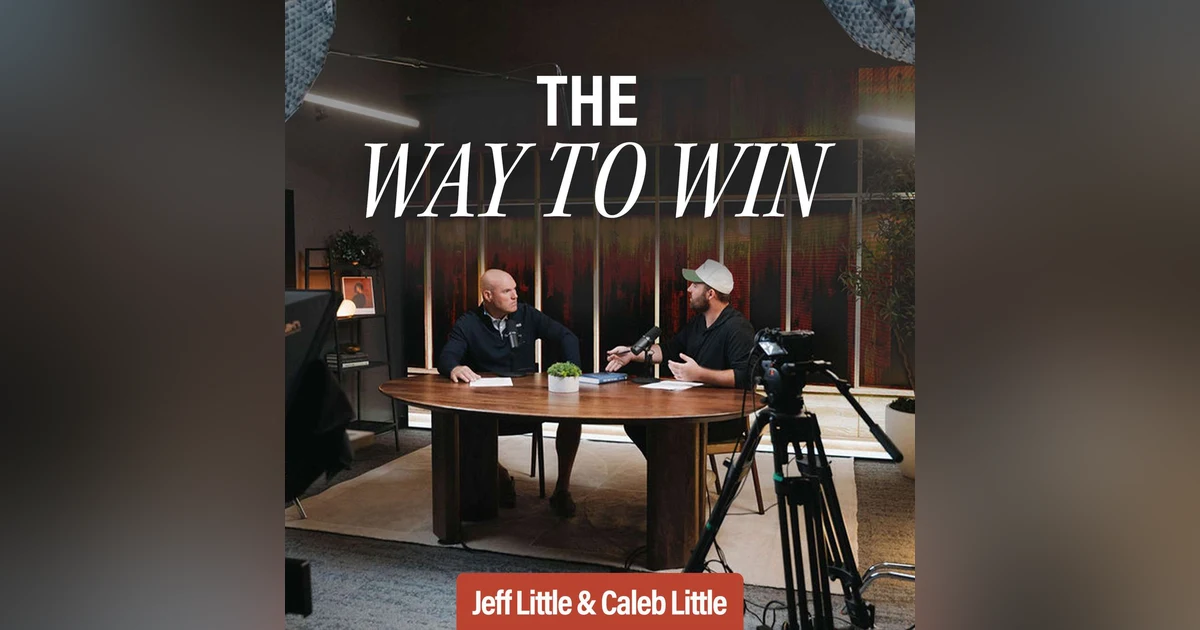
What does it actually mean to win? In this episode of Lead to Win, Pastor Jeff Little breaks down the philosophy that has shaped his approach to leadership, ministry, family, and developing people for more than two decades. Winning isn’t simply accomplishing more, growing bigger, or putting more points on the scoreboard. It’s becoming who God has called you to be and winning in the areas that matter most. GET THE WAY TO WIN: https://www.leadtowin.com/products/the-way-to-win Pastor Je...


What does it actually mean to win?
In this episode of Lead to Win, Pastor Jeff Little breaks down the philosophy that has shaped his approach to leadership, ministry, family, and developing people for more than two decades. Winning isn’t simply accomplishing more, growing bigger, or putting more points on the scoreboard. It’s becoming who God has called you to be and winning in the areas that matter most.
GET THE WAY TO WIN:
https://www.leadtowin.com/products/the-way-to-win
Pastor Jeff shares how The Way to Win grew out of his experience planting Milestone Church and realizing that building a great organization starts with building great people. He discusses why leaders need the right scoreboard, how to develop people instead of simply using them to accomplish a vision, and why success in one area of life can’t compensate for losing in the areas that matter most.
You’ll also hear the story behind the development process Jeff has used for more than 20 years, how it has helped churches and leaders develop stronger people, and practical principles for creating a winning culture in your family, team, church, or organization.
The question isn’t simply whether you can win. It’s whether you’re winning the right game.
TIMESTAMPS:
0:00 - The Danger Of Winning Wrong Game
0:52 - Why Winning Became The Brand
3:05 - Defining Winning Beyond Trophies
9:10 - People Building And Calling To Ministry
12:45 - Church Plant Lessons That Shaped Way2Win
21:00 - Your Scoreboard Legacy And Integrity
28:40 - The Way2Win Framework For Leaders
42:10 - How To Create A Winning Culture
45:35 - Resources And Ways To Support
LEAD TO WIN RESOURCES
More Resources: https://leadtowin.com/
Win With People: https://leadtowin.com/pages/win-with-...
Register for Lead to Win Conference: https://leadersgathering.leadtowin.com/
Information on Milestone Church: https://milestonechurch.com/
FIND US AT:
https://leadtowin.com
GET IN TOUCH:
Contact us at info@leadtowin.com
FOLLOW PASTOR JEFF
Instagram: https://www.instagram.com/jefflittle/
Facebook: https://www.facebook.com/pastorjefflittle
FOLLOW LEAD TO WIN
Instagram: https://www.instagram.com/leadto.win/
00:00 - The Danger Of Winning Wrong Game
00:52 - Why Winning Became The Brand
03:05 - Defining Winning Beyond Trophies
09:10 - People Building And Calling To Ministry
12:45 - Church Plant Lessons That Shaped Way2Win
21:00 - Your Scoreboard Legacy And Integrity
28:40 - The Way2Win Framework For Leaders
42:10 - How To Create A Winning Culture
45:35 - Resources And Ways To Support
The Danger Of Winning Wrong Game
SPEAKER_00The worst thing in life is not to have less points on the scoreboard. It's to light up a scoreboard and realize you played the wrong game. Can everybody win? What is winning? Should everybody get a trophy? I started coaching when you got at that phase. One mom was like, I can't believe we got drafted. I heard this guy's a preacher in town. We're gonna lose all our games. And I'm like, no, we're not. We've dominated it. So if you don't feel insecure at some level, you're probably not in a winning culture. No one feels insecure in a place they dominate all the time. If you build big people, they build big things. There's no U-Haul behind the hers.
SPEAKER_01We have
Why Winning Became The Brand
SPEAKER_01another episode of the Lead Win podcast today, and um the format's a little bit different for this episode. It really came from some of our team who um really just started to give us some feedback and talk to us about how they wanted to hear more from you and they enjoy getting to see you in this format. I remember even running into a couple who uh on the weekend were telling me they've been watching the podcast. He works in insurance and she's a teacher. And so they started talking to me about it and they shared that they love getting to see you in this format and how you talk about things that maybe they don't always get to see. And so we started to get kind of an overwhelming sense of feedback that people wanted to hear from you about the things that you're passionate about. So you're telling me what to do, y'all are telling me what to do. I think that's what we're doing now. Yeah, that's that's what we like to do around here. But we uh we as a team just kind of sat and thought about what are the things that you're really passionate about, and there's no shortage of things that you are are fired up about even at this ripe old age. But um we uh we thought about just several different things, but really one of the things that I know is true, and if you've been listening or watching for any amount of time, you know, winning is a big part of your your uh kind of brand, kind of the things that you like to talk about. You like to think about the fact that we can win. And so I thought about um even your books, you know, the ministry, the podcast that we're a part of is called Lead to Win. Right. And so I was kind of interested. We're just gonna do an episode here and get to hear from you. Like, what where did that come from? And what does winning mean to you?
SPEAKER_00Well, so many, so many years ago, like when I would have like a very um, very limited bio, you know, it's like Jeff Little, pastor, you know, I've I've primarily been a local church pastor. And when they would, when they would say, you know, you know, put in there your you're married, your family, your church, and then I had this little phrase, it was on our website, it was on all my bios, and it was like, in short, my ministry motivation is to help people win.
unknownRight.
SPEAKER_00And so
Defining Winning Beyond Trophies
SPEAKER_00I I sort of summed up that that idea because I was thinking, like, what really motivates me, what really drives me? And it's like I I want to help, you know, what do I do most days? It's like I'm trying to help other people win. I don't I don't believe winning is just when you succeed by yourself. It's helping everybody. It's like kind of being a pastor at its very basic level is taking a whole group of people somewhere where they don't want to go. Right. And when they get there, they say, we did it, right? So we all won. So I I think, you know, I think the idea that some people are winners. Winners attract winners. Winners want to be with winners. No good golfer wants to like, well, what I want to do is go play today with a bunch of people that are hacks and are gonna lose a box full of balls and shoot 125. Like, you don't want to, musicians want to play with people that are good, um, that that whatever level they're at. And you actually really are always inspired to be like, I want to be with somebody who's winning at a step ahead of me. Right. Like that have that have conquered some of the things I've faced. You know, you have all the things though today. Can everybody win? Yeah. You know, what what is winning? Um, you know, should everybody get a trophy? You know, just like let's just give everybody a trophy and play like we all won. You you love to give out trophies like that. You know, we that's one of my strengths. Uh I hate I hate too flattery when people are like, you know, that was amazing. And you're like, no, it really wasn't.
SPEAKER_01It was actually pretty bad, you know. You actually coached my my little league football team, and I think you you treated it like a college team. I mean, you'd have us out there hitting salt tablets, water hose, down there doing drills three hours. The moms really loved it.
SPEAKER_00Yeah, oh yeah. I loved it though, because you would have kids show up and they were like, you know, they were so scared of everything, but they built confidence through the through the end of the year. It was one of my favorite things. But yeah, I'd have to push the moms back and go, like, look, this is a mom-free zone. We're this is this is training here. Making that man. I know I remember when I took over the little I started coaching when you got at that phase, and then one mom was like, I can't believe we got drafted. I heard this guy's a preacher in town. We're gonna lose all our games. And I'm like, No, we're not. Nope. And so it's we dominated. We did dominate. Did we not? We were we won. I mean, they were scared to death of us. We had we were the saints. We had black jerseys, and we and our motto was when we did our break at the huddle was bring the pain. Bring the pain.
SPEAKER_01So it's like nine-year-olds. Nine-year-olds, we still just blocked out face paint, blocking people.
SPEAKER_00Face paint, knocking folk down. Them kids were crying for their mom after we got through with them. And so, um, yeah, I mean, I have always, you know, since I was a kid, like I was always like, you know, I I I feel like winning is way more fun than losing.
SPEAKER_01Right.
SPEAKER_00You know, like anyone who glorifies losing is just never really won, probably. And so I I I didn't know if I could be a pastor. I God, I had a radical encounter with God at at 12 years old where he called me into ministry, but I was afraid to like do church work. I was like, well, can I be Billy Graham? Can I be an evangelist? Can I maybe run an NGO, you know, solve global hunger? Because you wanted to succeed. Yeah, I wanted to win. I I feel like I felt like as a pastor, you had to play not to lose at a minimum. It's like, like, like just just just play not to lose. But I didn't think you could like play the game where it's like, hey, we're we're we're playing to win. And I don't mean that disrespectful. I just I most pastors that I met, you know, honestly were were kind of miserable. Like they weren't, they were just kind of like, hey, join in with our misery. I was just like, I don't know if I want to do this. And then, of course, you know, people in your life are even, it's kind of like, well, I'm sorry, you know, the Lord has chosen you. Like, oh great, man, I got chosen to to to to chosen to do something for the rest, you know, it's almost like you have now entered a a sacrificial service where you will be miserable for the rest of your life. And I just don't, I just don't believe that. I believe if Jesus came to seek and save the lost, what at a very essence winning, winning people to Christ. Right. I mean, we don't save anybody, but we have a part to pr play in it. And so, you know, I I think So you were looking for goals.
SPEAKER_01Like, is there a way to know whether I'm winning? Or I mean, even back to your question earlier, can anyone or everyone actually win? You know, yeah.
SPEAKER_00I mean, there's an intangible when you use words like disciple, uh a disciple, like how do you quantify that? But the Bible does say there's fruit, so there's a spiritual component, things like character, and but there's also measurables, and so everything in the spiritual life is not measurable, but it's not it's not unmeasurable either. And so yeah, I I I I begin to to just be like, if I help enough other people win, and then what is winning, then then I I've I've for my life, my life has meaning and purpose. If I win people to Christ, if I help them win in their marriage, if I help them win in their relationship with God. Again, winning doesn't mean that you never have setbacks. Winning doesn't mean that you don't ever have losses. Winning doesn't mean that you're competing against other people. That's where a lot of people miss it. When they when a pastor starts talking about winning, you think, oh, that means we're putting other people down to be better ourselves. No, winning doesn't mean that other people have to to lose, or you're not really competing against other people. You're completing, you're you're competing against
People Building And Calling To Ministry
SPEAKER_00the best version of who God's called you to be. So what are what is winning? It's well done, good and faithful servant. You gave me these talents, you gave me these gifts, you gave me this opportunity. I live in this time period, I have this one moment. Have I taken those things? Have I stewarded them well? And am I bringing a an eternal return on investment for the kingdom? Yeah. Well done, good and faithful servant. Winning is becoming everything and doing everything that God's called you to do, and becoming everything God has said that that He uh has for your life. It's it's it's reaching your God-given potential. It's it's becoming who God has created you to be. It's doing what God has called you to do. And and so I I I talk about I I I I then so I I kind of have that mantra and and then I I start through this process of of really saying, I realized really quick that I couldn't be um, you know, a super influencer, that I was never gonna be a superstar, you know. I did not I did not have a physique or face to be or hair or hair to be a online influencer. So I felt like that I I would need to get plastic surgery, which I have considered, but I decided not to. Now everyone goes to Turkey. You can go to Turkey. I know, I've thought about that. It's a little cheaper, you can get out of town. I think I think you may have to. You're losing, you're losing yours kind of, but I hair plus and I have I have a better head wearing a hat. That's why you wear hats, which I can't get away with because I'm not a young adult pastor. But I feel like I have a good bald head though. You do, I have a good shape. So I'm working on it. It's a little long back, it's a little cone-ish, but it's good. It's from the It's got a good feel. Yeah, I'm staying with it. I'm at this point, it's too far, it's too far past. One of the things before you But I want to finish my thought. I I thought I can be a super coach, I can be a super pastor. So I begin to set out on the target to say, I'm going to be a people builder and I'm going to try to help as many people reach their potential. And so that became my focus in my early 20s. Yeah.
SPEAKER_01Well, and and like even if you look at your resources and what you do today, you do, you know, a cohort with pastors where you help them grow. You have obviously the lead to win conference that happens where you're helping people on a macro scale. But like I thought about your resources. You don't really go around talking about this all that much, but I mean, you have the way to win. If you're listening, I'm holding the book up. But this was the first book. You had some books that you did for the church, but really for the broader audience, talking to like everyday men about how they can win in the areas of life that they care about. That was kind of even where the winning idea started. Then you just did Win with People, which is about specific to ministry and building teams and all that, like how you can win in that area of life. Um, but I I thought about this one. I mean, this is the book that's sold. I mean, they're using all around. I mean, I know so many men. We just heard a story of a church in North Dakota where he said, I like built my church off of the way to win and taking men through this this group and this study. Where did where did this process? It's
Church Plant Lessons That Shaped Way2Win
SPEAKER_01not just a book, it's a process. Where did that come from?
SPEAKER_00Right. Yeah. So, so then, you know, I I set out to be a people builder. And I think, I think at the end of the day, one of the top questions that I'm asked, where did you get these amazing people on your team? Why have they stayed with you? Your kids, your, you know, I mean, at the end of the day, people think there's this big segmentation if they're listening. Because I know we have people that listen that are ministry, you know, people that have a team or they're on a team, or, but we also have you're a parent or you're a husband or you're a wife or you're a teacher or you're whatever. Everybody's leading somebody, right? I mean, it's like, you know, it's like you, you, you have us, you, you maybe you have a small group, or maybe you have a team at work, or maybe you have some students you're responsible for, or you have a youth team, you have a kids team, and you have a volunteer team, you have the usher team, whatever it is. And what what ultimately leadership at its essence is, is influencing, building, developing people in their personal purpose, but then them collectively having a sense that we have a mission together. And and you can't positionally make them do it. They're motivated to do it because they see that God's developing and growing them in the process. And so there's not a big difference. So someone listening, it's like, well, I just don't have the staff I need, or there's a bad attitude, there's a bad culture, whatever that is. It's it's still at some point, you have to take personal responsibility to say, I'm going to develop my kids in this area. And so I tell parents all the time, don't, don't just parent your kids, disciple your kids. Like it's like your team at work. At some point, you have to look in the mirror and go, I'm gonna impact them, I'm gonna get with them, I'm gonna pour into them, I'm gonna help them. I'm going, so I'm what I'm trying to say is this was my doctorate. This was built out of honestly, out of a desperate need that I had. But I also want to broaden it because I know I know business leaders that use it to develop their business teams. I know women that read it. I know it's it's it's just a tool. I want to take you back uh to 2002.
SPEAKER_01Okay.
SPEAKER_0032 people, my friends, some younger people that I had discipled. And I said, Let's plant a church in Dallas, Fort Worth. My pastors, they confirmed that it was God. Some were sent, some just went, they laid hands on me. I have this group of people, and then I have this overwhelming burden to go, oh my gosh, I hope this works out. This is a big responsibility. We get here, we're in Dallas, Fort Worth, there's great churches. We put out a mailer, you know. Everybody's back then, everybody's like, if you put out a mailer, you get 0.5% return. You do 30,000 mail youals, you get this many people, and we sent our mailers out. We didn't have much money in the bank, and we got seven weird people, like very weird people. If you're listening, God loves you. I don't mean to call you weird, but I am saying these were bizarre people, nothing like anybody uh that's that's currently listening to me. But anyway, I realized okay, that's not gonna work. And we're meeting in a cafetorium, so nobody's just gonna show up here to look at a guy who's you know, back then I I I weighed about 35 pounds more. I daisy chained my neck extenders to get my tie around my neck, my neck tie had the big piece three piece, and I had the big tie and the sh, you know, the big belly and the short tie, you know. And so I I'm just thinking, why is no one coming to our church?
SPEAKER_01I'm like cafeteria.
SPEAKER_00In the cafetorium. I would preach, people get a coke while I was preaching, boom, boom, boom, boom. You're just like, anyway, I'm trying to feel cool. We had the overhead projector, we had it was it was bad. Cap always. I mean, it was like we we had we had the that was back in the day where if you had like a brass section in your band, you were really cool. Streets orchestra. Cell break, boom, bum, bum, bum, bum, bum, bum, you know, trombones, tuba. So anyway, this was a very weird church, okay? And so I realized, man, we're we're gonna we're not gonna out service people, right? We gotta, we gotta, we gotta become known as the church where if you go there, your life will be built. Yeah, and so I I understood too from the scripture that if you reach the man, you reach the whole house. So statistically, women have been a big influence in things of faith, right? Even in the Bible, Timothy, his it was his grandmother, it was his aunt, you know, he had these these women in his life. And so, so I realized like to move the needle, if we're going to reach our community, we got to reach the men. So I started a men's breakfast and nobody came. And so then I thought, well, the food's bad. It was in a bad, really bad restaurant. You just ate breakfast. Yeah, I was like, I was like, so I was like, we gotta get some better breakfast, gotta get a better place. Well, they had just opened up the new community center, brand new, beautiful. I go broker a deal, I get like a nice chef type breakfast, better breakfast, better place. Nobody comes. So like, wow, that was a great experiment. And so what I realized was in my community, content doesn't get people out of bed. They can listen to the podcast while they're driving, you know? And so, like people are right now while I'm talking. And so they're not coming for content, and then they didn't definitely don't need pancakes. Right. So what are they really what are they really valuing? And I realized that in our community, leaders, business leaders, men value personal development.
unknownYeah.
SPEAKER_00Like who can help me in these areas of my life? And I started thinking, I'm like, well, that that's what I do. That's what the church does, that's what a pastor is. And I'm like, we've been kind of pushed to the side over here as just being these sort of irrelevant people who talk about irrelevant topics or just like preach messages, but like we're life coaches, we're people builders.
SPEAKER_01Which I mean, the Bible has a word for it. I mean, personal development, the discipleship, discipleship.
SPEAKER_00It's kind of like the end of every gospel, the great commission, not the great suggestion. Right. Yeah. Every gospel ends there in the first of Acts. How we've missed it, I don't know. He didn't say go into all the world and put on great services and entertain people and bring out a lion or you know, something. He's like, make disciples, right? So I'm I'm a disciple maker because I'm a Christian, but I'm also in what I do every day. I'm a I'm a I'm a leader builder, a team builder, a people builder, you know, it's my passion. So so I started offering, I thought, well, how do I offer that? And so I thought, well, these guys, a lot of them are in these cohort model things. They they get together in these little groups and things. And so I basically uh set up a whole different thing to say, here's a few things that have impacted my life. I gathered some resources, I got everybody one. I did invite only, and I and I did that for 20 years, 6 a.m. in my community when no one was watching, with no camera, with no LED screen, with no sound system. I just took guys and my my vision was to make them rich where they're poor.
SPEAKER_01Yeah.
SPEAKER_00And and so the way to win, which by the way, I want to make sure that I'm clear here. If you're a pastor or you're a youth leader who wants to get when you were a youth pastor, you were doing you were a youth director in Oklahoma, you were taking the volunteer guys who are 10, 15 years older than you through this. So if you want to, if you want to go, why do they want to volunteer on my team? Well, they volunteer for a team where you're adding value to them. Right. How can you add value to them? Well, you you can't buy them something, they have everything that money can buy. So what what do you do? Well, what a what a a ministry leader, and I don't want
Your Scoreboard Legacy And Integrity
SPEAKER_00to put this just on you have to be an ordained pastor, a bishop, but a but a person who sees themselves as I want to advance God's kingdom and has a need for leaders, the greatest value you add to them is helping them win in the areas of life that matter most and make them rich where they're poor.
SPEAKER_01And so what are some of the things though, just to give us a taste of some of the things that you deal with in the book?
SPEAKER_00Yeah, I want to talk about that. I I I then did my doctorate. Okay, so I went through uh the process in my doctorate, and you have to come up with a problem that you're trying to solve. You have to bring a solution to that problem, and then through a a research process, you have to be able to defend it and it can be refuted. So you have to have this this hypothesis, this, this, this theory that you've developed, this solution that you've developed that you actually Could be proven wrong. You could believe it to be true, but when you do empirical data, which I have some of that in front of me, you can actually be proven wrong. That it's like, oh, actually, I'm all wrong about that. Well, mine was that we're going about reaching men all wrong. We're just having events. We're having, you know, the power team, you know, help him. You know, they're breaking water bottles and car shows, and guys are like, and I'm not, I mean, we have some men's events that gather guys.
SPEAKER_01Barbecue, kind of, yeah.
SPEAKER_00But when you start talking about leadership development, which every business, every church, every department, everybody is asking one question. Where do you get because and people go, is that biblical? Jesus said the harvest is plentiful.
unknownRight.
SPEAKER_00The labors are few. He said, that is the problem. It is not the end times. It is not every man's heart is gone cold. The harvest is plentiful. Do not say three or four months and then a harvest. The harvest is plentiful, but the labors are few. And so I set out with hey, we've been missing this. What we can do is create, you know, a development process in the local church, which I will be honest, we have we have a lot of hundreds of churches now do this as their men's development process. Right. And also now you have people with the gift of giving or a growing development in the gift of giving. So a lot of times you'll have churches say, Well, I want to, you know, I want to build this group here, have the gift of giving, and they advance the kingdom through resources. But a lot of them want to get that group, but they don't know how to build anybody to be in that group. So it's like they throw it out there and then they don't have it. So my other way this is being used is as a business leaders, they build stuff. Business leaders move stuff forward. Business leaders don't have a religious posture at the end of the year and go, you know, the Lord's just pruning. No, they have an objective, they're moving the ball forward. But a lot of times, again, you you want them to help build the church, but the problem is you've never built them.
SPEAKER_01Right.
SPEAKER_00Our main campus in Keller, when we got ready to step out in faith and buy 54 and a half acres, I we were in the grocery store behind Taco Casa. That's the house of the taco, if you've never been there. But I remember that and I thought, this is a scary vision. And so I gathered about 300 guys that we had taken through this process. I cast the vision, and one guy who's a business owner in our community stood up and said, Pastor, you've really helped us. Our families are better, our businesses are better. We'll build two of them. And it changed the whole dynamic. So what I learned in that moment is they build stuff naturally, but where a lot of people miss it is the people you want to help you build, have you built them?
SPEAKER_01Yeah. It's so good.
SPEAKER_00And so I enter my doctorate.
SPEAKER_01I then started- I want to pause there for a second. I don't want to, I don't want anyone to miss this. So, as a pastor or a leader, the person that intimidates you the most that you think, how could I add value to them? You created this as a resource to go, hey, you can you can actually add value to their life. Like God's given you something that you can help them win in. Because I think you can feel that. Again, me, youth pastor, Oklahoma. Right. I'm up there, everyone's 45. They got kids in college, I'm young. And they're giving of their time and they're saying, I want to grow. And so having a resource to say, yeah, hey, I might still be figuring it out, but I want to add value to you is ultimately building the people who are building the church.
SPEAKER_00Well, and I'll just be really honest. We have a lot of people that do it, but a lot of pastors miss it because pastors a lot of times are event-oriented. And then a lot of times they're like, Well, it doesn't fit into my small group structure. And I'm like, Yeah, you have a small group structure, but this is something, you know, that that people, it's off menu, it's invite only. People leaders want to be in the exclusive group. Yes. It's like, hey, come in the exclusive meeting where I'm going to give you my real stuff. It's on why people listen to this podcast where it's like, oh, wait a minute. That's not Pastor Jeff talking about, you know, John 4 or whatever and just preaching a message. I'm giving you the behind the scenes. And and so the point is they want to be invited into that. I started doing, you know, empirical study on it. And and the reality is I I began to survey and look at what are the areas they need help in. Here's the thesis. Everybody has a scoreboard. Can everybody win? I think people have the potential to win. They have the potential to get better.
SPEAKER_01Yep.
SPEAKER_00Winners attract winners, but the bigger problem is not just can I win, the bigger problem is are you going to win at what matters? Because we have our scoreboard, we have our Apple Watch, we have our sleep recorder, we have our money on our apps on our phone. We we measure ourselves, especially as men, by our trophies. And they're going to sell all your trophies in a garage sale. And there's no U-Haul behind a hearse. And somebody else is going to drive your car. My dad said in his last few words when I interviewed him before he went home to be with Jesus somebody else is going to drive your car. Somebody else is going to wear your clothes. But what matters is what you leave behind. And he said, My dad's statement to me always is your integrity and who you are as a man, and then who your children and the people around you that you give your life to. So I got a vision for my life. It wasn't about my trophies, but it's about when I'm on my deathbed, my natural children and my spiritual children are standing there saying, We got it from here. So when you live with that vision, you have a different scoreboard. That's good. Okay. The worst thing in life is not to have less points on the scoreboard. It's to light up a scoreboard and realize you played the wrong game. You won it what doesn't matter. So as a pastor, I mean, I think I was 20 years old when I sat at the deathbed of a 98-year-old man and did my first funeral, which I was scared to death and didn't know what I was doing and almost fell in the um, almost fell in the grave on the graveside. Almost almost fell in because that the green carpet. Anyway, but um but you're gonna say you almost fell in the casket. I didn't fall in there, but they put the green carpet over the hole, and I like stepped on the edge, and it was just right on the edge. If I would have fallen down in the hole, that would have been a bad funeral. But anyway, I sat at the deathbed with people, and what I realized, what they're not talking about, is their 401k. What I found that they wanted help with, so I basically break it
The Way2Win Framework For Leaders
SPEAKER_00down in the first section, is it's hard for a leader to think about themselves. Most great leaders spend their time going, I want to help the company, I want to help the church, I want to help my group, I want to help that. And it feels selfish to think about you. And that's why when you get on a plane and they go, if the plane starts going down, the oxygen mass falls from the ceiling, what do they tell you? Help yourself first, basically. Put it on yourself. Yeah. Because you, if you don't get oxygen, you can't help everybody else. So I start talking about, you know, you need a coach, you need a mentor, you need to think about where you're at, you need to not sabotage because a lot of leaders don't get help and they sabotage their their, they may even get some wins. But if you don't have the right things around your life, you sabotage what you're building, right? Um, I also learned that they they want to know the Bible. And what I found was is they they are intimidated. Like I found a lot of guys feel like intimidated to pray, like intimidated because they don't know the Bible. Right. I had a guy in the la the last group I did. I mean, he was a really successful guy, like Fortune 500 company, like really soon, and he said it's just not good with me and my wife. And I was like, Well, I'm gonna tell you what to do tonight. Like when you get home with no intentions, she can tell if you got intentions, no intentions, grab her hand and go, What's what's really concerning you? I just want to pray with you. He basically broke out in hives. This is a guy, CEO, the CEO that gives a a report to shareholders and like does high-level meetings and is a tiger who's scared to pray with his wife.
SPEAKER_01Wow.
SPEAKER_00So I give them the fundamentals of faith to where I call it kind of like the cliff notes on the Bible. By the way, if you're discipling somebody, people are wondering, like, what do you what would you do if you're going to disciple somebody? We also have a resource that's called foundations. That's one of the number one resources people use. If your 17-year-old comes to Christ, you should take them through that foundations book. 100%. But but I would say you got to give them, you can't, if you're starting out and you like, I want to build somebody, they got to get a foundation because what can the righteous do? The foundations be destroyed, the whole building. I mean, it's it's the part of the building that's most important. So giving them a good spiritual foundation, then we want to talk about character things, and you don't have to pray about it. Sex, money, and their family are huge, right? The the the prevalence of pornography and the accessibility to that. I mean, you had to, you know, get a book, you had to go to a theater, now you just you just click, you know. So so the accessibility has made that. I mean, I had a guy back to why do you do this? This and I have this in the coaching journey that, and I would say this if you're especially if you're a lead pastor, you should absolutely get 10 of these and get 10 of your guys that you love that are in your church and take them through these weeks of this process. And and and and what I what I find is that yes, you could buy the book, you could read this book, but when you use it with your team and you put it in a group setting, a lot of those people don't have any other setting to talk about those things. So I'm talking about I'm talking about sex here. One of the guys said it's the first time at Christmas that I had a great Christmas vacation because I wasn't worried about my wife looking at my phone. And I have nowhere else to talk about these things. Y'all have helped me in an area that adds value to my life because I had no other place to do it. Money, right? Talk about money, how to handle money. Most marketplace people, again, that's what they're doing every day, but a lot of them don't know God's perspective on it. For sure. And man, you talk about an area of pain. There's no pain like kid pain, right? So marriage, family, helping them in that area. I mean, that that that's just that's massive, you're right. Then I talk a little bit about uh a winning culture, right? So culture eats strategy for breakfast. Leaders create culture. Your house has a culture, your team has a culture, your apartment. If you're a young adult, you and your roommate have a culture. Right. There's a culture around you. Charlie Brown, did you ever watch that cartoon? Is that too old for this really old cartoon?
SPEAKER_01I think I watched the Thanksgiving one, maybe the Christmas one. I think there was a movie or something.
SPEAKER_00Okay, so there's a character on there, Pig Pen, wherever he goes, there's just this swirling dirt, you know, like he's like a it's so a lot of people are like pig pen, right? It's like it's like it's everybody else's fault, it's the boss's fault, it's the church's fault, it's it's the government's fault, it's it's it's everybody else's fault. There's only one problem. Wherever you're at, you're still there. So why are you the common denominator in all of those circumstances? So I like to talk about how do you become something so then you can create something that is a culture because I'm gonna tell you if you want to talk about winning, winners create winning cultures. Yeah, and winners want to be with winners. There is a downside to creating a winning culture. There are people that will deselect because there are certain people that won't fight through the insecurity to get better. They'll just say, I'm gonna go hang out with losers so I can look better.
unknownYeah.
SPEAKER_01You'd rather be a big fish in a small pond than Yeah.
SPEAKER_00You'd rather be the best person you know in your mediocre world than you would be challenged by other winners that are gonna take you higher.
SPEAKER_01Because I mean, you could have a leader and then they kind of feel, you know, mighty power. Even me, I've been in different settings, different places, and you're like, well, man, I got then you get a part of a winning team and you're like, hold on a second, there's some other people that can play up in here. Exactly.
SPEAKER_00So if you don't feel insecure at some level, you're probably not in a winning culture, right? Because no one feels insecure in a place they dominate all the time. Right. So the final one is is discipleship and and you know, mentorship, development, whatever you want to call it. The seed of it is how do I pass on? It's the number one thing parents care about. How do I pass my values on to my kids? And so it's like how to pass it on. So I have this in the coaching, but I basically have then taken this. I I have you know, the email to send to invite people, I have the whole process we do, what to do, how to create outside the group experiences, what are the things you want to target? I have a process and and and and it has been a catalyst for our church that just has created the strength. In fact, when I did my doctorate, our church was, you know, as far as engaged, engaged at milestone, 42% um, forty, forty-two two percent were males, right, of the adult population, right? So um I would I mean I I would say in most Christian circles it's mostly uh led by the females. And we and I have three daughters and I love females, and I have some of my best teammates are females, and so females are beasts because they get it, they're intuitive. Guys are usually like and so um I'm not in any way, but I will say what every great female wants is an environment that has a servant-oriented, God-fearing, you know. Sad part is today everybody's talking about empowering females, but the problem is is like in most circles, females are outpacing the guys. Like if you get around young, young females today, they're they're beasts. Like education filled with females, colleges, yeah, colleges, seminaries, and most young girls. If I mean we have a college and I have three daughters, you get around young women, they're like, are there any guys that are like gonna step up? Like, can is there anybody that can? I wanna I wanna do what the Bible says and and follow a man of God. Can y'all tell me where one is, right? Yeah, so I wanna I wanna I wanna always be a voice to call these young men and men up to a place to where, you know, that that that that we're setting the tone doesn't mean dominating, doesn't mean being positional, but setting the tone, yeah, um, to to to be the example, you know.
SPEAKER_01And we're seeing that. I mean, like I I'm so passionate about this because I I do a group every year. And and just to be clear, I you mentioned it earlier, it's a process. You can, if you're a pastor, you're wanting to take some people through this in your church, you can go online and um in the episode description, you can find all of the details about how to engage with that because we want to coach you through the process, how to do it. But it's a 10-month invite-only leadership-based group. And so I'm like seven months into my group right now, and we're kind of nearing the end. And I can think about every time I walk in. It's it's cool how you put this group together of leaders, you kind of see them come in, everybody's sizing each other up a little bit, everybody feels a little insecure, you haven't been in a room with leaders like that. And when you just see where they are and the steps that they're taking. I think about a guy last year, you know, and where he started, and then, you know, at the end of the group was like, I don't think I would be married if I hadn't been in this group. And you know, it's just it's amazing to see how God uses that with young people making it making them rich where they're poor.
SPEAKER_00You know, our last expansion on our building, we paid 23.5 million cash. So I throw that out there, and then every pastor's all ears, they're like, Tell me more about that, right? But the difference was that isn't one wealthy person, that isn't just from the platform, that's an army of people that have been built and developed and have a kingdom vision, and they're just using their gift. It's not pressure and manipulation, it's they're using their gift to advance the kingdom. But when you build them, and that's the point, most leaders are trying to build a big company, build a big church. If you build big people, they build big things. So good. So I've always been, I'm gonna build the people, and the people will build the church. If you build the people, you don't have to build the church. They build stuff, they'll build it with you. And it's the difference in a team approach and a singular approach. By the way, we do this with our women as well. And just a little teaser at our lead to win conference in January, we're gonna be coming out with the women's version of the women's development group curriculum, which everybody I know is gonna be really excited about. And them women are so much more spiritual, they'll probably double us in an overnight. But 10 months they'll do it in five, yeah, exactly. So it's exciting. And so the question is the question if I'm out there is okay, what if if if I want to win, how am I exposing myself to the things I need to be exposed to to win? How have I defined winning? Who's helping you with your scoreboard? What are you really pursuing? Just be careful, you may get it, and then you may find out if it's really winning or not. And are you around winners, right? So I think we talk about the what. Most of the time, people are going after the what, you know, if I got the money, if I got the job, if I got the house, I got the business, I got the company, but they miss the more important thing, the who. Winning's more about who than it is what.
SPEAKER_01I love how you you came and spoke at our young adult conference a couple weeks ago. And you know, with all the young people in that season of life, you're like, I want the car, I want the job, I want to make money, I want to be rich, you know, whatever the thought is. And I love how you let out by saying you're probably gonna get that, you know.
SPEAKER_00Yeah, you will probably if you if you pr if you focus on it, you probably get it, you know.
SPEAKER_01But then to your point, is that really the ultimate not that those are bad things necessarily, but like, is that actually what you want to win?
SPEAKER_00I was a younger pastor, man. You know, I'd be like 500 people, I'd go to a conference, sit in there, you have these pastors have 8,000 people. They'd be like, you know, I've just I just believe Jesus is enough, you know. And I'd be like, well, you know, they're they'd be like, it ain't all about the numbers. You're like, well, let me I'll let me see if I can get me a few more people and I'll see about whether I can have that decision. I mean, come on. I mean, everybody acts religious and weird, but it's like, come on, everybody wants to reach their highest potential. Everybody wants these things, there's practical stuff. I'm not dismissing that. Yeah, but what you said, is it worth having 8,000 people and my wife and my kids hate me? Yeah, no. Is it worth having, you know, 5,000, whatever it is, or more money or whatever? Most times people trade things of great value for things of lesser value. It's good. And life is a trade-off, and all I'm saying is, you know, in your getting and you will get, just make sure you're prioritizing the right things that that are really what make life meaningful. Yeah. And
How To Create A Winning Culture
SPEAKER_00most of the things that have meaning in our lives are more who-based than they are what based.
SPEAKER_01I want to ask you one question to finish, because I think this is probably something people are are asking or thinking about. I mean, you say earlier it was much earlier on when we were talking, but you you talked about how winners like to play with winners and they won't play on a losing team for a long time. So to the person that's out there that maybe a teacher, maybe a boss or managing a team, maybe it's in your family, and they would say, I feel like the culture we have right now is not a winning culture, or even my team. I don't have winners when I look around. What would be the first thing that you would do to create a winning culture? What's the first step you would take?
SPEAKER_00Well, I think, I think that um you have to do an assessment in terms of what your ability is to influence the culture. You have to always be asking, what am I called, anointed, and appointed as steward, right? So if I've been given the stewardship of this environment, then and and then I've got to also find out what are the wins, right? It's not, it's it's it's so if I'm in, if I'm in a church, you need to find out what your pastor's sees as winning. Right. So you need because it's God's vision, but if the pastor's casting it, you need to define what that is. And he's gonna define it, yeah. Yeah. And if you think I I find a lot of people in ministry, you know, they're frustrated because they're like, well, I'm gonna try to do this, or so it's not probably not. You know, you got to find out what the what what is the win. Because I believe where the the power happens in a culture is when it's not the pastor's vision, though he has cast it, but the people there actually begin to believe and say, this is our vision, and I share the mission with you. When a team begins to share the same mission, it becomes dynamic. So I think sometimes you need to get some clarity. But I think where you have the opportunity to influence a culture or an environment, I think you have to do an assessment more of I talk about the hard data and the heart data. And what leaders a lot of times do is we're real good at collecting hard data. We had this many kids, we had this much money, we sold this many products. Okay, we got that. But the question isn't usually the hard data. It's as you get in with that team, you begin to find these people are standing up on the outside and sitting down on the inside. They're not really bought in. This person over here doesn't really know. I think sometimes we get upset with people and they don't even know what we're talking about. We haven't spent the time to truly define for them what the wins are, what the culture is, you know. Um, and so I'm I look forward, I'm I'm gonna share several of the things I've just been working on this year because I believe it's my responsibility to share and clearly make it accessible for our team to grab our values. And we've had values, we have values as a church, we have a mission, but I've really spent time really clarifying that, making that accessible. I'm looking forward to sharing uh some of that, where I believe there's like, you know, some things that can make you more promotable. I think you there's some things that make you a better employee. I think there's things that make you a better manager and a and a better leader, period.
Resources And Ways To Support
SPEAKER_00But I think there is a level of what can you do? You have to get honest about where you're really at. You have to be willing to pay the price to to to effect change in the culture. Oh, that's so good.
SPEAKER_01Well, this was such a great conversation. I do want to encourage you for everyone that's listening, or if you're tuning in to this episode, you can purchase the Way2Win book on Amazon or wherever books are sold. You also can, like we said, look in the description on this episode and find the training modules. Thank you so much, Pastor Jeff.
SPEAKER_00You can go to leadtowin.com too. All our resources are there and our conference and all of that's there as well.
SPEAKER_01Leadtowin.com as well and find all of that. But thanks for tuning in for this episode, and we'll see you back in a couple weeks.
SPEAKER_00I wanted to personally say thank you for checking out the Lead2Win podcast. I love bringing this conversation to you, and I hope it adds value to you. If you wanted to do something to help the Lead to Win podcast, hit that like button. Even more importantly, hit the subscribe button and check out our next episode because we have some great ones coming up just for you.