Growth Comes with a Cost
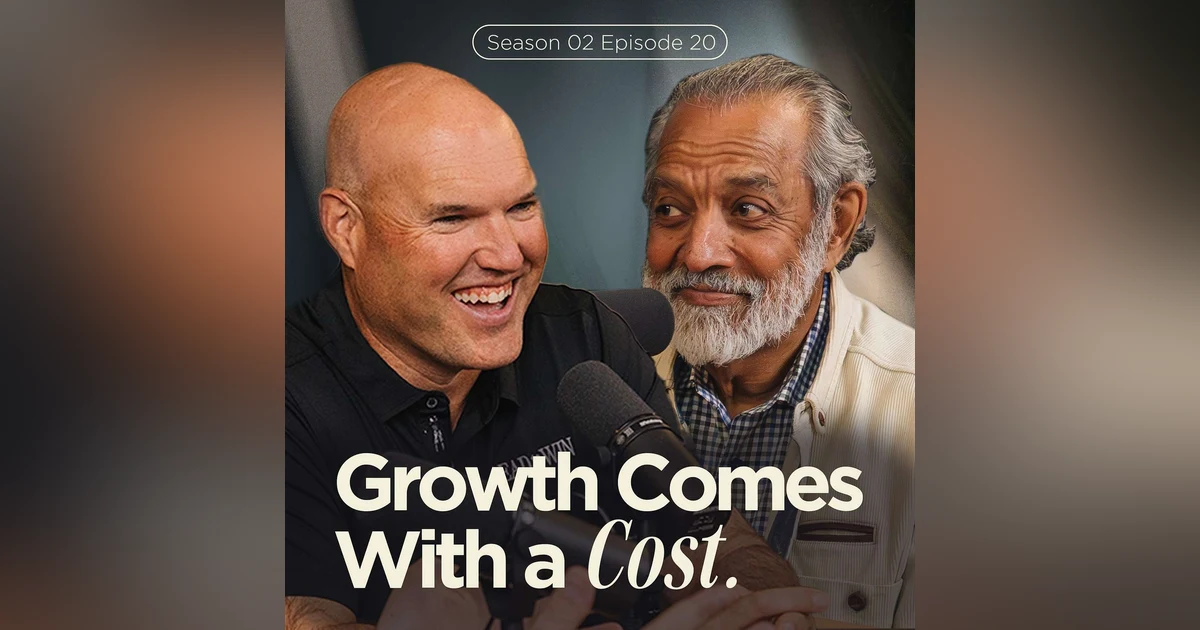


In this powerful episode of Lead to Win, Pastor Jeff Little sits down with leadership legend Dr. Sam Chand for an honest and deeply practical conversation about what real growth requires—and why so many leaders stall before they reach their potential.
TIMESTAMPS
2:16 - Leadership is Who You Are
4:34 - Systems, Scale, and Honest Self-Assessment
8:46 - Hunger, Curiosity, and Capacity
11:55 - Imagination as a Leadership Muscle
16:40 - When-and-Then Thinking Stifles Vision
19:40 - Wins You’ll Never See
22:30 - Growth Equals Pain Framework
27:40 - Playing to Win vs. Not to Lose
31:40 - Control the Uncontrollables: Grow Yourself
35:20 - Questions that Unlock Imagination
39:10 - Comfort vs. Growth: Choosing Forward
RESOURCES FROM DR. SAM CHAND
Sam Chand Leadership Institute: https://setyourowntuition.com/
https://Availbox.com/
LEAD TO WIN RESOURCES
More Resources: https://leadtowin.com/
Servolution: https://www.servolution.org/
Win With People: https://leadtowin.com/pages/win-with-...
Register for Leaders Gathering: https://leadersgathering.leadtowin.com/
Information on Milestone Church: https://milestonechurch.com/
FIND US AT: https://leadtowin.com
GET IN TOUCH: Contact us at info@leadtowin.com
FOLLOW PASTOR JEFF
Instagram: https://www.instagram.com/jefflittle/
Facebook: https://www.facebook.com/pastorjefflittle
FOLLOW LEAD TO WIN
Instagram: https://www.instagram.com/leadto.win/
00:00 - Pain Partners: The Big Idea
00:23 - Meet Dr. Sam Chand
02:16 - Leadership Is Who You Are
04:34 - Systems, Scale, And Honest Self-Assessment
08:46 - Hunger, Curiosity, And Capacity
11:55 - Imagination As A Leadership Muscle
16:40 - When-And-Then Thinking Stifles Vision
19:40 - Wins You’ll Never See
22:30 - Growth Equals Pain Framework
27:40 - Playing To Win Vs Not To Lose
31:40 - Control The Controllables: Grow Yourself
35:20 - Questions That Unlock Imagination
39:10 - Comfort Vs Growth: Choosing Forward
43:10 - Practical Supports: Institutes And Resources
47:10 - Culture Reset And Shepherding Mindset
50:10 - Closing And Listener Actions
0:01 I think the key to surviving pain is having pain partners. Pain partners. Pain partners. So good. These don't have to be highly spiritual or highly whatever. You just need people who believe more in you than you believe in yourself. So good. Today I want to welcome each and every one of you back to the Lead to Win podcast. And we have a special treat for this episode. We have my longtime friend, Dr. Sam Chan. It's just an honor to have you here with us. It's a joy to be here and to see what God has allowed you to do, and uh the lead to win and the traction's getting, and leaders all over our understanding that we lead to win.
0:55 Yeah. You know, I I actually a personal connection between me and Dr. Chan. I mean, I know some of you out there have obviously read he's got many resources in the leadership space. Um, one of his best books on culture. Uh I know so many leaders, both business and pastors. I I always want to remind people um this podcast, it it is in the space. I am a pastor, but I've also coached business leaders for over 30 years and discipled them and um you know build teams. And and so you've you've been in the space of being a college president, you've been in the space of coaching business leaders, you've also been for pastors like me being a part of that.
1:44 So, in some level, I mean, really it's it leadership transcends all of those environments. Absolutely it does. And doesn't matter what you do, you know, if you're playing uh football on the field or you're coaching the sidelines or you're pastoring or you're an entrepreneur or you're a business person, doesn't matter who you are, uh you are leading. You are leading. If you're if you're a mom or a dad at home, you know, I mean, wow. If you can lead there, you're in trouble, right? So you're leading everywhere you go. So leadership is not something of a title, it's not something of a role. It is it's not what you do, it's who you are. It's who you are.
2:24 And I I want to dig in that today because you love to talk about, and really today's focus is I want to talk to a person listening to this podcast, probably has some desire to grow, right? I mean, why would you listen to the podcast? You're curious, you're intrigued, maybe you've hit a place where you need new insights to go to the new place that you're called to go. So I want to I want to talk about the growth mindset. I want to talk about not just growing the business, but growing you. I want to go there, but to set it up a little bit more, uh, you again have been recognized around the world, done leadership consulting, speaking.
3:05 You're an author. You're actually, you and I actually uh had some time together thinking, coaching, giving me some ideas. You're always such a an inspiration to me to help someone on the outside have a picture, but you've also today spoken to about 400 business leaders. And so um, all of those things, um, you've you've authored over a dozen influential books, Leadership Pain. Wow, we could do the whole session on that. That book buzzed around uh the pastoral community for sure. Because whether people realize it or not, yeah, it can be painful being a pastor, can't it?
3:46 Very much so. Um who's holding your ladder in the one I spoke about, culture catalyst, because we know culture is really where it's it's it's all really centered at um writings, teachings in the area of of leadership, but but your focus being that we have to become more than just do, and that growth always comes with a cost. That there's always right, and so I want to talk about that today. Um so personal insight, I want to give everybody this. So, years ago, I believe 14 years ago, um, you and I had met before that, and we'd had some mutual friends.
4:33 I invited you in. You spent a considerable amount of time looking at my team. You went to dinner with my wife and I, met our family, you spent some time in our culture, you you you you listen, and then basically just said, hey, here's what I what I see, which is interesting sometimes as a consultant because you're basically just telling them stuff they know at some level. Yeah, yeah, yeah. Right? But it still is, and so you actually sent me over the report. I still have it, but I hadn't looked at it in a long time. And I'm kind of thinking, how do we even get here?
5:14 I look at all those problems. Yeah, I mean, they seemed insurmountable in 2011. They did, they did. But the good thing is, it was not the report, it was not my presence. You knew that you had more winds in you. You knew there was greater capacity. It was just uh elusive to you. You know, it's never ask fish the taste of water, right? Because fish is uh swimming in the water, it's hard to see around you because you're immersed in it, especially as a pastor. Right. Because you're loving people, you are counseling with people, you are preaching to people, you're prayful.
5:55 So you are in that ecosystem. So I remember our uh two conversations that we had at that uh about a year apart in there. So when I was here, I did not tell you anything you didn't already know. You told me a few things. Well, you you did say on our processes side, this is historic, and you're so kind and loving. So I'm not painting you as a bad person, but you said your processes are kindergarten, to which I had a rebuttal. Can we get to third grade, Sam? I mean, could we maybe be third grade? Yeah. I think in intrinsically you kind of knew on the inside that your systems your growth had outgrown your systems.
6:40 Right. That's what it was. Right. So, but we all know that if you want to keep growing, your systems have to be robust and sustainable enough to capture that. But you are here doing what you're doing and encouraging thousands of leaders internationally and nationally on how to lead to win, because you went through that space yourself. So when I read your book, you you sent it to me. That's so kind of you sending me that book. When I read the book, I said, wow. This book. And I remember texting you now. Yeah. And I said to you, this book should be in every pastor's hand. And more than that, this book should be a must-read, a required read in Christian Bible colleges, institutes, seminaries, uh, universities.
7:25 Yes. Because leads to win is not about just this is what you do. Because doing changes with our context. Right. It was more about this is how you need to think about it. Right. If this is who you are, then behave that like that. Right. And that's what caught my attention as to how you said it and uh your sarcasm. There's one sentence in the book that you say there are more ways to uh live an awful life than being a pastor. Yeah. I I I I learned that early on. I think one of my ways of saying it is there's more lucrative ways to be miserable.
8:06 And you say that in there. And I'm like, you would only choose this path if you really feel called and you feel a sense of stewardship for what God loves the most, and that's his people. And and I don't believe that stops at pastors. You're speaking of the book that I wrote called Win With People. It's in it, we'll link it in the description, uh, along with some resources you're currently working on that that are really all about serving people, right? They're really all about developing people, growing people, helping people. Um, and and I I wrote that book, you're right, you know, from even the journey of say 2011. Um I consider myself a fairly ordinary, everyday small town, grew up, took steps.
8:52 But if I would be able to offer something to anyone, would be be hungry, be inquisitive, you know. So I look back at that report and I remember and the thinking about it. And it isn't always even the strategy you've laid out. I look back on it and God took us here, and he, but but I think just our willingness to say, I want to be honest about where I am. And I I think that's one of the biggest hindrances a lot of times is not just the curiousness to grow, but the willingness to have a ruthless evaluation. Again, you were kind and you were very much on my team. I could feel that. You wanted me to win.
9:32 And so our dialogues were about a lot of times me seeing myself properly, and you do have more wins in you, but I do think that a lot of people don't really want a ruthless inventory of where they are. That report also included maybe some stuff I knew, but I was definitely keeping it in the background. Hey, here's a problem with an employee that you probably need to address. They're not doing well, or here's a barrier. And a lot of people aren't willing to look in that mirror. Well, it's it's painful. Yeah. And I think we all we are built with pain avoidance. We run towards pleasure and we run from pain.
10:16 And working with people, doesn't matter which sector you're in, you know, ministry, marketplace, church, corporate, wherever you're at, anytime you're working with people, it's going to be painful. It's true. And painful not necessarily in a dysfunctional way, but painful all the same. Because, for example, as a CEO of a company or a pastor of a church, you see that potential in that person. And you know they are not not just not reaching it, they are not uh reaching for it. Right. You know, reaching it is one thing, but reaching for it and you don't see the hunger, you don't see the curiosity, they don't you don't see uh their level of engagement. And and and that brings a lot of disappointment, a lot of pain because you know that they have more in them.
11:01 So true. I remember I remember I was uh growing up, and and every parent will understand this. We you know, because I was bringing uh straight D's home, uh and I remember my parents saying, you can do better. Yeah, they believed in me, yeah, but there's no movement on my part, and that brought them pain. Right. And I think that is the part that we have to say to people there is more in you. Right. We are image bearers, we are created in the image of God. There is a segment of infinity in all of us, and reaching for that infinity, always growing, always maturing, always reaching, always leading, always trying to say, where can I do better?
11:50 So, in my life, for example, Pastor Jeff, I want to be a better husband, right? I want to be a better father, I want to be a better grandfather, I want to be better at home, I want to be a better speaker, I want to be a better author. I want to be better. Yes. And that kind of drives you to say, where can I improve? What can I do different? And uh and I see that in you all along. You know, you are a discoverer, you are a pioneer, you're willing to go places many would not want to go. Uh, I had the privilege of walking through your your facilities here in Keller, Texas. Amazing, humongous. But that is not, it's never about the building.
12:32 Somebody had to think it. Right? And thinking needs audacity. Uh, because there are you had a hundred reasons why you couldn't do it, but then there were those three reasons that said, be audacious about it. Yeah. Why do you want to die? Could I would or should I life? This is not a rehearsal, this is a real thing. You won't get to, you know, you don't get to do a do-over on this. That's right. You know, once you exit this planet, next thing you're gonna be uh with the Lord. So the so when I see that in you, always rising, always pushing, always striving, always reaching for. Yes. So a lot of people say, well, they have not reached.
13:14 That's that's different from reaching. Yeah. You know, constantly reaching. Oh, I mean, uh I I'll just today, okay. So I have two phone calls with people that are important in in what I'm involved in. And they want to talk about their life. They want to talk about their future. We had a list of things to talk about, but what do they want to talk with their pastor, their their closest person building with? Let's talk about my life. Let's talk about and so, and then I thought it was interesting that I also had a phone call with a leader who has a small team who is starting something that's that's fairly embryonic, but it has captured some growth and it's getting momentum.
14:02 And he actually was saying to me about his team, what is the number one thing that I want to impart? You know, because he was talking about listening to the podcast and all of this. And I said, the magic is when your belief in them matches their passion and hunger, it isn't about I want to reach this, as you said, but they're reaching for, but you also have assessed their capacity and ability and hunger, that's when the magic happens. Because when you find a leader who has a team of people who they see in them that hunger, or even you as a as a coach or a consultant or your leadership institute for you, you're already passionate about what they could be.
14:50 But isn't it so exciting when that is matched with the people you're working with? Absolutely you know, I mean, it's like we have so many people today uh who want to reach great things, but at a basic level, it's like if you would up your passion, intensity, desire, hunger, curiosity. It's amazing, just that simple thing. What happens? Absolutely. In the last few years, Pastor Jeff, I have created or walked into a newer appreciation for the word imagination. Uh imagination of what could be, imagination of uh how I could be part of somebody else's life, imagination.
15:36 So when people get married, they're imagining them. So you know, you go to a store and you're you're trying on some stuff you are imagining. Uh you know, when I go with my wife shopping, she's saying, I'm imagining this top with that shirt in my closet. But the closet is uh 15 miles away. But she but in her imagination, she can see that. When you're when you're cooking a good uh bowl of spaghetti, you know, you're imagining. They say realtors say if they can get the people in the house imagining their furniture, they know they have it sold. There you go. Yeah. And I think somewhere in our leadership journey, we have lost imagination.
16:17 And I tell you why I think that is. But let me back up and say this. So we all know that a child grows more by the age of three than they will the rest of their life. Uh by the age of three, they know hot, cold, uh, floor, water. Uh they ask questions about why, why, why, and we try to shut them down. And and we succeed in that. And then they go to school, and in kindergarten, there's a little imagination in first grade, lesser imagination, high school, almost no imagination because everything is told.
17:01 You're not imagining anything. Right. And by the time you get your doctorate, you write, well, you've done it, you you you write dissertation on a topic that nobody else has ever written on. And and so now it is not imagination, it is data. Right. And you collate all of that to your hypothesis, to your question, and you come up with that. So the way our educational system is built is the child goes to school with all kinds of imagination. You know, they can play for hours in the room by themselves. But then imagination goes away.
17:41 Yeah. And now in our world, uh, I can Google church growth. I don't really imagine it. I can just take the best off. Right. You know, I can I can Google uh uh service transitions. So there's or tell AI now and they'll just they'll invent you your whole church right there, right? There you go. There you go. So I think if you could if I could imagine, when I when I came to the United States in 1973, uh I landed here in 1973, but for years before that, growing up in India in a pastor's home, I was imagining you know, what if I went, if I could get a visa, what would that be?
18:22 I mean, you were you were actually the janitor, I mean, at Beulah Heights, later you became its president in this higher education world that you have influence in, that you were talking about my book that you're talking to them. I mean, you have this influence in that space, but you were the janitor. How important was imagination in that? I didn't have imagination at that point. I had imagined because reality hit me. Okay. Okay. It's like my only imagination is how do I get out of here? Because I I don't want to be a janitor. So I was a janitor, breakfast cook, and dishwasher. Okay. And so I was concerned with finishing my stuff and be done with it.
19:03 Imagination was so, what should I say, suffocated. Remember, Jesus talks about the seed and thorns grew up, and it's nothing wrong with the seed. Choked it. So if you're not careful, leaders who are listening to me right now can choke their imagination because there's more voices telling them why they should wait. Or they fall into the trap of when and then, when we are pushing 500, then we'll start a second service. When we have this much money, when we have this much staff, when we have this much, whatever, the when and then. So we fall into that, and we have so many voices telling us this is not the right time, or just wait a little bit, or uh, you know, you we don't have it.
19:47 We don't want to go in that far into debt, or whatever that might be. Right. So the imagination gets stifled. And when I walked through your building today, you know what I saw? Imagination. Well, you know what talking about that? Like, I so believed in the vision that I would pray and I would say, I've worshipped in there. I said it so much that my staff, my senior staff said, You have to stop saying that because you sound crazy. You know, they were like, You're actually describing it so vividly that we're wondering, are you in some kind of hallucinating thing?
20:28 And it's like you're sounding too realistic, but you're talking about vision that becomes such a reality that I would communicate it as if I had already been there. Absolutely. And and you know, when when you're called crazy, I think in leadership, you gotta have a tinge of craziness. You do, yeah. Because uh, if you're to follow a well strategic path that does not require that imagination, that's that's a I don't know what to call it, that hunger within you, that insatiable appetite, yeah, that there is more. Okay, so I got a thousand people, but there are two more thousand. There are three. It's not about the people, it's not about the building, it's not about but it is knowing that there is more.
21:13 And I think lead to win helps us to understand you haven't won. You are winning. Yeah, that's good. Uh it's uh it's uh serial winnings. It's true. So the the the verse of scripture, you know, running the race to win, really the context of it is that this race continues into eternity. So you're right, like we have won it all because of Jesus, yeah, yeah. But we're winning even into eternity, right? So we're we're into this race that that affects and impacts, you know, winning for all eternity. You know, so you're going to the grocery store and in line and you happen to chat with somebody you don't know, and uh through the power of the Holy Spirit, you end up leading them to the Lord.
22:00 How big of a win is that? A big one. Right? Yeah. Uh so there are wins all around us, but I don't think we really see them as wins. Right. What we're doing right now uh is adding value to our friends in ministry and marketplace. That's a win. Somebody takes one sentence of it and applies it, that's a win. Right. And most of the wins in leadership you will never see. I uh this is how I describe what I do. Okay. My fruit grows on other people's trees. Yeah, I've heard you say that. That's a really good that's good. Yeah, so so once so that's my win.
22:40 That's true. My win is not my fruit or my success. My win is somebody else. Right. So there are a series of wins that you don't even know, and then years later, people walk up to you. I bet that's happened thousands of times in your life. People walk up to you and say, you know, about five years ago when you were preaching this, you don't remember any of it. Right. But they and when you said this, I went home and made this correction. How do you quantify that win, right? And if you set that as your win to have as much fruit growing other people's trees, you really underestimate the impact. Because even for you, you're the janitor there, and then we were just catching up now with the fact that you said you're trying to whatever the retiring or new phase.
23:26 I don't believe any of it. But anyway, you you did not really think it would impact all these churches in in in the South Pacific or the Australia, New Zealand, and it it the the international impact now for for you. You you don't no eye has seen, no ear has heard, nor has it entered into the heart of man what God has prepared. We I think we always underestimate sincerity, passion, totally, willingness. I mean, it God it God does exceedingly about once a week, Pastor Jeff, my wife and I look at each other and say, Who'd have thunk? Who'd have thunk?
24:06 You know, she came from a sharecropper's home. I came as an immigrant. Uh-huh. Uh I landed in GFK Airport in August 1973 with 87 cents in my pocket. So doesn't, you know, I've gone through trash cans, picking up lunch, all that to say, not a that's not a feel sorry for me, but that's part of my history. That's part of your story. That's part of my story. Yeah. That I see God's work handwork in my life. But I won't tell you, there's nothing strategic about my life. Yeah. Uh sitting down with you, speaking at conferences, writing books, it's just been faith faithfully just putting one step in front of the other, one step in front of the other.
24:47 And next thing you know, you are uh really doing something. Yeah. But it's there's and and I know, you know, again, because of just you know, protecting these friends of mine and others that people listening to this podcast, if we started using a list of names that you wouldn't say behind the scenes, the fruit, you know, and I know those stories, and you've had a huge impact on multiple areas that's impacting a lot of lives. I want to go to this idea because this book, I want to talk about this for a minute because it's like this book leadership pain, right? So I want to talk to someone who's all the way back at the janitor phase or someone who I run into, you know, a new season that comes with it's funny how we enter a new season, our brain processes all of the positives that I'm now stepping into, but tends to minimize.
25:43 Oh, but I also lost that, and that changed, and this challenge is going to come, and there's a new mountain and a, you know, the old saying, new levels, new devils, right? So we we sometimes underestimate that new season. But in the book, Leadership Pain, you say growth equals change, change equals loss, and loss equals pain. So can you unpack for a minute pain? Can you unpack why? You know, I shared this with our congregation this weekend that I got invited to a room that had all these people when I was a young pastor that I would have never thought they would invite me. And I and I think that's another thing of if you are hungry, this is not in the Bible, but there's a proverb that says, when the pupil is ready, the teacher will appear, right?
26:32 And so this idea that I've just found myself all the time being invited, I'm like, how did I get in here? When I got there, I thought I was gonna get all this strategic wisdom, but all of these people further than me with a big stewardship were talking about pain. They were talking about avoiding burnout, they were talking about like the the the challenges of the journey. Of course, I'm young and naive, and I'm like, I came here to get some ways to grow what I'm doing. I didn't come to listen to you guys cry. But I realized there was a lot of wisdom in that. So this this emphasis on burnout, maxed out, overwhelmed, or just pain in general.
27:13 Talk to us about why that's a necessary part of not necessarily burnout has to be a part of the journey, but why why is that in the narrative so much when I coach leaders, they want to talk about tell me your schedule. Why do you still love people? How have you made it this far? I think there's a higher thing too of people saying, I don't want to just finish the journey. What is winning? Like, can I finish good? So talk to us a little bit about that. I wrote that book, Leadership Pain, in 2015. Okay. I had no idea the nerve it would hit.
27:55 Oh, yeah. I remember my my publishers, my publishers did not want me to use the word pain in the title because the marketing team felt pain does not sell. So they wanted me to do something like an overcoming this or triumphant that. They gave me all kinds of things. And I said, no, no, I want leadership pain. That held up the publishing of the book for over three months. Okay. But I would not I would not uh let them do that. And then the book came out. So here we are uh sitting in 2025 that came out in 20 uh 15, 10 years ago, and under its category under Christian leadership, it is on Amazon at least, num above top 30.
28:40 So any book on leadership that can stay in the top 30 for 10 years, I mean, our brothers and sisters everywhere writing leadership books 10 a day, you know. So it's uh that means it hit an ad nerve. It definitely did, no question. And then I started getting calls from different people. The book, uh, and I'm getting to your answer. The the book became uh a lab for me. I started uh wondering why do some leaders do and others don't. So I started by eliminating Pastor Jeff. I started saying it's not the building, it's not location, it is not numbers, it's not money, it's not staff, it's not even vision.
29:23 Uh the differentiating factor was the pain that the leader was willing to handle. Wow, that's a big statement. Hold on, we got to pause right there, okay? Because there's a bunch of people listening. I coach a lot of leaders, I work with I I have said it. Well, if I just had these two staff members, if I could get that executive leader, if I had more money, if I had the building, if I had this, if I had that, if I was in a different city, if I had a we are so good at rationalizing in our mind that if I which is why comparison is such a trap. It is. Well, if I was there. But you're saying no matter where, from Australia to India.
30:08 To rural America, it is that leader's ability to process the pain that comes with their assignment. That is a big step. That is. So I the the book is built around one thesis sentence. You will grow only to the threshold of your pain. So what I found in leaders was that we have this unconsciously, we put a lid on our pain. This is as this is all I'm gonna handle. Right. Okay. And you've had many opportunities where you could have put a full stop. Right. Right. But you didn't. You would just put a comma and went on. So when I re recognized that that was the differentiating factor, I asked myself, so why does this happen?
30:55 So those hence the four steps. Okay. And that is growth equals change. Right. You cannot grow without changing. Right. Change equals loss. All change is about loss. Uh as a church grows, you may lose your seating. You build a new place. You've got to figure out the angle all over again, anyhow. Yeah, you lose the old place. We only moved 1.8 miles. But there were people who could not move 1.8 miles to this building we're sitting in today. That happens all the time. Every place that has moved. I the worst story I can tell you is this church in uh California that moved literally 36 feet.
31:40 And they lost 200 people. There you go. Yeah. Because loss. Yeah. So change so uh growth equals change, change equals loss, loss equals pain. Right. Hence growth equals pain. The first word there and the last word here. Growth equals pain. When organizations don't grow, that means somebody has made a decision. Oh, so good. To stop the pain. And so we insulate ourselves from pain. Right. And we uh run from pain. Uh so leaders will not talk about what they will not cast their vision because people think they're crazy.
32:20 Right. Uh they won't talk to their decision-making governance people because uh they're gonna get turned down. So it's like, why do I want to go into a meeting, cast vision for it, all so that they can turn me down? Right. Why do I want to deal with that pain? There you go. Uh why do I want to preach on this topic when I'm gonna lose 30 people? Right. Why do I want to deal with that pain? Or if you're down in the organization, okay, and you have to grapple with leading up to say, hey, I don't have clarity, or even get this. Has somebody above me decided that they don't want any more pain? And I'm down here being affected by that decision. Absolutely. Having that honest conversation can be painful.
33:02 I want to be disrespectful. Yeah. Um, so what ways though? So this is very important too. So so someone out there is like, man, I took this new job or I have this vision and I'm in the throws. I feel like I am just getting squeezed. I can remember times where, oh man, you know, you're just like, can I tolerate the amount of pain this is, the weight, the pressure, the unknown. So I know at any given moment on this podcast is somebody going, You are talking to me. What do we do? Okay. So one of the things that I have found working with leaders that don't have safe places to talk about their pain.
33:49 So we become an echo chamber with other people who feel sorry for us, who encourage us. I don't need encouragement right now. You know, I need for you to tell me, hey, get off your duff. Uh, what are you scared of? You know, let's uh chase this. I love it. I love it. So, because of the work that I do with very large organizations, very, very large churches. Uh my largest church client uh in their seats will see half a million people this Sunday. Yeah. So all that to say. Wow. That our church is a Sunday school class compared to that. Yeah. So all that to say that we uh I get to hear stories that will go to my will go to my grave with me.
34:35 I'm a safe place. You're a safe place. Now I think the key to surviving pain is having pain partners. Pain partners, a pain partner. So good. These don't have to be highly spiritual or highly whatever. You just need people who believe more in you than you believe in yourself. So good. So good. And these pain partners say, I hear what you're saying, but I think you're limiting yourself. I I hear where you are, but may I say to you, jump, take the risk? Yeah. You know? So the question becomes so what will what if it doesn't work out?
35:16 These people say to you, so tell me, what's the worst that could happen? Yeah. And you tell them, and then all of a sudden, once it comes out of your mouth, you say, I can do that. So I need pain partners who are willing to get down and dirty with me. There you go. I don't want sympathy. I don't want someone to say, hey, go after it. You know, I just need for someone to say, hey, listen, you won't have this opportunity again. Yeah. There's an open door. I love it. Paul said an effectual open door for me. Yeah. I'm gonna walk through it. And and the pain partners will keep you from so many of the things that you go through.
35:59 Most pastors, and my discovery is most pastors know a ton of people, but they don't have close friends. I've never talked about it. Um, and it's in the business world and in the pastoral world. I've never taught, but I feel like there's a moment coming where I back to imagination. I see myself talking to a group of leaders and talking about at what point did you get hurt? Did you have pain? And did you make the decision? I'm going across the drawbridge, across the moat, I'm pulling the bridge up, I'm climbing into the castle, and I'm looking out the window saying, You're not coming over here.
36:42 And I think a lot of, I mean, I even know great leaders that were doing great things who made that choice. Pain. I've seen that. I have a friend, he said, I'm not building any more church buildings. Well, that's gonna ripple through. I had somebody come here the other day, and we're now building campuses. He said, Well, I'm not going to church as a building campaign. I said, Well, don't come here because we're we're only 20 years old and we're trying to impact the king, you know, for Jesus to reach lost people. And where I live, they want to come somewhere for their kids to eat animal crackers. And so we have to put a place for them. So you don't want to come here. But at the moment I decide, and that and the new term is in the marketplace, not just among leaders, quiet quitting.
37:27 You know, so if that leader quiet quits, that culture is gonna have some challenges. I go to uh organizations, churches corporate, and I see people on the payroll who have already quit. Yeah. They quit, uh, they're still doing the job. Right. So if you're doing a performance evaluation, you can hold it. But their heart is not in it, their engagement is not in it, their motivation is not in it, they don't have the can-do atmosphere anymore. And and so what happens is they just quit. I'm working with a church right now, uh, they've got 32 locations. Okay. Uh their goal is to have a hundred, all in one state.
38:08 Uh well, when I uh they brought me in for a whole day just to meet with their board. Okay. And the the the whole day was about six hours. Only one question was they gave me was what should we be thinking about? There you go. That's that's a big question. It took us six hours to to work through that. What should we be thinking about? Right. And one of the things we talked about was people who were good with when you had 25 campuses. Right. Yeah. Who cannot go beyond that, who think you're becoming too impersonal, uh, who can even be pejorative about, hey, you're just building your own kingdom. Right. Are we a church or are we an enterprise?
38:50 And all those all those kind of things happen. Right. So people make decisions, consciously or unconsciously, but their decision, like you said earlier, impacts the team. Exactly. Because if you're not thinking winning, then you're thinking losing. So what we start doing then, Pastor Jeff, is we start playing not to lose. Oh, it's so good. Rather than playing too. There's a difference in playing to win and not and playing not to lose. You can protect what you have. Yeah. You hear the conundrum. The only teams that start playing not to lose are teams that are ahead in the score. Exactly. You know? Exactly.
39:30 So the under what the whole theory about the underdog is nobody expects us to win. So we're gonna go and give it a thousand plus percent. Yeah. We'll they bring heart to the game. They want to prove all these people wrong. I've seen this past room business leaders because they have this this this is what they say on paper. I'm going to work really hard, I'm going to, you know, do these things to where I get to this point where I'm going to be extremely generous. Only the fact is they were never generous along the way. And then they end up older and they're more scared than they were when they were young. And they and it never gets to that, right? I mean, people look at me and say, Well, you planted this church, you moved, you just had you know suitcase and your friends.
40:14 I'm like, I didn't really have anything to lose. When we signed our first note, the board said, We want you to sign too. I'm like, Well, you can't get anything out of that. I'll sign whatever you want me to sign. Well, what are you going to repossess? Exactly. Yeah. And so I think what you're saying is this uh stewardship mindset, stewarding my heart. I'm not trying to be something. I have no one, nothing to prove, no one to impress, but I do have a stewardship of the people I'm leading to not insulate, to not let that pain define me, but to continue to grow as long as God's given me breath and stewardship to be able to be a part of those things, right?
40:56 I mean, I have to keep moving forward. There's no neutral in the kingdom, is what you're saying, right? And and and as a as a father and a grandfather, yeah, uh I say to myself, you need to make sure they see you growing. There you go. Because I I got two daughters, 44-42, yeah, I got grandkids, I mean I got son-in-law, and so on and so forth. Because I am trying to be uh the best leader at home. There you go. And I'm leading by example, so they they see me reading, they see me talking to people, they they they see me doing uh growth things for my life, intentional growth things, and they see me passing on stuff that I said, hey, this is really good.
41:40 You all may want to read this. Right. Or let's talk about this. Because I don't want them to think like, hey, you know, dad turned turned 75 and and he's just gonna coast. There you go. You know, so my kids will say, you know, dad might do things differently, he might deliver what God's placed on him deliver differently, right? But he's never gonna stop doing. Exactly. Okay. That's all I live for now. For my kids to look at me and say that I'm always gonna be growing. I think that's probably one of the greatest impartations as a dad. I'm a new grandfather now, it's the greatest thing to slice bread. I mean, it's but I want I want a model for them that I'm I'm still in love with Jesus, I'm in love with my calling, I'm still passionate about what God's called me to do.
42:28 And I don't think there's any replacing that. But I reason I think leadership pain hit it so on the head is that's the test that many can't pass. That one. That one is the test. It's like, how am I gonna process this rejection? How am I gonna process this? Um, you know, I recently went through some things to where I just I had to go revisit Jesus was a lamb who was led to slaughter who did not open his mouth. Yeah, you know, talk about even going through pain that that you can't publicly. Well, you need a pain partner, though. I agree with that, having pastors and mentors, and I've been so fortunate to have those people in my life to be able to talk with and to be honest, and and to have those people that are not just gonna commiserate with with negativity, but allow you to be honest and then be like, okay, well, we're gonna get our heart right and we're gonna do what's right, and we're gonna move forward, you know.
43:29 My last question is before I I want you to tell us a little bit about what you're working on now. We do have a unique culture. I I I think I think so much uh in life and leadership and and in is is two things can be true at one time. A lot of the principles we're talking about are are thousands of years old that go back to you know very basic truths. But we are leading now. I've been doing this 30 years. So I started as a pastor. You remember these days with no cell phone? I remember getting my first text message. Now we're talking about AI, you know. I I just recently read this book about, and I was just like, my mind was like frying.
44:10 Okay. I'm not scared, but I'm also when you really look at it, it's a different world. But as you get around and you listen, what what do you think is the biggest challenge facing leaders, whether it's in the church or the marketplace? What what is, I mean, we you said pain's a big one, but but in in a more practical sense, someone out there, what would you say to one what is something we need to be thinking about? What it what what in the culture in the world today as leaders in 2025, what do we need to think about? When we were growing up, I was growing up, uh we didn't have so many things as we have today that are beyond our control.
44:55 Uh who calls me is beyond my control. The text messages are beyond my control. My emails are beyond my control. I keep deleting them, but they keep sending, I keep blocking them, and they keep but they have more their AI keep generating new, so I keep getting those from Ace Hardware, from Costco, from Sam's Club, you know. It's like so I I I get them and you do too. Everybody does, right? So we have lesser control. Yes. Uh social media uh has taken away uh the control we when I didn't see, you know, cameras are amazing. You know, you can take 200 people, make it look 2,000. It's all on the camera. And and and when was the last time that you saw somebody on social media, pastor on social media, come on Monday and say, Yesterday was terrible?
45:43 You know, my preaching died, uh, our budget was did not come through. Yeah, I don't know if God was there, people were not there. It was just when was the last time? Nobody ever puts that up there or or pants the crowd saying, see all the empty seats. I mean, this is my last Sunday. No, nobody does that. So they're all this coming at us that we don't control. And then people are coming at us who are getting fed with their 24-7 news cycle, right? Whatever channel you're watching. So you come uh like a rabid person, you know, in the same way. And the algorithms feeding you that that narrative in an echo chamber. Totally. So we have fewer things we control.
46:24 Let me say it another way. There are more things controlling our ecosystem, hence our culture, right than ever before. So the question becomes for me, what is it I I can control? And on some good days, the only thing I can control is me. Yeah. So at this juncture in my life, Pastor Jeff, I am committed to growing personally. Right. I'm gonna grow as a father, as a husband, as a grandfather, I'm gonna grow uh as a good uh uh father-in-law, uh, I'm gonna grow in my intellect, I'm gonna grow in my academics, I'm gonna grow spiritually, I'm gonna grow biblically.
47:07 That's the only thing I can control. Love it. Love it. And so I'm this is gonna sound terrible. I'm into me. Yeah. Not in a selfish way, right? But I wanna I wanna grow because I cannot control the educational system, it is different now. You know, the university, uh, I I left the university in 2003. That whole industry does not exist anymore. Exactly. The church I grew up in, probably the church you grew up in, does not exist anymore. True. Uh, our delivery systems are different, our our our worship experiences are different. The people who come to our churches come with a different mindset. So, all that to say I want to focus on what I can focus on.
47:51 Yeah, I cannot fix all of this. So when I read about AI and I hear lectures on AI and I'm watching videos on AI, I'm yeah. I'm schizo. Yeah, yeah. You know, I I yeah, but I don't understand it. Yeah. And that's okay. Yeah. So what is it that I understand? I understand God loves me, He's chosen me, He's got He's got his hands on my life. Yeah. I just want to live right, do right, behave right. You know, I just want to be pleasing to heaven. There you go. Uh there you go. I'm not trying to make anyone happy. It's so good. Yeah, I mean, it's coming back to we live in a world today of of wanting better and bigger, and and and really when you talk to someone like you, Dr.
48:35 John Maxwell, who's a good friend of yours along the way, y'all were on the journey. Anytime you get around someone who lives in that space, if anybody's listening, whether it's a mom, a teacher, we just had a teacher reach out and say, hey, I'm this is really helping me. I mean the teachers are are are are in a leadership uh world. I mean, they're managing so many things. It still all comes back to you being, you becoming at the basic level of leadership. It is it you cannot replace curiosity, you cannot replace uh a personal growth mindset, an attitude, uh, how you manage and and how you look at pain.
49:18 You know, you you can't replace that. It's just I was talking to uh someone even this week, you know. I find myself in the space of what you've written about, asking questions because we talked about imagination. Well, what do you see? Well, what if, what if I asked uh some this question, because they're kind of stuck and and struggling, but on the outside it looks like they're really successful. But they're really stuck. I was surprised. I thought we were going to talk about here's five initiatives to go to your next place. They were like, Well, I don't know if I really want to do it. You know, it's usually you're just like, What? And you ask questions like if money were no object, if your wife would say, I'm excited, if your friends would jump on board, if every detail was worked out and there was someone to organize it all, what would you do?
50:07 And that's imagination. That's possibility thinking to go, what if God has this destination for me that does touch that passion area? You know, so you you ask you you you ask those kind of questions, this this imagination question, you know? You know, it's blue sky thinking. There is there is no sky, there's it's all blue. So uh what's holding you back? Yeah. So the subsequent question to the first question, what would you do if there was nothing holding you back? Is so what's holding you back? Yeah. Yeah. You know, so what's stopping you from getting there?
50:50 Now you may not be able to move there tomorrow, but what is it that you can do, bring your line uh life in alignment that 18 months down the road, right? You can do that. But what's I'm reaffirming the what you write about when I got to that, pain. The pain had clouded the ability to look at a preferable future. And so when I started unpacking it, it was the pain of this and the pain of that, which made it made it challenging to see ahead. And I think you have to help them unpack there is no painless because comfort and growth don't go together, it definitely don't.
51:32 And and and so that's a topic you cannot teach. So it cannot be taught, but it can be caught. Yeah. Uh because it makes academic sense. Right. But some of our listeners are going through hell right now, right? And everything within them wants to move towards the comfort part of it. Right. Because who wants to run to pain? No, that nobody does. Yeah. So so the so everything is going that way, and yet you have to say to yourself, if I make this conclusion that I'm not going to deal with this, yeah, then you are having a very, very uh different decision.
52:13 You're not going forward at best, you will stay stuck. Right. So there's And you don't need that person in your life that doesn't allow you to have the honesty, right? Like suck it up like a lot of what I grew up with. You know, so you need that. But you also, what's more common today is, you know, poor baby, right? It's like it's not, it's so I grew up with don't be a baby. Yeah, yeah. But nowadays it's all poor baby. Very fragile. Very fragile. Very fragile, very victim, very, you know. Entitlement. Entitlement, yeah. You know. So I don't need someone telling me poor baby either. So, you know, I think we have some bad theologies, such as uh where God guides, he provides.
52:58 I won't tell you. Ain't no provision. And you get there and say, Where are you? Yeah. And then they say, Well, he's an on-time God. He's always been late for me. So it's so true. You know, so these are the You talked about the great wide effective, you know, this this effectual door. Well, this Macedonian call. I always think about whoever went with Paul was like, so you saw what vision? Yeah, right. Because we're getting killed over here. No. You know, I mean, it it it's it's you're exactly right. I was doing uh a round table for uh church planters, about 15 of them or so in the room.
53:40 They all had their money, they all had the launch groups, they had the locations, everything was there. I was kind of the cherry on their training or whatever it was. And so I'm spending a half a day with them. At the end, this guy raises his hand, he says, Dr. Chand, if you could tell me one thing, there you go, what would that be? I said, That's simple. Run. Run. That's funny. Quit before you have to. Quit before you have to. What you're signing up for is very sexy right now. Oh, but oh, it's you're gonna get slapped more ways than you realize. Oh. And there'll be disappointments in life. There'll be a lot of joys, but a lot of disappointments.
54:22 Yeah. But we make decisions based on our disappointments. We say, I'll never do that again. Yeah. You know, why did I do that? Right. And boy, uh, they can do whatever they want to. And so we start writing off people, we start writing off vision simply because out of our pain, out of disappointment, out of our disillusionment, we went in with this picture. Oh, good. And and we don't see that picture. Good example of that. If I could talk about Jeremiah for a moment, so Jeremiah chapter one is my are my life verses. Okay. That God is promising him, you're gonna do this and you're gonna tear this down, you're gonna build that up, you're gonna be uh something here, you're gonna be you're gonna be a big deal, Jeremiah.
55:06 I mean, I mean, hey, listen, you hang with me, I'm gonna take you places. Yeah. Well, then in chapter 18, we see him hanging outside the church walls, so to speak, beat up, and he's pointing a bony finger at God saying, You're bigger than me, and you bullied me, and I'll never preach your word, and then all of a sudden something, and we've all preached from that, but his bones. But the my can my thing is in chapter one, you promised him panacea. Yeah. Yeah. David, yeah, you know, you're gonna be king. Man, man is running for 25 years for his life. So so there's a big difference between a calling and its manifestation.
55:49 And you gotta behave yourself through that. I mean, be it Abraham uh for 25 years waiting for his promise, messes up, then finally has Isaac. It's it's I love it. It's that it's my uh my other favorite one, because you know, prayer is one of these things that you know you want people say, I mean, I should just pray more, you know. Even if you're a business leader out there, praying, getting connected to God probably help you a lot in terms of what you're facing every day. But it most people feel a little bit inadequate. And I think about the disciples, where Jesus is over there, man, he's in torment, sweat, and blood. Can't you guys just come have a short prayer meeting with me? I know. Then we turn the pages after the Holy Spirit comes and they have the responsibility of the church that says they were devoted to prayer.
56:29 Yeah, I bet. What changed? Yeah, yeah. You got the real weight now, right? So it's it's it's it's it's so evident throughout scripture that we as frail human beings, as you said, we worship pain by trying to avoid it. And in leadership, it's it's how you I it's so interesting that because I I believe how my book When with People, to be a shepherd has a lot to do with how you process the painful moments along the way as to whether you resent his people or you still get a joy to serve his people, even even if you've had challenges. What Dr. Chan, it's been such a great time. You're you're such an inspiration.
57:10 I could talk to you forever. Um, I don't I think I think everybody wants to grow in their leadership, but not everybody has invested the energy and time to think through what we do. And you've done such a good job encouraging us all in what we do and helping us to think. And and I and I will and we I want every person to take away if you'll if you'll have a growth mindset and you'll understand that's going to bring some pain, but you'll process that pain healthily and and leaders isolate. You I've heard you say today, like I keep, you know, don't isolate, get some pain partners. All of those things so powerful, but nothing replaces that childlike curiosity, growth, hunger.
57:53 Even if I have a tough day, what a privilege today to move to what God's called me to. What are you doing now? What things could my an hour lead to win? You're on the lead to win staff now, Dr. Chan. You're part of our team. You're happy to do it. So we'll sign that in just a little bit. I'm honored. Okay. Honored. What would you say to them uh that you've been, you know, building for the leader out there if we want to grow? What because you've always given us ways to grow. What what would you tell everybody that could be a source of uh them growing now? Yeah. So the first thing I would do is to find people who believe in me. Believing the vision is easier than believing in me.
58:35 Right. So people can believe for a larger vision, but how needs one someone to believe in me? Yeah. So you have to ask yourself, who are the people who believe in me? Yeah. It could be someone in the family, could be friends, could be college buddies that you grew up with. So that's the first thing that I need in my life. Somebody believes. You've put some resources together. Like if I if there's someone out there, now I really need to invest in my growth. What what things have you what do what we've got your books? I know the the books I mentioned. What other what other things do you do now? I have so many resources, but let me give you two of them. Okay.
59:15 And I'm sure that your team will uh put it out there. I have a program called Sam Chan Leadership Institute. Okay. So uh what you get for that, I'll give you a website in just a moment. What you get for that is you get a book a month. It can be uh hard copy or digital. You get a book a month, you get three videos from me teaching that book, and the end of it you get a certificate of completion. Okay. And we the website for that is here's the interesting part setyourntuition.com. Set your own tuition.com, yeah. I should have sent all my kids to that college. Yeah.
59:56 Send your setyourntuition.com and no questions asked. We've had people in other countries who could not afford anything. Yeah. Just one dollar. Now I can give it away free. Yeah. But I want some skin in the game. Right. So for one dollar, people get uh uh thwel books, thirty-six videos on a regular basis and a certificate after that. So I'm not suggesting you pay one dollar, but people have done that, thousands of people have done that. So you set your own tuition.com and no questions asked, immediately you will be placed into start receiving however you want to do that. Okay. So that's one.
1:00:36 The other one is if people want to uh learn and grow, we have a thing that we've called availablebox.com. Availboxbox.com. By the way, we're gonna put this in the uh we'll put it in the description and the notes and we'll have a way for people to connect. Availbox.com, you get two books a month. Okay. You have uh access to thousands of podcasts, thousands of uh uh videos, all on leadership. Okay for ten dollars. Great, great. So I'm at a stage in my life, I'm not trying to generate income.
1:01:20 Lord's been good to me, and I'm not saying that braggadociously, it's just God has been good to me. Yeah, so I wanna give it away, cover costs, yeah, and give it away. So availbox.com I love that and like clockwork, you just become part of the leadership. So it'll be immersion experience and leadership. So if you are listening to me right now and you want to have an immersion experience leadership, not just you, but maybe your executive team or your board or whoever might be your lead departments, uh they just sign up for it and they become part of immersion. Now, what a lot of uh churches are doing, for example, is they will say, okay, this is the book that we're gonna focus on this month, and they take the leadership through that.
1:02:08 It's really good. A lot of leadership just like you did with your leadership. Yeah, I want to get that. I mean, I know I've been on the Aveil podcast, but we want to get the win with people because that's what I did is I wrote the training guide because I want all the the teams, I'd like to see people take their team and get let's study this. And uh, like what you're doing is if if if if we grow and our team grows, then the people we serve will grow as the principle. And you mean we talk about uh in in some kind of a way getting people on the same page, the best thing you can do to get us on the same page is can I hold up this book for a second, yes you may. Okay, uh to uh take this book uh Winnie Win with people, and you see the shepherd motif over here, and if you took three months, four months to work through it, not just read through it, work through it.
1:03:05 I guarantee you, I guarantee you that if you're a church, it'll grow, if you're a corporation, you will grow, because uh it's a way of thinking. In this book, you and you didn't ask me to do all this. No, no, I think it's great. We will probably cut this out and send it out. So, what this book does is allows you to have a way of thinking. Earlier you called it growth mindset. It's it allows me to say, if I am a shepherd, how should I behave? Right, and what is my stewardship responsibility for that? I would highly encourage anybody who's uh watching this. Uh, when I read this book, I immediately texted you and said, This is a fantastic book.
1:03:46 I wish I had this earlier, because it this tells me that sheep bite, but but I'm a shepherd. Yep. And a shepherd is a calling, right? And shepherd is responsibility, right? Shepherd is stewardship. So, yeah, great book. I I think if if I was pastoring again, I would lead my team through this because it's gonna it's a culture reset. Culture reset. They don't see themselves doing things, they're they see themselves being somebody. Being something, yes, and so good. So, yeah, great book. Keep writing. Thank you so much. I just thank you for being here with us.
1:04:27 Um, I'm gonna have to get you engaged more with the lead-to-win world because you are such a gift to all of us. You're you've resource, encouragement. We're all better because of you. I want to say thank you for for thank you. And you can't retire because we still need you. Okay. Yeah, thank you so much. Thank you. I want to say thank you for checking out this episode of the Lead to Win podcast. I want you to know that I love and my team loves getting this kind of content into your life so it can help you lead and win at what matters most. So I'd love for you to do me a favor like, comment, especially subscribe if you would, so that we can make sure that we're able to get to you some of the things that are going to help you lead to win.