Join the email list for iNNOVATION Insights News and stay in the know!
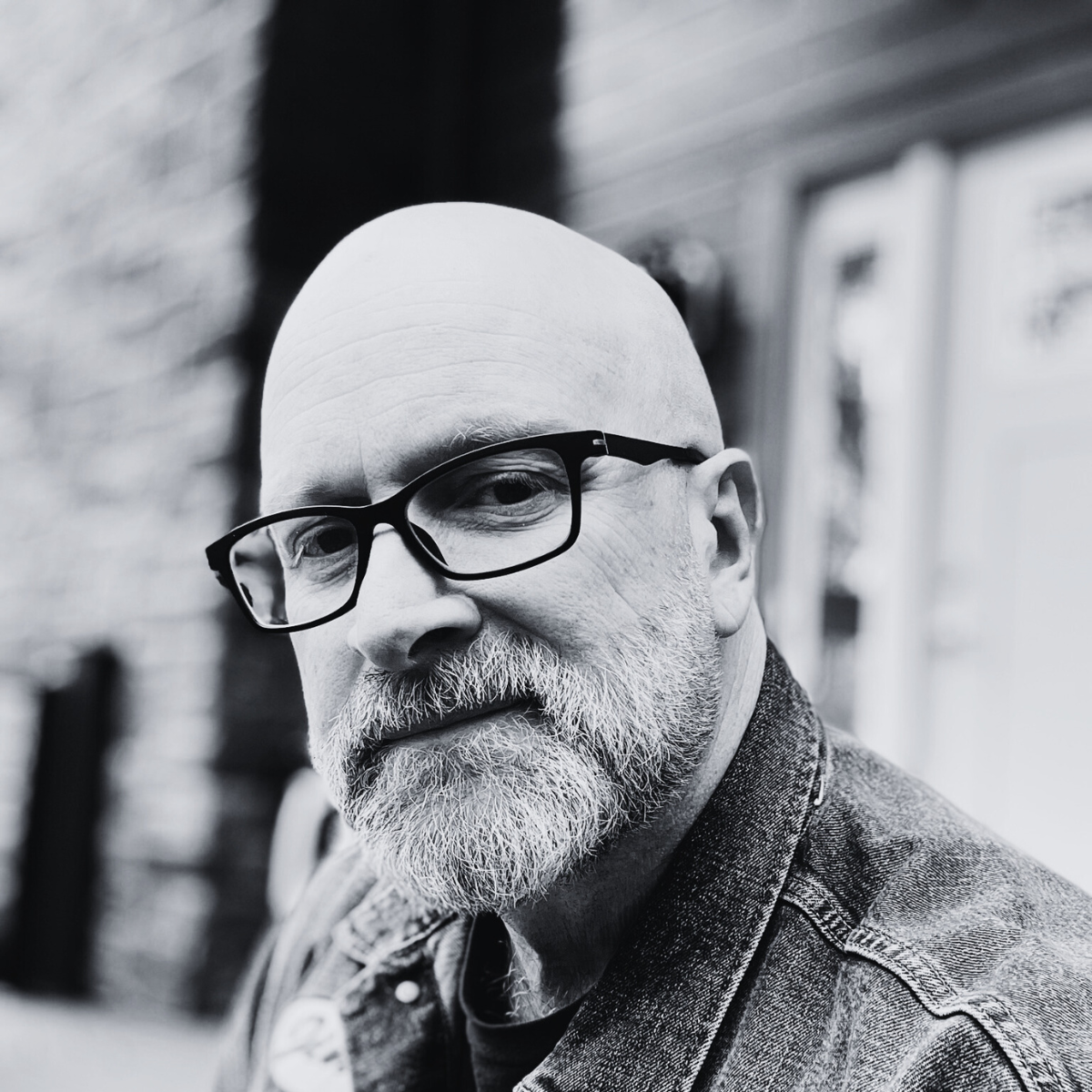
Specialist, 3D Design & Implementation | Academic Lead at CLO Virtual Fashion Inc.
Before he could write, Jim was drawing. At the age of two he scrawled on a piece of lined paper and declared, “It’s a worm”. After that, armed with his battered briefcase filled with pencils and the paper his father would bring home from work, he was always drawing.
“Drawing was the one thing I knew I could do as well as anyone,” he says now. “I was entered in minor contests in school growing up and always did well. I didn’t think much about it, because it was always just my thing.” As high school came to an end, he was accepted into the Herron School of Art at the Campus of Indiana University, Purdue University at Indianapolis, the skills in drawing being the main reason he was accepted.
“My professors remembered my portfolio and my drawing skills and knew immediately everything else would come easy. It’s what I believe; success in the visual arts comes from being able to put pencil to paper... to draw. To be able to see things and interpret them onto paper via the pencil is crucial,” Jim explains. “Once you can draw something to look like your reference, I believe that creating can come easier. Not easy, per se, but easier.”
A Bachelor’s Degree in Fine Arts gave him the creative background for everything else to come. “My major was in painting, but I took enough drawing, photography and ceramics that if minors were given, they would have qualified.” He views the years at the Herron School of Art as the most important preparation for living life as an artist. “I was fortunate to be able to study in Italy for six weeks between my second and third years and I came back so inspired,” he recalls with fondness. “That was a catapult for creativity for the rest of my life.”
In the fall of 1987 he moved to New York City. Using his artist background he began selling art supplies to the designers in the Fashion District. “I met many of the people in the major design houses and began doing freelance work,” he explains. At the time he did a series of hand-painted prints for Nicole Miller and some odd jobs here and there. For a short time, he worked with a partner in their own design studio, where he used a computer for the first time.
“At first I was against it... after all I was an ‘artist’,” he chuckles, “and thought that I was trained like the masters so I wanted to use those skills. Once I came to the realization that it was simply a tool to expand my creativity and it would make aspects of my job easier, I was hooked.” This led to work at a printing company where he delved into the use of type and layout.
“Those years were great because you solved problems which seemed simple, but were not. It was my job to make them LOOK simple,” Jim explains. “Understanding graphic design and layout is a skill that can translate to many other things. If you can lay out a business card or flyer or poster and make it pleasing to look at, you have the rudimentary skills to move to the next level.” To this day typography remains a passion.
For over 2 decades he worked for Design Works International where he designed everything from business cards to PowerPoint presentations, textile designs to packaging designs, fashion flats to children’s car seats. “It was a great environment because I did so many different things,” he says. “One day I would be laying out trend boards for home and interiors, the next day I would be working on groups of original print designs, or putting patterns into repeats for Calvin Klein.
“Without Design Works International, I would not have the extensive skill set I have today,” he says fondly.
His career in teaching began with a recommendation from a colleague. “When I first started designing on the computer, there weren’t many resources available to gain information. Being self-taught, I told myself that if I had the ability to give back; to pass on what I spent time teaching myself, I would do it without question.” Now that drawing is something that he teaches, both traditional AND digital, he’s come full circle. “Now I combine traditional and digital tools and take the drawing to the next level. I truly believe I can teach anyone to see and improve their drawing skills... anyone who wants to learn, that is.”
“There was always a desire to work in 3D,” he says, “I just never knew in what way.” In the summer of 2019 a colleague introduced him to CLO and he was hooked. In February 2020 he started at CLO 3D as a Specialist in Design and Implementation. He would still be able to teach, but now to a different set of students. After the first year he was tasked with the leading the academic push in the Americas. “It only made sense,” he explains. “Having taught in a university setting I understood the administration and implementation process.” He now is able to pass on what he knows to instructors teaching the next wave of designers. “It is a small community, fashion design instructors,” he says with a smile. “We are all one person away from knowing each other!”
“I’m grateful to be part of an incredible team at CLO. I have never known a group of people so smart, so warm and so willing to help. I feel fortunate to have found CLO.”