
 Spotify

 Apple Podcasts

 YouTube

 Amazon Music

 PocketCasts

 Castbox

 iHeartRadio
Nikki Viveca - Love Poems, Limerence & Living Out Loud

Join the Slam Fam on Patreon for exclusive bonus content and more:
https://www.patreon.com/ittis
Check out the I Think, Therefore I Slam Merch Store:
https://ittis.deco-apparel.com/
Nikki Viveca is a Melbourne-based multidisciplinary artist whose work spans stand-up comedy, performance poetry, theatre, dance, burlesque, and improvisation. A Latvian-Australian trans woman in her 40s, she brings a bold and unapologetically queer lens to her art, exploring themes of gender, identity, and asexuality. Nikki has won the Midsumma and Trans Poetry Slams, and her solo shows like "Asexual Healing" and "Wasp Movie" blend humour with introspection. She co-created "The Femme Commandments" and was featured in "Gender Euphoria". Active in Melbourne’s queer arts scene, Nikki is known for mixing vulnerability, wit, and rhythmic lyricism in her storytelling.
Follow Nikki on
Instagram:
https://www.instagram.com/nikkiviveca
Facebook:
https://www.facebook.com/nikkiviveca/
Follow ITTIS on Instagram:
https://www.instagram.com/ithinkthereforeislampodcast
Find Melbourne spoken word events:
https://melbournepoetry.com/
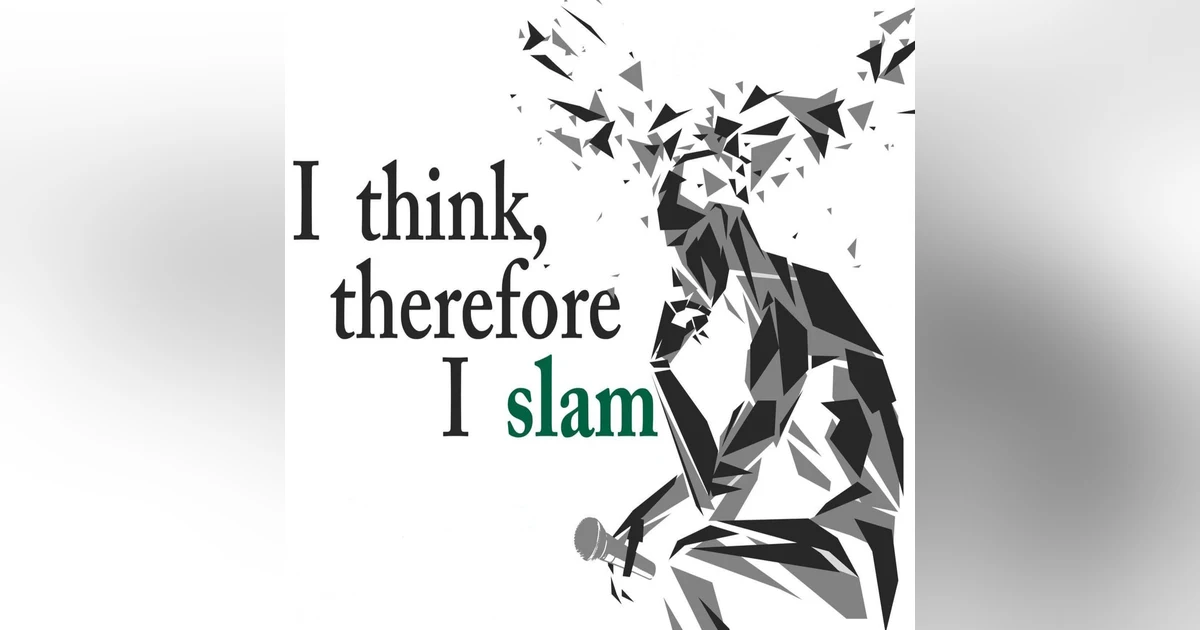
Podcast art by Doane Stuart School
0:00 Slam poetry doesn't care if it's perfect. It's down the slam. It's the biggest poem I've got inside of she. Was a thief. You love me. It's love, a haunted house, yelling, angry blood black nothingness began to spin. This day I hate pork. Chops. I am the master. I am the captain myself, straight out of State Library Victoria. It's I think Therefore I Slam, the podcast bringing you the best slam poetry and spoken word artist from around Australia and beyond. My name is Andrew and my guest today is a multidisciplinary artist based in Nahm, Australia whose work spans stand up comedy, performance poetry, theatre, dance, burlesque and improvisation.
0:46 As a 40 something Latvian Australian trans woman, she brings a deeply personal and unapologetically queer lens to her art. She won both the Midsummer Poetry Slam and the Trans Poetry Slam in 2019 and was a runner up for the Melbourne Spoken Word Prize that same year where I first saw her perform. Her solo shows include Asexual Healing, The Lazy Show and WASP Movie. She's also performed in the Lewis Trilogy at Sydney's Griffin Theatre and was part of the acclaimed Cabaret Gender Euphoria, featured at Sydney World Pride and awarded a Community Inspiration Award at the 2023 Victorian Pride Awards. Please welcome Nikki Vivica. Hello. Hi. It's nice to be here.
1:27 Thank you so much, Nikki, for your, your help in just getting my pronunciation of your surname correct because I've I've heard every, every variety. Yeah, it's like it's actually Vivica is actually my second name. Yes. And I stopped using my actual sort of surname, my family name, which is a hard to pronounce slightly a name. And I thought, well, I guess my everyone knows the name Vivica. Surely those famous ladies called Vivica. Oh, it makes me. Think of like Vicki and Linda the the duo. Oh yeah, cool. Yeah. Yeah, but I mean, like there were there were some famous Vivicus. There's Vivica Fox is Vivica Linforces like a bunch of famous Vivicus, but people mispronounce it wildly. And I thought, oh great, I changed one hard to pronounce name for another hard to pronounce name. Well done.
2:10 Joining the halls of, of, of famous or notable vivekas, you're, you're here with us today. We'd love to hear your first piece. I know that you've put a lot of thought into curating your, your three pieces today. Can you tell us what you're about to perform? Sure. Would you like to hear a recent slamp on like well done recently, which I did for Rucker Slam up in Brisbane. Oh yeah, I made disappointing pancakes the other day. Do you have any idea how messed up a pancake needs to be for me to be disappointed in it? I fucking love pancakes and these ones are fucking unlovable. Somehow simultaneously lumpy and runny, both over and undercooked at the same time. Not even drowning them in Maple syrup could save them. Nothing could.
3:02 They were bad cakes, sad cakes, tragic cakes, trash cakes, and I ate them anyway, feeling that I didn't deserve any better. The truth is, I was too gay to cook that day. Thinking about your lips and not paying attention. I've been trying not to to be that gay. I've been trying hard to to not think about your. But there is the evidence. The hot mess on my plate. In my defense, I haven't unpacked my kitchenware at the new place, and I didn't have a sifter or a nice large bowl for mixing. In my defense, you're lit.
3:48 But now I've got the feeling like I'd be a bad girlfriend who ruins her own favorite food and probably can't be trusted not to make a mess of love too. You don't really eat pancakes because of the gluten, so you might not even know. We could kiss, that'd be cute. We could keep kissing. That'd be and we could keep this up and you'd never find out how bad of a girlfriend I secretly was. My sad and terrible trash cakes would be my secret shame when we're 80 and living in Dalesfeed. One day you'd come home earlier than expected and you'd catch me with a batch of them, shoveling them into my face.
4:32 You'd gasp and I'd say, don't look at me, I'm a monster. The truth is, my gay shame always takes new shapes, attaches to anything it can. Bad because gay becomes bad at being gay, becomes the special kind of bad who'd commit crimes against the noble crape. And even in my wildest daydreams, you walk away because of course you do. The very act of wanting makes me afraid and somewhere an alarm is screaming and somewhere something is burning, because again, I got to thinking about your lips and got distracted.
5:17 Very nice, Nikki. Thank you for that. They, they say that, you know breakfast is the most important meal of the day, right? Maybe it's also the most poetic and the most meaningful. It's it's look, it's my favorite meal. Yeah, I love a breakfast. I love a breakfast out. I love a breakfast in. It is the most poetic meal too, because if you're writing a poem, if I'm writing a poem, I often don't get out of my dressing gown. Like I'll wake up with the idea and I'm not going to leave until it's written and I will just flap about a house in my dressing gown all day. And so breakfast is the meal I will eat at some point in that process. So if I am going to have a meal that goes to get the writing poetry, usually breakfast. Breakfast are one of those sneaky like 2:00 AM snacks 'cause sometimes I write in the middle of the night as well.
5:58 I mean, look, there were definitely times, you know, as a growing boy back in the day, you know, I was, I was sometimes having like a second breakfast for dinner. Like I just loved wheat pix that much. Do you know what I mean? And I feel like, do you feel like yesterday was the first like true winter day in Melbourne? So I wouldn't be surprised if there was a lot of dressing gown action, a lot of Ooty action going on, maybe the whole day. It's getting quite, Yeah, it's starting to get quite, quite chilly at the moment. I enjoyed our sort of long, our long, kind of like the long tail end of summer. Try not to unpack what it might mean about the world climate too much, but just enjoyed it. Leaned in. I got beach time for much longer into the year than I normally would, so I enjoyed that. But yeah, yeah, I do think, I do think recent suddenly got very cold and I'm like suddenly needing to do an inventory of how many boots and jumpers and jackets and stuff I have.
6:44 I feel I need to stock up. I never feel ready. Well, you were, you know, you were smart enough to escape the cold for a long time. You're up north in in Queensland. You said you performed this at at Ruckus Slam. Yeah, yeah, yeah. How how was that? I haven't heard much about Ruckus. Can you paint the picture? For us, Ruckus is one of my favorite slams in the country. I sort of learned about it quite recently when I was like I went up to visit my family in Queensland. It's where I sort of, sort of grow up and there's not many pottery slams in Brisbane, but there is this one called Rockets, which happens in like it happens in a music venue, this wild venue going there. It's got like there's animal heads on the walls. And for a time how these animal heads were festooned with woman's underwear, which apparently gets thrown. Apparently people just, like, throw bras and stuff up there. Yeah.
7:28 So it's like it's got this real sort of just like you wouldn't walk into a place like this in Melbourne. It's a real QLD vibe to it. There's kind of sort of slightly Wild West feel about it. And then the slam is amazing. It's just like so high energy and like instead of giving you numeric scores, you get a score as a dinosaur. It's sort of dinosaur theme, but it really inspires people to be very kind of loose and outrageous with their poems. Like it's too like it's almost too sort of outrageous for Melbourne. Apparently somebody did try to make a Melbourne version of Ruckus. Didn't take off with a serious, serious finger clicking all black Plaid poet stand here it. It's very much a Brisbane phenomenon, but it's so fun and especially coming from me, coming from a stand up comedy background, I sort of ran into poetry from stand up. That kind of slightly wild energy about poetry where you can do things that are outrageous, funny, unusual there, that works really well in that context in Ruckus. So I just had a blast when I went up there. So I've done a couple of Ruckuses. But if you're in Brisbane, absolutely go to it. Sounds amazing shout out to Rucker slam Hope you're hope you're listening and doing well.
8:37 Now Nikki, let's jump in the proverbial time machine. I'm interested in, you know what, what is your origin story, so to speak, of starting to, to share your work on stage and all the the wonderful ways that you do nowadays. Well, it's it's one of those ones that goes back a very long time because I always how fast should we go back? Should we go right back to to awkward teenage years? Sure, Yeah, there's lots of gold. Probably. Probably, yeah. So I grew up in very conservative part of part of the country. Yeah. And especially even more conservative back then, theatres seemed to be the only kind of place where Queen has existed. Like you could see artists being queer. This is the 80s. So like you're saying, you can see like some wildly queer and gender transgressive film clips and stuff like that. And people loved those artists.
9:23 And you could watch, you could watch Wild Gay late night game shows and stuff like that. And that was fun. And people loved those artists. And then when people talked about theatre, there's like, theatre was like this seemed to be an absolute hotbed of gender playful nurse and the queen as in all its forms. And so I was like, that's what I'm going to do. That's what I'm going to get into. I'd say it took me several false starts in in life to sort of get in there. I sort of really threw myself into campus theatre when I was first at university. Then I sort of wandered away from that for a bit. Then when I went back to university, I threw myself into campus theatre again. And then I got a job and I wandered away from it again, blah, blah, blah. I'd actually actually given up on the whole idea of being an artist in that way when I started doing improv. And that was just a, that was just a cute, fun thing to do because I knew someone cute and fun who did it. And so I just started doing that. And then we used to do these shows like weekly in a pub. And I was just like, yeah, cool, this is fun. If I do this every week, I'm happy. I'm just getting to perform a lot. And there was something about taking the pressure off, taking the pressure off like, oh, trying to get, I'm trying to get a role, I'm trying to have a career, trying to be a serious artist.
10:32 I'm trying to say something. You're just like, yeah, I just rock up and I have fun and I try whatever I want on stage. And people are just turning up to the pub. They're there with their beers, their Palmers, and they're having, they're just open for anything that happens on stage as well. And there's something about that environment really sort of helped me open up. And that's where I really became a serious performer was doing that. That's where I learned how to perform and it was mostly through repetition. It was just like constantly doing stuff like that because it was in profit enabled me to do to play around with things I wouldn't normally. You could play around with gender on stage, you could play around with different character types on stage. You weren't typecast according to who you were. And so a lot of, yeah, a lot of where I come from comes from having sort of found myself straight through that context, which I think is, is deliberately reaction to the like the very high pressure I always felt I was under when I was when I was growing up.
11:26 And so I sort of went from the next stage am I doing really going from improving to doing comedy. And that started because I wanted to talk about my sexuality, even though I, you know, I used all sorts of terms of my sexuality. I'm asexual. I found it was very hard to talk about at that point. No one really knew what it was. You couldn't, you couldn't talk about it and have anyone believe you or take you seriously or even really know what you meant. And when I was trying to write jokes and I was trying to write stand up jokes and things like that, I was thinking for ages of getting to stand up. And I try to write these jokes and I'd be like, they don't make any sense. If you don't know what asexuality is, they don't. And I'd try to write jokes about sex. Like I spend a lot of time.
12:10 I think it's probably a lot of people do. I try to write sexy scenes and things that I was writing. I tried to do jokes about dating, whatever, and I've got no experience with any of that. And so it wouldn't work. It wouldn't come across convincingly and I ended up just like writing my comments about it. I end up writing about asexuality until I had material for a whole show and then some friends were producing shows and I said, hey yeah, I've got 1. And I did asexual healing the first season. So I leapt straight into from just doing my little improv shows to doing a whole hour of stand up. Yeah, really. Personal stand up, Yeah. Yeah, yeah.
12:50 And it was. And it was kind of just, I just did it to come out. I just did it to come out. I was just like, well, I feel too ashamed to like take up even 5 minutes of conversation at A at a table. As you might tell from my work, I've have had a lot of complicated feelings about being queer in my life. But I was just like, well, if I just do an hour long show and I put asexual in the title, if people come, they signed up for it, they've got to listen to me talk about this for an hour. Yeah, and it's right there in the title. Yeah, I know. And so that's kind of what I did. I was also, I was also just about to come out as trans at that point. So when I did the very first season of it, I was just about to start taking hormone therapy and I thought this was gonna be like, it was gonna be like my sort of parting shot.
13:36 I didn't think I was gonna have any kind of career after I came out. I thought, well, that'll be, that'll be that then. And here's all this material that I'd love to do. I'm gonna do it all one time. I'll do my show and then I'll go off into whatever the future holds for me, which is very uncertain at that time. And yeah, then the show went well and I've done that show quite a few times and I've done other shows and I've had actually a whole art script since then and. When did you you move to Melbourne in amongst all this or did that come later? Oh, no, I moved to Melbourne in my early 20s. Yeah. Wonderful. A long time ago. Yeah. Good. So I sort of, yeah, I moved down here and I did a bit of sort of alternative theater, sort of movement theater kind of stuff, mostly through the campus drama scene when I arrived in Melbourne. So studying and I've, I've done bits of film and community TV and a bunch of other things over the years. I sort of keep, I kept on cycling back to, to trying to get into the arts.
14:27 I did a whole, I did a whole like film diploma, a graduate deployment film. I was going to be a film maker, documentary maker and all that sort of stuff. Like I've kept on doing those kind of kind of thing. So what I learned through doing documentary though, was I just like talking about myself. So I went on to doing autobiographical show. Yeah, I did my documentary, which is meant meant to be about some social issue, ended up being we just interviewed me and I talked to Cameron. It was my story. And that was just a foreshadowing of everything I was going to do in my career. Since then, doing poetry came about like when I sort of moved in during slam poetry, I was actually invited to attend a women's spoken word night called Mother Tongue. If you're in Melbourne, go check out Mother Tongue. And I was there to do storytelling, there to do storytelling and the sort of storytelling by stand up, which I do. And I saw all the poets getting up and I loved it so much. I'm like, I wanna do, I wanna do this. And I had one poem.
15:20 I had one poem which I'd written, which I've been in a workshop on decolonizing theater. So I had this like empowerment poem, which I'm just like, I'm gonna do it. So I did my stand up storytelling bit and I'm like, and I've got a poem and I did this poem and people loved it. And then I was just like, okay, I'm a poet now. Yeah, I've gotta do more of that. Being blooded. There you go. Yeah, Lovely, lovely. I love that, you know, improvisation theatre was such a big part of kind of where where you started out. I was lucky enough to to go see Ben Schwartz and Friends at Hammer Hall a couple of weeks ago. Amazing. Like, you know, improv show. And, you know, I was raised on reruns of you know, Whose Line is it Anyway? So some people look at improv and they think it's kind of like a lesser form, but it's it's not. I think it's extremely challenging to just get any kind of cohesion in it, let alone be enjoyable or funny for the the audience.
16:13 So yeah, just just a wonderful art form, I reckon. Yeah, no, I loved it. I first sort of encountered on a on a trip overseas. I was in Vancouver or somewhere and I saw American improv, which was at that point straights ahead of what we were doing in in Australia. So actually you saw them do long form improv as we were doing theatre sports games here and it was just amazing. So yeah, then when it came to sort of started happening more in Australia, I did. I got in on that. I have this great story about you, Nikki. So back in the 2023 Victorian final of the Australian Poetry Slam, you were involved as the, the sacrificial poet, as we call it, which is the poet that comes up before the, I guess the the entrance, entrance for the other people who are performing in the final is what I'm trying to say. And you perform a piece in order to get like a benchmark score from the judges that are there so that they can then it helps them score everyone else kind of fairly and accurately. So it's a very, very important role. And I remember you came up and you did. You did a great piece which I believe is called Ode to My Pussy.
17:14 That's correct. And it was, it was wild, it was great. I really enjoyed it. I do remember thinking though, 'cause I knew I had friends back home watching the live stream and, you know, they had never seen any slam before. This was their first taste of it. And I just remember thinking, I was hoping that they could, you know, if they felt a certain way about it, that they could get over that hump and allow themselves to relax into the experience. Do you know what I mean? And and get through, I guess, whatever provocation they they might have felt. I'm interested in, you know, are they particular like conversations that you hope your work sparks in people? I think for me, part of my approach to representation and my work has often been about representation, about whether I'm being on stage to talk about being trans or to be on stage to talk about being ace or to represent greenness in other ways. My approach has always been to kind of normalize it. Like, I actually don't have a lot of big. Here's my poem about being trans. Here's my poem about being nice.
18:14 A lot of my work tends to be more about everyday things like making pancakes badly or something like that. And that there is a consciousness to that process that when I go and see like a comedian or a poet get up and they're like, I'm trans. So here's my trans work. Part of me is always like, babe, you don't have to do it. You don't have to other yourself for everyone in this. Room they don't have to give that disclaimer you. Don't have to, if people are going to be curious about it, people are going to have like noisy questions running in their minds. They want to do it. But it's just like you don't need to talk about what you want to. If that's what you want to talk about, go for it. But there is a big pressure and it's especially, it's especially in comedy.
18:58 But I'm not saying it would be completely absent from poetry either. There was a thing to really highlight your difference. There's a thing that they tell you when you're learning how to do comedy was like, Oh yeah, get up and make a joke about your appearance or about your identity. If it's anything different from being like a straight white sis male, you know, if you're a woman, make a joke about being a woman. If you're a person of color, make a joke about that. And it's something I really dislike. I'm like, I dislike the people told to do that. I don't think people should other themselves in performance. And so in my work, I consciously work against that. I'm just like, I feel like doing, I feel like talking about how I love to sleep in. So you're going to listen to 5 minutes of me talking about how I love to sleep in.
19:39 That's my material for today. But I think it is important because there's a thing when you, when people who aren't queer or maybe aren't out as queer see queer people out in the world, we can feel like we're from another planet. We can feel like we're from somewhere different. I know when I was growing up, I, you know, I saw a lot of queer people on the TV. But they were on the TV, They weren't people like me. You couldn't be like, you know, you couldn't be a nerdy Latvian person in rural Queensland and be queer. And so in terms of normalizing representation or showing myself in that kind of normalized fashion on stage, it's both about just letting other people who might be weirded out by Queen Snow.
20:27 It's just like, yeah, we're just people like you with the same sort of things going on, my queen. This is actually a very small part of who I am. And also letting other people who are maybe thinking of coming out know that, yeah, I can be this kind of person. I don't have to be a massively confident, massively sexy, you know, outrageous person to come out as queer. I can just be a nerd who I like sleeping in and pancakes or whatever The thing is. Because there's that element, like you were saying in in comedy, there's almost that element of self effacement, you know what I mean? And if you're saying that that was almost doubled down for for queer comedians, that, you know, that was expected of them, Did you just find that that was just, yeah, not, not helpful, that it kind of feels like, you know, punching down to yourself in a way. Yeah, yeah, I think, I think we've been doing it for a long time.
21:20 Comedy's been like that for a long time. And people still get up and do it and they still might get up and make jokes about themselves in ways which they don't need to. So, yeah, it is something I avoid. I mean, it's, there's, there's a bit of there's a bit of kind of give and take to it because like when I do, when I started doing work about being asexual, partly I was inspired by especially gay comedians I'd I'd seen who had really helped me understand Queen is through their comedy and who'd really helped people be OK with with gayness in society through their work. And so there's a part of like, I am going to talk about it and I am going to make jokes about it to help you everyone relax about it like that. But at the same time, I'm not going to be a comedian who does that as my thing. Certainly as a poet, like some of my really early poems or big identity poems, asexual life poem, which is for my biggest 1. You can see it on YouTube.
22:12 It's that one was my first big slam poem, Improvised on the night, which I did it really. Yeah, mostly I wrote it. I wrote it sitting in the audience. I didn't think I was going to get called up. And then I was like, Oh my God, I've got to have a poem. I don't have a poem. And so I kind of adapted a stand up set, which I've written into a poem, sort of took the basis of the gag and and wrote it there and then like improvised the actual poem on the night. So every time I do it, it's a little bit different because it's a little bit improvised. And then the next big slam I did was say the trans slam. And so that poem I write kind of overnight. The transgender Abci wrote that overnight between the first round of the first round of the slam and the second round of the slam. And so some of those those big slam poems which I've done have been like sort of identity based. But yeah, a lot of my work in poetry doesn't necessarily go go in there.
23:00 I write a surprising number of love poems for somebody who doesn't really date or have relationships. I have a surprising number of those which just started because friends were having a challenge to write love poems and erotic poems and stuff like that. And like, well, that'll be interesting to see what comes out of me if I do that. And I find there's something, there's something very creatively interesting in engaging with something which I don't normally think about that much on on a day-to-day level, which isn't that big a thing in my life of just analyzing well, what are my feelings about this? How do I feel in in those sort of scenarios? So I've written quite a number of poems on those themes on sort of erotic or romantic things like that. Yeah.
23:43 And then other times there's different things going on in the world or in your life. Will inspire will inspire a piece for you. But. I think you know, a key piece of this conversation as well is something like, you know what Hannah Gatsby did with Nannette? You know, when Hannah decided to to make a whole piece about how Hannah was leaving comedy behind because that that element of self effacement had become kind of too much. Now we know that that wasn't it's turned out to not be Hannahs final show, but it really started the conversation about what you share on stage and and what that that does for you. Like is it actually, are you doing your shadow work there where you're you're disowning parts of yourself that you should actually value and love?
24:24 Yeah, no, I love the impact that show. That show had. It was so funny. Like I was doing Comedy Festival that year and all my friends who were doing comedy shows all ran away and rewrote their shows. They're just like, oh God, what am I doing? What am I doing? And they went away and wrote different things. I definitely sort of weighed my work with asexual healing up against sort of things she talked about in and out. Yeah. And I was just like, OK, what am I doing to myself and to my identity in making a show about this in in joking about this? Am I facing myself for that purpose? So I did sort of weigh that up and decide that like, no, I'm doing these jokes. And in this way to achieve a certain a certain purpose, that I'm doing jokes about myself in a way which I find empowering in a way which does help other people sort of get on board with this, with this whole thing.
25:08 It is funny like as I found over over time, I think as I've gotten more confident as a writer and a performer, I'm more willing. I'm actually more willing to like step into things which are outside the normal. Like when I started doing comedy, for instance, I wouldn't do any jokes about dating or sex or anything like that because I'm just like, I just don't know anything about that. But now I know more about joke writing. So I do have jokes on those topics and it's just like, I'm kind of not in this. It's kind of like it's kind of ignoring my identity a bit for the sake of a laugh, but I will sell myself out for the sake of a laugh. You've got the mechanics down pat. Yeah, you know the steps. Yeah, And I've come up with a joke. I'm like, well, I want to tell that joke. So there is a thing like that.
25:48 Sometimes I, I do deliberately face myself on stage like that. And sometimes it's because I want it to be easier. Sometimes it's just like, I don't want every time I get up to be like, hey, here's the wacky thing about me. And sometimes I, you know, I don't want it to always be engaging on a person like that. Sometimes I just want to do a familiar type format which people in the crowd are going to respond to. And it is interesting doing poetry and stuff like that, like how much poetry I do once I write romantic things and stuff like that. Like all my poetry is exceedingly honest and drawn from personal experiences. But there is something in that that people really relate to love poetry as a format. It's something which people have used poetry for, for a long, long time. And people love listening to love poems. People enjoy, people enjoy love poems, they enjoy romance and in poetry and stuff like that.
26:38 And so I've always found that those poems are often ones which are quite popular, which often land well with people. And it's sometimes I do feel like, OK, so if people knowing me mostly through writing all these unrequited Stafford love poems do am I sort of should I be doing more poems specifically about my asexuality? Should I be doing more poems, which is specifically talking about my distance from it. But there is a thing, I think, where I like working in the form. Like, I love the form. I love the way people talk when they're having big passions like that. Especially love heartbreak poetry. That's I really. Yeah. I love AI. Love a breakup song. Yes.
27:19 Come on baby, make it hurts. Yeah, that's when people rarely write. That's when people rarely have big feelings and really need to express them. And so there's something I love being a part of that culturally. And I write things to be part of that, that culturally, that thing, this thing which I really like. I mean, it's, there's also maybe a bit of FOMO's not the right word, but what is it that feeling like when everybody's feeling something really big and you don't quite get it. Yeah. But you kind of wish you did. Like, you kind of wish you knew what that was about or you wish you could understand them on that level. I guess it's a type of FOMO. Yeah, but it's like you sort of, I think sometimes there's the things we write about are things which which bug us or things which we can't quite work out in our our minds. And I'm sure there's people that you're close to that you know, you, you experience their emotional experience through those things by osmosis, you know, And so you kind of pick up on that wave, which, you know, probably helps, helps bring those pieces to life.
28:14 Yeah. And I think it's that like, you know, certainly, like you can see the way people react. You work like that, like your poems, you know, they always come from some really deeply personal space. You're pulling something out from a really deeply personal space, but no one is ever going to fully get it. However, while you express, it doesn't matter how perfectly put the words together, people are going to listen to it and they're going to interpret it through their own lens. They're going to listen to it from their own lens. And so when they hear a love poem, they're not really listening to you. They're thinking about their own love affair. They're thinking about their own emotional life. And that is part of the reason why when I write poetry like that, I always address it in second person. It's always written to someone.
29:00 So people can find themselves in it more, they can find themselves in that situation more and they can make that connection. And then if I also through that are aware that I, the ways in which I interact with that side of life differently and be like, as a, as an asexual lady, she, she does a few things different about the way she engages with that, then then we do, then that helps. But you know, you are mostly offering something for them, for the audience to interpret their own, their own life and interpret their own emotions. If you're comfortable, Nikki, I'm wondering if we can talk about asexuality a little bit more because, you know, I've certainly had guests on talking about the experience of, of being queer or being trans.
29:43 We haven't really talked a lot about about asexuality. And and that wasn't that word was not a part of like my lexicon till maybe 15 years ago when I had a really close friends tell me that they were asexual. And so I'm just wondering how, I don't know how, if someone was to ask you what that experience is like, how do you put words to it? I'll quote one of my own shows, Sex for me, if I look at sex, it's something like I said, something like Adam Sandler films or or Test match cricket in that I can see that a lot of people like it, but I don't quite get why. And you know, upon occasion one to find myself sitting through such a thing.
30:28 And it's not necessarily it's not necessarily the worst thing in the world. It's like, OK, there are other people seem to be having fun in this, all right, but you don't feel the need to do it again. I don't feel any particular need to do it again. And I suppose over time my relationship with sexuality has changed a lot. It changes a lot in different ways. I've never been super into it. It changes whether I find the thought of it absolutely horrifying versus whether I just find it like, yeah, that's the thing which a human can choose to do with the time, but I don't choose to do it on a regular basis. And upon occasion, my life, I've been open to it and it's like, Oh yeah, that was fine. I see why. I guess I see why people like that. But then I don't rush out and do it again. It's just kind of like, you know, it's something you sort of sort of dip into maybe maybe dissing Adam Sandal films isn't the best way to express that.
31:15 No, I'm there. I, I I'm not a fan. So yeah. Yeah, but it's kind of like, but it's kind of almost like, you know, it's like something like you've seen a movie, you're glad you saw it, but you don't need to watch it again. Yeah, that's kind of what it's like for me. I think it's just like, yeah, there's an experience there. It's important to engage with it on some level. It's important to understand why, you know, sort of what it is that people are are getting into here. But I'm not going to dedicate a large chunk of my life to that because it's not that. It's not that significant. There are other things too. Yeah, I remember when my mate told me, you know, I was probably about 18 or something. And I understand that this is a very kind of vain and surface level take. You know, I was, I was very appreciative First off that, you know, they, they had the trust in me to, to tell me that.
31:59 I don't know how many people he'd told that to at that point, but I remember as, you know, a, a very, you know, sexually frustrated 18 year old that, you know, I was like, oh, Gee, that must be nice. That must be nice to like walk through life without, without that going on all the time. But I understand that that's a very, yeah. That's a very surface level take, you know, Yeah. I mean, I think it probably is. I think it's better, yeah. I'm glad I don't have to deal with that all the time. You've got one less preoccupation, I suppose. Yeah, I mean, certainly like when when I do have crushes, I do have have crushes on people. It's been a bit more of a recent thing. It's been more of a bit of a post lockdown thing, if I'm being honest. That made me sort of lonely and yearning in a way which I'm not normally. But you know, I do have like occasional crushes on people and they are.
32:45 It is annoying to have a crush. It's kind of annoying. It's. Very disruptive. Yeah, it is. It's like, I think part of the reason why I did a lot of that sort of in the pandemic era is because it's just a good distraction. It's just a good dissociation. You can think about this. You can think about that instead of what's going on in the world, Just like just think yourself in that for a long time. I don't think I've ever asked someone this. Were you experiencing like limerance as in, yeah, you know, you might have had very limited interaction with your crush, for example, but you're like, you're, you're head in the clouds imagining like every, every little, every little thing they do is magic or whatever, you know, and you're, you're imagining life together, all this kind of thing.
33:26 This, you see it like all my poems. I've got a book of poems. I've got my iPad with poems on. I've got my phone, which has also got a lot of poems on it. A lot of them came from a limerant state. When I was in lockdown, I wrote a lot of poems about a friend of mine who, I mean, I didn't know them that well at the time. I didn't know them that well. We met just before. I'll tell this story. It's a silly story, but we had met just before the pandemic happened. Then we went into lockdown and I was like, Oh my God, I'm never going to see that person again. And I wrote a poem about them. And I was like, that's a love poem. And then I kept writing poems about them. And then three years later, I was still there writing lots of poems about and like, literally, like after lockdown ended and we caught up whatever, just like, yeah, we're friends.
34:11 Cool. It was entirely, it was this. I don't know. Yeah. It was an entirely Limerick kind of state of just being like, yeah, this is a person I think is amazing. I'm going to write poems about them because I think they should have poems written about them. But when you're actually, like there and hanging out, you're just like, yeah, you're obviously just, there's bugs. You're not, there's nothing's ever going to happen on that level. And a bit like the poem which I read out earlier, like that pancakes poem, let's poem about a subsequent, subsequent crush, a more recent crush. But it's the same kind of thing. Like someone who's a friend of mine. I think she's great. I think we should have, like, I think she should have lots of poems written about her, but we're just friends. Yeah, that's what I mean. There's sort of something about. I know there's something I find beautiful about love poetry, love songs and things like that.
34:58 And I think more of the amazing people in my world should have artworks dedicated to them. So I will. I will be the one to do that if no one else will. I shall write poems and songs about my amazing friends and how great they are. Do you share them with with the people you you write them about? Yeah, anyone I've anyone I've written, I haven't because I tend to write a lot of poems on, on themes. So anyone I have written love poetry about, I've told them and I've shared the poem, at least one of the poems with them. Not necessarily all the poems, not necessarily all the embarrassing poems, but at some point I've been like, hey, this is a poem which I wrote and I was kind of inspired by you, just so you know, FYI, because I think that's a nice thing to do if you have done that.
35:38 And it's like it's sort of what it's, it's there for. It's, you know, writing a poem about something, that's a beautiful thing to do. Having a relationship with someone, I mean, that could go very badly. That's not necessarily a nice thing to do for someone. You might wreck someone's life. There's a good chance that you will. But a poem that's forever, and it's always nice. It's got boundaries on it, doesn't it? Yeah, it's got a start and end. It's its own little self-contained story. It does, and it's nice to the things that are the things that I think are really, really tragic in life are crashes which are never expressed, feelings which never make it out, things which are never spoken like that. And that's kind of sad being just like, oh, this person really influenced me or affected me for a period of time in my life. And they don't know.
36:19 They might be sitting at home just being like no one knows I exist. But if they know that there was a poem written to them, then maybe that maybe that's a positive thing in their life. I think I would like, if anyone wants to write a poem to me, please do it. I don't think anyone ever has them. I would highly doubt it. But if anyone wants to write a song, a poem to me, more than welcome to. I think that would be nice. Friends write their friends poems without their friends. That's all we're saying. That's right. That's that lockdown limerance. Yeah, I feel like it it kind of got us all that. That's a great, that's a great collection name actually. I'm going to write that down. Lockdown limerance there. We'll, we'll, we'll race each other for it. It's like I do. Yeah, I do have like, so I wrote a lot of poems in that that time, which I should, I should relate at some point. I should, yeah, I should put them all out. Looking forward to it.
37:03 Thank you for for taking us through that and using those those wonderful analogies as as we went through that. I think it's time for peace #2 Nikki. Oh, sure, sure. My God, we've been talking about so much about lockdown poems. OK, yeah. Look, let's, let's do this one. I think this is a nice one. This poem I was telling you about, the one which I write to my to my friend, which ended up ended up in a way, us becoming friends because of this. Here's my heart, red like a brick wall, impenetrable. There's no way in. So I bother looking. OK, there's a door, I suppose, but it's rusted shut and grown over with Ivy, and even if you could pry it loose, it just opens onto a second wall, another face of brick. So it's not really much of A door at all. Impenetrable.
37:59 OK, there's a window if you look hard, but it's also small and it's up so high. Why would you risk that breakneck climb when it's locked anyway and never ever opened impenetrable. So OK, maybe very occasionally it's open, but like only a crack, just like really, really just and snapshot quickly. So watch your fingers. Others have tried, they have made the climb, they've gamely delivered their invites. Dear Madam, we politely request the pleasure of your affection. No reply.
38:43 Most go unread, unopened, uneven fucking looked at. OK, maybe some get glanced over. Maybe a rare one gets read twice. Maybe if I look back I can find times when I started drafting a reply, but I just never finished. I just never sent. I just forgot I meant to send because I forgot that I wanted to. Like against all odds, I did catch a desire, but then misplaced it. And I'll find a trace of it months later, years, a lifetime, and wonder how something like that just slipped my mind.
39:29 And these feelings, meant to be things that cling on resiliently, not get blown away in the first breeze, scattered petals which you can't hope to catch or ever reassemble into a flower. So I'm writing this while this feeling is fresh, while my mind's still on the time when our shy glances now. Because I know I will. But in this moment, I don't want to forget. But when I read this poem back and I find it, probably with some surprise, months from now, years, a lifetime, I want to remember what felt possible when I looked into your eyes.
40:12 I guess by then it's going to be way too late to offer you this, but here it is, my heart red. Lovely. I, I, I think you're right in terms of when people listen to love poems, you're right. They're not, they're not hearing the direct experience. They're, they're taking it through their own filter. Maybe that's what it's like with, with all art. You know, we, we, we see the world as we are, not as it is and that kind of. Thing. Yeah, yeah, yeah, yeah. That's exactly, that's exactly what it is. Like, I was thinking about, you know, you asked me that question about how people respond to it and how people respond to art. I'm generally pretty good at ignoring negative responses to things. Like occasionally you get one.
40:56 You're just like, well, it's not, it can't be for everyone. I wouldn't want to be for everyone. You. Need to teach me how to do that. And but the ones I always find weird are people who really like it but they've misunderstood it. Like people get really into something. I'm like, I'm such a fan of this work, blah, blah, blah. And they're not getting it. And they sort of like as I don't know how to respond to those situations because you're like, yeah, that's not what I'm talking about. That's not what the poem is about, but I'm glad you liked it. I'm glad it touched you. I'm glad it opened something in you. Those are the ones which I find. Yeah. I find difficult. Yes, sort of. To not write over someone else's interpretation, no matter how wild and out there in.
41:40 My, I know, I know. And it's just like, but those are the ones which like, if you've had someone like that, like someone's come up and they've raved at you about a piece you've done, but they clearly have not got it. They've clearly misunderstood your identity on some level or somewhere with because that's happened to me a few times. And for in, in different, in different ways. And being trans, I'm really open to a lot of lot of that kind of stuff. But being ace as well, it's people, people do very much misunderstand what it is. And it's just like, I could not have put more of my heart on stage for you. I could not have opened myself up and revealed myself to you any more honestly or personally or openly. And still you walked away from that without attitude. But that opinion of it, that response. And when that happens, that's when I come home, feel like, well, I should just give it all up. Why?
42:30 I'll just, I'll just go and I'll go and do a real estate course and I'll sell apartments in the Gold Coast. I like, it's like those are the things that make you sort of sort of wonders. It's like, well, if I can't be doing more than I'm than I'm doing in terms of honesty. And then you wonder, well, if that's not reaching people, then what? Then what it's going to. But then people do receive you differently as a performer as well. It's impossible to do anything on stage without people seeing you as a performer, as a symbol, as a as an abstract in some level. And so when I talk about really personal stuff on stage, a lot of times people don't necessarily get that this is actually me, that this is my personal life there. Especially when I talk about asexuality, I find that a lot.
43:12 It's the flip side of having a thing where I'm just like, I lead you one way and then I'm like, ha, ha. Actually I'm not into the sex. I'm not into that. I sort of do a bit of misdirection like that on stage and some people will be there thinking like, oh, that was a funny just misdirection. That was that was a cleverly worked gag bit. But they assume that I that was made-up. They seem that it was just done like that for comic purposes. And I think sometimes you can get that maybe with poetry as well, where people are just like, Oh yeah, that was that was beautifully expressed. But they don't actually connect that that's you. There was a bit of artifice and glamour and stuff around around being on stage. But people can sometimes see you through that, that lens of artifice and glamour and assume that the real you is more like them.
43:56 For me, my truer self I think is a version who's on stage that's I'm most honest. I struggle with being that honest with people on a day-to-day basis. And I never talk about myself in that level. But then on stage, I'll talk about everything. I'll tell you everything. I'll be myself on stage. And so yeah, that's that's a reaction I've always found hard when people are just being like, Oh my God, you're stage persona. I'm just like, it's me, it's me. It's me. Do you think, do you think sometimes it's can also be people taking things too literal as well? I mean, I'm, I'm trying to relate to some of the things you're saying. And the only thing that's coming to mind is, is when I sat down with someone performed a poem that talks about it talks about Santa, but it's not about Santa, right? It just uses that as a device.
44:39 And then at the end they said, oh, wow, that's a, that's, that's a really good. And you know, it was, was sincere and whatever they said, oh, that's really good. You should, you should do that in some kind of like Christmas based showcase or something. And I thought he was taking the piss, but no, he was 100% genuine. And I was like, it's really not appropriate for that. It's not about that. You know what I mean? Yeah. On this note, can you talk about a recent piece? Maybe it's your own, maybe it's someone else's that really challenge you creatively or or emotionally. My thinking of a couple of years ago, a friend of mine and I wanted to create a show, like a full length show, a theater show with a script being poetry.
45:21 I was gonna write poetic text for a whole theater show, and we were going to make this show. But the goal was that we didn't. We wanted to make a show about Queen is, which didn't rely on our pain or on our trauma, because we thought a lot of queer art comes from that space of pain and trauma. We're like, no, we're going to make a show which is about imagine the world. Imagine what the world would be if we, the queers, were not so heavily influenced and identified by traumatic experiences we've had from being queer. Imagine if you took all that out of the world, who could we be? What would the world be like? And so the show was a lot about senses of self, the things that you love in yourself. It was a lot about connecting with what you really wanted out of life and out of the world.
46:11 Not what you're told to want, not what you're told you're allowed to have, but what you really wanted. It was a lot about the sense of home, sense of belonging. Things like that were often challenging for you to queer people, often the concept of home ain't necessarily that great. It's a bit complicated. Can talk at length about that. Just got back from rural Queensland. That's a complex thing. It's a complex thing. And so we set off with that as our goal to write it and it was very challenging. It was very challenging. It was made more challenging by the fact that I did not have a home at the time. I was riding it like a lot of casual workers and artists have struggled a bit with the rental crisis as it is in Melbourne at the moment. And as I was sort of drifting around, popping from one place to another, I read a bunch of it from motels because that's where I was staying at the time and trying to do something which captured that feeling of home, that warm feeling, that alter the love and joy which we wanted to put into that that piece at a time when life was not offering that. And, you know, just confronting like how much for yourself your life is influenced by senses of shame, of senses of fear, anxiety and pain and things like that. I'm just trying to separate that in myself, to still write honest poetry out of that and that that doesn't talk to those things, but talks to a different vision.
47:34 I think like what we created in the end wasn't exactly what we set out to create. It had more of a sense of yearning for that. But I think it worked. I think it worked very well. We were very happy with it and people seemed to have really responded to it. Did did you have to keep each other in check during the creation? You know, maybe you realized you were kind of veering off maybe into, into material and you had to go, Oh no, we're not doing that. We're coming back to the yearning and the and the hope and the good stuff. Was that what it was like? Well, the one of the gorgeous things about that was like, I was just making words, but the play was being interpreted by my friend. He's a director and a bunch of other people who were acting in it. And I would draw inspiration from things the actors came up with or from things which the director gave to me.
48:18 But otherwise, I was mostly just generating a lot of text, sending it to my friend and she's putting it in orders. Just being like, yeah, this can go in or that's like that's gonna go out or that should go in. But it doesn't fit with the the story we've got, so we won't do it. So it was really good like that in that I could. The thing is, when you're doing it yourself, you have to make the final call on that. That was nice to just be, I'll throw in everything I can and if something's too dark, too weird, whatever, we cut it. And I'm very like, I love working with other people. Like I love working with a drama Turk or director or something like that on a piece because I'm very open to changing stuff. I change my work all the time. This comes from being an improviser. It's just like if I'm doing, you know, I've written it one way, but I'll do it another way if it wants to. Like my first poem where I mentioned Dalesford gay paradise of Victoria when I performed that up in Brisbane, like when I did that up at Rockets and I said, well, I don't know Dalesford so I changed it to Mullaney sometimes goes haven of lesbians.
49:12 So it's like, you know, I will change my work all the time if I think it's going to land better a different way or if I think I want to something to hit differently. And so I like working with feedback and response to people. And I know that often what I write first is going to be maybe a bit too dark, a bit too sad. And then we can cut those bits. And people are always very like quite nervous about being. I mean, I think it should be in there, but I'm just like, it's not working. Lose it. Too dark. Lose it. Yeah, it's great to have someone like that. You can you can work with someone who who will actually sort of balance off off like that. We all have our quirks as as writers. One of the things I find, you know, obviously I do a lot of work on my own. I write for myself.
49:53 I'm going to perform it myself. It's a little bit of an echo chamber. Some of my favorite pieces have been ones which I wrote to be performed by actors or which I wrote like in reference to a conversation with someone. I wrote around interacting with somebody else so that there is another voice in there. I'm altering my voice a bit for other people to express more universal emotions maybe, or I'm just reigning in where I've gone to self indulgent with the thing. And I'm just like, oh, OK, it really doesn't need all that. That's really meaningful to me. But you know, your darlings get rid of it and it gets better. It always gets better, you know, when you have that sort of sort of give and take with other artists and. I think having a good editor or Co creator is probably worth its weight in gold. If you, if you establish that you know, you're here to, to make each other better and that that's not, you know, when they, when they maybe question something that you've included, it's not a personal attack kind of thing. It's it's to make the vision sharper and to come. To life, yeah, sure.
50:52 Because the big thing with like watching somebody else watching your work is you're seeing how they react to it both how they, whether they understand it, whether they're getting it, whether the message they get is a message that you want to give, whether they're coming with the feelings that you want them to have. And on that micro level of seeing like every moment, it's like, I want that line to land this way. Does it land this way with the audience? If it doesn't, then you change the line, you move it around, just try to reach them like that. So it's really good that to do that with one person or a small group of people and see how they're reacting, especially if they're like, oh, this is the kind of person I want to do my poem to. You can't do it for everyone. There's always going to be somebody who takes a weird take on it.
51:34 But if you write it for a specific person or group of people and you see how they react and and move your work around them, that's a very helpful part of the process. Interesting. Returning to, I guess the specifics of of poetry and poetry creation, I want to deep dive a little bit into your particular creative process. You know, as much as we can have words for it. How do you go from one to 100 of forming an idea, a structure and then and then sharpening it into a final piece? You know, does it does it come down to very concrete stages or is it a little bit of a soup or what's it like for you? A. Lot of my work gets written very fast when I do it. A lot of it's written in a big rush. It's not necessarily finished very fast. I usually need to know that I'm performing something to actually finish it, otherwise it'll sit there for a while. Cool.
52:27 The pressure performance or not pressure, that's not the right works. I love performing. It's the excitement of performance, motivation. It's like I'm going to do that tonight. And that's what I make the clearest decisions about what I'm doing. So with, as I say with both of the poems which I've done today, both of them are poems which I write in the moment when I was having the feelings, like I've got this feeling now, blah, blah, blah, blah, blah. And I just write it out. I get the analogy for what I'm feeling. I do just like a, an absolute sort of brain blurt about it. I just get it out there. And then both of those poems took a long time to finish. One of them, Like the Heart Like a Brick, took probably over a year I think, before I had the final version of it. Like I written this thing I didn't really know.
53:10 I didn't really know what I was trying to say. It changed quite a lot. Some of the key analogies are still there, but it was a very different piece by the time I finally finished it. And the pancakes one too as well. I just wrote it in a blurt after I'd literally, I've done some horrible pancake true story. And it was like, but it was months later before I actually was just like, no, this, this thing that I wrote then is a poem. I can, I can wrap it up. Also sort of in both cases, I've kind of gone through the whole cycle of having those things and that like I had that feeling I'd sort of gone whatever journey I was going to go with that person. And then by the time I'm sort of like, OK, now I know what I was doing.
53:51 Now I know what I was thinking. Now I know how to say it and sort of took both that moment of like, getting it when it's raw, getting the feeling when it's when it's fresh and you're in it and you're not looking back on it with hindsight or anything like that. Because, you know, we write a lot of poems from hindsight, obviously. But it's just like, it's really good to be able to capture it when it's alive and in front of you. But of course, you can't express yourself well in that moment. And that's that case of like, OK, I've got the thing which I'm trying to say now I work out how I say it. Yeah. And so in those cases it can take, they could take quite a long time to make those those things happen. I find for me, there's a few things which help me actually like get something over the line, like get something finished.
54:36 It needs to be quite intense for me. Usually in performance, as I said, if I know I've got a show coming up and I want to do a particular piece so I can put out a piece I've had sitting there for months and I can be like what it needs is ABCDEFT and I'll do it and it'll be good. But I will not do that edit unless I know I'm going to do it on stage. Once I know I'm doing it on stage, then my performer brain kicks in and I work out what it's going to need and sometimes I'll start doing it on stage. I'll be like, Nope, that line's gone. I'm not doing that line that way. The way it's written in front of me. I've got scripts for poems and they're still written the original way, but every time I perform them, I make the same change. I want to perform it and I haven't changed it in the script, but I changed it in my brain. My performing brain is just like, no, it needs this.
55:16 So that really helps. The other thing I do is I do write with music a lot. I do a lot of writing with music, and then it's like I get a piece of music which has the same emotions that I want. I'm like, yeah, that's got the emotions that I want that piece there. And then I play that on repeat. Sometimes it's one song, sometimes it's a few songs. If I'm lucky. It's an album. I get to listen to an album on repeat. But sometimes it's literally just like Nope this song is going to psych around every 3 to 5 minutes and I was going to listen to it again while I write this. What's the last song you did that for? That was that was on on repeat for your writing. It's not necessary even all that all that relevant to a piece like when I wrote like transgender ABC, which is, you know, one of my big slamming poems and the one I did in in Gender Euphoria, it was and I wrote it very quickly, like in I think it was 48 hours between one slam and the next. I think it was a night off in between. And I wrote it all in that period of time. And I had a Vampire Weekend song. I think it was Harmony Hall was on nothing to do with being trans.
56:24 It's just, it's just an emotional song and a good song. I love the the, the motion in it. It's sort of touching things and it was kind of like a comfort song for me at the time. I just had that on repeat, on repeat, on repeat. I'm listening to that and if I'm listening to the song, then I'm writing the poem and it's got the right kind of, it's got the right kind of vibe. It's got that mixture between, oh, I've actually got to think about why that song. I think it's the mixture between Vampire Weekends inherent steppiness and cuteness and the dark undertones of that song, as well as their song about stuff happening in America, all of that. We won't go into it now, but you know, so it's like this, this kind of like, yeah, it's a, it's a boppy sounding song, but it's really dark. And that was kind of like, that's emotion, the emotion I'm going for, I'm doing a poem, which is going to be, this is going to be happy, it's going to be funny. Ultimately it's going to be empowering. And it's also going to go in all the dark places. It's going to hit you in your fields multiple times over the course of it.
57:24 And so I needed a piece of music which does that to me. And if I'm listening to someone which does that to me, then that helps me work out how I'm going to do that to someone else. You needed something in the same genre rather than just the content, yeah. Yeah, yeah, it's about, it's about the emotional effect. It's about the emotional effect of the the music. So if you're wanting to write something really sort of lush and drawn out isn't the lush and drawn out music. If you want to write something really urgent, you know, you're like urgent kind of kind of music. I know you just sort of, yeah, just need to be in that world. I need to be in the emotional world of that song. Because the more you listen to it too, the more the lyrics and stuff kind of fade out. You're just getting it becomes a like a Disturbed, raw conduit of emotion, just like, oh, yeah, I hear that line and that bit where his voice does that. My heart does this.
58:09 And I want my heart to keep doing that. I want my heart to keep doing that. I think so that then it's in the space to write the poem and it's almost like it almost feels like we're driving insane to do it. But like it feels like if you could just play like just that bit which gets here, you know, and the song is off in a bit, like there's a key change or the doffler. There's something which the free. Song. Is like, oh, that always makes me feel that way. And just like, I just want to listen to that over and over. I just want that feeling over and over again because that's intensity feeling. I want to make an intense slample. Yeah, you're right. Yeah, I think, I think the French term is frisson, yes. Yes, Frisson's got both. Yeah, that the tingling on the back of the neck, you know, whether it's, I don't know, whether it's AU Two song or Charlie XX or whatever, there's, there's plenty of good stuff out there. And yeah, I think we all want to create stuff that has that effect on people.
58:54 So why not immerse yourself in all the things that bring that out in your own experience in your body? I love, I love that we live in an era of, you know, just having headphones and music on tap on the Internet and stuff like that. Yeah, it's a lot of things I don't like about the modern world, but that's one thing I do like because it enables me to listen to to music in this sort of slightly unhindered manner which enables me to create. Yeah, we're all, well, we're all music junkies at the end of the day, looking for the right one. Thanks for that. Nikki, What's next for you? What kind of things are you kind of working towards or working on for the rest of 2025? Oh. My God. Well, The thing is, I've got myself caught up in big protests. Right.
59:35 Thing is, I in the last sort of year, I had some really big like kind of peak moments, like I did this big shop in Sydney, which was amazing, amazing experience. I was working on AI got a grant to write a play. It's a poetry play which I was working on. And so because I had the grant, I was going to all these poetry slams, all these poetry nights and I was writing a lot of poetry. I was hearing a lot of poetry. I was writing a lot of poetry. And that's when I did like I did Bankstown poetry slam in Sydney. I did rock a slam up in Brisbane, a bunch of things down here as well. And I got. You know, then I got into finals like of these, these ones.
1:00:17 So I went up to Rochester, their annual final. I went up to earlier this year, I went up to Sydney and did the Bankstown Poetry Slam Grand Slam in the Opera House. So that was amazing during slam poetry to, you know, 2000 seat rumor in the concert hall. And that's like just the sound of everybody clicking their fingers. Were you? Were you in a team? Yes, I was. Yeah, OK, great. How did they go? Nikki and the Sam's What's our team? We're really proud of what we did. Yeah. It's like we didn't win anything. We set the hearts of the audience. I think we got some beautiful audience reactions. Just the the sound of all the clicking, I'll never forget. That was magical. But also we got, we had one line where we had four of us and we split the line between four of us and we sort of passed the line down and we got this huge tier which made us go over our time limit on the poem because everyone was cheering too loud and I couldn't keep doing the next line of the poems. It's like, I gotta wait, I gotta wait until like till I shush. And that was magical.
1:01:15 That kind of thing is absolutely magical. But then you have these big peak moments, you know, like, I guess I'm just going back to open marks. I guess I'm just heading down and reading some stuff. I put in my phone notes for, you know, 5 people, whatever. Like it's, it's a bit of a, there's a bit of a challenge like that after you've done a big thing to find what the next thing is. I'm still going to write this play. I'm not finished this play. And that's I feel is going to be hanging over me for a while working on that. I also am trying to put some of my poems together to publish them because it's, I'm such a performance. I'm such a performance poet. Almost none of my stuff is published right. Doesn't exist anyway. You know, I don't have any chat books. I don't have any collections.
1:01:58 I don't have anything like that. I've got one love home is published in an anthology. The one love home I've written to a man is published in an anthology. It's not representative of my work as a whole, but anyway, it's there. So, you know, there's a like a lot of, I sort of feel like especially because a lot of stuff that you write as a performer is very of its moment. It's very often the time you're writing it in. I want to be able to, you know, have, I don't have that in print because I'll stop performing them after time. After time. It gets awkward to bring out the love poem you write to somebody who, you know, with a few crushes go just like I feel awkward. I feel awkward bringing that up now.
1:02:38 I kind of want that just to be in a book and someone can read it if they want and I don't have to do it again. Or other times, like I write a whole bunch of lockdown poems, good poems, don't want to keep doing them. Don't want to keep putting people back there, but we'd like them to exist in a space where people can engage them and remember them. So yeah, I am trying to work on putting a collection. I've been talking about that for a long time. I'm going to do a published version. That's kind of that's kind of my big goal. Awesome. Can't wait, cannot wait. We're going to move now to the overarching analogy that we've been using for Season 2, which is Nikki, if your creative work as a whole was an instrument in an orchestra, creative orchestra, not a traditional orchestra that doesn't have drums or other instruments, let's put it out as wide as we can.
1:03:27 What instrument do you think it would be? I think I'd be a harp. Yeah, a harp. I don't know if anyone's said harp before. No one has said Harp yet. No, I think a harp because lots of different strings and you try to hit them all kind of gently. That's my approach poetry. I think I want to sort of like hit the nice comforting string. Oh, here's a sad string, here's a funny string, here's a comforting string. And it's, you know, and so just a beautiful sort of experience as you as you run through them, lots of different sounds combining into an overall kind of comforting feeling. I think I find harps comforting for sure. They're very femme. It's impossible, impossible to play a harp in a masculine way. I think that's, you know, I'll relate to that instrument on that level.
1:04:10 You can't sort of. You've got to play it in a particular in a particular. Manner, Yeah, you can't just grab and. Run. No, no, you can't. You can't have like you can't do a rock'n'roll harp. I mean, maybe, I mean, you know, that's a challenge. That's a challenge. But sending your your macho rock'n'roll harp tracks. But yeah, I think that's the one that best sums up how how I work and my approach to working that. I like to brush on a lot of different things. HP. That's great. We've needed a harp and now we have one. It's filling out nicely. Now on to the segment that we shamelessly ripped off Diary of a CEO. We call it a diary of a Poet. So you have. Thank you.
1:04:51 You've been left a question from my last guest. So this particular question comes from RK Gandhi, who asks if you could embody 1 poet or writer, who would it be and why? With a little bit of a caveat. You know, embodiments might be different from like, who's your favorite poet or writer? Because, you know, you might have someone who you admire their work, but you wouldn't want to, you know, necessarily live in their skin or a day or whatever. So did you have any thoughts? Well, look at the boring answer. The boring answer is Safa. The reason why being that you read what's left of Safa's poetry. It's not very much. You read what's left of it like the little fragments and stuff and they're so lush like whatever she's writing in you're reading a handful of her words and you just imagine she's writing them surrounded by flowers. She's wearing something flowy and drapey There's probably waves like going gently in the background. Maybe a harp yes, probably indeed a did a harp or the the equivalents in ancient Greek that is that the kithra. I'm probably mispronouncing that. I won't even try.
1:05:52 But there's yeah, like that kind of lushness. I would love, I would love if I came on stage and I was like, oh, this is such a lush experience. This is such a beautiful experience like that. But of course, a queer poet saying, oh, I want to embody Sappho. It's just like, yes, well, everyone. The other, the other part I bring up is, and you're probably one of my most bred pots certainly is Mary Oliver I really love. And for me, it's like just the way she interacts with nature. Like, I don't feel, I don't feel like Mary Oliver has a wasted experience in her life. It's just like the rest of us all Trump around. Best thing. Oh, my God, I didn't get this done. I've got to get. I've got to get my website.
1:06:32 I've got to publish my book. I've got a blah, blah, blah, blah, blah, Mary Oliver. And like, you have the feeling like she walks out and she sees a puddle. She's like, oh, it's a spiritual experience. Yeah. The puddle, the way the light falls in the puddle, the things that live in the puddle, what the puddle says about our relationship with nature. And I just, I wish I had that kind of like just that intensity of experience and what I feel it also feels like a very stable and, and reliable experience. Does that make sense? Like you feel like wherever Mary Oliver is or was in the world, that that element of assault was always there, very, very stable.
1:07:13 She wasn't, she wasn't cynical, you know. No. Yeah. No. And she could. If she was out in nature, she would write these beautiful spiritual nature poems. If she was in a weedy panic, she would write a beautiful spiritual nature poem about that. She could find that, that beauty and that spirituality everywhere. And that's why I love her. That's why I love her poetry. It always makes me feel better because I'm reading like a poem and it's about like a weird starfish on a rock. But it makes me feel like life is worth living and the universe is going to be OK, actually, eventually. And I would like to carry myself through life with a fraction of that grace. Yeah, a fraction of the wonder, you know? Yeah. I walk in the park with Mary Oliver. Would never be, would never be boring. Yeah, that's that 2 great answers.
1:07:55 I appreciate you. I appreciate you engaging with the question. You now have the the heavy responsibility of leaving a a question for my next guest sight unseen. Certainly, Yeah. What? Were you thinking? One thing which I do a lot of and it's maybe I call if I talk a lot about my dreams. This started again during like, I've always had weird dreams and I've always written them down and I've always seen maybe too much into them. But during lockdown, I had exceptionally weird ones. So I started putting them on social media and everyone was bored enough to want to engage with my dreams at that point. And so like everything for a long time, I just like wrote about my dreams on the Internet. They've all sort of settled down now. They're not as anywhere near as weird. But that's why I wanted to ask was a question about dreams, like what's memorable dream you've had? How has that influenced your work? Do you draw on dreams?
1:08:45 Your inspiration in your work? So good. Oh man, there's gonna, there's gonna be depths, depths to explore there. That's a that's a really great question. I mean, like, a lot of art, good and otherwise, has come from dreams. Sure. And otherwise, I was thinking about Twilight that came from a dream. Is that right? Yeah. Yeah. Yeah. That's. Yeah. It's. Why do I know this? But no, literally the inspiration for that whole book series was the Stephanie. Stephanie. Thank you. Stephanie had a dream in which he was visited by a sparkly man who said he was a vampire. So the sparkly vampire is the most ridiculous element of Twilight, is actually the core image. That's the image that led to. The rest of it was a dream she had about that. OK. And sometimes you do. And I've found often in my life, I've had dreams which feel like this.
1:09:28 They're so complete in terms of what they offer you. I feel like this has to be a piece. But as soon as you try to make a piece out of a dream, it's really difficult, it's really elusive. Trying to catch water. Yeah, yeah. It's hard because it's like you're trying to, like they don't actually have a plot, they don't actually make sense, but they feel so meaningful because it's just a selection of these images which have these very powerful resonance for you. So they're all your deepest, most resonant images, but trying to express in a way which makes sense to another person or lands for another person. This is my subconscious, not yours. Yeah, yeah, yeah. So absolutely, yeah. I'm actually absolutely fascinated with dreams and like with learning to interpret them, learning to interpret how to read the meanings of them.
1:10:12 What, what the because it's, it's individual for everyone. Like those dream dictionaries and stuff for a union. Yeah. Yeah. Because it's like it's working out what these things represent to you. It's what are these things in your subconscious? If you see a lot of spiders in your dreams, for instance, what are they? What does the spider mean to you? Are you scared of it? Do you love it? Are you curious about it? It's those different kinds of things can have different, different meanings. And so when I do you mind if I talk about this? No, that's fine. I love dreams. When I write down my dreams, I used to try to write them in excessive detail and you get completely lost and that they're incomprehensible. You read it back two weeks later and you're like, I don't even understand this.
1:10:58 But to interpret them, I just capture the key images. It's like, what are the key things? What are the key images that I got that night? Get them down quickly and then you compare them over time and you see the themes that line up with each other and you're just like, oh, every dream I was having over that period of time kept going back to these kinds of images I had these types of things were appearing. It's just like something was falling apart. For instance, in in every dream, it's just like, was it a a street cracking? Was it a vase breaking? Was it a different thing fell apart. So that's the theme, that's the topic. That's what my brains are. It's on that image. And I find I can only really successfully interpret dreams if you look at them over a period of time. And you could like, OK, these are the things which your brain keeps going, going back to.
1:11:45 This is what my brain wants to sort out right now. And it's trying to do that with various hits and hackers. This is the skin of a killer, Nikki. Yeah. Like I said, I think there's there's a lot of depth that that question. So I'm looking forward to seeing what my next guest has to say. Oh. I love listening to it. I love hearing people's training. I'll make sure to put some extra effort so that we get some really, you know, the weirdest ones when we when we talk about it. Nikki, if people want to find out more about you, follow you, all these amazing things you're doing, the forthcoming collection, the forthcoming shows, where's the best places for them to head? Probably, I hate to say it, but social media is probably the best. Who would have thought?
1:12:27 Yeah, it probably is the best. I still have an Instagram. I keep wanting to get off it, but I'm still on it. Nikki Vivica NIKKIVIVECA So at Nikki Vivica, you can follow me on Facebook or Instagram, but Instagram's usually the better one. That's where I'll post cute pictures of myself and details of upcoming gigs. So good as well. And you know, I keep, I keep meaning to set up something else. I keep meaning to make a website. I keep meaning to do this. At the moment, the social media is an easy option. Finally there. And if I do end up publishing a book, I'll post about it there for sure. Hell yeah. We'll have links in the description to the Instagram and Facebook as well. Nikki, you're going to leave us with one more piece before we say goodbye today.
1:13:10 Certainly, certainly about these things have the power to stop thought. Scrolling on a phone, sunshine in a park, daydreaming about kissing, swimming in a boisterous sea, always having somewhere to be by a certain time. Pain, say, from drinking too hot a cup of coffee. Pain, say, from calling daydreams what they are. Music. Always music. Lying on your back, watching swallows swooping over the roofs of a city where no bombs have ever fallen. Oops, I let a thought through.
1:13:59 It's trying so hard not to do that. Nikki Vivica, what a talent. Very much looking forward to the things that you get up to in the next 12 months. Thank you so much for thinking with us and for slamming with us. You're very, very welcome. Wait, you Big Sands, what's that all about?