Making Golf Your Job with Big Randy


 RSS Feed
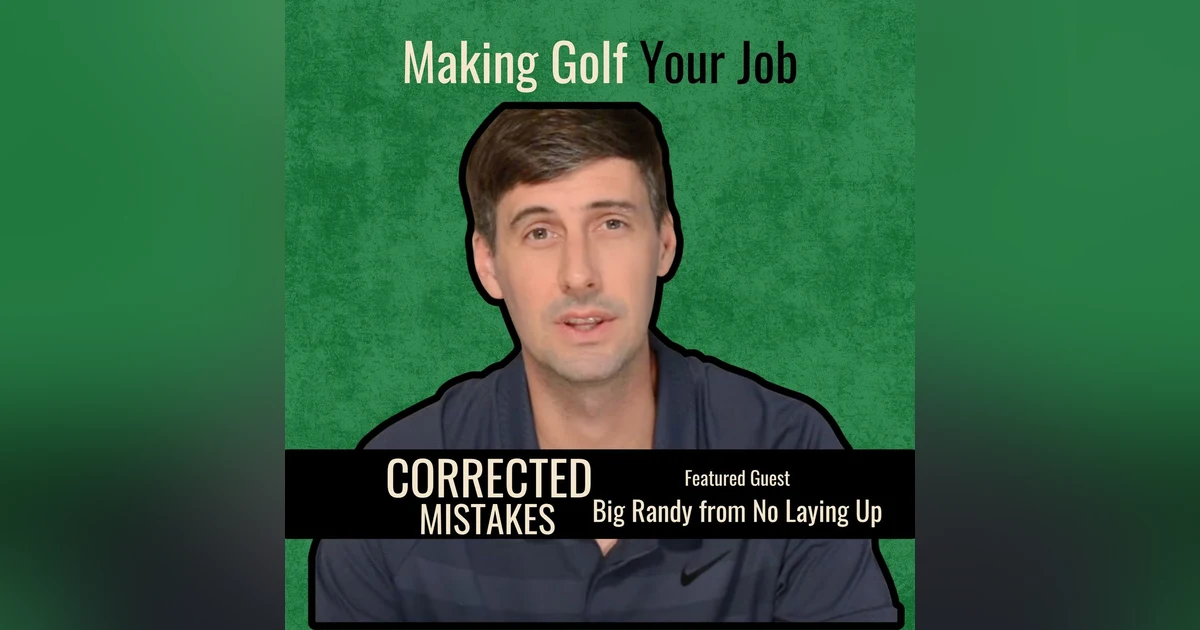
Phil Landis, better known as Big Randy from No Laying Up, joins host Josh Karp on Corrected Mistakes to discuss the origins of No Laying Up, the hidden gem golf courses across the country and what life is like when golf is your job.
For exclusive content and first access check out Corrected Mistakes on Substack: https://substack.com/@correctedmistake
Former GolfSmarter host, Fred Greene has been nominated for the 2025 Audiocaster of the Year by the Bay Area Radio Hall of Fame Vote now at BARHOF.org. Voting is open through July 1.
Please welcome our new host of Golf Smarter, Josh Karp! Fred has retired and will be working on his game with more intention than ever. You can stay up-to-date with Josh on all the GolfSmarter social accounts or by reaching out at karpj2323@mac.com. To stay connected with Fred reach out at golfsmarterpodcast@gmail.com.
0:00 I've had the chance. I haven't played every top golf course in the world, but I think of some amazing courses I've got to play. I can't really remember all the holes, Josh, but what I do remember are the people that you come across, and I mean I just think what I've learned most of them all is golf to me is a game of the people that play it. My first question is how many people come up to you when you meet them or who either know what you do or don't know what you do, and when you tell them what you do, how many people are like you are living my dream, either golf or non golf related.
0:51 Yeah, quite a few, would I would say the percent is very high, and it always makes me feel extremely fortunate, blessed to do what we do. I'll be totally honest, Josh. I still am amazed when somebody recognizes me and it does happen Like I'm not going to say it doesn't happen. I don't want to come off like it happens all the time. But you know where it tends to happen outside of like golf settings, right, I think it's a little bit more prone. You get people that recognize you around golf tournaments or whatnot. Airports are a big place, I think. I think airports have been one. You know, my wife and I and we took our new little daughter down to Hilton Head a couple of weeks ago, or this was back in April, and some folks just happen to recognize you down, out and around.
2:01 Like it never. It's always just a little bit surreal for me, Josh. And so yeah to your other question, like, I think, so wait a second, if I'm explaining what we do to somebody that's not familiar with me or with no laying up, let me get this straight. As usually the first question. You guys are paid to just you talk golf, and then sometimes you take trips and you film them and that's the job. And it's like, well, I mean yeah, in a certain respect, we got to do like we got to keep the business going on the back end, right, which people don't really see but from a forward, public facing point of view, Yeah, we taught golf, we travel around, we play golf, We put some of it on camera.
2:47 It's a really nice gig. Well, you know, I mean not only that, I would imagine even people that don't I mean the golf part is like that obviously is a dream for a lot of people because you're working full time in the golf world. Yeah, but like also, I mean I can't tell you the number of I'm onlike about five different like text threads with people I went to college with, with people people I went to law school with, with people I went to grow up I grew up with, And at least you know, five times over the course of those things, somebody's like, you know, god, this would be a great podcast, and you actually did that with your college buddies, So talk a little bit. I mean, that's like incredible. I mean that is like, that's a real dream for people, I think, right, yeah, I mean, how much better can it get than having a job where you're kind of I mean, I know it's serious work, but you're messing around with your college buddies, right.
3:43 Right, right right. And it's funny you mentioned you're on text threads, because that's really how it started for us in a lot of ways. We right, so there are five kind of partners at no laying up, and we've built out now to where there are eleven total people. But kind of going back to the origins, myself and two others, a guy named Todd Schuster and Chris Solomon. We all went to Miami University in Ohio together and that's where we met. That's where we discovered, hey, we all enjoy golf. We enjoy playing golf, we enjoy watching golf. But then fast forward after college, we went our separate ways. We all had you know, quote unquote real jobs. But the one thing that kept us in touch and through text messaging most of all, was we would just talk golf with each other. You know, We'd be sitting somewhere watching a tournament and I'd be shooting off text to Chris and Todd and yeah, Josh, that's I mean, truthfully, that is the genesis. And I think one thing I always say is we are very blessed. Timing right is everything. And so back in we recorded our very first podcast in April of twenty fourteen, and I think at that point, obviously there were podcasts, but there just wasn't a ton in the golf space specifically. And that was something that
5:16 the three of us had found as fans, was like, hey, there's not really you know, as I'm starting to listen to some podcasts in different areas for me, like different sports. There just wasn't a golf podcast per se. And so we had the bright idea, hey, why why don't we start one, you know, and no pressure. We were, like I said, we all had different jobs. But yeah, I think just obviously very fortunate with time and place. And I you know, one of the other jokes I make is I think golf is always a little bit behind the time. So it was natural that maybe there wasn't as much podcast activity in golf specifically, but that that was it. It said, you know, why don't we take these conversations and these jokes and these you know, these things that we do amongst the three of us and sometimes more people, and maybe it can be a podcast.
6:13 And here I am twelve years later, Josh getting to talk to you, and it is my. Full time job. So yeah, it's amazing. Yeah, I mean that that I mean, and that's really I mean, I think, first of all, I mean it's great and and it's like inspirational that I think you guys did that, and like really you know, and the success it's become. But you know, it's also like you know, people are always told, well, you'll never be able to do that. You'll never be able to do that, you know, don't you know, go be You were an accountant, right, yes, yeah, yeah, and all you guys were accountants, right. And I was God worked yeah, he worked actually in hospitality, he was he worked for the Ritz Carlton and was in hotel stuff.
7:00 Right, Okay, So but so that's like, you know, I mean, you know there, you know there is don't be a screenwriter, don't be a journalist, don't be this, don't be that, because you know you'll never you'll never succeed and nobody earns a living doing that. I feel a little bad because today if I get asked the question, hey, I would love to start a pot you know, it is such a different environment. Of course, twelve years on from when we started, it's hard and I and I think it. I feel bad telling you know. We've had the opportunity myself specifically to talk to some college classes, you know, and and kids interested in kind of new media as I like to call it podcasting, you know, the the YouTube channels, things like that. I don't have great advice, and I'm so curious, Josh, because I feel like this does relate to like I'm sure as people tell you, hey, I want to be a writer, I want to get into print journalism, I would think specifically now or whatever it is, it's like, oh, my first thing is like good luck. It's very challenging. The hardest part is building having some type of audience, I think something that we benefited from. Like you said, we all had other jobs and so when we were starting this, truthfully, there was never an intent, even from when we made
8:31 the first podcast, but before that it was just kind of a Twitter handle social media presence. We started a little blog, but there was never a pressure of hey, this has to work as a business, this has to be our job. We didn't feel any of that pressure, and I think we are so better off for it because it allowed us to just have fun. It allowed us to do things on our schedule. It allowed us to just kind of chase what we were interested in instead of feeling like we had to go talk about something or we had to do things a certain way. So like, really, the advice I try to give people, especially around podcasting, is like, just find something you really interested in and don't worry about monetizing it, because maybe that happens if you're lucky and a lot of things come together. But do it because you enjoyed talking to somebody or you enjoy covering a certain topic, and I think more often than that, hopefully that sets people up to maybe catch some breaks and turn it into something more.
9:33 If they want. But absent of that, I'm like, I wish I had better advice for you. Guys. Had you told me twenty years ago when I was in college, like, hey, you're gonna be working in the golf industry doing a podcast, I'd have thought you were crazy. So it's yeah. Well so so yeah, So what was your relationship to golf, Like when did you start? When did you start playing? I played as a kid. I am very thankful my parents put me in you know that. I was probably six seven years old and it was a week in the summer and they were like, hey, there's a golf camp. It's introductory, like literally, they teach you how to hold a club, they teach you the very basics. So I did get exposure at a fairly young age. From that point though, it was always something I did a little sporadically and always in the summer when school was out, and even through high school and into college. I never played competitive golf. I never not that, I mean, there wasn't a huge interest to pursue like playing even on my high school golf team. I was doing other sports.
10:48 And I always really loved golf because it was something I could do as an escape from whatever else was going on. And certainly as I got into college and then out of college and entered the real world, I mean, golf was a lifeline to just Hey, I can get out on the golf course for four hours and I don't have to worry about, you know this, whatever it was, And I really love that. And quite frankly, Josh, I think one of the biggest experiences, or I'm trying to think of the right word, just eye opening things about now working in golf full time for me, that relationship with golf changes a little bit and it's no longer an escape to just go out and play because I spend so much time day to day thinking about it, talking about it, watching it. I've had to kind of find other things to like when I'm okay, let's leave work and go do other stuff. And so yeah, I guess I just note that because it's interesting. But my experience with golf has always just been I was a fan.
11:57 I enjoyed watching on TV, certainly the bigger and I would play with buddies growing up in the summer. You know, you've gotten to do a lot of golf Tourism would be the wrong way to put it, but you get to travel a lot and make these you know, these these you know, video series like Strapped. And I have to say, you know, you're saying you like to go to movies, and you know, I'm sure you're like me. You remember lines from you know, every ever. You know, there are like ten movie lines that you're like committed to memory. And I'm just going to read it so that I get it right. When you when you were in Lubbock, Texas and you guys, so this is unstrapped, this is the was that the most recent season? That was twenty twenty five.
12:42 That is the most recent season. Yes, okay, And and you said you guys were staying at an Airbnb and it what you explained instead of me explaining what I saw, and then I'll say what I thought was sort of okay. Well, very briefly, Strapped is this series that essentially turns I think a lot of golf travel on its head and instead of going to the nicest places and the nicest courses, the basic premise is what if we leaned in entirely the other way and went to cities and locations that we would never otherwise go to and tried to find fun, quirky or just regular public access golf courses in those places. And so our very first trip was to Des Moines, Iowa. And the Texas season that you're referring to, I think is maybe our it's our eleventh or twelfth season, but yeah, West Texas.
13:44 So we went to Lubbock. We started our trip in Lubbock, and then eventually in the series made our way a little further west out into the Midland Odessa area. And so I had never been to Lubbock obviously, well maybe not, but it's the home to Texas Tech University. That's like the only thing I kind of know about Lubbock. But as when we get there and as we learn, you know, Buddy Holly's from from Lubbock, and there's a Buddy Holly Museum, and there's all this stuff. You just discover about these little places as as you go there and visit. And so we had an Airbnbuh not in the nicest part of Lubbock, but it was a very cool airbnb that was musically themed and so there was like a Buddy Holly room, there was a rap hip hop room there. There were these different rooms and so that was the part of our trip when we were in Lubbock.
14:40 And you were like literally behind a gas station ish kind of place, right and like and it was on this like desolate street and it was this. Really cool in the street. Yeah, and I think I believe the quote was what a place to be killed by a drifter? That's that. I think that was part observation in part like uh, reverse drinks almost because I would say the in the moment, we felt the chances of such a thing happening weren't zero. They weren't right, don't get me wrong, but uh yeah, you know they're just like I said, we were in this kind of old industrial part of town, but not a lot going on around us, and so that that right did cross our mind.
15:31 Yeah, No, No, that was I. It was I. That was a riot And I love that. You guys were like, oh my god, Buddy Holly's career was only eighteen months long. That's wild. Right, Yeah, and the outsized influence he had with with musicians later on. I mean this. Learned all this from going to the We spent an afternoon at the Buddy Holly Museum there in Lubbock. But yeah, just just incredible. Uh. And I will say, if you do watch episode Texas Tech, their golf course, the Rolls Golf Course, which is publicly available, fabulous fabulous golf looked like a. Great course and the aerial view of it that they showed was unbelievable.
16:13 Tom Dope designed it. Just a really nice college golf course. So if any of your listeners ever happened to be around Lovick, I would I would certainly give a recommendation to check out the Rolls. And it was sixty five bucks two or something like that. Yeah, and it was like totally reasonable, I mean, like beyond reasonable, Like you can't even play my public course for that near my house, you know. That's I'm in Denver Neil one of the other guys on that show. Yeah, in the New York City, getting down to that part of Texas and just experiencing things not costing as much it was. It was really nice. Oh, I know, I'm sure, And so you guys play, So one of the things I would ask you is, you know, like I know what it's like for me just to be you know, I've been playing for you know, forty plus years, and like, I know what it's like for me to be on the first tea somewhere and have people like and more than three people watching while I ta off on the first hole, yet not because they want to, but because they have to and because they're you know, they're waiting. How is it like swinging in golf club one knowing you're on camera? And two I believe in Lubbock, you guys played with a kid who was on the Walker Cup team for Scotland or something like that, right or on some Walker something like that, and he's a numb.
17:36 One of the best amateur players in the world, plays at Texas Tech, was on the GB and I Walker Cup team. It's a trip, Josh, I I tell people, thankfully, my job involves playing golf, but it doesn't involve playing good golf. I think at this point in our journey, I have I have put the world possible golf I can play on camera, and so I truthfully feel a bit free now because I know, like it can't get worse. I've you know, you people can watch me shoot one hundred and something around Pebble Beach. People can watch me have the worst shanks of my life at Royal Dornick, like there are there is video evidence of me playing absolutely awful, awful, awful golf, and I think through that it's like, ah, I've I've done the worst. So it's it's very freeing. But when we were getting started, I would be lying if I didn't say there was a little sense of like just additional pressure, I guess, which is just natural. Uh, the other environment where we felt that, and now it's a lot better. We've had opportunities to play in some like pro ams ahead of different tournaments, and you know, you get a little gallery or you're playing with a certain PGA a r LPGA player and you want to put your best foot forward. I think
19:06 all the experience of playing golf on camera has helped me be less nervous in those situations, which is which is really helpful. So yeah, it's this weird thing where I'm like, I'm not scared to play my worst golf anymore, which has been very freeing for me. That's gotta be. I mean, it's it's freeing just to I mean just to not care in a normal context. Yeah, I can't. I would imagine that it's gotta be extra freeing to be like, Okay, you know the you know, the whole world is you know, if they want to can see me, you know, hit a drive, you know, eighty yards onto the other farewell, right. You can see me hit some of the worst putts you've ever seen. In your life.
19:48 My role too, I think within no laying up is I am not one of this quote unquote serious golfers, So there's not really pressure for me to like play well necessarily. Ever, sure, and I'll say that the. Kind of the perverse thing about putting golf on camera and this stuff that we do specifically is if you're not gonna play well, it's better for the content to play as poorly as possible. Not that I ever try to play as poorly as possible, but if you're gonna fail and balm and and be awful, then it's like, man, that's great. Content with you.
20:30 And Neil, who you do the you know, the the strap stuff with right is you guys are uncommonly supportive of each other. Yea, as compared to like when I take golf trips with my friends. And first of all, I mean, what I love about the show is it the golf becomes very secondary because it's like very it feels very much just like no matter what age you are, it's very reminiscent of trips you take with your friends. You know, you're not your adult friends, but your friends you know from you know, your your close friends from childhood or high school or college or you know, your twenties, right, So it really feels like just a real, a regular trip that you would be taking and the kind of way people behave and then you've got the golf in there, and so it's a great mix. I mean, you guys really come off as you know, we were talking about this before. You come off as yourselves and you don't come off as performative, which is really nice.
21:30 That's very nice to hear. I thank you for that. I think that's certainly our intent, our goal. I think I can say Neil and I and DJ who's who's always behind the camera some of the seasons you see him in front of the camera. Some the three of. Us just genuinely are good friends and we enjoy each other's company. I think, I think to your point of like Neil and I being supportive of each other, I really like that. I don't feel overly competitive outwardly on a golf course. Ever, I do feel like some like I want to play well just so I can prove it to myself that you know, I can play well for me. But the way we created the show was there are certain monetary benefits that we can achieve to add money to our budget by playing good golf, Neil and I both individually and together, and so that it's fostered this undercurrent of we want to root for each other.
22:38 There's nothing where we're like we're competing against each other on the show and for me personally, like I said, I like that. But then looking wider, what I really love about the show is the golf serves as a vehicle to experience places and people. And I think that's that's when golf is at its most enjoyable for me. Because I think getting back to like, you know what, I what I was speaking about Tom Coin and and that escapism, you know, I I view golf as a means to go places and to meet people that I wouldn't otherwise, And I think Strapped, our show Strapped is a great example of getting to places we never would otherwise and you just meet fun, interesting people along the way.
23:29 Yeah. Well, first off, you did meet a guy named Bammer Flippo too, which is like, yeah, if I ever write a movie, I know there's a character named Bamber Flippo somewhere in some movie that is like an epically great name. But then you guys get you know, did you what's what's been your favorite place you've gone to play? You know, what was the most interesting? And you do tourists us also obviously, and so you're going all over the world too, so like, you know, what, what have been your favorite trips golf wise, and then you know, beyond the golf. I mean the cop out answered Josh would be like, I like them all for different reasons, but I know that's not a good answer. Uh, Tour Sauce if anybody doesn't know. So that's another travel series, but that's kind of the other end of the spectrum from Strapped, where we're going to some of the coolest places around the world.
24:23 Honestly, Tour Sauce. Is amazing because it's taken me to Scotland for the first time, it's taken me to Ireland for the first time, it's taken me to Scandinavia, to Australia. It's it's really special in that regard just getting to places and playing some golf courses that I can say definitively I would probably never get to play. Right Strapped, I think is more nuanced and I really love, like, you know, I go back to that very first one, going to des Moines, Iowa, and the reason we chose to Moine, Iowa was it just felt like the city that encompassed. Would you ever go to des Moines, Iowa if you didn't have to?
25:06 I don't think so, And nothing against it. I found to be lovely and I had no mental picture of it, and so I was like, yeah, we have to go to des Moines because we would never go to des Moines otherwise. Right, So that one's. Special just because it was the first one and it was kind of the proof of concept for this whole Strap series. I'll say that the ones that I look back on most fondly probably Baton Rouge in New Orleans was a very fun season for me. I think going to Peoria, Illinois. I think Peoria is another city where you know, if you're in Peoria, you probably have to be there.
25:46 But oh I was. I had to be there for a hockey tournament. Once there, you go and I will just this is I'm sure we'll get cut, but I and my greatest memory is going to the using the year and there was a thing over the toilet that said like, please try our gigantic Like it was like, there are gigant I have a picture of it somewhere, like our gigantic exploding taco pizza or something like that. And I was just like, good lord, like it's like that is that is not what I needed. A hockey teach advertise over. The urinal and then have one and then go to the skulls. That's right, exactly that works. That was exactly the progression I was envisioning. Yeah, but so.
26:33 Yeah, yeah, uh Peoria was was great. We did that one like right kind of coming out of COVID when things were just starting to to open and and re emerge and Peoria had a little bit DJ went to Bradley University, which is right there, and so it was it was a fun episode or uh fun fun trip for him. I'd say the West Texas one was fabulous. We capped that West Texas by going to a football game. You know. The whole theme of the Strapped was kind of a play on Friday night lights. So yeah, again, just another area the country that I never would go to otherwise.
27:19 And so I think those are the ones that stand out above, you know, we I'm trying to think we did one in like Southern California, which was fun, but like I've been, you know, I go to Southern California, It's not this faceless kind of place that I have no idea about. What are the most interesting courses you've I mean like that, not because they're a great course, but just because they're like unbelievably impossible or just in a weird setting, or you know, what are some of the you know, the places where you're just like wow, I can't believe I played that place. Uh. I mean, if we're gonna stick to Strapped, I would say, well, the best golf course, just objectively, the best golf course we've played on that series is Tecnic Up in western Massachusetts, right near Williams College. Yeah, we took a lot of flack for that one because it's like a semi you know, I call it semi public.
28:22 The other guys call it semi private. It's expensive, but it's a fabulous golf course. But it's that kind of stands apart. I think on that same trip we went I'm a big sucker. I love universities, I love college towns, and with that, we'll always check out a university golf course. We went up to Middlebury, Vermont and played the Ralph Meyer golf course there, which I just loved. It's, you know, just a pretty golf course. It's not gonna be one that like, is gonna be one of your top ten favorite courses of all time, but it's just it's really pretty and it's and it's a great walk and you'reunded by the green mountains of Vermont.
29:04 We've played. Gosh, I'm trying to think of like the weirdest or. I mean, Audubon Park in the middle of New Orleans is a fabulous little I say little. It's like a par sixty eight right down there in New Orleans. That's a great golf course. Uh, Forest Park is a Baltimore I forget if it's a Baltimore City course or or a municipal course out there, but a lot of great history. Jim Thorpe. I don't know if you remember that name, former PGA player. Oh yeah, he's like built like a tank. I remember, Yeah, I loved him. I'm old enough to remember watching him play quite you know, quite a bit. Ye favorite.
29:53 He and his brother grew up hitting balls at Forest Park, so that there was a really rich kind of African American history to that course, which was which was really neat. We went out one of the courses we played in southern California, Vista. Is that the name of it? God, it's so bad now I'm bad with names. But we played with Max Homa, essentially Max Holma's childhood golf course. There's an eighteen whole course and then a little nine hole kind of fun. You just hit all these crazy different shots. I mean that one stands out truly, though, Josh, like I wish I had a little better answer. I think that's I think if you've answered perfectly well.
30:35 I only say that because there are little nuanced like there was a golf course in Peoria, and I would have to look up the name of it. I don't remember it offhand, but the tea box literally backed up to this apartment building and not like the nicest apartment building, right, but. Like stuff like that. It's like, man, you just don't get that very often on a golf course. So we try to a preciate the little just weird, fun quirky aspects of of like what otherwise would be like very mundane golf courses. How about well let me ask you this, because I will be remiss if I don't ask you the question.
31:17 Everybody has asked you your every time they've had you on. You are not your name is not legally Big Brandy unless you've changed it. You are your Phil Phil Landis. So am I pronouncing the last name correct? That's right? That's right. Yes, Tell explain because this involves all kinds of things that I love. Tell to explain how you became Big Grandy. Yeah, uh okay, So this goes back to Miami University. The aforementioned was. Uh was a student there and there was I don't know if you are a fan of the MTV Real World series. Josh, yeah, I've have you ever watched it?
31:58 Oh? I watched it absolutely. Okay, so you might know what I'm talking about that I tell people younger than me. They have no idea, and I don't blame them. But do you remember the San Diego season by any chance? Vaguely yes, And it would have been early two thousands because it coincided with when I was a student at Miami. I lived in an off campus house, disgusting, dilapidated, thirteen guys, you know, as gross as you can imagine. And on the second floor of this house there's one bathroom, and that bathroom you go through a swinging door. I'm gonna try to paint a picture. You go through a. Swinging door, and on the left there's a few sinks.
32:38 You kind of keep going. It's this like rectangular, somewhat narrow. There are a couple showers. I don't know if there were even urinals in there, But then a couple stalls at the very end of this bathroom. And so I promise, I'm gonna tie this together. I'm throwing a lot of things out. I don't know how the swinging door to this bathroom it came off its hinges, and so instead of fixing it, we just decided to rip it off. And so all of a sudden, this bathroom on the second floor there's no door to it, and that is important because across the hall is one of the rooms, and a guy who was living in that room had his desk set up to where now that there's no door on the bathroom, when he's at his desk working at his computer, he can kind of see not like all the way into the bathroom, but he can certainly see people coming and going in the bathroom. And he was out going and he would love to chat you up, you know, if you were going in to take a shower or you know, do whatever. Right, he saw you go in and hey, Phil, you know what's going and it's like, okay, okay. There's sometimes quite frankly, I don't want to be having a conversation if I'm in the shower or something.
33:55 Else in the bathroom. And so one day I guy, I went in there. He must not have seen me go in, and I hear this this voice caller like, hey, who's in the bathroom? What's going on? I'm like, oh gosh, I don't want to and so I yelled out, it's me Randy. And why the name Randy was at the front of my mind. I blame on Real World San Diego, which we would watch every week, and two of the main guy characters who I found pretty funny was a guy named Brad and his friend who they called Big Randy, right, and so Brad and Big Randy, and so I said the word Randy, and of course as I come out of the bathroom, the guy's like, Phil, you know, I, why'd you tell me your name was Randy? Like I'm like, I just didn't want to have a conversation in there with you. And then it just slowly starts to stick Josh the name Randy, and it sticks to the point where we get out of call. We're starting this social media, this blog. I have a real job, and the question is do I want to like, do all this under my real name? And as an accountant, I'm sure other professions do this too. They kind of drill into you essentially, like everything you write and say as an employee of this company, imagine it being on the front page of
35:25 the newspaper. And so you're kind of conditioned to be like, oh god, I don't want to say anything wrong. I don't want to like And so I thought, hey, why don't I use this nickname of mine to create this character? As we go about you know, whatever we're doing here in this golf company, and so I chose to Yeah, I'll just use the name Randy. And I can't tell you how many times since I've made that decision fifteen. Plus years ago. If I could twitch my. Nose and know what I know now and go back, I'd be like, life would be so much easier if I just used my real name from the start when I was first dating my wife. I mean, having to explain to a date, Uh you might if you do check out what I do for work, you're going to see that I go by Randy. I promise you my real name is Phil. It just has made a lot of awkward conversations through my life, but they're always good stories.
36:26 So I am. I am thankful for that. And how cool that you have an alias? Like yeah, right, I mean we don't all get ever, like, yeah, we can make up aliases, but we don't. I'll tell you nothing tickle, you know, I'll send some like professional emails talking to you know. We might be working with with a company and I do a lot of our what I do, like our back end accounting and bookkeeping, and I'm kind of like in a very small sense like a CFO if you will. And so it tickles me to no end when I when I these these very professional people start an email dear big Randy or I'm like, do they know that's not my real name?
37:10 You can call it? Like? Do I tell them they can call me Phil? Is that just going to confuse him more? I do get a kick out of. That, though, Yeah, No, that must be really I mean, I you know, I mean, I think at some point all of us have you know, when we're kids, you always you know, like wish you had a different name for like for six months or something. But I guess that Grandy was not the one you thought of when you were a kid, when you were trying. Toll And my mom's a little my mom's never quite been able to get used to it. She doesn't love it. But that's now your parents, I'm sure, Like, like if I ever, you know, had a real job and told my parents, you know, like, oh, by the way, I'm not you know, fifteen years ago. Yeah, you know, like we've been you know, we had this text thing and now we're doing it on Twitter. Now that was a blog and we're going to do it this podcast and once it got successful, and was there kind of an adjustment period where people were like, wait, you're really doing this, this is like a job, You're making a living from this.
38:12 I think so, God bless my parents. I will always always appreciate their lack of concern and pressure with my professional life, and I mean that sincerely. That's awesome. Gave me space too, because prior to being able to do this full time, I had already left the accounting world. I had actually coached. Yeah, I got back to school for a couple of years, but then went not one hundred and eighty degrees the opposite way and was working at a high school and coaching high school basketball, and.
38:53 It was a lot of school. I just. Yeah, my parents never were like, Phil, what are you you know you're you have two degrees now you're not using Like what's the plan? I'm sure there were many nights where they had some conversations at home about what is he doing? Should we be worried? And I just never they never put that on me, and I am very very grateful to them for that. They they truly kind of let me find my way, and like I that's a big reason why I do feel very very fortunate being able to do what I'm doing because it's I had no idea a lot of times how anything would work out or what I would be doing, and so I do just feel very lucky to be in a position like this.
39:53 That was the big turning point for you guys, was that when Rory came on your show. That was a big turning point for sure. I mean what was Yeah, Yeah, I mean. Rory brings interest and eyeballs and listens like that. That was huge. We went through a stretch and Rory was certainly the biggest, if if not one of those, but we were fortunate enough to talk to like Jordan Spieth and Justin Thomas and then Rory McElroy and I think that run and this is like again twenty fifteen into twenty sixteen, I want to say, when we're very much still just a fledgling little podcast, those guys just lend credibility to what we're doing and they bring interest, and yeah, I mean we owe all the players and caddies and broadcasters and Josh, I've talked to you on a on a Trap Drawl eight years ago, which is our other podcast channel, right, I just we owe a lot to the guests that say yes and give us their time. But Rory, you can put right at the top of the list of you know that that was a big, capital B big moment for us for sure.
41:21 Now, when did when did you guys start getting into doing the videos and stuff like that? Like when did you kind of expand beyond podcasting? Because he said, you've been doing strapped for twelve years, so that's like from pretty early. Yeah. Yeah, So. We got connected DJ Piehowski, who is now one of the five kind of partners that no laying up. He used to work for the PGA tour and as we were kind of growing our social media presence, we just had a lot of fun interactions with DJ and was somebody that we knew online before we have met in real life. But then when we did meet him in real life, just a great guy and his role at the tour was more in video production, kind of taught himself editing as well, and DJ was getting I mean, it's his story to tell, but the short version of I think he was just getting a little bit disillusioned working at the tour for however many years at that point and was looking for something new if it came along, and so I think he saw in us and we saw in him. I can say definitively we saw in him somebody that possessed skills that we did not, and that was on the video side. And so when we began working with DJ in I want to say that
42:53 was like twenty seventeen, twenty eighteen. He is, I mean, he opened up kind of the video lane for us and encourage us to travel and we could film some cool stuff. And so it really started from there. With with him in his background. Now, I just want to go back to the playing aspect, you know, with you know, when you're playing with Max Hama, right and you're playing with that kid I don't remember his name of the kid from Scotland who plays at Texas Tech. So like what you know, I mean, I've been to tournaments and I see how these guys hit the ball from the gallery. What is it like when you see like somebody like Max Hama? I mean, what is the difference when you see somebody like that at a golfall in person?
43:49 It's it's the it's the cliche of it sounds different is the best way I can describe it. I think it just it's just got a different noise to it than when you and I hit. A golf ball. The Max specifically, I think Max is by world ranking, the best player I've ever played with, and from that strap trip specifically where we were in southern California with him, I mean his ballflight, he hits a ball and where you would expect, even like you know Sally and I mean, Neil's a really good player. Kniel's like a two handicap now, Sali fluctuates between like a plus one to a two handicap.
44:40 You know, these guys are all around scratch, but you just kind of expect ballflight, it's gonna it's gonna apex here and it's gonna start to fall. And then you watch a guy like Max Homa up close hit a golf ball and that Paul just kind of flies through and pass the point where you're like, okay, that ball should start coming down now, and it's like nope, it's just holding its line and it's going in extra you know what, twenty thirty yards and it The other thing that always strikes me too is the lack of violence in the golf swing to produce that much distance. I always think there's a there's a degree of effortlessness to it that just doesn't quite compute in my head.
45:33 It's like, wait, how. Are you hitting that ball three twenty? It doesn't look like you're really going after it. Like that's where it just doesn't quite make sense to me. But the acoustics of it, the sight of it, like just staying in the air holding its line, and just the swing itself, like those are always the three things where I'm just like, yeah, it's just different, you know. It's like, no, it's it's crazy. One. I'm kids as a caddy and and he caddied in the Western Amateur. Was at the Skokie Country Club, which is right near the house, and he and I went and watched and like and and he he was telling me the first day he caddied for a kid who was like a Division three champion at some school I've never even you know, you never even know the name.
46:21 And he said, you know, the guy was having like, you know, a miserable day, you know, shooting like a seventy five on this incredibly difficult course. And uh. And he said, one time the guy just looked at him and in frustration, he goes, you ever see somebody in a three hundred and fifteen yard three wood that hooks around a tree. And my son was like no, and he's like, you're about to and he just boom, you know, and he did exactly what he said. And I was and I went and watched and like, yeah, these like and these guys, you know, I mean, they're great and they're but you know, who knows whether they'll ever even rise to the level being tour players, and they're doing stuff you can't begin to fathom. As you know, you think, oh, I'm pretty good, you have a twelve handicap, you know, and then you just see them hit shots like where you're like, I don't know. My son said that the caddies couldn't couldn't follow the ball because they had never I believe it.
47:14 Yeah, you're just so cut like seeing it out of a different window or yeah, no, I totally believe that. So when you're with a PGA guy, that's got to be insane. Yeah, thing one hundred. It just it's a different sport, like truly, I that's what I tell people, like the PGA guys, like men's professional golf at large is a different sport than the one I play just in terms of what they're able to do with the golf ball and distance wise, and uh, it's it's amazing for that respect. No, you're telling that story, just jog my memory, like if I can bring it back to Tom Coin again his book Paper Tiger, Like that was one of the big takeaways was him, Like one of the big takeaways of that book is him essentially telling the reader like, the best golfer at your club is in a different stratosphere and not in a good way than the guys you see on tour. Like essentially the idea that scratch I think his term is like scratch as shit, And it's like if you're a scratch golfer when you think about the guys we see every weekend on the PGA tour, Like there is such a big golf between the best golfer that you and I know Josh in person and the world class like top one hundred, top two hundred type players.
48:46 It's I don't. Know how anybody does it, Like truly, I don't. It seems like the hardest ladder to climb. It just yeah, it boggles the mind. Yeah, somebody once told me. They said too, they're like you know, the difference between you and the pro at your club is less the difference between at the time when Tiger was on top. He's like, is the difference is less than the differenentween Tiger and the number fifty person on the tour. That the guys who are at the top are playing at a level that is so beyond what you can you know, He's like, you can play with that guy, you know, like you know, you you know, you can conceptually conceivably get you know, good enough where you know you can play almost like you know, I can't, but you know, like the club pro you know, or somebody like that or like that, you know, but they're like that's you watch people who you're amazed by and they're they're not even that difference is so much less than the difference between the best like Scottie and every you know, and then number thirty.
49:49 Yeah, yeah, it's And the longer I go and I know I'm not breaking ground here, but it's the consistency, right, Like, that's what in my mind lay And there are physical gifts that that I think separate. But you know, you were telling a story about that D three All American kid, like he's I'm sure he's got the physical tools, it's just it's a lot mental and then it's a lot consistency. Right. I think, like the club pro you're talking about, like maybe on his best day he could hang with like a Max Homer if Max is having an off day, right, But you do that three hundred and sixty five days a year, and it's like it's no contest. The thing that I also just popped in my head as we're saying this, it's really jarring to watch guys like Max like hit bad shots quote unquote uh or not good shots.
50:46 Like obviously they're not deaf in the ball, Like I don't want to speak for you, Josh, but I have a defenity. Oh trust me completely. Yeah, they're not doing that, but they can't hit like bat like like that's not a good shot. But what always sticks with me is like, Okay, I hit a bad shot, and Max Homa hits a bad shot. One of us as a world class player, So guess who's gonna get like back into position and not like be put behind the eight ball by that bad shot Max Homa, Right, because it's it's bad shots happen. But I think also what these best of the best can do. Is like they recover from the bad shot because they're so good, whereas like a bad shot for me can like all of a sudden, I'm looking at triple bogie or something.
51:34 You know. So they're also not as with. Difficult I was gonna let you say that, but yeah, just their recovery ability, right that, their their ability to put one shot behind them the other thing. Sorry, I'm I'm I'm like things are just popping into my mind. That round I played with Max Homa and and I use him again because I think he's like the best player I've like really played that. Much golf with. He's kind of goofing around with us throughout the round, like obviously he's not taking it super seriously, but he's got this when it's his turn to play, he's got this ability to just mentally flip a switch and lock into a shot for let's call it ten seconds, right, That is really cool to see up close. He can be talking shit, we're busting each other's balls, and then it's Max turned to the play and it's like, Okay, a switch flips and he is locked into here's what I have to do. And Neil and I joke, I don't know if it's on camera, but uh, you know, the golf course we played with Max, we.
52:46 Went back and kind of thought about it. And it's like, you know what, Max was like beneath the hole in the proper place on the green every single time, and it's like that stuff is just automatic, seemingly automatic for those guys, and it just I loved playing with Max and like a casual setting like that because you can you can see him still lock into the shots and the execution is just still there, like he just never puts himself in a bad position around the greens. Especially. Yeah. No, that's I mean, I think that that is you know, like it's I I went one time, I went with a friend to play in Austin, Texas, and he was like, he goes, you know, he's like, why are you trying to get on the green from there? And I was, and he's like, your problem isn't how you play golf.
53:40 Isn't your ability to play golf. He's like, your problem is the way you play golf. The decision making is such yeah yeah. And he goes, he goes, he goes, let me pick your clubs for the next three holes and let me, let me tell you where to hit it. And I was like, whatever you know, And sure enough, I like part of three holes in a row and it was just like to and I have not and and it takes so much for me to lock in mentally to actually do I guess course management would be what you describe it as. But those guys, I mean, they just know it, right, I mean, they just they they know they've played so much golf and they're so good that they just know where they want to be all the time, which is. It's essentially managing your misses. Like I. I think that's another big eye opener about the professional game is I used to think it's about who can hit the most, who can hit the best shots most often, And now it's like it's almost like who can hit the best bad shots most often, or who can turn their bad shots into like not that bad most often? And that's yeah, that's like a level of the game that I mean, I got so much stuff going through my head anyway, Josh over the ball where it's like I can't add much more, Like I right right, the spectrum of where my shot can miss is so wide. I can top the ball I can shank the ball, I can pull hook. You know, it's like, how do you manage those types of misses? It seems Yeah, No,
55:12 I remember reading that Jack Nicholas. They said he before he hit every shot he ever hit, he would envision where it was going to land, what it was going to sound like. And I'd like that is the most like I could that would you hours to. Go through all the possibilities, Like I have no idea what the ball is going to do when I when I. Swing, Yeah, it's wild. So the last question, and thank you for taking the time to do this, is what's the biggest thing you've learned about golf since he's been doing this, I mean, since this has been your your way of life. Yeah, God, there's so much, so much. That's a great question on it. Candidly, I don't have a great canned answer. So as I'm thinking, as I'm trying to buy myself time here, I would say all that stuff we just talked about has been eye opening for me about the playing of the game of golf, you know, about the decision making aspects and managing the misses and and all of that.
56:14 But but I really think, I mean not to sound too corny, but it is gonna sound corny. It just. The longer I've gotten. To do this, the things that I really remember aren't necessarily like I've had the chance. I haven't played every top golf course in the world, but I think of some like amazing courses I've got to play. I can't really remember all the holes, Josh, But what I do remember and what really sticks with me are the people that you come across and and I mean, I just think it. What I've learned most of all is golf to me is a game of the people that play it, and I think tapping into that I don't know, tapestry of people and their experiences and just getting to share.
57:18 Whether it's somebody that's like, hey, all I've done is play around of golf with them. I might never see them again in my life, or somebody that's like, hey, you know what, it started out as playing golf and now they're a friend of mine. Just that wide range of stuff that comes across so sappy, and I know there's just no way around it though, Like it's it's true, like I think golf is about the people and it's about the experiences on that level, more for me more so than like, oh my god, that thirteenth hole at Royal Melbourne. Holy you know. Right, yeah, no, it's a yeah, I mean well that's the way it should be, right. It's the people in the experiences. It's not because I like either of us is good enough that.
58:03 Right, That's exactly right. It's like gulfs of vehicle. It's not. It's not the be all end all for us. Andy, thank you so much for doing this, and everybody, if you're not one of the eight million people listening to No Laying Up, you should be listening to it and h and watching watching both tourist sauce and and strapped. I'm sorry if I had to look down to find that and strapped. Let's say it again. Anyway, Thank you so much, Randy. This is awesome man. Thank you, Josh. I really appreciate it. Full circle moment for me. You were very gracious with your time seven years ago when No Laying Up still was not anything, and so yeah, it's just very cool that we're here chatting on your new podcast. So congratulations to you as well.
58:48 Thank you man. I appreciate it, and thank you for having me on your show because that was anybody who's willing to talk to me. I'm happy about so thanks again Randy, and of course