Chasing Charlie Through the Census

By Erv Lenzy
After finding “Bachelor Charlie” in the 1900 census, I felt like I was onto something big. It was the first real confirmation that my great-grandfather Charlie was more than just a ghost story. He was real, living in Fannin County, Texas, working as a farmhand, still single and still close to home.
So of course, the next step was obvious: follow him forward. I already had him in the 1910 census, we found that years ago. But neither him or his wife were in the 1920 census.
The 1920 census would be the next breadcrumb. We nevere found him there. Maybe searching for him by name would reveal something new. Maybe he’d be living as a boarder, or a farmhand somewhere. That’s what I hoped.
What I got was something else entirely.
The Great Disappearing Act
The 1920 census came and went, released in 1992 to the public. Charlie... didn’t show up in it. At least not in any way I could confirm. I searched by name, birth year, birthplace. I broadened the range, looked at phonetic spellings, even dug into the census-taker handwriting just in case his last name had been butchered into something unrecognizable.
Nothing.
Or worse — too many somethings. There were plenty of people with the same name living in Texas. A few the right age. A few even in the right counties. But none of them quite lined up. I’d found the man in 1900 and 1910, and now, just ten years later, he was slipping through my fingers again. That’s the cruel trick of genealogy. Sometimes the data lies. Sometimes the silence is the clue.
The Wrong Charlie
I wasn’t the only one searching. Years ago in the early 1980s, my Aunt Ella Bell, my dad’s sister, got deep into this mystery. And she was convinced she’d cracked the case. She found another Charles Henderson, living in Texas, married to a woman named Annie. The name. The age. The location. It all felt too close to be coincidence.
So she ran with it. My Aunt wrote letters. Made phone calls. Pushed and prodded and kept digging until she was absolutely convinced she’d found our Charlie — living a second life under the radar. She was so persistent, in fact, that someone from the other family finally had enough.
They sent her a cease and desist letter. I still laugh when I think about it. That’s how you know you're knee-deep in a real family mystery: when it gets legal. But honestly? I get it. That’s what this kind of search does to you. When someone disappears from the records, when the trail goes cold, you start grabbing at anything that looks even close to right. It’s not just research anymore. It’s hope.
More Than a Paper Trail
It was in that gap, between 1900 and whatever happened next — that the legend of Charlie began to take shape. He went from farmhand to gambler, to gunslinger. From young bachelor to man-on-the-run. A man who might have died. Or vanished. Or started over with a new name.
He became a story we couldn’t quite finish. That’s the space I’m working in now. Trying to bridge the gap between data and myth. Between the man we know and the man we lost. This blog. This podcast. This whole journey. It all started with a name on a census line… and then the space that followed.
Next Time on the Blog
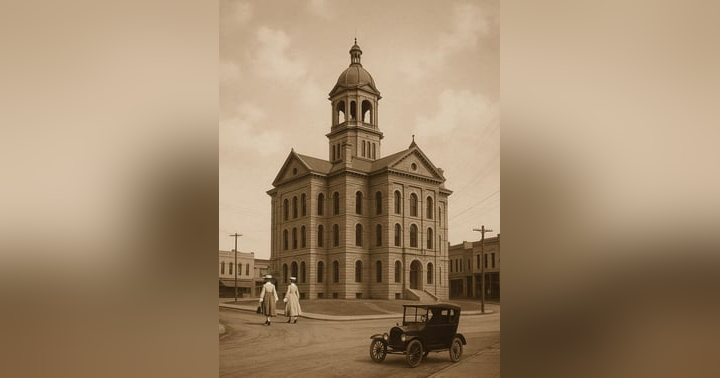
We’ll go back to Fannin County. To Bonham, Texas — where Charlie grew up. I found a rare 1888 publication listing the businesses and people of the area. It paints a picture of the world Charlie was born into. And maybe, just maybe, it holds another clue.
Let’s keep going. The past isn’t done talking yet.

I'm Erv Lenzy — podcast host, amateur genealogist, and the great-grandson of the man who vanished.
I live in Cincinnati, Ohio, where I'm a husband, father, and something of a mental health guru by day. By night (and sometimes weekends), I'm piecing together a century-old mystery involving my great-grandfather Charlie, who may have faked his death and left behind more questions than answers.
Finding Grandpa Charlie started as a family mystery fifty years ago and turned into a full-blown investigation. With a background in mental health, a love for history, and a whole lot of curiosity, I’ve spent thirty years digging through census records, recording interviews of family members, lookingn through legal documents, and even using DNA, all in search of the truth.
This podcast is my way of telling that story. It’s part true crime, part genealogy, and part personal reckoning. I hope you’ll come along for the ride.
Tracing Grandpa Charlie: The Disappearance That Shaped a Texas Family