Apple Podcasts

 Spotify

 Castro

 RSS Feed

 Goodpods
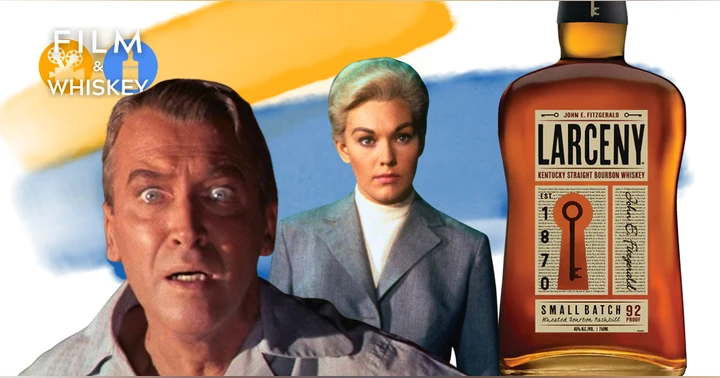
Vertigo (1958) / Larceny Small Batch Bourbon

In this episode of Film & Whiskey, Bob and Brad dive into the dizzying world of Alfred Hitchcock's 1958 masterpiece, Vertigo. Join us as
In this episode of Film & Whiskey, Bob and Brad dive into the dizzying world of Alfred Hitchcock's 1958 masterpiece, Vertigo. Join us as we explore the psychological depths of this classic suspense thriller, starring James Stewart and Kim Novak. From the iconic Bernard Herrmann score to the intricate cinematography, we break down what makes "Vertigo" a Hitchcockian gem. Then, we switch gears to taste and discuss the Larceny Small Batch Bourbon - a delightful American whiskey that brings its own twists to the palate.
(0:00) Introduction
(5:38) Brad Explains "Vertigo"
(8:55) Performances and Themes in "Vertigo"
(29:35) Larceny Small Batch Bourbon Review
(36:56) Two Facts and a Falsehood Game
(40:57) Final Analysis of "Vertigo"
(53:50) Let's Make it a Double and Final Scores
"Vertigo" is not just a movie; it's a journey through the mind's eye, crafted masterfully by Alfred Hitchcock. With James Stewart's gripping performance and Kim Novak's enigmatic presence, the film takes us through a twisted narrative that still captivates audiences today. The film's visual storytelling, complemented by Bernard Herrmann's haunting score, creates a surreal experience. We discuss the intricate film techniques Hitchcock used, the movie's impact on the suspense genre, and why "Vertigo" remains a subject of study and fascination.
Transitioning to the world of whiskey, we review the Larceny Small Batch Bourbon. Known for its easy drinkability and rich flavor profile, this bourbon is a testament to American whiskey craftsmanship. We delve into its wheated formula, tasting notes, and how it stands as a top value choice for bourbon enthusiasts.
Film & Whiskey Podcast. New episodes every Tuesday.
Film & Whiskey Instagram
Film & Whiskey Facebook
Film & Whiskey Twitter
Email us!
Join our Discord server!
For more episodes and engaging content, visit Film & Whiskey's website at www.filmwhiskey.com.
Remember, you can always join the conversation and share your thoughts on the Film & Whiskey community pages. And if you loved the episode, don't forget to rate and review us on your favorite podcast platform!
0:00 In 1958, director Alfred Hitchcock and star Jimmy Stewart gave the world a dizzying thriller that enslaves a man to a dissipating dream. In 2023, we take a second look at Heaven Hill's most famous weeded bourbon. The film is Vertigo. The whiskey is Larceny small Batch. And we'll review them both. This is. The Film and Whiskey podcast.
0:43 Welcome to the Film and Whiskey podcast, where each week we review a classic movie and a glass of whiskey. I'm Bob Book. I'm Brad G. And today we are looking at what was once dubbed the greatest film ever made, Alfred Hitchcock's 1958 masterpiece Vertigo and. We're here to tell you that it is hot garbage. What a terrible film. Brad, let me let me just immediately dive in for some context as to why we're recording this at the time we're recording because we've been trying to work through in order our re watches of Season 1. But a local theater was doing a Hitchcock double bill a couple weeks ago.
1:24 They showed North by Northwest followed by Vertigo and I had never seen Yeah, right. What a pairing. I had never seen either of those movies on the big screen. And so I was like, well, I know what I'm doing with my Friday. And it was interesting, man. Like, North by Northwest plays perfectly to an audience, even in 2023. It was like people were laughing, people were gasping, and, you know, there was applause at the end of the movie. I forgot how quickly that thing moves and just what an incredible job of editing that movie does. And then we took 1/2 hour break and we watched Vertigo. And Vertigo is a movie that I love, but I think even the first time we watched it, you and I were like, you got to push through the 1st 45 minutes and then it's like the most rewarding thing ever.
2:10 But do not put Vertigo on a double bill after North by Northwest. People like that. It was just lost on this audience and you could feel the boredom creeping in. And it really sucked because I'm still very high on this movie, but it's like, why would you put it after North by Northwest? Yeah, totally. The the films have such a different, at the very least, outcome. But even when you look at the humor in North by Northwest, any amount of humor in Vertigo at the time that it happens can be somewhat funny at the start of the film. But by the end of the film, you realize you're like, oh, all of the humor in this movie does not land well on your soul when you consider the outcome of the film. So I feel like if you're going to watch those two movies back-to-back, you you need to watch Vertigo first. 100%, yeah. And it's easy to see why he pivoted to North by Northwest as his first film after this, Vertigo was a big flop and was not really critically well received either. And so he's like, all right, I'm going to go back to what I do best.
3:20 I'm going to make entertaining, you know, suspense movies. And this one's going to be a a spy chase thriller. And it is like to your point, tonally, these things are like night and day. Well, there's our our quick review of North by Northwest. I guess we should probably probably talk a little bit about Vertigo. This is our second watch through for the podcast. Brad, had you watched Vertigo in the interim between season 1 and now? I don't think that I did. I, I think it has been 5-4 years, five years since I watched it. So it has been a minute. And let me tell you, Bob, this is an incredible film. Good movie, good hot take, Vertigo, Good movie, real good.
4:05 So it's been marinating in your brain for the last five years. And I guess one of my questions, you know, if I can be honest with you, man, I did not expect you to like Vertigo as much as you did. Like it's a it's a much slower paced, kind of mournful, really dark, kind of disturbing movie. Not not like a North by Northwest, not like a rear window even. And so I was really shocked when you came into the recording studio back in Season 1 and gave this movie a 10 out of 10. So when you think back like what about it worked for you on that first watch and does it still? Are those still the things you latch onto now on a second watch? I'm sure I mentioned it back then, but it was not actually my first watch.
4:48 I had seen Vertigo before I watched it for the podcast. And I think that for me, the things that have stuck with me each and every time I watch it is the depth of the, the fall to which Jimmy Stewart endures and had, I don't know, man, the the way that Hitchcock captures psychological trauma and he captures the dangers of a twisted desire, a perverted desire. I I don't think anybody has ever done it better than what Hitchcock does here. All right, well, if you have not seen Vertigo, it's time for us to talk a little bit about what the movie is actually about.
5:32 And in order to do that, we're going to throw over to America's favorite segment, which we call, Brad Explains. Brad's going to give us the movie plots with only 60 seconds ticking on the clock, so let's go ahead and do your take with this little segment that we call, Brad explains. Brad explains. Is the part of the show where I spoil everything, Bob? You certainly do, man. We're going to give you 60 seconds to break down the plot of this movie, which you have not watched for at least the third time. You're this is old hat to you at this point, right? It sure is, Bob. So you've got 60 seconds on the clock and you've used the keyword here, spoil Brad. You are going to give away everything about this movie that you can fit into a minute.
6:17 So if you have not seen Vertigo, first of all, what, what are you doing? Yeah. Yeah. I mean, just stop here, go watch it and then come back. Because I don't, I mean, I don't know, I, I feel like this is one of those movies where you could probably know the spoilers and it would still work because it's not about the spoilers. Yeah, but also don't do that to yourself. Yeah, I mean, Hitchcock even said to to Kim Novak at one point in the filming of this. It's, it's not about like what's happening on screen. It's about what people see on screen, the visuals of the movie, the feel of the movie. And so I, I think that to a certain point, the plot of this film kind of falls to the side of the feelings that it invokes in you.
6:57 Well. Let's see what feelings it invoked in you, Brad. You have one minute on the clock and go. Vertigo's a film about a police detective in San Francisco who is tasked by an old college friend with following his wife around. He's not suspicious that she is cheating on him, he is worried that she is possessed by the ghost of a woman who committed suicide. Jimmy Stewart's character Scotty continues to follow her around the wife played by Kim Novak and eventually comes to believe that she truly is indeed possessed by this ghost. He follows her until she goes up into this bell tower and he is unable to follow her because he has Vertigo and is unable to make the ascent fully.
7:44 He watches her jump off the tower and he falls into a state of depression which is on again off again girlfriend is unable to bring him out of. Upon recovering, he is in the streets, sees his old girlfriend look alike, and tries to turn her into this woman that he once loved. When he realizes that she was a actor playing the role of the wife, he calls her out on it and they fall in love, kind of, and he's angry. And then she falls off of a bell tower because the specter of death looks at her. The end. I like how you could sense that the minute was almost up and so you just started giving bullet points. But they're like, they don't seem to logically flow like Oh yeah, she they fall in love, Everything's good. And then also she falls off a bell tower. She.
8:33 Sure does. Man, go. Wow. I mean, I will say there's like a few famous shots from this movie. I don't know if this is considered one of them, but when when the nun walks up into the bell tower, she looks like death itself. Yeah, it's like she has her shadowed perfectly. The lighting is Immaculate. Man, that'll give you chills. I've been trying to think about what the best entry point into talking about this movie is, because this is trying to do a lot on a really high level, and it takes a long time for this movie's pieces to fall into place like you it. It opens with this chase across rooftops where Jimmy Stewart's character, a police detective, is chasing a perp, and him and this other cop don't quite make the jump over to this other building.
9:22 And then the cop tries to. Say it's basically the matrix. Right, the cop falls to his death and that induces Jimmy Stewart's as agoraphobia. Agoraphobia. No acrophobia. That's right, fear of heights, which gives him Vertigo. Now this comes up a couple times in the beginning parts of the movie, and then that plot thread is pretty much dropped. And it seems like it's only there to establish that he is now kind of forced into early retirement from the police force. His old college buddy that he hasn't seen in a long time is then like, hey, how about a ghost story? And for a really long time, it seems like this movie is truly toying with the supernatural, that this person might actually be being possessed by a dead person.
10:07 This is something we've never really seen from Hitchcock. You know, there's always some sort of elaborate scheme a la Dial M for murder, right? And so you, you don't really think that it's going to go the supernatural route. But everything that's happening on screen suggests, oh, yeah, this this lady might actually be getting toyed with from the beyond. She falls to her death. And then you're like, where is this movie going now? And it's not really until the last, I don't know, 30 minutes of the movie, Brad, that all of these sort of disparate threads fall together. And I guess that's, that's where I want to start, is there's not a lot of movies that require this much patience before it all makes sense.
10:51 It's a really, really big gamble. And I guess I'm wondering for you, Brad, like, does the gamble pay off or are there stretches of the movie where it feels a little bit stretched thin and your patience has tried? Man, that that is interesting. I think that they're the reason the long stretches of Jimmy Stewart following Kim Novak work is because of the soundtrack. Like, like the score for this film is so haunting and elegant and beautiful that you find yourself drawn into the world of Jimmy Stewart and the mystery that he's trying to unravel. Right?
11:34 Like the there's, there's a reason he's chosen as a detective. Like the the whole purpose of this film is if you're in the the shoes of Jimmy Stewart, you also are playing the role of detective trying to figure out what's actually going on here. And as you follow her around, as you go to the Bay and she jumps in the water, and as you go to the sequoias in the the National Forest, like you, you get this, this strange sense of a dreamlike quality that this chase is taking on, that it moves so slowly and yet everything feels so important and like anything might be a clue to unraveling the entire mystery.
12:15 And I for me, that kept me at the edge of my seat. Yeah, I mean, like I said, it's really high risk, high reward because Hitchcock is kind of counting on you, the audience member, being like, what the hell is going on? And as a result of me not knowing what's going on, I want to know more. I want to figure this out as opposed to I can't tell what's going on. And therefore I'm going to turn this movie off after 1/2 hour. And I think that, to be fair, the people that this movie does not work for fall into that latter camp. And I can't necessarily say that I blame them like the movie works for me. But you there really is a sort of active participation in the detective part of things that if you want to be given the information, this movie is not going to reward you with that until the very end of the movie.
13:02 You have to be wanting to go down the rabbit hole with Jimmy Stewart. Yeah, this is easily not second screen material, no. Not at all. I mean, I guess like some of those long drives through the sequoias. You could probably check your e-mail if you really need to, yeah. Maybe. Maybe. All right, let's talk performances here because they're man, they're really interesting performances. Like you've got one, one person is playing multiple characters. Technically, you've got Jimmy Stewart with perhaps the weirdest character arc in movie history like these at the end of the movie. These people are just not the same people they were at the beginning. And let's start with Jimmy Stewart. This is the opposite of a Jimmy Stewart role in terms of what we're used to seeing. And part of what I love about him and, and Henry Fonda would do this once in a while too, is he would not just play against type, but he would use his trustworthy persona to then play against type and like, really Plumb the depths of like the darkness of the human soul.
14:06 And I feel like it's, it's so much more disturbing to see it happen to Jimmy Stewart than it would have been a Cary Grant or whoever it might have been that Hitchcock would have worked with. Like when you see it happen to the most likable guy in the world, it gets under your skin because you start to feel like, oh, that could be me having this sort of mental collapse and obsession. Yeah, Humphrey Bogart would not have been good in this role. You know what I mean? Like, you would believe him as a grizzled, angry ex retired cop who's, like, kind of falling into Vadnais. Jimmy Stewart, though, you're like, oh, this is Jimmy Stewart. He's like flirting with Midge and and down to earth and like, oh, man, he had to.
14:47 He had to quit the force. That's too bad. And like the The Descent feels that much greater. Like if this was remade, the only person who could play that role is like, Tom Hanks, right? Like to see Tom Hanks? There's something. About like, there's something about Hanks though, too, that he's tried this kind of thing before. Like he did Road to Perdition where he played a hitman. And like, I love that movie. And I will still say like, Nah, he's probably miscast. Like he just, he can't get there. And it's nothing against him, but I I think that makes it all the more miraculous that Hitchcock could go there with Jimmy Stewart and that Stewart allowed himself to be taken there. Oh, do you think it's that's Hank's fault, or do you think that he just doesn't have a Hitchcock on the other side of the camera?
15:33 I don't know man. I think it's at some point it's. Like, what do you think a David Fincher could pull that out of out of Hank's The Descent Into Darkness? I don't know. That's a great question. You know, I'm thinking about you said Bogart couldn't have played this role, though. I think Bogart probably could have. I see a lot of Casablanca Bogart here, like where where he is like absolutely tortured at the sight of seeing her again. And I'm like, I think Bogey could play it, but it would be a much more like physical and dangerous kind of role. Where is like when you see Jimmy Stewart start to like, throw her around the bell tower at the end of the movie, you're like, oh, like this guy has absolutely snapped. Jimmy Stewart doesn't treat women like that. Not even there like when they're in her hotel room and he has his hands like tremblingly grasping at her neck and like cheek and face.
16:24 You're like, he's either about to like passionately neck her or he's a going to wring her neck. I'm not really sure which one's going to happen. That was a fun sequence to watch in the theater. Not because it's fun, it's super disturbing. Like talk about Fincher level. Bob's a big, big fan, but from the moment he meets, it's Kim Novak's second character right on the street and then in Judy and then immediately starts trying to make her over. And it it's a great. We'll talk about the way the script is set up, because if they didn't have a very crucial scene showing Judy's past, then you'd be like, why is she going along with this plot? This man is a creep, but every. Like, there's nothing she can do that will make Jimmy Stewart fall in love with her until she looks exactly like.
17:12 Not Carlotta. What's that, Madeline? Yeah. And, you know, she finally gets her hair done and she buys the suit, and then she comes out of the elevator and her hair's down. And like, the ladies behind me at at the disappoint. The immediate rejection and disapproval from Jimmy Stewart are just like, like, it was so funny to hear how disgusted they had become with him. And it's really, it's really cool because the way this movie is set up, like Jimmy Stewart's the hero and then all of a sudden he is the villain and you were actively rooting for the other person. And then in the last scene, the wires get crossed so much that you don't really know who you're rooting for or if you're rooting for both of them. It's it's just a really, really messed up movie. I love it so much.
17:58 Yeah, well, I mean, that's the dark element of it, right? That I, I believe his name is Gavin is the the old college friend who we haven't said this yet, is trying to murder his own wife. Yes. And so he he hires Kim Novak to play his wife to convince Jimmy Stewart that she commits suicide so that he has a reliable witness. It is the very It is very convoluted. You could have murdered your wife, much like you know, we've already established that the San Francisco Bay is a great place for someone to die. Like just throw her off the Golden Gate Bridge and be done with it. Man, yeah. Here's the thing though. Having watched Rope and having watched ILM for Murder, this movie makes so much more sense.
18:42 Like this is, I think that this is the ultimate version of those two movies 'cause the movie is about a perfect murder, but the movie never talks about it being about a perfect murder. And I I think that that makes it work so much better than in those two films, which are both great films. So the source material for this book, it's from a book called From Among the Dead. It's a French book. And the authors of that book also wrote a novel prior to that that Hitchcock had tried to adapt. He was unable to secure the rights. The rights went to this French filmmaker, Enrizores Clouseau, who made a movie called Diabolique. And Brad, if we ever, if we ever get to watching more foreign films on this podcast, Diabolique is a freaking banger.
19:26 It is so good, but there's a, there's an element of, you know, people using the idea of dead people to psychologically manipulate someone into going mad in that book too. So like, there's, there's a common thread here. It's a, it's very European. I don't know what it is about, like, you know, gaslighting through ghosts, but that's what's going on here. And I guess, Brad, this is a good place to talk about Kim Novak because you don't really hear. Her speak a resident ghost. Yes, you don't hear her really speak a word until I don't know, 40 ish minutes into the movie and she starts doing this very fake sounding, you know, affected like quasi British accent. And then you realize that it's because she's, I mean, she's a very mannered, wealthy woman, but also is being possessed by this old timey ghost.
20:15 And the the more you watch the performance, the more you let it settle in. And then when you see her as Judy, a completely different person later in the movie, this is a pretty revelatory performance, man. Like, I was really blown away by Kim Novak. The the only part was when, as Judy, she tells him that she's from Salina, KS in the most Brooklyn, NY accent I've ever heard in my life. I've always hated how she does that line reading because, you know, she's like, oh, you know, it's issued On this date and she knows half the date off the top of her head and then has to look at the thing for the other half. And I'm like, oh, Hitchcock, just take a dip.
20:55 Use a different take for the movie, man, Come on. Yeah, one, one more take is all all it, all it needed. Yeah, I think that Kim Novak is incredible in this film. I think that the movement between 2 characters from the first half to the second-half is great. I think that she comes across as a little bit wooden at the end of the film until everything breaks down and they're back at the mission where, you know, the wife was murdered. She she just completely breaks down and has these great bouts of of like almost a gasping emotionality. And and that's where I think everything comes together for me like the the woodenness works because you can tell that it was a dam holding back the depth of her emotion at the end of the film. And her performance just evokes a sense of, of crazed wonder of of why?
21:55 Like how could you do the things that she did if not she actually fell in love with Scotty? All right, real quick, let's kind of round out the major players in the movie. And I guess the only other person we really need to talk about is Barbara Belghetti's as Midge, who is, you know, has an unrequited love for Jimmy Stewart. And it's a really funny, it's not a funny character, but it's, it's an interesting character in terms of like figuring out how she fits into the plot of the movie. Because if you take a reading of the movie that this is just about obsession and someone looking in the wrong place for love and all that, then then I think the character makes sense, right? Like she's right there and Jimmy Stewart's not noticing her. But I was listening to a podcast the other day and and the hosts were talking about how it's really hard to adapt like high literature to movies because there's just, there's usually so many like threads that go unresolved and just like extra context and characters that aren't central to the plot. And they always feel like extra.
22:59 And I kind of feel that way about Midge with this movie. Like I I'm not entirely sure how she fits into the overall plot of the film other than just being like the supportive, broken hearted, not quite girlfriend. And I'm kind of wondering Brad, like what, where do you land? I think the performance is great but like what is her function in this story? Yeah, I think you already pointed it out. Like her, her function is to show that Jimmy Stewart could have what he wanted to that and and and that's such an important concept in the in the theory of this film, because for me, the entire film is about what happens when human desire is twisted and when human desire goes to a dark place and how how willing we are to go to the depths of darkness in our soul based on a a twisted desire.
23:58 And I think that if you don't have Midge in this film, then you might understand why he goes after her. But at the end of the day, if he's looking for love, if he's looking for a beautiful woman to spend the rest of his life with, if those were the things that he wanted, then he can have them. She's right there. Yeah, that's a good point. She's right there and I I think that that makes her kind of the linchpin for the story. Yeah, I mean, you know, I, I think about, I hate to be a Nolan bro, but one of my favorite Nolan films is Oppenheimer. And I've seen Oppenheimer, I don't know, 5-6 times at this point. And it's like it is to me. It's like simultaneously his greatest accomplishment and also like the the most 9 out of 10 movie I've ever seen.
24:45 It's kind of like it's like his Apocalypse Now. Like there's so many ideas and it's a little bit messy sometimes. But because it's a little bit messy, I feel like you can take 5 different readings of the movie and all of them are there. And I kind of feel like that with Midge. Like I love this movie so much, Brad, because it's not as tight as Rear Window, it's not as tight as North by Northwest. There's some messiness here. There's some threads that are unresolved. There's some questions I have at the end of the movie that I'm like, how did she get into that hotel unseen again? Like I I still don't understand how she did that and and I feel like it adds to the totality of the movie instead of taking away from it. Yeah, I, I think that especially with her final scene where she goes to the doctor and basically says, like, Mozart's never going to bring him out of this.
25:36 He's still in love with her. And there's nothing I can do about that. I think that there, you know, and then she walks off, closes the door and disappears from the rest of the film as if she never existed. And I think that the importance of that is that she represents desire properly construed, that she has a desire for these healthy good things, marriage, kids, you know, a person to love for the rest of your life. Those are all great things. And when, when it when it becomes clear, and maybe it takes a little more than the average woman would need to push her away, but when it becomes wholeheartedly clear that the object of her desire is not going to lead to anything good, she walks away. And that's exactly what Jimmy Stewart should have done months and months and months beforehand. But because he continued to, you know, indulge his dark desires, he is now in a mental hospital.
26:36 Right. Well, one thing I want to talk about before we go to break here is the visual look of the movie. It is, first of all, gorgeously photographed. There's a lot of there's a lot of like diffused light, a lot of fog filters going on in this movie, soft focus, but particularly the use of the colors red and green. And I really wish that I'd gotten a chance to talk to my wife about this. My wife is an art history major and an art therapist and she works with color theory all the time. I'm interested to hear because I was trying to parse it out as I watched Brad. Like, they both represent desire in some ways, like the red and the green. And there's key moments where Kim Novak's character is wearing a green dress or a green sweater. But then there's also times where Jimmy Stewart's wearing a green sweater.
27:22 And when the the illusion of Madeline is finally fully consummated and and Judy walks out of the bathroom bathed in this eerie, like from beyond the grave green light, I'm like, OK, I know this is supposed to mean something. I'm not entirely sure if the red and the green mean the same thing, if they're completely different, but it's definitely something I noticed and it's something that piques my interest. I'm curious to hear what your thoughts were on the color in the movie. I think that the red in the movie represents desire, passion and movement. So the first time that he meets her, where is she? She is in this restaurant that is the most red. It's like a Paisley wallpaper, bright Christmas red walls. And her necklace is this, you know, giant square cut Ruby. And this, this red represents a movement towards madness, a movement towards something that he shouldn't have. Green represents the descent right when he's wearing his green sweater, it's after he saves her from from drowning and he is falling in love with her even though he shouldn't be. When she is at the hotel room and the the green light is bathing her, that happens multiple times. First where she's sitting in the chair and she kind of asks him like if I turn into Madeline,
28:55 will you love me? And then finally she turns into Madeline and she's fully engulfed in this green light. For me, green can represent and like sickness and death and plague and and it evokes these images of like going to the grave and you see that as soon as she is bathed in that green. That's it, man. That's like what seals the deal. Man, we are. This is like the best analysis we've done on a movie in a long time. I'm very proud of us and I think that we deserve a reward. So this might be a good place to press pause and to drink some whiskey. Let's try this larceny. What do you say? Let's get to it.
29:39 All right, so today we are checking out larceny small batch. This is a very popular whiskey from Heaven Hill. It is their kind of, you know, baseline level wheated bourbon. I I always feel the need to add a hard tea Brad, because whenever we do transcriptions of our audio, it doesn't know what the word weeded sounds like. And so I always get WEEDED. I think if you pronounced it, it would come across even of course. Yeah. So this is kind of their competitor with Weller Special Reserve. Heaven Hill a long time ago bought all the rights to the brand that was called Old Fitzgerald, and it kind of didn't do anything with it for a while. And then it released Larceny basically as like this is our homage to Old Fitzgerald. And then they started producing Old Fitz again, and now it costs hundreds of dollars.
30:27 So there you go. But Larceny is the people's wheated bourbon. The mash bill is undisclosed but the proof on this is 92 proof. It is non age stated so we know that the youngest in here is at least four years old. Brad, I am very excited to try this again because I remember not being a huge fan of this and I know that the Larceny barrel proofs now are like all the rage, but I've never pulled the trigger on one because I remember not liking the 92 proof version. Which is wild because you are a noted hoited fanatic. Big fan of wheat. All right, dude, I don't have much more to say. Let's go ahead and dive in. What are you picking up on the nose of this larceny small batch?
31:09 This nose is really pleasant. There's some caramel, there's some simple syrup. There's it's definitely a little more corny, but it's got a little bit of a raw corn feel. And the, the note that I really enjoyed the most was it. It really smells like a little bit of melted, salted butter. And I and I liked that it was pretty good. I'll give it a 7 out of 10 here. Yeah, I like this a lot, actually. This is much less astringent than I thought it would be. Like, it's not harsh at all. There's some good peppery notes to it. There's just a hint of oak. You get that, that wisp of like the cherry cola thing that we like on our wheated bourbons. I get a lot of citrus and particularly orange on this.
31:50 Like it's kind of like if we could make an Old Fashioned out of our favorite wheated bourbon. This isn't a good spot, you know? Again, I know in the back of my head this is like a $30 bourbon, so I'm not expecting anything mind blowing, but this is significantly better than I was expecting. I'm going to give it an 8 out of 10 on the nose. Yeah, and the palate has a really nice that that corniness and butter continued for me. So I, I just called it buttered corn or like corn on the cob. There's some cream of wheat flavor going on here. And I, I got a little bit of vanilla extract, like a little bit artificial, but but a nice flavor. And I think I, I would come up just a little bit from the nose here. I I think it's a solid tasting whiskey that I'll give a 7 1/2 to all.
32:37 Right, so I just had my first sip and I can see why I didn't like it the first time, but I am going to come up on it this time. It tastes like a really good wheated bourbon. Was then mixed with a batch of stuff they needed to get rid of, and they tried to blend some of the harsher edges off of it by introducing good stuff. The master distiller at Larceny is like, oh, he found me out you. Bastard. The very tip of my tongue. It's just sugar water. Like it. There's not much there. And then it almost immediately gets this note of like heavily, heavily charred oak that's like, oh gosh, we over oaked this batch. And all through the taste in the experience, underlying it is this almost bitter burnt note.
33:23 But then you get the really pleasant, again, like old fashioned notes. I get bitters on this, I get orange on this, I get cherry on this. It's really, really nice. But then it's just like, hey, we got to get rid of this bad batch too. So I don't really know. Like there's a part of me that wants to give it like a 6 1/2, but the pleasant notes are really pleasant. And I think Brad, this being what it is, it would blend really well in a cocktail. I think it'd be really good on the rocks. Like it's not bad for the price point, but if I take that out of it and try to be objective, I'm just going to give it a 7 out of 10. Yeah, and that and that's where I'm at on the finish. Seven out of 10 the the caramel kind of comes around on the back end of this for me.
34:07 It gets almost like a unflavored cream cheese. There's some honey flavor. But you are right, the oakiness came around for me on the back end. And I I think, I think that this is just a solid, decent whiskey. I'll go ahead and get my balance score here too. And and then you can get both ears. I think this is a 7 out of 10 on balance. Like there's nothing crazy here. It's it's just kind of pretty good solid whiskey from start to finish. Yeah. I'm going to give it a 6 1/2 on the finish it it does remind me you said honey. It kind of reminds me of like a honey liqueur or like a, you know, what's that crappy? Germany. Bar the Baron Jaeger, like the just like, you know, very kind of pleasantly honeyed but a little bit artificial.
34:53 It still has those notes of like being too over oaked. So it's just a 6 1/2 for me on the finish. On balance, I'm with you. I'm going to give it a 7 and that takes us to value now currently Brad in the state of Ohio. What will a 750 mil bottle of this cost you? It it says on our website that it is on sale for 2799 but I I did score it on the MSRP 2999. All right. So it's a $30 whiskey. That's kind of what I expected. I think when we first started doing this podcast, this was closer to like 24 or $25. It's not a bad $30 whiskey. I'll give it a 6 1/2 again.
35:36 Yeah, I give it a 7 1/2. I think for me, I didn't get quite the bitterness that you are experiencing. And so I think at $30, this is about what you should expect. Like I think this is a solid benchmark for what you're drinking at the $30 range. Bob, I came to a 36 out of 50. I'm at a 35 out of 50, so we're averaging a 35.5 or a 71 out of 100. I think that's a good place for this. You know, 35 is where we normally start recommending that you try it or buy it. I absolutely would give it my stamp of approval to just go ahead and buy a bottle. Like, it's a really good mixer, especially for people that, you know, that are willing to try a whiskey cocktail but don't want anything that's too high proof.
36:22 I actually think that some of these, like darker, bitter Chari notes would hold up really well in an Old Fashioned or, you know, a Manhattan or something like that. So yeah, I'm going to go ahead and say buy a bottle of it. Yeah, I, I would say that too. I I think that this is a bottle that anybody would be happy to have on their shelf. All right, man. Well, going from that to a movie that I am happy to have on the shelf behind me here, let's get back into talking about Vertigo. What do you say? Let's get to it. All right, everybody. That was Larceny Small Batch weeded bourbon, a whiskey that I I don't know if I would feel comfortable stealing Bob, but I will drink it. No, I am not committing larceny to acquire this, but yeah, offer it to me for free and I'll down a shot of it anytime. Easily Next up on the docket, though, we have Canada's favorite segment 2 facts and a falsehood. It is going to try to stump your ball. 2 are right and what is wrong?
37:28 2 facts and a falsehood. 2 Facts and a Falsehood is the part of the podcast where Brad presents three items to me as fact about the making of this movie, one of which is a complete lie that he has invented and it's my job to guess which one that is. Brad, you, you keep thinking you got me this season, but I keep clawing my way back. Yeah, as with most seasons, it seems like we're we both have each other's numbers pretty evenly. Yes, it's it's a nice rat, a tat that we have going back and forth here. So. Are you? Are you rat or are you tat? Oh, I got to be tat. OK, Yeah. Even though I'm the one with tattoos and you do not. I mean, you know, I just, I think I just give up a tat vibe, you know what a.
38:11 Tatty kind of guy. All right man, hit me with your two facts and a falsehood. So wait, are you saying that I'm a rat then? I mean that would be. Implication. Yes. If the movie of my life ended, there'd be a rat sitting on the balcony. You could just think of it as like you are ratatouille, and then you're destined for greatness. Can I be raccoonie? All right, man. Give me your two facts #1 fact #1 during During one take of the final scene of the movie, Jimmy Stewart accidentally tripped and fell off the bell tower after Kim Novak. She was pulled out of the way by an alert crew member and filming was stopped for the day as Stewart was quite shook up. Also like 60 years old he probably dislocated a hip. Yes, fact #2 Sir Alfred Hitchcock had originally wanted to use his now famous Vertigo zoom shot as far back as Rebecca in 1940, but due to the lack of technology at the time, he could not do it.
39:15 The technique was inspired by a time when Hitchcock had fainted during a party. Fact #3 Kim Novak already had a reputation for being difficult, so perhaps it was not a surprise when she refused to show up for work one day. She was on strike for more money from her home studio, Columbia Pictures, who was paying her $1250 a week. Even though they were receiving a $250,000. Even though they were receiving $250,000 for her loan out for this and one more movie. The ploy worked, and Novak got a raise. Good for her. I hope that's a truth. Stick it to the man, Kim Novak.
39:58 I don't remember hearing anything about Jimmy Stewart falling out of the bell tower, but let's just assume that that could be true for now #2 is interesting to me. It sounds very plausible. It also sounds like something that Brad would invent. I just, I just feel like I know you, Brad. I'm willing to stake my reputation on #2 I think I'm going to say #2 is the falsehood, but I am also 78% certain I'm wrong. So what you're saying is you're 78% certain that you don't actually know me? Correct. OK, just making sure the The thing is Bob, you 100% do not know me because number 2 is not the falsehood.
40:41 Man, which one was false? Number one. Oh, nice. OK, yeah, yeah, I guess they probably had Jimmy Stewart strapped into a harness or something. They had him on a strap on harness Bob. Yikes. All right, well, let's good luck. Let's steer out of that, because I really don't want to start talking about that on this episode. You know, I, I think Brad, when I try to put this movie in context, I see a lot of people that are just talking about like, oh, this is a movie about obsession. This is a movie about blah, blah, blah. And like, yes, it is. But I think there's, there's so many more complex things going on in the way the story of this movie is told. And I think honestly, I've kind of come out the other end of it like I was going to have this really complex thing that I was going to Oh, it's, it's this and this combined. This is a ghost story.
41:32 This movie is a ghost story. And like, I, I really think that's the best way to think about it because for the first half of the movie, you're truly trying to piece together whether there is something supernatural going on here. And you know, this, this woman commits suicide and you really don't have any easy answers. And Jimmy Stewart is now like in a mental hospital and is just a, a shell of himself when he emerges. And then you get this scene where he finds Judy just walking down the street, goes and and kind of almost forces himself into her home to demand a date with her. And you're like, well, this doesn't seem like it's going to go well. And then he leaves and the camera stays with her and you get the reveal that she is Madeline, that she is this woman who was hired as an actress to convince Jimmy Stewart she was this guy's wife. He never actually saw the real wife. And they knew that when he ran up this this tower, he wouldn't get all the way up.
42:30 And the guy dumped his wife's dead body off the top of the tower. And Madeline slash Judy hid up there. And then you're like, oh, you be like, you really hate Judy for a minute. And over the course of the next 40 minutes, she kind of becomes the protagonist of the movie as she is the victim of this plot by Jimmy Stewart to recreate someone from the dead and, and she's. And she's been a victim of of Gavin Elston. Of everyone. Yeah, like, truly. But. But that's why I keep coming back to this idea of this being a ghost story. Because Jimmy Stewart becomes exactly what Gavin told him that his wife was, that he was, that, that she was haunted by this figure from the past, that she had to recreate herself in the image of that figure from the past. And then you start to see that actually happened to Jimmy Stewart, that he becomes, he looks dead when he comes out of this mental hospital.
43:23 He looks like a ghost, and the only way that he can find meaning in life is to essentially do exactly what Gavin was saying, to turn Judy into this dead person from the past, to go the places that she went, to live the way that she did to to eat and to walk and to dress like her. And then you finally get that image of her emerging out of that bathroom in that green light, like visiting him from the dead. And he is a man possessed at that point. And it's a really cool inversion of, like, you think it's going to be one kind of a ghost story. And it is a ghost story, but it's not the kind you were expecting. Yeah, yeah. I mean, Jimmy Stewart becomes the ghost by the end of the film. Exactly.
44:06 And as he as he stands on the tower with, you know, Judy now having fallen to death, just like Madeline fell to death in his, you know, dream world, he is left completely bereft of anything that he ever wanted. And I think that I was reading Roger Ebert's review of this and he describes it perfectly when he's talking about when Kim Novak finally fully transforms herself it back into Madeline. And they kiss and the the music swells and the camera circles around them and it's just as beautiful shot where halfway half of the circle is them back in the stable kissing, and then the other half is them still in the hotel. And Ebert says this and the camera circles them hopelessly, like the pinwheel images in Scotty's nightmares, until the shot is about the dizzying futility of our human desires, the impossibility of forcing life to make us happy. I'm like, that is brilliant because the the whole point of a of a ghost film is in my mind to try and deal with like the guilt of the past so that you can be happy and content and in the present.
45:28 And throughout the entire film, you realize that these desires that Stewart has have been so twisted and become so darkened that there is no way he will be happy in the present. And the only way he can feel any sort of happiness is if she is representation of something that he's lost. I mean, he's an addict at that point, right? Like he's just, he's chasing this high. The thing is though, like I, I, I hear what Ebert's saying and I actually think that's the overall point of the movie. But in that shot in particular, why it worked so well for me is I think Jimmy Stewart actually achieves what he wants. Like it works. It does transport him back to where he wants to go. And there's this great moment where he kind of pulls away from the kiss and he's like looking around, like I'm disoriented. I'm confused, you know, and he doesn't know in the moment that the reason it works so well is because this is the same woman, right?
46:21 But it's this, it's this really brilliant image of like, I have achieved exactly what I wanted to achieve. I have created this scenario where I am now back living in the past and there's still something unsettling about it. There's still something that makes me like look around, like this doesn't feel right. It's this weird facsimile. And I, I just, I love that shot so much because like, everything the movie wants to achieve is in that one shot. Well, let's let's talk about the the camera used throughout the film. From the very start of the film, you you can tell that Hitchcock is very is very careful about which the height and the angle of which his camera shots.
47:04 Like if you take the entire scene of Gavin explaining the ghost story to to Scotty, the the, the height at which the camera is AT and it angles in such a way that it places Stewart either below or above Gavin throughout the entire scene. And you see that again later in the film when Judy is trying to explain to him, like, can't you love me for me? They're they're sitting in the hotel room and the shot starts with Judy below Stewart, Stewart in power. And then as she explains, hey, like, like, can't you be in love with me? Can't. Can't I be enough for you? She stands up and the camera rises just a little bit so that they are, they're even, they're equal.
47:47 And then Stewart stands up. The camera raises back up. She is now below him again in perspective, and the camera gets shaky. And it's in that moment that he says to her, we need to get you new clothes. We need to do your hair. Sorry. It's not the new clothes, it's the hair. That's when he says, we need to dye your hair, the final piece needed for this transformation. And the camera is still shaky and it, and it's representing that no matter what stability she offers him, the things still aren't right. And it isn't until that moment, when the camera very steadily circles him and represents his imagination of the kiss in the stable with the last time things were perfect, that the use of camera work here is just perfect.
48:33 Bob. I have a couple more things I want to talk about before we get out of here, and I guess we'll start with the good That last scene where they go up the bell tower together and he is manhandling her and just he'd go up the stairs. Go up the stairs, Judy. And you fear for her safety because you're kind of on her side now, like she is a victim here. Even if she did the most unspeakably horrible thing. You're on her side. And then you get to the top of the bell tower. And it's not necessarily that your allegiance flips back again. But it's like you get reminded that, yes, you actually do have empathy and sympathy for for Scotty because he has that that moment where he tells her how he figured it out.
49:16 And he says you shouldn't have been that sentimental. And it's like, oh, man, like, this dude is broken, you know? And then you don't know what he's going to do. You don't know if he's going to fly off the handle. But in that moment, this movie has gone from you're totally on his side to you're totally on her side. And then as they go up the stairs, you're going back and forth and back and forth, and you're finally arrive in this place where you just want things to be OK. And you know that they're not going to. Like, this is hurtling towards disaster. There's a moment at the beginning of the movie, it's like a throwaway line where Midge just kind of mentions to Scotty like, oh, well, you remember the doctor told you? Or maybe he says it to her like it's going to take another one of these incidents for me to kick this thing for good, you know? And then you have that moment where after she falls, he just walks right out onto the ledge.
50:04 You can tell he's not scared anymore and and his Vertigo is cured. But like, at what cost here? Yeah, well, and once again you talk about desire. He proclaims his desire to be free of Vertigo and here he is at the end of the film film free from his it. Only took It only took at least three people falling off buildings for that to happen. Well, and and to get back to that final scene, though, there is just one slight moment where they kiss and it seems like they have reconciled and the haunted specter of his past has been dissipated and maybe they could fall in love with each other. Oh, no way. They can't shoot off the building.
50:48 Oh man, the so I will, I will put this in the episode, but the ladies behind me at the end of the movie, you know, the nun comes up and scares her and she falls off and then the movie's over. Like it's immediately over. Yep. And this lady behind me was like, that's right. That goddamn nun, that goddamn nun. It was really funny. I just like. I can't not think of that now. I don't even know what that means. I don't. Either I think she was a little bit drunk by the end of the movie, but it was great. That's incredible. All right, man, let's talk one more scene. The dream sequence, the very famous dream sequence from this movie does not play well with a theater audience in 2023. What?
51:32 Are you talking about Bob? When? When Jimmy Stewart's disembodied head started floating around, there were audible laughs. Yeah. And I think in the context of the movie, like, it still really works. Like the, the function of it works, but it's, it's getting kind of hard to defend like almost 70 years on, you know? Yeah, I mean, I'll say this, when I watch this film is like, I don't know, probably like a 15 year old. It terrified me. I was not a fan of the dream sequence. I mean the the silhouette of him falling is incredible. It's mostly just like the the disembodied head with the fake hairpiece flapping in the winds, you know? Yeah, it kind of feels similar to me to a Willy Wonka and the as they're taking the the the boats down the river and the tunnel. Like it.
52:21 It felt somewhat similar to that for me, but it it definitely had the feel of like a James Bond title sequence more than like this suspense thriller. But once again, I think that the the score kind of saves its bacon. Right. Yeah. I mean, you've mentioned the score twice now by Bernard Herrmann. It is just quite simply one of the best scores ever put to a film. It is. Yep, man. And, and in person in the theater, that thing was booming. It is lush and suspenseful and dark and, you know, like everything you could possibly want out of a movie score. And I feel like it's pretty much like wall to wall music for almost the whole movie until that final.
53:07 They get up to the top of the bell tower at the end of the movie and the soundtrack cuts out like he's he's dragging her up the stairs. And it's really suspenseful. And then all of a sudden it's just silent again. And I think that once again, this is where Hitchcock and his genius comes in, because he knows exactly when the music is beneficial, and then he knows when the music is going to take away from something. Yeah, and, and it's just haunting. Like, like it, it, it sticks in your brain and it, it keeps everything moving when the things on screen are not moving quickly. And, and I think that's what makes it so important to this film. All right, man. Well, I think it's time for us to get into our final segment of the day, which we call let's make it a double.
53:51 We're near the end of the episodes of Things, listening to the film and Whiskey Show. Let's have another film with this one, even if it's struggling. It's the final segment of the day. Now let's make it a double. Let's Make It a Double is the part of the podcast where we pick a movie to pair up with this one to make the perfect double feature. Brad, I'll go first since I think I already mentioned mine. I'm going to pair this up with the 1955 French film Diabolique. It. Is so good and it's like the perfect bridge between Rear Window and this movie. Like it's a little bit more conventionally suspenseful than this movie is, but you still got the themes of like dead people, folks going crazy. It's a it's a good time at the movies. So I'm pairing it up with Diabolique. All right, so for the average American moviegoer, give me your one minute pitch on why they should see old French film Diabolique.
54:46 It doesn't feel like an old French film, all right, you know? What I mean, that's a that's a great. Pitch feels like a Hitchcock movie where they just happened to be speaking a different language, but you forget about it 10 minutes in and then you're just all the way bought into the movie. How much French do you need to learn and study before watching Diabolique? Well, if you are Bob Book then the answer is 0 because your boy does not know French. You hear that, everybody? It's like Hitchcock, but not. And you don't need to know French, so go watch it. Boom. All right, Brad, how about you? What's your Let's make it a double. Bob, I am going to pair this up with Shutter Island. Oh, that's a good one. I think that Shutter Island is a it would make for just a really fun, who is our main character evening. Like, you don't quite know exactly what's going on. You're thrown in five different directions and you don't feel great at the end of it.
55:43 I'm in for that kind of a movie night. Yeah. Man good. I love Shutter Island, what an underrated movie. It's such a good movie. Man, it's like a masterpiece that no one recognizes it as such. All right, man, let's give this movie some scores. I think unsurprisingly, I am going to give this movie a 10 out of 10 with the caveat this is not a perfect movie. Like I know Brad, you like to say there is no such thing as a perfect movie. I think that there are films that approach like quote, UN quote, perfection in terms of like, it is cut perfectly, it moves perfectly. It is a technically perfect movie. And I am much closer to thinking that about North by Northwest than I ever have been after watching it in a theater.
56:25 Like that movie just works. There's not an ounce of fat on that thing. That is not this movie. This one's much more messy and kind of boring at parts and kind of like confusing and I don't know what's going on. But the, the overwhelming totality of the movie, The sum of it is A10 plus. It's a movie that sticks in your brain that you can never fully get your arms around. And it just, it gets under your skin and, and disturbs you. And yeah, yeah, man, I, I, I watched it weeks ago and I can't stop thinking about it. Still. It's a 10 out of 10. Yeah. And and when you allow yourself to question what level of action am I willing to take to consummate my desires?
57:11 And you watch what happens to Jimmy Stewart throughout the film versus, you know, Midge and how she just walks away from things. And even as you watch Kim Novak, like, she also gives in to her desires. She has a moment where she almost walks away and she literally writes, I don't know if I can stay away from you, dot dot, dot. And then she tears the note up. Like everything about this movie is about the dangers of indulging in desire, unfettered desire. And I, if you're willing to wrestle with that in your own heart and your own soul, this is one of the best movies ever made. Bob, 10 out of 10. All right, so it's a pair of 10s from us, but we want to know what you think. You can reach out to us on Facebook X question mark, Twitter, whatever you want to call it, Instagram. What else are we on?
58:04 Brad TikTok, YouTube at Film. Whiskey. We're also on Discord. We have a channel over on Discord where we are talking all the time about movies, whiskey, and any other sort of topics that you might want to enjoy and indulge in. So you can find a link to our Discord at the end of every single one of our show notes. All right, Brad, one final question. Is this the greatest movie ever made? Slash Can you see why it was ranked the greatest film ever made? No and yes. I think I'm in the same. Like, yeah, I, I think that this film is so beautifully, you know, I've used the word multiple times, so beautifully haunting that I can 100% understand why this would get ranked as as the greatest film of all time. All right, folks, next week we will be back talking about, in my opinion, maybe the best sports film of the 21st century. We're talking about Ron Howard's boxing masterpiece Cinderella Man.
59:07 So. I thought you were going to say trouble with the curve. Yes, that's it. All right. So join us for both of those movies next week. But until then, I'm Bob Book. I'm Brad G. And we'll see you next time. Music.