Apple Podcasts

 Spotify

 Castro

 RSS Feed

 Goodpods
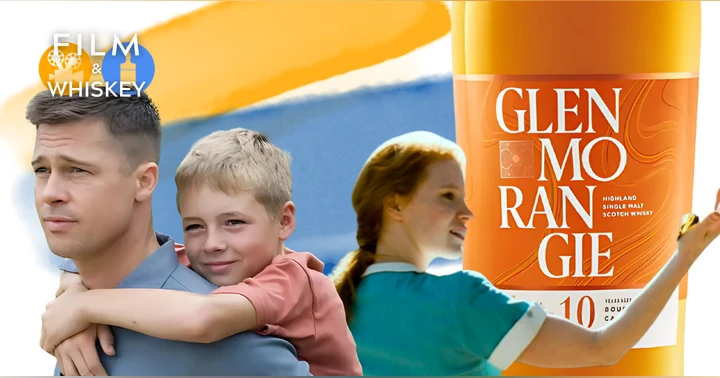
The Tree of Life (2012) / Glenmorangie The Original 10-Year Single Malt Scotch feat. Bilge Ebiri

Bob and Brad, along with guest Bilge Ebiri, delve into Terrence Malick's masterpiece, The Tree of Life. They explore the film's themes of grace and law, the cosmic and domestic narratives, and the emotional resonance of childhood memories. The conversation touches on the artistic experience of watching the film, the impact of memory, and the search for meaning and God. The hosts reflect on their personal journeys with the film, its significance in film criticism, and the complexities of parental relationships, ultimately celebrating the film's high artistic ambition and emotional depth.
Then, they revisit Glenmorangie "The Original" 10-Year single malt scotch, which marked the hosts' first foray into the world of single malts back in season 1. As they revisit this classic, affordable scotch, they note its value and availability for beginner scotch drinkers.
Chapters
00:00 Introduction to The Tree of Life and Glenmorangie 10 Year
14:36 Brad Explains: The Plot of The Tree of Life
19:45 The Cosmic and Domestic Narrative
29:48The Evolution of Terrence Malick's Vision
01:06:21Transitioning to Whiskey Tasting
01:22:43 Performance Analysis: Brad Pitt and Jessica Chastain
01:29:59 Comparing Tree of Life and Interstellar
01:48:58 Let's Make It a Double: Film Pairings
Film & Whiskey Podcast. New episodes every Tuesday.
Theme music: "New Shoes" by Blue Wednesday
Film & Whiskey Instagram
Film & Whiskey Facebook
Film & Whiskey Twitter
Email us!
Join our Discord server!
0:00 In 2011, director Terrence Malick and star Brad Pitt and Jessica Chastain gave the world an ethereal look at how the cosmos fits into the human soul. In 2025, we returned to the single malt that started it all. The film is the Tree of Life. The whiskey is Glenn Moringy 10 year. And we'll review them both. This is the Film and Whiskey podcast. Welcome to the Film in Whiskey podcast, where each week we review a classic movie and a glass of whiskey. I'm Bob Book.
0:56 I'm Brad. Gee. Brad, I'm so freaking pumped. We're joined by somebody else that all the viewers can see. I'm going to hold off on introducing him just long enough to say I'm so pumped about this today, man. Because today we are talking about the Tree of Life. I feel like we watched this movie. It was like our fifth movie of the podcast. I was brand new into the world of like anything that could be considered high, high film, we'll we'll call it that. I had watched like a more 10 years before on a on a whim with a friend. It was like what the F just happened to me.
1:37 And so coming into Tree of Life, I was a little nervous. And I remember getting to the end of it and thinking, like, I feel like that was like an art house film. What? Yeah, common consumer would consider art house. But why did it feel so personal? Like, it felt way too warm to be like this. I don't know, Artistic, unapproachable movie. And I think we, I think I gave it like a nine out of 10, Bob. I'm just gonna say right now, this is a 10 out of 10 movie. Coming back to it five years later was a great experience. Well, I mean, way to just absolutely throw down the the gauntlet here, Brad, because now I have to introduce our guest and what if he just comes in and says like, yeah, it's fine, you know? Then he would be right. 7.
2:27 He would be 100% right because our guest is Bilga Abiri, everybody. Bilga, how are you tonight, man? Thank you for joining us. I'm good. I'm I'm I'm very happy to join you for this movie, which is of course a 10 out of 10. It's it's on my side and sound list so you know it's it's. Like there you go. It's top five for me, but I did. I never listened to your first episode about it, so I don't know what you said at the time, but I'm sure it was. I was strongly cautioned against ever listening to anything from our season #1 this. This is what you told me. We've shared the story before, but in the early days of film and whiskey, we sat in a room together. We recorded on a conference call microphone, so the audio quality is just just pretty.
3:11 We would just, we would do 4 films in a day. So like I had watched these four movies anywhere from like the night before to two weeks before and you know, we're drinking whiskey and review and it was like, I think Tree of Life was our last film of the day that we reviewed I. So so so by the end of the day, it's more of the whiskey and film. Podcast, yes, it's. More whiskey than? Film now Brad, to your point like this was this was kind of our first big artsy movie and I was very nervous about introducing this movie to you. And I will say I feel like I'm known as the the Snooty art guy on our podcast here. But if you look behind me at our our movie collection here, Brad, you will see that I have the Tree of Life and and eagle eyed viewers will also see my copy of the DVD for Joe Dirt right next to it here.
4:04 So that's right, we contain multitudes here on the Film and Whiskey podcast. We sure do, man. Joe Dirt a a film I made my friends take me to for my birthday when it when it opened. So that was the last time anybody took me to a movie for my birthday. I I that is fact actually. The last movie that I went to see for my birthday was 2019. Brad turning 29. JoJo Rabbit. No, there you go, this is good. What a weird movie to pick for your birthday. You know, let me go watch this World War 2 Holocaust film to commemorate the day of my birth. Brad I.
4:46 I have, I have great taste, Bob, what can I say? What can you say? All right, guys, let's get into talking about this movie. Bilga, I I want to throw to you early on because every season we send the list of films for our guests to choose from and you pretty quickly jumped at the Tree of life. Now I know that it's a 10 out of 10 for you. It's on your sight and sound list, but I imagine that you've talked about this film elsewhere. I've seen you write about it a ton, so why does it still merit, you know, discussion for you at this point? Why do you keep coming back to it? That's a great question. It's so funny because I should be able to answer that question. I mean, beyond the fact that I I absolutely adore it and it is my favorite film from one of my all time favorite film makers.
5:31 Also the fact that I I did write about it so much at the time and, and, and did a lot of reporting on it. What, what one thing that's that's always been in the back of my mind is, you know, when, when Tree of Life came out, I wasn't, I wasn't like a first string film critic anywhere. I mean, I, I, I wrote, I had my own blog and I would occasionally write stuff. I think I hadn't started doing full length film reviews for Vulture yet. So I would, you know, occasionally do things, but a lot of the stuff I wrote about the Tree of life, I basically just wrote for myself. There was one piece that there was one piece that I wrote for New York Magazine.
6:12 That was actually that I started before I saw the Tree of life about kind of the, the 30 year process it it took to make the Tree of life that wound up being like a chart. Like I, I, I did all this reporting. I spent months interviewing people, some of whom like, really didn't want to be interviewed because they were afraid that Malik would be upset with them because he was such a private person. I did so much reporting and interviews. I mean, I, I haunted down people who had heard about this project called Q back in the day. I like, did a whole interview with Sam Shepard about some other movie just so I could ask him about Q because he had apparently once read the script. You know, I interviewed like, Jim McBride, the filmmaker Jim McBride about these other films.
6:59 But like, I also wanted to ask him about Malik because he was kind of in that world a little bit. So I did all this stuff, you know, but I wasn't like, you know, I wasn't a writer who had the pull to get big pieces in. So, you know, all that work wound up being like a little chart in the corner of a page of New York Magazine. And then also cinema. I was redoing stuff for cinema editor. So I actually then went and talked to a lot of the editors for the film and did this piece for Cinema Editor, which was not a, it was a, it's the, I don't know if it's even still around, but it's the publication of the American Cinema Editors Organization. And that was not available online. That was actually just a print magazine, but I got permission from them to, you know, put that text up on my own, like personal blog. So part of it is that a lot of stuff about Tree of Life is kind of stuck inside me.
7:54 I mean, over the years I've written about it in other circumstances, but but I feel still like like I didn't get the chance to like do the big tree of life piece back in the day, even though I've written about it for a vulture in places ever since. So yeah, it's kind of a like it's just kind of an ongoing thing. But also it's it's a film that, you know, it's a film that merits constantly thinking about, much like another one of my favorite films, Barry Lyndon. Like it's a film that you can kind of grow up with. I mean, I don't, I haven't had to grow up with Tree of Life because it came out, you know, 2011. I was, you know, I was a grown ass man when it came out. But like Barry Lyndon, for example, is a film I first saw when I was like a freshman in college, right. And, and every time I come back to it, there's a different part of that film that I find myself really connecting to as I get older, which is one of the magical things about that movie. Tree of Life is kind of the same way. Like every time I revisit it, there's some other part of it that I really, really gravitate towards. But also, it's just that, you know, I mean, I remember the first time I saw the Tree of Life and it was, you know, it was, I mean, it was still to this day, maybe the most incredible cinematic experience I've ever had. If there's two movies I wish I could see in theaters on release, it's Tree of Life and Mad Max Fury Rd. Basically see Mad Max Fury Rd.
9:24 on on. Basically the same movie, but those would be the two. I mean, they're, they're good ones to see on a big screen. I'm happy to say I've seen both multiple times on the big screen. But but yeah, no, I, I totally know what you mean. When I saw Tree of Life, it was actually at a press screening. It was premiering at Cannes, but they actually did have a New York press screening during the day. I obviously had been, you know, obsessed with this movie for years. So I like went to the 11 AM press screening. It was at. The You were camped out cosplaying as Terrence Malick. Well it was funny because if there was like 4 people in the theater, like it was an 11 AM screening or something 10 AM something like that, it was at the AMC 68.
10:07 If I. Remember was looking around like are are you guys so pumped for this? Everybody is. Like huge room, huge room. I was like 1 of literally like 5 people in there. But when and I, I told people this at the time when, during the the creation sequence, right? I mean, before the Earth emerges, when Speaking of Preisner's Lakrimosa is playing, I had what I believe is an episode of Stendhal Syndrome. Are you guys familiar with this? It's the only reason I know about the Stendhal Syndrome is because Dario Argento made a movie called The Stendhal Syndrome and used it as like a kind of a horror movie conceit.
10:53 But it's a thing where and I guess it, it affected people like in the 19th century, in 18th century a lot. But like in the presence of certain works of art, you actually like, have like a nervous breakdown, like like you're. Like. Like, like you actually have what most people would call like a panic attack. Like you, your, you, you. Your breathing gets shallow, your heart starts racing, and you actually feel like you're about to die. It's like Bob at the end of Coco, Yeah. I, well, I, I imagine, I imagine this is a thing that happened. I mean, probably happens less now. It's actually kind of sad it doesn't happen as much anymore, probably to people because we're just constantly inundated with reproductions of art and we're just, you know, like, but like back in the day when people had to travel like days to see a painting or a cathedral or, you know, or, or let alone like the Mona Lisa or something. And they spent most of their normal days like herding sheep. Or any cheaper or whatever.
11:57 Like, I mean, it's just, you know, whatever. Like, you know, but but like, you go and you travel and you, you won't, you find yourself somewhere and suddenly you're faced with like a painting by Michelangelo and you lose your mind, you know, And that's what happened to me during that sequence. I was like, what the fuck is happening to me? Do I have to leave the theater? Like I was actually freaking out and I was like, oh, no, no, no, this is awesome. Like what, what it what just happened is awesome. It's, it's, it was very scary, but it was awesome, you know? Well and true true to the word awe some like awe inspiring so awesome that it's overwhelming.
12:39 I, I, I love the religious bents. We're kind of moving towards, of like movies can be a religious experience. And I, I mean, Bill guy I've had, I've recently come into a place where like there's certain times where I'm listening to like my kids are running around the table and we're listening to the 1812 overture and the cannons start blasting and the church bells are going and I'm running around the table with my kids and all of a sudden I just start crying. And I'm like, I like, I just can't imagine a more beautiful thing than what I'm experiencing with my children right now paired with this magnificent piece of art. So I, I, I don't know if that's the same thing, but I'm with you.
13:25 Absolutely. And, and I feel like, you know, as I say this as someone who is not religious is like, I mean, I'm, I'm, I'm a total atheist, like raised by atheists, like religion has never come into play for me. So in my mind, this is a, like, this is the only religious experience, you know, like I don't have a religious experience in church. I mean, I, I've been to churches like I've been to, you know, I love churches and I've been to churches for people's events and weddings and, you know, whatever. But, but the only kind of religious experience I have is the things where you say it was like a religious experience. I'm like, oh, that, that is a religious experience for me. Yeah, yeah. It makes you rethink using the the phrase like transcendent flippantly, like I I touched something that was beyond myself in this, the experience of this thing.
14:13 And just for the record, you know, that's that is how I feel about Joe Dirt. So I just want to get that out there. You know. You know guys. Different definition of touched something but. True, true. I think that it is. Unknowable. I think it's time for us to get into our first segment of the day, which is called Brad Explains. Brad's gonna give us the movie plot with only 60 seconds ticking on the clock. So let's go ahead and do your take with this little segment that we call Brad Explains. Brad Explains is the part of the show where Brad breaks down the plot of the film that he has just seen often for the first time. This is obviously not Brad's first time with The Tree of Life.
14:56 Brad, have you checked it out in the interim between seasons 1 and 10? I've held off. I have like tried to get a few friends to watch it with me. It always kind of falls through when I explain what the movie is and so it it's just never quite come around. It's always been on like the tip of my mind though of like that's a movie I want to come back to and experience and enjoy again. Not something I've returned to until two nights ago. Wow, this is special. I'm actually, I've been looking forward to Brad explains maybe more than any other part of today's episode because, you know, Bill got Brad and I are both from a religious background. We actually are both seminary grads who have worked as pastors at some point. So like we bring an explicitly Christian lens to a lot of what we watch.
15:43 And I think that like, you know, I was in college when this movie came out. I was a a theology undergrad and, you know, this movie hits me and I think it came out the year before Life of Pi Brad. And I remember thinking, even at the time, you know, I don't necessarily think that you can just copy paste these directly onto a Christian, you know, screed or worldview or whatever. But I couldn't believe how seriously these films were taking questions of faith in a way that I had really only seen to that point in like European cinema. Like if some if some religious, something religious happened in an American movie, especially in the late nineties, 2000s, it was usually portrayed as a negative or it was something like Paul Dano's character in There Will be Blood or, you know, Robert Duvall in The Apostle or something like that. And so to wrestle with these really deep philosophical questions, this movie immediately like shot up my list.
16:47 And I remember even at the time seeing like atheist readings of the Tree of life and thinking to myself, like, this is the most explicitly Christian movie I've ever seen. I don't know how you could have an atheist reading of this movie. And I think what I've been so blown away by is that each time I return to it, yes, for me, because of my lens and my world view, Like I, I see this as a movie that is very nakedly referencing and, and talking about the Bible and the Christian God. But I see every other interpretation of it within this movie as well. Like, I see this as Terrence Malick as a transcendentalist, I can see this as a movie about just childhood. And this is a movie about parenthood. And I think there's so many different lenses that you can read this through as the primary lens. And I think that for me is what makes it a great work of art. And I say all that to say, that's why I'm looking forward to Brad explains today, because I'm, I'm looking forward to seeing how your views on this movie have shifted with another, you know, six years of life experience under your belt here, Brad.
17:51 Yeah, man, you have put the pressure on Bob. I will see see what I can do to live up to these expectations. One minute on the clock to explain the plot of this film, which spans at least 4 billion years. So, Brad, how about it, man? One minute and go. You're not a young earther, Bob. 4 billion years. Huh, that's true. I meant 6000. Right there you go, 6000 years. Oh man, Ken Ham is going to have his way with you. The Tree of Life is a film that follows a family. I believe it's the O'Brien family, which I've learned because I read Bill Gaz's articles and that is a helpful piece to start by saying that this is a film that follows them in a memory format, that we see the film as if it is the memory of Sean Penn, the older character, remembering his childhood.
18:56 Part of it is things that he can barely remember, and it moves by quickly. Part of it lingers, especially as he gets older, into his young teenage years, but it follows him wrestle with these ideas of grace and law and discipline and love and try to work out what it means to be a human being in light of this vast universe of chaos and rigidity and, and figure out what it means to be a human. And I, I think that it is an incredibly personal film that feels so warm to me. And that's my brain explains, 'cause there's not a, there's not a plot, guys.
19:44 I I mean there, there is and there is, there is that's it's another thing that is so interesting about this film is like I, I took notes and I'm, you know, you got to forgive me. I'm jumping all over the place in these notes here, but like, I think there's two kind of paths that the story takes in terms of how it frames itself. And the the most obvious one here is that the film is kind of bookended by these grand sort of cosmic visions and, you know, explanations of the origins of the universe. And I think that framing this small domestic story in the context of this cosmic, you know, drama that's happening is really what Malik is getting at here. And so I think I'd like to start by talking about. The sort of grand cosmic saga that we're presented with here, because the movie starts out in its opening moments as sort of a meditation on grief.
20:35 You find out at a time period which looks like the early 1960s, that Brad Pitt and Jessica Chastain's son has been apparently killed. I would say killed in action, right? That's the what I got from that. Maybe in the Korean War or some early skirmish. It looked like a was. Was it a military delivery of a letter Brad that he got? I feel like she 'cause he's at the airport on the pay phone when Brad Pitt, when he gets the call, I to me, it felt like a younger child passed away. And I think that's the well he's. 19 I think, right. He's 19. It's actually, I mean, it it it in the real life in the Malek family, it was a suicide.
21:23 Yeah. And and this is hinted, they don't say it in the film. So, but it's hinted at because, you know, Brad Pitt's like early on when he's kind of thinking about, you know, thinking back on on his son, he talks about how he used to like hit himself when he would criticize him, turning the pages too fast and stuff. So there are these little hints at like, was there some inner shame or fear or, or self loathing? Like there is speculation, but, you know, it's all very glancing. And I don't think it's meant to be, you know, I mean, that's sort of what it was in their family. And I think Malik has brought a lot of his own, his own life into the film.
22:11 But I think he keeps it open for a reason because it does. Does it really matter? I mean, it's, you know, so, yeah. But yes, that was that was the that was the thing, I think. I think the the guy in the uniform is just like a mailman or whoever would have delivered. Got it. OK, alright, that makes. Sense And, and that's why he's not there, because he was, I mean, the, the, the story is he, he was a very talented musician, a very talented guitarist, I believe. And he had travelled to Spain to work with Andrés Segovia. And, and I think, you know, he was just really, I mean, who knows, but like very neurotic, hard on himself.
22:52 There was apparently there was even a thing where he had maybe like broken his fingers because he didn't think that he had, you know, that, that he was getting it. And I guess I, I guess he, I guess he died, you know, while he was away somewhere. So yeah, it's a very sad. Story, yeah, that for sure. And I think it, it deepens even, you know, once you know that context, the, the level of grief that they're processing at the beginning of the film. And it starts with a quote from the book of Job, which is essentially, you know, like, where were you when I, when I hung the heavens and the earth in their place? And then it launches into this small domestic story about processing grief. And, you know, if it's your first time seeing this film, you're not expecting the sequence that is to follow that. Like, it's about, you know, 1520 minutes of a kind of a montage of watching this family go through the loss of a child and asking these questions of God or the universe or what have you. Like, why is this happening?
23:50 Where have you been? What have I done to bring this on? Have I neglected you somehow? Did I neglect my son? And then you get this sort of big cosmic response, which I think is an immediate call back to that verse in Job. And Malik launches you not just into this sort of, you know, response of scale of, like, look at the universe and how small we are in it. But what I think is really the key to getting at the movie is that he walks you through the entire narrative of the way that these two responses to life, the way of nature and the way of grace have been woven into the earth from its foundation.
24:33 Like you get this incredibly janky CGI dinosaur sequence, but it's a sequence that, you know, on its face, you're kind of like, why was that there? You know, it's it's like this Velociraptor or something that finds a wounded dinosaur on the side of a riverbank and overpowers it and puts its foot right on its head and is clearly in a position to kill this smaller creature looks at it and feels some dinosaur sense of pity and then has grace upon it and walks away. And I think that, you know, you start to see that what Malik is doing is not necessarily just this book of Job, like, hey, I'm God and I am bigger than you. And you don't know what what you're talking about. It's it's a response that is yes, it's about scale, but it's also about you small family in Texas living your small domestic life are actually part of this story that is playing out on a grand cosmic stage throughout the history of the Earth. And I think to be able to communicate that nearly wordlessly across what is essentially a 40 minute montage is one of the the biggest and most impressive feats of filmmaking I've ever seen, guys.
25:51 I'm I'm with you 100% man. I, I remember specifically saying the first time we reviewed it, like I understand that the 1st 40 minutes is montage and it's when he's young and you're not. It's meant to be fast-paced. But for me it like when the movie slowed down a little bit is where I really start to enjoy it. Now I'm like, I just enjoyed the entire thing. I Bob, I'm with you. That first 40 minutes is so freaking brilliant of his ability to communicate all of this. Like you said, 4 billion plus years of the existence of of existence and to communicate that in the terms of the biggest life questions that humans ask like why do bad things happen to me?
26:41 Do my actions even have an effect on the world around me? Do I have purpose and meaning? Am I safe in the world? He communicates all of that stuff through snippets of dialogue through 1 sided conversations on the phone. And then I called it the first time. The National Geographic sequence of the creation of the universe. Bilga I'd like to hear your interpretation of it, though, you know, because it, it's pretty rare these days that you get a film that starts off with a quote from the Bible like that. You know, I've, there's obviously been a few, I think Scorsese's Silence does as well. And that's another movie that takes questions of faith and doubt very seriously. But waging be ends with a kind.
27:23 That's true, yeah. When you see the kind of narrative that Malik is trying to structure in what seems like a pretty formless first part of that film, like what? What are your what are your reads on that? What are your interpretations there? I have a lot of interpretations. I want to talk about the dinosaur scene briefly. I I love the dinosaur scene and that it doesn't seem as it doesn't seem that janky to me. Although watching it again last night, I was, I mean, I can sort of see the scenes. I mean, the problem with CGI is it looks so great the first time you see it 20 years later. It looks so nodgy. But but that scene, I can't shake that scene because and I have no idea.
28:15 I mean, I, I've talked to a lot of people who've worked with Malik. I've talked to a lot of people who worked on this film. I talked to a lot of people who've, you know, who know Malik never asked any of them this. And I don't know that they would even know. But I see that as you know, we have watched, obviously we have watched the creation of the universe. We've watched the creation of the earth. We've watched all these things, and I can't help but think that that scene, the dinosaur scene, is his answer to the question, what was the universe's first act of mercy?
28:55 You know, like what was the first time that a sentient creature showed mercy, you know, and, and what you know, was it like a human doing that? And if so, when? You know, like it's mercy exists now. So it started somewhere, like the universe started, the earth started the, the, the, the continent started the organisms, all this shit started. So where did mercy start? You know, and obviously you can talk about, I mean, obviously there are spiritual ideas around it as well, but like, what was the universe's first act of mercy? Maybe it was a dinosaur choosing not to kill a wounded dinosaur.
29:36 I, I love that. Like, I, that to me, like every time I see that, I mean, I cry a lot watching this movie, but I definitely cry at the dinosaurs. So that's, I just wanted to touch on that. The, the thing about the, the narrative structure of the film to me, and this is also because of the, the, the reporting I did about the film before I even saw it and because I knew about this project. Q That had dribbled out, you know, over the years because, you know, Malik sold story, which you're I'm sure familiar with, is he makes Badlands, he makes Days of Heaven. Charlie Bludorn at Paramount loves Days of Heaven so much that he basically gives him $1,000,000 and says whatever you do next, I want you to make it at Paramount.
30:22 It's kind of like a first look deal, basically. And Malik has this idea that he is going to make a film that kind of incorporates the life and death of the universe into it. And he, you know, and this is the era of like, I mean, Kleaniskatsi is a little later, but you know, this kind of ambition is in the air with other films as well. But, you know, he's a guy who's, you know, obviously has thought long and hard about these things. And there's also this story that like when he was a kid, there was like a, a, like a newspaper supplement or something like that or some kind of book that he had that was kind of very much a picture book about the creation of the universe. And people said like, he actually still had this thing. So there was very much a kind of National Geographic kind of, you know, simplifying it in some way while allowing it to exist in all this kind of awesomeness.
31:20 So he starts this thing which over the years is referred to as Project Q. At some point it was called Casita. But much of the time I guess it just didn't even really have a name. And he gets a small group of collaborators together. He gets like an effects guy, he gets a cinematographer, his his brother is involved. There's a producer like it's really like a 5 or 6 Man Group and you know, they just start gathering footage, stuff, ideas, you know, he sends people out to go shoot an eclipse. He sends people out to go shoot a glacier, he sends people out to go shoot lava. I mean, just all sorts of things. He doesn't really know exactly how it's all going to fit together and he doesn't really have a script.
32:03 He just has pages and pages of just like very poetic descriptions of like the beginnings of the universe. Just he's just, I mean, it's very like, I don't think he was ever a pothead, but it's very much like you kind of can just imagine the, the, the you know, the, the smoke wafting from like whatever trailer or, you know, you know, back lot office they're on. But and like, you know, in the studio, people are like, hey, you know, are you going to give us a script? And he's like, here's 20 more pages of like poetry, you know? Yeah, poetry. And like this is this is where the ground comes from, you know. And so this goes on for for a while. I think they, you know, this goes on for like a couple of years, I believe. And eventually he kind of loses interest. A couple of things happened. 1 He has this idea, but he never can figure out what the actual narrative is going to be like. Like this is supposed to be kind of woven in with a with a narrative of some sort.
33:00 Like it is going to be an actual movie with a story at at some point. I mean, different people have speculated and you know, things have filtered out. But at some point, apparently it was going to be like a World War One story. At some point it was going to be like like prehistoric cave people, like a romance. It was going to be a lot of things. He never quite figured it out. And then he, you know, at some point, he abandons the project. I think it kind of winds down a little bit. But then he, you know, he goes to France. He falls in love. He decides to move to France. He gets married. And he's just like, listen, let's not worry about this thing anymore. I'm going to go over here now. And I see here. Yeah.
33:41 And the people who worked on the film, a couple of them were just like, I was like, really, really sort of just heartbroken at it because they were really excited by this. I mean, the thing they always say was like, everyone who is spent time with Malik says this. He's like, they're like, he is just like a really cool guy. Like, he's just like the coolest guy. And you would love just hanging out with him and talking to him and working with him. And, you know, they were all really disappointed when the thing just wound down. And and then, you know, he's gone for 20 years. I mean, he's, you know, pops up here and there does some work. It's not like he's, he's not a recluse really. I mean, he has his reputation as a recluse because he doesn't like to be photographed and doesn't do publicity and stuff. But, you know, the people that know him know him. You know, we lived in Austin much of the time. I know people who used to play like, you know, pick up basketball with him.
34:32 You know, he was just a guy and. Just in the local Y league. Yeah, no, like literally no, he wasn't, you know, he was, he was a, he was a high school. He he's a high school football star. Like he was a real kind of real. I mean, he's a brilliant guy, but also a real jock. So he is still, I mean, now I don't, I mean, he's like in his 80s. So I don't know what he does now, but I I do like he was into running, he was into basketball. So he did all. So what you're telling me is he was the original Zac Efron from High School Musical? He did. He could do it all. There is a great, great story, Paul Williams, who is who was involved with Malik's early films. He was a director, producer in the 70s, made a number of films with like real stars and stuff. But but the films were never very big. But he wrote a memoir.
35:24 Oh gosh, I wish I could remember, but I, I read it a couple years ago. I posted this on Twitter, so you might have seen it. But there's a part of it where he talks about going to going to Cuba with Malik 'cause, you know, Malik had written an article about Che Guevara and stuff, and at some point he was going to make the the film that became Soderbergh's Che was at one point going to be a Terrence Malik film. But it's a story about playing basketball with Terrence Malik, Fidel Castro, and oh gosh, who was the other person? Hang on, I'm going to find it. Sorry, sorry. That is wild.
36:07 No, we we will vamp while we look for the the Fidel caste 'cause we have to finish the story now, Brad. Like there's no. Yeah, it is OK Paul Williams, Terrence Malick and Francis Ford Coppola. I'm gonna, I'm gonna, I'm gonna read the section. The next morning, the three on three basketball game pits solid Fidel and two buff Cuban soldiers, all in fatigues against Rotunda Terry, hefty Francis and skinny me. There are no other Cubans there. Fidel needs no additional security in this land where he is so adored. Castro fouls me hard as he elbows his way into the post and makes an easy layup. We get we get the ball out on the next play and I back him into a deep post and give him a hard elbow in the ribs. Fidel says foul.
36:54 I say no, that's the same as you did. He says foul, foul, foul. He takes the ball out of my hands, walks to the free throw line. He takes two shots on the next play. I am careful not to foul him, but I guard him so tightly that he has to stop dribbling. I quickly fall off him to help my 2 chubby directors guard their two Fleet Soldier athletes. Fidel can't find a passing lane. Castro simply begins to dribble the basketball again and head straight in for another easy layup. I say hey hey, that's a double dribble. Fidel looks at me. I say that ain't basketball, you can't do that, it's our ball. Fidel holds the ball and looks at me. I look at him. I see he is serious, he just must win. He says this is my country, I can do whatever I want here and laughs with a smile. We laugh, too.
37:40 Some egos are so big they can cradle a nation. And he says before we fly away, Huey says Cuba is still racist. Black Cubans are victims of discrimination by the lighter skinned Cubans. And he says he misses American hamburgers. And by the way, that Huey is Huey Huey Long. Oh, so I said not good long Huey Newton. Sorry. Yeah, yeah, yeah. But just. Like that's wild, man. What a story. Anyway, sorry, total tangent. Apologies, love that tangent. Ridiculous tangent. But so I mean, getting back to the story, you know, Malik is gone for 20 years, you know, comes back playing. Basketball with Fidel.
38:22 Yeah. I mean, this is before that, but I'm sure it's, I'm sure there was a lot. Of straight years, that's all he did. Yeah, he was probably playing basketball with like George W Bush or something, 'cause, you know, being a, a Austin guy. Yeah, but the so he comes back, you know, he does Thin red Line, the New World, and it really does feel like he's back and then. But what's interesting to me is you know, when I, you know, when, when Tree of Life finally came out, it was clear that it was this, it was the Q project. And I found it so touching that after all these years of trying to find the narrative that's going to sort of make the whole thing work, this most reclusive and publicity shy of directors was just like, I'm going to tell my own family story.
39:09 Like, that's the story he found. And how perfect is it? Like, that's the thing. It's it's just because in the finished film, it feels so organic. It doesn't to me feel like, oh, why did he figure? Why did he put this story here? But it actually took him like years and years before he figured out that that's the story he needed to tell. I think it's beautiful and I think it's a good segue into what I had written down as sort of the other way of framing this film. So you obviously have a a small domestic story framed against or I guess in in line with this story of the cosmos. But then you also have this decision to ask huge universal questions about humanity through the eyes of a small boy.
39:52 And so it essentially becomes like the most important movie ever made about puberty. And I kind of watched most of this movie through that lens today, Brad, Because for some reason I, I got so lost in the other framing device of the film the first few times I'd seen it that I really neglected to look at this as a coming of age movie, or at least a movie that encapsulates a really. Volatile time in a young boy's life. And I think the the extent to which this is a movie about puberty is worth talking about because it's a super interesting, I guess, way of commenting on the whole human race, right?
40:33 Like, you're going through puberty, you're going through an incredible amount of of hormonal changes. You're constantly beating yourself up, you're constantly questioning your own innate goodness or vadnais. You're measuring yourself against how much of this is in my blood versus what is a choice that I can make you. You're doing things that you don't want to do and you can't explain why. I think it's just an absolutely perfect kind of metaphorical encapsulation of the questions we all ask. And putting it in the eyes of like a 12 year old boy or however old he's supposed to be is like it is brilliant, honestly. Well, and for me it like it almost takes it a further step back. It's not through the eyes of a 12 year old boy. It's through the eyes of a 52 year old man thinking about his 12 year old life.
41:25 And how often do we see people later in life begin to look back to make sense of what's coming ahead. And I, I, and that's not to say that anything you said is wrong, Bob, I, I agree. This is a movie about the importance of taking seriously the inquisitiveness of children. The there's a, there's a, a mentor in my life that talks that has this phrase where he's like, there's no such thing as a junior Holy Spirit, right? And if we think of the Holy Spirit as a mentor, a guide, somebody that helps us in our life, like we so often don't take children seriously and we have infantilized the teenage years to it feels like we have prevented them from being allowed to ask these really important questions about purpose and value and meaning and, and what does it mean to be good and bad?
42:24 And as I was watching it this time through, I really was reminded of East of Eden and the the main characters of East of Eden, like struggling with like, well, he's just Cain and I'm Abel, or, you know, I'm Abel and he's Cain and I'm evil and I just am evil and I can't do anything about it. And there's so much of that that we ought to take seriously as adults. And yet, if I'm being blunt, I think so few of us have ever truly, deeply wrestled with these questions of what it means to be a human and good and evil and all these things that we can't take it seriously when our kids ask it then 'cause we don't have answers ourselves. And Malik Malik is like, his whole movie is just thrust at this heart of we are asking the questions of the cosmos from the time we are born, right? All the way through the end of his life, You know, as Sean Penn seemingly is entering the afterlife. Yeah, and I think, Bilga, part of the reason I bring this up is because I I read a really good blog post of yours from when the film was released and you were kind of musing on something that you had done as a parent.
43:36 You had you had said something that startled your toddler and and you walked away wondering like, did I do the wrong thing? Did you know I was trying to protect my child? But I've also scared my child in the process. And I think that there really is a fine line between viewing this movie through the lens of the child and the imprint the parents have on the child. And also viewing the movie through the lens of like this is a very sympathetic movie ultimately towards the parents and their own need for for self reconciliation and self actualization. I just love to hear what you think a little bit about the the puberty angle of the movie. I mean, there's that there's there's that line that always sticks out for me in the film.
44:18 It's it's part of the voice over from the boy when he says father, make me good, right? And it's we don't know who he's talking to. Like, you know, like, I mean, this is, I mean, this is a child with a fraught relationship with his father, but it could also be father, you know, father a God, but but like, or a priest, you know, but this, this idea, father make me good. You know, he's, he's yearning to be good and he's wrestling with the fact that he isn't or that he does petty things or that he does cruel things. It's like I'm trying to remember when this this actually comes. I think really during those, I think when we're actually watching Jessica Chastain in the plane, I think it's right around that point. There's this little, the film is full of little brilliant pieces of montage.
45:07 And there's this, this little montage there where she's in the plane. She's she's telling them the story about this time that she went up in the plane. And then and then we see her floating next to that tree. There's that really kind of one of the oddest, oddest shots. In the movie, yeah. Yep. It's and it's all this little montage of sort of like this, this kind of questioning this yearning. I mean, the whole film is like that, but it's all full of little moments like that too. The thing that I wanted to sort of bring in was you guys have seen Scorsese Silence, another film about faith, and I find it interesting.
45:53 Both films have such a interesting relationship to the question of of like where God is or not or how does how do you find God right? I mean, silence is an incredible movie as well. And but like silence has such AI mean it's almost like like it turns the concept of where God is into like a a third act narrative twist almost right. I mean, it's because it's like all throughout the film, you know, Andrew Garfield's priest character is is confronted by this this guy Kichijiro, who's, you know, kind of a very pathetic figure and keeps doing the wrong things and keeps betraying people. I mean, just the really, really broken character who keeps wanting to the the priest to hear his confession. And the priest is always like, OK, well, you know, like, just like wants to keep him at a distance. And this is a priest who at the height of his own suffering, sees, you know, sees his face reflected in a pool of water and then sees Jesus and thinks, Oh, you know, like I have achieved, like I have achieved not, not godhood, but like, I, I have become like I'm seeing God.
47:06 And he absolutely he's not. It's that, that like, it's a completely red herring in many ways. And then at the very end of the film, because he's looking for God, the, the whole movie, he wants to, you know, he wants God to hear him and to, to answer him. And at the end of the movie, like towards the end of his life, Chigiro comes and, and he finally hears his confession And suddenly he hears the voice of God. And like, that's where it is. Like the idea that you find God in the most base suffering, pathetic, broken person. I find that just incredibly moving. And, and there is, and this film has some of that too, not in that sense, but in the sense like you find God, the like the search for God is God, you know, like the like the the yearning, the searching, the grief, the rage, the, the it's all kind of it. It like you're just like that's, that's it. Like that's, that's like, that's and that's what's so impressive about like that, the fact that it's something can contain all that.
48:17 And, and, you know, and I think that's sort of maybe what the what the Sean Penn character is sort of working his way towards, you know. 100%, yeah. And I, I think that that's kind of echoed too, in the way there's a moment kind of early on in the movie where you see our main character like praying at his bedside. And it's interspersed with narrative of him asking these big questions of God. But when it's, when he's actually vocalizing out loud, like what his prayers are, they're just these tiny little like, help me not, you know, kick the neighbor's dog and help me not get mad. And it's the kind of things a kid says. And it makes you wonder as a viewer, like, is it just that he can't articulate the real questions that he has? And So what we've been hearing in in voice over, are these actually people even asking these things of God or are these kind of subconscious questions that even they can't can't vocalize And and that's.
49:14 The yearnings of their heart. Yeah, 100%. I think it's just a really beautiful. And again, it it tips into this sort of mystery of the film that it's it's so hard to achieve, Brad. It's so hard as an artist, like, to not just come out and say what you want to say and at the same time to not be so, like, obscured that no one knows what you're trying to say. But the fact that, like, we can sit down right now and have a conversation about like, atheist readings of this film versus Christian readings of this film. And like both of those are not just extremely valid interpretations of the film, but I think there are intentional things strewn about the film from both perspectives that ultimately speak to the same core principle. And I think before we go to break guys, I want to talk a little bit more about the way Malik communicates that because, you know, the idea of like a movie being a tone poem or something is is so overused.
50:15 But I think with Malik, like there really is no other way to talk about his use of the language of cinema than poetic. It really is. It's it's impressionistic. It's it's like a 2 1/2 hour montage, But that's underselling it. I don't know if vignette is even the right word for what you would use, but it made me think of Brad. This is the nerdiest thing I'm gonna say all day. When I first, when I first started getting obsessed with like classic movies, I bought the DVD of Casablanca, which I, I believe Warner's released that great two disc DVD in like O 4. And I watched the hell out of that thing and Roger Ebert recorded a commentary for Casablanca. And I watched the entire movie of Casablanca just listening to Ebert's voice over on there.
51:04 And they get to the point where after Rick kicks Elsa out, you know, and is super mean to her, and then it goes into the memories of them in Paris and you finally get the flashbacks to what happened. There's a there's a rear projection shot of them driving in the countryside. And then it fades to the city of Paris or wherever they are. And it's the cheesiest rear projection shot. And Ebert comments on how people have kind of ridiculed that shot over the years. And he starts defending it. And it was so eloquent because it was so simple. But he just said that's the way memory works when we remember things. That's the way memory works. And I think that you really hit the nail on the head here in that this is a movie, that it it defies traditional narrative structures or even strictures because it is so entirely reliant on the way human memory fills those gaps in.
51:59 You can piece together the narrative without him having to hold your hand through it, because we as people know exactly what it's like to just remember small snippets of things that were super impactful for us. Well, and, and human memory is wholly reliant on the emotions that fueled those important moments of our lives. And the, and that is the beauty of this film is that whether he is explaining the origin and demise of the cosmos at large, or he's talking about that moment where dad's gone and, and he's this, this disciplinarian that we don't love. And now we get to have like a 10 minute montage of them truly enjoying life. And like, tell me that that montage is not the most picture perfect.
52:50 This is what I want my children to remember Summer like. Like that is the most perfect representation of the emotions of summertime as a 8 to 12 year old. At least what we all want our own life and our children's life to be. The way he captures the emotion of your dad trying to teach you something and you're just not quite getting it. And you can feel his shame and disappointment in you and you feel your soul shrinking at the idea that you're not good enough for the man who brought you into the world. I like how he's able to capture that, the emotionality of that with just bare bones minimum story. I, It's, it's truly incredible.
53:41 I man, well. Before Bilga jumps in, I, I want to piss you off a little bit because there, there was this one moment. It's the moment where, you know, the, the music starts to turn a little sinister. And it's as, you know, our protagonist starts to make poor decisions and we start to see him, you know, really ethically dabble in some things he shouldn't be doing as a young man. And they're busting out the windows. And then they're like, let's put a frog under this rocket. And it, it gets more and more destructive. And it reminds. Sid from Toy Story. Yeah, it reminded me of the sequence in Eternal Sunshine, which I know is a movie that you absolutely hate. But it's when they go back to Joel's, like, deep, deep childhood.
54:23 And he's remembering this time where they had like, they have him in like a little kids outfit and they're like you, they're surrounding him with a hammer. And they're like, you have to hit this bird in a wagon and kill it. And you see grown up Jim Carrey do it and then like, breakdown in tears because he still is a grown man. Like feels so much guilt and shame about this core memory from his childhood. I I don't know why I thought of that in the moment, but I think that moment multiplied by 100 is kind of the effect that the tree of life has on me. I mean, I'll, I'll jump into a way opposite end of things as far as you you fancy film people.
55:05 The kid with Bruce Willis. And yeah, you know what I'm talking about. Excuse me, Disney's the kid is. Disney's the right title is that movie. You are right. That is the official title. Disney's The kid has that right. The whole movie is around. Like why is this? Why am I here in the present 12 year old me? Why is he here in my present and annoying me? And Bruce Willis is great at being annoyed. And he's trying to help him figure out, like, what's this thing in my past I need to change? Where did I get this tick that, you know? And he thinks it's, oh, I got beat up trying to defend this dog in the schoolyard. And then they get back to the house after, you know, he got in trouble for getting in a fight at school.
55:49 And his mom has cancer. And his dad grabs him by the shoulders and just screams at him, like, what are you doing? You're killing her. And it's that moment of just pure shame and guilt. And he realizes this is the moment that my whole life trajectory changed. And I think that you see that captured here in Tree of Life of, you know, Sean Penn reflecting like, where did where did my life change? Where were the moments that I set myself on a course I couldn't pull myself back from?
56:30 And I love the the tension between law and grace that he holds the whole time. Because at the end of the film, you see that both of them have a role to play in his life. And I think the first time I watched the film, I, I definitely was on a like anti Brad Pitt, like he's just a bad dad. I think this time through you see a lot. I saw a lot more grace for him as he got older. And I actually, I need you guys to answer a question for me 'cause I, I realized this as you were talking about Terrence's personal life. So at the start of the film, we have the letter and the phone call and the brother has killed himself, died somehow overseas.
57:15 Do we think that that's the brother with like, blonde hair, his younger brother? And that's like, yeah, that was head. That that's the younger brother. Yeah, because you, they're also in a new house at that point too. You can see that they're in a in a different space. And I, I would imagine it's probably, what about a 10 year jump into the future? Yeah, yeah. I mean, it is, it is the younger brother. And I know it's, I mean the youngest brother who had killed himself. And that is, you know, it's very amorphous, but that's the indication that it was him. Now, of course, by this point, I believe the the other brother had also died much later, years later. But so in in many ways, this is Terrence Malick remembering both his brothers, but it's specifically this family trauma was one that really, really resonated obviously, and, and, you know, one that really kind of affected all their, you know, relationships and, and, and lives afterwards. Brad, the short answer is yes, that was. It's a jump ahead in time.
58:22 I, I think that the reason I asked that I, I did not pick up on that until now as we were talking about it, to realize that that was actually set ahead of where you go after that. The reason I say that is it, it makes a lot more sense that Sean Penn is now looking back at the death of his brother and reflecting on the years previous to that to ask these questions of like, who am I? Who have I been my entire life? Is this who I've always been? For me, the moment that has stuck with me both times watching the film most deeply is the moment where he holds his brother's finger above the BB gun and shoots it. For me, that is like the crux point of the film where he is, is he going to choose law and nature And you just it's the it's the survival of the fittest man. Like if you can't take this and you can't take life. And clearly his younger brother is a sensitive soul. Or is he going to choose the way of grace and his mother? And what I love about the film is that in the moment, he chooses the path of nature, and yet he feels that human sense of regret and empathy.
59:40 And what if somebody shot me in the finger? And eventually he finds his brother and apologizes to him and tells him that he loves him. And it sets him on a different path once he's experienced both nature and grace. And I think that's such a fascinating commentary on the human experience. Well, I don't know if you noticed what's the music that's playing during that sequence is. It's the Lacrimosa again on the piano. Version of the Lacrimosa which and I mean those are the kinds of things I think Malik actually paid a lot of attention to because one of the things that the people I spoke to said well even about the original Q project was that he had become obsessed with the symphonic form.
1:00:27 I think I I wrote about this a little bit, but you know, the way that music repeats in the film, I mean, it has the film kind of has a symphonic structure instead of just like a traditional narrative, you know, three act structure. You know, you've got you've got like your overture and you've got, I mean, you, you, you know, there are all these little things that that coincide with the way symphonies work. But but the way that music is repeated, you know, sort of from the first half to the second-half, I think is always kind of an interesting indication of, of where his mind is and how he sees certain scenes. But but yeah, I know that's a beautiful, I mean, it's an absolutely beautiful scene. And it is also like the kind of thing, I mean, look, I'm sure this guy has done worse things in his life. Like that's the thing.
1:01:14 It's like you focus on these little things. And also that that scene where he that where he's, you know, literally just nice to that to that boy who has the burn marks, you know, who who he had kind of been like keeping his distance from earlier. Like I'm sure he's done nicer things in his life, but like the fact that he focuses on that, like, you know, I mean, it's just beautiful. And it's like, that's absolutely how we are as humans. That is absolutely how we are. Like, this doesn't feel petty or minor or pointless or kind of irrelevant. It's like literally he has captured just something.
1:01:55 So the fact that he captures something so immense in this movie with its structure and with like the opening and the, you know, the closing and all that. And then in between, he finds all these like moments that feel so true to human experience. Like that's, this is like, you know, this is an extremely high degree of difficulty movie that he's working. I mean, that's the thing. That's why whenever people like, I mean, when The Tree of Life came out and for a few years afterwards, you know, whenever people did lists of best movies of the recent last 10 years, blah, blah, you know, it would always show up like #1 #2 very high up. And now recently, it's kind of like like the New York Times lists of the 100 movies, you know, the best movies of the last 25 years or whatever.
1:02:38 It's like, I don't know, it's like 87 or something. I'm just like, you know, too low, man. Like, like that is too low. Like just sit back for a second and think back on what this movie sets out to accomplish and what it actually accomplishes. Like this is like, you know, this is like all timer stuff, you know, like it doesn't work. Like, if it doesn't, if it doesn't, like if it doesn't work, you know, that's one thing. But like, the fact that it actually works at such a such an immense level of such an immense scale of ambition, I think speaks to the achievement, you know?
1:03:19 Too. Fascinating. We'll we'll break for whiskey here in a second. Brad, like I, I want to talk about that sequence because that kicks off. So what Brad talked about with the the BB gun or the pellet gun or whatever it is, you know, is kind of like the low point. It's the, it's him bottoming out, it's The Dark Knight of the soul. And then it immediately pivots kind of into this what builds into this sort of like phantasmagoric, like crescendo of reunification and forgiveness and reconciliation. And you see it, you know, he, he reconciles with his brother. He reconciles with the boy with the burn marks. It's just as simple as a hand on his shoulder. He reconciles with Brad Pitt and they give Brad Pitt an incredible moment in in the garden there.
1:04:04 And we'll talk about performances in the second-half. And then and then you kind of just get like, what I love about it too, is that it doesn't end there. It could end there and get right back into the cosmic stuff. But they then they have the like, we're moving away bit where you see that like, yes, Brad Pitt did have his sort of moment of grace. And then as they're moving, he looks right back at his son again. And he's just like, what are you going to stand there like a bump on a log, put the suitcase in? Like there is an element of he is a he is a man who is struggling with his own nature. And he always will be. But even he can experience these moments of grace and sort of reunification with the way of grace. And I think that that that moment for me was even more key because it it keeps the movie from getting cloying. It keeps the movie from getting schmaltzy. And it helps build to that final point. Jessica Chastain kind of, you know, voice narrating voice over like the only way to be happy is to choose the way of grace. They you see them like burying these things in the dirt and then it it explodes into the end of the universe. Are we just revisiting God again? Sean Penn is ascending this elevator. And, you know, the way I interpret it, Brad is like, he has this sort of like, out of body transcendent experience where he finally is able to let go as Jessica Chastain does, where she finally let's go and says, like, I give my son to you.
1:05:31 And you watch him kind of come out of that building at the end, crack a smile, movie's over. And it's like, oh, yeah, I get it. I get what's happening here. And he's done all of this in service of this dude having a midlife crisis and finally figuring out that, like, it's all gonna be OK. And it's just such a beautiful way of capturing that man. Sits down at the typewriter. Types out the tree of life, you know, end of movie. Right. Oh man. Big smile, you know? Yeah. Yeah, guys, we have talked for an hour on this movie. I think it is time for us to drink some whiskey. We have provided Bilgo with a bottle as well.
1:06:13 So what do you say we all go try this? Glen Moringy, 10 year Brad, what do you say? Dude, I am so excited. Let's get to it. All right, so today we are checking out Glenn Moringy 10 year. This is also known as Glenn Moringy the original. This is a Highland single malt Scotch, Brad. This was the first single malt Scotch I believe we ever had on the film and whiskey podcast. It might. Have been the first one that I've ever drank. I was gonna ask you the same. So, being the cheap bastards that we are, we found this sort of sample pack back in the day. Of these is that of Glenn Moringy. Does that mean we're distant cousins of Fat Bastard? Yes, yeah, yeah, yeah, OK.
1:06:58 We come from the cheap side of things, but it, it contained 4 samples of Glenn Moringy and at the time Brad and I had absolutely no facility in the the world of Scotch. And so it was like this is a pretty low barrier to entry for trying these scotches. And so we started with the original. Now at the time this was a 10 year age stated whiskey. It is now Brad, I've discovered they've rebranded it and it's a minimum of 12 years. So it's 12 year Age stated. Now, I wanted to try to find a bottle of the 10 year to send to Bilga to sip alongside us, which made it pretty difficult 'cause I had to find a liquor store that still had the old bottles in stock. So yeah, Bilga, I believe you got the 10 year version. I wanted to ask you. All right, there you go.
1:07:41 First of all, Bilga, have you ever had Glen Moringy? And beyond that, what is your experience in the world of Scotch? So I don't know if I've ever had Glenmorne G It's possible I have I'm, I'm, I'm more of a bourbon person these days than a Scotch person. Like it's actually been a while since I've had Scotch, single malt or otherwise. I mean, you know, it's delicious, but if I, if I, if I were going to try and like analyze the taste, I'm not sure I, I would have the words for it. But but yeah, I'm, I used to, I used to enjoy cinema Mont Scotch, you know, years ago, but along the way I became like a bourbon person.
1:08:25 So now when I taste Scotch, it's kind of like, oh, wow, that's it's not the same thing, you know, like it like in my mind it's different. It's all whiskey and it's like no, no, no, no it isn't. Right. But no, this is. I want you to know that this is this is how we all feel when we talk about movies with you. You, you think you may not have the words about whiskey, but, you know, talking about movies with you, it's like, yeah, I think Oppenheimer's good. And then Bill is like, yeah, I was talking to Chris Nolan about it last week. It's like, OK, alright. I guess you got me beat there. So Brad, this is a single malt Scotch whiskey. I, I know sometimes we get away from giving definitions. So when you see single malt on a label, that word malt means that it is made entirely from barley. If it was made with a blend of grains, it would be called grain whiskey.
1:09:12 And that word single means that it comes from one single distillery. A lot of Scotch that you'll find is actually a product of multiple distilleries that are blended together. So that's why when you pick up a bottle of Cutty Sark, it'll say like blended Scotch whiskey instead of single malt. So. Cutty Sark is some good $20. Listen, if you only have $17.00 to spend Cutty Sark, you could do a hell of a lot worse, man. Cutty Sark is a is a is an important an important movie whiskey. It is. This is true. You know, Goodfellas and everything, it's it's show like that. That's the movie that I believe in.
1:09:53 On Raging Bull there was some line about Cutty Sark and Martin Scorsese. They they were trying to get the line clear in post, like just get a clear edit of the, of the dialogue and the line about Cutty Sark and, and, and it's like the movie, like the like the movie had to come out right. They they were running out of time and Martin Scorsese was like, we have to get this right. And they're like, no, we don't have time, which he has to go out the way it is. And he's like, I want my name off the picture. Like like he tried to have his name removed. Over Cutty Sark. Over a Cutty Sark line. So Cutty Sark is an. That's a man of the people, yeah. Gets a Nero back in here.
1:10:36 We need him to record 2 words. Yeah, but but yeah, no, sorry. Keep going. I interrupted you. No, Bill got I, I think this is actually the first time you're going to sip alongside us. So we'll, we'll set some ground rules here. The way we typically do this is we review across a number of categories. So nose, taste, finish, balance, and then value. Now when we get to the balance, we're essentially asking like, was this a consistent experience or was there something like the nose was good, but then the taste sucked. You know, that'll affect the score of that. So as we get into this, you know there are no wrong answers because as we know, all nosing notes are complete BS Brad, what are you picking up on the nose of this? Glenn Moringy here. Bullshit, Bob.
1:11:17 Lots of bullshit. I'm getting whiffs of it today man. Oh my gosh, I this is honey. It's a little bit of apricot. There is just like a tiny bit of salinity to it. I think that this is just a really beautiful classic. Glenn Moringy like it. If you had to point to like a baseline for their brand, it makes sense that it's this. I, I think this is a really beautiful Scotch. I, I, I, I love Scotch Bilga. It is like if I'm going to spend my own money on something and not get a free sample, I'm going to send it, spend it on Scotch.
1:12:01 And it's because of stuff like this. So I I personally am at like probably an 8 out of 10 here on the nose. Yeah, I'm going to give it an 8 as well, Brad. And I'm picking up a lot of that fruit character that you're getting on this. Usually when we drink Scotch it, it comes from three regions. Typically there's 5 Scotch producing regions. But the space side region we have found is like the most delicate. There's lots of floral notes, really soft fruit notes on that. And then you've got your Isla scotches, which is where like the heavy PD stuff is is made. And Highland I find to be kind of right in the middle of those. It's great for first time Scotch drinkers because it gives you a little bit of the lay of the land. It it has a little bit more spice, it's often a little bit more alcohol forward, but it still has on the nose a ton of that fruit character. I'm getting a a bunch of lemon zest on this one, Brad. It's coming through a little bit more citrusy for me, but I cannot wait to dive into this thing. I'm in an 8 out of 10.
1:13:00 Bug. How you feeling? I totally get what you mean about the, you know, the fruity smell. Is that the word you smell? Yeah. That's good, man. Is that correct? No, I, I, I, I'm not I, I do totally get it. You know, again, I, I, I don't, you know, not having kind of done even this process before, I don't know what I would smell if I tried something else, but but I definitely, I can Like everything you you described actually feels very spot on, like as you described. Oh yeah, yeah, I can smell that. Yeah. And I think that that's a sign of of something that's a little bit more complex, right, Even though it's a this is not an expensive whiskey when you're talking single malt Scotch.
1:13:40 But if you can find all of those notes just on the nose of it, like you're a bourbon drinker, like vanilla is all over bourbon. And if that's the only note you're getting, you pretty much know like this is this is a one note bourbon. I know what I'm expecting here. This is much more layered than that, Brad. And I get the same thing on the palate here. I do get a bit of vanilla, but it's definitely like a not quite lemon meringue, like some sort of a lemon bar for me. There is a bit of honey to it, but it has like a shortbread type quality. It's really like fatty and buttery. And then when you kick it to the back of your palate, it does get that sort of like Scotch bitterness to it. Not burnt, not ashy, but it tips just bitter enough that it brings some of that kind of like herbal vegetal notes to it. Really, really good, man.
1:14:25 I'm going to give it an 8 once again. I'm going to jump up to an 8 1/2. I, I haven't had this tenure in a very long time. And it, it is that balance of honey and lemon meringue is the most perfect note for that initial burst of flavor. And then the lemon kind of turns into a very tart, like almost like a fair lemonade that like, yes, it's sugary, but it actually tastes like lemon as well. And mixed with that vegetable bitterness at the end that is just medicinal and beautiful. And I, I'm at an 8 1/2.
1:15:06 I think it's so freaking good. Yeah, Bill, I'm interested to hear, you know, being a bourbon guy like this is definitely out of that flavor profile, like completely out of that flavor profile. And it's, you know, it's corn versus barley. Like it's just two completely different grains that are being used here. But I'm sure you can pick up on some of what we're talking about, especially on that back half of the pallet. Yeah, absolutely. I mean, for me, you know, am I, I've never been a, a, a refined drinker. So like, I mean, occasionally when I would drink a single malt, I, I, I always enjoyed it. But the thing that the thing about, you know, the thing about Scotch that kind of pushed me away was actually the, the, the blended flavors.
1:15:49 Like there is, there's a kind of mealiness to them. You know that, I mean, I'm sure this is, I'm sure there's a more, you know, effective way to describe it, but there's a kind of really, I mean the, the thing I always say, I mean, I, I enjoyed them. It's not like I won't drink them. I, I do like them, but there is a kind of like, I feel like somebody already drank this, you know, like, like, like I feel like somebody already drank this and I'm just drinking what they just drank. Like not, not. Getting a note of backwash. Yeah, that's exactly I'm. Like I feel like I I feel like I drank something that has already been drunk. I think that might be the the centuries of English oppression, just just. It's just really percolating feels I feel like. Yes, yeah, I'm drinking and I, I feel exploited. I feel I feel exploited and invaded. Yeah.
1:16:42 On the finish here, like again, this is I think the low point for me because it does turn bitter and you don't get any sort of real lingering fruit for me. The barley is super heavy here and it's it's just a little bit too like herbaceous vegetal for me. I'm gonna give it a 7 out of 10 and I think I'm being just a tad generous there too. But this is definitely the lowest point of the experience for me. Yeah, I'm at a 7 out of 10 as well. It it falls off a little bit, doesn't fall off a Cliff or anything, but all of the flavor is packed into the nose and the front end of the palate, and it definitely falls into that vegetal area on the finish. I'm fine with it. I like it. It's not quite at the heights that it had been at. So yeah, 7 out of 10 for me here. It's really where the oppression starts to come across. I think, you know, I'm I'm really, I'm finally picking up those notes here.
1:17:31 Yeah. I mean, I, I do, I do think that the, the experience is, is a lot better when you first drink it than sort of afterwards. For sure. I that I realize that's a very inarticulate way of putting. No, no, I mean, I think that's, that is a perfect segue into our balance category here because I don't think, you know, if, if all three categories were an 8 out of 10, I actually think my balance score would be higher than that because you get marks for something being consistently good. So I think I'm going to come down to about a 7 again on this, Brad, because there was such a fall off on the finish for me here. I think that's fair. I I for me the movement from like the sweet into the herbaceous is smooth and I enjoy it all the way throughout so I'll I'll give it a 7 1/2 here. I would agree though this is not like a stand out experience of single malt well balanced whiskey. Sure.
1:18:30 Well, that gets us into our value category. So I don't know what is this currently retailing for around us, Brad? That is a great question. I man, I feel like it's got to be in the $50 range. It's, I mean, I can tell you what it cost. You know, in Bilga's neck of the woods, it was about $50 there. So I think that's a good baseline for us. To I was gonna say, I was gonna say I got it for free. So it's a great value because he bought it and mailed it to. Me 399. Yeah, I think at $50, this is still a really great value, Brad. There's only a couple single malts that I can even think of that would be approaching this age statement at this price point. Like, you know, and I hate to be like, oh, it's the only 1, so it's a great value.
1:19:15 But I think this is a well above average single malt Scotch. It's 10 years old. I'm bad news gonna I'm gonna give you some great news. This bad boy in God's chosen state of Ohio is 2999. Are they trying to liquidate it though to get rid of the 10 year stock it is? 30 bucks man. It doesn't say anything about the liquidation or last call 30. Dollars, Donald Trump, Liberation Day. The tariffs are working. Yeah, boy. Listen, at at 30 bucks, this is a no brainer. Even at 50, I was going to give this like an 8. So if it's any less than 50, I'm just going to go right ahead and bump it up to a 10 out of 10, Brad. That's a, that's a, that is a really good price. That's that's shocking. 30 bucks for a bottle of this hooch I am in.
1:20:13 This is a 10 out of freaking 10 value Bob. Yeah, man. And that and that brings me out to a 40 out of 50 on this. Now for some context, 35 out of 50 is usually where we start recommending like you should try a pour of this at the bar or consider buying a bottle. 40 and above is usually this is a no brainer and I think the value score definitely helps this one a bit. But if you're looking to break into the world of single malt Scotch, there really is no lower price point that you can get entry into this world. And it's a darn good whiskey. So I think my 40 is well earned here. Yeah. And and I'd imagine so I'm coming out to a 41 out of 50. I, I am with you. I did not expect going into this to give it that high of a score.
1:20:58 And even they're like I was at a 31 out of 40 just on the the taste categories, right? So like this is a 7 and a half eight out of 10 type of whiskey that if you're paying 30 bucks for it, even Bob, I'd imagine the 50 bucks was, you know, 50 a little shipping this and that. Even at 50 bucks, I think this is a good value guys, if you're looking to break into the world of Scotch, if you're tired of your chasing after bourbon and and always trying to find that perfect pinnacle of is it over oaked or not oaked enough, Come on over to Scotland boys. We we got a drink for ya. It's $30, It's Glenmore in G10, and it's freaking delicious. What better whiskey to pair with the creation and destruction of the Cosmos brat than Glenmore in G10? Yeah, I mean, isn't that what's the, the original, the the, the original word for whiskey and and like Irish or Gaelic, whatever it is.
1:22:02 Yeah, it's the water of life. Water of Life. There you go. Wow. OK, there you go. The tree of life with the water of life. I love it. Brad, thank you for drawing a connection that I somehow didn't see. If you water the tree of life with the water of life, it will die. This is true. Thank you for attending Botany Corner with Bill Gibiri this week, folks. Don't pour whiskey on your trees. That brings us to an 81 out of 100 or a 40.5. On average. Folks go out and get a bottle of Glen Moringy 10. Fellas, what do you say we get back into talking about the Tree of Life? Let's do it. All right, everybody.
1:22:46 That was Glen Moringy 10A whiskey that I forgot how good it was. Bob, I'm so glad. It definitely directed me towards the way of grace, Brad, let's just say it that way. Hey, hey, Glory. Well guys, I was so excited to have Bilga here to talk about the Tree of Life today that I was like, forget 2 facts and a falsehood. We don't need to waste our time on Canada's favorite segment. We need to talk about the Tree of Life more. And with that being in mind, I am fascinated to hear what you guys have to say. No, hold on, I need to lay down something here. If we're not doing 2 facts in a falsehood, do I get an automatic victory? Are we counting that as a win for me? The way of grace, Bob, it's all yours. Yes, thank you, Terrence Malick.
1:23:39 I appreciate it. Oh. Man, I am fascinated to keep you guys. I I'm sorry, I just wanted to say Bilga keeps his spotless record in 2 facts in a falsehood alive. I think it is 3 and O now. So there you go. That is important. We have some guests that do Bob dirty. They do, Bill. Bill's still gonna keep getting whiskey sent to him in the mail, so thank you for that. Yeah, Bob is very judicious in who he sends his whiskey to. I want to know what you guys have to say about Chastain, about Brad Pitt. I like, we, we've talked about Malik, we've talked about the movie itself, the music, the direction of, you know, we didn't talk a ton about the style of filmmaking, about the cinematography, which is bonkers good.
1:24:32 But I, I, I don't feel like I can get out of here without talking about how impressed I am with Brad Pitt and Jessica Chastain in addition to the child actors. But I'm, I'm going to let you guys kind of lead the lead the role here 'cause I want to hear what you guys have to say. I think maybe let me let me throw out my hottest take and that that can be our starting point here. I honestly think this might be the best Brad Pitt has ever been in a movie. And I think the reason it doesn't get discussed amongst his best performances is because his character in particular, I don't want to say suffers, but like the characterization of him, all of his resolution is tacked onto the front of the movie.
1:25:24 And so you only really see him being this hardened guy throughout the rest of the film. And so it doesn't seem like he brings a lot of shades to the character. But that's why that garden scene towards the end of the film stuck with me so much because you get Pitt has always been really good at playing men who struggle to process feelings. Like we talked about it in Moneyball. I think he's just really good at at kind of suppressing emotion and letting that come through the cracks a bit. And he's always been to some extent, just a very weird actor. Brad, like, because he's Brad Pitt, I think he gets away with some of the very strange choices he makes in terms of his line readings and the constant eating and things he does with his mouth, and he's just a strange actor, but he's so.
1:26:09 Beautiful. He just gets away with it. You don't care, Right? Exactly. And here I think it works maybe to its fullest extent. And you get it in that garden sequence of him finally, like embracing his son and having emotion and calling him my sweet boy. And then as they break the embrace, he doesn't know what else to do except shake his son's hand. And it's it's almost funny. And he realizes it as he walks away and stops and turns and realizes that something within him will not allow himself to say anything else on the matter. And then he turns away again. And it's just like, it's both beautiful because he, you know, he did the best he could and also crushing at the same time.
1:26:55 And I just can't imagine anybody but Pitt in this. Role. I think that it is the epitome of showing one of the most important things we can do as humans is tell the truth in love. And I think the way Malik visualizes an entire generation of men is so honoring in the way he he illustrates them with truth and love. He like, he's not shying away from the bullshit that Brad Pitt's character puts upon his children. And yet you see why he does it.
1:27:49 You see where he came from You, you understand who he is. And like you just said, Bob like as much as he is allowed to do based on the culture he grew up in and his his parents generation, like as much as he can show love, he does. And even at the end of the film, you know, like Jack is the child, the main character, right? Jack basically says to him like Dad, it's your house. Like, he almost like enforces what the dad has been saying this whole time of like, my authority is the authority.
1:28:30 And even the main character at the end is like, yeah, dad, this is your house. And there's just this beautiful wrestling with the fact that man, oh, man, he sucks. But he knows that he sucks. And he tries his best to show love to his children. And he's restricted by so many things and it leads to some good outcomes and some bad outcomes in the long term life that we see in Sean Penn as as an older man. And I just think that Pitt captures all of that so well. And I would be so fascinated to hear like a very intimate long form interview with Pitt to hear about his experience working on the film because Malik pulls so much out of him. Yeah, I mean, it's it is a great performance. I mean, this is also the year that he had Moneyball, which I think is actually probably his best performance. But but still like this, you know, this is I mean, this is the one that's most precious to me. You know, I was I was talking to somebody else about this the other day.
1:29:42 I mean, Terrence Malick movies have prompt such strange reactions. I mean, Tree of Life was a film that was widely beloved and it was kind of his first film that that really was widely beloved in a while. Because I mean, I remember when The Thin Red Line first came out. I mean, it did it did was like nominated for some Oscars and won some critics awards. And there were some very good reviews. And a lot of us were like, this is the best movie of the year. But it was a very divisive movie, especially since it had come out the year the same year as Saving Private Ryan. And it was such a kind of it was like the exact opposite of Saving Private Ryan in so many ways. But it was a really divisive movie, especially among critics.
1:30:23 Like people like, like I always say, I mean, you know, I called it the Malek Wars. And every time he made a new movie, it sort of flared up. But the, the thing that I was talking to this person about was so I remember when the new world came out, the new world was, I mean, Thin Red Line was divisive, but largely got good reviews. The new world was much more divisive. And I went to, I'd seen it already, but you know, before it went into wide release that there was a kind of an all media press screening where you go to a theater and it's like critics, but it's also, you know, people who won like radio contests and stuff like that. And they fill up the, the, the room and, and, and these people hated the new world, Like they hated it. I mean, you could just, and I love the new world, but you know, I can recognize it's not an easy film to love. For a lot of you could read the room. Yeah, I know and I remember and I will always tell people about this.
1:31:22 I remember walking out and sort of the the area, not the lobby, but the area right outside the theater out, you know, 'cause I most theaters have like 2 doors. So people are coming out if you there are like trash cans there. And I saw this group of women come out on one end and another group of women come out on the other end and they're all kind of laughing and they all stop and they all point to each other and they go, did you hate that much as much as I did? And these were two totally like, these were not people who knew each other. And they were just like bonding, total strangers bonding over how much they fucking hated the new world.
1:32:04 So but and I was, I'm sitting there like, you know, like I don't have to talk to these people, but it is kind of fun to just be Privy to this conversation. I mean, they really hated it. And it would, you know, and then I remember I was at a party like a week after this and it was not a party where like, like wasn't I didn't like know a lot of people there. And somebody came up to me. This woman came up to me and she was not, you know, she was not somebody who who knew that I was a film critic or anything or that I had seen this movie or that I had liked this movie. And she comes up to me. I just saw this movie called The New World. It is the worst piece of shit I've ever seen. Have you seen it? And I was like, yeah, I have actually.
1:32:44 I'm like, but like, she just started going off on how much she hated. And I tried to defend the movie and it's just like, really awkward. And, you know, never, I have not seen that person since. But it was just such a weird random interaction at a party. So a few years later, you know, the, The Tree of Life comes out and, and I'm walking down the street and I've seen the Tree of Life at this point, you know, I mean, I've seen it it for its press screenings and all that. I've seen it a couple of times. And now it's actually out in theaters. I'm walking down the street in Brooklyn right by Prospect Park, and this guy comes up to me. Not a person I've ever met in my life, not a person who knows me. Older gentleman, like significantly older than me, you know, probably, probably crazy on some level, I don't know. But like comes up to me and he goes. I just saw a movie called The Tree of Life and you know, it just like completely rocked my world and I suddenly realized I could like, I understood my father so much better. This guy, it's like random person, I have no idea who this person was, just came up to me in fucking Brooklyn and just started talking to me about the Tree of life, my favorite movie of the year.
1:34:02 So two things like the, you know, the, the, the, the new world reaction, the, the random strange people who just kind of have to just blurt out into the, into the universe that they hated the new world, that that reaction. And then the tree of life reaction, people who just have to blurt out into the world that they love this thing. I actually think it's kind of the same response, you know, like, like it's the same, like it's like he's touching the same thing only in one from what? Because of the nature of the movie, the nature of the story or whatever, you know, the person responds and just like recoils from it, like, Oh my God, this is so fucking corny. Like how can I can't do this?
1:34:43 Like this is, Oh my God, horrible, horrible. Anybody else seeing this? Do you all agree with me that this is terrible? You know, and then in the other and then the other one is just like actually kind of the same thing. This is so raw on some level and so just like not the kind of thing you would see in a movie. So I can't just watch it and process it and be like, Oh yeah, that was nice. I'd like have to just go find the a random person on the street and yell at them about like what this film did to me. I actually think it's kind of the same response, but but I do think that there is something, I mean, the fact that this was an older person who claimed and there were critics who said, like I remember Lou Luminik of the New York Post, who I don't think was a Malik fan.
1:35:23 Like I can't imagine Lou be having been a big thin Red line fan. He was a very sort of meat and potatoes film review. He's still around and he's retired from film criticism. Really nice guy actually. But he talked about how this film and he was he was quite a bit older than me, but he talked about how this film really kind of resonated with him because it sort of made him think about his own father. And, and I think he even said, you know, this is the kind of film that really does sort of connect to a whole generation of men. So I mean, I, you know, like there is absolutely something there. And I think Brad Pitt's performance really connects to that. And I, and I think probably Brad Pitt on some level understood this as well. You know, I, I know nothing about his family. Like, I don't know, I don't know what his parents were like or anything like that.
1:36:15 But but I do think that there's probably something in that portrayal that probably connects to something that that he himself recognized as as a younger person. And you know what I mean? It's what's sad is, I mean, Brad Pitt's life has exploded in so many ways since then with, you know, his divorce from Angelina Jolie and his kids like changing their last names and stuff. I mean, you know, he's, you know, he's, he's, you know, he's gone through some bad times and, and done some bad things. But, but I do think that there is, I mean, there's also this, you know, this, this strain. I mean, we can call it toxic masculinity. We can call it all sorts of, you know, Twitter friendly catch phrases. But there is like, it's just, it's, it's just a thing that runs in the heart of people.
1:37:03 And it is carried on among men, among among women, too. Like it is something that's just, it's, I mean, it's, you know, the way of nature and the way of grace actually kind of explains it in a fascinating way. You know, the thin red line opens with with the lines. What's this war in the heart of nature? Why does nature vie with itself, the land, contend with the sea, You know, and then it says, is there an avenging power in nature? Like, I mean, it's these soldiers kind of having these ruminations about, you know, the, the, the peace that they feel kind of, I mean, especially in the opening of that film, it's, you know, these two soldiers who've gone AWOL among a a, a village of natives on Guadalcanal. And they've like, it's like they found Eden almost right, which is a very Malik thing, like the Eden and then losing it is, is like kind of structurally in all his films on some level. But but the fact that they found peace, but within that peace, all they can think about is like the people at the time dismissed it as, oh, soldiers wondering what is war. But that's not what they're saying. They're not actually saying what is war, but what they're saying is like we have we have experienced these two incredibly powerful forces that are both all around us in just like the the gorgeousness of this place that we're in and just the absolute fucking horror that's being wreaked on it and also within us.
1:38:32 And you know that that through line carries through all the films. And I obviously I think it's it finds it's sort of purest and most kind of expansive expression in the tree of life. But but it is, it's there in in all the films. And it is something that he's clearly reckoning with and not reckoning it with because he was like a soldier, but reckoning it with because he went through the war of growing up, right? He went through the combat of being brought up as a boomer in in Bartlesville, OK, and Waco, TX, you know, and I think that there's there's something there and, you know, he captures it. Pit captures it. And I mean, just like a Chastain we can talk about too.
1:39:13 She's fantastic. But you know, I've I've monologued enough. Blame it on the Glenmore, Angie. Yeah, I know, right? I want to ask you real quick, Brad. And we can't talk about Chastain. And I think Chastain's really good in this movie, but you know, she has an incredible run throughout 20/11/2012. She had made a ton of movies. A lot of them kind of got sat on and then they all got released in 2011. I think she had at least 6 movies come out, but like Take Shelter, she did Coriolanus, Tree of Life, and The Help all came out in 2011. Then the next year she was in kind of a blockbuster called Lawless and she was in Zero Dark 30. So between the beginning of 2011 and the end of 2012, she is just immediately catapulted to like, mega stardom.
1:39:59 And she didn't get quite good here. She didn't get caught holding the leash, so she's she's Scott Freeman. There you go man, I always have to make a reference to that one particular line in 0. That is a memorable line, Bob. Dude, if I can, if I can quickly pivot to something 'cause I've been thinking about this most of the episode and it was not on my radar before, but my perhaps my least favorite Christopher Nolan film is Interstellar. And I don't think that it is his worst film, but I think it's my least favorite of his. And I have just never been able to get over the hump of the Anne Hathaway, the universe is tied together by love monologue. It's just it's never ever worked for me. And I realized watching the Tree of Life this time that that is essentially the same argument that Terrence Malick is making at the end of this film.
1:40:52 Like Jessica Chastain's final, final lines in this movie, aside from, like, I, I give my son to you is when she's talking in voice over about like, you know, the way to be happy is to love everybody and choose to love everything. And it's like, wow, this is really as simple as this thesis ultimately ends up being. And I don't know of another movie that tries to make a similar argument on such an audacious level as Interstellar does. You know, they're both making these very small pleas for love spread across the universe. And Brad, I know that Interstellar works for you a lot better than for me. I'd like to hear you just very quickly, like, do I mean, a, do you think that they are the same argument being made?
1:41:35 But why? Why is it that you think that one seems to work better than the other, at least to some extent? Man, I mean, I think both films capture that idea in scripture of like he has hidden eternity in their hearts, that like humanity has this picture of the cosmos hidden within us. And for some reason it feels like love is the thing that unlocks the secrets of eternity throughout all of human history. Like you can go across all cultures, all poets, all, you know, people who make art from all anywhere in human history. And it seems like love is one of those key things. I think the reason it works better in Malik versus a Nolan film is that Nolan is trying to explain things, Malik is trying to help you feel things.
1:42:31 And I for better, for worse. Like the reason I think Nolan has become a better film maker as he's moved along is like Oppenheimer isn't necessarily trying to explain things to you. Oppenheimer is trying to help you understand and feel something in addition to explaining a few things. But just think about the exposition in Interstellar versus Oppenheimer, right? Even even like Inception versus Oppenheimer, I, I think Nolan is maturing as a director in that way. And I think that's but I, I do think that's why it works in a film like tree of life, because love isn't something that you can explain.
1:43:13 It's not a science equation. You know, people try to explain like, oh, why does that 10 fall in love with that six? And it's like, oh, well, he must have something, you know, he makes a lot of money or this or that. It's like, right, right. Maybe, but maybe love is just weird and you can't, you can't reduce it to a formula. And maybe it is a feeling and maybe it's the beauty of your mother being a, a, a wayfish beautiful wisp of a woman who just enjoys life and floats around a tree and brings a smile to your heart. And I who knows what love is, but I feel like we experience it here with Malik in a way that I mean, you have the father's love for his daughter in Interstellar, but there's just so much that happens in between and so much explaining and it's. It's much more plot heavy for sure. Yeah, Bill, am I, am I crazy here? Is it an unfair comparison?
1:44:13 It just, it really did remind me of that this time. I don't think it's an unfair comparison. I mean, I say this as someone who who loves Interstellar but like, I mean thank. You, Bill. No, I'm, I absolutely adore Interstellar, but it's also, I mean, I've written about it and everything, but like, you know, I wouldn't compare the two films in that. I mean, I wouldn't compare the two films as like 1. Which one's better? I mean, if I had to put a gun to my head, I would pick tree of Life 10 times out of 10. But you know, like doesn't mean I don't love Interstellar. Not very, not where, not very way of grace, though, to put a gun to someone's head and force in the picture between Interstellar and tree of Life. But I think that the the thing that both both films are getting to and you're right.
1:45:06 I mean, Nolan does have to explain things that the thing about Interstellar is, you know, it originated as a Spielberg movie. I mean, like, Jonathan Nolan wrote the script, but it was written for Spielberg. And, and what I find fascinating about Interstellar is that it it, it does feel at times like Nolan wrestling with something that would probably have been very easy for Spielberg to do. I don't know that Spielberg would have made a great film out of Interstellar. But the parts that Nolan, like Nolan's mind works very differently from Spielberg's. And there are moments where you're like, oh, this is a Spielberg moment that Nolan is trying to turn to, to sort of wrap his head around and make his own. And I think he succeeds at it. But it is it does it.
1:45:47 Yeah. But the two things that both films are, the thing that both films are kind of exploring and circling around is, is the idea of love as an actual force, right, As an actual power. And I think that this is something that, you know, like within sort of the religious tradition. I mean, the idea of love as something somehow both humbling, but also like that makes you capable of, of great things. Like that makes you capable of imagining, you know, the, the, the origins of the universe and also imagining the end of the universe.
1:46:37 I mean, like, for example, you know, when we talk about religious art and you know, there was a time when pretty much all art was religious art, right? I mean, you know, if you think about the Last Supper, if you think about the, you know, the, the, the, the creation of Adam or you think about the, the, you know, the cathedrals of the Middle Ages, like how the hell did humans build this right? And there's always, you know, there's always the explanation. They, they built it because of, of, of, you know, of their fear of God or because they believed in God, which obviously, you know, the person who painted the Last Supper probably believed in God. Like I'm, I'm willing to concede them that, but I but, but, but what's really working there is love, right? I mean, you cannot create the, the creation of Adam if there isn't some incredible force of love driving you. I mean, yes, there's ambition and stuff like that, but there are a lot of people who are ambitious and there are a lot of people who are ambitious and talented. But like there's, there's like, like a small handful of people who are capable of this kind of work. And I do think that love has to play a part in that. And you know, and, and God is the connect connection there. Like, you know, you have to love
1:48:10 something greater than yourself, I think, to be able to do work like that. And, you know, and, and Tree of Life is an expression of that. And that's the other thing about Tree of Life is that like it, it feels like it could stand alongside a great work by da Vinci or Michelangelo, you know, you know, like, like it feels like, you know, obviously it, it has scale, so it has that kind of momentousness, but it feels like it was it was created with the same sort of life force coursing through the people that made it. And and yeah, like that's, that's that's my answer, I said.
1:48:51 That's what I guess. Yeah, No, I think that's a perfect segue into our last segment of the day, which we call Let's Make it a double. We're near the end of the episode, so thanks. Listening to the film and Whiskey Show, let's have another film with this one, even if it's struggling. It's the final segment of the day. Now let's make it a double. Let's Make It a Double is the part of the show where we pick a movie to pair up with this one to make the perfect double feature? Guys, we've mentioned a lot of films today, Brad, I wrote down a short list of movies that could be on my Let's Make It a Double. East of Eden was one of them. I think East of Eden is a really great comparison 'cause this does become a Cain and Abel story for a good chunk of the movie. You know, I'll turn it over to you first. Brad, who do you want to or what movie would you like to pick today for? Let's make it a.
1:49:34 I'm going to take it to a place we have not talked about yet. This is another of my favorite movies in the genre of like, examining what it means to be a human right like that. I feel like that's a genre of film. And I mean, is that every film? Who knows? I'm going to pair it with Akiru. Oh man, Akiru just does such a masterful job of taking the human experience. I think that for a movie made in the 1950s, it has way too much relevance for a generation. A culture that our modern culture that is distracting itself into oblivion the same way that his government work was just nulling or dulling his senses into oblivion. And the wake up call to purpose and meaning is so powerfully portrayed.
1:50:33 And then the the drunken we're going to live for this man. And then they just fall back into their old patterns. Like what an examination of the human experience. I think it would be a really depressing and beautiful and awesome like 7 hours of watching Akiru and Tree of Life back-to-back. That's wonderful, man. That's such a good pick, Brad. I'll go ahead and go next so that Bilga can have the last word here. I was gonna. Pick Toy Story 3. And watching No, no, I'm gonna pick Toy Story 4. Brad no, I almost watched the three hour cut of this movie that's featured on the Criterion Blu-ray and I chose not to because I was thinking for a time.
1:51:19 I have never gotten around to seeing the Coen brothers movie A Serious Man, which is ostensibly the only other job related movie to come out in the last, you know, 1520 years. I don't think I'm gonna pair it with that. And I don't know if that tells you what I thought of A Serious Man or not, but I I did not get around to watching the longer version of The Tree of Life. But what really stuck with me about the version we watched was that sort of middle section about puberty and these two brothers who were at odds with each other. That's why East of Eden came up. But it reminded me of a film that kind of had the same kind of boots on the ground, almost verite style of filming young people while also telling a really dramatic story about what it means to deal with with guilt and shame.
1:52:09 And that's a French film that came out just a couple years ago that was released under the title close in the United States. And this was a a really affecting movie. Like it just one of the better movies about kind of preteen coming of age that I've seen in a really long time. It's it's a bit of a tragic story, but it's about two boys who are struggling with their parasocial relationships and the expectations of them from outside forces and what it means to try to preserve this sort of really innocent boyhood friendship in the face of the realities of life. So I'm going to pair it with close. Dude, I think that's the first time we've ever paired 2 foreign language films for Let's Make It a Double. This is our least accessible Let's make it a double yet. Bill Go.
1:52:58 What foreign film do you have for us to to cap it off? I, I don't have a foreign film. You know, it's funny because it's, I mean, you know, when you have a film you love so much, you, you, you always want to pair it with all sorts of other films. Because a movie like this contains so much that I'm like, I could pair it with anything, you know? Jaws. Jaws yeah, why not? But the movie that I actually, I actually have mentioned this before as a because I, I saw these movies. Well, it's the the second one I saw a little later, but it, but it kind of always reminds me of the tree of life. It's, it's a movie called It's Such a Beautiful day by Don Herzfeld, the the independent animator. It's 62 minutes long, like it's not a long film. We talk about the 90 minute film being being a masterpiece. We we have not had a 60 minute film yet, Bob. You know, and it's funny because it's like it's 62 minutes and it's like, I mean, not the tree of life is that long, but but it is funny because it's such a kind of like, you know, like a, a film that occupies space.
1:54:09 And I mean, it's such a beautiful day. I believe is actually kind of stitched together from three shorter films, although it, it feels very much like 1 continuous film. And it's like, I mean, Herzfeld works in these like like stick figure animations. It's a very basic animation, but it's it's the film is about a guy who is kind of going through his day realizing something is wrong and and he may or may not be like terminally ill, but he's also going through his memories and remembering a brother who kind of suggested that he died. But like, I mean, it's, it's all very sort of very fleeting little moments. And then it incorporates, you know, nature footage and all sorts of other things. So it's feels more like a collage really than an animation.
1:54:56 And it is, I mean, but it has a very similar kind of feeling as, as the tree of life because it, it does feel like, I mean, the, the, the story of the sky is awful, Like all these awful things are happening to him. But you know, the, the whole thing winds up becoming about just like the importance of loving and appreciating everyone and everything around you in the sense that that we're all really kind of connected in this like incredibly complicated, beautiful, terrible reality that we live in. It's a great, great movie. You know, I mean, it's, it's, it's, it's really hard to describe, even harder to describe than the tree of life, but would make a mind blowing double feature with the tree of life. At least you didn't have Bob telling you that you have to do the best job you've ever done before you tried to explain that movie.
1:55:52 That's true. Yeah, Now I will say, Brad, I I saw a review of Tree of Life. I can't remember, maybe it was Bilga. It was somebody I was reading before we jumped on here. And and there was this a short little snippet that was defending the movie against allegations of being pretentious. And it just said like, this movie is too sincere to be pretentious. And I, I thought that was just the best encapsulation of why this movie works, because I think that explaining it to somebody it, it can sound pretentious. Anybody that decides to make their movie about the foundations of the universe and link it to their own personal autobiographical story like that sounds a little bit haughty, you know, like I, I, I think just to hear it from outside terms, but there is something about the level of sincerity and, and authenticity.
1:56:39 And I don't know what's the word that you use, Brad, You use sincere, but there's another word that you use sometimes. Yeah. Yeah. I mean, it's just you can tell that this is this guy really means what he's doing, and he's thinking deeply about this. And I'll tease a movie that we have coming up at the end of the season, Brad, that most people hate called American Beauty, that I will be perhaps the world's sole defender of because it's the only other movie with the balls to just come right out and talk about how beautiful things actually are. I'm looking forward to just wallowing in the corniness of of affirming life along with you and the Tree of Life and Ikiru Brad. Yeah, dude, I, I am all about it, man. Bill got it's been so good to have you on. Thank you so much for joining us. I was going to say let's do final scores, but I think it's a 10 for all of us, right?
1:57:35 Like there's just, it's a no brainer. 10 out of 10 here, yeah. This, this would be like on my list of films I wish I could get people to watch and take seriously. This might, this is probably number one. I, I really wish there were more people that would watch this and, and know that going in, it's going to be different than a traditional movie experience. And to go into it with that mindset of let's take seriously these questions that I often like to hide within my own soul. I man, tree of life. Well, it feels a little bit.
1:58:15 What a picture. It's a real chef's kiss of a movie. It feels a little bit trite to to pivot from that to asking Bilga, like what articles he has coming out soon. But we got to let the guy plug himself a little bit. Bilga, what? What's coming down the Pike and where can we find you? When this when this hits, I will be at the Venice Film Festival. I'm supposed to cover that this year. So, you know, usually that's just like a deluge of reviews for me. That's kind of, you know, so I can't tell you yet like what, what the reviews will be. I mean, there are there are a bunch of. But there will be reviews. There will be reviews. Absolutely hated the new Luca Guadagnino.
1:58:58 It's, it's crazy, he already told. US guys, that's nuts. I mean, I will probably have reviewed the new Luca Guanino by that point. So so maybe I could hate it, who knows, but yes, so that that'll be that'll be the thing. I mean, there's always stuff I'm working on, but you know, you never know when something will actually be published or when I will actually file it. But during the festival, I do, I do, I do hit my deadlines well. We can't say enough how how grateful and how honored we are that you spent some time with us again, Bill got you know, you, you're a very humble guy. I think it's fair to say that you are, if not America's pre eminent critic at this point, that you were certainly among them. And so to come here and drink some whiskey with us and talk about Joe Dirt. I I can't thank you enough, man.
1:59:42 Listen, you know 222 men of the cloth. Joe Dirt was kind of my dream all along there. You go. No, this was great. Thank you so much. I mean, I, I love talking about this film. You know, you mentioned as soon as I saw the list, I was like that like 3 of life, you know, I mean, there were many, like there are a lot of great movies on that list. So I'm really looking forward to the season. But but yeah, I'm, I'm very happy, very happy always to talk to you guys, but also especially happy to talk about this film. Well, Brad, we are going to pivot from talking about the origins of the known universe to the origins of the Marvel Cinematic Universe next week.
2:00:27 Because we are looking at 2008's Iron Man. I cannot possibly think of greater tonal whiplash between two films. Than the ones. I can't wait to do our best angry Jeff Bridges voices next week. So join us for that next week. I want you to do your outro in that voice. Join us next week for Iron Man. But until then, I'm Bob Book. I'm Brad G. And we will see you next time.
Film Critic, Editor at Vulture, Director of New Guy
Bilge Ebiri is one of the most respected voices in American film criticism. As a writer and editor for New York Magazine and Vulture, he brings both a scholar’s eye and a filmmaker’s soul to his reviews. A Yale-trained director whose feature film New Guy earned praise from The New York Times and Variety, Bilge has contributed essays to the Criterion Collection and written for The Village Voice, Rolling Stone, The Hollywood Reporter, and more. On Film & Whiskey, he’s helped decode Nolan’s prestige and Bond’s post-Cold War pivot—always with a pour of Bottled-in-Bond or a thoughtfully chosen rye.