Apple Podcasts

 Spotify

 Castro

 RSS Feed

 Goodpods
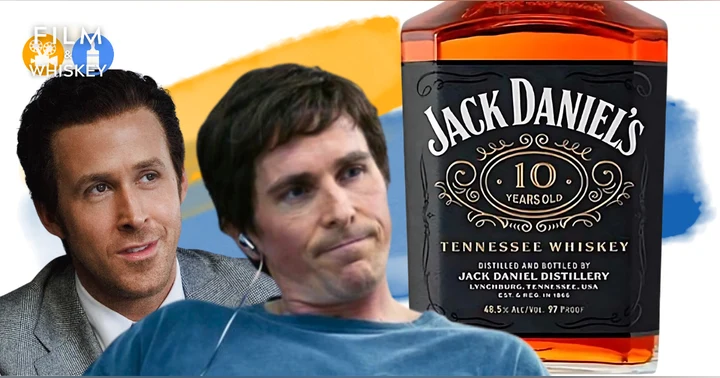
The Big Short / Jack Daniel's 10-Year Tennessee Whiskey

Bob and Brad dive into the world of Wall Street greed and financial collapse with their review of Adam McKay’s critically acclaimed 2015 film The Big Short. They unpack the movie’s performances, biting humor, and the sobering truths behind the 2008 housing market crash.
Then, they shift gears to review the Jack Daniel’s 10-Year Tennessee Whiskey, a rare gem in the whiskey world. With its bold flavor profile and rich aging process, this whiskey provides plenty to discuss.
(0:00) Intro
(07:57) Brad Explains
(09:55) Performances, Themes
(32:14) Jack Daniel’s 10-Year Whiskey Review
(45:15) Two Facts and a Falsehood and Final Analysis
(49:38) Let's Make it a Double and Final Scores
Film & Whiskey Instagram
Film & Whiskey Twitter
Email us!
For more episodes and engaging content, visit Film & Whiskey's website at www.filmwhiskey.com.
0:00 In 2015, director Adam McKay and star Steve Carell gave the world a fast-paced knock off that hammered home the dangers of greed. In 2025, we see if an Obama era whiskey can bail out this episode. The film is the big. Short the whiskey is Jack Daniels 10 year batch 3. And more of you them both. This is the film and whiskey. Podcast.
0:46 Welcome to the Film and Whiskey podcast, where each week we review a classic movie and a glass of whiskey. I'm Bob Book. I'm Brad G. And today we are looking at the 2015 film The Big Short. Brad, this movie is celebrating its 10th anniversary this year. And we can officially say that now that it is 2025. And I think this is around the time where time stopped being real to me because it doesn't feel like The Big Short should be in the same sentence as 10 years old. Like, I still, I remember this movie coming out and it was like one of the last movies that still made sense to buy on Blu-ray because it wasn't just immediately on like Netflix.
1:28 And then I even saying that sentence, I'm like, Oh yeah, that was definitely at least a decade ago. Yeah, I recently read a very long article about the evils of Netflix and how it has destroyed cinema. And you're right, it it's like simultaneously feels like Netflix has been around forever and yet like no time at all. Yeah, and we've had this happen a couple times on this season where a movie really found a second life on Netflix, and The Big Short was one of them. This was a movie that I I don't who released this? Was it Columbia? What was the studio behind this movie? Paramount, maybe Paramount, yeah.
2:09 In any case, it was at the time when Netflix was kind of like the distribution model for streaming. There was really no, you know, big catalogue on Amazon Prime yet. There certainly wasn't Paramount Plus. And so studios would just kind of like rent out their movies to Netflix for a while. And once this movie hit Netflix, it was on Netflix for a long time. And I remember a lot of people saw it there. Brad, I'm I'm curious as we dive into this episode. First of all, hello, folks. Welcome into film and Whiskey. I hope you're having a great new year. So far, this is the first time Brad and I have recorded in a couple weeks. And we worked a little bit ahead to get Mad Max out of the way. And I'm shaking off some rust. Shaking off some rust and probably like four extra pounds from the holiday season, Brad.
2:53 I am still like cleaning off silver paint from my mouth. It. It was a heck of an episode If you haven't listened to Mad Max. All shiny and Chrome, baby. Anyway, welcome into film and whiskey. What we do on this podcast is we talk about movies, we talk about whiskey. And this season we are looking at movies from the last 20 years and we are asking the question, does this film deserve to be considered a modern classic? Now, The Big Short was a money maker at the box office and it was nominated for best picture. I don't believe it is in either the IMDb or the Letterbox top 250, but it's a well enough liked movie that it merits us talking about today.
3:34 The way you said money maker just begs me to ask the question. Do you think it could shake it? I believe that song is featured at least one time in this movie, right? I think. So shake it money make. I thought, yeah, it there's for sure. It's in this. It's in this movie somewhere. There are because we were talking about a stripper song. There are I think 2 scenes with strippers in this movie and I don't think either are truly necessary. Like why are there nipples in this movie? Bob I. Don't know. I don't know man, you could ask that question about a lot of things that happen in Adam McKay movies. Adam McKay is the director of the big shorts. This was his first real forward foray into making, I think what he would consider himself to be making a like, big boy movie because to this point he had been a comedy director and a director of pretty dumb comedies. Like he's the guy that made Anchor Band. He made Talladega Nights.
4:35 I think he yeah, I think he made Step Brothers as well. And so then he pivots into the big shorts, which is his big Oscar play. And at the time, I think critics were willing to go with him into this realm because he was seen as kind of bringing this anarchic energy to a story like The Big Short. And it's definitely still improv heavy. And I think it's definitely still going for some pretty irreverent laughs at points. But it gets them you. You mean that the line I'm jacked to the tits wasn't written? I'm going to say that eight times today, Brad, the way that you say, witness me, I'm jumped to the pitch, he says.
5:21 He says it so high pitched too. It's so good, man. Anyway, I think critics were kind of willing to follow Adam McKay into this realm to this point. And then he makes two more movies where he gets like successively more up his own ass as he makes them. He makes a movie called Vice a couple years after this, which is his kind of biopic of Dick Cheney. And then a few years after that he makes a movie called Don't Look Up, which is his big parable about the Trump era and global warming. And at this point, even the most liberal of movie critics is like, this guy is annoying as hell. I think it's really interesting to trace it back to The Big Short 'cause this is kind of the tipping point for him. And it's a movie that people have really unfairly looked back on and and crapped all over because they hate Adam McKay now, and a movie that I really remember at the time liking a lot.
6:16 Brad, were you a person who saw The Big Short when it came out in 2015? I did not see the Big Short and the only thing I knew about it was that it was kind of about finance. And for some reason in my brain, I like naturally paired it like I I let's make a doubled it without ever seeing either film with Dallas Buyers Club. Yeah, and I can tell you for a fact this movie is very much about finance, and Dallas Buyers Club is not at all about finance. I there you. Go. You couldn't be farther off. I mean just because the word buyers is in the title, it is not a finance movie my friend. I thought it was about real.
6:57 Estate. No, it's about a bunch of people who have AIDS and who find a way to get themselves medication when the government like tries to ban all their medication. That's basically about finance. You know, it's a parable. It's a metaphor, yeah. I obviously have never seen Dallas Buyers Club. This was my first time seeing The Big Short and I I was on track here. It is indeed about finance. And not only is it about finance, it seeks to explain some of the most convoluted and complicated financial terminology that a layperson probably will ever come in contact with.
7:40 And that makes for a really weird movie experience. It certainly does, and I think we can also debate the levels of success that it has at explaining those concepts. But in order to get into all that, we have to get to our first segment of the day, which we call, Brad explains. Brad's going to give us the movie plots with only 60 seconds taken on the clock, so let's go ahead and do your take with this little segment that we call, Brad explains. Brad Explains is the part of the show where Brad breaks down the plot of the film that he has just seen, often for the first time. We know it is his first time with The Big Short here today. Brad, I'm not going to beat around the Bush here. There's a lot to explain if you go that route with this movie. Or you could keep it 30,000 feet and do like a 5 second overview of this movie.
8:28 Whatever your choice is here, you get 60 seconds to explain the plot of this movie in graphic detail. Folks, if you've not seen The Big Short, I think it's a good movie and I think it's worth at least watching to understand the concepts of why everyone lost their house in 2008. So go watch The Big Short, come back after that and listen to Brad explain it. One minute on the clock, Brad and go. So you know how I often will like kind of give up on Brad explains and be like, all right, so like, this is kind of what happened. That's going to happen from the start here. The Big Short is a film about the 2008 housing crisis. And it basically is like there's a huge housing bubble because the banks are giving out terrible loans that are subprime and bad. And then they're selling these financial products to a from investment banks that are like super risky and terrible. And all the bond companies are like, there are the ratings companies are like, yeah, it's totally fine, but they're not totally fine.
9:29 And they're all going to cut the the Roosters are all going to come home to roost. Is is that the saying? Yeah, it's close enough. And a bunch of people in the financial ward figure out what's going to happen. And so they create these products to bet against the housing market and they make a just RIP roaring wild amount of money because they short the market. There you go. All right, that's the Big short. So where do we want to start with this today, Brad? Do you want to just kind of give general impressions of the movie? Do you want to dive into the nitty gritty of the characters? Do you want to talk about performances? I'll let you kind of lead the way here. I'm kind of in a weird place with this movie because I didn't walk away from the movie thinking about anything that the movie did.
10:23 I walked away from the movie thinking about all of the financial terms and like what actually happened in the 2008 crisis versus what they told me happened in the crisis. And like I had no joke, went to bed and could not fall asleep. And it was like 12:30, which is well past my bedtime. And I got up and I spent like an hour and a half Googling synthetic CD OS and like even just the basics like a mortgage-backed security, what that is. And I probably spent like 2 hours in the middle of the night, like parsing out all of the little details.
11:05 And I don't know if that means I liked the movie or not. Like it definitely got me thinking, but it was less of a wow. That movie was so good and it was more of a wow. 2005, 678 was a completely effed up time. How did it happen? So I think you're actually hitting on something that critics have really accused Adam McKay of in his, you know, I don't want to say his latter years, the guy's not dead, but you know, his career definitely has had two halves to it. And in the second-half, his. Career, definitely. Is in the second-half, he's been accused of being using his films as a didactic tool or it as a, you know, if you want to be negative about it, pedantic tool. I think a lot of people think he's condescending about how the way he does it.
11:55 And depending on your interpretation of this movie, maybe you got that vibe as well. But it's an interesting thing because it it begs the question of like, what is the purpose of this movie from Adam Mckay's perspective? Is it to rile people up and instigate them, not necessarily to change, but to be educated about what has been going on in the shadows? And on that front, I actually do think the movie succeeds really, really well. Like it. It does a good job of explaining most of these terms and at least the extent to which we were all over a barrel by these companies in 2008. At the same time, it's super effective at that. Is it an entertaining movie? I think it's entertaining, but I don't know if I would necessarily call it, like, the world's most successful movie. And so then it becomes a question of like, if the only purpose of this movie is to educate or to, you know, to condescend, then, like, what are we doing here? You know what I mean?
12:53 It feels a little preachy. Yeah, I, I don't think I found myself feeling preached at until like the very end of the movie, because really most of the film it's just like everybody is like, how the heck did we get into this situation? Like the further they unravel the spider's web, like they're just like how how was this allowed to happen? And I think all of that is like very fair questions that anybody of any political interest would ask. I think it's the end of the film where he basically says and nothing has changed and the banks have just restarted the same system and we're going to crash again.
13:40 And like that's the part where I'm like, oh, and all my research there was massive reform that happened because of the 2008 crisis. And, you know, all sorts of things have changed to prevent this specific type of housing market bubble to occur again. Yeah, they've still allowed avenues for banks to cheat people, but they're putting some guard rails around it so that it doesn't crash the whole economy anymore, is what it seems like. Exactly, you know. And not, and not just the American economy, right, The worldwide economy. What we're saying is, is everyone wins now, right? Yeah, everybody wins. No, I'm with you, man. Like I, I think that specifically the preachy parts of the movie for me are the words that they put in the mouths of Marisa Tomei as Steve Carell's wife and Steve Carell because they become kind of like the, the beating hearts of the movie.
14:37 And they're paralleling Steve Carell's journey towards, you know, his big Grinch heart growing 3 sizes with the fact that his brother committed suicide like a year prior. And he's been suppressing the emotions from that. And so as he develops an ability to tap into those emotions, he also develops an ability to empathize with what these people are going through as a result of the bank screwing them over and becomes a real big advocate within, you know, the world of finance. However, like the the dialogue writing for both of those characters is horrific, and it says a lot about how good of an actor both Steve Carell and Marisa Tomei are that they kind of pull it off.
15:22 But you've got and Steve Carell, like getting up on a soapbox at the end of the movie, saying nothing's going to change. They're just going to continue to blame immigrants and poor people. And all of that may be true, but it's the way that it's phrased in such a again, like didactic kind of way that it it comes across as speechifying more than it comes across as a believable dialogue or even like artful speechifying. Yeah. And, and as somebody who often struggles and, and kind of vacillates between really wanting to think the best of the world and thinking the worst of the world. Like this movie just has such a negative view of the human experience, has such a negative view of the world of business as a whole, that it it just kind of felt icky by the end of it in a way that I don't know if it represents reality quite honestly. Yeah, I think fundamentally like you have a much more optimistic view on the human race than most of the movies we watch, and probably also me.
16:34 And I don't think there's necessarily anything wrong with a movie designed to make you feel icky when something is icky. And the ick needs to be addressed, right? Like even the sort of happy ending or the the profound colorized ending of a movie like Schindler's List doesn't take away from the fact that that whole movie is designed to make you feel a a certain way, right? So I think that it's really effective in what it's doing there, and it does caution that history will repeat itself if we don't pay attention and hold these people accountable. I want to zoom out a little bit, Brad. Let's talk about, I mean, you set the stage pretty well with Brad explains, but maybe let's try our best to to kind of walk through the movie, explaining what's happening as we go.
17:17 Yeah. Because in order to talk about these characters, we kind of have to talk about how the movie unfolds because it follows a few distinct groups of people. The first person we're introduced to in this movie is Christian Bale, who is doing some, like, off the wall Capital A acting with a glass eye. And AII would venture to say that he is trying to project a mild form of autism. Is that fair to say? No, definitely not. I mean, you certainly don't want to accuse people of things, but, and dare I say Christian Bale is an actor that I really like and I think when he is on, he's a good actor.
17:59 I he tries too hard in 80% of his movies, bro. Like he's just really going for it here. Yeah, I, I like Christian Bale. I want him to be like a great actor. There's just something about the way he engages with his characters that kind of feels funky. Like it's kind of like the will it funk Bob. It's it's distinct and it's Christian Bale and it's the Bale funk and it's in pretty much every single one of his roles. I like that in most of his movies, they kind of challenge you in the 1st 5 minutes with, hey, here's how it's going to be get on board or you're going to have a bad time. And usually I can get on board and by the two hour mark I'm not, I'm not paying attention anymore. But it's like this with, you know, American Hustle. This movie is like this.
18:49 He had a very interesting turn in that one four movie a couple years ago. I just think that he he tries some off the wall stuff in a way that it doesn't totally work, but it also doesn't go into the the Nicolas Cage territory of like it's so bad that it comes back around to being endearing. Yeah. It just stays in the Oh no, baby, what is you doing? Like yeah, zone for me. And the the problem is that you don't spend enough time with him to like, get used to it and what he's doing. Like most of the time, if Christian Bale's in the movie, he's probably like the star. And so in this one, it's like you maybe get like, I don't know it because the movie is like 2 hours and 10 minutes. You maybe get 25 minutes with him. 30 minutes. Fair.
19:37 Like, he's really not in the movie that much. Steve Carell commands a lot more screen time. And so I, I think that the oddities of Bale's acting in this one just kind of, they never settle. That's fair. So we're introduced to Bale first. He is a hedge fund manager who essentially stumbles upon the fact that all of these mortgage bonds that the government. Props up are full of crap that they've been given AAA ratings from the ratings boards, even though they're full of what's called subprime mortgages and their mortgages that are likely to default. And so when they all start to default because they're tied in with actually high rated mortgages, it will cause the entire package to fail, which will lead to a domino effect that will crash the US economy. And so he decides to short these mortgage bonds, meaning that he is going to go to a bank and find a bank to allow him to bet against these bonds so that when they fail he will make money. His entire character's ark is basically just being the Noah building an ark while while everything floods around him or gets ready to and everyone is telling him you're an idiot, you're crazy.
20:54 I'm suing you. The hedge fund tanks because the premium the bank charges him to have this short cost so much money. And then at the end of the movie, of course, everything goes tits up and they they make a whole bunch of money. And that's kind of his his whole character's journey. It's not a super compelling 1, Brad. No, they, they try to make it compelling by like playing Metallica and like, like heavy metal. And he gets angry a few times. But like, all of it is very reasonable. As somebody who personally like invests in the stock market, if I gave my money to somebody and then they put it into something that was like completely unproven, I, I can understand why somebody who, you know, put $100 million in this fund would be upset that that makes sense to me.
21:46 I just want to call out, I'm going to do this a lot today. I think that a lot of the bit players in this movie, the people that have like 4 lines are just killer. Lot of great small parts. Henry Henry Ford the second. Yeah, Tracy Letts, the playwright and actor that we had never talked about in the podcast until Ford V Ferrari. He shows up as the main investor in this hedge fund. Tracy Letts pretty famously is married to or partners with Carrie Coon, the actress from Copley. OH baby. Oh, let's go. Right next door to me. So thanks, Tracy Letts, thanks Carrie Kuhn. We can move on, Brad. Hey man, I'll take a good Ohio shout out any day of the week.
22:27 So after we're introduced to Christian Bale, we then go and meet with, I guess we meet with Ryan Gosling before anybody. Ryan Gosling acts as the sort of Greek muse of this film who is like guiding us through the journey of Wall Street, talking directly to the camera, having a sides throwing over the clips of Margot Robbie. Yes. Do you think that makes the film more pretentious like the the Ryan Gosling? I think that that is, that's the area where it's very clear that he's like, I want to do a Scorsese, let's do a Goodfellas. And I, I don't know. I don't know, man. Would the movie be more successful without it? Because you do need somebody explaining things to you like you're 5 for this to make sense.
23:10 Yeah, you do. We haven't talked about it yet. We'll just get it out of the way. It's just too much of A RIP off of Wolf of Wall Street, and it's not as good. Yeah, well, let's talk about it. I mean, I think this is good jumping off point because it's not just the the Gosling of it all. It's not just the talking to the camera or the insert shots of, you know, keep stirring the sauce, Karen kind of stuff that's going on in this movie. I really do think, to your point, Brad, that Wolf of Wall Street comes out at the end of 2013. I think they see that movie and they go, oh shit, this was our whole plan. Now we have to find a way to not make it seem exactly like Wolf of Wall Street. And because Wolf of Wall Street is Scorsese's biggest, most coked up, kind of funniest movie, Adam Mckay's like, I got to go even more extreme than that. And the way he chooses to do that is that a lot of these cutaways and insert shots are kind of abstract, like he'll insert clips of things that aren't really necessarily related to the scene itself to try to give a picture of American life, I guess in 2007.
24:19 But they feel so out of left field. And I think ultimately they're probably the biggest failure of the movie. Is that it? It just seems like the guy's trying to do a Scorsese and can't quite pull it off. Yeah, and, and I think the ultimate message of Wolf, of Wall Street and of Big Short are somewhat similar, right, Like at the end of Wolf of Wall Street spoilers. If you haven't seen it, go watch it. It's a interesting movie. Maybe don't go watch it. I don't know. It's a wild movie. The purpose of the movie is basically to say, like, we put our faith and trust in these big names and big personalities and should we do that?
25:02 And like The Big Short kind of has a very similar, like we put all of our faith and trust in these big banks and these legacy names. Should we do that? The problem is Adam McKay has to come out and tell you at the end of the film why he made the film, right? Like, like, oh, there's no regulations, and it's going to happen again. Whereas Scorsese does it so incredibly masterfully with the final scene of Wolf of Wall Street, which I won't spoil right now, But like, the way he does it at the end of Wolf of Wall Street is tactful and introspective, and it's going to go over some people's heads. And it's just a brilliant, beautiful way to end the movie.
25:46 And this one, McKay is just kind of dumping his viewpoints all over the audience. All right, man, I actually think this might be a good spot to press pause, unless do you think we should try to finish out the cast or do you want to come back after the break and go? Let's at least finish out. Steve Carell is playing. It's Eisner in real life. What's what's his name in the movie? Mark Baum. Mark. Baum and once again, I think a slightly offensive portrayal, if we can be honest here. Like, yeah, it's Steve Carell as Michael Scott, as Michael Scott's idea of what a Jewish person sounds like. Like it's I, I, it's kind of over the top. Man, I think it's like if Michael Scott was mean and from New York.
26:34 Yes, but like that, that's it. But he's also trying to do like he's trying to do a stereotypical Jewish portrayal. And I, I don't think it's really, I don't think it's really working for it, man. No, no, it's, it's not great. But the film follows them as they learn about Christian Bale shorting the market. He runs a hedge fund and they basically try to mimic what Christian Bale is doing. And then our final group that we follow are two young investors from like, Colorado. I think they're like from out West. And they have made it to the big leagues. They get to New York, find out that they haven't actually made enough money to really make it into the big leagues, and they learn about this shorting investment and they start investing their money in shorting the market. Yep, those two young men are played by Finn Whitrock and John Magaro.
27:34 John Magaro, we will see in a couple weeks here in the movie past lives, playing the husband in that movie. He's a fantastic actor. He has a movie that's kind of making an awards play right now called September 5. He, Brad, is from Stow, OH, just up the road. Do we need to get him on the show? Perhaps one of my biggest wish list interviews is just to get him on the show, talk about movies and talk about Northeast Ohio. Swansons. That's the whole interview. It's just us naming things that are regional Swansons. Liberties and Solon. I actually think that they are two of the more compelling characters in the movie because they are like these young Anja news and they have an actual arc similar to Corel.
28:23 Corel has an arc. The guys in Corel's Little Fund kind of have an arc. I, I think what I like about them is that they end in that place where it's like we're just in it for the money and Brad Pitt just like lays the hammer down. And that's like the only emotional part of the movie that works for me is when Brad Pitt, which, you know, wow, the only part that worked for me was when Brad Pitt was acting. What a surprise. What he just lays the hammer down is like, hey, you're about to make money off of the backs of millions of middle class and poor Americans. Like just don't dance about it.
29:06 It's such a good line and it I the scene works because it reminds me so much of Moneyball. It's a Moneyball performance from Brad Pitt. Brad Pitt was doing this thing in the early to mid twenty 10s where he's like, I'm going to play my roles so subtly that a person who's not a fan of me will just wonder if I'm phoning it in. But he's doing like emotionless acting in Moneyball and in this movie. And in both of those movies, he finally gets to the breaking point where he, you know, either has emotion or you understand why he's the way he is. And in this movie, it's Charlie and Jamie are the two young guys. And you're right.
29:46 He just absolutely lights into him at the end of the movie and where he's how's this for a statistic? Every time the the unemployment rate goes up one percent, 40,000 people die like he. And then they cut back to these guys and it starts to really sink in. And I think that where this movie succeeds is that it starts to sink in for everybody kind of at the same time. And they don't milk it into some big like string montage. But when they do that freeze frame on Carell's face where he's at the Benihana with the guy and he's talking about synthetic CD OS. And and then they cut to Charlie and Jamie getting this speech from Brad Pitt. And then you get that big closing montage where people that we've encountered all throughout the movie, like the family that was living in a house where the landlord wasn't paying the rent, like they're out on the street now.
30:37 And I think that it does a really good job of not overplaying that stuff because I think it could get too saccharine. It could get too preachy in that regard. And they do a good job of letting you piece together the oh shit moments for yourself. Yeah, 100%. And that, like that's where the movie should sit. It is more in the harm that the whole thing caused when at the end of the day, like they try to make you feel bad for the guys who just made hundreds of millions of dollars off of this big short. And at the end of the day, like, you can only convince me so much that Steve Carell and Christian Bale and these two young guys really feel that poorly for all of the Americans that they just made. You know, they didn't make money off of the Americans. They made money off of the banks. And so it's like, I, I just, I'm sorry, but I, I don't buy it. I don't feel bad for you.
31:41 You made all this money. I I pretty much just feel bad for all the Americans who seemingly were duped into these absolutely wild mortgages that made zero sense and they never ever should have been offered to anybody. All right, so it sounds like a freaking downer from us today here at Film and Whiskey. Brad, let's drink some whiskey to drown our sorrows, and then we'll come back and keep talking about the financial crisis. What do you say? Let's get to it. All right, so today we are checking out Jack Daniels 10 year Tennessee Whiskey.
32:23 This is batch #3 of the Jack Daniels 10 year. It was released back in February of 2024. So Brad, hopefully we're getting a batch 4 coming out in about a month here from Jack Daniels. It's been a minute since we've tried a Jack Daniels product on the show, Brad. I think we had one slated for the Oppenheimer show. Did we end up reviewing a Jack Daniels for that one, or did we pick something else? It has been a very long time since we've drank a Jack Daniels on this show, Bob. Oh yeah, we did Old Fitzgerald for Oppenheimer. It was, it was supposed to be Jack Daniels. We pushed it back to mid season here. So yeah, it's been a minute. Like I said, this is batch 3 of the 10 year. This is a product that's clocking in at 97 proof. So unlike a lot of well aged products coming out of many distilleries across the country, this is not like a barrel proof product.
33:12 The only thing that they are selling this on is the fact that it is 10 years old. And honestly, I kind of respect that. Like every now and then I want a really well done sub 100 proof whiskey. Yeah, no, 100%. Like having high quality whiskeys at a lower proof point is incredible. Like it, it's like moving from that like 12% wild craft beer down to like a good old Coors Banquet beer where you're like, Oh yeah, I could crush so much of this compared to these freaking barrel proofs. What's your overall opinion of Jack Daniels? We've tried a handful of their products, but I think we've done a good job of kind of running the gamut like it. We've gone from baseline Jack Daniels way up to some of their higher level offerings.
34:02 And I'm just curious man, like is it, is it in your wheelhouse or not really? Man, so before I ever really drank whiskey, my best friend Mike and I got really into Jack Daniels and we ended up going halvesies on a, at the time, $150.00 bottle of Sinatra Select. And I remember liking that a lot. I have not had it in a very long time. Other than that, I'm like, there's not much Jack Daniels that really does it for me. You you know how you have an obsession with the Will it funk? I sure do. I sure do. Jack Daniels has a funk like it.
34:43 All of their products is. This might sound redundant, but like other distilleries have lots of products that taste wildly different from one another. Every single Jack Daniels man, I like. I could smell it a mile away and be like, oh Yep, that's Jack Daniels. Yeah, for, I mean, for me, and maybe that's a good place to just kind of dive into the nose here, Brad. There's always a note of banana on Jack Jack Daniels. Every. Every time. And I think on some releases this is very weird, but I'm going to say it anyway. It tips into like overripe banana where I start getting some off notes on it. Like this in particular, it started out really nice for me as dusty leather, like there was tons of leather. It had a nice spicy bourbon smell to it. And then I got a little bit of banana and then it tipped into this almost like savory oniony type note for me. And I think when you said funky, like the oniony, you know, body odor type smell was was on my mind a little bit. And I don't know if it's the same thing you get when you think funky, but that's where I'm at with this one. You're going to love my note.
35:50 It reminds me of a French onion sun chip. Oh yes, dude, Onion. I don't know if I'm excited about the Onion. I'm excited that you picked up on it and I'm not insane. Yeah, no, I, I literally wrote down to of the more unique notes I've ever written on a on a nose French onion sunship, which is one of my favorite chips in the world. Very weird to smell it on a whiskey. But the other one, I kind of got a bit of a Corn Pops vibe, kind of like a sugary grain forward experience. There's some char here, there's some black pepper. It's very banana.
36:32 Y I'm I'm intrigued by this more than any regular Jack Daniels, but I am going to give it a 7 1/2. Yeah, I'm in the same spot. Like is it slightly concerning that I got a note of onion on this whiskey? I don't know. It's definitely unique. I don't I I'm not going to necessarily say it's a bad thing. And it's coupled with these really nice sweet notes as well. So I'm OK with it. I think I am cautiously optimistic. And I'm also going to give this a 7 1/2 bread. As I've moved into the pallet, this is so beautifully oaky. Like there is just so much oak going on here. It has a, it has a really nice Maple syrup vibe.
37:15 It's, it's a, it's got a bit of like a nice honeyed wheat bread. It gets Clovy the longer I sit with it, some of the baking spices really start to come through. I think that this is a really pleasant, enjoyable and like just complex enough of an experience to jump it up to an 8 out of 10 for me on the palate. Yeah, I get like butterscotch on this. I get a little bit of like, I don't know, like an ice cream cone, like a, like a sugar cone or something. When you get like the triangular ice cream cones, there's a, there's like a lot of Sunday vibes going on in this and I really like that. But I'm with you in that the oak on this is so heavily oaky and like almost bitter oak that it's impressive to me that there is so much decadence underneath it that kind of balances it out because at every single point of the tasting experience, this thing is threatening to get taken over by sour, almost bitter oak notes. And I think that it says a lot about how they has these incredible, almost like a weeded bourbon kind of vibes underneath it that are kind of keeping it afloat. And I can't tell if I think that the the the two poles here are in tension with each other or if they're working really well together.
38:40 But whatever the case, I'm enjoying it. I'm going to give it an 8 out of 10 like you. Yeah. And, and as we get to the finish, the oakiness really takes over for me. It it gets a little bit bitter. The banana almost turns into like a little bit of a burnt banana like you took like a baking torch to it. I believe we call that Bananas Foster, Brad, I'm. Pretty sure we do, Bob. I, I didn't want to, I didn't want to step on your, you know, steal your Thunder. No, I I wanted you to have that moment. It's funny, Brad, how far we've come in tasting whiskey that like you made fun of me for that note for a long time. And that is not even remotely the wildest. Like that's a very tame note.
39:20 Now in retros, we just got onion on this dude. Purple drank. Purple drank. There's some lemon zest. It just gets sour for me. Bob it like it just gets sour. It comes down a little bit on the finish. I'll give it a 7 out of 10. I'm in lock step with you, man. It's it actually keeps itself from getting too sour like we've gotten on some toasted bourbons before. And I think that that banana, it definitely turns into overripe banana. But you know what, honestly, I as a dad have to eat over ripe bananas all the time in my household because my children ask me to buy bananas and then they don't eat them and I don't want to let them go to waste. And so it's like, this is either going to become banana bread or I'm going to power through it right now. And I've I guess I've just gotten used. To the flavor and you choose to power through over ripe banana instead of having banana.
40:14 Bread. I mean, I'm not talking like rotten banana, but like if if I want to eat a banana and there's no no good looking ones anymore and it's like, well, this is what I'm left with some spotty bananas. I guess what I'm saying is I'm used to the flavor now. It's not necessarily a turn off for me at this point. So I'm I'm with you on the seven. I had a post Christmas Christmas miracle the other day. Haley made some banana bread and I, we had some friends over and we ate it and then the next morning there was like 1/4 of a piece left and I was like, oh man, like all the bananas bread's gone. I, I'm sad I only got like one piece because it's freaking amazing.
40:56 Sure. And Haley goes, oh, I made two. There's another one in the bread and hot 0. Dude, yes now does she? Does your wife use her world famous sourdough to make the banana bread? Sometimes this was not a sourdough recipe but she still makes the best. Like freaking anything in the world. But her banana bread is great. I will say though, her sourdough banana bread is ridiculously good. Well, on that note, let's get into our balance here. Oh. Oh, yeah, we're, we're talking about whiskey. Yeah. Not Your wife's sourdough film and Sourdough is our next podcast, Bread, Oh. Dude, we should get we should get Carrie and Hailey to start their own. I'd be OK with that.
41:41 So balance on this whiskey, I think it's fairly well balanced it like it never threatens to be an upper echelon Jack Daniels product that we've had, but it never like the floor is pretty high on this too. You know what I mean? Like it's consistently around an 8 and I think I'll give it an 8 out of 10 here. I'll give it a 7 out of time on balance, I think it just jumps around a little bit too much in quality for me to like give it a high score. I do think that this is a enjoyable Jack Daniels experience. And at $85, I, I think I'm at like a 6 1/2 on value. Like I think that this is a it's well worth the price. It's a 10 year age stated product. Like from a big distillery.
42:29 Like I think 85 is a fair price. It's just not quite there for me to be super pumped about spending $85. Yeah, I actually think 85 seems a little overpriced. And I know that we've we've tended to use this maxim that we've learned of like $10 per year. But and so it seems like you're getting a deal at that point. But even when I think about this in comparison to like a Russell's Reserve 10 year or do you know, like there's just other products out there that can achieve A10 year age statement And we're talking about Jack Daniels, like in terms of the volume of whiskey they're producing, it doesn't cost them that much to make a 10 year product.
43:09 Do I think it's exorbitantly expensive? No, but I think they can get away with selling this for like $65 and I would feel a lot better about it. So I'm going to give it. I'll give it a six out of 10, Brad, and that takes me out to a 36.5 out of 50. Bob, we are literally you use the word lockstep. I'm at a 36 out of 50. Year. Oh, wow. OK. So we have kind of just tipped into the region of our scores where we start recommending we're over that 35 out of 50 mark, but we're at just a 36.25. So I guess my question to you is do you recommend and how strongly do you recommend?
43:53 I would recommend hesitantly, like I would say that if you know what Jack Daniels is as a company, like the the product they were typically put out and you like it, like I'd say 100% go for it. This is a good Jack Daniels experience. If not, maybe try it at the bar. Yeah, I don't think a pour of this would be that expensive. We're talking like, I don't know, 15 bucks maybe. Like it's nice enough that it's not a standard daily drinker, but it's also not going to really hurt you in the wallet if you want to try something new. So Brad, that kind of leaves us in a similar place to where we're at with this movie today. Pretty good, but doesn't seem like something that we're going to sing his praises from the mountain tops.
44:36 So what do you say we get back into talking about The Big Short? Bob, First off, you forgot to explain to the masses what a Tennessee sour mash is. So in order to do that, we're going to turn things over to famed actor Will Ferrell to explain to you all what a Tennessee sour mash is. My favorite part is what it's It's Margot Robbie. Not because it's Margot Robbie, but just because at the end of her thing, she's like, got it. Yeah, all right, enough cough. Yeah, 100%. I think that's how we not. Not because it's Margot Robbie. No, no, not at all. All right, man, Let's get back to it. All right everybody, that was Jack Daniels 10 year batch #3A whiskey that doesn't deserve that long of a name. Probably.
45:29 Probably just like Jack Daniel tenure. But a pretty good whiskey. Pretty good. Pretty good, yeah, Decent. And I feel like I was going to say, I feel like you think this movie is only pretty good, Brad. So we're in one of those rare episodes where it's like everything is a 7 out of 10, you know? Yeah. Basically. Yeah, that's kind of. That's kind of where I'm at, Bob. Well hey, maybe we can redeem ourselves with our next game, which we call 2 facts and a falsehood. Brad is going to try to stumpy ball 2 alright. 2 facts and a falsehood. 2 Facts and a Falsehood is the part of the show where Brad presents me with three items as fact about the making of this movie, one of which is a complete lie. Brad, I'm doing pretty well on the season. I think I've only got like what, 3 losses on the season? So your boy is well above 500 and could afford to take an L if need be today.
46:27 I'd prefer not to though, so go easy on me. We'll, we'll see what happens, Bob. Fact number one. Each of the scenes explaining financial jargon contains an Easter egg. A Monopoly game piece is hidden somewhere on the screen. Margot Robbie's scene contains the top hat, Anthony Bourdain's has the shoe, and Anthony Thaler and Selena Gomez's scene has the battleship. Fact #2 The real life doctor Michael Bury named his hedge fund company Scion Capital after a favorite childhood book, The Scions of Shannara. Christian Bale is seen reading that book in one of the first scenes of the movie. Fact #3 Author Michael Lewis revealed in an interview that Paramount Pictures allowed director and screenwriter Adam McKay to make this film only if he agreed to make a sequel to Anchorman, The Legend of Ron Burgundy, which I Bob. I want to hand out a film Me right here, right now. Go ahead.
47:29 Adam McKay, you have received the film Me for First Director, reviewed by the Film and Whiskey Podcast. Oh yeah, that's true. Our very first episode was Adam McKay. Yeah, isn't that weird to think about? And then our second episode we ever recorded, our first that we really released for the podcast was Goodfellas. So we did Adam McKay and the movie that Adam McKay ripped off back-to-back. Yeah, sure did. Here we are, man. All right, I'm going to assume #3 is true. It just, it sounds plausible. So for now, I'm going to set that aside #2 I have no idea, but it sounds fairly plausible. Number one, I'm kind of drawn to.
48:10 And it's funny because you know how now they make a million variants of Monopoly? I can't remember all of the original pieces from Monopoly. Like I remember the thimble in the top hat. Is there a battleship in Monopoly? I don't remember this. Yeah. Isn't there a dog there? A little dog piece, too. Yeah, there's a dog, an iron, a battleship, a shoe, a top hat. What the hell is this collection of things? And there's iron. An iron tell you know something was made in the 1920s and 30s. Like well. Just like one of one of the things you do the most is iron things. All right, I'm going to say #1 is false, but it does sound like something that would be weird for you to pull out of your ass, so I won't be surprised if I'm wrong.
49:01 I'm still sticking with #1 though. Bob, I did in fact, pull that right out of my butt. Yes. You are a winner. Was any part of that true, or did you just completely make that up? I completely made it up start to finish. Is there a battleship piece in Monopoly? There is a battleship piece in the. OK, All right, cool. That was the one part that was true. You know what? There is also a battleship in. What? What's that, Robert? That would be the game Battleship. Ah, yes. So I was thinking of those kinds of ships and I was like, there's not one of those in Monopoly. Come on. All right, man, Let's get back into talking about this movie as much as is necessary to finish out this episode because I think that we've kind of established what we think of Adam McKay, what we think of the acting in this movie, what we think of the overall success of the film.
49:53 What is there left to talk about here, Brad? Nothing. Final scores. What do you think of the random cutaways to celebrities to explain complicated financial things? I like them. They once again feel like a RIP off from Scorsese. I think that the thing I was most confused about and still like don't totally understand is the synthetic CDO. That is a wild thing. And I like, I understand the idea of the banks betting that what Christian Bale and the others are betting will happen, won't happen like they're betting against what they're thinking is going to happen. But the actual mechanics of how they did it is the part that I'm still like.
50:48 I don't know if I understand. I think what's happening, that particular scene in this movie is probably the most poorly paced scene in the movie because it's supposed to be the real tipping point. And there's a line that Gosling has as narrator because you're sitting in this like Benihana watching Steve Carell talk to the CDO manager. And it is slowly revealed because this guy is such a big pompous douche that we're not even talking about betting on mortgages anymore. There is a mortgage insurance market that is being bet on that is actually 20 times bigger than the mortgages themselves. And because there is so much kind of shady betting going on on these things that if these underlying bonds fail, it's going to be 20 times bigger of a fallout than we could have possibly imagined.
51:40 And they were already imagining it was going to tank the American economy. And so Gosling says something like, you know, if, if the CD OS were the match and these tranches or whatever where the fuse then like the synthetic CD OS where the atomic bomb. But it's so much information so quickly after you've already been kind of struggling to keep up that it, it becomes such an avalanche of information for me that I, I almost, my brain almost is just like, I can't follow this anymore, dude. Like, I know this is bad, but I can no longer grasp of the gravity of how bad this is. And I know how it ends. So I guess this is the thing that tipped us into financial crisis.
52:21 But yes, you know. And like, that's the problem with the movie is that it, it strives to not lose you in the jargon and then it does. And like, because like you said, I didn't think of it before, but because you know, the outcome, it's kind of like, well, I'm here for the technical stuff. Like, I, I know what happens. I know the devastating impact that this event has on America. What I don't know is the technical elements of what's going on. And you've been trying to tell me these technical elements the whole freaking movie. And so now you've just spun it out into oblivion and it's chaos in the maelstrom.
53:02 And I, I don't understand what's going on. And so the rest of the movie, I was just sitting there going, what the heck is a synthetic CDO not Oh my gosh, look at the impact that this event is having. The Big Short is one of the all time great YouTube clip movies. Like I when I'm scrolling through YouTube shorts it comes up a lot. But even if you just type in like the Big short clips, every good scene in this movie is on YouTube. And it is like perfectly structured for like 6 minute clips where you get an entire financial term explained to you with an appearance by Margot Robbie or Anthony Bourdain or whatever.
53:43 And you get, you know, all the characters at the end going, Oh my God, this is going to be so bad for the economy. And then the clip's over. And I think that the seeing the movie again strung together with all those clips in its totality this time through made me kind of wonder how this works as a movie instead of just as short lessons that you could watch on YouTube. And I've never really had this experience. We've had a couple movies where I've talked about the YouTube ability of the movie, but this almost is like a an online training module of a movie. And I think it works better in like 8 minute chunks than it works as a 2 hour movie. Yeah, 100%.
54:27 And a lot of those individual scenes are great and interesting and funny and informative and, and, you know, dreadful and all of these things. I don't think that the sum of all the parts is greater or this the whole is greater than the sum of the parts, like the whole is lesser than the sum of the parts. You know what I mean? Brad, I think this is a really good spot for us to get into our final segment of the day, which we call let's make it a double. We're near the end of the episode, so thanks for listening to the film and Whiskey Show. Let's pair another film with this one, even if it's struggling. It's the final segment of the day.
55:08 Now let's make it a double. Let's Make It a Double is presented by Blackwood Distilling Company. It's the part of the show where we pick a movie to pair up with this one to make the perfect double feature. Brad, the reason I said I think this is a good time to get into let's make it a double is because at the end of the day, as much as this movie mimics Scorsese in a lot of ways, I actually think the person that Adam McKay is ripping off the most is the documentary of filmmaker Michael Moore. Do you remember what Michael Moore was a thing in like the mid 2000s? He had that movie that he made about George Bush, Fahrenheit 9/11, and it was a documentary that made $250 million at the box office office.
55:50 Like it was a big deal. And he got, he got booed off stage I think at the Golden Globes that year. Like it was a crazy time to be a documentary filmmaker. Michael Moore does a very particular kind of documentary, which I don't think you can really even call documentary. He takes real life people and puts them in manufactured scenarios as his way of proving a didactic point about something. And so Fahrenheit 911 is a lot more archive footage. But he made a a movie called Sicko a couple years after that that kind of tackled the healthcare crisis in the United States. And one of the big centerpieces of that movie is a lot of victims. Families from 911 were denied medical care for the victim on site.
56:34 And Michael Moore orchestrated an illegal trip for all these people to Cuba to receive medical care as his way of demonstrating that even Cuba has better healthcare than the United States. And it's this big sensationalist way of making movies. Now, did these people receive real healthcare where these actual people? Yes. But it's also this like incredibly manufactured over sensationalized way of making a point. And this entire movie feels so similar to how Michael Moore makes movies that it's almost like you could give Michael Moore a budget and say your job is to film recreations of things that really happened where Steve Carell is playing the recreator. And that's what this is.
57:22 And I think that was kind of the key for me to understand. What doesn't totally work about this movie for me is that it feels like a high budget recreation. Then it feels like people acting a movie out. I don't know. Does that make sense? Yeah, 100%. Dude. There. There's so many parts of this film that just leave me wanting a little bit more, I and I, so yeah, I'm with you. Are are you pairing this officially with a Michael Moore film then? Yeah, I think it probably pairs best with Sicko, a movie that I actually kind of like by Michael Moore. So if you're ever going to dip your toe into the world with Michael Moore, I'll say I'll pair The Big Short with Sicko.
58:02 I think for me, I I'm just going to go completely out in the left field, maybe over the fence, maybe a foul ball, who knows. We're going to pair this primarily because I just want to watch like a political thriller paired with this movie. I'm going to go with The Manchurian Candidate. Which one, the original or the Denzel? You know it because the Big Short is a lesser version of Wolf of Wall Street. I'm going to go with the lesser version of The Manchurian Candidate and say the newer 1. The Denzel Washington version. I love it, dude. All right, so Brad's picking Manchurian Candidate 2 point O, I'm picking sicko. I will say that there are some really good movies that have been made over the last 15 years about the financial crisis. There's a really good documentary called Inside Job that's about this whole thing.
58:57 There's a movie called Margin Call, which is an actual movie, and it is a dramatized, fictionalized movie about the way that this all went down, where it takes place inside of a fictional bank and how the banks moved their money around to cover up the fact that people were shorting them and how that act ultimately caused the bottom to fall out. It's a movie where Jeremy Irons plays the CEO of the bank. You've got Stanley Tucci in this movie, Kevin Spacey's in the movie. It is just, it's stacked. It's an incredible movie, Brad. It's like an hour and 45 minutes, you're in, you're out. I I would highly recommend you watch Margin Call. Why didn't you make that your? Let's make it a double Bob. I actually want to pair it with the Michael Moore movie, but I also want to suggest that people try out Margin Call. It's an underseen movie.
59:46 OK, well I'm going to go watch Margin Call 'cause that sounds fascinating and I like all of the actors that you named, so I'm in. There you go, let's Make It a Double was brought to you by Blackwood Distilling Company. No matter what movie you pick to pair this with, you can always make it a double with Blackwood Distilling Company. Brad final scores. I think this movie, I talked myself down. I was at like a 7 1/2 because I do think it's a well made movie and I think that it is ultimately successful, but I think I'm going to come all the way down to A7 on this one. I'm I'm right there with you Bob. This is a 7 out of 10 well made movie. Entertaining, got me thinking, kept me up half the night. But overall, I don't know if I really want to come back to it. As I look out at our movies for the rest of this season, there's a lot of 2015 films here and I didn't realize how good of a movie year 2015 was.
1:00:44 But you know, we did The Revenant already a couple seasons ago. We just did Fury Rd. last week. We're doing The Big Short this week. In a couple weeks we'll be looking at Inside Out. That was a 2015 film. We'll be watching Creed, the boxing film, and then we're going to be watching the Best Picture winner Spotlight a little bit later on this season. It'll be end up being one of our most represented years on film and whiskey. Yeah, that is absolutely wild. Apparently, there's a lot of opportunities for 2015 to become a like the epitome of a modern classic type of year. You know it, man. So all that said, it's a 7 from us on the Big Short, but we'd like to know what you think.
1:01:29 Has this movie stuck with you And like, crucially, have you seen this movie as a movie lately or have you just been watching it on YouTube like I have? I'd like to hear from you. You can find us on any of our social medias Facebook, Twitter, Instagram, Tiktok or YouTube at Film Whiskey. Or if you want to join the conversation, you can join us on our Discord server. We are on there every single day talking about the Film and Whiskey podcast. So if you want to join the conversation, there's a link at the end of every single one of our show notes. I talked earlier about the Ohio native John Magaro and how he is in one of my favorite movies of all time. We're going to be watching that movie next week. It's 2023's Past Lives Brad.
1:02:11 I am freaking pumped for this one dude. Let's go, dude. I I am very very excited to watch this on a normal size screen that is not the back of an airplane seat. So join us for Past lives next week, but until then, I'm Bob Book. Object to the Tits. And we'll see you next time.