Apple Podcasts

 Spotify

 Castro

 RSS Feed

 Goodpods
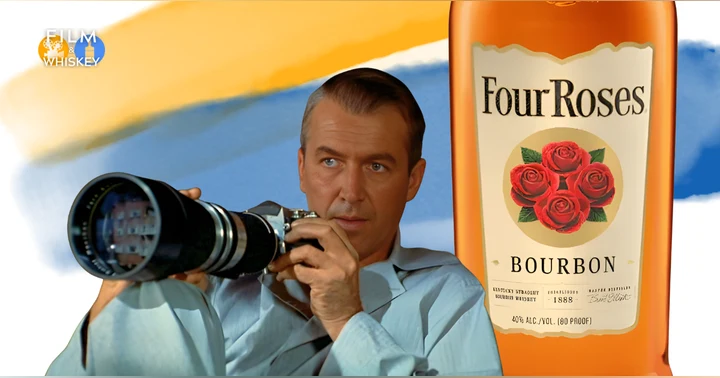
Rear Window (1954) / Four Roses Yellow Label Bourbon

Grab your binoculars and a glass of bourbon as we delve into Alfred Hitchcock's suspense-filled classic, Rear Window. In this episode, we explore the intricacies of voyeurism and tension Hitchcock masterfully crafts, alongside a detailed tasting of Four Roses Yellow Label Bourbon. This blend of cinematic excellence and refined whiskey is perfect for a sophisticated film night.
For longer episodes and special bonus content, consider joining our Patreon for as little as $3/mo!
Film & Whiskey Instagram
Film & Whiskey Twitter
Email us!
For more episodes and engaging content, visit Film & Whiskey's website at www.filmwhiskey.com.
0:00 In 1954, director Alfred Hitchcock and starred Jimmy Stewart gave the world a peeping glance into the seedy world of backyard voyeurism. In 2026, much like the dog in this movie, we go digging in the flower beds. The film is Rear Window. The whiskey is 4 Roses yellow label. I just got it. It's funny because the dog dies. He dies bro. This is the Film Whiskey podcast.
0:52 Welcome to the Film and Whiskey podcast, where each week we review a classic movie and a glass of whiskey. I'm Bob Book. I'm Brad Gee. And Brad, we are rounding out Season 10 today. Our our, well, not really. We've got a couple bonus episodes coming up here or listener specials, I guess we're calling them. But of the Season 1 movies that are left to review, we have whittled it down to one This is it, man. It's Rear Window time baby and I. I could not be happier. What a great film like this is pure, dare I say it, cinema.
1:33 It truly is, man. You know, I was thinking about this and you and I were kind of talking about what kind of scores did we give this the first time around? Oh, I think I gave it a nine or a nine and a half. And this is, first of all, let's just put this out there, Brad. I don't think we need to beat around the Bush. This is a 10 out of 10 film. Like it's just a perfectly made movie. Yeah. Coming back to it after having watched hundreds and hundreds of films makes me appreciate it all the more, which makes me flabbergasted that you would ever give it anything under A10 Bob. Well, I mean, you already had these. Hold on a minute. I'm, I'm looking at our scores right now. I don't think I gave it under A10. I think you might have. I think I want to throw you under the bus. Brad, we both gave it a 9.5.
2:16 And we were both wrong. That's a good score. It's a good score, but it's it's not the right score. It's. Far too low for this movie. The thing is though, and I want you know, I didn't know if we should save this discussion for after the break, but I think let's just get out of the way now. In Season 1, we watched this and we watched Vertigo. Those were our two Hitchcock movies. We both loved Vertigo. And I was shocked then and I'm still shocked now that Vertigo is as effective as it is on you. I thought, if anything, you would think that movie was too slow. And I think a lot of people prefer Rear Window because it is just kind of this pure adrenaline shot of a movie. There is, there's not really any fluff. I think you can dig deep on it if you really want to, but there is a surface level reading of this movie that is just fine. Like, if that's all you ever want to do is be entertained by a movie, this is the movie for you. And Brad, we're talking before we press record about how do we parse out the differences between Vertigo and Rear Window. And I, being a guy who likes to eat food, decided that the way I would make the analogy is Vertigo is like, it's like a really good steak.
3:25 It's like a, a, a dry aged piece of meat that you have to really like, just ruminate on as you're chewing it. You're, you're getting all these complex flavors. It's something that sticks with you after you eat it, But it's, it's nuanced. Rear Window is like a really, really great burger. Like it is just, it fills you up and it hits every single receptor in your brain. That's like, fuck yes, food is great. And, and that's kind of all you need sometimes, man. And that's really what this movie is. Yeah, Bob, I think that that is literally a perfect analogy of what we have going on here. Like I and it not even necessarily like a fancy burger. Like this isn't like a 10 out of 10 Swenson's burger. It's better than that, but it's not like some. Bougie.
4:13 Like, you know, crazy high falutin burger. This is just the best down to earth. Dive bar that, yes, but like, but like half pound melty American cheese. Oh man, I'm Brad. I'm getting hungry. Now, all right, yeah, forget this dude. Let's let's pause on this. Let's go eat a burger. Let's go eat a burger, man. So I also don't want to give the impression that this isn't, you know, to, to use your word, Brad cinema, because in a lot of ways, this is probably the the purest. Like if we were if Alfred Hitchcock films were black tar heroin, like this would be the purest Walter White meth version of Alfred Hitchcock. It's just like you don't even realize that you're watching a master at work because it is such an engrossing exercise in suspense.
5:13 But there are so many wonders in this movie and the camera is like floating in and out of windows and across different panes and like it is I I can't believe, I can't even imagine what the storyboarding process for this movie must have looked like. But every single shot is so meticulously thought out and they never call attention to themselves. Like the filmmaking here is a minor miracle unto itself. The beautiful thing about this film is that I have to imagine it was conceived like at a dive bar somewhere. Hitchcock is with his friends and one of his buddies is like, hey, Alf, I'll bet you you can't shoot an entire movie out of one room.
5:59 And he and Alfred immediately went home and was like, I'm doing it. I'm I am going to shoot this entire movie with every single camera shopping from one room. And it's going to be a masterpiece. And and and he nailed. It well, the first thing he said was, oh, I'm sorry, did you not catch rope? And then the guy was like, I didn't like rope, try again. And he said I will. And that guy was Brad G. Yeah, that, that probably would be me, Bob. All right, man, let's dive into talking about this movie a little bit in earnest, and I think in order to do that, we need to get to our first segment of the day, which we call Brad explains. Brad's going to give us the movie plot with only 60 seconds taken on the clock.
6:40 So let's go ahead and do your take with this little segment that we can Brad explain the. Podcast where Brad breaks down the plot of the film that he has just seen. Brad, did you get around to watching this movie at all in between season 1 and season 10? You know, that is getting far enough in the distant past now that I don't think I did. I know that I loved it and I know I talked about a lot with friends. I don't think I ever got around to seeing it again until this rewatch. It's one of those movies that every single time I watch it, I'm like, I need to introduce somebody to this movie because it's just, there's only a handful of movies.
7:21 There's like this and 12 Angry Men, Casablanca, that I'm just like, everyone I know would like this movie if they just sat down and watched it. I don't know a a soul on earth who would be checked out during this movie. Is that like, your litmus test when you meet new people? Like, like if you can tell that they wouldn't like Casablanca, you're like, well, it was nice to meet. You don't seem worth knowing. Yeah, exactly. All right, Brad, on that note, you, you've got around to watching it again. I think we should give the disclaimer to folks that we were planning on recording this episode, I don't know, a couple weeks ago, Brad, it's been a minute since we rewatched this. And in order to refresh ourselves, we did something that we've never done before.
8:04 We went to YouTube and we watched one of those I'm reacting to a movie I'm watching for the first time videos. And it was actually a really great experience because you get to see small clips of the big moments in the movie and people having their reactions to them. But everything's laid out in sequential order. So you really are getting a quick refresher of the movie. And it, it really helped put me back in my own headspace that I was experiencing as I watched the movie. So thank you random guys on YouTube for for giving me that experience. I don't know, Brad, was it helpful for you to do that? Yeah, it was very helpful. I think it was also just fun to watch somebody experience it for the first time and hear like the the guessing, especially with a Hitchcock film that like to hear them kind of working through what's happening was really entertaining. All right, you have 60 seconds on the clock to break down the plot of this movie, including spoilers. Folks.
9:04 I don't know if I can give a stronger recommendation. If you have not seen this film, for the love of God, please go watch this movie. You will like it. Like I can almost guarantee it. Yes, come back and listen to this when you're done. But Brad, it's time for you to do. Brad explains and go. Rear Window is a film about a photographer whose leg is broken. He is put up in his wheelchair, unable to leave the apartment, and he takes to voyeurism as a pastime. He is creeping on all of his neighbors and eventually stumbles upon late at night what he imagines to be a murder of a husband, killing his nagging wife. If you if you had any doubts about Hitchcock's view on marriage, you I don't think you'll lose it. After this, he and his girlfriend, fiance Grace Kelly kind of go on a mystery murder adventure hunt with his live in Nurse and adventure and mischief and mystery ensue. That was good.
10:10 That was more like a teaser for the movie. Thanks, man. We're not going to give the whole thing away here, folks. Yeah, I mean we all, but just not in Braddock's place. Yeah, we we sure will. I think the the key thing for me about this movie is that I don't know if I have ever experienced a better job of a director getting you to fall in love with characters without ever letting half of the characters really like, say, a line like it is. It's a master class in body language and camera positioning. And as you said earlier, Bob, the wonders that kind of allow you to feel like you're lazily glancing about the apartment neighborhood. I mean it's just it just has the most lived in feel of I think any of his movies.
11:05 You know, and, and this movie had a sizable budget because we're dealing with Jimmy Stewart and Grace Kelly. You know, it was super expensive to build this set on a sound stage with basically functional buildings inside of it. And what I really love is, you know, like you said, Brad, you're getting a view of the courtyard area that like 3 or 4 adjacent buildings in New York City are forming. And through this tiny little crack between two of the buildings, you get a view out to the Main St. as well. And so it gives the impression of a really bustling neighborhood, but you're really only filling a few strategic areas on the screen with movement with people. And those are the windows that Jimmy Stewart's able to look into. And man, I, I, like I said, I don't think it has a low budget, But if this movie were to be a low budget film, I think, you know, if you're, if you're instructing up and coming indie movie directors, hey, you only have a limited budget. Really all you have at your disposal are the tools of movie making.
12:05 I don't know that you could show a better movie to exemplify that than this. Even like a 12 angry men. There's like 300 camera setups in that movie, whereas this one is like you have to use your editing. There's really no music in the movie except for some diegetic music playing out of an apartment across the way. You, you have really good actors, but like you are filling strategic spaces at certain times and shots to give depth, to give impressions of, like I said, a bustling neighborhood. Every now and then he'll have extras walking past. And so it's like, oh man, there's people walking throughout this neighborhood. If you look at some of the the conversations they have, like over the shoulder shots of Jimmy Stewart and Grace Kelly talking in the apartment.
12:46 And then way off in the background, you can see like one of the people in the window of their apartment. And it makes you think, Oh my gosh, these shots must have been so highly coordinated. And some of them are. But sometimes Hitchcock's like, hey, lady, just go stand in that window. And it, it makes this film feel even more, I don't want to say micromanaged, but like even more accomplished. It's almost like he's, he's pulling from his bag of tricks to make the movie seem even bigger than it really is. And it's just such a masterful job, man. Well, and as I was doing research for my 2 Facts and a falsehood, he literally spent the entire movie in Jimmy Stewart's apartment and just had radio pieces in everybody's ears and would just like give instructions across the courtyard to all of his actors as they were going. So like when you say he, he would just literally tell people, hey, go stand over here like that's what he was doing. And I, I have to imagine that, as you said earlier, the storyboarding for this had to be so precise so that he was able to give radio instructions and they would have already rehearsed it enough and known what he was asking for, that they can hit those marks without him being in the room. Yeah, 100%, man.
14:06 And if you've ever seen pictures of, like, what old movie cameras looked like when they had reels of film attached to them and they would basically have a chair bolted to this rig, they weighed hundreds of pounds. A guy had to push the, you know, the camera back and forth. It wasn't like they were they strapped something to a drone and we're just flying it across this courtyard and it's it makes it all the more mind blowing to think about the gracefulness of the camera floating around this apartment. Like I imagine there was so much track laid down in this apartment, but even to kind of like come from outside the window to back inside, they had to be pulling out false walls and stuff like that.
14:46 I just, I would love to have been on set for this for a day to see how they were accomplishing some of these shots. You had lots of great points there, Bob. As soon as you said a drone flying across the courtyard, all I could think about was a Michael Bay remake of Rear Window. And it ends with every building exploding. Should Grace Kelly and Jimmy Stewart like, just like, making out in the middle as all the buildings fall around them? She's wearing like Daisy Dukes. Yeah, 100%, man. What a brilliant film. So Brad, you know, there are two big themes to this movie, and I'm going to save the more positive and uplifting one for the second-half of the episode because I know where you're going to go with this movie.
15:31 And you do such a good job of talking about this every time a movie about community and the need for community comes up. Come on, baby. So I'll let you do that later on. You can redeem this episode. I want to talk about The Dirty old man of this film because that is the other theme of this movie is that there's some real perverts hanging out in the world, folks, and Jimmy Stewart is one of them. Yes, he, he really is Bob. I'll, I'll be honest with you, as I was watching this film and as I was revisiting it, I, I thought to myself at multiple points throughout the movie, I was like, man, the men in this movie suck. Like they're the worst.
16:14 And then I thought about it and I'm like. But also the women all kind of suck too. Yeah, so like so this like. And I'm not saying that women suck. I'm saying that Hitchcock has a very specific view of monogamous. Relationships, yeah, But I think it goes deeper than that. And this is something that like when when critics talk about this movie, you know, they always psychoanalyze the filmmaker. And this is a movie all about the voyeurism of movie going. It's about how we Roger Ebert had an incredible review of this movie. And I had the quote pulled up and I just X out of it. But like, you know, he talks about how at the end of the movie, when Raymond Burr comes into the apartment to confront Jimmy Stewart, we are terrified because we're right there with Jimmy Stewart. We're complicit with him and we know deep down that we deserve to be punished just the same way he does. And what really struck me this time around, Brad, is I think obviously Jimmy Stewart is a conduit or like a surrogate for Alfred Hitchcock, right?
17:17 Like Alfred Hitchcock, notoriously a very dirty old man. And I think that he's he's interrogating himself in this movie, but he's also kind of like, say it proud. I'm perverted or say it loud. I'm perverted and proud. Like that's because did. Did you just come up with that, Bob? I did not, no. That, that, that was pretty impressive. Thank you. I, I am part of a club the, the perverts of America. Yeah. There's a scene in this movie where I was like, oh, OK, I see what you're doing. You know, and we've talked about this every time we've revisited a Hitchcock movie, like the sex, the psychosexual implications. Hitchcock's just a dirty old pervert man and he gets he gets his jollies by implicating the audience in also being dirty with him. And in this movie, it's very apparent because Jimmy Stewart for the 1st 45 minutes of the movie is like, I have this girlfriend, she's beautiful.
18:13 She's Grace Kelly, she's too perfect. And I don't like that about her. And what we know about Jimmy Stewart is he he lives for the thrill, like he he has a perversion, whether it's sexual or not. Like he'll. Be clear not not Jimmy Stewart. Oh, no, Oh no. I'm coming at you. Jimmy Stewart, like his character in this movie, is a photographer, but he is like a he works for like Life magazine or something, but he's the action photographer. He got injured because he was standing in the middle of a racetrack as these cars were racing and he broke his leg. He lives for that kind of action and adrenaline. Quick question, how does he break his leg?
18:56 I mean, you know. Because like, like I'm imagining a car wreck happening around him and I I can't imagine a situation that doesn't end with him dying. Well, I, I mean, I don't know man. Is that really your like that's the question you came out of this movie with? I'm very, I'm very intrigued. Anyway, the point I was making was, so of course he's going to start snooping on his neighbors and he's going to get his rocks off doing that because he's living for the thrill of this perversion. And how does he express this perversion, Brad? How does he get his jollies? He gets his jollies by looking at people through the lens of his camera. Like, he is very clearly Alfred Hitchcock and he is an absolute jerk to Grace Kelly for the 1st 40 minutes of this movie. And crucially, there is a moment where Grace Kelly goes like she's she's not really convinced. And then all of a sudden they look over and they see something happening and she goes, tell me everything you know about this. And there's a fade out.
20:00 And when it fades back in, she's already across the courtyard, snooping for him. And all of a sudden like she comes back and she's real happy and she's like, oh boy, that was so much fun. And he's like, oh, I love you. Like it's gross. It's super gross, dude. Like you could tell this guy it has has dirtied her up and they are like rolling around in the filth right now. All right, Bob, I'm, I'm going to, I'm going to pull you back a little bit because I feel like you're walking very close to the edge of a Cliff. I don't think that this film is as weird as you're making it out to be. I don't. I'm not saying it's weird. I'm saying that like, Hitchcock is very explicitly making a movie about perversion. And I don't necessarily know, like he is condemning it, but it's also a movie that's as much about participating in it as it is condemning it.
20:55 See, perversion even is a strong word. Like I I guess maybe I'm just putting myself into the world of the movie too much. If if I was cooped up IA known non pervert Brad G Just putting it out there if I was. Come on, hold on one second, what does it mean to be a known non pervert? That means that I'm a good guy. I know, but I've never heard anybody express it like Brad G Definitely not a pervert. Like that's suspicious in itself, Brad. So many people. Oh, man. All I'm trying to say is I don't think that his voyeurism is very perverted.
21:40 I think it's a very obvious thing to do when you live in the 1950s and don't have a television in your apartment and live in New York City. Yeah, and again, I'm, I'm saying like there is a surface level reading of this movie that works just fine. I also think that, like Alfred, Hitchcock is a dirty old man, and it is perfectly valid to read every single one of his movies as coming from the mind of a dirty old man. See man, Bob, if I'm being blunt, I think that the The Dirty old man take is the surface level take of the movie. Oh, interesting to be that's like so obvious and so talked about that feels like the obvious, like surface level it's.
22:21 Played out, being dirty, it's played out. Yeah, it's just so played out. I I think that there's other things going on here that are more interesting to me. But like, you're not wrong. Like that is a take to have on this movie. I personally don't think it's as strong as as you're making it out to be because of how lazy the camera work is. And not lazy and like it's not good. Just like the way the camera lazily moves about the apartment complex in the early parts of the film indicate that he's not like. There's not intent there. Yeah, it's, and like the way he talks about, you know, Miss Lonely Heart, it's kind of like, yeah, I've just sat here for the last 5-6 weeks.
23:08 There's nothing to do. And I, I've noticed she's Miss Lonely Heart and he's Mr. Piano Guy. And there's Miss Torso who's dancing all the time. And and then there's a newlywed couple that just moved in. And like, to me, all of that feels very innocent. The only place it gets weird is when he starts to wonder if there's a murder. And I think that the voyeurism would be condemned if at the end of the film there wasn't truly a murder. Yeah, that's what I'm saying is like it, it does kind of justify being a creep in a way because. Because, like, yeah. 'Cause he catches the killer. The one time that he's like, I think someone's dead. They're like, dude, you're creepy.
23:50 And then it turns out he's vindicated completely. Yeah, so if anything, this is Hitchcock's like defense. By on your neighbors people. I was right all along. Neighborhood watch is an important thing in every community. All right, I want to go back to something you were saying before The Dirty Old Man talk. And it was the establishment of all these kind of secondary characters who you never see having lines of dialogue unless you can kind of hear it wafting across the courtyard. First of all, for a 1954 film, the sound design, incredible, like it's just years ahead of its time.
24:31 But I love how Hitchcock not only gets us intimately familiar with every single secondary character in this courtyard, but then also so brilliantly uses them as like a distraction at points, like a diversion. There's a there's a moment where this character, Miss Lonely Heart, is about to commit suicide. And it's at the exact same time that Grace Kelly is in the apartment of the killer. And so there's a suspenseful thing going on here, but there's something even more immediate than that suspense happening downstairs. And so we're going to, we're going to attract all of your attention to whether this poor woman is going to overdose on sleeping pills.
25:11 And then you just see Thor, Thorvald, Thorvald, Thorwald. You see Thorwald walking up and all of a sudden you're like. Oh my God, it catches you so off guard and it's brilliant because it doesn't feel manipulative or deceptive in any way. It's totally earned because you do care about this other character. But it's man, it's almost like anti suspense. Like Hitchcock is so good at building suspense when you know what's going to happen. But he's also really good at the, for lack of a better term, the jump scare in this movie. Well, he, he lulls you into a sense of ease where like the early camera shots where I said he was, you know, it's a lazy camera shot.
25:57 Just kind of Jimmy Stewart's eye just kind of glancing across the the courtyard. He continues to do that throughout the film. And this is a perfect example of it. It feels so natural for Jimmy Stewart to be like watching Grace Kelly. She's doing, oh, what's going on with Miss Lonely Hard down here? And for the camera just to kind of gently pan downward and focus on what's going on with her. And, and you're like, oh, man, like she is about to commit suicide. And I don't want that to happen. And how are we going to stop this from happening? And then boom, Thorwald is in the apartment and he's confronting Grace Kelly and you're back in it. And you, like, you get lulled back into your seat just enough. And then after that to talk about it feeling like real life, we still have the problem of Miss Lonely Heart wanting to commit suicide.
26:47 Like that didn't just go away because Grace Kelly got attacked. Yeah, it's a question of immediacy, right? And I think what I, what I love so much about this movie is that, man, I was watching it this time and I know what's going to happen in this movie. And for it to work as well as it does still is a testament unto itself. But like, I didn't realize that that fade out and fade back in after he thinks that Thorwald has killed his wife is like at least 45 minutes into the movie. Like it's a long build up. It's a long period of, you know, quote, UN quote world building. And again, I've seen this movie like 10 times and this time I was like, oh, this seems a little slow for my tastes. But the great thing is you get 45 minutes of build up and then you get an hour of pay off.
27:37 Every single scene after that, whether it is like immediate pay off or just suspense building, you get the crucial point of did he murder his wife? And then everything after that is the fallout of that, of him witnessing that thing and you are on a roller coaster for the last hour plus of this movie. Yeah, and and and that's why this movie is a 10 out of 10 is because he does this masterful job of like said it. He's like juggling like 8 different balls in the air. And then he he knocks each of them like out of the park for a home run. And just every single little subplot of the movie resolves itself beautifully.
28:18 It all comes to fruition and unexpected ways, even like the cheesy one of Miss Torso, who you know, if you haven't seen seen it and you you should have because we told you to stop and watch it if you haven't seen it. She's a dancer that lives across the way. She has a lot of like young, attractive men calling on her, trying to take her out on dates. At the end of the film, once the murder has been resolved, her, her beau husband, I would guess fiance, comes home from military service and is like, I don't know, like Rick Moranis? Like it's like just this perfect little sweet moment of like, oh man, she's really good after all.
29:01 She's a great girl. Brad, I think this is a great spot for us to hit pause and drink some 4 Roses. So in addition to you not revisiting this movie, I have not revisited this whiskey. What do you say we give it a go? Let's get to it. All right, folks, so today we are checking out four roses or as it's more colloquially known, 4 roses yellow label, which kind of pisses me off a little bit, Brad, because I'm assuming that the label was at one point much more yellow than it is now. It's definitely like a tan color. It's it's not yellow anymore and I don't you've. Not seen?
29:43 You've not seen pictures of the original label. I mean maybe at some point, I don't know, but the current label definitely not yellow. I wouldn't call that yellow. No, it it is like cream, creamy tan khaki, maybe khaki. The old label, the old bottle was like originally designed and I think like 92 or 93 and it was a bright ass yellow label. So. That's what you want. You don't need cream colored anyway. So that's what we're drinking today. Now this is the sort of most baseline entry level version of Four Roses. We have tried 4 Roses small Batch. We've tried I believe Single Barrel at one point. We've had small batch select.
30:24 There are increasing kind of tears and rarities to 4 Roses releases, but this is the baseline one. This is an 80 proof bourbon, so just at the legal limit for how low of a proof it can be to still be called bourbon. It has an undisclosed mash bill. They do say that it is aged for at least five years, so this is more well aged than most 80 proof bourbons you would find on the shelf. But this is your standard, like, you know, $25, twenty, $25 bottle of bourbon. Now we've just tried the Four Roses Small Batch just a few weeks ago. And it was. Pretty good. Like, I don't think either of us were wowed by it, but it was pretty good. What I have what?
31:05 I'm piercing together and this is an assumption is that 4 roses really seems to want you to think that small batch is the entry level version and they don't even really advertise yellow label anymore because even in the state of Ohio they don't sell like 50ML versions of yellow label, they only sell it of small batch. So it's like. This is the bastard stepchild of the line up it seems now Brad. Yeah, well, and just so if if anybody's looking for it, it is officially called 4 Roses Bourbon. Mm hmm. And that's it. So they're they're very clearly not giving it any sort of marketing flair. To be like this is a.
31:46 A small batch. This is a single. It's like no, this is 4 rows bourbon and here over here we have small batch. Well, and The thing is though, like if you're going to hang the name of your bourbon on something like this is no different than like Jim Beam bourbon or Jack Daniels Tennessee whiskey. Like this is what 4 Roses is supposed to be, and if you want small batch to be that, then you should make it that and just discontinue this. Anyway, I'm getting ahead of myself. You might know already how I feel about this one. I just tried it today. Brad. I'm gonna pretend to be drinking something and I'll be honest about the fact that I had to go to a bar to get this 'cause I wasn't gonna buy a whole bottle. It was a $5.50 pour, which I think is very reasonable, but we will be kind of grading it on the price of the bottle itself.
32:31 Brad, you also had to go to a bar to get a pour of this. Sure did. It was, I think mine was like 495. It was a little a little bit cheaper, but yeah, 5 bucks. We'll take it, man. Let's go ahead and dive in here. Now, I, you know, I don't have the small batch in front of me to compare it directly to, but it's been recent enough that I know what 4 Roses kind of tastes and smells like. And I will say that as we move into the nose here, this was right in line with what I remembered about that 4 Roses small batch. There was a ton of oak right on the front. It kind of a standard vanilla note, but not overly sweet. I got a lot of rice spice and I got a lot of black pepper.
33:12 This was a very spicy nose to me. And I think that this is kind of like what people think about who don't like bourbon, like what they think bourbon smells like. It doesn't smell bad, but it's like all of those kind of more spicy, less sweet, decadent notes of a bourbon, all of them in a glass at the same time. I don't know how you felt about it, Brad. I thought it was a decent nose. I got the I got the baking spice especially like a black pepper oak. The vanilla is there for me. It had like a little bit of like a pear florally kind of notes going on, but not like very effervescent and not nothing really stuck around for very long.
33:57 I gave it a six. .5 on the nose. I think it's decent. It's nothing to write home about. Yeah, I mean, I liked it just fine for what it was. I gave it a 7.5 and that would prove to be the highest score I give throughout this review. So moving into the taste, immediately bitter, like a bitter taste to me. And at first it was like a very bitter apple. Like, I don't even know, you couldn't call it apple peel. It was bitter apple. And then it just turned into ash and barrel char. I did make note of the mouthfeel here. Incredibly thin, incredibly watery and and I think sometimes when you water down whiskey too much, it starts to bring out both the the really sour and the really bitter notes in that whiskey.
34:42 And this has just proven to be diluted down way too much. Like this should not be 80 proof it it did a disservice to whatever the distillate is. I gave it a 5.5 on taste bread. Yeah, it it. Kind of reminds me. When you're used to. Drinking like even just like Brita water. And then you go to somebody's house and they're like, oh. Yeah, we just use the. Tap and you get like city water and you're like, you're like, that's a little bit metallicy and there's something funky with it. It kind of reminded me of that and I think it might be because there's so much water in it. You are getting more of the flavour of whatever water they're using. I got like a little bit of a burnt sugar vibe. The vanilla's kind of there.
35:29 There's a lot of baking spices, but it it's kind of a a bitter baking spices experience. It's not, I wouldn't say it's horrific. I like, I overall feel like the vanilla and caramel were there, the burnt sugar was there. It gives it a little bit of flavor. I'm at a six out of 10 on the palate. Like historically we have not been huge for roses guys. And there are people out there that swear by it. Four swear by 4 roses. There's people out there that swear by Wild Turkey. I mean both of us I think have like 1 bottle in each of those line UPS. Like I like 4 roses, small batch select, I like Wild Turkey, rare breed, pretty much the rest of the line up I'm iffy on in both of those brands. So sometimes a brand just doesn't vibe with your particular palette.
36:12 And that's me with four roses. But when I look at this baseline offering and I get into the finish here, the only notes I made were in the positive side, surprisingly long lasting. Like it really hung around on the negative side. It didn't taste good, so like it was just. I said unfortunately, it's bitter as hell. Yeah, fun fact, Bob, that's not a good thing when it doesn't. Taste good? No, I mean to be commended for how long it stuck around, not to be commended for how it tastes. I gave it a 5 out of 10 on the finished. Bread. Man, I, I didn't have quite the experience that you did. It definitely got very oaky, lots of black pepper. The the note that I took on the finish that I thought was interesting was that it was like sour Patch Kids but without sugar.
37:01 Like like just just sour and a tiny bit fruity, but like nothing good to just like get rid of the bittery soury flavour. So I give it a six out of 10 on the finish. I actually weirdly think balance wise that this is like a well balanced whiskey. Like they get the things they're looking for. It's pretty consistent throughout. I will give it a 6.5 on balance just for the fact that like you kind of know what you're getting into on the nose and and it delivers. I'm going to give it a 5.5 and my really, you know, again, we are one of the most highly regarded whiskey reviewing sites in the world. Brad, my notes on the balance were not great. 5.5 That's all I wrote down. What a what a no Bob.
37:50 Not green. Yeah. And I think, I think when it gets into value, we are looking in the state of Ohio to buy 750 milliliters of Four Roses bourbon to spend $24.00, which I would say is about 6 to $8 too much for what you're getting. With that being said, I'm at a six out of 10 on the value it it's really not a horrific budget bourbon. It's just that there's other stuff. Right around this price range that is a lot better. Yeah, I'm going to give it a 5 out of 10 on value. And I think that that's kind of splitting the difference between there just aren't a lot of sub $20 bourbons anymore. And I think that if you're comparing this to Jack or Jim or whatever, you know, Wild Turkey 80 proof, right? Like it's, it's right in line with those market wise, taste wise.
38:48 I would buy regular benchmark and enjoy that more than this. And that's going to be 6-7 dollars cheaper. Like that's a $15 bottle of whiskey and I think it's significantly better than this. So, you know, there is stuff out there for $20 and less that I think improve upon what you're getting here with Four Roses. So I'm at a 5 out of 10 on value and Brad that is bringing me out to a 28.5 out of 50. By far my lowest score in a long time here on film and whiskey. Yeah, I'm coming out to a 31 out of 50. You know, a 30 out of 50 is like a average but maybe respectable score. It's not something I'm going to recommend. I think $5 at the bar is too much to pay for this. Yeah, we're coming out to a 59 1/2 out of 100 or just a 29.75 out of 50 on average.
39:44 This is going to get a thumbs down for me. Now I will say, you know not to poo poo the brand of Four Roses. We did like the small batch. Like I don't think that it knocked my socks off. I would feel much better walking into somebody's house and them telling me like, what do you think of this bottle I bought? If they pick up small batch for, you know, $5 more than this one. This is just. Frankly, I just don't think this is worth your money, folks. Yeah, absolutely. It's not. I think the small batch, now I will say about the small batch is $37. So. You're, you're looking at a little, little bit of a higher price there. I will say, I don't know if it's $15 better than this. It's it's at least $10 better than this. Yeah, man, for sure.
40:30 So, Brad, you know what doesn't let me down ever? What's that? Bob, 1954 film Rear Window by Alfred Hitchcock. What an experience. What do you say we get back into talking about Rear Window? Let's get to it. All right, everybody. That was a whiskey that does its job, Bob. You know it is a Workman like whiskey. It's fine. Yep, it does what it needs to do. You know what's a hell of a lot better than just fine? Dude, this movie does what it needs to do but. And then some. And then some. That's right. Well, Brad, you know, we've got a couple weeks left in the season, but I just want to say I, I love 2 facts in a falsehood this season, man. This has been, this has been a ride. This has been an up and down, but mostly up situation for me. So I'm, I'm very excited to dive back in folks. It is time for our segment, which we call 2 facts and a falsehood.
41:31 Brad is going to try to stump your ball to our right and what is wrong? 2 facts and a falsehood. 2 Facts and a Falsehood is the part of the podcast where Brad presents me with three items as fact about the making of this movie, one of which is a complete lie. And it's my job to figure out which one that is. Man, Brad, it's, it's weird to think about like how our podcast developed over the seasons and things that we were like, you know, let's just try this out. And then it became something that we did every week. 2 Facts and a Falsehood didn't start to like Season 6. Probably, yeah. And I think, I think about it now as if it's been around forever, but we didn't have this back in Season 1. Yeah, this is a shiny new toy, pretty much. We talk about Season 1 like we grew up in the Dust Bowl, like you heard, like we were in the great. We didn't have these fancy things that we have now, the sound.
42:28 Quality sounds like we were recorded. Recorded in a Dust Bowl. Oh man, did you revisit the season 1 episode on this? No, I didn't. Man folks, first of all, we have taken down the Season 1 audio feed from public channels, but we love our Patreon subscribers so much that we have left up every single Season 1 episode on our Patreon. So quick plug for that. We would love for you to join us in our Patreon community. We have three different tiers that you can support us at each month. You get tons of bonus content. You get early access to all of our episodes. With most episodes you even get longer cuts and sometimes unedited cuts of our episodes. But now you can check out our Season 1 review of Rear Window to see where we both shook out to a 9.5. I got to say, man, the content of that episode excellent. Like it was a really, really good episode, even if it sounded like it was recorded in the 1930s. I mean, I was on the episode so.
43:28 I know. Clearly you have been going to be good. You have always been a boon to our podcast, Brad. It wouldn't be much of A podcast without me, Bob. All right man, it's time for 2 facts and a falsehood, something we didn't have back then but we do have now. Hit me with your two facts and a falsehood. Fact number one production on the film ran about a week longer than expected when the fire hydrant on set exploded, leading to flooding in the apartment courtyard. Fact #2 In the short story on which this movie was based, it is not revealed until the very final line of the book that the hero has a broken leg. Fact #3 With the exception of the orchestral score at the in the very first few scenes of the movie, every bit of sound in this film is diegetic. I think #3 is true.
44:21 So that leaves one and two. I remember reading on the Wikipedia page for this movie that this set was absolutely massive and it had a huge drainage system involved because of the scene where they shot like the torrential downpour of rain. So I would imagine that if there was a huge drainage system in place that a fire hydrant breaking would not halt production for that long. But you know, we'll set that aside. Remind me what was #2 again, Brad? The short story that it was based on, the hero is not revealed to have a broken leg until the very end. That's interesting, I know nothing about the short story, but I think it'd be kind of weird to not reveal that till the end because like then he really is just a pervert, you know what I mean? Like why doesn't, why doesn't he just go to work during the day? Why is he looking out his window all the time? So that immediately strikes me as suspicious too. But it's hard for me to pick that as the winner since I don't know the short story.
45:21 I think I'm going to go with my gut and say that number one is the falsehood, Brad. Robert Book, you are ending on a high note with a correct answer. Thank you Wikipedia nailed it. Always helping me out through college, through grad school. As much as it kind of ruins things, I really want to read the short story now because I don't know how you tell this story without revealing that that the main character has a broken leg. Do you think Hitchcock read this story and was like, through most of it, he was like, oh man, this guy's just as dirty as me. And then he saw that he had a broken leg and he was like, come on.
46:04 That's probably probably what happened. All right, man, let's dive back into talking about the movie. We have not actually talked about the cast here. I think it's really funny because when you look at the poster for this movie, you know, I'm I'm on the Wikipedia page, it says Jimmy Stewart and then it's got Grace Kelly, Wendell Corey, Thelma Ritter. And I always forget about Wendell Corey, who plays like his detective friend in this movie because I know Thelma Ritter, like she's a she's a very even to this day, like she's a well remembered character actress from this era. And I know Jimmy Stewart and I know Grace Kelly, but I have no idea who Wendell Corey is really outside of this film. And so I think maybe let's start there and kind of work our way up the cast list.
46:47 Brad, what did you think of his detective friend? I don't even remember his name so I'm calling him Detective Friend. Yeah. Doyle. His name's Doyle. Yes, Lieutenant Doyle, if there's a weak spot of this movie, I think it's Wendell Corey. And I don't think it's because of his performance. Like like I think he turns in a fine performance for what they need him to do. The the character is just so like, there's never any real doubt that Thorwald has killed his wife, right? Like if you are in Jimmy Stewart's position, yes. And, and I just think that that makes all of his protestations feel just kind of silly and like juvenile almost. And it just makes me not enjoy the character very much. Yeah, it's a really hard character to play. And I don't like you said, I don't think Wendell Corey does a bad job, but he proves at various points that he is both a really good detective and also completely wrong, You know what I mean?
47:52 Like, he does the legwork. He he always has like a a final jab that he gives every time he goes to visit Jimmy Stewart. And and Stewart's like, hey, I have this new evidence or this new eyewitness account for you. And he listens very patiently. And then he goes, hey, by the way, that that suitcase you thought disappeared, it arrived and it was picked up by Missus Thorwald. We had guys check on it like, he's doing his job, He's doing the legwork. But it's undermined by the fact that, like, the end of the movie reveals it to be true that this guy did murder his wife. Exactly how Jimmy Stewart said so. So like, you never really, like, you kind of trust him and you trust his ability to do his job, but you also are in the position of being with Jimmy Stewart all the time.
48:38 Like, you see the suspiciousness of all this. And so there's only so much you can call the main characters, like eyewitness account into question and also the audience's eyewitness account into question. And I feel like it kind of leaves Wendell Corey out on an island because, yeah, like we want to discount his character all together because he's the one thing standing in the way of justice at this point. Well, and as an audience member, you'd have to be sitting here going, well, if Doyle is right and there's no murder, then what are we even doing here? And and I think that's why I lean away from the like old pervert take on this movie because like, if Hitchcock wanted to, he could have done it that way and been like, yeah, no, there is no murder. Jimmy Stewart's just a creep.
49:28 And I think if he does that, this is not a 8.5 on IMDb. It's not a top, you know, 100 film all time. Like I, I think it falls off the list because it's antagonistic to the audience, right? Whereas like the way it's filmed, it includes you in on the secret. Like, if anything, Doyle's character serves the purpose of like nobody else might believe you, Like he, he represents the rest of the world. Nobody would believe you. But I'm in on the secret. I I know what really happened here. And that makes you feel like important and like you know what's going on. Brad, there is a cheat code to having fun supporting characters in the 1950s and her name is Thelma Ritter.
50:14 She makes everything she's in better and this is no exception. She is just like, you know, Jimmy Stewart is kind of like a down to earth guy who's kind of an asshole. And Grace Kelly is very she's in very high moving circles, right? She she moves through the cultural elite of New York. And then you got Thelma Ritter, who's just like, man, I bet the blood splattered everywhere, huh? Like and everyone looks at her and goes, oh, come on. And she's like, well, we're all thinking it. And that's it's crazy because she's the one character in the movie, too, that gets all these she gets to say explicitly. But I didn't realize you could get away with saying in 1954, like, bro, this movie got away with a lot.
51:00 Because at the end of the movie, it is very clear that, yes, my guy was dismembering his wife and carrying her out in sections in a suitcase. Like that is not something that we talked about as a nation in the 1950s. No, I mean it's like the what's the post short story with the the beating. Heart. Oh, the tell tale. Heart, Yeah. Yeah, the tell tale heart man, that's literally that. But if he, like, transported her and you had Thelma Ritter going, yeah, her body's all over New York by now. It it always makes me curious because Hitchcock was dealing with, you know, again, I don't mean to keep bringing up like the sexual stuff, but like he worked within the confines of censorship, like he never did anything that he wasn't allowed to do. But it was also very obvious all the time what his characters were actually talking about, right. And it's the same thing with murder and with the the blood and guts gory stuff that they're talking about here. It's like, I don't know if there were just certain words that you couldn't say explicitly.
52:07 And he so he just didn't say those words. But thematically, it's just like, how did they get away with saying some of the things they said in this movie? I just he must have had some dirt on the guys at the censorship board because he always seemed to get away with this stuff. I mean, I, I think it gives an insight into the censor boards priorities that like they're, they are much more concerned with what is seen over what is said and like, yeah, you know, like the old, the old saying a picture is worth 1000 words and a moving picture is worth a heck of a lot more than that. So I think that they were way more worried about cleavage and scene dismemberment than talking about sex and talking about murder.
52:54 It seems like for some reason that they're very unworried with what people converse about. Yeah, but then you also have that great sequence of Mist torso dancing in a bathing suit and then turning around and pointing her butt at the camera and bending all the way over. And Stewart looks at his detective friend and he, because the guy is, like, glued to her. And he's just like, how's your wife doing? It's just so funny. But it's also like, how did he get away with showing that, you know? I'll, I'll go back to Wendell Corey for a second. That was some good acting, man. Because the way he pulls himself away, he was in full reverie mode.
53:37 Brad, I'm conflicted about Grace Kelly in this movie because she is, to be clear, excellent in this movie. Yes. I never quite by her as the fun loving girl trapped in a society body, but I also like this version of her a lot better than I liked the To Catch a Thief version of her. So it's like she's one of those actresses that I don't know if we ever quite got like the levers tuned perfectly to her. You know what I mean? I think she could she could have been the prototype for Audrey Hepburn. But like, at this point, we already had Audrey Hepburn. And so Grace Kelly was like, well, I need to be one step more refined than Audrey Hepburn.
54:23 And so because of that, it she always seems a little bit distant. And I think this movie does the best that it can to make her feel approachable. But even then, it's like she was a literal Princess in real life, You know what I mean? Like I I just I can never quite get my arms around Grace Kelly in a movie. Well, the the struggle for me is the like, the fact that her and Jimmy Stewart are together at all. Like, and this kind of partially gets into the the weirdness of old movies and and old movie stars with young actresses where that that just feels awkward that they're together. And like he talks about not being of marrying age.
55:05 And I'm like, bro, you're like 53 in this movie. Like if you're not marrying age, then I don't know what marrying age. Is Yeah, he was like only a couple years away from the broken leg not being believable because he should have had a broken hip instead, you know what I mean? Like yes. Yeah, and so that I think that makes this a struggle for me. The other element of it is that he is so mean to her that it's really hard to believe that they've had this long sustained dating relationship that has the foundation for him to be that mean as he's like, trying to drive her away. And, you know, maybe dating was just different in the 50s and men were just mean to women. That that's not how I got my wife to fall in love with me. It's not how I've kept her in love with me. But who not man, maybe the 50s were were different. I I think it's just her.
55:58 Her performance is great, but the the way the characters interact, it can just be so brutal that I found I found myself being drawn out of the movie. And it's weird, though, I, I think it says a lot about, A, how likable Jimmy Stewart is as an actor, but, B, how effective it is to make him, the audience kind of stand in because we should, if any character in this movie should turn us off, it should be Jimmy Stewart. Like, Grace Kelly is innocent on all charges in this movie. Like, she's the one being treated terribly. And yet you and I are here talking about like, yeah, I didn't quite buy her, you know, But he's the one who's pushing her away.
56:38 He's the one who doesn't get into her until she starts sharing in this voyeurism of his. Like he's clearly the messed up one in this relationship. It's it's not voyeurism, Bob, It's an adventure. OK, listen, I called it a perversion and you said call it voyeurism, and then I call it voyeurism and you're like, call it an adventure. It sounds like you're trying to justify something, my friend. I I'm. Not trying to justify anything, I'm just trying to say that she doesn't get sucked into the voyeurism, she gets sucked into the mystery and adventure of it all. I think she just figures out that she is as kinky as he is and that's what we're dealing with here. Let's talk about Jimmy Stewart though.
57:18 You know, we've talked a lot about like Mount Rushmore's of actors and we've seen probably Jimmy Stewart's most famous performances at this point. We didn't review The Philadelphia Story for which he won his Oscar. That would be up there on a Mount Rushmore maybe just because it is his Oscar winning movie. Maybe something from later in his career like Anatomy of a Murder. But you know, we've seen Mr. Smith Goes to Washington, we've seen this, we've seen Vertigo. I don't know, Brad, would you put this from a purely like importance to his career and quality of performance? Is this a Mount Rushmore movie for him? Oh, man, I mean, I, I for me, like It's a Wonderful Life has to be on there. Like I can't keep that off.
58:09 I Bob, I'm going to be honest with you. I think It's a Wonderful Life might be his best performance. Yeah, for me, it's probably either that or Mr. Smith. He's so good at Mr. Smith. Yeah. So I for me, I think those are my top 2 for him. This here's the thing, man, Like if I could make a comparison and this wasn't going to be my let's make it a double, but like it's a good comparison point. This is kind of like watching Leo in Shutter Island for me. And I was just thinking about this the other day. Like I actually think Shutter Island pound for pound, might be my favorite DiCaprio performance of all time. Because he was. Playing like tortured guy in 18 movies in a row there for a while. And Shutter Island's like a pure genre movie. It's also the movie that I buy him the most in as tortured guy. Like, you get the back story of what made him this way. And I completely buy it in a way I don't with like The Departed, you know what I mean?
59:11 And I think with this movie, it's not as showy and it's not as deep and it's not as nuanced as like Vertigo is for him. But this movie doesn't work unless Stewart understands the exact timing of every single one of these, like, suspense building scenes. When he picks up the phone and he thinks that it's Doyle calling him, and he says a couple words, and then he realizes that on the other end of the phone is Thorwald the killer. And you just see his face sync. It's the first time you're like, oh, this guy is screwed. Like, what's going to happen now? And so I think it's kind of an unsung performance, but it doesn't work unless Stewart is like at an A+ level. Yeah, I, I can't disagree with anything you're saying, Bob. He does such a great job of drawing your attention into the things that matter most.
1:00:07 And when the when the tension is ratcheted up, man, it, it hits 10 out of 10, like when, when Grace Kelly is getting captured and, and he like, puts his hand to his mouth almost like instinctively. Like you can feel the horror on his face and in his eyes that transports you there into the room with him. And it's. Just what a great performance man he's. Such a good actor man. Like, and again, I feel like sometimes with old movies, you know, they, they acted in a certain style. A lot of these people had that transatlantic accent and there was a very affected sort of.
1:00:49 Don't you come after my boy, Carrie. Kind of a hamminess to the way people played movies back then. Jimmy Stewart, yes, he acted like a person acting in the 1950s acted, but the range is incredible. I don't think he gets enough credit for how dark he was willing to go his collaborations with Hitchcock. Man, between this and Vertigo, it's like my guy was really undermining his own public persona to Plumb the depths of some weird stuff with Alfred Hitchcock. Yeah, I mean, even in Rope, he's supposedly playing this like left wing liberal, you know, the Ubermensch can kill anybody he wants to person and he, like, retracts it at the end.
1:01:35 But like, yeah, Hitchcock definitely takes it into some arenas that you would not expect out of a very popular actor in the 40s and 50s. All right, Brad, I don't mean to make you pick between our two babies here in Vertigo and Rear Window. I've been trying to think of a way to describe today. And you know, my burger analogy, admittedly, was pretty good analogy. That's a good one. How does that not come across as condescending though? Because, like, I think you know what I'm trying to get at. Like, I know why people don't like Vertigo. I know that it is not like as immediately satisfying as Rear Window and I don't want to like, I never want to make someone feel like I'm condescending to them and being like, you just don't understand it, bro.
1:02:22 But I also don't want to make it sound like I'm I'm saying that Rear Window is a lesser movie than Vertigo. I think they're just they're two very different kinds of movies. And I kind of want you, Brad, as like our resident man on a street, man on the street, to be like, explain to me how you would describe why is Rear Window so much more immediately satisfying than Vertigo? And how would you kind of pitch both of these movies to someone who hasn't seen them yet? I mean, at the end of the day, Bob, like Rear Window is under 2 hours, like hour, 45 hour, 50 minute movie.
1:03:04 You have Grace Kelly, which is an immediately available name to anybody watching movies. And like, all you have to do is describe the plot. And I think people are immediately hooked. Like man with broken leg is creeping on his neighbors and thinks he witnesses a murder. Everybody, you know, we talked about this with action movies. Everybody knows the geography of that movie, like relationally and emotionally. They they know what they're in for. Vertigo is a is a whole new level, like there's layers upon layers of gaslighting and and the the the pacing of the movie is so much slower.
1:03:50 What what you're trying to get away from this, you know, comparison and one feels more Snooty to enjoy Bob. Just embrace it, man. Like like Vertigo is a snootier movie to enjoy. Like the common person. The average person just isn't going to like that movie as much. And that doesn't say anything bad about the average person and it doesn't say anything good about the the cinephile. It just shows that some people have spent a lot more time watching movies than others. Like that's OK. Like I, you can't expect me to go out onto the pitcher's mound and throw a 98 mile an hour fastball, right? Like I haven't put the time in.
1:04:31 I don't have the genetics. It's just not quite there. And so I don't I don't know why there's always this this, you know, heated arguments among movie fans on who the real movie fan is, the person who can watch a a French foreign film with, you know, no non diegetic music. And it's just all this, you know, a more whatever who who directed a more. Oh yeah, my French Hanukkah, Yeah. Yeah, just because I don't like Hanukkah films. That sounds bad. I guess because I'm taken though. Yeah, yeah, you.
1:05:13 Get you get where I'm going? But I think I think what I'm trying to say is like, it's actually the opposite for me as a guy who's like, you know, the, the cinephile, whatever of the group here is like, I don't want people to think I'm Snooty. And I also think that there is this, this there is this deep running emotion among the general public. Film critics only watch 3 hour Danish movies. You know what, maybe that is true. But like every now and then you come across a three hour Danish movie that's like, oh man, the average person would like this three hour Danish movie. And and you get to a point where it's like RRA movie from India is worth watching. How do I watch that? Tell somebody that like Anatomy of a Fall, the French film, you know, set in a courtroom is super compelling to watch and moves at a breakneck pace, and I think that. Like pass, pass the glory.
1:06:03 Yeah, like, like Vertigo is not a fast moving film, but I also don't think that it's you have to have a doctoral degree to understand what's going on in that movie. It just requires a little bit more. You got to marinate on that movie more. And I don't think you have to marinate on this one as much. This is much more like, you know, Jurassic Park plays with ideas of man becoming God or trying to become God. But like at the end of the day, you can go see Jurassic Park and you're just you're more enthralled by the roller coaster ride. You can have a fun time at the movies being scared and then leave on a high and go get dinner. And I think that rear windows like that Vertigo is much more like I watched this movie.
1:06:44 It kind of like F me up a little bit and three days later it's still lingering in my head and I'm a little disturbed. And like, I think that's the beauty of that movie. They're just trying to do 2 different things. And I think that's what's great about movies is like they don't all have to accomplish their purpose the exact same way. Bob, do you remember the film critic in The Birdman? Yeah, the theatre critic, right? Yeah, yeah. Theatre critic in in Birdman. The the key thing about that, that critic is that they are cold and they are mean, right? Right. Like, if you boil it down, I think all it takes for you not to be Snooty is just to be enthusiastic and kind. Generous, yeah.
1:07:33 Yeah, like when you invite somebody into a film, you know, I like that we're getting into a a psychotherapy here. It's it's appropriate. I am on your. Couch for a Hitchcock film. I think that if you want to not be Snooty, don't be a Dick. Yeah. And, like, I'm not saying that you ever are, although you are. Yeah, sure. What I am saying is I think that what turns people off about Snooty cinephiles is the condescension of like, well, you wouldn't get it. You wouldn't understand and and like if you didn't like this. It means that your palate, your taste, your life experience that has LED you to this point isn't good enough to enjoy this film, right? When all you need to do is be enthusiastic about the film and kind about how people take it 100% whether they love it or whether they hated.
1:08:27 It yeah. And I think at the end of the day, that's that's what I want to be is like, I think that anyone should feel qualified to watch any movie at any time. Like don't ever let anybody talk down to you and tell you, oh, you know what? Rear windows, probably more your speed. I don't know if you're ready for Vertigo yet. Like, F that. Go watch Vertigo if you want to now. Like, yeah, at the end of the day, maybe you haven't seen enough old movies to appreciate the pace of that, or maybe you haven't thought deeply about, like, the psychology of that movie to appreciate it. I'd rather you come back to me and say, like, hey, I watched Rear Window and Vertigo. I liked Rear Window a lot more. I don't know if Vertigo was quite my bag. Then tell then to feel like I'm telling you you can't or shouldn't watch a Vertigo because you're not sophisticated enough.
1:09:15 Like, at the end of the day, we're talking about a Hollywood movie made by Alfred Hitchcock. Like it's not an inaccessible movie and no one should ever feel like a movie is off limits to them. Yeah, I mean, I mean, look at 2001, A Space Odyssey, like universally regarded as a top five film of all time by almost all critics in the world. That movie sucks. Bro. I did not like that film. I still don't. I it was on Turner Classic Movies like a month ago. I I tried it again. I don't know why I keep doing it. It's just it's not for me. Well made, not a great movie. One day you will be the baby in space. I'll be the old man. I'll understand. Yeah, exactly. I get it. All right, man, Let's give this movie. Oh, you know what?
1:09:59 No, let's not give this movie final scores because we still have to get to our last segment of the day, which we call let's make it a double. We're near the end of the episodes of Things, listening to the film and Whiskey Show. Let's pair another film with this one. Even if it's struggling. It's the final segment of the day. Now let's make it a double. Let's Make It a Double is the part of the show where we pick a movie to pair up with this one to make the perfect double feature. Brad, I think I will go with Shutter Island on this. The more I think about it, I think that they are both like Shutter Island is much more of a downer than this movie is. But it is really sad, really, really fun to watch masters of the craft in Hitchcock and Scorsese just completely go full genre mode.
1:10:43 Like I am just going to make in in, you know, Scorsese's case, a psychological thriller, in this case a suspense murder film. And like, they just do that. And because they're so good at making movies, it's like the platonic ideal of that kind of movie. And sometimes that's all you need. Well, and you got All Star actors at the top of their game in both films for their eras. Yeah, I I can imagine a very fun evening. I personally would watch Shutter Island first. I I would like to end with a little bit more of an upper in rear window. Bob. I think I'm going to pick my let's make it a double base purely on two things, the visuals of this film and the location of this film. I'm going to pair this because I as I was watching it, all I could think about was how bright the courtyard was and how many colors you could see on screen.
1:11:41 And I know you know where I'm going right now, Bob, I'm pairing this with West Side Story. One of my all time favorites, Brad. Great pair. Nothing, yeah, nothing makes sense about that pairing. But if you were to watch them back-to-back, I think that, like, the picture of what you're seeing on the screen of New York City would just feel seamless, like they both feel like they exist in the exact same world. Also notably a downer of a movie. Yes with with weird sexual stuff going on as. Well, yeah, man, this really is a perfect pairing. Maybe it is a perfect. Pairing. All right, so I picked Shutter Island. Brad picks the original West Side Story.
1:12:24 It's time for us to give this movie final scores and I don't think we have to waste much time here. Brad, this is a. 10 1/2. 10 out of 10 movie. Here's my question for you. Like do you think we undervalue this movie sometimes because it's not the quote UN quote deep movie? Like, do you think sometimes we just downplay perfectly made genre movies at the expense of like it didn't feel important enough? Yes, I, I think we do. I, I think that the reason and we talked about this like there's a so many movies a few seasons back, we did Armageddon, right. And I think I gave it, you gave it like a 7 1/2. I gave it like an 88 and a half maybe.
1:13:06 And it like I said, like this is the highest rated this film could be right, with the limitations placed upon it. And I think that the limitations placed upon this movie are one of the greatest directors of all time and one of the greatest actors of all time and an actress who became a literal Princess like. So the limitation on this film is a 10 out of 10. Does that? Like, is that a fair comparison? I think so man and again I keep going back to my Shutter Island thing. My hottest take on Shutter Island is that I would rather watch that movie then most of what Scorsese made after it. Like, I think Silence is really good, but then The Irishman and Killers of the Flower Moon, which are both considered like Scorsese masterpieces and nominated for best picture.
1:13:55 I think Shutter Island's a better movie than both of them for this exact reason. Like, it is a 10 out of 10 in terms of what that film could it, it's the best version of that movie. Whereas I think both The Irishman and Killers of the Flower Moon could have both been better. Like, whether they're more important is irrelevant in this conversation. It's a perfectly made movie, Brad. Marty, you hear him coming for you. We invite you onto the podcast to defend your films. And hear us praise your other film. Yes. All right, so it's 10s across the board from film and whiskey, but we want to know what you think. You can find us on all of our social media accounts Facebook, Twitter, Instagram, TikTok, YouTube at Film Whiskey. Or you can jump onto our discord. We are on there every single day talking to you guys, fans of the Film and Whiskey podcast.
1:14:47 So if you'd like to join the conversation, you can find a link to the Discord at the end of every single one of our show notes. Next week we're back with our first listener Pic and Brad. I don't know what it is yet, so TuneIn for a surprise next week, but until then, I'm Bob Book. I'm Brad G. And we'll see you next time.
1:15:30 Music.