Apple Podcasts

 Spotify

 Castro

 RSS Feed

 Goodpods
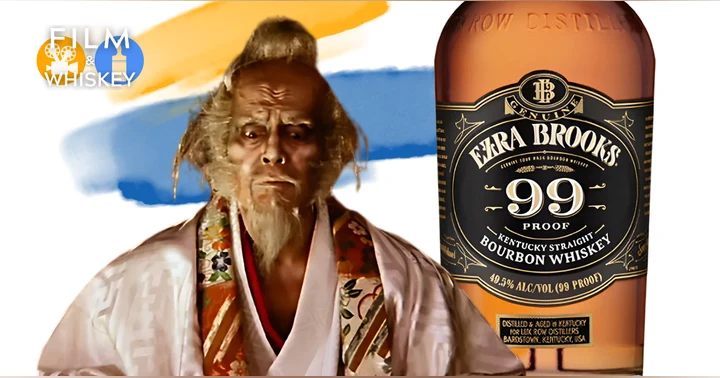
Ran / Ezra Brooks 99

In this latest episode of Film & Whiskey, Bob and Brad dive deep into the world of Japanese cinema with an in-depth film analysis of Akira Kurosawa's 1985 masterpiece, Ran. This movie, often heralded as one of Kurosawa's best films, is a retelling of Shakespeare's King Lear set against the backdrop of samurai warfare and political intrigue in Japan. The duo then transitions into the world of spirits, providing a detailed whiskey review of the Ezra Brooks 99 bourbon. A rye-forward bourbon from Lux Row, this whiskey promises quality at an affordable price. Will it live up to the expectations?
Timestamps
(0:00) Intro
(06:30) Brad Explains
(10:00) Performances, Themes
(31:00) Ezra Brooks 99 Review
(41:30) Two Facts and a Falsehood
(46:00) Final Analysis
(54:45) Let's Make it a Double and Final Scores
Deep Dive
Akira Kurosawa, a name synonymous with Japanese classic films, has gifted the world of cinema with numerous epics. "Ran" stands tall among them. An analysis of "Ran" often reveals its inspiration from Shakespeare's King Lear, intertwined with the raw emotions and chaos emblematic of the best samurai movies.
Brad, in his segment "Brad Explains," delves into the nuances of the film, from its performances to the deeper themes of betrayal, loyalty, and power dynamics.The Ran film cultural impact is undeniable. Its historical context paints a vivid picture of Japan, and Kurosawa's filmography, especially movies like "Ran," has redefined how we perceive Japanese cinema. As Bob and Brad discuss, the movie's intricate plot, combined with the director's signature storytelling techniques, makes it a must-watch for anyone intrigued by Kurosawa films or Japanese cinema in general.
From the visually captivating landscapes of "Ran," the podcast transitions to the rich, aromatic world of bourbons. The Ezra Brooks bourbon review in this episode is particularly special. As part of their whiskey tasting podcast segment, the hosts explore the Ezra Brooks 99 tasting notes, appreciating its rye-forward flavor profile and remarking on its distinction from other bourbons similar to Ezra Brooks 99.Whiskey and movie pairings are a cherished tradition on the Film & Whiskey podcast.
The Ezra Brooks 99, with its Kentucky origins and intricate tasting notes, pairs wonderfully with the intricate narrative of "Ran." The whiskey recommendations segment, which is a staple of the show, adds depth to the entire movie and whiskey review experience, making this episode a delightful blend of cinematic insight and spirited discussions.
Film & Whiskey Podcast. New episodes every Tuesday.
Theme music: "New Shoes" by Blue Wednesday
Film & Whiskey Instagram
Film & Whiskey Facebook
Film & Whiskey Twitter
Join our Discord server!
For more episodes and engaging content, visit Film & Whiskey's website at www.filmwhiskey.com.
Join Bob and Brad on this immersive journey through the world of Film & Whiskey, where every episode promises insightful discussions on iconic movies and tantalizing tastes of the finest spirits. Don't forget to check out the other Film & Whiskey podcast episodes and explore the ever-evolving world of whiskey and cinema.
--- Send in a voice message: https://podcasters.spotify.com/pod/show/filmwhiskey/message Support this podcast: https://podcasters.spotify.com/pod/show/filmwhiskey/support0:00 In 1985, director Akira Kurosawa and star Tatsua Nakadai gave the world a morose epic that explores the chaotic nature of feudal succession plans. In 2023, we make a return trip to Kentucky to try an expression from one of our favorite brands. The film is Ron. The whiskey is Ezra Brooks, 99, and more. View them both. This is the Film and Whiskey podcast.
0:46 Welcome to the Film and Whiskey Podcast, where each week we review a classic movie and a glass of whiskey. I'm Bob Book. I'm Brad Gee. And this week, we are looking at Akira Kurosawa's last masterpiece. 1985's Ron. We kind of changed things up a little bit in terms of the order that we had proposed for Kurosawa. We were going in a roughly chronological order, but in order to kind of group all of the, you know, sword, I don't want to come sword and sandals, epics, because that's like Rome, but you know, the swordsman, samurai type movies together. And then group the more modern set films together. We decided to throw it way forward to Ron. Yeah, they all wear sandals in this so. Sword and sandals Baby Sword and sandals. Let's go.
1:31 Brad, do you think, now that you've seen Ron, and I don't want you to tip your hand too much here in terms of what you thought of the movie, Do you think that was a good decision? I think so. I think it was really interesting to move through his different eras of samurai films and to see, you know, his different takes on what it meant to be a warrior in feudal Japan, for sure, I think. I think there's a lot of lessons you learn there. I'm also really impressed by and again, I don't want to get too much into what we thought of the quality of the movie. It's really interesting to jump forward like 30 years because Kurosawa really did more than most film makers adapt to the rhythms of more modern filmmaking.
2:14 I feel like like this movie is is cut very differently than a movie from the 1950s would be and it was cool to see like. You know, he's much older when he makes this. He's 75 years old. When this movie comes out, I think that he reminds me so much of Scorsese in terms of, like the sheer kinetic energy and pace and vibrancy that he still directs with as an older man. And I thought it was really cool because this didn't feel like a 1950s movie that was just made in the 80s. It felt like a movie that was from the modern era of filmmaking. Yeah. Honestly, for me it had really strong Braveheart vibes in terms of like the coloring of the film and like just the palette. It just had a really strong Braveheart vibe for me, where it was all like hyperrealistic and I don't know, felt lived it. It was.
3:11 It's not like all washed out the way you you start to see a lot of films get in the later 90s. Like we kind of talked about that with Memento, that there's like there's just a look of late 90s, early 2000s films that I think like Braveheart avoided and this avoided as well. You know, honestly, one of the things that really stuck out to me this time around with this film and Brad, I haven't watched this since the first time I've seen it. It's probably been 15 years, so this is only my second go round with Ron. I think that in the era that we're in where everything is computer generated and if you need a massive army, you just use massive which is a software that you know Peter Jackson and wed a digital created for Lord of the Rings.
3:52 Like we can make these things at the drop of a hat now. And I know that even in 1985, like the scope and scale and the way they use the extras in the backgrounds of these of this movie was like astronomically meticulous, right? Like it was just it was it was a feat even then. But I feel like now, when we talked about this a little bit last week, like there's just such a tangible nature to when you can tell those are real people 3 miles away on the Crest of the horses. Yes, yeah, I was falling off the horses too. But I'm thinking of like, you know, when at the end of the movie, when they see the surrounding armies up on the Ridge and they all file into the shot at the same time, and I'm like, how did they direct this?
4:35 Like, it's crazy and there's just something. So much more impactful about knowing that these are real human beings and that's a real burning building and and vice, you know, and yada yada. But like, then thinking, oh, OK, we could do all of this in post in CGI. Yep, no, 100%. There were a few shots, especially of the Army's on the hills, you know, 3 miles behind the main characters in the action. Where I'm like, that's just a really cool shot to to have your characters in the foreground and the characters so far off in the background that I'm like, you don't see many movies replicate that even at that time, let alone nowadays with all the CGI.
5:24 I think this movie cost the equivalent of like $11 million to make in 1985, and even then Kurosawa had a like a hell of a time trying to scrape together the budget for this movie. And I don't know exactly, I didn't do the inflation calculation, but let's say that that's 25 mil today. Like what he was able to pull off in terms of what he was able to put on the screen for 25 mil compared to these $300 million MCU movies that are all coming out and starting to flop now. It's just like when you know how to do craftsmanship, you can have an $11 million budget and make something look this good. Yeah, yeah, the the movie is beautiful.
6:07 And I think he spent probably about 3 or 4 million of that budget on the costumes for the movie. 100% because the costumes are just flat out incredible. Next level, man. I feel like we have already jumped past, Brad explains. And we're just diving into what we like about the movie. So let's take a step back here. Let's go to our first segment, which we call. Brad explains. Brad's going to give us the movie plots with only 60 seconds ticking on the clock, so let's go ahead and do your take with this little segment that we call. Brad explains. Brad Explains is the part of the podcast where Brad breaks down the plot of the movie that he has just seen, often for the first time. And it is for sure for the first time today, because my boy was unfamiliar with Kurosawa before the last few weeks.
6:54 Brad, very much so I'm going to turn this over to you in a second, but how's your Kurosawa, you know, introduction going so far after three movies? Oh no. Oh no. You did not like the first movie, you really liked the second movie and now you're back to meh. And that tells me a lot. I think it sure does. Man, yeah. Curtis Saw was just not working. Incredible for me. I like I liked 7 Samurai, Yeah, but I I wouldn't put it in like my top 50 movies. Like it was solid. It was fun. It was well directed, good story, good acting. But you know, just just a movie I enjoyed. Rash Man was not great.
7:40 Didn't. Didn't. I love that you're keeping this bit going and every time you say it, I'm like, do I add the context that Brad knows that it's actually pronounced rash man or do I just let him let him pronounce it rash man and and add nothing to that? I think you just leave it as is. All right, cool, cool. And Ron, to to spoil my opinion a little bit, was just messy. And I know that the word Ron means chaos or rebellion in Japanese. And so I I get that there's probably something to do with the fact that the name of the movie is chaos, with how chaotic the film is.
8:22 But for me, it's chaotic in ways that just don't add to the experience. And so I yeah, it was fine, but we'll get into that more later. Bob, this isn't, this isn't Brad explains Brad's opinion. This is Brad explains, baby. Brad explains Baby, and it is time for Baby to go ahead and give us 60 unadulterated, uninterrupted seconds of spoilers about the plot of this movie. So if you have not seen Ron and you've just heard Brad's glowing review and would like to go watch it. You can hit pause here, come back after the fact because we are going to spoil every bit of this movie. Brad, you have 60 seconds on the clock and go go read King Lear.
9:09 Anything to add or is that it? Did I do it? You did it in. It looks like 1.7 seconds nailed it. Ron is a film about a warlord in feudal Japan who has a dream, and in that dream he realizes that he needs to retire. And so he hands down the Kingdom to his three sons, puts his lead, his eldest son in charge, and everything just hits the fan. The oldest son sucks, the youngest son is honest but crappy and the middle son is conniving and they team up to kill their dad and in the midst of that, the second son kills the oldest son and takes the oldest son's wife who is evil.
9:56 Probably like like Nurse Ratchet level performance of evil. Oh, very evil. And the king goes mad instead of getting killed. And the youngest son tries to rescue him, but gets killed in the process. And there's betrayal galore. And in true Shakespearean fashion, everyone dies. Everybody, everybody dies. So, like, what's your Let's get this out of the way, Bob. What's your favorite death? My favorite death, I think the most impactful death is the third son's death son row. Because you just, you think there's going to be a moment of respite for this poor guy after like going mad and almost dying in the wilderness and then it like they just plunge the knife in and twisted at the end and and like Kurosala doesn't even try to hide it. It's literally the the old mad king finally gains his sanity. He's on the back of the horse with his son and he literally like leans over the son's shoulder and is like, I can't wait to be alone with you and have a conversation about forgiveness.
11:04 And then BAM, gets shot, falls onto the ground, dead. Man, it's just brutal. Yeah. I think most of the deaths in this movie are really great because. They're all very unique, like people die in unique ways. There's a there's a huge, excessive, cartoonish level of blood involved in one of the deaths, which you just don't think you're going to see. But it's like, man, arteries hold a lot of blood, don't they? I I feel like people die in unique ways. Would be a great like punk band name. We should start doing a segment called People Die in Unique Ways. There's just one we haven't seen before. We need to mention it on the show. That's funny.
11:46 All right, man. So something else we need to get out of the way is the fact that this is Kurosawa's third Shakespeare adaptation. It's really cool. I love. I just really love when directors take material from a completely different culture and adapt it as faithfully as possible. But. Add the the color to it of their own culture and in Kurosawa's case, like he had made a direct adaptation of Macbeth with Throne of Blood. He also made a a loose adaptation of Hamlet with a movie called The Bad Sleep Well and he comes to, you know nearly the end of his career. Here he had been reading a story from feudal Japan about this warlord who had three sons and and kind of asked himself what would have happened to this lineage if the sons were bad and he started fleshing out the story. And then, like, got, you know, part way into it and realized, oh, I'm writing King Lear.
12:39 And so that he just kind of borrowed more from King. It's not a direct adaptation. Like there's there's quite a bit of difference here. And I'm going to be honest with you, Brad, King Lear was not one of the Shakespeare adaptations that I was assigned in school. And so my familiarity with it is like I I recognize passages from it. But I've never sat down and read King Lear. And if that disqualifies me from talking about it, that's fine. But it's just, you know, I know Hamlet. I know Macbeth. I don't know King Lear. Yeah, I think I knew enough about King Lear to like, you know, the phrase mad King Lear. And I remember hearing about him being crazy. I think there's a part of me that mixes him up with is it who's the king that's married to Jezebel in the Bible and he goes crazy for a little bit.
13:27 Yeah, yeah, eating like he's a cow for some reason. That Bible story is like paired with Mad King Lear in my head. I always mix him up with Richard the Third. Cuz Richard the Third is the one that's like deformed with the hunchback and my Kingdom for a horse. And I'm, I'm always thinking that they're the same person. So yeah, like when I read that this is not a direct adaptation of King Lear, I was like, oh, I wouldn't have known that anyway. So there you go. Yeah, I think there's a lot of great quotes in this movie where, like some of it is like really funny that there were some moments in this film where like, I was like, oh, is, is Chris all being funny here. Like some moments where I legitimately laughed. And then the like, there's moments that are like profound and funny when you know he, the Torah is who is King Lear, essentially he he's mad at this point and he's like touching a castle wall and he just goes, I am lost and the Jester goes such as the human condition and and you're just kind of like, yeah, that's really profound and also like kind of sad and also makes you laugh a little bit. All right.
14:35 So let's just go ahead and dive in to reasons this movie didn't work for you. Because I I mean, I do want to talk performances and stuff, but if I'm being honest, I think that of the three movies we've watched, this has the the least amount of. What's the word, Brad? Like the performances here feel very much like we need these people to say these lines and be this way to make the movie work. But the actors don't really stand out in any way to me, except for, you know, the King Lear character, which is I think just an incredible performance. But the rest of them are kind of like we're going to go visit this, this clan now and this clan now. And I don't know, like, I don't know that I have a lot to talk about with the performances.
15:19 So I'd kind of rather get your. Your big gripes with the movie out of the way now, if that's cool with you. Yeah, no, sure. I mean, I I'll point out Mikko Herada as as Lady Katie that she was, like, delightfully evil. Oh yeah, and like. It's like one of those when you, when you see someone describe something as like, deliciously evil, you know what I mean? Like it's just wicked, I think. Then I think she's pronounced Kaya Day. Is that how you say? But probably. I don't know. She's great, man. And that that final reveal where she's like. Oh yeah, I have been scheming to take down your whole family. It's like the whole time. And then the general just like just rips his sword through her and it's like just barely off screen. But you just see the blood fly everywhere. Yeah, he was probably my favorite, like vassal, if you will, because like interestingly, a lot of the vassals kind of play a big role in this film and how they are scheming as well.
16:18 I think of the, you know, you you wanted me to start with the bad stuff, Bob, because you're a negative person. I'll start with the good stuff. I really liked all of the vassals and how Kurosawa like didn't include them on screen a lot. But he gave the impact of their actions a lot of credit and it kind of shows you how like in this world it feels fully fleshed out and it feels lived in. Like all of these secondary lieutenants of the you know the the warlords have lives of their own have plans of their own or scheming and back fighting and bickering. And and I I really liked how he constructed this world and and put it all together.
17:01 You know, I think that before you dive into your list of of qualms with the movie, I agree with you and I think that one of the things I really loved about it, and this is Shakespeare, but. The character of the Jester who is the most sane person in the whole movie. Like, it's a trope of like the fool who is actually able to see through all the BS. But he extends that Kurosawa does to all of the people who are not in positions of power. And we've, I think I talked about this last week, I've been surprised at how much poverty is a key fixture in Kurosawa's movies. And just like, not even poverty, but like people who are in destitute positions and what that does to their psyche and blah blah blah. But in this movie, he extends that sort of wisdom to them And everyone who is actually a servant is the one saying, really saying things and trying to convince their masters to not be idiots. And it goes to show a like, how inept these sons are at what they're doing.
18:00 Because the one general is like, dude, this woman wants to kill you and this is not going to end well. And he's like, yeah, but I like sex, you know? And and then you've got, you know, the jester who's talking to the King Lear character. I just really love that it demonstrates, especially with the sons I kept thinking of like trust fund babies. You know, like these guys that take over these massive businesses and think that they know how to run a business. And every decision they make is just like, you know, it's funny, I watched this movie and then checked Twitter afterwards. And it was the day that that Elon had changed the logo of Twitter and like. Had this fiasco of trying to put the new sign on the building and stuff, and it was just really funny to be.
18:41 Because it's like the stuff that people in positions like this get fixated on is very rarely the stuff that actually like makes or breaks the success of an entity or a business. And it's the same thing in a movie like this. Like they get so blinded by their rage or their jealousy or their lust that they will not listen to sound reason even when it's like hey. If you do this, we will all die. And he's like that. We're going to die, I guess. Yeah, yeah. And that dude at the end of the like, because the general, I think his name is like Kurigani, who tells him, hey, a warlord doesn't go running to his woman when she calls. And then later, he brings in the fox head and like, gives this entire, like, mythic tale about this evil fox that destroys all these different leaders.
19:34 And then at the end of the film, he just looks at, I believe it's Jiro, the second son, and says we're about to die. My Lord, prepare to die and just runs off with this brave look of determination in his face. I'm just like, man, this dude's this dude's epic. He's so cool, but also the satisfaction of having cut off that woman's head, you know? Yeah, he's like, I'll go die now because I did what I needed to do. Yeah, man. All right, man. Let's, let's do it. Let's dive into what didn't work, because I'm going to be honest, I was blown away by this movie and I would like to talk about more good things in the back half of the episode.
20:15 So let's dump the negative here and then and then drink a bunch. You know, that sounds good to me. So I think the issues I had with this film were a it's about 45 minutes too long. Like, this could be an hour and 50 minute film, but it's like 242. I think it's 235. And like, usually when a movie's too long, we're like, yeah, you could have chopped off 10 or 15 minutes. No, this movie could have had 45 minutes chopped off and it would have been great. I think that a lot of the scenes just linger too long. The The movie vacillates between The Desolation of Madness and the frantic chaos of war just way too much and it sticks with each one too long. The war scenes go on way too long and the The Madness Desolation scenes go on way too long. All of them could have been shortened by one to two minutes and all of a sudden you have like a 40 minute less movie would have been much better.
21:16 Before we watch the movie or before you watch the movie, I had just finished it and I texted you, I think the first hour. Is like if taken as a whole, just the first hour is pretty much pitch perfect because it leads up to that initial raid on his castle. I think the last hour is pretty much pitch perfect because it really is this sort of inevitable tragic downfall. And then there's this stretch in the middle for like 40 minutes where even I, Brad like I think I texted you they could have cut twenty of these 40 minutes out. It's when he's like way off in the in the wilderness and he meets. The young Prince that he overthrew his his father's Kingdom and blinded him and I just could not care less.
21:59 And honestly that character comes back in a pretty profound way at the end of the movie. So you need to have that character introduced for some reason. But like, I think they could have done it in a way that didn't take 10 minutes of screen time, you know? Yeah, exactly. And and honestly, like I watched this movie in two sittings. I watched about 35 to 40 minutes and I I was super tired and I had to go to bed. But I kept looking at the time. I was like I have to have less than two hours left. Like I got to make it to 3540 minutes and then I watched the last two hours and I I just think that when I look at the time left and I go, I've only watched an hour of this movie. I have an hour and 40 minutes left. Oh man, we're in for it like that. Like those were the thoughts going through my head. So cut a lot out.
22:54 There you go, the second, the second thing, and, and I think this is my main frustration with the movie, is that the the action scenes just suck. Oh dude, I I will disagree strongly. So bad. I mean, so make your point. But I will disagree strongly. So here's the thing once again, I like I understand that the name of this movie is chaos but every single action scene there's about 5:00 in the movie, every single one. The winner is predetermined. Like like there's no there's no true sense that the losing side could have won in every single battle. It it reuses the exact same shots, like two to three times throughout the battle and every single battle. There's not any actual fighting.
23:54 Like, like, nobody actually really fights in the movie. You just see the winning side have horses running really fast and infantry running in really fast, carrying gorgeous, beautiful banners. But they're just like sprinting into the castle and shooting guns in random directions. And you don't see Handtohand combat at the end of the film when you know they're having the final battle. Like the bad guys are running in and there's just random musket men sitting in the field firing as if they have machine guns and like, just rapid fire thousands of guns firing over and over and over again. And then you get the exact same shot of men falling off their horses like 3 separate times in a 5 minute span. You get the exact same shot of musket men firing, you know, just endlessly firing these muskets that each take a solid 2 to 3 minutes to reload.
24:56 And yet somehow they just fire, fire, fire, fire, fire. I like and there's no actual fighting. Like even when they're in the keeps, he just shows these like musket men pop up in the stairwell, shoot guns and then disappear. And then it's like 3 minutes of arrows clattering against the wall and random explosions. And I'm like, I want to see a samurai movie, Bob. I want to see a bunch of cool samurai using their swords and fighting and killing and getting killed. And it was just hectic and felt unrehearsed. And I did not like the action at all. And if I'm going to watch a 2 1/2 hour samurai medieval war epic, I want to enjoy the four to five big set pieces.
25:44 And they all just felt like repeats of the last one. Okay. So for 75% of what you were saying, I was like, oh, I think I'm going to have a rebuttal, but I will give you credit. I actually don't think I have anything to argue against you in terms of like, I'm not going to change your mind because it just sounds like fundamentally what the movie was about is unsatisfying to you in a way. Like in terms of, I think the function of every battle in this movie is just to illustrate the downfall of the House of Ichimanji, right? Like it's it's a tragedy. And so, of course, the losing side is going to be overwhelmed. And just you're you're basically watching people get butchered over and over and over. And so that's the thing you you don't actually get to see them get butchered.
26:29 Oh, I think you do. I think you do. For the only one Where they really cut away is at the very end of the movie when Giro's house is falling and they don't show you, everyone die there. But you're kind of like, well, we know what's going to happen. But yeah, I mean, you know, you just kind of mentioned that they show this repeated shot of, like, the soldiers falling off their horses as they're getting slaughtered. And I think that underscores. The sheer volume of men that are being lost, you know, like so. And again, I'm not trying to argue with you. I think you actually make a really good point in terms of what your expectations were and what you got in return. And that's why I don't think that anything I could say to defend the battles is going to satisfy you, because you just, I think you just fundamentally wanted a different kind of movie in that regard. See, I I I think that it would have worked for me if he did a good job filming the scenes.
27:21 I like. I I am saying if I need to be more blunt, I don't think it's anything to do with my expectations. I think Kurosawa did a bad job filming the action sequences. I think he could have done a better job. I yeah, I mean, I disagree with that like strongly. It is funny. I feel like sometimes I try to give you credit and be like, yeah, you made a really good point. And then you're like, let me also be condescending towards you, Bob, while I'm making my point and you're agreeing with me. Oh, no, I I'm just trying to make it clear that I feel like you're misunderstanding what what I'm trying to say. OK, Yeah. I don't, I don't know. Like, I think that honestly I thought we might find a point of commonality in the fact that like, I think this is a better filmed movie than Seven Samurai in terms of, even in terms of like establishing the geography of each scene. You know Kurosawa spent 10 years. Storyboarding every shot in this movie so that it's like exactly what he wanted it to be.
28:21 And I think that even in the midst of really chaotic battles, to get back to your point about the costumes before, one of the great things about this film is that every part of this clan is color-coded, so you always know who's fighting against who. And then in the last sequence, where it's just complete chaos, it's like all three clans fighting against, you know, all three of the brothers clans fighting against each other. And then two opposing families behind them on the hills and you always know which of these five groups of the warriors are charging in. And I think that they do a great job establishing the geography of these crazy open plains. And you know surrounded by forest, the inside of the castles, you know exactly like you know you keep calling them the keeps. Like I think I always was very aware of who was rating who and. Where they were as they retreated and how much room they had left before it was just done, you know? And I think from that perspective, he did an amazing job with those scenes.
29:24 I just think they didn't work for you because, like to your point, there's not a lot of combat like Handtohand combat. It's more just like you're watching dudes get overrun and they do go on for a long time. Yeah, no, I yes, those those statements are true. I I think it I laughed a little bit when you said that the geography was clear because that like in certain elements, sure that like he cuts from the upper rooms of the keep where the the personal guard are getting ready to to die and the outer parts. But like in the actual battles themselves, like I'm thinking of The Last Battle, the geography is just completely muddled in the midst of the action.
30:08 Like most of the shots are just of horses, legs and then people falling out of nowhere and then just a generic shot of them in the woods. And. And I kept thinking to myself, like, man, how did Mel Gibson do such a better job with Braveheart, then legendary director Akira Kurosawa? Like, I just, I just kept thinking to myself, man, there's so many movies that do this better. Huh. Yeah, And I. I profoundly disagree, but that's why we're here, man. We've gone for 1/2 hour at this point. Let's hit pause here. Let's drink this Ezra Brooks, 99 proof bourbon, and then we'll come back and talk about things that we liked about the movie.
30:51 What do you say? Let's get to it. All right. So today we are checking out Ezra Brooks 99 Proof Bourbon. We've done Ezra Brooks on the show before. Just your standard, I think 80 proof Ezra Brooks. This is a whiskey that is produced by Lux Row Distillers in Bardstown, KY. I say produced because it's not actually distilled there, or at least it wasn't until very recently. I think they might be laying down their own distillate for this product now, but Lux Row for a long time, you know it's owned by this big conglomerate called Lux Go. They sourced their whiskey and they release it under their own labels. So our favorite bourbon of all time on this podcast in terms of brands is Rebel.
31:37 They make Rebel and that is their weeded bourbon brand. They also make Ezra Brooks, which is their more wry Forward brand. And so we liked Ezra Brooks, but we haven't gone back and tried it again. Everything that they make that is like a rebel product, like distillers collection and Barrel Proof, they make that in an Ezra Brooks variety as well. So we're finally kind of dipping our toe back in with Ezra Brooks, 99. This is a non age stated bourbon composed of 78% corn, 10% rye and 12% malted barley. Brad, I don't really think there's that much more to say. You know, we've we know what we're getting here. Yeah, yeah, this is you know and I'll I'll just say this from the start, this is a $22.00 whiskey in the state of Ohio. And I I think that for what we're getting here, I, I, I, I'm a fan of Luxco.
32:27 I think they put out some good products. If you're trying to not spend more than $25 on a bottle of whiskey, you could do a hell of a lot worse than Ezra Brooks or Rebel. Yeah. Yeah. And that's. I'll just take a moment to say it. The whiskey world is insane. We need people like Luxco who sure, it's a giant conglomerate, but hey, they're willing to make a budget priced whiskey that is good to pour. And so I like I'm down with that. I don't care how big your company is or little your company is, if you're making a quality product at A at a affordable price, like you know I'm down with that, I'm down with the the little man. I don't have too much more to say before we dive in here, but there is one point I want to make which is among bourbon Bros.
33:15 And if you are in the world of bourbon at all, you know what I mean by bourbon, bro. There's this expectation that noobs really like weeded a bourbon because it's easier to get into. But then you get like harsher and harsher with your bourbons, and you you tend towards high rye bourbons if you're a real bourbon drinker, and I have found that to not be true in my case. I think the more bourbon I drink, the more I really do gravitate towards weeded bourbons. I just really like a really sweet profile and that tends to be weeded bourbons for me. So I've never gravitated towards Ezra Brooks over Rebels because this is a little bit more wry forward. And I just want to say, you know, in response to the bourbon Bros, drink what you want.
33:58 Like Brad, you and I have had approaching 500 different whiskeys on this podcast. And if if my palate is not good enough for the bourbon Bros, because I still prefer weeded bourbon, then I don't want to be a bourbon bro, you know? Yeah, yeah. I mean, I never wanted to be a bourbon, bro. Well, on that note, Brad, let's go ahead and jump right in here. What are you picking up on the nose? Yeah, the nose for me is like a nice soft sweet corn. It has a a really sweet vanilla note going on. There's a little bit of peanut butteriness that comes through and the rye, just a hint of rye comes through. Not a ton, just a little bit.
34:44 Enough to let you know that it's there, but not enough to overwhelm you. I think I'd give it like a seven out of 10 on the nose. I'm going to give it an 8. This is surprisingly not rye forward. This almost smells like a weeded bourbon. You could almost trick me into thinking it was a weeded bourbon in terms of how soft and how sweet the nose is. There's actually less rye in here than there is barley, so it's not like it's a super high rye mash bill or anything. But I'm with you man. I think there's there's a little bit of brown sugar, a little bit of Maple, Not not a lot. It tips a little bit more vanilla. So then there's a there's a really sweet fruit going on here, and it's almost like a a really ripe, juicy Peach for me.
35:25 And I didn't expect to get that on this nose. You're right in that the rye comes through right at the very end and it almost mingles with the ethanol. So like, right when you start to feel the alcohol in your nostrils, you also smell the rye a little bit, but it's kind of like just a little wisp at the very end. I love this, man. I'm going to give it an 8 out of 10, yeah. And when I got into the pallet, I think that the sweetness continues on in like. And for me it almost turns into that. You know, we we talk about this with weeded bourbons. It turns into like that cocacola effervescents there. Like there's this bubbly nature to it that I'm just really impressed with. I think that that that cola sweetness comes through. There's the peanuts stay in there for me, and really it's the vanilla that that sucks me into this. I don't know if there's very many whiskeys that genuinely feature vanilla as like the prominent note, but for me, that's what I'm getting here.
36:24 I I like the palette a lot and I'm going to give it an 8 out of 10 there. I do too. The only thing I'd push back on is that I don't think this is actually that sweet, but it's almost like if you could bottle up essence of Coke Coca-Cola. I don't say essence of Coke, Essence of Coca-Cola. Oh, de Coca-Cola. It's like you took the sugar out of it, but like all of the rest of that effervescence and some of those, like, spice notes are still there and it mingles with a really dusty oak for me. Like there's some sawdust on this. There's a little bit of floral on this as well. I really, really like this man. It is going in a completely different direction than I expected it to go. I'm going to give it an 8.5, yeah and and for the finish.
37:07 I think this is where the the price point starts to come in a little bit for me. It's sours just a bit throughout the finish. It's heavily okie for me and you get a little bit of spiciness, but but not enough to make it stand out. I think the finish is the only place that I'm a little bit disappointed, not too much. I'll give it a 6 1/2 out of 10 here. I do think the oak is what stays behind, like right when you swallow, it's this nice little punch of kind of like that cocacola effervescence again. And then after about 10 seconds or so, it does kind of just settle into toasted oak or charred oak, I guess is what I would say here and it's fine. I think my big gripe with it is that it's not a very long lasting finish. It fades pretty quickly and that's where I would say that the price is, is kind of playing into it a little bit. I'm going to give it a 7.5.
37:58 I don't dislike this finish at all. I just wish that it had a little more complexity or even like viscosity to it to stay behind a little bit. But but still pretty good. And that takes me to balance where I think especially considering the price, you know, like I know we say we want to divorce ourselves from the price until we get to that category, but like I don't know very many $22.00 whiskeys that are this well balanced. Brad. Like even at the worst of it, it was a 7 1/2 for me. So while I think there is like a little bit of a fall off here, it's still pretty darn good. I'm going to give it an 8.5. On balance, Yeah, that that's pretty high. I'll give it a 7 out of 10 on balance. I think that it it marries the simplistic flavors it has really, really well.
38:46 There's just not a lot of complexity here. There's some good flavors. They work well together. It tails off at the finish and sours a little bit. So yeah, solid seven out of 10 score. We already said that this is $22.00 in the beautiful state of Ohio, Bob, I think that's like an 8 out of 10 value. Like it's it's not the best value in the world. But I could see myself wanting a bottle of this on my shelf to just to pour like at any at any time. I'm like, oh, this is a nice quality sipper. And I'll say this like Bob gave me probably like 375 like half a bottle of this and I've kept it on my desk for a long time as my warm up whiskey. That like if I just need 1/4 of an ounce of whiskey to get my palate started and I don't want something that's 80 proof and you know, not enough to to get things moving when we're drinking, you know, 120 plus proof bear like this 99 proof. It's got some decent flavor, lets you know that it's there, but it's not overpowering.
39:49 It doesn't mess with what I'm going to drink next. Ezra Bricks 99 is a really solid pick there. Yeah, I totally agree. And I think, you know, I don't know, I don't know what percentage of our audience is really like into having a warm up whiskey. Like I feel like that's very much a problem only for people like you and me. But I think there is something to be said of having a like a higher rye bourbon especially. For an issue like that, like it really does get your palate acclimated really well, I think this would go really well as a mixer. Like it's a it's a great whiskey and Coke mixer because there's so much that Cocacola in there already, but it does stand up neat. It stands up on the rocks. I think this is a really good value man. I'm going to go ahead and give it an 8.5 again, and that takes me to a 41 out of 50.
40:35 Brad, what are you coming out to? Yeah, a few points lower. I'm at a 37 out of 50, all right? So that takes us to a 78 out of 100 or 39 out of 50 on average. Yeah, I think I would have expected this to be in the 35 range, just barely recommend. But as we drink it, I'm like, yeah, this is like a solid, you know, for me, 3738 out of 50, like, you know, if this was a $30 bottle of whiskey, $35, I think it would be like a 32 to 35 out of 50. But hey, here we are. Man. It's a cheap bottle of whiskey that has solid legs to stand on. So go buy yourself a bottle of Ezra Brooks. It will not cost you much or set you back almost at all. All right, man.
41:21 Well, from the heights of Ezra Brooks, 99 to the Depths of Ron, let's let's get back to talking about the movie. What do you say? Let's get to it. Alright everybody, that was Ezra Brooks, 99. A bargain by If I have ever seen 1 Robert, you know I love a good bargain, Brad. I know you do, except for you drive a hard bargain when it comes to our next segments. Brad. I see what you did there. It's called 2 facts in a falsehood. Brad is gonna try to stumpy ball to alright and what is wrong?
42:02 2 Facts and a Falsehood 2 Facts and A Falsehood is the part of the podcast where Brad presents three items to me as fact about the making of this movie, one of which he has completely made-up Brad. I have done a modicum of research into this movie this week, so I feel more prepared than I have the past two weeks. Which is good because those were catastrophic failures for me. Yeah, they sure were. And I have to ask, you know, after promising film and Whiskey Nation, our loyal listeners, for multiple weeks now, that you would look up the score, how's, how's that going? You know, it's amazing. I looked back at it and I'm actually 17 and oh. Wow. Yeah, it's incredible. That's I had just, I had just miscounted. I forgot to carry the one you know. Yeah, I totally understand that you're. Your brains doing math like your Abbott and Costello, Bob. That's very true, Brad.
42:53 Well, maybe you can break my hot streak this week, but we'll see about that. Hit me with your two facts and a falsehood. Fact number one for this film, Asikazu Nakai became the oldest person to receive an Oscar nomination for Best Cinematography at age 84. Record was previously held by Ernest Laszlo, who was nominated for Logan's Run at age 78, OK. Fact #2. Despite horrific weather that plagued the shooting of this film and an $11 million budget, the largest for a Japanese film at the time, Cursa was still able to complete filming 2 weeks under schedule, with the actor saying he pushed them at a furious pace throughout the production.
43:36 Fact #3. The castle destroyed in the middle of the movie was specially constructed on the slopes of Mount Fuji for the film and then burned completely to the ground. No miniatures were used for that segment, although an optical of another castle being burned at the end was used. Interesting. Well done again, Sir. I'm nailing it, man. We need to do more foreign films, Yeah. So I know this movie was nominated for Best cinematography. I don't know anything about the age of the cinematographer at the time. You know, I've really got to start doing my project where I map out everyone's family tree that was involved in every movie we've ever done. That's where we press record. You sure do. It really is my fault.
44:17 When you think about it, #3 sounds pretty true as well. I mean, they all sound really true. I'm just going to go ahead and say, knowing that I'm probably wrong, #2 is the falsehood, just because that sounds like the most general fact of what you shared and the other one seemed really specific. SO2 stands out to me. I'm going to say Two's the falsehood. Bob, you are 100% correct. Number two was the falsehood, 18 and oh, baby. 18 And oh, look at you go suck it Tom Brady and the Patriots. You couldn't get it done. But I could. Oh man. I was actually rooting for Tom in that game quite, quite heavily. That was the only time in my life that I have ever rooted for Tom Brady.
45:06 Well, that's not true. I've only time in my life I've ever rooted for the Patriots. Yeah, like I wanted to see history that night, you know? Exactly that. That's what I'm saying, man. I think it's the one time we root for them. That, Yeah, exactly. Well, I mean, if we want to get into my whole football history, we can. But I've actually always kind of liked Brady and the Patriots. They never bothered me too much. I just think that the energy of our brownsness really affected them, like we brought our losing ways to their team for one night and they were like, don't put that on us, Ricky Bobby. Help me, Tom Cruise. All right, man, let's let's get back into talking about Ron. And we left off by saying we're closing the movie on. Oh yeah, we're closing the book on our gripes. We want to talk about things we liked about the movie. So, Brad, I will turn it over to you, man, who hates combat scenes?
45:58 What did you like about these, these specific combat scenes? What did work for you about this movie? Honestly, I I really liked the acting. You know we we talked about it in the first half. I think that overall everybody does a really solid job. I don't know if anybody turns in like a all time performance or anything, but the all of the the vassals, the lieutenants are really great. I think that the three sons all do a really great job respectively, except for Taro. Taro's kind of boring. Which, you know, maybe that was his character. Who knows? They were like, of all the people that need to die first, this is the guy that needs to die first. The eldest born who's really born?
46:39 Get this boring guy out of here. Yeah, So you know, the acting was pretty solid. I think that there are some incredibly beautiful shots in this movie. Like I'm thinking about when when I was about to say King Lear. When Hita Torah is sitting on the steps and he's kind of on the top right of the frame and then the jester or the fool is on the bottom left of the frame and the cameras up above them and like the walls are leading down to where they are and they just feel entrapped. I don't know that like there's it's just such a beautiful shot and I'm like, yeah, there's there's a lot of really great shots in this film. You were mentioning a scene earlier that made you laugh out loud and it's when they're kind of like inside the ruins of the one castle.
47:28 And the establishing shot from that scene is like it's shot from above looking straight down the walls and they're at this kind of like cock eyed angle. And then the two of them wander into the frame, and it is the coolest. Most like, you can tell that Kurosawa was really influenced by other cinematic eras in this movie and that, like, there's a ton of German Expressionism going on in this movie too. It's really, really cool to see that kind of imagery in a Japanese movie set in, you know, like the 17 or 1800s. And I really, really loved how many of his own cinematic influences he was able to sneak in through the camera work.
48:08 Yeah, yeah. Well, tell me what else? What? What else? Like stuck out to you that made you go. Brad, this is a masterpiece. You know what honestly really worked for me was the score to this movie, because I felt like especially in the first hour or so, it leaned into how eerie and unsettling like the groundwork was that was being laid. And then by the end of the movie it no longer sounded like those kind of traditional Japanese soundtracks that we got with like Rashomon. It was much more western influenced, like even the like the Chord progressions, really tragic, really sad string heavy and I thought it was really cool again bridging the the kind of gap between eastern and western forms of music that you kind of saw how he used the strengths of both to their best effect. You know Bob, the the only thing about the music and this is this is a gripe with all three movies. So I think that's how I can sneak it in here, even though you close the book on on Gripe Griping. He has a thing, and he doesn't do it too much, so it's not too bothersome.
49:12 He has a thing for like, shrieking flutes occasionally, and it kind of drives me nuts. Yeah, they are very. It's not my, not my favorite. But again, I kind of feel like if they're going to work anywhere, they work in a movie like this, where the title of the movies, chaos. It's like, all right, yeah, I surely lived up to the billing, I guess, you know. Yeah, it it definitely does. I just remember, like, turning on Rashomon and the first sounds you hear are just this screeching flute. You're like, whoa man, I'm, I'm in for some. Let me turn down the speakers a little bit, yeah. Yep, Yep. Brad, you know, I I think that I did kind of set myself up for a segue here, but part of the reason I wanted to talk about things that worked in the back half is that this is really going to lead me into my let's make it a double. We'll get there in a second.
50:05 But course I was at the end of his career. Essentially here he makes one more movie after this. And I think that watching this movie a, it's such a monumental kind of weighty, giant, epic movie and it works on that level. But I also think it works primarily because you are watching a director at the end of his life and kind of interrogating what are the things that you still want to say as an artist at the end of your life. And I think that there are some really heavy parallels here between what we see with Kurosawa at the end of his life and what we've been seeing in the last few years from Scorsese. And that's underscored by the fact that just a few weeks ago I saw a Scorsese writing. I want to say it was like in the New York Times or something, but he was talking about how a quote from Kurosawa that he had. He'd had a conversation with Kurosawa and Kurosawa had said something about like, now that I'm getting older, I realize I have so much to say and my time is running out. And he said I didn't really understand what he meant by that.
51:12 But now I, as an old man, I feel compelled to work faster and harder than I ever have because I need to get these stories out before I run out of time. And putting that lens back on Kurosawa, it's interesting that he would choose to make his kind of final epic before his his last film in such a tragic and bleak way. You know, I I don't necessarily want to read back on him that he was a guy that was tragic and bleak, but he really did struggle, I think, with his mental health at points. Apparently at one point in the 70s, he tried to take his own life after the Japanese film industry kind of turned on him. He was considered like old news and he couldn't scrape together financing for his movies anymore. And so in this one kind of big last hurrah in Ron, the final imagery that he leaves you with is kind of harrowing. And I think it's, it's just really interesting to think about like this guy's on his way out. What does he want to leave behind? And this is the statement that he makes, you know? Bob, I'm going to ask you a personal question. How are you going to feel when Martin Scorsese passes away? That's going to be a big loss, man, a big loss. Him and Spielberg both.
52:24 I'm like stay, stay in good health, guys. You know, follow whatever Eastwood has been doing because he's 93, I think, and making his final movie right now. He has announced it's his final. He has, Yeah. I think he isn't declining health, you know, like or he wouldn't have announced it. But man, it's just crazy to think. Even if if Scorsese keeps working for like another thirteen years or something, he'll still just be at the age that Eastwood is. That's not it's Scorsese already. Like 79. He's almost 80, yeah. Doggy. Yep, Yep. Anyway, you know, time marches on, and I think that plays a big part in this movie. This movie is so much about.
53:05 And I think in a way that King Lear, from what I know of it, doesn't quite lean into as much. Which we've established as I have not read right, but but Kurosawa has gone on record and said this needed to be a movie that fleshed out the background of these characters. He said that Shakespeare didn't really give the characters in King Lear a history and you're just kind of put right into the middle of this struggle for power. And he said I needed to have a reason for these people to act as violently as they do and and, you know, react so strongly one way or the other against their father. And it's to give their father this back story of you built your empire on being ruthless and look what you have wrought. And this entire movie is just an argument that no matter what you do, you cannot escape your past and you cannot escape the things that you've done.
53:55 And it really like, I don't know what that means for Kurosawa in his own personal life, but it is I think having him as an old man making this movie, whatever it means, I think it means more to see him making that argument at the end of his life than if he'd made this movie. It was like a 25 year old. Yeah, I mean, I don't know, man. I think the message of the movie More fell along the lines of if he had only taught his sons better how to wage war, then they wouldn't have been such imbeciles when it came to doing it. Once they were in charge, I think that would have been the key. Like, hey guys, this is actually how you fight a battle. That's the that's the purpose of the movie. That's the message.
54:37 Be a better educator about war, Bob. Yeah, But I just really do think, you know, and I guess I will get into, let's make it a double here. So let me cue up the music, Brad. Hey, it's time for let's make it a double. We're near the end of the episode, so thanks for listening to the film and whiskey show. Let's ever know the film with this one, even if it's struggling. It's a final segment of the day. Now let's make it a double. Let's make it a double is the part of the podcast where we pair this movie up with another to make the perfect double feature. I've already mentioned Scorsese, and I think there's two ways you can go to pair this movie up. One is Scorsese's own heavily Kurosawa influenced film, Silence. I think they've kind of like perfect pairings for each other. The one of the final images of this movie is the blind Prince who has his family's been slaughtered by the, you know, the the family in power.
55:31 He's now teetering on the edge of a Cliff and left there to die because he doesn't know when anyone's coming back for him. And he's been clutching onto this image of the Buddha. And then the Buddha falls out of his hand and he's been told as long as you have this, like, you'll be protected. And it's this final image of like a silent and indifferent God, right? And that's exactly the plot of silence is, is God indifferent and silent in the face of suffering? So I think I'd be a really interesting pairing. I also think that his most recent film, The Irishman, which is all about the sins of your past coming back to haunt you as an old man and being left, like, utterly in ruin as a result. Like there's there are obvious and strong parallels to the end of Kurosawa's career here in this part of Scorsese's career. So I don't really think that you couldn't do better than to pair it up with one of those two.
56:24 Those are incredible, incredible choices, Bob. I am Are you going to do The Sandlot again this week? Yeah. How do you know The Sandlot? It's the perfect movie. I'm not going to do The Sandlot, but I am going to make you mad. I was just thinking to myself, what are medieval movies that I just enjoy? They're just fun. I just have a good time with them. I'm going to pair this with A Knight's Tale, Bob, because that's a medieval movie that's fun and enjoyable and doesn't go on for seven hours. You know, I just watched a Heath Ledger movie for the first time. Brad, it's the 1990 Nine's 10 Things I Hate About You.
57:04 Oh, what a movie. Yeah, what a movie. I've never seen it before. And I know that like when I was growing up, all the teenagers loved that movie, right? Yeah, it's huge. Man, that movie sucked. That was just a not well made film. But I, you know, it had Heath Ledger in it and it was a Shakespeare adaptation. It was right after I finished this one and I was like, oh, that's another Shakespeare adaptation. I should knock off their list. Yeah, well, yeah. And A Knight's Tale, also based off of English literature. Sure. So here you go. There you go, man. There it is. Brad is the learned one of the two of us. That that is true. I have read The Canterbury Tales and King Lear.
57:44 So, oh, you did read King Lear. Yeah, I've read King Lear. Oh, I didn't know that. Nice. Even though you confuse it, Are you sure you're not confusing it for whatever the thing was in the Bible and the Bible? Yeah. No. No, I read King Lear 9th grade. See, I was like kind, like kind of, you know, full of myself in high school. And I was in English class. And I told my teacher that the books she was choosing were boring. And she told me that if I read the Iliad and King Lear and wrote like you know, a two or three page book report on each of them. That I could just do nothing the rest of the semester. So in about a week, I read the Iliad and wrote a book report. And another week I read King Lear and wrote a book report. And I remember this story from that from our oh, brother, Where Art Thou Episode.
58:35 Yeah. Yeah, Yep, I just blasted on through. Honestly Brad, part of the reason why we do this podcast is that you are no less self assured or cocky, but now you've actually seen the things to back up your state That's you've finally done the homework. I would say so. If anything, my my cockiness is your fault, Bob. Exactly you. Forced me to sit down and watch what is it? 220 movies at this point? Yeah, pretty much. All right, man, let's give this movie some final scores. Brad, I I do agree with you that this movie is too long. And I honestly think they could have cut at least 20 minutes out of that middle chunk. However, I was absolutely overwhelmed by this movie. I think just from a a technical filmmaking standpoint, I think the sort of like, dread and inevitability of the the tragic downfall that was coming was played perfectly. I think the battle scenes are incredible, even if my my counterpart here does not think so. I'm really teetering between a nine and a half and a 10, Brad, and I think I'm going to give it a 10 because when I finish this movie, I immediately went on to Amazon to see how much the Blu-ray was.
59:46 And if I want a movie that badly, I think it's a 10 out of 10. Yeah. Well, good for you, Bob. Thank you, Sir. Really happy. Thank you. Cocky bastard. Bob, I will give this a 7 out of 10. OK, so better than Rashomon for you? Yeah, but I like this more than Rashomon. I love the costumes. I like the acting. I think there's some really gorgeous shots. The story itself is intriguing and like it's little things that frustrated me about the movie where I'm like I like. I was emotionally moved by Suboru's death at the end, but not nearly as much because Kurosawa has him at the start of the film, be a Dick to his dad.
1:00:35 Disappear for two hours and 20 minutes and then show up again looking for his dad and and now he's like a hero. I think that's the. I mean, I think that's the point though is like the person that you think is actually betraying the dad and was warning him that everyone's just flattering him, gets kicked out. But he was actually the most loyal one all along, you know. Yeah, sure, but but no. But it didn't work. For you just didn't really just didn't really work like. I don't. I don't know what he could have done to make it work. But, and you know, I'll be honest, I think that that might be a a place where, as an American who does not speak Japanese, the opening scene may have held all sorts of layered nuance to Suboru's performance. You know who, whatever the actor's name was that I just didn't pick up on, but I literally almost texted you. Bro Saburo is a giant D like like I. All I got from that was that he was snarky and sarcastic and, like, crappy.
1:01:44 There you go. Well, and so it just didn't work, man. Snarky and sarcastic and crappy defines both of our personalities. So Saburo or what's his name? Is it Saburo? Saburo, Yeah, You can join us on the podcast anytime. Guest guest chair open for you. All right, Brad. He just speaks Japanese the whole time. What did you what did you think of Lords of Arabia? All right, Brad, we're coming out to an 8.5 out of 10 on this movie, but we would like to know what you think. Have you seen Ron? This is an interesting movie because I I didn't expect that many people would have seen this one. Brad It's not often brought up in the first breath of Kurosawa, but when you look on IMDb, it's got a ton of reviews and it's in the top 250.
1:02:30 In fact, I think it's in like the top 150 on IMDb. So I know someone out there has seen it and really, really loves it. And if that's you, you can reach out to us on Facebook, Twitter, Instagram, TikTok, YouTube at Filmwhiskey. There's so many ways to reach out to this, Bob, And there's one more. It's called Discord. Discord is an awesome community of people. It's a private server where people who are fans of the Film and Whiskey podcast, that's you. Everybody can join the conversation. So you can find a link to the Discord at the end of every single one of our show notes. All right, we are finally moving into Kurosawa's more modern day set films and we're going to be starting with a thriller from the 1960s called High and Low.
1:03:14 Really excited to watch that one with you, Brad. So join us for that one next week. But until then, I'm Bob Book. I'm Brad G and we'll see you next time.