

 Apple Podcasts

 Spotify

 Castro

 RSS Feed

 Goodpods
My Favorite Movie with Logan Welk, Blue Note Bourbon
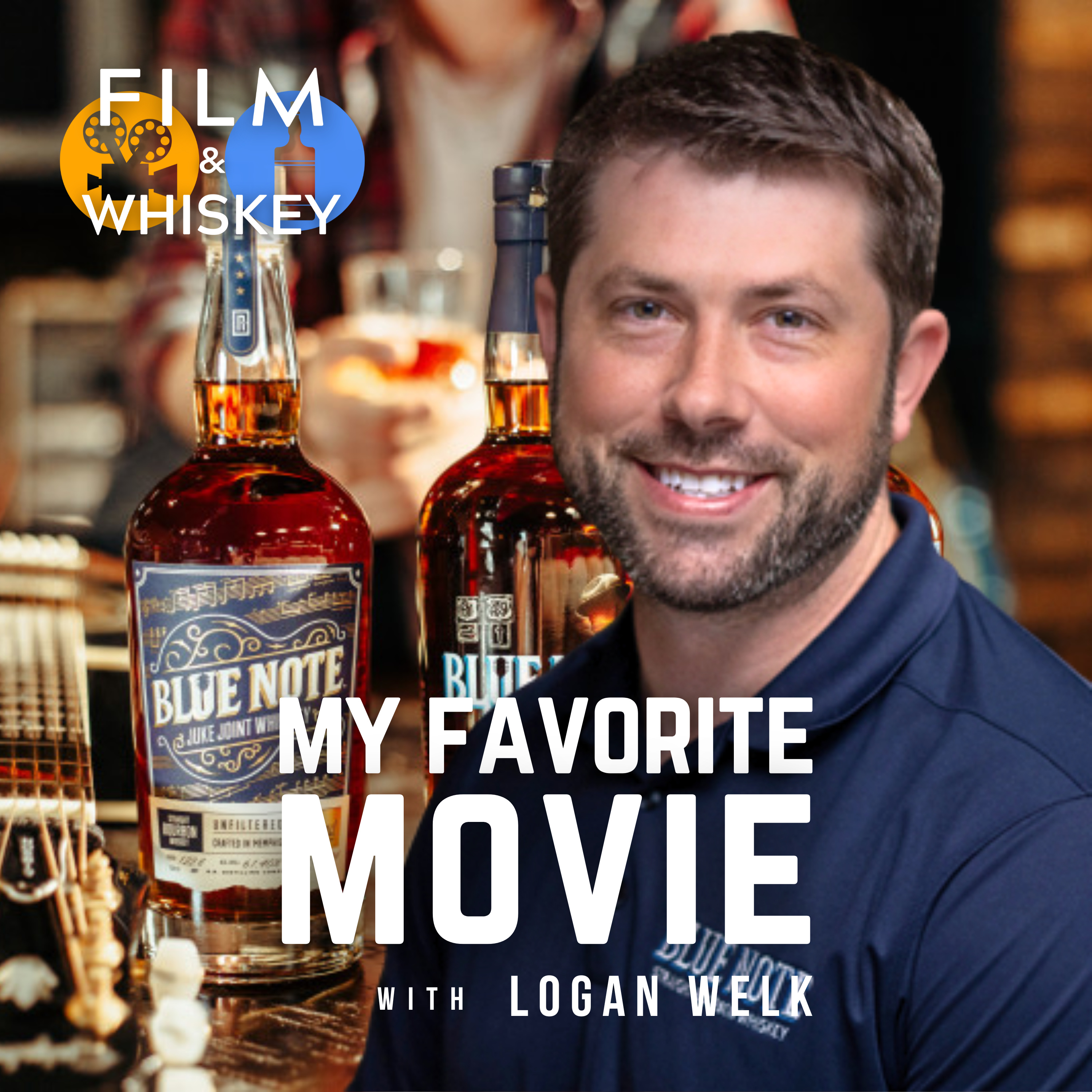
In this special edition of Film & Whiskey, Bob sits down with Logan Welk, President of BR Distilling and Blue Note Bourbon, to catch up on what’s been happening with the brand since their last feature on the show in 2020. From new expressions to expanded distribution, Logan shares insider updates on Blue Note’s rise in the American whiskey scene.
But the conversation doesn’t stop at bourbon. Logan also joins us for our recurring segment, My Favorite Movie, where we ask guests to choose a film that has stayed with them over the years. Logan’s pick? Ron Howard’s space-race thriller, Apollo 13 (1995)—a gripping, patriotic, and emotionally charged retelling of NASA’s most famous near-disaster. We discuss the film’s realism, performances by Tom Hanks and Ed Harris, and why it still resonates nearly three decades later.
Film & Whiskey Instagram
Film & Whiskey Twitter
Email us!
For more episodes and engaging content, visit Film & Whiskey's website at www.filmwhiskey.com.
0:00 On today's film and whiskey, we're bringing back on a brand we haven't talked to or about in five years. That's Blue Note bourbon. They're doing some exciting things and we have their fearless leader, Logan Welk on hand to talk about all of it. That's all ahead on Film and whiskey. Well, hey there everybody, welcome into the Film and Whiskey podcast. I'm Bob Book and I am flying solo today.
0:42 Brad G, my Co host, lover of movies, lover of whiskey, apparently lover of getting a new job. He is off in Colorado. He got flown out to Colorado for his orientation this week. I'm really proud of Brad for getting himself a new job. I'm not proud of Brad for leaving me holding the bag here, man. I, I have to carry his weight all the time. And here I am once again, flying solo. But in order to get into this episode, I need somebody to talk to. You guys know I can't just talk to a wall for 30 minutes at a time. And so we decided it's time for an interview. It's time for a bonus episode interview. And it's time for the return of a series that we haven't done on a while on this podcast that's called my favorite movie.
1:23 Today, we're going to be highlighting a brand that Brad and I tried five years ago on this podcast, April of 2020. We loved it then. We've heard even better things about it now. So we're bringing back on Blue Note Bourbon and especially their fearless leader, Logan Welk. Logan, welcome into film and whiskey Man. Thank you for having me, man. Going back April 2020, it's there's been a lot that's changed since then. You're telling me, man, we had just entered lockdown. We had no idea how long it was going to last. And Brad and I were only about a year into the podcast at that time. And we we thought, let's do something fun while we're in this short lockdown phase that we're going to be in. And so we did this series where we were watching purposely bad movies and pairing them with whiskeys.
2:07 Not bad whiskeys, but basically it was like, let's try to find the best whiskey we can to bail us out of how bad this movie is. And I don't know if you remember, but just before then, it was like the end of 2019, they came out with the movie version of the musical Cats. Oh gosh, yes. So you guys have the. I'm a big Taylor Swift fan. I know she had an unfortunate role in that movie. You guys have the distinction of being paired up with cats, so I'm doing what I can now here five years later to rectify that and to bring you back into a positive light. Logan. Wow. Wow, that's rough. I know, man. So I will say, I have heard through the Grapevine that you guys, I don't want to say that you've reformulated your product since then, but that you've revisited this line of products.
2:56 And we're specifically looking at at least one product that we tried before and that's your Juke joint, which is kind of your flagship bourbon. Then we're also looking at the Crossroads and your Blue Note Rye, which I haven't had either one of before. I'm really excited about those two. Right. Yeah, I know. I mean, from the 2019-2020 period, really everything you're tasting today is going to be completely different. I think it was really 2020 into 2021 that a lot of what existed I started to launch, but a lot of the markets back then were used to a lot of the Diageo juice in the products. And now everything that we've been doing since 2017 from a distillation perspective is with Green River and now with Bardstown acquisition of them, Bardstown, Green River across the board.
3:42 But yeah, the the first one that you'll taste through as part of our, we push it as like our everyday sipper. It's the Blue Note juice joint, just 93 proof, good product, and we're lucky enough to be in the the rarefied class of platinum winners at San Francisco, which if you're not familiar is 3 consecutive double gold years, which like it's not an exaggeration. Everybody strives for that award and very few get it. We've gotten two of the six in recent history so well, that's a cricket for for a company that's only been around in in the bourbon scape since 2018, we're certainly proud of what this product stands for.
4:27 Well, and I think that it's sometimes counterintuitive. You know, people think that when you're getting awards from bodies like San Francisco, you're probably submitting like a hazmat level single barrel. I think having tasted as many whiskeys as we have on this podcast now, I think it's probably harder to not only earn a double gold with a lower proof whiskey, but to make it as consistently good and winning three years in a row, 93 proof. Honestly, I do think that's that's more of an accomplishment and more of a feat. Yeah, no, I mean it, it really is hard. And when you look at it, it's OK. It's 93 proof. So you've got people's profiles that are have really, I would say elevated to a lot of Cast Ring products recently. But it's the consistency of batch after batch after batch. So I mean, for us, there's 20 plus different batches between that first bottle that was submitted in one year and the other bottles later on.
5:22 And you're going to see variability in the products that go into it. But ultimately it comes down to us and our skill of blending and proofing out the products to have consistent quality in the in the bottle each time. And I'm with you. It's it's really cool to be able to point to like, oh, you had an incredible single barrel like in I think it was 2022. We had top 7W in the year from Whiskey Advocate, but it was a single barrel cast ring product, which is cool but a lot of times that's the one off uniqueness of that item. And to have it in a in a bottle you can go grab off the shelf anywhere anytime for 30 bucks in most markets. That that's a pretty rare achievement. A. 100% you know, And I think that people get mad at us because we're constantly beating the drum of small batches versus single barrels, especially because kind of like our, our thing that we hang our hat on is when we're reviewing the whiskey, we'll look at it from 5 categories. In the first four are kind of your standard, you know, nose taste, finish and balance.
6:26 And then that fifth one is value. We really do value the consumer and the hard earned dollars that people are paying. And sometimes we've had really good whiskeys that are just asking too much and the their SRP is set way, way too high. And so I think first of all, you guys do it right because I think this is priced beautifully. But I want to get back to the batching idea. So like when you guys are batching, what's your kind of like North Star? How many, how many barrels are you looking for in a batch? Does it vary from batch to batch? Is it more about hitting the same flavor profile? Like what is your? What's your guiding principles there? Yeah. I mean, so, well ultimately the, the batch sizes do vary from time to time. Some of that is candidly demand driven.
7:09 So like if we're going into busier periods or slower periods, we'll we'll adjust the blend off of that. But also whether it's younger product, older product, those ratios are ultimately doing on a batch by batch basis. Now it's like most of what we're doing right now, particularly for Juke Joint, isn't that 40 to 60 barrel range, which compared to like a big producer is still extremely small compared to extremely small producer is kind of big. For us, it works out really well. And for us it's also limited by some of the equipment we have and what we inherited. So for people that don't know is the company's licensure goes back to 2014, but back then it was a vodka distillery and we inherited some of their mash tons and blending tanks. And for us it was a little over 3000 gallon tank. So that 3000 gallon tank we modified and we're using for our blending tank.
8:02 Well that drives some of the batch sizes that we do. So it's kind of cool to see how some of those things have have forced us down past that otherwise we maybe wouldn't have chosen on our own. I love the notes I'm getting on this man. It's it's really deep and there's a ton of leather on here. It's got a nice dusty, peppery quality to it, not overly sweet. And I'm wondering like, you know, obviously you guys are branding everything with the the Blues and the location and how does the flavor profile fit into your branding of like this is the Blues, this is Memphis. Do you know what I mean? Yeah, so it, it's really interesting too is it's Memphis, it's Blues. But I think what's really important is the environment itself.
8:46 Like obviously you can go down the the imagery of Beale Street, all the BBQ things like that. And if you read into it, maybe you can pull out some of those flavor notes. But I think for us, what's important coming from Memphis is what the environment's actually doing and seeing how those influences are actually coming through in the end product. So for us, there's you could either market it or you can have reality. We we have the benefit of both. It's not marking to say we have some of the purest water on planet Earth in Memphis. It's just a fact we do. The Sands aquifer provides us incredible water for our proofing. And then on top of that, the aging climate, which is such an an important factor in in what you're ultimately tasting is so much more active aging in Memphis compared to leaving a product say in Kentucky.
9:37 So a good example is we're aging three to four months per year more in Memphis than Kentucky. You compound that year after year. And because they're higher humidity, you're actually getting more oak interaction because the pressure builds more. And all of that is influencing, ultimately, what's coming through in the glass. So, so let me ask you this then as a result, is there a temptation to say like, OK, we know that this is extracting for longer, so why don't we bottle this at two years instead of three years? Or is it like, is that temptation there? Or is it very much like, no, we'd rather release a three or a four year where you're getting five to seven years worth of maturation out of it? Yeah.
10:20 So it's it's a combination is ultimately you're getting that accelerated maturation, but it's you want to have a time cycle to hit a price point as well. And it's OK. We'll have other stuff that's got more age on it. So you'll come back out with nine year plus products and those will be closer, maybe they're closer to 15 year old tasting because of it. But but really it's that hard middle ground of price accessibility, age. And then it's also you've got an ideal state in the reality is we have access at least when the brands came out to more 3 year old than we did 6 year old. So it was originally launched as a three-year old and you kind of develop a profile that you blend to based off of that. But yeah, it's interesting how much more four and five year old is going into some of these products that went in, in the early days.
11:13 Listen, man, I, I got to be honest with you. I love talking with a guy that just says, hey, man, it was out of necessity. We had access to three-year old barrels. I'm not going to make up a story, you know? And that's The thing is it's if the product is good, I think people would honestly rather hear the truth than be like, well, I read that my great great grandpa held it for three years in a day and after that is why he decided to dump. It's like, no, it's there were necessities of a small business and I ultimately those things drove a lot of the product decisions and we've certainly made a lot of modifications along the way that have improved on it. But some of those core things in the early days are are going to live on in these products forever. All right, tell me about this crossroads, because this is not one that we've had on the podcast before. I just stuck my nose in the glass and my socks were knocked off because man, this thing is just like it's peanut brittle and pumpkin pie and the notes on this are so wildly different from the notes on the Juke joint. And identical bourbon going into it. Really.
12:16 Yep, same. Distillate. That's crazy. Exact same Nashville going into approximately the same age range. You're you're jumping up to 100 proof. The difference is the secondary finish of French oak on this. So similar to Makers 46, our process is a little bit different. The time we do it the the climate control is, is also different. And also the, the French oak that we're using is extremely expensive French oak that we work with a subsidiary of space I'd out of out of one of their French subsidiaries to work with. And when we first launched this back in say 2020-2021, we were the largest consumer of French oak staves outside of the wine industry.
12:59 So it was, it was kind of cool for us to literally be a a main R&D site for space side when they're they're setting up a lot of this. So when it comes to these French oaks that this is French Oaks staves, this is finished with what's the time that those are are, you know, extracting into this? Yeah. So, so this is the the the benefit of staves versus your traditional French oak barrel, which we also do stuff in French oak barrels, but staves are dramatically faster. So your extraction is measured in weeks to months as opposed to years. And for us, it is modified depending on the time of the year, humidity, temperature.
13:40 So if it's colder, it, it takes longer, if it's faster, it's shorter, different amounts of agitation, oxygenation along the way. And for us, that's why it's, it's a repeatable process, but it's a repeatable process that you have to stay on top of and adjust accordingly. All right, I want to, I don't mean to be flying through these so much, but I'm so enjoying both of these. I want to get to the rye now. The last time we featured BR Distilling on the podcast, we had the Riverset Rye, which is another label that you guys have, and now you've released a rye under the Blue Note banner. Tell me a little bit about that decision to have two separate rye labels. Yes. Well, so the decision early on was to have multiple brands under one house.
14:25 While in theory it sounds great, it also creates a lot of confusion on the shelf. And if you don't have $20 million in marketing for each brand, it also creates a very complicated and strapped marketing budget. So the decision was made really a couple of years ago and it really went into effect last year was to wind down Riverside, really make it distillery or limited time only more R&D focused and then transition everything that's we saw success with under Blue Note. So while Riverset had success in certain markets, it never really had the tie into Blue Note. And once we pulled the the rye underneath Blue Note, we saw a lot more opportunities open up to us.
15:09 So is it, is it the same distillate just under a new label or is did you guys kind of tweak it a bit? Yeah. So the the rye you had in the past, depending on which batch, and this is where being candid I think is helpful. If you had one of the early batches of the old tall skinny Riverset bottles, I'm sorry, some of those were very, very bad. Couple were OK, but some of them really were not. So yeah, we transitioned everything for the last few years, a river set and also what's gone into Blue Note is all Green River distillate. So it's a 95.5 Nashville. But I think people are blown away once they taste it. If they're used to, especially an Indiana rye, like an MGP rye base and they taste this, it's going to be completely different. You're going to pick up a whole lot more fruity bourbon esque notes than your traditional rice spice. Like the spiciness is there, but those earthy notes and the grassy notes aren't.
16:08 And we found that bartenders really appreciate the the fact that, OK, yeah, you're at 93 proof, It's a rye. So they're already used to working with something like that. But it having those very different notes allows them to come up with some really interesting cocktails that they they normally wouldn't be able to. All right, now I got to ask you because you're you're leaning into the cocktail world. You're making yourself a Manhattan. Are you going bourbon or rye? Rye. You're going rye. Yep. What's your favorite cocktail to make with this Blue Note Rye? Whiskey Sour. Oh nice. Yep. Are you? Are you a egg white guy? Or no. Egg white guy, yes. I knew I liked you. I knew I liked you. Very traditional and it is so hard to find places that will actually make a whiskey sour properly there. There's only a couple in town and it it's sad when they try to do their version of a premix and yeah, it's, it's usually pretty, pretty awful.
17:05 Well, yeah, and then they won't do the egg white because they're afraid they're going to get sued by someone. You'll see people use aquafaba sometimes. But listen, man, it's just not the same. It's really not. You know that you're drinking chickpea water at the end. Of the day exactly. All right, I flew through that because I'm excited to talk about your favorite movie. We're going to transition to that. I'll let you get off the the elevator pitch that you you're so used to making about blue. Note once or twice. We'll get into something that you've probably never talked about on a podcast before. We have not. I have not cleared your favorite movie with anybody. I don't even know what it is yet. You're catching me off guard. So why don't you introduce our audience to your favorite film, Logan? So I think probably my favorite movie of all time would go back to Apollo 13.
17:50 It's just one that always was was driven to as a kid. There's I would say aspirations of being an astronaut at some point doing space camp in grade school. But whether it's cinematography, music, all of it pulled together. And then I think Tom Hanks still didn't get an award from Apollo 13. He he released Apollo 13 and the first Toy Story in the same year and my guy got no recognition for it. Yeah. We reviewed Apollo 13 on the show a few seasons back, and I'm so glad you brought it up because it let me get up on my soapbox again a little bit. But I don't think Ron Howard gets enough credit as a director. And and listen, to be fair, like he's made some stinkers. Like, no, no one's denying that.
18:37 But you watch a movie like Apollo 13, and it's the kind of directing and movie making that doesn't call attention to itself at all. But it is so tightly constructed, the script is so good, and it's just like, there's no fad on that thing. It's a perfect movie. Yeah, yeah, I agree. It's it makes me want to go back and watch me and I remember when they finally re released it in the IMAX version. Did you go see it? Yes. They did the same thing. One of my favorite movies is ET. Like I just, I love ET so much and they released that in IMAX a couple years ago for like the 40th anniversary. And listen, as the world's biggest ET guy, there's no reason for that movie to be in IMAX. But you better believe that I paid $18.00 or whatever it was to go sit front and Center for it. What was it?
19:26 ET is where they had to edit out all of the guns and replace them with walkie talkies. Yeah. And then and then they got so much backlash that they put the guns back in. Oh, yeah. All right, let's, let's keep talking Apollo 13, though obviously you've got the famous line. You know, Houston, we have a problem. Aside from that, favorite scenes, favorite moments in the movie. You know, I'm sure that if it's your favorite movie, you have to have watched it 1015 times at this point. Yeah. I mean, I, I think that that the big one is obviously at the end where they're waiting for re entry. And it's just the waiting, the waiting, the waiting, like people going in, they know that they all survive, but it's still just that how long it really was.
20:12 I don't think people realized how long of an overshoot it was on that re entry window. I mean, it's there's, there's always the the small scenes too where where his son is I think in in his bedroom and he's like in the little like space blanket above and trying to explain like what happened with the door. It's like, okay, Yep. Listen, once you have kids too, you know, that scene is, is almost played for laughs because when she goes in to tell the kid there's been a problem on daddy's spaceship, something broke. And then he says, was it the door? It's it's a punch line. But now that I'm a parent too, I I watch that scene and I'm like in immediate tears, dude.
20:56 Like it, it, it gets you. Yeah. We do a thing on every episode. When we review a movie. At the end we we have a segment called Let's make it a Double and we pick a movie to pair up with the movie of the day to make a double feature. OK. I've never done this with a guest before, but I love Apollo 13 so much that I want people to go see it. You had to pick a second movie to just do like a four hour movie marathon with. What'd you do it with? American gangster. Explain yourself What? I don't really know if there's an explanation behind that one.
21:38 I think, well, what's weird is it's it's a really interesting take on marketing fundamentals. I can think about it. It's an identical product. He's trying to sell an identical product. You call it Blue Magic and it's ultimately worth more and it's like it. It's kind of some interesting stuff like that, but it's also so much, I think intriguing about that movie that like the fact that you can have so much criminal activity, but nobody looks at the guy in the really nice penthouse. Like that type of just scenario. I think it's just a different take on crime movies than what most people are used to that I just found like so many different aspects of that really cool. I was going to say this about Apollo 13, but it's true about American Gangster too.
22:25 The older I get, the more I realize that it's like this in the NBA or wherever you're looking as well. But you know, your superstars are always going to carry the day. But it's your bench players that really make a championship team, you know? And in Apollo 13, when you get down even past the Ed Harris's of the world, you don't realize how good you, we had it when Bill Paxton was still around, you know? And it's the same thing with American Gangster. You've got, I forget all the time that Josh Brolin is in that movie. Idris Elba's in it for a little bit until Denzel shoots him in the head. You know, it's just talk about really stacked casts and I think movies like that. You even had TI the rapper in it. Yeah.
23:05 You certainly did man. If I'm going to make Apollo 13 a double with anything, they came out with a documentary a few years ago called Apollo 11 where they had fixed 70mm cameras to the hull of the actual Apollo 11 when it happened and NASA held the footage for 50 years and then they released it as a documentary and they restored all the footage and it is. It was freaking mind blowing, dude. I went to see it the same night that I saw Avengers end game and I walked out of end game and I was like, that wasn't as good as Apollo 11. It was really good. Have you seen it yet? No, I haven't I I definitely need to watch that one. Oh yeah, it's a it's a good one, man. I assume you've seen Fly Me to the Moon? I I did see fly me to the moon.
23:53 Unfortunately that one didn't quite work for me. Similar story though, yeah. All right, Logan, before we let you go today, tell us what's next for Blue Note. What exciting developments do you guys have on hand for 2025? Yep, so. For for those that aren't familiar or weren't lucky enough, we'll have larger releases of the Blue Note Honey Rye, honey bourbon this year. So hopefully people can actually get their hands on it. We've got additional release of our limited time offering special reserve that's starting to hit markets now and that's sort of a a crazy R&D experiment that makes it to market of a bunch of different things blended together that that comes out to be interesting and different each year.
24:37 We should have some cast drink versions of Crossroads available at some time in the market. But then for us it's, it's really focusing on the, the challenges that are getting thrown away right now. Like it's, it's no surprise that whiskey alcohol consumption as a whole is not what it was compared to two years ago. And I think anybody that thought it was going to be was misguided. But it's just adjusting to those realities, really focusing on, on our sales team, focusing on the right markets. And for, for us, we're, we're lucky enough that we've got a lot of room to grow and our price points were ones that consumers weren't turned off by not having that value in the bottle. And I think we're we're starting to take advantage of that and really going to continue to play on that, providing super high quality product and available price point to consumers across the board.
25:29 Yeah, when I look at Blue Note, I'm I'm really encouraged, man. I mean, I think you guys are doing it right when it comes to price point. And that's a huge thing just on it's on itself. But in addition to that, you said something a while back that was really encouraging to me about the ability to batch according to scale or according to demand. And I think what we've seen so often and then kind of disappointingly is these companies come out and kind of overshoot and, and think that they're going to become a player in the industry by overproducing and they extend themselves too much. And now we're seeing, you know, it's just today we had the the Brown Foreman Cooperage announced it's it's closing. The industry is going to get hit in these coming years and it's going to take some really creative and frankly inventive ways of getting around some of these things in the industry.
26:14 And it seems like you guys have positioned yourselves well for that. Yeah. And and I think one of the things too is it's what is the data actually telling us? Because if you look at the pandemic, OK, was consumption actually as high as it was? Some people it was. Others it was purchasing was extremely high. And that's where I'm not so sure that the negative news is as bad as people think it is. Like, obviously purchasing is down, but it's reverting to, I think a whole lot more normal and healthier level. And if consumption isn't down anywhere near as they think it is, I think it will level off sooner than later.
26:55 But I think so much of it is there was literally just years to decades of product purchased in a 2 year period. And to think that that was going to somehow never show up in the industry, I think was really short sighted. And and I think that's too where us being a product that's actually consumed versus set on a back shelf, we haven't had those same sort of negative impacts that some brands really have experienced. And it's it's not by luck. There were a lot of very hard and costly decisions made on our side to have a price point of a early stage company. There's literally millions of dollars lost on an annual basis to support that to consumers. But it's a decision we made for the long run. And yeah, it would have been easy to sell a three-year old product for $100 a bottle during the pandemic. People were buying it.
27:49 But those days don't exist anymore. And I think long run, we'll, we'll adapt the market, we'll adapt and we'll get through this. But yeah, it's going to be some interesting, challenging times for the next couple of years. Logan, I can see now why you picked Apollo 13 as your movie, a movie about NASA scientists doing as much as they can with limited resources. It absolutely fits the theme of our talk today. Man. I'm I'm so glad you came on with us today, Logan. Well, thank you so much, man. I appreciate. It thank you for having me. We'll be back on Tuesday with another regularly scheduled episode, but in until then, I'm Bob Book and we'll see you next time.
