Apple Podcasts

 Spotify

 Castro

 RSS Feed

 Goodpods
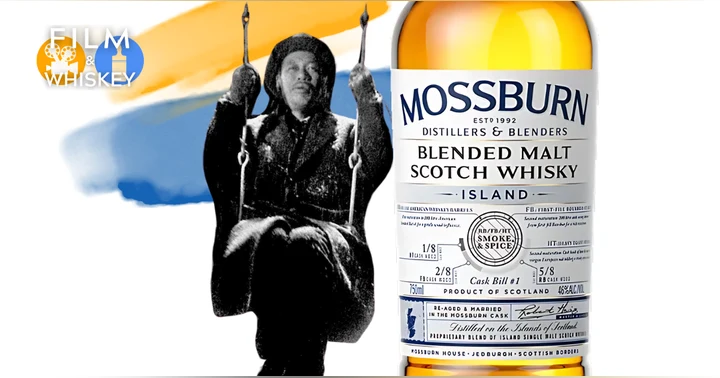
Ikiru / Mossburn Island Blended Malt Scotch

In this exciting episode of Film & Whiskey, Bob, Brad, and special guest Zach Johnston, the UPROXX Drinks editor, dive deep into the world of Akira Kurosawa's 1952 drama, Ikiru. With its recent 2022 remake titled "LIVING" starring Bill Nighy, the hosts ponder whether this could be the game-changing Kurosawa film for Brad. The trio then shifts gears to indulge their senses with Mossburn Island Blended Malt Scotch, a whisky imbued with a distinct peat smoke essence.
Timestamps:
(0:00) Intro
(12:55) Brad Explains
(15:00) Performances, Themes
(37:15) Mossburn Island Blended Malt Scotch Whisky Review
(45:00) Two Facts and a Falsehood
(50:50) Final Analysis
(1:04:20) Let's Make it a Double and Final Scores
Akira Kurosawa, a name synonymous with Japanese cinema, graced the film industry with his classic, "Ikiru" in 1952. This film, a poignant exploration of life, death, and the human condition, stands as a testament to Kurosawa's unparalleled storytelling and cinematography prowess. In "Ikiru", the narrative weaves through intricate character development, presenting a plot that resonates across generations. The movie's recent 2022 adaptation, "LIVING", brings this timeless tale to a new audience, begging the question - will it be enough to convert the skeptical Brad into a Kurosawa aficionado?
Diving into the Mossburn Island's Blended Malt Scotch review, the hosts unravel the layers of this whisky. With a flavor profile rich in peat smoke, it offers a tasting experience that sparks lively discussions, notes, and even some movie-whiskey pairing debates.
As the episode progresses, the hosts engage in a spirited game of "Two Facts and a Falsehood", challenging listeners to discern fact from fiction. The episode concludes with a final analysis on the essence of "Ikiru", followed by the much-anticipated segment, "Let's Make it a Double and Final Scores".
For fans of classic films and whiskey enthusiasts alike, this episode offers a harmonious blend of movie discussion and whiskey tasting, wrapped up in the warm camaraderie of the hosts. Whether you're here for insights into the world of Akira Kurosawa, the nuanced notes of Mossburn Island's Blended Malt Scotch, or both - you're in for a treat.
Film & Whiskey Podcast. New episodes every Tuesday.
Theme music: "New Shoes" by Blue Wednesday
Film & Whiskey Instagram
Film & Whiskey Facebook
Film & Whiskey Twitter
Email us!
Join our Discord server!
For more episodes and engaging content, visit Film & Whiskey's website at www.filmwhiskey.com.
--- Send in a voice message: https://podcasters.spotify.com/pod/show/filmwhiskey/message Support this podcast: https://podcasters.spotify.com/pod/show/filmwhiskey/support
0:00 In 1952, director Akira Kurosawa and star Takashi Shimura gave the world a poignant drama about a man whose death sentence brings him to life. In 2023 we returned to Scotland to try a heavily peated blended malt. The film is Akiru. The whiskey is Moss Byrne Island, and we'll review them both. This is the. Film and Whiskey Podcast.
0:44 Welcome to the Film and Whiskey Podcast, where each week we review a classic movie and a glass of whiskey. I'm Bob Book. I'm Brad G and Brad. Finally, perhaps mercifully, we are finishing out our Akira Kurosawa miniseries with 1950 Two's Ikiru, which translates roughly to To Live Brad. This has been a true roller coaster of emotions for you and I throughout these five weeks. Yeah, it's been very hard on me specifically. I know that, like, my heart was so anticipatory towards this, this, you know, little segment of five films. And Bob, I I feel like you've just been cool as a cucumber.
1:27 Nothing's bothered you about anything that I've said. You know, I I practice mindfulness and deep breathing and I I just, I make it through. Yeah, I'm proud of you, man. I do love it when we say stuff like it's been really hard on us because our job is literally to watch movies and then talk about what we watched. Like, it's this is not difficult work, folks. But you know, movies are one of those things. And I know that I'm saying something incredibly obvious here, but. It's not until you really butt heads with somebody over a movie that you either really liked or really disliked that you realize just how much of your emotions can be tied up in something, you know? The other day we're recording this Week and a Half before it comes out. My wife went to go see Barbie, a movie that I had seen a week prior to her seeing it. She went out with her sisters, loved it, came home and told me all about it.
2:16 And I wanted to be supportive and I wanted to be nice. But she knew that I did not like Barbie very much, a movie I was very much looking forward to. And we were so at odds that I started to kind of pick up that little bit of defensiveness in her voice when she was like, you know, I hear all your criticisms, but and it just kind of left like a dot, dot, dot. And I knew that behind that dot dot dot was just like. But you're a man, so I'm not listening to your opinion on this. So I might employ that one today, Brad. I might just pull out. Like, yeah, well, you're just a man. So I'm not listening to your opinion on Ikiru. Yes, Clearly the delineating factor between your opinion and mine is that I am a man, Bob. I speak for the women of the world, Brad. That's what.
3:03 That's what they come to this podcast for. That's funny, because there's barely any women in this film. That's. That's true. It's pretty pretty much a recurring theme in Kurosawa. Well anyway, Brad, I have stacked the deck today, hopefully in my favor because we brought on a guest, a guest that had free reign to pick any movie he wanted to talk about this season and he picked Ikiru. So something tells me that he at least likes this movie. Here's the thing, Bob. You you call him a guest. At this point, this man is basically family. He is a brother. This man is a legend in the film and whiskey world. He sure is. This guy has given us our our first platform on the Internet to talk about whiskey.
3:44 He's been hooking us up left and right, meeting folks in the whiskey world. We're talking about Zach Johnston, Spirits editor for Up Rocks. Zach, how are you doing today? I am doing very well and I'm very flattered for all those words. My face is red blushing. Thank you. Underneath that absolutely regal looking beard, just gorgeous beard. I mean, seriously, the shape on that thing. Yeah, it's it's coming to its own recently and I'm I'm I'm liking where it is and I'm trying to figure out how to keep it here without it going all lake. Back country Bushy. Well Zach, before I get myself into any more hot water talking about Barbie and or the women of the world, I want to throw over to you. Why did you pick Ikiru?
4:26 Of all the movies on the list for the season, and even among the Kurosawa films, what was it about this film that stuck out to you as something you wanted to discuss? I think that like at its core this is a film that has a has a massive resonance. I mean, you know, Rush Mom 7 Samurai are like obviously resonant in you know, different ways, but this has a sort of a sly resonance coming into. You know, that sort of awakening that a protagonist gets in a film or a book or a TV show, like where they, like, tried to do that last one good thing. And it's a little more subtle than say, you know, send the samurai to Hateful 8 or with Star Wars in between. It's more like, you know, it brings in the ingenue character that became what was already popular in Hollywood but became even more popular.
5:13 You know, the young girl kind of creating the awakening for an old dying man. But also this is, it's such a story that goes beyond Kurosal because I think a lot of people like, oh, Kurosal did this, Kurosal did that and blah, blah, blah. He's the progenator of all this stuff. And this film is, you know, it's an adaptation of, a book of, an adaptation of. And like he's doing things that are very obvious in, like already in Soviet and German, in American cinema from the 20s. And it it feels more like a midpoint for Kurosal, where he's reflecting a bit more than. Maybe doing breaking new ground and it feels, I mean Kevin, of course, the story about someone reflecting on his life, it makes sense for him to be a little more reflective in his artistry, but it just isn't to me.
6:02 It's an outlier from the others in such a distinct way. For sure, especially coming in the middle of the run that he was having, right? So like Rashomon comes out in 1950. He makes an adaptation of a Dostoevsky novel in 1951, The Idiot. And then this movie comes out and then and then after this one, even though this was a huge success and a big, big hit, he's like, all right, I'm going to go back to that samurai well and then he makes 7 samurai and that kind of sets him on his path for the next 6-7 years. But you know, Brad and I have been watching these movies kind of grouped into the samurai and swordplay epics and then the more modern ones.
6:43 And it's easy to do that because he's operating in two completely different realms of storytelling. But within his filmography, it really does kind of feel like one samurai movie to one modern movie back and forth for a really long time. And it's just a fascinating filmography. Yeah. And also this is for me very interesting place in like the timeline of Japan and his life. It's 1952. So that's the year that the United States ends the occupation of mainland, I guess the main islands of Japan, and just go back to Okinawa. And so there's this huge transfer of power in the bureaucracy of, you know, the Japanese people getting their country back, so to speak, after, you know, seven years of occupation.
7:27 There's a lot of, you know, a lot of those things hinted throughouts like we'll get into when we talk about the film, but you know, like when they're walking through the alley of prostitutes, I mean, that's a. Direct Line to something that was created for American GIS. You know, the way that there's different reactions to it from the artists and the bureaucrat and the people and etcetera. And it's sort of a it's a fascinating sort of time capsule, I think as well. Brad, before we move into Brad explains and start talking about this movie in earnest. I have been to the theater to see the movie Oppenheimer three times since it came out. I was not intimating spending 9 hours watching Oppenheimer, but here we are. I do think it is one of Christopher Nolan's very best films.
8:09 I think it could be called a masterpiece. And with Nolan on the brain so much lately, for me, I really can't think of a better time to be doing these Kurosawa movies because so much of Kurosawa's, especially the 1950s films that we've been watching have kind of a fractured time frame and narrative, like chronology. And it really is reminiscent of the four or five Nolan films we watched earlier this season. Like Memento really does owe a debt of gratitude to movies like this and to Rashomon. And I guess what I'm what I'd like to hear you talk about having now seen all five of these movies. Brad, what do you make of that sort of narrative decision? And I mean especially coming what like 50-60 years before somebody like Nolan, do you see it as kind of pioneering in the way that it's done?
9:03 I I'm not sure if I could say it's pioneering just in the sense that I don't know film history well enough to know if this was a common style before Kurosawa or or you know if if as you were saying, Zach, other places in the world we're doing things similar to this. So I I don't know if it's pioneering. At the very least it's way earlier. I think you kind of have to just think like, all right, what other movies from 1952 have we watched on this podcast? Or like, they're about to know? And then you kind of do realize this. This stands out for sure, yeah. I mean, I think about Double Indemnity. You know, it's not a ton of time travel, but it is a mod, you know, a present day person narrating the downfall of this, you know, investigator.
9:52 And yeah, I think there's a place where this has happened in cinema, but he definitely uses it to its full effect in his films. Yeah. And I mean a lot of this stuff is, you know, seen it earlier in Russian cinema and German cinema in the 20s, but also Soviet cinema in the late 40s and early 50s. You know, Tarkovsky and Bond, Ratchuk and you know, all those guys were doing similar stuff as well. And it's sort of. I mean, you could argue Casablanca has a fracture timeline because they keep going back and forth between Casablanca and so. But it's interesting. Like, I think we also forget that he was just a filmmaker with peers.
10:38 You know, he was going to watch Soviet films and German films and you know, he was just as susceptible to them as Spielberg and Nolan and Scorsese. And you know, all those guys are to him. Absolutely. I mean we, I think we made that point in our episode about Ron talking about just how much like German Expressionism is in that movie. It like I didn't expect to watch a movie set in feudal Japan and be thinking about like the Cabinet of Doctor Calagari, but it's it's right there in the text of the movie and Tarkovsky to to your point. So you know at this point we're just talking past Brad because I don't know if any of these names mean anything to Brad. So let's put the spotlight. Well, I mean, it's how many, how many Tarkovsky films have we talked about Brad like?
11:20 I'm not holding it against you. I'm just saying we've got a long way to go in catching up on world cinema after after the season where we watched Secondhand Lions, you know? Yeah. How about this guy's go and watch all like 11 hours of Sergey on Ratchooks war in peace. Yeah. Rewatch the Napoleon trailer with Ridley Scott. Oh, it's like shot for shot, man. There are literally exacts of the same shots. From the 60s, in Soviet cinema, in that movie or in that? Brad, what are your thoughts? I'm watching an 11 hour movie. I was about to say 11 hours. That is those minus. Clap that snap. Just a snap.
12:01 Yeah, if you wanted to do an entire, like, we can have 32 episodes on that one movie. Sure, yeah. Let's do a whole season on War and Peace. I want to do a Patreon bonus episode where it's just our like DVD commentary on the on watching these 11 hours straight through that. Could that could be a good Patreon goal If we got X amount of Patreons we watch War and Peace. Saw that film in the cinema on a 70 millimeter projection with 5.9 surround sound and we had three breaks and it was. One of the most enlightening and beautiful cinema cinematic experiences of my life, I will say. Good for you man.
12:44 I mean, like God bless, go in peace. But but I don't. I don't know if even I could sit through an 11 hour movie long breaks. So there you go. All right, Brad, it is time for us to talk about this movie, Ikiru. And to do that, we need to throw over to our first segment, which we call, Brad explains. Brad's going to give us the movie plots with only 60 seconds ticking on the clock, so let's go ahead and do your take with this little segment that we call. Brad explains. Brad Explains is the part of the podcast where Brad breaks down the plot of the movie that he has just seen, often for the first time. This is one of Brad's first time watches, as all the Kurosawa films are. Brad, you have 60 seconds on the clock to spoil the heck out of this movie. I think you can do it because it's a it's a pretty simple tale, but we shall see.
13:33 Brad, Are you ready? I think I am, Robert. And Go Akiru is a film about Kanji. Watanabe, who is a lifelong bureaucrat who has worked in the public affairs division for 30 plus years, is now the head of the division and he finds out that he has stomach cancer and is going to die soon. In a search for the meaning of life, he meets a drunken author who takes him out for a night on the town finds that it does not bring him any meaning or happiness, but rather an intense and profound sadness by the end of the evening. He then tries to become close friends with a young girl who has a vibrant life, realizes that he cannot vampirically suck the life out of her and into himself, and finally realizes that the meaning of life is to build something beautiful for others.
14:29 So he throws himself in, back into his work as a public servant and has a park built for a local area of whatever I I guess I don't know what city they're in, Bob. He has a yeah, he has a park built and it covers up a sewage problem and he's pretty awesome. The End. The End. Ikiru baby Ikiru. They should have called the movie Ikiru Baby. It would have been a lot edgier. You know Ikiru comma baby. All right, let's dive into talking about the movie. And I think the place that I want to start is the start of the film itself, because the movie opens. In a way that none of our Kurosawa films have opened with a narrator and the narrator is doing voiceover over a picture of an X-ray and it looks real bad right from the get go.
15:19 You I don't know how to read an X-ray very well Brad, but that one did not look good bro. The opening of this is like the saddest alternate universe version of It's a Wonderful. That's exactly what I wanted to say. Yeah. I think this movie reminds me of two American films, and I have no idea to what extent Kurosawa did or did not take inspiration from these films. But it really is like the more grounded Japanese version of It's a Wonderful Life, where you are immediately thrust upon with this kind of objective. You know, God's eye narrator, who is just commenting on the fact that, hey, our narrator will soon be dead And here is his stomach cancer growing in his stomach. And you know, it cuts to a shot of our protagonist working at his desk looking miserable.
16:11 And he just he really just roasts him, man. He goes in on him. He's like, this guy has been dead for 20 years. Look at him. And I wish that that Takashi Shimura had a chance to like rebut the charges against him, but honestly, they're pretty factual. Yeah, it's it's a really brutal opening. And I I think that's what I like most about this film is that Kurosawa has absolutely no mercy for any of his characters. Like he is brutally honest about them and shows them exactly as they are. And by the end of the film you see a a calm, peaceful happiness on his face and it's earned. And and so I think that like his honesty as a director at the start of the film helps you as the audience believe that something really happened by the end of the film. He He does lighten the load though. Like it starts off heavily because this is a a dramedy because it it starts off heavy, but then it goes right into a comedic montage.
17:13 That lasts for like 5 minutes, you know, like them going around their office and everything like go to the sanitation office, no. Go to the parks office. No you gotta go to the mayor No the mayor's cuz and it's straight up comedic like it is a it's cut comedicly, the music's comedic and you know all the way to the point of the Councilman who's just like he's laughing and how ridiculous it is. You know, and it's so he does have the balance right away telling you that it's like, yes, it's heavy, but also it's not going to only be heavy, right? A little bit of fun with this. I really love how he's able to find the balance between making the main thing the main thing, which is the story of this man and his kind of redemptive arc.
17:57 But this secondary concept of just absolutely skewering the like the idea of the German bureaucracy and or German the Japanese bureaucracy and the red tape that you have to cut through to get anything done. And I love that, you know, every once in a while he's like, it is time for me to remind the audience of how much I hate this whole process. And it does. It launches it. It's never, I mean like it. It is pointed, but it never feels mean spirited. And I think that to your point, Brad, the script does a really good job of letting those characters, these powerful people, kind of condemn themselves through their actions and words. And he doesn't have to tell you these are the bad guys.
18:40 We don't like them. It's just the the fact that they are so wrapped up in their work and the processes of their work over against helping people not live in sewage well. And the fascinating thing is like, I I feel like this movie has so many, like, mirror images. So, like the people in the city are living with sewage flowing out, you know, right next to their houses. And yet the sewage within the the City Hall is the paperwork, right? Like there's just paperwork flowing out of every single corner of every single office, to the point where everyone is buried in it.
19:20 Like, you know, one of the final scenes of the movie is the man trying to stand up the way Watanabe does, and yet he sits back down and then literally disappears. Behind into his paper, Brad, I have a question for you and it is. It is maybe the first and last sewage related question I'll ever ask you on film and whiskey. You just watched the Oscar winner Parasite for the first time in the last month. I did. What does it feel like to be exposed to so much sewage in such a short amount of time in your movie watching career, man? And all of it from Asian cinema. I think that parasite is a fascinating film and the scene where she is smoking a cigarette.
20:08 And I guess that's a more more modern film, so I won't spoil it. We only we only spoil films that we're actually talking about Bob when she's smoking that cigarette. Man, it is like chefs kiss perfection. The the correct answer to how does all the sewage feel? Was yeah, yeah, I set you up there man. I don't swear on this podcast. Bob Sure, sure you don't. Our patrons will say otherwise. All right, guys. Let's talk a little bit about Takashi Shimura, because in our first episode in this Kurosawa retrospective, I was really pushing to Shiro Methune pretty hard. And Brad made it clear very early on that he is not on, not on that wavelength, but from the getgo. We had Takashi Shimura showing up and I've said I think 3 or 4, you know, weeks in a row now.
21:01 He is Chris. I was most frequent collaborator and I really love that he is because he is so versatile. His role in Seven Samurai, we went on and on Brad about how much of A badass they made him into and this movie 2 years prior. He is so meek and downtrodden and morose and kind of a boring person for such a long stretch of the movie and I really feel like. It is stretching Shimura as an actor, but I think he just really nails this part, man. And what I love most is that when he comes alive by the end of the film, he doesn't do it in a way that Americans would expect him to.
21:42 Like, I was watching him in the mayor's office or the deputy mayor and, you know, he turns him down and then literally is like, yeah, let's just skip this proposal. It's not that good. And he sits down. He's like, so these geishas, right? And like, you expect him, you know, he's like come to life and he's going to fight for his project. And you expect him like I expected him to, like slam his fist on the desk and be like, no, you will push this through. Yet he doesn't do that. He looks him dead in the eyes like a puppy dog who's about to die. And somehow that gets the job done. And you're like, even in the midst of him coming to life, he doesn't do it in the ways that you expect.
22:27 And yet there's a joy there as he's getting things done. That is. It's just so touching and meaningful, Bro. Takashi here is one of the best performances we've ever seen on the podcast. 100% man. Yeah, he is the only one of the only reasons this film still works this far, many years from it, in that the emotion he's able to portray and just like a soft glance. Like and you can see through his soul is incredible and also makes the film very, very compelling because you can just you could almost watch it on you and just watch him and just get the idea of what's going on. Because he he does go through these wonderful things and in a like not to skip around, but when he's like out with the girl and she doesn't want to be out and he's sort of like he can't even look at her and when he finally does. You know, the realization that comes over his face and it's sort of a, you know, wordless, wonderful moment. But also, I wanted him to be in the film more, and he's not. Yeah, let's talk about that.
23:36 I mean, please finish your point, Zach, but I think there's a there's a pretty big elephant in the room in terms of the structure of this movie. I think you bringing up It's Wonderful Life is a good parallel because Capra straight up said that film is about. You know, Americans coming home and not knowing who who they are and rather killing themselves and being a shell of themselves. And so it's that whole. Like who are we now? And this film really, really sort of screams at who are we now in that white? Like, I feel like with Shamura's character, like why did we go through all this and we're getting our country back if we're not going to do something with our lives. Yeah, obviously that's. Played through the Tolstoy story. But it is that very much like, you know he he's been a shell of a man this whole time and now it's time for him to stand up and be a man.
24:21 And you see that slowly, even though the makeup is making him look more ill and sickly, he's still, you know, he's just like standing more as like a full person in each sort of successive scene as he becomes, as he goes along, as a project. And but we don't really get to see all that. Brad, One of the one of the great joys that I've had on this podcast is being able to kind of, you know, the meme of Charlie from It's Always Sunny where he has like the conspiracy theory board behind him. And then like all the to do that between filmmakers that I never would have thought to connect the dots to before. But you know, having just watched Unforgiven this season, every time I think about Unforgiven, I think it's a better movie.
25:06 Like, I'm just really in love with that movie now in a way I never was before. But I keep thinking about that with Kurosawa and how you can't really divorce a the the genres that he's working in, but be the time period that he's working in with the actual stories you see on screen. And I've been racking in my brain, you know, over and over a movie like this. It's really obvious and easy to see what he's trying to say about the country that he's living in at this time. But why does he keep going backwards to the samurai movies? Why is he doing these Shakespearean adaptations? What's he trying to say? And I really love, honestly, I keep coming down in this place of I think he's really trying to use his career to interrogate the question of what does it mean to be Japanese, especially after World War 2. Like what is, what is a Japanese person? What is Japan?
25:58 Kind of in the same way that Americans really scrambled and struggled to identify what it means to be an American in the wake of 9/11, I think that that sort of traumatic event for the Japanese really did kind of bring up these questions to wrestle with. And in a lot of ways, it's similar to what we talked about last season with David Lean and how he was constantly interrogating the idea of sort of British propriety and like, what is this BS that we all go through? I think Kurosawa is doing something similar and you can really see it in this movie. I agree, but I find it weird because it didn't happen like that in Germany. And I think part of that was like, why wasn't Lenny Reifenshall given the chance to make movies like Kurosawa was like, I thought that like, she was like only thing she got to do was like underwater diving documentaries in the 70s and and then have generations be like, well, it was the cinematographer anyway, like all these men.
26:55 Who were running the cameras, Who were doing the work? It was like, well, she was still making the films and it kind of baffles me. And I think about that a lot in the way we look at like, Italy, especially after the war, where like in the Last Crusade they're in Venice and it's just like perfect postcard. Venice in like 1938 was like, realize that was like Mussolini's like focal point of fascism, right. Venice was horrific in 1938. And it was sort of like we have this idea and I think part of that is Kirasawa sort of, I won't say getting away with, but like. Being allowed to do what he did in Japan, even though he made propaganda movies for the Empire, he was like full on, you know, You know, Japanese stepping soldier making art and propaganda.
27:44 Interesting. He still somehow got a pass and I can't find a good reason why and it came to bother. So we should cancel him now, is what you're saying? Oh well, this movie be cancelled because it has an Ongenue in it, yeah. Oh, Speaking of Speaking of the ingenue, before we get into the conversation about the narrative structure of this movie, Brad, have you seen the poster, the American poster for this movie from 1952? I don't know if I want to Bob. So it does not have Takashi Shimura on it at all. There's like black and orange, and then there's just a gigantic photo of one of the like strippers from the night out on the town and it just says like. Ikiru to live like exclamation point. And that's the only selling point, is they're trying to make this movie look salacious and scandalous.
28:29 And I can only imagine Americans going to see this movie in the theater being like, wait a minute, I think I found it. Is it? Is it like black on top and yellow on the? Bottom Yes, Yeah. Yep, that's not a poster about the movie I watched. Very interesting marketing technique here. When you think about 1952 Americans with what we knew of Japanese culture having occupied it, it probably is the most of what they knew. Yeah, this is, this is a Don Draper classic right here, this poster. All right. I think, like I said, there is an elephant in the room about the way this movie is structured. And again, we've gotten into spoilers already, but they tell you in the 1st 30 seconds of the movie that the protagonist is going to die.
29:15 And he dies midway through the movie, I'd say about, you know, an hour and 20 minutes. And so we get a full hour of the movie where the protagonist is dead. And it is kind of a jarring and shocking shift in tone and in narrative. Because then from then on, the only times you see the protagonist on screen are when someone is sharing a memory that they have of him, and it becomes a really interesting kind of like. Piercing together the final months of his life because everyone is under the impression that he did not know he had stomach cancer, even though we as the audience know he did. And not only do they establish, yes, he knew he had stomach cancer, but you finally get a complete portrait of the man painted not by some omniscient narrator, but by the people that needed most convincing all of these bureaucrats that worked with him. And I think it's a really interesting narrative choice. And I guess I'll just open the floor up to you guys. Did it work?
30:18 And if it did, why or why not? For me, I would. I prefer that part of the film just because it's better paced. It's a lot funnier because there's a lot of moments between those guys. I mean the moment where. The the policeman comes in and you see for the first time that the son and daughterinlaw have been sitting there the entire time. All these guys are getting wrong. And arguing about who this guy was to literal comedic effect is hilarious and meant to be like it's pace that way, edited that way, and then of course followed by a somber moment. But it was just for me, I feel.
30:58 I mean. This is sounds very, very sort of Monday morning quarterbacking. But I feel like today that would have been the movie. Like it would have been this long sort of dramedy of, you know, office comedy of errors where they're going back over this guy's life and you have the sort of comedic element of them sitting around as, you know, 12 Funny Men and said 12 Angry men and. The somber. Moments would be the flashbacks with him and you, you know it would sort of like structure out that way today and so it. Does. I don't. And I can't imagine what it was like back then where you're just like, well, that was a left turn. I mean, honestly, it kind of reminds me of Psycho, where you think you're going to follow this protagonist and then 45 minutes into the movie she gets stabbed by an unknown force and you're just like, all right, where we going now?
31:45 Hitchcock. Like it. It does feel there's a completely different rhythm to the way the movie is cut. It's much more like almost like a montage, like an hourlong montage, because you're cutting back and forth between. Fragments of people's memories and guys that are talking over each other and cutting each other off. I really did think that it it takes a left turn, but it worked for me. Brad, how did it work for you? Oh, I thought it was great. I I think that the movie needed something to change it up at that point and it is jarring, like I saw him, you know, the the narrator announces it's been five months and now he is dead.
32:25 And it shows the picture of him at his wake. And I looked at the time. I was like we got 50 minutes left. I don't know what they're going to do. And it literally it turned into I I told you guys this before we started recording. It turns into a mashup of 12 Angry, 12 Drunk Angry Men and Parks and Rec and I I just. I didn't know what to do with that. But I enjoyed the hell out of it. Yeah, I'm so glad that you guys both brought up 12 Angry Men, because that was the 2nd movie that I noted. And it really is 12 Angry Men, because there is one guy among all of these bureaucrats at the wake that gets it, and even at the end of it where they're all plastered and swearing to each other like we're going to live better lives, man. He's the only one that is just kind of silently looking at the shrine and looking at this man's picture and taking it all in. And if that doesn't scream 12 Angry Men, like I don't know what else does.
33:28 So I'm really glad, Brad, that you brought that up before we recorded cuz that was, I think it was obviously wasn't an influence on this movie, but there's a link between those two. Oh for sure. Also I would I would argue the acting of the whole cast cuz this is a massive cast is fantastic, especially in that wake series set piece or whatever you wanna call it. I guess it's a set piece because the way they act, getting more and more progressively drunk is so good. My wife just passed through the room as I was like watching a later part of that scene and she's like, well, they look like they're all wasted on whiskey with that little head pop. They're doing like that subtle, sort of like really, really well done. Like it amazingly acted.
34:10 And they're not even like they're the supporting cast. And it's that's what makes it so much more engaging, because you feel like you're kind of there with them getting drunk, reminiscing and commiserating and, you know, one up. Thing and it becomes a very exciting, kind of fun movie. Even though it's awake. Yeah. And even with that though, like how many of us have been at a like a work party or something work related where it's like our like their lives are so meaningless that the only thing they can talk about is work. Like like the entire time they're there, they don't talk about anything else. If they're not talking about work, there's just dead, awkward silence. And I I think that Kurosawa used that in a way that just points out how meaningless their lives are, because the only thing they have to do is gossip about this dude who actually did something at work.
35:03 I mean, that's also a nice sort of, I don't know, precursor testament to that, like Japanese work, work ethic, where you see this in, like, even dreams of sushi where he can't even talk to his son about anything but work in real life. Yeah, well, and so it's this sort of nice window into a completely different culture that is. So again, it's it's it's actually kind of fun to watch for a movie that is. Very modeling well. And to your point that I think that stretch of the movie is where the most Comic Relief happens and it comes again at the expense of these guys being really brainwashed into this bureaucratic way of life. And I mean I would add the word Western too. I think he is kind of skewering Western influence on Japan a little bit.
35:46 But what There's a one moment that I really, really loved, and it's like it it's just like 12 angry men. It's building to this crescendo where everyone's having a breakthrough and they're all finally on the same page. And they're like, anyone who would dare to take credit for this is, you know, Soandso. And then the one guy's like, just say who you mean. You mean the deputy mayor? And we all know it. And then there's a beat and everyone's silent. And then one guy's like. Well, that's going a little too far and and they all pull back and get like they're almost there and they just can't let themselves have that kind of self actualization. It's really great. Yeah, it's really like to me, like, I I don't again, I know this is Monday morning quarterbacking, but like if I was sitting there in a writers room would be like, why isn't this the whole movie?
36:37 Like this is 90 minutes of gold. You know, we spun it out. 90 minutes of gold. We're done. Let's get out of here. Lunch, you know. Alright guys, I think we have a lot to say about this movie and I honestly kind of want to leave it on a cliffhanger from what Zach said because I think it's purposeful why Kurosawa did split this movie in half and what the narrative says about it, but we'll get into that in the back half of the episode. Brad, what do you say you and I skedaddle on over here and try this Moss burn island? Skedaddle. Huh. We're going to skedaddle. Let's let's skedaddle on over Bob.
37:21 All right. So today we are checking out Mossburn Island Blend Whiskey. This is the second Mossburn we're doing after last week's space side. This is a blended malt whiskey. Brad, I will put you in the pop quiz chair. What does it mean when a label says blended malt? It has blended malt in it. False. So single malt means that it is the product of 1 distillery, That's the single. And the word malt means that it is completely made-up of barley or malted barley. This means the word blended means that it is a product of many different distilleries. So they've sourced a whole bunch of whiskey from a whole bunch of distilleries. It says that it is from Isla and other Scottish islands. And they have blended it together, but it is still 100% malt whiskey, so it is a pretty inexpensive Scotch, all things considered.
38:17 But that's again because it's not a single malt. So I'm pretty excited to dive in. Man, I thought that Mosberg space side was really nice, if not the best thing I've ever tasted. This is 92 proof and it sits right around the $40 mark. So let's dive in. Brad, what do you say? Yeah, so the nose here is really, really delicate. It has some honeycomb, some rose petal. The barley comes through. For me, it doesn't come across as like a heavily peated Scotch. I I really like what's happening here on the nose and I give it a 7 1/2 out of 10. Yeah, I'm pretty much in the same place as you. Like, I think the peat is actually really prominent on this, not that it's heavily peated.
38:59 But that there's not really a lot to compliment it here. And it kind of reminds me of, I don't know if you're a martini drinker, Brad, but the The Dirty martini where you put some olives and a little bit of the olive brine in the martini, This has an almost briny, olivey character to it. To go with that, Pete, honestly, there's not a lot else, like I'm not picking up on the honey, I'm not picking up on the sweeter notes. There's really no floralness to this. For me, it's just kind of like generic blended Scotch. With olive brine and Pete. And so like, if that's your thing, if you're into that sort of saline heavy palette, good for you man. I'm going to give it A7 and hope that I like it when we start drinking. Yeah, I think that the palette here is nice, if not remarkable. the Rose kind of stuck through.
39:50 That's the main floral note that I'm getting, that it turned into a little bit of a pear feel. There's some grassiness to this and then, like as it got to the back end of my tongue is when the peat really started to come forward and make itself known, which I liked. It's a solid Scotch, nothing to write home about, but pretty good. It's a 7 out of 10 here on the pallet. I think the first sip of this is kind of a bear. Like I wasn't really expecting that. It gets really, really herbal, like strongly bitter herbs at the back for me before the smoke comes in and then the smoke comes in. So it's like herbal bitter smoke right at the end. It kind of mellows out when you go to swallow. But you're right, the the first notes you get a really nice, very like heathery, honeyed floral. I like it a lot.
40:40 And then the back end just kind of hits you out of nowhere. It, like I said it, it cools off, it dies down a little bit, but that really doesn't happen until the finish. So for me, I'm going to give it A7 once again on the pallet because it's a little bit too drastic of a change from the front of my palate to the back. I think that on the finish is where this whiskey really starts to stand out. It's got the barley coming through. There's a really beautiful petey smokiness to this. The pear sticks around and then it kind of turns into a really nice black, peppery spice For me. I really like the finish a lot. It came up a notch from the nose in the palette. I give it an 8 out of 10 here.
41:24 I'm going to give it a 7 1/2. I just think that overall I'm a little bit lower on this than you are. It doesn't have the complexity of a really great peeded Scotch. And again, I think it's because they're blending a whole bunch of different products together to make this. It's not bad by any stretch, but it's kind of like one step up from the worst single malt peed Scotch we've ever had. Like, I don't know that this is necessarily rising above really good mixer for me. You know what I mean? So I'm at a 7 1/2. Not bad by any stretch, but definitely nothing to write home about. Yeah. And then we get into balance. I think this is a a finely balanced whiskey. It's a 7 1/2 out of 10. I I don't think that there's anything that stands out, but there's nothing bad about it.
42:09 So it's right in the middle there. I have nothing to add. It is a 7 1/2 for me as well. This might end up being one of our shortest whiskey segments of all time. Brad, it is fine. This is a very fine whiskey. We are coming up on value. Like I said, I'm seeing it online for around 45 U.S. dollars. I got it once again in the last call section of the Ohio Liquor Mart and I think it was right around 40 there as well. So it seems to be pretty standard in the 40 to $50 range. I think at that price this is an okay value. I think I would recommend other things above this. I don't know if they would be peeded is the thing. I don't really know of many peeded scotches that are going to be under 40.
42:54 So it seems like this is kind of right in line. I just don't think that it's good enough to recommend over a better non peeded Scotch that you could get for cheaper. I'm going to give it a six out of 10 on value. Yeah, I'm kind of close to you. I think it's a 7 out of 10. I think that you're getting a really solid peed expression. That might not have anything crazily complex, but for the price point it has really good flavor and I think it's worth a bye Bob. So yeah, seven out of 10 on the value. I am coming to a 37 out of 50 for my total. I'm coming to a 35 out of 50, which is kind of our baseline minimum for where we start recommending a whiskey. We're coming to a 36 on average, or a 72 out of 100. You said you think it's worth a buy. Do you think it's worth paying for a pour at the bar, Brad? I do, yeah.
43:46 I think that this is a solid Scotch. And I realized as I was scoring this out, this is a Scotch. I'm genuinely kind of like, you know, it's pretty good. I'm not totally sure on it. And yet it's still coming to a 37 out of 50. Like if if I was saying all these exact same words about a bourbon, it would be like a 27 to 32 out of 50. And I just, I just think that Scotch is delicious, Bob. I I think that's all I wanted to say today. I think that I'm kind of with you in that I gave it a 35, but it feels like a very high 35. I don't know that I would recommend buying or trying. And it's not that there's anything wrong with this, it's just that I don't think you need it. You know, you can find better ones elsewhere for around the same price. This doesn't need to be added to your collection. I'm probably going to use it to experiment with making cocktails with a peed whiskey, and I think it's really good for that. But yeah, I'm gonna say no, I'm recommending it. So we're a little bit divided on this one, Brad, even though our scores are right in line with each other. Yeah.
44:46 And I'm curious to see where we end up on Akiru. It feels like it's been good vibes so far. Yeah. Hopefully we're not divided on that one. Let's get back into talking about that with Zach. What do you say? Let's get to it. All right, everybody. That was Mossburn Island. A whiskey that was pretty good, Bob. I was. I was decently impressed. Pretty good. Bob is the name of my band and also a description of this whiskey. Is it? And I play them all pretty good. Is it a one man band where you play like 7 different instruments? Like, I'm not great at any of that, but they're like, that was pretty good Bob. That's pretty good, Bob.
45:26 All right, man. We are already getting off the rails. It's time for our next segment, which we call 2 facts and a falsehood. Brad is going to try to stumpy ball 2. All right and what is wrong? 2 Facts and A Falsehood 2 Facts and A Falsehood is the part of the podcast where Brad presents three items to me as fact about the making of this movie, one of which is a complete lie and fabrication, and I need to suss it out. I need to figure out where Brad is trying to deceive me and I have been doing an absolutely crummy job at that this season. Yeah, you you suck, Bob. Brad will Will Bob get a call, a friend or a lifeline on this round? Well, I mean, we could go back to the Classic. If you use Zach and lose, it's two losses. If you use Zach and win, it's one win. But if you go without Zach, Bob?
46:22 I am willing to give you 2 victories. Here's the thing I I don't care about that. I'm going to use Zach like I if we're going down, we're going down together. Like, all right, the decision has been made. Bob will either be receiving one victory or two losses today. Zach, if you give me two losses, you're not invited back anymore. I don't. I don't care how many features I get on up rocks. You're not coming on my show anymore, man. The answer is Robin Williams and Popeye. Obviously. All right, Brad, hit me with your two facts and a falsehood. Fact #1 The vertical arcade machines in this movie are actual pachinko games.
47:04 They can be used for entertainment like pinball machines or for low level gambling like slot machines. They originated around 1930 in Nagoya. But the pachinko parlors were closed during World War 2 and did not start to reopen until 1948. OK. Fact #2. Kursawa's use of paper has gone on record in this film as the most paper ever put in a film. The Guinness Book Award Records confirmed that there are over 380,000 pieces of papers used throughout the various City Hall offices during the movie. Fact #3. The literal translation of Akira is, as we have already said, to live.
47:46 The script's original title was Watanabe Kanji Noshu Guy, which translates to The Life of Kanji Watanabe. But this was changed at director Akira Kurosawa's suggestion, which Co writers Hideo Ogune and Shinobu Hashimoto respectively supported and found pretentious. All right, Zach, I'm going to tell you my my gut instinct is to say that number two is the falsehood, and I will tell you why. About a year ago, Brad made-up a statement about the movie Heat, where he said that Heat had the world record for the most bullets ever fired on screen. And I said that sounds about right. And I was absolutely wrong.
48:32 And I. Forgot about that, Bob. Yeah, so I am immediately circling #2 anytime you're talking about world records anymore. I'm suspicious, yeah. And also you only see paper in that main like part of that main office like 2 desks. Well and how would you verify how many pieces of paper they're there like that? Just it just seems like a Brad ISM to me. Yeah, I feel like there's been scenes where people have like, used newspaper, like read like newspapers and like the newspaper factory. But I'm an idiot, Citizen Kane. He's like stomping all over stacks of newspapers. Yeah, yeah, that feels a little too wild, especially because the first one like. That seems like right with like, you know, like pinball machines getting banned in the 30s and stuff like that all feels like the same sort of thing. And then now the third feels right too. Like I can see them messing around with the title and things like that because that always happens. I think the third one is a wild card because this movie was based I believe on it might have been another Dostoevsky novel. It was a.
49:34 It was a Russian novel, like the. It was a Tolstoy Okay. Yeah. The death of Soandso. I haven't read it, obviously. Thank you very much. I am Brad. Actually called the death of Kanji Watanabe. Strangely enough, if if I have any glaring weakness in my world literature, I have read like zero Russian literature. I remember like in college and everybody was big into the brothers, Karmazov and and the the theological implications of that. And I was like, oh, that sounds great. I'll read it immediately. I never read that book. So I don't know anything about Tolstoy or Dostoevsky or or any of the greats. I'm still gonna, I think I'm. I'm pretty much camped out on two though, Zach, if I'm being honest.
50:19 Yeah, I'm gonna cosign on 2. All right. Well, for two losses or one win, Zach and I are locking in our final answer. That number two is the falsehood. Oh man, I I was hoping that the just asinine ridiculousness of the statement would get you guys, but it did not. You guys did it. Yeah, #2 is the falsehood. Bob, I knew you weren't that creative. As soon as I heard the world record thing, I was like he forgot about heat. He tried this once already. And succeeded. That's true. You got me once I. Was just saying I didn't try it once already. Well, okay, I am inching my way back towards 500 Once again folks. The the the points are made-up or what? How's it go Brad?
51:01 The the game's made-up, but the points don't matter. Something like that, yeah. They matter to Brad. They no longer matter to me because I am. I've been mathematically eliminated from the playoffs a long time ago. Oh. Yeah. I'm sure you have some listeners out there who are keeping like a tabulated score. We need to give like a free Patreon subscription to someone like if you don't have to pay us if you keep tabs on how I'm doing it, 2 facts and a falsehood. Yeah, just keep track of that for us and then you're set. There you go. We, we will cover your $7.00. All right, Let's jump into talking about this movie some more. Brad, where do you want to go from here? I mean, I want to talk about the two scenes in which Shamura sings his song.
51:47 The first time he sings it. I wept. I I like openly sitting in my basement watching this film just was weeping. And I'm like, this might be the saddest thing I've ever seen. And and I've and I've watched Schindler's List. So it is really affecting, I got to say. And I, it got me at the end. And you know, we'll talk about this in a little bit, but they remade this movie a year ago with one of our favorite British actors, Bill Nighy. He was nominated for an Oscar. We're actually going to watch that movie and review it in a bonus episode that is only for our Patreon patrons. So if you want to hear us talk about that movie and compare and contrast, sign up for our Patreon.
52:32 Brad, I said all that to say this. He sings in that movie too, and it is a very similar melody. It's got that old like, Irish lilt to it and man, oh man, if I was not a puddle of a man at the end of that movie. Freaking Bill Nighy. It's almost hard, like, to believe that someone wouldn't cry on either case, You know what I mean? It's getting old and sad in my old age. But it was. It is so heart wrenching his gravity. That Shimura has and naive as well, but Shimura, especially in that first scene when it's just it kind of comes out of nowhere as well. Like cuz it's like well it's buttoning a section of the film, but it really, I don't know it just cuts you right. He cuts you right to your soul, yeah. And despite the fact that he sounds like a dying bullfrog when he sings, Yep, like it still gets you. I think that is testament both to Shimura as an actor and to Kurosawa.
53:28 Like, it's a really well directed scene for sure. Well, and let's talk for just a minute here about the cinematography in this because like Bob, you've spent, you know, four weeks now trying to convince me that he's, you know, the greatest cinematographer ever to live this movie. I get it like. I I finally see it. I'm like, oh, some of the shots in this film are gonna stick in my brain forever. Like the the shot of him through the monkey bars. Yeah, swinging, singing the song. I like, come on, man. Yeah, it doesn't get any better than that, honestly. For me, it was the way he used closeups and like extreme closeups on people too. The last scene that he has with his, like, young female companion where she's calling him a creep and it keeps cutting back to her looking kind of frightened because she doesn't know why he's behaving so weird.
54:25 And it gets closer and closer until it's like a really extreme closeup on him. And like, you don't even see the full brim of his, his hat, because the screen is just filled with his big sad face. And man, oh man, is it a big sad face. And Curse Howard just uses those kind of images in such a profound and really haunting way, honestly. Yeah, it's sort of the, it does feel of its time still like you know you see a lot of similar things like we talked about before happening at the same time and but it was. Very well executed and I think we touched on this before, but like I can't. I it's really hard to put myself back in 1952 where like I maybe saw a TV through a glass window at a shopping department where I watched like a minute of like Dick Van Dyke.
55:14 And my only other media was like going into a theater and seeing this. It must have been mind blowing. Like to see a film as beautiful as this as back then. Well, yeah, I mean I I've talked about this I think like every week we've done Kurosawa. But what really impresses me is the way that he uses such revolutionary editing techniques. Like not just the fact that we keep going back in time, but the fact that not every flashback has this elaborate like dissolve and sweeping orchestra. You know, like in in Double Indemnity, you get the shot of Walter Neff speaking into that recording device and he's like, well, it all started back on Sunset Blvd. or whatever, and it fades back in time until you know you're going back in time.
55:59 This movie is just like bang, bang, bang, like we're back in time now. We're not. We're back in time now, we're not. And it's just cutting on those moments. Eisenstein peering through, oh, 100%. But it's also still 30 years ahead of mainstream American movies. Like, for sure. And. And I think that's what really makes it. It's definitely of its time. And I think that that's where a lot of the power of this story comes through, like the fact that it is Post War Japan. You can't separate that from the movie itself. But even though it's of its time, it doesn't feel as old as some movies I've seen from 1952. Brad, this movie came out the same year as The Quiet Man. John Ford's The Quiet Man.
56:40 That movie feels at least 10 years older than this movie feels, just in terms of the way it's edited. That's John Ford for you, Yeah. Don't you talk about my quiet man. What's interesting is, well, not to. Get all too far in the weeds here, but Hideo Gooney, who was the screenwriter on this film, like, you know, he, this was the first film he made with Kurosawa. And so and according to lore, when you look into the background of this film, it was his idea to do that sort of like, no, let's kill him off in the middle of the movie because this is boring. And then he structured the film and wrote the film in that way. And sort of that's was the kind of genesis of him and Kurosawa working together. Because Kurosawa was like oh, this guy's actually bringing something to the table that's going to, you know, make this amazing.
57:30 Then of course they get 7 samurai together and throwing blood and his fortress and etc etc. But you know, the I think you power of editing, of course cinematography, but the power of actually having a good script to begin with is powerful. I still believe the script is a little messy. By today's standards. But it worked then. And I think it works for this story because had this story just been like, oh, we're just going to watch this do die and do this thing it we wouldn't be talking about it right now. I want to talk about the ending of the movie because I think that it's it's something that Roger Ebert commented on when he was writing about this movie in his great movies book. And he talked about how the fact that the movie doesn't end in the most sentimental possible way that it ends kind of with this the 12 Angry Men guys defeat is it makes for a more impactful ending.
58:22 And I agree with that. It's still hopeful because at the end of the day, even though that guy gets shouted down by those around him, he's still carrying this lesson of Watanabe with him. He goes and looks over the park that's been built. He sees this memorial to this guy's hard work, and you have the hopefulness that he's going to do the right thing. But I think the fact that it still is rooted in the real world and isn't it doesn't go for like the sappiest possible ending. I mean, at least in my opinion, I think that makes the ending even more powerful. Brad, what did you think of the very end of the film? I think it's really meaningful. I think that at the end of the day this this is going to sound really morose, I think at the end of the day.
59:10 Our lives do not have a massive impact and like that. That sounds sad when I say it. I think what I mean is we don't have a massive impact in the way that we think of the word impact. And it's easy to see this in today's society, right? Like there's been all these research and, you know, surveys done of like what teenagers want to be when they grow up and they want to be an influencer, right? And there's there's just not a chance that enough teenagers will become influencers, that it's it's really meaningful to them, right. And so when you, when you look at that, we want to have this big, massive, wide impact on a huge amount of society and the and the reality is none of us will probably do that. But what we can have is a deep and lasting impact on a few important people.
1:00:07 And at the end of the day, like, he he weirdly doesn't really have a huge impact on his son and his daughterinlaw. He has it on a guy that he worked with that saw his change in life and said, man, this was meaningful. I need to do something with my life and that like that's kind of a cool ending. And I think it's a very honest ending about how the human experience actually works. It's sort of like the the idea, like, you know, true philanthropy and charity is done in the shadows, right? You don't know yourself doing it. You don't boast that you're doing it. And that you know the last scene of him looking over that play park where the children are unabashedly having a wonderful time and having pure joy in, they didn't have no idea who you is or who built it. It doesn't matter.
1:00:56 What matters is something's there that brings people. Pure joy. And we know he did that. And that's enough. You know, yeah, I have a question for you guys before we move into let's make it a double in final scores and it's the most serious question I will ask all day, my hottest take from this movie. You know, the American healthcare system is kind of messed up. We don't, we don't have a very good one. I think I may have finally found a worse healthcare system than America's healthcare system, and that is early universal healthcare in Japan. Where instead of telling you your actual diagnosis, they just tell you you're fine and then you die. And I guess my question to you guys is, would you rather get the diagnosis or would you rather just be told you're fine and then die? Wow.
1:01:46 Like, is that actually not a bad idea or is it the worst healthcare ever? I know what's the ladder? I I I want if I'm gonna. Get that diagnosis, I want to go out swinging, at least, yeah. You guys are both going down to the red light district. You're not going to. I, fun fact, am not heading down to the red light district. Just waiting to make this clear for the entire audience? Yep. Jesus was very, very down with the. The prostitutes and the downtrodden and those. Yeah, see Brad. I'll go live with them for the rest of my life.
1:02:27 There you go, Zach. You you have fun with that. My wife will enjoy my company until. The day I die. I think it would more be I would find a perfect beach in Thailand and just watch the sunset as many times as I could. There you go. Brad, this is the 4th movie from the year 1952 that we've done on the podcast. So Ikiru the Quiet Man. As I said, High Noon and Singing in the Rain. What a great year for movies man. Yeah, that's ooh, that's interesting. What? What would be your ranking of those four? Oh gosh, I'm not going to do that right now, but I will suggest a fifth one because I suggested it to you just a few weeks ago after you told me you watched the Bicycle Thieves. I was like, you got to follow it up with my favorite movie by that director and the movie is called Umberto D and that movie also came out in 1952.
1:03:18 So like, just an absolutely stacked year for great movies. Yeah. Is Umberto D just as like positive and uplifting as as Akiru? It actually might be like the perfect double feature for this movie. I'm not going to pick it for let's make it a double, but it is in post war Italy. It is all about an old man who has been completely left behind by society and ignored by everybody and it still finds a way to end on like a really positive, life affirming note. And it's like these two directors in two completely different places on Earth basically made the same movie in the same year. It's crazy. It's like they went through the same same kind of war. Yeah. Right, markedly.
1:04:00 Humberto T is about 80 minutes flat. That's true. Let's go see Zach. Now we're talking. Now we're talking. The 80 minute movie is truly like God's gift to humanity. It really is. Alright guys, let's get into our final segment of the day, which we call, let's make it a double. We're near the end of the episode, so thanks listening to the film and whiskey show. Let's ever know the film with this one, even if it's struggling. It's a final segment of the day. Now let's make it a double. Let's Make It a double is the part of the podcast where we pair a movie up with this one to make the perfect double feature. I'll go first because it's it's not interesting or original in any way. Mine would be It's a Wonderful Life. I just think that structurally, they're pretty similar. It's Wonderful Life goes to some really dark places, too, and it has this interesting narrative device of an outside observer watching this person get to the absolute brink. And in It's a Wonderful Life, he doesn't die. But you're left with the same message. And it's a message that I was continually thinking about at the end of this movie, which is no man is a failure who has friends, and this guy was not able to make a lot of friends in life.
1:05:13 But in death he was and I I just. I think that they both make me cry. They both remind me of what makes life worth living. And so It's a Wonderful Life is my pairing for me. I I'm not going to pair it with something older, Bob. I'm actually going to pair it with something as recently as ten years ago. I think that this movie would pair well with the Kristen Wiig and an ingenue role. I'm going to pair it with The Secret Life of Walter Mitty I. Think you're going to say bridesmaids for a minute? I was bridesmaids. It was like, wait a minute, that is the film that this pairs with. No, I think that The Secret Life of Walter Walter Mitty is like if Kanji Watanabe had somebody step into his life like 15 years into his career rather than like 30 years in.
1:06:08 And I think it would make for a fun pairing. I think you should watch Secret Life 1st and then this. There's definitely a good flow there. But yeah, I think that could be a fun pairing for an evening. I like it. All right, Zach, what are you coming up with? I'm gonna go somewhat modern as well. The film from 1999, The Matrix. I might know where you're going. I'm interested to see what you say though. Well, it's about a guy who has a. Procedure and kind of wakes up to a life of banality in the office that is so bureaucratic that it's painfully numb and he sort of doesn't give up on life but starts living life for the first time ever.
1:06:52 That's a little film called Office Space, I was about to say. Are you talking office space? Yes, because there's a lot of similar themes to it. Obviously you know the, it doesn't have the ONS you knew and the. And the son who hates his father. But it has a lot of just that hardcore bureaucracy and trying to wake up to it and live a life outside of it. And you know it ends up being about people getting away from that life at the end. Even if it's only Milton getting away with the money and ending up in the other tropics. Rest are still there, at the office, doing it at a new office in the same drudgery, just like in the Kiru and oh man. It's.
1:07:34 Shockingly closely parallel beat for Beat as a movie Zach. How the cleanser at the end Oh man, if there is. If you solely rated comedies. Based on how hard I've laughed, Office Space might be a top three comedy of all time. And flat 85 minutes without credits once again. Look at you picking all the all the short movies, man. Talk about finding a moment in time. 1999 is such a specific moment in time that your description of the movie before you gave me the title could have referred to at least three different movies because I was like, oh, this is also the plot to the Matrix. And then it is also the plot to American Beauty, which I thought you may be referring to.
1:08:19 And that's another movie where you've got the main character tells you in the 1st 30 seconds that he is going to die and. That you're just prepared for it, the whole movie. So Bob, that's that's where my brain went to. Yeah, for sure. I think that we have like at least five or six solid double feature pairings for this movie. Probably the most we've ever come up with in one episode. Brad. Yeah, easily. Although seems like we're very disillusioned. I was. Going to say Akiru in the matrix, maybe not a great double feature, but like you know, you could do worse I guess. Yeah, you know the scene where they shoot up the lobby. It's just like him building a park for kids. The the American version.
1:09:01 Yeah, but no, it's sort of, you know, this film, I think, you know, I have issues with the script and things like that. But this film has, like what I said at the beginning, so much influence in just the subtlest ways in our pop culture that, you know, I I find it so much more fascinating than. Say the obviousness of Seven Samurai or Rushmont in that you can look at Office space, which seems completely disconnected, and find Curacao in it. And that's what I think is brilliant about him. This movie reminded me of of so many other films. Obviously we've been talking about it all day, but it really does it.
1:09:41 It feels like the Japanese Frank Capra to me, but less less corny, less cheesy. Although I I do think that Frank Capra gets a really bad rap. I think that his movies are always, like, kind of crapped on for being sentimental. But it reminded me so much of the ending of Mr. Smith Goes to Washington as well, where this guy has exerted all of his energy into doing the right thing and it still looks like he's going to fail. And the thing that ultimately wins him the victory is that the bad guy finds a twinge of conscience and admits to what he did wrong. And I think that's the exact same thing that happens in this movie, Like this guy dies having done all this stuff and no one celebrates him. And it's not until these guys finally come to the end of themselves and admit that their egos got in the way and they did nothing and their lives are meaningless, that this guy finally gets, you know, the honor that he deserves. And I don't know, man.
1:10:36 I think it's a really beautiful movie. And to segue into final scores. I do think it dragged like quite a bit in that first hour. I really do think once again, Brad, he could have trimmed 20 minutes off this movie and it would have been much tighter and a little bit better. But it's so impactful at the end that I can't give it less than a nine out of 10 and that's where I'm landing. Bob, you have been waiting for this for five straight weeks and I'll finally give it to you. This is a masterpiece. Hey, we did it. It took you what probably felt like 10 weeks. But like this movie makes sense to me. It it helps me make sense as to the legend and lore of Kurosawa films.
1:11:29 Like, this is a guy who understands camera usage, who understands script, who understands the power of a of a great actor. I like. I absolutely love this film. I agree with you. I think that you should cut 20 minutes off this film easily. I'm still going to give it a 10 out of 10. Wow. I'm so happy. Zach, I don't even, I don't even want to know what your score is. We're stopping right here. Like, that's the end of the show, guys. It's all over. That's it. The podcast is over. We've hit the peak. It's.
1:12:09 It's a it's a true masterpiece. Wow 10. I can't. I can't believe I was here for this moment. For a Brad G10, do you know how rare this is? Like, almost have a tear in my eye, yeah. We need to just play Takashi Shimura singing underneath this whole segment like to move people to the appropriate response here and. Get sort of like, let us slowly build. That's incredible. Like, yeah, I I looked at this way. I'll bring it back to whiskey. It is that first hour and 40 is overstuffed. You could literally take the ongen out entirely and the film would still stand up. With the exact same moments, which is sort of like a cast strength whiskey that you need to put a rock in to calm it down.
1:13:01 You know, like it's sort of, it's some great whiskey. You just and you still are going to enjoy it and love it. And so for me, because of that though, I got a side a little more with Bob and I'm going more around the nine out of 10 than the 10 out of 10 because I don't know, it's just a little overstuffed. I'm OK with it, man. A night when when you're when your floor is a nine. It's a pretty damn good movie. Yeah, it's still an A movie. Like this is. A 100% recommend, you know, like I will watch it again in my life, you know, sort of thing. For sure, guys, what a pleasant experience. I'm so happy that I'm not going to bed angry again about Brad's awful takes on Kurosawa. We we can close the book on Kurosawa and get into a director that I have a really contentious relationship with. That's Stanley Kubrick.
1:13:53 We're kicking off Kubrick month next week with perhaps his most controversial and maybe divisive movie, and that is 1980s horror masterpiece The Shining. Brad, have you ever seen The Shining before? Oh. My God, weird movie. Zach. I'm sure you know this from listening. I just. I stay away from horror films and so I I've come around on a lot of movies that are more thriller than horror, like a psycho or a Vertigo. But man, traditional horror films. Not my, not my scene. And I honestly don't know if Shining fits into traditional horror or more of a thriller, but I'm kind of excited to see. I'll leave you guys with this.
1:14:42 I've seen that film so many times, I actually used to put it on a night to fall asleep too. Wow, you are a strange bird Zach Johnston and speak. Speaking of strange birds, I do most of my interaction with you now over on Instagram, but I know that you have a Twitter page. Where else can people find you if they want to start following you and keeping up with the myriad of content that you're putting out there? So yeah, ZTP Whiskey on Instagram and threads. I'm trying to found a. See how Fritz goes, then go to uprocks.com and you'll see My Spirits Reviews. Whiskey mostly. But we just started a new site. So if you go to Up Rocks and if you look at the top, it used to say music, film, culture, life, sports, and video video. Now it says music, film, culture, life, sports, drinks and videos.
1:15:32 So up rocks, click on drinks and you'll see me there. I would say, guys, if you don't know this, Zach posts at least seven articles a day. He actually just wrote, wrote and posted an entire article while being on this episode. It's it's fascinating what he can do. What we should be saying is that he is Up Rocks Drinks. That is, that is his legal name. Up rocks drinks is Jack Johnston. Up Rocks Drinks Johnston. Zach, we cannot thank you enough for being here with us today. Man, it is always a pleasure to sit down and talk with you. Thank you both and guys and enjoy Kubrick cuz I'm gonna love listening to it. All right. We'll be back with The Shining next week.
1:16:13 But until then, I'm Bob Book. I'm Brad G. And we'll see you next time.
Chief Brand Officer, Blackwood Distilling & Renegade Whiskey Critic
Zach Johnston has lived about five whiskey careers in one lifetime. From Berlin’s high-end bar scene to judging international spirits competitions, Zach brings global expertise to every pour. As the former lead drinks writer at UPROXX, he built one of the most-read whiskey columns on the internet, known for pairing top-tier spirits with pop culture deep dives. Now, he serves as Chief Brand Officer and VP of International Sales for Blackwood Distilling in Kentucky. On Film & Whiskey, Zach’s blend of irreverence, authority, and perfectly off-the-wall pairings has made him a fan favorite, whether he’s sipping Barrell Dovetail during Jojo Rabbit or getting philosophical over Ikiru with a glass of Mossburn.