Apple Podcasts

 Spotify

 Castro

 RSS Feed

 Goodpods
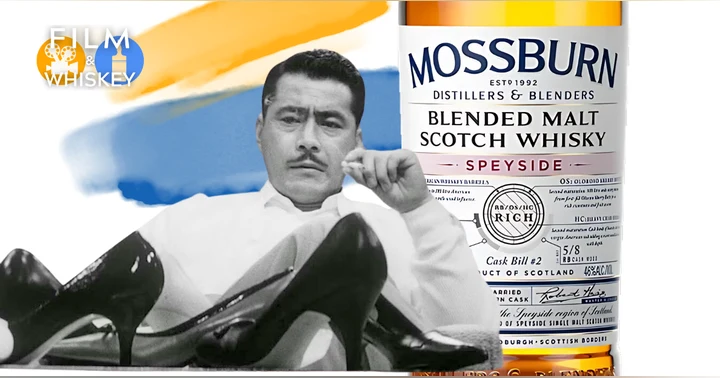
High and Low / Mossburn Speyside Blended Malt Scotch Whisky

In the latest episode of Film & Whiskey, Bob and Brad embark on a journey through the world of Japanese cinema, delving deep into Akira Kurosawa's 1963 classic crime thriller, High and Low. Moving away from the samurai genre that they've extensively covered, the hosts explore this sleek narrative set in postwar Japan. What does this transition in Kurosawa's storytelling bring to the table, and how do our hosts react to the change?
Then, the episode takes a spirited turn as Bob and Brad review Mossburn Speyside Blended Malt Scotch Whisky. With its intriguing flavor profile and affordability, will it captivate our hosts as much as the film did?
(0:00) Intro
(04:30) Brad Explains
(08:05) Performances, Themes
(26:45) Mossburn Speyside Blended Malt Scotch Whisky Review
(34:45) Two Facts and a Falsehood
(39:15) Final Analysis
(50:35) Let's Make it a Double and Final Scores
With three consecutive samurai films under their belt, Bob and Brad transition into Akira Kurosawa's crime drama, "High and Low." This 1963 movie, a deviation from the samurai narrative, showcases Kurosawa's versatility as a director. Set against the backdrop of postwar Japan, the film delves deep into the intricacies of a kidnapping plot, making it a standout in the realm of Japanese crime thrillers. The episode offers listeners insights into the film's performances, themes, and the genius of Kurosawa's cinema storytelling. The movie's intricate plot, combined with Kurosawa's signature narrative techniques, showcases why "High and Low" remains a classic in the world of crime dramas.
Whiskey aficionados are in for a treat as Bob and Brad transition into the world of spirits. Their review focuses on Mossburn Speyside, a Blended Malt Scotch Whisky known for its distinct flavor profile. The hosts delve into the tasting notes, highlighting the whiskey's unique characteristics and nuances, and how it stands out among other Speyside offerings.
Film & Whiskey Podcast. New episodes every Tuesday.
Theme music: "New Shoes" by Blue Wednesday
Film & Whiskey Instagram
Film & Whiskey Facebook
Film & Whiskey Twitter
Email us!
Join our Discord server!
For more episodes and engaging content, visit Film & Whiskey's website at www.filmwhiskey.com.
--- Send in a voice message: https://podcasters.spotify.com/pod/show/filmwhiskey/message Support this podcast: https://podcasters.spotify.com/pod/show/filmwhiskey/support0:00 In 1963, director Akira Kurosawa and star Toshiro Mufune gave the world a gritty kidnapping crime drama that pits high society versus the low dregs of Japan. In 2023 we start a two week trip to Scotland. The film is high and low. The whiskey is Mossburn Spaceside, and we'll review them both. This is. The Film and Whiskey podcast. Welcome to the Film and Whiskey Podcast, where each week we review a classic movie and a glass of whiskey. I'm Bob Book.
0:51 I'm Brad G. And Brad G this week we are looking at Akira Kurosawa's 1963 crime thriller High and Low. And before we say in Man. Before we say anything else, yeah, we're four films in. How different was this movie than the first three we watched? Man, oh man, I was ready for it. Let's just say that. But like, not only is it set in the modern day, but you know, I think we'll see this next week too when we watch the movie Akiru. That movie is a much. I don't want to say slower film, but more kind of poetic. This movie is just, I mean it's it's gritty. There's people on heroin, It's, you know, kids getting kidnapped and bribery and police procedurals. And this movie feels 50 years ahead of its time. Man, I was shocked watching it this time. Just how contemporary it feels, even though it was made sixty years ago.
1:48 Yeah, honestly, it kind of reminds me of West Side Story in that way that, like West Side Story came out in, what, 62? 61 61 And it felt like it came out in like 1991 easily. And here I think you have a lot of similar things where the camera work that he engages in, the the pacing of the second-half of the film all just feels like a modern blockbuster crime drama. Even the first part of the film feels like it could be its own indie film from like 2018. Yeah, I loved the first half of the film in that it was set in one location. It almost felt like the extended kind of prologue to The Godfather where they're all at the wedding for the 1st 35 minutes of the movie.
2:36 It was really cool to see it all kind of contained in one place, and it played out almost like a stage play. You know, there are people coming in and out of the room and different scenes happening and when they would finish talking about one thing, they'd say. All right, we're going to go back to talking about, you know, this businessman's dealings now, and it really painted such a cool picture. But you're right, it it feels in a lot of ways like two different movies. But they both work really well. Yeah. And I I think that there are issues throughout. I I don't think this is a perfect film. But overall, it was a, in my opinion, an improvement of at least two of the three samurai films that we watched.
3:17 Well, we do have a link to last week's film, Brad in the person of Tatsua Nakadai, who stars here as the head detective investigating this kidnapping of a child. And it's crazy because I saw him and I was like, that's a very good looking man. I wonder who that guy is. I I feel like I should have seen him before, clicked on his name on IMDb and then saw that he is the guy that played the lead role, the King Lear character in Ron last week. You know, about 20 years after this movie, and he's only like 30 when he makes this movie, which means he's only 50 when he makes Ron. And I know they had him in like very heavy, obviously stagey makeup in that movie.
3:57 But even beyond the makeup, I thought that that guy that played him must have been closer to 60 or 70 years old. I'm pretty impressed with Mr. Nakadai's range here because this is a very different character, yeah. And in this one, he's the calm, cool detective always, you know, on the top of his game, always able to handle whatever's thrown at him. And I think he he gives us a really great performance in high and low. Well, for the first time in four weeks, Brad, we will not be talking about swordsmanship or samurai when we get into our first segment of the day, which we call, Brad explains. Brad's going to give us the movie plots with only 60 seconds ticking on the clock, so let's go ahead and do your take with this little segment that we call.
4:39 Brad explains. Brad Explains is the part of the podcast where Brad breaks down the plot of the movie that he has just seen, often for the first time. All five of these Kurosawa movies are first time watches for Brad. You know, Brad, usually we give a little spoiler warning and I tell you to spoil the whole thing. This is one of those movies where I don't, I don't know. How do you feel about actually spoiling the movie? Oh, I I never care. It is a 60 year old movie, you know. Yeah, I was going to say for the most part, I'm a very antispoiler person. I don't want to know a single thing about a movie before I go watch it, but if it's a 60 year old movie and you feel intrigued to watch it, pause the episode.
5:23 Go watch it. Come on back. Yeah. I would highly recommend you do that if you have any interest in watching a really great detective movie. And I will say that you know I say that Brad's going to spoil the movie. This isn't the kind of spoiler where it's some twist ending and you knew the guy all along. Like they catch a criminal and you learn who the criminal is. But I guess the first spoiler I'll say, is like. It's not like he was a guy that you've been following the whole movie, you know what I mean? Yeah. And honestly, they kind of set you up to feel like there is a twist, but then there isn't. There's not. And they just they just catch the bad guy. It's pretty nice, yeah. I love it when the bad guy gets caught, you know, it's it's pretty incredible. All right, Brad.
6:06 The rules of Brad explains are as follows. You get 60 seconds on the clock. You have to explain every minute detail that happens in this movie as you remember it. You've got a minute and go High and Low is a film about a executive of a shoe company who is about to be forced out of the the company by some bad upper management, evil, naughty people. Naughty In the midst of the his plans to try and take over the company himself, it is found out that his son has been kidnapped. But they quickly realized it was not his son. It was his chauffeur's son. So in the midst of this, the police get involved.
6:48 They try to help figure out where this criminal is. About halfway through the film, they get on a train and take a payment to the kidnappers in order to get the chauffeur's son back. A rising tide of public sentiment goes in the in the The executives favor 10 seconds, and the police works their way through the dregs of Japan to find the bad guy. High and low baby high and low. Also, fun fact they talk about, not talk about. There's a American Bourbon whiskey proudly displayed on the GI Bar near the end of the film. You know there sure is Brad.
7:30 We we should have worked that in. Yeah, obviously. You know, even today we're we're drinking a space side Scotch whiskey and I'm thinking like we should have done a highland or something like high and low. What am I thinking here man? Come on, what are you doing? What am I doing? I obviously didn't schedule any Japanese whiskeys during this entire five week run and but I could have done a little bit more. Yeah, you you could have tried. We all know the the very little to no effort you put into this. Podcast That's true. 0 hours a week spent on this podcast Speaking of 0 hours a week. Brad. I have not watched this movie since the very first time I'd seen it and that had to have been over a decade ago. Like I watched it once.
8:16 I thought it was a well made movie and pretty good and I never thought about it again. And when I started planning out the schedule for this season and we talked about doing Kurosawa, I went on IMDb to see what the public thinks are his highest rated films and High and low is within the top 100 of all time on I MDBI think it's at like 84 at the time of recording. I was shocked to see that because I remembered it being a pretty good movie and that's it. And so I I didn't touch it again. I didn't want to watch it before we sat down for this episode. But you're catching me in a state of surprise, Brad, because, like Rashomon, it's been a really long time since I've seen this movie.
8:57 And I have to say, this movie freaking slaps dude. Yeah, yeah, I. It's so good, Brad. Yeah, yeah. For the first time in four weeks, Bob, I was actually like just thoroughly entertained by a movie. Like I I like 7 Samurai wellmade film entertaining, but it's also 3 1/2 hours long. And it's a it's a bit of a slog. High and low has the same issues at times. It definitely turns into a slog at different points, but it's two hours and 20 minutes and and it's a lot. It's a lot easier to forgive some pacing issues when you're not there for over 180 minutes.
9:38 There were. So many modern editing techniques in this movie that, you know, I've already said, I think it's like 50 years ahead of its time. But especially in the second part of the movie where the police procedural takes over and they're intercutting, like this giant meeting that all the cops are having where they're reporting on all the investigating they've been doing behind the scenes. And there's kind of silent montage happening as each guy gets up and says, well, I went over to Okinawa or whatever, and then they show him doing that, you know? But there's a moment where the young boy who was kidnapped is returned to his father. His father feels very guilty because his boss has paid this ¥30,000,000 ransom for him. And so his father decides I'm going to take him out playing detective and and make this kid retrace his steps. And as they're doing that, the actual detectives that are supposed to be solving this case are out looking for them as well.
10:35 And there's this great kind of intercutting between the two parties looking for the bad guy, slash looking for each other. And the tension is ramped up so, so much. And it's like really easy to see how the editing techniques that are being played at here get copied in movies like this for decades and decades afterwards. Yeah, there's that. There's that element of, like, the amateurs trying to figure things out while the professionals have it under control. And you get a chance to see everybody's character come out. Like you get a chance to see the detectives get a little bit angry with the chauffeur, you know, trying to get his son to remember it. And and yet there's there's also the the amusing point of like they they were also going to take the kid out to do the exact same thing for sure. Like, I don't know why they're super angry with him, but you know, I guess that they do find 2 dead druggies. So.
11:32 You know, and and but even just like on a structural level, having the kind of A subplot and B subplot that they're cutting back and forth to. And you're you hear the cop saying things like, hey, did you bring your gun? And the cop says, like, of course I brought my gun. Like I'm not going to go chasing a madman with my bare hands. And then the next cut is the dad and son getting out of the car. At the bad guys house, unarmed with bare hands. And I was like, Oh, my God, like, like, at that point the suspense was killing me. Because I'm like something terrible is about to happen here, you know? Well dude, talking about like plot structure, how many movies, how many kidnapping movies have you ever seen where A the kidnapping is resolved halfway through the film and B everything goes off without a hitch?
12:19 Like the the the person who is being ransomed is received back safely. The guy giving the ransom pays it, the the criminal gets away with the money, you know, at least to start. Like that is the cleanest kidnapping, exchange ransom that I've ever seen in the film. You know, Brad, before we go any farther, I think we should probably talk about the performances here. And I got to know what you thought of the top build actor in this movie, Toshiro Mifune. Who is not doing the overblown, jumping up and down kind of theatrical performance here? He's playing a much more internalized, frustrated businessman and I think that he really does a great job of leveraging his movie star persona onto this character.
13:09 Has to say you you missed 1 adjective to describe him, Bob, and it it might be the most important one. Powerful My dude Mufune is one of the most powerful men I have ever seen on screen in this film. What? Do you mean by that? He just, I mean, he just exudes like confidence and strength and authority proper. Yeah, authority. Like like, dude, when he grabs that shoe and he starts ripping into them, he's like, this is a piece of trash shoe. It's got this and this and this wrong with it. They'll be able to wear it for two months and it'll break. And I don't make crappy shoes, I make incredible shoes and he kicks him out of his house. I was just like, oh bro, I'm 100% in. I was waiting for him to jump up on his couch and like slap his neck, but instead he was just like the most intimidating person on screen.
14:03 One of the things I loved about this character and the way the script is written is that. Even though there is a very clear bad guy, it does get into some of those Gray areas. And you know, Brad, you and I have talked about the movie Parasite a couple times on this podcast now since you saw it, what, a month or two ago? And it reminds me of Parasite a lot. That's what the the title of this movie is a reference to High and low being across social strata, not just the fact that this guy's house is up on a hill. I guess. The and and they're they're searching. High and low do you get in low form? Do you get a bomb? The original Japanese title is actually Heaven and Hell, and I think that's really underscored at the beginning of the movie, the first time the kidnapper calls and he talks about how he is, you know, it's it's got to be 100 something degrees down here.
14:50 It's like being in hell, and at the end of the movie when he's face to face with Mithune, he tells him. I looked at your house like it was heaven. And so it it once again underscores that like. This guy is in a different social strata, and I look at his house on top of the hill as heaven. But what I was going to say was, even though there's a very clear, obvious bad guy, it is not lost on anyone in this movie that these executives are all terrible people. Like the they treat Mifune like trash. But then they're trying to find out, the detectives want to know, does anyone have a grudge against this guy? And he goes and talks to some of the factory workers who work directly under Mifune's character. And IT guy basically says, like, yeah, he's kind of an ass, like he's a good boss, but he's got a temper.
15:36 And I love that they don't try to make any of the quote, UN quote innocent characters be completely innocent. Like, yes, this is terrible that it's happening to him, but he's a real person and he has his own flaws. And I think that just adding that wrinkle to the character, it helped the movie overall and it helped Nefune's performance. Yeah, they they even kind of throw in the nuance of how public opinion is swayed by his act of generosity. And yet you can't always believe everything that you hear in the, you know, in the media, that he is a flawed person and you can't just trust the media narrative on all things that you hear.
16:18 So he's kind of like, I mean, honestly, curse. I was just kind of firing his gun indiscriminately into the crowd at this point. But it doesn't seem scattershot to, to carry on your metaphor, like, he is taking aim, right? And everything that he is hitting is like very obviously a specific target. And he's hitting it in a way that makes sense within the story. And to under score the point that he's trying to make, I really think that after watching this man, like I didn't think I'd ever say this. I think this is a better directed movie than Seven Samurai was and. And, you know, I talked about the geography of Seven Samurai. I think that's a that's a separate thing that's like action scenes, right? But when I just think about the way this movie's cut, the editing of the film, the pacing, the rhythm and the way that he's layering in his commentary, social commentary, I just, I'm really impressed with this movie. Brad, well, I'm curious to hear what did you think about the structure of the film in that, you know, the first hour and a half of this movie hour and 20 minutes of it is a bottle episode.
17:27 Like, you're just sitting there in his room. I think there's maybe 3 cuts in the first hour and 20 minutes. Like, who's the cinematographer on Children of Men? Oh, like Lubeski. Yeah, Lubeski needs to take some notes here because the first hour and 20 minutes maybe has three or four cuts in it. Like like they just sit in the room and. It's the Spielberg wonder man and you can see like he's pulling back, he's pushing in, he's he's tilting the camera, he's panning and he's creating new shots within one shot. It's really impressive, yeah. But I'm curious though, how did it work for you?
18:08 Did it feel jarring when we switched from pretty steady camera? You're in one room, you're following the characters around, little side comment. The blocking of the scenes are incredible, like the first half of the film, like where everybody's standing when they move, when they stay still, just so good. But like, did it, did it shake you at all to like all of a sudden be on a speeding train with like a handheld camera following them down? You know this tight knit corridor? Like, I don't know, it felt jarring for me. Did it feel jarring for you? It. Didn't really feel jarring. I could tell that they're trying to make a narrative shift here, right? Like and the camera work reflects that and I think the best way to describe it is to go back to the title again. The first hour of the movie is they are staying up high and the the kidnapper is calling them, he's playing cat and mouse. And then the second-half of the movie, they go on the offensive, They go down low, they go down into the city to try to find him.
19:07 And I think that it works really well. And it kind of reminds me honestly of the way that like Scorsese changes up the rhythm of Goodfellas towards the end of the movie when it becomes this sort of drug fueled thing. It's not exactly that drastic as it is in Goodfellas, but I think that it gives the movie a pace that it needs because the first hour, hour and 20 minutes, it wasn't slow for me. I'm kind of getting the sense that it might have been slow for you, Brad, but I loved that. It was. It reminded me so much of, like Kevin Spacey in Seven when he's toying with Morgan Freeman and Brad Pitt and calling them and saying like you didn't get my clues, you know, and the cops are hiding under the table so that they can't be seen.
19:47 It really is a cat and mouse kind of thing. And then when they finally get up, the energy to go on the offensive. I love that the movie has that sort of propulsive energy to go with them. It's like the detectives are finally emboldened. And then because of that, the whole movie gets injected with a new sense of purpose and energy. That it desperately needed. So it didn't the first part. Didn't work for you? Desperately needed? No. The first part worked like if I were to just grade the first half of the film. It's not quite half, but we'll call it half. Just grade that. I'd probably give it like a 7 1/2 to an 8.
20:30 Like solid wellmade. Like I said, the blocking especially stood out to me. A lot of the camera movement was good. But once again, and and and I hate, I hate to score foreign films sometimes because I think I think things do get lost in translation. And you know, maybe those scenes are a lot more engaging than what I am hearing. But just watching it as a American who only speaks English, there was there was definitely some pacing issues with the first half. For me, I wonder how much of it is like the cultural difference and how much of it is the time difference? Because I don't see movies being made quite like this 60 years ago. And you, you pinpointed the moment where I really started to get clicked with me.
21:13 And it's that shaky Cam, you know, the handheld camera on the train. Oh dude, it was so good. It reminded me so much. And we haven't touched on any of these filmmakers, but like in the 1950s, there's a big movement in French cinema called the French New Wave and there is a lot of kind of like hyper realistic handheld camera. It looked gritty. It looked like documentary almost. And I think that he gets a lot from that and he gets a lot from movies like the original Manchurian Candidate. That's a John Frankenheimer movie and that is like the end of that movie is very much like shaky Cam, super suspenseful. And so I think that Kurosawa is borrowing from what he's seeing from American cinema, from people like Hitchcock when he made Psycho.
21:58 There's a ton of Psycho in this movie. And I I just kind of love seeing it superimposed onto Japan. But I look more, I look at this movie more as like a pioneer of a certain kind of film and less as, oh, I think there's something lost in translation. Does that make sense? Yeah, no, for sure. I think what I hear you saying is that like Blair Witch Project and Cloverfield didn't invent the shaky Cam. What I What I'm saying is Blair Witch Project owes everything to hide. Everything. Hey, guess what? What's that dude? This movie has Takashi Shimura in it. Again, Brad. It barely has him. The guy that we keep talking about as Kurasa was most frequent collaborator, and I'm really impressed watching these movies through because, you know, Ron comes so late in Kurosawa's career.
22:49 I don't know how long Takashi Shimura lived for. I don't even know if he was alive at the time. But it's really cool seeing that he had like his own little troupe of actors and that they all show up in every single movie. It kind of reminds me of when I was a kid and I would watch like Westerns with my dad. And if it was a John Ford movie, you just knew you were going to see certain people like Ward Bond was going to show up in that movie somewhere. Yep. And it's it's like, you know, I look at certain people in these movies and I'm like that is the Japanese Ward Bond. Like he's he's just showing up in every single Kurosawa movie. Yeah, I I recognize one of them was the the young, impressionable samurai. The hot samurai, yeah, he he was in there with a kind of the cursory character.
23:36 Yeah, it it is fun watching these through and I'm sure this will continue in Akiru. But it's fun to watch the characters. Some of them have bigger performance in some. Some of them take back seats and others and it, yeah, it's kind of fun to. It almost feels like a theater troupe that you, you know, local theater troupe you go see every year and it's like the same people just take turns being the lead. Well, before we go to break, Brad, I want to ask you, is there anybody else in this cast that you'd like to talk about? Because it is a pretty huge cast. There's a lot of people going in and out of this movie, aside from 7 samurai. Well, I guess Ron had like hundreds and hundreds of extras, but the sheer amount of people that are packed into these, you know, like press press conferences and the police headquarters, and I'm just shocked at how big this cast is. So who stood out to you, aside from the few that we've talked about?
24:33 I really liked Kenjiro Ishiyama, who played Bosun. He was my favorite. Dude, he was just such a cool. Character like, you know, he's he's in every movie he's I if I had to pick a Ward Bond, I think he might be the Ward Bond of this film. I love that he has the look of like, you know, just like a old angry, bald. Like he just reminds me of like the Edward G Robinson of these movies. And especially in this movie, he has this great moment where he's giving a report on how he went and interviewed all of the other executives at National Shoes. And he's like, yeah, I went and interviewed those guys. And then he scratches his head with his middle finger sticking out. Yeah.
25:15 And then just in case you didn't get it, he sat down and he just goes, what a bunch of assholes, man. I love this guy. He's the perfect, like, not quite Comic Relief, but jaded. He's like the Lenny Briscoe, the jaded New York City cop of high and. Low, Yeah, he just, he fits a role of like. The guy that you want to work directly with, but you would also hate if he was like, not in your department, you know what I mean? Like he he just has a real outlook on life that not everybody has. And I'm a big fan. I do love it when directors absolutely nail the casting of their detectives.
25:59 Like when you look at, you know, Mark Wahlberg and Martin Sheen in The Departed, like this guy fits right in with those type of guys where it's just if you're in another department and you give me any crap, I'm going to just cuss you out to your face because I'm trying to protect my turf here. You can't say enough for just nailing the casting of some of these smaller roles. Yeah, 100%. And I I think Speaking of like just nailing the casting. You obviously didn't spend any time trying to cast the whiskey with the movie, so let's just go drink the Scotch, which I'll give you some grace. We should just keep drinking Scotch, because Scotch is delicious.
26:41 It's really good. All right, man, let's get to it. All right. So today we are trying Mossburn Space Side blended malt Scotch whiskey. Now you may have heard us talk about single malt on this podcast before. Blended malt is slightly different, as the name would suggest. When you see single malt on a label, it means that it came from one single distillery and it is made entirely of malted barley. This is made of malt and it's blended, meaning that it comes. It comes from a bunch of different distilleries. So this company, Moss Burn you know, sources a bunch of whiskey, blends it together and puts it all out. It comes from a number of space side distilleries though. And in addition to all that, Brad, they've got this like kind of complicated diagram right on the front of the bottle that talks about the different types of casks they use to mature this.
27:35 It says that part of it is done with heavy char heads on the barrels, part of it's done with reuse American whiskey barrels and part of it's done with Olarosa, Sherry, Butts and then all blended together at the end. They're really advertising this as if it is a super premium product. I think I paid like 40 bucks for it. So like you know let's not get ahead of ourselves here. Mossburn, I picked this up off the shelf on the Ohio last call shelves. We've been mentioning that a lot. So this is no longer sold in Ohio, but it seems to be pretty readily available everywhere else. It clocks in at 92 proof and it is non age stated, likely due to the fact that it is a blended whiskey. So Brad, let's do it man.
28:20 Let's just dive right in. What are you picking up on the nose here? Yeah, this is a really nice nose. It's got barley, it's got some Peach. The honey comes through and it kind of the longer I sat with it, it had some really nice floral notes to it. Nothing that like blew me out of the water. I gave it a 7 out of 10. Here Bob, I drank this whiskey while watching the movie and I realized that I took a sip of the whiskey before I even nosed it. Brad So this thing did not stand a chance in terms of getting a fair crack, but I took a sip and to spoil my taste a little bit, I was like, wow, that's delicious. And then I went back for a nose of it, and maybe it's because I already had all those notes kind of on my palate. It was really hard for me to pick anything up on the nose here.
29:07 Like, if there's one thing I'm going to Ding it for, it's really lacking any sort of potency on the nose. It was a lot of ethanol and not much else and went back for like a second, third, 4th nosing of it. I finally started to get some vanilla extract, a little bit of cherry and like some melon, maybe a honeydew or something like that. But overall I had to try way too hard with the nose. Here I only gave it a six out of 10. Yeah, and then we get into the pallet. For me, the pallet was kind of the main show here. There. The honey came through. The Peach was sticking around. I'm with you on the vanilla. Vanilla definitely came through strongly and there was like a butterscotch drizzle, kind of kind of like what you would have on a on a soft serve ice cream cone. That came through pretty strongly for me the more I sat with it.
29:59 I thought that this was a really pleasant, if not super complex experience that I gave an 8 out of 10 to. Do you remember when we were growing up and like the early 2000s, we're just full of cucumber melon scented things? Like everything was cucumber melon? I am not remembering that now, man. Listen my my home was full of bath and body works, cucumber melon, scented things. I'm not going to necessarily say that this tastes like that, but it had the sort of like artificial melon brightness that I associate with those like soaps and lotions and everything, and I can't pinpoint exactly what melon it smells like, but I got a ton of melon on this. It was really fruity, really bright. The ethanol does take over about midway through the palate and it gets really spicy, and then it finishes with some almost bitter oak.
30:52 But I think that from the front of my palate to the back, this was a lot more flavor than I was expecting from that nose. I gave it an 8 1/2 on the taste. Wow. Yeah, I I think that it's a solid palette. It came down a little bit on the finish for me. The barley really came through strong at the end. I got some clove and black pepper kind of spiciness going on and it got kind of like a sweet mintiness that that was left on my breath afterwards that I kind of liked. I split the difference here I give it a 7 1/2 on the finish. I think the finish is a lot darker than the palette was. It gets into like an almost bitter dark cherry for me.
31:32 And then it had a sort of breadiness to it that was almost like a biscuit. It was really, really nice. I wasn't expecting that to be the finish either. So you know, from the nose all the way through to the finish. This just kind of kept throwing me curveballs, but in a really pleasantly surprising way. I gave it a 7 1/2 on the finish and then on the balance I'm going to also give it a 7.5, and that's mostly because I wish the nose stood out more. It really was. It started in a really low place for me and then kind of immediately jumped up on the taste and finish, but I just kind of wish that some of those notes were present on the nose because it was really lacking for me. So just a 7.5 on balance. Yeah, I I think I'm at the exact same places you 7 1/2 on balance and so that takes us to our value category.
32:17 Now the best that I can tell is that online you're going to spend somewhere from 40 to $50.00 to get this bottle. So we'll call it 45. And I think that this is like a seven out of 10 value at $45.00, like it's a solid nice expression of Scotch. It's at a decent price point. It's not too expensive and I this is something that I would enjoy drinking from time to time. Yeah, I think I'll give it a 7 1/2 Brad. I think this has a lot more flavor than a lot of blended Scotch as we've had. And it's also pretty rare to get a blended Scotch that is region specific like this. So it's kind of like, hey, if you've never tried a space side here is generic space side. And I think it does a pretty good job of capturing the flavor of a space side Scotch.
33:05 So I think it's a pretty good value at 40. Is it the best Scotch you can get at 40? Absolutely not. But for what it's offering, it's an above average value. I'm going to give it a 7.5. Yeah. And that's bringing my total out to a 37 out of 50. And like you just said, Bob, this is a really solid space side expression. Like, it's a little rough around the edges, but it has a really solid body that kind of brings it across the finish line. I'm also coming out to a 37 out of 50. I would recommend buying this bottle, probably more than I'd recommend trying it at the bar. Like. I just don't think that it's special enough to merit a poor, but it's not a bad $40 investment.
33:48 I don't know if that makes sense. No, it totally does. Especially because in general, you know your Scotch is going to be a little bit inflated at the bar. So yeah, I I would say 100% buy a bottle of this, split it with a friend, and it'll be well worth your money. Or you could drink it while you're watching high and low, which is what I did, and it is a very pleasant experience. So thank you very much. Moss Byrne. Brad, let's get back into talking about high and low. Let's get to it. Alright, everybody. That was Mossberg and Spaceside, a whiskey that we drank. I always love it when you leave it hanging. Like I didn't know where you were going. And then it turns out you weren't going anywhere. That was it, man.
34:31 We sure did. We drank it. It was good. It was good. I liked it, yeah. You know what I like more than Mossberg and Spaceside? Is it 2 facts and a falsehood? 2 facts and a falsehood, Brad. Is gonna try to stump your ball. You are right and what is wrong? 2 Facts in a Falsehood 2 Facts in a Falsehood is the part of the podcast where Brad tries to stump me by presenting 3 items to me as fact about the making of this movie, one of which he has made-up Brad. As promised, I went back and finally tallied up where I am on the season and I was pleasantly surprised because I thought that I was getting to be like four or five games under 500 right now.
35:15 And I am 9:00 and 10:00 on the season so far. Hey, well done. If I get this one right, I'm in good shape, man. I think the goal right now is to just not be under 500. Like if I can split with you, I feel pretty good about myself. Yeah, I mean, you know, 16 and 16 would be admirable. I mean, what do you think about the odds of me winning each week is only 33%? Like there's, you know, there's two facts and only one falsehood. So if I can, if I can get it right, 50% of the time I'm doing, I think I'm doing well. I yeah, I mean, I think that your general movie expertise gives you a few percentage points there.
35:57 So I finished watching this movie tonight at 7:35 and we recorded at 8:00 PM. And I have these Akira Kurosawa books that I made really great use of after I watched Akiru, which we're recording next week. And after I watched Ron. And I was like, man, I need to open these up and read as much as I can in the next 25 minutes. And Brad, I did not read one word. So you're really, really catching me in a rough place right now. You could go in for the kill if you want to. That is the goal here, and I will do it by starting off with fact #1. Most of the outdoor Yokohama shots were filmed on location, with a few exceptions, mostly due to the abnormally cold winter that was setting in.
36:46 The scene where Gondo unknowingly meets the kidnapper on the street had to be filmed indoors. Fact #2. The original script for High and Low called from a Fune's family to own a pet dog, something that would have set them even further apart from a Japanese commoner at the time. Kurosawa refused to have a dog in the film, however, believing that it would distract from the performances. Fact #3. Typically for his work with Kurosawa film composer Masuru Sato, was generally given about a week to compose the film's entire score. Sato would also reuse some of the music from High and Low in the soundtrack he created for the 7th Godzilla film Abhira Horror of the Deep, a week for a whole movie. Yeah, you know what?
37:33 I don't know if we're going to talk about the score to this movie at all, but. Sure. Sounds like you're about to. Just just for a second. I enjoyed how much Kurosawa is in control of when the music is on and when it's not. In this movie. They do a really great job at cutting the music out in some of the most suspenseful parts. And I'm so glad he did that because especially at this time, I think the tendency was to overdo it on music when you wanted suspense. And it is so much more tension building to just hear the kind of like ambient noise of the city or whatever. But maybe it has something to do with the fact that the guy only had a week to make the whole score, so he only turned in like 20 minutes of music, you know? Unless I'm lying about that.
38:17 Unless you're lying, I'm circling #2. Not that it sounds false, it actually sounds like a really plausible answer. But it just kind of sounds like, of the three, the one that you may have made-up the most. That is, that is the goal of what you're doing here, Bob. My gut says two, my head says three. I think I'm going to be wrong regardless, so I'm going to say two is the falsehood. Going with your gut, you're more of a gut guy, Bob. Is. Is that true? Yeah, the Mirror says so. That's for sure. All right, locking in #2 is your answer, man. I kind of want to lock in three now. I'll lock in two.
39:00 That's fine. Sure. All right. Bob, you are 100% correct. I should have known since you're a dog guy. I'm a gut guy. You're a dog guy. That is true. I do enjoy my dog, All right, So I am back to 500 on the season. We'll see if I can finish the season out. What, like 11? And oh, after this, to be in a really good spot. Would be very impressive. Brad, where do you want to go from here, Man? We've kind of touched on almost everything I want to say about this movie. We've touched on the performances, the incredible camera work. We've talked about its influences and what it influenced in turn. I'm just, it's funny because this is a really short episode right now and it doesn't reflect how much I want people to go watch this movie. But aside from maybe Rashomon, which I think is a better film than this, I think I've enjoyed this movie more than any of the Kurosawa's that we've done so far. Yeah, well, well, tell me about why you enjoyed it. Like, what was it about the film that really drew you in and and and made you go, Man, I just want everybody to watch this. I think that even when you love classic movies, or let's just call it what it is, like old movies, you know, there is a sense of separation between the way movies used to be put together and the way they're put together now. And when you're watching Casablanca, for example, like, it's not necessarily that that movie is slow. It just has a different sort of rhythm. And it's the rhythm of 1940s
40:33 movies. And there's something about this movie from 1963 that feels so of the moment that I barely had to filter it through that sort of, you know, space in time. And I think that like being able to put it on and enjoy it as much as I've enjoyed a movie like, you know, Zodiac or Prisoners or like these kind of modern day detective movies. I think it says a lot about how far ahead of its time this movie was and just how much of a master Kurosawa was, especially with the way he allowed his movies to be edited. If we were going to recommend any of these movies so far to anyone that wanted to get into Kurosawa, this is probably the easiest entry point, Brad, because it feels so familiar.
41:20 Yeah, I I distinctly recall you telling me when I bought 7 Samurai that there's no way I should start there, that the best starting point for Kurosawa was Rashiman and we all know how that went. Yeah, I would just just friendly advice Bob, just you know from a from a nobody over here. I'll kind of stand by it just because it was his first big breakthrough like internationally. And so I always recommend people start earlier in a director's chronology, you know, But if you're looking for like what's the easiest, what goes down the easiest, it's definitely this movie. Yeah, I. Think that this is an easy recommend for me, that there is just enough suspense in the first half to keep you through the the little bit of a slog that it is, and then the second-half of the film runs at this breakneck pace.
42:15 I think for me, the the scene that really stuck out was when each of the detectives or or pairs of detectives stands up and gives their little report of what they're doing. Like that was enrapturing for me. Like I was completely drawn into the story, completely drawn into what he was doing on screen with the camera. And it it felt like that's where you got to see him at his best with not just directing actors. But directing a large group of actors, and we haven't talked about this a ton on the podcast yet, I think that one of Kurosawa's greatest strength is using a crowd of human beings to draw the audience's attention to different places on screen. Yeah, there are moments in that sort of report giving scene where you know, someone will get up in the middle of his report. He'll say something like he had a boy with him under a blanket in the back seat.
43:13 And then you see all these heads that have just been studying their notes look up and turn towards the guy and lean in. And then you mimic that as an audience member because you realize, all right, if all these cops think this is important, then I should think it's important. The more I think about that scene, Brad, the more I love it from a directorial standpoint. Because if you think about its usefulness to the movie, none of what's actually reported in that room ends up helping the case any. Like, they're all chasing their own rabbits, rails, and they're doing good detective work. But you don't know at the time that the thing that actually gives the guy away is that they plant this fake story in the news.
43:57 He burns these briefcases, and the briefcases contain, you know, some sort of gas that that makes a pink smoke. And then someone sees the pink smoke and they go, OK, there's where the guy's burning it and that's how they find him. And so the stuff that came 40 minutes before in this big report giving scene actually didn't really help them catch the guy any. And yet, because you don't know that you are giving equal weight and equal importance to every single person that's standing up and giving a report about where, you know, what leads their following and where this guy could be. And when someone would get up and give a really short report and say, like, we don't have a suspect yet, I'm hoping to have a report to you by tomorrow.
44:37 I'm like, oh, that's going to be where it comes from. I'm so smart. I'm going to remember that later on. And none of it ends up happening. And I think that if a studio executive was giving notes on that script, he would be like, cut this whole scene out because it doesn't actually play into what happens any. But that's the brilliance of it. And I think that that's part of what makes this such a great movie is that Kurosawa knows, even though it doesn't influence the outcome, you as an audience member need to feel like you are putting the pieces together just like these guys are. And so that's a super necessary scene as a result. Yeah, I mean the the goal is not to just capture him, you know, as a filmmaker, his goal isn't to get the audience member to the satisfying conclusion alone. It's to involve them in the hunt. And a huge part of the hunt is having certain leads that pan out.
45:32 And other ones that don't, you know, I I think you're being a little harsh on the detectives here, Bob. Like some of the the leads that they get, you know, bring them to the point where they find the drug addicts who have overdosed in the whole. That leads them to having the media using the media for their advantage to find the killer. And so there's certain things that pan out, but you're right in saying that not all of them do. And that genuinely adds to the feeling of authenticity that this film gives you. And like, I think the other thing that's really cool is like the level of talent it took to do police work before there was technology. And and by technology, I mean like computers.
46:13 So, like, police work before the 1980s and 1990s was really, really hard and you had to do crazy things like say, hey. We're going to put this pink chemical or this chemical in here that will turn pink if it's burned, but it'll smell horrific if it gets wet. And we're going to try to cover all the bases of what he might do with the briefcases. And it's things like that where you're like, man, human beings were fun fact, really, really smart back in the day. And before we could ask ChatGPT how to catch a killer? I'm sure it would have an incredible answer. Brad, what did you think of the decision to colorize the smoke when the pink smoke came out? It's the only color element in this whole movie. I man, it's fine.
47:04 Like, I didn't think it was great, you know? Yeah, it's one of those things where I think that something like Schindler's List red coat has a much deeper emotional impact. Than the smoke coming out pink. Like, I think that they could have pointed at it and been like, ah, the pink smoke, there it is and it would have been totally fine. Yeah, I think that it felt more attention catching than it deserved to be. Now you watched this movie with a group of friends, right? Because you texted me and said, hey, I'm having some guys over, we're all going to watch high and low tonight. Yep, that is the truth. What I mean to your knowledge, what was their experience with foreign films in general or like their knowledge base of foreign films and what did they think of this movie? So one of my friends fell asleep halfway through and left because he was very tired.
48:01 And I I told him later I was like, well, I understand why you fell asleep in the first half, but boy, let me tell you what you missed out on, right? First off, we haven't even talked about. The drug scenes, like the end of this film takes a wild twist. I was going to say if this movie falls off a Cliff anywhere, I think the last half hour is where I I think it kind of started to fall apart a little bit. For me, yes, it's so tightly wound. And then you follow the killer and I will say the way they frame and shoot the the kidnapper with the sunglasses. One of the coolest looking decisions I've ever seen it like if they're always illuminated by something, I don't know how he did it.
48:46 I just don't know that we needed to spend 25 minutes wandering around a flop house with this guy. We could have had that abbreviated just a bit. Yes, yes. But getting back to to my friends, Bob, you're friends who do not hang out in a flop. House No, they sure. Sure don't, Bob. One of my friends is like probably more experienced in foreign cinema than you might be. Bob. He, he's got a very, very expansive filmography under his belt. And then my other friend is 22 and has seen some foreign films, enough to appreciate this. And I think that we all walked away, just basically with a similar opinion of like.
49:35 Man, this movie is just really entertaining. Like it's it's not. I think a lot of times you think about foreign cinema and you hear people like Bob say words like the French New Wave and how advanced they were and how they change the cinematic landscape. And when you hear things like that, you don't think about films like High and Low. Like, sure, High and Low did things that. Probably weren't being done too often in in other movies in Hollywood at the time. But at the end of the day it's just a really fun movie and and it it doesn't rely on being you know brand new and have all these new crazy techniques and lighting and and sound design and all these things.
50:22 Like, no, he just tells a really compelling story and he has a great body of camera work to go behind it. All right, Brad, I think that it's time for us to get into our final segment of the day, which we call, Let's make it a double. We're near the end of the episode, so thanks for listening to the film and whiskey show. Let's pair another film with this one, even if it's struggling. It's a final segment of the day. Now let's make it a double. Let's make it a double is the part of the podcast where we pair this movie up with another one to make the perfect double feature. Brad, I'll let you go first. Man. What do you think you would pair this movie up with? And I was, I was kind of struggling a little bit to find something. The the movie I'm going to pair it with is a little more traditional, a little more for lots more forward momentum.
51:10 But I think I'm actually going to pair this with North by Northwest. I think that both of them make for really fun kind of crime caper, trying to figure out the mystery of what's going on type of films. And you know, very different plots, very different motivations for the main characters. But I I think it'd be a fun night to watch this. And North by Northwest, I think for the first time, I was really swayed by things I was reading because, you know, at first I saw that this movie is very similar to David Fincher's Zodiac, which is a movie I absolutely love. And I was like, Oh yeah, I'll do Zodiac. And then as you were talking during this episode about like, you know, the dad kind of being this bumbling detective himself and trying to take matters into his own hands, I was like, that reminds me of the movie Prisoners.
52:00 I don't know if I'm going to go with either of those movies. You know, we talked about Parasite. That's another option we could we could pick for this movie. I'm going to pick a movie that I watched for the first time last week, Brad, And it is the 1967 Best Picture winner in the heat of the night. And I freaking loved that movie and it's the reason I'm picking. It is because again, for a movie that is 5556 years old now, it has such a modern storytelling pace and rhythm to it. The editing is super modern. It has its moments where you can tell that it's a late 60s movie. But overall 67 is really regarded as like the first year.
52:43 There's a great book that was written about it called like, I think it's called like Cinema at the Revolution or something. It's about like five or six different movies that came out that year that really changed American movies forever. And you can see how this is one of those movies and it just reminded me so much of high and low. They both feel like movies that were made at least 30 years ahead of their time. So I can't recommend highly enough go watch these two fantastic murder mystery detective movies in high and low and In the Heat of the night. Well, Bob, we got some great recommendations on board. What say you? How about we give this thing a score? Yeah man. I think that I was at a nine and a half for most of this movie and then over the last 25 minutes it lost a lot of steam to the point that I was about to come down to an 8 1/2 on it.
53:31 I think I'm going to split the difference and give it a nine. This is one of those movies that I can kind of cut it a little bit of slack because it is 60 years old. And would we have trimmed some of the fat off of this in the intervening 60 years? Yeah, probably. But I think you get high marks for being one of the first to ever do it. And I see the the influence from this movie all over the place and I got to reward that a little bit. I enjoyed the hell out of it. It's a nine out of 10 for me. Yeah, I think I'm, I'm pretty close to you. I'll, I'll give it an 8 1/2 out of 10. I I think that the the pacing of the second-half of the film is a lot better. I think that the train scene is incredible.
54:12 Like it's it's simultaneously frenetic and yet like calm and measured and everybody knows where they are and the geography is well said. I think that Kurosala just overall has a masterful command of his actors and the script and the camera. And I I think he just does a really, really great job here at making an incredibly entertaining film. Well, there you have it. We are coming out to an average of an 8.75 on High and Low, but we'd like to know what you think. Obviously somebody out there is watching this movie because it's in the top 100 on IMDb. Have you seen High and Low? What do you think of it? You can let us know on Facebook, Twitter, Instagram, TikTok, YouTube at Film Whiskey.
54:59 Or you can jump on to The Discord. We are on Discord every single day talking to you guys, the fans of the Film and Whiskey Podcast. So if you want to join the conversation, you can head on over to Discord through the link at the end of every single one of our show notes. Brad, next week we are finishing out our five Kurosawa film retrospective with his 1952 drama Ikiru. I'm really excited for you to watch that one cuz I don't know what you'll think of it as you as has been the case throughout this series so far. So join us for Ikiru next week. But until then, I'm Bob Book. I'm Brad G and we'll see you next time.