Apple Podcasts

 Spotify

 Castro

 RSS Feed

 Goodpods
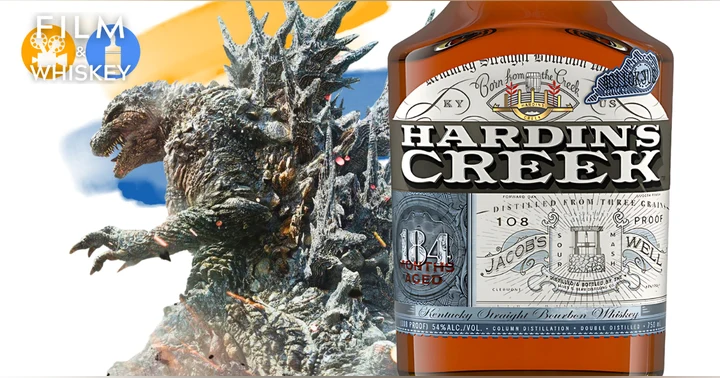
Godzilla Minus One (2023) / Hardin's Creek Jacob's Well Bourbon

Bob and Brad dive into one of the most acclaimed international releases of 2023: Godzilla Minus One . They’re joined by special guest Michael Kelingus, Brad’s longtime friend and a lover of Japanese cinema, especially kaiju films. Together, they break down how Godzilla Minus One reimagines the iconic monster, explore its emotional core, and debate whether it sets a new high bar for the franchise.
In the second half, Bob and Brad crack open a bottle of Hardin's Creek Jacob's Well bourbon , a premium small-batch release known for its rich complexity. How does this Kentucky bourbon hold up under the Film & Whiskey taste test? Tune in to find out if the pairing of kaiju chaos and fine bourbon creates movie magic.
Timestamps
(0:00) Intro
(11:07) Brad Explains
(14:46) Performances, Themes
(33:33) Hardin's Creek Jacob's Well bourbon review
(42:39) Two Facts and a Falsehood
(48:56) Final Analysis
(1:05:09) Let's Make it a Double and Final Scores
Save on your bottle of Blackwood (use code FILMWHISKEY)
Film & Whiskey Instagram
Film & Whiskey Twitter
Email us !
For more episodes and engaging content, visit Film & Whiskey's website at www.filmwhiskey.com .
0:01 In 2023, director Takashi Yamazaki and star Rianosuke Kamiki gave the world a chilling return to the Kaiju that just won't quit. In 2025, we try a whiskey that, like this movie's creature, rises from the deep. The film is Godzilla -1. The whiskey is Hardens Creek Jacob's well. And we'll review them both. This is the film and Whiskey. Podcast.
0:50 Welcome to the Film and Whiskey podcast, where each week we review a classic movie and a glass of whiskey. I'm Bob Book. And I'm Brad Gee. And this week we're looking at the 2023 film Godzilla -1 Brad, even before I dive into how excited I am to talk about this movie with you, I need to give some behind the scenes logistical, you know, set up here. You know the fans love a good BTS Bob. Dude, listen, I am currently on the road for work. I am in a hotel room and I am talking into my microphone without my nice fancy acoustic deadening box, and I'm speaking through an old undershirt that I'm holding up to the microphone to try to deaden some of my plosives here.
1:41 So let's just say not ideal question mark. Dude, you sound great. I it's it's ridiculous that you even have to say that, Bob, because your voice in the most echoey room in the world would still be the light that could bring any of us home. Well, luckily I am in the most echoey room in the world, and you also decided that the best time to record this episode was at 7:55 in the morning. My time. So your boy is tired. Your boy's voice is not awake yet. It's the perfect time to review movies and to drink whiskey. Absolutely. And not only did I put you through all that, I also threw you a curveball last night, Bob, You sure did. I decided that for this episode, we desperately needed a third voice.
2:28 I want to introduce film Whiskey Nation to one of my favorite people in the world. If I had to give the title of Doseki's World's Most Interesting Man to any of my friends, it would be to Michael Calingis, noted Godzilla lover who is wearing Mothra underwear currently. Welcome, Michael. Thanks, Brad. These things are quite comfortable and you've put me at ease even further. So we're ready to go. Thanks for having me. I need to hold on one second, Brad. I need to inform our listeners. We can't see his underwear right now. We like he just told us that he's wearing such underwear.
3:10 I I don't know this man. He just showed up today and I immediately learned about his undergarment choices. So I'm still feeling out this dude. Michael, welcome into film and whiskey. I have to say immediately though, Brad reached out to me and was like, hey, I've got the perfect guy who can add some much needed context to our episode about Japanese film. And I was like, oh surely this man is at least of Asian descent. Nope. Whitest guy I've ever seen in my life. So I don't, I don't really know what he's bringing to the table that not only the two of us Caucasians can't bring Brad. Not only that, this man, I this, this is how much I like Michael. He's from Michigan. Oh man, And he and I still enjoy him quite a bit. 2.5 strikes against the sky already here.
3:57 Yeah, I am really struggling. Please do not throw the curveball. I, you know, I sent towards you. I, I just like most white men in America, love Japan, but I also was just, I grew up with the movies a little bit. So my uncle like introduced me right away and said we're going to watch one of the best movies of all time. And that start out was Attack of the Giant Ants. And that's how I got introduced to cinema through my uncle. And it was, it was perfect. So then he was a huge Godzilla fan. But you know, the underwear just helps me really focus. They say dress for the job you want, and I really thought that what could be closer to my heart than the Mothra underwear, right?
4:45 It really focuses centers, bring the whole thing together. They always say the way to a man's heart is through his underwear. So, you know, we're there now, guys, we've we've arrived at this very awkward moment for all of us. Brad, listen, I've been trying to get you to watch this movie since it came out in theaters in 2023. I had heard really good things about it and went to the theater and was blown away. Immediately texted you said you got to see this. You were like, there's no way. And I ended up, I think I saw this movie in theaters either 3 or 4 times because then they did a special release of the film called Godzilla -1 Minus Color where they released it in black and white. And I was like, well, of course I'm going to go pay more money to see this in black and white. Why would I not do that?
5:28 Obviously. So I am if. Only they had released Oppenheimer. Without color, you would have gone and seen it five more times. I'm glad you brought up Oppenheimer, Brad. I don't think it's going to be my let's make it a double today, but it was a really interesting double feature kind of pairing back in 2023 because there was some backlash against Oppenheimer, I think from rival studios, you know, trying to kill its Oscars chances that it ignored the plight of the Japanese people, which I think really defeats the the purpose of what that movie's about. But you kind of get that if you watch this movie. So I thought it would be kind of cool to put this towards the end of this season to provide that bookending effect because Oppenheimer was our first movie this season.
6:12 Brad, you know, I don't want you to spoil. Brad explains too much, but I know this is your first time watching the movie. Were you thinking about Oppenheimer as you started watching this movie? I did not think about Oppenheimer a single time. I I hate, I hate to ruin your point there, Bob, but it, it didn't occur to me while I was watching it, but partially because let's be honest, we watched that like 30 weeks ago that you know, that that's like an absolute lifetime. So Oppenheimer didn't come up in my brain. It is a great comparison though, because you do kind of get both sides of that experience. Here's the fascinating thing, though. I think that some, somebody on YouTube a long time ago talked about creating like a World War 2 cinematic universe. And I love that.
7:00 Like we just keep adding movies into that universe. It's like an accidental nobody. No director signed up to be a part of the universe until they signed up to do a World War 2 movie. And I I would consider this a World War Two movie. 100% And I think it really more than perhaps any other Godzilla movie, it kind of is a companion piece to the original Godzilla, which we'll talk about in a little bit here. But before we jump into Brad Explains, I want to talk to Michael for a minute. Like, what's your relationship to this movie? Did you see it in theaters? Have you always been a Godzilla fan and and how do you feel like this movie fits into that sort of Canon of the Godzilla IP? Get him Michael.
7:45 Oh yeah, There's so much going on. I think what I love about this is this is a movie that made me feel almost exactly how I felt watching the originals as a kid. Just this sense of wonder and awe. And then it added all the things I love film making as an adult and to understand production and what you have to deal with with politics both inside studios and outside of them. And it all came together really, really beautifully. When I started watching Godzilla movies, there was this combined love when people talk about like, oh, we got to go back to the original Godzilla's. You always are asking the question. It's kind of like we got to go back to the good old days. When I know someone says that you got to ask, what do you mean?
8:34 When were the good old days? And what do you mean what part of those? So for me, I grew up with all the Godzilla movies kind of at once, just piece meal. There's three really distinct eras and then there's the newest era, but there's historically these three eras that are really very different and different for a lot of reasons. Some are more goofy, some are more serious. They bring in different kinds of characters, different stories. And for me, this really threaded the needle. I saw it three times in theaters, twice when it originally came out, and then a third time back when they had the US return. And I just was so excited every single time. And it, it was one of those movies that felt like the gravity of really understanding because I had, I visited Japan last year and got to see both of the nuclear bomb museums, the atomic bomb museums, and then also got to see Tokyo. So getting to see a representation of 1940s Tokyo after it had been fire bombed so much. And also seeing, you know, real first hand evidence of what had happened with the atomic bombs and having this childhood love of just this big silly monster and a guy in a suit who played the same monster for like 40 years. All this came together for me in a really beautiful way. And then to see the passion, I also got to, I got to zip line into Godzilla's mouth, do
10:04 something silly in in Japan and they have this Godzilla museum and get to see these interviews and everything. So just to see the passion and the love, both as a silly aspect of it and the very serious came together really nicely for me in seeing this movie. It felt like a yeah, just a real gift. When when Bob asked me like why? Why should Michael be on all I all I needed to say was Bob. He has zip lined into Godzilla's mouth. So he's basically the pilot from this movie. He's more experienced than any of us. I also love that you make it sound like I have this intensive vetting process for our guests. He literally was like, he was like, I have, I have a friend and I was like, what's his name?
10:50 And then he told me your name and I was like, done. Perfect. I guess I have to ask why those two men in suits are outside of my door. I'm just curious about those guys. Don't. Don't worry about them. On that note, guys, I think it is a perfect opportunity for us to get into our first segment of the day, which we call, Brad explains. Brad's going to give us the movie plots. With only 60 seconds taken on the clock. So let's go ahead and do your take with this little segment that we call Brad Explains. Brad Explains is the part of the show where Brad breaks down the plot of the movie that he has just seen often for the first time. Brad, not only is this your first time watching Godzilla -1 it's our first time talking about any Godzilla movie on this podcast.
11:32 We've never done the original from 1954. We've never done the absolutely awful Matthew Broderick 1990s version. We haven't even done the, what, 2014 American version of this movie that started this new monster verse crap that I really hate in the American IP version of Godzilla. So I guess I have to. You don't like the monster verse? Nah, man, the Godzilla, Godzilla Kong was absolute booty, I'm not going to lie. They're all like 6 1/2 to 8 out of 10 type of movies. Have you seen the most recent one? It is. It is like a no. It is a 2 1/2 masquerading as a 6 1/2 bro. It's.
12:13 Super fun if you if you've had a whole bunch of bourbon to drink. It's a fun movie. Like they're it's harmless, but it's an awful movie, Brad. Anyway, all that to say, I was going to ask you dude, have you ever seen any other Godzilla movies besides this one? I'm trying to think if I've seen any of the non, I'll call them the Monarch films 'cause that's like the main research company. I don't think I have I I think I've seen the 2013 fourteen Godzilla, really enjoyed it. I've seen a few of the other ones from that series, like maybe 3 or 4 of them all together.
12:54 And I've seen obviously like I, I remember being a kid and I, I think my buddy had avhs of like old school Godzilla. So I've seen like maybe one or two of the original ones, but that like truly that was 678 year old Brad. So I I don't even know if I can count that. All right, man. Well then you have to not only set up this Godzilla movie, but the entire mythos of the Godzilla creature. So you have 60 seconds to do that. Folks, if you have not seen Godzilla -1 I would highly recommend you stop this episode here. Go back and watch that movie and then return and listen to the rest of this episode. Brad, go ahead and spoil this movie.
13:34 One minute on the clock and go. Godzilla -1 is a film that follows a failed kamikaze pilot in that he was too cowardly to carry out his mission, who witnesses A horrific attack by a giant lizard on an island somewhere in the Pacific. Eventually that giant lizard is hit with nuclear radiation, an atomic bomb, and it turns into this massive horrific Kaiju named Godzilla that is ready to come destroy Tokyo as he tries to build a new life with a cobbled together family. He works as a minesweeper and eventually they find out that Godzilla is on its way. They put together a civilian defense board special Commission that seeks to kill Godzilla, but when they're unable to, he flies his plane straight into the mall, blows it up, saves everybody's lives, parachutes out, gets the girl, gets the kid, and everything is good and happy. And I wasn't crying my freaking eyes out at the end of this movie.
14:42 Boom, Godzilla -1 what a freaking great movie, guys. I want to start by saying what I guess would be obvious to anybody who's familiar with Godzilla. But like, when the original Gojira was developed in Japan, they essentially decided, like, we're going to make a Kaiju, but we're going to give this monster all of the characteristics of the atomic bomb. So it comes out, you know, less than a decade after the atomic bombs are dropped on Japan. And it's if you've ever seen the original and not the Americanized version of the original, it really does, I think tap into the deep seated not just grief of the Japanese people, but the ongoing fear and helplessness in the face of such a huge horrific power that is the atomic bomb and at that point, the hydrogen bomb. And I think that more than any other Godzilla movie since this one taps into this creature, obviously has a metaphor for the atomic bomb, but I think taps into this creature as a sign of the paralyzing fear of what can happen now that they've seen it happen in real life.
15:53 But what I love about the creature in this movie is there is no sympathizing with this creature. They're not doing anything to make Godzilla seem cool or like he's fighting another Kaiju like he is just this soulless. Half the time he's distracted, he doesn't even notice the destruction he's causing. It's it's this like impartial disaster and destructive force that you can do nothing to stop. And I think that in the movie theater, the first couple attacks that Godzilla, you know, levels cities with in this film are heart wrenching. Not just because you see the human toll, but because it's so random.
16:34 It's so impartial and there's nothing that any of these people can do about it and I think it immediately helps you as a viewer to understand what the Japanese people in post war Japan had to have been going through mentally. Yeah, I think the perfect scene to illustrate that is when you have the the television crew like reporting on it. And they're literally like standing on top of this building reporting every single move that Godzilla makes. And then they're like, he's coming near us. We, we are not safe to be here. And then they show this beautiful shot of like Godzilla's right side of his right kneecap barely grazing the building.
17:19 And all of a sudden the entire thing is collapsing and they die. And it's like, he didn't eat. Like you said, Bob, he doesn't even realize what he's doing. It was just like if you were walking in the woods and your knee kind of barely bumped up against the tree. It's kind of like, oh, yeah, that was an accident. Oh, darn it. And all of a sudden, you know eight people are dead. Yeah, I really think that that's one of the main themes. You nailed it, Bob, that there's these two aspects of Godzilla that make him Godzilla because there were a lot of other Kaiju attempts and and different styles of doing it. But there's this combination that you really get in -1 that's also present in the original, which is that this thing is not an only an A Lovecraftian eldritch horror that does not care about your existence other than if you make it angry, it will obliterate you without any remorse. But also the fact that we as humans have created. It's not, it wasn't here to begin with in this in the way that it is, but it it's got both ancient and modern combined. And really I think that encapsulates what Japan is after the US started to try to reinvest in Japan and help rebuild.
18:41 And it's sort of this Western influence coming in as well as the ancient ways of Japan that have been around for so long. And that's what Godzilla really hones in on, because it doesn't shy away from this really beautiful sense that Japan is rebuilding. You see that with I'm trying to remember her name, the woman. Sorry, I'm trying to remember her. Mariko yes, as as Mariko's like getting a job and talking about the reindustrialization, and they're trying to find jobs. And you see that like, Tokyo starts to progress again. And then the horror of all that being swept away, once again being set back to year -1.
19:24 And I think that answers a question I was going to ask you, Michael. I was curious, like why, you know, if the, if Godzilla's on a large level represents the atomic bomb, like why does Japan have such a fascination with it and a reverence? But, but I, I think you kind of answered it in that Godzilla represents the old, the ancient, the history and mythos of Japan, as well as its modernization and the dangers with which that can bring. That's like a fascinating thing to me. And it's interesting that eventually the series moved towards, you know, Godzilla versus Mothra and like somewhat this idea of him defending Japan.
20:07 Like all of that is just fascinating to me and and what it maybe says about Japanese culture and psyche. Yeah, I would say there's this presence of pursuit of technology, that Japan as an imperial empire pursued the domination of Eastern Asia through technology, and it was promoted and it was constantly worked on. And you can see that even in the film. How do they face this monster? Well, it's through the ingenuity of the military. One of my favorite songs of all the Godzilla music, which I love that they worked this back in is the March of the military because there is a sense of pride as a Japanese person of going to do your your duty and fulfill your honor in in the military.
20:56 But yet there's a futility to it in this franchise that the military always flies 14 planes directly into Godzilla's mouth. And at at points it gets really hokey. But in this movie, there's this terror of these ships you just cannot face. I mean, that first time the Godzilla emerges to destroy a battleship, it you feel the rumble, especially in the theater, that rumble of him coming out of the water, that his hand coming down. And there's the sense of technology being the answer, but yet it is futile in most situations against Godzilla. And you even see that at the end of the movie. Spoiler again. But he's not. There's something still going on with Godzilla, right?
21:36 He's at his heart is at the bottom of the sea. And no matter what technology they use, it fails over and over and over again. So I think Japan has this similar relationship with technology in as does Korea that both had major cities completely wiped out and they had a lot of their parts of society removed. So now they're rebuilding it in a modern era and replanning, and they're wrestling with both the ancient and the modern. Man, this is like the most uplifting episode ever. Don't you just feel great about humanity, guys? Well, I'm, I'm going to make you even more happy, Brad, because I think what Michael saying is like a perfect segue into the other thing that Godzilla represents in this movie, which I think you don't get it really in any other Godzilla movies that I've seen at least, which is that he's not only a metaphor for the nuclear age and the atomic bomb itself, but for PTSD for the soldiers that had fought in World War 2. And for a significant chunk of this movie, you're following Shikishima as he's readjusting to society, but also grappling with the fact that his own cowardice or perceived cowardice cost the lives of real people.
22:54 And what I love about the way that they use that theme represented by Godzilla is that there are long stretches where Godzilla disappears from this movie and he only reappears in like, these kind of horrific, disastrous moments. But you'll have like 1/2 hour of the movie where it's just character building. You're just getting to know these people. And then all of a sudden he goes to sleep and he dreams of Godzilla again. Then it reminds me of that metaphor that people always talk about with, you know, like grief or losses, like the ball that rolls around inside the box and like, there's a button on one side of the box. And every now and then, like, it will still just kind of smack up against that button.
23:36 And it gets less and less, but it never truly goes away. And I think that using the creature as a metaphor, yes for the destructiveness of the bomb, but also for the lingering guilt and shame and survivor's remorse, was probably the most brilliant touch that they added to this movie. Yeah, And you even see it in like his exterior relationships, like the mother of the local area of his town, Sumiko, that is like screaming at him when he comes back that he he died or he should have died. He didn't do his mission. And like even the the obvious falsehood of her statement, like if you had done your job, my family wouldn't have died and we wouldn't be in the situation. It's like, yeah, no, like that's the whole point. Is that sacrificing life to save other light? Like that's not the point of what we're doing here. And if he had died, he would have just died and Japan still would have lost the war.
24:42 And so the the whole message of the movie being war and destruction and Godzilla are not just this thing to futilely throw yourself against into death. It's an opportunity for you to choose life. And at the end of the film, you know Sumiko has come around and loves him. You know, as a friend, as a as an ants to his adopted child. The mechanic from the island at the end basically tells him like your life is worth being alive. Whereas you know he has been this he's almost a grim Reaper unseen throughout the film, hanging over Koichi's head.
25:28 Shikashima And by the end of the film, you have all these people telling him, no, your life is worth living. And I think that's like one of the big things that I took away from this movie was like when we are faced with insurmountable odds, we don't fight it because of honor or because it's the only thing to do. We fight it because our lives are important and we ought to live them fully. You know, it reminds me of another one of Brad's favorite movies and characters, the great Rose Tico, who says that we're not going to win by fighting what we hate, but by saving what we love. Brad.
26:11 Listen, if you're going to bring up The Last fucking Jedi. I'm just going to tell you right now, Finn should have had an ejection seat that would have made that. Would have saved from the whole end of that movie. I do want to talk about the influences on this movie though. So it's like very obviously clear where the Western influences are, are impacting this movie because this feels like an old Hollywood rousing. Let's get the gang together. There's like just the right amount of jingoistic patriotism. But I think what's interesting about the way that they do the quote UN quote patriotism in this movie is in a way that is like way more palatable to Americans.
26:55 Like, you know, if if the Japanese people in this movie had still been loyal to the ideals that got them into the war, then you wouldn't be following along with them, right? But the fact that they have a a healthy amount of skepticism about what the government does, how the government covers things up and what they end up like uniting around is this idea of like, we're all in this together. Come on, guys, let's band together. Let's give this thing one last shot. It like it's so mirrors the like Americanness of let's all pitch in and do this thing together.
27:35 And I just found that super fascinating. Like we can obviously talk about the movies that influenced this, but I feel like that sort of old school Americana that you see in American movies of the 50s and 60s especially really influences the way this movie goes. Well, you, you asked me earlier if this remind me of Oppenheimer and I said no. It did remind me of another Christopher Nolan film, Bob. This has Dunkirk, like, written all over it, dude. Like when all the tug boats show up and they're like, don't worry man. Like the citizens we got you. Like I was just like, ah, yeah, Dunkirk. Let's freaking go, man. See, me being a child of the 90s and also a way less cultured than you, Brad, it reminded me of the end of Independence Day when Randy Quaid shows up and he's like, hey, Mr. President, do you need our help?
28:27 And I was like, F yeah, like this dude is the Japanese equivalent of Randy Quaid. I'm so I'm on board and. And there's something about that Armageddon style plot where you take these blue collar guys hanging out. They're like, I'm working hard. And then you're like, hey, we're gonna teach you how to be an astronaut. And they're like, awesome. And then Bruce Willis saves the day. And there was this sense of all these characters as as archetypal as they were and as, you know, standard. There's such a different way in Japanese media of writing lines that they're a lot more explicit often to express exactly what they're thinking, which I think is just like, that's a whole other conversation. But it helps move this movie forward and that these these guys are really communicating, especially the ship captain is really communicating. There's these errors we've made in the past and the government, we as a group of people have submitted to a government in the past that really made these choices for us. And it comes to the point where the US is not helping because it'll cause tensions.
29:28 The government really can't do anything, and even the military might is just not accessible. So all these people come together. And what I really love about that is also, I haven't seen this done very much, but they give the option of honor to let people leave the Miffin. And they don't shame those people for it because they understand how grave the situation is. And I love that scene when they're all with meetings, like, yeah, this is a risky mission. And several of the businessmen and just regular citizens say, I can't do this. I got to be with my family or whatever. And it's, it is the sense of real people trying to wrestle with a real issue which gives it that weight that it needs for such AI would say epoch feel, you know?
30:14 I mean, that's something that I often say to people I work with or people that I disciple is like, no is always a valid answer. Like if you don't feel like you can say no to something, then you can't actually say yes to it. Like your, your yes doesn't have transformative meaning. And so I, I, I was with you, Michael, that, that scene where a few of the guys walk away and nobody dishonors them or shames them for it, the way that our main character, Shikashima was shamed when he came back from the war unscathed, as he ought to have been. It's, it shows a really beautiful turning point for the citizenry, you know, 3-4 years after the war.
31:02 Yeah. And I what I love about this, in contrast to the original 1954, it's when you look at the three, I would say the three movies that really hold the original Godzilla, because there's the American audience, one that comes out in 56 and then there's the original Japanese in 54. This one takes a more everyman approach than the first one even, because in the first one it is the government making decisions, all the scientists and the self-defense force, they're all making these decisions. And in this one, it's really the remnants of the citizenry that are doing their best, which I really, I really love. And in the 1956, the American has to get involved because he's the one who can really figure it out.
31:47 And then the this movie, it really lends itself to saying that community really binds us together and that's how we move forward. Is that the citizenry and that the average person has power to say we have to do something and it comes down to both the individual and the community because they all came together and tried to drown Godzilla and it didn't really work. But then the bomb worked. Can can we talk for a second about the plan to kill him? Like I can't tell you how much I loved when they were like, we're going to we're going to attach these cylinders to him and they're going to shoot bubbles all around him and it's going to make him sink into a trench. And then we're going to bring him up real fast and give him the give him the bends.
32:36 I'm like, what a beautiful, ridiculous, like everything I want out of a plan to kill a Kaiju. Listen, it's, it's, it's a great plan, but the second that they say we're going to bring him back up, I'm like, oh, that plan is going to fail. You don't never bring him back up. That's you just leave him there. But I think I guys, honestly, I think this might be a good place for us to hit pause because I want to talk about like the actual cool monster stuff in this movie. I felt like you probably couldn't dive into that without kind of setting the stage about the fact that yes, it's a cool monster, but it means something horrific. And we we probably need to talk about the horrific stuff before we talk about how cool it looks. So Brad, what do you say you and I go drink some whiskey? We'll come back, we'll talk about the cool monster stuff, and we'll talk a little bit more about the movies that influenced this one.
33:25 But I'll tell you what, man, it is 8:34 in the morning, so that means your boy needs a drink. What do you say? Let's get to it, Bob. All right. Today we are checking out Harden's Creek, Jacob's. Well, that sounds like a full sentence, Brad. It really does. Whose Creek is that and whose well is that? It's Hardens Creek, but it's Jacob's. Well, get it straight. When you know what I mean. When my wife and I were on our honeymoon in the Hocking Hills area, our cabin was like kind of in the in the back like country roads a little bit. And in order to get to the main like hiking area, the, there is a road called Goat Fork Honey Run.
34:09 And for some reason Hardens Creek, Jacob's well, reminds me of that cause Haley and I would literally just rearrange the words like honey fork, goat run, fork goat honey run, like just constantly rearranging the things. And I feel like you would be like, yeah, Jacob's Creek Hardens. Well, totally. Yeah, it would totally work. So if you remember, way back at the beginning of the season, we tried the other whiskey that had been released in this line called Hardens Creek. It was the Colonel James B Beam. So the way that this label worked, it's it's the first label that Freddie know is releasing as the distiller. And you know, we interviewed Freddie on the show a couple seasons ago. Really great guy. This he's taking ownership of this label and the Colonel James B Beam is the younger stock skew and this is the older stock skew.
34:57 So Jacob's Well is a blend of 15 year old high rye bourbon and 16 year old traditional bourbon. So it comes out to 15 years, four months on average. It's 108 proof. It retails for $150.00. Brad, we are approaching luxury territory on this one. Yeah, we absolutely are. And I, I'm excited there. There's been a few expensive bourbons that have gotten me re interested in the genre lately, so I'm hoping that this continues that trend. I'm diving into the nose right now, Brad. I've just poured this out in my glass and let it sit for about two minutes here while we introed it.
35:37 And the color on this thing is a real deep, rich amber color. You can tell that it's well aged just by the color of it. I'm picking up some notes on the nose that I don't think I've ever gotten on a bourbon before. Like we get floral notes, you know, floral notes all the time. Rose is especially present on some of those Willett products for me. You know the Willett funk I talk about, but on this one, I'm getting lavender. It's a super delicate floral note that is just kind of like dancing above everything else. I've never picked up a note that delicate on a bourbon before and I am absolutely in love with this note man.
36:20 And then the piccolo just floating there. How many times do you think we can fit that Amadeus reference in per episode The. Easiest, easiest thing in the world, man. But yeah, you push beyond that and this becomes a really nice, like, I think the spice notes die down a little bit. There's quite a bit of vanilla here. I get a bit of brown sugar. It becomes just like a nice bourbon, albeit A softer 1. So I would call this like if there's an operative word here, it's a softer nose and I like that a lot. I'm going to give it an 8.5 Brad. I I also like it quite a bit. For me, it's, it's a little bit of a more deep and rich nose. Like to me it's cinnamon, caramel, vanilla, but there's this really beautiful rich tobacco, leather and oak kind of as a foundation for everything else. I didn't really get any floral notes per SE. I I think this is just a really nice, a pretty impressive example of what you can do with like 131415 year old bourbon. I'm going to give it a nine out of 10 on the nose. Yeah, and I'm going to give it a nine out of 10 on the pallet. I just took a sip of this.
37:40 Your notes of tobacco and leather are really prominent here, especially on the front of the pallet, which is interesting because those are usually notes for me that present on the back of the pallet. But it's almost like if you could make a syrup version of those notes, you know, like you cover it in sugar and let it extract. If you just like dumped an old leather wallet and a bunch of tobacco in a pan with sugar and let it extract those flavors, they're there on the nose. It's like the sweet version of that. I'm sorry. They're on the the tip of the tongue there. It's it's a sweet version of that, really beautiful because those notes don't. So what you're saying is?
38:21 Yeah, go ahead. So what you're saying is it's like leather, tobacco, jam? It's super nice and that sounds gross, but a lot of times those notes take over on the back of the pallet and they get kind of tannic and they sour whatever the flavor is. So you know, they present up front and they'll have that sweetness accompanying them. And then when you go to swallow, it opens up into that nice bright, kind of nutty Jim Beam profile. And again, Brad, it reminds me of those high proof barrel strength bourbons we try every September at the Kentucky Bourbon Festival when it's like 90° out. And it really brings out specific flavors in those bottles when you're drinking them in the hot sun like this is really beautiful. I'm going to give it a nine out of 10. Yeah, I'm at an 8 1/2 out of 10 on the pallet. It gets into a raisiny vibe for me. There's oak and leather.
39:11 It eventually works its way into a really rich cheesecake, creamy rye experience. That that, like that's what I'm here for, man, is all the richness with that spice and it, it continues on the finish. The finish is the All Star here for me. It's a 9 1/2 out of 10 on the finish. There's leather tobacco. It gets a bit minty at the back end. That rye kind of finally falls into a really beautiful sweet mint. It's Okie and it it gets the cheesecake turns into almost like a Maple syrup richness. I like this is just a wonderful experience, Bob.
39:55 I'm in the same spot as you. I think that this is for sure a nine out of 10 on the finish. It might even be approaching a nine and a half for me. I I'm going to stick at a nine and I don't really have any other notes to give besides what you just said. Mints kind of takes over for me on the back of it, but it's like that nice sweet kind of spearmint really, really beautiful. I think this is just a super complex whiskey. Like, think of all the notes that we've given on this. And I think to keep them all in balance is perhaps this whiskey's like crowning achievement. I'm going to give this a 9 1/2 on the balance, Brad. Yeah, I'm, I'm with you, 10 out 10 out of 10 on the balance for me, like this is one of the most well balanced, rich and complicated whiskey's we've had in a in a really long time.
40:39 And we've had some good bourbons lately. I think it's a 10 out of 10 here now at $150.00, this isn't quite luxury territory. I think we set that bar at 200 plus it is expensive. And I will say that I think it's worth just about every penny that that doesn't make it a 10 out of 10 value, but it does make it an 8.5 for me on value. Yeah, I'm going to give it a 7 1/2 on value because I think when you just ask the basic question, is the price justified? If the answer is yes, then for me like that's a baseline of 7 1/2 or like a three out of four. You know, it, it could get a little better and I could say I wanted to, I want to go out and spend $150 on this.
41:23 I'm not entirely sure I'm at that point. But I do think that just given the market and given what's in the glass, this is an entirely justified price point, which is bringing me out, Brad, to a very high total of 43 1/2 out of 50. Where are you falling on this one? I'm at a 45.5 out of 50. Wow, so you have eclipsed that super rare 90 mark on this one. Yeah. I I think this is right up there with some of the B tac bourbons that we've had. That's bringing us out to an average of an 89 out of 100. So when you take the two of us together, we're just barely missing that 90 mark where it would be like at, you know, in the firmament of greatest whiskeys we've ever tried. But we are averaging out to a 44 1/2 on this. This is an absolute no brainer recommendation for me, Brad. Yeah, easy recommendation.
42:19 If you're able to get your hands on some of this, it is a bottle well worth buying. Jacob's well worth buying, am I right? Hey, all right man, what do you say we get back into talking about Godzilla -1? Let's get to it. All right, everybody, that was Hardens Creek, Jacob's Well, a whiskey that man I absolutely enjoyed. I I like what the Jim Beam Company is doing. Scrappy little start up. You know they're doing what they can. Yep, Yep, totally. Just just like the citizenry.
43:00 Of Japan in this movie. Absolutely, man. Well you know who else has been a scrappy little start up this year? Bob is you. You have been nailing it on 2 facts and a falsehood. Brad is going to try to. Stump your ball 2 are right and what is wrong 2 facts and a falsehood. 2 Facts and a Falsehood is the part of the show where Brad presents me with three items as fact about the making of this movie, one of which is a complete lie. Now listen, every time we have a guest on, the way this works is that you know Brad will read his facts to me and if I consult the guest's opinion and we get it right, then I'm credited with one win.
43:41 But if we get it wrong, I am given 2 losses on the day, which is something that Brad says is not stacking to get the deck against me. But it very clearly is because I'm not just going to not consult our guest Brad. Like how, how rude could I possibly be to just make him sit there in silence do. You want to win. Yeah, I want to win, but did you hear all the things this guy said about Kaiju? Like he knows what he's doing. I don't know anything about this genre dude. Like. We're going to have to try. Bob. I just met you. I told you about my underwear. I take over so much time. And now on top of that, I've got to make sure you win this game.
44:22 Yeah, we're the game is on. We're the most trusting guys in the biz, so Michael and I are united on this front. Brad, present us with your two facts and a falsehood. Fact number one There was much speculation on the film's budget, with 15,000,000 being a popularly reported figure until being disproved by the director. The final budget was actually ¥1.5 billion, the same as Toho's prior installment Shin Godzilla from 2016, which means that it was actually costing them about $10 million. Both of them were cheaper than Godzilla Final Wars made in 2004, which was the Toho's most expensive Godzilla film. Fact #2 Director Takashi Yamakaze worked for many years as a sound director in the Japanese film industry. With a tight budget on Godzilla -1 he stepped into the sound room with the other 4 technicians and built the soundscape of Godzilla's roar and heat ray. Fact #3 the named destroyers and minelayer have their names painted on the sides of the whole in capitalized Latin script.
45:32 Yukikaze as an example rather than the usual katakana which is correct for post war surrendered ships. I have no idea. I hate you so much, Brad. These weren't even fun ones. I never I. It's funny. I promise I'm not reading straight from Wikipedia right now. I know that the I know for a fact that the last one is accurate. That's true. So we're down to 5050. The problem is that the Let me. Let me interrupt you because I know that number one is true. Then it has to be yeah, because it's been back and forth.
46:14 I mean Toho has never confirmed themselves so the director might have, but I I missed that article so. OK, so maybe that's the falsehood then. Yeah, I know that the budget was somewhere between, like, 10 and 15 that I think that's kind of where they've set the parameters on this because that was really widely publicized. You know, this movie wins the Oscar for best visual effects. And part of the reason is because it had this, like, scrappy underdog story of look what they could pull off for only $10 million. So I've always had that 10 million figure in my mind. I don't know if Brad's just like massaging the figures on that a little bit. You know how much I love to give massages, Bob. So fact #3 is it just that like you're stating the fact that yes, the letters are in Latin letters and not Japanese figures? Like that's the whole fact.
47:06 Bob, the fact is what I what I stated. Wow. Brutal, brutal. No mercy. Do you think that they maybe digitally made the letters like anglicized for the American release of the film? I don't think they would. I think I this is the other part about the sound design. We're in the middle. I think it might be that that's the falsehood, because I think he stepped in for the visual effects. I can't, I don't know how to pronounce her name. She really went into sound effects and she took time. I, I was reading, she went into a full stadium and she felt that that was the only place with speakers that could really handle the situation. And in all his interviews, he's very humble.
47:46 The director Yamazaki, he really makes sure that his team and him are on the same page and gives them precedence on a lot. So I, I actually think that his, I think it's #2 because the numbers aren't necessarily clear, but I know that he specifically stepped into the visual aspect, not the sound design aspect, that I don't know about the sound design aspect. He might have also done that, but I know he did the visual. That is good enough for me, Brad. I think that we've talked this through as much as we possibly can. We're going to lock in #2 as the falsehood. Bob, Michael, you are both 100% correct. He did step into the visual side of things, not the sound side of things.
48:31 I didn't know he rebutted about the budget part. That's fascinating that he actually stepped in for that. Yeah, Michael, you should know that my facts are taken from IMDb, so I. Trust it. Fact is on that, yeah. Yeah, on that website they are indeed facts. Reported facts from IMDb users. Guys, I think that that might be a good jumping off point to talk a little bit about, you know, the visual effects and the sound effects of this movie. Like I said, widely reported that this movie only cost about $10 million and it was hailed for the amount of VFX work that could be done and how well rendered it was. You know, then it comes out that, well, a lot of the people that they're paying to do this work in Japan and you know, probably outsourcing a lot of it from China are working for far, far, far less than a VFX artist would cost in the United States. But I think the point still stands, like even if these people are only making 1/5 of what you'd pay somebody in the US, like that would raise the budget to 50 mil and and still what you're getting out of a $50 million worth of VFXI think it's pretty crazy.
49:45 There's a couple shots in this movie that I think look a little janky. Sometimes when Godzilla's, you know, being lit by fire at night, it doesn't quite look perfect. But like, man, I think honestly, what I love about this movie is that it is trying really hard to be a certain type of really earnest movie. And sometimes it doesn't quite get there. Like you can see the limitations, whether it's in the budget or the acting or whatever, but that's part of the charm of it. I don't know if that makes sense or not. Like it doesn't feel like a small movie or an amateurish movie, but it it just feels like a scrappy little movie in every sense of the term.
50:31 And I think that's part of why it wins the VFX Oscar here. Yeah, I definitely think they're their goals are to make something that feels so authentically through to the vision that they're they have this vision of what Godzilla is. And when you hear him talk about that, the nuclear reactor pins in in a station are similar to the spines, the spikes on Godzilla's back. There's these really specific attention to detail moments that add the whole thing when he's charging up and he destroys of Tokyo in one blast and you're able to look past some of the the lines.
51:13 You know, there's like small things that I noticed. You know, it's so hard to work with a, a child actor to direct them because he's 2 years old and yet you're encapsulated by her. So there are little things here and there, but I think overall they capture the immensity and with framing, they did such a good job with scale and they involved practical effects. Like all the rocking of the boat was people moving it. It wasn't even really on water. They were taking these ores and rocking these model boats by hand on it on the back of a blue screen, green screen set. And so they did just such a good job of knowing where their limitations were and trying to push those.
51:54 And I'd heard a good reflection on art. I can't remember quite who was saying it, but they said you have to push far and if you're not getting some things wrong in retrospect, you're not pushing hard enough. And I think that's one of the reasons is that as Coho is trying to reclaim the spirit of Godzilla in the face of Monarch, which it's still fun. I still enjoy those Bob. I'm not going to, I'm not going to pretend I don't like a Pacific Rim style monkey punches. Giant lizard but I also think the heart of Godzilla is captured, how fun it is and how big he is and just wow cool dinosaur. And they did that so well that I felt wow, cool dinosaur smooching little ships the whole time. And, and like the moments when he's in the water and it's just his like eyes and spines that you can see as he's like stalking the ships.
52:46 It's terrifying and cool. And I think the, the VFX to me felt a little bit fake in the most perfect way possible. And I think the best way to describe it is in the way that Godzilla carries his arms feels so authentic to like the the clips of the original film. And you know, the early ones where he's in this like horrible suit and he can't really move any of his body parts super well. And it it almost gives him this inhumane like quality that that fits the character even if it doesn't feel as lifelike or realistic. Well, I think that gets me back into like, movies that inspired this one.
53:35 And I keep talking about, you know, Western culture inspiring this movie. But like, Spielberg is all over this, and it's well documented that Spielberg is a huge influence. They used War of the Worlds kind of as their template for the, like, chaos and randomness of the Godzilla attacks. And I think that's a great comparison. But you know, there's definitely Jurassic Park in the way that the, like, the terror of the creature itself comes across. If there's one movie that is like an obvious reference point for this, it's Jaws, though. I mean, everything from the rundown boat to the ragtag crew to, you know, we have only $10 million to work with, so we're going to submerge Godzilla and only show his eyes chasing us.
54:18 It's like, it's really similar to the way they do the shark in Jaws. And I think it's like that economy of we don't have to fully reveal this creature in every single scene. Like just seeing his eyes and his spikes is scary enough because it gives us a sense of scale. And what is great about that, the way you're talking about structure with Jaws is that they place this moment that in the original Jaws, is the moment that the shark dies, blowing up his head, shooting it with a canister spoiler. It's been out for 50 years. But they, you know, they blow it up and it kills the shark and that's how they win. You know, he finally gets the right shot and faces all his inner demons. And in this one, the guy does it.
54:59 He finally pulls the trigger, blows up Godzilla's habits. And they have this sort of hokey animation like you were talking about, but still looks really cool. Anime esque and also sort of pushing the boundaries of regrowth on a face and they they show you this is not Jaws, you know, he's like Jaws. We're making a reference to Jaws, but this is not Jaws. This is a different monster. And you cannot kill this thing by the conventional. The heroes just pulled the trigger at the right time, and then it they fulfill that it's kind of planting of the bomb and Chekov's gone to the end that it doesn't. Even the explosion at the end still doesn't do the job, which I love. The animation on that, him falling back into the water. I don't care how hokey anyone thinks that looks. That was an incredible scene of the explosion of the head, him falling back and dissolving, breaking apart. It felt so climactic and so perfectly thematic. See for me it was the moment right before that when it they do like the 360 spin around of Godzilla just like with icicles hanging off of him as he's getting ready to do like the nuclear blast out of his mouth.
56:08 It is the that thing looked terrifying, especially in the movie theater. It was like, that is a gnarly looking creature right there. And I love the way that his like flesh like sizzles after he does his nuclear explosion. There is so much to love there. Michael. I I'm going to transition us. I love that you brought up anime because for me, you know, we haven't really talked about the acting performances yet. I think that if this was like 4 or five years ago, Brad, I don't know if I would have appreciated this movie as much. But like, having seen some anime now, you know, I've, I've watched some Attack on Titan, One Punch Man. I think I watched an episode of the weird assassin show with you, Michael, a long time ago.
56:57 Right. There is a distinctness to the way that they act that I now, as a very novice anime viewer, can go, Oh yeah. Like this, the way they act has this anime quality about it that I really appreciated. And it has an earnestness. And it's the it's the pairing of like stating the obvious with way overacted emotions that I just I really enjoyed in this movie. Bob I I'm curious how, how you, as somebody who doesn't really watch any anime, how like how did you take the acting in this movie? Yeah, So that it's funny you say that because I don't have that reference point so much with anime, but it reminded me of like, you know, I said Spielberg is a reference obviously for this movie.
57:51 It reminded me of the movies that influenced Spielberg. Like I, I go back to like the John Ford westerns that we've watched, like The Searchers where John Ford was pretty famous for working with the same troop of actors in every movie. And he just had like these character actors that had these big giant personalities. And so in every movie you'd have like the best friend played by Ward Bond and the old drunk guy. And like, those would just be like the characters in a movie. And this it does that like it goes back to 1950s Western movie tropes in terms of how it structures its characters, which is great, especially for American audiences because you guys have been listening to us try to pronounce Japanese names this entire episode. Like we don't know the characters names, but you've got like the nerdy professor and then you've got the young cocky guy and then you've got the old grizzled captain. And it's just like they're archetypes of people who are who are not real people, but also like, it makes them that much more endearing and it makes the movie that much easier to follow.
58:56 I just, I think it worked perfectly for what they were trying to do here. Brad. Yeah, I, Michael, I'm going to throw this right to you. How do you feel like the archetypal representation of these characters complements the original archetypes? Because from what you've told me, like the original Godzilla film set in place like almost like Japanese cultural monuments to like the different type of characters that you can have in in Japanese cinema. So like, how do you how do you feel like they honored that, but maybe also moved it forward in Godzilla Midas one? Yeah, I mean, I I think exactly like what Bob was talking about is there are these movies that influenced Japanese film from the beginning, right.
59:41 That Toho comes out of an era of trying to create a Japanese identity in film, while Hollywood is clearly the giant. It's the golden heyday of these great big set pieces being made. And so how do you do something so unique? And in the first one you have these acting bits like. The classic woman who sees something horrifying in the glass and throws her face into the male protagonist's chest with this huge arc that sweeps almost in a a golden ratio across the screen. And you have these really big overacted moments that are very classic of like vaudevillian effect. And what I liked is that there's still some of that. And then I, I found as I've watched, I saw several live performances in Japan and we talked about Shogun is that Shogun is a very westernized version. And the difference is when I see something that's totally made by the Japanese, it is this chance to really express emotional fruits in a line in a way that they wouldn't often do. We have these traditions of being very accommodating and very polite and even stories of like, if you do something wrong to somebody else, it's so similar to the Canadians where you'd be like, oh, they'll say sorry 1st. And what I like in Japanese media in this way is that they're able to express explicitly, whereas we often in the West go for a lot more subtlety of like, oh, look for the subtext, right about the
1:01:13 subtext. And then we have big, big dramatic moments of expression. And I found that this really compliments pushing this narrative because they're able to explicit, explicitly say, and it saves screen time. That's why this movie feels so brisk that the pacing is so good because he struggles to say what he wants to say throughout the entire film. He can't say, I love this woman, I want to love this child, I want to be healed, I want to put away my PTSD and be home. All he can say is no, I'm not doing that. I'm not marrying you. I won't marry her. I won't face anything. I failed, but the rest of the characters help buoy that along, and I think the writing is so brilliant in this because they're able to give the explicit frames of reference that allow the subtlety of his character to really shine even when he is explicit. Well, Brad, I want to kind of turn the question around back on you because I think that this was something that you struggled with in our first series of Kurosawa films, especially with the characters that Tashiro Mifune would play because he had that physicality to him.
1:02:19 And you know, we we talked a little bit about it at the time. But I think Michael, you've hit on this like when when it's a movie that is made entirely by the Japanese, there's a performance style that's going for emotional truth through like physicality. And I'm wondering now, Brad, like, I guess all we've really done is the Kurosawa movies and now this, but seeing like the performance styles of this movie and how they're kind of calling back to those Japanese productions of the 1950s and to a theatrical style of performance that predates even that. Like, has that helped you kind of reframe, you know, the Dashiro Mifune character in Rashomon or in Seven Samurai?
1:03:02 Does it make more sense now? I guess? Yeah. I I don't know if I'd say it makes more sense. I think rash Man just didn't work for me the the more I reflect on it but. I I hate so much that you call it that. I hate it so much, Brad. The The thing is it it works in certain films. Like I really liked 7 Samurai. I I think I gave it a nine or a nine and a half and and I liked it because Toshiro Mufune is like one character among many and within the world of that film, his buffoonery like really makes sense in rash Man. It feels more like a a theater performance, like like, I don't know, just didn't work for me.
1:03:52 I think that for me, the Kurosawa film, I'm glad you brought him up, that this reminded me of was actually a Kiru. Sure. Like there's multiple moments throughout this movie where I was reminded of that film, Like when they're sitting around the bar drinking and like talking about life and the one guy picks up Shikashima and is like, why didn't you marry her? And like that, you know, it's that moment of really intense. You know, Michael, what you were saying of like the other characters speaking for him, all I could think of was the end of Akiru when they're all like drunk and actually saying how they feel like it. To me, that's an incredible call back. Or when he is in the government office and he's trying to find this mechanic who was on the island with him and who hates his guts and he's trying to find him. And the guy's like, look, man, it's, it's hard finding people. So good luck.
1:04:56 It's just just such an incredible call back to Akiru in my mind. Brad, I think that might actually be the perfect Segway for us to get into our last segment of the day here, which we call Let's Make it a double. We're near the end of the episode, so thanks Listening to the film and whiskey show. Let's pair another film with this one. Even if it's struggling. It's the final segment of the dinner. Let's make it a double. Let's make it a double is the part of the show where we pick a movie to pair up with this one to make the perfect double feature. Brad, in honor of Michael's first appearance here, I'd like for him to kind of close us out today. So I'll, I'll go ahead and go first. We've talked about a lot of movies here. We've talked about Kurosawa and John Ford and Steven Spielberg.
1:05:39 But I think the movie that I'm going to link this to it, it's not Oppenheimer, but it is a movie that came out a year prior and that is Top Gun Maverick. I don't think that there's like a ton of overlap in terms of what's happening in those two movies. But when I think about Top Gun Maverick, I think about old school film making that is just designed to be rousing and crowd pleasing and on purpose cheesy because it's so earnest. Like there are lines in this movie that they just barely pull off. Like there's a there's a moment where Shikashima's like like I, I just want to be able to go home or whatever.
1:06:23 And and the the mechanics like so did everybody else on that island, but instead they got squished like bugs. I was like, that's not a dramatic line. What what is this? And I felt like Top Gun Maverick was the same way where you'd have Jennifer Connelly look right at Tom Cruise and be like, if you don't go save those boys, no one can do it. You're Maverick. And you know what? I freaking love that. I love horrible dialogue that is pulled off with such earnestness that you don't care that it's horrible. That's what the movies are about to me. When Top Gun Maverick ended, people clapped in the theater. When Godzilla -1 ended, people clapped in the theater. So like, that's my pairing, Brad.
1:07:03 I don't know that I could ever pick another one that I like better than that. I like that your pairing is like, well, people clapped at the end of this one and they also clapped at the end of Godzilla, so. It doesn't happen very often anymore, man. No, it it really doesn't. I also experienced people clapping at the end of Top Gun Maverick, so I think it's a great pairing. I am going to go in a wildly different direction, Bob. Like there could not be two movies more dissimilar than Top Gun Maverick. And what I'm about to say I I was really struck by the attention to post war Japan in this film and like illustrating the horrors of rebuilding that I am actually going to pair this movie with a Victoria de Sica classic, Bicycle Thieves.
1:07:57 Oh, interesting. It would be the weirdest movement. I I would encourage you to watch Bicycle Thieves first and end with a nice rousing Kaiju film. There's just so much about Bicycle Thieves that felt real and felt like, this raw honesty of, like, what the heck are we supposed to do after the most horrific event our country has experienced? And it it's that place where Shikashima is, like, looking for work. And he finds this horrific job, you know, taking care of abandoned mines that had been laid during the war.
1:08:40 That feels like, yeah, this is the only thing I can do if I want to care for my family. And like, that is so core to what was happening in Italy and what, you know you see in Bicycle Thieves and whether it's the loss of a bicycle that means you can't work or the the magnificent power of Godzilla destroying Japan. Like they weirdly feel like very similar films examining the trauma of war on a human population. Great pairing, man. All right, Michael, no pressure, but we're thrown over to you now, man. Yeah, I'm, I'm really torn.
1:09:21 I'm going to be honest. I know we said double, maybe I'm a drunkard, but I'm thinking about a triple because there's these two that really, really grabbed me. There's one. If I was going to go full atomic bomb era thoughts, I think the other pairing would be the first pairing would be the Grave of the Fireflies, which is about orphans in the last few months of the Pacific theater and them dealing with the horrors of family being lost and bonding to your family through tragedy and trying to protect one another and really take care of one another.
1:10:05 And I think the reason I would start with that pairing is because if you really want to settle into what does this mean to the Japanese people, then that is a great way to go. And I would start with Grave with Fireflies because it's it's so heavy. It's maybe one of the most depressing films you could watch. But then to follow up with Godzilla -1 is this is what happened 70 years later. There was a time when Fidel Castro visited, I think it was Nagasaki, and he could see that was being rebuilt and he called it fake. He said this just feels fake and like a shambles of a city that was having seen both Nagasaki and Hiroshima, you can see the beauty and the resilience of the Japanese people and what their investments back into their communities have done.
1:10:51 The other one that I would give as an option is maybe, you know, Top Gun Maverick is a really fun one, But if you want to know like why Godzilla is so goofy and you want to, you know, have a couple beers with your buddies and goof off, I would possibly do the Godzilla versus Orga Japanese movie where is just the silliness of Godzilla to its Max. There's you're talking about hokey lines, Bob. I don't think you'd make it through this movie. It is nothing but hokey lines. The plot makes no sense. Godzilla Godzilla destroys, but is also on everyone's team and it's confusing. And that's what to me is like quintessential funny Godzilla is that you have this guy in a suit and you're like, oh, he's on our side. Well, he did kill half the military and then he tried to save us from the aliens and they introduced all these stupid plot points, characters you can never remember the names of, who are acting like their journalism is what's going to save the day.
1:11:46 It's incredible. So if you want a more light hearted option and you want to make fun of the worst American dubbing you've ever heard in your life, then the not the 2000 Matthew Broderick that does not exist and they make fun of it. But the 2000 Japanese Godzilla versus Orga is is a perfect one. All right, so there you have it. Those are our Let's Make it a Double picks. Let's Make it a Double is presented by Blackwood Distilling Company. No matter what movie you choose to pair this up with, you can always make it a double with Blackwood. And if you go to bourbonoutfitter.com/film Whiskey and use our code film Whiskey at checkout, you can save on your bottle of Blackwood as well, right?
1:12:30 I think it's time we give this movie some final scores. I watched this film, you know, for what, the fifth time or whatever in less than ideal circumstances, like I'm in a hotel, like I have my laptop and then I watch part of it on my phone. So not as God intended me to watch this film. And I will say like the experience suffered a little bit. It was probably like an 8 1/2 to a nine for me. But I've seen this movie like 5 Times Now. And I know when this movie works and you watch it in the correct environment, it really works. This is I'm going to give it a 9.5 out of 10. Brad I really love this movie. Yeah, I, we didn't even talk about the ending of the film. Like there, there is an element of predictability in this movie where, you know, he's he's rebuilt this specialized plane that the mechanic has rebuilt this specialized plane for Shikashima. And he goes one more thing and then it cuts away and you're like, oh, the one more thing is that there's an ejection seat and he's not going to die.
1:13:30 Right. OK, cool, cool, cool. And then the Sumiko, the neighbor gets a telegram for Misses Shikashima. And you're like, oh, yeah, he like, Noriko is not dead. And they're going to meet at the end. And like, I knew everything that was going to happen and when it happened I freaking wept. Did not care at all. Yeah, dude. I didn't care at all. It was perfect when his when his Co conspirators like see him falling, you know, through the sky in a parachute and they cut back and they show Shikashima being told there's an ejection seat and the mechanic goes, your life is worth living. I'm like, yeah, man, your life is worth living. And then he walks in and he's got the little girl in his arms. We didn't even talk.
1:14:21 We barely mentioned move aside, Hailey, Joel Osmond. I think we have the greatest child performance of all time. We certainly have the most convincing crying. Like it's it's not really good. As far as soon as she starts crying it's like oh man, like she is feeling this. Yeah, as, as somebody who has a 2 year old daughter currently, I, I cried. I like watching her and like seeing Shikashima decide like I'm going to go kill myself so that she has a better life. And I'm like, no man, you're the better life. Stay alive, Bob. I'm with you. 9.5. There's so much of this movie that it should be like an 8 out of 10, but for some reason, man, it works for my soul and I love it, and it's sincere and earnest and it's great, man, I love it. All right, Michael, how about you, man? What could I give it besides my Godzilla heart wants to give it a 10 out of 10.
1:15:24 And I think if I'm with you, there's some moments that are like 9.5. But because this feels like my childhood manifest, it's it's a perfect 10 for me in that I rate movies a lot of times on what are they trying to accomplish. I think it's unfair to often we say like, well, we compare it to this movie and it doesn't really hold up like this one didn't. It's like, well, it's not that movie, It's its own movie. And Godzilla -1 regardless of the cultural context of this, the longest running IP in the world in, in movies, regardless of that as its own weight, that if we, if you saw this and you said, hey, this is an atomic bomb reflection, that would be enough. And it would put it, you know, in the upper, upper levels. And then to have all this weight behind it and really capture and make that idea for us, I think puts that so high. And what I love I, I, we didn't really talk about the framing of this movie other than having some of the, where the props were placed and, and blocking.
1:16:26 But I think the framing is so pretty and the coloring team did such a good job that every scene, that scene where he's zoomed in and screaming at Godzilla as the atomic waste rains down on him, and the scenes of them looking out over the harbor and him flying around in the plane around Godzilla as he smashes through an ancient house. You know, these things all pulled together that even if you were watching it silently, it just feels heartfelt. And as my friends in a lot of media talk about, it has soul. It has so much soul to it. So for me, on the emotional level and on the cinematic level, it's got a 10 out of 10.
1:17:10 Can I just say when I, when I saw the plane for the first time and they kind of like pan around and you see like that the the propellers on the back end and it's, it's almost like the plane gets cut off at a certain point. Yes, All I could think about is those like tiny mini cars. You know what I'm talking about. Like a smart car. Yeah, literally. That's all I could think of was a smart car. I was like. It's a smart car airplane. He says one more thing, actually, what they caught out of the movie, you didn't see this part, but they cut out. This is way more fuel efficient, which is good for the environment. And he looked directly into the camera. Yeah, all right guys, so it's a 9.5 on average for me and Brad, but we'd like to know what you think. Have you seen Godzilla -1 where does it rank among the Godzilla films for you?
1:17:57 You can let us know on any of our social media platforms, Facebook, Twitter, Instagram, Tiktok or YouTube at Film Whiskey. Or if you want to join the conversation, you can jump on our Discord server. We are on there everyday talking about movies and whiskey and Kaiju, at least for the next few weeks. So if you'd like to join us, you can find a link at the end of every single one of our show notes. Michael, thank you for being with us today. It it does honor to my heart. I literally fit Bob for your reference. I finished watching the movie and I called Michael and I said, Michael, I have the most important question I'm ever going to ask you in my life.
1:18:39 Will you teach me everything you know about Godzilla and I, I and if I had to guess, Michael you, it was the closest we've ever been. It's, Oh my gosh, Brad, it's actually really crazy that technology's been able to cut out everything but my voice over the phone because the loud thump that I made as I collapsed onto the ground was just my heart just leaping while my body failed. It was great. So you've been one of my closest friends for years and is so fun after getting to hear you guys go back and forth about Star Wars and so many other movies, it's been It's a real honor to be on here and an honor to be your friend. And Bob, thanks for letting me explore both my personal clothing accessories and my movie tastes with you. Listen man, you and your underwear are welcome back anytime.
1:19:30 Thanks so much for joining us today, man. Thanks guys, I appreciate it. And folks, we'll be back next week to round out season #9 it's our last film of our 32 and we're ending with a bang. We're going to do 2014's John Wick, so join us for that next week. But until then, I'm Bob Book. I I think it's more of a bang, bang, bang, bang, bang, bang, bang, bang, bang, bang, bang, bang, bang, bang, bang, bang, bang. I'm Brad. G and we'll see you next time.
1:20:22 None.