Apple Podcasts

 Spotify

 Castro

 RSS Feed

 Goodpods
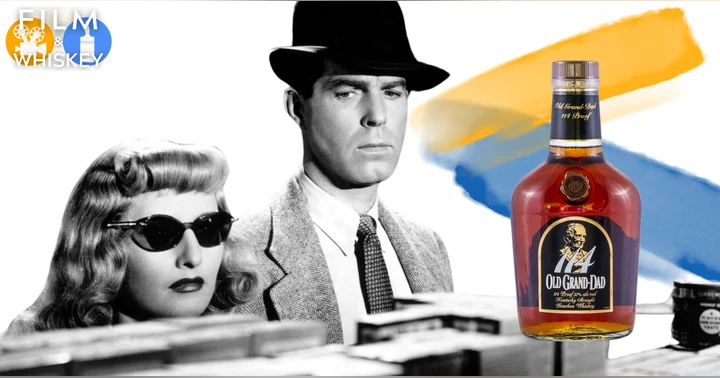
Double Indemnity / Old Grand-Dad 114

Bob and Brad throw it back to 1944 for the Billy Wilder classic Double Indemnity. This is their second Wilder film and their first true film noir. Aside from breaking down the excellent performances by Feed MacMurray, Barbara Stanwyck and Edward G. Robinson, they spend some time on Wilder as both director and screenwriter, before diving into a discussion of what exactly constitutes "film noir."
Meanwhile, they finish out the extraordinarily underwhelming Old Grand-Dad line with the 114-proof expression.
- 0:00 - Intro and Initial Thoughts
- 34:00 - Old Grand-Dad 114 Review
- 46:00 - Analysis and Final Thoughts
15% off Loot Crate click here and use the code ROBOTSRADIO. Be sure to use the link AND the code--No zeros, all letters.
- Film & Whiskey Instagram
- Film & Whiskey Facebook
- Film & Whiskey Twitter
- Call-in Line: (216) 800-5923
- Email us!
- Join our Discord channel!
Theme music: "New Shoes" by Blue Wednesday
Transition music: In Real Time by Martin $ky
--- Send in a voice message: https://anchor.fm/filmwhiskey/message Support this podcast: https://anchor.fm/filmwhiskey/support0:00 For robots, radio presents in 1944 director, Billy Wilder and star, Fred MacMurray gave the world. A mysterious foray into murder mystery and a bit of film Noir in 2020. We return skeptically to a fan favorite bourbon brand. The film is Double Indemnity. The whiskey is old, Granddad 114 and we'll review them both. This is the film and whiskey podcast.
0:45 Welcome to the film and whiskey podcast for each week. We review a classic movie and a glass of whiskey. I'm Bob book, I'm Brad G and this week, we are looking at the 1944 classic double indemnity Brad. How you doing today, man? I'm doing really good. I got to You today? Yeah, we actually met up today halfway between where we live. We live about two hours apart. We had to swap whiskeys for the next few weeks. So it was good to see you in person. My friend, it's been a long time. Yeah, it's a terrible thing. Hopefully, the fates will draw us back together at some point but for now we have to meet in the parking lot of a Cracker Barrel and just hang out and talk. Well, and in addition to seeing you we also got to both watch this movie.
1:29 I have made no bones about it over the past few weeks. This is one of my favorite movies of Classic Hollywood. We know this is the second Billy Wilder film that we've done in season one. We did Some Like It Hot. So Brad I have to ask you. First of all, had you ever seen Double Indemnity before we washed it for the podcast? Well, I hadn't I had heard of it. I knew that it was an early film Noir example. But honestly, Bob having watched it now, I am so surprised that I hadn't seen it before and like, when I think about the word, Film and all that it connotes, this is a classic film. You know what I mean? Absolutely, yeah, it's one of those films that doesn't kind of get mentioned in that first group of all time. Hollywood Classics with the Citizen, Kane's and the Casablancas and Gone With the Wind. And yet, I don't think I've ever met anyone who watched this movie and didn't like it.
2:24 Yeah. I it's a spectacular movie. And honestly, it's a much better movie than Gone With the Wind honestly. Yeah, I would put it up there with Casablanca as like these are some of the best movies of the 1940s. Well and I think one of the things that connects those two movies Brad is they both have just incredible scripts. Billy Wilder, is I think one of the most underrated directors in Hollywood history, but no one has ever left him out of the conversation of potentially being the best screen writer of all time. And we saw it with Some Like It, Hot and how quick and witty has his dialogue, can be, and you see it again in this movie and There's moments where it's really hard edged and cynical but then there's also these great dialogue exchanges between characters and Billy Wilder really, really shines as a screenwriter with this movie. Yeah.
3:14 Well I mean, I've said this before about older films and you know, this isn't always the case, you know, what I'm about to say, isn't always true because there was bad films made back in the 40s and 50s and, you know, that's fine. But back in the day before, you had all this technology to really flash and wow, Wow. And pop on the screen the the way that you kept people's attention was with good witty smart dialogue. And unfortunately I just don't think you get that quite as often in modern film because it's not quite as necessary. You're able to enhance other parts of the film which is great and I love those other parts of film and you know I'm glad that the film industry has come as far as it has. But there is something inside of me that The type of dialogue that I feel like you more often find when you watch things with Cary, Grant and Humphrey, Bogart and apparently Fred MacMurray. That's right.
4:12 Well and one thing I want to say before we move on into our favorite segments here, Brad explains is that I think another reason for the dialogue being so good and so witty and so Snappy, is that it kind of had to pull double duty. Like it not only had to fulfill all the functions that dialogue normally does, but we're dealing with a time in Hollywood history. That we talked about the Hays code and that's essentially the film censorship board that was still in place in the late, 1930s. All the way until the 1960s and films had to be reviewed for their content and so screenwriters, really had to come up with clever ways to introduce kind of double entendres. Like, things that the characters were talking about that, we all know what they really meant, but they couldn't quite get away with saying things explicitly.
4:57 And this movie is, I think one of the best examples of a movie, kind of ducking, or Around the laws of the Hays code, to convey something that they weren't quite allowed to say. And I think that's really one of the areas where Billy Wilder shines, the most with this script. But before we get any further Brad, I don't know how many people in our audience will have seen this movie, if you're into classic film, I'm sure you have. But I think for a lot of people listening, this might be their first exposure to the movie Double Indemnity. And so, we're going to move into our segment. Brad explains where Brad breaks down the plot of a movie that he's just seen most of the time for the first time and we have the treat of that happening today. So Brad, can you explain with full spoilers? What happens in the movie Double Indemnity? The film Double Indemnity is about a insurance salesman named Walter Neff, who makes a call on a client who is about to let his auto insurance lapse and he arrives at the house and finds the wife at home alone, Phyllis dietrichson, and he's soon drawn in by her sultry charm.
6:02 And she involves him in a plot to take out a life insurance policy on her husband, who is, you know, apparently a cruel and uncaring, man, and they decide to finish him off to kill him and get the insurance policy and then they're going to run off together, and, you know, be wildly in love. And as the film goes on, you see Walter fall into more and more, paranoia there, the the claims manager at his insurance company. The guy who checks in make sure that the deaths are legit. Did and the insurance claims are what they seem to be is a man named keys and he always talks about this little man in his stomach, that just tells him when something is wrong and he needs to investigate further.
6:43 And so, Neff has to essentially draw up a policy without the husband knowing, it has been drawn up on him and get the man killed in a way that isn't, you know, suspicious enough to cause his claims manager to get suspicious about it. And then, you know, they can get the money. And then in addition to all of this, There is something in a lot of insurance policies called an a double indemnity clause, which is basically really specific ways of dying or having an accident that will pay out double on the insurance policy. So there's a Double Indemnity that if the the husband dies on a train it'll pad a hundred thousand dollars instead of fifty thousand dollars. So they kill the husband, they frame it so that he falls off of a train and eventually the the the boss Boss Keys figures out that it was a murder and he eventually pins it on the daughter of Phyllis and her husband on her boyfriend at the end of the film Walter, Neff, realizes that Phyllis has no intention of running away with him. That she might even off him as well. And so he goes into Keys as office and offers a confession and recognizes that he is the one who killed the the Husband and it's that's it.
8:05 There you go. Yeah and Brad I think it even goes a little bit further than that in terms of how kind of dark and cynical it gets I mean both of the main characters, likely die. We watch Walter actually goes over to Phyllis house and shoots her dead, because he realizes that she's either going to find a way to bump him off or implicate him when she gets on the stand. And so she's dead. He gets shot by her before she dies and he's bleeding out. He Records. This confession and is basically caught by his boss keys in the office because he was trailing blood, and then the guy who operated the elevator called keys, and the movie ends in this really kind of ambiguous way where he's probably going to bleed out and die. If he doesn't, you know, he's gonna go basically to the gas chamber and die.
8:52 It's a really dark movie and it's not the kind of uplifting ending that you're used to seeing in a 1940s movie. And it really sparked this genre called Film Noir, and we're gonna get into talking about what a film Noir is later. But I think one of the first things that you can say about it is that these kind of movies. They always feature these sort of hard-boiled cynical protagonists who are maybe up to no good. They usually feature a femme fatale, you know, a woman who is obsessed with murder in some way. And they have this really sort of pessimistic. I guess I would almost have, like, nihilistic kind of tone to them where, you know, maybe people get their comeuppance but it's also, Like at what cost.
9:33 And this is, this is a really great example of that. Because as you watch this movie, you really just get a sense that most of the characters in this movie are just kind of sleazy people that do sketchy things and there's really no clear-cut protagonist in the film. Yeah. And I think, for me, the more I, you know, reflect on this movie, I really do. And this is going to be really bad pun. I really do think that Keys is the key to this film. As, as a character, he's introduced as this kind of harsh mean, crotchety old claims investigator who doesn't find any good in anyone.
10:15 And, you know, even Walter says, he's like, you know, I've worked with him for a long time, but I know that he's actually got a heart of gold behind that tough exterior. And so you kind of realized like oh this guy is actually kind of a good dude. And by the end of the film, you realize that Keys really is the moral Center. This Movie that he believes in the goodness of Walter Neff. He is the one who defends him to his boss, saying, no, there's no way Walter could have done this. He told me that he sold the insurance policy. It was all on the up-and-up and I can personally vouch for him as a human being and, and like that gave the film so much emotional weight to me that that makes you so much more disappointed and Walter for what he did. Well, And I think part of it too, is that you have such a great actor, filling this role, it's Edward G Robinson who had been super famous throughout the 1930s but had always been Typecast and kind of gangster roles. He became really famous with this movie called A Little Caesar in the early 1930s.
11:17 And at this point, you know, he was getting kind of advanced in age to be a leading man and he realized he needed to start taking smaller roles. He really didn't feel super comfortable about making the transition into supporting roles and actually said that in order to Vince him. They basically paid him the same salary as both the leads for way, fewer days of shooting and he said that made it a lot easier for him to make the decision but I think that having that would that would make it a lot easier for me to Bob but I think that having an actor of his caliber in that supporting role it almost kind of elevated the role to like a third lead because like you said that the relationship between him and Walter Neff is this really kind of father-son dynamic and it's a very tragic sort of Shit because, you know, you see, at the end of the film that Keys finds out that he was wrong all along, and you see the kind of love that he had, for Walter Neff playing out. And I think having Edward G Robbins, and in that role elevates, that sort of emotional weight to being just as important as the main relationship between, you know, Walter and Phyllis.
12:21 Yeah, there's no doubt that if you don't have keys in that in this movie and if he's not played by somebody as talented, there's just no chance that You care so deeply about meth and honestly you kind of find yourself recognizing that. Neff made a mistake that he kind of dove in with this woman who he didn't realize was up to no good and you see him pay the price for it and you kind of Wonder kind of like when you're watching the prequel movies for Star Wars and you get 2 episode 3 and it's like you know that Anakin is going to do the wrong thing. You know, he's going to turn into Darth Later. And yet, I think that the Brilliance of episode 3, is that you still find yourself.
13:07 I I still find myself, you know, watching it for the 30 millionth time going, oh Anakin don't do it. Like what if you just don't make the wrong decisions and I think that that's what you have in this movie and it's, it's just a great place to be as a viewer where, you know, the outcome like, from the very start of the movie. Neff is narrating you you think you got the right man, but you didn't. I'll tell you got. The wrong man because you got hit, you got the boyfriend and it was actually me. You're pretty good in there for awhile keys. He said it wasn't an accident. Check he said it wasn't suicide check. He said it was murder. Check.
13:51 You thought you had a cold engine? All wrapped up in tissue paper with pink, ribbons around it. It was perfect. Except it wasn't because you made one mistake. Just one little mistake when it came to picking the killer. You pick the wrong guy. You want to know who killed dietrichson. Hold tight to that cheap. Cigar a keys. I killed dietrichson, maybe Walter Neff. Insurance salesman, 35 years old unmarried, no visible scars. Until a while ago. That is It's a, you know, it right away and you know, he's gonna do it, the whole movie and yet because Keys sees goodness in Neff, you're wanting Neff to make the right decision, despite the fact that, you know, he's going to make the wrong decision.
14:45 And I think that that that only really brilliant movies are able to do that well and again that speaks to how brilliant Billy Wilder is as a screenwriter. And I think what makes it even more brilliant Brad is that he's not presented as a guy that was totally good. Who got sucked in by this. Evil woman, like she clearly had a plan. She clearly wanted to bump off her husband but I think what's what makes it even more great? Is that from the very beginning, you kind of get the sense that Walter is a little bit sleazy to like when he first. Yeah, first shows up to Phyllis house to deliver these insurance papers. He just openly starts flirting with this married woman, and you actually get some incredible dialogue in that scene, where it's like the sexual tension is off the charts.
15:28 These people are clearly into each. And you get that great exchange about she basically says like, hey you you're moving a little too fast here and he says, how fast was I going officer and they have this exchange about him going over the speed limit mr. Neff, why don't you drop by tomorrow evening around 8:30? He'll be in. Then my husband. You're anxious to talk to him. Weren't you? Yeah. It was but I'm sort of getting over the idea if you know what I mean, the speed limit on this date. Mr. Neff. 45 miles an hour. How fast was I going officer? The around 90 suppose you get down off your motorcycle. Give me a ticket. Why would I let you off with a warning this time? Suppose it doesn't take what I have to work.
16:09 You over the knuckles suppose I bust out crying and put my head on your shoulder but you tried putting it on my husband's shoulder. That tears. It it's already tomorrow evening. Then that's what I suggested you be here, too. I guess. So, I usually am same chair, same perfume, same anklet, I wonder if I know what you mean. I wonder if you want. There's tons of double entendre, there's tons of stuff that's implied, but what it really goes to show is that Walter even though he's the guy telling the story from his perspective, he's the quote-unquote protagonist that doesn't make him a hero that doesn't make him a guy that is completely free from sin, even at the start of the movie.
16:56 Yeah. Bob I I'm right there with you. I will say that that first opening scene. He is so sexually aggressive in that. Oh my gosh. I I was just like, man, this is just going to be another example of like old Hollywood, abusing women and being sexually harassed, you know, sexual harassment, and all this stuff. And like, it's not that. That didn't happen. Because I think it did, but once you start to know the character that Barbara Stanwyck plays a little more, your kind of like, okay, no, she's like, she is just as much in this trying to use Walter as he is just trying to have sex with her if In a weird way, he's trying to have sex with a married woman which is bad and she's trying to a kill her husband, and be make a lot of money off of it.
17:45 So I don't know if that makes her worse or not, but like, they're both really bad people. Yeah, in a certain sense and what's really great is that at no point in the movie until maybe the very end, do you get the sense that like one of them is more evil than the other? Because even as she kind of tries to feel him out of like my wonder if he would kill my husband, It's kind of like this dance that they play, he starts to figure out what she's doing and he calls her out on it. And she's like, no, no, no, I'll totally drop it. I won't discuss it again. And then all of a sudden he's like, well, you know I have always wondered about what it would be like how I would kill somebody and what it would be like to try to get away with it. So then he's the guy that's advancing this idea and they really do like their their terribleness plays off of each other and I think that only goes to improve, you know, the character building that Billy Wilder's doing right. Well and See, I think it's an example of how you might have somebody who never would commit murder in their life, but when they're around the wrong person or the wrong group of people, they almost egg each other on to doing things that they never imagined that they would have done in their normal life. And I love that you kind of get a picture of that when Keys comes to Neff and he's like, trying to pitch him on taking a pay cut to become a claims man.
19:05 Instead of a Salesman. And he has this great line about a claims man, being a doctor, and a bloodhound, and a Confessor. And, you know, it's this great line. He's really pitching. He's trying to sell the salesman on a new job and it's a brilliant scene. And I think you have a moment in that scene where Neff looks at keys, and you can tell that he's gone so deep in with Phyllis that in another life, if he hadn't delved into this evil side of himself, Maybe, you know, sure. He was a bad guy but maybe this would have been an opportunity for Redemption to move forward with his life to try a new hat on try. New set of clothes on, see if it fits, but because he has met this person, he's met Phyllis and he's dove headfirst into this pool of darkness and murder, and theft, and all these terrible things. He can't move forward with another Avenue in his life. And so I, there's something about that scene that you're You're just like, man, you just see what life could have been for Walter.
20:10 If he had never shown up at the dietrichson house. Absolutely. Well and Brad, I kind of want to shift a little bit into talking about this script that Billy Wilder co-wrote with the mystery writer Raymond Chandler. The story for Double Indemnity was actually based off of a short story that was written by this guy. James M, Cain, Billy Wilder had a writing partner that he wrote with all the time. Charles Brackett said that he didn't want to make this movie because he didn't like how sordid the subject matter was. So Billy Elder needed. A new writing partner. He wrote the script with Raymond Chandler, and they absolutely hated each other. They disagreed on everything. While they're said that, when Raymond, Chandler, showed up, he was like, in a 12-step alcohol recovery program. And by the time they finished writing the script, he was like a raging alcoholic again.
20:54 So, these two guys hated each other, but they recognize what each brought to the table. And one of the things that I really love is how they both contributed to the dialogue in this movie. Like you have these great. Why? Elder touches of some really clever witty lines, but then you also have like some great hard-boiled, detective type lines, even like at the end of the movie when Walter shoots Phyllis and the last thing he says is just byebye baby. Like, it's just that there's something so classic about every line in this movie, and I think you really do, get the best of both worlds. You get that great witty cynical Wilder dialogue. And then you also have those great, detective novel type lines that you here Walter. Keys say did you have any other lines that you thought like really stood out or anything?
21:41 Oh man, I do find it hard with these movies to keep track of all the lines because there's so many good ones that I'm like, wait, what he said something about this or yeah, there are there's so many good lines, but even like the kind of little throwaway like one-liners that they put in the movie, I laughed out loud at a couple of them. Like, there's one right at the beginning. When Walter shows up to the house and the maid tells him, you know, yeah, you can go sit in there but they keep The Liquor Cabinet locked up. Up. And he's like, that's okay. I always carry my own keys. And then like later on in the movie, they bring this guy down from Oregon. Who was a witness to, you know, seeing who he thought was mr. Dietrichson on the back of the train and they're kind of interrogating him and it's all on the insurance company's dime.
22:23 And right before he leaves, he's like, well, I don't think I'm gonna go back to Oregon yet, there's a really good osteopath in town that I want to see, Ever G. Robinson's like osteopath, huh. Well don't put her on the company card and it's like, very clear that he thinks. This guy's going to go see a hooker like yep, there's so many just little witty things that they're not necessary but they just help build out the world of the movie. So well yeah, you find yourself in the midst of it. Believing that everyone in the world lives like these people do which is which is funny because they're very clearly caricatures of real human beings like nobody actually acts like he's or Neff. And yet, these witty one-liners Einar's and the way that they're just cynical about the world draws you.
23:10 And like you said, Bob, it's brilliant world-building. Absolutely. And you mentioned, mrs. Dietrichson. And I think it probably is time. We talked about our two leads and they're acting performances Barbara. Stanwyck plays Phyllis dietrichson, who is maybe the most famous Femme Fatale in movie history. And for good reason because she is just incredible in this movie at the time. This movie was made. She was the top grossing Hollywood actress of the prior year. And so, when she read the script for this movie, she was like, I don't know if I really want to do a roll like this. This could be really damaging to me, and Billy Wilder in his typical kind of bully way was like, are you an actress, or are you a mouse? And she was like, all right, I guess I'll do the part and it ended up.
23:52 I don't want to be a mom. Exactly. It ended up being hurt. Obviously, her most famous role and I think she knocks it out of the park in this movie. Yeah, I think from the very start you can tell that she is in control of every room. That she is in like like as a character. She has so much Swagger and confidence and almost like this quiet braggadocio sness of like, I know who I am. I know what I want, and I'm going to get it the way that she sits at the very start of the film. And her, she's like, kind of swinging her leg out in front of her and the anklet is right there, and he comments on it and she makes sure to wear that. Again, the next time he comes like, you can just tell that she is in. Control of herself what she wants where she's going to go. And so when it finally cracks at the very end of the film and she shoots him and can't shoot him a second time and he kills her, you're just kind of like, oh my gosh, like it's almost like you're on this wild roller coaster ride of like what is she going to do?
24:54 Because she's very clearly, a psychopath. Well and I think one of the things about her that is so interesting is that she is so Shameless at the beginning of the film like not even knowing who This insurance salesman is not even knowing that, she's going to rope him into this murder plot. Like in front of her maid, she shows up in a towel and nothing else. She's flirting with this guy that comes to the door, everybody knows who she is. She's not, she doesn't love her husband, like she's an opportunist. And I think that really sets the stage for the rest of the movie. Because as these plot twists kind of come to light, it totally makes sense that she would do stuff like that. It totally makes sense that she would be sleeping with her stepdaughters Friend and maybe trying to rope him into this somehow? All of these things continue to stack up and like, yes she's a terrible person but you also just like Walter Neff, like you signed up for that we were we were drawn in by her Allure of how Shameless and kind of brash she is and kind of along with Walter.
25:55 Like we, as the audience, get our comeuppance for getting involved with somebody like that. Yeah. And I think that her daughter, well, her step daughter Lola. She is like the canary. In the mine shaft, if you will that like from the very moment, you actually meet Lola. That's the first time where you go, there's something off about phyllis's story, because she talks about how her husband is mean, and kind of a drunk and gets angry with her. And then the first time you meet him, he's mean, he's, you know, he's not nice to her and you're like, okay yeah, her story is kind of verified her husband's kind of a jerk. But the thing is, she That's a few times that her stepdaughter is kind of lousy and and not trustworthy and just make stuff up.
26:43 But from the very first time you meet Lola, you go huh. Something's off. Phyllis is story isn't quite stacking up and she ends up being the one that really helps Walter realize, like, yeah, Phyllis is the one who actually killed her, original mom, you know, dietrichson's, first wife, and that she forced her way in to get married. And now she's she thinks that she killed her. Dad and and Walters like, holy crap. I am in so much further than I thought I was going to be. And that's our segue Brad into talking about Fred MacMurray. I want to get your thoughts before we go to the break. He is our main character. He is the one who is narrating the film through his eyes, as we're seeing the whole world of Double Indemnity. How did you think Fred MacMurray did in this movie? Oh my gosh, dude.
27:29 I I struggled at the very start because you could tell that he's just a womanizer and I really wasn't enjoying that. Scene with Phyllis. But as the movie went on, I just think he has a smoothness about him. That is amazing. And and honestly, I think that these movies the the film Noir genre part of the reason they're so famous is because their protagonists are so so cynical about the world and yet I think one of the reasons I like Walter Neff as a character is because Fred MacMurray doesn't choose to play him as a. Crazy cynical doesn't believe. Anything really is real in the world as much as it's probably more about sex than about love. He definitely portrays himself as a man who is falling head over heels with this idea of being with Phyllis dietrichson and so he's not your typical cynical private eye, that doesn't think anything.
28:26 Good is out there, he's someone who falls in love with a woman on a whim almost and he kind of gets burned because of it and I like him because of that. Absolutely. It's a very different Dynamic than if you'd had like a Humphrey Bogart in this movie, you know, Bogart had one of those faces that just kind of looked like it had been worn down by Years of Living in the real world. Fred MacMurray is like a baby face. You know what I mean? And he had made his bones in Hollywood by being in star of like really light family-oriented comedies. He became one of the highest paid actors in Hollywood and then he took this role because his contract was expiring with Paramount and normally they would have advised him. Against it but he was playing Hardball with the company and so Paramount was like let's let him take this role, it'll ruin his career and then we won't have to pay him any more money and it had obviously the opposite effect. But I think that casting somebody like McMurray in this role really works to the benefit of the movie because he's not the kind of guy that's like a bogart worn down and just skeptical of everything in the world. He's a guy who's, you know, for lack of a better term. He's like a regular guy.
29:33 He works in an insurance office and he's seen enough of these Kind of bogus claims come in that he has a healthy sense of skepticism, but it's not really until he gets caught in this sort of web of murder and deceit and lies that you really see the extent of how Bleak his worldview comes to be. And I think having this sort of like, baby-faced good-looking guy in the part really brings that home. Yeah, I mean I mean think about it. Bob if you had Fred C Dobbs as the insurance salesman like it just it just would be too harsh. It It'd be too over the top and like you said, I honestly, if I had to describe Neff at the start of the movie, he's an insurance salesman, he makes good money. He's, you know, and this is more of a dream. I don't think this is actually the best that the world has to offer.
30:22 But like, you know, he's on top of the world, he can womanize all he wants, he's got the money he needs, he gets to travel. Like this is in a certain way, a perverse American dream. And so you know that like you said that baby face, the He plays the character as being kind of eager and Suave and confident. I just I really, really think that Fred MacMurray had the best performance out of anybody in this movie, but Brad, I think this is a good note for us to press pause. When we come back, I want to talk a little bit about Billy Wilder. The director and we've talked about the writer, but I want to talk about his Direction in this film, I want to talk about the themes of the movie. What makes this a film Noir? What is a film Noir. And then, we're going to kind of talk about, you know, the legacy of Double Indemnity.
31:05 But before we get to that, that lets press pause here. Let's try this old Granddad 114. What do you say? Let's get to it. Hey, everybody.
31:47 If you've been listening to the podcast for any length of time than you know, that I am a huge nerd when it comes to movies. But the question is, what are you nerdy about? What is the thing that makes you nerd out more than anything? Is it video games is it D and D like Brad we know you have something in your life that you like to be nerdy about and for the inner nerd in all of us there is a place called Loot Crate. It's a subscription service that sends all kinds of different bundles directly to your door with different kinds of themes. If you're a fan of the robots Radio Network, You may want an Elder Scrolls themed box. You may want to fall out box, a Marvel box. There's gaming, there's anime. There's tons of different subscription themes that you can sign up for at Loot Crate. The great part about a Loot Crate Box is that they try to give you a variety of things. Each month, that actually have more value in the Box than what you would get buying each things separately. And the best part is that we as a part of the robots radio network are excited to be able to offer you a 15 percent off your first order with Loot Crate. If you're interested in checking out Loot Crate, make sure you use.
32:46 The link in our show notes go to the episode that we're listening the show notes there and click the exclusive link that we have there and make sure you enter the code robots radio at checkout. You have to do both things. Click the link and enter the code robots. Radio for 15 percent off. Your first purchase from Loot Crate. Alright, so today we are checking out old, Granddad 114. Now if you've been following our podcast for any length of time, you've probably guessed that. The 114 means that it is 114 proof, and you would be correct, why? I know this comes from the Jim Beam corporation. Last week, we tried the old Granddad bottled and bond back in season one.
33:28 We tried old Granddad, 80, proof. We were not fans of either of them, but we keep getting people. Telling us, you know, when we tried the 80-proof people were like you got to try the hundred proof. It's so much better now. We've tried the 100 proof and everyone's like well wait till you try 114. So we said listen, I don't think we're going to like this but we're going to do the 114 so that we stop having people tell us that we're drinking the wrong whiskey somehow. If we like give this a bad score their old granddad's going to suddenly come out with like but wait, wait wait there's this 137 cast with that. We really think would be good. It's really The top, it puts the 114 to shame. This whiskey is pretty Limited in its distribution. You can't find it in Ohio.
34:10 You really have to go to Kentucky, to get it anywhere around, where we live, Brad, honestly. After the first two expressions of old Granddad, I'm a little bit leery, but I'm kind of excited. It'll be fun to get into it now. Old Granddad is a high rhyme Ash Bill meaning that we know bourbon has to be 51% corn to be called bourbon. But after corn, the next highest used grain in the mash bill is right. Bye. And so Brad, I expect us to have quite a bit of that Rice. Pais. It's actually 27% Rai but let's get into nosing it. What are you picking up on the nose of this old Granddad 114? Honestly, it-it's very alcohol forward. Yep. But once you kind of push past that a little bit, it has man, it has a little bit of vanilla, it has some of that rye kind of spiciness, but there's also I might sound weird but it almost smells kind of like A hmm, that that musty kind of old feel to it?
35:10 Yeah, that I haven't noticed on other versions of old Granddad. Yeah, it definitely has almost like a raw grain smell to it. That's pretty prominent. I actually didn't think this had much of a nose to it. And I'm kind of surprised because, you know, typically as we increase in proof, we're usually increasing in age a little bit too. I don't know if that's the case here. But I was expecting something a little bit more complex and All I really got was a huge blast of ethanol on the nose, a little bit of spice and it's kind of like your typical bourbon e or rice spices, but it also smells you get that that rye comes forward in an almost sour type way. Like it's a it's like a rye bread.
35:50 There's like a yeast Enos to it and it smells like like just milled grain. It's very I don't know what the word I would use to describe this is but it's almost like rustic smelling. You know what I mean? Like it smells like, yeah. Smells like yeast. It smells like grain and then it's just like, here's a bunch of ethanol to go with it. I don't find this to be a really satisfying knows, I don't know. Are you enjoying the nose Brad? No, I mean I will say there's not a lot of richness or depth to this 114 proof that you would like you said, Bob, when you get up above 110, 115 proof, you start to expect a depth and a richness to it that I'm not getting here.
36:32 Even even as I looked Look at this. The color doesn't even look that deep know compared to other things that you get at this proof. Yeah, totally agree. I'm going to give this a 4 on the nose. Um, I'm gonna give it a five. It's right down the middle average for me. All right, well, that takes us to The Taste so hopefully this improves from here. Let's give it a sip. Wow. Bob I'm yeah, that's, that's a whiskey. Yep, it has alcohol in it, so it sure it. Sure has alcohol. And then on top of the alcohol is some more alcohol.
37:13 Honestly, the more I taste bourbon, the more you do get to recognize like a front of the tip Taste of middle of the tongue taste of Finnish taste and like a good whiskey can balance and yet Change in all those areas this whiskey. It tastes like ethanol on the tip of my tongue. On the middle of my tongue, it has a corn sweetness to it and then it goes down my throat and it tastes like ethanol. Yeah. Is that about the experience? You had bottle. Absolutely. And I think you're totally right Brad, As We Sip some of these whiskeys. I've started to realize that there's kind of like two or three basic Umbrellas of bourbon. It's and one of them is this sort of like high-rise? I unsweet harsh grainy Mash Bill and you get it in these old. Granddad's you get it a lot in for roses and I've just found that I don't care for Whiskey's that tastes like this and this is no exception to that Brad.
38:13 I don't know if you would compare this to a Four Roses but that's kind of the same thing. I get it's it's really thin for a 114. There's a little bit of spice and there's that alcohol tingle throughout it's just alcohol all the way. And I found that that sour note from the Rye on the nose carried through as well. It's not a pleasant ride flavor. It's just this really sort of sourdough almost yeasty bread. It doesn't have much flavor to it. I let it sit for about five minutes. I've taken two sips of this now, and it has a little bit more character after about 5 minutes that it really kind of develops, some more sugar. But again, it took five solid minutes to just like calm down in my Glass enough to be palatable.
38:59 I do not like this. I'm going to give it a 4 again on the taste man. Bob I'm trying to come up with something for this and I just can't it's a three on the taste for me that there's not much going on here you know I've read a few different reviews of this and it seems like it's pretty universally praised that there's a lot going on and I don't know if I'm just doing something wrong but I feel like I've drank enough Barrel proof whiskey at this point. To know what I'm doing when it comes to high proof whiskey. This one doesn't have a lot of flavor, you know. I swish it around on the front of the tongue a little bit, but even as I finish and I tried to look for notes, I try to find anything on there. Even just something, you know, some sort of spice or some sort of anything.
39:44 It's just so overwhelmed by the ethanol that any flavor I find isn't really worth finding. Yeah, Brad, I totally agree. I actually found myself about halfway through scoring this saying like why am I trying so hard? To find good things to say about this. Yes, it gets. Yeah, yeah. I think it's because I've read and seen so many people who love it and at a certain point I had to say like, no, I'm not going to just like grade this on a curve anymore. And I have to be honest about the fact that I do not think this is good and that that takes me to the Finish as well. And literally, the only note that I took down for finished was ethanol. Just ethanol like there really is no lingering flavor that lasts on this. It is a hugely alcohol, forward. Ski the burn going down is prominent and it. Honestly, last week we said that it seems like to get to 100 Proof.
40:35 They just added a bunch more grain alcohol to get to go from 80 to 100. And this time it seems like the same thing as we've gone up in proof. I do not notice a lot more flavor a lot more depth or complexity in these whiskies. And at this point I think it's just getting harsh. Yeah. Bob it's I am not understanding the obsession with this whiskey. I honestly kind of feels like when we reviewed mellow corn. Now granted milk horns in a very different category as far as you know, that everybody would recognize that's a low-end cheap whiskey but a lot of people really like it. This one I don't know what the price is but I can't imagine it's a Super Cheap whiskey and so I'm just going to sit here and go man, like for the Finish, it's going to be a three for me balance, I guess it's well balanced it smells like ethanol and corn and a little bit of spice and It tastes like that.
41:28 So I guess I'll give it a 5 on balance, but I'm really curious to get to this value score because I'm, I want to know how much it cost. Yeah, so just for me, I gave it a 4 on finish. I gave it a 4 on balance. I went for is across the board until I got to value. Now the value on this is going to be kind of interesting to gauge because Again Brad it seems like the some people's palates just really appreciate Whiskey's like this and I know I don't. So I'm going to grade it based on that. And if you're a big fan of old Granddad of of Four Roses, I think this this would be right up your alley. This bottle of whiskey will cost you about $30 so it's not an exorbitant amount of money. And it is kind of like, you know, if you're going to Kentucky, it's not distributed by you.
42:12 You pick up a bottle, it's a good story. It's actually a really beautiful bottle. One of my favorite bottles in the whole of the bourbon world, but Brad, I would never pay $30 for this, and I could list a, you know, just a plethora of Whiskey's that I would recommend. $30 before this, I mean, you know, in the state of Ohio, like you can get well or Special Reserve for cheaper than this, you can get all his Elijah Craig. You could do a Knob Creek, like, even in the Jim Beam line there are things that I would recommend over this. I'm going to give this a 3 on value. I'm right there with you Bob. I think that there's so many Whiskey's you can get for even $20 that are better than this. They're in our Springtime of swill. We probably had a few whiskies that I would prefer over this.
42:54 So yeah, I'm going to give it a 3 as well. I think there's Thing going on here and people seem to like it. But I'm gonna have to pass on this and not recommend it. I don't recommend as well. That means that both of us come out to a 19 out of 50 on this. So well below average, I have a feeling that some people are going to write us Brad or maybe call in and tell us that they think differently about this. And I would love to hear if, if you like this whiskey, I want a description. Not just that we're wrong and you liked it, but what is it about it that appeals to you? Because for us, it The crosses as sour as harsh as too much of an alcohol burn. Do you agree with that assessment or are we completely missing something in this whiskey. So please if you disagree with us, call in right in and let us know what it is.
43:41 That you think is good about old Granddad 114. Yeah, Bob this might be our Back to the Future take of the in the whiskey world. But regardless of that I think I'm about ready to move past not just old Undead 114, but any version of Old Granddad, I would much rather talk about the 1944. Classic double indemnity. Well, Brad, let's get back into it. Alright, so that was old Granddad. 114 a whiskey that. Neither of us recommends, a neither of us enjoyed. Let's get back into talking about this movie that both of us, enjoy and that I will be much happier to talk about Brad before we left for the break.
45:03 I said that we were going to get into talking about Billy Wilder as a director. And I think that Billy Wilder is a really underrated director because he also wrote all, you know, all or most of the movies that he made I think people give him a lot of credit for being a great screenwriter but Kind of infer that like he was using that as a crutch with his Direction. And I don't think you can make that argument here. I think this is Wilder, at his most kind of hitchcockian like this. This movie reminds me so much of a Hitchcock movie, obviously, very different tonally, but the two major themes in this movie are, like, sex and suspense. And that's a Hitchcock movie, you know what I mean? Like, Everything About You movie is either about the tension of, are they going to get caught or it's about the tension of? Are they going to have?
45:49 X, that is the definition of a Hitchcock type movie. And I think that Billy Wilder really leans into those kind of directorial, tricks, obviously, we talked about the sexual tension in the first couple scenes with the leads, but I think it's also really hitchcockian in the way that you as the viewer are watching this crime play out, you're watching these two horrible people planning to commit murder and then when it comes time to actually do it, you're surprised to find out that you're like on their side like your kind of Only hoping they get away with it when they lay his body on the tracks and run back to the car to get away and the car won't start. It's so suspenseful and you don't want to admit it but it's suspenseful because you're hoping that they don't get caught.
46:33 And and like that is the definition of a Hitchcock type suspense thriller in Vertigo when Jimmy Stewart finds the letter and he's realizing everything that happened. Like I feel like you have a moment like that and this movie when f is Everything that really is happening here and he finally figures out. Oh, this is what's actually going on. And so, yeah, I think Hitchcock is a perfect perfect look like for you know, what is happening in this Billy Wilder film. But like you said, I think that Hitchcock has a weirdness about him that Billy Wilder doesn't have. And so with wilder, you get the snarky comments, the double entendres you Get those moments of lightness and of laughter that I think allow you as, you know, just as an average moviegoer to engage with the film on a deeper level, because it doesn't feel so.
47:33 So, foreign to real life. Does that make sense? Yeah, I think it does. And I think that that's what really makes Billy Wilder, a great candidate for directing, a film Noir. Now, this is a term that we've used. Like, I don't know, probably 20 times already on this episode Brad, but film Noir is Really hard to Define. It's not really a genre, it's more about the style and yet, any movie, that, that gets designated or gets called a film Noir, you do see like certain elements, creep back up again, and again. So, the term film Noir. It actually, it comes from the French for black film or dark film. They're usually characterized by the fact that they have these really harsh lighting patterns that, you know, when you're lighting a scene, you've got, like, a couple main lights in the one is called the key light, that's where most of the light comes from. Um, and let's say that you're shining a light on somebody's face.
48:21 The key light is going to create a whole bunch of shadow on the other side of the person's face. The usually, what they would do is they would put a second light called, a fill light, to kind of balance that out. Well, in film Noir, they're all about the Shadows. They're all about the contrast. So like they're not going to put a fill light in the scene. And so you get these incredible like Silhouettes, you get the light pouring in through the Venetian blinds. That really create these kind of expressionistic visuals in a movie and then you also have that they To have the same themes. There's always like a cynical world view, there's usually a femme fatale, they're usually about murder. Sex is always kind of bubbling underneath the surface, creating all the tension. I think this is a perfect example of that.
49:02 Because when you think about film Noir, it is about as stylized of a movie genre as you can get and yet somehow Billy Wilder doesn't make it seem like this weird foreign world that we're in happening. Like it all seems realistic because of the touches that he brings to it. It. Yeah, I mean even when you just look at you know the the insurance office that Neff and keys working, it just feels like a normal everyday workplace and I think other film Noir you get these privatized that are you know they're in an office by themselves and their pondering the meaning of life. And they're you know they're there it's like this gritty dark and it's just unrelatable.
49:43 It doesn't feel like real life, whereas in this film, you know, they just have normal office jobs and keys is done, really well. Himself. So he has an office by by himself and Neff is done pretty good for himself and he shares an office. He's not on the general floor with all the other salesmen. So like their gets, there's this sense of normalcy about his life that makes the vortex that is Phyllis dietrichson so much more enticing for him. You know, it's because he leads this normal life that he's like, man. I have this opportunity to sleep with an or with a married woman and it's a chance to kind of spice. These things up and, and it's just so believable.
50:23 And I think that that believability that he's able to craft even within such like a highly stylized visual World, it really helps the movie out and I think Billy Wilder even realized this because they filmed a different ending for the movie, you know, as I was watching this movie, I was like, I don't understand why this movies ending in the way that it does. And I don't know if you really had this problem Brad, but like, you know, Walter Neff finds out that Phyllis has been seeing Sky Nino, zachetti hurt, her stepdaughters boyfriend, and you get the idea that like, oh, he's going to pin it on them, but then he makes this really huge jump to like, well, no, I have to actually kill her and I'm going to pin It On zachetti by calling the cops afterwards. And I'm like, why do you have to kill her? Why are you going back into her house? What happens if you accidentally leave some kind of evidence? They're like why are you doing this? And then I found out afterwards that because of the sensors that were in place at the time you actually had to have both of those at Agonist shoot each other in a way that could potentially be fatal.
51:23 The Hays code had a really strong belief that people who did things like what they did criminals. You know, they had to pay and people who are adulterers had to pay. So it makes sense that you see Phyllis get killed by Walter and Walter get killed by Phyllis. You know, if he does end up dying but the the movie actually went further than that in the original draft of the screenplay and they actually filmed the ending and tested it out for audiences. Walter survives and actually goes to prison and gets executed at the end of the movie. And the last scene of the movie, is him going into the gas chamber and you can actually still find like production stills from this seen online, Edward G Robinson. Goes to the gas chamber and watches from outside as Walter dies, which is like a, a horribly Bleak ending to this movie. But Billy Wilder tested it out, the audience didn't seem to mind the ending.
52:16 But he actually said, you know what, I don't think we Need this. Even though they spent a whole bunch of money to craft this scene, he's like, you know, the heart of the movie is this relationship between Walter and keys and that last scene that we get where we kind of understand what's going to happen to Walter. Anyway, that's really the ending of the movie. Why don't we just end it there. And I thought that's probably the best directorial decision that he made in the whole movie because that ending, we really would have been completely unnecessary. And, and where they choose to end, it is kind of like the emotional climax. Of the movie and I think it works beautifully. Yeah. And, and Bob, that, that kind of brings me to a place where I'm ready to give my final score because this, this movie is so, so good.
53:00 That, you know, there's a few issues here there that I wouldn't call this a perfect movie. But for me, it's easily a nine and a half out of ten. I could watch this movie over and over again. And honestly, I'm excited to show to a few friends, who, you know, probably haven't seen it with how old it is, because This is just put plainly, it's a fantastic movie and I really think anybody who enjoys movies should watch this film. You know, I think I'm right there with you. This has always been one of my favorite classic films to watch and I don't know if it's just because of like what's going on in the world? The last few weeks and seeing like the dark side of human personalities. But something about housel easy and dark and unredeemable these characters were really affected me this time and I couldn't quite lean into Thing at a 10 but I think it's absolutely a nine and a half. It's a phenomenal movie.
53:54 It's probably the best example of a film Noir that's ever been put to film when the movie came out, it actually was nominated for seven Academy Awards and it didn't win any, and Billy Wilder got so mad because his Studio basically, through the movie Under the bus, they promoted a different movie instead. And both of these films were nominated for best picture. And by the time Billy Wilder, lost Best Director to the guy who who directed the other film. He actually tripped him going up the aisle. Billy Wilder was a super sore loser, but I think in the years since this movie has come out, it's come to be seen as one of the best films ever made. And I absolutely think that it holds up 75 76 years after it came out. The Bob do you want to know whose opinion? I want to hear.
54:38 Who's that bread? Well that would be filming whiskey Nation, our loyal listeners but if they wanted to let us know what they thought. Bob where would they find us? Well, it's such a good question. Brad, if you want to write in call, Tell us what you think about Double Indemnity. You can find us on social media, we're on Facebook, Twitter and Instagram at film whiskey, or if you want to give us a call, our phone number is two one, six, eight hundred 5923 once again. That number is two one, six, eight hundred 5923 or give us a call on our anchor dot f m-- page. You can record a voice mail there and let us know what you think about Double Indemnity next week we will be back. We're actually staying in Classic Hollywood. Brad will be back with a 1951. Classic the African queen for the film and whiskey podcast. I'm Bob book, I'm Reggie will see you next time.