Apple Podcasts

 Spotify

 Castro

 RSS Feed

 Goodpods
A Complete Unknown, James Gunn's 'Superman', and Barrell Craft Spirits

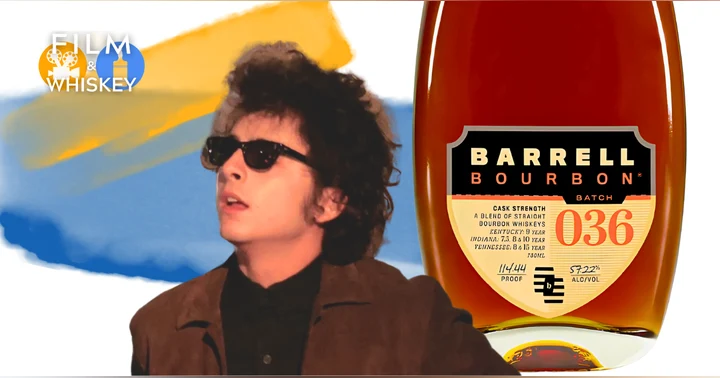
In this special bonus episode of Film & Whiskey, Bob is joined by Mike Wendt from the Greater Cleveland Film Commission to review James Mangold’s highly anticipated Bob Dylan biopic, A COMPLETE UNKNOWN. The conversation also dives into the newly released teaser for James Gunn’s Superman, exploring how Cleveland continues to play a role in Superman’s cinematic legacy.
Later, Brad and Bob sit down with Joe Beatrice and Tripp Stimson from Barrell Craft Spirits. The duo shares insights into the origins and future of Barrell, discusses their innovative whiskey releases, and reveals their favorite movies.
(0:00) Review: A Complete Unknown
(30:04) My Favorite Movie: Interview with Barrell Craft Spirits
Greater Cleveland Film Commission
Film & Whiskey Instagram
Film & Whiskey Twitter
Email us!
For more episodes and engaging content, visit Film & Whiskey's website at www.filmwhiskey.com.
--- Support this podcast: https://podcasters.spotify.com/pod/show/filmwhiskey/support0:00 Today on the Film and Whiskey podcast, we are looking at the new film A Complete Unknown, the Bob Dylan biopic starring Timothy Chalamet. Is it worth your time this Christmas? Then after that, we're talking with the team at Barrel Craft Spirits. You guys know how much we love barrel around these parts. Join us for all that on Film and Whiskey. Welcome into the Film and Whiskey podcast. I'm Bob Book and I am flying solo, at least for this part of the podcast, because I'm going to be talking about a new movie today, folks. As you know, I am an official question mark, a member of the media here in Greater Cleveland, OH. I get to go see some of these movies when they have press screenings.
0:57 Not important enough yet to get screeners sent to me in the mail or digitally, but I make the trek to a theater to watch a free movie every now and then. And I, I do it for you, you know. So I recently went to see the new movie from director James Mangold, A Complete Unknown. This is the Bob Dylan biopic coming out this Christmas. It is being hyped up as one of the big Oscar movies of the year. And I need somebody to talk to you about it. So I've brought along a new guest on our show. It's Mike Went. He is the production coordinator for the Greater Cleveland Film Commission. He is a frequent person across the aisle from me in these screenings. This is the first time on the podcast. Mike, it's so good to talk to you.
1:38 Thanks for joining us. Thank you so much for having me, you know, been a fan of your, of your podcast and also, you know, like as you're right, I mean, we, we see each other in passing all the time and, and we've been following each other on social media for a while, but it's good to finally do this in person. 100% First of all, are you a whiskey drinker? You know, I'm on like a certain medication where I, I can't really drink as much currently, but you know, hopefully I get the thumbs up and I can get back. Well, I was going to say, I don't know how lenient they are in our screenings, but I need to just start bringing you small bottles of stuff to drink while we're watching these movies. I mean, some of them to get through them, you know, we 100% man that little boost unfortunately or fortunately not, not for this one I would say, but.
2:28 So Mike, tell me a little bit about about Greater Cleveland Film Commission, because we have some spicy breaking news to report on the film Commission, but I wanted to get a little bit of a sense for what you guys do. Yeah. So the Greater Cleveland Film Commission, we're a non profit and our main goal is to help attract film and television projects come to come to Cleveland and hopefully get people who work in the industry locally jobs on those on those projects. We also really emphasize the educational aspect because there are a lot of people you know, who probably just don't realize that there are these opportunities. So we are often doing free things in the area. You know, we have mixers.
3:16 We also have, we're going to be having a free production assistant workshop that's taking place January 11th. It's going to be taught by a man named Kokai Empa. And he is, he's worked with so many different big name directors in the locations department. His first film was The Color Purple with Steven Spielberg, but he's also worked with Spike Lee and various others. But he's, he was the location manager and production manager for The Shawshank Redemption. So we're, we're very excited about that because, you know, the film just celebrated its 30th anniversary. So when myself and, and Bill, the president of the Commission, went down to the celebration for that movie, we, we chatted with Kokai and who is like I said, I mean, because Bill and I come from the locations background.
4:11 He is a legend in the locations world. Kokai, that is. And you know, we were just grateful that he was willing to, to talk with us. And, and when we offered him this idea to, to fly him in to, to help teach perspective production assistants, he, he said yes. And we were like, all right, amazing. That's. Awesome, man, I was going to say, I think you're even downplaying a little bit of what you do because anyone from the Cleveland area, we like to talk about Cleveland a lot. We talk about our beer, we talk about our sports teams. And if you've been around us for the last decade, we like to point out all of the times that Cleveland has been featured in the Marvel Cinematic Universe. We will point to specific buildings in the skyline or things that are pretend to blown up and we'll say that was our building that was pretend to blown up. And Mike, you're, I mean, you're kind of the point of contact for all of these production companies that are looking for locations to to film in.
5:08 And the most recent one, the spicy breaking news that I've alluded to is James Gunn Superman, which just came out with its teaser trailer today as we're recording this. And I have already seen Twitter threads of Clevelanders circling buildings and locations in a Progressive Field is featured pretty prominently. The arcade is featured pretty prominently. Tell us a little bit about that experience of, of just doing scouting and what ended up being, as I recall, a much longer shoot in Cleveland than they had originally intended because they found so many places to film. Absolutely. Yeah. The so yeah, a big part of my job is to to scout for productions or be one of the first lines of communication when when a film is thinking about shooting here. And Superman was it was a almost a little over a year's worth of work before they even started rolling cameras. You know, we got an inkling that they were interested. So we we provided some initial photos just of our downtown and a big ace in the hole for that movie. The the one of the executive producers was the assistant director on Avengers and Captain America, The Winter Soldier. So he very familiar with Cleveland. His name's Lars Winter, and he was kind of, you know, letting Mr. Gunn know what what Cleveland can offer. And yes, there I don't know about Ndas, like what I can say or what I can't say.
6:38 But there were times where it looked like, OK, it's going to be here for a couple days. And then it then it ballooned to like, much longer. And then, you know, it eventually became, you know, they were here for about 5:00-ish weeks of filming, you know, and also like lots of prep before that. So whenever we can have a film like that that can really showcase what Cleveland can do is like, you know, we're so excited about it. But also just the fact that Superman was created here, you know, by two Clevelanders and you know, the fact that the none of the other films ever shot here, you know, this is it.
7:20 It almost makes me well up thinking about it. But it and actually just having watched the trailer now probably like four or five times today, boy, it it's like, you know, hopefully this will this will be the catalyst to hopefully bring more things to Cleveland because maybe people will see that and be like, wow, we want to shoot there. 100% we had to get our mandatory Cleveland plugs in here. So now that we've now that we've shown love to the land, let's get to the topic at hand today. So you're here to help me review a movie and that movie is James Mangold's new film A Complete Unknown. This is the biopic of Bob Dylan in his younger years when he first arrives in Greenwich Village, all the way through to the semi disastrous performance at Newport in I believe 1965, where Dylan went electric.
8:08 Now this this screenplay is written by Jay Cox, frequent collaborator with Martin Scorsese, based on a book called Dylan Goes Electric. And it is one of the most anticipated films of award season. So let me I'll just turn it right over to you, Mike. What did you think of this 141 minute film? You know, I there's a lot that I I did like about the film and I think it is perfect. You know, it's the perfect kind of movie that come to come out for Christmas because I, I don't know how you feel about it, but I feel like for, for some of us who are of a certain age, you know, like Thanksgiving, it was like almost exclusively to Wicked and Moana.
8:54 And you know, I'm like always like looking for that kind of like juicy indie or something, you know, that I can go see. That's the antidote to those movies. And there's a lot of family movies coming up. Not that there's anything wrong with that. Like, and even coming up now, it's like you got Mufasa, you got Sonic and it's a lot of stuff that's like, you know, if you don't have kids, like like my, my wife and I don't have kids, you know, it's like we're looking for something a little bit to to sink our teeth into. So we went in with this with pretty high expectations. I do feel that Timothy Chalamet's performance was was quite outstanding and there there are a couple of nitpicks I do have with it, which I think it it's just some in how some of the female characters are portrayed in this film. I feel like even though they both give good performances, so like Monica Barbaro as Joan Baez and also Oh my gosh, why am I blinking?
9:59 Out Elle Fanning. Elle Fanning, Yes, yeah, yeah. You know, there. Now. Joan Baez, I think, is giving a little bit more of a meteor role. And she could, I mean, and also Monica Barbaro can can really sing those songs well. But I feel like sometimes they are a little bit stilted, like they're almost archetypes of women, you know, and they just kind of have to, they're there, you know, as something to maybe move the plot forward or just make sure that we have female representation. But I will say when it's the musical scenes, I, I really think this movie cooks. And I also thought Edward Norton's performance as Pete Seeger was was quite entertaining.
10:43 Chef's kiss, Man. Yes, we'll get into talking about all this. I'm trying to think of the way to frame the conversation because I'm a little bit cooler on the movie than you. I think this is a solid movie that I that had some pretty major flaws to me and I'm trying to decide, do I want to set it up by comparing it to other similar movies, or do I want to talk about how the movies really bifurcated? Like it's it's it's 2 movies in one. There's a there's 1/2 and then a fade out and then the second-half. Maybe let's go that that direction. Which half did you? Prefer, I think I, I preferred the the first half of the film I did too Yeah.
11:24 And I, you know, just, you know, him meeting Pete Seeger and then you know what? Willie Guthrie. Am I saying Woody Guthrie? Woody Guthrie yes, I should have something up here for for Cliff notes. So I'm going off my memory here. But like I really and actually, I thought, you know, the the performances, you know, once again by Edward Norton, but also Scoop Mcnairy, I thought was great and almost like wordless performance there. And so I was really kind of pulled into the world and I think mangled and Feldman Pepa Michael, who is his I think is often DP really captured New York well.
12:11 And you know, so I I I like that. Then when we get, you know, for in that second-half, yeah, it didn't catch me as much. And I also felt and I I I almost hate using this criticism, but it's just a little bit too long, like 100% be a little bit tighter. And I was I don't it's like when and I'm sure my wife had read the book. I think that it that it's based on and, you know, Dylan admittedly is kind of a jerk, but it's like almost like he kind of treats a lot of people like like crap. And you know, and it's like it's so it's like almost hard to root for this guy, even though obviously he's right. He's writing this amazing music, but but yeah, he is. He's a bit of an asshole.
13:01 So here's here's my issue with the movie is that I also preferred the first half of the movie. And so the first half is Bob Dylan as ingenue, right? Like, he's showing up in Greenwich Village. He's kind of getting his feet wet. He's finding his first love in New York City. He's getting taken under the wing of Pete Seeger, even though he idolizes Woody Guthrie and he's making his bones in Greenwich Village. And then there's a fade out. And it's only a period of like, I don't know, three to six months, but Dylan has exploded to international superstardom. And so it fades back up on 1965. And now you've got sunglasses Dylan. And it's, you know, he's there's a great shot right when that second-half starts where he's just walking down the street past all the locations you've seen in the first part of the movie.
13:45 And they've all been filled with Dylan copycats. And he's he's super jaded. He doesn't want to be there anymore. My issue with the movie is that the Dylan goes electric storyline is what this is based on, but that's only the second-half of the movie. And so the first half of the movie really doesn't have a story. It like it only exists to serve setting up some of these relationships that are going to be in tension in the second part of the movie. And yet I preferred that that part of the movie. I preferred the plotless part of the movie to the part that actually had a plot. And I think that that's kind of a fatal flaw with this movie a little bit is like, I, I just like hanging out with this guy in Greenwich Village.
14:27 And now you're kind of forcing this other story upon us as an audience that is just kind of inherently less compelling or less interesting to me. Even though there's meteor drama, I've had a hard time kind of trying to disentangle why I feel this way because usually if a part of the movie doesn't have a story, I'm like checked out. But that that part caught me more than the second-half did. No, I, you know, I, I tend to agree here and and I don't my wife and I had a long conversation on the the ride home from it was like that. We, you know, there was some, we just felt there was something missing to make it like feel great about it, you know, like, like, because I was ready to go and say like this is the Ms.
15:11 movie of the year or something like that. You know, like, and that's, I think that's what I mean, I always hope for towards the end of the year is seeing that one movie that really blows you away and that's the one that's like, that's the definitive. So yeah, there there were, yeah, I, I think there was kind of just it made who knows? Like I'm, I'm curious like how the process was with Jaycox and, and mangled. Like was it Jaycox had like a, a full version or did they actually collaborate on it? You know, 'cause, you know, sometimes writing credits can be, can be misleading or interesting sometimes. But I will say one of the one of the aspects, one of the parts that I really did like is when he, you know, gets the kind of pen pal relationship with Johnny Cash.
16:01 Like and, and I feel like Hoyd Helbrook, I think is his name like portrays or Boyd. Is it Boyd? Boyd. OK. Yeah. Yes, yes. We'll, we'll get there, man. It's all right. You just have to edit my whole segment out, no? Yeah, you're fine. But but no, I like I and I thought that was a lot of fun. You know, getting those insights, I think was was interesting. I mean, I mean, you know, I gave it on my, you know, letterbox. I think I gave it 3 1/2 out of five. But I, I wanted, I wish you could give a three-point 1/4 or something, you know, I mean, because like, that's, that's kind of where I was at. But that's exactly where I'm at, a 6.5 out of 10 on this movie. And I think going back to the Mangold thing, maybe this is a good place to talk about the movies that I think are going to be obvious points of comparison.
16:52 The first one being walk the line, right? So mangled makes walk the line almost exactly 20 years ago. It comes out in 2005. And I think that I I kind of wonder if the fact that walk the lines story structure has been so parodied by movies like walk hard, if that is causing mangled to try to do something different with the structure of this movie. And I feel like he almost swung it too far in the other direction because for my money, I I really do think Walk the Line is about as perfect as a music biopic can get. Oh, absolutely. It tells a really self-contained story and it has a narrative thrust all the way through, which is like Johnny Cash's addiction narrative and how he overcame it.
17:33 And this movie just doesn't really seem to have a story to it until this what seems like a manufactured kind of conflict in the second-half, which is like, will he go electric? Will he not? And they try to present this narrative that's, hey, I'm Bob Dylan and I am pushing back on on this idea of being anointed the savior of folk music, 'cause I don't want that put on me. But nothing in the first half of the movie indicated that they were doing that to him. And it's not until he on his own decides like, I want to play non folk at this Folk Festival. And then they're like, please, please don't do that. And he's like, you guys are putting all these rules on me. It, it, it felt like I didn't know who to not just to root for in the second-half, but I, I'm rambling at this point because I'm still trying to figure this out. And, and Mike, I saw an interview with Mangold where he said that he intended this movie to be thought of like Amadeus And I see.
18:35 And he said like he wanted Pete Seeger to be the Solieri character. And I'm like, my guy, if that was your intention, then I I think this is you didn't get it for like it's not successful because throughout the film, Edward Norton, to your point as Pete Seeger, I think might be the best performance in the film. And he is probably the only real sympathetic character. Like we sympathize with him throughout the movie, even as he's trying to talk Dylan down off the ledge at the end of the film. And so I I can't see him as a villain and Dylan as a hero when it seems like Dylan brought all this upon himself. No, I I was feeling the same thing where I I felt so bad for the Pete Seeger character and it's kind of the I don't know it.
19:21 Did you see The Apprentice the the movie about? About Trump with Sebastian Stan. Yeah, yeah, yeah. It it's this, there's some similarities in that movie where, you know, the Roy Cohn character in that movie is, you know, he's established as kind of like not a very good person, but then you feel very sympathetic towards him because the, the young person that latched on to him is now treating him like garbage. And I, and that's kind of like, I almost felt like Bob treated Pete Seeger like garbage. Now, I mean, obvious, not to spoil anything for any music fans out there who who's going to see the movie, but you know, you kind of learned that like they made amends.
20:06 And they ended up like, you know, performing with each other. But it's like, yeah, I, I, I felt this thing. And I'm not sure, like, was that Mangle's intention to make you feel like Bob Dylan is is a Dick? Yeah, well, I mean, people tell him that all through the movie. It's very like Aaron Sorkin Social Network, like, hey, Bob Dylan, you're you're an asshole. And I think what they're really trying to go for, and I'm curious to hear if you think this is successful or not. They want to present Dylan as the enigma. You know, people have never been able to disentangle. Like, what is Bob Dylan because he's gone through so many phases. He went through his evangelical Christian phase, and then he rejected that for a while. And and I think that they want to present him as this kind of unknowable person. But because of that, you are just like everyone else in the film where you don't know what his motivation is other than just, I don't want to be boxed in. And I feel like at a certain point that stops being kind of a compelling reason because everybody else is such AI don't want to call him a simplistic character, but like, you know what everybody else's motivations are. And so they're, they're much more sympathetic than Dylan is because even as an audience member, I can't get on his side because I don't really know what he thinks or feels about anything.
21:22 You're right. I I mean, there there are times where it's, and maybe that's the point in but like that you're not supposed to know exactly what Dylan's thinking all the time, but that I think that's one of the things that, you know, even the the what the the Todd Haynes movie that came out. I'm not there. The the one where. Yeah, yeah, yeah, You know, a lot of people play. I think even Cate Blanchett plays Bob Dylan at one point and you still don't really have a sense of this guy is maybe that is the point. Maybe that's the point that Mangold's like trying to hammer home like like almost everybody else did, but I don't know, at at risk of sounding like a broken, you know, it's like, I kind of it's like, I wish it did go a little deeper. It's it's just kind of surface level. I think with some of the characters. That being said, it's you know, I still I still I'm going to recommend people go see it.
22:16 I think I think at least for the music and I think for just like when Walk the Line came out, I think I was, yeah, I was a junior or senior in college and that that kind of reignited a love of Johnny Cash music. I'm sure for some people they will hear the, the Chalamet versions of these Bob Dylan songs. And, you know, maybe that will, that will spark a bunch of Spotify playlists or, you know, because I, I remember immediately, I think the day after walk watching Walk the Line, I bought the, the soundtrack CD. You know, it, it was just like, yeah, I I wish this was walk the line and it's not. Maybe that's what I'm trying to say.
22:56 I'll end on a couple high notes here. You know, I said that I think this is like a 6 1/2 out of 10. It's a 6 1/2 because I think Mangold directs the hell out of it. I think it's Oh yeah. Like, it's like a 5 1/2 movie that is elevated by a really great director. And there were even, you know, Mangold is not like the world's greatest user of the camera, especially like you see a movie like Indiana Jones, The Dial of Destiny, and it's like he's really good, but he's not spiel, you know, but there's even just really simplistic camera setups in this movie. There's a moment where Dylan basically crashes in Joan Baez's hotel room and they're filming him from behind and you see the little vanity mirror sitting on the desk and she's reflected in that.
23:37 And it's just like he'll do interesting visual things every now and then. And I thought that the way they lit the movie, it actually looked like a movie. You know, there's, there's just certain things where if they hired some other journeyman director, if this was a straight to Netflix movie, it wouldn't look as good as it does. It wouldn't flow as well as it does. To your point about the music, he knows enough from his walk the line days to put a song every 45 seconds in this movie. And he's like, he knows that where the strengths lie. And I really appreciate him for that. No, I, I agree. I think, you know, mangled. I've been a fan of his ever since I saw Copland, you know, probably too young, but but no, I, I do think that he is that dependable director. You know, he, I mean, I, I really did love Ford V Ferrari, the Indiana Jones movie.
24:30 I was kind of like the same with with the score where it's like I I admired some of it, but I it, it was just way too long. So many slow spots. But but no, I, I really do think you're right, though, like he does help elevate some of his material. May perhaps you know, another pass of the script maybe was neat, but but I do know that he had spent quite a bit of time developing this and at one point I will this is a little nugget that I've never really shared, but you know, at one point they were they did reach out to us to to pull some files because they thought perhaps maybe parts of Cleveland could passes the East Village.
25:16 But but you know, coming down to it, unfortunately, I mean, I gave them everything that we had, you know, but I just where they found, you know, on a location standpoint. I, I think because it looks like they film mostly in New Jersey, it looks pretty great. I I will say like they picked some great locations that we just can't unfortunately capture yet. Sure, but. We'll we'll get there, man. Yeah. All right, Mike, last exercise I want to go through real quick. Sure, you're an Oscar voter and this is not how the Oscars work, but let's just say you control all the Oscar nominations and you get to decide what this movie gets nominated for.
25:56 What are you specifically putting this movie up for? I would, I would. Chalamet, I think deserves a nomination, I think. I also do think that Edward Norton deserves a supporting actor nomination, even though like Scoop Mcnairy, I mean, I don't know if it's too slight of a role, but like the work that he's doing there is pretty awesome. Without saying much, I I don't know. I mean, there's got to be other things that are better, but this was kind of a weird year for movies overall. So I would possibly give it sound or, or all right, I'm going to say actor supporting actor sound, cinematography. Nice, yeah I would go actor, even though I think Chalamet is actually better in Dune 2.
26:50 And I will. I will die on that hill. I'd go supporting actor forever Norton. I would also put Monica Barbaro in the mix for supporting actress. I think she just absolutely knocks it out of the park in this movie production design. Like to your point, the sets look amazing costuming for sure and and sound like they don't break sound into editing and mixing anymore. But the mix on these songs is just freaking pristine, man. Just really, really great job. So all right, well, there you have it folks. That is a complete unknown. It gets what seems to be a tentative thumbs up from both of us. Would you? I mean like. I guess, you know, I was, I don't know, you're probably the same. But like I used to worship like Roger Ebert's reviews when they would come out on Friday and I would use his metric of like, I think a three or a, you know, a three and up was always a thumbs up from him.
27:47 So I would give this if I had to rank it out of a four, I would give it a three out of four, but a low three out of four if. That's it. Yeah. This for me, this is like a perfect 2 1/2 star movie, but like the the craft behind it is so good that it's you're gonna have a good time at the movies if you go see it so. Yeah. And and I think once again, like it, it's an option for, you know, adults, like if you, you know, for the holidays, if like you have some family and there's not a lot of like younger kids, I think, you know, this is the one to maybe take grandma or grandpa or mom and dad, you know, one of those, you know, it's just at least something that's not, you know, aimed at at 5 year olds.
28:31 Well, Mike, where can we find you? I haven't even had a chance to plug your podcast yet, so tell us a little bit about that and where we can find you on social media. Absolutely. So yeah, I do, I Co host a podcast with my pal Aaron Spears. It's called Watch Challenge. So basically the, the format of that is like we will pick a a specific genre or, or something and then we'll watch 3 movies and we won't reveal anything to each other until we record it. So, you know, for one of the episodes that's coming up is the the hidden gems of 2024. So we, we selected 3 films that we think were underappreciated. But then we also sometimes we'll just pick a year and you know, we'll, we'll watch a couple movies from that year. So but you can also find me on Instagram at E end Mike ENDMIKE. I made a a documentary several years ago about the old radio station 107.9 the end.
29:34 So a lot of my social medias will always have end in the in the in the handles. Oh, in Cleveland film.com. If you ever have any questions about film making in Cleveland. Yeah, you know, thank you so much for having me. This is this has been great. All right, we'll be back after the break talking with the team behind Barrel Craft Spirits. Join us then. Thanks again, Mike. All right, everybody, it is the moment that we have been waiting for on this podcast for gosh, Brad, 3-4 years now. This is the pinnacle, Bob. It's a momentous occasion because really talking with two people that they don't even know this about themselves yet, two of our favorite people in the whiskey industry, and it's literally the first time we've talked to either one of them. Yeah.
30:25 Barrel craft Spirits, guys, if you've been listening to the podcast for long enough, you know that we geek out over their products consistently. I like, I don't think there's anything we've drank from them that we haven't at the very least been like, this is so far above average that you have to buy a bottle all the way to barrel. Seagrass is a perfect whiskey that cannot be improved upon. Yeah. So like this is it, Bob? Brad, we literally have been talking about how in this this trove of samples that we've inherited from a good friend of ours, we have a $40,000 sample of the Dalmore waiting for us.
31:07 And at its very best, that whiskey can only match the score that you gave Beryl Seagrass a couple seasons ago. That is an accurate statement, Bob. Well, we won't. We won't make them wait any longer. We won't bury the lead here. We're sitting down with Joe, Beatrice and Tripp Stimpson from Barrel Craft Spirits. Guys, how are you today? Great. Good morning. Great. Good morning. Thanks for having us. Yeah. Absolutely. That that's that is quite the introduction and we really appreciate it and we're really honored that you feel that way. Guys, we have so many questions we've been wanting to ask you for for so long, but I think the only place to start Brad, because I know that Joe has a marketing background and so he had to sign off on this at some point. Who is the genius behind the barrel Slushy at the Kentucky Bourbon Festival every year?
31:58 It's the most important question we have. It's Nick. It's Nick. It's Nick Christensen. Oh man, it's not. She's wonderful. She's amazing, she nailed that thing and every year it is just the crowd favorite. I, I won't drink anything else at the festival. I I know we're there to like experience whiskey, but the the barrel slushy is where it's at. You put the flutter on it? Or do you have it as is? Yeah, OK. Oh yeah, Brad just walks up to people and tells him like I'm 17 slushies deep at this point. You know, like we measure time in slushies throughout that weekend it. It's I'm sorry, it's so hard because you just like when we get there, I want to have one and then I want to have another, but we have to, we're working. Oh, yeah, we, I've, I've seen you at the festival. You're working hard, you're signing bottles, you're schmoozing, you're doing all the things. It's pretty impressive.
32:53 It's hard, so it's hard to be it's I'm jealous you can have 17 because we can't. Well, we definitely can't, and I didn't mean to go this deep on the slushy, but I have to say part of what I respect about it so much is that you guys are obviously mixing in your own whiskeys. And I think that the lowest proof whiskey that you offer is 100 proof. So it's not as if you guys are skimping on the product that you're putting in the slushy either. It's like, I think it's a microcosm, Brad, of the level of dedication and craft and not cutting corners that we see from barrel. And so thank you Barrel Slushy for providing us the perfect entry point into this conversation today. Guys, I, I'm curious if you can give us just the briefest or the most 30,000 foot overview of the history, the establishment of the brand. Because when we first started trying you, you know, you're still considered kind of a, a new player in the game, but you'd already accumulated probably five years of accolades and recognition and respect in the industry. And so it felt to us like, here's a brand that has really quickly carved out its own niche that feels like it's punching above its weight a little bit in the industry. And we've always been so curious about how are you able to so rapidly make that ascent?
34:12 I'll start then you can pick up OK, well, the the inception of the company and we talk about it is is really is all true. It started out I was my wife and I, my wife Janet and I were up at a, at a distillery and I, I had had some experience in spirits marketing and advertising for, for many years. And, and I was thinking about new things to do and had this moment of revelation when it was like, why don't we build a distillery where we were up at Hudson, We're at Hudson. And it was, it was a beautiful spot and it was really cool and it was fun. And I was like I said, they're like, why don't we do this? We can do this.
34:54 We can make a product and and so I, I knew I wanted to do something in so so wanted to say in the spirits business and it it took me exactly one week of going home. So first I got the OK, I got the knot from Home Office. We're OK, we're doing it OK, this is good. It took me one week to figure out that I did not want to build a distillery. And it was, it was for all the reasons that we talk about and the people know. And so then we so then it was what can we do? So it was focus on the what's in the bottle of the product, create a product that is differentiated and let the market, let people let the experts validate what we're doing and, and, and if they like it, we will keep doing and do more. So it was one year later, I bottled, everything was done. We bottled in Bardstown and one year and one month after that day, I put 5 cases in the trunk of my car, went into New York City, went to the top five accounts, different most difficult accounts I could think of and walked in and tried doing hand selling.
36:01 And the first account I went into his Park Ave. one in spirits, which is they're like right next to Grand Central. It's it is like really well known, like high end store and they bought 5 cases and I'm like, well how hard can this thing be? Yeah, little did I know. So it was all downhill from there. But anyway, anyway, so that was really the beginning of the company and and then I opened the 1st 100 accounts and and then was all of our operations were always in Kentucky. So I did the first one on my own and then I met Trip like right after that and you pick it up from there. So when I when I met Joe, I was actually, I was a consultant at the time and I was working helping people.
36:48 You know, it's sort of big picture, understand the industry that the real world reality of building, owning and operating a distillery because it is not the, you know, the bowl of cherries that so many people think or thought that it was. And so actually spent a lot of my time talking people out of building distilleries and trying to convince them that building the brand is the way to start. It's less capital intensive. And if the brand is successful, then that success can help generate the funds needed to build whatever support facility that you, you would need to continue growth of your brand. And a lot of people listen to a lot of people didn't.
37:30 And you know, either way, it was an enjoyable Rd. But that was sort of the, the, the clinching moment for Joe and me is that as, as we, when we first met, Joe had already decided that the distillery really wasn't something that he wanted hands like, OK, well, that's, that's a pretty interesting take because everybody else I talked to is where, where do I start when I went to build this distillery that I need to be in this business. And so we, we had already sort of unknowingly aligned on the way the, the, the way that we saw the industry and, and the path forward. And you know, instead of doing to the distillery to create all of the different types of whiskeys that we wanted to, we decided to leverage whiskeys that were already available in the different markets and find ways to build unique complexities and finished products and you know offer those through the brand.
38:23 And I, I think that's the most fascinating element of barrel cause Trippet seems like you had this idea percolating for years of like, you know, you don't need to build your own distillery. It feels like barrel has become the, the platonic ideal of what you had been thinking about all those years ago. And part of that process of barrel becoming such a huge name in the industry has been the redemption of the idea of sourcing and blending whiskeys. And so I'm like really curious to hear your guys's perspective on how those two terms went from like somewhat of a four letter word into like I, I would say it's almost some of the premier of the industry now is people who know how to blend and source good whiskeys. Yeah, you know that it's such a I'll start and then trick and jump in.
39:18 One of the funniest things to me is when I, when we, when I started the brand and, and you look around and this is, this is not accurate, but you know, like 6 distilleries making 100 and 100 brands. And so the, the notion that that everything was absolutely dedicated was just not true. And, and it was, it's, it was there's really 2 sides of this business. There's the production and product side and there's the marketing side. And, and the the marketing side, you know, weaves a story or creates a story and makes up the story of whatever. And no, marketing doesn't do that, Joe and.
40:02 This is the production side that is, that is, it is one of the most, it was one of the, one of the nicest experience I ever had in my life because it, it's a group of people that are there to help each other work together. And, and you know, when we first started, we could, we could basically walk into any place and have a conversation with people, right? And, and it was really, it was really a different, it was a different environment. And so it was a very felt like a very natural thing and, and it was almost eye opening to me with the resistance that that that was in the market. I, I'll tell you one and one story was I was in a, I was in a, a really nice hotel in Brooklyn, NY and I met with the buyer and it was, we tasted the product and it was he, he was like, I did the thing you're not supposed to do because I didn't know you're not supposed to do this. I said, well, what do you think?
41:02 He looked at me and he goes, this is amazing. It's really great. I love it. I was like, OK, so we're going to get it. We're going to put an order in. He goes, Oh, no, absolutely not. I said, OK, why? And he said, well, because this is an industrial product, then I need to have, I need to know what the distiller's intent was. OK, it took everything for me not to say the distiller's intent was to make money, but OK, we can say that we paid it straight. And, and so it was, it was an interesting, again, another one of those eye opening experiences. And, and so then, then, then we had then it became a series of different things that we discovered and fill in some of these stories because, because this was this was just incredible to us, some of the things that we heard.
41:50 I think from looking at this through a different lens a little bit, if you go back to when we started, the world was a little bit different and looking at the bourbon industry from a consumer perspective, blending was not really the thing, right. Like Joe was saying, most of the the whiskeys were made by a handful of distillers and the, the majority of consumers didn't quite understand the business as it as it was at the time. And so if you said that I have this product, but this other distillery makes it for me, the majority of people didn't even understand that that was a thing. And the ones who did just kind of wrote it off is that's just the way they run their business. They get somebody else to do it. And it really wasn't a big deal. And so when we started putting blends together and owning the fact that we were blending and we didn't have a distillery and we weren't going to build one in the near future, we, we would go to some of these whiskey shows and we, we'd be talking about our products and pouring samples. And one of the, the, the, the best responses I like to talk about is had this person come to the table and try this, this with the, the batch that we, that we currently had. And they were talking about how amazing this was. And they were saying, where's your distillery? Where do you make this stuff?
43:08 And we were telling them that we don't have a distillery and that we source bourbon. They're like, what? This isn't your bourbon? And so we have to go through this whole explanation about how there's a commodities market for bourbon and how we actually buy this. And we we focus on flavors and putting blends together. And she says, well, that's illegal. You can't do that. And I and I said, you know, ma'am, I can. Try and go Oh no, I didn't know. Thanks for cluing me in here. We'll, we'll do something. Now. No, but it, it just goes to show that that there was, it was not clear to the industry, it was not clear to the consumer that all of these things were possibilities. And So what Joe and I decided early on is that we want to be as honest and transparent about everything that we're doing and try to shed some light on this process that that we're going through.
44:03 In addition to that, if we are not going to have a distillery, there's only a handful of ways that we can go about finding and utilizing different flavors, right? And so as we're focusing on these products that we're creating and putting in the bottle, we have to be very specific with the the qualities of whiskeys that we're looking for, the types of barrels that we're using, the types of finishing cast that we're using. And then how all of those things sort of play together in the same pond, if you will. And and so we, we have been, we worked very hard to be as open and honest about what that looks like and what that process is for us. And so that transparency has always been important to us. Even, I mean, even our bottle is a metaphor for transparency. When you look at it, what we want to do is show off and highlight the what was in the bottle. And, and so we've always been as transparent as possible. And, and even most recently, we're now we're creating what we call derived mash bills because people ask what's the mash bill? What's the mash bill?
45:06 And it was like it there. This is made-up of many, many different ones. So we decided if we just do the arithmetic, we can come up with what the mash bill is by all the things we put in there and, and do it. But the other thing I think I think that really is important to note is it is if you jump back in time, the sophistication of the consumer, of the whiskey consumer, it it in 10 years is, is geometrically advanced. Skyrocketed. Yeah. When we, I mean the, the thing that we, the question we would be answering at the beginning was what's the char level of the barrel like? OK, all right. And that was again that was sort of a marketing term because it's an easy thing to talk about like it's up jar 3, jar 4. And now what we're talking about is this particular barrel that we are using that we are using for a further maturation product project is compared to this one.
46:00 And one of the differences, this one was a three-year old air dried stave and this was a one year old kiln dried stave. And there are differences that that is the subtlety that we're dealing with at this point. That's how. That's how much more sophisticated the market is. Well, if I could kind of go off of that and zoom out a little bit. So my, my day job is in marketing. So I always like to look at brands like yours from try to get my mind around what's the marketing angle here. And I think you guys definitely had an uphill battle both with what you've been describing as pushback within the industry, but also because you know, when you're, when you're marketing a brand, you're thinking about products versus services. Do we sell a product? Do we sell a service? And I think you guys kind of had to thread the needle between both of those things because the brand that you're trying to sell to people is you can trust our product, but it's because we've built your trust in our ability to blend these things. And so you're kind of selling yourself as a service as well. And I think that, you know, you make your bones based on how good those initial few products are, but it becomes every time I see a bottle of barrel on the shelf, I'm looking at it and I'm saying, well, I, I trust these guys. I've never heard of some of these things that they're blending it or that, you know, that they're finishing in. I've never tried Martinique rum but I I trust them at this point because I know that they've knocked it out of the park in the past.
47:22 OK, good. There's like 9 questions in there. So let me let me go back. Let me start with the first one. The the marketing of it from my perspective is the question becomes what need are we fulfilling that, that and that that's the starting point. And, and for us it was, it was, we are, we are dedicated to putting the best possible product we can in that bottle based on whatever and you know, ingredients, whatever we call them ingredients, people go like, well, what are your additives? We an ingredient to us is a barrel, like what, what barrels are we are we using? And, and that was and, and part of that goal, the objective at standard for me was you have one chance.
48:09 We're asking people to make a big commitment when they, when they buy our product and you have one chance to do it right. And, and I look, we're all consumers and I'm cheap. Like we taste everything. And I go out there and when I buy something and, and you know, and pick a number, I don't care if it's $30.00 or $100. And it is not good or disappointing or, and OK, granted, we're, I'm the most critical person on the planet. So I mean, I can find fault with anything. So I'm the wrong one. But but when it's so far off that it's not drinkable, you've lost me as a customer forever. And so that, that, that determination in our product is something that drives us.
48:54 We will not put something in the bottle that that that we don't think is excellent. You may like one over another, but we're not going to put something in there because we had to make an upper. We're not doing that, you know, and, and, and then the next question becomes somebody always asks us what happens with waste. And the fact is, there is no waste if something is not going the way we want it, it's an ingredient for something else. Can we can we can blend away or not blend away. We can use it as a modifier to a different blend that we need. May have something. And I'm kind of wondering, you know, when you guys are for not even just formulating blends, but thinking about your own individual kind of product differentiation, right.
49:35 So you've got your your different blends of the bourbon where we tried batch 36 and prep for this interview. But then you've also got your cask finish series. You've got your like seagrass where you have the entry level seagrass and then the gold and the silver. And how do you try to make sure that there's kind of cohesiveness throughout all those different verticals and skews, but to provide enough differentiation between them as well that people feel like they're getting a good variety of things? A lot of it we just kind of find, so we, we do lots of experimentation and we're always very flavour focused. Like everybody says, well, how do you know which flavour profile file you're going for or you know what, what's the target?
50:19 And in a lot of ways there's, there's not really a hard and fast target. And So what, what we've, what we've learned over the years is to sort of be, be comfortable in the chaos. As I'll say, there is this unknown of the direction that we're going to go with a lot of these things. So we let we really let the whiskey sort of dictate to us what's missing. And so when we, when we taste some of these things or we create some of these, these products or these experiments, we'll taste and go, man, this is good. But what you know, it would be better if it had XY or Z. And so then the next step is go find XY and Z and put it in there and see if it answers the question. And so we, we go through this process and really the, the whiskey's, you know, the different grain bills, the different ages, the different types of Coopers that are used, those really build in the differentiation within themselves. And so the whiskey sort of pull themselves in certain directions that really earmark what those differentiators are and those tend to be the products that we release. Trip, I want to ask you this as chief whiskey scientist. So a couple years ago, we had Jackie Zykan on the show when she was still with Brown Forman.
51:33 I don't know if you ever overlapped with her, but in your days of Brown Forman, but she was doing the old Forrester 150 blend. At that time. It was was super premium. They only did, I think 3 batches of it. And she told us that she physically made that blend on her kitchen counter in a bucket and which is just incredible to hear. And I'm wondering just what does, what does the experimentation process look like at barrel Craft Spirits? And are you guys also using bucket blending technology? Well, so I, I, I will say that we don't currently use bucket blending technology, but when it, when it does, when it comes to experimentation, we tend to live outside of the proverbial box, let's say. And so we'll take things that traditionally might not sound like they should go together and just answer the question. And so when we when we talk about doing experiments, it can be hours in the lab taking just different types of whiskeys that are available, just very raw, you know, a 5 or 10 year old product from a certain distillery, analyzing that whiskey for what it is and trying to figure out what else we can do to it.
52:49 And just spending the day tasting different whiskeys and really building what becomes the, the base layer for what can be a blend can be a finished project, you know, or, or maybe we found a, a barrel that is very unique in and of itself. And that one gets set aside for something special in the future too. So there's, there's this huge process that we go through that we, that we, we fill in holes. I mean, that's, that's the best way I can explain it is that there are there are the peaks and valleys in the flavor profile. And we want to find all the different flavors that we can to put within that flavor spectrum so that we can get as much complexity as we can.
53:34 But we do it in a stepwise fashion so that we don't overstep certain things. I think also let me just, let me just this, this might help sort of dimensionalize it a little bit because, because it's it, when you talk about flavour and blending it, it's, it's abstract. So we, when you visit us, we have whiteboards all over the place. And we're, you know, we have two different labs and we're, so we, we will whiteboard a concept and then we begin thinking about what we're, what we're trying to achieve in terms of a flavour profile or how we want to differentiate it. You know, when you think, when you a good, a tangible example is when you look at our batches, they're all different and they're intentionally blended differently. And we back test, we blind, we everything we do is blind tasting, but we back test to make sure that there's a differentiation.
54:23 So when we're developing something, we may in the lab, we call them the lab lens, we might do 100 different combinations. And that is everything from, from making micro blends of two or three different whiskeys or barrels or types of or different mash bills and coming up with three or four core sort of ingredients that we then play around with in different percentages. So it's a for us, it's a, it is, you know, it, it's a very complex process that we do in the lab and it's time consuming. And so we spend and, and every product we put out, every batch we put out is a new product. So it, it is this process we apply to everything that we do. So we so we do that, we develop it.
55:05 And then we have we, we create what we call the lab blend, which then is we need to scale it. So, you know, we can, we can make something taste incredible all day by filling up different test tubes, but then you got to take it and make 5 or 10,000 gallons of it. And that's where the art, the art science sort of moves into production. And so now we bring in the barrels that we need, we put them, we start dumping them and we put them into those component pieces. We then start blending and we blend. We, we do a step wise fashion blending because there's still variance in everything that we're doing and we have and to get to that ideal, we have to take our time and blend those things. So it's a very long, complicated process that we do and, and it's it.
55:52 And this is, this is where this is what we do when we spend time blending. And it's it, it is, it's not ten or five different tasting. This is hundreds of different points of tasting. Yeah, the, the fascinating thing for me about when Bob and I started this podcast is I don't think either of us, Bob probably more so than me, I don't think either of us had an appreciation for how similar the world of movie making and whiskey making is. Just as far as the art process and the amount of like the marriage of science and technology with just art and vision and like gut feelings on what's going to go well together and what's going to work well together.
56:37 I say all that to just say I'm curious about your guys's favorite movies. Where are you guys at in the world of cinema? We've had people on here who have talked about Kurosawa films. We've had people on here who talk about Friday with Ice Cube. So, so where are you guys at on the spectrum? What's a a favorite movie or two that you guys just always want to come back to? OK, you know, I, I love movies. I've worked in the business a little bit and, and I, and so I've seen virtually, well, not everything now, but everything that I think was significant from over the course of film history and I and so my taste is really eclectic.
57:20 You know, you mentioned Corsa, I I could watch Hidden Fortress every day. Oh yeah. Yeah, but I have to pick 2, so this is OK. I'll give you 2 for me that maybe sum up my my world. I like that. Hobbs and Shaw. All right, because you take I am I am so in on the fast and five year The Fast and Furious. Yeah, that's it. I'm sorry. Fast and Furious 5 is the name of our family group chat. So that's why and that's why. But so that's the Fast and furious movies and make them and it elevates it up to a whole other level.
58:00 And with the Samoans fighting the bad guys over the world. It's just an there isn't any better to me than that movie. That movie is everything. We watch it a lot to the other extreme is to me. I can watch Lost in Translation once a year because the existential dimension, the angst in that movie, The the, the cultural differences, the just everything about it with Bill Murray, who should have won the Academy Award that year for that movie, and and so a couple should have won the award for best director. That was one of the greatest films ever produced. Yeah, we literally were just talking about it last night.
58:42 Like, like Bob and I, Bob and I were discussing. Yeah, we we were talking about. We were wondering if they've actually copyrighted the for relaxing times. Make it Suntory time, you know, and because we we need to start inserting that with every single brand we review if it's not copyrighted. So just be prepared for us to put barrel in that sentence if you need us. To make it barrel. Barrel spirit times. Joe it's so funny that those are the two films that that you brought up though, because we we always try to psychoanalyze our guest based on whatever movie they've picked and tie it to their lives. But I think you've already you're. Not supposed to tell them that pop. Well, they're on our they're on our couch. Now you know we're it's time to dive in Freddy style. I'm pretty much what you see here. Yeah, man, you, you said it's it's eclectic and I think that's the perfect word for it.
59:34 We just recorded a review last night of Mad Max Fury Rd., a film that I was very concerned that Brad would not like because it is such so strong in its aesthetic that you're either going to be all the way on board or all the way out on that movie. And I think where we landed was this is like the perfect marriage of my 9 year old boy brain thinking stuff looks cool. Coupled with true artistic merit, and I think you've kind of hit on that here with Hobbs and Shaw and Lost in Translation, you've you've achieved that alchemy here. Yeah, I think, I think my favorite joke from Lost in Translation is the is the one that they use from The Great Dictator, where, where the the director gives him like 2 minutes of instruction and then the translator gives him like 3 words.
1:00:28 It's, it's still to this day, I think one of the one of the best jokes that's ever been written for a movie, whether it's Chaplin playing Hitler back in the 30s or Bill Murray in, what was it, 2005? I think 4. Yeah, somewhere in there. I think it was O3. But yeah, I mean, it's it's a perfect joke. Murray is so good in that movie. Said more than that. I'm pretty sure he said more than that, yeah. I'm pretty sure. All right, Trip, you've got a tough act to follow here. What would you nominate? So I'll give you 2, but the first one just given the season that it is, even though it doesn't have to be this season to watch this particular film, National Lampoon's Christmas Vacation have to be one of my all time favorite movies.
1:01:19 And I will watch July, August, I don't care. I think it is great. Yeah, it, it is. Yeah. I think, I think we can all sort of relate to bits and pieces of this thing, getting our families together, Dogs always in the middle of something. I don't know if you guys are dog people. Joe and I are both dog people. And so many of those scenes are, you know, you, you can, you can tie that to your life in some way. It's just, it's hysterical. It's just hysterical. All right, I'm curious guys. Power rank the vacation movies with me here for a minute, because I think most of us can agree that European vacation is definitely on the on the bottom. I know, I know Vegas Vacation has its, its lovers, but I personally, that's like #3 for me. And then I really do go back and forth on the original Wally World versus Christmas vacation because there's, I mean, I quote, you know, from the original when when he and Rusty are sharing the beer on on the hood of the car. And then he just looks at him and goes good talk, son, and walks away because he doesn't want to talk to his dad. I say good talk all the time.
1:02:28 And I think that movie is a comedy masterpiece. But they both, they both have their merits for sure. You know, it's so funny you say that because I just watched that movie. It was on Sunday a few weeks ago, and I couldn't stop. I was doing some stuff and I just, I can't. I got to watch this. I just sat down and watch it. It's so good. Everything in that movie is so. It's so perfect with the Stacy Keith scene with the dog. Oh yeah. The little fellow was running to keep up. I was just thinking the other day about, you know, when he and Christie Brinkley are going back and forth flirting and he's slapping himself in the mouth with the sandwich and then Beverly d'angelo's like, Oh no, the dog peed all over the sandwiches. Joe, you just gave the perfect example. One metric that we will often apply to movies is like, is this a Sunday afternoon like cable dad movie that like any dad in America sees it on cable.
1:03:31 And they're like, I could watch a few, I could watch a few minutes of it, and then like an hour and a half later, the movie, The credits are rolling. I couldn't get up. I could not leave. I was in the middle. It's Sunday, you know, I mean, you got like 10 minutes to do everything. I couldn't. I couldn't leave the movie. I just couldn't. That was I, because I hadn't seen it in a year or two and I'd forgotten some of this stuff else. I'm going to ask trip real quick. Number one favorite scene in Christmas vacation. What? What do you if you had to pick one? What I'm saying, I know exactly what he's going to say. It's it's always when he comes home with the Christmas tree and the neighbor says, hey, Griswold, where are you going to put a tree that size? You know it is never get I laugh out loud every single time wasn't talking to you. Well, guys, let's talk really quickly about what's in store for barrel in the coming months and years for you guys, because you know, normally I would try to to push your barrel New Year release, which is my my favorite time of the year is when we get a sample of barrel New Year in in the mail. But you guys are so constantly pushing out new product and you know this, this year you, I, I, there was a 20 year release, there was a 33 year release.
1:04:49 There's so many things that you guys, you have so many irons in the fire. I'm just going to throw it over to you. Let's let's plug it because I see you holding up a bottle and I'm immediately enticed. They're really too. So we're a a company that has a little bit there's a dichotomy here. So we have the, the, really the innovative lines things that, the things that we, that we do in smaller releases of that are that are ongoing. I mean, this was one that we just did. This is A and I don't want to spend a lot of time on this one because unfortunately there's, there's no way to get it. It's a single barrel. And this barrel was, we reserved a dozen or so barrels from the first Gray label bourbon that we did 1.
1:05:36 You know, Fred Meg picked this whiskey of the year and we put it in toasted barrel. So, you know, toast. We rebar, we rebarrelled it put it into a toasted barrel and we're releasing one of these a year. I mean this, this sold out in literally 10 seconds online, but that's so we're doing more of those things and more interesting things like the toasted seagrass. But the place this year our focus is, is, you know, the changing whiskey market. In addition to doing all those sort of interesting innovative releases, we released the product called barrel foundation last year, which was it's the first time we ever did 100 proof whiskey.
1:06:16 It's the only there's a whole story about the only we did. We didn't have any water in this place other than drinking water. We had like we had a put in an RO system to produce water for this and real quickly when we did the first batch of this, we didn't the RO system of course was because there's, you know, we're building during COVID didn't have the part was missing. So we had to buy water from our local water supplier that gives us drinking water. We took all that water, put it into a steel tote, sent it up to Cincinnati to be to have A to have the reverse osmosis process put in, brought it back down here and used that water. It was that water was more expensive per gallon than the whiskey. That.
1:06:59 We. Used that we used so that's barrel barrel foundation. And then this year we decided and this so it's and one of the things about that we really set up to accomplish with this is, is to have it have all of our trademark characteristics. So there's layered. There's a lot of different things going on here at 100 proof and it's a slightly lower price point because because you know, we're conscious of what's going on in the economy, what people want. And so this is there, this is it satisfies that need. And so this year where we took that concept and are going to release or or just we're just starting to release a double barrel version of Foundation that was further matured. You know what, Yeah, you talk about this product, you, this is you.
1:07:46 You tell them what's in that bottle. So, you know, there's, there's a lot of a buzz right now about toasted or double barrel or, you know, secondary maturation. So that that process is big in the market right now. And you know one thing that that's one of the the places where we can go to get additional flavor in our products that we release. And so one of the things that we like to do is have custom secondary maturation barrels actually made to our specification. And so we'll actually pick the type of wood, we'll pick the, the duration of the air drying process for the staves prior to raising the barrel. And then we'll also do either custom char levels and times or toast levels and times and sometimes a, a combination of each of those depending on what we're trying to get out of that particular barrel.
1:08:53 And so with double barrel foundation, the the, the cast that we had made, we had American custom dried American oak stays custom toasted for a certain amount of time specifically for this product in order to get some of the underlying vanilla flavors out of the barrel and less of the char to complement the specific whiskies that we were using. So long way around the answer is we took the foundation blend, put that into these specific barrels that we had made to get to this double barrel product. Guys, thank you so much for coming on. I mean, Joe Trip, you guys have been putting out some of the absolute best whiskey in the market 1st for a long time now. So thank you for doing that.
1:09:51 Thank you for coming on the podcast. Like earlier you guys, when you were talking about the process with which you build your whiskies, I just kept thinking to myself and sorry, and the resistance that it initially had, I just kept thinking to myself, do we just, do we care about all the marketing story or do we care what's in the bottle? Because as far as what comes out of the bottle, you guys are punching at the heaviest weight class. And I as a whiskey consumer and reviewer, I like to drink good whiskey. And so I'm thankful that Barrel Craft Spirit exists. Thank you. Well, thank you. You're welcome and thank you very much for helping. We really appreciate.
1:10:32 It yeah, thanks for saying that because it really is where we put all of our focus. That's that's the way we started the company and that's what we continue to do now 100% on what we put in in the product and what we put in the bottle. Guys, this has been Joe Beatrice and Tripp Stimson from Barrel Craft Spirits. Gentlemen, thank you for joining us today. I hope you have a happy holiday folks. We will be back next week with some regularly scheduled programming, but until then, I'm Bob Book. I'm Brad G. And we'll see you next time.