Apple Podcasts

 Spotify

 Castro

 RSS Feed

 Goodpods
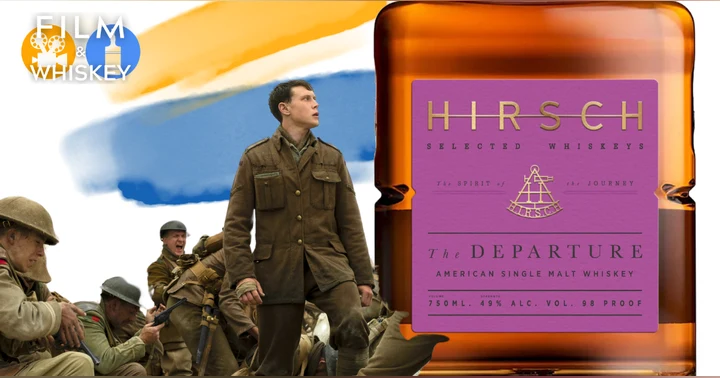
1917 (2019) / Hirsch The Departure American Single Malt Whiskey

Bob and Brad head to the front lines of World War I cinema as they dissect 1917 (2019), Sam Mendes’ immersive and technically daring war film. With its faux one-take presentation and gripping narrative, 1917 has become a modern benchmark for war storytelling. The guys examine whether it’s all style or if the film has the emotional weight to match. Then, they taste and review Hirsch The Departure Single Malt Whiskey, a bold release from a legendary whiskey name that’s setting out in a new direction.
Timestamps
(0:00) Intro
(7:03) Brad Explains
(9:43) Performances, Themes
(31:09) Hirsch The Departure Single Malt review
(41:49) Two Facts and a Falsehood
(47:16) Final Analysis
(59:51) Let's Make it a Double and Final Scores
Save on your bottle of Blackwood (use code FILMWHISKEY)
Film & Whiskey Instagram
Film & Whiskey Twitter
Email us!
For more episodes and engaging content, visit Film & Whiskey's website at www.filmwhiskey.com.
0:00 In 2019, director Sam Mendes and star George Mackay gave the world a singular take on the Forgotten War. In 2025 we try an American single malt from a new to US brand. The film is 1917. The whiskey is Hirsch the departure. And we'll review them both. This is the. Film and Whiskey podcast. Welcome to the Film and Whiskey podcast, where each week we review a classic movie and a glass of whiskey. I'm Bob Book.
0:51 I'm Brad Gee. And Brad Gee, we are starting to wind down Season 9 of this podcast. You and I have been working behind the scenes, working on Season 10. And before we give away what Season 10 is about, Brad, we got to get through these last four movies here. And I am freaking pumped to talk about 1917, one of my very favorite movies of the last decade or so. A movie that I was significantly pumped for you to go see in the theater and then super bummed that you didn't love it as much as me. We'll, we'll revisit all of our feelings on this movie here in a bit. Brad, what are your general impressions of season #9 how's this been for you?
1:33 I think it's been a lot of fun. You know, we obviously have traversed the decades in this podcast. I think what gold Rush from 28 is our. 25 I think the gold rush. Oh, that was 25 S Yeah, yeah. So from 1925, we have now come up to 2024 as our most recent film. So I, I was a very big fan of sticking to, you know, 2004 to 2024 for a whole season because I do think it helps us flesh out what does it mean to be Classic Cinema in the modern era. I I, I think it's been a really fun experiment. Yeah.
2:17 And folks, if this is your first time joining us, welcome into Film and Whiskey. We review movies. We review whiskey. The premise of the show is that I grew up a huge movie nerd. Brad is new to a lot of these movies, but the two of us met in college and in grad school. We've done a ton of work on textual criticism. We love diving deep into, you know, for us, it was the books of the Bible. Now we're applying that same logic to films. So it's been fun ride going through these nine seasons with you. This season we've been looking at films from the last 20 years and asking the critical question, is this movie a modern classic? Now, in order to determine that, what we've been doing is going through 4 criteria.
2:59 Is this movie a Best picture nominee? Did this movie make $100 million at the US box office? Is it in the letterbox to top 250? Is it in the IMDb top 250? Brad, I don't think this is a letter boxed movie, but I am pretty sure the three other boxes are checked for 19/17. Yeah, it made a lot of money at the box office for us, you know, kind of a quiet esque drama military film. It made 446,000,000 worldwide. 159 of that was domestic. Pretty good for a World War One movie that World War 1 is a very slept on time in military history. I feel like, you know, super overshadowed by World War 2. And that's primarily because I think that like, I mean, obviously World War Two more recent than World War One, but the, the American involvement in World War 2 has become such a part of like the American myth.
3:59 Like we really hold on World War 2 and, and our involvement in that on a pedestal. And I think World War One by comparison, it, it feels like a much more European conflict, which is silly to say, But like even this movie, it's about Brits fighting in World War 1. And I, I just don't think that we have a lot of great World War One examples in cinema, especially in the last, you know, 50 years. Yeah, it feels like a yeah, a forgotten war, but you're right, World War 2 at the end of the day, I think one of the reasons is it's a lot cooler to. It sounds like a power ranking wars here. We are 100% Vietnam War is below these two, you know for sure versus somewhere in the middle.
4:48 Here's the thing. World War 2 is cooler to depict. Like World War 1 is a bunch of trenches and mud and barbed wire. And like the technology difference between like the biplanes of World War One and the fighters of World War 2 is so vast that like dog fights are way cooler in World War 2 than they would have been in World War One. And so even from a media standpoint, it's like, yeah, sure, it's it's a little easier to make a film or write a book about World War 2 then it would be about World War One. Well, I think you bring up a really great point that kind of introduces to huger points we have to discuss today. Anytime we talk about war films on this podcast we always bring up the famous Truffaut quote where he talks about how it's impossible to make an anti war film just because the medium of film makes things so entertaining that by even depicting the horrors of war you're so bought into it that in some ways it is participatory and you become a champion of war.
5:54 I don't know if either of us fully agrees with that, but I think that what we've seen in the last, you know, 25 ish years is that in order to try to mitigate that, film makers take a very neutral stance on the politics of war and instead just try to depict the day-to-day lives of the soldiers. This was a major point in our Saving Private Ryan episode where we were trying to argue against the read on that film that it's just kind of jingoistic. And I think Sam Mendes does something similar here and the way that he does that, the second point is, you're right. World War One, super boring conflict to portray on screen because you're just in a ditch the whole time. Like it's trench warfare. And so in order to fight against the boredom and the repetitiveness and the visual lack of interest there, he does this thing where he's like, I'm going to make a one shot movie. And I think Brad, that kind of sets us up for, Brad explains. Because I want to get to the Sam Mendes of it all after you kind of cast the vision here.
6:57 So let's throw over to our first segment of the day, which we call, Brad Explains. Brad's going to give us the movie plots with only 60 seconds sticking on the clock, so let's go ahead and do your take with this little segment that we call, Brad explains. Brad Explains is the part of the show where Brad breaks down the plot of the film that he has just seen, often for the first time. I am pretty sure I'm remembering this correctly. You saw this in the theater, right? I sure did. And and you have not seen it since. I've not seen it since. This is my first time since 2019 I think of the best picture nominees. I saw this and JoJo Rabbit in theaters. We have really been knocking out the 2019 nominees across the seasons here.
7:41 It was a heck of a year. Man, what a great year. Ford V Ferrari, yeah. Parasite Marriage Story 1917 Like it a darn good year for film. Parasite was such a good movie man. Oh, I love that. Movie. I know you do, man. I was pulling for 1917 and I know that I I am like persona non grata by taking this movie over Parasite, A beloved classic of world cinema. But I've said multiple times my weird experience watching Parasite has kind of forever tainted it for me. So this was a much purer experience in the theater for me. And I got to say, man, the world cinema, Correct. British director, British director. It's an it's an American movie, though, Like this is this is very much backed by America.
8:30 And so Brad, you've seen it twice now. I don't really think this is a movie that requires 60 full seconds. But the minute is yours to spoil the events of this film. Folks, if you have not seen 1917, I would highly recommend going and watching the film and then coming back and joining us for the rest of the episode. Brad, one minute and go. 1917 is a film that follows Lance Corporal's Blake and Schofield as they travel through No Man's land during World War One in order to try and stop Sherlock Holmes from sending his men to certain death. I like how even on the subject of war, you can find a way to be a little cheeky in the way that you do things, Brad.
9:16 Yeah, you're welcome. Who? Who? Me. I know in 1917 and another way of explaining it is like two young British actors share the screen momentarily with every major British actor. You know what I mean? Like it's. Every male. Every male, right? Yeah. Then Tilda Swinton doesn't show up in this one anywhere, but she probably could have if she wanted to, you know? I it wouldn't surprise me, Bob. All right, let's dive into talking about the film itself. And I think that we kind of have to go out of order a little bit today because it's necessitated by the type of movie this is. I I said a little bit ago, the movie is filmed and presented as if it is done in one shot. There are some cleverly designed transitions between shots, but this is a repairing of Sam Mendes and the cinematographer Rodger Deakins. And I think when you present a movie as if it's done in one shot, a la Birdman, and you're the director of a movie, you are inviting any attention that you get as a result. Like you're clearly asking for people's attention. The camera becomes a character in the movie, and you as the director are really putting yourself out there saying, look at what I can do.
10:28 And the interesting thing with Sam Mendes is that a lot of critics do not like this guy. I don't know a ton about his personal life. So I don't know if there's, you know, maybe he's a terrible person in real life. But I think kind of unfairly, Sam Mendes gets shot on by the critical community because this is a guy that's made a lot of really good movies. And I've struggled for a long time to try to pin down exactly what it is that critics hate about the guy. And I think I'm like, I'm starting to have it click into view. Brad, are you familiar at all with the sort of critical campaign against Sam Mendes as a director? The Mendezian angst that exists within the film critic community. Is it Mendesian?
11:12 Mendesian perhaps? No, I'm honestly not. I have. I'm trying to think if I've seen any of his other films than American Beauty, Skyfall in 1917. I mean, I is that a good representation of his filmography, would you say? I think so too. I mean like the only other two films that I would say we really should watch at some point for the podcast would be Road to Perdition with Tom Hanks and Jarhead with Jake Gyllenhaal. Those are probably like his big 5 movies I would say. Now I will say Jarhead for being what I would imagine is a loss to Time like just another war movie easily has one of the best marketing campaigns of any film.
11:59 Because I still remember the previews for Jarhead. And the reason I bring that up is I think one of the reasons 1917 made so much daggone money is because it had a killer. Just the the the trailers for 19/17 were so freaking cool dude. And and I think that that kind of gets me back to the like, what is it that people don't like about Mendez? Because as I remember the 1917 trailers, they had like a sort of ticking clock effect going on in the background, very reminiscent of like The Dark Knight and Inception. And I kind of wonder, you know, I, I think they were trying to position this movie as like Christopher Nolan esque coming off the heels of Dunkirk, which people really didn't love. And this is like, hey, this is a much more down the middle, suspense driven race against the clock movie that you wish Christopher Nolan made.
12:52 And here is light beer version of Christopher Nolan making it. And I think that's kind of what I've come down on about why critics don't like Sam Mendes is that he he came from theater. He was a really well regarded director in London and I think that he knows how to like really mount a very handsomely made production. Like his movies always look impeccable. He knows how to use the camera and they always have the air of prestige. But even among the movies I just named like this movie Skyfall, American Beauty, Jarhead and then whatever the other one was that we were talking about. Road to Perdition Rd. To Perdition. Like, I don't know that I would call him an auteur in the same way that we talk about like a Tarantino or a a Wes Anderson or even a Scorsese, where it's like, oh, this is clearly a movie made by a guy with a point of view. You know what I mean?
13:48 Totally. I, I think that American Beauty, of the three that I've seen, probably has the most distinct vibe to it that that makes it feel like it stands out from other films. I, I don't know if 1917 or Skyfall, like really shouts to the heavens. This is a Mendesian picture. There's Mendesian. It's the coolest term we've ever come up with on this show. Brad, easily. It's kind of similar to how Sam Mendes is is perceived. It's like Mendesian sounds like the coolest, deepest, most intricate thing you could discuss. And then you're like, oh, it's just a Sam Mendes movie. OK.
14:35 Yeah. You know. Well, the the fascinating thing is you, you seem like you kind of agree with it when I know that you in fact don't. I I think it's a compelling argument and I do agree with it. I just don't know if it matters like at the end of the day, if a guy is like a really good, I wouldn't even call him like a journeyman director because he's not just like a hired gun. He he really puts care and attention into his movies. I don't think they have a personal touch. But I'm also like, he comes out with a movie and I'm like, oh, a new Sam Mendes movie. I'm going to see that like because I know that it's just going to be a well crafted movie that had a lot of care put into it.
15:16 And I think that's an increasingly rare thing these days. It's interesting the the way that we are talking about him reminds me of how we talk about Rob Reiner. Like I although I would say Rob Reiner was much more of a like, we need a guy who's like a competent director, right? With like, that's no visual flair. You know, yeah. That's the thing though is like Rob Reiner was the hired gun, Sam Mendes isn't. But the way we describe the the output, I feel like it's kind of similar. Like super well competent, knows how to make a great movie.
15:57 It just doesn't quite reach the heights or have the depth necessarily. That would make them a A tier director. Yeah. And yet with Mendez, he has that added prestige of like, I have won best picture, I have won best director. My films are constantly nominated for Academy Awards. So I think the. Push is annoyed that that he like won with American Beauty early in his career. Yeah, people really hate that movie, which I still think is. I like that movie a lot. I don't get it, But yeah, I think he's perceived as like the Oscar bait guy now, which is just hilarious to me 'cause you know, and isn't. Everybody like that would be like calling an NFL team Super Bowl bait worthy like. They're just setting themselves up to win a championship. This is ridiculous.
16:45 Yeah. Why can't they be more like the Browns? Yeah, exactly. I I really don't understand the Oscar bait like how dare you play to the things you know will win you the best like most important award in our industry. Yeah, I don't know, man. And I think that's a good jumping off point to actually talk about the movie, which exists for me outside of this conversation. This is just a really well made, almost real time race against the clock movie where you've got maybe the best cinematographer of all time flexing his muscles. And the reason I brought up the Mendez thing is that it's really funny to go through reviews for this movie where the praise is always filtered around Mendez because it's like the critics don't want to give him credit for anything.
17:35 And they're like, well, this is actually a Rodger Deakins showcase. And the fact that Rodger Deakins figured out how to do all this is insane. And like, maybe that's true. Maybe behind the scenes Rodger Deakins was just like shadow directing this movie. I don't freaking know. But like, it's just hilarious to me that we want to give credit to deacons. And it is, you know, let's be clear, a huge accomplishment technically this movie. Totally. But like the fact that Sam Mendes was able to orchestrate every piece, every instrument in the orchestra here, right, and and not get any credit for it. I don't know that there's a lot of directors who are kind of shafted that way the way that Mendez is. Absolutely.
18:20 Yeah, it's it feels like one of those confirmation bias type of things where it's like, oh, well, you know, I expect Scorsese to make an incredible, deep, beautiful movie, so the DP doesn't get any real credit for what they do. But Sam Mendes, Meh. Deacons did the whole thing. Yeah, when it comes to the movie itself, what I love about the gimmick, and we should just start talking about the gimmick here, it's a one shot movie. What I love about the gimmick is that it really only works if you're not trying to do a ton of exposition. And so from the get go it's like there will be dialogue in this movie. A lot of the dialogue is going to be like banal day-to-day conversation between these two guys walking across a field.
19:06 And it that that makes it work because it really elongates like the boredom of walking across a field and then a shot rings out and now we're running across a field. And and I think that plopping us into the middle of both of their tours, if you want to call it that, too. It's not like they're these are privates who were showing up for their first day of combat. Like the movie opens on George Mckay's face. He's sleeping against a tree. And immediately the camera pulls back. Both these guys are revealed. And it's like, boom, we've got a job for you. And so like literally 45 seconds into the movie, the plot is in motion and now you're just watching the trip to execute this mission.
19:47 It is such a bare bones plot and it's the only thing to me that makes the gimmick of the movie work. See, I I found myself kind of in the opposite place where the gimmick of a one shot take. Is that it allows you to really just like sit with people. And I think that it works way better when you're in like a deep, tense, dramatic conversation between two people and you just never get that in this. And I'm not disagreeing that like those moments where he's talking about cherry trees and the different types. And like, there's plenty of small moments that you help you fall in love with the characters, but I I think A1 shot movie is best utilized when you have just a really super compelling character who's really deeply wrestling with like wild internal realities.
20:52 And and I think that that's why it works for something like Birdman versus something like 1917. To me, this kind of felt like watching a video game. Oh, interesting. Where it's like every once in a while you have, you know, a, a quick cut scene with like Benedict Cumberbatch or Mark Strong. And then the rest of it, you're following a no name character that you're playing as and you're trying to do your mission and, and, and it, it, it feels like a ton of cutscenes with like player engagement stuff in the middle. Yeah, I think that's a really good criticism of the movie.
21:33 I don't necessarily agree with it, but that's also because I'm not a video game player. And you're right. Like, there's definitely a first person shooter kind of thing going on in this movie, especially in the way that the camera kind of floats sometimes. It'll look elsewhere, you know, as it makes its transitions and then it'll kind of drift back to our heroes. I think it's really like a a pretty astute criticism, Brad. And it kind of begs the question of like, if we wanted to do a real time movie, which this like is close enough to being a real time movie, we don't have to do a real time movie and A1 take movie. So it begs the question of like, why are we doing the one shot thing? And I I think if I was Sam Mendes, the way I would answer that.
22:19 It's like I'm trying to replicate the, I don't know, like the, the rhythms of the day in the life of a soldier where it's like nothing's happening and then everything's happening. And I don't want to introduce cuts to kind of speed up that timeline. I want to give a sense of like, we are always on edge. There is danger lurking around every corner. Even as I walk across this field, a shot could ring out and I could be dead. And I want to keep the audience on their toes by giving them so much visual information to process all the time that they have to keep looking in the corners of the frame or whatever. I just wonder, like, does the gimmick get in the way of the story they're trying to tell?
23:04 Or on the other hand, is there not enough story to tell in this movie? And so you noticed the gimmick more. All I know is as you were talking, something you said made me think about like, yeah, though I walk through the valley of the shadow of death. Can you imagine the trailer for this where one of the characters is like is overdubbing the reading Psalm 23 and like just slowly backs out from like a nice white flowery field to show like the trenches and the no man's land. And it's like right as AH dude, what a trailer. No, but it would have to be one of those trailers they do now where there's like a sad piano version of a song and it's just like one piano note that's going like, and it's got the guy singing like, I'm going there to see my.
23:58 And then he's just like Benedict Cumberbatch reciting Psalm 23. And that's the trailer for the movie. Dude, and it would be epic and I don't know how we don't work in the industry. I Yes, we have solved every problem with this film already. Oh. Man, the gimmick, the gimmick like works. That's I think that's the weird thing is I don't think he should have made this A1 shot movie and yet I think it works like to capture the story that they wrote. I do think that this was an effective use of the camera because it allows you to feel the totality of what he goes through. It allows you to feel the weight of what he has seen by the end of the film.
24:45 Man, when he meets Blake's brother, which you know, the Lance Corporal. Blake dies about halfway through the film when he meets his brother and tells him that he was a good man and that he told funny stories. Like, you feel that impact because you've spent time with Blake, you've heard him tell a few funny stories. You you have an understanding of his character and how devastating it would be to hear about his laws. Well, and I think that again, that's it's one of the benefits of the not ever cutting away thing that like the actor who plays his older brother is always in the shot there after the news is delivered and and Scofield kind of starts walking away and you watch the guy kind of receded into the background, but he's still grappling with the news.
25:29 And then he comes back and and tells him he was a good man. He saved my life. Watching the emotions get processed in real time and and being forced to sit with them I think really does make this a a much more emotionally impactful movie than it got credit for. I found myself really overcome with emotion at the end of this film. And Brad, you know, before we go to break, we haven't, we haven't really talked about anything except Sam Mendes and the gimmick yet. But like, I have found lately that it's harder and harder for me to watch war movies. There's a movie that just came out this past weekend from the film maker Alex Garland called Warfare. And it is based on a true story. And it is, it's not a one shot movie, but from my understanding, it's a near real time movie that is a true story about these American soldiers and I believe Iraq trying to get out of being pinned down.
26:21 And that's it. That's the whole movie. It's supposed to be absolutely brutal. And it is being hailed as one of the best war movies of the last, you know, 10-15 years. And I have tried to get myself up to seeing it the last four nights in a row. And I just can't do it, man. I just for some reason, I can't bring myself to get motivated to watch something as heavy as a war movie. And I think to this movie's credit, yes, there's a gimmick. Yes, there's a video game kind of element to it, but it never shies away from how emotionally distressing all of this is. This was a this was quite a challenging experience to sit through for me, Brad.
27:06 For me, it's those moments where he, like, puts his hand inside of a corpse or he's crawling over the bloated corpses of peasants who are in the river, that when he's like, weeping as he crawls out of the river. Or at the end of the film, when he sits against the tree and like you just see him completely drained of life. You understand why he gave away his medal for a bottle of wine. You get the angst that he has with Blake and I this time through the first time I saw it, I I don't think I appreciated the relational element of this movie as much this time through it, it felt way more relational than it had there. There's that piece of youth with Blake that you don't have with Schofield, even though they both look to be the exact same age. And, and, and that was wild to me how young they looked. And you know, that there's all sorts of things that, you know, talk about sending off our young men to war. Like, I don't know if I'm just getting older. You know, I'm 34 now.
28:17 These they look like children, like maybe 20 years old. Yeah, well, and, and we can talk about the performances when we get back from break. I will say right up front though, George Mackay I think is a perfect leading man for this movie. And how do I say this about someone's looks? He looks like pictures I've seen of World War One veterans like you. You know what? There's a famous one that's floated around of like what a guy looked like before he went in the trenches. And the picture they took of him like 4 years later and he just has like these hollowed out eyes with that 1000 yard stare. It's a combination of just his facial structure and the make up in the movie. But like he has that. And when they show him at the beginning of the movie, you can already tell just by the way he's presented to us looks wise. This is a guy who has seen some shit. And I think that there's like there's a real authenticity there that, you know, his his partner doesn't have because he's like a much more fresh faced, you know, and the and Scofield even tells him like, you weren't there when we went through this horrific battle.
29:23 I'm telling you, dude, it's not fun, right? And and I think that the character design really helps that. Absolutely. I, I couldn't get over the fact that I thought I felt like George McKay looked so much like Alan Ruck from Ferris Bueller's Day Off. Like, there was something about his facial shape that I was just like, Oh, yeah, this is like if, you know, Cameron got stuck in World War 1. There's an actor who's come up the past couple years who's gotten like moderately famous working in like indie movies that have made a big splash. His name's Harris Dickinson and he's like 6 foot two in a supermodel basically.
30:06 But he is like, I, I think he's trying to market correct George McKay in real time. And George McKay is also been trying to like make a name for himself in indie movies. And it's really fascinating to watch the two of those guys get put in movies since 1917. I really liked George McKay in this movie. I'm wishing good things for his career. Like I said, Brad, let's dive into the specifics of the performances after the break. But talking about war movies and how stressful they are has really made me want to take a drink. What do you say if we tried this Hirsch departure single ball? Oh, I found a few facts about the amount of alcohol that was like prescribed to soldiers and like, dude, if you were about to go over the line, it was like a double ration per day for like the three days leading up to it. As it should be.
30:56 Oh man, let's drink some whiskey, dude. All right, so today we're looking at Hirsch Selected Whiskey's The Departure. This is an American single malt whiskey. It is the first single malt released by the Hirsch Company, which is owned by Hotelling and Company, an importer and distiller based out of San Francisco. They are very popular in the American craft whiskey scene. They were known for a long time for their old Potrero line. There's a there's a ton of back story on Hodling if you want to read about it. I found a very long article that was super enlightening to me, but probably not necessary to share the entire history of this company on our podcast, except to say, Brad, this is the first Hirsch product we've had. Like I said, they're known for their rye whiskey. So we're we're joining them as they start to branch out into other things.
31:50 So it's it's kind of cool because I don't know how much of A departure this actually is for them because I'm not even familiar with their rise. The real question is, could you tell the entire history of their brand in one take? No, I could get close though. Oh. It's very interesting, yeah, yeah. There's a there's breweries in their past, there's name changes, there's different labels, they've moved locations, lots going on over there. So it. Sounds like half the new distilleries. Yeah, pretty much man. It says in their press release that they started working on this product back in 2015 because they'd wanting to been, they have been wanting to work with barley for a long time. So this is 10 years in the making. It's obviously not a 10 year age stated product, Brad. It's non age stated.
32:39 It is 100% malted barley though. I'm excited to dive in man. American single malt is really growing these last few years and this is just another welcome addition for me. Absolutely. I I love seeing American distilleries dive into new areas like American single malt. I think it's a brand worth pursuing. And I'm, I'm excited to go over this Hirsch with you, Bob. I've already tried it and I would I'm pretty impressed overall. That's my initial impression. All right, so here's what I'm seeing about it, Brad, and this is the last thing I'll say before we actually dive in. I see two different quotes. One of them say it says that the departure was aged for 6 plus years in 24 month air dried 53 gallon American oak barrels. And then it also says that it's double distilled in copper pot stills and aged for six years and nine months in new char #3 and toasted American oak barrels. So there we go.
33:37 Six years, nine months, two kinds of barrels. Let's freaking dive in, Brad. It definitely smells like American craft whiskey on the nose. And if you've been a fan of craft whiskey, you know exactly what I mean. Even at six years old, there's quite a bit of graininess to this. There's quite a bit of raw grain, and it smells a bit young. I get a bit of yeast on this. But other than that, this is right in line with what we've come to expect from American craft whiskey, I would say. Absolutely. I think the nose has a lot of barley It it reminds me of like Cheerios there. There's a little bit of like a cherry stone fruit cordial kind of vibe. There's it gets a little bit nutty for me. There's some almonds going on here. I really like this.
34:24 For me, it's not especially crafty, if you will. It like it has a little bit of that craft whiskey vibe, but not nearly enough to derail it. I'm going to give it an 8 out of 10 on the nose. Yeah, I think I'm in a 7 1/2, but this is very positive because, and I don't know if it's just because they're used to working with rye, which is a very tricky grain to work with, but this, this has that sort of youthful note on the nose. But underlying it, they've gotten some really nice baking spices. There's a lot of caramel here. It smells like a a sweeter rye whiskey on like what's underlying that grain. I get a little bit of like, oat as well, which is the grain that we don't often get in our mash bills.
35:05 But yeah, Cheerios was a really good note here, Brad. It's both like a little bit yeasty bready, but also like a sweetened breakfast cereal. 7 1/2 I think is a good baseline for this. When I got into the palate, all the things we talked about were there. It turned the fruitiness turned into like an apricot vibe. There's a little bit of cocoa. The overwhelming note I got on the palate was green tea. There's like this, this thing was like a green tea bomb with like a little bit of a glaze of kind of like a caramelized apricot like jam almost a really interesting combination of like a fruity green tea.
35:51 I thought it was very fascinating. Not necessarily like my favorite flavor. Wheelhouse Green tea is not my go to but I I I do still like it, I'll give it a 7 1/2 out of 10. I really like this man. I, I'm not getting the green tea. And let me ask you this because, you know, tea is often used to explain to people like what tannins are and how a a wine or a whiskey can have that tannic effect where it kind of sucks the moisture out of your mouth. Did you have that effect drinking it or was it more just flavour? No, it was just the flavour. OK, OK, like it. It really reminded me back when I lived in Philly, I would occasionally drink green tea because that's the only thing we had in the house.
36:32 And I just, it's I didn't dislike it. Like it was good enough that, you know, you had a little honey in there and it's a nice winter drink. It's just not my favorite. It's not, it's not in my wheelhouse preferred. So the flavor was there. Not my favorite, but it was definitely noticeable for me. I really like this man. And I'm not quite getting the same notes you are. I'm not getting as much stone fruit and I'm definitely not getting green tea. Your note of Coco, I think is like the predominant thing for me. I want to say, oh man, four or five seasons ago we tried a specialty bourbon from Woodford Reserve that was made with what they called like chocolate malt.
37:13 And I, I don't remember getting a lot of chocolate on that, but that's kind of what this is for me. It's chocolate malt. It's it's lots of interesting grains coming out. I'm getting that oat again. I'm getting like when we first tried watershed distillery and they were using spelt like it just tastes like a bunch of funky grains went into this. I know they obviously didn't, but it it has that sort of vibe where it's like this is something completely different flavor wise. And we've layered over that really dark cacao nibs and then like a ton of cinnamon and like cayenne pepper. It's almost like a Mexican hot chocolate, but unsweetened and then like layered over raw grains. Super good. I'm going to give it an 8 out of 10 on the palate, Brad. And then on the finish, I think it's more of the same. It's a really mouth watering finish. There's a ton of tingle on the tongue with this, like it's real spicy and at coming.
38:06 Jingle, don't you, Bob? Yeah, I do, man. It comes in at 98 proof, and I think a drink's actually a little bit hotter than that. Not in a bad way, but you could have convinced me this was like 100 and five 107 proof. I'm a huge fan of this, Brad. I'm going to give it an 8 out of 10 again on the finish. I'm with you on the finish. Eight out of 10 for me. The barley really like sits there and just lingers for a long time. The apricot sticks around, the green tea sticks around, the the cacao almost turns into like a creamy dark chocolate the longer it sits on my palate, which I really like. So like I said, I'm an 8 out of 10 there balance wise.
38:46 I think I'll give it a 7 1/2. I think that they this takes you on a very interesting journey. I don't know if it all works perfectly together, but I do like where it takes me overall. So 7 1/2 for me on balance. Yeah, I'm going to give it a 7 1/2 as well. I and I don't think that it's an indicator that like anything's off here. And what I really love about American Single Malt Brat is that from distillery to distillery it, it's almost like, I don't know, like when you go to a winery and you're like, what's your house wine, right? Like what do you make here? What, what like what's your specialty? There's a distinct flavor and taste. And I don't know if it's a terroir thing, but like from the ones we've tried from up in like Oregon, Washington, to this one in San Francisco, to some on the East Coast, they're just very different flavor profiles. And I like that a lot.
39:38 And this is carving out its own unique niche. So I'm giving it a 7 1/2 here. Now on the value, the MSRP on this is 7499, which is a little bit pricey for a six year whiskey. But again, single mold is tricky to work with. It's a new entry in America, you know, relatively new. Obviously, I don't think this is exorbitant. I think I'll give it a 7 out of 10 on value. I'm right there with you 7 out of 10. This is a really interesting whiskey that like, I love being curious about whiskeys, Bob. Like we it's been a while since we had a whiskey that really piqued my curiosity. I'm coming to a 38 out of 50.
40:22 I'm in the same spot, 38. I think that if I have to give a caveat on this, this is the kind of whiskey that you and I pull off the shelf because it's like a fascinating whiskey. Like we've tried 5 or 600 whiskeys over the course of this podcast. This one I'm going to remember, right? Not because it's bad, but it's just different. And I don't know that I would give this to somebody who's getting into like single malt of any variety for the first time. It's not like it's just not a good entry point because it's so far outside the wheelhouse of what you typically expect. All that said, I'm nearing a 40 on this. This is like a no brainer. Thumbs up for me. If you get a chance to try this and you're feeling adventurous, go all the way in on this man.
41:06 Yeah, I'm with you 100%. This is a really interesting whiskey. Hirsch, I think has departed well. At the very least, the beginning of their adventure is going well. So well done, Hirsch. The departure American Single Wall is a product to be proud of. The fact that this wasn't available when we reviewed the departed is criminal, honestly. It is. It is very unfortunate. Making up for it, though, is the fact that we have a pretty good movie today in 1917. Let's get back to talking about that, Brad. Let's do it. All right, everybody. That was Hirsch, the departure American single malt, a whiskey that makes me want to drink more American single malts, Bob.
41:51 Not that my desire could have already gotten much higher, but man, I'm excited. Yeah, I like that a lot, man. I do wish we had found something a little more European to pair it with. This is like the second week in a row that I've said something like that. It's also the second week in a row, Brad, that we've had a movie shot by Roger Deakins. I didn't even think about that till just now. Prisoners and then this. The Deeks. The Deeks, am I right? What a just what a great cinematographer. Yeah, he really does just create beautiful movies. You know what I create that is things of beauty is my record at the end of every season at our next game Brad, which we call 2 facts every season, 2 facts and a falsehood.
42:36 Brad is going to try to stump your ball. 2 are right and what is wrong? 2 facts and a falsehood. 2 Facts and a Falsehood is the part of the show where Brad presents me with three items as fact about the making of this movie, one of which is a complete lie. Now I am coming off of a win last week, but I'm still trying to balance out the two losses I got the week prior due to our friend Patrick Williams absolutely leading me astray. On one of the greatest, most well written falsehood in the history of the podcast. I know, man, we actually had somebody write into us to tell us what a good job you did. And I was like, don't stroke his ego. Then he's going to start putting effort into this, and I don't want him to do that.
43:24 I want my record to be unblemished. I'm excited to blemish your record again, Bob. All right man, hit me with those two facts and a falsehood. Fact #1 in order to hide the small edits throughout the film. Director Sir Sam Mendes. We haven't mentioned that yet, Bob. Oh, is there, Sir? He is. But how can you argue with the Queen of England knighting this man? That's right, you can't say he's a bad. Director once he's been knighted. He might have been knighted by the king, you know, that's true, That's true. Maybe it's a recent titular edition. In order to hide the the edits throughout the film, director Sir Sam Mendez chose to use only two lenses throughout the movie, The 35mm for close-ups and some dialogue and the 24mm for the majority of the wide angle arrays. Fact #2 Throughout the shoot, the production had four basic rigs that were always at the ready to be able to take advantage of the changeable weather conditions as well as having a chief meteorologist on location the entire film. Fact #3 This was the first prestige war film to be nominated for the Academy Award for Best Visual Effects in nearly 50 years.
44:50 The last Prestige War films to be nominated were Patton from 1970 and Tora Tora Tora from 1970, with the latter film taking the prize. While you were reading fact number one, I was looking up when Sam Mendes got knighted, 2019. So it was the queen, it was Her Majesty. A very astute woman. Yeah, so I need you to re read the back half of fact number one for me real quick. Something about millimeters is all I heard. He he used the only used 2 lenses throughout the film to keep continuity. Oh nice, the 35 for close-ups and dialogue. The 24 for like wide angle stuff.
45:34 OK, let's see. I think #2 sounds true enough #3 sounds a little bit dicey to me. I I can't remember much of the movie Patton. I don't think they had very many visual effects in it. Maybe it did, Maybe it. Was just the opening speech and patent. Yeah, then you come to find out that that flag entirely CGI, that's what got it nominated. That that was it. Was Saving Private Ryan nominated for visual effects? I don't think so. I think it's either one or three. I'm leaning towards 3, but I'm also wondering how how Rodger Deakins could have switched lenses during long takes even if he is floating into a close up or or panning back out. You know what?
46:24 No, I'm going to say #1 is the falsehood. I have no idea if that's true or not, but I'm going to stick with #1 Brad. Bob, you are 100% correct. Yes, deacons used 1 lens for the entire film being a 40mm. Lens that makes sense because like you, otherwise you'd just see a hand to come in front of the camera from time to time. Pop the lens off. It's the hand of God just floating in to reorient us here. All right, cool. So I I am back in the win column. I've balanced out Patrick's mistakes once again. Patrick Williams, you are on the thinnest device, Sir.
47:04 Brad, let's get back into talking about 1917. And it seems weird to talk about performances because this is just such a like, let's follow some guys walking across a field kind of movie. Yeah, they could have put you and I in there and it would have been just as good of a movie. I mean, George McKay is in every second of this movie, so like it, it's worth talking about. I think he gives a really, really good performance because at no point was I ever like this guy Seems like he's acting or he didn't nail that emotional note. And I think for somebody to play the spectrum of all the emotions he has to go through, that's that's a pretty big feat of acting. Dude, he nails it.
47:48 Like I, I think Dean Charles Chapman is like pretty good at like I don't really have any complaints with him, but he didn't blow me away. I think Makai has a, you said it earlier, man. His face is haunted. And it's not just he's not just experiencing like, oh, he, he hasn't become cynical. It's not just like it's ingrained in his face, but you see the the terrible things that happened to him on this specific mission and journey, like deep in the horror, they take what he's already experienced and make it worse. And by the end of the film, you feel that in every inch of his body language, his eyes, his face. And yet, like the youth of Blake, seems to give him a little bit of hope as well.
48:45 And he plays all of that just incredibly well. Yeah, no, I totally agree. And I think that the film is at its weakest when it gives anyone else a line of dialogue beside those two people. Like especially the decision to put prominent British actors in kind of four of the main roles of authority in the movie. So you've got Colin Firth shows up at the very beginning to give the orders, then he runs into Andrew Scott right before they go up into No Man's Land. And then halfway through the movie they run across Mark Strong. And then at the end of the movie you get Benedict Cumberbatch. And I think that having those four people who are extremely recognizable people at this point show up throughout the film really took me out of it.
49:31 I think the, the only one that didn't was Colin Firth, because it's the very beginning of the movie. So you, you know, you're just like, oh, there's Colin Firth, and now he's gone. You don't have the Matt Damon effect. No, you don't, man. And like especially I think Andrew Scott as the guy who's like F this like going to no man's land if you want to. He was just a little bit outside of like the comfort zone of like what Sam Mendes was directing. He he went a little too Moriarty for me. And it really pulled me out of that scene. And I just kind of wish that Mendez had gone with like everyone in this movie is an unknown or at best like a that guy and not a person that I know their full name. Yeah.
50:14 And, and honestly, Mark Strong was that for me where I like, he's not a famous enough movie actor for me to be like, oh of course Mark Strong from these 7 movies. His voice was familiar and like powerful enough that I thought he was the best of the four known actors because he has so much compassion even as he is leading. I I thought he knocked it out of the park. Other than that, I felt like all of them overacted and we're like doing too much. Colin Firth was fine.
50:54 I I agree that he benefits from being so early on that you don't. It's like, Oh yeah, a movie star in a movie. Wow. It's when you get to Benedict Cumberbatch that I'm like, OK, like there's a million no name actors that you could have put here saved a bunch of money and they could have gotten a little notoriety. Like like Benedict Cumbrash didn't need this role and the movie didn't need him in the role. OK, here's I was not intending to ask a question this spicy today. Are we entirely sure that Benedict Cumberbatch is like a great actor? And here's why I asked that the. Between 2 Ferns. Well, he didn't have a British accent. Would everybody realize that you're a terrible actor? He's so good in Sherlock, but I think that he has to be in a very outsized theatrical performance that calls attention to himself.
51:47 Not that he has a an oversized acting style, but I just never feel like he's playing a believable human being. I think he'd be really good doing like Shakespeare, you know what I mean? But like. Yeah. Where you where where when you do like Hamlet or Macbeth nowadays, you're not just trying to embody the character of Halen or Macbeth. You're also like entering into this meta conversation of like actors doing Macbeth. And so you're like, wow, I'm watching something big right now. I think he'd be good at that. But when you put him in a role like this, it's like he's just kind of trying to do like the Benedict Cumberbatch a little bit too theatrical type performance. And I don't know that I've ever seen him in a movie where I've been like, wow, that is an incredible performance from Benedict Cumberbatch.
52:38 Here's the thing though. I will come to Benedict's defense for this film specifically, Let's just, let's just imagine something. Bob, will you go with me somewhere in your imagination? Sure. Just imagine. Benedict is sitting down in the in the chair, getting his makeup put on. Costume design, all the things. And Sam is standing between him in the mirror and he's like, you know, all right, all right, Benedict, we're, we're going to take it easy. We're not going over the top. You're just going to be a a firm commander who wants to end the war. You really believe in what you're doing. You're disappointed by what you know Makai brings. You sound good, Ben. Just like, yeah, you got it, man. And then he walks away from the mirror and Benedict sees the final product and he has that giant, stupid scar across his eye.
53:32 Tell me that you're not going to overact if they put the most obvious scar I've ever seen in a movie on your. Face. That's true. That's true. As soon as I saw that in the mirror, I'd be like, all right, I'm ready for this. Yeah, you can't put a scar on my face like that and expect me not to be like, just. Shoe scenery. Yeah, exactly. Thank you for joining me in Imagination Station. I appreciate that, man. Is there anybody else from the cast that you think is worth mentioning? I I feel like we've kind of knocked it out talking about the two leads here. Yeah, I mean, I don't know if anybody else has enough time, whoever they chose to sing that song in the middle of it.
54:15 No idea who it is, but man, that dude could belt it. And that was like, truly, I think that's where this movie succeeds, Bob. It's in those a few small quiet moments where you just get to see Makai be broken and horrified and like the the juxtaposition of the horrors that he has seen humans do to each other with the beauty that humans can bring into the world with music like that. It's like moments like that is where this movie just is incredible. Yeah, I also love the idea of, you know, you don't find out anything about George Mckay's character. And there's a moment where he has to escape some Germans in this shelled out town.
55:03 And he ducks into this, like, underground apartment basically that's been hollowed out as well. Runs into this French lady who's nursing a baby. And she asks him, like, do you have children? And he just doesn't answer her. And he continues babbling with the baby. At the very end of the movie, he finally is like in safety for a moment, finds himself another tree to sit down at, pulls out the picture of his children and his wife that just says like, come back to us on the back. And I'm your boy was overwhelmed with emotion. But I love the narrative decision to make this kind of like a closed loop circuit, right? Like it ends exactly where it started, implying that like 5 minutes from now, after this guy's wakes up from his nap, he's right back into it again. And I think that's again, that's where the movie succeeds. Does it get a little bit on the nose sometimes with the like I'm going to tell the French baby the nursery rhyme about they went to see in a sieve, Like, Yep, does it get a little bit on the nose and singing the hymn about going over Jordan? Sure, why not?
56:07 But like, I think at the end of the day, man, gimmick or no gimmick, this is a really powerful and affecting movie. It absolutely is. There is so many moments throughout this film that you just feel your emotions rise from the quiet moments that we just talked about to the trailer, him running down the front line as thousands of British troops are going across. What a stunning piece of filmmaking. Like, Makai is just getting trucked by these other dudes and he just keeps getting up and running. And the music has swollen and it's beautiful and there's explosions everywhere.
56:51 Like how can you not watch that and not feel moved? 100% there are two key moments for me in this movie that I just feel like our absolute knockout sequences. And that the one is that ending sequence because, you know, because of the suspense that's built throughout the movie. It really feels like almost like a four quarter game of football or basketball or whatever where it's like we just need one final push here and you're really on the edge of your seat waiting for that final moment. But the other one for me is, you know, he's gone to this shelled out French town and got grazed by a bullet, fell down a flight of stairs and blacks out. And it's the only time in the movie where there's an extended, you know, sequence of black or, or a cut.
57:35 And then he wakes up. And as soon as he wakes up, that Thomas Newman score kicks in with almost like a xylophone, I think. And it's the score that follows him all through this escape from this town as the flares are going off. And that piece of music is just unbelievable, dude. It's so. Gorgeous. You know, this lost the Oscar for best score to the score from Joker, which is, you know, to me, an OK score, certainly distinct, but I thought this was like one of the best Thomas Newman scores I've ever heard. And I freaking love that centerpiece piece of music as well. Yeah, if you're just making it a competition between this and Joker, that's a joke, like.
58:16 I, I mean, I feel like that's. Chance. That's what I say when anybody compares any movie to Joker. So, you know, it's not much of A competition to me, man. Oh, totally, dude. Yeah, the the music in this movie, Yeah, the composition is just beautiful. And it feels like a movie movie. Like the costuming is unreal and the cinematography is amazing. And the set design, like there's a combination of when they're first walking through the trenches and even when they get into like the empty German frontline and you can see like the wood that they've used to shore up the side of the trenches. And it's kind of like mildewy and wet. And like, the color of it is so incredible, the way Deacons has captured it. But then just like the way that they erected this French town that is half shelled out, it's just like this feels like a big production.
59:09 And I think that's where a guy like Mendez doesn't get enough credit is, especially between this and Skyfall. Like you can see every dollar of the budget on screen. Easily it's a beautiful movie that like there are some issues with storytelling and some of the characters, but overall man, I like 1917 is easily one of the best movies of 2019 and that's in a stacked cast. All right, man, let's get into our last segment of the day, which we call. Let's make it a double. We're near the end of the episode, so thanks listening to the film and Whiskey show. Let's have another film with this one, even if it's struggling. It's the final segment of the day. Now let's make it a double.
59:54 Let's Make It a Double is presented by Blackwood Distilling Company. It's the part of the show where we pick a movie to pair up with this one to make the perfect double feature. I think today, Brad, like what? I love to pair this with another one shot movie, sure, or another war movie. But the the one that stuck out to me went back to that scene with the cherry blossoms as a, you know, a metaphor for the grace and peace that is lost in the fog of war. And there's another movie that features cherry blossoms quite prominently, especially from the great Japanese actor Ken Watanabe, and that is the film The Last Samurai. I don't know if it's a movie that you've ever seen. I freaking loved that movie when I was growing up. How have we not watched that?
1:00:37 I don't know. I love. I love that movie too. When, when he just says like, they're all perfect, like, oh, dude, so good. So yeah, I I'm gonna use the cherry blossom analogy and pair this up with The Last Samurai. I think that's a a great pick for our double feature. We should watch Last Samurai sometime dude. Yeah, we really should. Oh man, although I do do I remember correctly it's like 3 hours long. Yeah, but it's three hours of Tom Cruise, your favorite human being. No, I, I yeah, I'm, I'm in. I'm already bought it. Don't oversell. I'm already bought it. I think I'm going to pair this with Paths of Glory.
1:01:19 Oh good one, I. I, I think that both of them kind of highlight the human cost of war, the futility of the military brass thinking they know everything, that there just seems like there's a lot of good comparisons here. I know that Mendez used Paths of Glory in some of his, you know, lead up preparation to make 1917. So yeah, that that that's my pick. I mentioned this movie before on one podcast or another, Brad, but there's a great documentary that Peter Jackson did in the 20 tens around this time called They Shall Not Grow Old, where he and his team took a bunch of old footage.
1:02:03 And I think through AI, you know, restored it, upscaled it to 4K, colorized it, read the lips of the people in the footage, found people from the same areas of England to like over dub what they were saying. And it just becomes this historical document of like taking this old conflict of war and really bringing those people into the present. And I I was blown away by that documentary. Like I said, there's not enough World War One content anyway, so if you're curious to watch more World War One stuff, you could do a lot worse than checking out Paths of Glory and the documentary They Shall Not Grow Old. I have not gotten around to the those documentaries, it's like been on my list for a long time that I really want to watch them. Yeah, it's super good.
1:02:51 You should check it out, man. Well, OK, those are our pairings for Let's Make It a Double like we said, presented by Blackwood Distilling Company. No matter what you choose to pair this movie up with, you can always make it a double with Blackwood. And if you go to bourbonoutfitter.com/film Whiskey and use our code Film Whiskey at checkout, you can save on your bottle of Blackwood as well. Brad, it's time to get into final scores here. For most of this film, I was at like an 8 1/2, maybe a nine. I do think that like, it is a handsomely mounted film that feels like it just falls short of greatness for most of the runtime. And then the ending happened and I was like, this solved every issue I had with this movie. I think I'm going to come all the way up to a 9.5 out of 10 on this one, Brad.
1:03:41 Wow. Yeah, I, I'm kind of between an 8 1/2 and a nine. I I think originally I was at like an 8 out of 10 when I first saw it. I think I'll come up to a nine out of 10. I don't know if this is quite Yeah, it's it's just not quite at that level of perfection that you need to be at to hit that nine and a half 10 range. But there is so much to love about this movie. And I, I would agree with you. I I think it's a little bit ridiculous that the critics just don't like Sam Mendez. Like at the end of the day, sure some of their complaints might be accurate, but he makes incredible movies and in an era where it seems like the quality of filmmaking is going down, I can't see how they are not self defeating and destroying their own industry when they nitpick about movies like 1917. Yeah, man, I think you've summarized it perfectly. So it's a 9.25 out of 10 for us on average, but we'd like to know what you think.
1:04:58 Did 1917 accomplish everything you thought it should? Are you with us on the over 9 scale or did it not quite click for you? You can let us know on any of our social media accounts, Facebook, Twitter, Instagram, Tiktok or YouTube Film Whiskey. Or if you'd like to, you can join the conversation on our Discord server where we are there every day talking about movies and whiskey and all sorts of other things. O If you'd like to join the conversation, you can find a link at the end of every single one of our show notes. We have but three episodes remaining on the season, Brad, and we're going to shift into animated film next week to check out one of my very favorites from this century, it's DreamWorks 2010 film How to Train Your Dragon. I'm excited to dive into that one with you, man. Yeah, super pumped, dude.
1:05:47 It's going to be fun. All right, join us next week for that. But until then, I'm Bob Book. I'm Brad G. And we'll see you next time. Music.