How to Not Raise Entitled Kids | Sam Yagan (Dad of 3, OkCupid & Match Group)

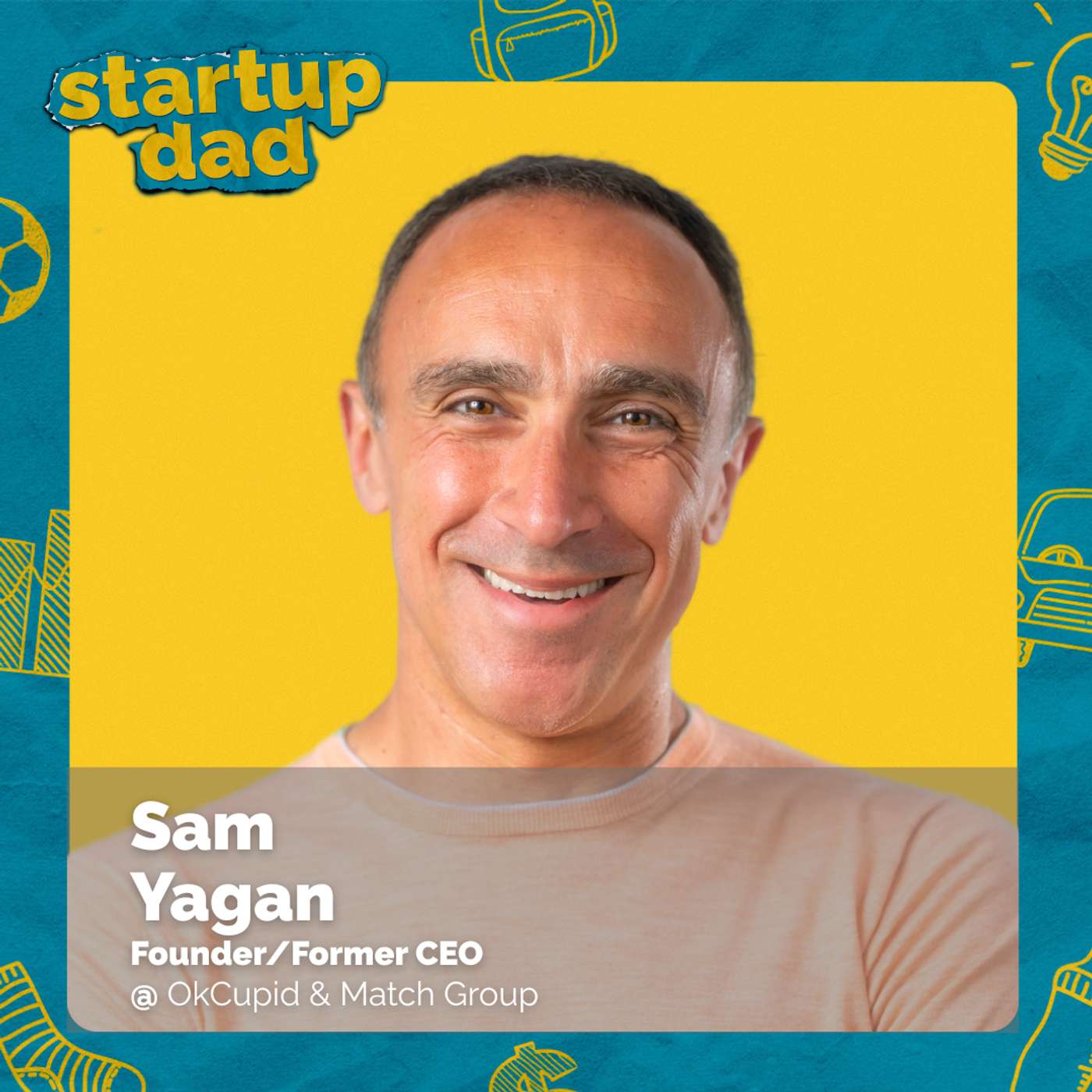
Sam Yagan is the founder of OKCupid and former CEO of Match Group. He’s also an investor, board member, married to a CEO, and a dad of three kids ages 12 to 18.
In this episode, Sam shares how he and his wife think about raising kind, grounded kids while navigating success, wealth, and ambition. We talk about family values, philanthropy, work-life integration, the pressure kids can feel from high-achieving parents, and why Sam believes “normal” is overrated.
We also get into the systems that shape their household, from weekly family meetings and value shout-outs to annual family reviews and intentionally making their home the place where all the kids want to hang out. We discussed:
- Raising grounded kids in a high-achievement household: How Sam and his wife work to keep their kids kind, self-aware, and unentitled despite growing up around success and wealth.
- Building family values into everyday life: How Sam’s family uses weekly meetings, value shout-outs, and annual reviews to make generosity, kindness, and self-awareness part of daily life.
- Introducing philanthropy before personal wealth: Why Sam wants his kids’ first understanding of money to center on giving, impact, and responsibility.
- Choosing the right partner for the long game: Why Sam believes ambitious founders need a spouse who shares their values and vision for family life.
- Creating a home that pulls people in: How Sam and his wife built a family environment where kids and friends naturally gather, creating more connection and shared memories.
- Bringing a founder mindset into parenting: Why Sam believes decisiveness, experimentation, flexibility, and comfort with failure matter at home too.
Where to find Sam Yagan
- LinkedIn: https://www.linkedin.com/in/samyagan/
- X: https://x.com/samyagan
Where to find Adam Fishman
- FishmanAF Newsletter: www.FishmanAFNewsletter.com
- LinkedIn: https://www.linkedin.com/in/adamjfishman/
- Instagram: https://www.instagram.com/startupdadpod/
- X: https://x.com/fishmanaf
In this episode, we cover:
(00:00) Welcome Sam Yagan, Former Founder/CEO of OKCupid & Match Group
(02:44) Raising kind kids in a world of privilege
(04:59) Family values meetings that actually work
(06:23) When your kids start asking about net worth
(12:10) Why philanthropy comes before wealth
(14:57) Work-life integration during the startup years
(18:29) The tradeoffs that come with constant travel
(20:59) The pressure kids feel from successful parents
(22:27) Teaching a “fail forward” mindset at home
(26:58) Why normal is boring
(29:24) Why choosing the right partner matters
(32:53) Putting your family values on the wall
(36:27) The annual family review
(38:47) Making your home the hangout house
(48:01) Lightning round: Parenting products, dishwasher rules, and Sam’s hard no on minivans
Resources From This Episode:
OKCupid: https://www.okcupid.com/
Match Group: https://mtch.com/
Playing cards: https://a.co/d/05A9UUbF
Basketball: https://a.co/d/0erx9ow0
Harry Potter and the Sorcerer's Stone (Film): https://www.imdb.com/title/tt0241527/
A Few Good Men (Film): https://www.imdb.com/title/tt0104257/
Toyota Highlander (Car): https://www.toyota.com/highlander/
—
Support Startup Dad
For sponsorship inquiries, email: podcast@fishmana.com.
For Startup Dad Merch: www.startupdadshop.com
[00:00:00] Sam Yagan: we just went on a getaway, the two of us, and we just sort of sat at breakfast and, just started writing
[00:00:04] Sam Yagan: and I believe the same thing about sort of corporate values, it's less important what they are, the exact values and more important that you really live them,
[00:00:12] Sam Yagan: that you really integrate them.
[00:00:14] Sam Yagan: but someone else could be like, well, why don't you have. Whatever on there, and it's not that we don't value that too, it's just that, you need to have focus so that you can actually make sure that you're integrating them into your life.
[00:00:26] Adam Fishman: Welcome to Startup Dad, the podcast where we dive deep in the lives of dads who are also leaders in the world of startups and business. I'm your host, Adam Fishman. Today's guest is the founder of OkCupid and former CEO of Match Group. Sam Yagan, in addition to being a wildly successful founder, he's been on the board of more companies than I can count, is married to A CEO and has three kids ages 12 to 18.
[00:00:57] Adam Fishman: Sam and I discussed how to avoid raising entitled kids in a world of privilege, how and when to introduce philanthropy in your household, whether it was possible to have balance when he was traveling 50 weeks per year as the Match CEO. Turning down the unspoken pressure that kids feel with successful parents creating and living family values, and what it means to bring a founder's philosophy to parenting.
[00:01:22] Adam Fishman: You'll also probably hear in the background one of Sam's proudest achievements, which is leaning into his kids' friends as a core part of their lives. If you like what you hear, please subscribe to startup ad on YouTube or Spotify, so you never miss an episode. You'll find it everywhere you get your podcasts.
[00:01:40] Adam Fishman: I hope you enjoy today's conversation with Sam Yagan. Welcome, Sam Yagan to startup Dad, Sam, I am so excited to have you here today. Thanks for joining me.
[00:01:50] Sam Yagan: Hey Adam. It's exciting to do this.
[00:01:52] Adam Fishman: really special shout out to past guest Ethan Austin for introducing the two of us.
[00:01:57] Sam Yagan: big supporter of his through his entire startup journey. So
[00:02:00] Adam Fishman: Well it comes full circle. So excited to have you and thank you again Ethan, for introducing the two of us. Okay. Sam, for those who don't know you, uh, you founded or led a bunch of very high, highly successful companies. you've been on the board of more companies than I can count. you also have three kids,
[00:02:21] Adam Fishman: 12, 15, and 18, and a wife who works full-time as a CEO.
[00:02:25] Adam Fishman: So. Eventually, I'm gonna want to know how you did all this. We'll get to that in a little bit.
[00:02:31] Adam Fishman: But the first thing that I want to talk to you about is privilege. I don't think I'm talking outta turn here 'cause this is a topic you brought up in our prep for this show. But, you know, with all that history, I think it's safe to say without naming numbers or anything, your family's fairly well off.
[00:02:45] Adam Fishman: Like you've been successful, your wife's successful, you've done a lot. with that as a backdrop, how do you raise kids to be perfectly frank, that aren't entitled assholes?
[00:02:57] Sam Yagan: it's a funny question you asked, but I'm glad it's the first because I, I think in many ways it's the most important. when my wife and I think of the attributes that we most want our kids to have, kindness is probably number one.
[00:03:07] Sam Yagan: integrity is right up there. we never talk about, school performance or, career progression or what, I mean, they don't have careers yet, but when I think about what I dream for them or what we dream for them, whether it's be good people who are contributing, members of society, like let's start there. so I think it helps that my wife and I both come from a very different but very, grounded background.
[00:03:31] Sam Yagan: So, uh, my wife grew up, in rural Illinois, population 400. very much, a middle class family that, grew up in a very, very small town where, community and, relationships were very, very important. She comes from a very large family. Family was very important. my parents are both, uh, Syrian immigrants, um, and I've spoken about that somewhat extensively. so at the opposite. my wife has 51 cousins on one side, and, I've never met most of my cousins who, you know,
[00:03:56] Sam Yagan: are back in Syria and around the world. And so, for us it was a very small family. It was just the four of us, my brother and my parents, in Illinois. I think when you grow up in most immigrant families, you know, work ethic isn't taught to you.
[00:04:09] Sam Yagan: It's instilled in you because you have to do everything in the house, just has to get done. And there was no debate about chores. It was just like, you've gotta mow the lawn, you've gotta do the grocery shopping, you've gotta do the laundry. so my wife and I both lived that, and so we know at least what we want it to feel like. now it's very hard because, the chores for our kids are in many ways made up. Like, if they don't load the dishwasher, I will, or the cleaning lady will or someone else will. And so, It can be hard to recreate the forcing functions that my wife and I both had growing up. but we've had to do other things.
[00:04:46] Sam Yagan: And so one of the things, um, that we've done, for example, is family values. And, you know, almost every company has values, but I actually think most families have values but not written down on the wall. they integrate into their, into their family lives. And so, uh, we have a set of values. we have a weekly family meeting. and in that family meeting, the, kickoff, the first thing we do in family meeting is what we call value shoutouts. And everyone goes around and, shouts out or acknowledges, or recognizes a time when someone in the family did something that lived by one of the family values. And so, you could imagine that being corny or sort of something that was just like, inauthentic. but we take it very seriously and, People have to think about the weak, and we don't just say, oh, thank you. Oh, it was awesome, dad took us to the basketball game. Like, you have to name a value. Like, okay, well what, what value was that? Like, why was that something that is consistent with our values? So we anchor everything in, in our values.
[00:05:41] Sam Yagan: and then from there, a lot of things come out of that. So, you know, when do your best is a value, which it is, that then can flow through other conversations. So, we don't talk about what grades our kids get. We talk about did you do your best in that class? indirectly around privilege, but, we really try to focus on what's important and not these sort of like vanity metrics, like net worth or titles or. Even GPAs.
[00:06:09] Adam Fishman: I wanted to ask you about the net worth thing for a second, and we're gonna come back. We're come back to the family values. 'cause I really want to dig in there a little bit later in our chat. but one of the things you told me in the prep for our conversation is this is. Issues around like guessing the family's net worth.
[00:06:28] Adam Fishman: Right. And you know, I, I would say I'm decently well off, probably not as successful you and your, your family have been. But, you know, even I have my kids who are like, trying to guess how much the house that we live in costs and like trying to figure out like, well, how much money do we have in the bank account?
[00:06:45] Adam Fishman: and stuff like that. And it's sort of just like a thing that kids kind of do. It's sort of like the innocence of, of childhood, but you know, tell me what you meant by like, the issues around, you know, quote unquote guessing the family's net
[00:06:56] Adam Fishman: worth.
[00:06:56] Sam Yagan: Well. Well, first of all, I didn't, the term net worth was not even in my vocabulary until I
[00:07:02] Sam Yagan: was an adult. Soour net worth was probably you, whatever. It's not large growing up. so it turns out that like if you just start typing Sam Yagan, like Google will autofill net worth as
[00:07:13] Sam Yagan: like one of the like suggested searches. and so, you know, I don't know whether it started out of curiosity of my kids wondering what is my net worth or, them just googling Sam GaN and net worth being a choice or,
[00:07:26] Sam Yagan: you know, the other thing is like kids talk with their friends and I've built companies that my kids have used and my kids' friends know and we happen to have a relatively nice house.
[00:07:37] Sam Yagan: And so it, would be an obvious or, or logical question, or an understandable question for even one of their friends to ask. So I haven't verified this 'cause I don't really care, but, um. My kids have told me that, various estimates on the internet, the range of my net worth, our net worth spans from zero, which is a weird estimate, to 2 billion, which
[00:07:57] Sam Yagan: they're, not wrong. I did this search myself, and that was exactly what it,
[00:08:01] Adam Fishman: what it told me.
[00:08:02] Sam Yagan: So, and of course they go down this path, they're like, well, is it zero? And I'm like, no, it's not zero.
[00:08:06] Sam Yagan: Is it 2 billion? I'm like, it's not 2 billion. So then they're like, okay, well now let's start to like narrow this in. Is it
[00:08:12] Adam Fishman: You're like hot or cold, dad. Hot or cold.
[00:08:14] Sam Yagan: Right, exactly. So
[00:08:15] Sam Yagan: I've decided, you know, so obviously we don't, we don't play that game. but it's like the fact that that's even a question puts money much more front and center than it ever was in my life growing up.
[00:08:27] Sam Yagan: And I think we'll talk about philanthropy, you know, probably at some point in this conversation. But it even is an odd, unintended consequence of being philanthropic is like, you know, when I was growing up, my parents were philanthropic, but at $500 here, a hundred dollars
[00:08:39] Sam Yagan: there, whatever, which was
[00:08:40] Sam Yagan: not enough to cause you to like, whoa, that's a big number.
[00:08:43] Sam Yagan: Or what is that? What are the implications? But you know, if you give a sizable donation and the kids find out about it, what does it mean that you gave a hundred thousand dollars to a charity? Well, it means you have a lot more than a hundred thousand dollars. You know, like, and so then you start just doing math and you start making estimates.
[00:09:00] Sam Yagan: And, and also like, I don't think I ever knew how much my parents' house was worth. Like there was no Zillow.
[00:09:05] Sam Yagan: Whereas here, it's obviously. Available. and so there's just so much more information about money that
[00:09:14] Sam Yagan: kids have access to. you know, it's a weird, you know, feature, uh, I guess of like startups that like most transactions are publicly known. And so everyone knows I sold OkCupid for $90 million and whatever, whatever.
[00:09:25] Sam Yagan: And so how much of OkCupid did you owe? You know, and
[00:09:28] Sam Yagan: like, I don't tell them, but like, they're not ding-dongs and so they can figure out, well you got co-founders and investors and you know, whatever. And, so like you can get these kinds of, of answers. And so the question becomes like, you know, I don't fight them about it, but I really just try to say like, that is not that I importance of a number.
[00:09:47] Sam Yagan: like over a certain point I think. what I've tried to say to 'em is like, if our net worth were half or double, you wouldn't know.
[00:09:54] Sam Yagan: you would notice. You would know. You wouldn't care. And so, whatever number it is, let's say you knew would, would make no change.
[00:10:00] Sam Yagan: would have no impact on your life. And
[00:10:01] Sam Yagan: so I've tried to sort of push that narrative and it's only somewhat effective,
[00:10:05] Adam Fishman: W yeah, I, I imagine it's, like you meant, we're in like a, almost a perfect information society these days. So any kid, your kids are all the age where they have access to the internet in various forms. any kid's going to do stuff? my daughter's Googled me and I'm like, oh, that's interesting.
[00:10:22] Adam Fishman: I, I wonder what comes up. she's like, oh, dad, I watched some of your videos. I'm like,
[00:10:26] Sam Yagan: which
[00:10:26] Adam Fishman: You know? so it, you know, it happens. it sounds like what you also do is try to bring it back to that, that value system that you talked about, which is like, it's more important that you as a family are having discussions about your values and what it means to be a good person in the world than.
[00:10:42] Adam Fishman: Money. And, money is maybe a means to an end, but if you're not living up to the values, that's actually significantly worse. even if you were not wealthy, wealthy, like it doesn't really matter. going through life as a good person is kind of what matters
[00:10:56] Sam Yagan: think there's another like subtle nuance here, which is for people in poverty, money's very important. And so, you know, it's not quite as simple as money's not important, you know, and 'cause that was kind of where I started. I was just like, oh, money, why do you care? but like, you know, the comfort in knowing that I got fired from, from one of my jobs once, and, uh, The kids were like, are we gonna be
[00:11:22] Sam Yagan: okay? Little did they know that, you know, when an executive gets fired, it's actually like a windfall and like, you know, you get lots of money.
[00:11:28] Sam Yagan: and so, you know, so like they still have the, you can tell there's still this visceral, like, are we gonna be okay? And so I want them to not worry, have that worry.
[00:11:37] Sam Yagan: So, so it's like, how do you tell them that we have enough money that dad can get fired and we're gonna be okay, but also not so much or whatever, but don't
[00:11:46] Sam Yagan: really focus on it too much. So
[00:11:48] Sam Yagan: and of course they have friends who are, maybe not in poverty, but they can't just get whatever they want. and how do we make sure to pay a program amount of respect and, not be presumptive of, of others. So it's, it's
[00:11:57] Adam Fishman: yeah.
[00:11:57] Adam Fishman: I want to come back to the, this philanthropy topic that you mentioned. I imagine you and your wife are, quite philanthropic 'cause you brought, you brought this up to me and you, you've already mentioned it here, you probably have a belief about like the right time and ways to kind of engage your kids with.
[00:12:12] Adam Fishman: Philanthropy. so how have you and your wife thought about that, or how have you introduced that to your kids as they've gotten older?
[00:12:19] Sam Yagan: Yeah, so the general approach we've taken is that, the philanthropic part of our finances, is sort of the onboarding part. it's the part that we want to give visibility to before they get visibility into, our balance sheet,
[00:12:36] Sam Yagan: if you will. for a couple reasons.
[00:12:38] Sam Yagan: One, it's, not our money or their money, it's in a foundation.
[00:12:43] Sam Yagan: and so it is truly something that we can look at and say, this is. For the public good and for our philanthropic good. Um, and two, while I'm sure they can, they might be interested in our, like, investment strategies with our capital, it's much easier for 'em to engage with the organizations that we support.
[00:13:02] Sam Yagan: Like, oh, why did you choose X or Y? And so what we decided is that basically there's kind of two stages. There's a stage at which, the kids are old enough to basically see all the organizations that we support. with all the numbers removed, here's the X organizations that we supported in the last year.
[00:13:21] Sam Yagan: we then basically encourage them to like, are there any of these that you're interested in, that you want to spend time learning about? that you might want to find other organizations that are adjacent or similar? Because we have, we have pillars of our, philanthropic focus. For example, one of them is, um, democracy.
[00:13:36] Sam Yagan: And so look, if democracy is something you're interested in, well, here's the five organizations we supported. By the way, here's three or four others that you might want to go research and if you got excited about, you could recommend it, that we make a donation or support them. so then as the kids get older, I think at 16, they basically get to see, the non-numeric foundation. and then at 18 they kinda get to see the numbers attached to that.
[00:14:01] Sam Yagan: Maggie hasn't turned 18. We yet, she turns in six weeks. and what I will have to deal with, what we'll have to deal with in six weeks is she's gonna see a number
[00:14:10] Sam Yagan: and, that number is gonna be a bigger number than I suspect she's expecting. and that is again, just for the, the charitable stuff.
[00:14:19] Sam Yagan: And
[00:14:19] Sam Yagan: she will then either ask or wonder,
[00:14:22] Sam Yagan:
[00:14:22] Sam Yagan: but that, that's how we thought about it. we like the idea that the part they're seeing first is the part of the money that's doing really, really important work
[00:14:31] Sam Yagan: that is supporting, that is the giving back. And that the first direct engagement with wealth or privilege is how do we wanna help the world?
[00:14:41] Sam Yagan: how do we want our money to show up doing good in the world?
[00:14:44] Adam Fishman:
[00:14:44] Adam Fishman: I wanna go all the way back to. When your kids were fairly young, so you were founding and leading OkCupid and then the CEO at Match Group during a time where your kids were pretty young and sort of coming of age, you might say. and one of the things that comes to mind, at least when I think about, you know, founder and CEO of a company that's on a tear, it's a literal impossibility to strike any kind of balance between work and family.
[00:15:13] Adam Fishman: You're just leaned into work all the time. is that true or were you able to kind of figure something out there? And then I'm curious how maybe that changed throughout the seasons of, of your life or maybe as your kids got older or something like that.
[00:15:28] Sam Yagan: Yeah, so uh, we had our first child, Maggie, when, OkCupid was actually right after the financial crisis, and OkCupid was at its worst point ever. We were six weeks from running outta cash.
[00:15:40] Sam Yagan: right around the time Maggie was, was being born, we were probably at our lowest point.
[00:15:45] Adam Fishman: great time to bring a kid
[00:15:46] Adam Fishman: into the world.
[00:15:48] Sam Yagan: Um, but just to give you a sense, like, Jack our second was born, and I was literally negotiating the sale of Okay Cupid from the delivery room.
[00:15:55] Sam Yagan: Like I was emailing the CEO of Match. And finally I jokingly said, haha, I'm in the delivery room. And he said, can you stop?
[00:16:01] Sam Yagan: Like, put your lap? To his credit, he's like, put your laptop away. and then, max, our youngest was born, probably 18 months into my tenure as CEO of Match, when I was traveling 50 weeks a year. you know, weighing in over my head, learning a new job and, and, and all this stuff.
[00:16:17] Sam Yagan: So, so definitely those years, really from the time. Maggie was born until the time, our youngest was probably three. that sort of 10 year stretch was probably the busiest and craziest 10 year stretch of my career. And, to make it even crazier, my wife got her first CEO job, while she was on maternity leave,
[00:16:38] Sam Yagan: with our youngest. So like, literally she comes back from a lunch and she's like, I think I just took a CEO job. And I was like, great. Amazing. We're gonna figure it out. and so, my approach to worklife balance is work life integration. and I don't say that judging any other way to do it. Everyone has their own thing. A lot of people are into, you know, boundaries. A lot of people are into like splitting things off, I love whatever works. I have just always just said if I'm at work. And I need to be a dad or a husband at that moment, I'm gonna do that. And if I'm at home and I need to be a CEO, I'm gonna do that. Now I get that. The fact that I'm A CEO allows me to do that, and I can just cancel meeting. Like if I
[00:17:18] Sam Yagan: need to just cancel my whole day, I just walk over to my fantastic EA and say, Carrie, make it all go away.
[00:17:23] Sam Yagan: and I totally get that. That's, a privilege. I, took advantage of that and I said, look, I know I can create flexibility when I need to.
[00:17:29] Sam Yagan: So I can operate at 99% capacity with no margin for error. Because if something comes up, nanny gets sick and someone's gotta stay home, we have a lot of flexibility in our careers to just, make things, work. so I would say from a work perspective, I tend to be a very high energy person and. I at least convinced myself, Maybe I was just, justifying it that, the more engaged I am at work, the more engaged I am at home. And so I remember getting off flights from Europe landing late afternoon here and then running into the house and wrestling with the kids.
[00:18:02] Sam Yagan: part of it is I'm just naturally very energetic and as long as I have positive feedback and people around me who are giving me the stimulus I need, at least in my younger days, you know, could definitely kind of go round the clock in a way that, was very useful.
[00:18:15] Adam Fishman: Yeah.
[00:18:19] Adam Fishman: One of the things that you mentioned when your third kid, was born and you were CEO at Match, is that you were traveling a ton. You said like 50 weeks a year.
[00:18:25] Adam Fishman: as far as I know, there's only 52 weeks in a year, and so that's a lot of weeks. were your kids old enough to ever say anything to you about that?
[00:18:34] Adam Fishman: Or like, how did you, I guess, address that when they inevitably had questions like, dad, aren't you home? Or, Hey, dad, can you come to this thing? And you're like, I can't, I have to be here instead.
[00:18:45] Sam Yagan: the good thing is they were all pretty young. And so, interestingly with the passage of time, I now kind of really, if I had to be busy at any point, I'm glad I'm here for the middle school, high school years
[00:18:55] Sam Yagan: because I, I just think like, I just see much more, it's much more tangible what the, or visceral, what the impact is I'm having, whereas I'm sure they valued me changing diapers at three months, I hope. at the time I don't really remember them missing me, but my oldest, who's the only one who would really remember, she will occasionally say, oh yeah, I remember, at our other house. you know, we just had, chicken nuggets and mac and cheese. 'cause you and mom were always working. And it's funny when she says that it, like, there's a part of me where that hurts. but it's her memory, it's her truth. So, I mean, I guess that's what, and but there was a lot of mac and cheese and a lot of chicken nuggets. So I, I, I think she's right. we made a lot of trade-offs and I think, you know, I also look back at photos and think, and like. We spent a lot of time on the weekends together, and so, yeah. Did I miss more dinners and did I, you know, spend a lot of time during the weekends It's especially hard in the moment to know what tradeoffs are, the right tradeoffs. It's, you
[00:19:51] Sam Yagan: know, it's very, hindsight 2020 and also, but it's, the counterfactuals in there.
[00:19:55] Sam Yagan: Well, oh, well, let's say I had not traveled, let's say I'd only traveled 25 weeks a year. Well, maybe I wouldn't have been as successful. And maybe, and it's easy now when you're saying, oh, oh, sure, I would be happy to have been 10% less successful. But like, that's not usually the choice. It's
[00:20:07] Sam Yagan: usually a very successful or not.
[00:20:10] Sam Yagan: It's
[00:20:10] Sam Yagan: rarely, oh yeah, let me dial back 10% success. Sure. Would I trade 10% of my net worth to like, have spent 10? Sure. But like, that wasn't the choice, you
[00:20:18] Adam Fishman: right. Especially in the startup world, you know, the outcomes are so binary, right? They're either a home run or the company goes outta business. There's not a lot of middle ground that anyone's happy about.
[00:20:29] Sam Yagan: It's not like you're like, oh, you know, maybe in a banking job or something. Like, oh, if I get one less deal done, what if fewer deal done this year? My bonus is, tip 5% less or something. Like, that's just not
[00:20:38] Adam Fishman: yeah. Like you mentioned, you were, you know, six weeks away from missing, missing payroll and the company going outta business. Like that's not a spectrum, that's a very binary outcome,
[00:20:46] Sam Yagan:
[00:20:46] Adam Fishman: so, you know, one of the things that I think about a lot, and I live in a town where. There's a lot of successful parents, very driven, college educated, you know, people who have like really high standards for themselves and you know, with a successful set of parents like you and your wife, I can imagine that that leads to like a lot of unspoken pressure that kids feel, even if it's not like explicitly said, you know, they're just sort of observing, well, mom and dad did this, they have these jobs.
[00:21:16] Adam Fishman: Like even if they don't fully understand it. So, you know, you mentioned at the beginning like how you talk about definitions and expectations for success with your kids, and I'm curious if you could elaborate a little bit more on that and how have you had to like help dial down the self sort of imposed pressure that a lot of kids feel.
[00:21:37] Sam Yagan: It is complicated. and it's real. my parents came to America, so I could go to Harvard.
[00:21:42] Sam Yagan: and it sounds crazy to say those words out loud, but like, that was the expectation was like, you have opportunity. We never had. And in retrospect, I'm like, wow, cause people ask me, they're like, how did you survive that pressure?
[00:21:53] Sam Yagan: I'm like, I don't know. I was just told
[00:21:55] Sam Yagan: and I'm like, wow, I definitely don't want my kids to have that, you know, that pressure. and you know what's interesting is, to your point, the kids put the pressure on themselves
[00:22:05] Sam Yagan: whether it's financial or whether it's, oh, mom and dad both went to fancy schools.
[00:22:09] Sam Yagan: oh by the way, aunts and uncles went to fancy schools, and is that the expectation?
[00:22:14] Sam Yagan: what we've really tried to do is to go back to again, the family values. And one of our values is, do your best. and one of our values is actually fail forward. which I like those two together because, we are both saying that we expect you to do your best, but we're also saying that we expect failure.
[00:22:31] Sam Yagan: and so when we look at, progress reports or report, they used to be called report cards,
[00:22:36] Sam Yagan: progress reports, whatever, you know, we're looking for the commentary. Yes, the grade is there, and of course you look at it, but we're really looking, we're reading through the, the commentary and saying like, did you participate? if it says you showed up unprepared, but even though you got an A, so and so comes to class, you know, unprepared, doesn't have their homework, doesn't have their calculator out, whatever, like, that's not your best. that's what we're trying to like focus on, the inputs more
[00:23:00] Sam Yagan: than the outputs. And you know, where this really came up was in, my daughter just went through the college, application process and what I said to her and she was very worried about disappointing me. Uh, my wife is. Excellent about convincing the kids that like she just wants 'em to be kind and could not care less where they go to school.
[00:23:20] Sam Yagan: She's amazing.
[00:23:21] Sam Yagan: what I said to them? We play a lot of cards, in our house and whether it's poker or hearts or whatever your card game is, everyone is familiar with a case where you've made the right decision and the cards come up against you
[00:23:34] Sam Yagan: or you've made the wrong decision and the cards come up for you.
[00:23:36] Sam Yagan: Like what I like about games and cards in particular is that the decision and the outcome get gets separated a little bit and when you play cards, the right thing to just make the right decision. And then over time the luck will, you know, kind of average out. And so what I said to Maggie as she was applying is I said like, think of high school as getting to pick your two hole cards in poker.
[00:23:58] Sam Yagan: if you kind of flunk your way outta high school and you don't, that's a two seven.
[00:24:01] Sam Yagan: and if you have straight A's and a 1560 or whatever the case may be, in great letters, that's Ace King or Queens or something, And all you can do is show up to the table with the best two cards. And so, you know, when she applied to college, I said, just so you know, each one of these colleges, like any one hand of poker, you're probably not gonna win. And so when you get each letter, like, 'cause she said, are you gonna, are you gonna be disappointed if I don't get into my first school? And I said, oh, I'm a math major. I'll be surprised if you get it. Like, mathematically, this should be a no,
[00:24:33] Sam Yagan: over 10 applications. You should get one or two yeses.
[00:24:36] Sam Yagan: that was how I tried to really diffuse the pressure was to just say like, it's like a hand of cards, which is like, there is gonna be this randomness, there is gonna be this uncertainty that's out of your control.
[00:24:46] Sam Yagan: And if you try too much to like control it, you're gonna drive yourself crazy.
[00:24:50] Adam Fishman: Yeah, I really like that analogy a lot. the poker hand, analogy. I've never heard anyone describe it to me that way. That's, that's fascinating.
[00:24:57] Sam Yagan: Well, we, we play a lot of cards in our
[00:24:59] Sam Yagan: house and so it, it happens all the time where you're like, how did I get Ed on that
[00:25:02] Sam Yagan: hand? But, other thing is like, I think it's important to make sure the kids see and you know, if you listen to any of my other podcasts, I almost always attribute my success first to luck. Now there's hard work and there's all these other dynamics that you can't just sit in your basement and hope to get lucky, but you gotta put yourself in positions to get lucky.
[00:25:20] Sam Yagan: And in fact, at one point Maggie was having a kind of a low point in her high school, and I actually emailed my high school and asked for my transcript because I did not have straight A's.
[00:25:29] Adam Fishman: Mm-hmm.
[00:25:29] Sam Yagan: I printed it out and I gave it to her. She said, what's this? I said, my high school transcript. She's like, how did you get into college? Like literally that was her reaction, you know? And I was like, Maggie, you have way better grades than I do. You have a way better SAT score than I did. And by the way, I got into five of the eight colleges I applied to. I didn't get into all of them.
[00:25:48] Sam Yagan: I think that almost had more impact than any of the like, logical stuff because she's like, oh, I'm doing better than dad.
[00:25:54] Adam Fishman: Yeah.
[00:25:54] Sam Yagan: And he didn't get into all his schools. And so, okay, I don't have to get into all my schools and maybe it's okay that I got a minus,
[00:26:01] Sam Yagan: it would became very clear that perfection was not the bar and profession was not what was required even for the success that I had.
[00:26:08] Sam Yagan: 'cause it can be so simple as a kid to be like, oh, well everything I hear about is I listen to dad's podcast, I listen to this, I listen everywhere I go, dad is like amazing. People love him or whatever. He's been successful everywhere. He's gone. And you know, that's just, at least for me, not the case. I think for most people, not the case.
[00:26:23] Adam Fishman: yeah. Well, and also the, you know, the slice that gets discussed out in public and on podcasts is usually just a, just a,
[00:26:32] Adam Fishman: tiny slice of your life.
[00:26:34] Sam Yagan: oh. I, and I tell that, especially to founders who like, I wanna be a founder. I'm like, do not do it because do not do it for the glory.
[00:26:41] Adam Fishman: Right, right, right. Well, actually that's a really good, um.
[00:26:47] Adam Fishman: That brings up a really good topic, which is, something you told me in the prep for this show, which is, we think about founders, founders are like oftentimes highly abnormal human beings. Like they abnormal risk takers, hyper intelligent, sometimes abnormal in good ways and bad ways, like all, all kinds of things.
[00:27:04] Adam Fishman: And yet when we raise kids, like kids generally have this desire to be normal, you know, and not necessarily be abnormal when they're kids. There's a lot of pressure that's like, I gotta be normal,
[00:27:16] Adam Fishman: you know, I can't be the weird kid or something like that. has that created like dissidents conflict that you've had to work through in your household?
[00:27:24] Sam Yagan: I don't think it's been dissonant. I think, I position normal as boring.
[00:27:31] Sam Yagan: So like, whenever there's like this idea of being normal, I just like, I'm like, ew. You know, like, who wants to be normal? Who wants to be average?
[00:27:38] Sam Yagan: I try to tell my kids like, the most interesting people are the people who have these like weird interests and passions. And that's what's interesting. And I even even try to encourage 'em, like, the friends that you even like, like what you like about them is the thing that is. A little bit off, you
[00:27:55] Sam Yagan: know, like the thing that makes them, them almost by definition is the thing that is most idiosyncratic to their personality. I often tell them like, don't try to be the smartest person in the class.
[00:28:06] Sam Yagan: Like, you wanna surround yourself with people smarter than you. Right. And so you wanna surround yourself with people who are not normal, who are interesting and you wanna be one of these like, interesting not normal people. now there are times, mostly socially where, you know, they're like, oh, dad, why do you do these weird things?
[00:28:23] Sam Yagan: but yeah, I, I think, we have just positioned normal as boring in the
[00:28:27] Adam Fishman: Yeah.
[00:28:27] Sam Yagan: has, that has helped.
[00:28:27] Adam Fishman: Yeah. I imagine you talk to a lot of founders now, given that you've been one, you know, you invest in them and, and things like that. if you think back to the last like 15 or 20 years you've had this career, you were founder, very intense, lots of ups and downs. You raised multiple kids in that time, and you're going back to talk to somebody who is just at the cusp of embarking on.
[00:28:54] Adam Fishman: What could be a similar journey. They have your same level of ambition. They also have a desire to like have a family and kind of do both of those things. what would you tell someone who's about to get started on this journey? about like what to expect across both of these dimensions?
[00:29:11] Sam Yagan:
[00:29:11] Sam Yagan: my first answer won't surprise you, be given my online dating background. Um, the, the most important thing, especially for someone who wants to have. That level of ambition professionally, and I'll use ambition, but whatever the,
[00:29:26] Sam Yagan: analog is, in your family is choosing the right partner is everything. I think being the spouse of a founder is, an unsung. You should have a podcast on like bounces of founders because I think that's a whole wild thing that I've only appreciated, I think as I've had more perspective myself. but it can be very hard. you know, you're working your ass off.
[00:29:47] Sam Yagan: you're almost married to this company. You started,
[00:29:50] Sam Yagan: that is an extension in many ways. I mean, people for years knew me as SparkNotes or knew me as OkCupid, like they were synonymous. and so if you're going to have that much emotional. Exposure and commitment. I think you just have to have the right life partner who's committed to that same journey with you.
[00:30:09] Sam Yagan: Like if they want something different or expect something different, that you're gonna be home for dinner every night, or whatever. then that can just cause a friction that's just gonna like, permeate everything that you do. So I think that's the single most important thing.
[00:30:22] Sam Yagan: I think the second is you have to acknowledge that there are gonna be trade offs. I'm someone who, I do much better saying out loud, I'm making a trade off right now then it's out of me. It's not trapped in my body. Like, oh, what is, I have these two conflicting obligations that I know I can't fulfill. But if I just say, Hey, I'm just not gonna go to half your soccer use
[00:30:44] Sam Yagan: or whatever. You know, Hey, I'm gonna, miss these things at work, or whatever the case may be. that to me is a relief and a release of stress. the younger version of me thought being a CEO required perfection. And you've gotta do every, you have to have all the answers. You've gotta always be available a hundred percent all the time, 24 7 for everybody. And similarly, that version of like early parenting was the same thing, was like, oh, I gotta be at everything all the time, everywhere. And I think as I've, matured on both levels, it's actually much more important that you're choosing your spots.
[00:31:23] Sam Yagan: there are things that, I made the decision to, as both a way to spend more time with my daughter, but also a way to.
[00:31:31] Sam Yagan: Be useful is, I decided to do all the math problems that she was assigned for for the last three years.
[00:31:37] Sam Yagan: I would wake up Sunday morning and I would do math problems and I just said like, that might mean I don't get my email caught up or whatever.
[00:31:43] Sam Yagan: But like, I decided that my ability to sit down with Maggie every night and do an hour of math together was a priority.
[00:31:52] Sam Yagan: And then this year it's calculus. And I had no interest in relearning calculus, so I was like, in fact, I told her this year, I was like, don't even ask me one question about calculus this year. I don't wanna know. I don't wanna hear it. I know. And so that was just an example where like something that became was priority one, became like not a priority and I just said it out loud,
[00:32:08] Adam Fishman:
[00:32:08] Sam Yagan: And so that's just one example.
[00:32:09] Adam Fishman: Yeah. I love those two things. pick your partner and then be clear on your priorities. Just say what you are and aren't going to do,
[00:32:19] Sam Yagan: and it's not as simple as just, one nuance like, 'cause everyone's priorities are, well, family first, whatever. But there are gonna be moments like family can be your priority. And that doesn't mean it always supersedes work.
[00:32:31] Sam Yagan: Of course, you just live at home all the time. And so it's more about the trade-offs within the priorities or among the priorities
[00:32:37] Sam Yagan:
[00:32:37] Adam Fishman: No, that makes that, that makes a lot of sense. Thanks for clarifying okay.
[00:32:40] Adam Fishman: So I wanna come back to family values
[00:32:44] Adam Fishman: because we talked about this a little throughout, uh, this conversation. So you've got this set of family values, they hang on the wall in your dining
[00:32:51] Adam Fishman: room. you do this weekly family meeting where you do a value shout out, which I love.
[00:32:56] Adam Fishman: and I'm curious, I have a few questions about this. So when did this start? When did you start doing the family values?
[00:33:02] Sam Yagan: It was probably years ago.
[00:33:07] Sam Yagan: basically once our oldest was like 12 probably,
[00:33:11] Sam Yagan: and youngest was six. So like
[00:33:12] Sam Yagan: everyone kind of, obviously the 12-year-old could conceptualize, but even the 6-year-old could start to appreciate what these meant.
[00:33:19] Adam Fishman: Yeah. And then did you. Create them with your wife or is this something that, like you enrolled the kids in this process of value creation, or did you kind of just say, here they are on the tablets. Here
[00:33:29] Sam Yagan: Yeah, it was the latter. It, it
[00:33:31] Sam Yagan: was just Jess and I, and for sure I could have imagined a, a,path where it was, you know, done more collaboratively.you know, we just went on a getaway, the two of us, and we just sort of sat at breakfast and, just started writing and, and they've evolved a little bit.
[00:33:44] Sam Yagan: The wording has evolved and I think we
[00:33:45] Sam Yagan: added an eighth at some point. but they've more or less been, the same since
[00:33:50] Adam Fishman: Okay. you told me two of them, is do your best and fail forward. What else is on the list of family values in your
[00:33:57] Sam Yagan: Yep. So, um, do your best fail and fail forward?
[00:33:59] Sam Yagan: generosity is the third one. integrity is the fourth. the fifth is invest in yourself. Uh, the sixth is kindness, seventh is matter, and eighth is self-awareness.
[00:34:12] Sam Yagan: and I believe the same thing about sort of corporate values, it's less important what they are, the exact values and more important that you really live them,
[00:34:20] Sam Yagan: that you really integrate them.
[00:34:21] Sam Yagan: but someone else could be like, well, why don't you have. Whatever on there, and it's not that we don't value that too, it's just that, you need to have focus so that you can actually make sure that you're integrating them into your life.
[00:34:34] Adam Fishman: Right. when I was at a company called Patreon, had, a thing that we called behaviors, which was our version of values. And the, the theory went well, Enron had values, they didn't necessarily live by them. So what you're saying here kind of maps with that. That's why we called them behaviors because we were like, we want to be able to say that we're observing a
[00:34:55] Adam Fishman: behavior or you're basically living up to your
[00:34:59] Adam Fishman: kind the personification of it.
[00:35:01] Adam Fishman: So, when you started doing the, like weekly shoutouts, value shoutouts, was this something that your kids initially, like, rolled their eyes about or, or like groaned or were they kind of bought in from the beginning?
[00:35:13] Sam Yagan: I think they just didn't maybe realize how serious we were.
[00:35:16] Sam Yagan: I don't think they were like, oh, this is ridiculous. but I don't think they realized that this was gonna be like persistent and that everyone was expected to like, have been noticing what was going on for the week
[00:35:29] Sam Yagan: and that we were expecting them to. And by the way, it's not just at the, you know, the family meetings like when we shut out, but like, when we see our kids behaving a certain way, like we'll call it out and we'll
[00:35:38] Sam Yagan: say like, you know, Hey, you're not doing that. Or if someone does fail, then we say, great, what's the learning
[00:35:43] Sam Yagan: How do we fail forward
[00:35:45] Sam Yagan: And so, it is having them always top of mind and always having them as the lens through which you are sort of seeing the behaviors.
[00:35:53] Sam Yagan: so that you can call them out, but no, they were maybe too young to, like, they weren't teenagers yet, so maybe they weren't like, you know, eh, angsty teen. by the time they were teenagers, it was kind of ingrained in them.
[00:36:01] Adam Fishman: It was just baked into the cake at that point, yeah. Yeah. now, had you done the family meeting before the values came into play?
[00:36:07] Sam Yagan: I don't, it think it's a good question. I think we started them in the route around the same time.
[00:36:12] Adam Fishman: Makes sense. Yeah. okay.
[00:36:15] Adam Fishman: There's one more, framework or process that you have in your household that I want to ask about. And few folks I've had on the show have talked about this, but you do an annual review. So you and your wife Jessica, do a formal annual review of the family, which is a lot, it covers a lot of dimensions.
[00:36:29] Adam Fishman: So can tell me how that, how that works?
[00:36:32] Sam Yagan: Yeah. So, we have a spreadsheet of course, and I think what's important to note is It's not so much that we are evaluating our kids, we're really evaluating ourself
[00:36:41] Sam Yagan: on all of these things. So even though it may say, kids' health for example, is one of the things, or, kids' relationship with their family.
[00:36:49] Sam Yagan: So we have the spreadsheet. It's got a bunch of, topics on them.
[00:36:52] Sam Yagan: we are really trying to make sure that we as parents are focused on the most important things.
[00:36:57] Sam Yagan: so something like kids' health, we're not really evaluating their health.
[00:37:01] Sam Yagan: We're saying, are we prioritizing? Their health
[00:37:04] Sam Yagan: kids' relationship with their extended family. Like, are we supporting time with their cousins and their aunts and their uncles sufficiently?
[00:37:10] Sam Yagan: you know, for us it's all about, you know, what you measure is what gets acted on.
[00:37:15] Sam Yagan: And so, you know, we think it's just important to be explicit about that.
[00:37:19] Adam Fishman: So when and why did this start?
[00:37:22] Sam Yagan: I think we just started to realize that like, there was a lot going on, and by the way, it's not just our kids, it's like our own health. Like,
[00:37:28] Sam Yagan: have we, gotten our annual physicals? are we exercising? Are
[00:37:31] Sam Yagan: we doing all those things? and so I think we were just like, how do we keep track of all the things that we're doing?
[00:37:37] Sam Yagan: And, you know, we're both CEOs and analytical and so we were like, well, let's write it down and by the, then you can track it over time.
[00:37:43] Sam Yagan: so we each rate on a scale of one to 10, each of the things. And anything that has an average under seven or where we disagree by more than two points if either of those criteria, is triggered, then we'd have to have an action item against
[00:37:56] Adam Fishman: Yeah. awesome. So what's an example of like a goal that might show up on the annual review or, or an action item associated with it?
[00:38:05] Sam Yagan: Yeah. a good example I think is like, kids' relationship with their extended
[00:38:09] Sam Yagan: family, which is something that like you can imagine is like, yes, I want my kids to spend time with their grandparents and their cousins. But you can also imagine that like, when you're busy, it's an easy thing where you're like, oh yeah, well we didn't get to grandma's this week
[00:38:22] Sam Yagan: and we didn't go to the cousin birthday. there was a year where we said, oh yeah, they're probably not spending enough time with their cousins. And where we said, okay, let's
[00:38:31] Sam Yagan: send each kid down to their grandparents. one week of summer.
[00:38:34] Adam Fishman: the next question that I wanted to ask
[00:38:36] Adam Fishman: is about, leaning into your kids' friends as a core part of your lives. So you mentioned that like that's been a thing that you've really done, which means that like your house is kind of a circus all the time.
[00:38:49] Adam Fishman: for somebody who comes in off the street, they look around and be like, what is going on
[00:38:52] Sam Yagan: yeah. Well, even in the last five minutes, I've, you know, all the kids have come home from school and there's like mini chaos happening, but
[00:38:58] Adam Fishman: know, it, it would not be a Startup Dad podcast recording without some sort of noise in the background. So sometimes a crying baby, sometimes it's like, you know, an angsty teenager or something. so, so tell me about like, what it's meant to you to like lean into the kids' friends as a core part of your
[00:39:13] Sam Yagan: Yeah. So a quick backstory, we were moving from the north side of Chicago to the south side of Chicago to be near our kids' school. And, we wanted a pretty modest, not modest, but we wanted like a house that was appropriate for our relatively small family. And there was this one house on the market that was huge, 9,000 square feet, and it required like a gut rehab and it was expensive and old. And so for 18 months we just drove by it. Every, you know, every time we came down, we drove by it. We were like, no, no, no, no, no.
[00:39:40] Sam Yagan: And then we had, dinner with two friends whose kids went to the same school and they were probably 10 years ahead of us. He said, oh, the best advice I can give you is buy the biggest house as close to the school as you can and just be the place all the kids hang out.
[00:39:53] Sam Yagan: And that one piece of advice, that's why I like doing things like this. 'cause maybe there'll be one thing I say here that someone is like, oh, that is actionable.
[00:39:59] Sam Yagan: And so we bought the house where, which is where I'm sitting at right now. And it is the biggest house two blocks from the school. And I kid you not, I mean, on an average day there's probably six or seven 6, 7, uh, had to say that, you
[00:40:14] Sam Yagan: know, at least, at least six or seven, friends here, all the friends know the code to the gate.
[00:40:20] Sam Yagan: friends just walk in. my mother-in-law was babysitting here for the week once. And, uh, all the kids were at school and they weren't supposed to go home until a certain time. And then all of a sudden the door opens. And she's texting us. She's like, I think someone's bringing into the house. And it turns out it was just three kids who were just like here early and, you know,
[00:40:39] Sam Yagan: didn't knock, didn't ring, didn't wait for they just came in like it was their house.
[00:40:43] Sam Yagan: and so, we've now gotten to the point where we almost always cook for eight or nine. We, there's only five of us.
[00:40:48] Sam Yagan: We almost always cook for eight or nine people and just expect there's gonna be extra people at dinner. And, we have become, just so much closer to our kids and we really know their friends. Like, I actually edited three of their friends' college essays and they were just like, oh, you know me well enough to like be editing my college essay.
[00:41:05] Sam Yagan: And I'm like, that's so cool.
[00:41:07] Sam Yagan: we have really worked hard to make our house as warm and welcoming. above our garage, my wife had made it a vegetable garden. And then she kind of was getting frustrated with her gardening. and Maggie threw out the idea of like, Hey, what if we turned that into like a fire pit or whatever.
[00:41:22] Sam Yagan: And so
[00:41:23] Sam Yagan: we like spent real money and real effort to like totally redo it. And now there's a fire pit and the chairs and just another hangout place for the kids.
[00:41:30] Sam Yagan: So, um, we've worked really hard to make this a place where, the kids and their friends could
[00:41:35] Sam Yagan: really
[00:41:35] Sam Yagan: hang out
[00:41:36] Adam Fishman: All right. I love that. also love that you cook dinner, prepare dinner for like, at least 50% more people than you have in the
[00:41:43] Sam Yagan: Abso because when we, when we don't do it, we like, quickly like, boil some pasta or like put in a
[00:41:48] Sam Yagan: Like we're always frantically trying to fill it up, so we just say, fine, we'll just cook extra.
[00:41:52] Adam Fishman: it, it warms the heart of this mid-westerner to
[00:41:54] Adam Fishman: think about that. okay.
[00:41:56] Adam Fishman: I have a couple more things for you,
[00:41:57] Adam Fishman: before we wrap. one is that you talked to me about how you bring a, a founder's philosophy to parenting, and I am really curious what that means.
[00:42:08] Sam Yagan: I think it means like, act decisively, I think it means be willing to be wrong, be willing to fail, take chances, be generally optimistic, but also incredibly pragmatic. I mean, I think to me like that, I I think one of the keys to my success is I'm both like optimistic and believe in all the things I pitch and sell and whatever, but also like know that you've gotta be able to execute
[00:42:31] Sam Yagan: and deliver and be super pragmatic.
[00:42:33] Sam Yagan: And so when we think about raising our kids, we both have these like great. Aspirations and confidence in what they can do, but also are like, okay, you can't just run around the city doing whatever you want. Like we have to like put constraints in place and, and
[00:42:46] Sam Yagan: safeguards or whatever.
[00:42:47] Sam Yagan: And so,
[00:42:48] Sam Yagan: I think good founders are constantly reacting to the market and reacting to data that's coming in. And so like, don't be overly dogmatic in like, oh, we will never give our kids a phone before age x, you know, and so like we start with like, okay, we should probably wait till X and then you kinda roll with it and you're like, okay, well what, what's happening in the world that might
[00:43:08] Sam Yagan: cause you to change that?
[00:43:10] Sam Yagan: And so I think we're just very flexible and I think the values really help that, right? Because you can say, well, I can be flexible in the moment because I kind of have these guardrails and this like system in place.
[00:43:22] Adam Fishman: yeah.
[00:43:23] Adam Fishman: that brings me to sort of a last topic that I think could be really good to get your opinion on. It's around technology and kids in technology. know, you're a person who's made their livelihood building technology companies, and I am wondering how you've thought about, especially now that you have a lot of teenagers in your house, almost, you know, three teenagers, uh, in your house, how have you talked about or handled technology in your own family?
[00:43:57] Sam Yagan: I think we've generally erred the side of less technologies better.
[00:44:02] Sam Yagan: meaning if I had the choice, I'd rather not be on a screen than be on a screen. I think that the flip side is, you know, there's real efficiency in technology and there's real power in technology, and certainly we want our kids to know how to use technology. and I never worked for a social media company proper, but dating apps are adjacent and so I know what our objectives were
[00:44:25] Sam Yagan: and I know that we did everything we could to get people to use our app more
[00:44:30] Sam Yagan: and to come back often and to spend more time on it. And so I know that these apps are trying to suck them in. I, I just imagine it physically, like they're trying to take them away from me into this screen. and so we were very, and to this day are very strict on discouraging true social media, which I separate from the messaging apps like
[00:44:54] Sam Yagan: texting and Snapchat, as far as I can tell, are more or less communication.
[00:44:58] Sam Yagan: And so I'm less worried about
[00:44:59] Sam Yagan: those. snap streaks are annoying, but whatever. you know, I think it's the, anything where you're trying to create, getting likes and getting followers and this thing where you're constantly feeling like you're being judged. That's kind of what we're really trying to, to stay away from.
[00:45:15] Sam Yagan: I mean, I grew up in the 19 hundreds when like. you could only watch TV for a certain amount of time, and then friends
[00:45:20] Sam Yagan: was over, what do we do now? and so you, like, you couldn't binge watch.
[00:45:25] Sam Yagan: guess you could get VHS tapes and binge watch, like whatever. and so there was a natural constraint on your consumption
[00:45:31] Sam Yagan: of this stuff, unless you're watching like QVC or all day or whatever.
[00:45:35] Sam Yagan: But in general, there's only so much, you could watch. And so you know, I think really trying to set those kinds of limits and just say like, look, none of this stuff is evil in the right quantities. It's really almost like any addiction. It's only when it when it dominates your life and your livelihood, that's when things get
[00:45:52] Adam Fishman: Yeah. Now your kids are all relatively old enough for you to have a conversation about this with them. Have you talked to them about this sort of stuff and are they generally receptive
[00:46:05] Sam Yagan: up to a certain age we banned these things. And then, my whole view of high school is basically, and I told this to Maggie, I was like, high school is a glide path to, from dependence to independence. And
[00:46:15] Sam Yagan: so we want to give you decision rights as early as possible, age appropriate or
[00:46:21] Sam Yagan: maturity appropriate. and she now has an Instagram account, but she doesn't, she doesn't use it. She doesn't post, she's not active because A, we pushed it off long enough to where she had other substitutes, and B we explained to her like, well, this is what they're thinking when they design the product and this is what they're trying to
[00:46:36] Sam Yagan: accomplish and it's not good for you.
[00:46:39] Sam Yagan: if you can figure out how to do it in small quantities, if you just want to consume some content, that's probably fine. and we sent you. Articles and, and whatever about, you know, sort of the
[00:46:48] Sam Yagan: negative effects and the studies that have been done. And so present them with the information so that they can make the good choices.
[00:46:53] Adam Fishman: Okay. Well that's a good thing to wrap up on. I have one more question for you, and then I want to do a quick lightning round if you've got the time.
[00:47:01] Adam Fishman: my last question is how can people follow along or be helpful to you?
[00:47:05] Sam Yagan: I'm not super active, on social, so there's probably, it's probably hard to follow along too much, although, you know, you can, you can find me in various places. I do like to do podcasts with thoughtful hosts, so, that's one way. look, I'm always interested, obviously in, in the parenting topic, like, you know, if people wanna reach out to me with, with thoughts and ideas, that's, great. and then, you know, professionally, I'm always looking to meet founders, you know, and so I'm really looking for. Really, high integrity, high ambition founders who, really want thoughtful alongside them,
[00:47:34] Adam Fishman: well there are more than a few of those that listen to this show, if you're listening and you've got a product or a business for Sam, you will find him in the show notes.
[00:47:43] Sam Yagan: Yep. And you can feel free to publish my email. I'm happy to get email from them.
[00:47:47] Adam Fishman: alright. Okay.
[00:47:50] Adam Fishman: Lightning round. Let's do it. what is the most indispensable parenting product you've ever purchased?
[00:47:55] Sam Yagan: Honestly, a deck of cards or a basketball
[00:47:58] Sam Yagan: things that you can do to bond with your kids.
[00:48:01] Adam Fishman: Okay. What is the most useless parenting product you've ever purchased?
[00:48:06] Sam Yagan: I mean, these are all so old, but all the things that monitor the babies 24 7 in the crib and you know, all things about them. Like, those were all so annoying to me. 'cause I was just like, just tell me if the baby's alive. That's really like
[00:48:21] Adam Fishman: Right,
[00:48:21] Sam Yagan: know.
[00:48:23] Adam Fishman: right. I had a show that somebody said that those devices are like anxiety as a service for parents.
[00:48:30] Adam Fishman: Uh,
[00:48:31] Sam Yagan: I like, that.
[00:48:33] Adam Fishman: okay. True or false? this may be complicated in your house, but true or false, there's only one correct way to load a dishwasher.
[00:48:40] Sam Yagan: True. In fact, we once had a, a babysitter work with us and she was only doing the dinner shift and part of her responsibility was to get the kids fed and load the dishwasher and, The first day I just saw her, the dishwasher, and I just went to my wife. I said, I can't, we, she can't.
[00:48:59] Adam Fishman: Ah, love that. I love that. okay. What is your signature dad? Superpower.
[00:49:06] Sam Yagan: that I'm willing to consider anything
[00:49:10] Sam Yagan: my first, thought when I hear a crazy proposal from one of my kids is, possible. figure out how to do it.
[00:49:16] Adam Fishman: Yeah. Love that. that gets back to the, uh, going from idea to execution
[00:49:20] Adam Fishman: too, good. So, what is the crazier block of time in your house? I have a sense, I know the answer to this, 6:00 AM to 8:00 AM or 6:00 PM to 8:00 PM
[00:49:30] Sam Yagan: Definitely 6:00 PM to 8:00 PM Uh, I've, the, doorbell has already rung four times. There's, there are at nine kids in the house already, and one of my kids isn't even home yet. So, it will be six and there will be a dozen kids here.
[00:49:42] Adam Fishman: I love it. what would you say overall is the absolute best way that you like to spend time with your kids?
[00:49:49] Sam Yagan: I think it's, find a topic that they're passionate about that they can include you in. So
[00:49:56] Sam Yagan: with my daughter, it's playing cards. you know, we'll go downstairs. We bought a card table. play hearts with her and two of her best friends. I was in the gym yesterday with, my son, Jack, who's a freshman and four of his friends, three on three, and it's like
[00:50:11] Sam Yagan: four 15-year-old kids and a 50-year-old dad,
[00:50:13] Sam Yagan: And like, how
[00:50:14] Sam Yagan: awesome
[00:50:14] Adam Fishman: love that.
[00:50:15] Sam Yagan: you know, with, with my son Max, he loves Liverpool. we flew to Liverpool last year and went to a game. Like find the thing that where you can go to their area of happiness and comfort and expertise and engage.
[00:50:28] Adam Fishman: I love that. All right. What is your go-to dad wardrobe?
[00:50:32] Sam Yagan: Oh, hoodie.
[00:50:34] Adam Fishman: we're Looking at it,
[00:50:36] Adam Fishman: Okay. Alright. How many dad jokes do you tell on average each day?
[00:50:42] Sam Yagan: I'm probably less on the dad joke side. if there's a good one once a week or something, I'll work it in. But,
[00:50:47] Sam Yagan: uh, I'm not the biggest dad joker.
[00:50:50] Adam Fishman: Okay. Well related, what would you say is the most embarrassing thing you've ever done? In front of one of your kids, according to them.
[00:50:57] Sam Yagan: the thing is like, I really have no filter. I've probably like fired people on Zoom in front of my kids, right? And they're just like, dad, what do you, you can't do that. You know? Uh, so I, I it's, I just think it's really living my actual life rather than doing something like, particularly silly,
[00:51:15] Adam Fishman: Okay. What is your favorite kid's movie?
[00:51:19] Sam Yagan: probably the Harry Potter movies.
[00:51:20] Sam Yagan: in fact, right now we're doing Harry Potter movie night.
[00:51:23] Adam Fishman: probably Harry Potter.
[00:51:24] Adam Fishman: okay. what was your favorite nostalgic movie that you forced your kids to watch with you? When they were old enough?
[00:51:30] Sam Yagan: I mean, my favorite movie of all time is A Few Good Men. and so as my kids have gotten old enough to handle the language,
[00:51:37] Sam Yagan: I, I definitely have them see it.
[00:51:39] Adam Fishman: Okay. Awesome. All right, two more for you.
[00:51:42] Adam Fishman: How often do you tell your kids Back in my day stories?
[00:51:45] Sam Yagan: all the time. I love to reference the 19 hundreds, which I've already done, I think twice on, even on this conversation.
[00:51:50] Sam Yagan: Like, you
[00:51:51] Sam Yagan: know, and like I applied to college on a typewriter. Like I love, you know, and to my kids 19 hundreds were horse and buggy. Like they don't
[00:51:58] Adam Fishman: Right. They think you're like lighting the lamps out in the street that. Right.
[00:52:02] Sam Yagan: totally.
[00:52:03] Adam Fishman: All right. Last question for you. This is very big 'cause you've got three kids and you live in the Midwest.
[00:52:08] Sam Yagan: Yep.
[00:52:09] Adam Fishman: What is your take on minivans?
[00:52:11] Sam Yagan: Hard. No. Uh, when, we had our, when we were pregnant with our third kid, we went shopping For a car. the first place I went was to to drive a odyssey.
[00:52:21] Sam Yagan: Is that what they are? Whatever. And I was like, oh God no. And then we discovered the Toyota Highlander.
[00:52:27] Sam Yagan: three rows of seats, eight kids, eight
[00:52:29] Sam Yagan: seats.
[00:52:30] Adam Fishman: Yeah.
[00:52:30] Sam Yagan: We have bought probably four hybrid highlanders in the
[00:52:34] Sam Yagan: last 10 years. It's my favorite car. If you have three kids, it is my absolute go-to.
[00:52:40] Adam Fishman: Yes.
[00:52:41] Sam Yagan: amazing.
[00:52:42] Adam Fishman: Alright, awesome. Well, with that, Sam. This was an amazing conversation.
[00:52:48] Adam Fishman: much for taking the time and I wish you and your family all the best and stay warm in, uh, in
[00:52:54] Sam Yagan: Awesome. Thanks Adam. This was a pleasure and I really appreciate that you do this. It's a great gift to the world.
[00:52:59] Adam Fishman: Thank you.Thank you for listening to today's conversation with Sam Yagan. You can subscribe and watch the show on YouTube or wherever you get your podcasts. Visit www.startupdadpod.com to learn more and browse past episodes. Thanks for listening, and see you next week.
