Remi Wolf

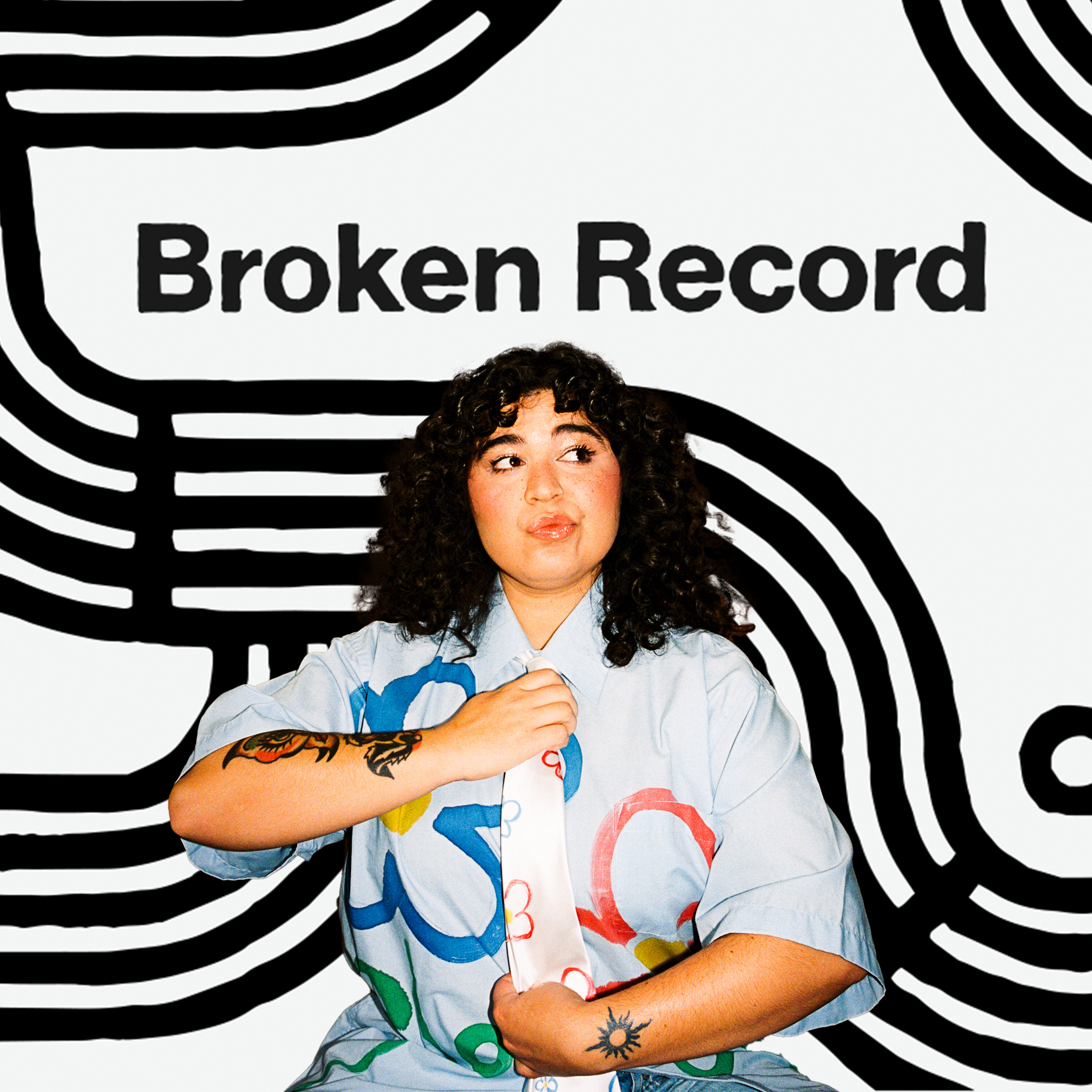


Singer, songwriter Remi Wolf burst out of the pandemic like a ray of light, spreading joy with her infectious production, capricious outlook and jaunty hooks.
She appeared to come to us fully formed. But Remi’s been working hard on her craft for the last decade. She started performing with local bands around the Bay Area during high school and she eventually wound up studying music in LA at USC where she met many of the people she still collaborates with.
On today’s Broken Record, Remi Wolf discusses finding her musical footing in Los Angeles, walks us through the writing of her new album “Big Ideas,” and talks about her summer experience opening up for Olivia Rodrigo in Europe.
You can hear a playlist of some of our favorite Remi Wolf songs HERE.
See omnystudio.com/listener for privacy information.
Speaker 1: Pushkin.
00:00:20
Speaker 2: Singer songwriter Remy Wolf burst out of the pandemic like a ray of light, spreading joy with her infectious production, capricious outlook, and jaunty hooks. She appeared to come to us fully formed, but Remy's been working hard on her craft for the last decade. She started regularly performing with local bands around the Bay Area during high school. She even tried out for American Idol at seventeen years old, singing Marvin Gays, Let's get it on to j LO. Eventually, she wound up studying music in La at usc where she met many of the people she still collaborates with to this day. On today's Broken Record, Remy Wolf discusses finding her musical footing in Los Angeles, walks us through the writing of her new album, Big Ideas, and talks about her summer experience opening up for Oliver Yar Rodrigo in Europe. This is Broken Record Liner notes to the digital Age.
00:01:10
Speaker 1: I'm justin Mitchmill.
00:01:12
Speaker 2: Here's my conversation with Remy Wolf. To see the video of this podcast, head over to YouTube dot com slash Broken Record Podcast.
00:01:21
Speaker 1: I love the Toro hat. Oh yeah, thank you, one of my favorite.
00:01:24
Speaker 2: Songs on your album's Toro Toro into Alone in Miami. It's a great combo.
00:01:29
Speaker 3: Yes, the twins eternal twins.
00:01:32
Speaker 1: Is that how you think about them?
00:01:34
Speaker 3: Yeah, They're like there were birds from the same egg to me, really yeah, but different sperm.
00:01:45
Speaker 1: The same all right, that's that's twins. You're right, twins, that's genius. Okay, what what makes them?
00:01:51
Speaker 3: Or maybe it's two eggs and then two different spirms.
00:01:53
Speaker 1: Not that's not think too deeply.
00:01:55
Speaker 3: Not prepared.
00:01:56
Speaker 2: I'm not a scientist to figure that out.
00:02:00
Speaker 1: What those are the earliest songs you.
00:02:02
Speaker 3: Wrote, Yeah, those were written in kind of the first couple of sessions I did for the album back in twenty twenty two with my friend Jack de Mayo and my friend Ethan Gruska up in mantrase, Los Angeles. Yeah.
00:02:22
Speaker 2: Was it a writing session specifically for a new album or just yeah?
00:02:27
Speaker 3: I mean I knew that coming out of my first album, I wanted to make a second one, being on a major label and everything, but but I didn't really know, like exactly how it would come together. And those sessions with Ethan and Jack were kind of the beginning of the exploration of kind of the sonic and storytelling identity of this album, I guess, yeah. We wrote. We us two wrote together for like two weeks in total, but they were separated by a couple months, and I think within those two weeks we wrote like fifteen or sixteen songs, so we kind of like, really were.
00:03:18
Speaker 1: What songs that made the album come out?
00:03:20
Speaker 3: Of those Toro Alone in Miami and uh, frog Rock.
00:03:25
Speaker 1: I Love I fucking love frog Rock.
00:03:27
Speaker 3: Yeah, the frog Rock's fun. Yeah, that was the first song we actually wrote of all of those days. That was the first song of all of them, which was cool.
00:03:36
Speaker 1: Did you complete it that day or that in that in those sessions of two weeks?
00:03:40
Speaker 3: Uh, the song was like written. We went back and produced, produced it out a little more and kind of got a little bit deeper with the production almost a year later probably, but yeah, that song the Yeah, the identity of that song was kind of created in the first day. Pretty much. Toro and Alone in Miami were both alone, little different. We wrote both of those on acoustic guitar, and we like recorded the demos on acoustic guitar and then came back a while later and kind of reopened them and built them out a little bit more from there. Toro is an entirely different song than what it first or like, it sounds just so wildly different.
00:04:32
Speaker 1: It was just think there's any guitar on it, acoustic guitar really right, even.
00:04:35
Speaker 3: In the there's no acoustic guitar. It's kind of all like little funky electric licks and stuff like that. Really bass heavy. Now. At first, it was just kind of this like almost motowny acoustic guitar song. I remember going into the songwriting of that one. I was like, I really wanted to write something that felt like Motown, which is so interesting that it's now Toro because it's it's a it's sonically, I mean definitely not most.
00:05:09
Speaker 2: Step and I don't think by the way, it's a little different than My Girl.
00:05:15
Speaker 3: I mean yeah, in terms of the content or whatever. I mean, you know, there were there is some Motown has some sexual innuendos going on up in those songs. Maybe they're a little bit more hidden than mine. I don't know I.
00:05:29
Speaker 2: Think of which ones, you know, yeah, probably some Marvin somewhere. Sure there was some.
00:05:39
Speaker 3: Sugar Pie Honey Bunch. Sugar Pie Honey Bunch. I think it's just me, but yeah, it.
00:05:47
Speaker 1: Could be, though I see what you mean. I see what you mean, like that could be, But I don't. I think it was more. I think it's more innocent than that. What made you?
00:05:55
Speaker 2: What made you want to that particular day? What made you want to write a motown sounding song?
00:06:04
Speaker 3: I have no idea. I couldn't tell you.
00:06:06
Speaker 1: Is it a catalog you listened.
00:06:08
Speaker 3: To a lot sometimes? I mean, like the classics I feel like are on my shuffle, you know, in my in my library. But I don't know. I think I just wanted I think we I think we were writing a lot of kind of folk rock stuff that week, and I kind of wanted to just change it up. And I guess when when I was in college, I went to USC Thrton School Music, and part of our curriculum was we spent almost a full semester on motown wow and like learning those songs front to back, like replicating them essentially in our performance class. So i'd I'd had a lot of experience kind of getting inside those songs, and I hadn't done that for a while. But Jack, my friend that I was writing with, went to school with me, so we both kind of had that repertoire like within us, and I think that I was kind of just like, we should do something that is kind of a throwback to Motown, throwback to like that time that we spent together in school almost. I mean, I don't know, I said it on a whim and we kind of just rolled ran with it.
00:07:34
Speaker 1: But and the demo does sound like maybe closer to.
00:07:38
Speaker 3: Yeah, I think some of the chords, you know, are kind of two five to one chord progression in there, which is pretty motowny and just pretty jazzy and solely.
00:07:51
Speaker 1: That college education.
00:07:53
Speaker 3: Yeah, man, I feel I'm so distant from it now that like all of my knowledge is a little bit rusty. But if you had caught me when I was like nineteen, I could just riddle off some theory.
00:08:07
Speaker 1: Intense theory, I'm sure, right.
00:08:09
Speaker 3: Yeah, Now it's kind of it's kind of gone, and luckily.
00:08:12
Speaker 2: I don't it's probably for the best right somewhere back there, Like it's still there, it's still.
00:08:17
Speaker 3: There, but it's it's fuzzy. And I think I always kind of kept my like actual education at arm's length, especially when going into you know, writing music for my own project. It's because I like didn't want any rules attached to what I was making, And I think school it's really good for a lot of things, but they do kind of you know, there there's a lot of processes that they that they kind of instill, and some of them are really for the best, and some of them I think can stifle your creativity at times. So I've I've kind of gotten to pick and choose what what I learned from my education that really works for me.
00:09:08
Speaker 2: So how many people that you collaborate with now work with now come from your time at school at USC?
00:09:18
Speaker 3: Some people, Yeah, Jack, he's a big one. Connor Malloy, my drummer. I've been with him. He's been playing in my band since we were in college together, so we've been playing together for probably eight years now. I mean a lot of my lot of my friends. My friend Danny Fahrenbach, he plays trumpet for me. Sometimes you still hang with a lot of people from Yeah, Yeah, yeah, Yeah. My friend Liz, who I have famously written a song about. Yeah, she's around, She's like one of my best friends. Yeah, we're all kind of floating around. I feel like I've my main collaborators musically did not go to USC with me, but I mean Jared Solomon, who's like been my main collaborator for a really long time high school since high school. Yeah, I mean yeah, we met in high school.
00:10:14
Speaker 1: Didn't go to the same high school as you were, just kind of from No.
00:10:17
Speaker 3: We went to the same after school music program together, and yeah, we had like a very kismet meeting where like we had the same instructor and one day we were there at the same time and he threw us both in a room and Jared was like, you know, really good guitar player and I was a singer, and he's like, Okay, you guys should do a cover. So we covered Valerie the Amy Winehouse cover that she did with Mark Ronson, and we kind of were like both very wide eyed at each other. We were like, oh, you're good at this, and it.
00:10:59
Speaker 2: Was like you you're good at guitar, You're great at singing.
00:11:02
Speaker 3: Yeah, it was like a very mutual like okay, And I think that opened up a world for us at the time. And then we ended up being in a band together in high school, writing a lot. We did like battle the bands together, We like played at bars and restaurants and we busked together, and he ended up going to Berkeley College of Music, and he was a year older than me, so I he was gone and I went to USC and then four years later we ended up. He ended up coming through LA on a tour that he was on with one of his friends from school, and he ended up hitting me up to ask if he could stay in my house for a week and a half. And luckily, I kind of lived in a bit of a trap house at the time, so I was like, yeah, sure, you can, like sleep on the couch, and he came through and then we set up a little studio in my room and that was kind of the beginning of us working together again. And that kind of kicked everything off.
00:12:09
Speaker 2: And was that I'm trying to because it's funny. I was looking back first of all, Remy and Chloe. I just discovered that like a week ago. But the cover. I used to live in the Bay around that time, and the cover was like a flag.
00:12:25
Speaker 1: I knew. I'd seen that in a couple of places.
00:12:27
Speaker 2: I don't know if I got coverage in like the East Bay Express or the time I was working on the Calyx the radio stations, so.
00:12:33
Speaker 3: Maybe the cover of our songs.
00:12:35
Speaker 1: Yeah, the cover of that r E P the EP.
00:12:39
Speaker 3: Oh my god, that's so funny.
00:12:41
Speaker 1: I flashed back. I was like, yo, I know this cover from that's so wid Yeah. Yeah, I mean I didn't realize it was.
00:12:48
Speaker 3: We played. We played around the Bay area a lot, like we played in San Francisco, we played in Oakland, we played in Redwood City, we played in Alalto, Memo Park, San Jose, like we were kind of.
00:13:00
Speaker 1: Probably saw in Oakland or somewhere.
00:13:02
Speaker 3: Yeah, we were, we were. We were up and down the the Silicon Valley. It was. It was that's crazy.
00:13:12
Speaker 2: Yeah, it was interesting like seeing that stuff, like going back and checking out some of that stuff, you like, were much more like kind of roots like your music full stylings were much more like rootsy. You know, it seemed like you were much more connected to and probably still are, soul music in a lot of ways.
00:13:30
Speaker 3: And and you know, yeah that. I mean, my my musical upgrade upbringing then was a lot of Stevie Wonder, a lot of like the Beatles, a lot of Red Hot Chili Peppers, James Taylor, uh, you know, funk stuff. I mean I was listening to a lot of stuff, but I a lot of Marvin Gaye, a lot of Emmy Winehouse. I mean I loved her as a kid. I remember I listened to a lot of Joss Stone. Yeah, when I was a young girl.
00:14:11
Speaker 2: I was just thinking about her recently. I haven't I know, I was too.
00:14:14
Speaker 3: I don't know why, but she came up. I don't know why she came up, but she was so sick. She had some great, great songs, and she was really young.
00:14:24
Speaker 1: Those are great records, No.
00:14:25
Speaker 3: They are Adele, I mean classic, I Eric Abatdo. I had like a little snarky puppy face when I was a kid. Yeah, yeah, tool Randomly, I was just kind of like soaking it all in. And I was in this I was in this after school program, and essentially I was just surrounded by all these kids who were also interested in music, and we all would play together in these bands, and we would play covers, we'd do like recitals, and I learned so much music that way. And I've kind of always been into like live band can figurations and kind of the sound of like rock and live like live stuff in that way, because it's how I grew up. And I think that's such a it's still such a core element of how I make my music now, it's like I need it to be real instruments or else. I am lost some yeah, I'm lost. Something's wrong. It's like it's losing part of me.
00:15:34
Speaker 1: Well, it's incredible.
00:15:35
Speaker 2: How long I want to show you this because I blew me away when I saw this. This is incredible. How long you've had this is? I think this is you in when you're sixteen, seventeen, eighteen.
00:15:44
Speaker 1: The band's amazing, though.
00:15:45
Speaker 3: Okay, what is it?
00:15:47
Speaker 1: You tell me? What?
00:15:49
Speaker 3: Oh god, oh I can't believe you're pulling this up.
00:15:53
Speaker 1: We don't.
00:15:55
Speaker 3: This is awesome music, is my Yeah, you're in high school? Oh my god? Do that? Those are my voice?
00:16:05
Speaker 1: Kids are? Kids?
00:16:06
Speaker 3: Are sick? Yeah, we're doing it. You know. That's my friend Chloeing. That's my friend Greg. Is that Dreg?
00:16:18
Speaker 1: Yeah? Who are the bass players killing it too?
00:16:20
Speaker 3: That's Terry Justice. He was in my van. I actually just saw him for the first time in like ten years. Bro. I just saw him for the first time in Copenhagen. He lives there. He's in there. Yeah, he's lived there for like seven years. And yeah, just reunited with him like a month ago, and it was so amazing. To see him, like he's so unchanged. He's the same, same dude.
00:16:44
Speaker 1: Is he doing music still?
00:16:45
Speaker 3: Yeah, he's in like cover bands with like fifty year old man and stuff. But he's thriving. I mean he loves it over there. But yeah, he's he was really he was in my life. We were good friends. And Aaron Valaio is the drummer.
00:16:59
Speaker 2: He was a killed drum He took a drum solo in that video later. Yeah, he shows you to check it out. He killed the solo.
00:17:04
Speaker 3: Yeah, I haven't seen him. I haven't. I probably haven't seen him since I don't know, twenty fourteen and yeah, but.
00:17:12
Speaker 1: Yeah, like you had like good musicians around you.
00:17:15
Speaker 3: We were Yeah, we were like training, we were doing it. Everybody's very passionate about it.
00:17:21
Speaker 2: What I was trying to figure out where the jump came from to, you know, like the music you started putting out twenty nineteen, twenty twenty, that feels much less like, you know, just derivative, Like your music is so original to my ears, thank you it like, but there's clearly I don't know, it seems like there was clearly a change in the way you started if not writing like thinking about you know, producing out your songs or whatever.
00:17:53
Speaker 3: I think me going off to school and really exploring songwriting on my own was really helpful in that process because I was kind of figuring out what chords I liked, what keys I liked singing in like, I started just kind of to figure out how to write songs that made sense to me. And that was just my own journey that I was taking kind of in my bedroom in school, because to be honest, I like I love to skip class, loved it and did that a lot, and I would just kind of be writing in my room and or hanging out with like my roommates and jamming in my living room, or like I had this little EDM phase where me and my friend Danny would go into his room and like take out or all and like make so much DM music. And that was so crazy. I think I just I just was. I essentially didn't release or record any music for four years, like in all of the time that I was there, and.
00:19:03
Speaker 1: Twenty fifteen to nineteen, rough.
00:19:06
Speaker 3: Like twenty fourteen to twenty eighteen, I essentially was just like Silent. I did a couple live shows here and there, We did a lot of house parties where we would do like covers and stuff. But I was kind of just bubbling and like letting myself explore in a way that I hadn't really done before.
00:19:29
Speaker 2: Did it feel good or did you feel kind of wayward lost because you seem like hyper focused when you were younger on?
00:19:36
Speaker 3: I never felt lost. I just felt like I was evolving. I feel like that That's one thing about me that I like about myself. Not to validate myself, but I like that I'm I've always kind of been a person that if I set my mind to it and if I tell myself I'm gonna do it, I just do it and there's like no second thoughts. And I I just I still am that way even in my music, mostly in my music making of just like I am a deep, deep believer in my intuition and my gut and in my subconscious to kind of guide me to where I need to go. And I've kind of always had that trust in myself since I was little, especially in music.
00:20:35
Speaker 1: Come from a nate, I don't know.
00:20:39
Speaker 3: I think my parents were always really supportive of me. I don't know if that had anything to contribute to it, but even even early, like when I wasn't good, like when I couldn't like sing on pitch or whatever, I was still like, eh, you know, I got this. And then eventually, like my ability is caught up I think with me, and I was kind of able to I mean, even when it was horrible. I just had this belief in myself and.
00:21:09
Speaker 1: Other people validating you.
00:21:11
Speaker 3: Yeah, I mean I was being validated by like, you know, other musicians who were my age, and I had some teachers who were really encouraging. For sure. I think I don't know something vocally, something switched when I was fifteen. I don't know if it was hormones or whatever the hell. I don't know what the hell it was, but I could all of a sudden when I turned fifteen, and I was like able to sing with this rasp and like really strongly, whereas like before, I was kind of wasn't working as well. Yeah, And I think once I kind of started to be able to tap into my voice and discover the power of my voice, I like was really I really started leading in leading into too, like really singing and performing and making music because it just made me feel good.
00:22:04
Speaker 2: We'll be right back with more from Remy Wolf After this break, we're back with more from Remy Wolf. How much earlier than fifteen did you start singing?
00:22:17
Speaker 3: Like I started singing when I was in probably fourth grade? Third or fourth grade.
00:22:27
Speaker 1: Your parents aren't musical, right, Like they're not.
00:22:29
Speaker 3: No, not at all.
00:22:31
Speaker 1: Is anyone else in your family musical?
00:22:33
Speaker 3: No? Not, like not really at all. My some of my siblings can like hold a tune for sure, and like, I mean, nobody else in my family makes music. Actually, some of my my cousins love to write poetry and like rap, but none of them have pursued it professionally in the same way that I have. But I think my family is a creative family. Like my mom is in is a chef, has been into cooking her whole life. My grandparents are really into food. And my grandpa is like an entrepreneur. He's started I like countless, like so many random little businesses. Like he had this like little business where he would make side tables out of stone, and then he has like a pickle company, and he has like a vinegar company.
00:23:30
Speaker 1: Those kind of those go together.
00:23:33
Speaker 3: Yeah, yeah, pickles of vinegar, that's cool. But and then my dad is like really entrepreneurial as well, so I think I think what I learned from them was like, if I want to be my own boss, I can, which I now am, which I don't think there's any other way that I could exist. As I said before, I'm like too controlling and I would just never be able to hold down a job. I don't think there's some creativity flowing through just.
00:24:07
Speaker 1: In the way your family existed.
00:24:09
Speaker 3: Yeah, yeah, yeah, I guess.
00:24:11
Speaker 2: Just talking about bosses, you mentioned it earlier that you did get like you are signed to a major label, signed to Island.
00:24:19
Speaker 1: How did that happen?
00:24:20
Speaker 2: What was the process, like, you know, I mean, you started putting out music in twenty nineteen, twenty twenty again twenty eighteen, nineteen twenty. Yeah, people really started liking it. At what point did labels start reaching out to.
00:24:31
Speaker 3: You very immediately? Which was crazy. I put out a song called Guy in January of twenty nineteen, and I was it kind of immediately got on kind of this Spotify new music algorithm, do you know how no clue, no idea, And that was kind of like the beginning of Spotify, like the playlisting boom. Yeah, but yeah, it got in some sort of system and was being you know, fed to people on their algorithm, and from that I was reached out to by a couple anrs. One an R being this anar Hill that I ended up signing with at Island. He was the first an R that ever reached out to me, which I felt was Yeah, it was like fitting and really the signing process took about a year and I ended up signing with him in the end, but you know, I went through all the rounds. I went to a lot of the major labels I had meetings with. It was a very overwhelming process for me. I don't know. It took about nine months of me releasing music for me to really come around on the idea of like, Okay, I think now's the time to sign. And I signed because I just wanted more support and I wanted to be able to do like bigger things.
00:26:15
Speaker 1: Yeah like open for Olivia Rodrigo. Yeah, like that some wild ship.
00:26:21
Speaker 3: That is wild. I just got off that tour and that was that was a long tour, really fun, really crazy. Learned a lot. Europe is huge, Germany is huge.
00:26:31
Speaker 2: Oh and that's where you met up with Harry Justice. Then yes, that's a cool way to reconnect with it. Yeah, high school.
00:26:39
Speaker 3: Yeah, it's really really crazy, really crazy a set of circumstances.
00:26:44
Speaker 1: But yeah, how many months was that?
00:26:47
Speaker 3: That was two months? Ten week tour? Wow, long tour. That's a long tour.
00:26:52
Speaker 1: What was it?
00:26:53
Speaker 2: I mean it's weird because in a way you're you've I mean I don't know. I mean you're at least older than her, so and I imagine I have a little more Yeah, I don't know.
00:27:03
Speaker 1: Like what was that it? Like?
00:27:04
Speaker 3: No, I mean she is a powerhouse. She like was born I think to do this, to do this show. Yeah, I mean she like she gets it done, and she's so consistent, and it's it's it's crazy like what she does every night, her shows two hours long. I mean, and her voice just it's just crystal clear. I smoke and drink, which is, you know, not awesome for the voice, but also it's it's okay, my voice holds up. But yeah, I mean, I think these opening tours, because I've also opened for Lord and for Paramour and still Losing and Cautious Clear, I've done a bunch of opening tours in my time. They're really interesting, especially at the arena level, because in those rooms they're so big, and you are really feeling the depth of people not knowing who you are at all. And I think that I've kind of taken that on as a challenge for myself, not only to like get them stoked for the main act, whether it be like Paramour or Olivia or Lord whoever it is, because that's really my job. When I go on an opening tour, it's like I want to warm up the crowd so that when Olivia steps on stage, they are so gassed already.
00:28:39
Speaker 1: Someone put up I think at least pretty near complete recording of your of your set opening for her, and yeah, washing it and you're like, I mean the audience.
00:28:49
Speaker 2: Stretch literally stretched, yeah and shit for Olivia. Yeah, I mean that's it was like James James Brown level of commitment to the job.
00:28:57
Speaker 3: Yeah yeah, yeah, I commit really really hard. And I also just like for her crowd, especially to half of that audience, it's their first concert ever, so they there is an element of them feeling uncomfortable because they've never been in a room like that before. So I kind of took it upon me to get them warmed up into the space, yeah, so that there could be like a communal vibe which is. I mean, to me, a show just should be a huge house party or just like a huge essentially DIY experience. I just wanted to feel like you're like super communal and like you're all together.
00:29:40
Speaker 1: I want to be a hostess.
00:29:42
Speaker 3: Yeah, I'm trying to host like truly. I yeah, and that's that is probably why I like hosting, because I'm just like I want everybody to have a good time. But yeah, I think I learned. I learned or I started really refining like how to expedite that process of getting that audience like engaged and ready really quick and like that is doing the exercises. It is like putting your hands up and shaking around and working your hips out and like singing like we do everything together. And I think that it really does get people comfortable and like in themselves and present and ready for that intensive inexperience because concerts, I mean they're like they're intense. Yeah, they're loud, they're emotional, they're you're packed together like really tightly. And doing these opening gigs have has really helped me refine that skill and know that it's something that I want to do.
00:30:43
Speaker 1: Yeah for people, you enjoy it? Yeah, how long?
00:30:45
Speaker 2: Did it take you to like kind of warm up to be in the warm up for Olivia like on that tour. Hmm, when did you feel like you had to die? I'm like, all right, now I know how to get the audience like.
00:30:58
Speaker 1: Oo.
00:30:58
Speaker 3: I think maybe at show like ten, probably once we got to London that was maybe like show eight. I think I started I started really saying into it. But I mean we did thirty one shows or thirty two shows or something altogether for her, and I mean the show kept morphing, like it's like if you you can't just do the same thing every night. So I started, you know, started morphing it. By the end of the show, I was dropped, dropping f bombs and flashing my tips to the crowd. That was very different from the beginning of the show or of the lead anticipate.
00:31:36
Speaker 2: I was gonna ask because, like you know, you were saying, it was like a lot of people's first show like concert liked So did you have the tailor cut out certain songs maybe.
00:31:44
Speaker 3: Or yeah, but you know, yeah, for like for my song Toro, which is about having like this essentially like a fuck fest in a hotel. I mean that is what that song is about I obviously couldn't say that, or I didn't want to lead with that with these like children, so I ended up saying like, yo, you guys ever had a crush, Like, raise your hand, if you ever had a crush, raise your hand. If you have a crush right now, raise your hand, if you've ever been in love? And then I would kind of be like, Okay, this song is about like the biggest, fattest crush I've ever had. But then by the end I would do this whole thing and I was like, yo, if you ever had a crush, Okay, have you ever been in love? Okay, who's never had a crush and never been in love? Like hell yeah? And then I turn around and be like, all right, this song's about fucking in a hotel and it's funny. It's It was funny too because at a certain point we were in all these countries and I realized that English is not their first language. Point and I was like, Oh, it doesn't really matter, fine, I could just like say it.
00:33:01
Speaker 2: And I think their sensibilities are like way different too than like American audiences.
00:33:05
Speaker 3: Yeah, I mean you're up. This is such an interesting it's such an interesting like market to dip your toes into as a American because I you just never It's like you there's there's so much of every country's culture that you just are never gonna understand. But I was trying my best to kind of catch vibe. But it's it's it's crazy. It was, it was crazy, And I would love to go back and actually like be able to kind of be in those countries a little bit longer, just to understand more about the people and more about the culture and what they like. But yeah, I mean the audience's country to country were drastically different.
00:33:52
Speaker 1: Wow.
00:33:53
Speaker 3: Yeah, just as as a collective.
00:33:56
Speaker 1: Whole, Like what were the differences you noticed?
00:33:59
Speaker 3: Italy loose as hell? They are just rowdy as all. Shit, I cannot even describe to you. I felt like my open been in act brought down their energy. It was like, and those are my people, so like I get it, Like I am, I'm half Sicilian, like i I'm I ride I ride for I ride for them.
00:34:25
Speaker 2: Yeah, they were you could have matched their free.
00:34:30
Speaker 3: I could not. I was trying, really, I was really trying. My bath. I went I went hard that show.
00:34:36
Speaker 1: I was like progressively just harder and harder.
00:34:38
Speaker 3: Oh my god, and it was at least ninety five degrees in the venue. There was no ac wow, it was it was it was a time that was a show. Yeah. And then like I don't know, like you are in Switzerland and they're very polite and they're like a little bit more stiff, and then you're in I don't know if I should even say this, but then you're in Germany and they love an order, they love taking orders.
00:35:08
Speaker 1: Oh.
00:35:09
Speaker 3: And then the UK is different, different because you know there there were speaking the same language still and that's just like a. I mean, it's it's so crazy. I don't even know. Yeah, I don't even know.
00:35:22
Speaker 1: How were you too much for the orderly Germany German audience?
00:35:26
Speaker 3: No, I don't think so. I think that they they warmed up to me. I mean the the handshaking and the hips hips swiveling always work.
00:35:34
Speaker 1: It's everyone right, yeah.
00:35:35
Speaker 3: And I did this like big vocal warm up with an oh and everybody can sing an a oh yeah, so you know I was I was trying my best.
00:35:45
Speaker 2: That's that's amazing because you get to like debrief with like Olivia at all, like about playing those kinds of venues.
00:35:52
Speaker 3: Yeah, we debriefed a little bit. I mean we towards the beginning of the tour. I remember having a conversation with her being like, WHOA, Like Europe's different, dude, and she was like yeah, She's like yeah, I know.
00:36:07
Speaker 1: She was noticing it too.
00:36:08
Speaker 3: Yeah, yeah, she she had done I think she on her last album Sour, I think she had done a European run and I think she yeah, she was. Yeah, but I had never done as extensive as a run as we just did, so it was all kind of it was new to me and I was kind of just soaking it up.
00:36:30
Speaker 1: Man, that'd be that seems like a fun bill though, you know, Yeah it was.
00:36:34
Speaker 3: Actually it was so fun. And I watched her show almost every single night, Like I loved the show. Yeah, it was so fun. I got to be really really good friends with her crew and her dancers and her band, so like we were just having a blast.
00:36:46
Speaker 1: Was such as a great band. Yeah, oh my.
00:36:49
Speaker 3: God, they're sick. They're all so talented, they're all women, are non binary, and they're just I mean I've never been in a situation where like it's so female heavy. Yeah, in the live space, And that was a really really cool to exist in for a second.
00:37:11
Speaker 2: Yeah, you know, I guess I think that I was was looking at the credits for for your album, new album and your other album. It does seem like a lot of your collaborators are like men.
00:37:22
Speaker 3: Yeah, I work with a lot of dudes.
00:37:24
Speaker 1: There.
00:37:24
Speaker 3: There are a lot of men around.
00:37:27
Speaker 1: Yes, yeah, in general in this room and outside.
00:37:30
Speaker 3: Yeah. And you know, I I don't have much to say about it other than all these people that I work with are I love them all. They're all great people and regardless of them being men or women or whoever. I really I surround myself with people who I love and trust. And I work with a lot of men. I work with a lot of women work with I just worked with a lot of people.
00:37:58
Speaker 2: Yeah, last album, in this album did some work with Kenny Beats. How did that come to be?
00:38:05
Speaker 3: Oh my god, Kenny? How did we meet? I think we met through an Instagram DM, as most people do nowadays.
00:38:17
Speaker 1: Which way you hit him or you hit me?
00:38:20
Speaker 3: Which was cool because I had been you know, I think the Cave was really big at the time, and I had been yeah, super sick show and I'd been watching that and he invited me over to his studio and I just kind of went and hung out with him and we made a song. That first day, I was really shy. I remember. I think at the time I was kind of used to going everywhere with Jared, and I think I didn't bring Jared to that session, and I just remember being shy and quiet. And then the following day I brought Jared. Yeah, we had two days together and then we made another song, and yeah, then we've just like become boys. I yeah, I love him and him and his whole team like are literally like family to me. Like I really they were like some of the first people in this industry to kind of like really welcome me with open arms and be like, yo, we're here to like support you. That's dope. And they're really They're really awesome and like really have lifted me up and kind of have been my champions for a long time, and I love them for that.
00:39:44
Speaker 2: After this last quick break, we'll be back with the rest of my conversation with Remy Wolf. We're back with the rest of my conversation with Remy Wolf.
00:39:57
Speaker 1: I feel like I lost the thread.
00:39:58
Speaker 2: I wanted to go back and find out like the most like was it that session with your friend Jared when he came to state you're living, like trying to pinpoint when, like when your music start to sound in the way it does now, which is like it's seriously, it's like, I mean, I don't know, like maybe I'm tripping, but if to me it sounds so original, and it sounds like the finished product differs a lot from like the original song that you write, maybe or at least some of the time.
00:40:30
Speaker 3: Yeah, I mean me and Jared, I think have a really special creative relationship where we are kind of able to fill in each other's gaps. And I think we figured that out when he came to stay with me during those during that week in twenty eighteen. I think it was. But he's an incredible instrumentalist. He knows how to record, and he is super I mean, he's on his own production journey and he's like doing amazing things with so many different people now. But at the time, we both like had no idea what we were doing, but like enough to get by. And I think in the beginning that originality I think partially stemmed from us having a very locked in sense of taste together combined with us sometimes not even knowing how to like execute that. So we were kind of just like freestyling and free balling, and we're creating these beats that sounded interesting and created these songs that sounded interesting and different and unique, and they were because we didn't know what the fuck we were doing, and we were kind of just like doing what we could with what we had, which at the time was like a focus right interface and like a shitty mic that I had in my room and a shitty guitar that I had just bought off of Craigslist.
00:42:17
Speaker 1: And is that what you did guy on? Yes? Wow?
00:42:21
Speaker 3: Like the first two EPs were essentially just that set up, like so bare bones in my bedroom or in like an Airbnb that Jared was staying in, And so I mean, we were just making it happen by the skin of our teeth. But we were so driven a lot with that. Yeah, we were so driven. And I think that sometimes when you have nothing, you're forced to be really creative. And I think that's kind of where my vocal harmony, layering instrumentation came from. Because we didn't have all these instruments, we didn't have a bunch of syns, and I very quickly knew that I wasn't a huge fan of like MIDI like plug in sense, Like I just never loved the vibe. And there's some songs in the early days where we were using like ominosphere or something like that. I was always was kind of of this mindset of wanting to create everything ourselves, like all the sounds at least, which kind of led me to create this really intricate and detailed vocal style where I was building essentially an instrument out of my layering my voice, which I think what made my early shit sound really different from a lot of other stuff was that, like I was really reliant on harmonies and almost making my vocals sound like a synthesizer in their own.
00:44:05
Speaker 1: Right is a particular way you learned to do that.
00:44:09
Speaker 3: We were just experimenting, like truly, there was nothing that we were really basing it off of. I think I've always been a huge lover of harmonies, and I think we figured out that layering my voice on top of itself sounded cool because there's something about, uh, I have a really kind of piercing tone, Like it's it's very it's it's strong.
00:44:36
Speaker 1: You have a strong voice for sure.
00:44:38
Speaker 3: Yeah, it's strong, and so when you layer it it sounds almost like an organ or something. It's so it's like has that kind of honkiness that an organ would have, and I think we just kind of leaned into that. So yeah, a lot of those those og tunes we were just it was so bare bones, and I think that is what made it so that we had to be so creative and innovate cool.
00:45:03
Speaker 2: I mean, one of the things too, that's really interesting about it is like it doesn't sound like it definitely doesn't sound like it comes out out of because it's i think lyrically in the forms and everything you're doing, and like the way it's arranged or so unique, it doesn't really sound like it shares a relationship with pop music. But then you also do borrow some like you have hooks that are just like sound like insanely ridiculous pop books, you know whatever, you're able to like kind of like blend so much stuff.
00:45:34
Speaker 3: Yeah, thank you.
00:45:35
Speaker 2: Yeah, I think it does sound like maybe at some point in that four year sort of you know where you're just were simmering, like I.
00:45:45
Speaker 1: Don't know, you picked up some pop sensibilities too.
00:45:47
Speaker 3: You know, Like yeah, I mean I've always. I mean I've always loved pop. I mean I loved old pop, you know, seventies pop, sixties pop, uh, nineties pop, which was grunge. I think I've always loved big hooks, catchy songs, and I think I've always gravitated towards towards music that like can stand the test of time in that way just by like being a great song or a great melody or like a great vibe.
00:46:27
Speaker 1: What are the songs for you that are like the holy grail of that?
00:46:32
Speaker 3: Oh my god, oh god, let's see holy grail of a great vibe? Yes, I love Sugar by Chaka Khan, which.
00:46:45
Speaker 1: Is also seen in Chaka Kan on the Way Here.
00:46:47
Speaker 3: But Shaka is she's like one of my biggest inspirations. She's amazing because she's like a belter singer who's like very free and smoke cigarettes and but is just is so incredible at her instrument, but it's also an incredible improviser. And you can like really tell in her music that she is like living yeah and having fun yeah, and it's like coming out of her naturally. And so I've always been like really really inspired by.
00:47:26
Speaker 2: Her, even when she I was listening like coming up here. A song called actually was inspired. I was listening to frog Rock and I was listened. I listened to this like I love the sense soul on that. So then I went to photo ID, which has a great Sin solo and then made me think of a great I'm incidentally wearing a great Herbie since solo on a Shaka song M called the Melody lingers On.
00:47:46
Speaker 1: And now I was like, the fuck who sings jazz like this?
00:47:49
Speaker 2: Like it was such like like like like it's just she makes it sound so fun and like no one brings that to that tradition you know these days in my view, you know, like that level of fun that she brings to it.
00:48:02
Speaker 3: I agree. I mean she's like a funk She's like a funk machine. Like she's like the Lady funk machine. And I really love her. Got a chance to holler yet or no no, uh not not really. I maybe I should try a little bit harder to make the connect. But when I was at school, she actually came through my freshman year maybe and she was We had this class called pop Forum. It was every Friday for two hours and essentially they would just like bring in an industry professional and they would either get interviewed or something of the sort. And Shaka came and they selected for singers to sing Shaka songs for her, and I was not selected, but I I was like sitting very close to her and she was so so incredible and so kind, and I remember at the end she got up and saying, tell me something good. And it was the most mind blowing fucking performance I'd ever seen in my life. She like was just so relaxed and just soaring. I I mean, I was just like completely taken by her. Yeah, she's like a powerful, powerful lady.
00:49:23
Speaker 1: That's a that's a hard song to do like a cappella too, because oh my.
00:49:26
Speaker 3: God, I mean it's just her songs are so challenging to sing. She's an incredible singer, Like what the hell?
00:49:33
Speaker 2: Yeah, Shaka's insane man and Rufus too, Rufus and the solo stuff. I guess it may Oh you know, it's thinking about Shack. I'm thinking about Prince and your song. You have a song on here called.
00:49:48
Speaker 1: Cream and Cherry's and Cream, which.
00:49:52
Speaker 2: Made me listening to us like not since Prince, like like ballad at Dorothy Parker has like a cheating song.
00:49:59
Speaker 1: It's so incredible, like sounds so fucking ent. It's like, what is it?
00:50:04
Speaker 3: Thank you?
00:50:05
Speaker 1: Yeah, which I assume that's what about. I don't know that.
00:50:06
Speaker 3: It is so spot on, it's it's like my Mistress song. Yeah, thank you for saying that. That song was really kind of a magnum opus of mine and like getting it. We just wanted it to be kind of this psychedelic dream movie of like I wanted it to completely take you to a different world sonically, and we spent so long like crafting every single little detail in that tune. I mean for that song, I was really I was, I mean lyrically very inspired by uh, Mistress Vibes that I've Yeah, that's one of my friends, Mistress Vibes star. No, I mean I've you know, I've had experiences in my life that have been slightly unpleasant in that realm of which I won't go into here. But the first part of that song that I had was the the pre chorus, which goes, is it wrong, Oh fearful in this like kind of deep like like god godly or not just like deep kind of scary wizard god type, like a yeah, operatic wizard in the sky, and that kind of took me on this journey of really trying to get in the mind of like led Zeppelin and Pink Floyd and like kind of where where they were writing from in Yeah, I mean they loved Lord of the Rings and they liked, you know, I mythology, Yeah, mythology like that. So I kind of when I went back in to write the verses, which was a while later, which is actually not a typical process for me. Normally, I write the whole song first day and it's that's kind of set in stone, and then we kind of go back in and finalized production stuff. But for this song, it kind of it took it was a journey to kind of get everything to walk together. But I don't know, like in the verses, I'm like you fly morning dove way above my terrain, And I was kind of just trying to think about, like, you know, what would what would led Zeppelin's talk about or how would they talk about this, how would they talk about this these mistress vibes in their in their terminology, And I kind of was just like, all right, I'm gonna talk about expansive like nature metaphors. So yeah, that song is me really trying to tap into some like staple psychedelia.
00:52:54
Speaker 1: That's funny because I guess, I guess, I mean, I guess.
00:52:57
Speaker 2: Robert Plant wrote about that from the opposite perspous thing about like since I've been loving you, he goes open my front door or my back door slam must be one of those new fangled back door man.
00:53:07
Speaker 1: He's like talking to this lady. Oh my god, he's just more directive about it.
00:53:11
Speaker 3: Yeah. I was a little bit more uh more heady.
00:53:14
Speaker 1: Yeah, yeah, yeah, the more. But it's a great it's a cool song.
00:53:19
Speaker 2: You know, when it took me if you listened before, like I wasn't really don't really listen for lyrics all that much. So after if he listens, I started hearing the lyrics, I was like, oh, ship, yeah.
00:53:27
Speaker 1: It's it's a it's a bold choice, Yes it is. Has I gotten you in trouble?
00:53:32
Speaker 3: Like, no, not yet. I'm very conscious of that. I'm really conscious of not speaking about anything or anybody in a way that's going to piss them off, especially if there are people in my life that are close to me and still there and that I love and I mean I mean a lot of times, you know, I'm writing about romantic relationships sometimes friendships. I'm like a really strong believer in being friends with your exes. So I'm like friends with all of my exes, like they're all around or like part of the fan.
00:54:15
Speaker 1: What does that do for you? What is that? Like? What's the philosophy behind it?
00:54:20
Speaker 3: I just I there's a reason that I was with them, with all of them, and I mean a lot of them are friends with my friends, and I to me, there's no reason unless something really really bad happened. There's like no reason for like a long term animosity to like ruin you know, the piece between the larger friend group and just like I don't have to avoid someone. I'd rather just put our ship in the past and be able to like be homies. And I've been able to, you know, do that. And with most of them, there's a couple that, you know, are exceptions. Yeah, there's some that are out of my life life, probably for good. But that's it's a that's a complex it's a complex thing. It's a complex thing to be writing about people in your life or experience that you've experiences that you've gone through, and there's a balance there.
00:55:29
Speaker 2: Yeah, Yeah, which I guess maybe we should return then to Toro and Alone in Miami. Not necessarily with those who that's about or anything, but obviously very personal experience is how do you And there's a lot of like intricate detail in Alone in Miami, like the the hula girl on the dash or what you know, or I assume it was on the dash because you said you're in an uber.
00:55:57
Speaker 1: Did you?
00:55:58
Speaker 3: Yeah? I wasn't an uber?
00:56:01
Speaker 1: Did you say that?
00:56:02
Speaker 2: No, s okay ship, But you give so many details in the song that I did start to like you picture it. I start to pick sure, I guess it painted an accurate picture for me. Yeah, but like, did you just remember like when you wrote this, were you in that moment being like, I'm gonna write a song about this, and theref I'm gonna remember this feels like a moment that's potent in some way, and so therefo I'm gonna remember the details and write about it, or.
00:56:23
Speaker 1: Because how the fuck did you remember all that stuff? There's so many random details.
00:56:26
Speaker 3: I know. I think that the week that I was in Miami was just honestly like this wild life changing experience for me, just in the sense that it was so it was so memorable because it was it was out of a fever dream. I don't know if you've been you've probably been to Miami. Have you been there?
00:56:47
Speaker 2: Just there for the first time in a long time in October, and it was like in and out and it was just it wasn't It wasn't for me.
00:56:52
Speaker 3: But yeah, I mean, it's it's it's a wild place. And I was there for Art Basil, and Art Basil is you know this. It's like this art festival where people come in from all around the world and there's art galleries all around the city. Even more importantly than that, there's crazy parties all around the city and almost every building there's like fashion parties, art parties, brand parties. Like everybody's hosting a party and they're all nuts and everybody has alcohol, cocaine, powdered substances.
00:57:25
Speaker 1: Miami.
00:57:26
Speaker 3: Yeah, it's Miami, I mean, and I'd never been and I was there by myself, and I was there to attend a Playboy party. I was there for Playboys and I went there four days early, which I formed to attend. Yeah, it's like just to hang and so I went there. I was flying from London to I flew from London, and I was in London for about three weeks because I was there on tour, and the tour ended up getting canceled because of COVID and I couldn't come home because of COVID, so I was just there for a long time. And then I flew into Miami and I just had these four days alone meeting all these new people, doing drugs, eating kubanos, being really existential, like on the beach by myself, listening to Liz Fair.
00:58:25
Speaker 1: Like.
00:58:26
Speaker 3: I remember everything so vividly from that trip. I don't know why. It just was like so crazy wow, and I'd know. I mean, at the end of the trip, I had no I wasn't like, oh, this needs to be a song.
00:58:39
Speaker 2: But so like two years later, when you're writing it, you just remembered, like all of that just came flooding.
00:58:45
Speaker 3: But I think I wrote it maybe four months later, maybe five months later, okay, And I remember it was with Jack and Eaton, and I remember the first thing that I sang. I started playing these chords, and I think the first thing that I said sang was alone in Miami with you there, and then I was like, wait, we should write a song about my Miami trip. And then essentially I was just telling them. I essentially told them what I just told you, and I was just telling them all the details of what happened. And at a certain point, I was just like, wait, we literally don't need to do anything except for tell exactly the story of like what happened there, Like, we don't need to make up anything, Like there's nothing that even needs to be embellished. So essentially that's what we did. Yeah, the song was was written, it was written for it essentially wrote itself.
00:59:33
Speaker 1: It's one of my favorite songs on the album. So thank you. Glad you made that call. Glad you ended up in Miami too.
00:59:41
Speaker 3: Me too. Yeah, I mean that's a crazy trip.
00:59:47
Speaker 2: Anyway, Congratulations on your album.
00:59:50
Speaker 1: It's really good. Thank you.
00:59:53
Speaker 2: I'm glad I got to spend the last couple of weeks with it. It's been fun listening. Yeah, I'm glad we got a chance to talk about it.
00:59:59
Speaker 3: Yeah, me too. Thanks for thanks for sitting down with me.
01:00:06
Speaker 2: Thanks so much, Remy Wolf for talking to me about getting her start and about our new album, Big Ideas. Be sure to check out the video of today's episode at YouTube dot com. Slash Broken Record Podcast and check the link in the episode description for a playlist of all of our favorite.
01:00:19
Speaker 1: Remy Wolf music.
01:00:21
Speaker 2: Subscribe to our YouTube channel at YouTube dot com slash broken Record Podcast, where you can find all of our new episodes. You can follow us on Twitter at broken Record. Broken Record is produced and edited by Leah Rose, with marketing help from Mark Sandler and Jordan McMillan. Our engineer is Ben Tolliday. Broken Record is a production of Pushkin Industries. If you love this show and others from Pushkin, consider subscribing to Pushkin Plus. Pushkin Plus is a podcast subscription that offers bonus content and ad free listening for four ninety nine a month. Look for Pushkin Plus on Apple podcast subscriptions. And if you like this show, please remember to share, rate, and review us on your podcast app. Our theme music's by Kenny Beats. I'm justin Richmond.

