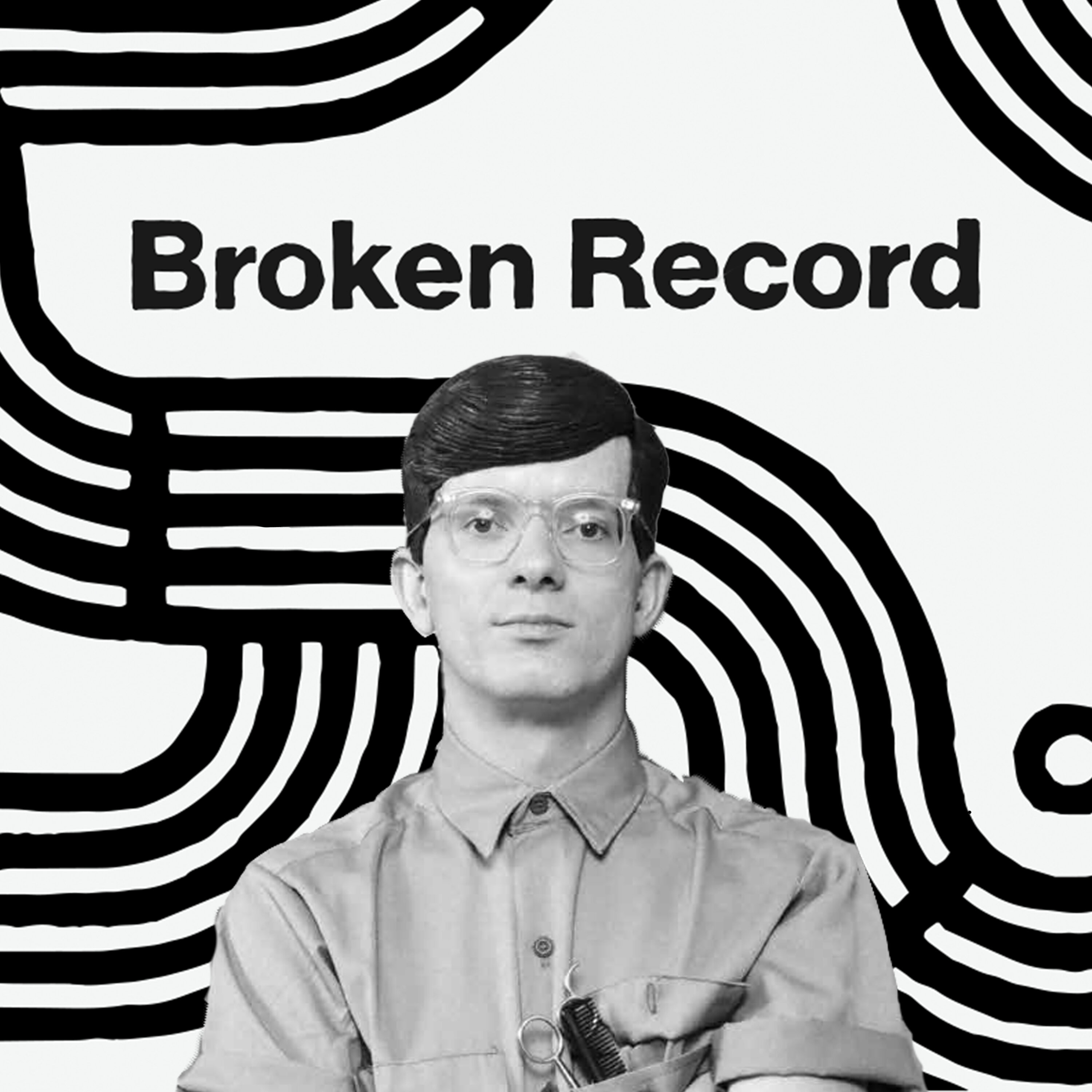
00:00:15Speaker 1: Pushkin, the lead singer and keyboardist for Devo, Mark Mothersbaw is an avant garde new wave pioneer. Although critics often classified Devo as a joke band, the akron Ohio art punk's ethos was created in response to a very serious event, the nineteen seventy massacre at their college, Kent State. Following the shooting, the band took on the name Divo, short for what they felt was organized society's de evolution. Throughout the seventies and eighties, Devo helped lay the groundwork for diy anti establishment bands by releasing bizarre and left of center music and conceptual films that helped usher in the music video revolution. In addition to his work with Devo, Mark Mother's Law also had a long and successful career scoring for film and TV. His credits include Pee Wee's play House, The Rugrats TV Show, and movies, and he scored several classic Wes Anderson directed films, including The Royal, Tenenbaumbs and Rushmore. On today's episode, I talked to Mark Mother's Bop about how he developed his quirky sensibility as one of five kids growing up in a chaotic household that included exotic animals. Mark also tells a story about the time Richard Branson suggested that Johnny Rotten joined Devo right after the Sex Pistols had broken up. This is broken record liner notes for the digital age. I'm justin Mitchman. Here's my conversation with Mark mothers VA. How you doing, I'm good. How are you? I'm good, Man, I'm really good. Thanks for doing this broken record? That's right? Was that like a radio drop for us? Sure, yo are listening to broken record? You know what I used to when I was seventeen or eighteen, I used to take my sister's be Gie records and also my brother's one of his Pink Floyd records. So I apologize to both of them now, but I took and I damaged the disc on purpose, so that I mean, there was no I didn't have a synthesizer or anything in these days. These are like. There was a piano and a little portable organ and a guitar in the room where I was doing this in the basement. But it would go there's a time, there's a time, there's a time, there's a tie, and I would jam with that. And I didn't have enough technology that I recorded any of them, which I really regret. But I used to like break my records on my sister's records on purpose. How did you discover that as a means of making music? Nobody was respectful of the discs in our house. Everybody treated them, you know, because there were kids of all age. So little kids would go ah, and they'd take my record that I liked and they'd scratch it or by accident. Then I'd go to play it, and then I go little little lip bath, I go fu amy and h It made me interested in these other kinds of rhythms and sounds and deconstruction of music when I was a kid, and it was innocent. I didn't have any school connection to it. I had, you know, nobody at school talked about that stuff. I just experimenting on my own actually before you just sort of discovered that and and sort of that kind of naturally led you into deconstruction of music and these weird, quirky kind of rhythms and things. Was your taste more conventional? Were you also into the early Beacheese records? Well, you know, I hated music when I was a kid because I had to take piano lessons when I was seven, and I'd be sitting there on the piano plane the stupid thing that I had to learn, like Autumn leaves, you know, which you know, like Roger Miller is singing it or something. But i was playing, ah the leaves, and I'd look out out the window of my friends were like, ha haha, They're out there playing and they're they're having fun, and I'm like, hey, little shirks. And that started when I was seven, and I hated it, and then five years later after I've been doing it for five years. My parents too. We had five kids, and the only way to keep it from total chaos at dinner time is my dad had this little black and white portable television and he'd set it on the end of the kitchen table or whatever we and we'd all like just we just watched TV. And dinner time was after dad got home from work, so it would be like, uh, you know, we'd be watching Ed Sullivan, you know, so it'd be like football, gig O, you know, the Little Puppet Mouse and stuff like that, and you know, it was it was just something to watch that kept us from like hitting each other or like putting our fingers in each other's food, and then mom Bob put his finger in my food, you know, like that kind of stuff. And but one day he goes all right and from Liverpool the Beatles, and I saw the Beatles Do I want to hold your hand? And I lost my mind. I just went, yeah, what is that? That's incredible because to me, I didn't listen to the radio. Radio and AKRON at that time was like a lot of country Western and then and then novelty music, you know, so there'd be like gee Wore and it's eve bitsy teeny weeny yelloop. So that's the kind So that's what pop music was like. To me, it was like novelty songs like that and witch Doctor and Purple People Lead and stuff like that. But then when I saw the Beatles, I went, that's what I've been tortured my whole life learning music for so I could do that. I knew when I was twelve I was going to be in a band, and that was before I got interested in like writing stuff. And then I wasn't sure what that meant or what I was doing. When I was trying to do it, I started write trying to write music pretty early on. But I never tried to write something like a Beatles song or anything. I didn't really, you know, the truth of the matter was, I didn't really. I thought a lot of their lyrics were sappy and silly. But I was twelve, so I was still growing up. I thought the Rolling Stones had great lyrics. I thought they had the best looks. I thought Satisfaction was like this cool hipster beatnik proclamation and the music, the instruments, you know, we're like, we're like genius. I just I think they never talk about it, which is but I think Keith Richards and Mick Jagger were both incredible lyricists and songwriters. So yeah, it's funny. I was thinking about Satisfaction. It's funny brought up. I mean, I guess it's not strange. You got Divo also, you know, did a great cover of Satisfaction. But I was thinking about Satisfaction of the day because one of my streaming services that I watched TV on somehow switched over to the version, the lower grade version with commercials, and so I was sitting through a movie and it kept popping. I was sitting through a Charles Bronson movie from the eighties, some random Charles Bronson movie. It kept going to commercials, and I realized about halfway through the movie I kind of missed commercials. And then I was thinking about how Satisfaction was sort of this screed against consumerism and people selling to you and advertisers. But I've gotten to the point in twenty twenty three where I kind of miss any level of communal, like you know, yeah, and it gives you a relief from whatever the mediocre movie you're watching. It was the most random Charles Bronson that's kind of funny, hunting down like a Mormon serial killer or something curtzy. It was wild to greetd Movies have becoming of equal interest to you to music early on. But it wasn't just movies. It was commercials. It was random music you'd hear anywhere, just sounds that you heard out in the world. When I went to public school in Akron, there wasn't really a very robust music or or art or anything cultural in the schools because basically they were teaching kids how to be farmers. At my high school there was like a ninety five kids, you know, graduating class, and their parents were farmers. And my dad was like a we had like a green acres farm. It was like wasn't really a farm. It was like this little tiny place. It had had a barn and it had a house, and it had like five acres. And but he was a salesman and he but he always wanted to, you know, to live out in the country and he so we were kind of so we moved out to to you know, like a suburb outside of Akron, and it was a total different world there. You know, the people inside Akron were all you know, they were gonna end up working on the conveyor belt line, you know, they were going to the assembly line at Tires because we had like we were the tire capital of the world when I was in high school. Still and then it smelled when you got near downtown, but you knew that was the smell of everybody's paycheck, you know. So you know, whether you were actually on the on the factory line, or if you were just working at the hot Hamburg store right out, you know, or the hot dog stand you know, just outside of Goodyear, you know, where people came to eat on the way out of work. You know, It's like it was all rubber did everything with everything did you spend much time because I guess you know your your Akron. The closest cities would have been like Columbus, Cincinnati, of course still within Ohio, Cleveland, Cleveland. Yeah, we were a Cleveland wannabee. We wished we could have been like they have a cooler art scene in Cleveland. They have bands come to play there. You know, you had to go up to Cleveland to go see David Bowie. He didn't come down to Akron. Did you get any shows in Akron when you were Yeah, occasionally. I I had to miss it for I don't remember what reason. But my my younger brothers saw Cream at the Akron Civic Theater. And I remember my little brother who was in junior high and was a drummer. He charged the stage after the show was over and before Ginger Baker. He said, Ginger Baker had his drumsticks taped to his hands with because because otherwise he would have lost him because he was so you know, probably high, you know. But he ran up on stage and he said, good drumming man, and Ginger Baker just went anxious, you know, like that, and that was and he was so excited that he exchanged a communication with Ginger Baker and he did become a drummer my brother Jim Man. I mean, Ginger Baker is an exciting guy. You know, even if he's not enough. Probably probably would have been dangerous if he would have ended up, you know, backstage or something with him. But who knows. That's a bummer he missed that. I'm sure that must have been incredible. There were a lot of well shows, you know, because if nothing else, they were on their way to Chicago or they were you know, Detroit was like the shit though, you know, It's like Detroit had amazing bands that came from him, you know, and and that's where you had to go if you wanted to see like Iggy Pop or and seeing Iggy in Detroit. But I mean before he left Detroit, that must have been wild. You know where I saw him actually, I saw him in Cleveland. I saw him in Cleveland at the Cleveland Tourium. He opened up for David Bowie for his Spiders to Mars show, and I was like, wow, look at that guy, because he was like, he didn't have a shirt and he would like throw himself off the stage and people would get out of the way and he'd just smash on the floor and he'd just bounce up and keep singing, and he'd be bloody by the end of his set, and I was like, that's pretty hardcore. That was amazing. Well was that, you know? And then then Bowie came out and that was such an incredible show. The Spider Some Mars show was so amazing, and and like Mick Ronson had like a blonde page boy poudy, you know, lipstick, and he had like on silk blue pants that like, you know, went just below the knee with white knee socks that came up, you know, like like he had like white pantyhose on. And he had like lifted shoes, you know, big shoes with a big buckle, and he just looked so badass, like a out of a Renaissance painting. And they were so amazing. And I remember at one point during one of his solos, Bowie gets you know, he's dressed like a lizard alien and and he gets down in front of Mick and I remember being in the Audiens going, oh gosh, I wonder if David knows that looks like he's blowing Mick Ronson. He should someone should tell him not to do that, because it looks like he's blowing him. I you know, I know he's just worshiping his guitar playing, but the way he's doing it, it looks like he's blowing it. I remember thinking that when I was a little kid, oh Man, to be naive Akron well, I mean, you know, an Akron if anybody, if there was anybody there that was gay, it got beat out of them. You know, That's the kind of it was. It was a rough place to be even, you know, anywhere deviant of right down the middle it was. And so Devo was so far off to you know, out of out of it that we were just we just felt like space aliens, you know, like observing the planet the whole time. I mean that show that you saw with Bowie and Iggy and Brox, I mean that must have been maybe just before DEVA started. You guys might have even been been playing. It was probably we might have already been jamming, because I don't remember what year it was now now you're right, I don't know the exact year that that that album came ound though, right around the same time, and you know, Bowie was somebody we we really respected as an artist. You know. It's like there were people that we kept our eye on and it was like, uh, like Eno for instance, you know, but even like a much more eccentric things like uh, Captain Beefheart. I was a really big fan of his. I think the first Captain Beefheart record is probably the only Captain b Fart record that I have been on the wrap my mind around still. I mean it only because it only got more and more bizarre from from there. You know, that was kind of a conventional record in hindsight, save as Milk and Yeah, for me, it was trout Mask Replica was the one that I thought was his uh masterpiece. Matter of fact, there's a song on it called the Blimp and the line and it goes did it? Did it? Did it? Did it? Did it? And anyhow So, when we did our remake of Secret Agent Man and played a solo for it, I finished the solo at the beginning of the song. It has an homage to that goes did it did It? I put it in the solo and nobody has ever come up to me and say, hey, you you referenced a cap'n Beefheart song in Secret As it was too obscure for everybody in the world. I guess there's too much information on drop masks. I've going to synthesize it and be able to recognize it else where. I think, you know, it's just two yeah, that's yeah, that's it's a pretty amazing you know, it's pretty dense. Yeah. Yeah. So anyhow, that was that was my early influences and just but also at the same time of that, when I was a little kid, twelve and going up, it was the British invasion for me. I loved all that stuff. And I remember going walking past the drug store on the way home from school because they and they had a magazine called Tiger Beat and I never bought one because I didn't have a quarter or whatever it was, but I would go in and I just look at them to see pictures of these and I remember being really upset once because it said Dave Clark five versus the Beatles, you know, like they like had these like their concepts of Battle of the Band, and you know, they would then go through and say, whoa, here's what's good about them, and here's what and here's what's not as good, but it's better by them, and I remember in my little twelve or thirteen year old brain, I'm going like, well, that's not fair. There's five of them. In the day of Clark five, there's only four Beetles. I just remember being like, that's my takeaway. When I left the drug store that day, I was like really concerned about the Beatles, you know, being outnumbered. I thought I was the fifth Beatle. When I was a little kid, I would go down in the basement. Is the only way I could get away from like five kids. We had monkeys, flying, squirrels, dogs, cats, every kind of animal. Seriously, yeah, we had all sorts of animals. My dad was kind of odd in that way, in a great way. But I could go down in the basement. I could turn my Beatle record up loud, and I would pretend I was the fifth Beatle and I and in my mind, I'd be watching the Beatles at Shay Stadium on stage and I'd be off stage, and then one of them would look over, like maybe John would look over and he go come on, and so I'd come out and he'd they'd be playing in the middle of a song and he'd lift his guitar away from his body. So this is this is creepy for a twelve year old kid to be having this fantasy. But you know, I would get in between him and his guitar and then I'd take over playing, and then he would slip his guitar strap off of his neck out round mine and I'd be this little twelve year old kid playing with the Beatles and they had their outfits. I couldn't be that. I wasn't allowed to have that in my fantasy. I just was like in my school clothes and I'm playing, and then i'd keep an eye on him, and John would like be smoking a cigarette and then he'd put it out and you'd go okay, and then he'd come back out, and then we'd do that thing again, and he'd get in between me and he'd take over playe and I'd duck out, and then you know, maybe the next maybe next it would be Ringo would look over, he'd have to pee or something, you know, and I'd i'd I'd like to come out, and I'd be sitting there in between him and the and the drums. Then then next thing you know, I'm playing and he's gone. He's going to the restroom or something or getting a glass of milk or whatever Ringo had to do in the middle of a song. But it was but it was always like in the middle of a song too. That was the amazing part of it. It was like never like they would finish a song and then I'd come out and do it. It was like it was better than that. That's a way cooler way of doing it though, just slipping in the beat never stops, you never, you know, just picking right up where one of them left off. That's the that's the smooth way of doing it. That was my British Invasion fantasy from twelve or thirteen somewhere in there. Do you still appreciate the British invasion of that music? Oh? Yeah, I mean, you know, it's like I got kids and a wife that are into Sono's and every all the different you know, Spotify's and everything, and I just I just work on music all the time, so I don't I rarely go back and listen to music. But a couple of weeks ago, we were sending Sono's system up in our dining room or something, and my wife is getting frustrated and she left, and so I was like figuring it out and as I was figuring it out. Somehow, I started tripping into all these sixties era brit songs, and I started listening to him again, and I was going like, Oh, the Kinks, that guitar sound, nobody's ever gotten that, that guitar sound from Girl, you know you really got the car or all the Day or all the night. I decided, how did he get those? Yeah, they got these sounds that nobody else ever really totally got. And and I started listening to all these other songs and and I spent a couple hours listening to a British Invasion again a couple of weeks ago. Maybe that's why I'm talking about it now, because I stumbled on it again and then and I found it equally wonderful. We have to pause real quick break, and then we'll come back with more of my conversation with Mark Mothers BA. We're back with more from Mark mothers By. So many people have a similar story of, you know, the Beatles sort of opening their mind to music and what it can be. And I feel like the British Invasion sort of became by default the gold standard of music, and it's the thing that was always referenced to but if you actually go back and listen to it, I think there's things are worth going back to, like the guitar sound from the Kinks, like to have that distortion sound. It's just it's not like overdriven, it's not overpower and everything, but it's still just it's so fucking awesome. It's still this great raw sound, like you know. Okay. So years later, Neil Young was kind of curious about Devo, and so we ended up in one of his films. But before that, I'd worked with a with a director that directed the film Human Highway it's called, and I had written off Broadway music nineteen seventy nine. I'd written this music that he he made. He did an off Broadway ian Esco play. I don't know. He's a writer from the I don't know what year that was forties or fifties or ian Esco. But Russ Tamblin did a one man play and Dean Stockwell directed it and he needed music, so I wrote music for him. And then when he worked on the Neil Young movie, they asked Devo to be in their film and we were. And then when Neil was scoring it, Dean Stockwell gave Neil all this music I'd written for him for this off Broadway Plane, And so half of the score in Human Highway's Electronics stuff I did, and the other half is stuff that Neil did and Neil was And you can tell the difference because Neil wrote stuff that sounded a little more like Gary Newman and the stuff intef It did it was interesting, and then the stuff I wrote it sounds a little more like like eight years earlier than pee Wee's Playhouse. When I started scoring Peewa's playoff, it sounded more like it was gonna like what pee Wee's Playhouse became. You guys in Neil A my my is mind blowing. Oh the footage is good, you know, It's like, well, it's the fucking coolest thing ever. When we did the film, we were kind of like we were kind of like assholes, you know, and we were like it was like the same week or one week after the sex Pistols had broke up, who were my favorite band at the time, and uh, and we hung out the night that the sex Pistols broke up. They came over to this house where Devo was staying because we were playing at mabuh guards a little punk club the night after they played their last show, and yeah, I remember I didn't know they were breaking up then maybe they didn't even were you friends with them, or they just happened to come over that and we just they knew that we liked them, and they liked us as a matter of fact, a really crazy thing. About a year or so later, we signed with Warner Brothers in the US and Richard Branson for Europe because I thought he was cool because he had signed the sex Pistols, I thought, and he was our age. We were all twenty five, you know, in seventy seven. Then, you know, we knew we were gonna sign with Branson, and we had like one of the worst snowstorms in Akron ever. And at this point, nobody in Devo has an apartment anymore because we don't have jobs. We only were like now we're just driving to New York to play at Maxis Kansas City or CBGB's or we would get in our Occonno line and we'd drive out to the West coast and we play La San Francisco, San Diego, and that was it. That was all, you know. There was nowhere in between for us to play except a club in Cleveland that we shared with Dead Boys and per Ubu. So it's like Bob Caselli and I are sleeping in this girls living room. He's kind of in this room that's like a off of the living room, like it's like like a greenhouse room or something, because it had windows all around. But it was cold in there. And I remember the morning that we got a call from Richard Branson. The window had blown open, and Bob Gosally was on this couch out in that room and he was covered with snow underneath, and he was trying to huddle underneath a blanket. And I was in a sofa that was like, you know, twenty feet away, and I'm looking and I go, oh my god. And Branson called and said, hey, how would you like to come down to Jamaica. You know that sounds pretty good? He goes, yeah, just come on down for the front of it. So did you have passports? Yes, we had because we had already recorded the album. Branson became interested in us because while we were in Germany recording our first album, we had let Stiff Records put out three singles and they all charted. They all went number one in a different country was crazy, like uncontrollable. Urge was number one in Yugoslavia at the same time, Mongoloid was number one in France at the same time. Satisfaction was in the top ten in England and Social Fools was in the top ten in Germany and I loved it. Jockohomo was in the top twenty in Scotland and I just thought, Chockohomo, that's a perfect country for it. For Scotland's a perfect country for Chockoholmo. Anyhow so he flew to you know, to Germany where we're recording, and talked to us into signing with him, and created this whole big problem because Warner Brothers didn't want to give us up for Europe. And it doesn't matter now. But so Bob Casselli and I fly down to Jamaica and you know, we get off the plane and it's it's a it's kind of rough. You know, the road between the airport and Kingston there was like a I remember a dead great Dane that was in rigamortis on the side of the road. Nobody had bothered to move it. It It was just in a riga mortis pose with its legs up and we got to this hotel and Richard Branson and a bunch of guys Simon and other people that you know, South Africans that he'd started virgin with were all sitting on the sofa and they were rolling these gigantic joints, which you know, I'd never seen that much marijuana before. You know, it's like an akron akron. It was always like about three fourths oregano. Anyhow, by the time it got to you, So he rolled these joints and they're passing them around. Everybody's taking hits off of these giant joints. And I never was a smoker, but I gave it a try. I took a couple of puffs. And then Bob Casally was a smoker, so he's just doing big hits. And then they'd come back to us and we were smoking this stuff, and you know, we're talking about nothing, and finally Richard goes, hey, the sex Pistols broke up, and you know, now I'm starting to get high. I'm like getting talking about Yeah, we hung out with them the night that they broke up. You know, I Saidancy and Steve Jones, everybody was over at this house where we were in the apartment where they made the magazine Search and Destroy, this really cool punk magazine in San Francisco. If you don't know it, you should check it out. And we were sleeping on piles of Search and Destroy magazines because they let us stay there for freeze because we didn't make enough playing a show at a punk club to get a hotel room. So we're talking. He goes, we go, yeah, it's really a shame they broke up. They were so great. They were our favorite band. And I'm like at this point, I'm just like blabbing away, and he goes, well, I'll tell you why you're here. I've got Reporters, some Melody Maker, Sounds and New Music Express, the three English papers, they're all in the hotel right now, and Johnny Rotten is here. Johnny Rotten wants to join Devo. If you want, we can go down to the beach right now and make an announcement, uh and signed something on the beach and Johnny Rotten can join Devo. And I remember at that point, all of a sudden, like I hit this brake and I'm like and I'm like, oh, and I'm looking at Richard and he's like staring intently at me with this crazy look on his face, because even to him it must have sounded kind of crazy in a way to say that, you know, And he's smiling really wide, and I'm like, oh my god, his teeth are protruding like a brain eating ape. And I just remember, like I started stuttering and sputtering, and Bob is like totally smashed. He doesn't even have anything to say about anything. He's just so high. He's like whatever, I don't know what we're talking about. And I'm like, whoa, whoa, whoa whoao. No, No, we love we love the band, and I love Johnny Rotten. He's so amating. But but you know, Devo, we're something. You know, we're different, and we're we have our own thing and we but we love them and we think that's and that's that's actually really uh, you know, complimentary, that he would even think that, or that you guys think that's a good idea. I bet you know. We we've worked so hard on what we do and we have something that we really know what it is. And then they're all looking at me like, oh, they thought they were going to do this big crazy stunt. You know it was going to be like like the stunts that they'd done with, you know, like Sue Catwoman and Vivian Westwood and Malcolm and these people. They always had these outrageous ideas on how to how to like freak everybody out or get their attention. You know. I was not up for that at all, and I just remember thinking, oh shit, are we Does that mean we don't have any place to stay now? Because I don't have any money. I can't even afford to take it back. But what did happen? Did you? Did you just crash that? Like they were cool? Like what okay? Find Well, we hung out for a week and they took us to these places. They took us to this place called the Headonist Club, and I'd never been to anything. I'd never been anywhere out of a high out of Ohio except for Germany. And then we played three shows in England on the way back to the US. But that's all all we'd ever done. Nobody had ever been to anything like on a Like when we went to the head In this club that was for people with money, you know, that was more middle class and upper class people. There weren't any blue collar workers there except the ones that were working. Was Johnny Rotten around for all that stuff? No, he left once. What he thought? I think it was like once we didn't say, hey, let's get together. It's like he was like, fucking Richard, what a jacket? You know. It's like he couldn't he couldn't believe that Richard did that. I think what was the vibe in the in the apartment of Search and Destroy then I that they broke up? Was it weird? Was it cool? I mean what it was like there was all sorts of people in there, all hipsters, you know, it was all the hipsters from San Francisco. Yeah, there was every kind of craziness that you could think of was happening in that. And luckily I had this one room with newspapers, and it was small enough I could just go in there and lay on a stack of newspapers. And finally about four five in the morning, I got a few hours sleep and before we had to play later the next night, and Man and Sid and Nancy were there, and that must have been yeah, yeah, they were Sid. Sid was like he'd walk up to a table or a countertop that had like a beer bottle or a glass with liquid in it, you know, like half a glass of beer or something or and he'd just slowly start moving it on purpose so that everybody could see that he was slowly with his finger going like this, pushing it closer to the edge of the table, and then it would fall him break and then he'd look around to see if anybody was going to get excited about it, and nobody cared, you know, nobody cared that he was doing it, and he just kind of was like bummed out. It was. I guess that was his idea of a h of icebreaker or like like like let's start talking now or something. But yeah, it was interesting. Wow. Man. You were managed also by Neil's manager, Elliott Robertson. Yeah. After that, however, it was kind of wild. You know. He had stories, you know about the Rainbow, which was right down the street to his office, which is what the room I'm in right now is like not that far away from where we're talking about, because I'm on a sunset strip. I've been here for about thirty years. I mean, I just assumed in my mind because Nickelodeon's I didn't know if that was like when I started scoring Rugrat, I mean, I don't know why that would be the reason you moved there, but succurred. Uh. Yeah, I was in my house. I had a bedroom in my house that was my scoring room. It was an extra bedroom, and I started doing more and more music, and then I did a couple I did my first Wes Anderson A movie in that house, and I was doing commercials and why I ended up moving out of the house because I liked working in the house. But one day I was doing a Pepsi commercial and the Chili Peppers were playing for me and I only had him for like three hours, and my neighbors had called the police, and the police came over and I go, please, let me just do one more take. I need one more take. Let me just do one more pass. And they wouldn't let me. So I had to like use an older take and it worked out in the end. But it was like I thought, well, that's you know. Now, I know everybody hates me. So I started So I started looking for a new place to move to. And while I was doing that, I just the neighbors that lived closest to me. I bought them bouquets of flower once a week. I bought them each a bouquet, and you know, it's all like about half dozen houses. And then finally I got out of there after about four or five months because I found this building that I'm sitting in right now, thirty years ago. Amazing. How did you end up in La to begin with? How did La sort of become your home base? Well? We did this film. Chuck Statler directed it. It was the first Devo film. It had two songs on it, Chock a Home and Secret Agent Man. And the reason he made the film, you know, he thought, well, what if this band isn't together next year? What if they don't stay together? Because Jerry had his concerns about well this I don't know, Mark likes this really weird shit, you know, so there was something like that going on. So he said, well, I'm going to make a film. So we did. And then but what do you do with a film in nineteen seventy five? Nothing, So but he entered it in the ann Arbor Film Festival and at one first place for short film, so that put it on a tech traveling tour before seventy six was out. It was on a tour of cities and somebody who had just signed Tubes saw that film with us in it, and they went, oh, wait a minute, is this another Tubes? And so he gave us two thousand dollars to drive out there in our occonoline ban and he put us up for a month and we rehearsed. Then we at a showcase and we decided, you know, since we were in the film, that maybe, I mean, I thought we were going to go to New York because to me, I felt really a kindred spirit with New York. But I assume if you're an art student and you know you're into sort of experimental thing, you're just gonna go to New York and skip l A. Yeah. Why. Well what happened was is just just the film industry was out here, and we thought, well, maybe they'd do a film with us, you know, because we had ideas for films, and Jerry wanted to direct films. He really wanted that, and so that's how we ended up here. It was and it was cheaper. It was cheaper. You know, it'd be interesting to view an alternate timeline where you did stay and we went to New York, yeah, yeah, or one where we stayed in Akron and we were just like there wasn't like a receptive atmosphere in Ohio. Let me put it that way. It's like like there were very few places that we could perform, and nobody wanted to hear original music and Akron at that time. They wanted They came to clubs to hear their favorites. And so what we even started doing is we would like call clubs up and ask them if they need a band. They go, well, what are you guys doing. We'd lie and we'd say we were a cover band. Then we come out and we'd be in like Janitor outfits, and then we'd play like, all right, here's another one by fog At it's called Uncontrollable Urge. And then you know, after the first set, you know, oftentimes more often than not, we never got to finish our second set or third set. And at a place they would tell us we had to leave, or they would pay us to leave. They say, well, here's your money. Now, you can have your fifty dollars, and we go, no, but we've got more. Two more hours were the music for you, and they go, that's okay, that was enough. It's cooler to be doing that in an environment like that, though, there an environment with everyone is just trying to out weird with another. You know, I like that. You know that you guys were truly the just complete odd boss of the area. You know clearly wasn't to be popular. You guys weren't. There wasn't much of a music scene back then, and there was no camaraderie. I was in before I was in Devo. I was in a band with Chrissy Hine. It wasn't our band, so we were in it for like we I think we played one or two shows at the most and then it split up. Is But other than that, I experimented with a lot of different musicians and I kept looking for the sound that I wanted to do. And then I had already known Jerry from school. We had collaborated on visual art projects before, and then we started talking about music together. And then he and this friend of his who was like this guy Bob Lewis. To me, bob Lewis was like, I felt like it was Peabody and Sherman when we were together, because he seemed like a human encyclopedia. I like that guy. But Jerry and Bob found this book called The Beginning was the End? How man came into being through cannibalism, and it was this crazy book that was basically preaching the evolution and saying that humans were the unnatural species. And it was kind of like how we already felt because we'd been through Kent State where we thought, yeah, we shouldn't be over there. I can't think of one Vietnamese person I want to kill, so why are we doing this? Let's stop it, you know, and and then you know, you find out when the government gets irritated with you enough, they just kill you. So we had this kind of we were kind of pissed off about humans on planet Earth and our felt like we weren't like a natural species at all, that we were the one species at odds with nature in general, you know, and we were destroying the planet. You know. It's like it wasn't like we wanted to sit there and beat a book and you know, say that, and it's like that to be part of our esthetic and that people would know that that was our you know, our thoughts about things that humans were unnatural and humans needed to change. Is that where the performing with masks and just the different looks came from. Was that a way to sort of I'll tell you what happened with masks is none of us had any money. You know, we all had crappy jobs. I worked in an apartment building as a maintenance man. It was a one hundred year old building, so it's like somebody's drain had be stopped up and I'd take off the U joint down underneath the you know, the sink. My brother and Jerry delivered meat for some meat company, and then Jerry had a job at as a janitorial supply place for a while, which was actually really beneficial because he found in one of the catalogs these hazardous waste material outfits that we went, oh my god, that's perfect for us. You know. They were like they were like our anti superhero out fit, you know, these yellow suits. And once we put an elastic waistband around the waist and cinched it in, it turned us into who we were, which looked like, looked like we could be cleaning up you know, nuclear slop where we could be you know, like picking through body parts at a plane crash, you know. And they were inexpensive. They were like four bucks or something at the time to buy one of these plastic suits and one of the masks I found at this Novely shop in Canton, Ohio, which is close to Akron, was this rubber baby face mask, and so I became Boogie Boy, who we referred to him as the infantile spirit of de Evolution, and that stuck with us, and Boogie Boy ended up coming out and still does. He still comes out on stage every night. And your dad used to come out as part of this stuff. General Boy, Oh yeah, he was totally obsessed with it. He had this I think he had this hidden desire to be an artist, you know. I think he really wanted to be creative in some way. He played clarinet and it even got a little overboard at our first when we on our first tour, he wanted to go on tour with us. He wanted to manage the band, and I'm like, you know, mid twenties, I'm thinking my dad go on tour with the That's the last thing I want. Yeah, I'm thinking, you never want my dad on tour with the band. That sounds and it's too bad we didn't. He had much better business acumen than any of us. There'll be more of my interview with Mark Mothersbaugh after one last quick Break, We're back with Mark Mothersbaugh. Is it true you guys, Verson of Jockohoma performed Jockohoma opening for son Raw. Yeah, we opened for son Raw. That was amazing. That was like seventy five I think it was in Cleveland, and I remember we'd never been around a band that a record dealer that was this prestigious as son Raw. And so I remember like before we went on stage, I was listening to these guys talk that were in the band, you know, and they're like saying, yeah, that's son Raw. He's like getting a big head, you know, he's got such a big head. And he's like, it's not cool, man. It's like, you know, he took a taxi here from the hotel. Then he says, yeah, the rest of the rest of the band all had to take the RTD from downtown to wherever this auditorium was we were playing at. And I'm like, Wow, that's what it's going to be like when I get when our band gets a record deal, We're going to take the RTD to get to the to get to the show. Yeah. I remember thinking that. I thought I thought, oh, I thought it was all like David Bowie I thought it was all glamorous, but Son Raw was so amazing because he played his keyboard like it wasn't like he was like playing notes or anything. He was playing clusters of sounds. And I was so impressed. Yeah, because it was more percussive than it was melody. The songs were just incredible. And but when he played like that, I started doing it. Boogie Boy started copying him. I started I started playing my synthesizer like this. There were songs that I could do that on. Yeah, it was interesting. We got in a we got in a fight with the with the audience at night. They were they were DJs from w MMS I think it was, and yeah, we were dressed like janitors and then they were all dressed like Dracula and vampires and mummies and Frankenstein and where we look like the total opposite of like Halloween. And uh, they're all doing nitrous oxide and Margarita's and they're getting really drunk and aggressive. And at one point, after about three or four songs in like My Woman sub Human, she can't walk, she can't talk, she just sits by a sign that says I love you, and they were just driving him crazy. They hated our music and at one point some DJ jumped up on stage, you're gonna let these people continue to prostitute music like this, And they started throwing paper cups with Margarita's in it at us and yeah, we ended up getting in fistfights with with with them, with DJs. You know, it's crazy. And then sun Rack came out. I mean, if you can be too abstract for sun rock, like these guys are out to the lunch, let's get some ron you know, like what. I found an audio cassette that our sound man had put in them in a tape recorder and he recorded that show and it's really good. It's really good. You hear it, you hear it. Yeah, maybe we should good, but it's but it devolves into the fighting and uh, just the insane chaos of our set. And they were like, oh, you guys should put that out, that'd be amazing. But we were kind of like, uh, we were kind of lightning rods for hostility. We loved it. We would like, we think if we're pissing these people off or doing something right, Yeah, that was It was kind of that kind of approach. But I remember Jockohomo I would just keep going up to people and going, are we not men? You know we are? Do you are we not men? Until they were like sick of it. It was like if it took twenty minutes. I would just provoke people until they would want to fight with us. And did you find like humor in this stuff? Like did you were you a fan of comedy or humor or anything like that? Oh? Yeah, we took and we took our humor seriously, okay, And we were serious about our humor. You know. That's why I was attracted to people like SubGenius because when they first came out, the Church of the SubGenius, they're early pamphlets. They didn't have enough stuff out to let you know, oh if they were serious or not. And I was just hoping they were serious. And and so it was back in the days where like we would like read a National Inquirer and we'd read a poem by John Hinckley junior, uh for for Jodie Foster, and they'd say he's says here he's in the Maryland, but does the hospital? And Jerry and I would call it Maryland be does the hospital and say we're in the band Divo could we talk to John Hinckley And they go, well, let me see, and then you'd wait a couple of minutes and they go, yeah, he wants to talk to you, and uh, we'd get on the phone with John Hinckley goes, I have your first album. You know. I remember saying to him. You know, we saw we read this poem you wrote called I Desire, and uh, we were wondering if you would mind if we use those as lyrics for a devo song. He goes, let me hear it, okay, and so we said, yeah, before we do itnthing, we'll let you hear it. And so we wrote the song called I Desire with John Hinckley junior lyrics. Of course, if you're trying to impress your record company, don't do that. Don't do that. Don't don't write a song with the would be presidential as sets. Yeah, it was not. He was not a favorite in the country at the time, but the but the his poems were so good. His poetry was so good. I love it. I wanted to ask you something because I got to take photos of you one time, maybe ten years ago for something. Oh, I was poll dancing at the time to make some extra money. Yeah, yes, it was there. It was that time and you were talking to somebody and I long felt I overheard that Joni Mitchell attacked you in a stairwell one time. I didn't know if I heard this right or well, she didn't attack me, But what happened was was she had the same manager as Neil Young and uh we did our second album and I was up at his office. It's just down the street here, but she's like, hey, are you that guy from Divo? I go, I'm that guy from Diva. And she goes, I'm going to be in a movie and they want me to hold a ghetto blaster on my shoulder and put a song on on the ghetto blaster. And I was like okay, and she goes, I want to put your song on it, Swelling, Itching Brain. And I'm like, wow, great, Why would you pick swelling? Because I'm thinking that's such a radical song, you know, on that album, it's like the most radical I go, why would you pick swelling sher brain? Because? And she went because it's the most obnoxious, horrible, irritating song I've ever heard in my whole life. I said, well, be my guest blasted away. It was at the end of it that was it meant she walked away. The only other thing that happened after that is her manager who was who was at NILS at that time. He stayed managing with her years later after after Ron and Elliott split ways, he was still working with her and he called me up once and said, hey, this is like in the last ten years even I don't remember what year, maybe eight years ago, and he said, hey, Jonie wants to get into a film scoring. He says, do you have any do you know anything I should tell Heim? I go, you know what you tell Joni? If she wants to come over to my green building, come over to this studio. I would love to show her while I'm working on something. And if she has a film she wants to work on, I will help walk her through it. I'll show her you know how to do it and make it easy for And she was like, what the swelling and chein brain guy, No way, I'm not doing that. It was like them, so we never She never let go of disliking it. She joking, do you know it? Maybe it's better not to know. Maybe two notes. She's a little bit e centric, you know, she was. People would tell you that in some situations she was probably very hard to work with. Just super talented. I mean, you know that goes without saying, but yeah, do you still talk to Neil ever or you got like the band and Neil as any Actually, there's a chance he might get interviewed for a Devo documentary to see what he thought about Devo, because that could have because it could be funny, because because I don't know if we were exactly what he thought we were, but he was he was pretty interesting, you know. I think back about it that he was doing hey hey, my my, then he gets Devo to come do it, and then but we're doing it in a recording studio in San Francisco, and all the band has like oompa loompa, pinhead hats on and boogie boys singing it sitting sitting in a diaper with a minimog on my lap singing, and I changed the words to instead of Johnny Rotten, I said Johnny the Spud or something. But he crashed my playpen. He destroyed my playpen that I used to take on stage with me because he was playing and he just smashed. He just started falling on it and smashing it and I couldn't see very well because I had a latex mask on, but I'm like looking at him, going, oh, that's kind of crazy. He's like, he's kind of getting pretty punk for a Grandpa Granola, which was what Jerry used to call him, Grafa Granola. Yeah, that's an intense performance of the song in the movie. It's in Superno. Well, what's funny, I'll tell you something funny about it. To pay for our first film, Jerry and I started a company called Unit Services in downtown Akron, and it was a graphic design shop and mostly what we did is we talked people and letting us do the signs for their shops in this place because there were like thirty other companies coming in and they we'd designed signs for him. But we got this one job for a muffler company, Midas Muffler, and we came up with the logo rust Never Sleeps and they loved it and they wanted T shirts. So so they wanted a hundred T shirts and I bought like one hundred one just enough so we'd have one that we could do a sample on. And so I'm in the basement where I lived and I'm I'm getting ready to print. I go, okay. I tried it on the one extra shirt and it was wrinkly looking. I went, oh no, So I changed the ink a little bit and cleaned the screen, and then I was looking for that. So I found a couple of my T shirts and a towel and I started printing on them. And then I printed. I had a pair of underpants and I just printed it on the seat of the underpants, rus never Sleeps. And so that was the underpants boogie Boy was wearing in the playpen when we were recording together. If Boogie Boy would have flipped over, you would have read it. But he never flipped over in the movie. But he called me up a few weeks later and he said, hey, Mark, that rust Never sleeps. Do you mind if I use that for the title of my next film. I go, no, No, that'd be great, And so that's how. So then he made a film called Rus Never sleep based on a Midas muffler gig that helped pay for the first debo film. Yeah, the connections between you guys are interesting, between the Kent State connection and him right in Ohio and and then giving him Russ Never Sleeps as the title and it's like that, you know that funny Well he was. He was an interesting guy. He was much more interesting guy than then we gave him credit for. At the time we were kind of punky assholes. What can I say real quick, I wanted to ask you about Robert Margolef, who, Yeah, as someone who is vary into synthesizers, how was he as a person who I mean it seems to be I mean the Tanto machine and I mean, what a kind of bizarre, strange guy and doing all this classic records of Stevie and then work with you guys. To me, he was the most of all the of all the producers outside producers that we used to work on debo records, he was the most successful and the smartest and uh taught me more than any of the other producers did. And yeah, the fact that he went between like Stevie Wonder and the original Neotombril Orchestra Tonto. You know, it's like, that's why we asked him to work with us in the first place, because we were don't laugh, but we thought freedom of choice was funky divo. We thought that was We thought, okay, what if Devo did funk, what would it sound like? And that's what we came up with, which wasn't I mean, I can't say it's a very funky album, but you know it was. It was our attempt at it. And so we wanted a guy who was familiar with funk but also familiar with electronics. And he was the perfect guy. And I still stay in touch with him. He's he's really smart. He's really he's really articulate. Still and uh and uh, somebody's looking for a great producer. He's a he's a good guy to use. Is he still experimenting with stuff and sounds and mostly yeah, And lately it's been head phones where you feel like you're an Atmost. It's like it's like an alternate to the Utmost system, but a headphone version of it. And and he can spread sounds all, you know, really wide when you're in these headphones. That's the last thing stuff. Yeah, spatial audio. Yeah, I guess that's what it's called. And that's the last thing I remember him calling me about being really enthusiastic about. I was listening because Robbie Robertson died recently, and so I listened to the first couple of band records, fun to back for the first time in a long time, and the narrative on the band was that like they made everyone want to go back to like roots music essentially, you know, like stupid all back. But because of Garth Hudson, the organist, there was always really weird sounds you would never hear in like a country record or like an Americana record. And I just never picked up on that when I used to listen to him, I didn't know if you listened to them, and you know, that was the part that I picked up on. I liked all the eccentricity. I was not into country. Country when I was in high school was the music I got my ass. That was a soundtrack to me getting my ass kicked by by kids that wanted me to be more like them or something or like or to be less of a weirdo. So I never was a fan of country and but I liked those albums, and I loved some of the lyrics like take a load off, Crainy, that's to me that was just kind of absurdly hilarious, you know, some of that stuff. And I liked Big Pink. I thought that was a good big pink that's cool right there. Yeah, any other like early like keyboard or synth inspirations. I loved Walter Carlos's Clockworkgorns soundtrack. I thought that was incredibly genius and that probably helped make me even more aware of soundtracks then, you know, because that was that music was uh it was Beethoven mostly, but it was like it sounded so good and nobody's ever used a vocorder again the way he did it, and in that movie, I would defy you to find something that sounds like that. It's so incredible. And then, uh, I think for me, I remember listening to a Roxy music album the first I think it was the first one, and the lyrics were good on everything back then. Uh, I'm less of a fan of when it turned into avelon. I loved all the I loved all the early stuff like Inflatable Dolly, you know, stuff like that was to me, it was like it was like creepy and cool. But uh, I was listening to the song. It was like a throwaway song on Roxy music album called Editions of You and and so there's a saxophone takes a solo and goes d and then then the guitar player gets a solo, and then Eno gets a solo, and I didn't know who Eno was, and I hear this Moulton montm motum motum. Yeah, he did the solo that I went, that's the best electronic music since solo I've ever heard in a rock and roll song or a pop song. I thought that was incredible. It made me want to meet him. It made me want to see see what he used, and made me want to talk to him. And that's when I just was. I was. You know, when people asked me who I wanted to produce Divo, I said Brian ENO's first choice, and so that's how that happened. But his I just thought he was like the early pioneer that did it. I think that song is like if you were looking for for electronic pop, new wave punk or whatever that music was. I don't know, I don't know how to classify it. I know his solo it was like very It was just totally abstract, that's what was and that was so great about it. And it was abstract with electronics. And as much as I thought Satisfaction was the episode center of rock and roll, is the best song ever, matter of fact, that's why we we did our version of it, because it was ten years later, and I thought, well, it's about time to reinterpret and update that song, you know, to match what's going on now. And I mean Bob Casally actually was the started playing that riff out of nowhere, and within an hour we'd put the song together, and then I was singing on it, Satisfaction. But I had always I thought Satisfaction was perfect because I thought, well, it's ten years it's time to reinterpret what pop music is. Was Jerry into your you know, because early on, I mean Jerry listening to the sounds can be very bluesy and very I mean if I had like almost like a garage rocky thing. Was he into your experiment doing sounds? And I think maybe less than I was into the blue thing. I loved having a blues a blues progression underneath things I was writing because it gave me a chance to do really distract things with great rhythms to it, you know. And and I could take really abstract sounds and you know, mortar blasts, ray guns. I could put like ray gun sounds, you know, like in uh Space Girls for instance, and these warbly sounds moll and you know, so what he was doing kind of worked with that pretty good, like automodown, you know, it would be and then the synth was like that's automodown. Is a good example of like that's the sun raw approach because that was he oh, don't boot bo't. It was like it was like playing it like so that they were so that they were noises and they were like more percussive with a little bit of with a little bit of you know, like uh melody, and you know in the sound, you know, because you'd hear notes in it, but they'd be you know, like in to mow Down, they were kind of like car horns. They sounded like three or four It sounded like three or four car horns hitting at the same time in different pitches. That's a song I've returned to you a lot. That's such a question. That's a good song and that has and that has Jerry's rhythm, his bas rhythm going on in it. Yeah, yeah, I love that song. I love that song too. Yeah, that's an incredible one. Do you have an opinion on the sort of progression of electronics in music the way it's evolved over time. Yeah, I think, uh, pop music is on some levels stupid. You know, no matter what era you're talking about, even the stuff I liked, there was a stupid side to a lot of it. But the thing about pop music is pop music. It's important to kids that are that are like just coming of an age, whatever age that is, if it's eleven or if it's nineteen or anything, where they go the world is insane, nothing makes sense to me. Who am I? Where am I? And then you find something like and for some people it's Taylor Swift, you know, they find it in Taylor Swift, some people with the Beatles, and some people it's Neil Young or it's Jimi Hendrix. But this music is like where you go and you go, Ah. I feel this reminds me of when I needed a refuge. You know, It's like for Devo, it's like, you know, there was a time where I was kind of like, well, I don't like playing the same songs. You know, these are songs I wrote when I was twenty five. That's like years almost fifty years ago. Now, why don't people want to hear the new stuff? But you know the reality is if the ghost of David Bowie came up to me tonight and went, ooo, Mark, I'm going to do a concert for you and you only. It's going to be a brand new album. Nobody's ever heard these songs. It's all about everything that's going on in the world now, Donald Trump, you know, Joe Biden, Ukraine, or it's going to be Spiders and Mars, the live show that blew your mind. You're going to see that exact, absolute, exact same show and you can sit anywhere in the audience you want. I go. I'll take Spiders some Mars and you can save your brand news stuff for somebody else, you know. And and so I understand it when kids come up and go you know, people picked on me and they called me devo when I was in high school. But I loved your music and I love that stuff now. And what does you know? What does a blockhead mean to you or something like that you know? Or or what does gut feeling mean? And you instead of going I wrote that when I was twenty five. I don't fucking remember, you know. It's like you know, it's like you go, well, you know, you talk to him about it, and then in some instances do you also just hate to try to remember what your access twenty five year old mark emotions like. It seems like a lot of work to try to go back and rehash shit and pinpoint then, well, you know what we did, choose a weird life for ourselves, you know, because because that's what I'm going to be doing, you know, until we end up stop touring. You know, it's like we're gonna the part we will play new songs and people will be polite and sit through them, and then uh, and then they'll get to the stuff that they wanted to hear. You know, You'll you'll play uncontrollablege or you'll play Satisfaction and there they'll lose their minds, you know, And I like that, that's what you know. And so for me, it's like I write a lot of music for myself that nobody ever hears. Sometimes I put it out, like I put out one set of six forty five's called Mutant Flora, and that was music that I'd written for Taikawatiti what was the name of that movie, thor Ragnarok, you know, stuff like that. Or then I did a box I did a set called the Most Powerful Healing Music in the entire world. And it was like I'd be working on a Wes Anderson film or something Lego or something, and I my head would start, you know, getting tighten, and I just go into the lunch room here. It's over over there, about thirty feet and I had a home organ from the eighties set up there and I would just do stream of consciousness, easy listening home organ music, and I did a six album set of it. I might re release that. You got to put out like a library of just stuff, like a online library accessible whatever, you know. You know, I'm thinking, I'm totally thinking that I'm putting out a set of books. And the first one's coming out in December, and the next one though, it's going to be about sixteen hundred pages. It's gonna be super fat, and it's going to be big pages, and it's all art and I'm gonna put QR codes in it and where I could put music you could listen to while you're looking through the book and videos and stuff like that. Well, look forward to seeing the books. That's cool, man. December. Well, I can't wait to see that. And it's a pleasure talking to you. Thank you so much, Thank you you too, Thanks to Mark Mothers Bob for sharing some of those incredible stories. You can hear our favorite songs from Devo and Mark's solo career on a playlist at broken record podcast dot com. Subscribe to our YouTube channel at YouTube dot com slash broken record Podcast, where you can find all of our new episodes. You can follow us on Twitter at broken Record. Broken Record is produced with help from Lea Rose and Eric Sandler. Our show is engineered by Echo Mountainer. Broken Record is a production of Pushkin Industries. If you love this show and others from Pushkin, consider subscribing to Pushkin Plus. Pushkin Plus is a podcast subscription that offers bonus content and adfly listening for four ninety nine a month. Look for Pushkin Plus on Apple podcast subscriptions. And if you like this show, please remember to share, rate, and review us on your podcast app. Our theme musics by Kenny Beats. I'm Justin Rischman.