Dec. 4, 2025
Justin Richmond on You'll Hear It: "Still Crazy After All These Years" — Paul Simon

The player is loading ...
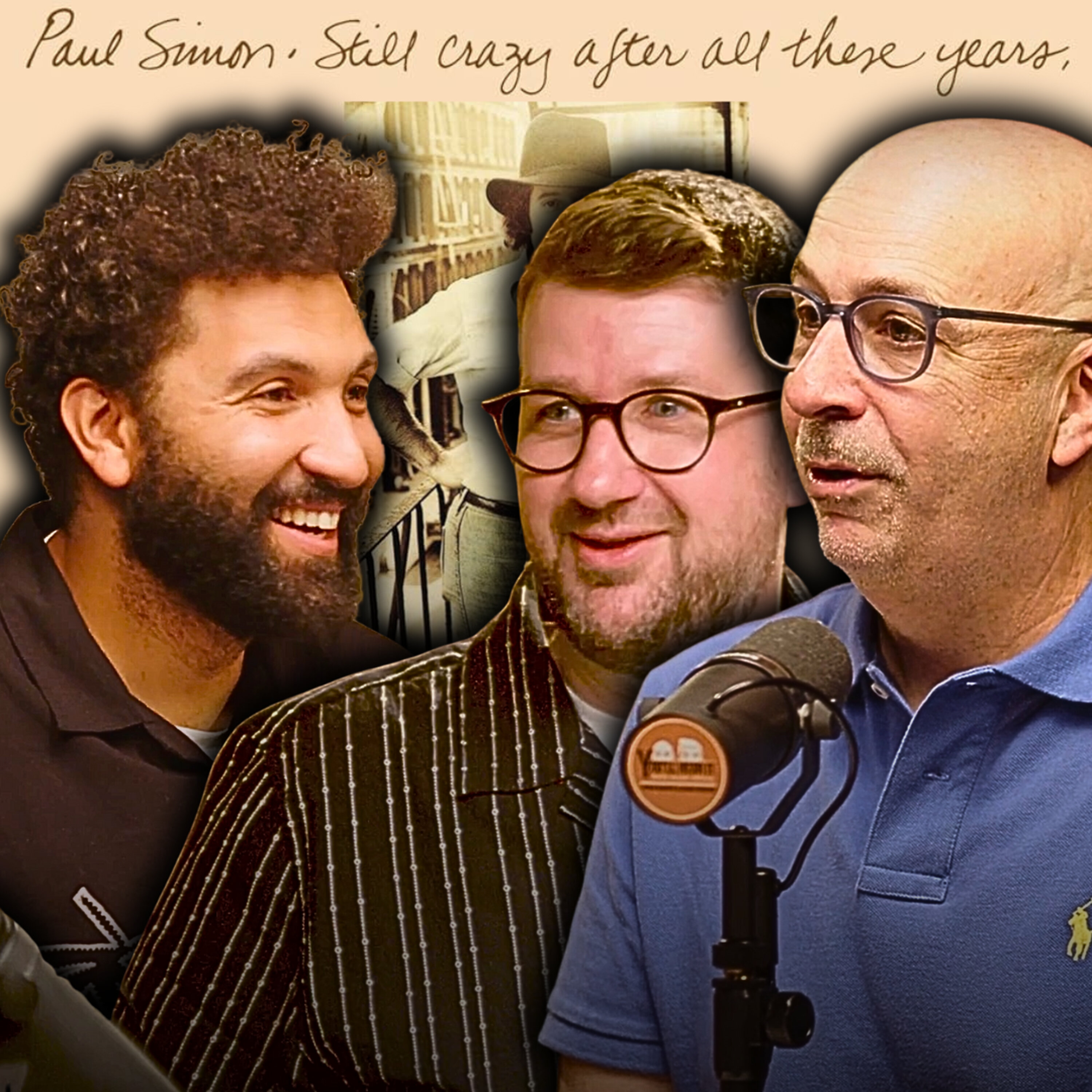


Justin joined You'll Hear It's Adam Maness and Peter Martin to talk Still Crazy After All These Years. Paul Simon's Grammy-winning album was born out of divorce, and produced some of his greatest songs of all time, like "50 Ways To Leave Your Lover," "My Little Town," and "I Do It For Your Love." They dive into the story behind this remarkable album, including Steve Gadd's famous drum beat and how Stevie Wonder's Innervisions may have been the catalyst for Paul Simon's divorce?! And, we ask: Is this the ultimate sad boy album? Find You'll Hear It wherever you get podcasts.
See omnystudio.com/listener for privacy information.
00:00:15
Speaker 1: Pushkin.
00:00:20
Speaker 2: Hey there, it's Justin Richmond. I joined my favorite music educators Adam Manis and Peter Martin of Open Studio on their podcast You'll Hear It to talk about Paul Simon Still Crazy after all these years. It was an album born out of divorce and produced ever so tenderly by Phil Ramone. The songs and hits from that album like Fifty Ways to Leave Your Lover, I Do It for Your Love, Still Crazy, Paul Simon's first collaboration with this wayward partner Art Garfunkel on My Little Town. Those songs are indelible. We dive in the story behind those songs and this remarkable album, including Steve Gadd's famous drum part and how Stevie Wonder's intervisions may have been the catalyst for Paul Simon's divorce and thus this album plus weeponder? Is this the ultimate sad boy album?
00:01:04
Speaker 1: Hey, Bob, do you like podcasts? Actually you don't have a so, Adam do you like podcasts? Oh Man, I love podcasts. In fact, I'm on a podcast right now. Yes, I'm aware. Do you ever listen to the Broken Record podcast? Yeah, that's one of my favorites with Justin Richmond. Yeah, so I asked him if you could join us on the show today. Oh, that's very exciting. And he's gonna be here in just a minute, very thrilling. And speaking of broken records, I think you broke a few on this range. Yeah, most number of mood chords ever. Yeah, that sounds like something I do. All right, madam, and I'm Peter Martin and you're listening to the You'll here podcast Music.
00:02:46
Speaker 3: Explore Explore, brought to you today by Open Studio.
00:02:48
Speaker 4: Go to OpenStudio jazz dot com for our your jazz lesson needs.
00:02:52
Speaker 3: Peter, we are not alone today.
00:02:53
Speaker 1: We are not alone. Yeah, we are.
00:02:55
Speaker 4: An in person guest with us, the great Justin Richmond from the Broken Record Podcast. Justin Man, thank you for having me, man, thank you for coming to Saint Louis.
00:03:04
Speaker 1: So pleased to be here. Thank you for talking music with us. We've already had a great time. You've been here for a while and we've we've done the podcast. We've already talked for several hours about music. I wish we'd had the microphones on, but yeah, it's so great to have you here, right man, It's real. I'm a podcast royalty.
00:03:20
Speaker 4: Big watcher of your guys' stuff. Crazy, that's crazy.
00:03:25
Speaker 1: Likewise and subscribe. I'm a subscriber.
00:03:29
Speaker 3: Yes, you went to over studio dot com.
00:03:32
Speaker 1: It was too easy. I just put him PayPal Pyle, I don't know, super we get you.
00:03:38
Speaker 4: Yeah, well, man, we are talking about one of my all time favorite albums today. Paul Simon is still crazy after all these years. Nineteen seventy five and Justin this was on a list that you gave us of like things you might want to discuss and.
00:03:51
Speaker 1: Before we get in, and we were nervous when Justin Richmond gave us a list of albums that he wanted to discuss. We didn't like to start shaking as we looked through the list.
00:03:58
Speaker 3: Believe me, no, not at all. But I'm just curious. Why was this on your list?
00:04:03
Speaker 1: Man?
00:04:03
Speaker 3: Well, okay, this has a bit to do with my neurosis.
00:04:08
Speaker 2: I just didn't I was scared, so I was scared, so I kind of wanted to nerd out. I really wanted to get deep into jazz with you guys. I was kind of wanted, but then I got so I feel like my first list air towards Zach because I was like I want, you know, I want to go I want to talk like mingos, like you know, a classic jazz, you know record.
00:04:27
Speaker 1: But then I was like, you know what, man, like, it's not my land. Let me get out, you know.
00:04:32
Speaker 3: Like Peter's face isn't it. It's just super intimidating.
00:04:36
Speaker 1: I was like, I want to get chewed up. So hold on, let me just right.
00:04:38
Speaker 2: Let me recommend something that I feel like is that's very much a classic album and incorporates jazz and is and is in the you know, it takes from the milliu but is firmly in the pop arena.
00:04:51
Speaker 1: Yeah.
00:04:51
Speaker 2: Yeah, And this was definitely you know, like I think I sent some earth wind and Fire suggestions that was something, but but this seemed to be like the most I don't know, compelling in a way.
00:05:01
Speaker 1: Yeah, and a little bit strategic. It sounds a little strate.
00:05:04
Speaker 4: Now that's great because we want to talk to you about something that you could really sink your teeth into. And then I think we could. And you're right, this album is a filled with jazz musicians. Yeah, and we'll talk about that more when we get to it.
00:05:15
Speaker 1: And we talk about you know, we've been using the term jazz adjacent. You know, I like the you know, jazz influence and stuff, and I'm it's gonna be really interesting to get your guys take on how much of that obviously jazz musicians on there. There's always the idea of like jazz musicians on a pop record playing pop, or like, how much are they invited in to bring jazz, to bring groove? Like is it a harmonic kind of thing? Is it a sensibility? Is an improvisation which this record has some but not really a lot, a lot of truncated, you know, but it's super interesting to me to hear how people like whether or not gets to the point where it's, well, there's one point that's gonna come up later where it definitely gets very jazzy. It's like falls off the rails jazzy all of a sudden too, yeah, which I think is great. But other than that, you know, I'm not sure.
00:05:59
Speaker 4: Well, let's get a little backstory here on what was going on before this album was made. In nineteen seventy five, So, Paul Seinen grew up in a musical home in Queens, New York. His dad, Lou, played bass professionally for radio stations, and he encouraged his son to appreciate music and study piano, but Paul didn't really take to it, that is until he heard dou wop and Rhythm and Blues on the radio. He was just a kid, maybe nine or ten, and he was completely changed by what he heard. He would obsessively listen to the radio after school, listening to songs like Hearts of Stone by.
00:06:32
Speaker 5: The Jewelers, Made of Stone, Will Alone, Time.
00:06:46
Speaker 4: You Can Pass, or Shaboom by the Crew Cuts, Hell That, or good Night Sweetheart by the Spaniels. He met Art Garfunkle in school and the two started singing together, recording their voices on a wire recorder and playing it back to hear how their voices intersected.
00:07:15
Speaker 1: You see a wire recorder, we got talking. I'm not to google that.
00:07:20
Speaker 4: Then they started singing together at school talent shows and even writing songs together. They both fell in love with the Everly Brothers with songs like.
00:07:27
Speaker 3: Bye Bye Love.
00:07:28
Speaker 4: And then one day after school they walked into a recording studio in Manhattan and paid ten dollars to record this song, Joe.
00:07:42
Speaker 5: Jo.
00:07:43
Speaker 4: Of course, everybody knows that Simon and garvocal, so this was recorded under the name Tom and Jerry, not Simon.
00:07:51
Speaker 3: And Garfunkle, which is a very funny name.
00:07:53
Speaker 4: It just so happened that Sid Prosen, who owned a small record label, was in the room. He heard them sing and offered them a contract to release Hey school Girl on his label.
00:08:01
Speaker 1: Did you say Sid Prosen? He didn't have to say Sid Prosen owned a small record label. That was that was implicit in the name.
00:08:09
Speaker 4: They quickly found their sound, became famous, and eventually broke up. But for Shadowy it was another breakup that would create the conditions for one of his best albums, Still crazy after all these years, so.
00:08:24
Speaker 3: We thank you very much.
00:08:25
Speaker 4: We don't often think about Simon and Garfunkel as like a doo wop group, but that is certainly their origins, and you can hear that in the Hey school Girl. But really interesting origin story from Paul. I knew his dad was a musician, but I'm curious, Peter, like your father also a professional musician.
00:08:41
Speaker 3: Yeah, not in the same context.
00:08:42
Speaker 4: That you are, but I think that musical there's so many astounding musicians, yourself included, who come from like a dad who's like a workaday musician, right right, Yeah, And I.
00:08:55
Speaker 1: Wonder i'd love. I think that's an interesting part. But I think a music lover parent, you know, like that's the trend I hear with a lot. I don't know you, oh, I know for you, Adam, your parents, your dad had great some music and will play stuff. And I mean it's just in you, justin just like I think having parents, because both my parents are actually musicians, is an interesting angle. But it's almost more like is music in the home, Like how is it present? Like not that you're at the altar of it, but like culturally, is it a big part of you know, your upbringing? Yeah.
00:09:27
Speaker 2: I mean for me, neither of my you know, both of my parents sometimes have asked me like how did you come? But for me, it was my I think my mom's mom, my grandma, who was really she's from Detroit and whatever reason just loved. She would always just tell me, like teach me life lessons through like you know, the stories of some celebrities you heard, like I always knew not to do uh.
00:09:46
Speaker 1: I learned not to take drugs because Judy Garland tell you.
00:09:48
Speaker 4: I was watching the Wizard of Oz and my granda told me Judy Garlands and I'm like don't take pills, okay, But then she would tell me things like don't sign with MGM.
00:09:58
Speaker 2: Yeah exactly, you know, don't don't you know? She would tell me about how Nat King Cole used to like to smoke because it would keep his voice like like you know, like he liked the way he made his voice sound, but.
00:10:07
Speaker 1: That would lung cancer, you know. So then that was the flip.
00:10:11
Speaker 2: Okay, so don't smoke or you know she made me do uh, she made me join the swim team because Frank Sinatra swam for like greater like lung. So my grandmas liked singers and would always like make me listen to things. And you tell me singers were trash.
00:10:24
Speaker 1: Yeah, you can learn everything about life, like yeah, don't eat a lot of that stuff. Yeah, so I think it was my grandma.
00:10:33
Speaker 2: Yeah yeah, And I hated vocalists growing up, but I've come back around to me now it's all I love it.
00:10:39
Speaker 1: Vocals, love a good love a good singer. Yeah. Yeah, well I think too, like like you hear the music that do? I mean obviously none of us, even me being the elder statesman here, came up listening to that douop style. But I remember my aunt and my uncle and my parents too, like they're more like classical musicians, a little snobby. But you know, I think it's hard for us probably to understand the impact of that's not I remember my aunt Carol talking about Fats Domino, you know, and like one of his hits would come on the radio and she was like, that's when I fell in love with your uncle, and like just like that sound. And so I you know, hearing I've never realized that Paul Simon and Gar but it totally makes sense. Came out of that. But like it's got to inform everything that they did.
00:11:21
Speaker 4: You can hear that, like the constant harmonies and everything that they're doing is Simon and Garfunkle A long way away from Tom and Jerry Hayes, Skip.
00:11:30
Speaker 1: School Girl, a little elevated. Yeah.
00:11:43
Speaker 4: So after Simon and Garfuncle are defunct, Paul makes his first studio album, self titled Paul Simon Album with some good success.
00:11:55
Speaker 3: I love this album, incredible album.
00:11:58
Speaker 1: This is the one to cover with He's got the hood up for a hood. Yeah, this is a ten out of ten album cover that's being Julio domb.
00:12:12
Speaker 4: Nineteen seventy two and nineteen seventy three, Paul releases There Goes Ryman Simon, also a good album, not as good as the self titled or as good as Still Crazy in my opinion, but some good stuff, including this track Code of Crew mixed a song, but as we're already hearing here and still Ryman the sound quality yea for nineteen seventy three, that's some high level.
00:12:34
Speaker 1: Yeah, the same producer as this Phil Romone. Yeah, I was just wondering if it sounds like his kind of but I mean Simon apparently was very I think anytime, like you talk about the engineers and the production and of course Still Crazy, I think it was Phil Vermont and Paul Seimer and producer together. But I think, like you explore with Michael Jackson, Marvin Gay Stevie, like they when you get that pristine sound, whatever the direction is, like the artist has almost always had. I mean occasionally you'll hear about with ours like I do whatever, yeah, and then they create this match, but they are usually very meticulous with how they want not only their voice, but the whole you know, the whole thing.
00:13:15
Speaker 4: After There Goes Ryman Simon by nineteen seventy four, Paul and his wife Peggy, had a son together, Harper, who Paul adored. His musical career had been a success so far, but he was still so sad and didn't know why he was isolating himself from his family, spending most nights away from the house. One night, he came home and hopped in the shower to wash off the sadness. He burst into tears, and this phrase came to mind, still crazy after all these years. Soon after a productive shower, I say, I wish that's.
00:13:45
Speaker 1: A dark moment.
00:13:46
Speaker 3: I've never heard out of it. But that's Paul Simon for you.
00:13:50
Speaker 4: Soon after that, his solo album, There Goes Rymond Simon was nominated for a Grammy for Album of the Year. He was up against Stevie Wonders Inner Visions, Ever Heard of It? Inner Visions won the Grammy that year. This is Golden Lady from Innervisions. Imagine hearing this. It'd being a working artists.
00:14:14
Speaker 3: We talked about this, but talking you can go to the shower come up with nothing.
00:14:17
Speaker 4: If you're listening to Stevie here in this seventies run that he's on, you gotta be like, well, I guess it's done. I guess music is over hanging it up. Yeah, we should all pack it in. And that's kind of what Paul did. One day, he was pouring over inter visions when his wife reminded him it was time to leave. Paul didn't move. He kept listening. She reminded him again. Now he was feeling angry. She reminded him of my household. By the way, I'm amazing, I'm still married.
00:14:46
Speaker 1: He walked out the door and went to a hotel. That was the end of his marriage. From the ins, I didn't get a prod. Give some executive decision making like boh Man. Well think about it, like everyone's like Stevie Wonder. He played pretty much every instrument. Well you know he did everything on the record, on intervisions and talking book except like background, well even did that. But come he wrote everything, thing played everything, killed it and was also like breaking up marriages.
00:15:14
Speaker 4: So Paul wrote the album is still Crazy after all these years from that same hotel as he was divorcing his first wife.
00:15:22
Speaker 1: And he was the Plaza hotel that was I feel like she probably was.
00:15:27
Speaker 3: Ended up writing this.
00:15:32
Speaker 1: It wasn't the holiday and at times square one of the greatest.
00:15:45
Speaker 4: Love last night.
00:15:49
Speaker 6: She seems so glad to see me.
00:15:52
Speaker 4: That just sounds great. On it really sounds great. That's Barry Beckett on the Fender Roads. Yeah, the muscle should rhythm section.
00:15:59
Speaker 1: San Drake, still Abuse, still crazy, the crazy, the great kick drum sounds of all the time. I am I'm not the cud man who tis.
00:16:24
Speaker 7: Social phrasing between everyone is yeah, and there's this little details in the songwriting going to that I'm not the cut on the forecoord just that one time, have one.
00:16:34
Speaker 1: Little change, and I think that, like to start out the record like a lot of Simon stuff and detfine Simon garfunk fl before this it's like soul guitar driven, like to start out with the Roads on this, I don't think there's any guitar. And and then it's has like the strings. It really places his voice and like you said, the phrasing in a different place.
00:16:51
Speaker 8: One of the greatest bridges, every one of the weirdest bridges ever to string, arranged by by Bob James.
00:17:01
Speaker 1: Bob James, shout out, Bob James, still doing it, Wash Chazzi flute strings and then this woodwood stuff is weird here because it almost goes, it gets a little dark, foreshadow and dark a little bit that's wild rining. This will get you kicked off Spotify, and then into this Michael Brecker fully armed. The solo song.
00:18:03
Speaker 4: Also very kind of Unbreckaish soul known for these like huge waves of sound, like.
00:18:09
Speaker 1: The least amount of notes sees. I mean it's a short solo, but normally rerecor would be trying to get in more notes per per beat, if anything, killing key change would not be in the middle of the first.
00:18:24
Speaker 9: Still crazy, still crazy, crazy, still crazy.
00:18:41
Speaker 1: After what do we think Fellas? I mean, it's it's impeccable. I mean it's like pristine and and like there's the deed, like there's the the church stuff. No, No, that four to one movement that's like starts there ends their bookends in and there's a lot of that in between kind of you know, we.
00:19:04
Speaker 3: Mentioned Barry Beckett.
00:19:05
Speaker 4: So the muscle this is all with the Muscle Shoals rhythm section, which yeah, exactly, we'll talk more about them.
00:19:11
Speaker 1: They're on these first two tracks. This was not recorded at Muscle Sholes, though they played different. Though it doesn't sound like necessarily the Muscle Sholes rhythm section, which is cool in a way.
00:19:24
Speaker 10: I don't know.
00:19:25
Speaker 4: Yeah, everybody's playing different That's the theme of this album, right, because like all the jazz musicians are.
00:19:30
Speaker 1: Playing a little differently on Phil. Well, we'll get to that, but not for eight seconds. I love this this Roads part.
00:19:39
Speaker 4: It's just a beautiful example of the very simple church chords just played flawlessly. The voice leading is unbelievable. Yeah, obviously the sound of a Roads in nineteen, but.
00:19:48
Speaker 1: Normally they'd be a little bit more exploite, like a little bit of bluesy, like I feel like they were. I think Simon told them or somebody. I don't know if that was Phil Ramon was involved black like, oh, you know, you know which is. I mean, that's probably appropriate for what it is, but for me, I kind of want to hear a little bit, just a little bit of grid or something here.
00:20:07
Speaker 2: So you think a little more grit would it's a nine point five, a little more grit?
00:20:12
Speaker 1: Make that a ten out of ten? Yeah, Like what if Donnie Hathaway was playing that role? Oh yeah, eleven?
00:20:20
Speaker 4: Right, But I kind of agree with you. It feels like, I mean, for Barry Beckett, it's pulled back away. But do you think for Michael Record's pulled back right, do you think.
00:20:28
Speaker 1: Justin like what you were talking about, like the phrasing that Paul Simon is singing with, that that would have more grit, would have taken away from that.
00:20:34
Speaker 2: I don't know, if I don't know, If yes, I think I think it terms a way Paul approaches songs and sings. I think that sort of more pulled back, restrained playing is probably more like if Donnie singing.
00:20:46
Speaker 1: And playing right, okay, you know, yeah, it's gonna go. Not that Paul's not a great vocalist, but it's just you know, he does though it's not what he does.
00:20:54
Speaker 4: It would be weird if if Paul was like sanging yeah, yeah, yeah, it would feel a little weird, that sort of understated, putting real focus on the lyrics and the turn of the phrase yeah in a very gentle way. That's the Paul Simon I think about ahead when I think about his talent as a vocalist.
00:21:11
Speaker 3: We can hear that here.
00:21:16
Speaker 11: On the street last night.
00:21:19
Speaker 12: She seems so glad to see me.
00:21:23
Speaker 11: I'll just smile.
00:21:26
Speaker 1: Then we talked about some old.
00:21:28
Speaker 9: Time samon drink or sell some views still crazy after all theies?
00:21:38
Speaker 1: What was still crazy? After all?
00:21:44
Speaker 4: It's like you're walking with a friend in the Upper West Side, like telling you his story about running into his.
00:21:50
Speaker 1: So conversational for sure, yes, yeah, absolutely, you know, And and his voice really lends like the authenticity of it because his like I think the little bit of stink or grit that he does bring is that, you know, the pitch is and he has really good insignation, but he does play around a little bit with the pitch, like he's he's not afraid to have it to be a little like stylized, especially when you hear it isolated, because it can seem so like, I mean, thank god he's not doing this in the pitch correction, but you know, I mean if they had, because it doesn't need I mean, it's like that's it's so subtle that you need to kind of kind of hear those like that's part of his style, you know, because the words it's like, I mean, we did diangel a couple, this is like the opposite words, like wait, what was the lyrics that he's saying from the last five it's kill it? But what was he talking about? But like this is just like very you know, still crazy after I'm like, it's right down the middle and I mean it's it's it's it's impressive. And I think too that this this track is such a it's almost like theatrical you know, it's like it's telling the story, but it's like you're going on this journey and it builds up and like obviously James, Bob James like totally understood that and crafted that with the arrangement because that gave it a little bit of epic feel for just a little bit at the right time.
00:23:06
Speaker 2: You feel like a studio film, like you know, they'd be like showing for like a studio film from that era of like thing. And yeah, I one hundred percent agree that in that mix of conversationalists with that drama or that theatricalness is Yeah, I don't know, that's top tier for me.
00:23:23
Speaker 4: Yeah, yeah, I agree that the back to the woodwind arrangements and the string rangers from Bob James. You can hear that this was obviously put on I think after the rhythm section and maybe even after the vocals, because Bob James will will do some things with Barry Beckett that you wouldn't put on a chart. He follows his voicings much like the Shirley Horn. Here's the life arranging. It's a great example of how that can work really, really well. And obviously Paul Simon just told them on the bridge, like, hey, Bob, that's your part.
00:23:55
Speaker 1: Do some weird stuff. Radio's not gonna lose this again.
00:24:01
Speaker 4: The rhythm section is the muscle shows rh rhythm section. At the time, Barry Beckett, David Hood and Roger Hawkins. You might have heard them on stuff like this.
00:24:10
Speaker 1: And that already has more creep be your light up favorite all time?
00:24:15
Speaker 3: Man, Should we just listen to this for the rest?
00:24:23
Speaker 1: I mean, that's how verstable they were.
00:24:28
Speaker 13: Ramshot is sot oh Man Staple singers. Obviously it's that.
00:24:40
Speaker 1: It was definitely the gospel influence, but it's like that Southern kind of folky, but it's got a little bit of that new one you know, dud God, it's you know, it's just yeah, those guys knew how to do it.
00:24:53
Speaker 4: So this album would be Simon's first solo album on the Billboard Album charts. Still Crazy after all these years won a Grammy four Album of the Year in nineteen seventy six, which is incredible. In his acceptance speech, he thanked Stevie Wonder, who didn't make an album this year, right, this great slipped in and then that's just track one. Track two is we get a We get a Simon and Garfunkle reunion with My Little Town again.
00:25:19
Speaker 1: This is This was.
00:25:20
Speaker 4: Recorded at the Muscles Muscle Shoals studios in Mississippi, with the same Alabama.
00:25:25
Speaker 3: Sorry in Alabama. No one's gonna get upset about that.
00:25:29
Speaker 1: No one's gonna get upset about that.
00:25:31
Speaker 14: Uh.
00:25:32
Speaker 4: This is again with Very Beckett on acoustic piano, David Hood on bass guitar, Roger Hawkins on drums, Peak Carr on the electric guitar, David Matthews with the horn arrangements, Ralph McDonald with the percussion.
00:25:42
Speaker 1: Shout out, Ralph McDonald kill it on this record on a bunch of kills lit his own little couture months. They really do some cool stuff.
00:25:50
Speaker 3: This is my little town.
00:26:16
Speaker 1: That's Alabama, my little town. Now the New Yorkers have arrived, but it works. They would direct from mon talk to muscle shows. He used to lead a bobby and that liglely just to.
00:26:45
Speaker 10: Come and hold out to school, fly in.
00:26:49
Speaker 11: The back pass, the gates of the factory, my mom doing the laundry, hanging out.
00:27:04
Speaker 6: Shirts in the dirty green.
00:27:09
Speaker 1: And after it rains, that's rain. All of the colors are black.
00:27:19
Speaker 11: It's not that the colors, it's just imagine everything's the same.
00:27:30
Speaker 3: Peter, what's the form of this verse?
00:27:33
Speaker 1: Well, you know what, you know what. I think it's great. I realized like part of the genius of Paul signed with his songwriting. And then how it's like actualized in the song and the arrangement. Is that pacing, that breath like that's worked in Like there's these odd like little two beat things and stuff, but that works for when the lyric comes back in the pacing up when you look at the charter and I'm thinking about the meter, it's like why that's weird, Why did they put that three four in or whatever? But it works for the storytelling, like highlights the lyric and the melody and the pacing. Such good storytelling. It's a through composed verse, but it pays off. Yeah with this like just repetitive hook.
00:28:16
Speaker 15: My little.
00:28:18
Speaker 1: Somewhere else now just important times.
00:28:26
Speaker 4: M h.
00:28:29
Speaker 11: Shame dream blood.
00:28:37
Speaker 1: For those cries major.
00:28:38
Speaker 12: Same weird like minor second harmony in the background vocals.
00:29:06
Speaker 1: And those horn lines come like a lot of this stuff shouldn't work as well as it does. Perc like to wait that long to bring in the horns and have them kind of like, you know, the entire.
00:29:16
Speaker 3: Song shouldn't work.
00:29:17
Speaker 2: And Ralph McDonald in there like it's like like like you know, like pusher Man, something like Mayfield record like phenomenal. Yeah, yeah, and then the muscle shows.
00:29:28
Speaker 1: Guys. The rhythm section is like that was a lot of like either reading or like figure it out, you know, all those those little because they're kind of grooving. Then they got to weag some extra beats and then come and come in and stuff. Yeah, cool stuff. Love the sound of the piano. What do you think about that piano sound at the beginning? That's one of the most so that unison. Can you just play the very first note there? Can nerd out?
00:29:48
Speaker 3: It's not exactly in tune.
00:29:50
Speaker 1: It's like I was trying to see like the unisons are almost they're like on the edge of oh, and then that delayed from with the guitar, but so just to nerd out real quick. But it's sort of an interest like a piano and down in that range would be two notes. There's actually two strings and the hammer is hitting it, and so like if one of the strings this is a little bit out of the tune, you get this kind of weird you know, it sounds out of tune on its own.
00:30:14
Speaker 3: If it gets really out of tune, it sounds like a honky tonk piano.
00:30:16
Speaker 1: Yeah, yeah, it's like a whole pan. But this one is like just on. I don't think it's actually out because you don't hear the waves going, but it's like very close, so it gives and I mean his touch is It's such a simple thing, and you see it on these people like greatest piano intros of all times. Like it's an easy one to learn, but maybe not to play it like that, you know.
00:30:32
Speaker 2: Yeah, it's a beautiful record. Yeah, it is a beautiful record. And the horn I don't know, man, like I don't.
00:30:39
Speaker 4: They must have really hated each other too, because to make that record to be like, okay, we're going to make a record together.
00:30:44
Speaker 1: You make that record, say screw it now, I can't. How do you make that and decide and you mix it?
00:30:52
Speaker 2: You the whole thing Nowhere in the process you think let's put it aside.
00:30:56
Speaker 1: Can you imagine ever in your life making Bridge over Troubled Water and be like, I never want to see this person ever again. It wasn't this like the third time they were coming back together? Yeah, but they sound so good on that and it did. Wasn't this released on also on our Garfunk solo records? Yeah?
00:31:16
Speaker 3: Like yeah, and I think the same position to like track too.
00:31:19
Speaker 1: Like they just went like so they obviously both approved of the of the recording. It's insanely good.
00:31:24
Speaker 4: Yeah, yeah, classic classic case of two people whose personalities can't handle each other. Yeah, they end up making some of the greatest art maybe because of even not even despite of but a couple of guys.
00:31:41
Speaker 1: Don't these cameras? It's icy and yeah this whole time that was cool And I think too, Like one thing that's always interesting to me is like, how you know, when I was coming up learning music, it's like, oh, you're going to get into this, and they do some like weird diminished chords on like that's where the thing is. But the reality is like how do these tunes start? And like the ending is different because there's so many fadeouts on And this was the age of like the beginning of the fade outs, you know, which is my own little quible bit, but like how these first two tracks start with like that road.
00:32:15
Speaker 3: Sound at the beginning, you with fade outs.
00:32:20
Speaker 1: Yeah, I'm not I'm not a fan of it. I'm like, end the thing, what's ended? Yeah, that's your Yeah, it's like for radio, it's great, but it's also like when we were here. I mean, this was a little before my time when I was here and on the radio, but it's like the DJ has had so much control over when the thing was gonna. Like that's when I came up in the era of like you didn't know what it was gonna. It was definitely me before, Like I remember that, what is it? Do I do? Stevie wonder where Disney Lestie plays that? So like that never my sister had the LP and so I remember she played it that. I was like, wait, what is that? Because it never it never occurred on the rate, like it was always faded out before you got to that and you're like, we're gonna play the jazz on the on the top station.
00:32:57
Speaker 2: I always like to the imagination that some some of the fade out, some some fade outs are like a cop out, but then sometimes you're like what, like you know, the end of like like I want you back, you know.
00:33:06
Speaker 1: You're like Michael's cooking, You're like what what happened?
00:33:11
Speaker 4: A fade out is you're hearing all the good stuff, like where is it going? But it gives you this mystery to what's Yeah, that song could still be going on.
00:33:19
Speaker 3: We don't know.
00:33:19
Speaker 1: Yeah it's still going today. Yeah yeah. And then it's also like, well, like when we can talk about it as we go to like this is I think when we were just reminiscing about this or prepping for this, somebody mentioned or we all commiserated about this is a great you know, put the vinyl on, we did, put berets on, and when it got a little pour over coffee before we said that it was espresso. Yeah. But I mean that's another thing is like how do you get from like if you are listening to this as an album and you're not getting screwed up by Spotify doing some weird like what does it feel like to transition from each track? You know it feels great? Yeah, that's well, speaking of feeling good, I think this track three for me is well, we'll talk about it later. It might be might be the apex.
00:34:04
Speaker 4: This is I do It for your Love, And for some reason, this is a favorite of Jet well, not for some reason, but it is a favorite of jazz musicians, as we'll talk about in a minute. I'd have been a favorite of Steely Dance too. We got a brand new rhythm section on this one. We got Kenneth Asher on the Fender Roads, Terry Friedman on electric guitar, Joe Beck on electric guitar, the Great Tony Levin on bass, and the immortal Steve Gay on the drums.
00:34:34
Speaker 1: Here force and again, Ralph McDonalds married on.
00:34:43
Speaker 11: Sky was yellow and the grass was green.
00:34:49
Speaker 1: Shine the papers and drove.
00:34:54
Speaker 6: I do fall.
00:35:01
Speaker 1: The rules were musty, and the place wollo. All that to a shed of con the most lyric ever drank all the orange juice, the week cold cold.
00:35:19
Speaker 6: I do it for your found. The road junk shock.
00:35:33
Speaker 1: Road, ho to you.
00:35:39
Speaker 9: Along the way, the cover of those red beers.
00:35:47
Speaker 6: Cobu.
00:36:09
Speaker 1: Bizarre.
00:36:10
Speaker 4: Yeah, you know what the instrument that is? That's vocals, right, it's accordion and vocals. An artist named Sivuka.
00:36:23
Speaker 1: This is why jazz musicians like it's a long ass solo in the middle of it, so an incredible song. Man. I was just thinking, like I would have been scared. I mean, like, this is a really fun way to play on a studio record like this, and I can relate and think about things, but I would like the details. I mean, obviously with with Paul's vocals and the backgrounds and the way he's I mean, it's like everything is perfect. I don't think it's antiseptic, but it's like very much like I feel like if I played one little oh, I think I'm gonna do this like the whole thing. Yeah, yeah, yeah, you gotta fall on line on this, you gotta full line. Yeah. And I think maybe now I'm feeling like the muscle shows rhythm section moving to this one because there's a certain stylized way that the album is produced that it kind of works because normally you start shifting rhythm sections, you know, on track three that can their cohesion can, but it's totally cohesive falling into it. Yeah.
00:37:21
Speaker 3: The most Paul Simon lyric.
00:37:24
Speaker 4: That I think has ever been written, besides maybe like Mississippi Delta Shining like a National Guitar is the rooms were musty and the pipes were old all that winter. We shared a cold drank all the orange juice that we could hold.
00:37:37
Speaker 3: I do it for your love, just that.
00:37:38
Speaker 4: Little glimpse of a daily life that is unbelievably beautiful.
00:37:44
Speaker 2: So, you know, just the mundane whatever, just you know, and it's like what but when Paul sings it too, it's like, oh, super difficult to land that and not be super corny, and yeah does it?
00:37:55
Speaker 3: Yeah, pulls it off?
00:37:57
Speaker 1: Yeah? Is this a good time to bring up? I have a question for you guys. Is this the ultimate sad boy album? I mean, he was going through a pretty harry divorce.
00:38:05
Speaker 3: Yeah, I think so, it is.
00:38:08
Speaker 1: It is, but this is the best. This is also like the platonic form of that.
00:38:15
Speaker 3: You know.
00:38:15
Speaker 1: It's like, if you're gonna do a sad boy album, tasteful right right right? Yeah? Yeah, and don't even call her out by name exactly exactly, and.
00:38:27
Speaker 2: Then throwing Accordion's vocal solo right.
00:38:31
Speaker 1: Also. I think Bob James I was listening to some of that harmony. I think he might have had a little something to do with some of the the composite. Yeah, at least some of the I mean, I guess that's technically not the songwriting, that's like the harmonic arrangement. But I'm I'm hearing some stuff that makes sense. I mean, he's in there.
00:38:48
Speaker 3: If you don't know Bob James, might know him from this. I mean, who doesn't know Bob Chance.
00:38:56
Speaker 1: But it's great jazz pianists as well.
00:39:00
Speaker 4: I mean, incredible jazz pianist James, incredible pianist composer.
00:39:04
Speaker 1: This is the Angela the team from Taxi TV show tax and Super Sweet Nice. I met him when I was in high.
00:39:10
Speaker 6: School, and he was.
00:39:13
Speaker 1: I think I've ripped that off in so many songs.
00:39:17
Speaker 4: No.
00:39:18
Speaker 1: I met Bob James shout out Bob James when I was in high school and he I was at this like band thing in Texas. Same day I met Roargo while he was in high school. But Bob James was just like I would assume. He came over to me after he heard our high school band players like yeah, you sound good. He's like, I'm Bob James. I was like yeah, but it's just one of those guys that you know. It's like, you know, he could have been like, yeah, you sounded like shit, I'm Bob Jay, I would I would have given it up music. I would have been like, you're great. I guess I'm in the wrong field. Did you know it's Bob James before he said it was Bob James? No, because he was so selfish, you know what I mean. It's just so like just like hey, you know, I'm like, why would he be here?
00:39:51
Speaker 4: But so I do it for your love was covered by Herbie Hancock on his two thousand and five album Possibilities with Paul sign With Paul it sounds way different, Yeah, actually did it. Paul asked him to do it in a minor key, yeah, and to do it on just one chord, and Herbie's like, I don't think we can do that, Paul.
00:40:09
Speaker 5: Yeah.
00:40:09
Speaker 1: Herbie is like, I can play one note here, I'm gonna put a bunch of Herbie ship on top. That's exactly what happens, is exactly what he did. So it's just piano percussion and Paul it's like, m revel Herbie Paul Sneyer like that stuff.
00:40:31
Speaker 6: H damn mm hmmm. We were married on any day.
00:41:01
Speaker 1: The sky was yellow and the grass was green. We shigned the papers and we drove dude for I haven't heard this in a while. This is cool. Yeah, I heard.
00:41:37
Speaker 14: The rooms were musty and the pipes were cool.
00:41:40
Speaker 1: Man, all that went to We shared good footage of them recording this to.
00:41:48
Speaker 4: I mean, I mean, another another feather in the cap of maybe a case for Herbie just being the goat. I mean, truly, what other jazz pianist of the big three or four that we can think of could step in and do this in the right way.
00:42:03
Speaker 1: I mean, I don't think.
00:42:05
Speaker 4: Any of them would want to want to be curious enough or open enough for or have the personality that is so attractive that Herbie seems to have. You notice how much he attracts other artists. He's just a magnet for me. Yeah, Paul's you know what. I listened to that too.
00:42:22
Speaker 2: I'm like, we've had some conversations about Paul parachuting into things, but yeah, I think Paul might have the right idea, man.
00:42:29
Speaker 1: Paul does.
00:42:29
Speaker 2: I mean, if I was like the idea of someone of Paul Simon's caliber and stature and culture being like, let's rework this, you know, album cut from one of my big albums, not even a hit, not.
00:42:43
Speaker 1: Even a hit.
00:42:43
Speaker 2: Yeah, and just you know it's like, you know, I don't know, like I don't want to. You know, most people aren't going to do that, right, That's what's cool about him, And that's how I would use.
00:42:51
Speaker 1: My powers too. Yeah, I'm like, let me just give with Herbie in the studio real quick and you know, like man like yeah. And I was just thinking the similar thing in terms of like shout out to Paul Simon for going in because I know that he's so detail oriented and would understand and know that when you get in there with the studio like Herbie, he's the sweetest, nice cat, but he's also going to be like like it's not gonna be easy, it's gonna be wonderful. And if you're willing to come in and kind of let your guard down a little bit, like there's a chance for you to kind of like he will elevate your stuff. But I've heard from other vocalists that have played with him, they're just like it's hard, like like if you're not totally open to it and to just being yourself. And you can hear that like Paul's just singing the thing and Herbie's kind of doing different things, and Paul is allowing that to kind of envelop his composition. I mean he's totally reworking the thing. And I know Herbie, like however many takes they did, everyone was different. I guarantee you that that was not like Herbie's like, oh okay, we're gonna go to f Minor Paul is that cool? Awesome? So I mean I think that it is one of those things where it could be like this beautiful, wonderful thing. But if you're kind of because that that whole record, that's a killing this possibilities, right. Yeah. Yeah. There's a bunch of people, and there's some I mean all of them. I love that record. A lot of like hardcore jet Herbie like it's Herby.
00:44:08
Speaker 3: Doesn't make a bad out him then he really doesn't.
00:44:10
Speaker 1: But for jazz folks, a lot of them overlook that record because it's like I think there's I'm forgetting. There's a bunch of kind of like weird combinations. I think great stuff. Angelie Key Joe is on there. I think has a really cool thing that she does.
00:44:23
Speaker 3: This is after like the New Standard era.
00:44:25
Speaker 1: Yeah, row me done. He does a cool thing with Herbie. But it's all people that are like, yeah, I'm willing to come in. And you know, I mean, Paul was probably the big Actually, I think Sting might be on that too. You know. Sting's another one that can kind of is he.
00:44:37
Speaker 3: Parachuting or is he?
00:44:38
Speaker 1: Is he walking in the front door? It's is he private jetting it? Yeah, that's a good question. That's a good question. Hard to know with it.
00:44:48
Speaker 3: What are we gonna do our police episode?
00:44:50
Speaker 1: Man, come on, it's coming man. Uh, let's check out. The next track was, well, we do the jazz Police every wee. We're ready for that. The next track was a hit and it's fifty Ways to Leave your lover. Let's check it out.
00:45:01
Speaker 9: Problem is inside your head?
00:45:04
Speaker 1: She said to me. The answer is easy, if you take it.
00:45:11
Speaker 11: I'd like to help you in your struggle to be free.
00:45:14
Speaker 1: Some some missing here. That was the coffee house. This this song like that, it sounded just as compelling. I don't know about just that, but that very compelling. Guys, did we just start the Simon remix project? Yeah? That really shocked me. Actually, well that's this song.
00:45:38
Speaker 3: There's not much to it. There's not much going on.
00:45:40
Speaker 1: If you take the drums out, you.
00:45:44
Speaker 4: Jack, we gotta talk about the course, I know, one of the weirdest transitions ever.
00:45:50
Speaker 5: Man.
00:45:50
Speaker 1: It's like two different too. I mean it's two different.
00:45:52
Speaker 2: It's like, uh, you know a lot of like, you know a lot of people hate like or talk about uh Ozzie's uh what is that?
00:46:01
Speaker 1: Uh crazy train transition from the rift to like the verse. That's one of those.
00:46:07
Speaker 4: It's very, very jar So the chorus came out of a fun rhyming game that Paul was playing with Harper with his son, and.
00:46:15
Speaker 1: This was bad about his mama.
00:46:19
Speaker 4: Listen, let me tell you about divorce. Sometimes he's got to sleep. This was happening during the divorce. Paul was playing with Harper in his hotel, showing him simple rhyming games. The rhymes they made up made it into the song you slip out the pack check make a new plant Stand was the game he was playing with his son, Right.
00:46:38
Speaker 1: Dad, Why is mom got to make a new plants?
00:46:42
Speaker 6: Other?
00:46:43
Speaker 1: Waise and you gotta make a sad off like daddy, Dad? Can you not turn this in your album?
00:46:48
Speaker 6: Right now?
00:46:48
Speaker 1: I'm actually kind of broken inside. Talk about your dad.
00:46:52
Speaker 2: Do you think he had the verse or the course? We must have the course. I mean, if he's doing the rhyming or did he have the verse and then didn't have a course? And who's doing the rhyming game? And that's a great question, like how.
00:47:02
Speaker 1: Did rhyming that would have been a course kind of I mean, how do you heard track from that?
00:47:07
Speaker 4: I've heard lord that he you know, because so Steve Gadd is a young Jasus just at this point he's coming out of the military and where he's you know, in the in the field band of the military, playing snare drum and so that's the gad stuff, Like that's when he's playing his gad ship is when he brings out that sort of yeah, you can hear him. There's some great videos of a drum battle with him and Vinnie Call You'd and Dave Weckel and Vinnie call you and Dave Weckler are doing some just like incredible technical fireworks, but then Steve Gadd comes in with his like and the place just lights up because it feels like this. So I've heard, and I don't I don't know if this is verified, but I've heard stories that Steve is like playing his military stuff and Paul walks in and says, that's what I want for that verse and wrote the verse around the drum part, just what I've heard.
00:47:51
Speaker 1: I would love to see Paul's face when you heard that. I know he would like He's like, oh, let me, let me grab some of that and then I'm gonna give I mean, that's great arranging when I hear this drum bee, though, I don't think like slip out the back jack, no, you know what I mean. So he had to write, yeah, well, and the thing about Gad too, it's like he's the kind of drummer like like you say that, like everybody that aren't drummers are gonna be like, damn, that feels good, Like you're not thinking you're not. You don't know why, but like his precision. I didn't even know about him being in the middle. And I got a chance to play with him once and I was always like Steve dam I played with other great drummers.
00:48:26
Speaker 3: But man, his thing was like, all right, can we can we talk about Gad for a second?
00:48:29
Speaker 1: Yeah? Yeah, I'm literally trying you listen. Can we just can we just know you nervously.
00:48:33
Speaker 4: Just here, but come on, no, I want to go we talk about I want to talk seriously about personal anecdotes.
00:48:40
Speaker 3: So this is Gads. I want to I just want to read.
00:48:43
Speaker 14: This is.
00:48:45
Speaker 3: I want to read the highlights of.
00:48:47
Speaker 1: The personal story. This is the good guy's wikipedia out on me. Man, No, go ahead, you're right on the corner. Come on, I'm trying to slip out the back door. Jack didn't even wrote man, it's time, man, okay, don't need to be quite right.
00:49:07
Speaker 5: Let's go.
00:49:09
Speaker 3: That was sheet Pete.
00:49:12
Speaker 4: So here's here's just like I swear to God. This is twenty five percent of Gad's to Sorrophy as a side. Man is people that he's recorded an album with right and most of these, by the way, he's not on one album, He's on multiple albums. Lorie Anderson, Herb Albert Ashford and Simpson, Chet Baker, The begis George Benson, Carla Blay, Brecker Brothers, Edie Berkel, Kate Bush, Larry Carlton, Ron Carter, Tracy Chapman, Ray Charles Cyrus Chestnut, Eric Clapton, Stanley Clark, Joe Cocker, Natalie Cole, Judy Collins, Korea, Jim Croche, Christopher Cross, John Faddis, Art Farmer, Maynard Ferguson, Aretha Franklin, David Foster, Peter Gabriel Ark randomly like, what's in the order to this, Lart Garfunkle, Alphabetic.
00:49:52
Speaker 1: Ron Carter, Christopher Cross, Lard.
00:49:54
Speaker 4: Garfuncle, David Gilmore, Dave Gruson, Jim Hall, Freddie Hubber, Janis, Ian, Milt Jackson, Bob James, al Jero, Doctor, John Quincy Jones, Ricky Lee, Jacket, John B. B.
00:50:04
Speaker 1: King, Ross, Han.
00:50:05
Speaker 4: Roland Kirk, Gladys Knight and the Pips, Usef Latief, David lead Men, Kenny Loggins, Paul McCartney, Michael McDonald, Tayo, Marcelo, Chuck Mangioni, Barry Manilo, Lyon May's, Bett Middler, Charles Mingus, Peter Paul and Mary, Michael Michelle, Bertucciani, Bonnie Rate, Diana Ross, Joe Sample, a ton of David Sanborn albums, Tom Scott, Paul Schaeffer, Howard Shore, Carly Simon, Paul Simon, Frank Sinatra, spirodiros Stete, Dan Barber, Streis and James Taylor.
00:50:30
Speaker 1: Richard t Cedar, Walton, Dion Warware.
00:50:32
Speaker 4: Grover Washington, Junior Weather Report, Yeah, and Nancy Wilson, Jesus Okay so so yeah, I'm we're we weren't fully aware, but.
00:50:40
Speaker 1: Now we are of his resume, like he's that guy.
00:50:42
Speaker 3: Yeah, and that's like that's just a glimpse, that's not even the full pixer.
00:50:46
Speaker 1: Well, no, I mean I think it's like, you know, Steve gadd is, this is someone I like when you talk to drummers, he's he's not necessarily like your average drummers drummer where theyre going to talk about him first, but like the great great drummers that I know, like the jazz drummers especially, are like, he's that guy, you know what I mean, So like the more because I mean, his technique is so high level that like wait, what do they call it? Like you know, he's like a players, player or coaches, Like we're the ones who really know. But also you know, he makes all these artists you know, want to call him back because it's wow too.
00:51:20
Speaker 4: Like Mingus played with like one drummer his entire career, Like you know, it's like Daniel Richman's and Steve gadd like on a very.
00:51:28
Speaker 1: Strange record, you might have found the only artist that wasn't on that list, Charles Mingus, right, was all that. That's why I was like, that's why I never would have known right next to Peter, Paul and Ary all three.
00:51:40
Speaker 4: Now it's it's an insanely varied group of artists and just I mean of the last part of the twentieth century, in the early part of the twenty first century, it's like incredible and he's on It's not just like he's just on you know, Annie Rate, he's on like street lights, like he's on like.
00:51:55
Speaker 1: Right the long kind of like it's the Steely Dan you know, the incredible solo is on Asia.
00:52:00
Speaker 2: Yeah, listen to that and you listen to you like that's all of seventies and eighties radio like that.
00:52:04
Speaker 1: He just owned the radio like y And so think about the influence on the drummers today. They came up listening to that stuff the top guys and gals like that's this is you.
00:52:13
Speaker 4: Know, Yeah, guys, let's do one more track. Can I say one more thing about gad please?
00:52:17
Speaker 1: How do you own? Go right back real quick then, because how do you own a record in that way? On an album?
00:52:31
Speaker 2: And then you just homously he doesn't disappear, but then you just kind of like go back to you know that you don't like that is like the genius of that guy. I guess you know, like that you could just on every song. I'm sure you could do to every one of these.
00:52:45
Speaker 1: He's like, well, yeah, this particular moment when it starts out, yes, got this this that was all and this is this is the one that needed it. Right, I'm gonna step up a little bit and then I'm gonna go back to yeah again. Taste made He's a taste.
00:52:55
Speaker 4: It could be like taste validating the story that something you're conscious about the part of this song. Whereas he wasn't intentionally putting this as the part to shine. He was doing this just warming up as they were getting ready, and Paul Simon was like, no, that's going in.
00:53:08
Speaker 1: But everything he u is very subtle. His own parts are super.
00:53:12
Speaker 4: And they are on that whole discography I just mentioned, and I think that's why he gets hired so much. He sounds incredible. The pocket is deep, yeah uh, and he just adds the right thing at the right time and nothing more.
00:53:23
Speaker 1: You know, Okay, great drummer that listens you get gigs.
00:53:26
Speaker 2: How many drummers have a part that they probably get sick of being asked about, Like the way like us, like you know, like Paul must be Paul McCartney must be sick of like you know, like you know whatever, all the Beatles questions like he just got to be like I don't want to answer.
00:53:37
Speaker 1: That fifty ways.
00:53:39
Speaker 3: Yeah, oh yeah, I'm sure he's just like yeah, I mean I do other stuff.
00:53:42
Speaker 1: Yeah. I don't know if he's ever in a situation where there's like drunk dudes or like dude New Orleans. Yeah, but he just smacks the ship up.
00:53:50
Speaker 3: It'd be fun to follow Steve Gad around Nam with a camera.
00:53:53
Speaker 1: Oh my, I would avoid that. Well. Plus, I think too people always just like what was that kind of snare? Like, because drummers, it's like a lot of them, especially at the lower levels. It's all about the gears, like, well, how did you record that bass drum? Well, you got to fucking kill an ass drummer named Steve Gadd with some MIC's up and make it sound like what he's what he's playing.
00:54:12
Speaker 4: Yeah, all right, guys, let's do one more track here and do Peter's favorite. I think this, I'm gonna say this is Peter's favorite. I don't know if this is your desert Island Pete. But I'm I'm guessing it's this.
00:54:25
Speaker 1: It's not, but it was on my list of the possible is it? I changed it yesterday.
00:54:33
Speaker 2: Shampoo, Desert Island movie, should it's about James on the roads on this one.
00:54:48
Speaker 1: This is weirdly in seven yeah, one, two, three, four one two dreams should what should my head? What the hell?
00:55:04
Speaker 12: And that one.
00:55:10
Speaker 1: Valerie Simpson on the back of vocal Man, one of the great background vocal wives. So simplest harmon bringing Valerie Simpson and Patty Austin on this album. Nice touch, right exag They don't have no good resources to be able to pull up on you know. It's like.
00:55:41
Speaker 4: Just you should let Paul drafts for the Knicks, you know, like this guy can pick man like Jesus Christ.
00:55:47
Speaker 1: Well, you know he's a Knicks fan. I don't give him a chance. That's right. We gotta listen to this whole tracks killing yead too again.
00:56:01
Speaker 16: Gad he.
00:56:04
Speaker 1: Just playing exactly the right where I got a chance to play. It's like he does not play loud, like even when he's grooged, like his his control of dynamics and like intensity, the group are totally independent.
00:56:15
Speaker 15: That's what's true about this on too? It's just quiet, but it's just it's subtle. Yeah, admitted quarter is weird.
00:56:27
Speaker 1: Not a lot of loud moments on this album, all right. I like this line, God bless God, bless our standard of living. Let's keep it that way. Damn that's a divorce line too, hopefully for both, but you know, I'm not sure. And man, Steve Gadd too, We're gonna have to retitle this. This is like the Steve Gadd Appreciation Podcast. No, Like I'm Asian, would turn it into as well if you like Asian. Like, so the solo on there, he's he's so busy obviously and wait, like it's such a thing, but like I appreciate what he's not playing on this hold on there's so much like Phil Woods, Phil Woods? Can we just I love the way too? Like all he's playing all.
00:57:40
Speaker 17: This bebop and then all of a sudden, it's almost like he remembers, wait, I shouldn't do and he's like he does a little bit of walk in the bar, kind of bluesy, but then he's like whatever, he can't help himself.
00:57:51
Speaker 1: It's just like bebopped up.
00:57:52
Speaker 2: Do you think they just like set up a mic and just let him run for like thirty minutes and then just pick that bit.
00:57:57
Speaker 3: Or like or it just begs the question how why I know?
00:58:01
Speaker 1: I really like what?
00:58:03
Speaker 3: Yeah, let's listen to that transition.
00:58:04
Speaker 1: It's might have been Paulici part of the whole, like I'm down trod, so fuck it, let's just have some bebop. It's gonna lose to Stevie anyways. I'm gonna lose to Stevie. Although diminish skill.
00:58:33
Speaker 4: Is when the record label guys are like, wait, what you're talking about the most, the most like traditionally yeah, the most traditionally marketable song on the entire I'm just gonna put a giant bebop solo.
00:58:48
Speaker 1: Sexophe not even like he comes in, like he could have come in. Well, first of all, Phil Woods would not necessarily be the guy like that's his kind of playing. You know, he came up with as he was one of the Charlie Parker acolytes, and it was like bebop for life, you know. But he could have come in over that groove that one to four, you know, one to five and kind of or even Bracker or Sam Born for sure, something else on here but not soloing, So it's it's kind of cool that they have him doing his thing, even though it's just like what the for sure, and I love Beeba, but I'm like.
00:59:24
Speaker 4: How do you think this album has aged? I mean because it was one album of the year in nineteen seventy six. I remember growing up and this was a big deal album in my parents' household and their record collection. I remember being in love with it from the time.
00:59:37
Speaker 1: I was like, corespectfully, he's like his parents in his household my parents.
00:59:41
Speaker 4: Well, no, this is definitely one of those albums that was like I inherited, So it is your parents record in a way if you're a certain age. For sure, for me it was because you know, my parents got married in nineteen seventy five, not before still going and uh and for me this is something that wait, what year were you born?
00:59:57
Speaker 1: Seven?
00:59:58
Speaker 3: No, seventy eight?
00:59:59
Speaker 1: Okay, cool? Yeah, but I don't hear people talking about this as much.
01:00:04
Speaker 4: No, it's but you know, like, yeah, it is weird because this is in my mind, like because I came of age at a time I feel like, you know, we're all in the last gasp of like boomerdom. You know, we're like we're seeing it in real time. Like boomers come go from like the heroes of like culture and society.
01:00:26
Speaker 1: Long enough, you like, yeah, long when it comes right yeah.
01:00:29
Speaker 2: And you're like whoa, but you know, and it's funny, like night game is on here, Like I have this theory that I'm just gonna workshop here. Yeah that like like like peak American cultures like nineteen thirty five to two thousand and five, and it's like nineteen thirty five you get canned beer, night baseball games and like Monopoly, and then like where this is going and you kind of like get this like thing and then like peaks right around like nineteen seventy and then you just kind of like this long tail down to like iTunes two thousand and five and like whatever else.
01:01:00
Speaker 1: And boomers are such a big part of culture so that you know, like in.
01:01:04
Speaker 2: My mind, this is like an unassailable album. Like it's like you can't say anything bad, but but it does feel like as as as as as boomers have lived and lived long enough, you've gone villains. It's like this album is now it's gone from you know, maybe overrated to like to underrated I think it's underrated.
01:01:23
Speaker 5: Now.
01:01:23
Speaker 3: You know it is quint essentially a baby boomer expression.
01:01:26
Speaker 4: Yeah yeah, yeah, it's how a baby boomer deals literally deals with his divorce.
01:01:31
Speaker 1: Yeah yeah.
01:01:31
Speaker 4: And it's a really interesting take that you would not see a similar expression today from the generations, the subsequent generation.
01:01:38
Speaker 1: This is the most boom.
01:01:39
Speaker 2: We didn't talk about your kind, but this is the second to last track on the album. The lyrics You're kind, You're so kind. You rescued me when I was blind, and you put me on your pillow, you know whatever. You're so good to me. You introduced me to your neighborhood. Seems like I ain't had so many friends before. It's because you're good. You're so good. Why do you treat me like Why don't you treat me like other humans do? It's just a mystery to me. It gets me agitated when I think that you're so that you're gonna love me and definitely so goodbye, goodbye. I'm gonna leave you now. And here's the reason why I like to sleep with the open the window open, you like to sleep with the window closed.
01:02:12
Speaker 3: Just go talk to the therapist, Paul.
01:02:15
Speaker 1: I know that level of petty it's it's like the windows that was just that. That's like, I don't know, it's boomerdom in a nutshell. That great. Yeah, it's a great call. Wow. Also done in the form of the Blues. Yeah, in the twelve Blues form again expression.
01:02:47
Speaker 14: Your come sure can.
01:02:52
Speaker 1: Rescue me when I was blind.
01:02:56
Speaker 11: And you put me on your pillow and always on the wall, your cut so can so cane.
01:03:06
Speaker 6: And you're good.
01:03:08
Speaker 7: You're so.
01:03:11
Speaker 11: You introduced me to your neighborhood.
01:03:15
Speaker 1: Seems like I never had so many friends before.
01:03:19
Speaker 9: That's because you're good.
01:03:20
Speaker 1: That's he gets on this record that last Why you don't treat me like the other humans?
01:03:29
Speaker 6: Dude?
01:03:29
Speaker 1: Al Simon Major seven, Like you said, ultimate boomer is ultimate.
01:03:37
Speaker 5: Excuse me, fransured you.
01:03:41
Speaker 2: But it's over.
01:03:51
Speaker 6: He's great.
01:03:51
Speaker 1: To the window open and you keep the window close. Sod fall. She gave you everything.
01:04:06
Speaker 16: She rescued you, she gave you friends, strange, you better than anybody in the neighborhood.
01:04:11
Speaker 1: You're so goodbye, Like.
01:04:13
Speaker 4: I wouldn't want to be in to any club that would happen me as a member, dude for sure.
01:04:18
Speaker 1: Wow.
01:04:19
Speaker 2: Yeah, that's the apex moment of of boomers and divorce on this record, just like.
01:04:24
Speaker 1: What in the world. You know what's interesting? You were mentioning, you know, your your parents, your dad saying this was such a important I was thinking back to, like, why was this. I didn't hear this rucker growing up. My dad is a little older and he'm a generation he right, but not only he's silent generation. He didn't know this is a difference. But even when I think with boomers, like we're all aware, like my kids are just like especially the younger ones that are like gen Z, they're.
01:04:47
Speaker 18: Like, oh millennials, man, I'm like, wait, all y'all the same. And I call one of them an iPad baby. No, the other they're collect I was an iPad baby. I didn't have it until I was this age. I was like, okay, cool.
01:04:57
Speaker 1: But I was telling my dad this is like within the last year. I said something about boomer or whatever, and he's like, we had to look it up because I was like, wait, are you a boomer? He's I don't know. He's like, we didn't talk about that's like you guys brought that thing up. He didn't know what generation. So I'm looking on I said, well, actually you're in the silent generation. He's like, okay, I'll shut up. Is that what you're trying to say? Like he had no concept like how do you go now?
01:05:21
Speaker 3: You just naturally do the.
01:05:22
Speaker 1: Years of your life and but like there wasn't a thing like especially for the boomers, they were just like, well, this is our world. Do we define what it is to be a teenager? And what a technic? The sixties? You know, this is their world.
01:05:34
Speaker 4: This is a very typical thing of that of the baby boomer generation. They created the concept of a generation and being a group. And by the way, like I don't disparage boomers as a generation. I actually think it's super fascinating. I also love the culture they created and and I think that I just like the most gen X thing.
01:05:53
Speaker 1: But here's here's the gen X thing.
01:05:54
Speaker 3: Is like, here's the gen X thing. It's like, I'm just tired talking about it.
01:05:58
Speaker 1: Let's get back to work.
01:05:59
Speaker 4: Because because they were so impactful on our lives, the generations happened. There are parents obviously, and they've they've you know, created this culture. It's just like, can we just like take a break from talking about you know, the Beatles for a second.
01:06:11
Speaker 3: And Paul Simon and even of what we talked about.
01:06:14
Speaker 4: But I think they're gonna be studied for long after we're gone, because I think it's a fascinating case of this like explosion in this particular time, this particular place make some of the most incredible art, uh and redefine what culture is.
01:06:29
Speaker 3: But I'm tired of it for now.
01:06:32
Speaker 2: Yeah, we're talking, but they're gonna, they're gonna out, they're gonna live. I mean, nothing matters like what matters before nineteen thirty five? What matters like after?
01:06:39
Speaker 1: Like, nothing's gonna nothing sticky from before? Right, But there's.
01:06:43
Speaker 3: Yeah, I know, but I'm still president, still president.
01:06:46
Speaker 1: Yeah, yeah, And I think that that like this, and we we always you know, get knocked for like we're hitting so many records in the seventies, sue us. There's a lot of great records from that time. You tell us what's sticky after you know whatever? You know exactly, Well, we were talking about it earlier. We had a list, but it wasn't like the Steve Gabler.
01:07:02
Speaker 4: Wrote wrote teenage and twenty something boomers were unbelievable for us of nature.
01:07:06
Speaker 1: Yeah, incredible, and I mean, look, they also a lot of luck, like any kind of like generation or culture or country or people that like hit hit on something like it's like remain humble and realized that you were at a time when like records and radio. It was pre internet, so like there was technology. Everything kind of lined up. You don't have to go in the war, but you won the war. That guess you had to go to Vietnam.
01:07:27
Speaker 2: But you know, yeah, yeah, but not if you were rich rich most of the yeah, most of the boomers that made the culture didn't, you know exactly.
01:07:33
Speaker 1: And I mean also like like you said, like we have great standards, the good old US, a great stander of living. Let's let's keep it. Let's keep for us, boy, going till till now you know, the wealth divide and everything.
01:07:45
Speaker 10: So I mean, crypto bag on the way out, just to crypto, let's go dollar who needs it anywhere?
01:07:58
Speaker 6: What right?
01:07:58
Speaker 1: That served swell up to now we're gonna live it up. Not the dollar, I barely dollars. I'm out any crypto, I give up.
01:08:13
Speaker 14: Meanwhile, Steve Guts, Yeah, what a pocket on those guys rolling Stone selling out stadiums no one else, damn it, guys.
01:08:24
Speaker 3: Desert Island tracks on this one. What are what are votes?
01:08:28
Speaker 1: Peter? So I've got fifty ways to lose your lover. I think it's just like you know, sometimes on these I like to go anti establishment, and after just the last five minutes of talking, I kind of wish I had a little bit more bring out. Yeah, but now I'm a fall in line like I should gen Xcent. I mean, look, that's like to me, that's the track that there's super interesting stuff musically. Gads just killing it of course, but it's also like, I mean it's that that because look, I don't know if you've heard how we do this. Adam kind of likes to use this as a catch all for whatever he missed in earlier in the episode. I use it literally as if I'm stuck on a desert island, I can only have one of these tracks, what do I want it to be?
01:09:04
Speaker 4: So that would be it very subjective. Sell me up, man, Jesse, do each other. Just when you got for your desert island track.
01:09:11
Speaker 2: I'm gonna take I much read it like like like Peter, like if I was really stuck on an island, what song would I want to hear?
01:09:16
Speaker 1: Repeat? Because like I think my little town is my favorite. Yeah, but fifty Ways to Leave your Lover. It's like, I don't think I could ever.
01:09:23
Speaker 2: I don't think I would ever be bored of it fifty years later on an island, I'm not gonna be It's just it's yeah, that's the mood of being stuck on an island, right.
01:09:31
Speaker 4: Also, could you imagine the rhymes you can come up on an island? I know with that game, you have fifty courses of.
01:09:36
Speaker 1: You know, like and it's got such diversity, almost two tunes. You know, it's like the minor and then it goes to the you know, it's it's really like.
01:09:45
Speaker 4: So I also think about this as what I would like to listen to on a desert island, despite what my co host says, and I picked I do it for your love.
01:09:53
Speaker 1: I have been in love with that song from the first time I heard it, and I still am. Okay uh apex moments on the album money Ill Thing, what you got, Justine? You know what I'm going.
01:10:08
Speaker 2: I'm going with the of mister Magic Ralph McDonald uh on on My Little Town, you know, just getting into that, like that that little section of that with the with the horns.
01:10:21
Speaker 1: I don't know, it's just unbelievable, but it's driving it forward.
01:10:23
Speaker 3: Man.
01:10:24
Speaker 1: It's like, but you know, the bridge on still crazy.
01:10:26
Speaker 2: I don't know, man, I'm gonna go with I'm gonna go with that moment at the end of My Little Town Nice.
01:10:30
Speaker 3: I'm going with the bridge I'm still crazy.
01:10:32
Speaker 4: From the Bob James arrangement into the Brecker solo, I think is my favorite part.
01:10:36
Speaker 1: Okay, so we're gonna change what you have written here, gotcha?
01:10:39
Speaker 3: What are you talking about?
01:10:40
Speaker 1: I got? Oh, you got, I got you, I got you.
01:10:44
Speaker 6: Know, but.
01:10:48
Speaker 1: This is a glimpse into the off camera situation. Why don't you usually be shield and we gotta we got royalty towls, which kind of threw me.
01:10:57
Speaker 4: We're still holding the grudge from the Lewis Armstrong episode, so go ahead.
01:11:00
Speaker 1: That's right, right, I mean, I got Phil Woods, you know, I have a good time, like he's finally somebody had it. Everyone's having a good time.
01:11:08
Speaker 19: But finally gave you finally Jazz Street, Cred, Sad Boy Summer, and yeah, Sad Boy brought Charlie Park and the Jazz Police all up in that boche.
01:11:18
Speaker 1: So yeah, I mean, that's it's it's the most unusual and jarring, but I think it's cool thing.
01:11:24
Speaker 4: So Bespoke Spotify playlist, If this were on a playlist, what would it be?
01:11:27
Speaker 3: I have Lauren's Hampton playlist.
01:11:31
Speaker 4: Paul Simon famously friends like best friends with Lauren Michael's SNL creator, and I just feel like, if Lauren has a house in the Hampton's, which I assume he's got at least one multiple yeah, that he's got an old like third gen iPod out there, just has it just says Laurence Hampton playlist. It's mostly Paul Simon and uh and Rolling Stones.
01:11:55
Speaker 1: But yeah, and then wasn't there a connection with the was the the first Paul Simon appearance on SNL in that first season?
01:12:02
Speaker 4: Well, so yeah, my little they do my little Town on the very second episode of Saturday.
01:12:07
Speaker 1: Ever. Okay, So for Bespoke Spotify playlist, I have, okay, full disclosure here. I saw yours first, and it's so good, Lawrence. I was like, I got nervous, and I went to Claude for some help on this, and this is what Claude gave. But I kind of like it's still a large language model, still spinning after all these years. Okay, yeah, because this, I mean, this is a great like, this is fun listening to it, and here we can trigger this stuff. But like you get the vinyl going, yeah, like you I should have went to Claude Man. Honestly, Lawrence Hampton's playlist was so good. I hate to cop out.
01:12:42
Speaker 16: I hate to have come all the way out here to just to to just you know, shrivel in the moment. But Laurence Hampton's playlist is like, that's it's really good.
01:12:52
Speaker 3: Perfect, I'll take it. Don't look at that ship.
01:12:54
Speaker 1: Look at it more as like you're not degrading yourself to this ridiculousness. That's the way you should look at all. Right, up next, what is coming up next on the playlist? What what are the other albums tracks, anything that pairs with this? So on this I did because I always like to think about, especially this stuff that's kind of before my time a little bit, like what was happening at that time. I always think even in history, that's like really interesting. It's like because you know, like when we did the Lois armstongs, like he's revolutionizing. Like we look back on the twenties and we think of the twenties are like, eh, Jess Kid, and like, then you have this artist that like set up not single handedly, but more so than it has ever happened. Is this a little armstrong episode of Paul Simon? I can't remember, no, but it's like, but then you think about the twenties and like the depression and just all these things. It's it's kind of amazing. So seventy five is not that long ago. But these are three records that came out in seventy five. Bob Dylan's Blood on the tracks, Earth Wind and Fire, That's the Way of the World, and Keith Jarrett's con Concerts, the best selling solar pianol record of all.
01:13:57
Speaker 3: Yeah, we got to do that the world at some point.
01:13:58
Speaker 14: Yeah.
01:13:59
Speaker 3: Also we got to do con concert at some point.
01:14:00
Speaker 1: Yeah.
01:14:01
Speaker 3: I like those picks. Those are good, justin you.
01:14:05
Speaker 4: Know, I was going I went with the CSNS nineteen seventy seven self titled, just because it felt like it.
01:14:13
Speaker 1: Come on, you know, after we listened to this on LORDE. Hampton's Hampton by Lawrence.
01:14:20
Speaker 2: On Lauryn's Hampton Playlist, like yeah, I want to hear like Dark Star by Es and the Yacht Vibe vibe.
01:14:26
Speaker 1: I'm gonna go innervisions. I'm gonna go like I want to listen to this album and then I want to listen to the album, and then you're gonna divorce your wife, slip out the back door.
01:14:36
Speaker 3: I man, I love you know.
01:14:38
Speaker 4: The classic is like the pet Sounds Beatles playing off each other. But I love stories like this where someone who I think is a top tier artist here is another top tier artist feels challenged and inspired because don't forget Paul Simon at this point has made some bangers.
01:14:55
Speaker 3: Like it's not like he's just like an aspiring artist.
01:14:58
Speaker 4: He's already been through Simon and Garfunkle, He's already made the self titled album.
01:15:01
Speaker 1: He's already made.
01:15:02
Speaker 4: Here goes Ryman Simon and he gets beat by Stevie Wonder and he gets super into inner visions and.
01:15:08
Speaker 3: Just like how we were talking about, I have this vision.
01:15:11
Speaker 4: I don't know if it's true, but I feel like when Stevie made Talking Book, I can here let it be on that like I can hear Stevie listening to the Beatles and being like I can do that but better.
01:15:19
Speaker 3: And I feel like this is Paul's maybe not I can do that but better.
01:15:22
Speaker 4: But his like answer to Inner Visions and his thoughts about it, not that you could ever compete with Vision.
01:15:27
Speaker 1: But Paul's not scared to like go to the manor. And I really like that thought that these two albums were like one after the other, at least in Paul Simon's mind. Yeah, that's great. It's a great pick quibble bits, anything that you want to quibble with on this. You guys, I'm gonna go.
01:15:44
Speaker 4: You know, we talked about this a little bit, but it's this is a front loaded album. Like the first side of this of this record is incredible, the second side is you know, Yeah.
01:15:54
Speaker 1: The first half was boomers are taking you don't want to generally, I'm just wondering, like could they have? But wasn't this the era of the front loaded like literally about fixed for this though.
01:16:10
Speaker 2: And this goes to my quipble bits leaving off slip Slide in a way was which which was stupid.
01:16:18
Speaker 1: One of the album was slip sliding on.
01:16:21
Speaker 4: That That's how you hear the demo of slip Sliding Away on Spotify. But I imagine slip Side and Away as track number seven or eight on this album. Unbelievable, unbelievable, the rescues the second side.
01:16:33
Speaker 2: I mean, the second side is great, but it needed it needed a slip slide, it needed a song that good.
01:16:38
Speaker 1: Yeah, great, yeah. And I think it's just like it's the whole thing of like we talked about the advantage of technology at this time and like, you know, just to be able to write stuff like this and have people's attentions and ear for a huge album like this. But there is another thing of like the turning over of the record because I remember like certain records like it was just like you know, and that was okay, like it was still worth the seven bucks or whatever. But and that's why I think, like Steve, you talk about certain records like Stevie had that run where it was like it was key, I mean talking about the apex moments on the middle of the B side and stuff, especially if you're into music like that was an exciting thing, but that was not the norm. So quibble bits I have, uh, And if you're feel free to pause this or fast forward this for some folks, if you don't want to hear this, why would you know, because no, are some of the grooves on this record are sanitized to me a little bit, like the whole I mean, there's nothing that's not grooving.
01:17:35
Speaker 3: So you're saying that, you're saying that Steve Gadd isn't grooving.
01:17:38
Speaker 1: No what I'm saying. Of course he's grew, but I think he's been And I wouldn't even say I have no knowledge. It's not like, oh I heard they told him don't play this or don't dig in. I think it's just he appropriately played the situation and listening to it with you guys and getting your feedback. I'm kind of turned around on this a little bit because I think situation, especially as you go through and listen to this record, everything's appropriate. Like we get into this thing where we're really analyzing and I'm thinking, like, oh, I know what Steve Gadd can do. I know what the muscle shows guys can do. But it's like you don't have to bring any of that to it. If you just take it for what it is, it totally you know has on its way. But it's just like like Steve Gack can really hit a New Orleans groove like two X that no problem.
01:18:15
Speaker 2: So you know you're not wrong, man, because you know and Paul, Like, we listened to Cecilia Cecilia to like and then the kind of made rhythm of the Saints, and then you listen to the demo of Gone at Last, yeah versus not. You know, Richard T's play is great and whatever, but you listen to the demo Gone out Last compared to the what you Know, You're like.
01:18:35
Speaker 1: Exactly Now, that's probably the most sanitized track on him, which is weird because like Richard T, I think is one of the greatest like blues gospel anything pianist.
01:18:45
Speaker 3: That sounds like it's from a musical.
01:18:47
Speaker 1: Yeah, it's like the wing Damn, I'm not gonna be do here that And there's nothing wrong with the way that this is like perfect gospel musical.
01:18:56
Speaker 2: But you know what someone said, I don't know who phil someone said, white people have to listen to this, you know, Oh I'm sure, sorry, this.
01:19:07
Speaker 1: Is totally there for that. Yeah, and it was like, yeah, it's probably like, yeah, we could win a Grammy.
01:19:16
Speaker 3: Richard T is killing. I don't care what anybody, no, he is killing.
01:19:19
Speaker 1: But like this is probably the least it's weird because like the inspirations like even you're here, what He's like bah dah da dude. But it's almost like he would have been like, like, there's just little things that if you know, you're like, there's nothing wrong with that, but if you know, so to me. But again, like it's it's kind of better when you don't know how this sausage is made to listen to this stuff, because you're like, wow, this is gospel, you know, and it's like, I mean, my parents would totally be like, oh, this is gospel.
01:19:46
Speaker 4: I think if I could, if I could paraphrase what I think you're trying to say here is it feels like there's like these are the grooves are in broad strokes, like we're not getting the details that you would get in sort of like a more loose, gritty situation.
01:19:58
Speaker 3: Yeah, you're just letting the musicians do what they want.
01:20:00
Speaker 4: It just feels like this is a songwriter's album and we're gonna we're gonna do this in a in the sort of broadway possible so that people in the middle Missouri can listen to this and feel okay about it at that time.
01:20:13
Speaker 3: And yeah, I mean that was done all the time.
01:20:15
Speaker 1: And I don't know that like, you know, was Paul Simon and Phil Ramone and others like like, I definitely can't see Bob James being like, Okay, I can help make these I mean I don't. I don't know how conscious or if that was just sort of their default way of like, oh I like gospel, let's.
01:20:29
Speaker 2: Do some g Paul wasn't afraid to like stretch, you know, like, so I can't Maybe it was the zone he was in, but I can't imagine Paul was would have been afraid to go off the rails with you know.
01:20:41
Speaker 4: I mean, he's made whole albums where they just were just jamming yeah, and then pieced it together later yeah, and Graceland was made. Is they just like he just recorded a bunch of people just playing yeah and pieced together.
01:20:51
Speaker 3: So yeah, that has a whole other, whole other thing. But yeah, I can see that, Peter.
01:20:57
Speaker 1: I don't fully agree in that.
01:20:59
Speaker 4: I do think when I think about this album, I don't think about like, oh, this has got to be like some authentic gospel. It's more about the expression of Paul's lyrics are telling the story glory of and I get that. And I think it's a balance because you could lose that pretty easily if it goes out of.
01:21:15
Speaker 2: Whack, you know what I mean, maybe it's maybe Paul felt that stops beIN a divorce album.
01:21:19
Speaker 1: If we go to you know, we go to up to right, you know, and there's just a cohesion thing that nowadays wouldn't matter as much because of how people listen. But like if it had been going like you know, the Muscle Show, guys were like really and then you're going sing, you know, singer song right, it could be jarring.
01:21:35
Speaker 2: It would have been probably probably would have been jarring. So maybe I understand why I think they did it. But all right, would you have quibble bits?
01:21:42
Speaker 1: Yeah? I did.
01:21:43
Speaker 3: I did the it was front loaded, just not kind of have the same one.
01:21:46
Speaker 1: That's right, go stmometer. I'm listening. How snobby is it is it?
01:21:50
Speaker 4: Is it on the low end of the scale where it's very commercially accessible, or is it at the high end of the scale where it's super snobby not very So that's how we're defining it.
01:21:59
Speaker 1: I mean, that's how I've always designed to find it. Peter, I put this as a two. Yeah, I mean I put it as a three. Just cauz like, I almost think it's sort of a one, but as as as we mentioned before and talked about, like it's sort of changed over time, so I don't really have it like is this snobby now? I mean definitely, Look it won a I mean it was a huge record where it came out. So it's not snoppy, right, it's a one or ten. It's buying. It's like it's either it's like this is not like so I'm torn. It's like one.
01:22:26
Speaker 2: It's like this is quintessential New York and in that in one sense, and so it's like a ten. Yeah, but it's also like, what's it's not? It's pretty accessive.
01:22:36
Speaker 1: Oh and see Justin is seen right through and found the fault with the cnemometer precise measuring to It's kind of this, you know what?
01:22:44
Speaker 3: This is kind of like a Woody Allen movie.
01:22:46
Speaker 4: Like it's like, if you're the right kind of fan, it's super accessible, but if you're not the right kind of fan, it is not.
01:22:52
Speaker 1: You're like, what is this?
01:22:53
Speaker 3: And it's a little bit it's a.
01:22:56
Speaker 1: Super a snoppy car. It's kind of like that if you go no. But if that's it's it's hard to rate the same way. Did you give a number one or ten. I don't know. It's so I've fallen into that. Well that's what I did. It is mad if I give it a five, because I still think it's a one or ten. Yeah, well that's why sometimes I think the same thing. So I'll average it out.
01:23:16
Speaker 4: Okay, so five, This is so classics nomometer right now, this is just perfect this thermometers. Is it better than kob Is it better than Miles Davis's nineteen fifty nine masterpiece kind of Blue you had?
01:23:27
Speaker 1: Maybe? I don't know he teged it. I don't want to, but I was messed up about that.
01:23:35
Speaker 3: I thought I saw that, and I was like, I was surprised.
01:23:37
Speaker 1: I knew he liked this record, but I was surprised.
01:23:39
Speaker 3: I just thought about it some more. I've been listening to it.
01:23:41
Speaker 1: Obviously. He had an exclamation point after maybe too well, only because that's been a thing of me. I usually get one.
01:23:46
Speaker 4: Peter always does maybe like even he doesn't like right, Maybe I never do it, but I kind of I did it first. I did move to no into the no category. I just think it's just not as good of a work of art as kind of what had you considering it as?
01:24:02
Speaker 1: How important it was for me as a musician, like you know again, I learned that Roads part on like one of the first things I transcribed that wasn't jazz. So that's how we're deciding if it's better then I think it's like how much stuff we learned off.
01:24:19
Speaker 3: I have a personal connection to it. It means that it has meant a lot to me.
01:24:23
Speaker 4: That's even as a songwriter of like of of you know, I occasionally do like to write pop songs and Paul Simon is like my number one for learning how to because he does a similar a similar workflow that I do, where he apparently does uh you know, melodies syllobically first and then writes a whole form around it and then it inserts a story later, which is by the way, insane for how great his stories are, Like usually when the lyrics are that good, it's the other way around.
01:24:50
Speaker 1: The reverse engineer.
01:24:51
Speaker 4: He's like he would be a Sudoku master at filling in blank spaces because he's just so good at that, And so it meant a lot to me personally.
01:24:59
Speaker 1: So yes, but I did move it away because I am a rational human being. Now I feel bad. I don't know, I don't want to give you a hard time. No, I was thinking the same thing. I remember that I saw the maybe yeah, because that was surprised. You are relentless what you got justin hell no? Hell No? I had that, I had a strong note. I hadn't know what the exclamation on another record. I gotta be more confident. Yeah yeah, I mean it's.
01:25:23
Speaker 3: Just that's our first hell.
01:25:26
Speaker 4: But I like it because there could be a hell yes, which would be like eleven, like oh yeah, that's way better.
01:25:30
Speaker 1: We could have a whole meter. It could be like no, hell no, hell mails.
01:25:34
Speaker 4: No, yeah, f no, you know, but okay, uh Accoutrement's album cover and whatnot.
01:25:41
Speaker 3: I have a ten just for the mustache.
01:25:43
Speaker 1: The mustache is good. I have a nine and and I probably would have done seven or eight. The reason I did nine is because I know I'm starting to see I didn't realize how influential this style is right now, Like there's a bunch of people kind of and it's it's coming gone a couple of times. With having the little picture within the solid background on the cover, I'm seeing that so that I don't know why that would push it up higher, but it seems like it would be important.
01:26:08
Speaker 2: I'm gonna say like four, I like it and and like, on one hand, personally I like it. I think it's one of his best. I still think the self titled album cover is better incredible, and then like Bookends is like a great but so if we're including it's an all timer, so it's maybe like the third best, but like like it might be partially it's not like it's just not in your face enough that I wonder if that's why the album is you know, you know, for for for casual listeners. You know, I think if you're pulling something, you're gonna pick a Paul Simon album on off of like whatever streaming, Like, I don't know if that album cover is gonna like And it might be.
01:26:47
Speaker 4: Why it's aged not as great as it maybe could have. I mean it's aged sonically very well.
01:26:54
Speaker 2: Yeah, but in terms of like in the popular imagination of like what a great album is, like a more like iconic like you know cover that pops.
01:27:03
Speaker 1: It's definitely not made for like a little thumbnail.
01:27:05
Speaker 3: No, it is definitely not made it's made for a twelve inch yeah cover.
01:27:09
Speaker 1: Yeah.
01:27:10
Speaker 4: I think what I like about it is you we're talking about the divorce. We're talking about what personal things that it means to Paul. It looks like someone snapped a photo of a guy trying to look happy when he's going through some ship, you know what I mean, Like he's grown a mustache, cowboy.
01:27:26
Speaker 1: He's definitely going through a break in Indiana, but he's from Queens. It's like, this is a man who's really as the Plaza. He's cosplaying. That's the divorce guy.
01:27:36
Speaker 4: He's gone, he's got a new he's got he's got a new apartment, phill ikea furniture that he just got.
01:27:43
Speaker 1: He's grown a mustache and his hair out.
01:27:49
Speaker 4: He's read about seventies swingers. He grew the mustache. The subculture here.
01:27:56
Speaker 1: Oh yeah, well I think that also. This is such a great reminder and thank you justin for being here and bringing your spirit, like you're having listened to you so much. Like your approach to like music appreciation and like connection is so deep, and I think, you know, we we we go into that and then we'll get pulled out with like oh the a major seven bro high five. But I mean it brings back and like what you were saying too, it's like the personal connection with these things guides like the accouterments right like that. Yes, we could sit here and be like, well, the design is not according to the standards of whatever. But like when you learn a chord or like you're going through a divorce. I mean, could you imagine if you're going through your own breakup at the same time, and you lived in New York and you like to wear Indiana, like you would connect on that. You'd be like, that's my man, But I mean you would and you're trying to keep your standard a living goal. Pop probably got some high fives walking around. Yeah, but I mean that's the and then the music, you know, I think more than holds up in terms of that, and then if you have that connection with it even more so. So it's been exciting for me to like just experience this with with you guys. This is the you were talking about what ilon this is?
01:29:10
Speaker 2: This is, this is I don't know, like this is a woody this is I don't know, like that's just final thoughts is like, yeah, that is the great it like it's it's it's a I mean, masterfully made. There's almost nothing you could nitpick, but you can nitpick, you know, but it's like it's it's just it's it's like precisions great. It's a great album.
01:29:28
Speaker 1: Yeah.
01:29:29
Speaker 2: I've gone back and forth about like whether like how much I love this or not over just the time I've been here in Saint Louis.
01:29:35
Speaker 1: I love I love it.
01:29:36
Speaker 3: It's a great album. I think it's it's at.
01:29:38
Speaker 4: That stage of its life where people are kind of going back and forth on it. Yeah, And we all are kind of going back and forth on even that era, on certain in certain genres, and if like there's you know, I think to your point about the broadness of the grooves and not going.
01:29:53
Speaker 1: Fully deep on it, I think it holds it back in retrospect a little bit. Yeah. Yeah, And I think even any of the quibble bits like that one or any of the things we've talked about that may be a little questionable. I think we'd have to question more the times and the way the music industry was set up at that time. It's not like a Paul thing or even a Phil Ramone thing, although obviously they're part of that system, but like it would be more of a slight indictment upon that whole period, you know, in the system they were working with.
01:30:20
Speaker 2: It's not the fault of But then to an indict we were talking earlier, to indict our current system, like where tracks or songs, whatever you want to call them, are much more about.
01:30:31
Speaker 3: The atmosphere created in the vibe.
01:30:33
Speaker 2: Yeah, this would feel a little antiseptic and a little like but like I feel like it's no one, But at the same time, I feel like no one values the level of songwriting here. No one values that as much as they should anymore.
01:30:45
Speaker 4: First minute and fifteen seconds in my little town, what is happening is insane. You would never hear that on a modern like from one of the biggest pop artists in the world. Yeah, writing a song like that where it's just this through composed line and chords are happening and space is happening, and then there's this like hook out of nowhere. Yeah, these two incredible, iconic, angelic voices that have sung together since.
01:31:09
Speaker 1: Were children, and we're not too fond of each other at that point each other.
01:31:13
Speaker 4: There's baggage there, but like just the way it's written, with the with the sheen of the seventies production, Yeah, is I think makes it stand alone a little bit but it's interesting because that has not aged well because people don't just.
01:31:28
Speaker 2: Because people don't value it, people don't do it, don't necessarily no one has the time to like make it through like those extended verses.
01:31:35
Speaker 1: We don't even write bridges anymore now, like let alone like a bridge that changes keys by a major third, you know what I mean? Like yeah, or a bridge over troubled water. No one writes that anymore.
01:31:46
Speaker 4: I think we got to go out on that. Pete Wow, Justin, Thank you so much, man, Thank you for it's been great. Even my daughter loves Saint Louis, So we'll be best whether you want us or not. Come to the Earth Wind and Fire.
01:31:57
Speaker 1: Yeah done, And I'm sure you guys already know about it. Listen, but check out Justin on Broken Record with occasional guest appearances from Rick Rubin.
01:32:06
Speaker 4: And Rick's now doing tetra Grammonton. But you know we love that too. I love Tetragramm, butrip but broken Record, that's say I'm doing that.
01:32:12
Speaker 5: Yeah.
01:32:13
Speaker 1: What do you got coming up on the Broken Record that you can talk about? That I can talk about You know that you can if you want to break news? Here can I break some news? An hour to half pot that one's there. This isn't Megan Show. What have coming up? You know, I'm excited.
01:32:31
Speaker 5: It.
01:32:31
Speaker 2: Maybe not that excitedly, but talking to John Oates next month, which I'm excited about because I talked to Darryl Hall three months ago.
01:32:38
Speaker 3: Are you trying to mend that Relationshipah?
01:32:40
Speaker 1: Are they talking? I'll say there's not.
01:32:41
Speaker 4: I thought like like when I was talking to Daryl Hall and I love I love both of those guys, but when I was talking.
01:32:46
Speaker 1: To her Hall, they got to bring up.
01:32:47
Speaker 2: I approached that interview by like I'm going to pick some like songs to highlight where it's very clear like they they collaborated and like the kind of like in my little Tea like I wanted to pick myself, was like, look what you guys just undeniable without without saying it.
01:33:04
Speaker 1: And he wouldn't budget And she was just like John didn't do.
01:33:09
Speaker 2: Has he?
01:33:10
Speaker 1: I told him to sing that far? He never wrote anything? Like I think he wrote half of that song. You know.
01:33:15
Speaker 2: Like, so I am gonna, like you know, I'm gonna I'm gonna pull some quotes from my Darryl I'll interview and read them back to John and.
01:33:23
Speaker 1: Yeah, see what do think? Oh, it's amazing. So I'm excited to do that.
01:33:26
Speaker 2: And uh, you know, other than that, man, I got a kid come in, so I'm gonna take a little break there you go.
01:33:31
Speaker 1: I got so, I got some other fun stuff. Yeah that's right. Good. Well man, we appreciate you and this is fun.
01:33:38
Speaker 3: It's good to be here. Thanks guys.
01:33:40
Speaker 1: Until next time. Well you'll hear it.
01:33:42
Speaker 6: Yeah that's a sir, it's foo
Speaker 1: Pushkin.
00:00:20
Speaker 2: Hey there, it's Justin Richmond. I joined my favorite music educators Adam Manis and Peter Martin of Open Studio on their podcast You'll Hear It to talk about Paul Simon Still Crazy after all these years. It was an album born out of divorce and produced ever so tenderly by Phil Ramone. The songs and hits from that album like Fifty Ways to Leave Your Lover, I Do It for Your Love, Still Crazy, Paul Simon's first collaboration with this wayward partner Art Garfunkel on My Little Town. Those songs are indelible. We dive in the story behind those songs and this remarkable album, including Steve Gadd's famous drum part and how Stevie Wonder's intervisions may have been the catalyst for Paul Simon's divorce and thus this album plus weeponder? Is this the ultimate sad boy album?
00:01:04
Speaker 1: Hey, Bob, do you like podcasts? Actually you don't have a so, Adam do you like podcasts? Oh Man, I love podcasts. In fact, I'm on a podcast right now. Yes, I'm aware. Do you ever listen to the Broken Record podcast? Yeah, that's one of my favorites with Justin Richmond. Yeah, so I asked him if you could join us on the show today. Oh, that's very exciting. And he's gonna be here in just a minute, very thrilling. And speaking of broken records, I think you broke a few on this range. Yeah, most number of mood chords ever. Yeah, that sounds like something I do. All right, madam, and I'm Peter Martin and you're listening to the You'll here podcast Music.
00:02:46
Speaker 3: Explore Explore, brought to you today by Open Studio.
00:02:48
Speaker 4: Go to OpenStudio jazz dot com for our your jazz lesson needs.
00:02:52
Speaker 3: Peter, we are not alone today.
00:02:53
Speaker 1: We are not alone. Yeah, we are.
00:02:55
Speaker 4: An in person guest with us, the great Justin Richmond from the Broken Record Podcast. Justin Man, thank you for having me, man, thank you for coming to Saint Louis.
00:03:04
Speaker 1: So pleased to be here. Thank you for talking music with us. We've already had a great time. You've been here for a while and we've we've done the podcast. We've already talked for several hours about music. I wish we'd had the microphones on, but yeah, it's so great to have you here, right man, It's real. I'm a podcast royalty.
00:03:20
Speaker 4: Big watcher of your guys' stuff. Crazy, that's crazy.
00:03:25
Speaker 1: Likewise and subscribe. I'm a subscriber.
00:03:29
Speaker 3: Yes, you went to over studio dot com.
00:03:32
Speaker 1: It was too easy. I just put him PayPal Pyle, I don't know, super we get you.
00:03:38
Speaker 4: Yeah, well, man, we are talking about one of my all time favorite albums today. Paul Simon is still crazy after all these years. Nineteen seventy five and Justin this was on a list that you gave us of like things you might want to discuss and.
00:03:51
Speaker 1: Before we get in, and we were nervous when Justin Richmond gave us a list of albums that he wanted to discuss. We didn't like to start shaking as we looked through the list.
00:03:58
Speaker 3: Believe me, no, not at all. But I'm just curious. Why was this on your list?
00:04:03
Speaker 1: Man?
00:04:03
Speaker 3: Well, okay, this has a bit to do with my neurosis.
00:04:08
Speaker 2: I just didn't I was scared, so I was scared, so I kind of wanted to nerd out. I really wanted to get deep into jazz with you guys. I was kind of wanted, but then I got so I feel like my first list air towards Zach because I was like I want, you know, I want to go I want to talk like mingos, like you know, a classic jazz, you know record.
00:04:27
Speaker 1: But then I was like, you know what, man, like, it's not my land. Let me get out, you know.
00:04:32
Speaker 3: Like Peter's face isn't it. It's just super intimidating.
00:04:36
Speaker 1: I was like, I want to get chewed up. So hold on, let me just right.
00:04:38
Speaker 2: Let me recommend something that I feel like is that's very much a classic album and incorporates jazz and is and is in the you know, it takes from the milliu but is firmly in the pop arena.
00:04:51
Speaker 1: Yeah.
00:04:51
Speaker 2: Yeah, And this was definitely you know, like I think I sent some earth wind and Fire suggestions that was something, but but this seemed to be like the most I don't know, compelling in a way.
00:05:01
Speaker 1: Yeah, and a little bit strategic. It sounds a little strate.
00:05:04
Speaker 4: Now that's great because we want to talk to you about something that you could really sink your teeth into. And then I think we could. And you're right, this album is a filled with jazz musicians. Yeah, and we'll talk about that more when we get to it.
00:05:15
Speaker 1: And we talk about you know, we've been using the term jazz adjacent. You know, I like the you know, jazz influence and stuff, and I'm it's gonna be really interesting to get your guys take on how much of that obviously jazz musicians on there. There's always the idea of like jazz musicians on a pop record playing pop, or like, how much are they invited in to bring jazz, to bring groove? Like is it a harmonic kind of thing? Is it a sensibility? Is an improvisation which this record has some but not really a lot, a lot of truncated, you know, but it's super interesting to me to hear how people like whether or not gets to the point where it's, well, there's one point that's gonna come up later where it definitely gets very jazzy. It's like falls off the rails jazzy all of a sudden too, yeah, which I think is great. But other than that, you know, I'm not sure.
00:05:59
Speaker 4: Well, let's get a little backstory here on what was going on before this album was made. In nineteen seventy five, So, Paul Seinen grew up in a musical home in Queens, New York. His dad, Lou, played bass professionally for radio stations, and he encouraged his son to appreciate music and study piano, but Paul didn't really take to it, that is until he heard dou wop and Rhythm and Blues on the radio. He was just a kid, maybe nine or ten, and he was completely changed by what he heard. He would obsessively listen to the radio after school, listening to songs like Hearts of Stone by.
00:06:32
Speaker 5: The Jewelers, Made of Stone, Will Alone, Time.
00:06:46
Speaker 4: You Can Pass, or Shaboom by the Crew Cuts, Hell That, or good Night Sweetheart by the Spaniels. He met Art Garfunkle in school and the two started singing together, recording their voices on a wire recorder and playing it back to hear how their voices intersected.
00:07:15
Speaker 1: You see a wire recorder, we got talking. I'm not to google that.
00:07:20
Speaker 4: Then they started singing together at school talent shows and even writing songs together. They both fell in love with the Everly Brothers with songs like.
00:07:27
Speaker 3: Bye Bye Love.
00:07:28
Speaker 4: And then one day after school they walked into a recording studio in Manhattan and paid ten dollars to record this song, Joe.
00:07:42
Speaker 5: Jo.
00:07:43
Speaker 4: Of course, everybody knows that Simon and garvocal, so this was recorded under the name Tom and Jerry, not Simon.
00:07:51
Speaker 3: And Garfunkle, which is a very funny name.
00:07:53
Speaker 4: It just so happened that Sid Prosen, who owned a small record label, was in the room. He heard them sing and offered them a contract to release Hey school Girl on his label.
00:08:01
Speaker 1: Did you say Sid Prosen? He didn't have to say Sid Prosen owned a small record label. That was that was implicit in the name.
00:08:09
Speaker 4: They quickly found their sound, became famous, and eventually broke up. But for Shadowy it was another breakup that would create the conditions for one of his best albums, Still crazy after all these years, so.
00:08:24
Speaker 3: We thank you very much.
00:08:25
Speaker 4: We don't often think about Simon and Garfunkel as like a doo wop group, but that is certainly their origins, and you can hear that in the Hey school Girl. But really interesting origin story from Paul. I knew his dad was a musician, but I'm curious, Peter, like your father also a professional musician.
00:08:41
Speaker 3: Yeah, not in the same context.
00:08:42
Speaker 4: That you are, but I think that musical there's so many astounding musicians, yourself included, who come from like a dad who's like a workaday musician, right right, Yeah, And I.
00:08:55
Speaker 1: Wonder i'd love. I think that's an interesting part. But I think a music lover parent, you know, like that's the trend I hear with a lot. I don't know you, oh, I know for you, Adam, your parents, your dad had great some music and will play stuff. And I mean it's just in you, justin just like I think having parents, because both my parents are actually musicians, is an interesting angle. But it's almost more like is music in the home, Like how is it present? Like not that you're at the altar of it, but like culturally, is it a big part of you know, your upbringing? Yeah.
00:09:27
Speaker 2: I mean for me, neither of my you know, both of my parents sometimes have asked me like how did you come? But for me, it was my I think my mom's mom, my grandma, who was really she's from Detroit and whatever reason just loved. She would always just tell me, like teach me life lessons through like you know, the stories of some celebrities you heard, like I always knew not to do uh.
00:09:46
Speaker 1: I learned not to take drugs because Judy Garland tell you.
00:09:48
Speaker 4: I was watching the Wizard of Oz and my granda told me Judy Garlands and I'm like don't take pills, okay, But then she would tell me things like don't sign with MGM.
00:09:58
Speaker 2: Yeah exactly, you know, don't don't you know? She would tell me about how Nat King Cole used to like to smoke because it would keep his voice like like you know, like he liked the way he made his voice sound, but.
00:10:07
Speaker 1: That would lung cancer, you know. So then that was the flip.
00:10:11
Speaker 2: Okay, so don't smoke or you know she made me do uh, she made me join the swim team because Frank Sinatra swam for like greater like lung. So my grandmas liked singers and would always like make me listen to things. And you tell me singers were trash.
00:10:24
Speaker 1: Yeah, you can learn everything about life, like yeah, don't eat a lot of that stuff. Yeah, so I think it was my grandma.
00:10:33
Speaker 2: Yeah yeah, And I hated vocalists growing up, but I've come back around to me now it's all I love it.
00:10:39
Speaker 1: Vocals, love a good love a good singer. Yeah. Yeah, well I think too, like like you hear the music that do? I mean obviously none of us, even me being the elder statesman here, came up listening to that douop style. But I remember my aunt and my uncle and my parents too, like they're more like classical musicians, a little snobby. But you know, I think it's hard for us probably to understand the impact of that's not I remember my aunt Carol talking about Fats Domino, you know, and like one of his hits would come on the radio and she was like, that's when I fell in love with your uncle, and like just like that sound. And so I you know, hearing I've never realized that Paul Simon and Gar but it totally makes sense. Came out of that. But like it's got to inform everything that they did.
00:11:21
Speaker 4: You can hear that, like the constant harmonies and everything that they're doing is Simon and Garfunkle A long way away from Tom and Jerry Hayes, Skip.
00:11:30
Speaker 1: School Girl, a little elevated. Yeah.
00:11:43
Speaker 4: So after Simon and Garfuncle are defunct, Paul makes his first studio album, self titled Paul Simon Album with some good success.
00:11:55
Speaker 3: I love this album, incredible album.
00:11:58
Speaker 1: This is the one to cover with He's got the hood up for a hood. Yeah, this is a ten out of ten album cover that's being Julio domb.
00:12:12
Speaker 4: Nineteen seventy two and nineteen seventy three, Paul releases There Goes Ryman Simon, also a good album, not as good as the self titled or as good as Still Crazy in my opinion, but some good stuff, including this track Code of Crew mixed a song, but as we're already hearing here and still Ryman the sound quality yea for nineteen seventy three, that's some high level.
00:12:34
Speaker 1: Yeah, the same producer as this Phil Romone. Yeah, I was just wondering if it sounds like his kind of but I mean Simon apparently was very I think anytime, like you talk about the engineers and the production and of course Still Crazy, I think it was Phil Vermont and Paul Seimer and producer together. But I think, like you explore with Michael Jackson, Marvin Gay Stevie, like they when you get that pristine sound, whatever the direction is, like the artist has almost always had. I mean occasionally you'll hear about with ours like I do whatever, yeah, and then they create this match, but they are usually very meticulous with how they want not only their voice, but the whole you know, the whole thing.
00:13:15
Speaker 4: After There Goes Ryman Simon by nineteen seventy four, Paul and his wife Peggy, had a son together, Harper, who Paul adored. His musical career had been a success so far, but he was still so sad and didn't know why he was isolating himself from his family, spending most nights away from the house. One night, he came home and hopped in the shower to wash off the sadness. He burst into tears, and this phrase came to mind, still crazy after all these years. Soon after a productive shower, I say, I wish that's.
00:13:45
Speaker 1: A dark moment.
00:13:46
Speaker 3: I've never heard out of it. But that's Paul Simon for you.
00:13:50
Speaker 4: Soon after that, his solo album, There Goes Rymond Simon was nominated for a Grammy for Album of the Year. He was up against Stevie Wonders Inner Visions, Ever Heard of It? Inner Visions won the Grammy that year. This is Golden Lady from Innervisions. Imagine hearing this. It'd being a working artists.
00:14:14
Speaker 3: We talked about this, but talking you can go to the shower come up with nothing.
00:14:17
Speaker 4: If you're listening to Stevie here in this seventies run that he's on, you gotta be like, well, I guess it's done. I guess music is over hanging it up. Yeah, we should all pack it in. And that's kind of what Paul did. One day, he was pouring over inter visions when his wife reminded him it was time to leave. Paul didn't move. He kept listening. She reminded him again. Now he was feeling angry. She reminded him of my household. By the way, I'm amazing, I'm still married.
00:14:46
Speaker 1: He walked out the door and went to a hotel. That was the end of his marriage. From the ins, I didn't get a prod. Give some executive decision making like boh Man. Well think about it, like everyone's like Stevie Wonder. He played pretty much every instrument. Well you know he did everything on the record, on intervisions and talking book except like background, well even did that. But come he wrote everything, thing played everything, killed it and was also like breaking up marriages.
00:15:14
Speaker 4: So Paul wrote the album is still Crazy after all these years from that same hotel as he was divorcing his first wife.
00:15:22
Speaker 1: And he was the Plaza hotel that was I feel like she probably was.
00:15:27
Speaker 3: Ended up writing this.
00:15:32
Speaker 1: It wasn't the holiday and at times square one of the greatest.
00:15:45
Speaker 4: Love last night.
00:15:49
Speaker 6: She seems so glad to see me.
00:15:52
Speaker 4: That just sounds great. On it really sounds great. That's Barry Beckett on the Fender Roads. Yeah, the muscle should rhythm section.
00:15:59
Speaker 1: San Drake, still Abuse, still crazy, the crazy, the great kick drum sounds of all the time. I am I'm not the cud man who tis.
00:16:24
Speaker 7: Social phrasing between everyone is yeah, and there's this little details in the songwriting going to that I'm not the cut on the forecoord just that one time, have one.
00:16:34
Speaker 1: Little change, and I think that, like to start out the record like a lot of Simon stuff and detfine Simon garfunk fl before this it's like soul guitar driven, like to start out with the Roads on this, I don't think there's any guitar. And and then it's has like the strings. It really places his voice and like you said, the phrasing in a different place.
00:16:51
Speaker 8: One of the greatest bridges, every one of the weirdest bridges ever to string, arranged by by Bob James.
00:17:01
Speaker 1: Bob James, shout out, Bob James, still doing it, Wash Chazzi flute strings and then this woodwood stuff is weird here because it almost goes, it gets a little dark, foreshadow and dark a little bit that's wild rining. This will get you kicked off Spotify, and then into this Michael Brecker fully armed. The solo song.
00:18:03
Speaker 4: Also very kind of Unbreckaish soul known for these like huge waves of sound, like.
00:18:09
Speaker 1: The least amount of notes sees. I mean it's a short solo, but normally rerecor would be trying to get in more notes per per beat, if anything, killing key change would not be in the middle of the first.
00:18:24
Speaker 9: Still crazy, still crazy, crazy, still crazy.
00:18:41
Speaker 1: After what do we think Fellas? I mean, it's it's impeccable. I mean it's like pristine and and like there's the deed, like there's the the church stuff. No, No, that four to one movement that's like starts there ends their bookends in and there's a lot of that in between kind of you know, we.
00:19:04
Speaker 3: Mentioned Barry Beckett.
00:19:05
Speaker 4: So the muscle this is all with the Muscle Shoals rhythm section, which yeah, exactly, we'll talk more about them.
00:19:11
Speaker 1: They're on these first two tracks. This was not recorded at Muscle Sholes, though they played different. Though it doesn't sound like necessarily the Muscle Sholes rhythm section, which is cool in a way.
00:19:24
Speaker 10: I don't know.
00:19:25
Speaker 4: Yeah, everybody's playing different That's the theme of this album, right, because like all the jazz musicians are.
00:19:30
Speaker 1: Playing a little differently on Phil. Well, we'll get to that, but not for eight seconds. I love this this Roads part.
00:19:39
Speaker 4: It's just a beautiful example of the very simple church chords just played flawlessly. The voice leading is unbelievable. Yeah, obviously the sound of a Roads in nineteen, but.
00:19:48
Speaker 1: Normally they'd be a little bit more exploite, like a little bit of bluesy, like I feel like they were. I think Simon told them or somebody. I don't know if that was Phil Ramon was involved black like, oh, you know, you know which is. I mean, that's probably appropriate for what it is, but for me, I kind of want to hear a little bit, just a little bit of grid or something here.
00:20:07
Speaker 2: So you think a little more grit would it's a nine point five, a little more grit?
00:20:12
Speaker 1: Make that a ten out of ten? Yeah, Like what if Donnie Hathaway was playing that role? Oh yeah, eleven?
00:20:20
Speaker 4: Right, But I kind of agree with you. It feels like, I mean, for Barry Beckett, it's pulled back away. But do you think for Michael Record's pulled back right, do you think.
00:20:28
Speaker 1: Justin like what you were talking about, like the phrasing that Paul Simon is singing with, that that would have more grit, would have taken away from that.
00:20:34
Speaker 2: I don't know, if I don't know, If yes, I think I think it terms a way Paul approaches songs and sings. I think that sort of more pulled back, restrained playing is probably more like if Donnie singing.
00:20:46
Speaker 1: And playing right, okay, you know, yeah, it's gonna go. Not that Paul's not a great vocalist, but it's just you know, he does though it's not what he does.
00:20:54
Speaker 4: It would be weird if if Paul was like sanging yeah, yeah, yeah, it would feel a little weird, that sort of understated, putting real focus on the lyrics and the turn of the phrase yeah in a very gentle way. That's the Paul Simon I think about ahead when I think about his talent as a vocalist.
00:21:11
Speaker 3: We can hear that here.
00:21:16
Speaker 11: On the street last night.
00:21:19
Speaker 12: She seems so glad to see me.
00:21:23
Speaker 11: I'll just smile.
00:21:26
Speaker 1: Then we talked about some old.
00:21:28
Speaker 9: Time samon drink or sell some views still crazy after all theies?
00:21:38
Speaker 1: What was still crazy? After all?
00:21:44
Speaker 4: It's like you're walking with a friend in the Upper West Side, like telling you his story about running into his.
00:21:50
Speaker 1: So conversational for sure, yes, yeah, absolutely, you know, And and his voice really lends like the authenticity of it because his like I think the little bit of stink or grit that he does bring is that, you know, the pitch is and he has really good insignation, but he does play around a little bit with the pitch, like he's he's not afraid to have it to be a little like stylized, especially when you hear it isolated, because it can seem so like, I mean, thank god he's not doing this in the pitch correction, but you know, I mean if they had, because it doesn't need I mean, it's like that's it's so subtle that you need to kind of kind of hear those like that's part of his style, you know, because the words it's like, I mean, we did diangel a couple, this is like the opposite words, like wait, what was the lyrics that he's saying from the last five it's kill it? But what was he talking about? But like this is just like very you know, still crazy after I'm like, it's right down the middle and I mean it's it's it's it's impressive. And I think too that this this track is such a it's almost like theatrical you know, it's like it's telling the story, but it's like you're going on this journey and it builds up and like obviously James, Bob James like totally understood that and crafted that with the arrangement because that gave it a little bit of epic feel for just a little bit at the right time.
00:23:06
Speaker 2: You feel like a studio film, like you know, they'd be like showing for like a studio film from that era of like thing. And yeah, I one hundred percent agree that in that mix of conversationalists with that drama or that theatricalness is Yeah, I don't know, that's top tier for me.
00:23:23
Speaker 4: Yeah, yeah, I agree that the back to the woodwind arrangements and the string rangers from Bob James. You can hear that this was obviously put on I think after the rhythm section and maybe even after the vocals, because Bob James will will do some things with Barry Beckett that you wouldn't put on a chart. He follows his voicings much like the Shirley Horn. Here's the life arranging. It's a great example of how that can work really, really well. And obviously Paul Simon just told them on the bridge, like, hey, Bob, that's your part.
00:23:55
Speaker 1: Do some weird stuff. Radio's not gonna lose this again.
00:24:01
Speaker 4: The rhythm section is the muscle shows rh rhythm section. At the time, Barry Beckett, David Hood and Roger Hawkins. You might have heard them on stuff like this.
00:24:10
Speaker 1: And that already has more creep be your light up favorite all time?
00:24:15
Speaker 3: Man, Should we just listen to this for the rest?
00:24:23
Speaker 1: I mean, that's how verstable they were.
00:24:28
Speaker 13: Ramshot is sot oh Man Staple singers. Obviously it's that.
00:24:40
Speaker 1: It was definitely the gospel influence, but it's like that Southern kind of folky, but it's got a little bit of that new one you know, dud God, it's you know, it's just yeah, those guys knew how to do it.
00:24:53
Speaker 4: So this album would be Simon's first solo album on the Billboard Album charts. Still Crazy after all these years won a Grammy four Album of the Year in nineteen seventy six, which is incredible. In his acceptance speech, he thanked Stevie Wonder, who didn't make an album this year, right, this great slipped in and then that's just track one. Track two is we get a We get a Simon and Garfunkle reunion with My Little Town again.
00:25:19
Speaker 1: This is This was.
00:25:20
Speaker 4: Recorded at the Muscles Muscle Shoals studios in Mississippi, with the same Alabama.
00:25:25
Speaker 3: Sorry in Alabama. No one's gonna get upset about that.
00:25:29
Speaker 1: No one's gonna get upset about that.
00:25:31
Speaker 14: Uh.
00:25:32
Speaker 4: This is again with Very Beckett on acoustic piano, David Hood on bass guitar, Roger Hawkins on drums, Peak Carr on the electric guitar, David Matthews with the horn arrangements, Ralph McDonald with the percussion.
00:25:42
Speaker 1: Shout out, Ralph McDonald kill it on this record on a bunch of kills lit his own little couture months. They really do some cool stuff.
00:25:50
Speaker 3: This is my little town.
00:26:16
Speaker 1: That's Alabama, my little town. Now the New Yorkers have arrived, but it works. They would direct from mon talk to muscle shows. He used to lead a bobby and that liglely just to.
00:26:45
Speaker 10: Come and hold out to school, fly in.
00:26:49
Speaker 11: The back pass, the gates of the factory, my mom doing the laundry, hanging out.
00:27:04
Speaker 6: Shirts in the dirty green.
00:27:09
Speaker 1: And after it rains, that's rain. All of the colors are black.
00:27:19
Speaker 11: It's not that the colors, it's just imagine everything's the same.
00:27:30
Speaker 3: Peter, what's the form of this verse?
00:27:33
Speaker 1: Well, you know what, you know what. I think it's great. I realized like part of the genius of Paul signed with his songwriting. And then how it's like actualized in the song and the arrangement. Is that pacing, that breath like that's worked in Like there's these odd like little two beat things and stuff, but that works for when the lyric comes back in the pacing up when you look at the charter and I'm thinking about the meter, it's like why that's weird, Why did they put that three four in or whatever? But it works for the storytelling, like highlights the lyric and the melody and the pacing. Such good storytelling. It's a through composed verse, but it pays off. Yeah with this like just repetitive hook.
00:28:16
Speaker 15: My little.
00:28:18
Speaker 1: Somewhere else now just important times.
00:28:26
Speaker 4: M h.
00:28:29
Speaker 11: Shame dream blood.
00:28:37
Speaker 1: For those cries major.
00:28:38
Speaker 12: Same weird like minor second harmony in the background vocals.
00:29:06
Speaker 1: And those horn lines come like a lot of this stuff shouldn't work as well as it does. Perc like to wait that long to bring in the horns and have them kind of like, you know, the entire.
00:29:16
Speaker 3: Song shouldn't work.
00:29:17
Speaker 2: And Ralph McDonald in there like it's like like like you know, like pusher Man, something like Mayfield record like phenomenal. Yeah, yeah, and then the muscle shows.
00:29:28
Speaker 1: Guys. The rhythm section is like that was a lot of like either reading or like figure it out, you know, all those those little because they're kind of grooving. Then they got to weag some extra beats and then come and come in and stuff. Yeah, cool stuff. Love the sound of the piano. What do you think about that piano sound at the beginning? That's one of the most so that unison. Can you just play the very first note there? Can nerd out?
00:29:48
Speaker 3: It's not exactly in tune.
00:29:50
Speaker 1: It's like I was trying to see like the unisons are almost they're like on the edge of oh, and then that delayed from with the guitar, but so just to nerd out real quick. But it's sort of an interest like a piano and down in that range would be two notes. There's actually two strings and the hammer is hitting it, and so like if one of the strings this is a little bit out of the tune, you get this kind of weird you know, it sounds out of tune on its own.
00:30:14
Speaker 3: If it gets really out of tune, it sounds like a honky tonk piano.
00:30:16
Speaker 1: Yeah, yeah, it's like a whole pan. But this one is like just on. I don't think it's actually out because you don't hear the waves going, but it's like very close, so it gives and I mean his touch is It's such a simple thing, and you see it on these people like greatest piano intros of all times. Like it's an easy one to learn, but maybe not to play it like that, you know.
00:30:32
Speaker 2: Yeah, it's a beautiful record. Yeah, it is a beautiful record. And the horn I don't know, man, like I don't.
00:30:39
Speaker 4: They must have really hated each other too, because to make that record to be like, okay, we're going to make a record together.
00:30:44
Speaker 1: You make that record, say screw it now, I can't. How do you make that and decide and you mix it?
00:30:52
Speaker 2: You the whole thing Nowhere in the process you think let's put it aside.
00:30:56
Speaker 1: Can you imagine ever in your life making Bridge over Troubled Water and be like, I never want to see this person ever again. It wasn't this like the third time they were coming back together? Yeah, but they sound so good on that and it did. Wasn't this released on also on our Garfunk solo records? Yeah?
00:31:16
Speaker 3: Like yeah, and I think the same position to like track too.
00:31:19
Speaker 1: Like they just went like so they obviously both approved of the of the recording. It's insanely good.
00:31:24
Speaker 4: Yeah, yeah, classic classic case of two people whose personalities can't handle each other. Yeah, they end up making some of the greatest art maybe because of even not even despite of but a couple of guys.
00:31:41
Speaker 1: Don't these cameras? It's icy and yeah this whole time that was cool And I think too, Like one thing that's always interesting to me is like, how you know, when I was coming up learning music, it's like, oh, you're going to get into this, and they do some like weird diminished chords on like that's where the thing is. But the reality is like how do these tunes start? And like the ending is different because there's so many fadeouts on And this was the age of like the beginning of the fade outs, you know, which is my own little quible bit, but like how these first two tracks start with like that road.
00:32:15
Speaker 3: Sound at the beginning, you with fade outs.
00:32:20
Speaker 1: Yeah, I'm not I'm not a fan of it. I'm like, end the thing, what's ended? Yeah, that's your Yeah, it's like for radio, it's great, but it's also like when we were here. I mean, this was a little before my time when I was here and on the radio, but it's like the DJ has had so much control over when the thing was gonna. Like that's when I came up in the era of like you didn't know what it was gonna. It was definitely me before, Like I remember that, what is it? Do I do? Stevie wonder where Disney Lestie plays that? So like that never my sister had the LP and so I remember she played it that. I was like, wait, what is that? Because it never it never occurred on the rate, like it was always faded out before you got to that and you're like, we're gonna play the jazz on the on the top station.
00:32:57
Speaker 2: I always like to the imagination that some some of the fade out, some some fade outs are like a cop out, but then sometimes you're like what, like you know, the end of like like I want you back, you know.
00:33:06
Speaker 1: You're like Michael's cooking, You're like what what happened?
00:33:11
Speaker 4: A fade out is you're hearing all the good stuff, like where is it going? But it gives you this mystery to what's Yeah, that song could still be going on.
00:33:19
Speaker 3: We don't know.
00:33:19
Speaker 1: Yeah it's still going today. Yeah yeah. And then it's also like, well, like when we can talk about it as we go to like this is I think when we were just reminiscing about this or prepping for this, somebody mentioned or we all commiserated about this is a great you know, put the vinyl on, we did, put berets on, and when it got a little pour over coffee before we said that it was espresso. Yeah. But I mean that's another thing is like how do you get from like if you are listening to this as an album and you're not getting screwed up by Spotify doing some weird like what does it feel like to transition from each track? You know it feels great? Yeah, that's well, speaking of feeling good, I think this track three for me is well, we'll talk about it later. It might be might be the apex.
00:34:04
Speaker 4: This is I do It for your Love, And for some reason, this is a favorite of Jet well, not for some reason, but it is a favorite of jazz musicians, as we'll talk about in a minute. I'd have been a favorite of Steely Dance too. We got a brand new rhythm section on this one. We got Kenneth Asher on the Fender Roads, Terry Friedman on electric guitar, Joe Beck on electric guitar, the Great Tony Levin on bass, and the immortal Steve Gay on the drums.
00:34:34
Speaker 1: Here force and again, Ralph McDonalds married on.
00:34:43
Speaker 11: Sky was yellow and the grass was green.
00:34:49
Speaker 1: Shine the papers and drove.
00:34:54
Speaker 6: I do fall.
00:35:01
Speaker 1: The rules were musty, and the place wollo. All that to a shed of con the most lyric ever drank all the orange juice, the week cold cold.
00:35:19
Speaker 6: I do it for your found. The road junk shock.
00:35:33
Speaker 1: Road, ho to you.
00:35:39
Speaker 9: Along the way, the cover of those red beers.
00:35:47
Speaker 6: Cobu.
00:36:09
Speaker 1: Bizarre.
00:36:10
Speaker 4: Yeah, you know what the instrument that is? That's vocals, right, it's accordion and vocals. An artist named Sivuka.
00:36:23
Speaker 1: This is why jazz musicians like it's a long ass solo in the middle of it, so an incredible song. Man. I was just thinking, like I would have been scared. I mean, like, this is a really fun way to play on a studio record like this, and I can relate and think about things, but I would like the details. I mean, obviously with with Paul's vocals and the backgrounds and the way he's I mean, it's like everything is perfect. I don't think it's antiseptic, but it's like very much like I feel like if I played one little oh, I think I'm gonna do this like the whole thing. Yeah, yeah, yeah, you gotta fall on line on this, you gotta full line. Yeah. And I think maybe now I'm feeling like the muscle shows rhythm section moving to this one because there's a certain stylized way that the album is produced that it kind of works because normally you start shifting rhythm sections, you know, on track three that can their cohesion can, but it's totally cohesive falling into it. Yeah.
00:37:21
Speaker 3: The most Paul Simon lyric.
00:37:24
Speaker 4: That I think has ever been written, besides maybe like Mississippi Delta Shining like a National Guitar is the rooms were musty and the pipes were old all that winter. We shared a cold drank all the orange juice that we could hold.
00:37:37
Speaker 3: I do it for your love, just that.
00:37:38
Speaker 4: Little glimpse of a daily life that is unbelievably beautiful.
00:37:44
Speaker 2: So, you know, just the mundane whatever, just you know, and it's like what but when Paul sings it too, it's like, oh, super difficult to land that and not be super corny, and yeah does it?
00:37:55
Speaker 3: Yeah, pulls it off?
00:37:57
Speaker 1: Yeah? Is this a good time to bring up? I have a question for you guys. Is this the ultimate sad boy album? I mean, he was going through a pretty harry divorce.
00:38:05
Speaker 3: Yeah, I think so, it is.
00:38:08
Speaker 1: It is, but this is the best. This is also like the platonic form of that.
00:38:15
Speaker 3: You know.
00:38:15
Speaker 1: It's like, if you're gonna do a sad boy album, tasteful right right right? Yeah? Yeah, and don't even call her out by name exactly exactly, and.
00:38:27
Speaker 2: Then throwing Accordion's vocal solo right.
00:38:31
Speaker 1: Also. I think Bob James I was listening to some of that harmony. I think he might have had a little something to do with some of the the composite. Yeah, at least some of the I mean, I guess that's technically not the songwriting, that's like the harmonic arrangement. But I'm I'm hearing some stuff that makes sense. I mean, he's in there.
00:38:48
Speaker 3: If you don't know Bob James, might know him from this. I mean, who doesn't know Bob Chance.
00:38:56
Speaker 1: But it's great jazz pianists as well.
00:39:00
Speaker 4: I mean, incredible jazz pianist James, incredible pianist composer.
00:39:04
Speaker 1: This is the Angela the team from Taxi TV show tax and Super Sweet Nice. I met him when I was in high.
00:39:10
Speaker 6: School, and he was.
00:39:13
Speaker 1: I think I've ripped that off in so many songs.
00:39:17
Speaker 4: No.
00:39:18
Speaker 1: I met Bob James shout out Bob James when I was in high school and he I was at this like band thing in Texas. Same day I met Roargo while he was in high school. But Bob James was just like I would assume. He came over to me after he heard our high school band players like yeah, you sound good. He's like, I'm Bob James. I was like yeah, but it's just one of those guys that you know. It's like, you know, he could have been like, yeah, you sounded like shit, I'm Bob Jay, I would I would have given it up music. I would have been like, you're great. I guess I'm in the wrong field. Did you know it's Bob James before he said it was Bob James? No, because he was so selfish, you know what I mean. It's just so like just like hey, you know, I'm like, why would he be here?
00:39:51
Speaker 4: But so I do it for your love was covered by Herbie Hancock on his two thousand and five album Possibilities with Paul sign With Paul it sounds way different, Yeah, actually did it. Paul asked him to do it in a minor key, yeah, and to do it on just one chord, and Herbie's like, I don't think we can do that, Paul.
00:40:09
Speaker 5: Yeah.
00:40:09
Speaker 1: Herbie is like, I can play one note here, I'm gonna put a bunch of Herbie ship on top. That's exactly what happens, is exactly what he did. So it's just piano percussion and Paul it's like, m revel Herbie Paul Sneyer like that stuff.
00:40:31
Speaker 6: H damn mm hmmm. We were married on any day.
00:41:01
Speaker 1: The sky was yellow and the grass was green. We shigned the papers and we drove dude for I haven't heard this in a while. This is cool. Yeah, I heard.
00:41:37
Speaker 14: The rooms were musty and the pipes were cool.
00:41:40
Speaker 1: Man, all that went to We shared good footage of them recording this to.
00:41:48
Speaker 4: I mean, I mean, another another feather in the cap of maybe a case for Herbie just being the goat. I mean, truly, what other jazz pianist of the big three or four that we can think of could step in and do this in the right way.
00:42:03
Speaker 1: I mean, I don't think.
00:42:05
Speaker 4: Any of them would want to want to be curious enough or open enough for or have the personality that is so attractive that Herbie seems to have. You notice how much he attracts other artists. He's just a magnet for me. Yeah, Paul's you know what. I listened to that too.
00:42:22
Speaker 2: I'm like, we've had some conversations about Paul parachuting into things, but yeah, I think Paul might have the right idea, man.
00:42:29
Speaker 1: Paul does.
00:42:29
Speaker 2: I mean, if I was like the idea of someone of Paul Simon's caliber and stature and culture being like, let's rework this, you know, album cut from one of my big albums, not even a hit, not.
00:42:43
Speaker 1: Even a hit.
00:42:43
Speaker 2: Yeah, and just you know it's like, you know, I don't know, like I don't want to. You know, most people aren't going to do that, right, That's what's cool about him, And that's how I would use.
00:42:51
Speaker 1: My powers too. Yeah, I'm like, let me just give with Herbie in the studio real quick and you know, like man like yeah. And I was just thinking the similar thing in terms of like shout out to Paul Simon for going in because I know that he's so detail oriented and would understand and know that when you get in there with the studio like Herbie, he's the sweetest, nice cat, but he's also going to be like like it's not gonna be easy, it's gonna be wonderful. And if you're willing to come in and kind of let your guard down a little bit, like there's a chance for you to kind of like he will elevate your stuff. But I've heard from other vocalists that have played with him, they're just like it's hard, like like if you're not totally open to it and to just being yourself. And you can hear that like Paul's just singing the thing and Herbie's kind of doing different things, and Paul is allowing that to kind of envelop his composition. I mean he's totally reworking the thing. And I know Herbie, like however many takes they did, everyone was different. I guarantee you that that was not like Herbie's like, oh okay, we're gonna go to f Minor Paul is that cool? Awesome? So I mean I think that it is one of those things where it could be like this beautiful, wonderful thing. But if you're kind of because that that whole record, that's a killing this possibilities, right. Yeah. Yeah. There's a bunch of people, and there's some I mean all of them. I love that record. A lot of like hardcore jet Herbie like it's Herby.
00:44:08
Speaker 3: Doesn't make a bad out him then he really doesn't.
00:44:10
Speaker 1: But for jazz folks, a lot of them overlook that record because it's like I think there's I'm forgetting. There's a bunch of kind of like weird combinations. I think great stuff. Angelie Key Joe is on there. I think has a really cool thing that she does.
00:44:23
Speaker 3: This is after like the New Standard era.
00:44:25
Speaker 1: Yeah, row me done. He does a cool thing with Herbie. But it's all people that are like, yeah, I'm willing to come in. And you know, I mean, Paul was probably the big Actually, I think Sting might be on that too. You know. Sting's another one that can kind of is he.
00:44:37
Speaker 3: Parachuting or is he?
00:44:38
Speaker 1: Is he walking in the front door? It's is he private jetting it? Yeah, that's a good question. That's a good question. Hard to know with it.
00:44:48
Speaker 3: What are we gonna do our police episode?
00:44:50
Speaker 1: Man, come on, it's coming man. Uh, let's check out. The next track was, well, we do the jazz Police every wee. We're ready for that. The next track was a hit and it's fifty Ways to Leave your lover. Let's check it out.
00:45:01
Speaker 9: Problem is inside your head?
00:45:04
Speaker 1: She said to me. The answer is easy, if you take it.
00:45:11
Speaker 11: I'd like to help you in your struggle to be free.
00:45:14
Speaker 1: Some some missing here. That was the coffee house. This this song like that, it sounded just as compelling. I don't know about just that, but that very compelling. Guys, did we just start the Simon remix project? Yeah? That really shocked me. Actually, well that's this song.
00:45:38
Speaker 3: There's not much to it. There's not much going on.
00:45:40
Speaker 1: If you take the drums out, you.
00:45:44
Speaker 4: Jack, we gotta talk about the course, I know, one of the weirdest transitions ever.
00:45:50
Speaker 5: Man.
00:45:50
Speaker 1: It's like two different too. I mean it's two different.
00:45:52
Speaker 2: It's like, uh, you know a lot of like, you know a lot of people hate like or talk about uh Ozzie's uh what is that?
00:46:01
Speaker 1: Uh crazy train transition from the rift to like the verse. That's one of those.
00:46:07
Speaker 4: It's very, very jar So the chorus came out of a fun rhyming game that Paul was playing with Harper with his son, and.
00:46:15
Speaker 1: This was bad about his mama.
00:46:19
Speaker 4: Listen, let me tell you about divorce. Sometimes he's got to sleep. This was happening during the divorce. Paul was playing with Harper in his hotel, showing him simple rhyming games. The rhymes they made up made it into the song you slip out the pack check make a new plant Stand was the game he was playing with his son, Right.
00:46:38
Speaker 1: Dad, Why is mom got to make a new plants?
00:46:42
Speaker 6: Other?
00:46:43
Speaker 1: Waise and you gotta make a sad off like daddy, Dad? Can you not turn this in your album?
00:46:48
Speaker 6: Right now?
00:46:48
Speaker 1: I'm actually kind of broken inside. Talk about your dad.
00:46:52
Speaker 2: Do you think he had the verse or the course? We must have the course. I mean, if he's doing the rhyming or did he have the verse and then didn't have a course? And who's doing the rhyming game? And that's a great question, like how.
00:47:02
Speaker 1: Did rhyming that would have been a course kind of I mean, how do you heard track from that?
00:47:07
Speaker 4: I've heard lord that he you know, because so Steve Gadd is a young Jasus just at this point he's coming out of the military and where he's you know, in the in the field band of the military, playing snare drum and so that's the gad stuff, Like that's when he's playing his gad ship is when he brings out that sort of yeah, you can hear him. There's some great videos of a drum battle with him and Vinnie Call You'd and Dave Weckel and Vinnie call you and Dave Weckler are doing some just like incredible technical fireworks, but then Steve Gadd comes in with his like and the place just lights up because it feels like this. So I've heard, and I don't I don't know if this is verified, but I've heard stories that Steve is like playing his military stuff and Paul walks in and says, that's what I want for that verse and wrote the verse around the drum part, just what I've heard.
00:47:51
Speaker 1: I would love to see Paul's face when you heard that. I know he would like He's like, oh, let me, let me grab some of that and then I'm gonna give I mean, that's great arranging when I hear this drum bee, though, I don't think like slip out the back jack, no, you know what I mean. So he had to write, yeah, well, and the thing about Gad too, it's like he's the kind of drummer like like you say that, like everybody that aren't drummers are gonna be like, damn, that feels good, Like you're not thinking you're not. You don't know why, but like his precision. I didn't even know about him being in the middle. And I got a chance to play with him once and I was always like Steve dam I played with other great drummers.
00:48:26
Speaker 3: But man, his thing was like, all right, can we can we talk about Gad for a second?
00:48:29
Speaker 1: Yeah? Yeah, I'm literally trying you listen. Can we just can we just know you nervously.
00:48:33
Speaker 4: Just here, but come on, no, I want to go we talk about I want to talk seriously about personal anecdotes.
00:48:40
Speaker 3: So this is Gads. I want to I just want to read.
00:48:43
Speaker 14: This is.
00:48:45
Speaker 3: I want to read the highlights of.
00:48:47
Speaker 1: The personal story. This is the good guy's wikipedia out on me. Man, No, go ahead, you're right on the corner. Come on, I'm trying to slip out the back door. Jack didn't even wrote man, it's time, man, okay, don't need to be quite right.
00:49:07
Speaker 5: Let's go.
00:49:09
Speaker 3: That was sheet Pete.
00:49:12
Speaker 4: So here's here's just like I swear to God. This is twenty five percent of Gad's to Sorrophy as a side. Man is people that he's recorded an album with right and most of these, by the way, he's not on one album, He's on multiple albums. Lorie Anderson, Herb Albert Ashford and Simpson, Chet Baker, The begis George Benson, Carla Blay, Brecker Brothers, Edie Berkel, Kate Bush, Larry Carlton, Ron Carter, Tracy Chapman, Ray Charles Cyrus Chestnut, Eric Clapton, Stanley Clark, Joe Cocker, Natalie Cole, Judy Collins, Korea, Jim Croche, Christopher Cross, John Faddis, Art Farmer, Maynard Ferguson, Aretha Franklin, David Foster, Peter Gabriel Ark randomly like, what's in the order to this, Lart Garfunkle, Alphabetic.
00:49:52
Speaker 1: Ron Carter, Christopher Cross, Lard.
00:49:54
Speaker 4: Garfuncle, David Gilmore, Dave Gruson, Jim Hall, Freddie Hubber, Janis, Ian, Milt Jackson, Bob James, al Jero, Doctor, John Quincy Jones, Ricky Lee, Jacket, John B. B.
00:50:04
Speaker 1: King, Ross, Han.
00:50:05
Speaker 4: Roland Kirk, Gladys Knight and the Pips, Usef Latief, David lead Men, Kenny Loggins, Paul McCartney, Michael McDonald, Tayo, Marcelo, Chuck Mangioni, Barry Manilo, Lyon May's, Bett Middler, Charles Mingus, Peter Paul and Mary, Michael Michelle, Bertucciani, Bonnie Rate, Diana Ross, Joe Sample, a ton of David Sanborn albums, Tom Scott, Paul Schaeffer, Howard Shore, Carly Simon, Paul Simon, Frank Sinatra, spirodiros Stete, Dan Barber, Streis and James Taylor.
00:50:30
Speaker 1: Richard t Cedar, Walton, Dion Warware.
00:50:32
Speaker 4: Grover Washington, Junior Weather Report, Yeah, and Nancy Wilson, Jesus Okay so so yeah, I'm we're we weren't fully aware, but.
00:50:40
Speaker 1: Now we are of his resume, like he's that guy.
00:50:42
Speaker 3: Yeah, and that's like that's just a glimpse, that's not even the full pixer.
00:50:46
Speaker 1: Well, no, I mean I think it's like, you know, Steve gadd is, this is someone I like when you talk to drummers, he's he's not necessarily like your average drummers drummer where theyre going to talk about him first, but like the great great drummers that I know, like the jazz drummers especially, are like, he's that guy, you know what I mean, So like the more because I mean, his technique is so high level that like wait, what do they call it? Like you know, he's like a players, player or coaches, Like we're the ones who really know. But also you know, he makes all these artists you know, want to call him back because it's wow too.
00:51:20
Speaker 4: Like Mingus played with like one drummer his entire career, Like you know, it's like Daniel Richman's and Steve gadd like on a very.
00:51:28
Speaker 1: Strange record, you might have found the only artist that wasn't on that list, Charles Mingus, right, was all that. That's why I was like, that's why I never would have known right next to Peter, Paul and Ary all three.
00:51:40
Speaker 4: Now it's it's an insanely varied group of artists and just I mean of the last part of the twentieth century, in the early part of the twenty first century, it's like incredible and he's on It's not just like he's just on you know, Annie Rate, he's on like street lights, like he's on like.
00:51:55
Speaker 1: Right the long kind of like it's the Steely Dan you know, the incredible solo is on Asia.
00:52:00
Speaker 2: Yeah, listen to that and you listen to you like that's all of seventies and eighties radio like that.
00:52:04
Speaker 1: He just owned the radio like y And so think about the influence on the drummers today. They came up listening to that stuff the top guys and gals like that's this is you.
00:52:13
Speaker 4: Know, Yeah, guys, let's do one more track. Can I say one more thing about gad please?
00:52:17
Speaker 1: How do you own? Go right back real quick then, because how do you own a record in that way? On an album?
00:52:31
Speaker 2: And then you just homously he doesn't disappear, but then you just kind of like go back to you know that you don't like that is like the genius of that guy. I guess you know, like that you could just on every song. I'm sure you could do to every one of these.
00:52:45
Speaker 1: He's like, well, yeah, this particular moment when it starts out, yes, got this this that was all and this is this is the one that needed it. Right, I'm gonna step up a little bit and then I'm gonna go back to yeah again. Taste made He's a taste.
00:52:55
Speaker 4: It could be like taste validating the story that something you're conscious about the part of this song. Whereas he wasn't intentionally putting this as the part to shine. He was doing this just warming up as they were getting ready, and Paul Simon was like, no, that's going in.
00:53:08
Speaker 1: But everything he u is very subtle. His own parts are super.
00:53:12
Speaker 4: And they are on that whole discography I just mentioned, and I think that's why he gets hired so much. He sounds incredible. The pocket is deep, yeah uh, and he just adds the right thing at the right time and nothing more.
00:53:23
Speaker 1: You know, Okay, great drummer that listens you get gigs.
00:53:26
Speaker 2: How many drummers have a part that they probably get sick of being asked about, Like the way like us, like you know, like Paul must be Paul McCartney must be sick of like you know, like you know whatever, all the Beatles questions like he just got to be like I don't want to answer.
00:53:37
Speaker 1: That fifty ways.
00:53:39
Speaker 3: Yeah, oh yeah, I'm sure he's just like yeah, I mean I do other stuff.
00:53:42
Speaker 1: Yeah. I don't know if he's ever in a situation where there's like drunk dudes or like dude New Orleans. Yeah, but he just smacks the ship up.
00:53:50
Speaker 3: It'd be fun to follow Steve Gad around Nam with a camera.
00:53:53
Speaker 1: Oh my, I would avoid that. Well. Plus, I think too people always just like what was that kind of snare? Like, because drummers, it's like a lot of them, especially at the lower levels. It's all about the gears, like, well, how did you record that bass drum? Well, you got to fucking kill an ass drummer named Steve Gadd with some MIC's up and make it sound like what he's what he's playing.
00:54:12
Speaker 4: Yeah, all right, guys, let's do one more track here and do Peter's favorite. I think this, I'm gonna say this is Peter's favorite. I don't know if this is your desert Island Pete. But I'm I'm guessing it's this.
00:54:25
Speaker 1: It's not, but it was on my list of the possible is it? I changed it yesterday.
00:54:33
Speaker 2: Shampoo, Desert Island movie, should it's about James on the roads on this one.
00:54:48
Speaker 1: This is weirdly in seven yeah, one, two, three, four one two dreams should what should my head? What the hell?
00:55:04
Speaker 12: And that one.
00:55:10
Speaker 1: Valerie Simpson on the back of vocal Man, one of the great background vocal wives. So simplest harmon bringing Valerie Simpson and Patty Austin on this album. Nice touch, right exag They don't have no good resources to be able to pull up on you know. It's like.
00:55:41
Speaker 4: Just you should let Paul drafts for the Knicks, you know, like this guy can pick man like Jesus Christ.
00:55:47
Speaker 1: Well, you know he's a Knicks fan. I don't give him a chance. That's right. We gotta listen to this whole tracks killing yead too again.
00:56:01
Speaker 16: Gad he.
00:56:04
Speaker 1: Just playing exactly the right where I got a chance to play. It's like he does not play loud, like even when he's grooged, like his his control of dynamics and like intensity, the group are totally independent.
00:56:15
Speaker 15: That's what's true about this on too? It's just quiet, but it's just it's subtle. Yeah, admitted quarter is weird.
00:56:27
Speaker 1: Not a lot of loud moments on this album, all right. I like this line, God bless God, bless our standard of living. Let's keep it that way. Damn that's a divorce line too, hopefully for both, but you know, I'm not sure. And man, Steve Gadd too, We're gonna have to retitle this. This is like the Steve Gadd Appreciation Podcast. No, Like I'm Asian, would turn it into as well if you like Asian. Like, so the solo on there, he's he's so busy obviously and wait, like it's such a thing, but like I appreciate what he's not playing on this hold on there's so much like Phil Woods, Phil Woods? Can we just I love the way too? Like all he's playing all.
00:57:40
Speaker 17: This bebop and then all of a sudden, it's almost like he remembers, wait, I shouldn't do and he's like he does a little bit of walk in the bar, kind of bluesy, but then he's like whatever, he can't help himself.
00:57:51
Speaker 1: It's just like bebopped up.
00:57:52
Speaker 2: Do you think they just like set up a mic and just let him run for like thirty minutes and then just pick that bit.
00:57:57
Speaker 3: Or like or it just begs the question how why I know?
00:58:01
Speaker 1: I really like what?
00:58:03
Speaker 3: Yeah, let's listen to that transition.
00:58:04
Speaker 1: It's might have been Paulici part of the whole, like I'm down trod, so fuck it, let's just have some bebop. It's gonna lose to Stevie anyways. I'm gonna lose to Stevie. Although diminish skill.
00:58:33
Speaker 4: Is when the record label guys are like, wait, what you're talking about the most, the most like traditionally yeah, the most traditionally marketable song on the entire I'm just gonna put a giant bebop solo.
00:58:48
Speaker 1: Sexophe not even like he comes in, like he could have come in. Well, first of all, Phil Woods would not necessarily be the guy like that's his kind of playing. You know, he came up with as he was one of the Charlie Parker acolytes, and it was like bebop for life, you know. But he could have come in over that groove that one to four, you know, one to five and kind of or even Bracker or Sam Born for sure, something else on here but not soloing, So it's it's kind of cool that they have him doing his thing, even though it's just like what the for sure, and I love Beeba, but I'm like.
00:59:24
Speaker 4: How do you think this album has aged? I mean because it was one album of the year in nineteen seventy six. I remember growing up and this was a big deal album in my parents' household and their record collection. I remember being in love with it from the time.
00:59:37
Speaker 1: I was like, corespectfully, he's like his parents in his household my parents.
00:59:41
Speaker 4: Well, no, this is definitely one of those albums that was like I inherited, So it is your parents record in a way if you're a certain age. For sure, for me it was because you know, my parents got married in nineteen seventy five, not before still going and uh and for me this is something that wait, what year were you born?
00:59:57
Speaker 1: Seven?
00:59:58
Speaker 3: No, seventy eight?
00:59:59
Speaker 1: Okay, cool? Yeah, but I don't hear people talking about this as much.
01:00:04
Speaker 4: No, it's but you know, like, yeah, it is weird because this is in my mind, like because I came of age at a time I feel like, you know, we're all in the last gasp of like boomerdom. You know, we're like we're seeing it in real time. Like boomers come go from like the heroes of like culture and society.
01:00:26
Speaker 1: Long enough, you like, yeah, long when it comes right yeah.
01:00:29
Speaker 2: And you're like whoa, but you know, and it's funny, like night game is on here, Like I have this theory that I'm just gonna workshop here. Yeah that like like like peak American cultures like nineteen thirty five to two thousand and five, and it's like nineteen thirty five you get canned beer, night baseball games and like Monopoly, and then like where this is going and you kind of like get this like thing and then like peaks right around like nineteen seventy and then you just kind of like this long tail down to like iTunes two thousand and five and like whatever else.
01:01:00
Speaker 1: And boomers are such a big part of culture so that you know, like in.
01:01:04
Speaker 2: My mind, this is like an unassailable album. Like it's like you can't say anything bad, but but it does feel like as as as as as boomers have lived and lived long enough, you've gone villains. It's like this album is now it's gone from you know, maybe overrated to like to underrated I think it's underrated.
01:01:23
Speaker 5: Now.
01:01:23
Speaker 3: You know it is quint essentially a baby boomer expression.
01:01:26
Speaker 4: Yeah yeah, yeah, it's how a baby boomer deals literally deals with his divorce.
01:01:31
Speaker 1: Yeah yeah.
01:01:31
Speaker 4: And it's a really interesting take that you would not see a similar expression today from the generations, the subsequent generation.
01:01:38
Speaker 1: This is the most boom.
01:01:39
Speaker 2: We didn't talk about your kind, but this is the second to last track on the album. The lyrics You're kind, You're so kind. You rescued me when I was blind, and you put me on your pillow, you know whatever. You're so good to me. You introduced me to your neighborhood. Seems like I ain't had so many friends before. It's because you're good. You're so good. Why do you treat me like Why don't you treat me like other humans do? It's just a mystery to me. It gets me agitated when I think that you're so that you're gonna love me and definitely so goodbye, goodbye. I'm gonna leave you now. And here's the reason why I like to sleep with the open the window open, you like to sleep with the window closed.
01:02:12
Speaker 3: Just go talk to the therapist, Paul.
01:02:15
Speaker 1: I know that level of petty it's it's like the windows that was just that. That's like, I don't know, it's boomerdom in a nutshell. That great. Yeah, it's a great call. Wow. Also done in the form of the Blues. Yeah, in the twelve Blues form again expression.
01:02:47
Speaker 14: Your come sure can.
01:02:52
Speaker 1: Rescue me when I was blind.
01:02:56
Speaker 11: And you put me on your pillow and always on the wall, your cut so can so cane.
01:03:06
Speaker 6: And you're good.
01:03:08
Speaker 7: You're so.
01:03:11
Speaker 11: You introduced me to your neighborhood.
01:03:15
Speaker 1: Seems like I never had so many friends before.
01:03:19
Speaker 9: That's because you're good.
01:03:20
Speaker 1: That's he gets on this record that last Why you don't treat me like the other humans?
01:03:29
Speaker 6: Dude?
01:03:29
Speaker 1: Al Simon Major seven, Like you said, ultimate boomer is ultimate.
01:03:37
Speaker 5: Excuse me, fransured you.
01:03:41
Speaker 2: But it's over.
01:03:51
Speaker 6: He's great.
01:03:51
Speaker 1: To the window open and you keep the window close. Sod fall. She gave you everything.
01:04:06
Speaker 16: She rescued you, she gave you friends, strange, you better than anybody in the neighborhood.
01:04:11
Speaker 1: You're so goodbye, Like.
01:04:13
Speaker 4: I wouldn't want to be in to any club that would happen me as a member, dude for sure.
01:04:18
Speaker 1: Wow.
01:04:19
Speaker 2: Yeah, that's the apex moment of of boomers and divorce on this record, just like.
01:04:24
Speaker 1: What in the world. You know what's interesting? You were mentioning, you know, your your parents, your dad saying this was such a important I was thinking back to, like, why was this. I didn't hear this rucker growing up. My dad is a little older and he'm a generation he right, but not only he's silent generation. He didn't know this is a difference. But even when I think with boomers, like we're all aware, like my kids are just like especially the younger ones that are like gen Z, they're.
01:04:47
Speaker 18: Like, oh millennials, man, I'm like, wait, all y'all the same. And I call one of them an iPad baby. No, the other they're collect I was an iPad baby. I didn't have it until I was this age. I was like, okay, cool.
01:04:57
Speaker 1: But I was telling my dad this is like within the last year. I said something about boomer or whatever, and he's like, we had to look it up because I was like, wait, are you a boomer? He's I don't know. He's like, we didn't talk about that's like you guys brought that thing up. He didn't know what generation. So I'm looking on I said, well, actually you're in the silent generation. He's like, okay, I'll shut up. Is that what you're trying to say? Like he had no concept like how do you go now?
01:05:21
Speaker 3: You just naturally do the.
01:05:22
Speaker 1: Years of your life and but like there wasn't a thing like especially for the boomers, they were just like, well, this is our world. Do we define what it is to be a teenager? And what a technic? The sixties? You know, this is their world.
01:05:34
Speaker 4: This is a very typical thing of that of the baby boomer generation. They created the concept of a generation and being a group. And by the way, like I don't disparage boomers as a generation. I actually think it's super fascinating. I also love the culture they created and and I think that I just like the most gen X thing.
01:05:53
Speaker 1: But here's here's the gen X thing.
01:05:54
Speaker 3: Is like, here's the gen X thing. It's like, I'm just tired talking about it.
01:05:58
Speaker 1: Let's get back to work.
01:05:59
Speaker 4: Because because they were so impactful on our lives, the generations happened. There are parents obviously, and they've they've you know, created this culture. It's just like, can we just like take a break from talking about you know, the Beatles for a second.
01:06:11
Speaker 3: And Paul Simon and even of what we talked about.
01:06:14
Speaker 4: But I think they're gonna be studied for long after we're gone, because I think it's a fascinating case of this like explosion in this particular time, this particular place make some of the most incredible art, uh and redefine what culture is.
01:06:29
Speaker 3: But I'm tired of it for now.
01:06:32
Speaker 2: Yeah, we're talking, but they're gonna, they're gonna out, they're gonna live. I mean, nothing matters like what matters before nineteen thirty five? What matters like after?
01:06:39
Speaker 1: Like, nothing's gonna nothing sticky from before? Right, But there's.
01:06:43
Speaker 3: Yeah, I know, but I'm still president, still president.
01:06:46
Speaker 1: Yeah, yeah, And I think that that like this, and we we always you know, get knocked for like we're hitting so many records in the seventies, sue us. There's a lot of great records from that time. You tell us what's sticky after you know whatever? You know exactly, Well, we were talking about it earlier. We had a list, but it wasn't like the Steve Gabler.
01:07:02
Speaker 4: Wrote wrote teenage and twenty something boomers were unbelievable for us of nature.
01:07:06
Speaker 1: Yeah, incredible, and I mean, look, they also a lot of luck, like any kind of like generation or culture or country or people that like hit hit on something like it's like remain humble and realized that you were at a time when like records and radio. It was pre internet, so like there was technology. Everything kind of lined up. You don't have to go in the war, but you won the war. That guess you had to go to Vietnam.
01:07:27
Speaker 2: But you know, yeah, yeah, but not if you were rich rich most of the yeah, most of the boomers that made the culture didn't, you know exactly.
01:07:33
Speaker 1: And I mean also like like you said, like we have great standards, the good old US, a great stander of living. Let's let's keep it. Let's keep for us, boy, going till till now you know, the wealth divide and everything.
01:07:45
Speaker 10: So I mean, crypto bag on the way out, just to crypto, let's go dollar who needs it anywhere?
01:07:58
Speaker 6: What right?
01:07:58
Speaker 1: That served swell up to now we're gonna live it up. Not the dollar, I barely dollars. I'm out any crypto, I give up.
01:08:13
Speaker 14: Meanwhile, Steve Guts, Yeah, what a pocket on those guys rolling Stone selling out stadiums no one else, damn it, guys.
01:08:24
Speaker 3: Desert Island tracks on this one. What are what are votes?
01:08:28
Speaker 1: Peter? So I've got fifty ways to lose your lover. I think it's just like you know, sometimes on these I like to go anti establishment, and after just the last five minutes of talking, I kind of wish I had a little bit more bring out. Yeah, but now I'm a fall in line like I should gen Xcent. I mean, look, that's like to me, that's the track that there's super interesting stuff musically. Gads just killing it of course, but it's also like, I mean it's that that because look, I don't know if you've heard how we do this. Adam kind of likes to use this as a catch all for whatever he missed in earlier in the episode. I use it literally as if I'm stuck on a desert island, I can only have one of these tracks, what do I want it to be?
01:09:04
Speaker 4: So that would be it very subjective. Sell me up, man, Jesse, do each other. Just when you got for your desert island track.
01:09:11
Speaker 2: I'm gonna take I much read it like like like Peter, like if I was really stuck on an island, what song would I want to hear?
01:09:16
Speaker 1: Repeat? Because like I think my little town is my favorite. Yeah, but fifty Ways to Leave your Lover. It's like, I don't think I could ever.
01:09:23
Speaker 2: I don't think I would ever be bored of it fifty years later on an island, I'm not gonna be It's just it's yeah, that's the mood of being stuck on an island, right.
01:09:31
Speaker 4: Also, could you imagine the rhymes you can come up on an island? I know with that game, you have fifty courses of.
01:09:36
Speaker 1: You know, like and it's got such diversity, almost two tunes. You know, it's like the minor and then it goes to the you know, it's it's really like.
01:09:45
Speaker 4: So I also think about this as what I would like to listen to on a desert island, despite what my co host says, and I picked I do it for your love.
01:09:53
Speaker 1: I have been in love with that song from the first time I heard it, and I still am. Okay uh apex moments on the album money Ill Thing, what you got, Justine? You know what I'm going.
01:10:08
Speaker 2: I'm going with the of mister Magic Ralph McDonald uh on on My Little Town, you know, just getting into that, like that that little section of that with the with the horns.
01:10:21
Speaker 1: I don't know, it's just unbelievable, but it's driving it forward.
01:10:23
Speaker 3: Man.
01:10:24
Speaker 1: It's like, but you know, the bridge on still crazy.
01:10:26
Speaker 2: I don't know, man, I'm gonna go with I'm gonna go with that moment at the end of My Little Town Nice.
01:10:30
Speaker 3: I'm going with the bridge I'm still crazy.
01:10:32
Speaker 4: From the Bob James arrangement into the Brecker solo, I think is my favorite part.
01:10:36
Speaker 1: Okay, so we're gonna change what you have written here, gotcha?
01:10:39
Speaker 3: What are you talking about?
01:10:40
Speaker 1: I got? Oh, you got, I got you, I got you.
01:10:44
Speaker 6: Know, but.
01:10:48
Speaker 1: This is a glimpse into the off camera situation. Why don't you usually be shield and we gotta we got royalty towls, which kind of threw me.
01:10:57
Speaker 4: We're still holding the grudge from the Lewis Armstrong episode, so go ahead.
01:11:00
Speaker 1: That's right, right, I mean, I got Phil Woods, you know, I have a good time, like he's finally somebody had it. Everyone's having a good time.
01:11:08
Speaker 19: But finally gave you finally Jazz Street, Cred, Sad Boy Summer, and yeah, Sad Boy brought Charlie Park and the Jazz Police all up in that boche.
01:11:18
Speaker 1: So yeah, I mean, that's it's it's the most unusual and jarring, but I think it's cool thing.
01:11:24
Speaker 4: So Bespoke Spotify playlist, If this were on a playlist, what would it be?
01:11:27
Speaker 3: I have Lauren's Hampton playlist.
01:11:31
Speaker 4: Paul Simon famously friends like best friends with Lauren Michael's SNL creator, and I just feel like, if Lauren has a house in the Hampton's, which I assume he's got at least one multiple yeah, that he's got an old like third gen iPod out there, just has it just says Laurence Hampton playlist. It's mostly Paul Simon and uh and Rolling Stones.
01:11:55
Speaker 1: But yeah, and then wasn't there a connection with the was the the first Paul Simon appearance on SNL in that first season?
01:12:02
Speaker 4: Well, so yeah, my little they do my little Town on the very second episode of Saturday.
01:12:07
Speaker 1: Ever. Okay, So for Bespoke Spotify playlist, I have, okay, full disclosure here. I saw yours first, and it's so good, Lawrence. I was like, I got nervous, and I went to Claude for some help on this, and this is what Claude gave. But I kind of like it's still a large language model, still spinning after all these years. Okay, yeah, because this, I mean, this is a great like, this is fun listening to it, and here we can trigger this stuff. But like you get the vinyl going, yeah, like you I should have went to Claude Man. Honestly, Lawrence Hampton's playlist was so good. I hate to cop out.
01:12:42
Speaker 16: I hate to have come all the way out here to just to to just you know, shrivel in the moment. But Laurence Hampton's playlist is like, that's it's really good.
01:12:52
Speaker 3: Perfect, I'll take it. Don't look at that ship.
01:12:54
Speaker 1: Look at it more as like you're not degrading yourself to this ridiculousness. That's the way you should look at all. Right, up next, what is coming up next on the playlist? What what are the other albums tracks, anything that pairs with this? So on this I did because I always like to think about, especially this stuff that's kind of before my time a little bit, like what was happening at that time. I always think even in history, that's like really interesting. It's like because you know, like when we did the Lois armstongs, like he's revolutionizing. Like we look back on the twenties and we think of the twenties are like, eh, Jess Kid, and like, then you have this artist that like set up not single handedly, but more so than it has ever happened. Is this a little armstrong episode of Paul Simon? I can't remember, no, but it's like, but then you think about the twenties and like the depression and just all these things. It's it's kind of amazing. So seventy five is not that long ago. But these are three records that came out in seventy five. Bob Dylan's Blood on the tracks, Earth Wind and Fire, That's the Way of the World, and Keith Jarrett's con Concerts, the best selling solar pianol record of all.
01:13:57
Speaker 3: Yeah, we got to do that the world at some point.
01:13:58
Speaker 14: Yeah.
01:13:59
Speaker 3: Also we got to do con concert at some point.
01:14:00
Speaker 1: Yeah.
01:14:01
Speaker 3: I like those picks. Those are good, justin you.
01:14:05
Speaker 4: Know, I was going I went with the CSNS nineteen seventy seven self titled, just because it felt like it.
01:14:13
Speaker 1: Come on, you know, after we listened to this on LORDE. Hampton's Hampton by Lawrence.
01:14:20
Speaker 2: On Lauryn's Hampton Playlist, like yeah, I want to hear like Dark Star by Es and the Yacht Vibe vibe.
01:14:26
Speaker 1: I'm gonna go innervisions. I'm gonna go like I want to listen to this album and then I want to listen to the album, and then you're gonna divorce your wife, slip out the back door.
01:14:36
Speaker 3: I man, I love you know.
01:14:38
Speaker 4: The classic is like the pet Sounds Beatles playing off each other. But I love stories like this where someone who I think is a top tier artist here is another top tier artist feels challenged and inspired because don't forget Paul Simon at this point has made some bangers.
01:14:55
Speaker 3: Like it's not like he's just like an aspiring artist.
01:14:58
Speaker 4: He's already been through Simon and Garfunkle, He's already made the self titled album.
01:15:01
Speaker 1: He's already made.
01:15:02
Speaker 4: Here goes Ryman Simon and he gets beat by Stevie Wonder and he gets super into inner visions and.
01:15:08
Speaker 3: Just like how we were talking about, I have this vision.
01:15:11
Speaker 4: I don't know if it's true, but I feel like when Stevie made Talking Book, I can here let it be on that like I can hear Stevie listening to the Beatles and being like I can do that but better.
01:15:19
Speaker 3: And I feel like this is Paul's maybe not I can do that but better.
01:15:22
Speaker 4: But his like answer to Inner Visions and his thoughts about it, not that you could ever compete with Vision.
01:15:27
Speaker 1: But Paul's not scared to like go to the manor. And I really like that thought that these two albums were like one after the other, at least in Paul Simon's mind. Yeah, that's great. It's a great pick quibble bits, anything that you want to quibble with on this. You guys, I'm gonna go.
01:15:44
Speaker 4: You know, we talked about this a little bit, but it's this is a front loaded album. Like the first side of this of this record is incredible, the second side is you know, Yeah.
01:15:54
Speaker 1: The first half was boomers are taking you don't want to generally, I'm just wondering, like could they have? But wasn't this the era of the front loaded like literally about fixed for this though.
01:16:10
Speaker 2: And this goes to my quipble bits leaving off slip Slide in a way was which which was stupid.
01:16:18
Speaker 1: One of the album was slip sliding on.
01:16:21
Speaker 4: That That's how you hear the demo of slip Sliding Away on Spotify. But I imagine slip Side and Away as track number seven or eight on this album. Unbelievable, unbelievable, the rescues the second side.
01:16:33
Speaker 2: I mean, the second side is great, but it needed it needed a slip slide, it needed a song that good.
01:16:38
Speaker 1: Yeah, great, yeah. And I think it's just like it's the whole thing of like we talked about the advantage of technology at this time and like, you know, just to be able to write stuff like this and have people's attentions and ear for a huge album like this. But there is another thing of like the turning over of the record because I remember like certain records like it was just like you know, and that was okay, like it was still worth the seven bucks or whatever. But and that's why I think, like Steve, you talk about certain records like Stevie had that run where it was like it was key, I mean talking about the apex moments on the middle of the B side and stuff, especially if you're into music like that was an exciting thing, but that was not the norm. So quibble bits I have, uh, And if you're feel free to pause this or fast forward this for some folks, if you don't want to hear this, why would you know, because no, are some of the grooves on this record are sanitized to me a little bit, like the whole I mean, there's nothing that's not grooving.
01:17:35
Speaker 3: So you're saying that, you're saying that Steve Gadd isn't grooving.
01:17:38
Speaker 1: No what I'm saying. Of course he's grew, but I think he's been And I wouldn't even say I have no knowledge. It's not like, oh I heard they told him don't play this or don't dig in. I think it's just he appropriately played the situation and listening to it with you guys and getting your feedback. I'm kind of turned around on this a little bit because I think situation, especially as you go through and listen to this record, everything's appropriate. Like we get into this thing where we're really analyzing and I'm thinking, like, oh, I know what Steve Gadd can do. I know what the muscle shows guys can do. But it's like you don't have to bring any of that to it. If you just take it for what it is, it totally you know has on its way. But it's just like like Steve Gack can really hit a New Orleans groove like two X that no problem.
01:18:15
Speaker 2: So you know you're not wrong, man, because you know and Paul, Like, we listened to Cecilia Cecilia to like and then the kind of made rhythm of the Saints, and then you listen to the demo of Gone at Last, yeah versus not. You know, Richard T's play is great and whatever, but you listen to the demo Gone out Last compared to the what you Know, You're like.
01:18:35
Speaker 1: Exactly Now, that's probably the most sanitized track on him, which is weird because like Richard T, I think is one of the greatest like blues gospel anything pianist.
01:18:45
Speaker 3: That sounds like it's from a musical.
01:18:47
Speaker 1: Yeah, it's like the wing Damn, I'm not gonna be do here that And there's nothing wrong with the way that this is like perfect gospel musical.
01:18:56
Speaker 2: But you know what someone said, I don't know who phil someone said, white people have to listen to this, you know, Oh I'm sure, sorry, this.
01:19:07
Speaker 1: Is totally there for that. Yeah, and it was like, yeah, it's probably like, yeah, we could win a Grammy.
01:19:16
Speaker 3: Richard T is killing. I don't care what anybody, no, he is killing.
01:19:19
Speaker 1: But like this is probably the least it's weird because like the inspirations like even you're here, what He's like bah dah da dude. But it's almost like he would have been like, like, there's just little things that if you know, you're like, there's nothing wrong with that, but if you know, so to me. But again, like it's it's kind of better when you don't know how this sausage is made to listen to this stuff, because you're like, wow, this is gospel, you know, and it's like, I mean, my parents would totally be like, oh, this is gospel.
01:19:46
Speaker 4: I think if I could, if I could paraphrase what I think you're trying to say here is it feels like there's like these are the grooves are in broad strokes, like we're not getting the details that you would get in sort of like a more loose, gritty situation.
01:19:58
Speaker 3: Yeah, you're just letting the musicians do what they want.
01:20:00
Speaker 4: It just feels like this is a songwriter's album and we're gonna we're gonna do this in a in the sort of broadway possible so that people in the middle Missouri can listen to this and feel okay about it at that time.
01:20:13
Speaker 3: And yeah, I mean that was done all the time.
01:20:15
Speaker 1: And I don't know that like, you know, was Paul Simon and Phil Ramone and others like like, I definitely can't see Bob James being like, Okay, I can help make these I mean I don't. I don't know how conscious or if that was just sort of their default way of like, oh I like gospel, let's.
01:20:29
Speaker 2: Do some g Paul wasn't afraid to like stretch, you know, like, so I can't Maybe it was the zone he was in, but I can't imagine Paul was would have been afraid to go off the rails with you know.
01:20:41
Speaker 4: I mean, he's made whole albums where they just were just jamming yeah, and then pieced it together later yeah, and Graceland was made. Is they just like he just recorded a bunch of people just playing yeah and pieced together.
01:20:51
Speaker 3: So yeah, that has a whole other, whole other thing. But yeah, I can see that, Peter.
01:20:57
Speaker 1: I don't fully agree in that.
01:20:59
Speaker 4: I do think when I think about this album, I don't think about like, oh, this has got to be like some authentic gospel. It's more about the expression of Paul's lyrics are telling the story glory of and I get that. And I think it's a balance because you could lose that pretty easily if it goes out of.
01:21:15
Speaker 2: Whack, you know what I mean, maybe it's maybe Paul felt that stops beIN a divorce album.
01:21:19
Speaker 1: If we go to you know, we go to up to right, you know, and there's just a cohesion thing that nowadays wouldn't matter as much because of how people listen. But like if it had been going like you know, the Muscle Show, guys were like really and then you're going sing, you know, singer song right, it could be jarring.
01:21:35
Speaker 2: It would have been probably probably would have been jarring. So maybe I understand why I think they did it. But all right, would you have quibble bits?
01:21:42
Speaker 1: Yeah? I did.
01:21:43
Speaker 3: I did the it was front loaded, just not kind of have the same one.
01:21:46
Speaker 1: That's right, go stmometer. I'm listening. How snobby is it is it?
01:21:50
Speaker 4: Is it on the low end of the scale where it's very commercially accessible, or is it at the high end of the scale where it's super snobby not very So that's how we're defining it.
01:21:59
Speaker 1: I mean, that's how I've always designed to find it. Peter, I put this as a two. Yeah, I mean I put it as a three. Just cauz like, I almost think it's sort of a one, but as as as we mentioned before and talked about, like it's sort of changed over time, so I don't really have it like is this snobby now? I mean definitely, Look it won a I mean it was a huge record where it came out. So it's not snoppy, right, it's a one or ten. It's buying. It's like it's either it's like this is not like so I'm torn. It's like one.
01:22:26
Speaker 2: It's like this is quintessential New York and in that in one sense, and so it's like a ten. Yeah, but it's also like, what's it's not? It's pretty accessive.
01:22:36
Speaker 1: Oh and see Justin is seen right through and found the fault with the cnemometer precise measuring to It's kind of this, you know what?
01:22:44
Speaker 3: This is kind of like a Woody Allen movie.
01:22:46
Speaker 4: Like it's like, if you're the right kind of fan, it's super accessible, but if you're not the right kind of fan, it is not.
01:22:52
Speaker 1: You're like, what is this?
01:22:53
Speaker 3: And it's a little bit it's a.
01:22:56
Speaker 1: Super a snoppy car. It's kind of like that if you go no. But if that's it's it's hard to rate the same way. Did you give a number one or ten. I don't know. It's so I've fallen into that. Well that's what I did. It is mad if I give it a five, because I still think it's a one or ten. Yeah, well that's why sometimes I think the same thing. So I'll average it out.
01:23:16
Speaker 4: Okay, so five, This is so classics nomometer right now, this is just perfect this thermometers. Is it better than kob Is it better than Miles Davis's nineteen fifty nine masterpiece kind of Blue you had?
01:23:27
Speaker 1: Maybe? I don't know he teged it. I don't want to, but I was messed up about that.
01:23:35
Speaker 3: I thought I saw that, and I was like, I was surprised.
01:23:37
Speaker 1: I knew he liked this record, but I was surprised.
01:23:39
Speaker 3: I just thought about it some more. I've been listening to it.
01:23:41
Speaker 1: Obviously. He had an exclamation point after maybe too well, only because that's been a thing of me. I usually get one.
01:23:46
Speaker 4: Peter always does maybe like even he doesn't like right, Maybe I never do it, but I kind of I did it first. I did move to no into the no category. I just think it's just not as good of a work of art as kind of what had you considering it as?
01:24:02
Speaker 1: How important it was for me as a musician, like you know again, I learned that Roads part on like one of the first things I transcribed that wasn't jazz. So that's how we're deciding if it's better then I think it's like how much stuff we learned off.
01:24:19
Speaker 3: I have a personal connection to it. It means that it has meant a lot to me.
01:24:23
Speaker 4: That's even as a songwriter of like of of you know, I occasionally do like to write pop songs and Paul Simon is like my number one for learning how to because he does a similar a similar workflow that I do, where he apparently does uh you know, melodies syllobically first and then writes a whole form around it and then it inserts a story later, which is by the way, insane for how great his stories are, Like usually when the lyrics are that good, it's the other way around.
01:24:50
Speaker 1: The reverse engineer.
01:24:51
Speaker 4: He's like he would be a Sudoku master at filling in blank spaces because he's just so good at that, And so it meant a lot to me personally.
01:24:59
Speaker 1: So yes, but I did move it away because I am a rational human being. Now I feel bad. I don't know, I don't want to give you a hard time. No, I was thinking the same thing. I remember that I saw the maybe yeah, because that was surprised. You are relentless what you got justin hell no? Hell No? I had that, I had a strong note. I hadn't know what the exclamation on another record. I gotta be more confident. Yeah yeah, I mean it's.
01:25:23
Speaker 3: Just that's our first hell.
01:25:26
Speaker 4: But I like it because there could be a hell yes, which would be like eleven, like oh yeah, that's way better.
01:25:30
Speaker 1: We could have a whole meter. It could be like no, hell no, hell mails.
01:25:34
Speaker 4: No, yeah, f no, you know, but okay, uh Accoutrement's album cover and whatnot.
01:25:41
Speaker 3: I have a ten just for the mustache.
01:25:43
Speaker 1: The mustache is good. I have a nine and and I probably would have done seven or eight. The reason I did nine is because I know I'm starting to see I didn't realize how influential this style is right now, Like there's a bunch of people kind of and it's it's coming gone a couple of times. With having the little picture within the solid background on the cover, I'm seeing that so that I don't know why that would push it up higher, but it seems like it would be important.
01:26:08
Speaker 2: I'm gonna say like four, I like it and and like, on one hand, personally I like it. I think it's one of his best. I still think the self titled album cover is better incredible, and then like Bookends is like a great but so if we're including it's an all timer, so it's maybe like the third best, but like like it might be partially it's not like it's just not in your face enough that I wonder if that's why the album is you know, you know, for for for casual listeners. You know, I think if you're pulling something, you're gonna pick a Paul Simon album on off of like whatever streaming, Like, I don't know if that album cover is gonna like And it might be.
01:26:47
Speaker 4: Why it's aged not as great as it maybe could have. I mean it's aged sonically very well.
01:26:54
Speaker 2: Yeah, but in terms of like in the popular imagination of like what a great album is, like a more like iconic like you know cover that pops.
01:27:03
Speaker 1: It's definitely not made for like a little thumbnail.
01:27:05
Speaker 3: No, it is definitely not made it's made for a twelve inch yeah cover.
01:27:09
Speaker 1: Yeah.
01:27:10
Speaker 4: I think what I like about it is you we're talking about the divorce. We're talking about what personal things that it means to Paul. It looks like someone snapped a photo of a guy trying to look happy when he's going through some ship, you know what I mean, Like he's grown a mustache, cowboy.
01:27:26
Speaker 1: He's definitely going through a break in Indiana, but he's from Queens. It's like, this is a man who's really as the Plaza. He's cosplaying. That's the divorce guy.
01:27:36
Speaker 4: He's gone, he's got a new he's got he's got a new apartment, phill ikea furniture that he just got.
01:27:43
Speaker 1: He's grown a mustache and his hair out.
01:27:49
Speaker 4: He's read about seventies swingers. He grew the mustache. The subculture here.
01:27:56
Speaker 1: Oh yeah, well I think that also. This is such a great reminder and thank you justin for being here and bringing your spirit, like you're having listened to you so much. Like your approach to like music appreciation and like connection is so deep, and I think, you know, we we we go into that and then we'll get pulled out with like oh the a major seven bro high five. But I mean it brings back and like what you were saying too, it's like the personal connection with these things guides like the accouterments right like that. Yes, we could sit here and be like, well, the design is not according to the standards of whatever. But like when you learn a chord or like you're going through a divorce. I mean, could you imagine if you're going through your own breakup at the same time, and you lived in New York and you like to wear Indiana, like you would connect on that. You'd be like, that's my man, But I mean you would and you're trying to keep your standard a living goal. Pop probably got some high fives walking around. Yeah, but I mean that's the and then the music, you know, I think more than holds up in terms of that, and then if you have that connection with it even more so. So it's been exciting for me to like just experience this with with you guys. This is the you were talking about what ilon this is?
01:29:10
Speaker 2: This is, this is I don't know, like this is a woody this is I don't know, like that's just final thoughts is like, yeah, that is the great it like it's it's it's a I mean, masterfully made. There's almost nothing you could nitpick, but you can nitpick, you know, but it's like it's it's just it's it's like precisions great. It's a great album.
01:29:28
Speaker 1: Yeah.
01:29:29
Speaker 2: I've gone back and forth about like whether like how much I love this or not over just the time I've been here in Saint Louis.
01:29:35
Speaker 1: I love I love it.
01:29:36
Speaker 3: It's a great album. I think it's it's at.
01:29:38
Speaker 4: That stage of its life where people are kind of going back and forth on it. Yeah, And we all are kind of going back and forth on even that era, on certain in certain genres, and if like there's you know, I think to your point about the broadness of the grooves and not going.
01:29:53
Speaker 1: Fully deep on it, I think it holds it back in retrospect a little bit. Yeah. Yeah, And I think even any of the quibble bits like that one or any of the things we've talked about that may be a little questionable. I think we'd have to question more the times and the way the music industry was set up at that time. It's not like a Paul thing or even a Phil Ramone thing, although obviously they're part of that system, but like it would be more of a slight indictment upon that whole period, you know, in the system they were working with.
01:30:20
Speaker 2: It's not the fault of But then to an indict we were talking earlier, to indict our current system, like where tracks or songs, whatever you want to call them, are much more about.
01:30:31
Speaker 3: The atmosphere created in the vibe.
01:30:33
Speaker 2: Yeah, this would feel a little antiseptic and a little like but like I feel like it's no one, But at the same time, I feel like no one values the level of songwriting here. No one values that as much as they should anymore.
01:30:45
Speaker 4: First minute and fifteen seconds in my little town, what is happening is insane. You would never hear that on a modern like from one of the biggest pop artists in the world. Yeah, writing a song like that where it's just this through composed line and chords are happening and space is happening, and then there's this like hook out of nowhere. Yeah, these two incredible, iconic, angelic voices that have sung together since.
01:31:09
Speaker 1: Were children, and we're not too fond of each other at that point each other.
01:31:13
Speaker 4: There's baggage there, but like just the way it's written, with the with the sheen of the seventies production, Yeah, is I think makes it stand alone a little bit but it's interesting because that has not aged well because people don't just.
01:31:28
Speaker 2: Because people don't value it, people don't do it, don't necessarily no one has the time to like make it through like those extended verses.
01:31:35
Speaker 1: We don't even write bridges anymore now, like let alone like a bridge that changes keys by a major third, you know what I mean? Like yeah, or a bridge over troubled water. No one writes that anymore.
01:31:46
Speaker 4: I think we got to go out on that. Pete Wow, Justin, Thank you so much, man, Thank you for it's been great. Even my daughter loves Saint Louis, So we'll be best whether you want us or not. Come to the Earth Wind and Fire.
01:31:57
Speaker 1: Yeah done, And I'm sure you guys already know about it. Listen, but check out Justin on Broken Record with occasional guest appearances from Rick Rubin.
01:32:06
Speaker 4: And Rick's now doing tetra Grammonton. But you know we love that too. I love Tetragramm, butrip but broken Record, that's say I'm doing that.
01:32:12
Speaker 5: Yeah.
01:32:13
Speaker 1: What do you got coming up on the Broken Record that you can talk about? That I can talk about You know that you can if you want to break news? Here can I break some news? An hour to half pot that one's there. This isn't Megan Show. What have coming up? You know, I'm excited.
01:32:31
Speaker 5: It.
01:32:31
Speaker 2: Maybe not that excitedly, but talking to John Oates next month, which I'm excited about because I talked to Darryl Hall three months ago.
01:32:38
Speaker 3: Are you trying to mend that Relationshipah?
01:32:40
Speaker 1: Are they talking? I'll say there's not.
01:32:41
Speaker 4: I thought like like when I was talking to Daryl Hall and I love I love both of those guys, but when I was talking.
01:32:46
Speaker 1: To her Hall, they got to bring up.
01:32:47
Speaker 2: I approached that interview by like I'm going to pick some like songs to highlight where it's very clear like they they collaborated and like the kind of like in my little Tea like I wanted to pick myself, was like, look what you guys just undeniable without without saying it.
01:33:04
Speaker 1: And he wouldn't budget And she was just like John didn't do.
01:33:09
Speaker 2: Has he?
01:33:10
Speaker 1: I told him to sing that far? He never wrote anything? Like I think he wrote half of that song. You know.
01:33:15
Speaker 2: Like, so I am gonna, like you know, I'm gonna I'm gonna pull some quotes from my Darryl I'll interview and read them back to John and.
01:33:23
Speaker 1: Yeah, see what do think? Oh, it's amazing. So I'm excited to do that.
01:33:26
Speaker 2: And uh, you know, other than that, man, I got a kid come in, so I'm gonna take a little break there you go.
01:33:31
Speaker 1: I got so, I got some other fun stuff. Yeah that's right. Good. Well man, we appreciate you and this is fun.
01:33:38
Speaker 3: It's good to be here. Thanks guys.
01:33:40
Speaker 1: Until next time. Well you'll hear it.
01:33:42
Speaker 6: Yeah that's a sir, it's foo

