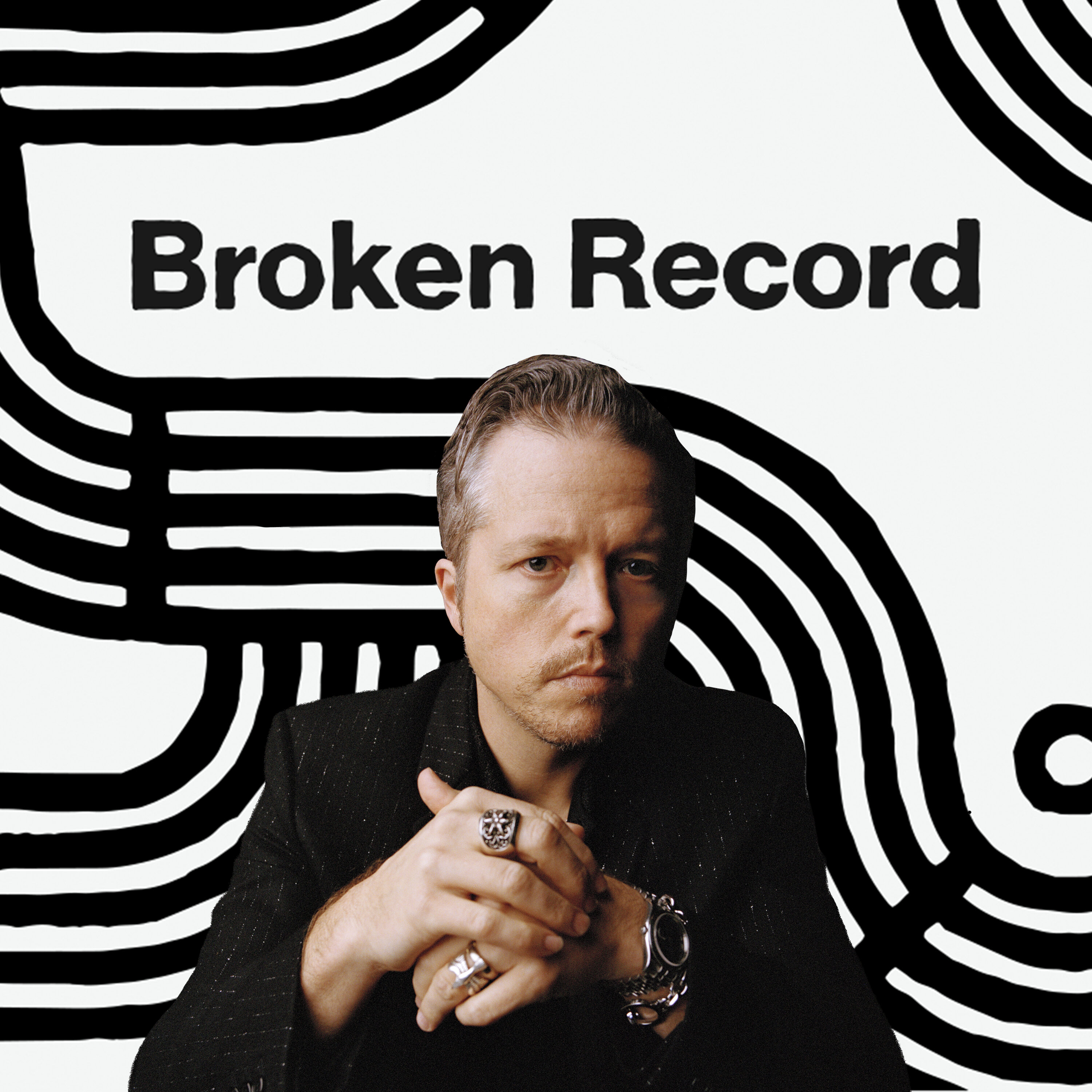
00:00:15Speaker 1: Pushkin.00:00:20Speaker 2: The last couple of years have been huge for Jason Isbel. The Alabama born singer songwriter's latest album, Weather Vans, won the Grammy for Best Americana Album this year. He also snagged a role in Martin scor says He's Killers of the Flower Moon, which is up for Best Picture at this year's Oscars. Then there was a critically acclaimed HBO documentary released last year about the making of Isabel's previous album, Reunions, that also put his personal life on display warts and all. On today's episode, I've talked to Jason Isbel about the exhilarating experience of filming Killers of the Flower Moon and how he prepared to act in scenes opposite Leonardo DiCaprio. Heads up, if you haven't seen the movie yet, one you should and two there's definitely major spoilers in our conversation, so just know that going in. Jason also contemplates how old right about the dissolution of his marriage and why he struggles to write a balls out rock song. This is broken record liner notes for the digital age. I'm justin, Mitchmill. Here's my conversation with Jason Isbel. Hey, how are you man.00:01:27Speaker 1: I'm doing well. Thanks, having a good day, how about yourself?00:01:30Speaker 2: Yeah, do it, having a good day, having a good day.00:01:32Speaker 1: Right.00:01:33Speaker 2: We met at Shangri Lock with your manager Tracy Rick, like twenty twenty.00:01:39Speaker 1: Yeah, it's been a little while. Yeah, it's been a little while. That was a good day though. Once I got out of the car, I know that takes a long time to get out there from LA.00:01:47Speaker 2: It's a long drive. And I think you had been rehearsing for with Mayvas Staples maybe or to do something with Mayvus that day.00:01:53Speaker 1: Yes, it was. It was Mayvs's eightieth birthday. And yeah, I did all three of those. I did one in La, one in Chicago, and one in New York that year.00:02:04Speaker 2: That's amazing. Yeah, that's amazing.00:02:05Speaker 1: You gotta do you know, it's Mayvas, whatever Mavis is. You just say yes and go do it. Yeah.00:02:12Speaker 2: Time is flying, man, But I'm glad we still have some legends like her around.00:02:16Speaker 1: Yeah, no doubt, So no doubt. And will I know, I know, really WILLI is still kicking man, still out doing show. He says, unbelievable. I think Willie. The thing that gives me about him is like, you know, people always say when you talk about like political stuff, that you're going to run off half of your audience. But I think unless you're Willie Nelson, you don't have an audience that is made up of every different type of person.00:02:42Speaker 2: Why do you think that, I mean, is it just because the decades he's been at it.00:02:46Speaker 1: I think it's part of what he does, you know. I think it's the way he writes songs and the way he performs. And yeah, also it's the fact that he's been doing this for nearly eight decades now, you know, because then people sort of see you as more of an institution than just a personality, and they figure that Willie's weather a whole lot of different kinds of storms.00:03:11Speaker 2: Right, Yeah, because I guess certainly early in his career he alienated the traditional country establishment early, so I guess he's gone through those various times of alienating this potential fan base in that one to rive at the place I guess not too themlike Snoop where it's kind.00:03:28Speaker 1: Of right, that's true. Yeah, that's true. Probably why they get along so well that one other reason. But yeah, I think you're right at a certain point, you know, when you're that much of a legend. You're you're just kind of like, you know, more of a piece at the fabric of cultural society rather than just an individual trying to do a job.00:03:47Speaker 2: Yeah, not to butter you up, but it seems like you're inching. Like the way your career has gone from being a really incredible guitarist, great songwriter to probably an even better songwriter and actor.00:04:02Speaker 1: And it's a lot. It's been a lot, you know, It's been really nice. The opportunities have been good ones, and I felt like I've gotten to do it at a pace for the most part, at a pace that I'm comfortable with. And I'm forty five now, so it's not like all of a sudden I'm gonna be shocked by the pitfalls of celebrity. It's just like it's not really gonna bother me much. Just boy it, you know. So I'm happy that things are going the way they are. It's been a really nice few years.00:04:34Speaker 2: Yeah, I want to talk about music before we talked about that. Because of The Flower Moon floored me. The script, the acting, the way it was assembled and your acting was like who knew.00:04:47Speaker 1: Yeah, I didn't know that was what was going to happen. I thought when I got there, I thought I could really screw this all up, you know, and they could send me home. But I do feel like at every stage people were working on that movie in a way that I think they were more invested with telling that story than they would have been in just in a people. And you could sense that from you know, craft services, to hair and make up, all the way up to Marty and his ads. It's like everybody there had a purpose that was beyond just making a good movie. And that kind of atmosphere really helped me do something that I didn't know if I could do or not. And then the other actress on set were so gracious with their time. I would just say what do I do here, you know, and they would tell me, well, here's what I would do, So you would just ask, oh yeah, yeah, straight up. And I told him that from the start, I was like, I don't have any training with this. I've never acted in anything before, done some voice over stuff and played myself in a couple of things, but never really acted. And I said, I'm just going to go ask people what to do, and then I will try my best to do that. And I think that was kind of refreshing for you know, Ellen, casting director and some of the producers and stuff, because they're like, all right, well we can work.00:06:06Speaker 2: With that coachable.00:06:07Speaker 1: Yeah, very highly, highly coachable. That was not mo for that whole process. But the four women who were playing the Osage sisters were extremely helpful to me because they would come up and say, who do we know in this room? What did we do this morning before this scene started, how was there night last night, and just kind of things that would get me in the headspace of character rather than think about the details of Oh my god, did I do my bow tie right? You know. That was super helpful and there was a high standard of expectation I think, but at the same time, everybody understood that, you know, I was not a professional actor, and they sort of helped me get to the point where I felt comfortable.00:06:52Speaker 2: Your role literally quite literally changed from the one that you were offered to the one that you wound up playing, which was Bill Smith.00:06:59Speaker 1: Yeah.00:06:59Speaker 2: So what point did you realize you were going to have a scene basically going head to head with Leonardo DiCaprio.00:07:05Speaker 1: Well, I had to read that scene as part of my audition, because at first you know, I had been offered some like smaller cameo roles, and I just went back and studied as hard as I could, got as much information on the story and from David's book the source material, and then went back and watched all of his library of Congress readings and Q and A's and found all the public record documentation on everybody after the end of the movie that they were telling, you know. And then finally I'm just on this laptop in my room and there's Leo and Marty on zoom on zoom. Yeah, because it was height of the pandemic, and you know, I'm just the hair and I kind of slipped my hair back and put on a brown shirt that looked like it could have existed a one hundred years ago. I think it was viz Vim was what I was wearing, because it was the closest, closest I had to one hundred year old Oklahoma shirt, you know, And just wound up doing that like at home on my what was it, forty first, forty second birthday thing, and yeah, so it was I was terrified. I was terrified, but I was also determined, you know, I didn't want to get that close to it and then not get it, you.00:08:19Speaker 2: Know, Yeah, having a zoom audition. That's it's you and Martin Scorsese and the cap I mean, that's that's heady.00:08:30Speaker 1: Yeah, it was. It was a lot, man, it was a lot.00:08:32Speaker 2: Does he walk you through it?00:08:33Speaker 1: Not really, you just start reading. That was that and I sort of I thought to myself, I need to just do things and not be anything. And that was what helped me more once I got on the set. You know, somehow through the process of trying to figure out what to do, I landed on the idea that self awareness was the enemy. And if you spend any time or any energy thinking does this look right? What do I look like? What do I sound like? Then that's going to take you out of the moment. So I was there thinking, don't focus on anything except the conversation that you're having with Ernest, not with Leo. It doesn't matter that it's Leo. It just it's Ernest right now and you're not Jason or Bill, and that's what's happening. And so that's what I did. I just tried to do that. I think the accent helped me a whole lot. I think the fact that you know, I had sort of adopted certain mannerisms of people that I grew up around in Alabama. You know, in my mind, Bill was kind of like a building contractor, you know, somebody who wanted to look like a big deal but necessarily wasn't, you know, the most confident person on the inside.00:09:50Speaker 2: Yeah, And I just.00:09:51Speaker 1: Played it like that. I just thought, you know, I'm this guy that my dad didn't like when I was eight years old because he was, you know, wearing a fur coat at the football field. I'm that, you know, I'm a peacock. Yeah.00:10:02Speaker 2: Bill wasn't quite trying to fit in with what was going on around, of anything going on around.00:10:06Speaker 1: Yeah. No, ultimately in.00:10:07Speaker 2: The best way. I mean more, you know, clearly had the moral high ground.00:10:11Speaker 1: Probably, but we don't know, you know, we don't know because I think that's another point that the movie makes is that you know, you're giving the evidence that you know, Ernest and Hale, these people are bad people doing bad things. But with some of the tercier characters, especially like Beal, you don't ever really know, you know, if he's there purely out of good motivations, or if he's there to do the same thing that they're doing. And I sort of started seeing this as a real gift because uncertain is a lot more interesting to me, you know, as a as an entertainer, performer, artist, whatever. I like to figure out what I'm talking about as I'm going, you know, when I'm writing a song or anything, or playing a solo or whatever. So with Bill, I kind of thought to myself, well, the audience is not going to know exactly if my motivations are pure or not, so I don't have to know that either, you know, if I deliver a shadowy character to them, then that's what they're going to take from it. And at the end of the movie, I had so many people that watch the movie saying, you know, was Bill a good guy or bad guy? Did he murder his first wife and marry her sister or did bad things just happen to him?00:11:33Speaker 2: And I don't know, I didn't even consider that as a possibility.00:11:37Speaker 1: Ordered the first wife, Yeah, I saw the same movie you did, maybe maybe not, you know, yeah, but wasting illness that didn't hold up for very long. You know, you don't hear people dying of wasting illness now. So it's kind of like, if I had to bet money on it. I would say that, yeah, Bill probably did kill his first wife and then marry her sister to keep those same landrights in his name, and that's probably why his character ernest word so at all. It's you know, I was in my mind the way I was playing it was because we're both conning me and we're just not working together. And nobody hates more than that dynamic.00:12:19Speaker 2: You know, Yes, what was it like to play this scene where you're dying?00:12:23Speaker 1: That was tough. That was tough. I tried to like get out of having to go full on, you know. And like, right before we started to shoot, I was like, so I'm in shock, right, you know. I'm talking to Adam, the assistant director, and I'm like, I'm playing this like I'm in shock. I'm not feeling all of this. I just got blown off. I don't really know what's going on. Adam was like, yeah, sure, whatever, And then it occurred to me, Adam doesn't give a fuck. Adam's trying to get everybody where they're supposed to be. He didn't care. So I get down there and the first time I'm kind of like taking it easy, and then I hear Marty over the fucking walkie talkie's like you're on a ten, you are on a tea. You're feeling every bit of this. And I was like, shit, now I have to really embarrass myself, you know. So I did about three more takes where I was just screaming my head off, and you know, luckily I was comfortable because I had played a show in Salt Lake City on Friday night, and then I flew on a private right after I got off stage to Oklahoma to rehearse Saturday morning at eight am. And then after the rehearsal, I got back on that jet and went to Red Rocks and played two nights at Red Rocks in Colorado, and then came back to Oklahoma to shoot the scene. So I had been up all weekend. I played three shows and rehearsed that scene, and then you know, it's late at night, and the makeup just took forever, so much makeup, and you can't touch your face, like I accidentally scratched my forehead. You know, everything was itching. And I did this one time and oh my god, the Swiss makeup guy was all over me. He's like, you cannot touch your face, You cannot touch your face. You know, it's like, shit, I'm just gonna have to itch, you know. And it had taken up hours to put it on. And then at one point he says, okay, so other movies the blood goes around the eye, but in Marty's movies, the blood goes in the eye. And I was like, all right, let's fucking do it, you know. So I just held my eye open and he squirted it right on the eyeball. You know, do you even know what this?00:14:24Speaker 2: Stuffs me?00:14:24Speaker 1: No, no clue and no idea, you know. And I'm laying down like in the house, you know, which was the house that we had filmed in. The house had been there for one hundred years and then they took it down. But I'm laying there. They're sticking all this stuff in me and piling more like wood on top of my body. And the shot is one of the Scorsese tracking shots, you know, where he comes in and weaves around the house until it gets to the side of my faith beautiful shot, I mean, one of his real signature moves. You know. When I found out it was that kind of shot, I was like, holy shit, I get to be the focal point of one of those shots is amazing, but shots that goes back to meanstreak exactly. Yeah, something that he started doing at the beginning of his career and perfect it early, and that's how you feel like you're in his universe, you know. But it was super humid, and it was late and summertime in Oklahoma, and between takes, if I closed my eye, it would stay shut because that fake blood would kind of coagulate a little bit, and so I couldn't move my arms because they were under all that wood and debris, and so when they would call action, I would have to sort of start the process of peeling my eye open without using my hands at all, because my eyes had to be open when the camera got to me. So I was laying there screaming while I was trying to open my eye, and I wound up not having to act necessarily as much because it was so uncomfortable that it was a little bit easier to just scream like you're in pain and pissed off and terrified.00:16:02Speaker 2: You know. Wow, Man, it was hard.00:16:05Speaker 1: It was really hard because I'd never done anything like that, and it was like, I think it took us four takes, which I was pretty happy about it didn't take all night.00:16:12Speaker 2: So I don't know that that's a predicament. Too many actors have really been in to have been blown up. I mean, you know, like sure in a action flick in the eighties, like plenty of people got blown up, but you get blown up off the shot and you're just kind of not seen again. But then to have to act like you're blown up and then you have to act, I don't know who else is really. I'm sure it's happened.00:16:32Speaker 1: Yeah, it happens, but not a lot. Yeah, not a lot, especially in a movie that's worth a shit. You know. Sure there's a lot of people in Robocough that are that way, but in a Scorsese movie, and you know, I had to really do it. But there's something about the way he handled the death scenes in that movie. He's done this in a lot of other ones too. It's very brief, and while it's really graphic and really disturbing, he doesn't wallow in it. It's not pandering. He's not using that to manipulate the audience. It's like, pop, somebody's dead, they fall down. That's the scene. I want you to have that information. I gave you that information, let's move on, you know, And there were so many things I noticed watching the movie a couple times after it was all done, you know, where he was sort of untangling the cliches and the myths of how Native people have been treated in Westerns in the past, you know, and like, if you notice, almost all the women that are being murdered in this movie, something happens with their scalp, their scalp comes off or they get it cut off in a field autopsy, which to me was like a very clear nod to you know, saying that the Natives would scalp us white people and all of those John Wayne movies and forward Westerns and everything. And then like the first scene where they're smoking the death pipe and they're smoking their way of life. You know, they're giving like basically a funeral for their way of life once they found the oil. You know, that's also kind of a reversal of the whole idea of the peace pipe. And you know what you would normally expect a Native burial ceremony to be, Like, it's like they're burying their era and their way of existing. There's so many of those beautiful things where I'm like, oh, I see what he used to do, and he's just reversing the script and showing you a little bit more of what it was really like.00:18:29Speaker 2: We're going to take a quick break and then come back with more of a conversation with Jason Isbell. We're back with more from Jason Isbell to your point about the reversals that he was sort of including in the movie. There were people were pretty upset about it, and I guess you shouldn't be surprising, but I mean, given the level of art that was displayed, I don't know how you can take umbrage with his storytelling, yeah, or what he was trying to do, even in terms of subverting the history of cinema.00:19:01Speaker 1: Right right, I can see it if you're triggered, if you have like generational trauma and watching these things happened to indigenous people is triggering to you. That makes total sense to me. You know, it's not a criticism that I would levy at the movie, because I would have no reason to. But when somebody does, I can't argue with that. I'm like, yeah, that makes sense to me. It would be really hard to see, especially the way a lot of Native cultures handle you know, ancestry and their forebears and sort of take you know, spiritually that weight on in a way that the rest of us might not I understand. But as far as from a storytelling perspective, it's hard for me to see any flaws.00:19:48Speaker 2: And I met more people who were calling the storytelling like woke.00:19:51Speaker 1: Oh yeah, I don't know about it. If you use that word that I turn off. I'm clocked out. You know, if you're using that in that way, if you're not Donald Glover and you're talking about being woke, that I am not paying attention to you anymore. That is pretty incredible to me to imagine how somebody can see something so historically accurate and handled with such respect for what actually happened. But you know, there's a reason we hadn't already know this story, and you know, it had to be intentional like that. That had to be done intentionally or we would have all learned it in the sixth grade, you know, and even people out there in Oklahoma did they didn't know this stuff had happened. And I mean, you know, with what was going on in Tulsa with black businesses in Tulsa, you know, is this all happened at the same time. So there were black folks coming from Tulsa to Bartlesville and paul Huska to get away from, you know, the massacre that was happening over there, and they were hiding out around the osage who had their own shit to deal with.00:20:54Speaker 2: And I thought that was beautiful. Some people thought that the part where King Hale sees the newsreel Forum film about the Tulsa Masaca that was ham fisted.00:21:04Speaker 1: Ham fisted by God, because that's what happened, you know, that's what happened. That's what happened. And it was right next door. And I mean Tulsa was an hour away, you know, I'd drive over to Tulsa to get dinner. And then at the same time when we got there, when we showed up on set, we were looking at photos from the era, you know, in the costume department, trying to get everything right, and they were wearing masks, you know, because the flu that started in Kansas that everybody called the Spanish flu was then it was nineteen eighteen, nineteen nineteen, and we were all standing there in their masks looking at the pictures of people wearing bandanas around their face. Like, what the fuck man one hundred years later? Exactly one hundred years later, you know. Yeah, so history clearly repeats itself if you, you know, don't pay attention to it, and sometimes if you do. But yeah, I heard a lot of people talking about how, like Molly's character, you know, why did she stay around so long? You know, why did she stay with him? Why did she try to work it out for so long? And that's one that really bothered me because I think that shows a really huge lack of understanding of her perspective, you know, and the circumstances that had led her to that point in her life and what her options were. It's like, well, maybe if she didn't have to have a legal guardian to take her own money out of the bank, she wouldn't have been so motivated to stay with this asshole, you know. But there was a lot of like real you know, people who just weren't willing to take one extra step to think, well, maybe that person's experience is a little bit different than mind.00:22:41Speaker 2: Well yeah, and also just people who you know, put themselves in a hypothetical situation they know exactly that I.00:22:47Speaker 1: Mean, yeah, armchair quarterbacks.00:22:50Speaker 2: Turns out it's complicated what we did, you know, it's not it's not simple.00:22:53Speaker 1: There are a lot of different variables that go into every choice that we made.00:22:59Speaker 2: She wore those all in her face. You could see all of the complications. What do I do? Her acting was just beautiful.00:23:06Speaker 1: She's unbelievable, man. And that last scene with two of them, where all she really wanted him to do was tell her the truth and he couldn't. Even after all that, he couldn't. You know, She's basically just saying, do you love me more than your fear? You know? And he couldn't do it. And that was that. And Yeah, Lily is really like nobody I've ever known. I mean, we stay in touch, you know. And I saw her when I played in Oklahoma a few weeks ago. And it's nuts, because, you know, there have been some people like Chris Stapleton opened for us right before his thing just went nuts, and you know, Casey Musgraves and sturge Old. There have been people that I've been around who were on a real pretty steep upward trajectory. But I've never seen it like with Lily right now, because you know, she's just taking over the world all of a sudden and I don't honestly don't think it's gonna change the person that she is. And that is like, that's rare man, that's unicorn shit right there. It just seems like she keeps me settling more into herself as all this beautiful chaos happens around her right now. And I think she's just gonna use whatever sort of recognition she gets to do cool things for other people, which is really a gift to everybody.00:24:27Speaker 2: Well, it's great. I mean, it seems like she's in. Not that I can be a judge of this. I don't act, but she seems like she's an actor in the mold of a real actor, like a de Niro or DiCaprio or a Pacino or the people who it's a craft.00:24:37Speaker 1: It's not.00:24:38Speaker 2: I'm not in to be famous. I'm not into be a movie star or celebrity. It's like, so what I do and it's just gonna get better and better.00:24:44Speaker 1: And yeah, it's serious and the work itself is the reward, you know. And like that was something that surprises me about Leo, because I mean, dude is very, very famous and he has been since he was a little kid, and that man works hard. He was out there all day every day, first call, you know, usually last to leave, you know this, ninety five degrees and we're all in tweed suits and he's out there all day and if he gets half an hour, he runs back to his trailer and takes a nap and comes back out there and it gets back to work. Because I was very impressed. You know, it can't be the money that's motivating him at this point, because you don't have enough time left to count, you know.00:25:23Speaker 2: Yeah, that's right. Well, I could talk to you about this film forever because it's so good, but we should talk about music and maybe we can listen to something real quick before all right, ok, before we make a switch? Where the fuck did this come from?00:25:46Speaker 1: Man? This is Kevin Kenny. We did this tribute to Kevin Kenny, the songwriter, one of my favorite people on earth. But the thing that Kevin does that I love so much is like he had a bad driving and crying in the eighties and the nineties and they still tour, they still do stuff. But he's a folk songwriter and he writes folk songs. But this would play big, old boneheaded rock rifts and it was a combination that's so hard to pull off, but Kevin has pulled it off so well for so long. They had a pretty big hit with Straight to Hell. That was on college radio. I'm Going Straight to Hell. That was their big one. But so many good songs where it's like, you know, the riff sounds like ac DC, but then what he's singing over the top is like would he go through? It's amazing. And when I first started touring solo, I was still with the Drive By Truckers. Some of the first solo shows that I did were with Kevin. I was opening for it. He would go to the Goodwill and buy a lamp and that would be his stage show. He would put the good wheel lamp on stage and turn it on. That would be his light show, you know. And then after a few shows, after the end of the tour, he gave me the lamp. I was so honored. It's a horribly ugly lap, Like I've never been with a woman that would allow it in the house. So there's a lamp in storage that I got from Kevin Kenny. But that was sort of a ride of passage for southern folk songwriters. Was if you got a lamp from Kevin Kenny.00:27:12Speaker 2: You know that's amazing. You sound incredible on that.00:27:16Speaker 1: Yeah, thank you. I love singing rock songs. It's hard. It's hard to write a rock song for me. I know for some people it works differently, but I do better with like these introspective, quiet, sad sort of jams. And then when it's time to write like a balls out rock song, it's just too many options. You know, I overthink it. So when I get a chance to sing one, I really enjoy it.00:27:39Speaker 2: Is it too many options in terms of the guitar playing or the songwriting lyrics.00:27:44Speaker 1: I think that's what's hard for me, because I'm not going to write a song where I'm like, what's the thin Lizzie line and jail Breaker says, hey, you good looking female, come here. Like I can't write that down on a piece of paper and not mark it out, you know, like I'd be like, man, no, I can't let that slide. But I can't think of anything that would be more perfect from Phil ly Not than that. You know, it's aft, you know, it's really tough, and correspond Scott and Brian Johnson, you know, they were really good at that kind of thing.00:28:16Speaker 2: A song like big balls.00:28:17Speaker 1: Yeah, it's so dumb, but I would not want it to be different at all, And I never get tired of it, never gets boring, thunderstruck for Christ's sakes, Like, who's gonna write that down as a songwriter and say this is my song today. But if it had been different, it would have sucked, you know. So, Yeah, that's a tough call to write a rock and roll song. It's really hard.00:28:39Speaker 2: Do you have riffs stored away somewhere?00:28:41Speaker 1: Oh?00:28:42Speaker 2: Yeah, like from failed rock and roll songs?00:28:44Speaker 1: Yeah? Tons, tons. I haven't accepted that they're failed yet. One day, you know, it'll be when I'm eighty, I'll put out the bonehead ac DC sounding record.00:28:53Speaker 2: But why can't you do like the Kevin Kenney thing of like just put like, you know, the lyrics you would normally write over the bomb bas I do.00:29:02Speaker 1: Sometimes I do two or three songs on a record. I do that. But that's tough because you know, at a certain point it becomes lipstick on a pig. You know, at a certain point you're like, this doesn't sound right. The music is now I'm going with the words that I'm hearing, And then you've made a production mistake. You know, like if I was singing the lyrics to Elephant, you know, over the music to You Shook Me all night long, like people would be pissed. People would be like, man, this is terrible. You didn't take this seriously at all. You know, you got to be careful. It's got to be congruous in some way. You know, it's got to feel like one piece of work. So to do it right, you got to just walk that line where the lyric just barely scoots into dumb enough and the riff just barely scoots into smart enough to where they kind of line up. But if you get too smart with the riff, then you're making prog rock, And if you get too dumb with the lyric, then you're just writing an ACDC song. So you've got to like really skirt that line.00:30:05Speaker 2: That's a great point. You don't want to venture into prog rock.00:30:08Speaker 1: Unless that's what you may if you're good at that. But if you dip your toe in frog rock, that's going to be really bad because they take that shit real seriously, you.00:30:17Speaker 2: Know, super serious. Yeah, tell me about Strawberry Woman. Man, that line this young man crying in the cowboy hat he's got square boots, so he for real.00:30:25Speaker 1: Yeah yeah, well, you know, there's a lot of argument over which sort of cowboy boots you should wear. My little brother wears square toed boots, and I bought him a pair of pointier toe boots for Christmas, so I'm hoping to move them over into that. But that's also kind of an inside joke about playing the pedal steel guitar because if you'll notice, the pedals are so small and they're so close together that if you don't wear the right kind of shoes, you'll accidentally hit more than one pedal at a time. So this is why the pedal steel is a true cowboy instrument, because cowboy boots are what you wear in order to be able to hit this one pedal at a time.00:31:04Speaker 2: Fascinating. So that's why the next line wouldn't last five minutes on a pedal.00:31:07Speaker 1: Steel, right because he starts hitting the rock. We're disconnected, it seems like it. But if you're a musician, you go, oh, I see what he means. You know, because a lot of steel players, if they don't wear cowboy but still play in their socks, you know, because you just got to be able to hit a very narrow pedal there and not hit the ones next to it. But also like, I like this image of you know, the naivete of having your heart broken, and a cowboy, like a real cowboy, is a very specific type of naive. Like they have chosen to spend their time around animals rather than around people, so they don't learn these worldly things. And then by the time they're old, they've become wise before they become worldly, you know, which is a really interesting combination. They make for very stubborn, very interesting old men. But when they're kids and they're still you know, in the shape that you have to be to break horses and things like that, they're basically frozen as twelve or thirteen year olds for a good long while. Because they just don't spend time around human people.00:32:11Speaker 2: They become wise before they become worldly.00:32:13Speaker 1: Yeah, So their wisdom comes from nature, it comes from work, and it comes from like finding things out on their own. They don't get a whole lot of advice cowboys. They find things out the hard way.00:32:25Speaker 2: Yeah. Cowboys never cease to be fertile songwriting territory.00:32:29Speaker 1: Yeah, yeah, for Willie Nelson or for Phil Lahy, not you know, they all write about it. Yeah. Yeah, it's just a really different type of person. And it doesn't necessarily have to be an American cowboy. You know, there's a bunch of them in Manitoba and Alberta and Spain. You know, they got smaller horses in Spain. But it's the same basic principle. But yeah, it's interesting because it's like you're making this conscious decision to not participate in modern civilization. So there's a naivete, that kind of an innocence about it that's really beautiful. But at the same time, on the rare occasion that they wander into town, hilarity. And so you know, did your brother take that line? By the way, Oh, he got a kick out of it. He got to be a kick out of it. But he is definitely more cowboy like he's a real red tack, you know. Like somebody asked me the other day, like, what would you do in the apocalypse? I find my little brother. You know, we would go out in the woods and come back fatter than we were when we left, you know, because he could actually just wander off and survive just fine. He's one of the only people I know that could really do that.00:33:34Speaker 2: Man, you gotta take him on tour with you, then, I know, see, that's that's what you want to find with you.00:33:39Speaker 1: You take him on tour and then you bruin it because that is not where he wants to be. You don't want to be in a tour bus in New York City. You know, he wants to be out in the woods somewhere.00:33:49Speaker 2: A cowboy on a tour bus in New York City would be uh.00:33:52Speaker 1: Yeah, I mean it's happened. I guess that happened a lot early on. You know, George Strait had to get everywhere somehow. But I don't think he would enjoy it as much as I would.00:34:01Speaker 2: Speaking of George straight Man, I was thinking about him recently. His music is phenomenal. Yeah, but he feels like, I don't know, like I guess he feels now oddly like a part of the fabric of country now more than like an artist. He's like, he really is like an elder of the music. Not I don't mean to put it, no, I know what you mean way, or an insulting way.00:34:23Speaker 1: You know, he's a legend, and you know he got it from not really writing his own songs. Like he was an interpreter of song, which kind of like to me is the part of country music that relates to what like Sinatra was doing or some of the old jazz singers you know, who weren't composers. And I think that there can be an art in writing songs. There can be art in delivering songs interpreting songs as well, you know, And I think you don't have to be a songwriter to be an artist. But if you call yourself a songwriter, or if you're not a great singer, then you know you're going to have to write some of your own songs or step things up a little bit. But George Strait had such a wonderful quality to his voice and delivery of those songs. You know, sometimes it's not something you can learn. Sometimes it's just about where your voice sits and the resonance of your voice, especially in country music or you know, show tunes. I mean, it's like Sinatra would just go in and start singing. You know, you better have the tape on it because you might get one take. Because he knew that what people wanted was the quality of his voice. And I think it was that way with George straight Now you get to somebody like George Jones, and then that's a whole different thing, because you know, George Jones had that sort of country quality to his voice, but he could control it in a way that was just unbelievable. Every once in a while on Instagram or TikTok or something, a clip will come up with him just sitting around drinking a beer and singing a song and it sounds like the best possible performance anybody I know could pull off on a stage at a football stadium, and it's just him sitting in a chair, smoking, drinking, you know, not even paying attention to what he's doing. George Jones really had a beautiful gift, But it doesn't take all that, you know. I think if you're good at delivering somebody else's words in a way that makes people believe it, and you have that natural quality to your voice that sits in just the right place, which is what George Strait had, I think you can get yourself into the fabric of country music that way.00:36:28Speaker 2: Is it weird now for your songs to sort of start becoming part of like the songbook?00:36:32Speaker 1: It's all weird. Everything is so fucking weird to me, but I like hearing my songs out in the wild, even if other people are singing them. Now. Stuff I happened with Morgan that, you know, I wasn't a fan of after that, but at the time when he covered the song, I thought, man, this is great. Bunch of young people are going to hear the song, and it gave me some reassurance that when you're being specific with these songs, that's when people really have a close connection to them because they think he knew a secret about me. How did this song writer know this? It's very specific, very detailed feeling that I was having. I thought I was alone, And to me, that's the best thing that art can do is when somebody says I thought I was alone until I heard this. You know, now I know there's at least one other person out there that feels exactly the same way. I think. To do that, you have to, you know, try not to be too vague. You can't really write with a target in my mind, like a specific audience that you're trying to nail. You have to just make yourself the target, you know, and write the kind of music that speaks to a very detailed account of your own experience, and then you just wait. You just do your best job with it, and you wait for somebody a thousand miles away to pop up and say that exact same thing happened to me. And that's a really beautiful thing because then you're reminded of what we have in common rather than our differences.00:38:04Speaker 2: We're pausing for one last quick break and then we'll be back with Jason Isbell. Here's the rest of my conversation with Jason Isbel your ability to not only to write so personally, but I do know it seems like you have a commitment to living your life openly and honestly. You know, like similar to the way like Howard Stern. You know, let's say, like it seems to have no qualms putting any of his follies on display for the world. It seems like you have had no qualms doing that. And it's helpful for one, I think, to other people, because just like a song that's so personal to you can be heard by somebody else and they can sense that they're not alone, feel that they're not alone, feel seen, feel heard by something that relates only to you, but now is not only personal, but it's like being a married person myself that went through the pandemic. Watching your HBO film was like Jesus fucking Christ, we weren't the only ones.00:39:09Speaker 1: Right, And that was tough, man. That was tough, you know. And there are poems because I sit back and think, why do I have to do this shit again? You know why? I got to tell everybody what's going on once again. But with the bigger risks come the bigger rewards as far as that goes, And you know, there's a certain level of accountability, Like if I know that my thing is to be honest with people about how I live my life, that I'm going to try really hard to live my life the right way in a way that I could be proud of, you know. But also I sort of see it as most of the risks to me are negligible. You know, I'm a person from a protected class, and I have been blessed with the encouragement and the gifts that I need to climb out of trailer Park, Alabama and get to a place where I'm really comfortable. And in that way, I kind of feel like I'm one of the people with the armor on, you know what I'm saying. And those people should go to the front of the line because they have the armor on. So I can say something that somebody else would be afraid to say, you know, and then they can resonate with that. They're going to get more out of it because it's not necessarily possible for them to say, Hey, hands up, here's what's going wrong with my life, or here are the mistakes that I've made, or hear the things that have been difficult for me. They might not be able to start that conversation, but they might be able to chime in if you start that conversation.00:40:34Speaker 2: Was there anyone like that for you growing up?00:40:36Speaker 1: That's a good question, you know. I felt like my grandfather was pretty good about being open and honest with everybody. And when I was a kid, he was a Pentecostal preacher in Alabama, and he didn't know how to write until he started preaching. My grandmother taught him how to write so he could write down his sermons and give them in charge. And you know, he'd grown up share proper and basically got to the point where, you know, he could go to the grocery store and get what he wanted, and so the worst thing he could do would be send him to the grocery store, because he would come back with it all kinds of like old fashioned candy, you know. So when I was a kid, I was like, I want to go to the grocery store with him, you know, because it's all the stuff that he never had when he was a kid, couldn't afford when he was a kid. But he was a very honest person, and I noticed that, like when there was a deal, when he was buying a car or trading a guitar, or trading a horse or an animal or something, he usually got beat Almost all the time. He would he would get beat in those deals, and at one point I thought, Man, this sucks. My granddad always gets beaten, they say. But then after a while, I thought, you know what that actually is what you want to be. You want to be the guy that is honest. Because when he would go in, he would say, well, this horse has had too much sweet feed and it's foundered, so it's not worth much. But somebody else he was trading with, would, you know, doctor things up and make it look really, you know. And by the end of his life I sort of figured out he didn't have any regrets really, and I thought that's because he been honest. You don't look back on your deathbed and say, I wish I'd gotten more for that truck, But you might look back and say, I feel bad for cheating so many people out of something.00:42:19Speaker 2: Yeah, because you don't know what you're cheating the other person out of.00:42:22Speaker 1: Yeah, you don't know how they came by their money. You don't know how they got that horse. You don't know, and you're not interested in it because you're just trying to get yours. And I was lucky enough to grow up around people who took that stuff seriously and realized that what might seem like a loss at the time, it was a wind in the long run by being more honest.00:42:43Speaker 2: Yeah, that's interesting, man. At what point did you realize that that was actually an asset of your grandfather's.00:42:50Speaker 1: In my late teens, probably when he was getting on in years and didn't have a whole lot of time left, I thought, because I did that with all my grandparents really when they were close to the end of their life. I just kind of found myself, not on purpose, but just sort of looking back and thinking, well, how would I feel if I was in the spot what I have enemies or regrets or people that I wanted to settle up with or apologize too. And he really didn't. He wasn't afraid. He was a religious man, faithful man, and he thought, well, this is gonna be a relief. I'm gonna go on to somewhere beautiful. He didn't have anybody to apologize to. He asked my dad like at the end, he's like, you need any money before I go? You need any money? My dad was like, no, I got my own family and my own job, and I'm all right. But that's what he was thinking about still, was taking care of other people. And I think that's a pretty good way to go out.00:43:47Speaker 2: It's a great way to go out. It seems like, you know, he knew the meaning of life.00:43:51Speaker 1: I think so. I think that's true if you can leave with the tab all settled up. But it seems like that'll do.00:43:57Speaker 2: Do you think you need to live your life as honest as you do? To be as honest in yourself? Like in other words, can you I'm thinking about like a Dylan maybe who Well, maybe he's a bad example because I don't know how honest he is in his left.00:44:11Speaker 1: No, yeah, he's not. I mean, I think he's honest in everything, but I don't think he's truthful. I think he's honestly lying about ninety percent of the time. But that's what he's committed himself to. And it's like, if I wanted to be Bob Dylon, that's what I would do too. But I don't want to be Bob Deling. I love Bob Dylon, but that's not what I want to be. I want to be me, you know, And my path, the way that I have found is most rewarding for me and gives me an individual voice, is to reveal these things in an honest way. Also, I kind of like somewhere along the line, I committed myself to this idea of unraveling the bullshit and the mystery of all of it, this idea that you know, you can be a rock and roll star and not behave like a terrible man, and you can be a songwriter and not have to mythologize everything. I think part of that came from like when I was fourteen thirteen fourteen, a pearl jam hit and I thought, man, these dudes are dressed like me, they look like me, and they're not trying to dress it up. They just walk on stage and they play these songs and it's amazing. It's just as entertaining as David Bowie. To me at the time, not that there's more value in one way or the other, but it just made more sense for me as a person to just continue being who I was and then just take that on stage and keep doing it.00:45:35Speaker 2: Yeah, you announced you're separating also from Amanda. How are you going to navigate that publicly and your songwriting life?00:45:43Speaker 1: And I don't know, what do you think I should do? I don't know help what do I do? Yeah? I think I'm just going to try to be honest in all the ways that I legally can. I mean, there's certain things that we've agreed not to talk about, but I think I can still manage to tell people who I am and what the truth is from my perspective. You know. It's one of those things when not everything that Ann's was a face. I think we did a lot of really beautiful things together, and I have really fond memories of all of that, and I don't regret any of it, you know, even the hard stuff. It's like when I got into recovery, you know, I wound up after a few years looking back and thinking, I don't regret even the worst parts of that, because it all kind of goes into making me who I am, you know. And the time will come when the wounds aren't still fresh, The time will come when I'm able to take all this and put it into my work in a way that is honest and true but makes sense for me. I'm going to be patient, and in the meantime, I got plenty of other shit to write about. That's one thing I think a lot of songwriters miss is like the inspiration. You don't need it, and you don't need it. It's everywhere. If you can't just look out your window and find twenty things to write a song about, then you know you're not a real serious songwriter yet because it's all over the place.00:47:08Speaker 2: Meaning you don't need to write about the thing that feels necessarily most pressing in your right life.00:47:14Speaker 1: Exactly, yeah, exactly. You might not be ready for that right now. You might need to get there through other means, you know, work yourself up to it. There might be steps, and then somewhere along the way you could discover the beauty of allegory. I'm sure I have been writing about the things that are going on right now in my life for quite a while. You know, I'm currently writing about those things, but on the page, it might look like I'm writing about a butterfly or a car accident. That's the beauty of allegory. You don't have to know what you're talking about all the time. You know, you don't have to know what the overarching idea. Your brain will work on that level if you just focus on details and rhyme and making something beautiful happen eventually by the end of it. Very often I look down and go, oh, I just wrote a song about my marriage, or I just wrote a song about my child. This whole time, I thought I was writing about football or something. You know.00:48:10Speaker 2: Yeah, yeah, yeah, fascinating. I forgot to ask, you wrote whether Van's on set of Killsing the fire Moon, right?00:48:18Speaker 1: Yeah? Almost all of it? Yeah, A good chunk of that record I wrote on the set.00:48:24Speaker 2: Did the character you were playing influence your point of view as a songwriter at that moment or was it easy to keep that separate.00:48:32Speaker 1: I don't know that that bill influenced that, but I definitely know that the work that I was doing influenced it because, on one hand, the most obvious way was just watching Marty conduct the whole orchestra, and the fact that he was open to hearing ideas from other people. And when I went out there, I thought, either it's going to be he's going to be a micromanager and he's going to be in on every decision, or he's not going to be there that much. I did not expect him to have that kind of perfect mix of those things where he was active. He was on set every day, working out in the heat. Even at eighty years old. He would make the l's with his fingers and look at the shot and say, I want it to look like this, you know, amazing, amazing, crazy. It's like a movie about a movie about a movie. But you know, there was one night where it was just me and the scene, and so it was Marty and then the ad and all the crew, and I had the pistols. When they throw the dog on my front step, the dead dog right before I get blown up and I walk out. It's part of that montage. And I walk out the front door and I see the dog and I've got my pistol in my hand, and you know, I thought, man, I gotta do this. So first I said, I think we need to load this pistol because you know, the weight's going to need to look right, and if they see it from the end of the barrel for any reason, you're gonna want to see slugs and you know. So the prop master did the thing where they had taken each shellcasing, they had pried the lead out and then they had swabbed the inside out, dropped one bebe inside the shell, and then pressed the lead back in. Then they would shake it. Every time they would load one end, they would shake it by my ear and I would have to verbally confirm I hear the BB and then they would put it into the pistol and then shake it and put it into the pistol and just to make sure. So that's like when that accidental shooting happened on the rust set. I was like, something's way off here because I could not have shot anybody if I had tried. But after that, I thought, you know, this is a single action pistol. And be being from Alabama, I used to have a pistol very similar to the one that I was holding in a movie, and I thought these Yankees don't know about single action. I might have to say something, you know. And if I walk out on my step, I see the dog, I'm not sure that it's dead yet. I don't know if the people are still in the yard. I'm cocking the pistol because with a single action, if you don't cock it, you can't fire it. That's why in the old Westerns they would hold the trigger down and fan the hammer like this. Oh yeah, because it's the hammer that does the firing. Like with double action, when you start to pull the trigger, the pressure causes the hammer to come back and then go forward, but with single action, you have to pull the hammer back first. The trigger all that does is release it, so the hammer goes forward. So that means every time you fire, you've got to cock and fire, cock and fire. And so I just tapped Marty on the shoulder and I was like, I think I would cock the pistol. And Marty said, you think you'd cock it? I was like yeah, and I explained why. He said, all right, let's shoot it. So they shot, and it took another three or four hours. They shot the scene of me cocking the pistol, and then when I saw the movie. It was in the movie, it was the most satisfying click. But taking away from that, you know, I went in to produce Weather Veins that I'd written mostly out there, and I thought, man, there's a way to do this where you can retain your vision and still hear what everybody around you has to say, and you can let them enjoy participating and making the project a better thing, and still this is your movie or this is your record, because nobody had any question by the end of it who had direct did that movie? That was really sort of inspiring for me.00:52:12Speaker 2: You know, that's an incredible thing. Yeah, because making music can be such a singular.00:52:18Speaker 1: Load, like yeah, lonely.00:52:20Speaker 2: Solitary thing, and making a film, by necessity, is involved so many more people beyond the director, writer or the tour you know.00:52:29Speaker 1: There are hundreds of people, hundreds of people on that set. But you know, he was listening to people and it made for a better movie and it was still Marty's movie. So that was a good thing to see.00:52:40Speaker 2: Was your band grateful?00:52:41Speaker 1: Oh yeah, yeah, we had a great time. We had a blast, you know, because it was like, you know, I would say, why don't you go mess with this? For a while, see what you come up with and band. There's nothing that a musician likes to hear more than that when you're in the studio. Hell yeah, I'll go there, turn some knobs and push some buttons.00:52:57Speaker 2: I'm glad they had a great arc and I was so sad to see him in the movie. I wanted to be on tour reunions and just mowing the lawn.00:53:03Speaker 1: I get out there, I know, I don't know.00:53:05Speaker 2: It's fulfilling studio time. And he's out there with you now.00:53:09Speaker 1: Knock on wood. The quarantine is behind us, I hope.00:53:12Speaker 2: So yeah, yeah, same, yeah. Hey man, Well thanks for taking the time to chat.00:53:17Speaker 1: Man.00:53:17Speaker 2: It's like I wish I could thank you. I want to do a damn documentary on that, so.00:53:20Speaker 1: Good documentary on it. Yeah yeah, well, thank you. Good to talk to you, Jessin. I appreciate your time.00:53:28Speaker 2: Thanks to Jason Isbel for the chat. We'll be rooting for Killers of the Flower Moon at the Oscars. You can hear all of our favorite Isabel songs throughout his career on a playlist at Broken record podcast dot com. Subscribe to our YouTube channel at YouTube dot com slash Broken Record Podcast where you can find all of our new episodes. You can follow us on Twitter at broken Record. Broken Record is produced and edited by Leah Rose, with marketing help from Eric Sandler and Jordan McMillan. Our engineer is Ben Tollinay. Broken Record is a production of Pushkin Industries. If you love this show and others from Pushkin, consider subscribing to Pushkin Plus. Pushkin Plus is a podcast description that offers bonus content and ad free listening for four ninety nine a month. Look for Pushkin Plus on Apple Podcasts, subscriptions, and if you like this show, please remember to share, rate, and review us on your podcast app. Our theme music's by Kenny Beats. I'm justin Richmond.