Introducing Charlie’s Place: A Cultural Haven That Brought People Together Through Music

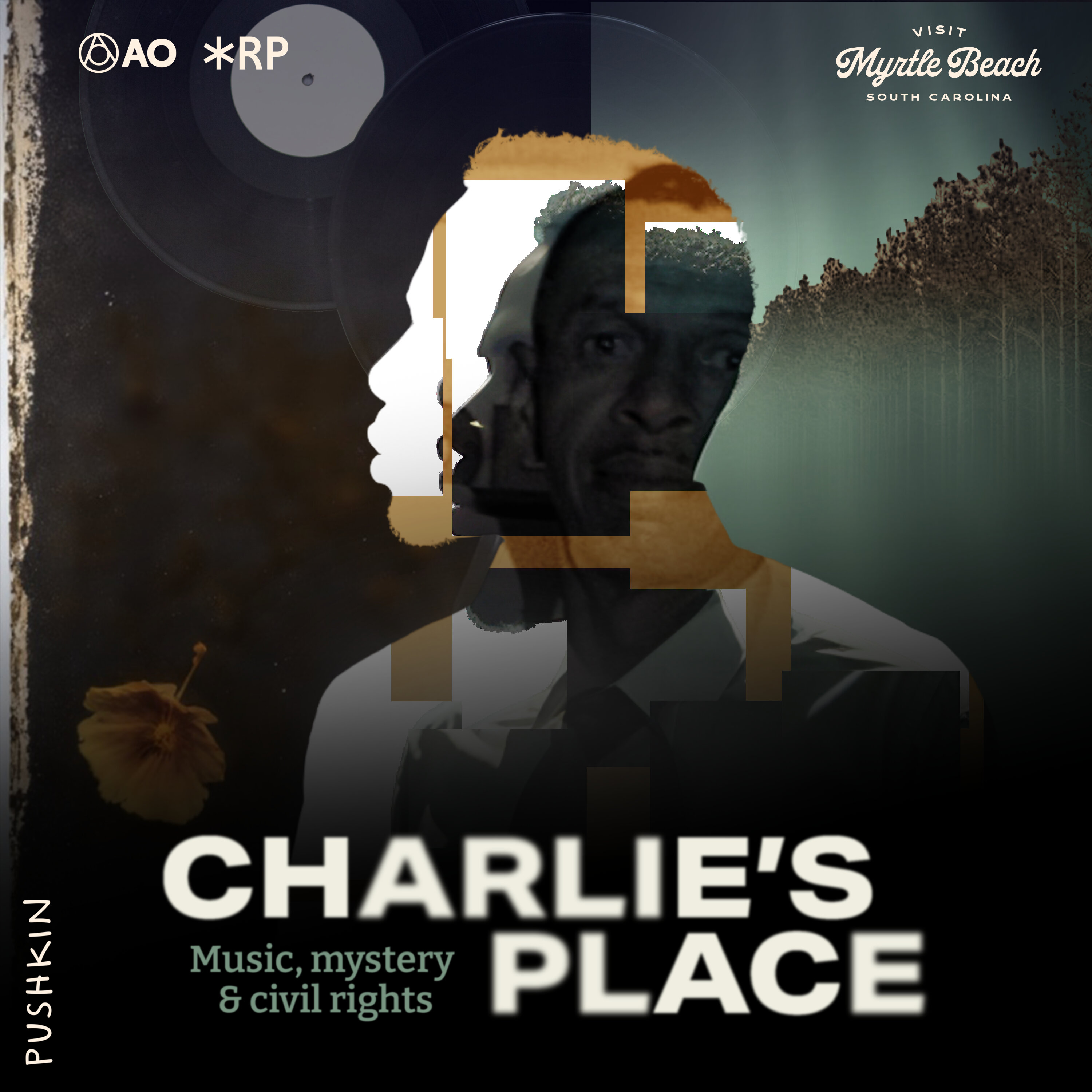


Here’s a preview from a new podcast, Charlie’s Place. How did a Black man in 1940s Jim Crow South open a club where Black and white people danced together? Charlie’s Place was revolutionary, and that meant it was dangerous. Host Rhym Guissé explores the unbelievable true story of Charlie Fitzgerald, a mysterious Black businessman whose nightclub became an unlikely site of integration in 1940s Myrtle Beach. Charlie broke down racial barriers through the power of music and dance, hosting some of the greatest musicians of our time: Little Richard, Count Basie, Ray Charles, Duke Ellington, and many more. But who was Charlie? How did he rise to power? And what price did he pay for achieving the impossible—an integrated club in the Jim Crow South? This is a story of joy and passion that erupted into violence and changed a community forever.
Listen to Charlie’s Place wherever you get your podcasts. Binge the entire season early and ad-free by subscribing to Pushkin+. Sign up on the Charlie's Place show page on Apple Podcasts or at pushkin.fm/plus.
See omnystudio.com/listener for privacy information.
Speaker 1: Pushkin, Hey, it's justin. Today, we're bringing you an episode of Charlie's Place, a new podcast that tells a story of an iconic music venue that united a community divided by racial segregation. In the nineteen fifties. Charlie's Place was the spot for black musicians in Myrtle Beach, South Carolina. Legends like Ray Charles, Little Richard and Dizzy Gillespie performed there. Charlie's Place allowed integrated dancing, breaking the rules at a time when in fractions like that could come at a high cost. It was a cultural hub that defied the racial barriers of the Jim Crow South. Charlie's Place explores how the club founded by Charlie Fitzgerald managed to exist when it did, and who the mysterious man behind the club really was. Enjoy this preview. If you like what you hear, you can find more Charlie's Place wherever you listen to podcasts. And if you want the full story now, you can binge Charlie's Place ad free with the Pushkin Plus subscription up on the Charlie's Place Apple show page or at pushkin dot fm slash plus.
00:01:16
Speaker 2: A quick warning some of the language and imagery used to describe this period of time, maybe upsetting. Please take care while listening.
00:01:29
Speaker 3: I was interviewing a gentleman about his participation in student demonstrations in nineteen sixty. He stopped me and he said, you know, I'm from South Carolina. Have you ever heard of Charlie Fitzgerald? He mentioned specifically knowing Charlie Fitzgerald, knowing his wife, and then relating to me what he remembered happening in nineteen fifty. Charlie Fitzgerald. It was a notorious That's a good adjective for him. He was constantly having me makeovers, always reinventing himself. He was a roving entrepreneur who was beloved and respected by some and despised and ridiculed by others. Trader, turncoat, folk hero, defiant. The atmosphere is thick with this vehement rhetoric of white supremacy. Here was a black man who thumbed his nose at laws and customs, and that is why he's a threat. What happened to Charlie Fitzgerald was almost I guess it would be an immitt till moment. It would be a Pearl Harbor moment. People remembered vividly. An ordinary person would say, the hell with it, I'm going to the Promised Land, I'm going elsewhere. But Charlie was not ordinary.
00:03:41
Speaker 2: I came to Myrtle Beach, South Carolina in search of a folk hero, a man who died in nineteen fifty five, a man who's almost forgotten, but whose name is still in the air. He was the mythic proprietor of a mythic space, a place that sounded like a mirage, but it did exist. On a Saturday night in nineteen forty in the seaside town of Myrtle Beach, South Carolina, the smell of salty air and perfume a night out on the town. Everyone is filing into a nightclub. The sound of Count Basie's orchestra carries into the night. Jim Crow laws are in full effect. It would still be decades before black and white people were allowed to even eat together in a restaurant. But something surprising is happening inside the club, something the laws were designed to prevent. Throughout the South, black and white people dance together. They partner, press against each other, swing and sway to the music. It doesn't feel dangerous it feels joyous. Nothing else seems to matter. The lines on the outside don't exist. This was Charlie's place. It doesn't seem real, but a few people still remember. I heard a phrase on one of my visits to Myrtle Beach about Charlie's.
00:05:24
Speaker 4: Place, segregation in the day, integration that night.
00:05:30
Speaker 2: Segregation by day, integration by night. The people who lived it even have a hard time explaining it how this night club existed when it did for as long as it did from nineteen thirty seven to nineteen sixty six. But they say it had everything to do with Charlie Fitzgerald. Things just went that way with Charlie. He blurred the lines. The rules just didn't seem to apply to him, and when I asked why, it just led to more questions.
00:06:01
Speaker 4: Charlie was big question mark. A lot of people knew him but didn't really know him.
00:06:06
Speaker 5: He always had an aura about him, and people you say he was a serious man. I took that to mean that he could be a dangerous man.
00:06:18
Speaker 6: He carried two pistols. He had a forty five on one side, on the thirty eight on the other side, and he carried those guns with him all the.
00:06:26
Speaker 7: Time, the rumor was spread that Charlie was running a prostitution.
00:06:32
Speaker 4: Ringing over there.
00:06:35
Speaker 2: Charlie was a source of constant speculation and misinformation. I got to work separating rumors from the facts. Now, as far as businesses go, what we learned about Charlie was he had gambling in the back, yes, yes, and some other businesses.
00:06:57
Speaker 4: Yeah, but I can't disclosed there.
00:07:00
Speaker 2: When I came to Myrtle Beach, these questions were sometimes met with a guarded attitude. There was something here people were compelled to I was on a mission to find out what that was. I'm Mariam Giese and this is Charlie's place. Episode one was Spring Pines. I had to prepare to go back to the South, a place I've rarely been since I was a girl in Louisiana. I usually wear my hair natural bud for the trip to Myrtle Beach, I straightened it. My parents and I first moved to the South when I was twelve years old. We came here from the Ivory Coast. I didn't speak English, and I still remember what my teacher told me while I learned the language. She said, listen, things we do not talk about sex, religion, politics, do not touch those subjects that never made sense to me as a kid. What else is there to talk about that stuck with me? And this story, it turns out, would touch on all the things that you don't talk about in polite conversation in the South. Coaxing out the truth would be delicate. I had one shot to get this right, and I didn't have a lot of time because most of the people who really knew the story were well into their eighties. There weren't a lot of people left, but there was Miss Pat. But Miss Pat, I was curious, do you still stay in contact with everybody you grew up with that's still you know?
00:08:58
Speaker 7: You do? Yeah? The most them, if I can find them, might take con take rid them. Yeah, there's so many. I'm younger than me.
00:09:06
Speaker 5: Did.
00:09:07
Speaker 7: Yeah, I get nervous. I'm not ready to go yet. Yeah.
00:09:17
Speaker 2: Miss Pat has a wheelchair ramp leading into her house because she has very limited mobility. She had a heart attack recently and can't leave her home. She says most everyone who worked dry cleaners and Myrtle Beach in the fifties like she did, ended up with either cancer or heart trouble because of the cleaning fluids they used. Each time I walked up to her house, she'd spot me first and call out through the screen door from her lazy boy, hey baby, And each time it was good to be reminded of the warmth in her voice.
00:09:48
Speaker 7: Charlie Fitzhcher was a good man to the whole neighborhood, the town, everywhere. And you either respect him or you hate him. And see I respect him because see he didn't mind putting something on you. Next with mister Charlie was to us, you respect him.
00:10:09
Speaker 2: Not many folks really knew them, and I would come to believe that maybe that was intentional on Charlie's part. But Miss Pat knew Charlie, and everyone that sent me her way described her as a mess. I knew exactly what that meant. A mess in the South is someone who talks a lot.
00:10:27
Speaker 7: Now you stop me, because I don't know when the hoosh.
00:10:31
Speaker 2: A mess was exactly what I needed.
00:10:34
Speaker 7: Mmm, Now, what do you want to talk about? How I was raised on Myrtle Beach on Carver Street.
00:10:42
Speaker 2: Miss Patt helped me understand the setting around Charlie's Club in the nineteen forties before integration. Carver Street was the center of black life in Myrtle Beach. There were shops, restaurants, clubs, juke choints, all owned by black people for black people.
00:10:59
Speaker 7: Crver Street was the only street that we could sell anything oop up a business. It wasn't allowed on Oak Street at all.
00:11:09
Speaker 2: Back then, there were boundaries around where black people lived and where they were allowed to move freely. In Myrtle Beach. This neighborhood was known as the Hill, made up of several streets including Carver Set, a few blocks back from the ocean. Miss Pat was born on the Hill in nineteen forty three. By the time she was two years old, her mother and two sisters died from tuberculosis. She was raised by her grandmother. They survived by knowing where to find cracks in the system. They existed between broken rules and abandoned materials. During this time of extreme segregation. Miss Pat's grandmother was resourceful. Black people weren't allowed to buy coal in town, so they collected fragments that fell off the coal train. They dug tar out of the street before it dried to patch their roof. They worked at night to avoid the police.
00:12:02
Speaker 5: I sure In died the.
00:12:04
Speaker 2: First gastow of her family owned was fished out of the ocean after Hurricane Hazel.
00:12:08
Speaker 7: Andrew it out for three weeks before we could put it together.
00:12:12
Speaker 2: They kept pigs, grew their own fruits and vegetables, sold corn, liquor, and did laundry for Taurus.
00:12:18
Speaker 7: Oh god, there's some nasty girls come to Murtle Beach. Oh my god. I wouldn't touch the clothes. I said, no, no, I don't want the germs clean your clothes. The girls, the mens was all right, but them, girl, Oh my god.
00:12:35
Speaker 2: She shared her vivid memories with me, revealing them as kind of a mental map. Geographically, her world was small, but the details she shared conveyed something much bigger. It helped me understand what the community on the Hill was made of and what it took for Miss Pat to survive, To live out an entire life here. It was almost freedom as long as she stayed in the lines. Outside the hill, Miss Pat was barely allowed to exist because outside the hill, she couldn't eat inside restaurants. Outside the hill, you couldn't wear shorts on the boardwalk along the ocean. Outside the hill, she couldn't step barefoot on the sand, let alone touch the water.
00:13:18
Speaker 7: Maryle Beech was a good place. If you stay in your place. I put it like that. You couldn't go into the ocean. We couldn't go in none of the water.
00:13:30
Speaker 2: Until the late nineteen sixties, it was forbidden for black people to swim in the ocean in Myrtle.
00:13:35
Speaker 7: Beach because they said the dirt would come off and go in the water. That's why we couldn't. We could taminate the water. But other than that, it was all right. I love family. My family was the biggest thing that ever happened to me.
00:14:15
Speaker 2: When Miss pat wasn't helping her grandmother, she was hanging out at her grandfather's barbershop.
00:14:20
Speaker 7: My granddaddy was something you didn't nobody ever had a granddaddy like mine. And he will call me to cut his hair and say if I cut him, to go shoot me and shoot. And showed me how to shoot the gun, the pistol and the shotgun. How were you fifteen?
00:14:40
Speaker 2: Everything happened in her grandfather's yard behind the barbershop. It's where she learned how to shoot a gun, how to shave her granddad's head with a street razor without cutting him, and where she learned how to dance and dance.
00:14:54
Speaker 7: Oh my god, we dance in the yard. We didn't worry about what went on outside, but we dance all we want. I love the dance more than I need anything else. Didn't drink, didn't hang out, I dance. Anybody want to dance already?
00:15:13
Speaker 2: When Ms Pat says we didn't worry about what went on on the outside, she means outside of the hill. That world didn't matter. What mattered was who she was on the hill, and on the hill, Miss Pat was known as one of the best dancers in Myrtle Beach. Dance was everything, and right on Carver, in the center of all the action was the best place to dance. Charlie Fitzgerald's nightclub Charlie's Place. The insiders know that before it was Charlie's Place, everyone knew it as Whispering Pines. They called it that because of a legend. Once Billy Holliday and Count Basie came and played two nights in a row. The locals say Billy Holliday's voice lingered like a whisper through those pine trees.
00:16:05
Speaker 7: And that's why they called her Wristpurhne Pines, cause when blow those trees was Oh my god, it was beautiful.
00:16:14
Speaker 2: Whispering Pines was run by a married couple, two black entrepreneurs, Charlie and Sarah Fitzgerald. According to the people who lived on the hill, Charlie and Sarah were forces of nature, two outsiders who came to town in nineteen thirty seven. When I asked people, where did Charlie come from? I thought it was a simple question with a simple answer.
00:16:36
Speaker 4: So I'm saying you from Georgia. I think jonav was from New York GHW.
00:16:39
Speaker 1: So I think he came from Jamaica, simplace.
00:16:41
Speaker 5: And he came from north Nobody knew exactly where. Nobody talked about where he came from.
00:16:46
Speaker 2: So yeah, not so simple. But wherever Sarah and Charlie came from, they ended up in Myrtle Beach. When they opened their club in nineteen thirty seven, it drew entertainers and visitors from all over the country. On Saturday night, carswood line, Carver Street women emerged in evening gowns and men in white tuxes. The crowd felt enormous, and they were all there for the music, and not just any music. It was the best music.
00:17:21
Speaker 7: Oh yes, God, Ruth Brown, James Brown Girl. I see so many people up in there.
00:17:28
Speaker 4: Richard. You haven't heard of him?
00:17:29
Speaker 7: Oh my god. They don't talk about Wilson Pickett. They don't talk about him. They were right there from the country.
00:17:39
Speaker 4: Roy Hamilton, Johnny is my favorite, the Drift to Fat.
00:17:43
Speaker 8: Diamino's, Johnny Taylor, Rossi Clarke, Curtis Mayfield, the Impressions.
00:17:49
Speaker 4: Marvin Gable was here, Marbin Ga used to come to there the barb shop get his haircut.
00:17:56
Speaker 8: The last concert that I tend to hear with Otis Redding. We were having such a good time that the floor was really caving in.
00:18:04
Speaker 7: It was crowded, people from all over South Carolinas at and Jofish Please.
00:18:10
Speaker 2: Charlie's Place for Whispering Pines was a stop on the Chiplin Circuit. Safe venues for black entertainers in the Jim Crow South. These clubs and Duke Joints launched artists careers, and Charlie's Place contributed to that. I wanted to know what it felt like to be inside that history. Most people I interviewed, their memories are of a specific era at Charlie's Place. Maybe if you remember the late forties and a lot like Miss Pat. Remember the fifties and sixties. I would have loved to be a fly on the wall.
00:18:40
Speaker 7: It was like stepping in another world. And they had these black and white squares on the floor. You had never seen nothing like that. All you see the wood flow, I mean, it was so pretty and so different.
00:18:55
Speaker 2: Charlie and Sarah kept tabs on the kids and led them in to dance while the acts warmed up. As long as you were out of there by nine point thirty. Miss Pat took advantage of that. She put on her dress and went to see all the artists who came through.
00:19:08
Speaker 7: You couldn't win, no pants, no slacks at all, and my older sister went ouver the slacks on it. He marched or red bag home. That's right, and you had to be out of there by nine thirty. He just was strict when it come down to children. He didn't allow children to be and grown people company.
00:19:24
Speaker 2: The more time I spent in Myrtle Beach, the more people turned up with something to share about Charlie's place. The club isn't there anymore, but I heard many stories about what it looked like inside. I'd sketch as I listened and tried to capture it in as much detail as possible, piece together from people's distant memories. Roddy Brown's family ran Club Bamboo next door to Charlie's place. He says, Charlie's place was always packed.
00:19:49
Speaker 4: Okay, you got it. A huge building here, and you could see maybe fifteen hundred people in here. Fifteen hundred, that's a thousand, five hundred.
00:20:01
Speaker 2: See, we have no pictures.
00:20:03
Speaker 4: You need to get some untady pictures because there got to be some pictures of Charlie's.
00:20:07
Speaker 2: There aren't any other than that interior picture.
00:20:10
Speaker 4: No.
00:20:12
Speaker 2: What I can gather is when you stepped inside, there was a big bar in front, and towards the back there were a set of folding tables and chairs. They were in clear view of the front door. Miss Pat says she always found her dad there with his girlfriends. If his wife walked in the door, he'd have time to spot her and move the girlfriend out of you.
00:20:31
Speaker 7: I didn't care what he did, as long as he'd bothered me. I didn't like my daddy too good.
00:20:37
Speaker 2: Further behind the tables was Charlie's back room. As a kid, you'd be in trouble if Charlie caught you trying to sneak in there.
00:20:44
Speaker 7: But you're never allowed to go in that back room, well, missus Charlie would let you know. I'll get you tomorrow if I don't get you today.
00:20:53
Speaker 2: Miss pat says that didn't stop kids trying to get back there to rob him. That's where the money was in the back room where the grown ups gambled. On the right side was a patio. That's where the musicians performed. It was sort of a makeshift enclosure made from old signs and a big green canvas curtain, so you couldn't watch the music from outside.
00:21:14
Speaker 4: I used to listen in my bed. I used to slip out of my bed to slip round the Charlie's and see the performance. That was twelve years old.
00:21:23
Speaker 2: Roddy and his friends climbed the trees outside to try to catch a glimpse of the performers. Of course, Charlie, the man of mystery, didn't make it easy for him.
00:21:32
Speaker 4: He had curtains, big military curtains to block off the view day. I don't know where Charlie got those curtains. Those things were so big you'd take a whole day to put them up.
00:21:46
Speaker 2: Everything happened to Charlie's place. The dancing, the music, yes, but it was also a place where people came to blow off steam, and that could look like a lot of things. Roddy remembers being there in the daytime and seeing something that would stick with him. In broad daylight in Charlie's club, Roddy saw a man get shot right in front of him, he said, a guy he knew named Nathan pulled the trigger. As Roddy puts it, he witnessed an almost killing.
00:22:17
Speaker 4: Yeah, yeah, yeah, Trevor is looking at it, almost to killing all kinds. We were so terrified you. So this was during the day, these guys getting drunk, getting ready for the dance and starting some foolishness. Charlie came up to the board. Nathan put that good up better cussin and all that. But it was a time, he said, we were listening. We are living in an age. It's totally different from this atmosphere, totally cardinal in the same city.
00:22:50
Speaker 2: But Charlie was prepared for anything. He always carried two pistols. Everyone knew they were there under his coat. If the hell was one big family, Charlie and Sarah were the matriarch and patriarch to many who lived there. There were Miss Pat's neighbors and they looked out for her and missus.
00:23:12
Speaker 7: Charlie is a good looking man. He is real told and his wife was come of halfway short, and she had real curly hair. But she was so pretty and she would make hot dog the best hot dog he ever had on her beach.
00:23:25
Speaker 2: The Fitzgerald's also owned a motel next to the club. The building bent around in a horseshoe. In the center of the horseshoe was a house where the FitzGeralds lived. They ran a supper club out of it and sometimes invited the kids in for hot dogs and candy.
00:23:39
Speaker 7: Charlie was a good man.
00:23:41
Speaker 2: Charlie made sure Miss pat got her share.
00:23:44
Speaker 7: What he said, he meant it, and he said, Patricia, I was real skinny. He said, if you don't get in here and get the candy on the candy. If you go and you too little, let him take all the candy. And Miss Syriah will give me my hot dog first so I can gain weight. My other sister was big and I was little, not a little skinny. But there was a nice people.
00:24:05
Speaker 2: They were kind, but they were more than that. They had stabbed. Everyone learned to maintain.
00:24:11
Speaker 7: And Miss Sarah was a sweetheart. She was a pretty goodman, but she was very strict. You didn't go in her house any kind of way.
00:24:18
Speaker 2: You come through the side, Miss Pat says. The FitzGeralds were big on education. Before there was an integrated school in Myrtle Beach, the kids on the hill had to ride a bus to Conway, fourteen miles away, and they never knew when it was going to come, and when it did it got stuck on a hill heading out of town. The bus would start to roll backwards and the kids would have to jump out.
00:24:42
Speaker 7: And push it over every time.
00:24:46
Speaker 2: But Sarah made sure Miss Pat got to school.
00:24:49
Speaker 7: And we missed that school bus. She a fuss all the way to come away fourteen miles. Why did you miss the school bus or the bus too early? Or was you lazy? You couldn't get up? What was the problem? Oh, my god, as long as you wasn't involved in at doing wrong, she would take it to school and wouldn't see nothing. But if it's your fault you.
00:25:12
Speaker 6: Didn't get up on time?
00:25:13
Speaker 7: Oh why did she fust the whole time, uh huh, and takes your breakfast.
00:25:18
Speaker 2: That sounds brutal, but also very loving.
00:25:21
Speaker 7: It is she was.
00:25:23
Speaker 2: And since the kids on the hill couldn't go to the beach, Miss pat says, the Fitzgerald's put a kiddie pool in the back. But another neighbor, Leroy Brunson, mainly recalls the great lengths Miss Sarah took to keep the kids out of it. So she wasn't always sweet, well.
00:25:38
Speaker 6: Missus Fitzgerald was. She had a temple. She didn't care.
00:25:48
Speaker 2: For kids the way Leroy tells it. Instead of a guard dog, the Fitzgerald's had a garden monkey, a spider monkey. Leroy remembers Miss Sarah kept the monkey near the pool, tied to a tree.
00:26:00
Speaker 6: She took the monkey and she put along a line on him so he could reach all. I went to the front of the pool, so my little niece and my son. He told her that don't go around the pool that monkey about then excuse me, She went anyway. She tried to run, and the monkey caught on their shirt and he was holding them. Man. So Miss Sarah came out there and she got the monkey off and told us I told you kids and don't come run yet, said get off and around here. Don't come run here anymore.
00:26:46
Speaker 2: That's so funny. I didn't hear anything about a monkey.
00:26:49
Speaker 6: And she had out front used to be her little palm trees with the little fruits on them, the little orange type fruits on the path of the tree. And the kids used to come in and pick them and they would eat them because they were really sweet. And she went out there and she chopped them down.
00:27:06
Speaker 2: It's hard to tell if she was a contradiction all along or changed over the years, but Miss Sarah lived into her nineties, so people in town have much more vivid memories of her. Either way, people remember Sarah and Charlie's kindness.
00:27:21
Speaker 7: He would allow the children to come over for Christmas. He give everybody child who could walk, who could crawl, who could dance, who could do anything. He'd give everybody child a gift.
00:27:31
Speaker 6: He get all the kids on Christmas come out there, and he would have a bucket with dollar bills. I mean maybe I don't back there, probably hundred dollars and all the kids line up and he would throw them up in the air, boll We we would tussle for that money.
00:27:49
Speaker 2: It always seemed like the FitzGeralds had cash to spare and spread around to neighbors, and Leroy said something about that money when I first met him that stuck in the back of my mind. He told me Charlie went to New York a lot.
00:28:02
Speaker 6: He'd go to New York about once a month.
00:28:05
Speaker 4: He would go to New York.
00:28:06
Speaker 6: And we thought maybe Charlie was, you know, with the big boys. You know, I'm not saying that he was.
00:28:16
Speaker 2: You know, others would have mentioned potential ties to organized crime to Charlie did spend time in New York, but that's about all I could verify. It was hard to find anything concrete about Charlie. I could only find two photographs of him. People that knew him told me he didn't like to get his picture taken. In fact, there's a book about Myrtle Beach with a picture of a man labeled Charlie Fitzgerald, and it's clearly not him. For such an important figure, someone larger than life, who shaped the attitudes and culture in Myrtle Beach and beyond, this is bizarre and honestly kind of shocking. Charlie is someone everyone knew. How does that knowledge get lost? Has it been lost. It's clear Charlie was going to be hard to pin down. Despite Miss Sarah's help with getting to school, Miss Pat dropped out when she was sixteen. She says it was because she was mad at her dad. He spent the money she'd saved for her graduation cap and gown, so she just quit and started working full time, and there weren't many jobs. Miss Padd didn't like cooking slapping the hogs, but she loved working at the dry cleaners the best, even though it paid the worst.
00:29:34
Speaker 7: I love the sea clothes of nice and fresh, and now pails creased down to the mags. I love that.
00:29:42
Speaker 2: And for the most part, she liked taking care of the kids of white families, even though it brought her into the lions Den. There was a family in town she babysat for often in the summer, she took the little girl to the beach. Miss Pat was careful to never let the waves lap at her feet and get her socks wet. If she came back with wet socks, the parents would know she had touched that water and she could get fired. But Miss Pad says there were a nice family, nice enough. One day while babysitting, she saw something laid out on a bed. It looked like a white dress. Then she saw it had a hood. She knew exactly what it was.
00:30:25
Speaker 7: And you had them in Di Kleana's all the time because I work in Ni Kleanas all the time. You just go ahead and do it.
00:30:31
Speaker 2: You washed an iron the white KKK. So although her friends and family had a good life on the hill, they knew that the klu kutz Klan was everywhere, white clad ghosts that threatened all their lives. And here it was again in the house of the White family. She babysat for a KKK robe. As she looked at the clan uniform laid out on the bed, the little girl she was watching churned and threatened her.
00:31:04
Speaker 9: She said, you see this, I said, yes, She said, if you don't do what I'll tell you to do, my daddy put this back on and he'll do you like it didn't missus Charlie and I just.
00:31:20
Speaker 7: Let it go.
00:31:46
Speaker 2: Coming up on Charlie's place.
00:31:48
Speaker 7: It is a feeling that says you belong.
00:31:52
Speaker 2: This is home to slop.
00:31:54
Speaker 6: And then there was the bump.
00:31:57
Speaker 7: Yeah, I need to shake.
00:31:58
Speaker 1: That's the main thing.
00:32:03
Speaker 4: Charlie was an example of power.
00:32:06
Speaker 6: No one told him what to do, what he wanted to do. That's what he did.
00:32:11
Speaker 7: When you come in here and stir up trove, go beat trouble, Will you thank somebody making move money than you make. They're gonna stir up trouble.
00:32:19
Speaker 4: We would intreat and in the woods on call the street, waiting on them to come.
00:32:36
Speaker 2: Charlie's Place is a production of Atlas Obscura and Rococo Punch in partnership with Pushkin Industries and presented by Visit Myrtle Beach. It's written and produced by Emily Foreman. Our story editor is Erica Lance. Our team at Atlas Obscura is Doug Baldinger, Chris Naka, Johanna Mayer, Linda Lobel, and Emily Yates. You can follow us on Instagram at Atlas Obscura. Please head to Charlie's placeshow dot com for more information about the locations mentioned in the series and how you can visit yourself. I mean gise, Thanks for listening.
00:33:28
Speaker 1: That was a preview of Charlie's Place. Find the show wherever you listen to podcasts.
00:33:33
Speaker 5: M

