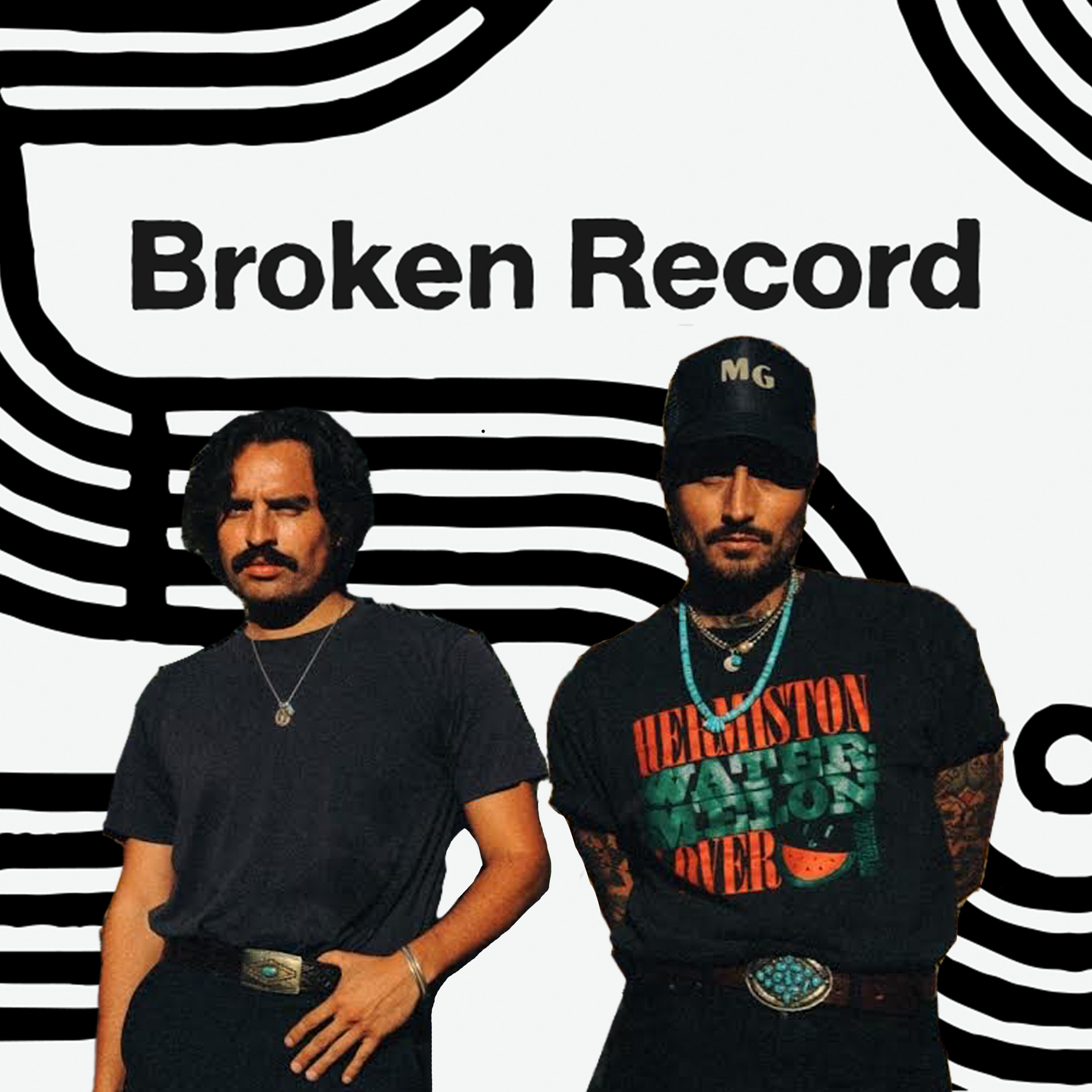
00:00:15Speaker 1: Pushkin. Hermano Scutierrez may be an instrumental guitar band, but they have zero interest in shredding. Instead, the Swiss Ecuadorian brothers Estevan and Alejandro Gutierrez take a minimalist approach to playing. They create hypnotic, sweeping compositions inspired by classical Latin guitar, and also film scores from old spaghetti westerns. In twenty twenty two, after releasing three albums independently, Hermano Scutier is signed to Easy I Sound, a label owned and operated by Dan Aarbach, guitarist and vocalist of The Black Keys. Last October, they released the album Albueno e el Malo to critical acclaim. The album features the song trace Hermanos, where Arbach joins the brothers on guitar. Today we'll hear Estevan and Alijandro played that song, along with a couple other songs, live from our Bach studio in Nashville, Tennessee. I also talked to Hermano scutierres about how their brotherly spats sometimes fuel their plane. Then they recall a recent performance in Mexico City where they played during a volcanic eruption and how Dan Aarbach knew he wanted to meet with Hermano scutierres after seeing them play for just fifteen seconds. This is broken record liner notes for the digital age. I'm justin Mitchman. Before we jump into my interview with Hermano Scutierrez, let's hear them play Thunderbird live from Easy I Sound Studio in Nashville at a day and at every county and again at fun about the so beautiful listening to you guys, thank you so much. Yeah, those are sweet guitars. Those are beautiful, thank you man, you man. Those both gretches. I have a gretch, yes, sir, I have a silver Tone fourteen forty six. Yeah. Have you guys always played those guitars? No, not always. I played a Fender Mexican Series when I started straight. Yeah, yeah, that's the guitar I started with. And I played a Gibson I think it was a three thirty nine or thirty five, like the small one and so cool. I want to gratch. I really want to gratch. That's like my dream. Yeah, these are cool. I mean I should just do it. I don't know why I don't just yeah, but sometimes I like to have these dreams that are kind of it's not so hard, bro go buy what did you guys program? The the play us on your Spotify. There's a few artists playlists on there. You won't call the Sounds of the World that's us, that's from Yeah we did that. Yeah, I was I was loving. I was loving the Volume. I was loving all of them. The Volume ones in particular, always the first ones, they're the best. Obviously, being part Ecuadorian, part Swiss growing up in Europe, did you have access to a lot of music from Latin America? Man, not really. I think when we could listen to this music was every time. Then we went to Ecuador to visit the family, you know, and so our grandfather was the one who showed us like a lot of stuff. I remember that. I have a little tape of Julio Haramo that he bought me on the corner of our town and I still have it, and it's like it's like my first memory of having like the access to Latin Latin music. I remember I bought one of those copies in Ecuador, you know, the black copies, not the original ones from Fania, and they had those compilations from Fanya with a lot of salsa. That was the first time, but not until I was maybe fifteen sixteen years old. So I got back to Switzerland, I was listening to those kind of tracks, and I think they were not so available here in Switzerland. I was lucky enough to grow up in La where you know, there's like lots of Spanish music, but you know, it's always just whatever it's programmed on the radio, you know, and so like there is a radio station though, called k Jazz. I was at a long beach and they used to have a show called Jazz on the Latin side on like on Saturday night. So we would always whenever, you know, we'd always jam like late and then turn on like around midnight or one am Jazz on the Latin side, and it would be like Ray Burretto and like all these rare like they called them, like rare groove. At the time, it sounded like the coolest thing. It sounded inaccessible, you know, like it was like, I don't know what this music is. I don't really speak Spanish. I don't know what they're saying. It sounds like rock music and like jazz, but it's coming from like you know, Ecuador or Peru, and it just was like, it felt like it was a whole new world of things to discover and that's amazing. It was such a cool thing to have as a music fan. I like the name rare grooves. That's cool. Yeah, that's that's what I don't know why I was called that at the time, but at the time I think it was a lot of DJs would spend it and call it rare groups. Cool man, What were you guys listening to when you first started playing guitar? What were your guitar inspirations? Who were your guitar heroes. I started to play the guitar when I was in second grade and I started to play the Argentinian folk music. There's a special type of it's called milonga and this is like this fingerpicking style and I fell in love with that music. And I just played this kind of style because my teacher also just showed me that. Yeah, so that was my first access to guitar music. Was classical guitar? You had a classical Yeah, I still have the one that I got it from my father, and that's the one when I learned to play the guitar. Yeah. Wow, how did you fall in love with that. What made you? I think you could like hear the the sadness and like the melancholy melan Coleah, I say, melancho melankly in the sounds, even without somebody to sing it, you know. And that impressed me because I was also able to put my feelings into the way how I played the guitar, because that was my teacher told me, Hey, you can play a tone different. You can play just to play it, but you can also put feelings into it. And that's what I really learned. And yeah, I'm grateful for that that I learned. That was that in Switzerland, Yes, where you took lessons, Yes, yes, were you in the music before you discovered Milano it's called Milonga. Yeah. I think that was actually the first thing that I really learned of music. Yeah, because I didn't know. Our father didn't listen to rock music or all the cool stuff. He listened to classical orchestra music Sunday mornings. I remember that. I think I got to know the cool sound when I was like around fifteen to twenty years old. So then I I discovered, oh, there's way more cool music, you know, like rock music and all this stuff. Were you into the music your dad played, like the classical stuff. Not really, it was like, okay, it's Sunday morning, you know, but it was like also kind of interesting to know that there exists music that is just instrumental and you can feel all the passion and all the feelings in that music. What's the age difference between you two. It's eight years older that guy so was Alejandro was a Sunday morning classical sessions. Was that so happening when you were young to Yeah, it was just about going to tell you it was my brother Esteban who inspired me to pick up the guitar because I grew up with this sound every time he was playing the guitar. It was just a big inspiration. So when he left for one period, like for one year he went to Ecuador, there was just an absence of that kind of music in our place. So what I did. I picked the guitar and I was like, I want to learn how to play the guitar, and I watched a lot of YouTube tutorial and back in that time it was the time of Jack Johnson sing a songwriter, the surf tool, you know, and I really tried to learn those courts but I never like to play covers, so I really tried to have my own style from the beginning. And one guy which inspired me a lot was Gone Silence, like the Swedish argentineing guy with his guitar and the first record that he played like Crosses, that's such a good track and such a good album. And there's the other side, which is more coming from film and cinema, like the movies from Alejandrinati to the Mexican director with the collaboration with Gustavo Santolaya, which you know, so I think it was just a mix of a lot of things happening around that time. Gustavo's yeah, he's the king all around. Yeah, even like on the last series with the Last of Us, you know, like he's he's so present and gives so much depth to movies and it's incredible. Yeah, he's a bit of a magine, it seems like to me. Of course, So you didn't have guitar lessons, you kind of lead it on your own. Ever, it's just on my own. And the funny thing is when he told me, hey, I'm learning the guitar, because I knew that he kind of started to play a bit when before I left, But then he like told me, hey, I learned in that year to play the guitar. And I was like, okay, cool, he can play chords a bit. And then I came back. Yeah, I was so impressed, you know, like fingerpicking, and also he came up with stuff that I was like wow, and so yeah, I'm really grateful that he started to do that. And then the first time that we played together was just magical, you know, which just connected and we felt like, hey, that's it's it's really cool what we have. Before he even started playing guitar as the Bomb, were you playing music with other people? No? Not really no No. I was always like playing by myself sometimes jamming with friends, you know, but it I also never liked to play covers. It felt always like I don't know. And then when we started to play, he came up and he said, hey, why don't you visit me. I have like an idea on the guitar, bring your guitar. Then he showed me a song and he said, hey, something is missing. Why don't you play over it? And I came up with a melody and he was like, that's exactly what I was missing. And that's like how we write songs, you know, it's always one of us comes up with an idea and then something is missing and the other fills it up without telling or asking the other one. Hey what do you need and you know, like a melody or something. It's really we have a gift and they were very grateful for that. Aleander, do you remember what that idea was that you played on that first idea? Yeah, it was the first track Elmar. That was the first song we ever written together. Do you do you mind playing some of the playing some of the chords, Yeah, of course, without Askteban first, just maybe just like just the chords as he brought it to them. Yeah, that's it. And actually we played it the other way, so he had the melody and I had the courts. But now with the set and trying to blid like a certain dynamic, we changed it so I applied the melody now. But that was the first melody ever from their mannos, So cool. Was there ever a thought early on, like in those initial times you guys have those first ideas to put words or well do you guys singers and you feel like luckily, no, no, no, no, never we never thought about it, and since we're huge fans of just soundtracks and film scores, and within our limitations, we were like, no, it's it's not going to work with vocals. And to be honest, it was not like a conceptional thing like Okay, if we don't have vocals, we have like the potential to maybe travel more, you know, around the world because there's no boundaries because no vocals, like everyone can understand. So yeah, it was just very clear from the beginning on it just got to be instrumental. Were you guys growing up before music, did you guys get along very well? Or were you guys like combatitive as siblings? No, what you guys, we always had a close connection. I think we're battling now more than when we did when we grew up. You know. Yeah, yeah, maybe is keeping us together right now. It's really that way. Yeah. But then I'm the oldest, he's the youngest. We're in total four and we always had this connection, you know, and then when he got older, we kind of start to have like the same interest, you know, like in fashion, jewelry. We love vintage stuff, and yeah, it's everything that we produce by ourselves. Was always so natural and so much fun, you know, to do artwork songs like all these merge that we produce by ourselves. It was always very cool and it still is. Yeah, are you guys designing it by yourselves too? Yeah, we did. For the first four records, we did all the artwork and stuff. At what point after those ideas started percolating, did you guys realize you wanted to record stuff. It was actually that night because we were jamming. We had like three four songs of that that song that we played you, and so his roommate came into the in our room and he was like, wow, that's amazing from which band is that? And we were like, that's our music. And then he was the one that said, hey, you guys should record, play concerts and then put out an LP and whatever. And we were like, all right, yeah, let's do it. Where were your first shows? We played in Zurich. We started to play in Zurich like small venues, and then we decided to record our first album, which is called Ochuanius because of our age difference in Berlin. We went to a friend, we did a road trip. We packed all our amps and stuff, and we didn't know what we're going to do. You know, we just wanted to record and then yeah, it happened and it got how do you say words around? Like friends were passing our music, and we never had like the the idea of yeah, getting more known by our music. We always like to do it and to have it as a memory for ourselves because it's beautiful what we do. And I never heard my brother talking. So I feel good, man, I feel good. Yeah. Usually he's the shy guy and he's like, yeah, I'm in the back, But I don't know. There's a connection between you. It's just between you and me, you know, all right, because otherwise when there's some people, I don't like to talk that much. And I'll feel good right now. So, yeah, were you guys exploring other like career paths or anything? Like? What were you guys up to at the time beside music? Was there any man? I was working in the coffee place and I did those flat whites with the swans and the hearts and all that shit. But I'm glad I left that place and just this whole career and now we're into art and it's much more meaningful and important to us. What's the music scene in Zurich, like what's going on over there? To be honest, I never I was never really into the music scene in Zurich. But there are some venues which they're popular to invite like international artists. But the local scene I would live. I would tell you a naymore like even tell you it looks like it's hard, it's hard to capture. Maybe there's not a big music scene. That's why it's not so present. It's not like here in Nashville, where you know, like you come to the airport and you see like Gibson guitars and they look like they're in a museum. That's so unique. You don't have that culture in Zurich, not at all. What's it like being in a place like Tennessee just as a musician just kind of soaking that stuff in because so much of the music did you guys play, at least to my ear, it sounds like coming a lot of it coming from America as whether it's Latin America or you know, the States of course. What's it like to soak in the music culture around Tennessee? I mean, it's an honor to be here. You know, it's incredible. You can feel that music is like number one in the city and there's so much history. Also, yeah, it's like coming home. We have friends here, we have our studio here, and yeah, it's a lot of fun. You know, it's really cool being so international as you guys are. How do you guys organize your home lives? Like where you guys live in? I mean, we always go back to Switzerland because our family is there, so it's like the safe heaven, the safe place because everything is just working there so nasty, so you can just lay back and like rest a little bit. But we're traveling a lot in this year and even the last year it's been a lobbying on the road, so it's a mixture between being in hotels and being back with the family. But it's nice. I really enjoy it. It's also very inspiring to be on the road and meet new people and connect with different parts of the world. We have to take a quick break and then we'll come back with more from Hermano's Gutiers. We're back with more from Hermano's Gutiers. Do you guys mind playing course, So let's start with the Windard Malone. That was the first track that we actually recorded in the studio and it was here in this room, so it feels special to be back. All right, man, we're ready anything AKA the Sometime Sime way. Such such a great energy than oh man, thank you so much. How did you guys get connected with Dan Ourbrock in the studio out there? Our management, which is also based in Los Angeles, knows the management of Easy I Sound, so the management of Easy tom Osborne. He showed Dan on a weekly meeting. Before the meeting started, actually he said, hey, Dan, check out these these two brothers. And so Dan watch it on the laptop, like ten fifteen seconds of our first video, and then he closed the laptop and said, yeah, let's have a call with the boys. So that's it. It's pretty pretty short, pretty cool. And then we had a call for like fifteen twenty minutes with Dan and and Alan the sound engineer, and it was clear that we wanted to do something together and it felt like that's it. I get why it only took fifteen seconds, man, because like the sound is pretty immediate, like it's it's like it doesn't take very long to realize what you're listening to. It's like, oh, this is a sound you know, I think it's harder for us to realize what's happening. Yeah, sometimes we're on stage and we're like, what are we doing here? You know, like are people gonna get it? And it's just yeah, apparently it's happening. It's working. You know. If you're on stage with the band and like a lead vocalist or something like that, there's stuff you can kind of hide behind where it's just you two on stage and you're seated with your guitars and you're playing, like you can't kind of hide behind a ton of theatrics or behind other people, and it's like, you guys are kind of really exposed as I'm thinking about it. Yeah, And funny thing is also every time still feels like the first time that we've kind of played in his room, you know, so it's always like we're in front of a lot of people, but it still feels like it's just the two of us playing, And it's really cool because sometimes I forget about it, you know, and it just feels good to play with my brother. How much you guys just in your day to day lives trying to come up with ideas to bring to one another always, man, I think it's part of my daily routine just to pick up the guitar. And sometimes it's just like even like ten minutes, maybe five minutes. Maybe it's an hour, maybe it's two hours. But I try to do to play the guitar every day and just like create something. Yeah, it always depends because sometimes I play like every day, but sometimes I also feel like that my body and my mind kind of need to take like a distance from the guitar because it's also very personal, you know. I try to put my feelings into songs, you know, and sometimes it's just I don't know, I'm not in the mood or I'm not I don't feel any inspiration, and then I kind of give it the space, you know, to be like, hey, it's okay not to touch the guitar. And then it's always cool because when I kind of play again, I always come up with something small, something new, or something different, and so I think sometimes the space between you and the instrument is important. Yeah, that's true. Are you able to realize what inspires you or are you unaware? Is it just sort of coming through and you don't even know what it is? It's activated the creative response. Well, I don't think if something happens, I'm not sure this is going to be a song, but for sure it's going to be there and it's going to be an inspiration. I think traveling and meeting people it's a big inspiration, or even like touring. We went to Texas two months ago, and I remember I came back and it was just such a great tour that I felt so inspired just because I loved what we were doing. So I said, like, Okay, if we're going to put out more music, I'm going to be able to do more of that kind of stuff, you know, stuff which is fun. So that was interesting. But I think in general, it's life, life, which is an inspiration to come up with new ideas. So even the fights that we're having as brothers, it's always like we're growing on this path together. Sometimes we're more apart from each other, but it always brings us back. So I think like this relationship is maybe the main source for the inspiration they were having. Yeah, it's an interesting point about the live show inspiring things like because you guys just started in your bedrooms and because you guys are like just so familiar with one another, it's so comfortable in another I mean, you know, there must be such a huge difference between this is a song we came up with in our room by ourselves, and all of a sudden, now it's the same song we're playing on stage, and again it's just the two of us. But adding that live element really obviously must feel like oh shit, like we're actually no, we're showing like we need to we need to like move an audience some sort of way. Like do you guys think about crafting a record in a way that, oh, we could go out and do this live or is it? No? No, No, it's never like, hey, we need to be able to play that live. No. No, it's always like something that we that we feed at that moment. You know, it's like I have this idea, let's check this out. And of course if it, I mean, almost all songs that we wrote we are able to play in life. That's also something cool because we sound the same on the record or almost the same as in life and it's just the two of us. You know. Yeah, we're not trying to overproduce it, because that would not be us. We were always just very restricted to two instruments, which are a representation of two souls, and I think we just want to keep it that way. It doesn't sound like you guys are trying to necessarily impress anyone with fancy guitar playing, like with tricks. You know, I don't even know how to do that. I can't shread like I mean, today we were at the do you know the Carter Vintage Guitar store that's like one of the coolest stars here in Nashville, and we were checking out some guitars and there were some guys there like, you know, like, I'm like, I could never do that. We could never do that. But it's like what we do is like honest and real. Yeah, the thing that that what we feel. So that's I don't know, it's kind of a mystery as well. Do you guys have any desire to be able to do that or not so much? No, not really, No, it's okay. I just want to sound authentic, authentic and different. I think that's the main inspiration, and maybe that's always the point that we inspire to. We're not trying to copy someone. It's really about that. Yeah, that's the coolest thing, man, because it gets so easy, especially when you're a guitar player and like, you know, like just to copy other people or like to get caught up and showing off. To be able to actually articulate who you are as an individual on the instrument is like it's a last art. It feels like, you know, have you guys played with the vocalists before, like a third person? Has anyone ever tried to in certain things? I mean you guys, yeah. I mean the next song that we're gonna play is called Dressermanos because we wrote that song with Dan. You know, that was also kind of a cool story. We were at the studio, we almost recorded the song, and then he came and he said, hey, he's hearing like a melody on on on a part of the song, and he sang, us, just what he he heard, you know, and we tried to play his melody, but we couldn't play it like he wanted to play them. And we just handed him over the guitar and said, why don't you play over it? And he just did a one taker and and that's then when we just call it that. The song is called Dressermanos because we also kind of became friends with him. We have same interests and it was so cool, you know, you. At the beginning, it was oow, it's Dan Ourbuck and it's still Dan our Buck. We had we have the biggest respect for him, but we kind of became friends and we kind of got to know him as a as a person and he's beautiful, he's so nice and he's he has a good and yeah, that's that's cool that we have like this in common. Did you guys play live together or did he play over? Yeah, I mean he came to shows. Sometimes We tell him, hey, do you want to come to a show in Los Angeles or we might be there, and he said, yeah, I want to go with you, and then he flies in and we have an after party and it's always cool. Yeah, you guys play together so much. Is that energy feel a little different when you have someone else come in to play? Yeah? Oh yeah. Playing with Dan on stage was really and even he said that like because he's aware of that tide space that we're having, Like he doesn't want to come and like destroy that energy. But with him and even with Adrian Casana from the Black Pumas, he's sometimes also like joining the stage with us, it always felt like an enrichment. It's not like what is that guy doing here, So we're aware, aware of that, and we're just trying to play with the right people and it's one more time. It's like it's the feet that were trusting and we know, Okay, this is gonna be a fit. How do you guys know Adrian? We know Adrian. It's a funny story. I met him in Los Angeles in a store in mister Freedom and I saw him and we recognized each other and I was like, you're He was like you're just like. Since then we kept in touch and then we saw each other in when was the second time, I think in Austin. First time we played together in Austin at the Onton's Anton's and he came with us to play on stage. And since then we just we're in touch. And he's such a cool guy as well. And he even flew out to We had a big concert in Mexico City last month and he flew in and we had time to hang out together. And yeah, he's another brother and and it's really cool. We have a cool connection with him as well. He's a great d he knows so much about music. He's an amazing guitar player. He's so talented. Yeah, how was a Mexico City show? What was that like? It was a chaotic experience in so many ways because we had a show in an open air space. It was a beautiful venue. I remember when we told our friend that was living there, we're going to have a show made in Mexico and he was like, it's the rain season. What are you guys doing? You know, Like we're like, I don't know. So we had soundcheck and everything was prepared, and I got back to the hotel room, I had a shower, I was ready, like ready, ready, and I heard the first thunder and I was like, no, bro, you're kidding. So I was like, no, this is really happening. So we went back and it started rating so much so we had to cancel the show and a lot of people were annoyed and like how can you do that, Like we just came for this show. And then on Saturday there was another nature thing happening. A big volcano which is close to Mexico City started to be active, so a lot of people who tried to go back I had to stay again in Mexico City. They were stuck. So they were able to come through the show, which we postponed to Sunday and there was an indoor place and in the end it was an amazing show with Dan and Adrian Cassana on the stage. But we got back home and we're so tired in the active volcano in the back. Things very easy, but it's funny. I like to talk about it. It's it's a nice experience. We have to pause for another quick break and then we'll come back with more from Harmono Scutierres. Before we jump back into my conversation with Hermano Scutierres, let's hear them play their song Trace Harmano's Live over the ha ha ha mm hm m le h m hm hm. Wow, man, I get lost. Listen to you guys, Thank you man. How long have you been playing a lap steel? Four years now? And uh it happened on the on the journey that we had through California and death welly and we did like a commercial for this Swiss airline and it was such a cool thing. And then we got back to l A and there's a store in Santa Monica, Santa Monica True to Music, and we got oh yeah, we we visited that store and I just saw this lapstill on the wall hanging. So I bought it. It was actually my brother said, yeah, get it, man, you should should just buy it. And it just opened a new dimension for us because it's like more western now and it has this desert sound. So yeah, I'm happy that I'm able to play that instrument. How long did it take for you to feel comfortable playing? I felt comfortable since the first moment was really like wow, from the first string that I was sliding, I just realized that I helped him to play the guitar and the slide guitar. So it was me. I remember he was standing there. I mean he had this white what was it, Pearla slide guitar and it was so beautiful and the price was okay, and he was thinking, hey, should I buy the And I'm so happy that he did it, you know, and he's so talented because sometimes he came up with ideas on the slide. It's crazy, that's his instrument. By the way, Like, no matter what arguments you guys have now you know, it's like brotherly arguments typing. It's like you have to credit your whole career. I was about to say, I love how my brother credits himself. Sometimes do you gravitate more towards one or the other in terms of like when you're gonna just pick something up to play. It's easier for me to play the lamp steel, for sure. It's less like pressure and it's very smooth, it's very light. But with the guitar, I usually play first the guitar and I come up with a melody and I try to play something with the lap steel. So this is actually the guidance for a song. So I need both of them. It's like I can't decide and you'll and you'll come up with a melody on the lap Still, Yeah, sometimes I do. I mean, for this song, my brother came up with the melody and it was clear from the beginning that it just needs a lap still, I don't have to play the guitar. And yeah, it really depends what was the reception in Switzerland, Like, I mean, I guess, at what point did you realize you're going to be able to take this outside of Switzerland. I think it was the first concert that we had in Mexico City. It was before the pandemic, and that was the first show overseas, and there was a friend inviting us and just seeing that kind of attention and the presence and that people can get it in a different country. That was amazing to see. And oh wow, there's so much more that we could discover with our music there, like there are no boundaries. What was it like growing up Latino in Switzerland? Was that a weird experience? No, not weird. It was always I realized, like when I was around twelve, that it's like gift that had I have like both sides in me, you know, because we had like in Switzerland, you had like the Swiss boys and then you have like the how you say, the foreigners, no like but the immigrants. Yeah, And so I was always part of both, you know. I could be with this with with friends, and I could be with the like with my soccer friends. And it was always like I'm both and also like to talk Spanish in Ecuador and to come home and to understand yeah German. It was it was really a gift. Yeah, in a way. It's also there's a feeling of feeling lost sometimes of course that's not part of either this culture or the other, which is I think a refreshing feeling sometimes and sometimes you just want to have that thing. Okay, I belong to this kind of culture, but I think it was the coolest thing to grow up with, the with the Latin part, you know, even like the possibility to go to Ecuador and visit our grandfather and grandmother all the cousin. I think that was an inspiration for us as well, and we try to transmit that through music. I mean, we have two songs in the set it's especially dedication to the Latin culture, and whenever we play those tracks, it reminds of us abuela and just the primos and just being there with the whole family. So and that's something I think. The family, the meaning of family, it's not so present. Maybe in Switzerland it's different. What is it like, I don't know. I think Swiss people are more They're holding back their emotions a little bit. It's not so easy to share emotions or even like tell someone I love you, I care for you. It's I'm not saying like it's not happening. It's just like different in Ecuador. We went there when we were like you were sixteen, maybe I was eight. I don't know. It was like after a lot of a few years. Maybe I got it wrong, but It was a trip that we haven't been in an Ecuador for a long time. And I saw my aunt and I didn't see her for like, I don't know, ten years, and she cried and she was so emotional, and I was like overwhelmed by so many emotions. And I don't think that's something you see in Switzerland. Like whereat people are able to express theirselves through emotions, it's different. Yeah, that really is a gift. Then to be able to get both of those, I mean, to be able to operate on both those two cultures that are distinctly different. In those emotional ranges, you know, you can kind of be more reserved and also to be able to express yourself completely and full. The thing is also about Switzerland, which I get now, is like in Switzerland everything looks perfect, and in almost every sense it is perfect. You know, you have everything there, and so it's kind of difficult to act or to tell something that something is not perfect. You know, for example, in a relationship, if you have issues with your family, and I think in Latin America and especially Ecuador, it is common. You know that you know that you have fights and you get loud and you scream at each other and in Switzerland everything is more reserved, which is also good because the culture is different. But that's something that I got to know now when I'm older. How did your parents meet? That's the funniest. Sorry, my father was maybe thirty years old and then he worked for a European company but in Ecuador for the pharmacy, pharmacy business, and then our mother was his secretary. So yeah, it's a perfect story. And so he had to go back or he wanted to go back, and then our mother showed us the letters, and then our father wrote her a letter. Do you remember that? Yeah, the most honest letter, like selling there's like a fifty to fifty chance that you're gonna make it because of this this, and he just told her all the factors that are different from being in Ecuador, just like a very Swiss approach, you know, like she's hate it. She was, she was all in and like she left Ecuador forever. How old was she at that time? Like she was twenty she was twenty five, twenty six, Yeah, she was young. Wow. And also like German, like the language that's so hard to learn. But our mother big respect for her that she did it, and she I mean nowadays, she's more Swiss than we are. You know. It's funny in my opinion, but yeah, big respect that she she left her parents in Ecuador, her sisters, brothers, and she just moved to Switzerland without knowing anybody. She told me that she always gotta marry a foreigner. She always worked, that's through she had that vision. Was her family upset, No, I think they got it. I think they were like, yeah, if you have to do it, you leave, but you can always come back. This is your place, don't worry about it. It was also a chance, you know, in the late seventies, you know, to go to Europe from Ecuador and our grandparents there were middle class, middle class, lower class a bit also like how do you say humble people? You know? And so I remember that her grandfather talked to my father and also like he just said, yeah, just treated with respect and she can us come back. Did you guys speak German primarily at home? Yeah? It was German. When I speak Spanish, it's always it's always, it's always the same thing, man, the big brother being mean to the little brother. No, I am it's it was mostly German with my father, but our father left they got separated when I was seven, so I mostly spoke Spanish to my mom. That's why he speaks better Spanish than my brother's that's the reason. So so, and when they got separated, your mom just decided to stay out there still. Yeah, I mean they lived pretty close to each other, so yeah, yeah, it was clear that she's kind of stay in Switzerland. It feels even more brave in a way. I don't know why she's super brave. The first few records, you guys recorded, no label on anyone until the most recent records. Yes, it's correct. What was it like putting now records all by yourself? Did you guys have a vision or a strategy or is it sort of just like let's make some stuff, put it up, see what happens. No strategy. We just wanted to have our own collection of vinyl because it's just such a strong thing to have in your mind, just to pass it on. So it was important that we create something which is honest. And then it was also very organic, like creating new music was easy. It was just like, yeah, happening so fast, and looking back, it's crazy, like every year we had a new record coming. But it was at the same time so much fun. It was because it was a side thing for us. It was like the thing which kept us alive in a way, you know, from maybe the routines and all that stuff, which is not so inspiring. But we're happy now that we're having this label in the back of us. It's a beautiful feeling to have people around you. Now, how did you guys record the first few records? Is that? Did you guys do it on your own or did you do it? We had a studio. The first two records were recorded in Berlin at the friends place. He had his studio and he offered us, hey, if you ever want to record something, this is your studio. And then we did this twice like this journey road trip, you know. And after that we found a cool studio and the cool recording engineer in Zurich, and so the last two albums we recorded in Zurich because we also didn't have the time to do another road trip. You know. It was like, we want to record now and we have everything here, and so in total we did like four albums and one single, two singles. So yeah, when you guys realized you were going to record with Easy, I did you have the songs for the new record ready or did you have to? I mean, we knew, like in December we're going to record in March, and we had ideas, you know, we were always playing. But then we had like, okay, let's write this album. And it was a very intense and special two months because we wanted to we wanted to impress then, you know, and he was impressed by the way that we were because after two days we were done with recording the bass, you know, like we did eight songs in two days, and he was like, so, what should we do now, and we were like, let's do start with overdubs and everything, and then we came well prepared. But it was like also two months before every day playing together, writing songs and looking for new melodies, and it was not always that easy, you know, but it was cool to come to the studio, pluck the guitar in, and to be ready, dang, So you guys record. You guys wrote the record in two months and then basically recorded the majority of it, like the vast majority of it, in two days. Yes, the base of it. Yeah, we recorded in two days. But there were overdubs of course, happening in the next days, but the base of the record was done. I love how quickly you got I mean, that's just it. It feels like I mean we had to work that, we had to in a way. Yeah, there was I don't think you get this always in your life's one lifetime experience. So we took it very seriously and we felt a little bit of pressure, of course. Yeah. From the first moment, we felt like, Okay, this is going to be okay, this is going to be great because the connection with Dan was so on the same level, which made it so easy to perform here in the studio, which this energy because it's an amazing and unique place. So that pressure that we felt before going to Nashville just disappeared. From the first moment that we got here. There was not such a thing like hey, you have to It's like about creating something beautiful together. That was nice to see how it works and how he approaches a record. I didn't feel the pressure. I'm kidding. Are you guys gonna record another record out there? Yeah? Yes, this year we're gonna come back. Do you have some material already? Yeah, we have ideas. After this tour, we're gonna go home and we're gonna start like working, but we have new stuff ready and we just have to check it out to be together and play together. I know you're talking about Gestavo and film as an inspiration. Do you guys want to do soundtracks ever? Yeah? Yeah, yeah, We're waiting for the right director with the perfect story which fits in, just like to create an experience. But there's no rush, I mean, and also right now there's no time. I mean, we're busy with own things, own projects, and this next record we want to take it as series as possible, and that's just be lazy about it. Then. I think it's just all very natural and we trust in the process and things are coming they've not It's okay. Oh man, Thank you guys of course, man, the pleasure. Glad we got to talk and thanks for coming on. Man, it was an amazing conversation, really cool. Thank you so much for your time. Thanks to Estevan and Alejandro Ramana Scutierrez for playing for us and chatting through their origin story. We can hear all of our favorite songs from them on a playlist at Broken Record podcast dot com. Subscribe to our YouTube channel at YouTube dot com slash Broken Record podcast, where we can find all of our new episodes. You can follow us on Twitter at broken Record. Broken Record is produced with help from Lea Rose and Eric Sandler. Our show is engineered by Echo Mountain. Broken Record is a production of Pushkin Industries. If you love this show and others from Pushkin, consider subscribing to Pushkin Plus. Pushkin Plus is a podcast subscription that offers bonus content and adfree listening for four to ninety nine a month. Look for Pushkin Plus on Apple podcast subscriptions, and if you like this show, please remember to share, rate, and review us on your podcast app. Are theme musics by Kenny Beats. I'm Justin rich Man.