Heart's Ann Wilson

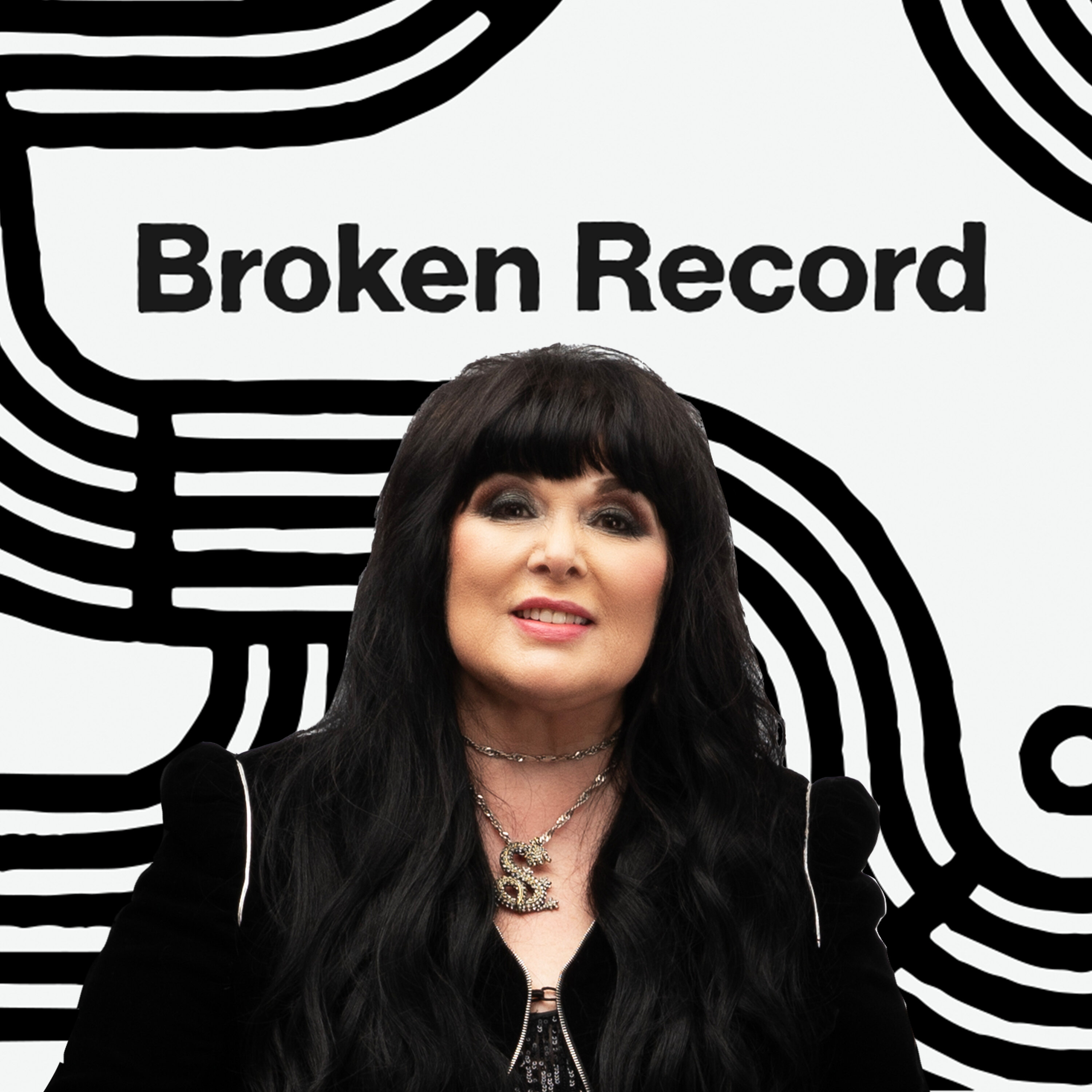


Ann Wilson is the powerhouse lead singer of the band Heart, whose celebrated classic debut album, Dreamboat Annie, came out nearly 50 years ago. Last week we featured an interview with her sister and longtime bandmate Nancy Wilson, so make sure to check that out if you haven’t already.
Today we’ll hear from Ann, who’s responsible for belting out and co-writing some of Heart’s most iconic early hits, like “Magic Man,” “Barracuda,” and “Crazy On You.” Four years older than Nancy, Ann was the first Wilson sister to join Heart, a band that started out as a cabaret cover band. Despite undergoing multiple lineup changes since the '70s, Heart has released top 10 albums in nearly every decade in the last 50 years, and sold over 20 million albums worldwide.
Outside of Heart, Ann has also released solo material, including an album in 2023 with her band, Tripsitter.
On today’s episode Leah Rose talks to Ann Wilson about Heart’s current world tour, and the Elton John album she sings before every show to warm up her voice. Ann also explains how she would strategically place guitars around her house when having parties at her Seattle home in the '90s to encourage jam sessions with guests like Lane Staley and Chris Cornell. And she remembers singing on stage with Grace Slick and Stevie Nicks, who Ann says really is a good witch.
You can hear a playlist of some of our favorite Heart songs HERE.
See omnystudio.com/listener for privacy information.
Speaker 1: Pushkin. Ann Wilson is the powerhouse lead singer of the band Heart, who celebrated classic debut album Dreamboat. Annie came out nearly fifty years ago. Last week, we featured an interview with her sister and longtime bandmatee Nancy Wilson, so make sure to check that out if you haven't already. Today, we'll hear from Anne, who's responsible for belting out and co writing some of Heart's most iconic early hits like Magic Man, Barracuda, and Crazy On You. Four years older than Nancy, Anne was the first Wilson's sister to join Heart, a band that started out as a cabaret cover band. Despite undergoing multiple lineup changes since the seventies, Heart has released top ten albums in nearly every decade in the last fifty years and sold over twenty million albums worldwide. Outside of Heart, Ann has also released solo material, including an album in twenty two three with her band Tripsitter. On today's episode, Lea Rose talks to Ann Wilson about Heart's current world tour and the Elton John albums she sings before every show to warm up her voice. Anne also explains how she would strategically play guitars around her house when having parties at her Seattle home in the nineties to encourage jam sessions with guests like Lane Staley and Chris Cornell, and she remembers singing on stage with Grace Slick and Stevie Nicks, who Anne says really is a witch, but a good one. This is broken record liner notes for the digital age. I'm justin Mitchman. Here's Lea Rose's conversation with Ann Wilson of Heart.
00:01:49
Speaker 2: Have you reimagined the band at all this time going out? I know it's been five years since Hart has toured. How has the band changed?
00:01:58
Speaker 3: Will the band has changed completely? Because nothing about it is the same except me and Nancy. Well, Ryan Waters was out in twenty nineteen, and this time we have the Tripsitter Band, which is my solo band as part with Ryan Waters and Nancy and I and it is a fantastic group. It's just wow. Blows me away every time we go and play some of these old Heart songs. You know, with this group of people, they just they understand the music and they just totally explode into it. It's amazing.
00:02:40
Speaker 2: And the trips that our guys are. From my understanding, they originally were session players in Nashville.
00:02:47
Speaker 3: They were, and they have reached a point in their careers, all of them where they don't want to do that anymore. Is a way of life. They want their own band. They don't want to just be working, you know, working for other people, doing what other people tell them to do. They want to be in a band where they have a say and they have ideas that get used and you know, it's a real band. And that's what we have with Heart at this point. You know, Heart's had many many iterations over the decades, different lineups and different kinds of things. Sometimes it's more acoustics. Sometimes it's way rock and grungy, almost like in the early two thousands, and sometimes it's pretty traditional a classic art. This is something completely new. I mean, it's huge in some points, really passionate. The dynamics are incredible. I mean, I can't say enough good stuff. I guess I'm just waxing.
00:03:52
Speaker 2: How do you practice when you're in a rehearsal space before you go out on tour? How can you practice to play arenas since the physical space is so different.
00:04:02
Speaker 3: Well, what we hear is what we have in our heads. So that's what we practice, not trying to go out and address every foot of airspace in those places because that's impossible. And all the different minds, I mean, if it's a full house in a big place, it's it can be up to twenty thousand different minds you know that are out there. Yeah, and how do you talk to that? So you can't. You just have to get out there and be completely inside the music and inside the lyrics and be there, really mean what you say, be present, be authentic, be all the way there. You know, that's the only thing you can do.
00:04:47
Speaker 2: When you're performing. Do you tend to lock eyes with certain people in the crowd or do you find yourself just looking past the audience?
00:04:58
Speaker 3: Well, I don't make an effort to lock eyes with any one person because they think that you mean something by it. You know, maybe you do, maybe you do mean so thing by it. But I tend to be in my head sort of and fluid inside of this big sound pool that we're creating.
00:05:19
Speaker 2: It sounds awesome.
00:05:21
Speaker 3: Yeah, so I'll look out and I'll look at the whole panorama. Yeah, if they've got things lit or if it's all twinkle here or something that's pretty amazing to see from the stage.
00:05:34
Speaker 2: Heart's getting ready to celebrate your fiftieth anniversary. You've seen the crowds change so much over the years, and now everybody has the cell phone. Yeah, does that change the performance for you? The energy of the crowd?
00:05:48
Speaker 3: It does change things, I gotta say, especially when they come up to the front of the stage and they turn around so that you're in the backdrop and they want to take a selfie with you as a background, you know. I mean, that's that's really distracting, you know, because you just want to sort of jump out of the way, you know, because it's it's yeah, I'm not a backdrop, you know. But I mean, to be fair, it's a big night for them and they want to preserve some little memory of it, so right, why not let them have it.
00:06:22
Speaker 2: I think I've read that you have an extensive vocal warm up before you go on stage. Can you share some of that with us? What you do to get ready?
00:06:30
Speaker 3: Yeah, I warm up for about forty five minutes to an hour, and I used to try and do classical like ruin scales and stuff like the vocal coaches teach you to do. But I couldn't sustain that. It's just too boring. So I finally found out that my throat and soul are just as warmed up if I find a couple of records that I love and just sing along with the whole thing. Like for a while last year I was doing Elton John Captain Fantastic in the Brown Dirt Cowboy, just sing along with the whole record every song, and then if there's still some more time, find another one. Sing along with that. Wow and lo and behold, your throat is warmed up. It's not just your throat, it's your whole ability to just be open, you know, your soul.
00:07:26
Speaker 2: When did you realize that you had such a powerful voice.
00:07:30
Speaker 3: I've never thought it was that powerful myself, except for a few moments in a few of the songs like Crazy and You that are high and sustained notes. And it's different when you hit a note and just hold it, then if you hit a high note and just go all squirrely all over the place. And I've never been much one for vocal gymnastics.
00:07:55
Speaker 2: They're like Mariah Carey runs right.
00:07:58
Speaker 3: Yeah. I like to sing them just simple. So when I realized I could do that I thought, most people don't do this this way, so I must have something. But I don't sit around on my some kind of laurels going wow, you sure have a strong voice. I think my kids would tell you that I have a strong voice. Or people at a birthday party when I sing Happy Birthday along with the crowd.
00:08:28
Speaker 2: Oh, I would love to hear that. Wow, So that's fascinating. You don't think you have a strong voice.
00:08:34
Speaker 3: Well, I mean there's some mighty fine singers out there. Yeah.
00:08:38
Speaker 2: Who are some of your favorite singers right now?
00:08:41
Speaker 3: Well, I always loved Uton. I think he in the early days. He was one of the people who influenced me the most. Right now, I would think that Billie Eilish. I love the way she sings. I mean it's so refined and so restrained and just calm, you know, beautiful. Yeah, so that I admire that, I really do.
00:09:08
Speaker 2: Have you tried to do something like that just to play around and see how it would sound.
00:09:13
Speaker 3: It's all in the song. Yeah, if you hit the right song that has that in it, then you can do it. I think. Yeah. And she and her brother, I mean the stuff they write kill her stuff. I love to see them at these big awards shows, just cleaning up, you know, because it's so you know, anti establishment, you think so. Yeah, I mean, here she comes wearing this total alternative outfit whatever it is, whichever thing she's at, and she looks beautiful. Her brother is just there to support her. They're just you can tell that they're friends, yeah, and that they're they're really tight, you know. I love that.
00:09:58
Speaker 2: I listen to you and Nancy's audiobook Kicking and Dreaming and was just sort of amazed at how strong the family mythology is in your family, and it really seems like you kept going back to the early days of your family and the stories that were shared in your families when it came to songwriting and decisions you made in your life. And at one point you were talking about this letter that your dad wrote to your mom where he was basically proposing to her, and how that was like the single most foundational work that sort of kept inspiring your songwriting.
00:10:40
Speaker 3: Yeah.
00:10:40
Speaker 2: Do you still feel that influence now?
00:10:44
Speaker 3: Yeah, I'll always feel influenced by both my parents because they were liberal, they were bohemian, they were romantic, and they were smart. You know, they were both intellectuals and they managed to find each other, you know, and their love of poetry and literature really inspires all my songwriting, and I think Nancy's too. Were both we're both pretty romantic.
00:11:11
Speaker 2: Yeah, when you left home, when you left the Seattle area, you moved to Canada, right when Heart was hocus focused, before the band was even called Heart, and you were living with your first boyfriend, your first love. Did that live up to this mythology in your mind of your parents' bond and their romantic love.
00:11:36
Speaker 3: Boy, Yeah, it sure did at the beginning. Yeah, it's just like all love affairs, you know, at the very start, it's so as Joni Mitchell says, it's so righteous at the start, you know, yeah, and just powerful and beautiful. But you're young, and your expectation makes it be just that makes it be mythology. It can't survive in the real world, you know, it has to. It has to break down because it's too perfect and that's not what this world is like and what people are like. Especially when you fall in love with somebody, you idealize them to the point where they're just gonna do everything for you, They're going to be your everything. And the minute you do that that's when it starts to break down. I think, Yeah, you got to let people have space, give them the right to be human and the right to be imperfect and not do everything for you.
00:12:35
Speaker 2: When you wrote Magic Man about that relationship, were you ever embarrassed or did you find yourself holding back because you didn't want your mom to see things that might have been a little bit scandalous at the time.
00:12:50
Speaker 3: Well, holding back. I think that leaving home and running off to another country with a man was about was not holding back. But yeah, you know, like I didn't rub it in her face that suddenly I was just off sleeping with somebody, right, And she was, for all her romanticism and love she had for our father, she was pretty victorian when it came to sex and stuff. So that was not something that went down easy between us. She just didn't want to think that I was up there blowing it. And that was in the pre Roe v. Wade days before it was legalized. We're back there now. But so mothers were extremely fearful of their daughter's running off and getting into wild sexual relationships and ending up pregnant, not knowing what to do about it, and you know, basically their lives being ruled by that fact from then on.
00:13:57
Speaker 2: Do you remember having conversations with your mom about that where she was warning you, like, look, this is what could happen to your life.
00:14:06
Speaker 3: Yeah, she put it differently, though she couched it more in h well, this is not dignified. You know. She didn't want to have the talk and get all clinical and everything. She didn't really want to do that, but she found a way to do it. And it was well, if you just go up there and become barefoot and pregnant, you know, that's like pretty trailer park trash. Oh and I guess that wasn't enough to scare me off.
00:14:40
Speaker 1: Yeah.
00:14:40
Speaker 2: I thought it was interesting because some of the lyrics and magic Man you it's almost like you're trying to convince your mom about how wonderful this guy is. You know, he's a magic man Mama.
00:14:50
Speaker 3: Yeah, Well we had many phone calls where she I was up in Canada in the cottage with him, and she wanted me to come home. She's, yeah, you got to come home. You're too young for this. You know. I was at nineteen, so I was old enough.
00:15:07
Speaker 2: Yeah. I was so surprised to too. And maybe it's not surprising for the time. But while you were in Hocus Pocus, you were the front person in the band. After gigs, you would come home the band was all living together. You would come home and cook everybody dinner and do all the laundry and do all the like homemaking duties.
00:15:29
Speaker 3: Yeah, that didn't last that long. I mean, at first I thought how how sweet it was to wash the sheets and hang them outside in the fresh air so that and then put them back on the bed, you know, and try and make a dinner out of some brown rice and a couple of onions, you know. But and for a while we lived up there in a cabin, a cottage thing with Roger Fisher and his wife who had just gotten married and received for a wedding gift of fifty pounds sack of brown rice, which we all ended up living on because we didn't have any money when we were putting the band together. So we just date brown rice and drank water and called it the Georgia Shawa brown rice diet, you know.
00:16:22
Speaker 2: And you can do that back then when you're twenty, yeah, and everybody's fine with it, that's right. And that was before Nancy joined the band, Yes.
00:16:32
Speaker 3: She joined later in nineteen about seventy three.
00:16:37
Speaker 1: We have to take a quick break, and then we're back with more from Anne Wilson and Lea Rose. We're back with Lea Rose and Anne Wilson.
00:16:49
Speaker 2: How did the band change for you when Nancy joined?
00:16:53
Speaker 3: Well, I was really glad because I felt that art had gone about as far as it could go. We didn't have a very good vocal section. I mean, we didn't have a very good ability at harmony singing, and we did have an acoustic guitar player, so we were stuck doing rock and roll songs, you know, like Johnny be Good and Walking the Dog and all that kind of stuff that the guys did, and there was kind of almost a whole part of the soul of the band. It was missing for me because I had come from doing folk groups with Nancy, where we did heavy harmonies and we both played acoustic guitars, and that's so when she joined, she brought that element. She's a fantastic harmony singer and a great acoustic player. So all of a sudden, heart had a heart, you know, and we just got kind of what Led Zeppelin had, which was it can go as rock as you want, but it can also go as tender as you want down at the very center. Yes, and that was really satisfying to me.
00:18:06
Speaker 2: Early on you talked about doing you have sort of like a mini led Zeppelin cover section in your shows, and one night led Zeppelin actually came and saw you play.
00:18:18
Speaker 3: Well, they didn't stop and watch us, They just walked through the room.
00:18:22
Speaker 2: Did you see them walking through?
00:18:24
Speaker 3: Yeah? It was a club in Vancouver called oil Can Harry's and they had a big showroom and then they had a big party room upstairs, and so we saw them kind of trooping through after their concert at the arena. You know, when they're done with the Glory gig, they come and have a party upstairs and oil Cans and yeah, we saw them and we all just about lost it.
00:18:50
Speaker 2: I mean, I imagine they just looked like the sexiest rock stars on the planet. Oh yeah, yeah. And then the full circle moment of having performed at the Kennedy Center for when led Zeppelin was getting honored. How did you prepare for that show mentally? Was that completely intimidating to you or are you able to just sort of switch into show mode and go out there and do your thing with full confidence.
00:19:18
Speaker 3: I think that that night I needed an extra measure of meditative calmness because I didn't want to go out there and start to think about it. You know, that's what you really don't want to do. Not only was led Zeppelin in the audience, but the you know, the President and first Lady, and the audience was just packed with all these different luminaries and famous people of all ILKs. So I just remember saying to Nancy, let's just pretend like we have bowls of water in our heads and we have to walk out there without spilling a drop and just concentrate on the water on the song, right, and nothing else, just be in the song. And so we did, and it turned out to be a fun experience and one that went really smooth, and nothing went wrong, and it was great because you know, after all, what could possibly go wrong in a situation like that.
00:20:22
Speaker 2: It's such an emotional performance, and the footage after where you see you know, Robert Plant and the band, they're sitting there with tears streaming down their face, and then you see Barack and Michelle Obama sitting there and John Bonham's son is playing with you all on drums. It's just so incredibly moving. Yeah, what a feat. It's beautiful, beautiful performance. You sounded incredible.
00:20:49
Speaker 3: Oh, thank you. Yeah, it was. It was quite an experience, never to be forgotten.
00:20:54
Speaker 2: I read at one point that you opened for the bee Gees.
00:20:58
Speaker 3: Yeah, that was real early.
00:21:00
Speaker 2: Did you have any sort of interaction with them another family band?
00:21:05
Speaker 3: I don't think at that point we got to interact with them. At that point we were pretty much a little cabaret band in Canada, and the Begs were doing across Canada tour and they needed an opener and we'd only done one opening show before that for Rod Stewart, so we were by no means ready for that kind of exposure, but we got up and did it. You know. I was always a huge Beg's fan. All their different eras and their psychedelic era and even the disco time and all that. I just thought it was all great. So yeah, it was really fun standing on this side of the stage and listening to them live after we were done, you know.
00:21:58
Speaker 2: And so that was already after the first album was.
00:22:00
Speaker 3: Out, Yes, pretty soon after the first album was out.
00:22:05
Speaker 2: What do you remember about recording that first album? Do any of the session and stand out in your memory.
00:22:11
Speaker 3: Yeah, I just remember going from zero, from knowing nothing, absolutely nothing about being in the studio, to Mike Flicker, who was our first producer, mentoring me to be able to sing a lead vocal on the songs, Like the first one I ever sang was Crazy on You, and we were actually doing Crazy on You in clubs at that point, and Magic Man. We hadn't written Barracoutie yet, but those two other songs we would, you know, we'd play our normal club set and then we'd sneak Crazy on You in and we'd sneak Magic Men in and see what the audience did. And at first they were kind of like what, And then they never heard that song before, so they were used to let Zeppelin and Elton John and the other stuff.
00:23:04
Speaker 2: We were playing the stuff they know.
00:23:07
Speaker 3: Yeah, and then by bit they started to respond to those two songs live till it happened that they were actually coming unglued. They were applauding and standing up and liking those. So we pulled him out to when we went and opened for the Bechis and Rod Stewart, we actually dared to play our original.
00:23:29
Speaker 2: Stuff, and didn't you get a huge reaction when you opened for Rod Stuart because it had been on the radio at that point.
00:23:34
Speaker 3: Yeah, we didn't really know it. The communications in those days were not like they are now, where you know everything that goes on with your record every minute, you know, and we didn't really understand that dreamboat And he was being played in Montreal by this disc jockey named Doug Pringle. He believed in us and he played the record. So when we got to Montreal opening for Rod Stewart, we walked out on stage to a house full of lip matches because they knew our recorda we were just this little opener. But wow, you know. So that was just a way that we started out in Canada.
00:24:17
Speaker 2: Did that motivate you to want to go in and immediately start writing more songs and continue with that specific sound of the songs that were doing well at the time.
00:24:29
Speaker 3: Yeah, we wanted to just go ahead and keep on writing, you know. And just the experience of writing the first two songs was so great and just so much fun that we just wanted to keep going. And some of the songs we wrote were more rock, but then there were a whole bunch of songs on Dreabo Eddie like Dreamboat Eddie and love Me Like Music, I'll be your song, how deep it goes, Soul of the Sea, ones that are really soft at the middle. So it's a mixed bag on that record. Nobody could really put their finger on what we were going to be, whether it was going to be a rock band or what.
00:25:08
Speaker 2: Did you like that sort of keeping people guessing or was that more like you didn't know what you guys were.
00:25:16
Speaker 3: We didn't know. We were just formulating, you know.
00:25:20
Speaker 2: Yeah, which album would you say, out of your entire discography is the most true to what you think the band does best.
00:25:29
Speaker 3: Maybe a Little Queen because it has Right of Me, go On Cry and Barracuda, and it's got good ballads and it's got good gas rockers, you know.
00:25:41
Speaker 2: Yeah. Do you remember where the photograph for the cover of Little Queen was taken?
00:25:46
Speaker 3: Yeah, it was taken in Elesion Park in LA and they took us to Western Costumers and got the gypsy clothes. In fact, I was wearing my own clothes that day, but everybody else was dressed up like a gypsy and rented a gypsy painted wagon and a goat and a horse and all all this stuff and set up a scene.
00:26:11
Speaker 2: What were you listening to at that time? So that came out in seventy seven? What was on the radio? What were you into?
00:26:18
Speaker 3: Wow? Seventy seven, still listening to Elton John, listening to Steely Dan, listening to Moody Blues and Rolling Stones. It's all kinds of cool things. You know.
00:26:32
Speaker 2: You grew up having hoot Nanny's in your house, playing instruments with family, singing songs, and then later when you lived in Seattle, you would have these big parties and have a lot of the people who became like the all stars of the grunge movement over and just jam and have fun and play. Around that time in the seventies, were you doing anything like that playing with other musicians.
00:26:56
Speaker 3: We were mostly playing with the members of the band up in Canada. We didn't know a whole lot of other musicians. It was different back then. We were kind of we were the party and we would have more fun just jamming together on stage. Off stage, it really didn't matter. We've jam in the living room and then back up and go out to the club and jam there.
00:27:23
Speaker 2: You know. Yeah, And at that point, so the late seventies did you foresee a long career for the band or was it sort of you know, day by day? How are you thinking about the band's future.
00:27:36
Speaker 3: Oh, we definitely had a five year plan. I mean, our manager would not let us get out of bed without a five year plan. But it was good because it made sense. It wasn't just ambition. It was more about, Okay, we've gone this far. Now we've got these songs, what else can we make? You know, We've got Crazy on you, We've got Barracuda, We've got all these songs that are great. Now what you know?
00:28:08
Speaker 2: What did you do to stir up ideas for inspiration for writing songs once those big hits were out and established?
00:28:18
Speaker 1: Yeah?
00:28:18
Speaker 3: I think that many of our songs start from the music, and then once I, Nancy and I are just me hear the music, it suggests something and then we start writing words and then suddenly, lo and behold, you have a song.
00:28:35
Speaker 2: You know, do you prefer to be by yourself at that point or do you like to be with sitting with the other musicians writing words.
00:28:44
Speaker 3: I like to be by myself, no doubt about it. But jamming you have to be with other people. You have your ideas and they have their ideas and how they mix and you spark ideas off each other and you can tell when you hit on something and it's great.
00:29:01
Speaker 2: Would people in the band give you feedback on your lyrics, say like, ah, maybe this line should be tweaked.
00:29:07
Speaker 3: A little bit occasionally.
00:29:09
Speaker 2: How would you take that as a writer?
00:29:11
Speaker 3: Well, if they did that, I would say, and what would you put in its place? And if they had a good suggestion, I go, okay, we'll use that. Maybe. If they didn't have a good suggestion, I'd say shut up, not literally shut up, but just we'll keep it my way until you think it's something better. You know.
00:29:35
Speaker 2: Yeah, after the first initial band disbanded, people left and there was a new iteration of the group. Was that really heartbreaking for you or did you have hope that we can create something new and move on.
00:29:51
Speaker 3: It's hard to describe what it was like when that lineup disbanded, other than to say that we couldn't get along anymore and things got really difficult between us. You know. It seemed like the that made heart unusual, which was men and women working together as equals, was breaking down, and that very thing was the thing that was driving us apart from each other. We would just squabble and write down gender lines. It would just be really difficult, the men gossiping about the girls and the girls gossiping about the men. And it didn't help that, you know, Nancy and I never looked that fondly on the whole world of groupies and having to explain to the band wives, no, nothing goes on out there, you know, lie to them all the time, and it just got to be weird.
00:30:49
Speaker 2: You know, when you reformulated the band and then bring in more men, did it feel like things are going to end up differently this time or did it seem like maybe it'll kind of play out in the same way.
00:31:02
Speaker 3: Yeah. Well, I always go into every new iteration of the band totally optimist, because the world is full of good people and just because you play out your relationship with some people doesn't mean you don't have one with others. And we've been really fortunate to play with some great musicians over the years, men and women. And it's not really important to us, to me or to Nancy and I which gender it is. It really isn't. It's just who can do the job, who's a great player, who's a great singer, who's a great writer. And we worked with Holly Knight and Debbie Cheer and Denny Carmassi on drums, and it's just some amazing players. But we never again encountered the same kind of emotional hardship we did with that first lineup. I think it was because we all started out we were poor and destitute, and then we had all the success and there was all this money that came in, and money change everything, you know, and everybody gets kind of different.
00:32:13
Speaker 2: Do you think they start to resent you because you were the front person and getting a lot of attention and Nancy and you are getting a lot of attention.
00:32:22
Speaker 3: Yeah, there were some of that because they were at the men and the band were out there working just as hard as us and putting their bodies on the line too. But yet whenever we did an interview, Nancy and I were the only ones that got talked to and got all the attention, you know. And there's nothing much that we could do about it. It's just how it was. And it really hurt the men's feelings and made them angry. So I don't blame them at all.
00:32:52
Speaker 2: Really, Yeah, it's understandable.
00:32:55
Speaker 3: Yeah.
00:32:56
Speaker 2: Are you still in touch with the old members from the original line up?
00:32:59
Speaker 3: Yeah, we saw him just a couple months ago when we played in Seattle. They all showed up super cool. Yeah.
00:33:08
Speaker 2: And then moving in to the eighties, that was when you started the record label, when you signed to Capitol started bringing in professional songwriters. Yes, how was that for you as a songwriter and as somebody who had been the face of this band for so long?
00:33:24
Speaker 3: Yeah? I went back and forth on it. It depended on the song. For instance, I thought These Dreams was a really great song, just a beautiful song that fit Nancy's voice just perfect. It was the ideal marriage, you know. But some of the other songs that came our way that we did during the eighties, I thought didn't have much substance and were pretty calculated. They were just different versions of what was being played on the radio right already. And uh, I wasn't that fond of that, because you know, I was there at the beginning when we had all this this beautiful idealism about being poets and all that.
00:34:09
Speaker 2: Are you glad now looking back that you did it even though you were fundamentally opposed to it at certain times? About what you were singing. Are you glad you tried it and stuck with it?
00:34:22
Speaker 3: Sure? Yeah. It was a good experience and it did teach me a lot about songwriting, just the basic lesson of you don't tax people's attention span. You just don't get all selfish and just go, well, this is my vision, Like you want to talk directly to them, you know, and connect with them. That's what a lot of those songs in the eighties had. It was a good listen.
00:34:47
Speaker 2: I love those songs.
00:34:49
Speaker 3: Yeah, some of them are cool.
00:34:50
Speaker 2: Super cool, and I bet the crowd loves them when you play them live.
00:34:54
Speaker 3: Yeah, like we used to do at Lisa del Bello song called Wait for an Answer that moves through five keys and everything, and it's just amazingly powerful song. And that taught me so much about how you can have a very simple idea and just repeat it only take it up a key and then up another key, up another key, and then it just changes. Meaning every time you go up with these dreams.
00:35:27
Speaker 2: Is that the song that you said you can't sing for whatever reason, there's something about that song that you've tried it in karaoke and you can't sing it.
00:35:36
Speaker 3: I don't sound that good on these dreams. The times I've tried it at karaoke. Yeah, it's just there's something about it. It's I feel awkward singing it and I sound awkward. That's Nancy's song.
00:35:50
Speaker 2: Do you still not sing all I want to do? We haven't done that for a long time. Is it going to come back out?
00:35:57
Speaker 3: I don't think so. There's a lot cooler stuff that we can bring out than that.
00:36:04
Speaker 2: That song had a big influence on my It was very eye opening as a younger.
00:36:10
Speaker 3: Yeah, and just not in a very cool way. But now I'm being my mother. You know, that's my mother talking.
00:36:22
Speaker 1: We have to take another quick break and then we'll be back with more from Leo Rose and Anne Wilson. We're back with the rest of Leo Rose's conversation with Anne Wilson.
00:36:36
Speaker 2: In your book, you talked about some of the compromises you made in the eighties were a devil's bargain, which you were wearing, the types of songs you were performing. How did you manage to push past that era?
00:36:49
Speaker 3: Oh? You just live one breath after another, you know, you just keep on going. And I always believed in heart, I always believe that we would emerge from that, and that we would come up again and be writing our own type of music about the things we wanted to write about, and that people would like them, maybe not on the same massive level, but on a level.
00:37:17
Speaker 2: Does that matter to you if as someone who as a musician has experienced both the massive arena level and then also you do a lot of small shows that are very intimate as a songwriter, as a musician, as a singer, does it matter to you? Or is all that matters is just performing?
00:37:36
Speaker 3: When I'm doing it, It's all that matters is just the performing. I think other people care more about the level of success than I do. You know, I've been accused of not caring enough about writing commercial songs, and I admit I'm guilty. I just want to write lovely songs. I want to write cool stuffs.
00:38:00
Speaker 2: Are you writing right now?
00:38:02
Speaker 3: Yeah? I am, And I'm just about to go down to Nashville and hang out with the Trip Sitters and write some more songs.
00:38:11
Speaker 2: What about the love Mongers? Are they ever going to get back together?
00:38:15
Speaker 3: Oh? Love Mongers? Yeah? Now that was a vocal group. Yeah, that was some gorgeous vocals. I don't know, I hope. So that was a fun band. It was really fun.
00:38:27
Speaker 2: So that was Nancy, yourself and your old friend Sue.
00:38:31
Speaker 3: Uh huh, and our other friend Frank Cox. Frank has a beautiful tenor voice, and I was playing bass and singing. So we had really a good three part harmonies and we could do whatever we wanted. We didn't do much heart stuff. We used the Love Mongers as an escape from heart for a while. Just after the eighties. We just we went into lovemngerland for a while and just did whatever we wanted.
00:39:02
Speaker 2: Is that around the time that you were back in Seattle and starting to hang out with some of the musicians that were coming up, And.
00:39:09
Speaker 3: Yeah, and oddly enough, a lot of those musicians that were part of the Seattle community then loved the Lovemongers and we loved them, and we'd all show up at each other's shows and it didn't matter that it was at this little club that it really didn't matter. Yeah, it was just about the music and about playing camaraderie.
00:39:33
Speaker 2: You've said that musicians from Seattle aren't just going to be nice about a song because you're sitting there playing it. They're really honest about their feedback yes, they are. Yeah. Can you remember a time where you were had an interaction with a Seattle musician and you're just like, oh yeah.
00:39:54
Speaker 3: Jerry Cantrell, he told me on a number of occasions it was one of the ballads, the more commercial ballads from the eighties. Maybe it was all I want to do. But he just said to me, that is such bullshit. That is such bullshit now, Barracuda, That's great, that's the shit, you know.
00:40:15
Speaker 2: And you're like, I agree with you, I agree with you. When everybody would come over to your house and play at those parties, what would you how does that happen? Like people start out drinking and then eventually people pick up instruments and are just playing songs or what was this scene?
00:40:31
Speaker 1: Like?
00:40:32
Speaker 3: Well, I was no fool. I would always have in my living room. I'd have guitars laying around casually, you know, laying and a piano and a couple of little amps. Usually it would happen after somebody's concert and everyone would show up for the concert, and then whoever was free afterward would show up at my house and they'd all come in and start drinking beers and smoking Ciggi's and sitting up on my counters and just then, pretty soon somebody had start to blay, what do you remember being played then? And who do you remember being there? I remember one time John Waits was there, Lane Stay the Pearl, Jam guys, the Artist's spoon man, Chris Cornell and Kim Thale and oh them.
00:41:30
Speaker 2: What was it like singing with Chris Cornell?
00:41:32
Speaker 3: Beautiful? He's like one of those naturals, like he comes from a musical family too. And not only did I know Chris, I knew his sister Maggie, who's a great singer too, So it was easy as pie to sing with chris beautiful voice.
00:41:50
Speaker 2: Yeah, was there ever any stories about Jimmy Hendrix, another Seattle musician, Like was he part of the Laura at all?
00:41:59
Speaker 3: I never met Jimmy myself, but I did go and poke my head into Jimmy's apartment one time.
00:42:05
Speaker 2: Oh how did that happen?
00:42:07
Speaker 3: When he lived in Seattle, when he was just a young guy before he blew the coop? You know. Yeah, just I was going to art college and somebody wanted to go pick up some weed or something, and we stopped at this little apartment and they went look around this is a famous apartment, you know. I mean the people who were living there then were not Jimmy. But look around. This place has much vibe, you know, yeah, trying to feel the.
00:42:39
Speaker 2: Vibe, Jimmy, that's so cool. What stands out in your mind when you think about the seventies or eighties? What was the biggest rock star moment that you had. Once the band started to pick up notoriety, we looked at maybe looked at Nancy, like, whoa, this is big time.
00:42:58
Speaker 3: As time goes along, you meet just about everybody. They usually end up just being people, but that doesn't mean they're disappointing. Meant a lot of cool people and some who yes, we're just folks, you know.
00:43:14
Speaker 2: Yeah.
00:43:14
Speaker 3: You think they're gonna be like so grand and everything, and then they're just like, hey, Hi, how are you.
00:43:22
Speaker 2: Well. I know that there was stories about you hanging out with Stevie Nicks. That's always seemed like.
00:43:27
Speaker 3: Oh yeah, she jumped on her plane for a few days. We had a number one record, that's what it was. That was The Magnetism, and we were playing in San Francisco. She came out to the show and got up on stage with us and with Grace Slick to sing on what About Love? And after the show she said, gee, I kind of hate to say goodbye to you guys. Where are you going next? And they said, well, we're going to Phoenix, And it just so happened that Stevie has another house in Phoenix. So she got on our plane the next day and we all went out to Phoenix and went to her house and hung out after our show. And that's an eye opener. It's cool because she's she's everything she says. I mean she's a white witch. I mean she's definitely got her her self image down and together. She's very smart, super creative.
00:44:27
Speaker 2: Did you get to sing with her at all?
00:44:29
Speaker 3: Just when she got up on stage with us?
00:44:31
Speaker 2: Okay, so when you're hanging out, you didn't sit around singing, And.
00:44:35
Speaker 3: No, we mostly listen to each other talk. I don't know. You don't have that much to say really that you don't all feel as a group because you are all going through the same experiences.
00:44:50
Speaker 2: How is that for you coming home in between stops on tour, when you would go home and see your parents and see your older sister Lynn, was it hard to relate to them and sort of come down from being on the road.
00:45:03
Speaker 3: Yeah, everyone tells you that you've changed and that you're faking it, you're not the same person, and you know, like everyone's always really disappointed in you because you're living on this big, inflated level. But that's how it gets. When you're out on those big doors like that, you live in a bubble of safety and security and you're protected from people just because, for one, you don't want to get sick, and for two, some people can be dangerous, so you have to have protection from all of that, you know, And you get used to it and you go home and you're kind of like, don't come near me, you know.
00:45:43
Speaker 2: Yeah, I imagine you need a couple of weeks to kind of reformulate.
00:45:47
Speaker 3: Yes, indeed, does that take.
00:45:50
Speaker 2: A lot of mental preparation for you to be removed from your space, from your home and know you'll be sort of a nomad.
00:45:57
Speaker 3: Takes a lot of relaxation out there. That's the main thing for me is just to relax enough to have fun with it and not get all freaked out, you know about not being home and being tired or whatever. Like the things that are hard about touring, which is the travel.
00:46:17
Speaker 2: Are you traveling on buses mostly when you're in the.
00:46:20
Speaker 3: US, Yes, on buses. However, over in Europe they don't do that anymore because of the European Union has broken up, so you can't just go from country to country on a bus. You have to go through customs and all that. The bus can't leave the country, you know, So it's much more complex now over there.
00:46:40
Speaker 2: After taking the five year break from touring with Heart, how did you and Nancy come back together? Why did you decide to tour now?
00:46:49
Speaker 3: It was time, There was no longer any reason to hold off on it. I spent pretty much all of last year touring with Trips that Are, and we did a hundred shows and seven months. I thought, well, the time is right. Let's see if we can bring back the big guns. And she was into it. We had some negotiations to do, who's going to be in the band, what type of a show we're going to do, but we we came to understandings and all that.
00:47:21
Speaker 2: I was looking through your Instagram and I saw that you have some scattered posts about meditation and quotes from Ramdas and other things. When you're talking about relaxation before the shows, what are some techniques that you use to get into a good headspace.
00:47:38
Speaker 3: I like to listen to music that is meditational, the space around a drone, you know, just calming down that way, breathing. I don't want to build up. I want to chill down before a show, so I walk out there completely calm and collected. And so those are the main things. Is just relax into it.
00:48:01
Speaker 2: And then when you make that transition from backstage to stepping out on stage in an arena filled with people, filled with energy, is it hard to make that switch for you?
00:48:12
Speaker 3: Well, it depends on how tired I am. I guess if it's a good night and everything's clicking and I feel good, then it's not hard. But if something's gone on, or you know, something's wrong within the band, like someone's sick or something like that, it's a little harder to go out there with all the engines, the resting.
00:48:34
Speaker 2: At what point in the tour would you say is the best to see heart Would it be in the beginning parts of the tour, the middle, the ladder.
00:48:44
Speaker 3: And Oh, that's impossible to say. I think it's different every tour. I don't know how this band is going to develop because It really is like a development over a tour. You go out and you're just you've fresh aut rearsal and everything's just all perfect, and then you start to open up like a big flower. Yeah, you figure out where it is that the audience and yourself really connect and grow with those places. So if you see us halfway through the tour, it's going to be different than the first couple of nights.
00:49:21
Speaker 2: Yeah. Do you have the same set list every show or does a set list change?
00:49:26
Speaker 3: It will change. We have a bunch of stuff worked out that we can interchange whenever we like, and sometimes we're writing so things can just be popped in. So yeah, it'll change definitely.
00:49:41
Speaker 2: Is there any sort of preview you can give us about what type of show it will be.
00:49:46
Speaker 3: It's gonna look beautiful. It is gonna be a combination of heart songs, no covers, all heart songs, and a couple of new songs, a new Nancy song and a new and song.
00:50:00
Speaker 2: Tell me about the last thing you've written that you're really excited about.
00:50:05
Speaker 3: Oh, I just got through making an album with Trips that is called Another Door and came out so good. That is what I'm really proud of. Right now, because I was the sole lyric writer on all the songs and it really taught me a lot. I learned a lot about how to do it and just when to edit myself and when not too. You know that's so important.
00:50:32
Speaker 2: Well, thank you so much for taking the time to talk today.
00:50:35
Speaker 3: Nice to talk to you. Thank you.
00:50:40
Speaker 1: Thanks Dan Wilson for talking about heart storied history. You can see Anna her sister Nancy on tour with Heart through December, and you can hear our favorite songs from Heart, along with their various side projects on a playlist at broken record podcast dot com. Subscribe to our YouTube channel at YouTube dot com slash broken Record Podcast, where you can find all of our new episodes. You can follow us on Twitter at broken Record. Broken Record is produced and edited by Leah Rose, with marketing help from Eric Sandler and Jordan mcmill. Our engineer is Ben Tollinday. Broken Record is a production of Pushkin Industries. If you love this show and others from Pushkin, consider subscribing to Pushkin Plus. Pushkin Plus is a podcast subscription that offers bonus content and ad free listening for four ninety nine a month. Look for Pushkin Plus on Apple Podcast subscriptions, and if you like this show, please remember to share, rate, and review us on your podcast app Our theme music's by Kenny Beats. I'm justin Richmond.

