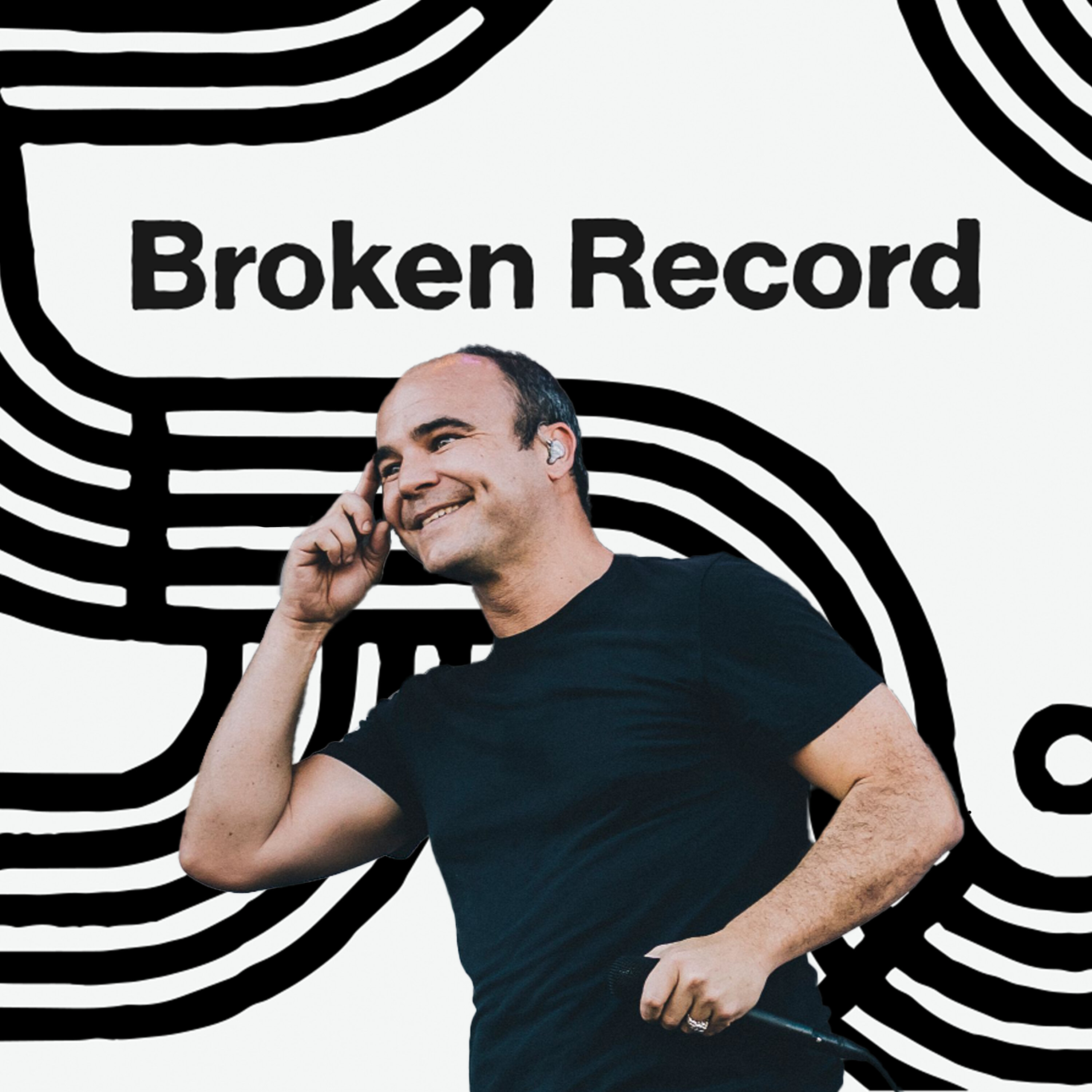
00:00:15Speaker 1: Pushkin.00:00:20Speaker 2: The Baltimore based synthpop band Future Islands was first thrust into the national spotlight in twenty fourteen after making their TV debut on The Late Show with David Letterman. The bands unassuming frontman Samuel t Herring, danced ecstatically around the stage, seething with emotion. The performance quickly went viral, making it one of Letterman's most memorable live appearances ever. At the time of their big break, Future Islands had already released three albums and been touring relentlessly for nearly a decade, and while they would become one of the most prominent bands on the festival circuit for the next several years, Future Islands always managed to maintain a sense of unparalleled raw vulnerability on stage, in part thanks to the deeply confessional nature of Sam's songwriting and his stage presence. On today's episode, Lea Rose talks to Future Island's lead singer, Samuel t Harring about the band's latest album, People Who Aren't There Anymore. Sam also describes the physical toll his energetic performance style has taken on his body over the years, and his long held gripe with guitar based music. This is broken record liner notes for the Digital Age. I'm justin Mitchman. Here's Lea Rose's conversation with Samuel t Herring.00:01:37Speaker 3: When Future Islands started. What was important for you to convey to audiences through your performance style?00:01:45Speaker 4: Well, the beginning of Future Islands is a little strange because the impetus for a beginning of the band was a tour that we were supposed to have played as our first band that we had forgotten about, and so the impetus of the band was basically art Lord. Our fourth member left at the end of two thousand and five, and we kind of just didn't have a band for four or five months, and I don't think me, William and Garrett really even talked about what we were going to do next. I think we were still kind of sad and confused about what had happened because our other member just like dipped town and was like, you know, I'm not doing the band anymore, and we're like, well, do we want to keep doing it without, you know, our friend that's been here since the beginning. So and then in January of two thousand and six, William got an email that was basically like, Hey, how's that tour coming, because William used to book all of our He booked all the Art Lord shows, he booked the first like four or five years of Future Islands as well, and so yeah, so instead of you, basically William called me and Garrett and was like, I was supposed to book this tour and I forgot.00:02:56Speaker 1: Do you guys? Do you guys want to start a new band?00:02:59Speaker 4: And so within like three weeks we wrote and recorded five six song EP and then we went we did a tour. I mean honestly, there was no thought process. I mean that's kind of you know, even the roots of art Lord, even though it was high concept, the function was punk because we didn't own instruments, you know. Williams guitar or Williams bass guitar was borrowed from a friend. Like all the amps were borrowed. All the keyboards except for one were we're like found at thrift stores or borrowed from friends. So the mode was really you know, eurosynth pop, but it was but we felt like punks.00:03:38Speaker 1: You know.00:03:39Speaker 4: Yeah, we stunk and we played your living room, so we were punks. And with Future Islands, it was it started very much the same, you know, and at the time I was I had really bad drug problems. I was trying to get out of that, you know. Shortly after Future Rounds began, I left town to get my life together and get clean. So Future Islands just kind of began with these songs. Garrett was kind of playing solos for the first time. William's bass was going super fast, and for the first time ever, I had kind of a drum kit behind me that was creating this propulsive It was a propulsive element in the music that we'd never had before. Like before that, I was trying to be the propulsive element through my movement, but it was much more of a dance and a performance and a bit of theater. But all of a sudden, I wasn't the most you know, I wasn't the thing pushing it forward. So I had to I had to figure out how to match that energy of the drums. And then that brought this whole other element of anger and angst, which is a lot of things I was going through at the time, fighting drug addiction and feeling really lost in my life.00:04:52Speaker 3: Were you on hard drugs like I was a.00:04:55Speaker 4: Cocain It was like two two and a half years. It was like a Gramma day habit. But yeah, I was. I was a dealer and became a fiend and then yeah, it was really really crazy stuff. It's crazy to think about now how much that part of my life was. I mean, I was selling weed when I was fourteen, fifteen and up until I was twenty two, twenty three.00:05:16Speaker 3: I was gonna ask you if you ever had like a regular job, but I guess.00:05:21Speaker 1: Yeah, I was a terrible drug dealer.00:05:27Speaker 4: I was just like make sure everybody's got what they need and I get high for free. But yeah, all this stuff. You know, it's such a strange world to think about, but you know, these are the things. This is my life that I, you know, one time, was very afraid to share that I'm very open with now because I want people to know, like, yeah, there is another side, and you know, and I've I've slipped many times, you know, And that's part of it too, you know. Part of it is saying like you don't say like, yeah, I used to be I used to have a problem. You're like, no, I have a problem. I just don't. I don't do it. You know, I have all the problems. You know, I'm addicted to so many things.00:06:08Speaker 1: And that that's part of it.00:06:09Speaker 4: But that process of leaving town began with a conversation with the guys to ask them if it was okay, and they're like, yes, please, like we know that you have a problem, please get go get help. But by the time we got to Baltimore, you know, I finally was starting to feel like myself again. I was with my friends again, who's like lives I'd missed.00:06:30Speaker 1: You know.00:06:31Speaker 4: That was when I think we decided to believe in ourselves and go after a thing that in the past it had been like, you know, maybe this this is like really fun and people want to see us play, so we'll go play some shows, to being like it's time to go for it. And that's when we you know, once two months after Garrett got to Baltimore, we went on our first US tour and then just stayed on tour for five years, almost five years. We played like in that four and a half years, we played close to eight hundred shows.00:07:05Speaker 2: Wow.00:07:06Speaker 4: And that's when the band grew, you know, from being from playing you know, for peanuts and playing like five and ten people at the beginning around the country to to like making a living at the end. Yeah, you know, there was a time in our lives where we wanted to you know that you think everybody's listening.00:07:26Speaker 3: And when was that time? Was that like around the time of the Letterman performance.00:07:30Speaker 4: Yeah, that was like twenty into twenty fourteen and fifteen we really felt like, oh, people are finally care about what we do, you know, our fourth album. You know, we're all you know, we didn't expect to be a spotlight band at that point, like we were. We had gotten over the feelings and like had accepted that that was never going to happen, and that was actually really freeing to be like, Okay, cool, I guess nobody really cares that much, but the audience cares. You know, We've built our own We've built our own audience through our own hard work, and then all of a sudden we were in the spotlight and that really affected us in it did make us think about who the audience was and writing for that perceived audience. And then we created an album that we just kind of rushed and I don't think took the proper time, but I think we were also so exhausted. Yeah, we were just lost. So there was that period where you said, oh, maybe people care, Yeah, and let's write for them, and maybe this will take us to another step up and then you kind of get to that step. I wrote a line in a rap song that came out in twenty nineteen, the album of by Buddy Kinney Siegel, and I said, uh, basically like, yeah, there's no air at the top, and it's hard to breathe when your breath is something you lost. And it's just like that idea of like I wanted all of this, I did all of this, I got to the top and I couldn't breathe, and then you know, the years after that is accepting like I don't want to be up there struggling. I want to be at a place where I feel comfortable and I can be the artists that I set out to be.00:09:13Speaker 3: Yeah, how is that different than what you thought it would be?00:09:16Speaker 4: Like, I think one of the things that I realized is that before we have the really the national exposure, I kind of perceived it as when it gets bigger, it's easier, but it gets a lot harder. It takes work, and I think it made me really respect the people that.00:09:41Speaker 1: Can do it for so long and.00:09:44Speaker 4: Can do it at that reach a certain level because I kind of thought, oh, yeah, you just get bigger and then you have a bigger team, and then they just figure out, they make all the decisions and you just get to walk out on stage and you know, maybe that's what like bon Jovi gets to do. But yeah, just fly in and play the show and go home again, fly out. But it's a lot of jumping through hoops, it's a lot of kissing the ring. You have to be like more humble, you have to play the game, and it's it's all part of the process of getting that more and more exposure. And that just wasn't who we were. And I think we've just done it too long. I mean, the biggest thing, you know, I've always had kind of a social anxieties, but through that process they really got heightened. And as my life has gone on since that point, my social anxieties have gotten worse. Like I'm learning how to try to feel more comfortable and deal with anxiety and soothe myself and these kinds of things you learn about. But but it is like I didn't used to feel as out of place as I do now. That's part of why I'm like in a new city is because I feel a freedom in a new place, like I don't feel I feel less judged, I feel anonymous. Yeah, you know, and that feels good.00:11:06Speaker 3: It's interesting to me that you would say you have social anxiety when your performances are so they feel so vulnerable and you feel so open and you're so transparent with what you're feeling, and you're crying, you're growling, you're shaking your fist at the sky, and you're completely wide open at that point. Yes, So how are you able to do that if you also have the other side of you, which can feel scared.00:11:34Speaker 4: Well, there's a difference between being in a crowd and being in front of a crowd. There's power that comes with a microphone in a stage when you're in a group of people, or entering into a group of people, especially if you're if you don't feel like you have a place, or you are searching for a friend, you know, somebody to talk to, or you know you're alone, even like going to you know, like I have like anxiety going to like a friend's house for like a Christmas party or something, you know, And that's really sad because then you very quickly learn like oh yeah, these are all my friends. I don't have anything to be worried about. But so when you're entering into a space where you're an anonymous person, you don't get to you don't get to like express who you are. You're kind of you're scene for who you are on the outside. There's none of who you are on the inside. You're only viewed by people's perceptions. When you're on stage, you get to express who you are. You get to share who you are, and you get to prove to people who you are. Like, my thing is that I've always felt like I didn't belong and because of that, I felt like an underdog who had to prove themselves. You know, that's the story of Future Islands, That's the story of me. Is like I have something to prove that I belong, that I'm worth a damn, that I have meaning in this world. And that's not for me to just prove to other people. It's for me to prove to myself and for me to share that you can feel this way but still make a place for yourself in this world and that you're not alone. So you know that that's the difference between being the person watching the show and the person you know being the show is now I have something to tell you. Yeah, I've always loved the stage because it allows me to express myself and feel like that allows people to see me for who I am. Whether or not they like that is not my concern. It's really about I mean, you want people to like what you do. But it is like, now I've at least expressed who I am, and that makes me feel really courageous. You know, it makes me feel brave. I don't know, it makes me feel free. It is so it is such a strange paradox, Like I understand so many of these things are like my weaknesses that I've turned into strengths.00:14:05Speaker 3: It strikes me when I see you on stage, it strikes me that like, you're doing exactly what you're supposed to be doing, Like it feels so authentic and for somebody to be able to find that feels really really special.00:14:19Speaker 1: Yeah, And it also.00:14:20Speaker 3: Strikes me that, like, why aren't more people who are lead singers or front people, Like why aren't they doing that? Like I love that you give it your all and you like think about it from the perspective of an entertainer, and like why don't more people do that.00:14:35Speaker 4: Well, the entertainment is it's the hook, you know, Yes, and you got to have a hook. You got to have something that catches people. And you know, that's also comes into the songwriting and how you choose to what you choose to share, and how you choose to share. But for me, the performance is a way to express without words because words get lost. But then so you know, you show the story through your emotions or through actions.00:15:02Speaker 1: Yeah, but you know, the dance. The dance is a hook.00:15:05Speaker 4: It's to pull people in so that they don't look away, and then you hit with truth and you hit them with emotion, and that's important. But you know, I believe, I mean, there's definitely front people that I watch and I say, do something, But I really believe that it doesn't matter how you perform if you're bringing something that's honest, because my performance comes from an honest expression of emotion in a writing process. So then when I come on stage and I have to share something that's very personal for the first time and the second time the third time, things that I'm still becoming comfortable with myself. To share that with people is to feel electricity shooting through your body. To feel the wall of emotions behind your eyes. It's to feel like life coursing. And I mean that that's for me. But I believe that if there's an artist who sits at a piano and they're just gonna, like I've seen it before, if they write an on a song, it doesn't matter. They don't have to dance and move around. They just have to play that song and you're gonna feel that electricity. You're gonna feel the hair stand up on your arms. You know, you're gonna feel the emotion because the song is honest. So that's always my goal is it's reaching a level of truth so that it's not dishonest on stage. And I don't feel like I'm that I got to put on a show, you know what I mean, Like you want to feel, you know, because there are times where you go out on stage and you're like you're just tired from the road and you feel disconnected and you do have to you do put on the show. I'm great at those shows too, But the but the truly transcendental shows are the ones like you're just like really connecting with the original spirit of the song. You're seeing the faces of the people that are gone, like like you're walking into those rooms, you're smelling those smells.00:17:28Speaker 1: So I mean my yeah, my performance is a hope. You know.00:17:33Speaker 4: It's like I hope that I can connect with the muse and and share share like some real truth and emotion with people. But uh, but yeah I have If you're out there and you're a singer who is afraid of being open on stage, my my thing that I have a personal I have a personal trick that I do for those times when I go on stage. And it's funny because I I will always watch singers to see their body language, and you can you can see the people that are that are closed off because there they literally hunched their shoulders, they close themselves with them with a mic stand and all of this. But if I go out on stage and after a couple songs, I feel like I'm not connecting with the audience or the audience is not connecting with me, then I actually like pull my shoulders back, stand up straight, and slowly open my arms completely to the audience, which they're very confused about. They don't know what's happening. They just see it's it's the it's the actual physical opening up for whatever you have for me. I am here, I am completely open, and you feel the judgment, you feel the fear, and you say, I don't I don't care, you know, But it's it's that it's a literal opening of my body that's always helped me to to like reconnect with the feeling why am I here? And but plus, you know, it just confuses the hell out of people and then you and then you get them.00:19:11Speaker 3: Is it purposeful that the rest of the band is just like really like looking down, disconnected, like looks like they couldn't give a shit about you, like totally disinterested. Is that on purpose?00:19:25Speaker 4: It might be now, but I don't think it was originally. Garrett's always been really shy. You know, when me and Garrett were first friends, he Garrett barely spoke like he was He was so quiet that a lot of our conversations were really it was just like me da da da da da da da da da.00:19:46Speaker 1: And Garrett like yep, like fuck this, fuck that, fuck this, yep.00:19:50Speaker 4: And and you know, Garrett's different now, he's grown up a lot and changed. But that's part of when I talk about trying to channel, trying to speak for the music, is also giving a voice to my friends. They really allow me to go into these really honest places about my own life and they stand behind it. That's also why I won't sing about certain things because it also is representative of them. Does that make sense? Like within my rap work, I sing a lot more about like drug addiction and and things like that, because because that's a place where I feel free to express myself about these things that maybe they don't, you know, want their parents to hear.00:20:36Speaker 3: Or Yeah, when you write a new song, do you bring the lyrics to them? How do you share the song with them? And do you need them to sign off in a way or is it just known that like you handle lyrics, they handle music.00:20:50Speaker 4: I used to be more hands off with them about my lyrics. I used to be like, do not criticize or say anything. But I'm a lot more open to it now, and so when I send demos, so usually what happens is whether I'm in studio with them and I make a recording on my computer or my phone or in the old days, I used to like carry around a big brick conference table cassette recorder and I come home and write over tapes or off my computer and then I take that or or if Garrett sends me an idea or William sends me an idea, I usually demo kind of on what we're talking through right now as best I can, and then I send to them Mike, William, Garrett, I send them the song and the lyrics. It has to be a safe space. You know, there is egos involved when you are in a band, and these are things you navigate over time and you like learn to recommunicate again. These are like marriages. You know, you got to go on dates. Man, got to go on dates, keep the spark alive. Yeah, like these things are important just to reconnect and yeah, and you know, I know that they're in the past.00:22:07Speaker 1: I've was like, do you have any suggestions? Like, screw that. I don't like that suggestion.00:22:14Speaker 4: But now I'm trying to be more, you know, and all parts of my life like really taking the time to listen to other people's people's thoughts and because it's their band too, you know, because there's that part of me in the past. It was just like, well, this is my life that I'm singing about, so I know best. And then you're like, yeah, but everybody's got to play it, and everybody's got to stand behind it.00:22:38Speaker 2: We're going to take a quick break and then come back with more from Lea Rose and Samuel t Hering. We're back with Samuel t Hering.00:22:50Speaker 3: How long has the album been finished? Like, does it feel like it's like an ancient piece of work at this point or does it still feel fresh?00:22:59Speaker 4: I would say because of the emotions that were captured on the back half of songs that were written, it feels fresh, like it's it's one of those things where it's still revealing itself because you know, sometimes especially if you look at even our last album, there was a lot of reflection within a new relationship. You know, the reflection was, oh, there was a lot of really bad things that happened in that once you're in a healthy place. So then this album kind of picks up in the middle of the pandemic, separated from that person, and then ultimately the first seven songs were written through through the pandemic. And you know, my ex was was in Sweden and I was unable to get to her. So a lot of this distance, which is also a big part of our work through touring, you know, saying a lot about distance.00:23:51Speaker 3: I know, I feel for you. Man, it's like, how do you do that? Yeah, Like, how can you maintain a relationship on the road all the time. It seems nearly impossible.00:24:00Speaker 4: Well, I'm a very good example of that.00:24:07Speaker 1: You can't. But then you know, there are is successful within that too.00:24:10Speaker 4: You know, Garrett has a really beautiful family and and you know, and also you know, me and Garrett are very different people.00:24:18Speaker 1: I think.00:24:18Speaker 4: I think that's the thing you find too, is why things work and why things don't work. The people we choose, why we choose the people we choose, why they choose us, you know, and these kinds of things that go deeper to the root of like who we are as humans. But since the first half of the album was written before a breakup, and then the back half was written, you know, I finally got back to Sweden, I finally got my residency card I had an apartment with this person, and then I got back and we just it was over, you know, like the feelings were the thing that we're gone. So then all of a sudden, I'm rushed into this breakup which I did not expect or foresee, And those songs came very quickly, so as opposed to in the past, I could kind of you know, these songs are coming with the reflection or an understanding, like over time or like this is where I am at now. The first four songs were written in the flash and bang of this breakup and my whole life feeling like it was. You know, you have an idea of where you're going and then it's kind of all taken away from you.00:25:32Speaker 1: You don't.00:25:33Speaker 4: Yeah, I just felt completely upended and confused. And that's scary when you're any age.00:25:41Speaker 3: You know, is there ever a part of you when you're going through something like that and it's maybe becoming clear like Okay, this relationship is ending. Is there like a small part of you that's like, ooh, the silver lining is I'm going to get great material from this. I'm going to get great songs from this situation.00:26:00Speaker 1: Well that's what you.00:26:01Speaker 4: Tell everyone to hide your own emotions, you know. That's like the joke that I would make for years and years and years of my life, and then I did that. I remember I was, you know, like a bachelor party for Garrett when he got married a few years ago, five six years ago, and you know, we ran in a cabin just out in the woods with a group of friends and it was a really nice time. One night, we ate some mushrooms and I'm like, I'm like staring at a tree with Dan Deacon, just like that tree is amazing, and talking to him about about this recent split with someone, you know, and kind of the realization that I, you know, I had this very short, short relationship with a person at a time when we were finishing our fifth album, The Far Field, or we were working on our fifth album, The Far Field, and I was very devoid of emotion at that time, and I didn't have anything to write about.00:26:54Speaker 1: I've just been on the road.00:26:55Speaker 4: For three years straight and I was destabilized just because the way my life was. But I told Dan about this thing, going through this breakup, and you know, but at least I'm going to get some I'm gonna get some juicy songs out of it.00:27:08Speaker 1: And did I like mind that thing?00:27:11Speaker 4: And then it's like, oh, yeah, I got into a relationship with a person that I really had nothing in common with other than we were attracted to one another. Because I knew that it would fail. There was no way this thing was actually going to work, and then I could take from it and Dan. But what Dan said to me was just like I basically looked at me and cried and said, I don't like to see you hurting. I don't like to see you doing this. I feel like you're doing this to yourself.00:27:37Speaker 1: And it was a very emotional moment. That moment made me change the.00:27:42Speaker 4: Way I made that joke, because it wasn't a joke, Like, if you really look at that on the surf, what the truth of that is pretty actually disgusting. I mean, you know, of course this is a mutual attraction between people, but you're just like, yeah, I shouldn't even been there, Like I shouldn't have done this. I shouldn't have like waste my time or somebody else's time. I shouldn't like be making light of art. And that that's one of the reasons that I have issues with that record is that I feel that I was I was kind of empty that in those years after the success of Singles, I was our fourth album and I felt really empty and lost and confused about where I was. I used to be so sure of myself as an artist and what I had to give and why it was important to give, but what I missed. The thing that I was also not doing was saving anything for myself, Like I was just giving. I was just giving it all away and not looking.00:28:41Speaker 1: And that's what Dan was saying.00:28:43Speaker 4: I wasn't looking out for my own emotions. Was I was giving and I was I was looking for failure so that I could, you know, idealistically get through their issues in their lives. But I wasn't actually protecting myself. I wasn't keeping anything for myself. There was and there's still a part of me now that does fear that it's time to stop sharing about my romantic life. And that becomes fearful because you're like, well, that's kind of it's kind of the story of our albums, you know, yeah, Like the albums have become this chronicle of my life, and I fear. I don't think it's really hard to shut the faucet when it's open, you know, Yeah, I mean.00:29:31Speaker 3: But also, like would that make a difference for you personally? Do you think you would be able to reach a point with someone that would be like unchartered territory if you're not so open about what you're going through in your experience, what would you actually achieve do you think by not sharing so.00:29:49Speaker 4: Much, no idea and it's almost like a challenge.00:29:55Speaker 3: Maybe, just like I'm going to try something different because what I've been doing hasn't been working. It's not serving me, is it that.00:30:02Speaker 4: Sort of Well, it's also you know, the other thing that happened when I got back from Sweden was that I went to therapy for the first time, and in doing that, you realize, you know it, well, it was I went because I was terrified of spiraling out of control into a place that I've been before, you know, a substance abuse type substance abuse, you know, just like too much sex, too much drinking, too much drugs. I was like, I'm not that person anymore. I don't want to be that person anymore, you know. Like I was so happy when I was in a relationship for years with someone who I really cared about and thought that was my future because I didn't have to go back to those places of emptiness, like I finally had somebody to share with. And in getting out of that, I was like, I don't want to go back there, right, I don't want to be at that place where I was in twenty seventeen, to twenty eighteen, where I felt really empty. I want to continue this feeling of feeling like I'm on a positive path for myself and looking out for myself, because so often, especially within relationships, I look out for the other person and I don't look out for myself, which is actually more of a burden, as I would find through therapy, is more of a burden on that person. But through that process of they just really just reflect me onto me so I can see me, and it made me see that, Okay, I write these songs about these relationships, they're cycling like I'm writing a song that I could have written about the same relationship.00:31:32Speaker 1: Eight years ago.00:31:34Speaker 4: Yeah. I don't think the problem is the people. There's something else that needs to be broken in this process, you know, there's more to explore within myself to illuminate something deeper.00:31:47Speaker 1: Like I saw a YouTube.00:31:50Speaker 4: Comment a couple maybe two or three months ago on a new song of ours, and the guy was just like, I wish this guy would stop singing about love because.00:31:59Speaker 1: Some of us have never had love and will never have love. We'll be alone forever. And I was just like, bro, please don't feel that way.00:32:08Speaker 4: It's kinda be okay, and maybe really sad that, but it also was like, okay, I guess there actually are people that don't, you know, because for me, I'm always trying to find a universal way to sing about all all manners of feelings.00:32:24Speaker 3: How much do you think about your perceived audience when you're writing.00:32:29Speaker 1: Not too much.00:32:30Speaker 4: I mean, of course I think about them. But if it's a good song that good songs just write themselves, I mean good to me, So I should I should be clear that you know, what I think is a good Future Island song isn't. It's not everyone's cup of tea, and that's okay, But I know that if I feel, if a song makes me feel, it has the potential to move people. Like I don't really remember writing the good songs. I don't really remember writing songs there except for maybe ones that I have struggled with. But the ones you struggle with you're really proud of, but they aren't the hits.00:33:08Speaker 3: As a song writer, what do you think you're best at?00:33:12Speaker 4: Just channeling emotion of music?00:33:15Speaker 1: I mean, that's my that is my goal is.00:33:19Speaker 4: To connect with the music and speak for it, like the partnership of the partnership of me, William and Garrett. That's a relationship that's gone back, coming up on twenty one years. And the thing is is like we didn't when we started making music. William had never played bass before and Garrett had never played keyboards before. And I was a rapper. I didn't I could sing. I knew I could sing, but I wasn't a singer, and I didn't want to be a singer. Like I wanted to be a rapper and that was my goal, like going to school musically, I was like wanted to find a producer to make beats. And so the strange thing is the way that we grew was really together, like everybody kind of learned these new instruments together. And the fact is is like, for being an eight year old kid who never wanted to sing in a band, I immediate because I didn't think it was cool.00:34:16Speaker 3: Really, what didn't you think was cool about it?00:34:19Speaker 1: Well, to me, bands were like they were like.00:34:22Speaker 4: Whiny, which is really funny because like future rounds is so emotional, but yeah, bands were like whiny and guitary. I didn't like guitars. I was like, you know, I like beats and like I like descending.00:34:38Speaker 1: I live.00:34:38Speaker 4: The falling blocks is what I call them, Like these kind of descending synth lines and sample based stuff, and I just didn't I was never drawn to guitar guitar rock. I'm still not, you know, it's just not my not my thing. It took me a long time to even get into, like I'm a big you know, I'm a big jazz head, but it took me a long time to even get down with like jazz guitar. I love a little django, but I mean like electric jazz guitars.00:35:09Speaker 1: Cool. There's some greats.00:35:10Speaker 4: Anyways, let's not talk about. But yeah, like it just it just didn't appeal to me. But the thing is is like when those guys started making music together, it pulled something from me that I couldn't explain. And I still just like get this feeling. And I don't know if it's because of a deeper connection with those guys, especially like you know, get me and Garrett were best friends through high school and went off to college together. I never made music because Garrett played guitar, you know, and he was like he was like a metal guitarist, you know, he was just like ripping on his Jackson. Yeah, you know, and like, yeah, me and Garrett obviously are not going to to make music together. So that so then for him to kind of come into this conceptual project that me and William had together was really cool to have my best friend. And then all of a sudden, him and William were just like melding and like learning and creating really very quickly, like within six or seven months, they were creating these really beautiful ideas from this kind of from scratch, you know, from where we started, where it was a little loose. But anyways, that's just like a thing that has continued to pull for me. But as Garrett, you know, Garrett being my best friend. When we were kids, you know, a lot of our friendship was based around mutual anger and alienation about you know, the world as fourteen year old kids who didn't feel like we fit in and felt like the way fourteen year old kids are every moodst What were.00:36:38Speaker 3: You guys like? Like, what were you like in middle school and high school?00:36:42Speaker 4: I mean Garrett was a skater. I hung out with skaters like when we were like twelve or thirteen. And then I shouldn't give away all Garrett's secrets, that's for him to give away. But I started smoking cigarettes and smoking weed and went away. We were both like played sports and stuff. But then we kind of went away from that. I got really into a kind of discovered poetry, weed and drawing all at the same time, and that kind of became my life. And you know, through that hip hop and I was very much you know, by the time I was like fifteen sixteen, I was like, I'm an artist and I'm a rapper and I know exactly who I am.00:37:21Speaker 1: And yeah, it was just on this.00:37:22Speaker 4: Journey with words and and uh, you know, Garrett was Garrett was. We were both like really into art. We had a short lived graffiti crew that was not very cool.00:37:33Speaker 1: It was just the two of us.00:37:35Speaker 4: We're like, go behind the k art and we're like we were gonna do a bombing run on the cam art.00:37:40Speaker 3: Oh yeah. Was there anyone in your family who was artists? Like, did you have anyone to look up to?00:37:46Speaker 4: Yeah? Well, my have like a small family, me and an older brother. I mean my brother was the one who turned me onto He turned me onto hip hop. I mean he was the one that brought the records home. Yeah, and uh, he was all into Pantera and crazy into Jane's addiction and Danzig and I love Danzig, but I didn't get Jane's addiction at all when.00:38:05Speaker 1: I was younger.00:38:07Speaker 4: I can really appreciate some of it now, but back then, I was just like, was terrified about what was happening to my brother. You had like he had like holes punched in the wall with like pictures of Perry Farrell and then with he had one that it said like written in like oil crayon around on the wall, just like in this hole lives the Wicked King. And I was just like, this is I'm very concerned about my big brother.00:38:32Speaker 1: My parents were too.00:38:34Speaker 4: I mean that actually affected me really deeply because when I was ten, I you know, went snooping through my brother's room when I when I played hooky from school to like see what kind of trouble he had that I could get into. Ye, and I found Jane's addiction. This movie called The Gift that he did. It's like heroin overdoses and necrophilia. Yeah, oh right, and he had so it was that and he also had gg Allen hated. So I was like ten eleven years old watching a grown man throw feces around naked and I was like, I was just like, I think when I get into music, were you.00:39:13Speaker 3: Close with your parents at that time? Like what was your relationship with They were.00:39:16Speaker 4: Always like kind of supported music and art and and it was years later until I found out that my dad was a painter when he was a kid.00:39:24Speaker 1: Oh wow, my dad built a lot of furniture.00:39:27Speaker 3: Wow, that's cool.00:39:29Speaker 4: And uh and my mom, but my mom played piano and loved to play and sang. So there was always like stacks of sheet music in the house and that was kind of something that me and my brother and my mom shared, Like still to this day when it's around Christmas time, my mom and brother will sit up at the piano and play Christmas songs. But then that but also the other thing that happens is then they they do all of Jesus Christ Superstar.00:39:55Speaker 1: And you know, if you've seen me perform, you think that I'm I'm a big showman.00:40:01Speaker 4: That you should see my brother do Jesus Christ Superstar the living room. Yeah, I mean it came from somewhere. Yeah, you know, my brother was really the first front person I ever saw in person, you know, he was, and that was a big thing too, Like he was the one who was in bands. So when I when I discovered rap that that was kind of like, oh, that's what I'm going to do because Joel does. Joel's in bands, so I'll do this thing, you know. It would be kind of like it was still like out of some want to impress him, but at.00:40:32Speaker 3: The same time it was differentiating your path.00:40:36Speaker 4: Yeah, having my own thing and feeling more like mine. And also that was probably had something to do with like I always you know, that partnership with Garrett and William and now with Mike or is so important to me.00:40:48Speaker 1: But I've always been from.00:40:50Speaker 4: A young age very alone, you know, in in how I want to move or at least how I feel comfortable in the world.00:40:59Speaker 1: Is it's that lone wolf syndrome, you know.00:41:03Speaker 4: I think it's actually a symptom more of feeling, you know, that alienation and isolation at a young age and not feeling like I fit in. So then I accepted being different to be like, oh no, I choose this.00:41:14Speaker 2: Yeah, wee last quick break and then the rest of Leah's conversation with Samuel t Hearing and now the rest of Samuel t Hearing.00:41:28Speaker 3: I noticed on this new album, there's a lot of imagery. You mentioned night a lot, and was there something specific that happened at night or is that just a time of day that you feel particularly reflective.00:41:44Speaker 1: That's really funny. I didn't realize how much I talked about night. Yes, it is.00:41:50Speaker 4: I think the night carries And this once again goes to I really believe in using these very simple ideas to tell the stories, to try to reach as many people as possible. And in the way that the day has certain connotations or but different times of day have have different meaning. You know, the sunrise means something different than the sunset, and in the same way the first fall of night, you know, deep in the middle of the night, or or the end of night hoping for the morning, and in these kinds of things like I think for me, I spent a lot of time in this album. It felt like it was all through the pandemic and then after the pandemic, but the pandemic was like had created an environment where the sun didn't come out again for a bit because of the the split, and then my life feeling like I didn't know what was up or down or what was night and day and the night like scared me, you know, like the night was when, yeah, being alone and being afraid of those things that I'd said, like being afraid of the ghosts of my past.00:43:07Speaker 1: To come back.00:43:07Speaker 4: And you know, I was like probably going to bed at like eight thirty nine every night after that because I wanted I didn't want. I didn't just didn't want to be tempted by it. I didn't want to be alone with my thoughts, which is all I was. You know, when I was writing a lot of this album, it felt like it wasn't ever going to end. I think that's why those moments are important. Like the way the Garden Wheel ends the record is to say that, you know, the things rise again and and you know the sun, the sun is out again.00:43:40Speaker 1: We're out of the room.00:43:41Speaker 4: But at the same time, like King of Sweden starts the record, there's a line in that song that is it's an inside story between me and this person. But you know, there was a time I was driving on the down a back road and in the countryside and southern Sweden, and I could see the moon like through the clouds, this big bright moon, the perfect circle of it, hazy through the clouds, low on the horizon. I was like, the moon is beautiful, and she was just like, dude, that's the sun.00:44:15Speaker 1: The moon. I was like, the moon is shining through the clouds in the daytime.00:44:20Speaker 3: She's like, you're like a nocturnal creature who should not be out during this.00:44:24Speaker 4: Yeah, but then we just like laughed. I was like, that's hilarious. But yeah, I say in the line, you know the moon was low and incensed or was it the sun in the horizon that lit the figure in the distance. And that's that's how the song start, or the album starts with King of Sweden and the sun low on the horizon going down into the night, and then we rise up again with the last song.00:44:50Speaker 3: King of Sweden is such a good song, thank you, thank you very much. When you finish that song where you're like, oh, this is like a banger, like this is a good one.00:44:58Speaker 4: Yeah, Yeah, that one felt really good. And a lot of those pretty much all the cadences, and I would say about fifty percent of the words, if not more, were we're actually freestyles or freestyle improvisations. We we wrote that on a jam and then I was like, you know, press record and I was just like, yeah, getting.00:45:23Speaker 1: That flow, and I was like, this feels really good, it feels fun.00:45:26Speaker 3: It's really really good. And then that I believe it's the second song the tower. M do you think about like the little like I I like, are those things that you add in intentionally for the song to be catchy or is that just how the song worked itself out.00:45:47Speaker 4: Well, that's just how it got wrote. That's my that's my southern coming out. That's how I got wrote. Yeah, no, now that wasn't intentional hook put in. I'm glad that you think it's hooky.00:45:59Speaker 3: Yeah, I mean I think it's the type of song where like by the second or third verse, the first time hearing it as a listener, you can start participating with it and it's you know, you can repeat it and it hooks you in really quickly.00:46:13Speaker 4: It is funny because I was home at uh I was home at Thanksgiving and and I shared the finished record with my parents and my mom was doing that around the house. I just like here in different rooms. I was like, Oh, that's cute, that's real cute. But it's actually funny because if you're you know, there's probably like five hundred people out there that would know. But our first band, art Lord and the Self Portraits.00:46:38Speaker 1: Had a song.00:46:38Speaker 4: One of the last last songs you wrote was a really awesome song called.00:46:42Speaker 1: I I I and I would be like I I.00:46:47Speaker 3: Is that the band that you like were kind of like a character?00:46:51Speaker 1: Yeah?00:46:51Speaker 4: Yeah, that was me And that was me and William and Garrett's first first group before a future.00:46:56Speaker 3: So what was the thinking behind the character? Like, what was that all about?00:47:01Speaker 4: Well, you know, I told you that when I went to college, I didn't really want to I didn't want to be in a band, like want to be a rapper, and and that's kind of how I saw it. And then when I met I was also really into conceptual and performance art and had discovered that you know, you can stand anywhere you want and do a performance. If it's a performance to you, then you know, you can stand on the sidewalk and do a performance, and you can create art in any moment. Like these ideas as a very stoned seventeen eighteen year old were a mind blowing to me that I could make art that didn't have a product. It was creating reactions, you know, creating something for people hopefully good, you know, And I think that's something that still is a big part of It was a big part of when we started Art Lord and Self Portraits, and it's still a big part of myself today, which is trying to create reactions within an audience in a live setting, because I know the value of that. Whether negative or positive, the experience or the reaction that you get, it is still pulling something from people. It's causing them to uh, it's causing them to think or feel. That's been the goal of this band for a long time, is to create that safe space for an audience to be able to feel free and feel like they can be vulnerable and not be afraid. Because if we're on stage and we're coming from a PowerPoint, you know, a place where we have your attention and we can and we can share strong emotion and we can cry, and we can fight through things and still be strong and share in that moment, then we can, you know, just just illustrate through living, you know, this emotion. So it's a long process. Life is long, Yeah, it's not. Life is short. I lived by that idea for so many years of my life, just thinking thinking that I was going to die, expecting death, wanting death, and really coming to terms in the last ten years, like, Nope, it's going to keep going and you're going to find better ways to get through it and enjoy things and enjoy people and to have a good life instead of putting yourself into a bad place. Yeah. I mean that's been a big change in the last few years. We've made the decision to stop touring so much and to make more space for our own lives. And part of that is just because it just doesn't feel this touring feels a lot different between twenty five and forty.00:49:57Speaker 3: Yeah, I imagine is that where you get the biggest financial gain is through touring. So making that decision, is that changing the way that you know you're going to do financially in a year?00:50:09Speaker 1: Yeah? Part of that is.00:50:10Speaker 4: Part of that is an acceptance of for me personally, what I need to make a life work. I mean, of course, there was a time where we couldn't take a day off on a tour because if you take a day off, then you lose money, and there isn't any money you can't afford to take time off, So that that kind of the diy ethos leaked into a time when we could have taken a break and Because of that, we really hit the wall hard a couple times, and the fear of hitting the wall again is is the next time you hit the wall the last one, you know, because you do run the high risk, not even you don't even run the risk of exhaustion. Being a Tory musician, you will get exhausted, and some people don't recover from that, you know, it mentally scars them and affects them ideal.00:51:04Speaker 1: I have my own.00:51:06Speaker 4: Damage from touring and the things that it's done to my personal life, the things that it's done to me physically, Like I have a busted knee from playing shows, and I now associate like the month before tour is really hard for me because I know that I'm about to put myself in pain. Yeah, so it's like I'm psychologically scarred.00:51:35Speaker 1: You know.00:51:35Speaker 4: So this thing that brings me so much joy and gives me purpose is also causes me great pain.00:51:44Speaker 1: And you know, I'm doing all kinds of things.00:51:45Speaker 4: I'm in physical therapy to like try to get to a better place with my knee and make it sustainable. But that's what the you know, pairing down from playing one hundred and fifty shows a year to playing one hundred shows and now probably down to like fifty or sixty is where we're at now and not pushing past that is about making this, making the decision to do this for the rest of our lives. Like we could either we could eat to do this one hundred and fifty shows a year for the next five years until we never want to do this again, or we can you know, play fifty shows a year for you know, years and years and also be more interesting within our music because we can actually take the breaks to live life so we have something to reflect on and have something to speak about and connect with people on. Like we have our first, you know baby in the band, and like I don't want that child to grow up with out their dad around.00:52:43Speaker 3: Is that Garrett Garrett has a baby, yeah, and I.00:52:45Speaker 4: And that's it's really important to me that everybody is happy. I think that think that's where we all got to And I know that I don't need you know, this potential amount of money to be happy, Like that's going to make me less happy. I only need like this to survive, you know. Let me just play the shows and like get that joy, not hurt myself, not hurt my friends and and you know, feed the audience, but like also hold something for ourselves and yeah, and enjoy life.00:53:21Speaker 3: Yeah. Well, congratulations on the new album and the promo and everything that's to come. It sounds like you're in a great space.00:53:28Speaker 1: Yeah, thank you so much.00:53:29Speaker 3: Yeah, thank you for doing this. I really appreciate you.00:53:32Speaker 1: Yeah.00:53:32Speaker 4: Yeah, no, but I really appreciate you taking the time and making space for us on your podcast.00:53:40Speaker 2: Thanks to Samuel T. Harring, the feature Islands for chatting about the band's latest album, People Who Aren't There Anymore. You can hear it along with our other favorite feature Islands Songs on a playlist at broken Record podcast dot com. Subscribe to our YouTube channel at YouTube dot com slash broken Record Podcast, where you can find all of our new episodes. You can follow us on Twitter at broken Record. Broken Record is produced and edited by Leah Rose, with marketing help from Eric Sandler and Jordan McMillan. Our engineer is Ben Toliday. Broken Record is a production of Pushkin Industries. If you love this show and others from Pushkin, consider subscribing to Pushkin Plus. Pushkin Plus is a podcast subscription that offers bonus content and ad free listening for four ninety nine a month. Look for Pushkin Plus on Apple podcast subscriptions, and if you like this show, please remember to share, rate, and review us on your podcast app Our theme music's by Kenny Beats. I'm justin Richmond.