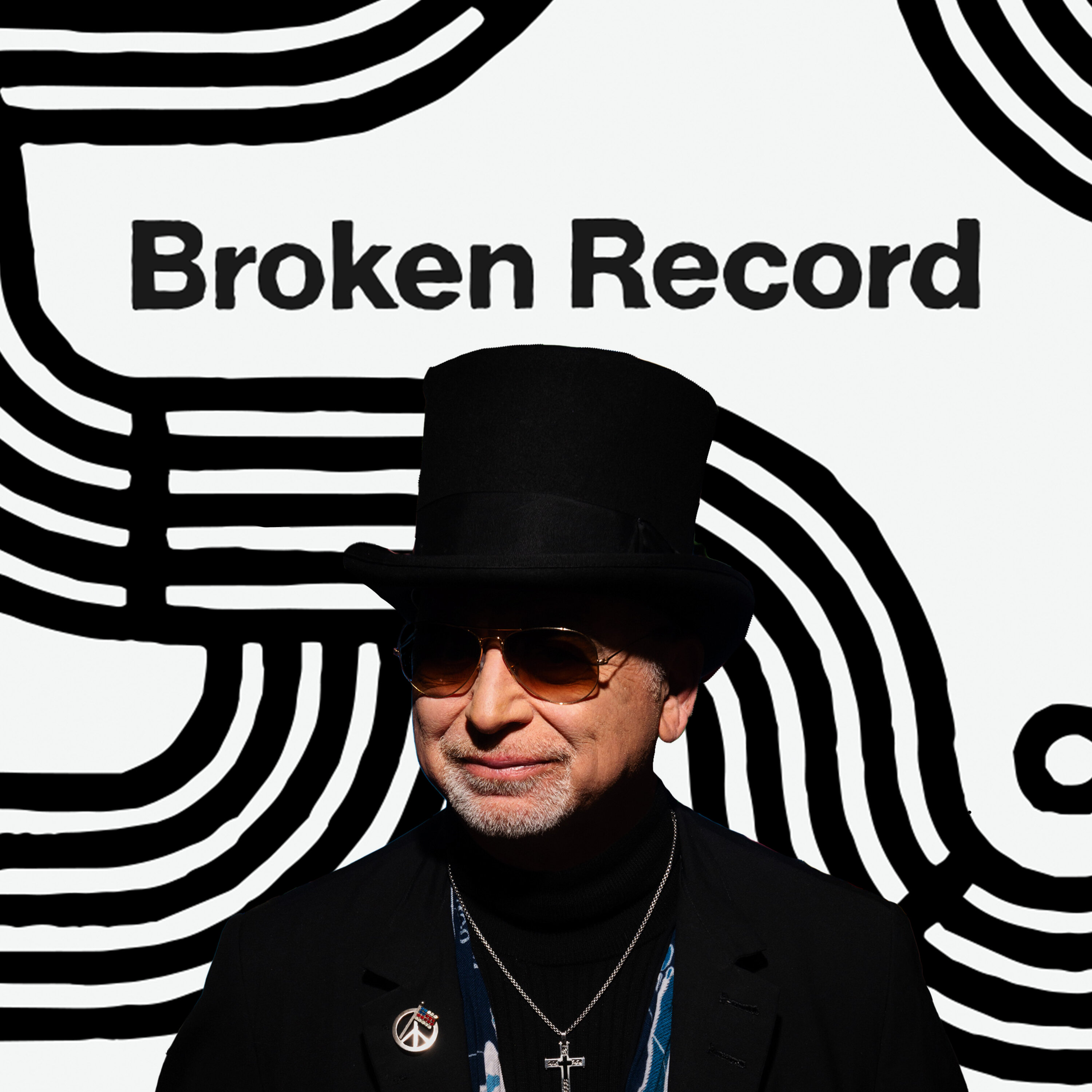
00:00:15Speaker 1: Pushkin, Cheryl Lyn's Got to Be Real, Steely Dan's Black Friday, Toto's Georgie Porgi all some of the most monster keyboard piano grooves of all time, and they all have at least one man in common. That's prolific musician and songwriter David Page. David honed his chops early growing up in la where he worked under the tutelage of his father, Marty Pache, an esteem composer who worked with artists like mel Tormat, Ray Charles, and even Ella Fitzgerald. While in college at USC, David started playing keyboard professionally and touring with Sonny and cher From there, he went on to co write and play on Boss Gags multi platinum album Silk Degrees. He also worked extensively with Quincy Jones, playing up multiple iconic albums including Michael Jackson's Thriller and Bad. All throughout his work as a session musician, David also served as Toto's principal songwriter and wrote chart topping hits like Rosanna, Hold the Line, and, of course, most famously, Africa. On today's episode, I talked to David Page about what it was like to be such an accomplished player at such a young age. He shares crazy stories about working with Michael Jackson and Quincy on Thriller and how he came up with the intro to Michael Jackson's Human Nature, probably the greatest keyboard riff of all time. David also plays part some some of the best songs he's written and talks about how they came to be. This is broken record liner notes for the digital Age. I'm justin Mitchman. Here's my conversation with David Page. A few weeks ago, I was on a run and Cheryl Lyn's got to Be Real came all. I was on my run and I was like, that's the perfect groove, Like the keyboard is the perfect ground. Was like, I gotta go home and learn that. So I went home trying to messing around, and She's like, who played on this? I had no idea. I looked it up and it was you. Yeah. I was like, what the fuck? It was me? Me and Ray Parker helped me put the rhythm section together. We got Gadson and a guy that just moved out from Detroit and played on the Emotions record named David Shields, and that was like the last record he did was like got to Be Real kind of thing. But that was a great rhythm section, and uh we cut that and uh it's one of my favorite R and B things that I've ever done, you know what I mean? Do you mind playing just the I'll show you. The song started this way with me coming in with a riff and Cheryl started singing a little bit, and then David Foster came in and we were I was in Sunset sound and he came in and played a little B section for me. You know, but a riff was right, the greatest groove. Yeah, and I heard a Mariah Carey song. It sounds like it sounds just about like got to be Real. She's got a song out where they just came out right after that. Really it sounded like got to be Real. Yeah, same changes, no, no, no, man like it's all good. You know. Your dad was a producer on that, right, I was co producer. We co produced that together. He kind of discovered her, you know what I mean. It's nineteen seventy eight, nineteen seventy eight, you're right, and you're called in by your dad. My dad made a call to someone at Sony, which was CBS at the time, and so I just heard this girl. He had a friend that worked Butler, I forget what his first name was, the jazz department at Sony, and my dad called him and said, I just heard this girl on the Gong Show, Cherylnn. And he says, well, funny enough, we're trying to do an album with her right now, some cuts with her, and so they gave it to my dad. My dad, I was had come off with Silk Degrees with bos Skaggs, so my dad said, well, if I team up with David, let's co produce this thing. So we ended up co producing her first album, you know, and David Foster is a part of that. He is a part of that. He came in just for a second. I was at Sunset Sound and Foster just came over to hear what we were doing, and I said, I'm working on the song. Got to be real, so you know, he went and I went and he did. You know. You know, so when you're called in to work on a song like that or I mean, obviously this, you're a bigger part of this project in general, But when you're working on a song like that, how did that riff come to be? Like how did well. I heard it was kind of influenced by the emotions to the song called Best of My Love. Yes, and I heard don and I like that beat, but I always like putting the hump in it, you know, you know? And I dansting on drums, you know what I mean. He just killed it, you know what I mean. Yeah, And at the same time, after I found that out, I was looking at the year seventy eight, and I realized at the same time that that record is huge. You're putting out Toto's first, yeah, first album. And consequently Cheryl sang on Georgie Porgie Porgie, which I never knew that was her. Yeah, that was her. She just came in because we weren't going to do put the song on, because I get to the part I'd just say it Georgie Pogi put and it was just like whitebread, you know what I mean. And Cheryllynn heard it and she goes, well, let me sing that, and she goes Georgie Polgy put kiss the Girls and we crossed over under the R and B market had sold like a million copies. Man, So do you remember writing that song Georgie? Yeah, I was listening to a lot of dance music. I was listening to a lot of Verry White because he had started his stuff with piano, and I was listening to Quincy Jones on I Want You album with Marvin Gaye, and because my friend, uh leon Ware was a friend of my dad's and I had written something with leon Ware, and I was very influenced by that album and that Chuck Rainey and Gadson on and those guys beautiful sound I Want You, you know what I mean. And it was very much that h m hm hm. I it was kind of very white thing. Remember very white? Did you know? It's kind of came out of that era, you know what I mean. This is your first album with Toto. Now you're accomplished. We'll talk about it. But you mean, you've played on so many records throughout the seventies. How are you thinking about writing this song? You have that wonderful piece, You maybe have that second part, that Bury White rind and piece. How you put it together? The lyrics. That's just because I've learned to get the form of a song right, to have a verse, a B section, and a chorus and then kind of an maybe an instrumental or a bridge, and I'm not a big fan of bridges. I used to like verse chorus instrumental and take it out, no bridge for you bridge because people, well they kind of throw bridges away. I like the Beatles and Elton and these guys. When they write a bridge, it's like it lifts the song, which is what a bridge should do to be, you know what I mean? Yeah, yeah, you know, at what point would you take a song like that to the rest of the group. Right as soon as we start gotting our deal, and I've been playing this a little bit song a little bit with Jeff. We would go and do sessions together and on the breaks when everybody else was out of the room, I'd started playing these things and Jeff was getting to the group. So we rehearsed a lot of our album on other people's records, you know what I mean, playing just jamming on them when there's brakes or no one's in the room or whatever. You know. So when I got to the record, I had like two or three things already cooking, you know what I mean. How did you guys get your deal? Interesting? We never had to perform live to get our deal with like the only group and the only group that got to produce itself. We had people named Don Ellis, vice president of CBS, and a guy named Terry Powell. And after we'd done the Boss Skaggs record So Degrees, there was a lot of spotlight on us because we were the rhythm section for that whole record. And then we came in and went out on the road with him too, and toured with Boss and so CBS was like, well, why did you guys form a band? And we had already been planning this whole thing since high school to put our band back together high school band. So we were like, oh, good, idea, you guys. We just we started working on demos then, and I did miss Son for a demo, which was Boss skag Song, a song I wrote for Boz. And we just did some demos and I started writing more, you know, getting into my writing, and it just happened. And because you guys were so adept in the studio, they were totally comfortable letting you guys, just as they were letting us do whatever we wanted to do. You know, you know, what does it feel like to be you in nineteen seventy eight? I mean Georgia Porgy's on the radio. Hold the lines on the radio. Yes, yeah, it was great to be on the radio. First time we heard ourselves on the radio. We we all called each other so fast in the radio. I was at my sister's apartment and I heard this thing piano I heard and I said, that sounds really familiar, said, it sounds like me. It actually sounds like me playing. Oh fuck, that's our record. It's on the radio. And every we were all calling the radio stations requesting it and ship like that like teenagers, you know what I mean. And it did it feel different with it actually being your group, Yes, your song versus and we were like, we were like screaming kids, you know what I mean. Oh my god, I can't believe it. We were tried calling each other and all the lines were busy because we were all calling each other, calling each other, calling the radio. That's right, all calling all of our friends request the song. You know what I mean. Because back to then, if you have people called in enough, they'd added to the station. You know what station? Were you guys first getting played on kJ R UP in Seattle. There was a guy named Steve West who was a friend of our managers because our managers had managed Chicago and RUFUS amazing, that's what they had, and so they knew program directors all around the United States. So this guy they hopped on it, and as soon as a p one which is the top radio stations or p ones, as soon as he went on it, it broke and everybody went on it, you know, and then we ended up going double plattinum the record. Obviously, if you listen to that first record, it's pretty clear you got as are fluent musically, like you can play anything. I was always curious if on the label side or manager side, was there ever any like, well, guys that hold the line feels very different from Georgie Porge. Absolutely. They were like, there's a lot of the comments where there's no thread. You guys don't have a sound. What is your sound? We can't tell you if you're an R and B group or you're a rock and roll group or adult contemporary group. What are you? We just said, this is it, this is what we are. We do all this stuff. Yeah, you know what I mean, because to your point, Georgie Porgie feels like a song that would have like you know, I mean the way they group things back then, that would have been like a song would have been a huge hit on black radio, the line there's no way that would have ever played on you know, totally right, you know what I mean. It was all thought of like that, you know, But that's why we want to be different. We wanted to just do what a good music of any kind, any genre. You know, when you guys started going out on that record, what were you noticing about your audience? Was it growing over time? It was? It was a little bit. You know, we had we wait until we had again the double platinum album before we went out and started touring a little bit. You know. That was uncommon then too. I mean that's a common occurrence now that someone has this huge album or huge song and then has to go figure out how to go do a lot. That's right, That's right. Less common then, yeah, less common then. Yeah, you had to kind of work your way up and make an audience. But the thing happened. It broke in Europe. Now we didn't know what Europe was all about. Europe In Amsterdam, there was a guy named big Al who was the DJ there and he broke I think hold the line there at Amsterdam and Europe just went nuts, like beatle crazy nuts over this stuff. So when we did a promotional tour there, they took us around to all the clubs where they were playing their music and it was just like it was great, you know what I mean. There was just so many people screaming and everything like that. But he broke our record, and then we started getting offers for gigs with good money back then to come in and play shows, you know, to headline and should O were in Europe and stuff. So Europe has just been a big cash cow and a great long, multi generational audience for us since then. And they never even you cannot have a hit record for a long time, and they're still becoming to your concerts and stuff like that, very loyal fans and great music audiences over Europe. You had your your like an incredible career as a as a studio guy at the time. Were you thinking for sure that first record was going to be what it was that would have the people were planning on it. We were. We always had confidence in ourselves. It's some one thing total. Did we knew what we could do if we got the chance, you know what I mean? So you guys were ready to become the main show. Yeah. Yeah, we were shooting for the big time the whole time. So tell me a bit about growing up. What were you for some encounters. I grew up in Resita till I was five and my father. I remember my father playing piano. He had a piano room there. You did all his writing, and I'm in we were hearing the Blues in the Night in there, my mom and then told me, you know, Blues in the Night. He had done a version with Elephantz Cheryl and mel Tourmee, And so that was the first song that I picked out on a piano. My dad heard me picking it out, so he said, you need to know how to play that. Then I started taking piano lessons and stuff. That's who you knew that I had some kind of gift, you know, and you were a kid kid at that. Yeah, it was like five five, okay, But I didn't start studying piano until I was eight because I got into drums. My dad was using a drummer named Shelley Mann. Shelley Mann just did a whole bunch of things with Bill Evans, and he did all the Mansini stuff. He had to Shelley the Man and the Manhole his club. But I used to sit next to him and just watch him play drums, and that's all I could think about twenty four hours a day was drums. Wow. And then I started getting more serious about a piano when my dad said, you know, if you have to get your technique together, you're not going to be able to make it. So I got a warning. I got a wake up call early, and by the time I was twelve, I started studying classical music. My dad put me with a classical teacher and I started, you know, going through all the literature and stuff like that. Were you into it at that time? Get into the class No? Okay, no, but I do. I wanted to be a professional musician. So I was like, whatever it takes, this is the world I'm going down. Fine, even it feels like it's taking you further away from even if it's like it's hard and it has nothing to do with rock and jazz, you know, but I knew that. My dad said, Oscar Peterson study classical. All these guys study classical, you know, so if you want to play like Oscar, you better spend the time, you know. I feel like a lot of times kids want to buck their parents or you know, my dad was a played football and so I wanted nothing to do with football, you know, professional. He did play professionally for a bit and got injured. But ooh man, I'm a big NFL nut. Everyone is, and I'm not, just honestly because because it was just too prosibly like everything was like, oh yeah, I bet, I bet you were just smothered with that shit. Within I was just like, you know, I want to go. I want to go do music or whatever. I mean, what do you think it is about your relationship with your dad that allowed you to connect with them with what he does professionally? Well, because I love music and I was a very quiet kid, and you had to be quiet in those days. You couldn't talk at all when the music studio with my dad. There's no talking log with musicians or anything like that. You have to be. It was a deaf mute, you know what I mean. So me and my dad got along real great, and he showed me how to do things, you know, and we watched football and baseball together and stuff. But he was always working. So the first job I had, Joseph Williams and I talk about this all the time because my dad was peers with John Williams. They were good friends, Joseph. When I talk about our first jobs as students to them were sharpening his pencils and making sure they didn't run out over racers. That's your job. You sit in a room all day long, not say a word, and just hear you hear on sharpening pencils in the room, like all day long. Amazing. That's what we did. And finally started I start singing a few things. My dad goes, can sing me a line here for this, and I'd sing a line in an arrangement and he'd use it, you know what I mean. He was composing arranging. He was composing and arranging for the fifth dimension. He did up, up and a way for them, you know. He did the produced and arrange the way we were for Barbara Streissan and all these big orchestral things. You know. So and I got to help him on those arrangements. You know, once you got to a certain level, would he show you how he approached Yes, those things, absolutely, yeah, I got them. And he'd a master's degree in music composition, so he knew how to teach me. But he'd never stopped writing. He was a writing machine like John Williams. Same thing, the writing machine, you know all they do. You just see him writing pencil to paper, you know. And it's amazing what those guys can that neew because of their classical training, how that would translate to orchestra, you know, when you just have a piano. Guys now because they can play a synthem, they can play a string sound, they can play a flute sound, you can hear. Oh that'll work, you know what I mean. Where back then they just had pianos, you know, you have samplers and all that stuff. You know. So my dad taught me. Literally, I was as apprentice for twenty years. You know, gosh, it was great. Did he have any like maxims or things he would always return to and things he'd always tell you, like things had lots of rules. Yeah, probably like your dad had some rules. Yeah, that's good about that. Yeah, my dad was like, you know, hey, the melody, the singer is the most important part. Make sure you can hear the melody, the singer, the singers, the whole thing, the singer and the song, you know, and you're you're just servicing the singer, you know, and he worked with just great singers, you know, Lena Horne, Sammy Davis, Jesse Belvin, Ella, Sarah vaugh Ray, Charles, I mean everyone insane. Yeah, at what point did you realize that talent level of talent your dad was working with. I didn't until we would start. We would start going to shows at the Greek Theater and Sammy Davis would be there or somebody like that, and they'd introduce my dad, put a spotlight on him in the audience, and I went, wow, my dad would stand up, everybody applauding for him, you know, And once I heard that, that's pretty cool, amazing. Yeah, just be a kid in your and everybody respects your dad. That's all they got. All the adults who worked for my dad were super nice to me. They treated me like I was an adult. And they were all dressed so cool. They're just like all the dressing guys came from, like Ellington's band, the way those guys would gold cuff links and loose ties and hats on and lots of jewelry and all this stuff, you know. Where I was like, I was looking at my school teachers like this is boring right here. You know. I'd go with my dad's guys and they're all dressed shark and they're super nice and smoking cigarettes, doing shit, you know. So it was a cool existence. It was like the jazz area. Jazz area was still there. My dad was still making jazz records with singers at the time, so I got to see that crossover when I was a kid. We have to pause for a quick break, and then we'll come back with more of my conversation with David Page. We're back with more from David Page. You told me when you were before I started recording, that you were fourteen when when you met Quincy Jones for the first song was fourteen. When I met Quincy, my dad was working on a one to Quincy's solo's album, and I forget the name of the album, but the song was called The Anderson Files and it was a Sean Conry movie that had come out. Quincy had done the music for well. Quincy used to throw my dad have my dad ghost for him ghost arrange, and my dad did a couple of charts for him, and I got to help my dad with those charts, sing a couple of lines to him. You know, and so I went to Quincy's house and I think it was Benning at Canyon at the time. I think you lived there at bel Air and anyway met him, and you know, I've I ended up working for him later on the Thriller album and James Ingram and Patty Austin stuff like that. So it was he's been we've been family members. Quincy with us first since I was a kid, you know, so crazy. So you're a kid and you're immersed in this world of jazz through your father, through just your interest too, and you're learning and oscopias and z heroes, you're picking up classical music, trying to get ready, and then the seventies hit and you started doing some incredible sessions like really young. Yeah. The first hit record I did was Seals and Croft's Diamond Girl. Okay, that was a very that was one of the first sessions. But that was the first hit record I had. And once I had that, the word got around and I started getting calls for sessions. I heard a story about you being at USC that was me. That was that was during that time, and you got a call from Jackson Brown, Jackson Brown, and it was so funny because it was like USC at the time. In the dorm I was in, which is an all boy dorm, it was like animal house, you know what I mean. I mean there were guys showing movies, throwing parties and shit, and and there was only fifth phone at the time. No one had cell phones. It was a payphone in the hallway. And the guy knocks on my door and I'm in the room doing something I forget and he says, there's a guy named Jackson Brown on the phone for you. Don't hang up on it. When I got in the hallway and he goes like, where the hell are you at. It sounds, you know, because people are screaming and doing all kinds of shit, And he says, we want you to come down and play on his for every Man record down at Sunset and I played on a song called these Days where Jackson there's incredible signature songs that he wrote when he was a kid. And yeah, Nico did, and yeah that John Hayney was there at Sunset Sound, you know, wow. And it was cool when you turn up when you're coming from then, you know, coming on and you're driving them down to the studio. No switch. I was like at my jacket, my jeans and on it. It's like where I used to just stay in my clothes, you know what I mean? How often would you walk into a session like that and have to play on something you wannt too? And two quite a bit. I started weeding out those sessions though whenever I wasn't a great reader. I'm not a great reader. There's guys that sight read and that's their job what they do. A guy I learned from Mike Lange, who was one of the best. He did all Jerry Goldsmith stuff. So I would just started to go to how much reading is involved? I'd have to ask because my dad told me to do that, because he would have to do the same thing. John Williams was the guy you'd call if you want sight read stuff. And my dad would just play new sessions with jazz guys where the reading wasn't too terribly hard, you know, right. So I got a reputation for playing and being a rock and roll player and an R and B player. I started working at Motown when I was eighteen, with Motown out in the West coast called mo West, and so we did all these orchestral dates with rhythm section two drummers and everything. It was live music doing stuff. We did some stuff for Thelmy Houston and Diana Ross and some of the Jacksons. You know, gosh man, I mean, obviously you've got the talent and everything, but what luck to was it feels like the seventies really, like to your point of now there's Mo West, It's like the business really seemed to be coming out. It really did. I mean it was thriving the session industry and songwriters and doing all this kind of stuff. I hadn't hit as a songwriter yet, but that led up to Jeff introduced me to bos Skaggs, who because Jeff and I Boss had been producing a guitarist that was with the Allman Brothers named Lesdudeck and they needed an organ player. So I played Hammond pretty good and we went out and we did that album with Boss producing, and Boss liked how he played, so he asked me if I wanted to maybe co write an album. He was looking for co writer. He'd never co written with anybody, and so I said hell yeah, and we sat down. I think it was on this piano up at Santa Barbara. My dad had a ranch up there. We stayed there for two weeks. I wrote, like most of the stuff on Silk Degrees album on piano, you know, and that album just took off. That album was like a Pinnacle you know, Watershed album low down. I mean yeah, Lito, Lito, you know, unbelievable. Man. How were the Steely Dan sessions? Steely Dance says were fun? Okay? Uh, Donal and Walter characters and Jeff idolized them. Jeff was in Steely Dan for a while, you know, he was a drummer, so they heard about us. They wanted to start using session players instead of their band. So, uh, somehow we got a call. Jeff knew their guitar player, Danny Diaz, and they called Jeff and they were looking for a piano keyboard player. They could play other keyboards. So they called me and I was on clavinet. It was on the Pretzel Logic album. It was a song called night by Night that I played on and I was playing. All I had to do was keep time on the clavnet because I was Billy pressed and out of Space had come out and I was all over the clavinet. That was my act. You know, give me a wa wall pedal and clavinet and I'll kill it, you know what I mean. So I did that. Then they did an album after that was Katie Lied with Chef played on the Whole Thing. I played on Black Friday. That was me and Michael Halbardy and playing keyboards, and I played on Doctor Wu on that album on Katie Lin. But they were fun because Donald was so neurotic and anxious. He'd be pacing back and forth singing the guide vocal, but the lyrics were so interesting. We were just like, man, dig it's deep. You know. You had to concentrate, like, don't start listening to them singing, because you'll fuck up, you know what I mean. Yeah, And now in hindsight, people kind of regard Steely Dan and those sessions and the work that was done as like kind of like that's almost biblical, I can't touch it. That is. Did they have that reputation at the time when you were They didn't. They didn't. They were kind of on the dark side and low key, and people didn't know about him. People. Steely Dan wasn't a big no nip they had Ricky Don't Lose That number was the one song that they did, but it was other than that. They were kind of eclectic, you know what I mean, And they were doing different kinds of stuff, jazzy kind of stuff back then, and people they weren't mainstream, you know, the record companies didn't know what to do with them at all until Irving Asoff said I know what to do with him, and he signed him, got Warner Brothers to sign him, you know what I mean, out of away from ABC Dunhill, you know, man, Yeah, when did your interest in songwriting start to I've always been in. I started in high school when Elton John first came out with his first record. I just wanted to be Elton John. I mean that was my hero, had glasses on, short hair and performed rock and roll at the piano and stuff. So I just started writing songs, copying his kind of songs. And also I had known my dad did a lot of work with Jimmy Webb. I learned that's the guy started copying, I mean, first emulating his trying to try and to emulate him before he get intoubt in it's Jimmy Webb, Yeah, Jimmy Webb. And I was doing to play like and play like him and right like him before I made the Elton John connection. It was it was my apprenticeship, you know what I mean. That's what I was like going to school and you were like doing I was doing. Here's the trip, Okay, I was. Me and Jeff and David Hungate were Sunny and SHARE's rhythm section on the road. When I got out of high school. The first gig I had was touring with them, okay on the road and they were They had the Sunny and Share Show. At the time. They were the biggest thing in the United States. They were working, getting like one hundred grand a night. So me and Jeff I joined. Jeff had already been with him for six months. He left high school early, and so my dad said, Okay, he's going to college next year. Now, how are we going to deal with that? And the and the stunning and Share people said, we will fly him in to go to his classes when we're not playing and shit like that, and so they flew me in. I was going to USC a couple of days a week. I was visiting a bunch of classes, but I go to you US see, I would do an Ironside's date and I would fly back to Las Vegas to conduct for Sonny and Share. Wow, that was a trip. I imagine you probably didn't care about going to us, was it? I just had to do it. I had to do it, fill out my grades and pass. What was it like? Angham was Sonny and Share at that time? I mean he was kind of her fall guy, you know what I mean. She would make jokes and he was the little short Italian guy. But they were selling out these huge arenas. We met all these promoters, all the big Elton John promoters, all the big agents and everything like that. Because they were big time. They had their own jet. We were traveling on huge Get this chu Hefner's Playboy jet was the jet that we traveled with, like Bunny Stewardess's okay, And I was just out of high school. We were all just out of high school, and we were just like you gotta be frigging like it's off the scale. We're in shock. We were kind of in shock, like what do we do? Of course, Jeff, Jeff is an old hand. Jeff was like drummers man. I was putting the moves on everybody, you know what I mean, A newbie, I was new meat man. I was just like yes, Bam. You know, when did you first meet the Pacaro brothers? I mean, because Jeff, when I was when I was fourteen and a half fifteen, you know, and I met a Mike and Steve was playing always playing different instruments. He was playing a French shorn, he played a cello, and Mike was playing started to play. Mike played some drums, and then Mike started playing study bass. And Mike was a great bass player. He was our high school bass player and he was great. When did you meet Steve Luke? At there? Andy Leads, Steve's little younger brother, was hanging out with Steve Ricaro and Steve Lucather and Mike Landau. They were all friends. So I was starting my band and I was looking at like Dean Parks and Louis Shelton and Larry Carlton, and Andy says, you need to check out these guitar players that are with Steve Riccaro's band. And so I went to Taft High School, which is right down there with Winetka in Ventura, and I walked in and I heard this somebody playing like Jimmy Hendricks. I thought the band was on a break and they put a record on and they were playing Hendricks And I walked in there and Lucather was on stage and Landaut. Landau was real short. He was a real short guy. And Lucather had on a monkey mask, okay, a rubber mask, and I couldn't see I couldn't see him that well because it was kind of smoky, and I was in the back of the thing. But I'm I'm looking at because guys look like he's been imprisoned or something like that. And I get closer and I realized he's he was doing like leaping in the air like Pete Townsend, sliding on his knees, playing Johnny B. Good, singing it with a monkey with a with a monkey mask. Gone, that was just Lucather, crazy guy, you know what I mean. Just he was silly, silly crazy, Okay, and he still is silly crazy. But that's how I met him. And I was looking at John Mike Landau, and I thought Landau had a stratocaster, and I like stratocasters, so I said, I think maybe the little guy that plays like Hendrick's And Lucather says, no, man that he says, the other guy's a star. We need to star in our band, and Jeff of course said, that's our guy right there. So Jeff picked him and I said, I don't have a problem with that, but he was new and he was just shredding the whole time. I said, yeah, but he's got to play like on our records. And Luca says, he'll learn. We'll put him next to Carlton and Louis Sheldon. He'll he'll learn fast. And he did very quick study, you know. And then you hear him play on Georgie Porgy and you hear him play on her first album. You know, he was already seasoned, you know what I mean by seventy eight, you know, in a way like real fortuitous. You guys got him because he did. It's so funny, like by the time you guys are really starting to take off, it's like, you know, the Van Halen's of the world are out there, right and you know this really kind of heavy guitar sound is popular. Yeah, and you guys have Steve to kind of bringing out to Steve was friends with all the heavy metal players. It was him and Eddie were best friends, okay immediately, and we're to when any passed, you know, wow, So Eddie van Haill was always hanging out Luca her Luca that had all the hammering ship that Eddie was doing down and uh and it was uh, it was fun time because you had to have a gun slinger guitar player. We had the guy who was Lucather. You know, he was just shredding. You would rip all these guys. He had more chops than any guitar player in town. I mean, Larry Carlton, all these guys. Lucather was like Maha Vishnu John John kind of chops. That's what these guys had. Chops in high school. Wow, you know, unbelievable. It's amazing all the talent that you guys had. You guys to this day are able to still remain friends. But but I mean, because there's a world where you or or Steve or Lucather could have just been like, you know, I want to do my thing. You know really well, we weren't. No one everybody was. The bands were the thing at the time. They say, there's a saying now, back in the day when I was growing up, everybody was in bands. Now they're singers. Now, it's all about singing. And I think it's great that everybody's singing now. I wish I wish I'd studied singing. My dad didn't want me to be a singer because he thought I would end up in a piano lounge being a singer, piano player. Entertainer and that was the worst word at the time. My dad said, you don't want to become an entertainer. You want to be a musician, really, And so I missed out on singing lessons and stuff, but which I ended up taking later on, and stuff like what I was gonna ask about the band, like did you guys think of yourselves? Obviously you guys are like incredible musicians, but they did any of you guys think of yourselves as singer? Luca there could sing a little bit. He could sing like Georgie Porgy saying I'll be over you won't hold you back. But and I could sing barely to just get some of my songs out. But we found this that you guys would like trade off singing, like you know, be Steve if you look at their into you andto well, that was the whole idea I used as a model the Beatles. I like the Beatles because you never got tired. It wasn't one guy singing a solo outcrid. I don't care who the artist is. A whole album of them, I get a little bored. I like Fleetwood Mac and I like the Beatles because they had various diversity and their singing, you know, and so that's what I wanted to do with our band. We did it on the first album. Those guys never sung. I never sung, I mean really on an album before. And we all sang on the first album. And then you guys have a sing on Bobby Kimball. We had to get a singer because they were kept going, well, who's your singer? They really before they signed the paper, they want to know do you have a singer? And a band that I had been co produced called Essus Fools had a singer named Bobby Kimball, and they broke up, and I said, let's try this guy out. And he came in and I played hole the line and he just grabbed the lyrics and we started ripping to hold the line and it sounded the first time we played it, it it sounded like the record with him singing and us playing. So everybody's looking around the room, We're looking at each other like we're a band. We're a band. We knew we were a band. You know. We have to take another quick break and then we'll be back with more from my conversation with David Page. Here's the rest of my conversation with David Page. Let's jump ahead to you reconnect with Quincy to do thriller. Do you know was it Michael was a Quincy? Was it the boat? How did you guys end up getting up getting in? Because I had Steve ricarl had been doing programming synthesizers for David Foster and Greg Phillip Gains at all Quincy's people. I wasn't in that club yet. So Steve, what are you doing? He goes, I'm doing a Quincy Jones day. I said, you know what, I want to go do a Quincy Jones date. So I'm gonna go. I'm gonna be your assistant, and I want to carry a piece of gear in to get in to the the door. So I got the party. So I got in the door. I think they were doing Donna Summers. I think it was State of the Native Independence. That was Steve. Steve Riccaro did that, and I was kind of playing for him because he would be the major programmer. But I could play really pretty well. So set up the stuff, set up the sounds, and sweteen would say, Steve, play something, and Steve would say, well, that's David's here to Dave play something. And I started playing, and Quincy would walk in the room and go, wow, that's nice. What are you doing? Can you stay? Can you hang out a little bit? And I'm sure. And ever since then I do the Donna summers James Ingram and uh then I got called him thriller, you know what I mean? Because I was part of Quincy's club and so State of Quincy later said, and I mean, you know, you can demeuror if you want. But Quincy later said that the Billy Jean bassline was a rip of that State of Independence programming, that thing that you and really I don't know you said that, Yeah, could have been. That could have been you know, boom boom boom boom boom boom boom. That was that. Now that I think about it, it it is. I'm gonna tell Steve that today. Yeah, because let me know what he says. Because we brought all of our synthesizers down there. I mean, there was a room full of synthesizers, and Steve was doing that live. It was it had the drum machine, it had all the sense pumping and basically the whole record was done with Steve Riccaro doing synthesizers on his micro composer. So you guys basically play on human nature. You guys do a number of you plan a number of different things on thriller, but human Nature really is like it's like, that's yeah, Toto. Essentially, are you mad at a Steve when he takes a song like human Nation? Hell? No, no, because the total would have never done that totally. No, I don't. They may have, but Steve, we were we were off the road and Quincy was looking for songs, and so I sent I don't know what I sent in, but I sent in a cassette and had on the back of my cassette spend They had the super scope tape machines that when they'd get to the end, it would start playing the other side of the cassette automatically, and so it jumped to the other side and played Steve Bricaro's demo for him, and he was like, why why tell him that is human nature? And Quincy dug it and she played it for Michael and they were just like they cut it. You know, wow, that was like the left last song that went on the record. You don't how did you because I want to talk about this. I'm curious how you and Steve found how to coexist in terms of as keyboard players send to play. You would come up with something and say, Dave, I need your I need some magic on this. I need you to I need an intro, like you said on Human Nature. I've got the chords, but I need an intro. So I think those are the chords you played me for the intro, and I from Jimmy Seals. I had been used to doing fingerpicking guitar parts and in translating of the piano, so I could do you know, I would cross hands and do so. I did a little Jimmy Seals kind of thing for Human Nature and that went. And that's the answer to Human Nature that I came up with. That is one of the coolest. That is one of the coolest and song and every time that comes up, it goes into that part. You know what I mean, It's so beautiful. What was it like being in the studio with Michael if Michael. Michael was great in the studio. He was a perfectionist and he just believed in you painting. He came up to me, here is a typical Michael Jackson thing you'd see. I want you to think of Michael angela painting Assistine chapel. You have a total blank canvas. And if you need a choir, you need this, orchestra, you need whatever you need, just do it. Just come up and think with it. Now. This wasn't during Thriller though. This was after Thriller. Michael continued working with me, but working with Michael. I got in there one day and I was working on Billy Jean, which I did and ended up using my parts, none of my parts, but I did it with Michael, and he would listen to what you're playing, and he kind of let a couple of little mistakes go by, and I stopped him and I said, Michael, listen, I'm a perfectionist and I want to make sure that all this stuff is perfect when we put it on there. So in the interim he liked the fact that I wanted perfection on his record, and he called me in and say, I want I want you to come in and listen to my vocal that I'm doing and tell me if it's tell me if it's good. And it kind of got me in trouble with Quincy a little bit because Quincy was there and he goes, Quincy goes, Michael, is that what do you think? And he goes ask David Page what he thinks on the human nature vocal and I'm like, uhh, Quincy just gave me the look, gave me the look like oh really you know what I mean? And I was like, oh man, you know, so we got that straightened out and uh. And then Michael was great to work with anybody that worked with him. He was just like Jeff did beat Jeff. They came to Jeff and all they had was these drum cases that went do do Do Do Do? Do? Do? Do? Do Do Do do? And and they were singing the line I think in there. And then Steve and Jeff played all the instruments on Steve Luke and that played bass, played rhythm guitar, Eddie did the solo, and Jeff played the drums on it. You know, look wanted to do the solo. How did it end up that he was lucky to play on He was happy to play. Yeah, And then they said they were trying to get Ed van Halen, which was Luke's friend. Luke's like, right on, you know. D didn't want to do it at first because they have van Halen had a no session band role. You can't play in other people's records. So Eddie called him and said, this is Quincy Jones. He goes, yeah, sure, and he hung up on him. Okay, Ed, you know what I mean, And I said, no, really seriously, you know. So they he sent a tape in and they flew it in I don't know where. He just soloed and they just took a piece of it dropped it in lin. Wow. Total four. You guys spent a lot of time in the studio. Yeah, we spent a lot of time all the time. So that's another year, man, where it's like if seventy eight your first records coming out, all these big hits and you got Sheryl Lyn's record out at the same time. This is like you got total four thriller all the all the burners are on, you know, unbelievable. Yeah, you got four records behind Youah, a bunch of hits. Yeah, I mean we're doing sessions and touring and doing our total records at the time, you know, so it was just kind of a revolving door at the recording studios Sunset Sound. We'd see guys that are working on it, Thriller, What are you doing, I'm working with Quincy today. Well we'll be there in a little bit. And you know, how did Sunset Sound become your home? Which is one of the great studios. It was one of the great studios, and you know, we could basically work everywhere. I mean, we did Thriller at Westlake, the whole thing. You know. We did Toto's rec first record at Studio fifty five, which was it ended up becoming Richard Perry's studio. But we just liked Sunset Sound as a record recording place. And that was during the Hydra record we started working at Sunset Sound again cool and we loved playing there. We loved that that was a real progressive music. We were trying to push ahead. Well, now that we had been had a hit album, we kind of wanted to play some serious concert stuff here. You don't get into the way we would sound if we went out live and I just playing pop. Georgie Porgy and god, the first record is like, let's let's craft a record. Let's craft the record, let's find an audience. So we did a whole of a lot of different kinds of things to find out. I know that there's got to be a single in there somewhere, you know, And surely enough, the record company grabbed all of the line, you know, you know, little did I know? You know? Yeah? But then Hydro was like, let's Hydra was more more. We were listening to Genesis the time, you know what I mean, Peter Gabriel and these progressive English groups that were doing just blowing our minds, you know, So we wanted to get more progressive and more musical, you know, because we're all just making music basically for ourselves and our friend musicians, so we could get together and smoke a little bit and and listen to music, you know, and and we wanted to have something interesting to play him, you know, because everybody else was bringing in all this stuff that they're they're doing, and it was like, you know, real real musical stuff, you know. Yeah, did you guys went into Prince at all? Because I know he was hunkered down at Sunset Sound. Ran into Prince one time, and he was down there before we were down there. During we were down there, I didn't run into him. I think Jeff ran into him one time, but he was down there with James Newton Howard working on his first album. Ray Parker, who's my neighbor down the stirt, down down the hill, bad man, and he's like my best friend. We grew up together, we both He came out from Detroit when he was nineteen and I started working when I was eighteen and nineteen. So we have been friends since we've been really young. So Prince saw Ray Parkers had a studio in his house, and Prince said, I want that. So Ray built Prince's first studio. Really yeah, So Ray set Prince up and then I heard later on that Prince really liked Luca. There is a guitar player, and I just I've gained so much respect for him lately. Hearing Hill he plays guitar and the shows of acoustic work, and he's just he was a real talent. You know, man, you guys were around some of the coolest, greatest the era of music. You guys existed because the point again the left, like the what remained of the jazz great. It's like said Oscar Peterson came to your house to work on to check out synthesizers. He did because the Roland, the guy who invented a bunch of rolling stuff, was living at my house. Okay, Foster called me up and said, I got a guy from Canada and Ralph bike for Roland. Do you guys interested in this? We said, send them over and he would just build stuff for us. And so he became friends with Oscar because Oscar's Canadian too, so he brought Oscar Peterson over. We're like I called James Duton Howard. So you got to get over here right now. Man, this is gonna get serious here. You know. Of course I didn't have any I didn't take any pictures during the time, and I don't have any pictures from it. Did he play on this piano? No, I have a piano downstairs. Oscar played on because a nine foot ball with st ten. He looks at my piano. It was nice box. Unbelievable, man, How did you guys change as people before having those hits and having the hit? I mean, did at any point? Did it get competitive? But not amongst you guys, but with other groups? Did you feel like we want hits. So did you feel like you want to compete on the live? I mean, yeah, what was What's so funny because after, like years later, I talked to some people the Recession guys, Danny Korchmeyer, Danny Cooch, a, Waddie Walke Tell, and they told me we were so pissed off at you guys when he came out with all the line They go, that's a goddamn do wop song and we should have played that. We should have played the solo on that record, not Lucather and everything like that, because look at it played like a Brian May kind of Queen's you know, he shredded it, you know, and they were gonna play like Doom Do Doom Do Do Do Do Do Do Do Do do? They wanted to treat it like about you guys, and that you could do that, but then have Luke at there do like a Brian John. We were mashing up genres, you know. At the time, it's the coolest thing about you guys. Yeah, man, And later on we'd be Luke, we kind of were competitive with the songwriting he bring in this and I'd be like I still today can't write. He writes every time he breaks up with somebody, he would write a great ballad, a love ballad, and he just he's great pills and he sings it and he sings him too. You know, how did you guys work that out? But I mean, there's so many people in the group who could sing the song, someone who could write the song. We would listen to the best songs in yours. Anybody has a song, bring it in and we'll listen to it. Now, just listen to whose voice it's that. And so each of us would try. You know, everybody tried to sing Africa. They just couldn't spit all the words out. And I was I ended up singing the song that I wrote. You know, you'd written it a little easier to you know. So, as usual, the band says to me, next time you're going to write a number one single, make sure that you're not the singer on it. Make sure our lead singer sings the whole thing. And I'm like, guys, I didn't know. You guys really not know Africa would be no no idea really, no idea really. That was the last song that was eleventh hour song that we had the whole album done, and we just start experimenting with well, here's maybe a song that and they used to say it was a joke, Dave, save this for your solo record, which there was none, you know what I mean, and or or maybe for the next album. This is a good song. No, no, this stor our sense of humor, just fucking with me, you know. So we start experimenting with it around, making a loop. We we knew we had time because we'd already done our album. So we got in the studio and made a loop, a drum loop with any Castro and Jeffercarl and then I put on a C. S eighty thing and we started building it little by little and just everybody was making their own parts up, and it just came came to being, you know, and we were like, well, okay, this is the last cut. It's kind of different kind of world music. And then they called from New York. Sony called it says they're playing it in a disco, a big disco. It's a big hit in New York. Africa is and this started going around the United States. People start picking it up, and it just gained momentium. So cool, you guys have these incredible pop songs. We're talking about Africa, Rosanna, songs like that, and then the solos that you're playing. How did you pull back? Because I mean I would love to hear like an eight minute so yeah, of you? I mean, how did you guys try yourself? Times we played Rosanna? We jammed on the end there? Did you you just hear the little you hear a little short one? Hear the short? I want to? We said, well, we're going to keep it short this time, guys, you know what I mean, keep the endiing there, you know what I mean, get it all in. But that was that went longer. That fade out probably in another two minutes, you know what I mean, We just faded it out. You know. Love to hear that? Yeah, loved me too. I don't know how you guys did it, as like there's not many groups who could be as musically inclined as you guys. And also but also we like kind of know, like, okay, we got to do the short version. That's the reason we just decided instead of forming a group. We got offers to form our out of our high school band to sign a deal, and we turned it down because we said we want to go in and learn how to make records so that we don't come out we don't learn on our first record. We're just barely learning how to make records here. So we each went off our different directions and we did a lot of sessions and gained all this knowledge, so we were ready to We were like co producing ourselves by the band members, by their just their experience. Did you learn about a lot about songwriting playing on other people's songs? Yeahs I learned a lot about what I didn't want to do because I kept I would try and make them a little more of my songs. I try and re arrange them when using my changes. But everybody else wanted to use these jazzy cords tho. It's like, and I was going for the everybody else. That's what Foster had, Graydon and those guys were always that the earth wind and fire. Yeah they were. Everybody was trying to be earth winded fire at the time, Okay, and so was I. So we all were yeah, yeah, you know, yeah, that's kind of earth windy right there. Do you know what I mean? Domins and Russ Joan Bias last, Oh, yeah, you can know about that record that I knew the producer. I'd worked with him, the guy named David Krushenbaum, and he hired me and we all great thing that I got to play with Joe Sample. Joe Sample and me played together on that. I played piano and he played roxy chord I think or electric piano, Roxy court and had Larry Carlton, Dean Parks, Jim Gordon on drums and I just got to play on that record, and uh, it was fun. Joan Bias was great. We just I had done a midnight special with her with our band. She ended up using our band for backup band on Midnight Special. But a funny story about Steely Dan Walter Becker heard the Diamonds and Rust album and saw that Larry Carleton had arranged it, and that's why he called Carlton to arrange the World Scam album because he said, if he they can make Joan Biaz sound this good, they're gonna be able to arrange our stuff. And that was that was the deal. They That was the album that they got turned on too. Larry Carleton. I mean that's the song Joan Bias says, that's her best song. Yeah, it was great. It was moved. She was like the Dylan's counterpart. Yeah, and he was moved to Colin and tell her this is incredible, you know, I mean, what a god. We could talk for another two hours. I don't want to. I wanted to go through the room and just ask about everything you got. Let me show you downstairs real quick. I'll be awesome and maybe we'll do it again. Man, Yeah, I think we should do it again. Yeah. Cool. Thanks so much to David Page for inviting us into his home and playing for us. You can hear all of our favorite Toto songs and other stuff Davids played on on a playlist at broken record podcast dot com. Subscribe to our YouTube channel at YouTube dot com slash broken Record Podcast, where you can find all of our new episodes. You can follow us on Twitter at broken Record. Broken Record is produced and edited by Leah Rose, with marketing help from Eric Sandler and Jordan McMillan. Our engineer is Ben Tollway. Broken Record is a production of Pushkin Industries. If you love this show and others from Pushkin, consider subscribing to Pushkin Plus. Pushkin Plus is a podcast subscription that offers bonus content and ad free listening for four ninety nine a month. Look for Pushkin Plus on Apple Podcasts, subscriptions, and if you like this show, please remember to share, rate, and review us on your podcast app. Our theme music's by any Beats. I'm justin Richmond.