Chris Robinson

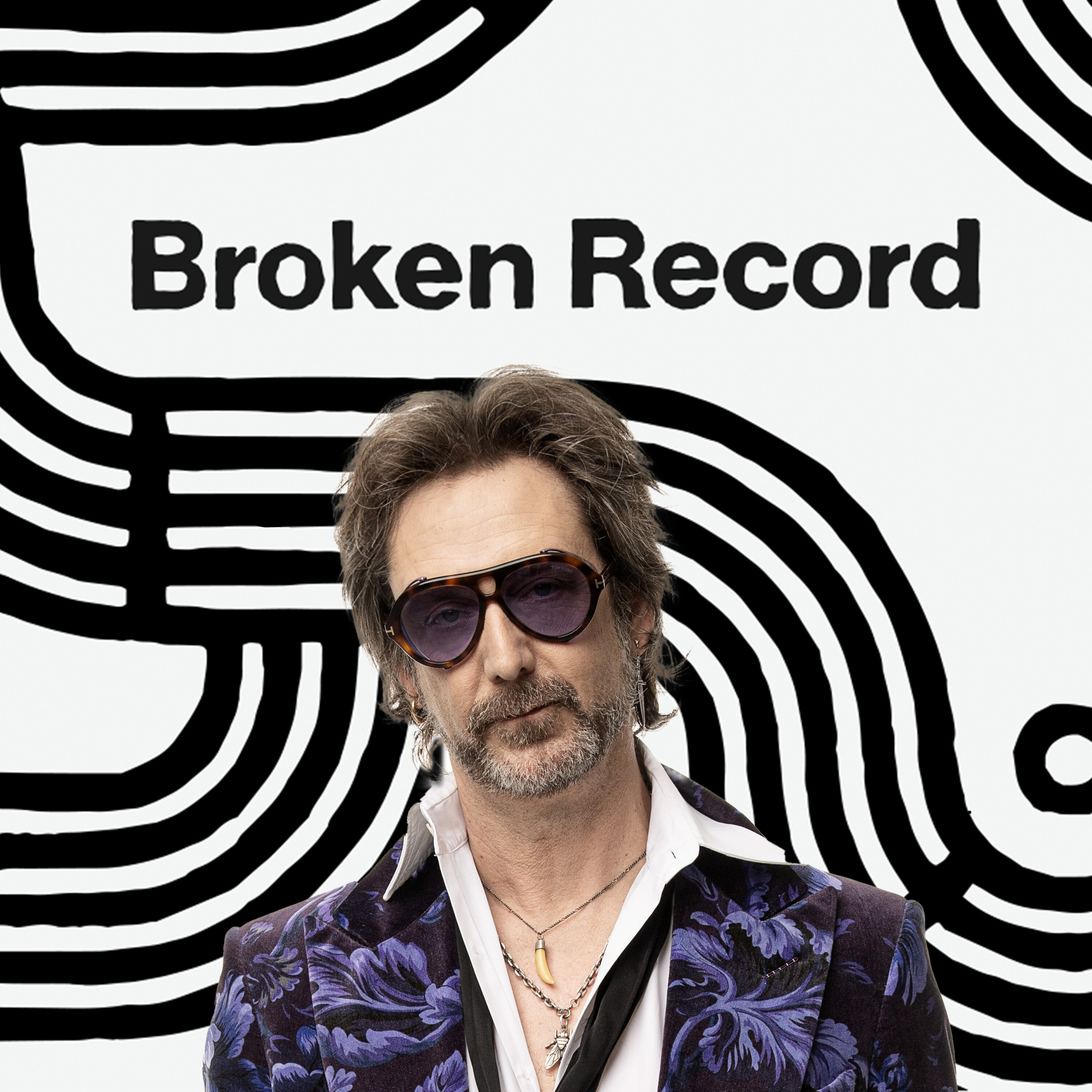


16 years have passed since The Black Crowes released an album of new material. The world has changed a lot since then—and so have the Robinson brothers. Chris and Rich Robinson are, of course, the backbone of the band. They started playing together back in Georgia in 1984 as Mr. Crowe’s Garden before moving to NYC, signing to Def American, and changing their name to The Black Crowes.
The band’s debut album, Shake Your Money Maker, set them up as the torchbearers of Southern rock for the '90s and beyond. As you’ll hear in today's conversation, the brothers Robinson have had a competitive relationship for a long time. Their ups and downs have meant hiatuses for the band over the years. But now they’re back united and seemingly in it for the long haul with their new album, Happiness Bastards.
On today’s episode Justin Richmond talks to Chris Robinson about his growing up in Georgia with Rich, their dad’s rockabilly career, and how his road habits have changed from indulging in champagne and other substances to reading Herman Melville.
You can hear a playlist of some of our favorite songs from Chris Robinson & The Black Crowes HERE.
See omnystudio.com/listener for privacy information.
Speaker 1: Pushkin. Sixteen years have passed since The Black Crows last put out an album of all new material. The world changed a lot since then, and it appears so have the Robinson brothers. Chris and Rich Robinson are, of course the backbone of the group. They started together back in Georgia in eighty four as Mister Crow's Garden before moving to NYC, signing with Death American and changing their name to The Black Crows. The band's debut album, Shake Your Money Makers set them up as torch bearers of Southern rock for the nineties and beyond. As you'll hear in our conversation, the brothers Robinson have had a competitive relationship for a long time. Their ups and downs have meant hiatuses for the band over the years, but now they're back united and seemingly in it for the long haul with their new album Happiness Bastards. On today's episode, I talked to Chris Robinson about his growing up in Georgia with Rich, their dad's rockabilly career, his listening routine that includes Sudanese and Sufi music, and how his road habits have changed from indulging in champagne and other substances to reading Herman Melville. This is broken record liner notes for the digital Age. I'm justin Mitchman. Here's my conversation with Chris Robinson of the Black Crows. Is that a gun club like the band? Sure that you go on?
00:01:39
Speaker 2: Yeah?
00:01:40
Speaker 1: Yeah, yeah, oh hell yeah. I love gun Club man.
00:01:43
Speaker 2: Jeffrey Lee Pierce one of my faves. And it's funny because, you know, when we started, people would always say we sounded like and we did. We had, you know, there was the Jengle sort of indie pop thing, Rim of course being the purveyors of that, but Let's Active and the DBS and then bands from California like Game Theory. We kind of were into like this kind of jangly sixties inspired but we really sounded early days a lot like the gun Club, you know, because gun Club and X are very interesting to me, and the like early punk scene here in Los Angeles because they were the well, I guess you could put the Blasters and the plugs in there too.
00:02:22
Speaker 1: Blasters are from esp though, right.
00:02:23
Speaker 2: Oh, Blasters are a LA band too, you are they?
00:02:26
Speaker 1: Okay? Cool?
00:02:27
Speaker 2: They had those kind of rootsyed things, you know, and it would be really early on that we would think like, okay, well, Jeffery Lee Pierce is like a punk icon, but he plays with Robert Johnson song on the first record, you know, I mean, it doesn't like Robert Johnson, but needless to say, he found great inspiration and the mythology and the imagery and the vibration of like the blues and stuff which other punk bands really didn't.
00:02:54
Speaker 1: Whatever music is happening in La, there's always some subset of it that countrifies it. You know. It's like even with the Birds, like Sweetheart of the Rodeo, like all that stuff, Like the Birds got into that, and you know, I don't know you could even feel that with Buffalo Springfield and I mean, I know, like Neil from Canada or whatnot. But they're making music here, you know, of course.
00:03:11
Speaker 2: Of course, well I mean, you know, I mean, while that's going on, Tim Buckley's here and you know what I mean. And while that's going on, you have bands like the Chambers Brothers and Eric Burden Leaves the Animals and Northern English White Band playing blues music. And then he's the lead singer of War It.
00:03:31
Speaker 1: War is like such a quintessential La Long Beach of fact group, you know.
00:03:36
Speaker 2: I mean, I think obviously there's subsequent most famous records don't include Eric Burdon. Yeah, And it's funny. It also just goes to show how that's just how music is, isn't it. You know what I mean? I mean, I guess you obviously you can make examples of things that seem heavy handed or things that don't contain a certain authenticity. But I mean that was a big deal when I you know, talking about growing up in a band, being from Atlanta, being like in a arguably the most progressive city in terms of race relations, and if not America and maybe globally.
00:04:14
Speaker 1: That's interesting. It probably has to be. I mean, you might I might have been coming to say New Orleans, but I think when you kind of look at the musical legacy of Atlanta over the last I.
00:04:22
Speaker 2: Mean New Orleans most definitely, but Atlanta is different because of the black universities, yeah, like kind of concentrated there, and Atlanta having Maynor Jackson as the first black mayor the first black police chief for the black police force in the Deep South.
00:04:38
Speaker 1: When I first landed in Atlanta, I got to say, coming from LA because I grew up in La. When I first landed in Atlanta, I'm in the airport, I'm like, with a whim, like, how the.
00:04:47
Speaker 2: Whole airport is black? This is crazy. It was the weirdest experience for me. Funny, that's funny. And as I said, I'm a third generation Atlantan and I don't really make the connection of being like I'm a Southern person, but my connection is with Atlanta. Yeah. And so so it's funny because Maynard Jackson is the guy who when Hartfield International Airport becomes an international airport, He's the one who's like, we're not doing anything unless black business owners are recognized and have a piece in this and what that can mean for the community. Something very subtle like that still reverberates, I think, and besides the culture, because you start to see Atlanta also be a city, you know, famous for the musicians and the hip hop and the athletes that I'll move there. But the reason that becomes attractive is because of decisions like that and the hard line that someone like mayn Or Jackson would take, and how Atlanta had been pried open. Of course, having the Great Reverend Bee from there, you know, gives Atlanta a different perspective, but I don't know. It's a unique place in that way. And it's funny, like I speak on it from the past, because I really left first check, I got into Black Crows. I moved to New York. Being in a band to me was like, you know, shooting an arrow over the mountain, like just I wanted to get out in the world.
00:06:08
Speaker 1: Had you been to New York before we moved there?
00:06:10
Speaker 2: Yeah? Yeah, Actually, you know our dad, richardized dad was a singer. He had a top forty rock and roll hit in the fifties called Boom a Dip Dip. You can check it out on Spotify.
00:06:22
Speaker 1: I've listened to some of that stuff.
00:06:24
Speaker 2: Very good, man, it's really good. Yeah, it's a good song. And so I really happened and looked at New York and he was like, you know, into the theater and music and acting and dance, you know. So he wanted that too at a certain time in his life, and he was in New York. And it's funny. My mom was a flight attendant for the old Eastern Airlines, and you know, it's funny she told me, she goes, Oh, I served doctor King many times on flight side of Atlanta. Wow, I always really blew my mind as a kid.
00:06:57
Speaker 1: You know, of course she did. I would make I mean, how many flights out of Atlanta? Musty have taken that out all.
00:07:02
Speaker 2: The time, you know? You know. So I moved to New York first, and I still love New York and some of my deepest connections and friendships are there. My wife and I just got back from there yesterday. But I came to Los Angeles, and I don't know, it was farther away from Georgia, from everything. I mean, California has an idea California. Later I would get to know far more about this state. And I lived up north for six years, and I was in this little hippie band and we started. We did nine weeks just up and down California in the van, playing all the little beach towns and hippie towns. And you know, I got a real appreciation for do you remember hughle.
00:07:47
Speaker 1: Houser, Oh, come on, man, California's goal.
00:07:50
Speaker 2: Baby. I was like the psychedelic hule Houser, you know what I mean, you know hil Hauser. I was like, so this is an atobe.
00:07:58
Speaker 1: Wow.
00:07:59
Speaker 2: He was amazed about everything too, He's like, so this is a ball of Manuda. I love hul Hauser Lake great Man, the late great hutle Hauser Man. I love and you know what, he was always so excited he saw mission from San Diego to like, you know, the Oregon border, so that the mission like so excited.
00:08:24
Speaker 1: Everything was ecstatic to him. It was crazy. It was so that was that was a funny show to watch.
00:08:29
Speaker 2: Man. I loved it.
00:08:30
Speaker 1: When I moved here, I was like, what is this?
00:08:32
Speaker 2: Is this good? I also am lucky that when I'm I'm so I moved here. In ninety one early ninety two, that was the golden age of public television. Yeah, I'm the weirdest, weirdest of the weird stuff would come on TV Man on the couple of public stations on your cable, like Channel six and Channel fourteen or whatever, the most unimaginably, I mean obviously like Tim and Eric. I don't know if you ever got into Tim and Hell. Yeah, Tim and Eric like take the inspiration of that into their twisted world for the series, which is still some of my favorite stuff. You don't need a Chinese massage, you need an Italian massage. It was fantastic you know what I mean, And you know the other thing about things that were really I've always been interested in outsider culture, you know, when those would be like driven by like this, but because of Hollywood, it made it even weirder, Like I'm on TV now I'm famous too, you know what I mean, pre dating the psychoses that has become social media, you know.
00:09:33
Speaker 1: Yeah, yeah. People always describe LA when they come to LA as being closer to the industry, as being closer to things. But I also find that you can find your niches and stay way out of the way of the industry if you want. I did it.
00:09:47
Speaker 2: Yeah, I mean when I moved to Topanga Canyon at a certain point, I moved to Topanga because I have these romantic notions of what northern California, what I've been to northern California, but what it might feel like not to be in LA, but to still be able to be in LA for different reasons. I'm of the firm belief that Los Angeles is one of the great cities world and which is also unique because of how new this city is comparatively. In eighteen sixty there's five thousand people living here. That's wild ranchers and spread out and it's just come over from Mexican rule and stuff from that government. And they had, you know, gave everyone deeds to these mass affincas and ranches and things that were all of California, you know. So it's not that old in the big scheme of things. But the other funny thing is when I came here, I was I laugh all the time because was like growing up in Atlanta or whatever. In nineteen I had my first sushi in nineteen eighty nine. My guy ended up being our manager, Like, took me and Rich with some friends to get sushi. And that place is called Imperial Gardens or whatever. It was right there on Sunset. It's now like a Loco place or something, but it was the Roxbury later. But anyway, were sitting there and like, of course I know what it is, but I'm you know, standing Nancy Robinson in Atlanta. We didn't, you know what I mean. Like I remember being sixteen and telling my dad, like coming downstairs one day, I was like, why have we never had Indian food? My dad was like, you're right, we should go get it. And I was like we all drove to the one Indian restaurant, you know, and it was amazing. Wow, I'm here in nineteen eighty nine. I'm still working on the first album, and I'm a kid from Atlanta. But the cool thing is it's a mentality. You get farther away from where you come from, and like anything else, you figure out what's delicious about it and what's special about it, and now it has a place in your culinary like thing that tonight's sushi, we want to go and you know what I mean, And then you can on that level. But there was one time where you're you know, I come to La I don't know anything about anything, and I don't even know what this is.
00:12:04
Speaker 1: How far removed from Atlanta do you feel now? Like do you feel like an atlantin?
00:12:10
Speaker 2: I mean not especially, And none of that is to be taken as if Atlanta has feelings. I do love Atlanta more than ever. But it's also I like the remnants of the Atlanta that I remembered, so when you go back you don't see the I mean, man, it's changed. There was this thing on Peach Street called the Darlington Apartments, and there it used to have this digital thing and it would be like two million nine nine, you know what I mean that, you know, and it was the population and it got older. With the population sign it got bigger and it went to three million in nineteen ninety. Wow. You know. We used to hang around this monthly thing called the Mudshack at this after hours Mexican burrita place, and it was a poetry.
00:12:54
Speaker 1: Reading and just the poet would get it on stage, like.
00:12:57
Speaker 2: I live in a city of three million people, as if it was like, you know this Atlanta of this it's almost eight million people now.
00:13:05
Speaker 1: Yeah, yeah, right, that sounds about right. It's huge went on there?
00:13:09
Speaker 2: I mean, of course I love it, But most a lot of the Atlanta you know, the house where we used to rehearse and have parties is now the Federal Reserve. The club that we based all our rock and roll dreams and mythology on is now at that you know, a place where people go get stitches.
00:13:25
Speaker 1: Or whatever, you know what I mean, Like all of that kind.
00:13:27
Speaker 2: Of stuff from back in the eighties, whenever the world was new and music was all our career was ahead of us. That's all kind of gone. Yeah, you can see that, the skeleton of it, you know what I mean?
00:13:40
Speaker 1: Yeah, wellcome back with more of my interview with Chris Robinson. After this quick break, we're back with Chris Robinson. Do you get excited to tour these days?
00:13:55
Speaker 2: Like?
00:13:55
Speaker 1: Can you still get excited about it?
00:13:56
Speaker 2: I do? I do. It was funny. I've done a couple of interviews for this project and I'm like shocked that the people have said, you're the first musician who says they still find inspiration doing what you do and being on tour, they say is so boring. I'm like, I've never lost the dream. And again, I've never been bored, you know what I mean, even as a kid, like with my mom and go to your room, I'd be like, I'm amazing. That's all I want to do. All records are in there, the books I'm reading are in there. I can draw, I can dream, you know what I mean daydream? I mean I was somewhere there's a permanent record of me, and all it says is prone to daydreaming. Not very good at math. But I was saying, I mean it's just the way it is. I mean, is it tedious sometimes? Fuck yes, I'm fifty seven now. Airports fucking suck. Not every gig is a magical experience, but you never know who you're gonna meet, and it could be anyone. It could be the Guyanese uber driver who pitch you up in Saint Louis, who's fucking hilarious, an amazing, soulful person who's left a life behind to try to eke out something better, and like it's so brave and courageous, and you know, and you're only with this person eight minutes from the airport or whatever, and you just two people in the world laughing in a car. You know. But that little thing that doesn't even necessarily have to be a part of the narrative. It just has to be a part of that. You still believe that there's dynamic and meeting people and talking and laughing and sometimes crying. But I'm just naive enough to still see it as in the same way that I wanted. I picked music on a lot of levels because I knew it was the one thing that I would travel all the time. Yeah, and then you set up your little thing and then you put your vibes out there. You know, it is pretty rare.
00:15:51
Speaker 1: I feel like, listening to you talk, the only other person who has had a level of success that you've had and towards as much as you do, and travels as much as you do. That seems to still love it. I got lucky. I met Quincy Jones in Havana maybe ten years ago, and the joy he has to like travel and just talk to anybody. It's like he's like, yeah, he'll tell Sinatra stories, and I'll tell the story about like the cab Driver and like Memphis, and you're like everything is like new and fun and interesting in every person and everything and every sound and every that's a particular joy that you don't find in a lot of a lot of people.
00:16:27
Speaker 2: Like I said, I understand, and you know, you get older. It also helps in my life that after all the rock and roll and all the experiences that I found Camille my wife, because I found someone who she understands that some of that is problematic and some of it's pain in the ass, and some of it is like can't we just be do normal something? And like, by the way, we could talk about that and do our best. But then she also realizes, like she's an artist and she's Piss's queen Moonstone child out in the world, you know, who wants to feel these things too, And you know. My thing is the pandemic was such a fucking head trip. Personally, I didn't really find it creative. I found it stifling. But we were lucky enough to live out in the wilds of West Marina and then we were in Southwest Colorado amazing, Yeah, which was really really help. But one thing I thought I would really flip out on was it was the first time since I was basically a teenager where I wasn't working and touring and singing and playing and doing the whole spiel. And you know what, it was rad really you liked it. Wow, my head didn't fall off, you know, our lives didn't, you know, disintegrate into nothing. It was nice. I had time for a lot of other things. And it's funny the travel part of it. I was just talking to my manager Mark last night about how at a certain point it would be nice to bow out from forming the way we perform before. I can't because I love the travel and we fit in the things that we want to. But it's different to be in a place for you know, we're going to Paris, I'm gonna see my friends. I know all the restaurants I want to go to. I know all the things I want to do, but you got to leave in two days. Yeah, yeah, and you have a show. When I was a kid, I didn't care. We would just party, go out, champagne, drugs, this that, two days, do the gig, go do the gig. You know, like just all one thing was so when you're young, you can do it, you know what I mean. I don't feel that now. I'm really happy being in the Black Crows and really fulfilling and satisfying and gratifying. But at a certain point, I just want to take my wife and go to Sicily and eat linguini and clams and like you.
00:19:00
Speaker 1: Know, drink whine and you know, read Moby Dick.
00:19:03
Speaker 2: For the third time or whatever. You know what I mean. I just want to just be a part of everything going on. There's lots of places I haven't traveled. I haven't been to Africa. I've always wanted to go to Africa, you know what I mean. That would be nice to have some time to do that. And because Africa is such a huge thing too, you know, I'm really interested in West Africa. I'd like to go to North Africa. Be cool, to see the East Africa, be good.
00:19:26
Speaker 1: You know what I mean, what interest you in West Africa?
00:19:28
Speaker 2: I don't know. I think maybe it has something to do just with the I mean, I love North African music, but there's you know a lot of those West African music could be because of the horrors of mankind and the horrors of the slave trade, human beings found a way somehow, through the vileness of that to communicate and share things in art and music, cuisine. Yeah, so many African parts of especially in the Deep South, and people wouldn't they don't even know they're they're they're under educated anyway. But with these things, you know, it's like, oh, every Southern person and loves the fried okra, but okra came over from Africa, you know, right before that, ochra came from India to Africa. So just dumb things like that, Plants and fruits, vegetables, natural things and supernatural things that were brought over that could never be extinged with. And I just have some sort of and I don't even know what it is, because I'm not obviously that knowledgeable as other people, but I can put a few things together and realize, you know, so much of the music, singing, rhythm things guitar things, especially string things come from a West African musical tradition that represents like this African mysticism and magic as well, that manifests when people express themselves vocally and rhythmically and with melody and things, you know, like a simple as something like a string guitar, And that is something that would draw me there first, be that in a first person and see what it feels like for me as a real outsider. Yeah, outside your culture is important to me just because of whether my dyslexia or just whatever my tastes and my where I would find the things in life that are interesting that make me happy, things that I can understand or help me for things that I don't understand to understand, you know, So a lot of that you have to kind of just vibe out viscerally fine, and I would be curious to see what it feels like.
00:21:31
Speaker 1: Yeah. Wow, we've gone from like psychedelic qal Houserd to like psychedelic.
00:21:35
Speaker 2: Like Anthony Bourdain or some shit.
00:21:39
Speaker 1: I've gone global.
00:21:40
Speaker 2: Now call my agent. I'm down to do this job.
00:21:43
Speaker 1: That's amazing, man, I want to check out like Robert Plant goes to rock O Go.
00:21:49
Speaker 2: Yeah, he loves the Sufi music and the North African music.
00:21:53
Speaker 1: Yeah.
00:21:53
Speaker 2: And it's funny because I have this app where you can listen to radio stations all over the world. But it's like, wow, right on, man, I want to listen to some like rad Cambodia music, It's like, uh, it's Nicki Minaj like everywhere else. I know.
00:22:06
Speaker 1: That's that's kind of a bummer about radio.
00:22:08
Speaker 2: I mean it's it's like, which is cool. I'm not bagging Nicki mi nuts, but I'm like, I'm thinking I'm gonna like get hip to some thing I've never heard, some regional vibes or whatever. And then it's like, oh, it's the same shit they're playing here, is it that radio app?
00:22:23
Speaker 1: Like yeah, oh so cool.
00:22:25
Speaker 2: But there's some in Morocco. And then there's a certain kind of music that the horrors of things. There was a slave trade in Africa for a long time too, you know that within in Africa, and they're bringing sub Saharan Africans to North Africa. But a great musical art form is born from it that still exists today, and there's whole radio stations that play it and they're basically a living blues it's the same tradition of like the pain and suffering of the blues that these people brought with them that still lives today and it's now celebrated as rebel songs. Almost.
00:22:57
Speaker 1: Yeah, it's like those North African like guitar but I don't know how to pronounce their names, but like or something, yeah, right.
00:23:04
Speaker 2: I saw their first show in New York many years ago. Really, I love that music, and I love Sudanese music, and then you go over. I love Persian classical music, I love music from Afghanistan, and I love Turkish music. You know, I really have a lot of diverse interest in things like that.
00:23:26
Speaker 1: After this last break, we'll be back with more of Chris Robinson. We're back with the rest of my conversation with Chris Robinson within the Crows. Like maybe, like with your brother, for instance, does he have a similar musical palette.
00:23:43
Speaker 2: I think he has an appreciation. I don't think his palette is as wide as mine, and he would admit that I'm not. You know. He always said, like growing up like Chris would bring back way more records than I would listen to, or some I wouldn't be interested in. But I got to he could be able to cherry pick what he liked, and he loves classical Indian music. I listened to like Mesopotamium, Sheep the music and stuff, you know what I mean. Like, I'm really into a lot of different things.
00:24:13
Speaker 1: Do you listen to that stuff more than like rock and roll? Like you'd rather reach for that than a Stones record?
00:24:17
Speaker 2: Yeah, I listened to all day long, Like I like to start the morning with something mellow. We'll listen to a lot of Indian classical music, or personally, I like to start my mornings with the late great Ben Webster or some think Lester Young. I love the pres you know, but we also love Rossan Rolling Kirk, and we love the Lonius Monk, and we love Bobby Timm bud Path. We listened to a lot of jazz. We listened to a lot of blues, country, R M B, funk, soul, rock and roll, punk music, post punk music like tronic music, rossa music.
00:24:54
Speaker 1: You know, Share your Spotify right now, Share that Spotify trying to.
00:24:59
Speaker 2: I don't have Spotify envy, man, you know, Like I'm just obsessed, you know what I mean? And I my obsessions maybe made me way more difficult as a youth in the music business because I also associated a certain authenticity, passion, and purity to my obsessions and what I wanted to say. But I also have a waking life with music that has nothing to do with me making music or being a musician. Yeah, those things are simpatico, but I'm sure it's annoying. I'm the guy who I get the car to drive down to eat dinner and West Tli and I'm like, hey, man.
00:25:34
Speaker 1: Can I play the spot? Oh yeah, in the car, dude. I got to skicked out of a sushi spot one time because I asked them to change the music. And then they opened the same sushi spot across town, so we tried to go there a year and a half later. Turned the same lady with something. She's like, you look familiar. I was like, I don't know, I don't know. No, no, no, I wasn't. So did you ask me to turn off the music one time?
00:25:56
Speaker 2: I was like no, no, no, no, it must have been my brother. I don't know. It wasn't me, Like, hey, hey, so she's not coming in here.
00:26:02
Speaker 1: You know.
00:26:03
Speaker 2: They weren't happy, but I was like, just changed it.
00:26:05
Speaker 1: I could tell it wasn't like pre pro it's like it's all you're on serious or some shit.
00:26:08
Speaker 2: Just change the stage.
00:26:10
Speaker 1: I saw a mask.
00:26:11
Speaker 2: I'm just always you know what I mean. I've just been adventurous and things I can access what makes things interesting to me. But I do that with with a lot of art. I do that not with music, but with literature, cinema, most definitely comedy as well.
00:26:27
Speaker 1: So it's all that going through your mind as you're writing lyrics for The Crows or for your other groups.
00:26:32
Speaker 2: I imagine, yeah, I imagine it's something. It's all in there. But I think when it's time to focus, like on writing a lyric or whatever. I've written songs with other people. I've written many songs on my own. The thing that is the Black Crows is Rich and ize contribution together. You know, rich, whatever he's coming from will play me something. There's a lot of psychic energy involved in it as well, and music is a great conduit to open those kind of psychic channels.
00:27:02
Speaker 1: And do you go into it with that intention, like do you have to set out to do that or does it happen?
00:27:06
Speaker 2: I think there's other musicians who can do the fuck in math and know all the shit and they do another thing. I've only ever been able to access it this way. Got it is my process because of however, because we didn't learn music. We don't know shit about music.
00:27:21
Speaker 1: I don't read music. Rich doesn't read music.
00:27:24
Speaker 2: But we know what it feels like and we know what sounds right, and then you keep doing that. Of course, through that your vocabulary is bigger. But we maybe are using different words than people who are more knowledgeable about the inner workings and mathematics the arithmetic of music. Yeah, and that it's escapes us. But I think it's also in our that makes it folk and that makes you know what I mean, there's some sort of that's why we look at it more and like it's kind of magic. When a song happens out of the blue. One minute, there's nothing, one little thing like this, and then I get an idea, and then that changes what Rich is doing. And then it's all dictated by whatever the vibe is that Rich plays me. There's an emotional ingredient to what he plays me, like our probably the most famous song as She Talks to Angels. He wrote that song. He was very young with the riff, and then we probably didn't get to it till like a year later when but we would be playing things around mom and Dad's house.
00:28:19
Speaker 1: He's like seventeen when he wrote that, Yes, I would be nineteen.
00:28:22
Speaker 2: So there's something about the way he pulls that first inn and then that would just put me in a place to write a song with that kind of dark, romantic, melancholy imagery. But we do that today, and we do that, I think, especially if we get around to where we're going right now with this Happiness Bastards record and stuff. I mean, I think that's exactly what we've done with this. I mean, there's a lot more rock and roll on it. There's a lot more water under the bridge. We've lived a lot personally. I'm one of those people and I have two children and we want everything to be the best. But I'm also not afraid of adversity, because I don't think you should be afraid of something that you have to find acceptance with, you know what I mean, Because it doesn't matter who you are, what you do, if you do it to yourself, if someone's doing it to you, if you have the means, if you don't have the means, No one escapes adversity, and it changes you know what I mean, how we deal with it. The great energy and power of youth and where we came from in rock and roll was the anger, the fuck you part of it.
00:29:29
Speaker 1: Yeah, even with each other.
00:29:31
Speaker 2: Yeah yeah, but that boils into that. Yeah. I mean it's like live fire, you know, and like but it's also a great you know, if you can get that into the dude, and you can get in the studio and get it on there. You know, we weren't clever enough to do the math. We were only clever enough to wear our emotions on our sleeves.
00:29:49
Speaker 1: Did your parents pick up on your guys's tension?
00:29:52
Speaker 2: Yes, I mean, fuck, I mean even more so probably the older we would get, but they weren't around when it was like, for some reason, you know, we he had his own bedroom. I had my own bedroom when we lived in the suburbs, and I had like a twin bed and a desk, stereo whatever. Rich had like a queen size Bendings room for some reason. I don't know why we ever got that. But it was funny because when we were kids and it would be like if we started getting annoyed, we'd have this game where we'd both get on the bed, and he'd be like I'm mad Max and I'm like I'm Snake pliskt and then we would like who could who would win in a fight? Mad Max or Snake clisktting? Like whoever could? Like fucking throw the other one off the bed? Was like the Winnersten Snake always win in that got a batch on the eye, fucking cool outfit. I was like, it's my motherfucker there, you know, but like dumb show like guy. And then we've said it before, but we fought brothers fight, but we would never punch each other in the face. We would hit each other bodyguards, throws at each other, try to strangle each other, nothing from the neck up. It was weird. I don't know that rule always.
00:30:59
Speaker 1: Applied, unspoken, unwritten, just.
00:31:04
Speaker 2: As if that makes it like worse than all the other cruel shit. I love it, man, I love it.
00:31:10
Speaker 1: Ye Snake doesn't need muscles though, just being a pure badass is sometimes enough.
00:31:15
Speaker 2: Yeah, they couldn't stop, you know what I mean? The craziest come out from under the street. He gets away from all of them.
00:31:21
Speaker 1: Didn't matter. So great soundtrack to that amazing soundtrack. John Comber is always the favorite one is.
00:31:27
Speaker 2: A movie he made called, uh is it called the Prince of Darkness?
00:31:31
Speaker 1: You know that movie?
00:31:32
Speaker 2: I don't know that one part of the trilogy he did that. I think that Escape from New York, Prince of Darkness and maybe they See or whatever. I think those are like a trilogy he made. But Prince of Darkness is a really cool movie. Like in this weird church in Oakland or whatever is like where evil is and like this liquid container and like these people find it's really deep. Man. But the sound that one's really I listened to it all the time.
00:31:56
Speaker 1: I missed that one. I like, I like Assault on Precinct thirteen.
00:32:00
Speaker 2: That soundtracks amazing, very far ahead of his time, actually.
00:32:05
Speaker 1: Way ahead of his time. It sounds like what's you know, like a lot of like electronic composers would now go for.
00:32:11
Speaker 2: Is he from Kentucky? I think originally is from Kentucky. It's like if Tangerine Dream were from Kentucky. Yeah, yeah, right, Tangerine Dream is from Kentucky. Maybe they just call that like Pineapple upside down cake Dreamers.
00:32:27
Speaker 1: How do you feel with a new record? I think it sounds amazing.
00:32:30
Speaker 2: Yeah, we're very happy. I think we were really focused on what we wanted the record to be touring the last few years and doing the Shak Your Money Makers show. At first, I was a little bit I had a little trepidation about it, just because I was like, Oh, isn't that what other bands kind of get into sometimes, is playing their most popular record or whatever. Yeah, But once I thought about it, and I thought, Yo, don't think about it, just do it. This is important record to you know, this is where it all begins for us, and let's revisit it. Let's see what happens if we remove ourselves from the way of thinking before. You know, why did I think that was dumb? Maybe it's not. Maybe there's something there. And I think part of where the Black Crows are today is getting out of our way and you know, don't think it, do it, and then you'll have more information about what works and what doesn't. And it was fantastic, And that was kind of the impetus to get us to like a real focus, up tempo rock and roll record that hits all the notes. I think that we finally didn't have the perspective to know what the Black Crows sound like, and to me, happens Bastards is like an arrow pointed towards the future for us of what the Black Crows could be. And once we work with a guy like Jay Joyce who produced the record, who's very successful, popular producer. We've never really worked with like a super producer like that. And you know, we met so many talented people and had so many great conversations. There's just something about Jay. Well, first off, we felt like this guy not only can we get him, but he could get us, and we're incapable of doing something that we don't feel is sincere, sincere to us of what we want to do and how it sounds. And of course when he comes on board, he starts to help shape the songs as well, like, all right, we have a discussion about what I think the record should be. What's the concept in a sense? I mean, you can't do it one hundred percent because it's music and things change, but if that's what we're going for, and so he, you know, we have a bunch of songs. He comes in, tells us what he likes about these songs. We go back work on some songs, write some new ones. But again, as we're in the studio making the record, it only took us two and a half weeks to make the record.
00:34:47
Speaker 1: That's quick.
00:34:48
Speaker 2: Yeah, yeah, it has an energy. It has to be that way. Like I said, we're not the kind of people to what are we doing, you know? And what are we selling? What do we want people to get from this? What are we putting out there in the world. And we haven't made a record a long time. Basically, you got to, like, you know, put your money where your mouth is and if you're going to say this is what you are, then it better fucking sound like that. Yeah, And I made a record in so long and we've been talking about it. We've been proving it every night on tour of like what the presentation is, what the vibes are, what the band sounds like. We're rich and I are, but we're playing old songs and we're playing songs people know, and now to do it with something new. But after all the talk about we're a rock and roll band, this is where we're doing this. We're in a good place, we're creative. But then you have to do it.
00:35:38
Speaker 1: Yeah, do you think you could go out and play when you go out on tour. You're going on tour soon. Could you play a lot of this album or do you do you feel you have to do a lot of the old stuff.
00:35:48
Speaker 2: I mean, that's the purpose of the tour. And we've gone from bigger venues to a little smaller because we know, you know, there's always going to be someone like this is our new single and they go to the bathroom or whatever.
00:36:00
Speaker 1: Yeah, well you want to play the new record, like that's the point of this.
00:36:03
Speaker 2: Yeah, Well, we feel that it's right there with the best of everything we've done. And as we move on from this new record and being able to focus on it for this period, of course, you know, we have to play she talks angels hard to handle, jealous again twice. It's hard during to my pride remedy. You know, we know there's certain things wiser times, soul sing and whatever. We know there's certain songs. I think when we were younger, we were more arrogant and we didn't want to play along. We wanted to push people more into we're more than just these hit songs, and that was our right and we did it, and we felt there was some importance there that wasn't just ecocentric. Yeah, but I think now we realize and that oh we can say the things we want to say, but we also have to respect our audience and know that somebody's going to be mad if you don't play. She talks dandel yea And by the way I look at she talks to angels or hard to handle or whatever. Now in such a different light because I realize how special it is to have those songs in your catalog, you know, to have songs that we play for people, but that after almost soon it'll be getting there forty years that are been in people's lives and it's important to them too, and they and they want to hear it and they want to hear you do the best you can do. Yeah, and make it special and have that relationship with the audience.
00:37:30
Speaker 1: Yeah, you said you feel like this is like an arrow pointing to the future, like you want to do more Black Crows music.
00:37:37
Speaker 2: Yeah, you know, I mean, I know it sounds weird to, like, you know, start wrapping up my fifties and talking about it, But then again, you know, there's so much about what we are as a band and as artist and as people. It looks like one thing on the surface, but it's not underneath, you know, in the same way that it breaks my heart a little bit to hear like people musicians say that they are bored or listless or not inspired, and I'm like, well, I don't feel that way. And this record is really even greater sort of proof that I don't have to give up on my passion, on my creativity. I can put it all in the correct order and we can continue to move on. We don't have the same expectations that you had in nineteen ninety five when you made a record. When you know you're spending a million and a half dollars on a record, they want you to go out and sell fucking ten million records and have four hit singles, and everybody's trying to do that, and the radio is pumping your songs all day long. And that's that's how it used to work. Kids used to they play your records all the time on the radio, and people will go buy your record. That's how it works. Yeah, So even though that's gone, that doesn't mean we don't see or feel there is still some importance in that. And I don't feel that making albums is that antiquated or archaic or anything. People say, you know, you go to fucking Amiba, man, You're gonna wait in line to pay for your shit. It's not like there's Humble Weeds blowing through a record store or something.
00:39:07
Speaker 1: It's true there are a fewer around, but you know, like, yeah, go to Freak Beating in the valley.
00:39:12
Speaker 2: There's people in the way, you know, and they have great records in there. It's like anything else. The media doesn't cover it because it would take too much imagination and interest in something that isn't status driven, in something that is collectively uh more dynamic, that contains more soulful information, or something of a cultural reality that's not just reality TV and going to the gym or whatever. Yeah.
00:39:38
Speaker 1: Yeah, and so you do feel like it's an arrow pointed in the future. You want to make more music, but you mentioned earlier, maybe less touring at some point.
00:39:48
Speaker 2: It's a deposition. I have to give you a day.
00:39:50
Speaker 1: No, I'm just curious. No, I'm just curious.
00:39:52
Speaker 2: Like it's like I don't know, like I'm just trying to figure out where you're at here answered a Grand Journey played this back to you. Remember you said it you Miranda rights Man. Uh, Yes, there will come a It's not in the near future, but maybe you know, give me another. I don't know. It's hard to say, you know what I mean, because getting a bit older is weird because I don't feel older, but like, oh fuck my knee hurt or whatever. Yeah, okay, it doesn't dictate my dreams and passions my age, but no for the near future, and I think, you know, it would be pretty safe to say for the next decade of life. I want to keep doing it while I can. Yeah, that was another thing about the record, like, let's make a fucking rock and roll record while we can still fucking rock and roll. Man, you know what I mean, Because at a certain point it's gonna be like you, thank you rock and rolling, but intensity level comes down, which is totally normal and fine, But rock and roll is specific to a certain energy that you need. There's all sorts of things that you can be passionate and you can again have that kind of emotion and there's still a smoldering intensity to those things. But I think if you want to get out, shake your ass a little bit, put it on a rock and roll show. Hopefully people still get up and dance, and that's what it's about.
00:41:18
Speaker 1: Incredible man. Well, look, man, thanks for thanks for taking the time. To talk. I love the new album, Excited to see you play it, and fun talking to you. Man, you got a lot to say. I love it all right.
00:41:28
Speaker 2: I appreciate that.
00:41:32
Speaker 1: Thanks to Chris Robinson for hanging out and talking about his career along with the Black Crows new album, Happiness Bastards. You can hear it along with our favorite songs from Chris on a playlist at broken record podcast dot com. Subscribe to our YouTube channel at YouTube dot com slash broken record Podcast, where you can find all of our new episodes. You can follow us on Twitter at broken Record. Broken Record is produced and edited by Leah Rose, with marketing help from Eric Sandler and Jordan McMillan. Our engineer is Ben Tollinday. Broken Record is a production of Pushkin Industries. If you love this show and others from Pushkin can are subscribing to Pushkin Plus. Pushkin Plus is a podcast subscription that offers bonus content and ad free listening for four ninety nine a month. Look for Pushkin Plus on Apple podcast subscriptions. And if you like this show, please remember to share, rate and review us on your podcast app. Our theme Music's back Anny Beats. I'm justin Richmond,

