53: Elevating Food Allergy Safety

You’re managing a busy restaurant, hotel, or event. A customer’s life might depend on what’s put in front of them—are your menus, staff, and processes truly allergy-safe? Hear how technology, practical training, and proactive communication can turn food allergy risk into a seamless dining experience.
Shandee Chernow has taken her knowledge and personal experience with life-threatening food allergies to create a business that is revolutionizing dining for allergy sufferers and restaurant owners. As founder and CEO of CertiStar, Shandee shares her story, including a traumatic reaction, explains the anxiety and frustration that come with eating out with a life-threatening food allergy, and how technology can help both restaurant owners and food allergic guests feel safer in the dining experience. They discuss the challenges of static menus, the hidden risks in ingredient sourcing, and why offering genuine choices—not “boring chicken”—matters.
With actionable tips on cross-contamination, staff training, and transparency, this episode arms hospitality pros with practical steps to elevate allergy safety, boost bottom lines, and foster a truly inclusive environment.



Heard on the Episode
“Any food that’s in food…someone’s going to be allergic to the things that are in there.”
~Shandee Chernow 05:34
“Imagine…you’re 18 or 25…all of a sudden it’s on you to make sure that person lives through this meal. That’s a really heavy weight.”
~Shandee Chernow 09:15
“If you have the right tools in place, you can actually end up making a lot more money…as opposed to somebody ordering a $4 baked potato because they’re afraid.”
~Shandee Chernow 23:34
“I’d like to be able to feel safe and the same.”
~Shandee Chernow 30:48
Key Topics Discussed
Individualized Allergen Menus
Green/yellow/red system for safety and modifications.
Real-time menu updates vs. static lists.
Staff Training & Consistency
Impact of high turnover on food allergy safety.
Data-driven tools to support everyone, regardless of kitchen experience.
Menu Transparency & Ingredient Sourcing
Gaps in federal labeling—ingredients like maltodextrin or citric acid may be undeclared or ambiguously sourced.
Technology to keep tracking up to date and flag questionable ingredients.
Cross-Contamination & Food Safety
The high risk of reactions from cross-contact, especially outside the home.
Importance of ongoing, proactive training for all staff.
Business Impact of Allergy Safety
Lost revenue from negative guest experiences.
Higher ticket average and tips when guests have safe, appealing choices.
Group influence: One guest’s safety affects venue selection for entire parties and events.
Inclusion & Guest Choices
Why “assigned” allergy meals exclude—genuine choice matters.
How proactive communication builds loyalty and wins business.
Key Takeaways
Comprehensive Safety Requires Real-Time Solutions: Static allergen-free menus and training are not enough—venues must update processes and offer personalized, up-to-date choices to keep guests safe.
Automation Alleviates Staff Burdens: Tools like Certestar streamline the allergy conversation, so staff don’t shoulder outsized risks or slow down service.
Business Gains from Inclusion: Offering authentic choices—beyond basic, safe options—attracts high-value customers and entire groups, reducing lost revenue.
Transparency Is Critical: Ingredient sourcing and labeling still have gaps; flag questionable items and maintain open communication with guests.
Avoid “Assigned” Meals: Give guests with allergies real options, not one default box or entree, to foster inclusion and satisfaction.
Tips
Integrate Live Menu Updates: Use software that adapts every time menu items or ingredients change, so allergen info is always current.
Train All Staff Continuously: Prepare for turnover—make allergy safety part of ongoing training, not a one-time event.
Flag Ambiguous Ingredients: Alert guests to ingredients like maltodextrin or citric acid when sourcing is unclear.
Give Guests Choices: Offer multiple safe selections for allergy-sensitive diners, not a single meal.
Account for Cross-Contact: Regularly reinforce cross-contamination protocols, even in back-of-house operations.
Like what you heard? Subscribe to our newsletter for more episodes and insider content delivered right to your inbox!
Tracy Stuckrath [00:00:06]:
Welcome to the Eating at a Meeting podcast. I'm your host, Tracy Stuckraft, dietary needs expert, Certified meetings manager, Certified food protection Manager. I have searched the globe to find people and businesses who are creating safe, sustainable and inclusive food and beverage experiences for their employees, guests and communities. In each episode, you will find authentic conversations about how food and beverage impacts inclusion, sustainability, culture, community health and wellness. I know that sounds like a lot, but we're going to cover it all. Are you ready to feed, engagement, nourish inclusion, and bolster your bottom line? If so, let's go. Hi, everybody. I'm Tracy Seckworth with Thrive meetings and events and.
Tracy Stuckrath [00:00:55]:
And you're here at the live production of the Eating at a Meeting podcast. Welcome to the show. And in the Eating at a Meeting podcast, we talk about all things food and beverage with experts in all facets of food and beverage. And that includes farmers and doctors and eaters and technology owners, which is who we've got on the show today, and wide variety to help educate us on how food and beverage impacts personal experiences, business experiences, et cetera. And so today on the show, we're going to talk to Shandi Chernow, who founded Certestar three years ago in order to help everyone vulnerable to food allergies have a safe and easy dining experience at restaurants or just out. She actually suffers from anaphylactic food allergies herself and has many personal experiences to draw from that inspire and drive the mission of the company. Hey, Shandy, how are you doing?
Shandee Chernow [00:01:59]:
Great. Thank you so much for having me today. I really appreciate it. I'm excited to be here.
Tracy Stuckrath [00:02:03]:
I'm excited to have you. And I posted on Facebook to promote this show that I originally found you and I don't know if it was you in the booth or not, but a star at the National Restaurant show in Chicago in probably in 17 or 18. I don't remember when I went and I was like, okay, what is this and how are you doing it? And it's something that I've always wanted to do, but I've got a different mission. And so I'm glad that you're here with your mission to help my reality come to play. So tell people about service star and why you were at the National Restaurant Show.
Shandee Chernow [00:02:45]:
Sure. So we sell software to food and beverage restaurants, hotels, hospitals, education, cruise lines, anywhere that you can really accomplish the task of eating food that's not at home. What we do is we take the menu of the venue rhymes and we turn it into an individualized allergen menu. So Regardless of what allergies someone has, regardless of what combination, we cover all 170 foods that have been known to cause food allergic reactions. And we make that menu into green, yellow, red. So stoplight style. Green is allergen friendly, yellow is with chef driven modifications, and red is unsafe. Can't fix it.
Shandee Chernow [00:03:26]:
So I'm never going to be able to have the shrimp cocktail, no matter how much I want to, because I'm allergic to shell pitch.
Tracy Stuckrath [00:03:32]:
Yep. Okay. So I love that and it's so important and brings two things to mind to me because I was doing some research for a course that I'm putting together called Every Meal Matters. And when I'm looking at that, I'm thinking of also visually impaired individuals. And I found a company that actually will take your menu and put it in braille for you. But what I learned, and what I think you've probably learned in your experience too, is that you can't just take that menu and write it all in braille. It doesn't work that way. You have to, there's ways individuals who are visually impaired or blind read and put it in chunks and things like that.
Tracy Stuckrath [00:04:13]:
So are you finding the same thing with working with restaurants and their menus?
Shandee Chernow [00:04:18]:
Yeah, the menus aren't static. Right. They change over time. And it's one of the beauties of being a software solution as opposed to a printed menu solution is that as soon as something changes in the menu, we just become a part of the venue's process. So you change a menu item, you have to change what it is that you're ordering. You have to re educate the people in the kitchen and the people out in the front of house staff. You also have to educate certestar, if you will. So we just become a part of the process.
Shandee Chernow [00:04:42]:
We make the changes as the restaurants make the changes. And that way it's a live and always up to date solution for the diners at those particular restaurants so that they can feel safe.
Tracy Stuckrath [00:04:53]:
That's fantastic. Now one of the other things that I caught in your presentation, what you said originally was 170 foods that cause allergic reactions. Okay, I want to know where you got the list because I have searched the world wide web multiple times trying to find that list of 170 foods.
Shandee Chernow [00:05:09]:
So have I. I actually haven't found that list. The truth is that we discover any food that's in food. Okay. So you know, my biggest pet peeve, I think in work life is the words allergy free with regard to food. This is an allergy free snack. It just immediately gets my hackles up because it can't be a snack if it's allergy free because there's food in it and someone's going to be allergic to the things that are in there. So, you know, any kind of top 8 or top 9 or top 14 menus I really kind of push back against because you're not covering everyone.
Shandee Chernow [00:05:43]:
I'm allergic to pork. I have yet to see pork on anyone's top anything menu list. And so therefore it's not an effective tool to be able to figure out what it is that I can eat. So when I go into a restaurant and they, you know, I say, hey, we've got to have the food allergy conversation. And I always, you know, try to be, you know, humorous and kind and
Tracy Stuckrath [00:06:04]:
hey, death is bad.
Shandee Chernow [00:06:05]:
Please help me live. You know, the. When they hand me the gluten free menu or the top eight free menu, I'm immediately like, ooh. Because there's such a reliance on those set menus for people whose allergies aren't the same as mine. Right. So I feel like I'm going to be automatically less safe in some place that relies on those menus. And so that's really where certestar came from. I was eating at lots of meetings and I got tired of all of the effort that I really had to put in in order to have my food allergies, not be the center of my business conversation.
Shandee Chernow [00:06:42]:
So I would show up, you know, an hour early to the restaurant, have the conversation with the host or the manager or the chef or the waiter or whoever, and then basically say, okay, now we didn't have this conversation. I'm going to sit down like I just got here with my, you know, customer prospect arrives right now we know. Right? You have it written down. You know who I am. I'm going to trust you to keep me safe while I'm here, and I'm going to order as though we had this conversation, but we're not going to have this conversation because I really didn't want that to derail my business conversations while I was eating at a meeting. I couldn't have food allergies. Right, Right. And so therefore, you know, I really thought to myself, I'm spending so much time and energy and effort and really putting a lot of faith in people to remember the conversation we just had.
Shandee Chernow [00:07:25]:
Mm. And there's gotta be a better way.
Tracy Stuckrath [00:07:29]:
Well, there is. And it. And that's where, you know, when I thought about this a long time ago, I'm like, I've got my Excel spreadsheet, I've got how I want it to work and I have my user profiles and things like that. But it's, it's very convoluted when you think about a hotel menu, the ordering system from behind the scenes that they're ordering from their food suppliers, whether it's US Food, Cisco the farmer, and then communicating that to their servers to then communicating it out to the diner. And as you were saying earlier before we got on the show, it's like the turnaround is seven months. Is that what you said?
Shandee Chernow [00:08:07]:
For the average tenure? Yeah.
Tracy Stuckrath [00:08:10]:
And so you're constantly having to train, which is really, really important. But to train all the time, I mean that's, that's the essence of life, I think too. But it does when you don't have consistency in that. And what if you have one food service food, the certified food protection manager or the one person who's got the training and the food allergies and that person changes jobs.
Shandee Chernow [00:08:36]:
Right.
Tracy Stuckrath [00:08:37]:
Goes to a different property. Right. So it does make sure, I think, the consistency of the messaging across the board.
Shandee Chernow [00:08:46]:
That's exactly right. When somebody is a certostar customer, the training changes from, you know, here's what's in every dish to if you have a food allergic person, no matter what their allergies are, come grab this phone or come grab this iPad or direct them to our website or whatever logistically that venue wants to do, we don't care. But then all of a sudden you've got a consistent experience across every single location for every single guest. And it really takes some, the feeling of a burden, if you will, off of the service staff. I mean, imagine that, right? You're 18 or 25 or whatever and you're working as a server in a restaurant, you know, trying to pay rent and you know, kind of get through your day and somebody comes in and all of a sudden it's on you to make sure that that person lives through this meal.
Tracy Stuckrath [00:09:31]:
Right.
Shandee Chernow [00:09:31]:
That's a really heavy weight to put on somebody. Right.
Tracy Stuckrath [00:09:35]:
Totally.
Shandee Chernow [00:09:37]:
Just trying to make it as data based and fact based as possible as opposed to making them figure it out on the fly.
Tracy Stuckrath [00:09:44]:
Right. It reminds me of the case that was in Canada a couple of years ago about the guy who ordered the beef tartare because he's, he's allergic to shellfish and fish.
Shandee Chernow [00:09:54]:
Yeah.
Tracy Stuckrath [00:09:55]:
And they served him the fish tartare. It was dimmed lights in the restaurant and nobody. The expedition, the expediting of that Nobody double checked it. And he died or. No, he didn't die. Sorry. He went into a coma and you know, and then he came back and he was suing the server and the restaurant for that. You don't want to put a server who is based, whose job is based on tips, you know, in that.
Shandee Chernow [00:10:25]:
Yeah, that's exactly right.
Tracy Stuckrath [00:10:26]:
Yeah.
Shandee Chernow [00:10:27]:
Yeah. I couldn't agree with you more. And it's, it's such an important topic. And you know, we were talking a little bit again before the show. I hope you don't mind me bringing it back, but we were talking about how a lot of times we hear from venues, oh, we don't really see that many food allergic people. Right. And statistically 10% of the US population is food allergic. So obviously that can't be true.
Shandee Chernow [00:10:50]:
We know that only 25% of that 10% don't eat outside the home. So that means there's at least 25 million people who are out there. Food allergic, eating out. Right. So the fact that they're unwilling to talk about it to the restaurant, which the restaurant then interprets as we don't see that many food allergic people, is kind of problem number one. Right. So food allergy people, you got to talk to the restaurants. You have to tell them every single time.
Shandee Chernow [00:11:16]:
Right. Because something can change since the last time that you were there. And I know the conversation can get, you know, it's painful and you don't want to have it and everybody's trying their best to keep everybody safe, but we can't kind of rest on our laurels and order the same thing every time and assume that it's going to be safe. Right. It's not fair on either side to do that. The, the best solution is to find the fastest way through it and to ask the questions and, you know, be as welcoming as possible on the restaurant side and be as forthcoming as possible on the customer side.
Tracy Stuckrath [00:11:47]:
Well, and that just. There was an article on your or blog on your website the other day about reading labels constantly. And one of the. I try to stay away from gums in food like guar gum and xanthan gum. I do as much as I possibly can to try to stay away from them. But there is one brand of hummus that I always ate because it didn't have any of those gum gums and it didn't have any citric acid in it. And it was a certain size, sort of the big tube and it was organic red pepper. And they've gotten rid of that size to go with bigger Ones and non organic.
Tracy Stuckrath [00:12:26]:
And now they've lost me as a customer for life because I don't want those things in it when it doesn't necessarily be so Now I eat solely when I drive to two hours to go to Trader Joe's, but Trader Joe's horseradish hummus, because it is literally. And I should learn how to make it. But horseradish and garbanzo beans and sesame seeds. I mean, so reading those labels is really, really important. And it brings me to a little bit of a federal law. Thing that I want to ask you about too, is that earlier in Covid, the FDA put out notification that they were relaxing the regulations they have on labeling products. Manufacturers were allowed to relax if they needed to make a change because of a sourcing issue that they were allowed to not make, notify anybody that that change. It didn't relate to the top eight allergens that the FDA regulates.
Tracy Stuckrath [00:13:28]:
But that makes it harder for you in what you're doing, because if they added garlic to something or they added pork or gelatin or something, or removed it, that makes it hard for the restaurant themselves as well.
Shandee Chernow [00:13:40]:
That's right. Yeah. No, fortunately, we haven't really seen that many manufacturers taking advantage of that, you know, lessening of regulation, if you will. And as with all things that affect only the top eight, I. It makes me, you know, feel a little upset about that, but I realize we have to draw the line someplace. But no, I mean, it's. It's really an unfortunate regulation change. I understand where it's coming from.
Shandee Chernow [00:14:06]:
I find it less if it were really just around, you know, the sources of the different chemicals you brought up. Citric acid. It's nearly impossible to tell where that's derived from. It can be derived from a lemon or from a pig and kind of anywhere in between. Right. And so it's really, you know, it's hard to tell. Same thing with maltodextrin or gelatin or, you know, there's a whole bunch of them in there that it's difficult to tell where they're derived from. I would mind it less if it were those things, but fortunately I, you know, the manufacturers have been forthcoming with the changes that they've been making, if any, and most have been able to, at least on the commercial side, have been able to stick to, you know, their, their advertised labels.
Tracy Stuckrath [00:14:44]:
Okay, so mentioning the gelatin and pork and your allergy to pork, I'm going to think that somebody who is kosher, follows a kosher diet, could actually utilize the menu information. That you have through Certestar to find something that works for them as well.
Shandee Chernow [00:15:06]:
Potentially. It depends on how, you know, there's so many different rules with regard to being kosher, and we certainly can't tell whether something's been blessed per se, included in the. In the label information that we got. But, you know, if you're. If you're from the point of view of avoiding pork or, you know, things like that, then yeah, for sure we could do things like, you know, like that. With the places where we can't tell if something is derived from something. Maltodextrin is my favorite example. It can be from potatoes or from wheat or from all sorts of different places.
Shandee Chernow [00:15:37]:
We flag it. We don't force it down into. Into yellow or red because it exists there, but we just flag it and then let people make decisions based on their own, you know, comfort levels with those different types of. I don't know if chemicals is the right word. Ingredients.
Tracy Stuckrath [00:15:53]:
Right. Yeah. I mean, because if they. If they realize that guar gum or xanthan gum or malodextrin impacts them, then they can ask that question.
Shandee Chernow [00:16:03]:
But you could put in, you know, maltodextrin as an ingredient, and we would, you know, then put that stuff into the red. But if you're not putting that level of specificity and we can't tell where it's derived from, then we just. In this little special flaggy section.
Tracy Stuckrath [00:16:18]:
Gotcha.
Shandee Chernow [00:16:18]:
Very technical term.
Tracy Stuckrath [00:16:20]:
So in light of COVID working with your. With your restaurant clients now, what are you seeing in restaurants as. As it relates to food safety? Food allergens are. Have you seen a lot of them minimizing their menu offerings to make it easier? And are they still quote unquote adhering to allergen information, things like that?
Shandee Chernow [00:16:44]:
Yeah. Actually, from a food allergy perspective, I'm a fan of all the new food safety regulations and steps that people are taking. I feel like now the rest of the world kind of understands a little bit better what it is that we go through. Right. Which is great. So I hope that a lot of those things kind of stick moving forward. But no, I think that we've seen quite a bit of menu minimization, if you will, because, you know, we've got lesser staff and, you know, more phone orders and more app orders, and it's certainly easier all around logistically to have less things on the menu. Also, you know, from an ordering perspective, if there's something that someone can't get anymore, rather than substitute a lesser ingredient, let's remove that, you know, off the menu for the time being and bring it back when Covid lets us have that thing back, whatever it may be.
Shandee Chernow [00:17:29]:
So, yeah, I'm a fan of the new safety stuff. Right. All the new procedures and whatnot. I hope that those really do stick around. And, you know, we do. We see that minimization of menus just a bit doesn't make us less helpful there. What we have heard is that with all the phone orders, having certistar is significantly, you know, useful and helpful because that food allergy conversation, that eight to 12 minutes that you see tableside doesn't get any shorter on the phone. And so when you become kind of single threaded, you've got a phone line or two that's available into the restaurant.
Shandee Chernow [00:18:03]:
The number of orders you can take in in a day is really determined by how many phone calls can you take. And if those are, you know, taken over by food allergy conversations that are all of a sudden taking eight to 12 minutes to have, right then you're seriously impacting your revenue or your revenue potential for the day. And so our certistar customers are not seeing that. They're not seeing those big, long conversations because they can direct people to their website or they can look it up within, you know, 30 seconds or something like that while they're on the phone. And so that amount of time is significantly lessened, which has been really great. It's been a, you know, kind of unexpected benefit for us during COVID Yeah, that's.
Tracy Stuckrath [00:18:40]:
That actually is a really good benefit because the thing is, is that a restaurant, a hotel, they want to minimize their risk and having the information at hand and, and going back to the systems that they have and even thinking about a hotel and like, you're ordering it from one system and does that system actually talk to the other system where a banquet manager or something is? Right. It's a no. So it's having that in a centralized location is really, really good idea. So let's talk about just food safety in general and cross contamination, because that's where a lot of this, A lot of allergic reactions come from. And, and I don't know if we talked about this beforehand or if it was just 15 minutes ago, but, you know, 50% of allergic reactions that people have happen outside of the house, so
Shandee Chernow [00:19:35]:
they're higher than that.
Tracy Stuckrath [00:19:37]:
Yeah, and probably it probably is, but, you know, a lot of people go into the emergency room and have one reaction, and they don't claim it to be food allergic reaction, but, you know, so 50% of those food and beverage reactions are being. Being done as a result of cross contamination, cross contact, and because the food's not being prepared by mom and dad. And let me know. Let you know that food being prepared by mom and dad still happens. Mistakes still happen. But.
Shandee Chernow [00:20:07]:
Well, and new foods. Right. You have. You always have to have a first reaction to something, so. Right.
Tracy Stuckrath [00:20:12]:
Well, yeah, true. I mean, there's stories of people who've never. Who've eaten shellfish their whole life, and then all of a sudden they're allergic to it. So you. Oh, wow. Okay.
Shandee Chernow [00:20:22]:
My allergies didn't onset Till I was 28, and I started with pork. So, yeah, one day I was making my kids peanut butter sandwiches and just the smell of it, like, sent my asthma into a tizzy. And then. Yeah, over the course of the next several months, tree nuts came out and shellfish. So I reacted to shrimp, crab, mussels. And then. Yeah, I think that was it. And then the doctors took away all the shellfish because they were coming out of different families and they thought it was too risky.
Shandee Chernow [00:20:54]:
You know, food challenge. Anything else?
Tracy Stuckrath [00:20:56]:
So you're. But you're also allergic to peanuts and tree nuts as well.
Shandee Chernow [00:20:59]:
Peanuts, shellfish, and pork. And I suspect avocados. But I'm kind of unwilling to add it to the list.
Tracy Stuckrath [00:21:07]:
Especially since you live in Tucson. Yeah. Or Arizona. Yeah.
Shandee Chernow [00:21:11]:
Yeah. Phoenix.
Tracy Stuckrath [00:21:13]:
Yeah. So that.
Shandee Chernow [00:21:14]:
Yeah, I don't eat them, but I just. I refuse to talk about it much because I feel hurt by the avocados. Right. Like they've betrayed me somehow.
Tracy Stuckrath [00:21:23]:
Well, and a friend of mine actually has an allergy to avocado, and she was at an event and they serve chicken salad and being really healthy or really cool, new option is the rest. The hotel changed the recipe and didn't use mayonnaise for the chicken salad. They used avocado in it. And she's in business meeting and she runs across the banquet, the foyer of the ballroom, into the bathroom to get sick and to get it out of her system before it can actually do a reaction. And everybody around her was just like, huh, What? You know, oh, okay, we're going to go about our day. But I'm like, that's a scary situation for her.
Shandee Chernow [00:22:03]:
Yeah, super scary. There's no doubt. And. Yeah. And people who don't have food allergies really don't think about it.
Tracy Stuckrath [00:22:10]:
Yeah. And that's. And I said it earlier, we don't go to the store and we don't buy it to buy it. And we don't. We can't go to the store and return it. But at the same time, as a food allergic person, you can assume that you can go into a restaurant and. And Everybody's been trained 100% on all of these information. The turnover's high, especially right now with COVID It's even.
Tracy Stuckrath [00:22:37]:
Unfortunately not as it's even worse. So you're gonna be training new people in. And their lack of knowledge is probably minimal, is probably high in understanding what those are. So
Shandee Chernow [00:22:54]:
for these reasons, food allergic people have a tendency to end up being a lower ticket average price, if you will, because you end up ordering things that are super simplistic for the reasons that you just outlined. I'll just have a side of white rice. I'll just have a baked potato. I'll just have a. Right. Because you don't want to order something that's more complex because you don't want to have the big long conversation. Right. Side salad or whatever the case may be.
Shandee Chernow [00:23:19]:
It always starts with I'll just have. And it's driven by a fear of ordering something more complex or a fear of having the big long conversation. So. Right. If you have the right tools in place in your venue, you can actually end up making a lot more money. Right. Because you, if you look at like a cert, a star based menu, then you have appetizers you can have and entrees and sides and desserts and cocktails. People forget about cocktails with food allergies.
Shandee Chernow [00:23:46]:
Right. As opposed to, you know, having somebody who's ordering a $4 baked potato or whatever the case may be. Right. They order more stuff. You want them to order more stuff. But that, that communication and the, and the fear, the fear from the restaurant side of risk and of, you know, taking too long and all that stuff. And the fear from the consumer of, you know, being a pain in the neck or being that customer, if you will. You know, it all drives this conversation to be,
Tracy Stuckrath [00:24:13]:
you know, you know, so
Shandee Chernow [00:24:14]:
there's so many things that you can affect in the operation of the restaurant by virtue of having the right set of tools.
Tracy Stuckrath [00:24:21]:
And as a server, a higher ticket gives you more tip.
Shandee Chernow [00:24:25]:
Amen. And a well, food allergy person gives you a really high tip.
Tracy Stuckrath [00:24:30]:
Exactly. I mean, that's a really good point. I mean, because. Yeah, when you're eating out, and I
Shandee Chernow [00:24:38]:
am well above and beyond 20% for the people who have really gone above and beyond for you to make you feel safe.
Tracy Stuckrath [00:24:45]:
Exactly. And I'm tired of eating salad that just had shredded carrots and iceberg or romaine lettuce in it, which hopefully nobody's eating romaine right now. Yeah, yeah, I've done that multiple times. And I was telling you before we started my boring chicken dinner that I had at a restaurant here where I live, and I'm like, can I talk to the chef? What can I have? They're like, oh, you can have our menu item that is called boring chicken with a side of broccoli, which came out cold and the chicken came out dry, like. And my mom's like, well, let's go to this restaurant for dinner. I'm like, nope, I don't ever want to go there again. Which is probably with what I do. Not the right answer.
Tracy Stuckrath [00:25:25]:
I'm like, hey, I almost said their name. Hey, can I come talk to you about this? Can I help you with this? So, okay, I'm going to. We're going to have that conversation after the fact.
Shandee Chernow [00:25:36]:
Love to.
Tracy Stuckrath [00:25:36]:
Yeah.
Shandee Chernow [00:25:38]:
Once you've had a negative experience, you don't go back to that place because you don't feel safe. And what's interesting is that all the people that you're going out with also don't go back to that place.
Tracy Stuckrath [00:25:47]:
Exactly.
Shandee Chernow [00:25:49]:
Drives the venue, Right. I used to work for big software companies, and the meeting planners would call me because I used to cover Las Vegas and we would have. I was in software sales for a long time. I would cover Las Vegas. We would have big meetings in Las Vegas and they would call me and say, where should we do this event? Where do you feel safe? And then all of a sudden, I mean, that's a lot of money. That. Like my little opinion, because some server kept me safe or didn't. Driving.
Shandee Chernow [00:26:17]:
That's crazy. I mean, in a good way, I guess, but crazy. And people don't realize what revenue is lost from discussions like that. One bad server, one bad experience, or one bad chef or whatever, Right. And all of a sudden, tens of thousands of dollars lost down the road.
Tracy Stuckrath [00:26:33]:
Well, that reminds me of a story that I had for a while of this guy. He's a meeting planner and he's vegan. And he went on. He flew to a city. Let's just say. Well, I won't say a city. He just flew to a city early in the morning. The city reps picked him up and did a little bit of a tour.
Tracy Stuckrath [00:26:52]:
They went to lunch and they went to a chain restaurant, which. Why would you show off a local restaurant? But whatever. That's a whole other conversation. But he. Everybody had three courses, and he had one. And he. Because the only Option was the salad with tomatoes and shredded carrots on it. Right.
Tracy Stuckrath [00:27:09]:
So he felt excluded from that whole thing while everybody else is having three courses. Well, same thing. Went to dinner. He said he had a little bit better option at that dinner, but he's like, I have $125,000 piece of business that I need to now choose where I send it. And he goes, what would you do? And I said, well, if you're the guy signing the check and your client, or yeah, the vendor doesn't want to accommodate you or doesn't think about accommodating you, the guy signing the check, what do you think they're going to do for your attendees?
Shandee Chernow [00:27:43]:
That's exactly right. Yeah.
Tracy Stuckrath [00:27:45]:
I mean, and that was a three day meeting.
Shandee Chernow [00:27:47]:
We're food allergen.
Tracy Stuckrath [00:27:50]:
And so food allergies, you know, any kosher, any of those things, figuring out an option, you know, a solution for that. And that's, you know, hey, finding a partner that can do it or bringing it in. And you know, it's, there's, there's solutions to that.
Shandee Chernow [00:28:11]:
And, and they're easy. They're not even hard solutions. They're easy solutions. It's just, you know, oftentimes we hear we're really good at handling food allergies, which I think in, in comparison to the bar that is out there right now, I think there are a lot of restaurants who are really good at it in comparison to other restaurants. And I think that in general, the entire food and bev industry wants to do well and wants to keep people safe and wants to do the right thing. Right, Right. So I analogize what we do a lot to like the typewriter versus the PC. Right.
Shandee Chernow [00:28:44]:
So when the PC first came out in 1970, pick a year, all these people had been writing books and articles and whatever, forever. I'm really good at this. Right. Okay, but wouldn't you like delete?
Tracy Stuckrath [00:28:57]:
No.
Shandee Chernow [00:28:57]:
What do I need delete for? I have white out and I have, you know, I can just pull in a new piece of paper. What? Like, imagine thinking that way now with regard to, you know, not being able to hit like an up button or a down button or like edit things around or just pick them up and move them through your document. That's kind of how we see food allergies. The typewriter was great until there was a better option. Right. All the training and making sure people have knowledge of the ingredients is great until there's a better option to be able to keep people even safer and in a more efficient manner.
Tracy Stuckrath [00:29:28]:
Right.
Shandee Chernow [00:29:29]:
So the right tools. The right tools at the right time, and it ends up making everybody's lives easier and better and more efficient.
Tracy Stuckrath [00:29:37]:
Okay, so we are getting close to our time. I say this to every single one of my guests, so sorry, but I could love and talk to you about this for a lot longer. What, as a person with food allergies, what. What would you like to get more of? And as somebody who attended events, you know, what do you. What would you like to see from the person ordering the food for you? Because that's what meeting planners do. What do you. What would you like to see from them?
Shandee Chernow [00:30:08]:
Choices. So what I always found, and in some meetings, you don't have choices. Right. Everybody's having the same thing, but sometimes they come to the table or, you know, you go to the line of the box lunches or whatever the case may be, and everybody has options. And then there's your box. Here, shandy, this is for you. Okay, that's great. I'm glad that I'm, I'm safe and I'm glad that somebody considered me, but nobody asked me what I wanted.
Shandee Chernow [00:30:32]:
Mm. Right. I've been assigned now this particular thing and everyone else has choices for what it is that they're having. So you had mentioned with, with the gentleman who is vegan, he feels excluded and he feels, you know, different, and I would like to not feel that. I'd like to be able to feel safe and the same. Right.
Tracy Stuckrath [00:30:54]:
Yep.
Shandee Chernow [00:30:55]:
Yeah, that would be my wish list for eating and if you will.
Tracy Stuckrath [00:31:00]:
Yeah, no, I think that's really important. And it, and it goes across when you're thinking about eating at a restaurant meeting or, you know, because even as you. As a sale, as a former technology. Well, you're still a technology salesperson because that's what you're selling. But your former job, taking out clients, you know, you want to be able to give choices to those people and you wouldn't want to lose a piece of business because you didn't have choices and options to provide your customers or potential customers. It actually reminds me of my friend David. He, when he found out what I was doing, this was years ago, he's like, oh, I never thought about that. And so when he would call and do his lunch and learns, he.
Tracy Stuckrath [00:31:45]:
He's like, oh, hey, do you by chance have a gluten free menu? Or do you by chance have a vegan menu? And he sent it to one of his customers who was new and had a reputation of being a pain in the rear end, but he sent that to him, and he replied back, and he said, thank you so much for thinking about me. Now I don't have to eat lettuce while everyone else is enjoying their meal.
Shandee Chernow [00:32:10]:
Yeah.
Tracy Stuckrath [00:32:11]:
And he won that client over. And I think that's really important. Yeah.
Shandee Chernow [00:32:16]:
Choices, right? I mean, just because we have restrictions doesn't mean that we don't still have, you know, opinions and wants and the
Tracy Stuckrath [00:32:24]:
desire for food to taste good.
Shandee Chernow [00:32:26]:
Totally. Yeah. No boring chicken.
Tracy Stuckrath [00:32:28]:
No more boring chicken. Okay, so how can everybody get a hold of you?
Shandee Chernow [00:32:33]:
Sure. So our website or any social media handle ertostar. So C E R T I S T A R. We also have a podcast called Shandy Land. So if you want to talk about food and beverage or food allergies, you can find us there. So every single social media handle our website and then you can call us at 833-Eatsafe.
Tracy Stuckrath [00:32:55]:
Okay. Awesome. 833-Eatsafe. Love that.
Shandee Chernow [00:32:59]:
Took us a minute to come up with a number that worked that way, I'm sure.
Tracy Stuckrath [00:33:04]:
Yeah. Figuring that out has got to be hard. Well, thank you so much for your time today, and thank you for what you're doing. Thank you.
Shandee Chernow [00:33:12]:
I really appreciate the ability to talk about it a bit, and I appreciate anybody who's out there listening and, you know, thank you so much for the time.
Tracy Stuckrath [00:33:20]:
Thanks for listening to the Eating at a Meeting podcast where every meal matters. I'm Tracy Stuckrath, your food and beverage inclusion expert. Call me and let's get started right now on creating safe and inclusive food and beverage experiences for your customers, your employees, and your communities. Share the podcast with your friends and colleagues at our Eating at A Meeting Facebook page and on all podcast platforms. To learn more about me and receive valuable information, go to tracystuckrath.com and if you'd like more information on how to feed engagement, nourish inclusion, and bolster your bottom line, then visit eating@ameeting.com.
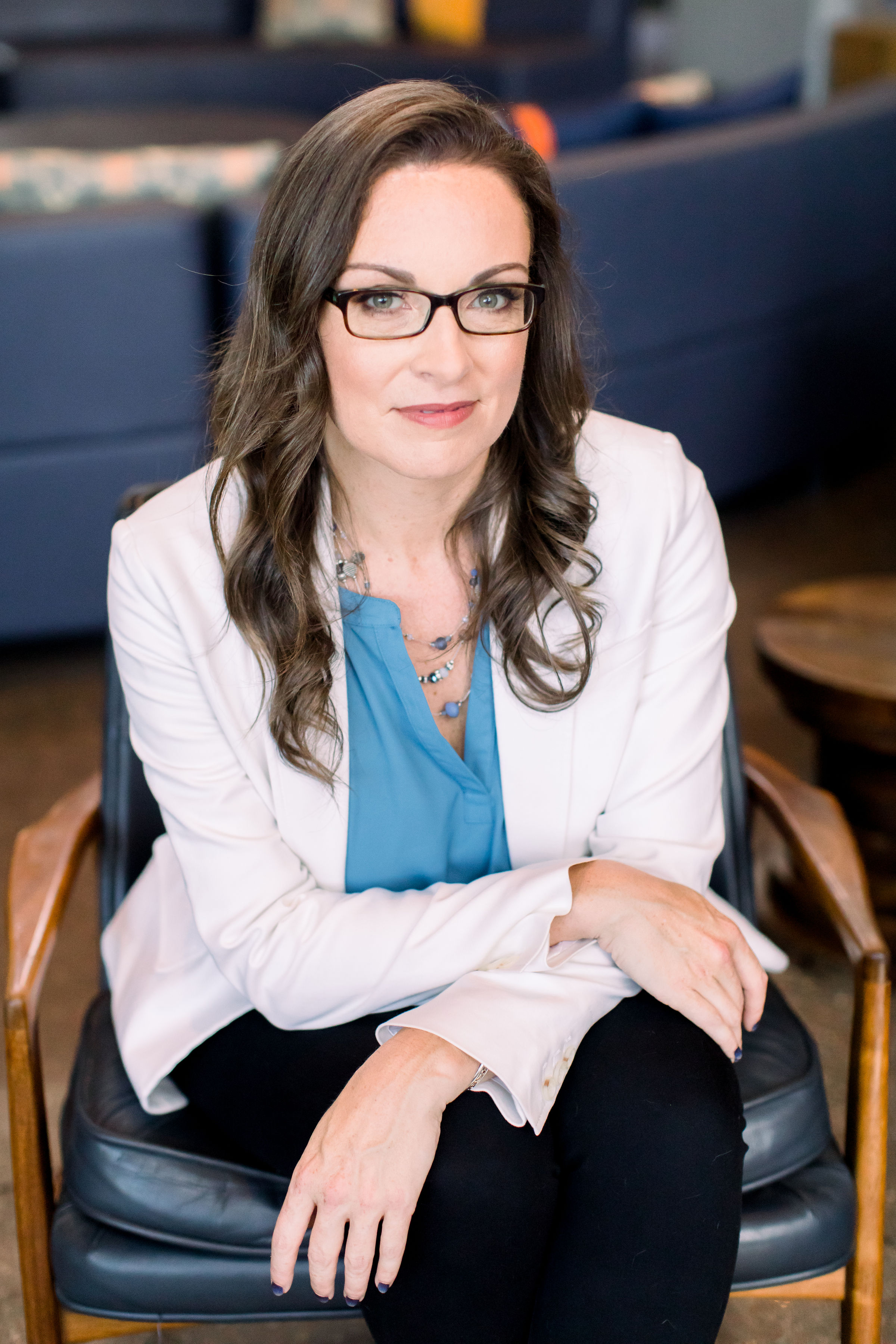
President & CEO, Certistar
Shandee founded CertiStar in 2017 in order to help everyone vulnerable to food allergies have safe and easy dining experiences. She suffers from anaphylactic food allergies herself and has many personal experiences to draw from that inspire and drive the mission of the company.