Saving Private Ryan (1998) — The War

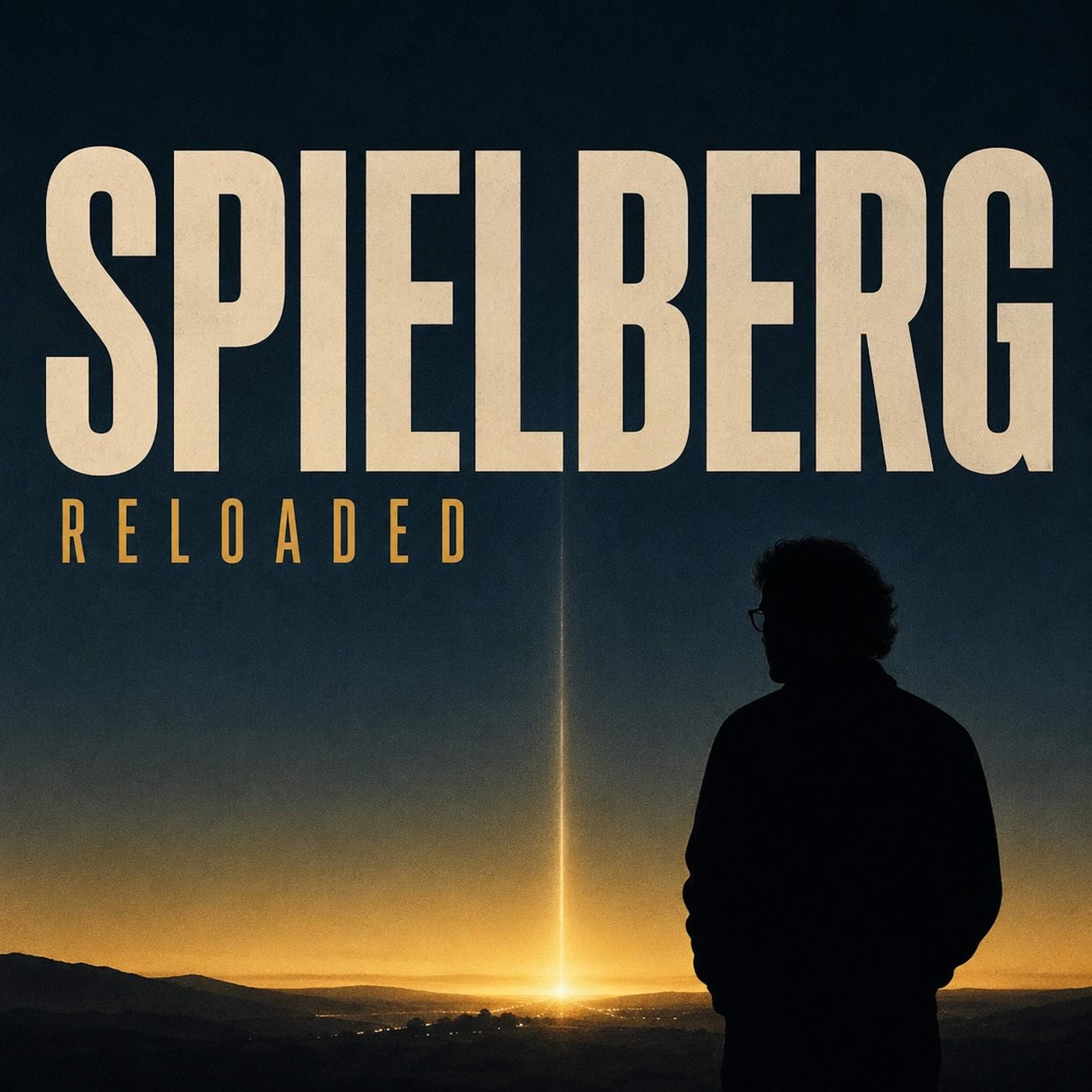


Saving Private Ryan redefined how war is depicted on film. Steven Spielberg’s brutal D-Day landing sequence stunned audiences in 1998 and influenced nearly every modern combat film, television series, and video game that followed. In this episode of Spielberg Reloaded, we explore how Spielberg used handheld cameras, desaturated color, sound design, and chaotic realism to immerse viewers in World War II combat unlike anything mainstream audiences had seen before. Featuring Tom Hanks, Matt Damon, and one of Spielberg’s most acclaimed directing achievements, Saving Private Ryan became both a landmark war film and a meditation on sacrifice, memory, and the human cost of history.
A.I. was used to help with narration and creative elements of our scripts.
0:03 Caalaruga shark media. For many veterans, the first twenty five minutes of Saving Private Ryan where the closest combat had ever come to being truthfully depicted on film. That is not a casual claim. It is the assessment of World War II veterans who saw the film in nineteen ninety eight and wept in the lobby afterward, who said they had spent fifty years trying to describe what Omaha Beach felt like and had never found the words, and that Spielberg had found the images instead. Some of them could not finish watching This is Spielberg reloaded episode eleven, Saving Private Ryan, nineteen ninety eight. Saving Private Ryan was re least in July nineteen ninety eight. Written by Robert Rodutt and directed by Spielberg, it follows Captain John Miller played by Tom Hanks, and a small squad of soldiers ordered to find and extract Private James Ryan, the last surviving son of a family that has lost three boys to the war in a single week. The mission is both an act of military policy and a gesture of human decency, and the film is interested in the cost of both.
1:30 But the film doesn't begin with Miller or Ryan or the mission. It begins on the beach. The opening sequence runs twenty four minutes. There is no music, the camera is handheld, and unstable men come off landing craft and die before they reach the water's edge. The sound design, created by Gary Reidstrom, strips the battlefield down to its component parts, the percussive crack of rifle fire, the wet sound of bullets entering bodies, the particular silence that follows an explosion before the hearing returns. Spielberg desaturated the footage to drain the color from the blood. It looks like the photographs. It looks like what it was. Hollywood had been making World War II films for fifty years when Saving Private Ryan arrived. Most of them were, in various ways lies not in their facts, but in their grammar.
2:29 The grammar of war films said that death was clean, that heroism was legible, that the violence had shape and meaning, and could be followed by a scene where someone said something true about why it was necessary. Spielberg broke that grammar in the first reel and never put it back together. The D Day sequence was filmed on a beach in County Wexford, Ireland, with over a thousand extras, many of them Irish Army reservists. Spielberg rehearsed it for weeks and then shot it in a way that made the rehearsal invisible, the camera moving through the chaos as though it had no plan, finding horror by accident, cutting away before the eye could process what it had seen. The editing by Michael Kahn is one of the great achievements in the film.
3:14 It creates the sensation of being inside something too large and too fast to understand, which is what being inside a battle actually is. Tom Hanks plays Miller with a specific quality of exhaustion, not the dramatic, speechifying exhaustion of movie heroes, but the administrative exhaustion of a man who has been responsible for other men's lives for too long. His hands shake. The shaking gets worse as the film progresses. He doesn't explain it, and the film doesn't explain it. It is simply there, the body keeping its own account. The supporting cast Tom Sizemore, Edward Burns, Barry Pepper, Vin Diesel, Adam Goldberg, Giovanni Ribizi, Jeremy Davies was assembled deliberately to feel like a cross section rather than a cast. Spielberg wanted the squad to feel like eight different America, and it does. They argue, they doubt. They fail each other in small ways. Davies plays Corporal Upham, the interpreter who cannot bring himself to act when action is required, and his failure, cowardly, understandable, irreversible, is one of the film's most honest choices. The film was shot by Yanish Kaminski, his fourth collaboration with Spielberg, who modified lenses and film processing to create a bleached archival look that pulled the images toward the texture of documentary footage. The battle sequences were choreographed with a precision that looked like chaos, each
4:47 shot designed to feel accidental, found as though a camera had simply been present for something real. Saving Private Ryan arrived at a specific cultural moment, The greatest Generation, Tom Brokaw's phrase, published the same year, was entering old age. The veterans of World War II were in their seventies and eighties, and the country was beginning to understand that when they were gone, the living memory of what they had done would be gone with them. The film arrived as a form of testimony, and the country received it that way. It won five Academy Awards, including Best Director for Spielberg, his second five years after Schindler's List. It did not win Best Picture, losing to Shakespeare in Love in what remains one of the more disputed Oscar outcomes of the modern era. But the cultural impact went beyond awards.
5:58 The opening sequence changed what directors believe they were allowed to show. War films made after nineteen ninety eight, Blackhawk Down, Hacksaw Ridge, Dunkirk nineteen seventeen are all in conversation with what Spielberg did on that beach. The camera that refuses easy moral framing in the moment, that does not tell you what to feel about what it is showing you became the new grammar. Spielberg broke the old rules and wrote new ones, and the new ones have held. The film's central ethical question is stated plainly and never fully resolved. Is one man's life worth eight? Is the calculus of the mission? Send eight soldiers to save one defensible? Miller asks himself this throughout the film. He has a private method for managing the arithmetic. He tells himself that every order he carries out, no matter the cost, brings him closer to home that if he executes the mission, he earns the right to go back to his wife and his garden and his classroom in Pennsylvania. The men in his squad spend much of the film trying to figure out what he taught. It becomes a running question, a small human obsession in the middle of a war. Who is this man? When he isn't this man? Miller never tells them. He tells Ryan at the end, when he is dying. He was a school teacher. He taught English composition.
7:26 Robert Rodett put that detail in the screenplay, and Spielberg trusted it completely. The man who has been ordering other men to their deaths for years taught children how to put sentences together. The gap between those two things is the entire film. He doesn't make it home. The film's ending, Miller dying on the bridge whispering to Ryan to earn this, to earn what the men around him have paid, is one of the most morally complex endings in American cinema. It is not triumphant. It is a debt transferred the old Ryan at the cemetery at the beginning of the film. Demanding to know from his wife if he has been a good man, is asking whether he has made good on a payment he was handed at twenty years old and has been carrying ever since. Spielberg does not answer the question. He cannot. The film simply asks it, and asks it again, and leaves it with you. John Williams wrote the score Spare Mournful, built around a single melodic theme that appears rarely and quietly, as though it knows better than to intrude. It is one of his most restrained scores and one of his best. Saving Private Ryan was Spielberg's second act of witness in five years after Schindler's List. Both films are about the cost of survival when others did not survive. Both ask what the living, oh the dead? Both refuse the comfort of an answer.
8:54 He was fifty one years old when it was released. He had been making movies for thirty years. He still had more to say.