Never Buy a House With These Hidden Health Hazards


Could your home be contributing to the symptoms you can’t seem to explain?
Jeremy Miller joins Dr Daniel Pompa to explore the connection between mold, building materials, indoor air quality, and chronic health issues. They discuss why a home can look completely normal while hidden moisture and mold create problems, and why finding the source can be harder than expected.
The conversation also looks at what makes a home healthier, from moisture control and ventilation to materials and HVAC choices.
If you’ve been dealing with unexplained fatigue, brain fog, poor sleep, or inflammation, this episode may change the way you look at your environment.
Subscribe, share this with someone who may need to hear it, and leave a review with your biggest takeaway.
CHAPTERS
0:00 - Why Modern Homes Can Make You Sick
4:00 - Jeremy’s Illness And The Detox Clues
8:05 - How Modern Walls Trap Moisture
18:25 - Water Pathways And “Breathing” Materials
27:45 - Building Safer Stud Walls For 15% More
33:10 - Thermal Mass Walls And Fastwall Systems
39:50 - Leaks, Site Planning, And Mechanical Layout
44:05 - Why Mold Dogs Beat Air Testing
51:05 - Tiny Homes As A Health Reset
59:30 - EMFs, Lighting, Earth Radiation, And Geometry
1:08:20 - Practical Steps To Improve Your Home Now
👉Dr. Daniel Pompa Social Media
Instagram: https://pom.pa/instagram
Facebook: https://pom.pa/facebook
X/Twitter: https://pom.pa/x
Website: https://pom.pa/website
Store: https://pom.pa/store
Got a Question? Message :point_right: https://pom.pa/message
Dr. Pompa Program: https://pompaprogram.com/
BEFORE YOU EMBARK ON ANY DIET OR NUTRITIONAL PLAN YOU SHOULD CONSULT WITH YOUR PERSONAL MEDICAL PROFESSIONAL.
YOU SHOULD NOT RELY ON THIS INFORMATION AS A SUBSTITUTE FOR, NOR DOES IT REPLACE, PROFESSIONAL MEDICAL ADVICE, DIAGNOSIS, OR TREATMENT. IF YOU HAVE ANY CONCERNS OR QUESTIONS ABOUT YOUR HEALTH, YOU SHOULD ALWAYS CONSULT WITH A PHYSICIAN OR OTHER HEALTH-CARE PROFESSIONAL. DO NOT DISREGARD, AVOID OR DELAY OBTAINING MEDICAL OR HEALTH RELATED ADVICE FROM YOUR HEALTH-CARE PROFESSIONAL BECAUSE OF SOMETHING YOU MAY HAVE READ HERE. THE USE OF ANY INFORMATION PROVIDED IS SOLELY AT YOUR OWN RISK.
Why Homes Are Making People Sick
Dr Pompa 0:00
70 some percent of the homes built in the US have mold. You go to Europe where these buildings are hundreds of years old and you don't have the problem. It's the way we're building them.
SPEAKER_01 0:11
When I was in my late 20s to early 30s, I thought I was dying. I turned 40 in three months. I really didn't know if I was gonna make it.
Dr Pompa 0:20
All the air testing failed. It was the mold dog Gus came in and fell.
SPEAKER_01 0:26
Fuel the power, do as much in your house as you can when you sleep. Just turn it all off. I can't tell you how much better I sleep when I do this.
Dr Pompa 0:33
How many generations are sick from this one contractor that maybe built 50 homes during COVID?
SPEAKER_01 0:41
Synthetic radiation, synthetic products, synthetic chemicals, synthetic lighting. It all comes under this one umbrella.
Dr Pompa 0:50
I feel called by God about this subject, which we're talking about today on this podcast. I really do feel called to make a difference here. Why? Because people unknowingly are getting sick from their homes, and yet there is an alternative. There's a different way to build homes. This gentleman's gonna educate all of us on it. But I'm telling you, if you don't feel well or one of your family members doesn't feel well, it could be your internal environment, it could be your home. And wait till you hear this. But I am gonna blow the lid off this industry because I cannot handle how many people get sick. I dig deep with them and find out always, unknown to them, they're under some toxic exposure from their home when there's simple building procedures that could have been changed. And the way we're building homes is absolutely killing people. Jeremy, I am so glad you're here for the second time.
SPEAKER_01 1:47
Yeah.
Dr Pompa 1:47
Um, and that's how important this topic is to me. And I that opening right there, uh, before we even started, I just told you, man, I don't care what it costs. I don't care what it is. I'm doing a documentary. I'll get people with passion behind it, the lives were ruined, that have a lot of money to pay for it. But I am going to expose this to the public because until that value is built, people will continue to get sick. Why? Contractors, they have no reason to change with the way they're doing it. And the way we're building homes is a problem. It has to change. They will not change until there's a value. And I use the example of gluten-free, right? It's like people would go, you know, um, I'm gluten-sensitive. Do you have gluten-free? They would say, gluten what? Well, we don't do that. Now you go into restaurants and they have gluten-free options, right? Why? Because value is built around something that was making people sick. This is so much more important than that. I can't even tell you. So I would argue this is causing a lot of the gluten problems. But okay, I want you were on before, but remind them of how you got on to this building safe buildings. And we're going to talk a lot about that because these are some of the things you're going to talk about, some of the things that people need to do right away. But how did you get here?
SPEAKER_01 3:04
First off, I got to start off and say thank you. Just appreciate this role that you're playing in this mission and this voice and this this opportunity to have this conversation because it is so important. It's taken me over 10 years to understand why things were off and and why things were a problem and decipher everything and understand the level of detail. And, you know, I think more and more people are waking up to this, but it's it is just so important to create that value so people know like this is one of the biggest choices you can make for your health and vitality.
Dr Pompa 3:32
Dude, right there. Absolutely. What is your environment? What home are you in? It's estimated 70 some percent of the homes built in the US have mold. You go to Europe where these buildings are hundreds of years old and you don't have the problem. It's the way we're building them, and you're right. And I would argue it's greater than that. You know, that most people have homes that are making them sick, maybe slowly that it's making them sick. So occur.
SPEAKER_01 3:59
Well, and so how
Jeremy’s Illness And The Detox Clues
SPEAKER_01 4:00
did we get here? Uh, you know, I connected with you about seven years ago, and I've been there. Uh when I was in my late 20s to early 30s, I thought I was dying. I really I turned 40 in three months. I really didn't know if I was gonna make it. Yeah. Uh the the brain fog, the fatigue, the severe digestive issues. And when I say brain fog, I mean I'd be in an office environment and it'd be like this wave of glue would come over my body, and I couldn't even form a sentence. Like the severity of these symptoms were incredible. And I went through all sorts of different traditional uh medical routes, no answers, uh, no support, a lot of dead ends. Found your your uh website and started listening to your podcast, still tried to figure it out on my own for a little while and about a year reached out and uh was blessed to get a reply from you and you took me out as a client and uh learned about the problems with mold.
Dr Pompa 4:55
Yeah.
SPEAKER_01 4:55
I learned about the problems with heavy metals, and I spent two years under your guidance, detoxing, and get my health back.
Dr Pompa 5:00
And by the way, people that are most sensitive to mold in a home typically already have heavy metals accumulated, other toxins or other stressors in their life. And it's the perfect storm, as I call it. Boom. And all of a sudden they're they you know they're sick. And most people are looking for the one thing. And I'm like, no, no, no, it's not just one thing. Right. You know, what I did with you is unfolded, right? In fact, you had heavy metal exposure already. You were getting a mold exposure. You and we built that perfect storm, went after it, you got your life back.
SPEAKER_01 5:27
And the I remember when I got my heavy metal test and sent it to you, and I got one word reply, which was wow. I don't know. That was not the reply that I was hoping to get. This must be not good.
Dr Pompa 5:40
Wow, it's amazing you're even living.
SPEAKER_01 5:43
You said on the call. You're like, how are you even still alive? And I said, Well, all right, that makes two of them. So not as crazy as I thought.
Dr Pompa 5:49
Yeah, exactly. Good news and bad news.
SPEAKER_01 5:52
And uh, you know, it's just interesting when you when you go back and start connecting the dots because a lot of those symptoms really uh I don't know if exasperate exasperated would be the right word, but when I was younger, I moved into a neighborhood with a lot of old homes. And uh I was working for a small construction company and I started helping renovating these old homes and sanding and pulling off old drywall and all this stuff. And all of a sudden I'd be eating lunch and get this crazy bloating and I'm exhausted all the time.
Dr Pompa 6:18
And so and by the way, right there, I how many people's fatigue and gut issues in there taking this probiotic, this diet, that pill, right? I mean, I went through that, you went through that. It rarely is it just the gut, it's it's the toxins upstream, right? You can keep trying to put repopulate new fish and new plants in your you know, pond or your you know, river, but it's like what's going on upstream? There's mercury being dumped in the river. You're not going to repopulate the fish, don't care what you do.
SPEAKER_01 6:48
And if it's being dumped in our actual rivers, it ends up in our internal river. Absolutely. And so, you know, it just kept getting worse and worse and worse. And then it got better and better and better. And I learned about all these things because you know, I had studied architecture. I went to architecture school about 20 years ago. I was working in design, build, construction. And it's also this these funny little connect the dots. The very first job that I got hired on was to rebuild a physical therapy center after a mold remediation job. That's and I thought, isn't that funny that that was the first job of my professional career?
Dr Pompa 7:18
Yeah, it probably was not a great job for you because yeah, you got some exposures.
SPEAKER_01 7:23
No, and luckily I came in after the remediation. That's good.
Dr Pompa 7:26
Yeah, I'm always assuming the remediation wasn't done right, right. But which it can be done right, but most often it's not another topic. Right. And it probably was contributing to it.
SPEAKER_01 7:36
Um, but so over the course of this this time, like you know, and you start I started learning about all of these things and conceptualizing this idea of a healthy home. But for me, it all came together when um I got healthy enough to travel, and I traveled and went to live in Peru for a year and a half. Yeah. And I was living in these Adobe homes, thermal mass wall, natural line-based plasters, earthen walls.
Dr Pompa 7:56
How do they not have mold, right? They don't have sophisticated air movers and HVAC systems.
SPEAKER_01 8:02
They don't even have HVAC systems, period.
Dr Pompa 8:04
That's the point.
How Modern Walls Trap Moisture
Dr Pompa 8:05
That's what I mean. It's like, so how do they not have mold? Ah, because the way they build them, so simply they breathe.
SPEAKER_01 8:11
Yeah. Yeah. And and they're non-toxic, they're grounded. I think the first house I lived in, the whole house was run off an extension cord. So there were like, you know, four breakers to switch, kill all the power. The internet went out in the afternoon when the winds came through. I don't know what that connection is. It'd get windy and then the internet didn't work. It's like, well, okay, we're taking a break. Yeah. But uh, you know, this this was huge for me because I I developed this fear, like, okay, I got healthy, but how am I gonna stay healthy? You know, and going to Peru, uh not only did I stay healthy, but I was sleeping better. I had more mental clarity, just a general um increase in my energy levels, uh regulated and calm, relaxed in the body. And I understand, you know, I was in a completely different culture. There were you know many variables at play, but this sleeping and living in this non-toxic, thermal mass, earthen, natural home was I was continuing to get healthier. And all this led to more uh vitality and inspiration and passion. I was like, this is what I'm gonna do. This is something I never learned in school in my traditional career. I'm gonna learn how to create a home that actually supports your health and well-being. And that's why I call my company Geoalchemy Studio, because for me that idea of alchemy, it's it's what you have right here, it's pain to purpose. Okay, the situation's really negative and harmful and causing a lot of problems. What if we could switch and not neutralize it and avoid the problem? What if we could actually make it a positive? Yeah. What if we could actually turn into one of our greatest allies and turn into this beautiful tool for health, wellness, vitality?
Dr Pompa 9:49
Yeah, that that's key because it it should be that, right? Your environment should be healing to your body. It should be, it can be, but you have to choose it. You know, and you you learned it again, you know, it is pain to purpose. You know, you have to learn it the hard way. So did I. The only you think the only reason either of us sit here passionate about this topic is because it happened to us. But let me tell you, if it happened to us, it could be happening to you too. And most people that don't feel well, they're try chasing their hormones, can't figure out why they gain weight, can't lose it, have no energy, have the brain fog, anxiety, not sleeping, extra. I'm telling you, it's like nine times out of ten, it's the dang home you're living in. And there's something called sicker quicker, meaning you had a mold exposure, maybe it was 10 years ago in a home in an apartment. You get sensitized to mold. And now you enter another home and it almost takes it up to another level of sickness, but you don't put two and two together. So you don't realize because everyone else seems to be functioning fine in the home. So it's in your head, you're like, it's not the home, but you've been sensitized to the mold, and now you're reacting to this home, unknowing to you, looks fine, no water damage, no signs, everything's fine. However, behind that wall or that wall is mold and your immune system is a hypersensitive. And then the autoimmune diagnosis, you know, go down the list, right? Spiral. Yeah, right. And folks, don't think that this mold issue is a breathing problem. Okay. That if if you start chatting and Googling uh mold, they're gonna make it sound like a lung issue. Okay, it's that yes, that can happen, but this is an immune issue. This is biotoxic illness. This isn't a mold allergy. This is every symptom that we just described is what we're talking about. Some people call it SERS, chronic uh inflammatory response syndrome, meaning your body goes into the state of inflammation and you wonder what the heck happened to my life. You know, and if you look up that, um, you know, SERS, you'll get a little bit more understanding of what's happening to you. But okay. For me, it's the lymph nose.
SPEAKER_01 12:01
I don't know what it is for you, but I'll walk into the space till this day and the lymph nose will start to swell up. Yeah. Okay. And I'll and I'll know kind of.
Dr Pompa 12:07
Everyone has their own thing, yeah. Because someone out there might be like, you know, well, I don't get that, so I'm all right. I never got that. I didn't get the um the lymph node thing. But I got, I mean, I would get massive brain fog and almost this weird anxiety. I still, if I go into a hell hotel room that has a severe mold issue, I it just happened. I was in Pittsburgh video visiting my old stomping ground, and um we were in uh an inn that was good for me in the past. And I'm like, day that that night I woke up, didn't sleep well. I just said, man, I just kept waking up. That's a sign for me. I don't sleep well. I wake up and I'm like, I feel like I could start my day. It's the weirdest thing, right? I just wake up and then the next day I'm wiped out, fatigued. Okay, so day one, that happened. And the next day I'm a little brain fogged, irritable, less energy. Ah, it was probably travel, right? Uh next day, next night, worse. Next day, worse. So I'm outside talking to the gardener, and he haphazardly says, Yeah, you know, I'm I'm taking, you know, I'm like, hey, you're still here, taking care of the building. Yeah, you know, we've had a few water leaks. It's getting old, you know. I'm like, a few water leaks. Yeah, yeah. The room you're in, you know, the thing does, and I'm like, well, was there mold back? Oh, no, no. We just fixed the pipe, closed it up. I mean, that's what happens. Okay, so they fixed the pipe, they fixed the drip, okay, closed it up. It was probably dripping for months before it actually showed itself. They just, you know, dried it, you know, fixed it. No, no, there was mold because the water went underneath that floor. Underneath that floor, this is what happens. Sealed it up. Now, let's say you buy the home or the apartment and go in. You didn't know that that was sitting there. You have no idea. Right, anyways, I got sealed. I got out of got out of the hotel. I was like, you know, just not right for three days, but I've been there.
SPEAKER_01 13:58
Yeah.
Dr Pompa 13:58
So I still I have a still a high sensitivity, not like it was, but um, like you, I I fear ever going into that again. Uh, and when you realize the way homes are being built, um it's this, it's a justifiable fear for anybody. And but you and I understand it. Most people out there don't. Right. Okay, so how does water, as I just described behind a wall, interact with these building materials? Because this is happening a lot.
SPEAKER_01 14:26
Yeah, this is key. Uh, and this is something that took me a long time to understand. And over the last year, I've really uh sharpened my understanding of it, studying the work of a really great building biologist by the name of George Swanson.
Dr Pompa 14:37
Yeah, you say he's an old guy.
SPEAKER_01 14:38
Yeah, he's almost 80, I think, now, and he co-authored a book. I think it came out in 2008 called Breathing Walls. And it's very detailed. Yeah. It's very detailed, and there's three main uh ways that water interacts with the the so we'll call it the building envelope. So the building envelope is your exterior wall, foundation, roof system, windows, and doors. That's the building envelope. Think of it as your cell wall for your home.
Dr Pompa 15:03
Yeah, that's your protection.
SPEAKER_01 15:05
Yeah. And so uh over the years, um, there's been different ways that we've we've built. There's masonry buildings and brick buildings, uh, and then there's wood. Stucco go down the list. Yeah. Stucco, there's uh cob, there's uh rammed earth, there's cement buildings. We have different uh lime-based natural cements, there's uh timber frame, wood framed. Uh now we do a lot with steel and glass in the cities, um, all these different construction systems for most of the buildings. Most often the way you're gonna find it is wear gap and insulation, right?
Dr Pompa 15:44
That's that's 98% of the homes people are living in.
SPEAKER_01 15:47
Brick or wood stud. Okay. Yeah.
Dr Pompa 15:49
And and to your point, buildings downtown could be steel, glass, other things.
SPEAKER_01 15:55
Yeah, stone, those those sorts of materials stuck. Oh, but typically, uh, if you're living in a residential home in the United States, you're living in a wood stud framed wall. Sometimes that'll have face masonry, sometimes it'll have vinyl siding, sometimes it'll have wood siding and on the inside.
Dr Pompa 16:09
And if you see it being built, you'll realize okay, the studs go up first. You see the like the sticks, right? Stick frame. And then they put OSB, which is plywood, plywood board glue. Yeah, yeah, with glue. It's made with very high levels of formaldehyde and other things, so toxic right off the bat. Yeah. And then that goes on, and then they take something typically called Tyvek, there's a zip system, there's a lot of different things, but you see it wrapped in plastic, okay?
SPEAKER_01 16:34
The weather-resistive barrier.
Dr Pompa 16:35
Right, the weather-resistant barrier, which I went through my neighborhood, okay, and I'm no building biologist, and I walk through with a camera and a video, and I'm like, problem, problem, problem. Stop short. Moisture's gonna come. I mean, I went through and found problem after problem. I don't think I found one home that if it was my home, that I would have been like, that's gonna be a water issue, unknowing to them. Right. And it is no doubt because the seal is imperfect. Okay, finish this process.
SPEAKER_01 17:06
Yeah, so you know, you have your stick framing, you have your exterior sheathing, what you're calling, you know, the OSB is an example of that, and then you have your wall wrap, and then on in the wall is really common to use fiberglass insulation, loaded with formaldehyde, and then you have drywall, which has interface paper, and then acrylic-based polymer paints.
Dr Pompa 17:25
Drywall, folks, this drywall back here is it has paper on both sides. That's called mold food. It's called cellulose to be exact, but that's exactly what mold wants. All you have to do is add water to that. Now, if it comes through, they cut out that place where water is. But you don't realize that on the other side that water went way further on, and that's the problem. Oh, and then the insulation that they didn't plot over here was also wet. Oh, they didn't realize it ran on a pipe that went that way 20 feet over there and got that wet, and you didn't know it because it didn't break through. Okay, so that's the problem with this system, right? Meaning that wet that wall gets wet, the food for mold just happens to be there because that's the way we're building buildings. Oh, and it's and this is you can talk about this next, yeah. And it doesn't dry correctly because it doesn't breathe. So if that happened in a European home, yes, it would dry. Join
Water Pathways And “Breathing” Materials
Dr Pompa 18:25
me live in Houston in October 16th through the 18th. First time ever, doing a public seminar for 20 years doing doctor seminars. That's why I'm really excited about this. Look, for my followers, people looking for an answer, want to know more about mold illness, want to know more about heavy metal toxicity, want to know more about hormone conditions, thyroid conditions, and even find what's wrong with you. Well, that's what we're doing at the seminar. Oh, yeah, you're gonna take the very test, something called a visual contrast sensitivity that can look for something called biotoxic illness. You're gonna fill out our AI version of our neurotoxic assessment that all my doctors use. Okay, because we're going to involve you in the discovery. Why? Because people are looking for answers. So I said, if I'm doing a seminar, I want people to experience what I do, what I've been teaching. And look, of course, we're gonna have amazing teachers. We're gonna have breakouts on these topics, right? You're gonna hear breakouts about weight loss resistance, health in children, you're gonna hear breakouts about mold, how to build homes safely, what you need to do in your home to make it safe. We're gonna be blowing the lid off of some of these topics that really nobody's talking about is causative factors for why so many people are sick. I'm gonna put a link below. All the details are there, but it is October 16th through the 18th in Houston. People are flying in from all over the world. So can you. Look, you want answers, uh answers that you're never gonna hear in another seminar. Come to this one, you're gonna be blown away. Check it out.
SPEAKER_01 19:58
And this is this is the big thing. So water interacts with walls in multiple ways. One, you know, liquid water, uh, which can be pooled up through building materials called capillary action. And then there's vapor permeability. So a lot of times, too, depending on the building codes and where you're at, sometimes it'll recommend like a six-mil poly uh what they call vapor barrier on the backside.
Dr Pompa 20:18
So they do that like if they're gonna put down a wooden floor in your basement. Concrete slab. They'll put a vapor barrier.
SPEAKER_01 20:24
Sometimes it's in the walls themselves, too. Um, it's it's recommended in certain building codes or mandated in certain building codes.
Dr Pompa 20:29
You need somewhere in the wall, it has a lot of moisture, no matter what. Just from the water. Cement does. Yeah. Cement. Yeah.
SPEAKER_01 20:35
And then additional with the capillary action, it could pull up moisture from the ground.
Dr Pompa 20:38
It does, yeah.
SPEAKER_01 20:39
Um, and then there's uh a third way that I want to talk about with water. So we talked about capillary action, which is think about the trees. It's it's the material itself pooling kind of more liquid water up through the pores. And then there's vapor diffusion or permeability where water vapor moves through the actual porous structure of the materials itself. And so the problem is when these building wraps fail, and the building biologists I talked to is observed in the field after many freeze and thaw cycles, or sometimes they get um probably clogged with different oils from the hands touching them or from sawdust or you name it, they fail. And that permeable house wrap is no longer permeable. So that wall, water, which inevitably is going to get in the stud cavity, it can't through vapor diffusion get out. And that's the way they're supposed to get out.
Dr Pompa 21:25
So if you're now you're trapping moisture in an area where there's mold food. Yes. And all it needed is water. Mold spores are everywhere, by the way. If we tested this air right here, there's mold spores, right? Oh, yeah. They're just not pissed off producing a biotoxin, so we're not sick. Right. Now, if you have an allergy to mold, you could react to these things. But biotoxic illness is not going to happen with what's floating here. Sure. Yeah.
SPEAKER_01 21:48
There's mold out in the woods. Right.
Dr Pompa 21:49
I don't get sick when I go to the woods. I feel great when I go to the house. Yeah, when I was the most mold sensitive, I'd go in the woods and be fine. Because it wasn't pissed off behind a wall producing a toxin to protect itself.
SPEAKER_01 21:58
Right. And I and That's the thing. I think, and it could be easy to get angry at mold, and I get it. I'm passionate. I don't like this stuff, but I think it's trying to alert us. Hey guys, you're doing something, something's off here. You know, it's actually trying to send us a signal. Oh, yeah. Um, and so also the way we finish off the drywall with the uh acrylic-based paints or vinyl wall covering is really bad. I've seen some building science uh studies online that the the vinyl wall covering prevents the water from getting out of the wall. So again, you don't get that diffusion, which you get with thermal mass wall uh materials like uh earth and clay, lime plaster, venace plaster is what people used to use, right? And and the okay, so that could dry out. But the other amazing thing about some of these natural building materials is hydroscopic. Have you talked about this yet with anyone? No. So hydroscopic uh is it's hydroscopic adsorption with a D and Dsorption is the way that he describes it. And this is one of the key technologies I've discovered in the building envelope for a healthy home. And it's it's not like an electric technology or something you need a motor for, it's a technology in the material itself. So inside the home, we're always going to have moisture events. Taking a shower, cooking, respirating, moisture coming out of the, you know. Exactly. Well, hydroscopic means that these materials molecularly bond with the water in a way that doesn't form liquid water in the material. It actually bonds with the material itself. So some of these materials uh have an incredibly high capacity to take that humidity when the humidity levels spike in the home and literally on a molecular level absorb them into the material itself. And then when the humidity goes dry, they release it back. So this is that kind of concept of when people talk about breathing.
Dr Pompa 23:44
And by the way, that's like in in these old hundreds of old you know, years old homes in uh Europe. That's what they're that's what's happening. That's what's happening. Right? It's like, well, how do these homes not have mold? Because what you just described is happening, they control moisture, they add moisture back and they take moisture in because they're natural materials. The adobe you lived in did the same thing.
SPEAKER_01 24:04
Yeah. Clay, uh earth and clay, adobe, uh, lime plaster. There's these really cool uh wood fiber lime cement blocks, we can talk about a little later, called fast wall. Um, all of these type of materials have this hydroscopic capacity. And then they also are permeable. So then if too much moisture gets in there, it could also get through the wall assembly and either dry to the inside or dry to the outside. But if you block one of those pathways, essentially you want water to keep moving. And I, you know, I just went to the woods before coming over here today, and I was sitting by the stream, and I'm sitting listening to the water, and I was like, this is the problem with modern buildings. The synthetic chemicals, these kind of cutting-edge building products that are then failing after decades, they're stopping the flow of water. And if the water could just keep moving like it is in the stream through healthy building materials, through vapor permeability, through hydroscopic capacity to breathe, then you're not gonna have mold. Yeah. But we've stopped it with these chemical-based products and these building materials. And then, and then, for example, you could use like a healthy insulation, like a wool insulation, which has a level of hydroscopic capacity, it could it could take that. Yeah, uh, but fiberglass insulation can't. That's right. So it's just gonna end up, it can condense on there, and then also when you get thermal bridging, say it's uh warm in your house, and you're cooking a pot of soup, and you have an electric outlet in your kitchen, and that electric outlet is kind of old, and so there's a lot of gaps where that uh steam could go through the wall, through that electric outlet, into your wall. Now, if it's not healthily being able to dry out of there, you could get several pints of water in your wall this way.
Dr Pompa 25:41
Yeah, and people I appreciate people don't understand that, but that is that happens. That's what happens. So now you have moisture going into a place where you know it gets trapped, it gets pulled into materials that just have cellulose, and the mold spores are there and they start growing. And now you have a mold problem.
SPEAKER_01 26:03
And the wood that we're using is not the wood that we had from 100 years ago. Yeah. So one of the other things that I've discovered as I continue to research this, based on my research, that a lot of the studs you use now are coming from managed forests. So they might come from trees that are 30 years old. Well, what does this mean? It means the core wood is very juvenile. It's not this mature heartwood that you have from a 100-plus-year-old tree. Well, that 100-plus year old heartwood had time to develop natural resins and tannins so that way it had natural fungal resistance. But the wood now, it's not mature enough to develop those compounds in the wood, which is why the wood is more vulnerable as well.
Dr Pompa 26:39
But okay, so I mean uh I plan on building a healthy home, right? I've made the existing home I'm in as healthy as I could make it, and we can talk about how to do that. Yeah. Um, but my goal is to build a healthy home from scratch. You know, film a documentary around it, not just how to build a safe home, because I think this has to be the future in this country, but right now there's no value for it. So again, my one of my goals is to build that value for contractors to go, oh, I want to learn how to build these homes because people are asking for them. The only way these people are gonna ask for them is if they understand what we're talking about, right? And how devastating this is to their health. But um, so you know, I I desire to build this home, you know, from the ground up. But are we talking about a substantial amount of more money? You're talking about getting wood, older trees. That's gonna be way more money than my two by four that I get at Home Depot.
SPEAKER_01 27:35
Well, this is again the genius of what I've learned from George. And he's developed some really interesting protocols to address this. So there's really two, two main paths
Building Safer Stud Walls For 15% More
SPEAKER_01 27:45
in my mind. One is a healthier stud frame frame construction, which I think is uh an amazing option. And uh based on George's career, you can get that in like the 10 to 15 percent above builder grade. And then the other option is to go with one of the thermal mass wall materials.
Dr Pompa 27:59
Okay, so let's okay, so just really quick. Okay, so the way we're building homes now, yeah, with stud you know, what we described that whole process. So what you're saying is for about 15 or 20 percent more, you can build that safe with with vapor barriers that breathe, right? Magnesium oxide board, magnesium oxide boards. Magnesium oxide board is it is a replacement for the drywall. Drywall. Okay.
SPEAKER_01 28:25
And then instead of using acrylic paints, using uh like potassium mineral silica-based paints.
Dr Pompa 28:31
Yeah, which by the way are gorgeous. I mean, they they look, yeah, that it gives a natural feel, it gives a cozier feel. Um it doesn't smell like chemicals. Yeah, it's a lot of people. So it's putting chemicals back into your family. Yeah, and it's it's doing what you said. It's offering moisture when it's needed and it's absorbing moisture. Yeah. And if it does get wet behind the wall, it allows it to breathe. 100%. Okay. So that's making the this air-gapped wall system safe using these types. And I I remember we talked about it last time. Um, you know, what you wrap in, there's different wraps. So it actually breathes like a membrane. It's a membrane. Yes. It allows it to go both ways, right?
SPEAKER_01 29:09
There's smart vapor membranes. And uh again, as I've continued to research, there's a couple products. There's a company called ProClima based on some European building science that makes some really top-notch stuff. I'm I'm working with them on my projects. We're we're having that kind of system. Uh, and from what I've learned is like the traditional Tyvek style building wraps, there's actual micro pores in the structure itself. And what George and his book has witnessed is that over several freeze thaw cycles or different like oils or debris getting in the cavity, that the material either can fatigue, is the way that I understand it. And then it does, it's not porous anymore. Whereas, uh, and I forget what the acronym stands for, but the the proclamaline, like Solitex Mento 3000, for example, a different type of weather resistive barrier, it's called like a TEE uh film. So there's no pores, it's actual molecular diffusion, uh, more similar to like a natural material. So there's no um structure to fatigue in the way that the microporosity, like perforations in the other building wraps perform.
Dr Pompa 30:11
What about the zip system? Because that's a thicker system that they tape all the edges. That doesn't look like it would breathe at all. It looks like a permanent, better seal, probably than Tyvac, but what's your feeling on that?
SPEAKER_01 30:24
Yeah, I've done zip projects. I think there's some value to it. Um, I think it is a really good airtight system. I found published literature on the permeability of the coating, but I haven't found any literature on the coating plus the sheathing. And it's also kind of new, so I don't I don't know if there's any long-term studies on there's a fatigue.
Dr Pompa 30:44
But you prefer some of these newer membranes that actually act like a membrane.
SPEAKER_01 30:48
The stuff from ProCalema is pretty amazing. Yeah. And I've done a lot of study on that. I'm using it in uh my tiny homes, my modular homes, and I I'm pretty impressed. Yeah.
Dr Pompa 30:57
Yeah. So I mean it'll block water, folks, um, but it breathes. Uh it allows, you know, the you know, basically air to move in and out. Airtight, vapor permeable. Yeah, there you go. Airtight, vapor permeable. Yeah. Yeah. And that's and that's the that's what you want. And you want it to be able to dry to both sides. Yeah. Yeah, dry both sides because your walls will get wet from the inside. Oh, yeah. From the outside, you know, a thousand different ways. Uh around a window, around a door, condensation. You have a little, you know, gap around a window that didn't get sealed properly, and then you have cold air coming in with warm air, that creates moisture.
SPEAKER_01 31:39
And that's what happens through the stud walls as well. So you can get that's called thermal bridging. You know, you can have that cold hit the exterior of the sheathing, and then it can work its way through that stud in a different way than it works its way through the installation. And now all of a sudden you got the same situation, which is why another one of the stuff the strategies, if you're doing this stud wall construction, and I learned this from the passive house system, which is like a really high-quality engineer building system developed in Germany, started in like the 80s based on like the solar passive house concept.
Dr Pompa 32:07
But isn't that what we're calling this membrane passive house system?
SPEAKER_01 32:11
No, passive house is like a approach to high performance building science. Um, passive house institute us, but the the membranes are they're they're smart vapor uh retarder membranes or um vapor permeable membranes. And that's one of the things I learned from George's book. There's really no so in the code, they'll call things a vapor barrier, but there's really not vapor barriers. There's this vapor retarders, and some of them have very, very low, it's called perm ratings. So water moves very, very slowly through them, but it'll still move through them.
Dr Pompa 32:43
Okay. All right. So option one, take a stud. And again, that's probably an easier option for construction companies. Why? Because it's very difficult, I have found, to get people to do different things. Yeah. That means they know how, all their guys know how, my crews know how to build stud houses, right? I mean, this is what they know. So to get them to say, hey, instead of using Tyvek,
Thermal Mass Walls And Fastwall Systems
Dr Pompa 33:10
use this. Instead of using this installation, use this wool insulation. So it's a it's a matter of replacement. So I I think that that's probably going to catch on the fastest because it's taking what they already know and replacing the products. Okay. Now there's another step to this. What you what did you call it? You called it uh thermal mass walls. Thermal mass wall.
SPEAKER_01 33:31
Yeah. So this is a different category of materials uh where the material, it's like Adobe. You know, this is the classic example. So there's no structure inside the Adobe Wall. The Adobe Wall. It's just it's not an air gap. There's no air gap. Yeah. Yeah. So it's a it's a thick wall assembly. Um if you look up, people could look up the building science, it works differently than the insulation and a stud. Um, there's a really cool product that I'm starting to specify for basements and then also wall construction and some of the stuff that I'm working now called fast wall, which is a mineralized wood fiber cement block. So it's a cement lime wood fiber block. And the way they make it, the wood gets petrified. And so this means there's no cellulose, there's no opportunity for mold to feed on anything, and it's got incredible hydroscopic capacity from everything that I've learned in George's book. And uh it's it's really it's really neat. I think I'm gonna plan on building my next house out of it. Okay, it's really cool, and you could finish it with natural plasters on both the interior and the exterior, uh, non-toxic waterproof.
Dr Pompa 34:37
But there's like a breathability, but yet it can get wet, doesn't matter.
SPEAKER_01 34:42
Yeah, well, because it's permeable and hydroscopic, it is capillary open, which means the pores are large enough that it's not gonna, you know, pull up water from your foundation or your footing. Uh so it's really good for foundation walls as well.
Dr Pompa 34:53
Right. Well, which cement does. I mean, that's yeah.
SPEAKER_01 34:56
Cement, regular cement does, yeah. George even's developed protocols to do healthy building slabs where you take crushed chips of this stuff and you use that as your subslab insulation. And so now you've got that capillary break, you've got the material adding insulated value, but now it can't pull up moisture through capillary action from the soils.
Dr Pompa 35:14
So there's something called foamed concrete. Does that work very so well? This would be I mean, it would it's basically waterproof. Yeah, foamed concrete. It's lighter. The AAC stronger. Yeah. Yeah. And um, obviously again, it's solid, so it's not like it could get wet even if it did. Yeah. You know, I mean, how does that compare to that? What do we, it's it's kind of a different strategy.
SPEAKER_01 35:38
It's a little different. Yeah, the fast wall ends up having like a concrete core, which again, the the block itself, as I understand it, mitigates that moisture and helps that dry out, so it's not a problem. It actually works in your favor because it provides some thermal mass. Okay. Um, I haven't done any projects or done too extensive research on the autoclaver concrete blocks. Uh, when you introduced me to Jason, he was a big fan of that. So he was sending me some resources on it. But from what I've studied on the materials I received from George, the one thing you have to watch on that is it does have capillary action. So you got to watch how you detail it at the grade because it it can pull up water. Um, but it's incredible mold safe material.
Dr Pompa 36:15
Capillary breaking. Capillary breaking.
SPEAKER_01 36:17
Yeah, but that's the difference because then the other wood fiber cement block is not.
Dr Pompa 36:20
Yeah. So you think that is this thermal mass? Uh this is the future. Um perhaps. How much more is that? Meaning what you said maybe 15% more for taking the stud design that we're doing now and putting it healthier. Make it healthier permeately. Um, and again, I I think it's crazy for not spending that difference. Everyone should be doing that, right?
SPEAKER_01 36:48
And and also for property developers or investors, this is also going to make a more rat resistant home. It's gonna be lower lower maintenance.
Dr Pompa 36:56
Yeah, all your failures are for everything we're talking about. Fungal, all the right. Yeah, exactly. It's I mean, when you get a home that's 10 years old, I mean, it's it's already a disaster. I you don't you have no idea. It's like contractors come in, oh yeah, that's it's no problem. We just take it out. Meanwhile, they just sealed it over, made the window or the door better, but there was mold behind it. They didn't even deal with that. Right. Absolute disaster. Okay, so but so this thermal mass walls, um, this is more maybe a future thing. I mean, obviously, how much more is it? That's what the question I ask. How much more is it?
SPEAKER_01 37:32
Probably probably like another 10, 15% more on top of that. All right. But I would argue that's not the future. I'd argue that it is the future and it's also the past. It's the way people have been building homes with Adobe and Red forever. Yeah, right. Yeah.
Dr Pompa 37:44
But I mean, I think it's safe to say is the future again because it's like we're going back, you know, to the the way it really should be. But I mean, okay, so the only reason I don't think that'll catch on as quick is because that's a learning curve that a lot of contractors so if someone's brand new, a contractor is brand new in the biz, let's do that. They'll be excited to do this. Someone young, someone who's doing it, hey, let's do it this way, right? But someone who's been can't teach old dogs new tricks, I don't know that that's gonna catch on. It's a learning curve. I have to train all my crews on this new design, and then we're gonna fail maybe because we didn't pour it correctly.
SPEAKER_01 38:21
But the fast wall, from what I've understood, I'm getting ready to do our first projects with it.
Dr Pompa 38:25
Thermal mass walls, that's fast wall.
SPEAKER_01 38:27
That's a that's an actual product that I've been learning a lot about. I'm starting to design with and looking to do my first few projects with it, but I'm actively designing with it now. I just talked with one of the reps from there this past week. It lays kind of like a concrete masonry unit, and you don't even need any mortar. So it's not hard to install. It's not much different than doing a cinder block basement wall. And and uh this fellow he'll come out and and teach a workshop on how to do it.
Dr Pompa 38:51
And you you pour it like cement, you pour it in.
SPEAKER_01 38:53
Well, yeah, you put it like the forms, stack it like CMU, and then while you're doing that, you're putting your rebar in for reinforcing, and then you come back and you pour the concrete core, and then you do natural lime lime or clay glass.
Dr Pompa 39:05
It surrounds the concrete, really. Yeah, and you're kind of building the structure, pouring the concrete in tier point, and that actually can act as thermal mass.
SPEAKER_01 39:14
The concrete acts as thermal mass, yeah. And then they put rock wall insulation in the block too. So you have insulation to the outside of the wall, the thermal mass to the inside. So that energy you spend heating and cooling your home, that thermal mass of the concrete works in your favor because the insulation is further out towards the exterior.
Dr Pompa 39:28
And then I I wonder, like I think this foam concrete is like earthquake proof. I mean, it's like it why I wonder if this is as well.
SPEAKER_01 39:36
It's very strong. Yeah. Yeah. For winds, for uh yeah, seismic events, for water events, for yeah, you name it. It is very, very strong.
Dr Pompa 39:47
All right. So let's move inside the building,
Leaks, Site Planning, And Mechanical Layout
Dr Pompa 39:50
right? It's like because we have problems there. Um, you know, things get leaks, right? Pipes break, uh, toilets, you name it. I mean, this stuff all happens. Yeah. My first day in my home, I'm not kidding. Um, I had this alarm going off, right? Because smart, they they put some alarms in um when there's certain leaks. So I I run downstairs, I open my mechanical room door, and I step in because I was turning on the light as I was stepping in and splash. The sewer backed up because it was blocked out near the curb, right? And we were putting toilet paper in because this it was a new house, and the toilet paper hit the rocks, backed up, and the sewer came up. Luckily, it didn't go beyond the buttons, right? It could have flooded the whole basement for if I wasn't there and the alarm didn't go off. And you know, yeah. But I mean, the point is is events happen. Okay, so how do we build homes that can prevent or or mitigate the events?
SPEAKER_01 40:50
Yeah, I mean, so a lot of it I think comes down to site planning, right? Seeing where you position a house and where you grade a house and where water's moving on site naturally. Uh, that's a really big one.
Dr Pompa 40:59
Um yeah, well, you're talking about events from the outside though.
SPEAKER_01 41:02
Well, but that's inside too, because if that was you know draining better, that'd be that'd be something that you can plan for. So if you you're less likely to get a leak, and if it does back up, it's going in the right direction.
Dr Pompa 41:12
Um but there's the um the toilets, the pipes, the yeah.
SPEAKER_01 41:17
Well, I mean, using uh using like the magnesium oxide board and all that for the interior finishes, it won't make it it's not paper. It's a lot better. Yeah, because it I mean, chance of having a water event, every home will probably have one at some point in their life. Um if you're building a site home, I'm a big fan of slab on grade, which is really great. Uh a way to build.
Dr Pompa 41:39
What is that any slab on grade for people?
SPEAKER_01 41:42
Yeah, so instead of having a basement, uh you're pouring your concrete floor at grade. So, you know, there's nothing um below grade, which grade is the level of the earth. That's you know, where the you walk outside on the ground, that's called grade. So the slab is just a little bit, you know, above as a slab on grade home. Um you could also, you know, s put things in sleeves. Uh when you're doing mechanical closets, uh, there's ways to have drainage in those closets. So, you know, if you have a water tank leak or something like that, a lot of that stuff is is mandated by code, but you can put in extra layers of protection around that kind of stuff. Umsizing like condensation vents, trying to trying to make everything work by gravity too, and not rely on pumps to make your system work, like using those as a last resort, but making sure you're really working with gravity and the natural flow.
Dr Pompa 42:30
What about some of like okay, these um these solid walls that you're discussing? Where do the pipes go? Because if these walls we we run pipes behind them, that's the problem. But when they leak, yeah, yeah, it's feeding the mold. Um, where do you run? Do you run pipes in these walls permanently?
SPEAKER_01 42:48
You can. Yeah, and there's ways to cut chases in them. So you could run uh pipes in in the wall cavity itself or do cavities uh within the stud space, you could kind of route out the material. Um, I'm a big fan of if you do a uh vented crawl space or a small lower level, trying to get as much in the floor as possible. So you're using that conditioned crawl space. So that's why I should say conditioned crawl space. So rather than having a vented crawl space where you have fresh air flowing through there, if you do a conditioned crawl space, you can run all your mechanicals down there and pop it up through that floor assembly, which isn't part of your building envelope, because it's all within the building. So rather than puncturing, you know, whether it's a stud wall or thermal mass wall, that wall that's uh keeping you, you know, mitigating moisture and temperature from the outside, uh, you can keep that all within the floor, like electrical outlets, for example. Uh you can put those into the floor as well too, because then that's one if it's a stud cavity, that's one less space that water can get in the wall.
Dr Pompa 43:43
Yeah. Yeah. Make makes sense. I I I think the point is is that all of these things that we're talking about is the way homes need to be built. Absolutely. But the problem is they're not. Right. And that's why we see so many people sick from home. And um dang it, you know, it it's it's gonna it has to
Mold Dogs Beat Air Testing
Dr Pompa 44:05
change. We haven't even we're talking about moisture. Oh, before we leave moisture, HVAC systems big problem, I see. Okay, so I my sister just um had a mold dog come in, found three areas of concern, which by the way, her house was tested for dust, ERMI, it was tested for air, all fine. Mold dog came in and found three problems. Okay, that's what happened to my house. My son, Daniel, bought a four-year-old home and it was ERMI tested, air tested, all tested well. He did it before he bought the bought the home. Okay, so this is probably the biggest thing that changed. Like, never again am I gonna rely on people come in and do mold testing. So I every time I went to his house, I'm like, something's wrong. I would say that every time I could feel it. I remember we shot like um a webinar there in his house, and I couldn't think. I was brain fine. I knew something was wrong. Like your lymph nodes, my brain goes. Right. So, and um, anyways, I was right. I was the first mold dog in that house. Okay, so they brought dogs. Gus, literally, Gus came in, Stacy at mold pups. You want a mold dog? Stacy at mold pups. And um Google it. Uh, anyways, um, good old Gus came in and he found a shit show. I mean, he found mold in the attic everywhere. Um, HVAC leaked, condensation. Uh, they didn't even finish the Tyvek, if you will, on the roof, you know, whatever that shield is called. It's it's called something else, but it they came two feet short. Uh whoops, you know, wrong guy on the job that day was tired, wanted to get home. Um, maybe planned on coming back the next day, didn't, and then the roofer came and just, you know, sealed right, went right over top of it. So, anyways, problems there. Uh around every chimney, it wasn't brought up high enough. So water was piling up, flashing issues. Okay. Mold dog found that. Around every window indoor, they didn't they didn't put enough insulation. You know, they didn't blow it in correctly, whatever the and condensation, uh mold around every window. Every window indo had to be taken out.
SPEAKER_01 46:23
All the insulation for that pro clima system I was talking about helps a lot, the air ceiling around the windows.
Dr Pompa 46:28
Yeah, okay, yeah, because this was a disaster. They it's Nashville, Tennessee. Humid, right? Very humid. Okay, so ever uh all the insulation had to come out of the attic. New roof, $300,000 remediation. Oh.
SPEAKER_01 46:43
This is so important. This is the cost of this is the true cost of a conventional home.
Dr Pompa 46:48
That's my point.
SPEAKER_01 46:50
Price per square foot is a lie.
Dr Pompa 46:51
Exactly. It's like, so, oh, uh what about, I mean, I'm saying this contractor must be. I mean, he built how many homes in that area? My brain is thinking of the families that are coming in and buying these homes. And you know, what if my son left without fixing it? He chose to fix it. And then the next family comes in. How many generations are sick from this one contractor that maybe built 50 homes during COVID? Okay, it's like, and all 50 are built like this, okay? How many families, how many generations? Oh, epigenetically, because now mold turns on bad genes. Now we triggered epigenetically, which can be inherited to the next generation, genes that were turned on for autoimmune. That's where my brain went. I got lit. Oh, yeah. And then the attorneys, and he had good ones, said, can't nothing you can do. Nothing we can do, there's nothing you can do. It's gonna cut blah, blah, blah. It's like, I mean, because you're the you know, the second owner, there's nothing you can do.
SPEAKER_01 47:52
And I think it might have been in George's book again, but he said a lot of those big home builders that are just doing like the track homes will dissolve their company every year or two because they do. Yeah, it's so sad.
Dr Pompa 48:01
Yeah, yeah. And then they start as another one and they're building the same shit home. Right. And and that's happening here in the U.S. It's got to change. Look, you know, my son's back in the house, he's sleeping through the night. That was like, you know, $300,000 later, he's sleeping through the night. But that was the thing. They weren't sleeping there. And again, you think it's the bed, you think it's this, you think it's that, you think all in your head. Yeah, it's all in your head. Whatever. It's like, but then you do start to notice, yeah, you know, it's like when I travel, I do feel better. Well, maybe it's just because, you know, we're having fun or something. I mean, whatever. But the fact was, it was the home, you know, and it took the mold dog, all the air testing, and I want to make that point. I didn't make it perhaps. All the air testing failed, failed, failed. It was the mold Gus came in and found it, right? So uh and again, it's not just a mold dog. You have to uh have a mold dog with a building biologist, someone like yourself. Um, you know, this guy Jonathan came in, and you know, it's oh, he's finding a problem behind this wall. He goes in with a camera, there's the problem. You can tell it was wet, right? It's if it was wet, there's mold. And that's what he did.
SPEAKER_01 49:08
Yeah. Yeah. Well, and you do need a building biologist. I mean, Jorah, I mean, first off, I feel your passion, and it's just so unfortunate. The the generational ripple is just astounding. It reminds me of Mercury, how my levels were so high, and then I learned it goes three generations back in Euro. It's like it's the same thing with the homes.
Dr Pompa 49:26
I know. And and by the way, mom's in that home, that gene can be turned on and making the child who's born from that mom sensitive to mold. And now now again, it's affecting generations. Why? Because of the way we're building homes when we know there's a better way, and we have to build the value for people to understand this. Because if people start asking, yeah, uh, I heard this guy on Pompa's show, you know, this guy Jeremy Miller. Yeah, he was talking about you know these passive walls, and you know, oh yeah, you know, it's like how many companies are doing this? Do we even have companies to tell them right now? I mean, I have my friend Richie Brown who runs. Yeah, Richie Brown.
SPEAKER_01 50:12
We're gonna see Richie next week.
Dr Pompa 50:13
Oh yeah, Richie, great guy, uh X NFL guy, right? Pain departments. Now he's building safe homes, right? It's like I think he's on Instagram. Uh Richie Richie Builds Right. Richie Builds Right.
SPEAKER_01 50:25
Yeah, yeah, yeah, yeah. Him and I have been talking. We were we're chatting. I know we'll get something on the books together here pretty soon. I'm gonna go link up with him.
Dr Pompa 50:32
Well, and then you actually because I know what people are, I know what you're thinking. Well, I can't afford this home. I can't even afford the one I have, let alone 15% more. Well, you with the Amish community developed homes under $200,000.
SPEAKER_02 50:48
Yeah.
Dr Pompa 50:49
Three different styles at different price points. I think the most expensive one was just under $200,000. Am I right? Just over. Just over. Okay, just over. And then there's $150,000 maybe. I $170, $180,000, $200.
SPEAKER_01 51:01
Yeah, right around there.
Dr Pompa 51:02
Yeah, okay. And these are everything that
Tiny Homes As A Health Reset Option
Dr Pompa 51:05
we're talking about, you can get one of these homes. In the smallest one, you can move around trailer and put it on a lot.
SPEAKER_01 51:12
All three of them you can. Oh, yeah, yeah.
Dr Pompa 51:13
You can literally drop these things somewhere.
SPEAKER_01 51:15
You could drive them and they're on wheels. So they're kind of like an RV, but think of it as your rescue vehicle. Yeah. Uh, where you can get out of something quick, you can get one of these quick, and now all of a sudden you can get in an environment where you can start to get your clarity back. Maybe you're not gonna live in it forever, but it's gonna give you that experience of a clean environment that you could sleep in, that you could live in, you can cook your meals, and then you can figure out what you're gonna do next. You can actually recalibrate it.
Dr Pompa 51:40
You know, it's I had a guy who is his home was making him sick. Oh my gosh. I mean, horrible story. I I I got on the phone with them. I'm like, whoa, whoa, whoa, stop, hold on. You your your bathrooms, what? Yeah, there's there's water coming through the ceiling, and you're wondering if there's a mold problem. Anyway, I'm like, get out of the house. And this guy was losing his mind. He got out of the house, he got he got an airstream and just pulled it and parked in his driveway. He's like, Oh my god, I'm sleeping again, right? It's like, yes, yeah, but this is even safe because airstreams can be hold a lot of toxins, especially new ones. But these things are built exactly the way you're talking about toxin-free, baby. And you can you can put it on any piece of property, you could drop them anywhere, right?
SPEAKER_01 52:21
Yeah, and they're especially good for rural properties. Uh, sometimes city zoning codes they won't let you put odd wheels in the city. Yeah, but this is this is what I thought at first was a limitation, and I've now realized it's a great strength because it's gonna get you out of that urban environment, it's gonna get you in a more rural environment, which you need for health, which is gonna be much healthier for you. You're gonna get better air, you can get around healthier soil. There's tiny home communities around the country, there's uh like R V parks where you can go and park the park these things long term. But yeah, that's what I wanted to do because that you know, not everyone's ready to do, you know, a million bucks plus to make it healthy homes safely. Yeah. Yeah.
Dr Pompa 52:56
Where do they find them?
SPEAKER_01 52:57
So I call them Codex Tiny Homes, and my website is Geo Alchemy Studio. So if you Google G E O A L C H E M Y Studio, S T-U-D-I-O studio, yeah. And then Codex Homes is what I've called my approach, Codex Homes. And if you go to my website, uh you'll be able to see a specific page on there, talks all about what they are, how they create mold safe, EMF safe, clean air. Oh, yeah, this goes beyond the mold.
Dr Pompa 53:25
This is chemical safe, EMF safe. Yeah. I mean, you even have like little saunas in the one has a sauna built in the high-end one that the 200,000. The detox deluxe. Yeah, the detox deluxe. That's what you call it, right? That's what I call it. Yeah, yeah.
SPEAKER_01 53:38
This it's what I would have wanted when I was in that situation.
Dr Pompa 53:41
Yeah, so it's like everything you have these things that help you get healthier, right? Your environment's making you healthy. Yeah, it's like a little rescue mission. You pull it up in the woods somewhere, you're it's like you're adobe. You basically, you know, made your adobe.
SPEAKER_01 53:53
So they're all non-toxic. There's no drywall. We're using the bio grip clay primer on the studs. So the studs have a protective coating on them. We're using wool insulation, we're using those high-quality pro clima weather resistant barriers, we're using rain screen cladding that's designed to dry. All the materials inside are non-toxic. Uh, so natural, non-toxic finishes, biological base lighting. All the cable is shielded.
Dr Pompa 54:17
Biological base lighting. So the lighting is healthy, full spectrum type of lighting with you know, all right. With red light at night. Oh my gosh, yeah.
SPEAKER_01 54:25
Uh, they all come with the standard full unit water filtration, and we're putting cold life shower heads on them. So it's filtering out that. So when you shower, you're getting a clean shower. Um, and then they have ERVs in them as well.
Dr Pompa 54:35
So when you're sleeping, if you need to get a little bit of a few, ERVs are energy return ventilators that brings fresh air constantly in and stale air out. I have them in my own.
SPEAKER_01 54:43
Yeah, and so they're constantly filtering too with like MERV 13 plus filtration. So that way any particulate that comes in, here's something really interesting. Um, so if you're sleeping in one of these tiny homes and say you're in an area that gets wildfires, that air quality index spikes to like 450. Well, I talked to one of my friends who built the first pass house in Columbus and his spiked at like you know 50, I forget what the unit is, but like 50 parts per million interior of the home while it was like raging outside. And then he just cycled it without bringing in fresh air for like an hour or two and it got down to 10.
SPEAKER_02 55:14
Nice.
SPEAKER_01 55:15
So even when you're in one of those extreme weather events, fire, spray coming through from the farms, whatever that is, you can just kind of hunker down and keep healthy inside there.
Dr Pompa 55:26
Yeah, that that's awesome. All right. So there's uh a cheaper solution for people that need to get out of their home, right?
SPEAKER_01 55:33
You can get it quick and we can deliver them anywhere in the country. They're uh built inside too, which is really important. Um, they're built inside under the guidance of myself and my certified passive house consultant. So we've got a really great quality control process. Uh all top-notch materials, triple glazed windows, fiberglass windows, and doors, passive house grade windows and doors.
Dr Pompa 55:52
I just want to buy one. I I just we gotta get you one. I know. It's like I just want to put it in my little special spot in the woods somewhere, right? It's like, you know. Um let's go find it. Let's go for a drive after this. Yeah, including one of you. It's like I hear that. I'm like, I just want a little special spot like that. Um, that's my getaway that I know is like perfectly safe. Um and then it gets you into nature. I think we've been living in a tiny home for the last time. Honestly, that's what I'm visualizing right now, right? It's like, you know, it's like, why would I build build a cabin?
SPEAKER_01 56:20
Like so you don't need a foundation. All you need is a gravel pad, an RV style water septic, and like 50 amp electric. So the site work is super, super minimal. Uh, you can get that done in a few weeks. You can get one of these ordered and we can build it in six to seven weeks, and then it's literally drive it right to you.
Dr Pompa 56:37
And by the way, if people wanted them, um they get you can get mortgages on these things because technically they're they're homes, right?
SPEAKER_01 56:45
Like well, okay, so there's a distinction. So these are built to RV specification.
Dr Pompa 56:48
Those are one that's yeah, but RVs people get these mortgage loans, like 20%. 20 year old to like 50%. Okay.
SPEAKER_01 56:54
You could do up to 50% through the financing options. I know. If you own the land, you could do an equity line to finance a larger portion of it, probably 80% loan to value. Um, but one of the things I've realized is that some people do want to do conventional mortgages, which is why we've also been developing the modular concept. And so there's two products here. One is the tiny homes on wheels. Think of it as like your rescue vehicle comes super quick. And then the other one is full built-on foundation, full residential code, and that's modular construction. You were developing actively right now.
Dr Pompa 57:25
Oh, great. That's awesome.
SPEAKER_01 57:26
When is that going to be done? Um, we'll have them probably ready by the time this podcast comes out for sure. People can reach out to my website and book a free discovery call, and I can talk about whether you know, guiding someone to a site-built home, doing a tiny home on wheels or a modular home.
Dr Pompa 57:40
And how affordable will this next level be?
SPEAKER_01 57:43
So we're targeting like the 1200 to like 1800 square foot range, and they start off in like the low $200 a square foot. Um plus your foundation costs because there's different ways to do yeah, you know, and then delivery. That's awesome, man. So it makes it still achievable and affordable.
Dr Pompa 58:00
We do the documentary, man. I'm gonna feature that because I I I mean, I I really again, my goal is to build the value in this so builders start building differently, right? Because I I want people to have all kinds of options uh and building. There's so much work to be done. Yeah, exactly. But to have something people can step in and get their lives back right away is huge. I are you gonna step it up to where you're uh is your goal to build uh regular homes too?
SPEAKER_01 58:26
We're doing that as well. Yeah. Uh for me on the design side and then partnering with the because you're an architect, you love the design, right?
Dr Pompa 58:32
So you're people aren't gonna get some wonky, you know, box, right?
SPEAKER_01 58:36
Oh no, I mean I put a lot of energy into the functionality.
Dr Pompa 58:39
I mean, you know, he positions things. He it because what he learned when he was in the Adobe, you know, with these tribes is they position their house. Oh, they don't just throw it down, they look at where the sun is, they look at where the sun sets. I mean, everything's thought through because they have to. You duplicate that it in the homes, yeah.
SPEAKER_01 59:00
Right, yeah. Yeah. And and as a premium, like if we're doing a custom cycle or any, uh, also been talking with Brian Hoyer about bringing his team in.
Dr Pompa 59:08
He's a lighting guy. I've interviewed him here.
SPEAKER_01 59:09
Well, lighting and all things EMF, EMF, even Earth radiation.
Dr Pompa 59:13
So one of the things Do you know BD yet? Um, he he does like the homes, like the makes them takes out the electromagnetic frequency from all the dirty electricity, but he has the thing you put put in the home. It took my home from here to here, man.
SPEAKER_01 59:27
Yeah.
Dr Pompa 59:28
So I'll introduce
EMF, Lighting, Earth Radiation, And Geometry
Dr Pompa 59:30
you to him.
SPEAKER_01 59:30
No, but one of the things I'm really excited about is so are you familiar with earth radiation? Yeah. Telluric energy, scalar energy from the earth. Well, uh, there's this group called Geophilia, and there's others as well that have studied like ancient temples and some of the earth radiation. And essentially, there's elect there's energy grids, subtle energy grids that uh go around the entire earth and they're at different dimensions. And then there's also heightened earth radiation events at like fault lines or underground water crossings. And so in Europe, they've studied this. And I took a continuing like education course with this group called Geophilia. There's this really science-based, they do work with like nasium harmline and um very rigorous, scientific, interesting stuff that they study. And they've shown that if you're sleeping over one of these crossings, it's higher rates of cancer because the increased earth radiation is actually Brian brought dowsers to my house, right?
Dr Pompa 1:00:26
Yeah, like you know, yeah, finding out wherever this was.
SPEAKER_01 1:00:29
So if you want to do a site bill home, or even if you want help placing your tiny home, I've got an option where we bring him and his team out to site and we find the most EMF neutral spot to site the home. Yeah. So you're gonna sleep in uh the most neutral spot, and then also working with him and his team, we could if you find it area you're like, I really want my bedroom here because the view's amazing, but it's high earth radiation. There's things we can do under his guidance in the slab to neutralize that. So you're sleeping in the most energetically neutral uh situation. Because there's a lot of people say that with like the ancient temples, uh, they put them over those spots of high earth radiation because it had this effect. And some of the stuff I've studied is like this almost as bone conductance with like the coarse mineral content of our bone, and it created these uh like extrasensory experiences and hormetic effect, well short term, healing, healing the body, all these amazing things. But you don't want to sleep there because long term it'd be a problem.
Dr Pompa 1:01:23
It's a stress, but it you adapt to the stress of Europe. If you stay there too long, you might not adapt.
SPEAKER_01 1:01:28
Yeah. And Europe, they've shown higher rates of cancer in people that are sleeping in those kind of spots.
Dr Pompa 1:01:33
Wow, yeah. So choosing where you put your home, your bedroom, key. Key. Yeah. Yeah. So we've incorporated. That's a cool thing. You're kind of this architect that uh obviously doing it safely, which is key, doing it ancient, which is key, right? Thinking it through because you've, you know, you've spent time with these people and learned a lot. Um, but considering things like that that they didn't even understand, maybe maybe. Maybe they did.
SPEAKER_01 1:02:00
I mean, here's another one. I've studied a lot of sacred geometry, and a lot of this is you know, is so curious to me. Uh, like have you ever heard of biogeometry? There's this Egyptian architect who created biogeometry.
Dr Pompa 1:02:10
Only from you, yeah.
SPEAKER_01 1:02:11
Okay, and they and they they've shown, and I've I've read some of the books. I haven't done the coursework yet, but a friend of mine that I uh studied with in Peru, and we had a lot of conversations about this stuff. He had taken some of the trainings. And essentially what they show is so you know so you know sound. You know, there's multiple, you're familiar with octaves, like the concept of there's a C and then there's another C, you know, multiple octaves. Well, it's the same with light, they they've they're discovering or remembering, I could say, but we only see one octave of light. But there's all the other, there's infrared, there's ultraviolet, right, and then all these other octaves of light are still interacting with our environment, and they're they're discovering this guy's shown that geometry could either uh shift that energy to harmonious state, or it could put it in a less harmonious state, which again could lead to brain fog or fatigue, or some reason in this space, I just don't feel really well. Um so there's ways to incorporate that as well. But one of the things that I found super fascinating, and it's it brought a lot of my thinking together on this, is um trying to remember the guy's name. There's a guy out of University Oregon that was looking at fractal geometry. And you know, fractal like uh so if people don't know fractal, it's like look at a tree. And you got your trunk and smaller branches, smaller, smaller, smaller, and then it gets out to the leaves, uh, spiral formations, you know, the things you see in the water and in the clouds out in nature. He found that in spaces with like even artwork of a specific fractal density, it lowered physiological stress response measured by skin conductance by 40 to 60 percent. So you can put these concepts into a home. Yeah, and you could orient your views because where do you find these fractal geometries in nature? Yeah, yeah. It's what we know intuitively. You go to the forest and you feel good. This is one of the reasons it sends a signal to our body. And I think uh the flip side of this is that when we've disconnected ourselves from nature, we wall ourselves in these boxes, we've got materials that won't dry out, we're creating mold problems. Also, our body's stressful, like when we can't see the clouds or the sun or the trees, our body intuitively knows like, wait a minute, this is causing this this constant low-grade stress. So there's ways to work with the foundational of the geometry of the home itself to lower stress.
Dr Pompa 1:04:24
Exact opposite of what's happening. We're building buildings with this high EMF, dirty electricity. When wires run behind walls, it's giving off a certain magnetic radiation. Yeah, and I one of the things that I I think I did uh with BD, I think I did a um an Instagram. He just put this shield behind my bed, $200 solution. Okay, grounded it. It was like measurably like, oh my gosh. He's like, Yeah, by the way, a lot of people can't sleep over you know this amount. It was like, you know, I was double that, right? It's like put it in. It was like my wife didn't even know what was going on. She's like, oh my gosh, I feel like I'm really sleeping better. Yeah, well, it could have been that uh radiation blocked. But so the point is, though, is we're building homes with this high level of radiation. I mean, add Wi-Fi, add this, add that. And what you're saying is this is you're doing the exact opposite. You're taking stress out of the home so your home actually heals you instead of makes you sick. Because right now, homes in this country are making people sick from the mold, from the the chemicals that are sealed in this home now, right? Because homes don't breathe, so the chemicals keep building up, and now we have radiation building up. Dude, it's like this is why when people go, I don't feel well, I start asking questions about their house. I also ask questions about their mouth. You know, but it's like these areas make people sick unknowing. And yet it it all has to change. You know, that's why I'm bound and determined to bring value to this. I am. Because people, when people start choosing gluten, uh you know, restaurants started putting it on the menu, but they've had to choose it. Yeah, and and that's just an example that I use because just not that long ago, we didn't there wasn't a restaurant that had gluten-free. What changed the the value, the education? We're gonna do the same thing with homes.
SPEAKER_01 1:06:10
Well, and people have this is why I love your documentary because and it there could be some events around it too, because when people experience it, the body instantly knows. I've had people come to Toracodex homes, touch the walls, and start crying because they're like, oh my gosh, I've never been in a home. What is what is this? Like, well, it's real plaster walls. Oh my gosh, it feels so good. I've had uh friends who work for big home builders come and when did you finish this project? Oh, like two days ago. Why doesn't it smell like chemicals? Because we didn't put all those chemicals in there. So when you come and experience it too, it's your body instantly knows. And think about it synthetic radiation, synthetic products, synthetic chemicals, synthetic lighting. It all comes under this one umbrella. Is it our connection with nature, the source of our vitality, the the abundance of the earth, the sun, clean air, clean water, uh sunshine, fresh air? Or is it separating from us that from us? Because there's so many different avenues to focus on in the home. But for me, that's like the that's the overall model that ties it all together. Our homes with natural ancestral methods, working with water, working with earth radiation, working with the sun, or are we constantly fighting it?
Dr Pompa 1:07:20
When I do this documentary, I'm gonna not only have me building a safe home, um, but I'm gonna be having these stories of people's lives who've changed, um, which are absolutely incredible stories. I have so many. You know, I probably can only do two or three at a time, but following their story of how their home made their sick and when they, you know, got out of it into a healthy home, how their life came back. And then of course the detox, because people don't understand these types of toxins accumulate in the cell. They slow down your cell's ability to get rid of toxins, and then the genes get turned on, right? So, you know, I teach people, just like I taught you, how to get it out of the cells correctly.
SPEAKER_01 1:08:03
Oh my gosh.
Dr Pompa 1:08:04
You know, it's like so you put these two things together, that's how we're changing lives. Yeah, but I can't do it. I can't if someone's trying to detox when they're living in a home like we're describing, it shuts it down. You know, it shuts it down just from the electrical component, the energy component.
Practical Steps To Improve Your Home Now
Dr Pompa 1:08:20
And then the you have the fact that the mold and the toxins in the air. Let's just briefly, because I I think we have a lot of people watching this. Um, let's briefly talk about what people can do right now to make their existing home safer, right? Uh, because right now they're like, ah, you know, I'm trapped here right now, right? So what what can we do for them?
SPEAKER_01 1:08:41
Well, number one, super easy. Open the windows as much as you can. Yeah, cross-ventilate. Open your windows as much as you can. I, you know, even in the summer, I so I've been living in a tiny home for the fast uh four months to have the experience of it since I'm designing them.
Dr Pompa 1:08:53
So you're living in one of your little uh homes.
SPEAKER_01 1:08:55
And yeah, yeah. Not that not my full premium line, but one built by my guys. And um I keep the windows open even in the Ohio summer till like two in the afternoon every day on the peak heat.
Dr Pompa 1:09:05
I do the same thing. I we open up our thing every morning because it's cooler, right? And then as the day goes on, we'll we'll close it up.
SPEAKER_01 1:09:11
Yep. So do that 100%. Um, I think one of the biggest returns on your investment, this will be really interesting. So Harvard did a study uh that you get a hundred in commercial spaces, you get a hundred X return on your investment doing healthy benefit uh healthy ventilation in a building. So you get a hundred times return on your investment of the energy it requires to do that based on worker productivity, for example. So think about your sleep. So energy recovery ventilation, improving the ventilation.
Dr Pompa 1:09:38
That's the ERV, the energy recovery ventilator. I put them in every home. They bring in fresh air, bring out stale air, they filter the air you're bringing in. Uh these are the these are actually code in commercial buildings. You have to have them. Yeah. Not in your home. Matter of fact, some places. Yeah. Some places they are. Um I the when they do closed cell homes, they have to put them in, you know, because these closed cell, like they don't breathe these homes, right? So you have to put ERVs in. But I mean, 95% of homes aren't putting ERVs in.
SPEAKER_01 1:10:13
Another simple one that I do all the time kill the power to as much in your house as you can when you sleep. Just turn it all off. I can't tell you how much better I sleep when I do this. The only circuit I leave on is the refrigerator if it's hot, but turning off all electronics at night. Um game changer.
Dr Pompa 1:10:29
And by the way, I used to do that too. Now my new house doesn't have Wi-Fi. Um and I had BD put in the uh you know his name of his company is SATI Shield. Not static, SATIC Shield. So just if people are looking for it, staticShield.com. Anyway, uh he put in the whole house solution. I don't have to turn anything off anymore. It's awesome. Yeah, because I mean it measurably came down. And Brian Hoyer helped me out too. Lights, he grounded things, right? So, you know, I mean, it's this is serious, man. And it's like, you know, I I bring the people in. So all of these things people should be doing. All these things. Yeah.
SPEAKER_01 1:11:06
And you know, by all means, if you can, have the bring the mold dogs through and get an actual quality remediation context.
Dr Pompa 1:11:11
Stacey at uh mold pups. Yeah, moldpups.com. Yeah. Yeah. And by the way, she's connected. If she doesn't service your area, she'll tell you who does. She's connected to like all the mold certified mold dogs around. I I people I have I find a mold dog in every state, every city typically. I mean, they're they're around. Uh you're right. That would be another thing that I would do because certain things can be mitigated.
SPEAKER_01 1:11:34
Before you buy the house.
Dr Pompa 1:11:35
Yeah, exactly. Yeah, forget about the test. Mold, they're cheaper, actually, and and they they work better. But um, yeah, I okay. So, and then the water, the water. I mean, it's like, yeah, get a whole house water filtration. Uh, you know, I mean, I I this company right here, Ophora, this is my I have their system. Um the best, what they've done with this water is they mimicked what's done in streams. So they don't the pH is not because people make the pH too high. That's not what you find in streams. They mimic exactly what's in the healthy stream. Yeah, and the mental model. How can we get back to nature? That's it.
SPEAKER_01 1:12:12
It's pretty simple.
Dr Pompa 1:12:13
And then they made the water all they bring it through an RO because it's the best filter. It takes out everything. But the problem is it makes it a dead water. Right. So they've I can't drink it. Yeah, they've even it's I know it tastes so bad. Like that tastes so good. They they put it through vortexes, they spin it just like it happens in uh in springs, and then they add specific minerals back in. And sound frequencies.
SPEAKER_01 1:12:37
Yeah, they do.
Dr Pompa 1:12:38
Yeah, well, they in their big systems, they they actually do. The one I have in my home puts 14 parts per million of oxygen into the water. This has 40 because they do it from their big systems. But yeah, that's why it's so damn good. I love it.
SPEAKER_01 1:12:53
So, anyways, I started ordering it. I uh, you know, I had something to celebrate and I was talking to my friend. I was like, Yeah, I'm gonna order a 12 pack. So they're like, What? Are you going redneck on me, Jeremy? I said, No, no, no, a 12-pack of a four of water.
Dr Pompa 1:13:09
You geek. Your biosystem, like it's so good. It has the hot water, the cold water, and it still puts 14 parts per million of oxygen saturation, right? So it's really good. Um, okay. Uh I'm also getting one of their hot tubs. No chlorine. Matter of fact, the water's so clean you can drink it in the hot tub. And he says, whatever you do, don't shower after because you'll actually get dirtier. That's how clean it is. And it and it's 40 parts per um, 40 parts per million of oxygen saturation. So if you go in the hot tub uh at like 95 oxygen saturation, I'm gonna do a video with this with the you know, showing oxygen saturation. Sitting there for 10, 15 minutes, you'll be at 100. Wow. Yeah. So that's it's so cool. Anyway, oh, good water is you know a very, very critical um thing. You want good water in your heart. Water is life. Water, air, mold mitigation, ventilation, because that's air. Um I I have a system because again, HVAC I listen, I would bring in an HVAC inspector to make sure, especially if you have an HVAC system that is running through a um non-conditioned space, attic, crawl space.
SPEAKER_02 1:14:23
Yeah.
Dr Pompa 1:14:23
Because what happens is this is one of the things they found in my sister's house. It wasn't insulated. There was a gap that wasn't insulated. Human air. But when it's not insulated now, because it's not a conditioned space, you have the moisture that forms from the condensation.
SPEAKER_01 1:14:39
I've also learned from George Um that a lot of people are familiar with duct tape, right? That's why it's called duct tape. Uh, but there's a mastic that does a much better seal at the the joining of the duct, like a mastic sealer.
Dr Pompa 1:14:52
Yeah. Yeah, which is the way it should be done because you cannot have differences in temperature. So in in the summer, the cold air from the HVAC is running through. Let's say some of that air is escaping, even if it doesn't, and if the the the duct is not insulated, it's cold. This is hot, moisture forms. Now the insulation is there. Happened to a good friend of mine. Um and was another situation. I I can use his name. Um, Ben, he developed Way Block, the technology that makes your phone um protect you from the EMF. Anyways, um, him and his wife were sick in the home. They tested it. They tested, he's a big real estate guy, tested it. Fine. He had a nurse that coming in to give him IVs, and she being mold sensitive, said, This house has mold. He was like, No, no, no, we tested it. Let me connect you to my mold dog. Mold dog came in, found it, HVAC in the attic, no insulation, or it was compromised. And I think it was like pinched, it got compromised. Anyways, moisture all through it was coming through the system. So it was blowing mold all through the HVAC system.
SPEAKER_01 1:16:05
If you can get that in the conditioned part of the home, uh, I think that's always the best.
Dr Pompa 1:16:10
I have a it's called an A uh APOC, APOC X. Apoc X, APOC X, yeah. And um, I keep it's non-ozone producing, but it keeps uh mold off your coil. And it also has a carbon fiber, it filters the air. So um and you keep it circulating.
SPEAKER_01 1:16:29
Yeah.
Dr Pompa 1:16:29
I I always here's another tip. Always keep your HVAC on on, not auto, because auto it turns on and off the fan. But then what happens is moisture builds up because of condensation, especially on the coil. That the coil is what makes your air cold. Uh so because it's so cold, it turns off and then it gets moist. Mold just eventually forms. Aspergillus.
SPEAKER_01 1:16:51
And uh and working with a good HVAC designer is key. Um, one of the guys on my team, he was an engineer at Honda and he's a mechanical engineer, and he's really passionate about HVAC. So, all the way that you detail the flow rate coming out, the vents, the size of the duct, the the turns, the type of turns that you have, like it's a whole field of design expertise to make that healthy. And it's not something like I don't leave that to myself to design. I work work with Steven to do that part, and um, it's very important because there's also the pressure and and the volume because you can do it. I mean, a lot of people are probably familiar with that furnace kicking on, and it's like just loud and you know, and taxing, but you could do it in healthier ways, you have to, and it just it's so important because it controls the health of your air.
Dr Pompa 1:17:37
Yeah, and again, it can have you know, it can create moisture and mold so many different ways. So get a good HVAC guy. APOC uh X is great, they're inexpensive, they're like $1,500. I mean, I for what it does, I think that's inexpensive. Yeah. Um, and then the ERV systems, you know, putting them in. So good water, good air, cross-ventilate, cost you nothing. Um, just don't open windows, though. You could create a problem too. Meaning you open windows and your air conditioner is just running, you could be creating some moisture.
SPEAKER_01 1:18:11
Well, yeah, yeah, you can fog up your house real quick. Try to do it when you're at like a r and and don't don't try to go as an extreme temperature. You know, if you can have less of an extreme temperature. That's why I do it in the morning condensation.
Dr Pompa 1:18:20
In the morning, typically it's a little less extreme.
SPEAKER_01 1:18:22
Yeah, yeah, that's the way you want to do it. And you can even program your HVAC to like come up to meet the to meet it and then uh open the windows and then program it back down at night when you're sleeping.
Dr Pompa 1:18:32
Yeah, I just programmed like you know, everyone in my house. It's like, okay, when outside temperature goes up to 75, you know, shut the doors. Yeah. It's like because now the HVAC's running. But I I mean it's just those simple things, you know, make make a big, big difference. Um, you know, and then I you know, people need to note how you feel when you leave the house, you know, not not for a day, but you know, for a length of time. How do you feel uh, you know, when you go? And again, when I always say go on vacation, everyone feels a little better on vacation because they're doing fun things, you know. I mean, but you know, if you go away for a week during the floor. Ideally, you're in fresh air.
SPEAKER_01 1:19:12
What's that? Ideally, you're in fresh air.
Dr Pompa 1:19:14
Yeah, exactly. You're doing more things, you're outside more. So there's a lot of reasons why you'd feel better on vacation. But uh if you go away for another reason, come back and you're note your sleep. I think that's a big thing. Is like when you don't sleep the same in your house as you do in the hotel, that's a concern.
SPEAKER_01 1:19:31
Your ability to form clear thoughts and sentences, communicate clearly.
Dr Pompa 1:19:35
Yeah. Yeah. Absolutely. Yeah. See, it's that brain thing, you know, that just starts to go and you go, what the heck is wrong with you know with me?
SPEAKER_01 1:19:42
Yeah. That's what I feel for some of the, you know, your stories about some of the schools that have really poor area, just those kids trying to learn once they're for one, they're thrown down in the desk, which is the last place they want to be. And then two the air.
Dr Pompa 1:19:53
Listen, you can have a multi school, it's okay because we have Adderall, and that'll make them focus, you see. And that's an amphetamine schedule two drug that really is the same as meth amphetamine, except for I think it's a carbon, a hydrogen, I mean, meaning the molecular structure is like virtually the same as meth. Um, because that's what Adderall is.
SPEAKER_01 1:20:19
Sounds like torture to me.
Dr Pompa 1:20:20
Yeah, well that but that's what we're doing to our children. And by the way, kids are trading it in schools because they use it as a study drug. And meanwhile, they're addicting their brain on a schedule two drug, you know, only to desire other things like meth later. But the the bottom line is that schools are very toxic because
Funding The Mission And Sharing The Message
Dr Pompa 1:20:40
the budgets have flat roofs, they don't get fixed, they leak, they get patched, they don't get fixed correctly, the moisture doesn't get dried, and your kids are in these schools. So that's not good. Not good. Anything else you want to add to this conversation?
SPEAKER_01 1:20:57
You know, I think one of the things is uh this is a really important mission. I just really appreciate your support and just all that you're doing. And just it's just like a privilege and a pleasure to be a part of this with you. But it's gonna take a lot. Yeah. It's gonna take a lot of people. We need investors, real estate people, like investors to come in and and build these things and sell them where we can get some comps to show people yes, you can get a loan for these upgrades. Yes, this value matters, yes, there's ways to test and quantify how uh the the improvements and the longevity of the home and your health and wellness, like it's gonna take a lot of hands, a lot of minds, a lot of hearts to to change those. So if anyone's listening and they feel they can support in any way or they've got an you know idea for a project that could be a catalyst to show people a different way. Um, you know, you could reach out on my website and book a call with me. I'd love to give me your website with you. It's uh geoalchemy.studio. Geoalchemy.studio. Studio. Yeah. And you can find me on um Instagram and and Facebook as well. But uh, if you feel you have anything to value to to add to this, uh would love to hear from you because it's just gonna take so many of us to hide.
Dr Pompa 1:22:06
We need someone to fund I I need someone to fund the documentary. It's a lot of money to make these things, but yeah, um dang it, I'm gonna do it. And you know, someone out there is gonna help. And even even with the homes and the yeah, I'm excited that you're going to be taking these homes even into bigger homes. Right? You're already stepped up from the homes with wheels um to modular, modular, 1,500 square feet. That's not shabby. And then, hey, you're you're going to the next level. Yep. We are uh Richie Brown builds the next level right now. So, but um, listen, we need we need builders everywhere. I mean, there's like there's so much room here. We have to, again, we have to build the value so contractors go, hey, we do these homes. We build safe homes. So let's do it. That's what we need. Let's go. You want to share this show? You know how many people in your just your little sphere of friends and family are suffering. They have all kinds of symptoms, and it could be their home, their environment. They need to hear this podcast, like, share it with them, share it with your friends, watch the lives change because people need this information. Absolutely. Thanks for being here, man. Thank you, brother.
SPEAKER_01 1:23:16
Appreciate you.
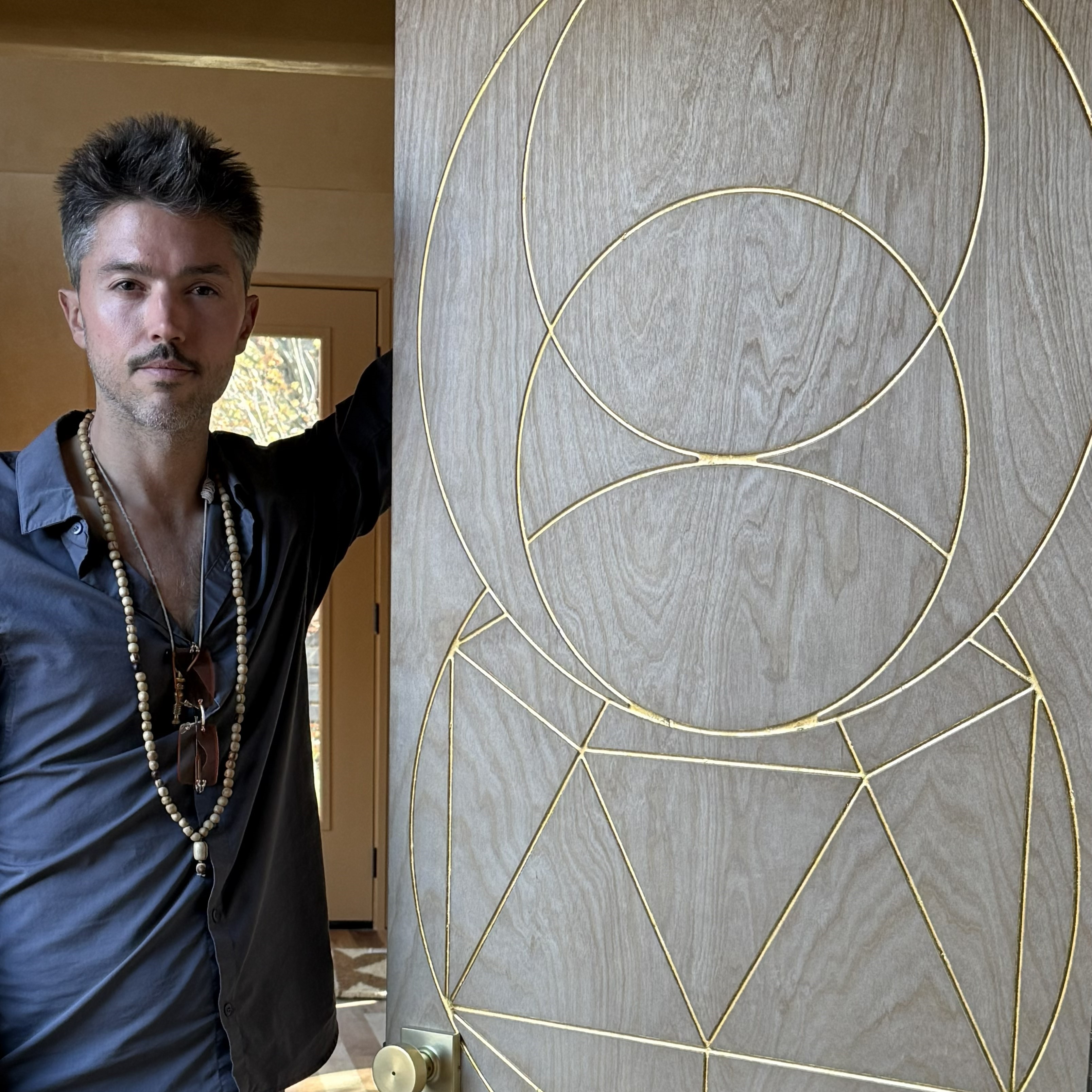
Jeremy created the GeoAlchemy Codex Method after experiencing firsthand how the modern built environment contributes to chronic illness. He spent 2-years detoxing and getting his life back, overcoming mold illness & environmental toxins.
With over two decades of design + build experience and a transformational health journey, Jeremy now works at the intersection of:
Environmental Health
Wellness Design
Healthy Homes
His work reimagines design not as decoration, but as a force for human vitality.