Top Games for Learning Art History
Top Games for Learning Art History
In July 2025, video games have emerged as innovative tools for exploring art history, blending interactive storytelling with visual masterpieces to make centuries-old paintings, sculptures, and movements come alive in engaging ways. If you're searching for "top games for learning art history 2025," "best video games about famous artists," or "educational art history gaming experiences," this comprehensive guide highlights titles that transform learning into adventure, allowing players to step into historical art worlds, solve puzzles inspired by iconic works, and gain insights into creators like Leonardo da Vinci or Vincent van Gogh. These games go beyond rote memorization, using gameplay to foster appreciation for art styles, techniques, and cultural contexts, making them ideal for students, educators, or enthusiasts seeking fun ways to dive into the past. From virtual museum tours to narrative-driven quests that recreate artistic eras, they offer accessible entry points for all ages, often free or low-cost on platforms like Steam and mobile app stores. With VR enhancements bringing artworks to life and AI curating personalized lessons, art history gaming is more immersive than ever. We'll explore why these games are effective for learning, showcase the top 10 with gameplay details and educational value, provide a comparison table, discuss integration tips for classrooms or self-study, and share resources for further exploration. Whether you're a budding artist inspired by Renaissance masters or a history buff curious about modern movements, these games prove that playing can be a portal to the world's greatest canvases, sparking curiosity and creativity in the process.
Art history games succeed because they make abstract concepts tangible—players don't just view a painting; they interact with its elements, solving mysteries in a Monet landscape or reconstructing a Picasso cubist puzzle, which boosts retention and engagement. In 2025, with educational tech booming, these games align with curriculum standards, teaching not only facts but also visual literacy and cultural empathy. They cater to short attention spans with bite-sized lessons while offering depth for extended play, making them versatile for casual learning or formal study.
Why Games Are Effective for Learning Art History
Games are effective for learning art history because they immerse players in interactive environments where artworks become part of the narrative, encouraging active exploration over passive viewing. This hands-on approach, as highlighted in educational gaming research, improves memory retention by associating facts with actions—like matching colors in a game based on Impressionist techniques. They cover diverse periods, from Renaissance masters to modern abstract artists, providing a broad timeline overview while zooming in on specific movements like Surrealism or Baroque. For kids, colorful visuals and puzzles make learning fun; for adults, deeper lore and challenges add intellectual stimulation. In 2025, with VR allowing "walks" through virtual galleries and AI generating custom quizzes, games personalize education, adapting to your knowledge level for optimal progress. Socially, multiplayer modes foster discussions on art interpretations, while solo play builds analytical skills like identifying styles or symbols. Economically, many are free or under $20, lowering barriers compared to museum visits or classes. Challenges include oversimplification of complex history, but well-researched titles like Pentiment avoid this by incorporating accurate details. Their effectiveness? They turn dry facts into stories, making art history feel alive and relevant, inspiring real-world appreciation for museums and galleries.
Pro Tip: After playing, visit virtual museums like the Louvre's online collection to compare in-game representations with real artworks, reinforcing lessons with authentic visuals.
Top 10 Best Games for Learning Art History in 2025
Based on educational value from sources like Trip Scholars' art history games list and Wikipedia's art games compilation, these titles blend fun with factual learning.
- Pentiment (2022, Obsidian Entertainment—Ongoing Updates)
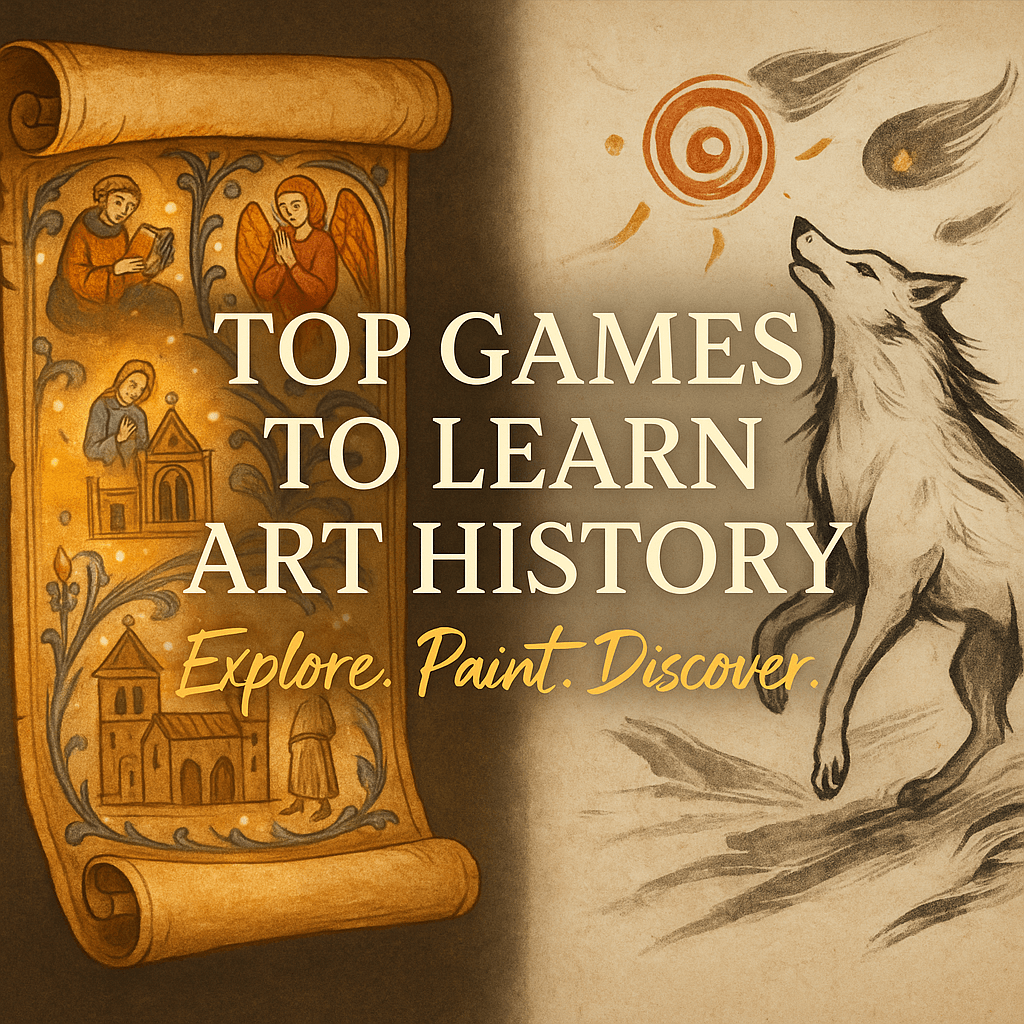
Murder mystery in 16th-century Bavaria, styled as illuminated manuscripts. Teaches: Renaissance art, medieval book illustration. Interactive codex with historical notes; on Steam. Ages 16+ for mature themes.
- Ōkami (2006, Clover Studio—HD Remaster)
Wolf goddess restores world using brush techniques inspired by sumi-e ink painting. Teaches: Japanese art styles, folklore integration. Celestial Brush mechanic mimics traditional painting; on PlayStation. Ages 13+.
- Le Louvre: The Palace & Its Paintings (1995, Montparnasse Multimedia—Digital Re-release)
Virtual tour of the Louvre with interactive artworks. Teaches: Masterpieces from Da Vinci to Delacroix. Clickable details explain techniques; on PC emulators. Ages 10+.
- Calderoids (2006, Prize Budget For Boys—Free Web Game)
Asteroids-style shooter with kinetic mobiles as enemies. Teaches: Alexander Calder's sculptures, modern art movement. Kinetic elements mimic Calder's work; on itch.io. Ages 8+.
- Apotheon (2015, Alientrap—Ongoing)
Greek mythology in black-figure pottery style. Teaches: Ancient Greek vase art, myths. Combat and exploration in stylistic visuals; on Steam. Ages 13+.
- Art Plunge (2022, Martin Jacob—VR Game)
Dive into famous paintings as 3D worlds. Teaches: Masterpieces like Van Gogh's Starry Night. VR immersion with details; on Steam VR. Ages 10+.
- Florence (2018, Mountains—Ongoing)
Interactive story with hand-drawn art. Teaches: Modern illustration, emotional narratives. Mini-games mimic daily life; on mobile/PC. Ages 12+.
- Child of Light (2014, Ubisoft—Remastered)
Watercolor RPG in fairy tale world. Teaches: Artistic styles like impressionism. Rhyming narrative; on Steam. Ages 10+.
- Never Alone (2014, Upper One Games—Kisima Ingitchuna)
Inuit folklore with traditional art. Teaches: Indigenous Alaskan stories, cultural art. Puzzle-platformer with documentary clips; on Steam. Ages 10+.
- The Night Journey (2007, Bill Viola—Experimental Art Game)
Abstract exploration inspired by spiritual art. Teaches: Video art, mysticism. Slow-paced reflection; on PC. Ages 12+.
These games integrate art history through visuals and interactions.
| Game | Art Focus | What It Teaches | Platforms | Age Rating | Playtime (Hours) |
|---|---|---|---|---|---|
| Pentiment | Medieval manuscripts | Renaissance illustration | PC/Consoles | 16+ | 15-20 |
| Ōkami | Japanese ink | Sumi-e techniques | All | 13+ | 30-40 |
| Le Louvre | Museum masterpieces | Famous paintings | PC | 10+ | Variable |
| Calderoids | Kinetic sculpture | Modern art movement | Web/PC | 8+ | 1-2 |
| Apotheon | Greek pottery | Ancient vase art | PC/Consoles | 13+ | 6-8 |
| Art Plunge | Classic paintings | 3D art exploration | VR/PC | 10+ | 1-3 |
| Florence | Hand-drawn | Modern illustration | Mobile/PC | 12+ | 1 |
| Child of Light | Watercolor | Impressionism | All | 10+ | 10-15 |
| Never Alone | Inuit art | Indigenous folklore | PC/Consoles | 10+ | 3-5 |
| The Night Journey | Video art | Spiritual mysticism | PC | 12+ | 2-4 |
How Games Teach Art History Effectively
These games teach art history by immersing players in styles and contexts—Pentiment's manuscript visuals explain medieval techniques, while Ōkami's brushwork demonstrates sumi-e. Integrate by pausing for artist bios in apps like Daily Art. For kids, discuss inspirations; adults, analyze adaptations. In 2025, VR adds tactility, "feeling" brush strokes. Socially, multiplayer tours in Louvre games encourage group learning. Challenges: Oversimplification—supplement with books. Future: AI-curated tours based on interests.
For classrooms, use Minecraft mods recreating art museums. Track learning with quizzes post-play. Balance with non-gaming art activities like drawing.
Tips for Using Games to Learn Art History
Choose based on interest—Renaissance for Pentiment, Japanese for Ōkami. Set goals like "identify 5 artists." Combine with apps like Tate Kids for web games. In 2025, AR overlays in Art Plunge blend real/virtual art. For groups, co-op discussions. Parents: Monitor for age-appropriate content. Balance with visits to real museums. Challenges: Distraction—focus on learning modes. Future: Procedural art generation for custom lessons.
Resources: Trip Scholars art games for lists, YouTube art history channels for walkthroughs. Join Discord art gaming groups. Mods on Nexus Mods add art packs. For mobile, Tate Kids games.
Conclusion: Explore Art History Through Games
The top games for learning art history in 2025, from Pentiment's manuscripts to Ōkami's ink, offer interactive ways to appreciate masterpieces. Start playing to unlock the past. What's an art style you'd love in a game? Comment below!
For more, check Top History Games or VR Art Experiences. Share your artistic discoveries!

Best Games for Improving Memory