How to Improve Teamwork in Games
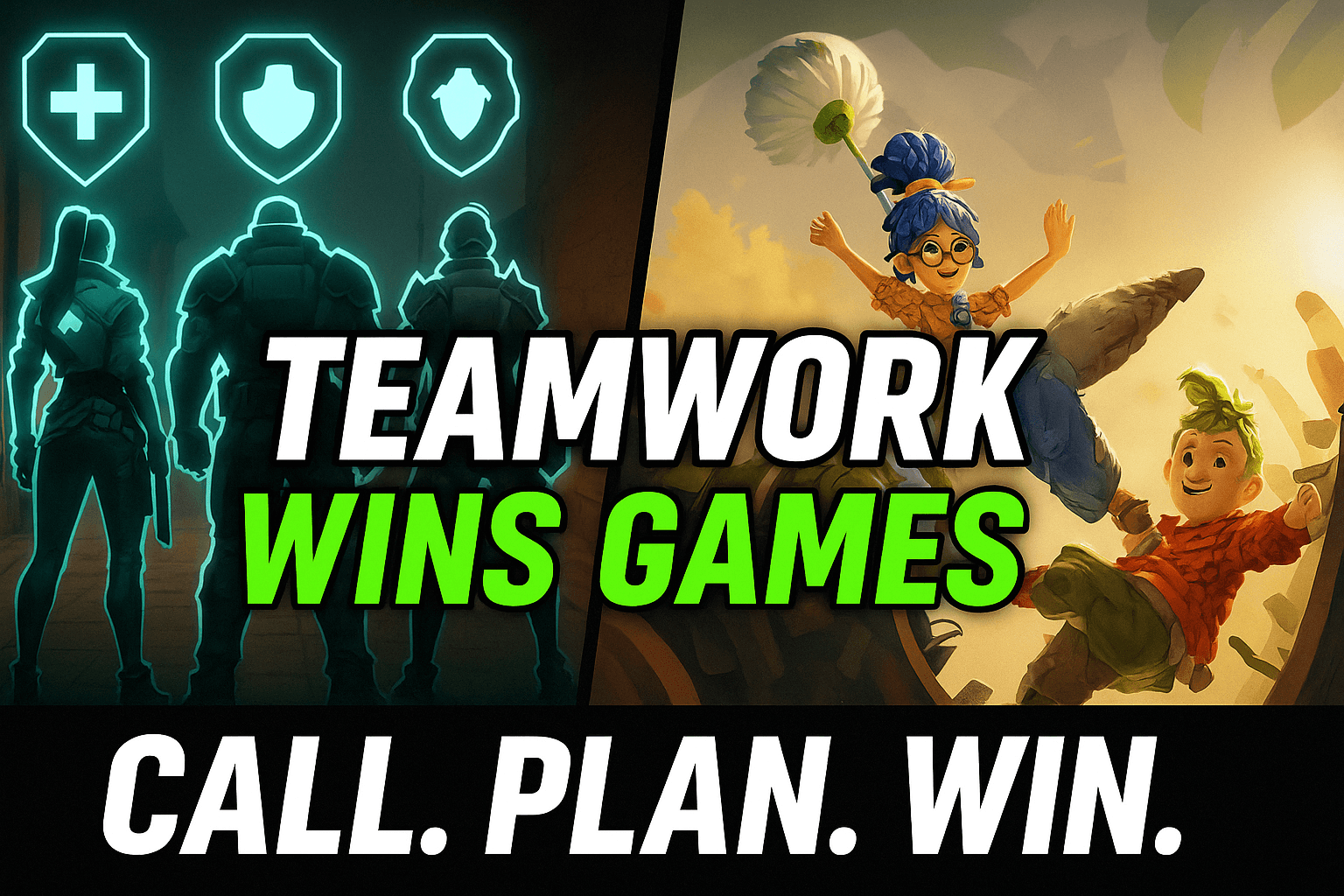
How to Improve Teamwork in Games
In July 30, 2025, as the gaming industry thrives with a global community exceeding 3 billion players, mastering teamwork in games has become a critical skill for success in cooperative and competitive environments, enhancing both enjoyment and performance. If you're searching for "how to improve teamwork in games 2025," "best strategies for team play in video games," or "tips for better collaboration in gaming," this comprehensive 1500-word guide is your playbook to building stronger, more cohesive teams. Whether you're coordinating a raid in World of Warcraft, strategizing in Valorant, or surviving with friends in Among Us, effective teamwork turns chaotic matches into triumphant victories, fostering communication, trust, and synergy among players. With the rise of eSports, live-service titles, and cross-platform play, teamwork is more important than ever, supported by community insights from forums like Reddit's r/gaming and strategies shared by pro players. We'll explore why teamwork matters in gaming, provide a step-by-step guide to enhance collaboration, highlight practical tips for various genres, include a comparison table of team dynamics, discuss common challenges and solutions, and offer resources to level up your group play. Whether you're a casual co-op enthusiast or an aspiring eSports competitor, these techniques will help you lead, support, and thrive as part of a united front, making every gaming session a rewarding team effort.
Teamwork in games captivates because it mirrors real-world collaboration—success depends on diverse roles, clear communication, and mutual support, translating skills to workplaces or friendships. In an era of online anonymity, it builds trust, turning strangers into allies, while offering a sense of belonging that counters isolation. Economically, strong teams boost performance in paid tournaments, while mentally, they reduce stress through shared wins, as per gaming psychology studies. Socially, they connect players across cultures, with voice chat breaking language barriers. Challenges like toxic teammates exist, but strategies mitigate this, making teamwork a rewarding pursuit.
Pro Tip: Record a practice session with your team using your phone or PC software to review communication and coordination, identifying areas for improvement without judgment.
Why Improving Teamwork Matters in Games in 2025
Improving teamwork matters in 2025 because gaming has shifted from solo to collective experiences, with titles like Apex Legends and Overwatch demanding coordinated play for success in a $200 billion industry. Effective teamwork enhances win rates—studies show coordinated teams in MOBAs like League of Legends win 30% more often—translating to better rankings or tournament payouts. Educationally, it teaches communication, leadership, and conflict resolution, skills valuable in school projects or future jobs. Mentally, it fosters resilience—overcoming a tough boss with friends boosts morale, reducing frustration. Socially, it builds friendships, with online lobbies turning into lasting bonds, especially in hybrid work cultures where remote play bridges gaps.
Economically, teamwork opens doors to eSports careers, with prize pools exceeding $1 billion annually, while for casuals, it maximizes free game enjoyment. In 2025, with AI teammates and cross-play uniting platforms, teamwork skills adapt to diverse groups. Challenges include mismatched skill levels or communication breakdowns, but practice and tools address these. Their "matter" factor? They turn gaming into a collaborative art, where collective effort creates memorable victories and personal growth, aligning with trends toward community-driven play.
Step-by-Step Guide to Improving Teamwork in Games
Follow this structured approach to build a cohesive team, whether casual or competitive.
Step 1: Assess Team Strengths and Roles
- Identify skills: Who’s best at aiming (DPS), support (healing), or strategy (tank)?
- Assign roles based on preference and ability—e.g., healer in Overwatch.
- Use in-game tools or voice chat to discuss strengths.
Step 2: Establish Communication Channels
- Set up Discord or in-game voice (e.g., TeamSpeak) for real-time coordination.
- Agree on callouts—e.g., "enemy left flank" in Call of Duty.
- Practice basic commands daily for fluency.
Step 3: Develop Strategies and Practice
- Plan tactics—e.g., rush strategy in Rocket League or split push in Dota 2.
- Schedule 1-2 hour practice sessions weekly, focusing on specific maps or objectives.
- Review gameplay footage to refine moves.
Step 4: Build Trust and Morale
- Celebrate small wins—e.g., a clutch revive in Apex Legends.
- Encourage positive feedback; avoid blame after losses.
- Play casual games together to bond outside competition.
Step 5: Adapt and Improve Continuously
- Post-match debrief: Discuss what worked (e.g., communication timing) and didn’t.
- Adjust roles or strategies based on performance.
- Seek coaching or tutorials for advanced tactics.
Time: Initial setup 1-2 hours; weekly practice 2-4 hours. Progress builds over weeks with consistency.
Top Tips for Improving Teamwork Across Game Genres
- FPS (e.g., Valorant): Use clear callouts for enemy positions; assign a shotcaller to direct.
- MOBA (e.g., League of Legends): Coordinate laning phases; share vision with wards.
- RPG (e.g., World of Warcraft): Sync abilities—tanks taunt, healers prioritize.
- Battle Royale (e.g., Fortnite): Stick to squad plan—rotate or split as agreed.
- Racing (e.g., Forza Horizon): Communicate pit stops or drafting strategies.
- Co-op (e.g., Overcooked): Divide tasks—chef vs. server roles.
- Strategy (e.g., Civilization VI): Plan joint research or trade deals.
- Party (e.g., Jackbox): Encourage quick turns to keep pace.
- Survival (e.g., Valheim): Assign resource roles—wood, food, defense.
- Platformer (e.g., It Takes Two): Sync jumps and puzzle inputs.
Genre-specific tips enhance role clarity and coordination.
Comparison Table of Teamwork Dynamics by Genre
| Genre | Key Team Skill | Communication Tool | Best Practice | Challenge | Ideal Group Size |
|---|---|---|---|---|---|
| FPS | Positioning | Voice chat | Callouts | Flankers | 4-6 |
| MOBA | Strategy | Voice/Discord | Warding | Roamers | 5 |
| RPG | Role sync | Voice | Ability timing | DPS rush | 4-8 |
| Battle Royale | Squad tactics | Voice | Rotation | Solo plays | 2-4 |
| Racing | Coordination | Voice | Drafting | Collisions | 2-8 |
| Co-op | Task division | Voice | Role split | Overlap | 2-4 |
| Strategy | Planning | Text/Discord | Trade deals | Micromanagement | 2-6 |
| Party | Turn pace | Voice | Quick replies | Lag | 3-10 |
| Survival | Resource split | Voice | Role focus | Hoarding | 2-6 |
| Platformer | Sync moves | Voice | Jump timing | Mismatches | 2-4 |
Adapt strategies to game type and team size for optimal synergy.
Common Challenges and Solutions in Teamwork
Communication Breakdowns: Solution—Use headsets, establish a primary caller. Skill Disparities: Pair novices with veterans for mentoring; use easy modes. Toxicity: Mute offenders, report via in-game systems; promote positivity. Lack of Coordination: Practice drills (e.g., 10-min team runs); assign a leader. Time Zone Conflicts: Schedule with World Time Buddy, rotate times. Over-Competition: Focus on fun—play casual matches post-ranked. Tech Issues: Test mics/cams pre-match; have backups. In 2025, AI teammates assist, but human coordination remains key. Balance with solo play to avoid burnout. Future: Cross-platform voice AI for seamless chats.
For long-term, build team culture—shared goals like a tournament win.
Resources for Improving Teamwork in Games in 2025
- Tools: Mumble for voice, Overwolf for overlays.
- Communities: Reddit's r/gaming for tips.
- Tutorials: YouTube team strategies.
- Guides: GameFAQs for role guides.
- Books: "The Art of Teamwork" on Amazon for general skills.
- Esports: Liquipedia for pro tactics.
For advanced, join Discord eSports teams. Explore Coursera courses on leadership.
Future Trends in Teamwork in Games
In 2025, AI teammates adapt to your playstyle, enhancing solo-to-team transitions. VR voice rooms improve communication immersion. Cross-play expands team diversity, with AI translators breaking language barriers. Challenges: Tech equity—provide access for all. Eco-friendly servers reduce carbon footprint. Future: Metaverse lobbies for global team-ups.
Conclusion: Elevate Your Teamwork in Games
How to improve teamwork in games in 2025 transforms play into a collaborative triumph—follow this guide to build stronger teams and enjoy victories together. Start practicing today and share your success. What's your best team win story? Comment below!
For more, check Best Co-op Games or Esports Team Tips. Share your team strategies!
Best Games for Improving Memory