How to Balance Gaming and Studies
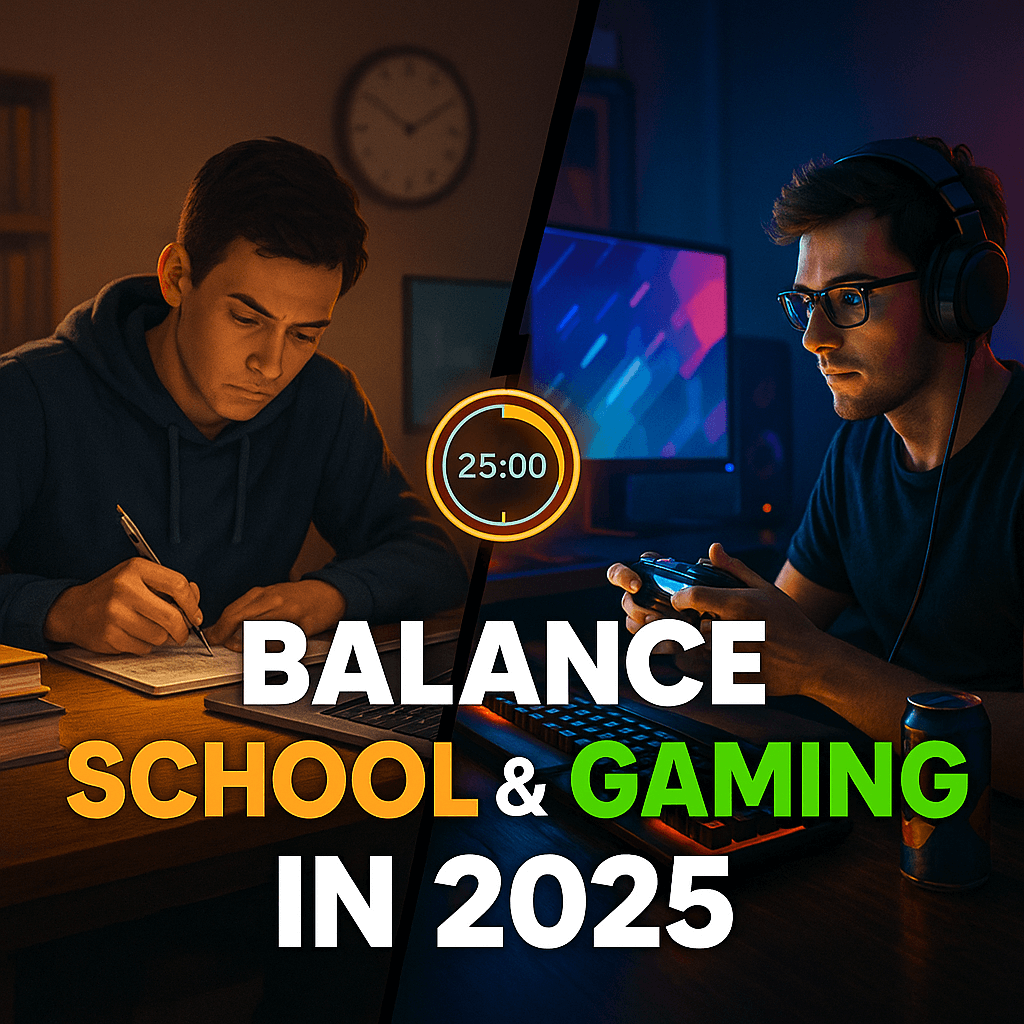
How to Balance Gaming and Studies
In July 2025, with the gaming industry thriving at over $200 billion globally and students facing increasing academic pressures, finding a harmonious balance between gaming and studies has become a vital skill for success in both arenas. If you're searching for "how to balance gaming and studies 2025," "tips for managing school and gaming," or "best strategies for student gamers," this comprehensive guide offers a 1500-word roadmap to navigate these dual passions effectively. Gaming offers mental breaks, social connections, and cognitive benefits like improved problem-solving, while studies demand focus, discipline, and time management—both can coexist with the right approach. With the rise of educational games and flexible online learning, students can integrate gaming into their schedules without compromising grades, especially as hybrid education models grow. Drawing from productivity insights on forums like Reddit's r/GetStudying and wellness advice from educational experts, we'll explore why this balance matters, provide a step-by-step guide to managing time, highlight practical strategies for success, include a comparison table of schedules, discuss common pitfalls and solutions, and offer resources to support your journey. Whether you're a high school student juggling homework or a college gamer balancing assignments, these tips will help you thrive academically while enjoying your favorite titles like Stardew Valley or Valorant.
Balancing gaming and studies is appealing because it turns a potential conflict into a synergy—gaming can enhance focus and reward discipline, while studies provide structure to avoid excessive play. In 2025, with esports scholarships and gamified learning apps on the rise, this balance is more relevant than ever, reflecting a cultural shift where gaming is recognized as a skill-building activity rather than a distraction.
Why Balance Gaming and Studies in 2025?
Balancing gaming and studies matters in 2025 because it addresses the dual demands of a digital age where both are integral to youth culture and education. Gaming offers cognitive perks—studies show 20-30 minutes of strategic play (e.g., Civilization VI) boosts focus and problem-solving, aiding academic performance. Economically, it saves costs on entertainment subscriptions by leveraging free or existing games, while educationally, it supports learning through titles like Assassin's Creed Odyssey, which teaches history. Mentally, it reduces stress—short sessions of Among Us relieve anxiety after exams—while socially, online multiplayer fosters teamwork skills, useful in group projects. For parents, it models healthy habits; for students, it prevents burnout from over-studying.
In 2025, with remote learning and esports careers gaining traction, balance prevents procrastination or academic neglect, aligning with hybrid schedules. Challenges include screen time limits and peer pressure to game excessively, but structured plans mitigate this. The "why" is empowerment—mastering both builds a well-rounded lifestyle, preparing you for future challenges where digital literacy and time management are key.
Pro Tip: Use a timer app like Focus Booster to set 25-minute study blocks followed by 5-minute gaming breaks (Pomodoro technique) to maintain productivity without guilt.
Step-by-Step Guide to Balancing Gaming and Studies
Follow this structured approach to integrate both seamlessly into your routine.
Step 1: Assess Your Schedule and Priorities
- List weekly commitments: classes, homework, exams (e.g., 20 hours study/week).
- Identify free time: 10-15 hours for gaming/socializing.
- Set goals: Maintain a B+ average, play 5-7 hours weekly.
Step 2: Create a Balanced Schedule
- Use a planner or app (e.g., Google Calendar) to allocate study (Mon-Fri, 2-3 hours/day) and gaming (weekends, 2-3 hours/day).
- Reserve buffer time (1 hour/day) for unexpected tasks or relaxation.
- Stick to start/end times to avoid overlap.
Step 3: Choose Gaming Wisely
- Select short-session games (e.g., Tetris, 10-15 min) for breaks, strategy games (e.g., Stardew Valley, 1 hour) for rewards.
- Avoid addictive titles (e.g., Fortnite marathons) during exam weeks.
- Use educational games (e.g., Civilization VI) to align with study themes.
Step 4: Implement Time Management Tools
- Set reminders for study/gaming switches.
- Use productivity apps like Forest (plant trees while studying, game time unlocks) to stay on track.
- Track progress weekly—adjust if grades slip.
Step 5: Monitor and Adjust
- Review grades and gaming hours monthly; aim for consistency.
- Seek feedback from teachers or peers to refine balance.
- Celebrate milestones (e.g., A on a test) with extra gaming time.
Time: Initial setup 1-2 hours; daily management 5-10 minutes. Consistency yields results within weeks.
Top Tips for Successfully Balancing Gaming and Studies
- Prioritize Tasks: Tackle high-priority assignments (e.g., essays due next day) before gaming; use Eisenhower Matrix to sort.
- Set Boundaries: Limit gaming to 1-2 hours daily max during school weeks, increasing to 3-4 on weekends.
- Use Breaks Wisely: Play 10-15 minute sessions post-study blocks to recharge, not derail focus.
- Involve Family/Friends: Schedule co-op gaming nights (e.g., Overcooked) to align with social study breaks.
- Leverage Gamification: Turn studying into a game—set XP for completed tasks, reward with gaming time.
- Monitor Health: Take screen breaks every hour (5-10 min) to prevent eye strain or posture issues.
- Plan Around Exams: Reduce gaming to 1 hour/day or pause during crunch weeks; resume post-exam.
- Stay Organized: Keep study materials and gaming gear separate to switch mindsets easily.
- Seek Support: Join study groups or gaming communities for accountability (e.g., Discord study servers).
- Reward System: Earn gaming hours (e.g., 1 hour per 5 hours studied) to motivate discipline.
These tips ensure a healthy equilibrium, preventing either activity from dominating.
Comparison Table of Study-Gaming Schedules
| Schedule Type | Study Time (Weekly) | Gaming Time (Weekly) | Best For | Pros | Cons |
|---|---|---|---|---|---|
| Strict Balance | 25 hours | 5 hours | High achievers | High grades, control | Limited fun |
| Flexible Mix | 20 hours | 10 hours | Casual students | Balanced enjoyment | Risk of lag |
| Weekend Gamer | 30 hours | 7 hours (weekends) | Exam-focused | Peak study, rest | Weekday burnout |
| Gamified Study | 22 hours | 8 hours | Motivated learners | Fun learning | Needs discipline |
| Hybrid Remote | 18 hours | 12 hours | Online learners | Flexible, social | Tech dependency |
Choose based on academic load and gaming passion—adjust as semesters shift.
Common Challenges and Solutions in Balancing Gaming and Studies
Procrastination: Solution—Break tasks into 25-minute chunks with Pomodoro, rewarding with 5-minute game breaks. Addiction Risk: Limit to 1-2 hours/day with parental controls or self-lock apps like Cold Turkey. Fatigue: Take 10-minute walks between sessions to refresh. Peer Pressure: Politely decline excessive invites, suggesting study-focused hangouts. Poor Grades: Cut gaming by 50% if GPA drops; seek tutor help. Tech Issues: Update drivers, ensure stable internet. Guilt: Reframe gaming as a reward, not escape—track benefits. Time Mismanagement: Use alarms for transitions. In 2025, AI apps like Focus@Will suggest optimal schedules. Balance with sleep (7-8 hours) to sustain energy.
For long-term, build habits over months—consistency trumps perfection.
Resources for Balancing Gaming and Studies in 2025
- Apps: Forest for focus, Todoist for planning.
- Communities: Reddit's r/GetStudying for tips.
- Games: Assassin's Creed Odyssey for history learning.
- Guides: YouTube study hacks.
- Tools: Google Calendar for schedules.
- Books: "Atomic Habits" by James Clear on Amazon for discipline.
- Wellness: Headspace for mindfulness breaks.
For advanced, explore Coursera courses on time management. Join Discord study groups for peer support.
Future Trends for Balancing Gaming and Studies
In 2025, expect gamified learning apps with XP for assignments, syncing with games like Stardew Valley for rewards. AI schedules optimize study-gaming ratios based on performance. VR study rooms reduce distractions, while wearable tech tracks focus levels, suggesting breaks. Challenges: Screen time limits—use blue-light glasses. Eco-friendly: Opt for energy-saving devices. Future: Hybrid education-gaming platforms for seamless integration.
Conclusion: Master the Balance of Gaming and Studies
How to balance gaming and studies in 2025 empowers you to excel academically while enjoying your passion—use these strategies to thrive. Start today, adjust as needed, and share your success. What's your favorite game-study combo? Comment below!
For more, check Study Productivity Tips or Gaming Health Benefits. Share your routines!
Best Games for Improving Memory