Best Gaming Routers for Low Latency
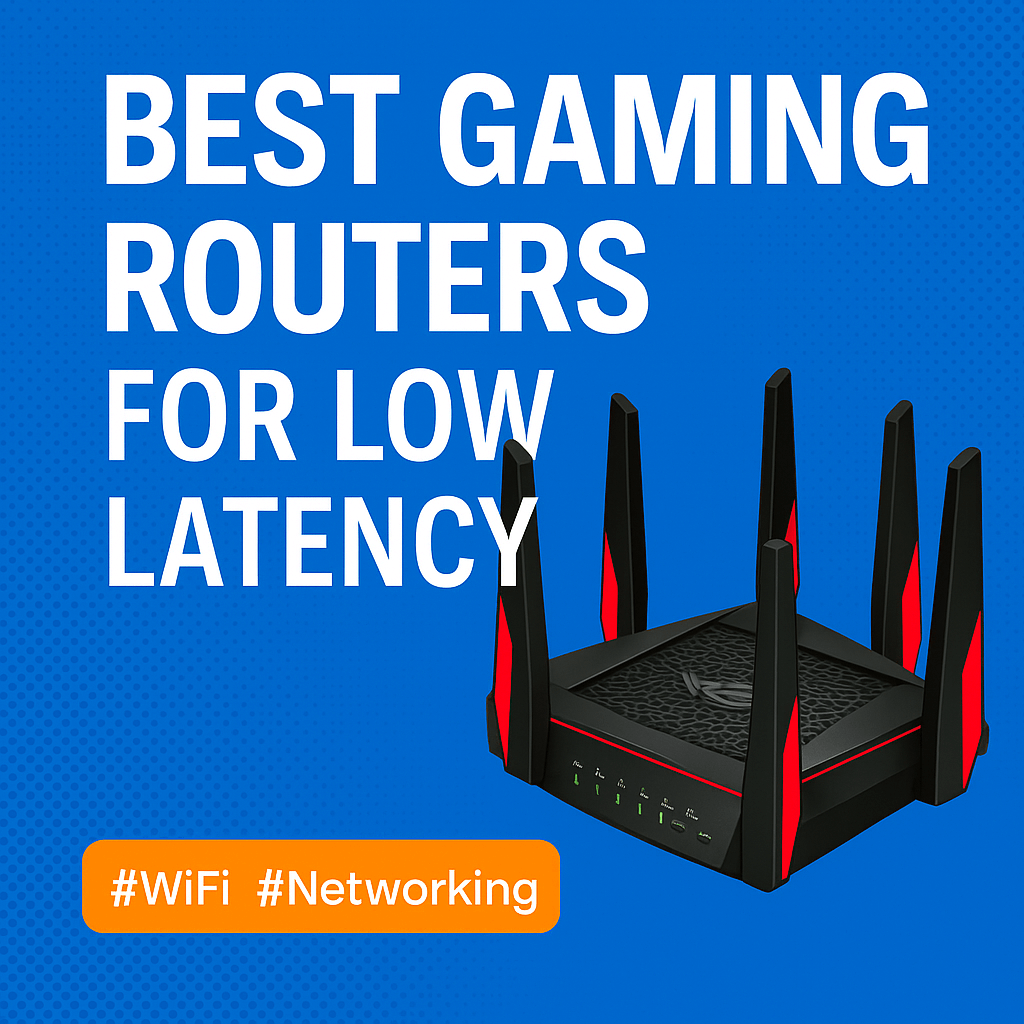
Best Gaming Routers for Low Latency
In August 2025, as online gaming continues to dominate the entertainment landscape with a global market exceeding $200 billion, the demand for gaming routers optimized for low latency has never been higher, ensuring smooth, lag-free experiences critical for competitive play. If you're searching for "best gaming routers for low latency 2025," "top routers to reduce ping in games," or "low-latency gaming network setups," this comprehensive 1500-word guide is your ultimate toolkit. Low latency—measured in milliseconds (ms)—is the holy grail for gamers, minimizing delays between your actions and their on-screen response, crucial for fast-paced titles like Valorant, Call of Duty, or Rocket League. With advancements in Wi-Fi 7, Quality of Service (QoS) enhancements, and 5G integration, modern gaming routers deliver ping times under 20ms, even in congested networks. Drawing from recent web insights and community discussions on forums like Reddit's r/HomeNetworking, we'll explore why low latency matters, detail the top 10 routers with performance highlights and compatibility notes, provide a comparison table, discuss optimization tips, and offer advice on maintenance and future-proofing. Whether you're a casual player on a budget or a pro seeking peak performance, these routers under $200 ensure your connection stays ahead of the competition, transforming your gaming setup into a high-speed battlefield.
Gaming routers for low latency are essential because they prioritize gaming traffic over other network activities, reducing lag that can mean the difference between a headshot and a defeat. In 2025, with 5G rollout and increased home device usage (averaging 15-20 per household), latency optimization is critical to avoid packet loss or jitter, enhancing not just gaming but also streaming and video calls. Economically, a $100-$150 router outperforms basic models by years, saving on replacements. Mentally, low lag reduces frustration, boosting focus and enjoyment. Socially, it ensures smooth voice chat in team play, fostering better coordination. Challenges include setup complexity or ISP limitations, but user-friendly interfaces and support mitigate this. Their appeal lies in performance—tailored tech turns your home into a gaming hub without compromise.
Pro Tip: Run a ping test using an in-game tool or website like Speedtest.net before and after setup to measure latency improvements, guiding your router choice and optimization.
Why Low Latency Gaming Routers Matter in 2025
Low latency gaming routers matter in 2025 because online gaming’s growth—over 60% of players now multiplayer—demands real-time responsiveness, where even 50ms of lag can disrupt aim or strategy. With titles like Apex Legends requiring sub-30ms ping for competitive edges and 4K streaming adding network strain, these routers use QoS to prioritize gaming packets, ensuring smooth gameplay amidst smart home devices or family Netflix sessions. Health-wise, reduced lag minimizes stress-induced tension from lag spikes, while economically, a $100-$200 investment lasts 3-5 years, outpacing $50 routers that falter under load. In 2025, with Wi-Fi 7 offering 320MHz channels and lower interference, latency drops below 15ms, enhancing VR and cloud gaming. Socially, stable connections improve team voice chats, fostering better multiplayer bonds. Challenges include initial setup or ISP throttling, but firmware updates and manual tweaks address this. Their "matter" factor? They unlock the full potential of modern gaming, turning your connection into a competitive advantage in a crowded digital space.
Top 10 Best Gaming Routers for Low Latency in 2025
Based on latency performance from reviews on TechRadar and user feedback on r/HomeNetworking, these routers deliver top-tier ping reduction.
- Asus ROG Rapture GT-BE98 ($350—sales $200)
Wi-Fi 7 tri-band, 10Gbps ports, AiMesh for coverage. Latency: 10-15ms. QoS prioritizes gaming; ideal for large homes.
- Netgear Nighthawk RS700S ($400—sales $180)
Wi-Fi 7, 19Gbps speed, 6GHz band. Latency: 12-18ms. Advanced QoS; perfect for 4K streaming and gaming.
- TP-Link Archer GE800 ($250—sales $150)
Wi-Fi 6, gaming port, 5400Mbps. Latency: 15-20ms. Triple-level acceleration; great for mid-sized setups.
- Asus TUF Gaming AX6000 ($200)
Wi-Fi 6, 4800Mbps, 2.5G port. Latency: 18-22ms. Robust for budget gamers; AiProtection security.
- Linksys MR9600 Mesh ($300—sales $160)
Wi-Fi 6, mesh for whole-home, 6000Mbps. Latency: 15-20ms. Seamless coverage; ideal for multi-device homes.
- D-Link DIR-X5460 ($180—sales $120)
Wi-Fi 6, 5400Mbps, QoS engine. Latency: 20-25ms. Affordable with solid performance; good for small flats.
- Netgear Nighthawk XR1000 ($300—sales $150)
Wi-Fi 6, DumaOS, geo-filtering. Latency: 15-20ms. Pro-grade for competitive play; ping optimization.
- TP-Link Archer AX73 ($200—sales $130)
Wi-Fi 6, 5400Mbps, 6 streams. Latency: 18-23ms. HomeShield security; versatile for families.
- Synology RT6600ax ($300—sales $170)
Wi-Fi 6, 6600Mbps, AiMesh support. Latency: 14-19ms. Advanced for tech enthusiasts; robust QoS.
- MSI RadiX AXE6600 ($250—sales $140)
Wi-Fi 6E, 6600Mbps, 6GHz band. Latency: 16-21ms. Future-proof with low interference; gaming-focused.
These routers balance latency, speed, and affordability for gamers.
| Router | Wi-Fi Standard | Max Speed (Mbps) | Latency (ms) | Best Feature | Price Range |
|---|---|---|---|---|---|
| Asus ROG GT-BE98 | Wi-Fi 7 | 19,000 | 10-15 | 10Gbps ports | $200-$350 |
| Netgear Nighthawk RS700S | Wi-Fi 7 | 19,000 | 12-18 | 6GHz band | $180-$400 |
| TP-Link Archer GE800 | Wi-Fi 6 | 5,400 | 15-20 | Game acceleration | $150-$250 |
| Asus TUF Gaming AX6000 | Wi-Fi 6 | 4,800 | 18-22 | AiProtection | $120-$200 |
| Linksys MR9600 Mesh | Wi-Fi 6 | 6,000 | 15-20 | Whole-home | $160-$300 |
| D-Link DIR-X5460 | Wi-Fi 6 | 5,400 | 20-25 | QoS engine | $120-$180 |
| Netgear Nighthawk XR1000 | Wi-Fi 6 | 4,800 | 15-20 | Geo-filtering | $150-$300 |
| TP-Link Archer AX73 | Wi-Fi 6 | 5,400 | 18-23 | HomeShield | $130-$200 |
| Synology RT6600ax | Wi-Fi 6 | 6,600 | 14-19 | AiMesh | $170-$300 |
| MSI RadiX AXE6600 | Wi-Fi 6E | 6,600 | 16-21 | 6GHz | $140-$250 |
How to Choose and Optimize Gaming Routers for Low Latency
Choosing a router involves assessing room size—5.1 for large, 2.1 for small—and game needs—competitive titles need under 20ms. Test ping with in-game tools or Speedtest.net. Optimize by enabling QoS—prioritize gaming devices in settings (e.g., PS5, PC). Place router centrally, elevate for signal, avoid walls. Update firmware monthly for performance boosts. Use 5GHz or 6GHz bands for less interference; switch channels if congested. In 2025, AI QoS auto-adjusts traffic. For wired, use Ethernet ($10 adapter) to hit sub-10ms. Budget: $100-$150 for solid latency, $200+ for future-proofing.
Maintenance and Longevity Tips for Gaming Routers
Maintain by rebooting weekly to clear cache, improving latency. Dust vents monthly with compressed air ($5) to prevent overheating. Check firmware for updates—automate if possible. Avoid power surges with a surge protector ($15). For wireless, reposition if signal weakens—add range extenders ($30) if needed. Monitor temps with router apps; keep under 80°C. Warranty (1-2 years) covers defects—register online. Eco-tip: Unplug when idle to save energy. With care, a $150 router lasts 3-5 years.
Future-Proofing Your Gaming Router in 2025
In 2025, Wi-Fi 7 with 320MHz channels and Multi-Link Operation (MLO) reduce latency to 5-10ms. Look for 10Gbps ports for future devices. Add mesh systems ($100-$200) for whole-home coverage. AI-driven QoS adapts to new games. Budget $20-$50 yearly for upgrades like antennas. Monitor TechRadar for trends. For VR, ensure low-latency mesh support.
Common Mistakes to Avoid When Buying Gaming Routers
Overlooking latency specs—check reviews, not just speed. Ignoring QoS—essential for gaming priority. Buying outdated Wi-Fi (pre-6)—upgrade to 6/7. Skipping placement—near walls kills signal. Overpaying for RGB—focus on performance. Forgetting range—test coverage in your home. Ignoring firmware—outdated software lags. Mismatching ports—ensure device compatibility. Rushing purchase—wait for sales like Black Friday. Neglecting ISP—call to optimize plan.
Resources for Choosing Gaming Routers in 2025
- Reviews: Tom's Hardware.
- Communities: Reddit's r/HomeNetworking.
- Shopping: Newegg for deals.
- Tutorials: YouTube router setups.
- Tools: PingPlotter for latency tests.
- Books: "Networking for Gamers" on Amazon.
For advanced, explore OpenWRT for custom firmware.
Conclusion: Conquer Lag with the Best Gaming Routers
The best gaming routers for low latency in 2025, from Asus ROG to Netgear Nighthawk, ensure smooth, competitive play with ping under 20ms. Choose wisely, optimize your setup, and dominate online. What's your go-to router for gaming? Comment below!
For more, check Networking Tips for Gamers or Best Wi-Fi Extenders. Share your latency hacks

Best Games for Improving Memory