The Mentor You Need May Already Be in Your Life with Dave Schmit
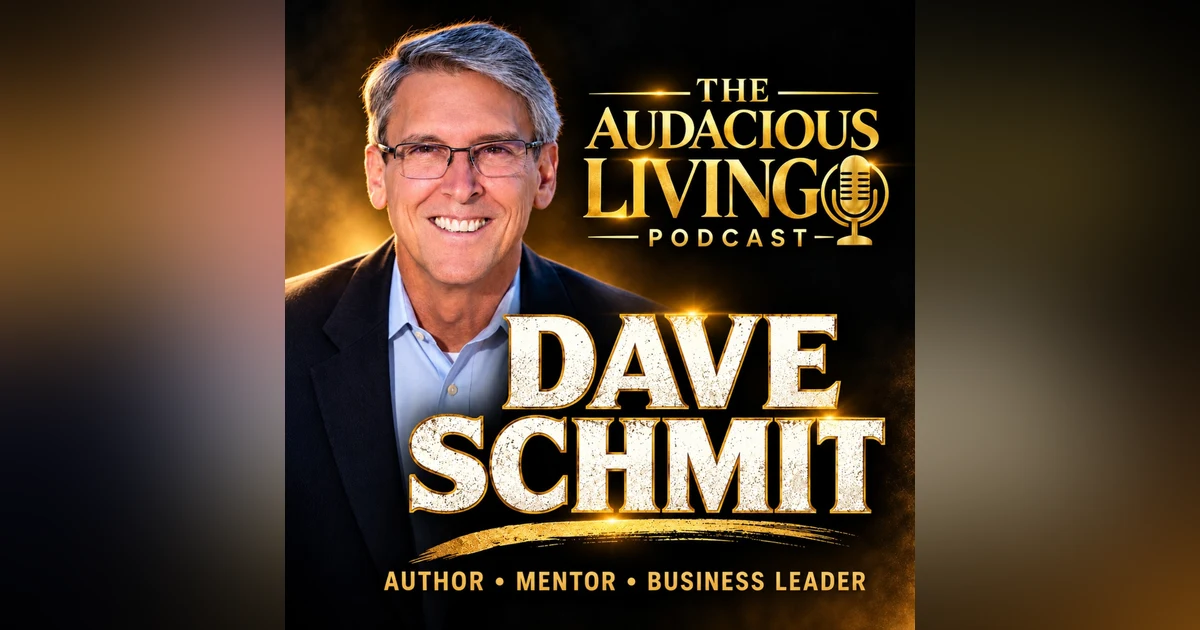

Dave Schmit, author of Five Men, joins Audley Stephenson to explore how meaningful mentorship grows through everyday relationships, why taking initiative matters, and how the guidance we need may already be closer than we think.


Who helped you become the person you are today, and have you ever told them? Sometimes the relationships that shape us most begin long before we recognize them as mentorship.
Signature Quote
“Dr. Brown had 4,000 students during the time he was director, but I only had one Dr. Brown.”
That distinction captures something deeply personal about mentorship. Someone may influence thousands of lives, yet the relationship they build with you can feel entirely your own.
What if finding a mentor begins with noticing the people already around you?
In this episode of The Audacious Living Podcast, Audley Stephenson sits down with Dave Schmit, author of Five Men, to explore the relationships that quietly shape our confidence, choices and direction. Drawing on his construction career, baseball coaching and longstanding connections with students, Dave shares why mentorship means more to him than giving instructions or offering advice.
A drive home after a mentor’s funeral became the starting point for Dave’s book. Our conversation follows the questions that emerged from that reflection: How do meaningful relationships take root? What keeps them alive? Could one small act of willingness open a door you cannot yet see?
THIS EPISODE IS FOR YOU IF...
• You are starting your career and wondering where to find guidance.
• You have received good advice but want a deeper, lasting connection.
• You hesitate to volunteer before you know exactly what is involved.
• You want to support someone younger without having every answer.
• You are reflecting on the people who helped you along the way.
ABOUT DAVE SCHMIT
Dave Schmit is an Atlanta-area construction professional and the author of Five Men, a novel drawn from his own experiences of mentorship. Raised in a military family, Dave went on to study at the University of Florida and build a career in construction, while maintaining relationships with people who influenced his personal and professional life.
His experience also includes coaching high school baseball and speaking with graduating construction management students over many years. Today, he finds particular satisfaction in conversations and workshops that help young people think more clearly about themselves, their relationships and their next steps.
CONNECT WITH DAVE
https://a.co/d/0dbOxcQ8
Book: Five Men
Dave mentions that paperback and Kindle editions are available on Amazon.
READ THE BLOG ARTICLE
Explore the conversation further:
LISTEN ANYWHERE. LIVE AUDACIOUSLY.
Enjoy The Audacious Living Podcast on your favorite listening platform.
Choose where to listen:
[https://www.bestaudaciouslife.com/podcast-episodes/dave-schmit-power-of-mentorship]
Enjoying the show?
Share this episode with someone who needs to hear this.
⭐ Leave a review:
👉 https://ratethispodcast.com/audacious
The varies and I just I sometimes people say, Can we have a pre call? I'm like, to do what? Let's move a call, right? But yeah. Yeah. It's it's it's it's that's your process. That's your process. ⁓ Clearly you're living in the space that I'm trying to follow your lead and ⁓ you know, send messages to young people that I do with mentoring and just my out of my experience. So yeah, so the idea with you know, the the story I can tell about why I wrote the book and sure and just a lifelong
GMT20260113 174205 Recording 640x360 (00:27)
experiences I'm reflecting back. I'm 66 years old now. Let's get into it, Dave. I'm gonna do a three-two-one countdown and off we go. All right. Okay, cool. ⁓ Three, two, ⁓ and one. Hey Dave, thanks for joining me here today on the Audacious Living Podcast. I appreciate you for taking the time to be here, my friend. Absolutely. ⁓ Great to be with you and ⁓ look forward to sharing with your audience. Yeah, no, this this is this is great. I mean for me, for me ⁓
GMT20260113 174205 Recording 640x360 (00:56)
I you know, I oftentimes talk about you the the conversations and and how much can be gleaned from that and and and you know the part that always ex excites me is you know, so Dave, you and I here are gonna engage in a conversation dialogue about who knows what. I don't even know we're gonna talk about exactly, but we're gonna go somewhere with it. And someone has the opportunity to hear what we're saying in some way, shape or form ⁓ and be able to use that in their own lives. And we you and I may never know. We and I we we never know the kind of impact, but to know that that it can it can change someone's directory of their life potentially.
GMT20260113 174205 Recording 640x360 (01:26)
A fascinating thing. So that's what kind of excites me because you just don't know, right? ⁓ so I like I have to say again, I appreciate you for for being a part of this process. ⁓ Sure. Yeah, great to be here. Look forward to it. Now, so so the I was really putting some thought into today's conversation. I'm not joking I don't what we're gonna talk about. I definitely know what we're gonna talk about. ⁓ because it's you've written a book on or focus around mentorship, which we'll get into. And ⁓ I think today's and what why I like what I like about mentorship.
GMT20260113 174205 Recording 640x360 (01:53)
I I I like to think of it as as a quiet audacity, right? In terms of, you know, you you you you you you you stepping out and and and and inspiring someone, helping to shape them in some way. And and you're doing it when no one's watching, you're not doing it for the fanfare. ⁓ you know, there it's just you're just doing it because you believe wholeheartedly what you want to pour into that individual. And ⁓ and and again when you sort of look at your own work in terms of the the life you spent in building communities and and people and mentoring your own time and and and and leaders.
GMT20260113 174205 Recording 640x360 (02:22)
You know, I think it's just it is it's it's it's it's a good reminder ⁓ that none of us get to where we get to by ourselves, right? ⁓ it's it's it's we've gotten here and I'm gonna open I'm gonna put out there full you know, f fully transparent. You know, I was one of those people once a time that believed in the power of that self made man. I did it all by myself, had no one no I all I got where I got, so no one helped me, no one and it took me some time to come that realization where I was like, No, no, no, no.
GMT20260113 174205 Recording 640x360 (02:51)
Even if someone gave me a kind word, a source of encouragement, a pat on the back, that will help me along my journey. And so that's that's kind of my preamble. Maybe we can open up the floor, get you to ⁓ introduce yourself to our audience, talk about the work that you do and what's got you the point that you're at now. Sure. Well, again, my name is Dave Schmidt. ⁓ I'm in the the Atlanta, Georgia area, and ⁓ have ⁓ have been in the in the construction world since graduating in in college, and there's a connection to that all through.
GMT20260113 174205 Recording 640x360 (03:20)
Story of my book, but I grew up in a military family. My father was an Air Force pilot, so I I didn't know what it was like to live civilian until I was about 14 years old. So that's kind of the root of living in a military life that sort of set your stage early on, and for my myself and my my brothers and sisters, and ⁓ so but had a great childhood, didn't you know, didn't know what we were missing because we were lived in barracks until I was 14 years old, and that was just great, right? And you came to appreciate what was around you all the time.
GMT20260113 174205 Recording 640x360 (03:48)
But also looking around at you know, the military and young at the in terms of how they dealt with each other and the missions they had and a variety of things that were impactful for me. But ⁓ yeah, after that, ended up ⁓ playing a little baseball in high school and a year in college before my what would have been a Tommy John would have had to fix me before Tommy John. But ⁓ so I had a short lived baseball career, but ⁓ continued in athletics through my twenties and thirties and actually into my fifties with.
GMT20260113 174205 Recording 640x360 (04:17)
Coaching high school baseball, which put me in touch with a lot of young people through that process. ⁓ and kept your youthful, I would imagine, too. Yeah, yeah. So I was a lefty, you know, curb all and wow. ⁓ I couldn't hit the 95 like all these guys do today, right? Really crazy. But ⁓ nonetheless, it was a it was a wonderful and there is a connection to the book about baseball that we'll talk about in a few minutes. But ⁓ but yeah, so so today the ⁓ you you brought up mentoring, you know.
GMT20260113 174205 Recording 640x360 (04:44)
I really hadn't talked about mentoring, either being mentored or being a mentor through most of my ⁓ time. I mean, most of my getting to this age, I really started talking about it when the book came to be and I had to say what I was talking about, right? Up until then, I had so many great relationships as a mentee. And then I about my 30s and 40s and getting closer to 50, I sort of transitioned over to.
GMT20260113 174205 Recording 640x360 (05:12)
I had more to offer young people than maybe I needed at the time. And ⁓ plus I got great satisfaction out of that. So ⁓ so yeah, the role of mentorship has now been one that I'm really focused on and looking for every opportunity I can to help young people. ⁓ So I I I I I I love the idea of the fact that it wasn't something that you labeled, you just did. You just were part of the process. And ⁓ I I I can I can relate to that in so many ways because you I remember, you know, when I when I started this podcast.
GMT20260113 174205 Recording 640x360 (05:40)
I was it was sort of the end of COVID and you know, we all experienced this loss. And when I realized I was a basketball guy, I was actually pr a commissioner of a basketball league, and we were about to go into playoffs. And you would know sports is the most exciting time of the year, and the plug gets pulled, right? And so for us, ⁓ we we had to stop like everyone else did. And I remember kind of going through this like, ⁓ what do I do? And lethargic and not wanting to get up bed and literally going through depression. And when I realized, hey, I want to do
GMT20260113 174205 Recording 640x360 (06:09)
something else, I was like, let me podcast. I've done it before and it's easy to jump back into. Then it became what do I want to podcast about? And it was at that moment I'm like, I don't want I want it to be something different. I want it to be impactful. And once I look back and sort of the analysis of my life and what I had done and accomplishments and all ⁓ and in everything I had done, there was a threat of audacity. It existed. And I I was finally able to label this thing that I was being. And so I I I see the same in you where you know mentorship was there.
GMT20260113 174205 Recording 640x360 (06:39)
Mentorship was always existed. You just didn't have a label on it, didn't have a title, you just did it and existed. And I think that is so grounding one, but so incredibly impactful because it tells you that you're in the right place. Yeah. Well, that's ⁓ to have both clarity of mission, you know, is one of those things that really drives us when we can see where we're going and have the ability to to to get there and also share it. And so one thing I often talk about with mentoring is I distinguish between two concepts. ⁓
GMT20260113 174205 Recording 640x360 (07:08)
All of which of us have been able to experience. And it's coaching versus mentoring. And a coaching course goes kind of the athletics, which we know. And I always think about coaching in the f in work world or certainly on the on a ball field. That you know, coaching typically has a beginning and an end. If you have a coach, the season starts, the season ends. And in between, you generally get a lot of instructional guidance, you know, how to swing a bat, how to shoot a ball, or how to do a spreadsheet, or how to write a sales order or whatever, you know, whether it's a business. But
GMT20260113 174205 Recording 640x360 (07:38)
But where I distinguish the difference between coaching and mentoring is as a mentor, I know you at a pretty deep level. I might know your family, I know your tendencies, I know what you're good and you're not so good at. I'm not giving you just instruction. I'm giving you sort of connection that's born out of who you are. You know, if you're not tend to be a guy who likes to be out in front of audiences, but yet you're really good behind the scenes, well, that might change the way the recommendations I give to somebody because I'd like to play to their strengths.
GMT20260113 174205 Recording 640x360 (08:07)
Let them know, hey, don't be fearful of being out there in front of folks. You might have to jump out there and take a risk and it's gonna be uncomfortable and so forth. But mentoring to me, that distinction is that we're given the mentors, given the mentee something of personal value connected to personally who they are, rather than just ⁓ instructional guidance, if you will. Gotcha. I I I I do love the you know, the part about mentorship that ⁓ r really excites me ⁓ is the fact that you know you have an individual.
GMT20260113 174205 Recording 640x360 (08:35)
That can see something in you that you may not really see in yourself. We all got blind spots, right? Dave, we all have blind spots in terms of who we are, what we can do, our capabilities, even. And so when someone else on the outside can go, yeah, I can see that. And you know, have you thought about this? It really is eye-opening because then it's it's almost like, ⁓ I know I didn't. ⁓ really quick funny story. I remember I was in a Home Depot once here. ⁓ I was fixing, I was trying do whatever. I went to Home Depot.
GMT20260113 174205 Recording 640x360 (09:01)
And I got in the conversation with the with the cash register or the cashier rather than the register. And she said to me, ⁓ and this was like this is like a couple of years ago, by the way. And she said to me, ⁓ have you ever thought about getting to podcasting? You'd be good at it. ⁓ And I'm like, Well, thanks. I actually do podcasts, right? But it's but it's goes back to what people can see and how accurate they can because of the vantage point. And again, we have those blind spots that we can't. Yeah, yeah. Well, you know, the the notion of the book.
GMT20260113 174205 Recording 640x360 (09:30)
But I'd like to tell the story about how it originated because it's really the essence of what I'm trying to convey. And so, and it really gets to the personal nature of how mentors can be focused on a particular area of your life. ⁓ So the book's called Five Men. And so it originated on a d five hour drive from Gainesville, Florida. And you might see behind me, I'm a I'm a Gator grad and so forth. And I've been active in the school there since I graduated, which is 40 years ago. ⁓ And I was
GMT20260113 174205 Recording 640x360 (10:00)
Finishing up in Gainesville, driving back to my home in Atlanta, because I just delivered the eulogy at the funeral of Dr. Brisbane Brown, who was the director of the school when I was there as a student. And I had stayed connected with him on a deeply personal level for 30 years, which is an unusual circumstance, right? Not very many of us have 30-year continuous relationships with someone who's not related to us, if you will. Okay. And on that drive back, I was just reflecting. And I reflected first on.
GMT20260113 174205 Recording 640x360 (10:30)
The eulogy I gave a Dr. Brown, did I do a good job? Right. You think about a eulogy is the last time you're going to say something in a public way about a person. And that's generally the lasting impression, right? And you hope so I did I do a good job, did I represent him well and so forth? He was just an icon in our industry and such. But I also started thinking about mentorship and that he mentored me. And I had never ⁓ used the word that way, as I talked, we talked about earlier. That yeah, I mean he's a classic mentor.
GMT20260113 174205 Recording 640x360 (10:58)
Right. He knew me, my wife, my kids, my you know, how I was, helped me through job changes. I mean, just you you name it, really deeply connected that way. Well, out of that, by the time I got back to my house, I'd identified four other such people that fit that category. And say, Well, how often does somebody have five deep rooted, deep seated mentors? And the five were my father, who right is 92 right now, just celebrated his 92nd birthday.
GMT20260113 174205 Recording 640x360 (11:26)
Thank God he's still with us and such, but you know, military dad, but a father giving me the sense of values that a you know parent, if we're lucky enough to have a parent in that circumstance, can give you mother or father, what have you. the second one was my high school baseball coach, who I still talk to today. ⁓ Coach Bob McCullough. He's got a field named after him at the high school I played at. And ⁓ he for a coach was about relationships, right? Third one was a a priest, Father Richard or Father Patrick Caverley. ⁓
GMT20260113 174205 Recording 640x360 (11:56)
Church in Orlando, he took my wife and I through the spiritual of marrying us, ⁓ baptizing our two children. And we lost a child early in our marriage. And he took us through that very heart-wrenching process. And so the notion of a priest in spirituality, the fourth one would be Dr. Brown for education. And the fifth one are two people. ⁓ first one, my first boss out of college. And then the one that brought me to Atlanta here, I ran a home building company here for a while, and actually saw him about a week ago, ⁓ Tom Bradbury.
GMT20260113 174205 Recording 640x360 (12:26)
And so that was for vocation. So you think about values, relationships, spirituality, education, vocation. ⁓ By the time I got back to my driving in, I had these five things and I squiddled them all down on piece of paper and said, I think I got a concept or something to share. And of course it didn't publish until last April. So like what took me 15 years to actually publish a book? Well, business took over, I guess. But but that was the idea that okay, ⁓ maybe not everybody thinks about all these people that are around you.
GMT20260113 174205 Recording 640x360 (12:55)
That they can be mentors, but maybe you're not aware. ⁓ But also the idea that the commonality I have with all five of those, and put my dad aside because that would have been a different sort of stuff. ⁓ I stayed in continuous contact with them. Right. And the idea is that you know, Dr. Brown had 4,000 students during the time he was director, but I only had one Dr. Brown. ⁓ So I could have been one of many. Well, he's one of one to me. And so I just it was in my nature just to continue to reach back and touch base with them.
GMT20260113 174205 Recording 640x360 (13:25)
Same thing with my high school baseball coach and others. And so ⁓ so that message is important for mentees is that it just doesn't happen automatically. No. It does take effort, also awareness is who are the people around you that can become mentors and can you nurture that relationship? So that was the essence of the book. And and so there's a lot of stories in there about, you know, things that happen in the mentoring relationship. I I I certainly do appreciate the manner in which you've you you you've segmented my vocation. I think that's that's that's beautiful because it really
GMT20260113 174205 Recording 640x360 (13:54)
⁓ keeps it sort of clear now you you could potentially have some of it overlaps, right? They could be in a couple rules and that that's okay. ⁓ there's no one that says has to be one in every single one. But I think ⁓ it's it's important to know that those segments exist, right? ⁓ And know how 'cause they all are important to our overall well being. Whether we realize it or not and maybe have others have a greater emphasis and that's fine, right? But that at some point in time we've recognized that they all part of who we are as individuals. Yeah.
GMT20260113 174205 Recording 640x360 (14:24)
Yeah, well put, well put. And ⁓ you know, it's just it's an easy way. I mean, actually, it was the way I experienced them with those five different people. And you know, and ⁓ it's ironic when I ⁓ as I got the book out, you know, the first readers were people, all my friends, people my age, right? And so they they came back with two things I would hear quite often. He says, you know what, I really hadn't thought about my mentors as deeply as you're portraying them. And I'm trying to think about some that were really in that classic case. So it caused them to think about it.
GMT20260113 174205 Recording 640x360 (14:53)
Sure. And then and the other fun part was, you know, I had the story of my first job as a paper boy and my first car, you know, just a variety of things. So they were all reflecting on elements of their youth that they did that were similar. So it made for a great conversation. ⁓ But that's that hadn't been my target audience. Yeah, yeah, no, no, no, still. The feedback is great though, still, right? To hear that right and hear that people haven't thought about it that way. And that sort of leads you down that path, okay then
GMT20260113 174205 Recording 640x360 (15:18)
This is something that that needs to be talked about because more people go or that re that light bulb is going off in people's heads. ⁓ when I started thinking about you know mentorship, ⁓ you know, you we have different points in our lives where we mentored by different people. ⁓ whether we realize in that moment or not, ⁓ if someone like and and again, I I can speak, I've had the benefit of a number of individuals who've just taken an interest in me for whatever reason and saw something in me, appreciated me.
GMT20260113 174205 Recording 640x360 (15:46)
Want to encourage you and they said, okay, here's what you do. And sometimes, you know, it I mean, you you know, you have the value of mentorship relationships lasting over a number of years. Sometimes they're really short. Sometimes they're just in that moment, even, right? And I think it's so important to recognize that in that moment, that you know, what can you take from this experience? What can you take from this relationship to to to help yourself get better? Yeah. Yeah. I just happen to have this the experience of being very long lasting, which just got
GMT20260113 174205 Recording 640x360 (16:16)
Got the depth to be really significant, right? And so you're you you really get into ⁓ understanding it and some important circumstances, you know. My my the the priest obviously in a ⁓ you know very difficult ⁓ child loss situation, you know, and how difficult that was. And you just you you get to the essence of what you need to do to to grow, in this case out of pain, ⁓ but in other cases out of success. And how do you keep your head on your shoulders and not you know not forget.
GMT20260113 174205 Recording 640x360 (16:44)
Where you came from and who you're serving and so forth. And so they all had different parts to play at different times. You know, I wrote the book, I had to sort of I wrote it as a novel. I mean, it is my experience, but I didn't want it to be an autobiography and I didn't want it to be another self help book, right? So it's a novel. And so all the stories had to sort of I had to work the time zones together and make it work that way. But ⁓ it had enough of the connection that s you you can get a sense about ⁓ I I'm Charlie and Charles in the book, not Dave. Okay. So I
GMT20260113 174205 Recording 640x360 (17:13)
where all all the names have been changed. But again, it's it's intended to be a fast read. You can turn pages fast. So I I thought in today's world 25 year olds maybe a little less patient to read than I was at that age. ⁓ So you know, so I want to get the message out as as quick as we can in the written form. So gotcha. So you know one of the things that you've said, at least I've seen that you said is that you know none of us get to where we are alone. When did that realization become true for you?
GMT20260113 174205 Recording 640x360 (17:40)
You know, I I have had experiences. And the the first one, ⁓ and this is one of the things ⁓ let me back up to that question because I I'm finishing, I'm actually going two weeks back to the university. So I've addressed the senior class of the construction management school at Florida. Next week will be my 58th straight semester. I'm pushing 30 years now. Wow. So I have been talking to a full class of Gen X, Gen Y, and now I'm into Gen Z. It is
GMT20260113 174205 Recording 640x360 (18:10)
Quite interesting about the differences, and we can talk about that a little bit. ⁓ But ⁓ but the notion about when I'm talking to them about what do you have to do? What can I encourage you to do to grow? And one of the things I tell them is put yourself in some uncomfortable positions. The best story I have that had to do with Dr. Brown was in the first semester when I had infrastructural steel and he asked for a volunteer ⁓ on the first day of class.
GMT20260113 174205 Recording 640x360 (18:39)
And I just raised my hand. I didn't even let him give a chance to say what it was. ⁓ And ⁓ he says, All right, well, I only need one. ⁓ you're it. Okay, all right, tell me what I need to do. So that started a relationship where he had he had been approached by a woman who was a physical therapist in in Gainesville who was ⁓ serving paraplegic children. Okay. And so and she used horses and she was having a hard time getting the children onto the horse because obviously they couldn't use their legs and such. And so she needed a ramp for this.
GMT20260113 174205 Recording 640x360 (19:09)
And Dr. Brown had gotten all the steel donated by US Steel and needed someone to build the ramp. And that had to be, you know, to learn how to arc weld and blah blah blah. Well, ⁓ like a long story short, 20 years later, he sends me an article out of the Gainesville Sun with a picture of the ramp and Kathleen Hines still doing her thing. That ramp was still on that farm 20 years later. ⁓ And I was what I tell them is, you know what came out of me raising my hand and just volunteering without knowing? Look at that.
GMT20260113 174205 Recording 640x360 (19:38)
And it's happened again and again for me throughout I'm willing to take a risk and ⁓ and kind of believe too that you know if I'm in a company situation, nobody's gonna put at a risk where I'm gonna sink the company if I'm not ready, right? There'll be guardrails about me. So so take that risk, you know, and work your way through it because there's so much to be learned about the struggle ⁓ and maybe a failure or two, right? And so that's what I encourage these students to do. Dave, you're describing audacity in action as far as I'm concerned. That's exactly what that is.
GMT20260113 174205 Recording 640x360 (20:06)
Because you're you're absolutely right. You you you you you don't know what that step will where it'll take you, where it'll lead to. ⁓ but you do it anyways. And at the very least, if you walk away from it, you gain a new experience. Or if it didn't work out, you learn what not to do next time. And so you benefit, right? And you know, we have something called the the fail forward advantage over my shoulder there. That's exactly where that it's based on that principle where you try something, if it failed, at least that's giving you advantage because now you know what to do moving forward. ⁓ And ⁓ it's it's it's exactly that. And
GMT20260113 174205 Recording 640x360 (20:36)
And so ⁓ it's a matter of of of getting back of the getting past those hangups that prevent you from putting your hand up and going me, me, me, me, me, and just jumping into it, right? Yeah, yeah. ⁓ You know, it's the the other thing I would tell you is that ⁓ the w obviously the world has changed since I was a kid. And, you know, I mean on all kinds of fronts, but I ⁓ the the interesting part that I'm trying to to reconcile for myself, these almost 30 years of doing.
GMT20260113 174205 Recording 640x360 (21:04)
I do a two hour workshop with a senior class that I've been doing. And so and it's usually is I recount my career. And again, we're all in the construction business. So that's the school we're in at the university. And you know, I have a breadth of a business and we can talk about anything. Well, ⁓ when I was 35 when I started and had jet black hair and no wrinkles and all that kind of stuff, you know, it was mostly project based stuff we talked about. Yeah. Technical stuff. And somewhere along the line it began to change. Now, granted, they're always 22.
GMT20260113 174205 Recording 640x360 (21:32)
The last 30 years I've always been 22, so a graduating senior. Well, I moved in to start and look like their father, and you know, potentially I might be looking like their grandfather now. But what I found the change is that ⁓ what I do in this class is I ask them ⁓ after I give my background, I says, Let's talk about what you want to talk about. And I just write it on the board and I'll get 20 or 30 questions, and that's the agenda. Well, the agenda has changed so much about work-life balance. ⁓
GMT20260113 174205 Recording 640x360 (21:59)
Some of the issues they're facing in relationship building and what you can see out of the COVID era and the and the technology era that's sort of disconnected the social skills that we tend many times see, and you know, and how I encourage that the ability for you to connect across different age groups and generations, especially someone older who's maybe not that who's we all had to rely on direct contact because we didn't have another tool, you know, and that's how we were formed and developed. And so ⁓ and there's benefits to both. So
GMT20260113 174205 Recording 640x360 (22:27)
How can you develop that skill and have confidence in that? And so, but it is still interesting. I walk around the room, you know, and there's 60 students in this class, and I'll I'll I'll look at them and I still get a little bit of they don't want me to pick on them, right? Now, maybe that's a universal thing that when the teachers up there in the front, they just don't want to look, they could, I don't know. No, no, that's who I'm picking, right? So, but why not put your hand up and be bold, you know, and take a risk. And so I so I encourage that through that process.
GMT20260113 174205 Recording 640x360 (22:56)
I'd love to hear how ⁓ mentorships are influence the way you you lead in business and and and development and like even in your in your professional career. ⁓ certainly do it with employees. We're a small boutique development firm, so I don't have a lot of employees as such that I I did in the earlier career we had three or four hundred people reporting to me, but you know, now we're smaller. So ⁓ I still look for occasions, ⁓ not necessarily through business, but I'm involved in a lot of volunteer after opportunities or sitting on boards or what have you to.
GMT20260113 174205 Recording 640x360 (23:26)
to ⁓ connect with people. And I would say about every two weeks I have a coffee with someone who's in their 20s or 30s, you know, that have either might have seen this podcast and is my local area or or connected me some way. And I I always offer the ability to sit down at a coffee and let's talk. And this is what what's on your mind? What can I help you with? You know, and much like here, we started without an agenda and we're going where it goes, right? ⁓ similar thing. And so I just have such great joy out of that. And ⁓ I'm doing workshops too.
GMT20260113 174205 Recording 640x360 (23:56)
So I just did a workshop with a ⁓ a group called Lead out of inner city Atlanta. They're ⁓ young, young ⁓ black boys who come out of the inner city who have formed under the leadership of CJ and Kelly Stewart. And I'm on their board, and ⁓ they've these boys have become ambassadors and they really teach them about community service and and but the baseball is what holds them all together. Gotcha. And so I just had a workshop with them a couple of weeks ago. And you know, it's ⁓ you know, they don't often get a chance to interact with someone.
GMT20260113 174205 Recording 640x360 (24:24)
looks like me necessarily it's in their area we just had a a great conversation and ⁓ you know ⁓ and again give them confidence to understand not be afraid of the unknown is the sort of thing and so so that's been that I think just finding ways to connect on a continuous basis. So about once a month I'm doing a workshop with 10 to 60 students, you know mostly college age and you know approaching 30. I I did with some with some high school age and they don't they don't quite know themselves enough yet.
GMT20260113 174205 Recording 640x360 (24:54)
⁓ I think when they're graduating college and getting an early career, they're kind of trying to figure it out a little bit more. Yep. Yep. ⁓ it's clear relationship building is a key aspect of of of the the mentorship process, if you will. ⁓ is that something that you identified early on too, or was this something you kind of just naturally did? ⁓ I think I naturally did it. ⁓ I honestly, I'm I would be ⁓ considered shy in my youth. Okay. ⁓
GMT20260113 174205 Recording 640x360 (25:24)
So I don't know how, you know, shy people generally aren't ones to step up, but I think as I got into college, I grew and you know, confidence grew and I realized my skills were ⁓ you know, pretty good in the areas in which I love to do things. And so I began to to get more more outward. I I would also say I've been blessed and lucky to have opportunities come in front of me. ⁓ you know, whether whether it's luck, you know, when preparation meets opportunity, you know, the old adage and maybe that's some of it. But ⁓ certainly I think ⁓
GMT20260113 174205 Recording 640x360 (25:54)
Dr. Brown had a huge part of that. And so I see him when I'm 20. And you think about, well, ⁓ that person who had such an influence in me grabbed me at 20 and stayed with me until I was 50 and influenced my life for 30 years. Wow. How often do we have that? Right. And your confidence grows through that process. So yeah. yeah, ⁓ it's it's funny. I I've I've had I've had, yeah, I think people in my life who who've always been that quiet.
GMT20260113 174205 Recording 640x360 (26:23)
constant force who ⁓ who ⁓ necess not necessarily came with this, here's what you gotta do and do this and but just just been there steady. ⁓ And and if I've said, hey, I wonder if they were like, yeah, they've always been there, if you will, right. And so ⁓ I think those individuals, ⁓ they they they they they have the ability or the potential have the greatest impact on us, right? Because because of that consistency, I'm hearing that when you talk about your own mentorship experiences.
GMT20260113 174205 Recording 640x360 (26:52)
⁓ that's invaluable stuff. It really is. Well, and it is. I you know, and I think about work opportunities, right? Again, back to that raise your hand. I I was ⁓ I graduated with with a master's degree out of Florida and I was ⁓ I had gotten a scholarship from a company called Browner Root at the was the world's largest construction company. And ⁓ no Browner Root scholar had ever really gone to work for them. And so when I indicated an interest, they were based out of Houston and you know worldwide, ⁓ they ⁓ they they
GMT20260113 174205 Recording 640x360 (27:22)
Greeted me in and then and gave me opportunities. And I ⁓ I I had a moment in writing the book when I was doing a little research. There had been one mentor I kind of lost track of, and that was that first boss. His name was Bob Sabota. And Bob ⁓ gave me an opportunity early on within my first year being there. He wanted to start a new service inside the world's largest construction company. It was to provide management services to pulp and paper mills. Okay. And so he says, I'd like you to write the brochure. Now you need to learn what this is all about.
GMT20260113 174205 Recording 640x360 (27:52)
And then I want you to go on some early jobs. Now I had a mentor in there, and I'm a guy's name was Jerry Long, help me through this. But ⁓ here's the part that was stunning for me. And in the back of the book, I've got the real five men and they're a little bit of their background. Well, I was trying to ⁓ get some information for him for the book, and I found his obituary. I did not know he had passed away ⁓ like in 2020. And in the obituary, a portion of his ⁓ description, basically.
GMT20260113 174205 Recording 640x360 (28:21)
Replicated the service that we did. He had made a career out of that process. 25 years moving in the executive rounds of Brown and Root. ⁓ And then the obituary, the actual writing he used ⁓ was in the brochure that I have behind me that I wrote in 1983. 1983. Wow. And I said, ⁓ you know, that's sort of in reverse. And I'm saying, you know, here's a guy who let me be this, and it really set the course for me for a lot of important things to build on. But yet
GMT20260113 174205 Recording 640x360 (28:49)
He continued on with something that when I saw that and I told my wife, look at this. Look at Bob. You know what he did. And ⁓ it was really, really special connection, just the unexpected sometimes writing a book that you run into. Yeah. absolutely. Absolutely. ⁓ I want to talk about ⁓ you know ⁓ so I know many individuals individuals they they resist, you know, putting their hand up, being bold and and and and taking that risk like we sort of talked about earlier. What do you think holds them back from your perspective?
GMT20260113 174205 Recording 640x360 (29:19)
And given that you've you've mentored so many youth today, I I'd love to get your perspective on that. So so when I meet with a young person, one of the first questions I ask is, How well do you know yourself? ⁓
GMT20260113 174205 Recording 640x360 (29:35)
You know, I mean, so we we can think about most of us in business or in or maybe in in some kind of education field of maybe taking personality tests, Myers Briggs or the Disc test, or I mean there's a whole bunch of them out there that help to characterize you inside a system, right? But I say, you know, if you haven't taken that, I'd say, well, how well do you know yourself if you're describing for me and distinctly about you, say, you know what, this is what I'm good at, this is what I'm not so good at, this is where I want to go. Are you clear?
GMT20260113 174205 Recording 640x360 (30:05)
about that for you. You know, and so I I again I'll give you another example. This is this is not in the book, but my my mother, who thank God she's alive too. She's 88 now, ⁓ would tell you, you know, Dave, I could kind of see you were going to be an engineer from the day one. And as literally what I am, an engineer. ⁓ This is you used to be down in the basement in northern Maine where we had one TV station and you would, it was ABC, so I could watch Monday night football when it was kind of coming on. And so says you would have a notebook and you would be watching and
GMT20260113 174205 Recording 640x360 (30:34)
keeping track of all the scores and you would create a table of who was leading the leagues and the different divisions and so forth. You would keep stats on these things. And of course all I had was pencil and paper and erasers, right? All that. And so he says I kind of knew that you were sort of focused on process and detail and so forth. And frankly, that has been it. When I studied my graduate degree at Florida, it was in ⁓ really intense schedule management. And so ⁓ very, very complex construction projects is where I've been involved in most of my career.
GMT20260113 174205 Recording 640x360 (31:03)
My mother saw that at age seven. So I'd say, well, okay, if you're seven, ⁓ what would your mother say, or your father, whichever, might say they saw in you that was clear. Right. And that you would agree with. Yeah. Or have you really not gotten there? And or have you been introspective enough? And as young people, we don't tend to be ready to do this ⁓ little think, ⁓ you know, thinking deeply stuff. But I that's what I do with the 20-year-olds. Is well, describe yourself to me.
GMT20260113 174205 Recording 640x360 (31:34)
You know, and then I can ask questions about it and then begin to say, you know, I really haven't thought about that. And ⁓ so, you know, so I think part of the conversation I I have this every time with anybody who wants to meet with these people at coffee. That's kind of where I start. Tell me about yourself, you know, and and how well do you know yourself? ⁓ And it's really kind of eye opening. First thing I get is they sort of cock their head and think, wow, maybe I haven't thought that way in a while or ever. Well, I I don't know how many people would have asked about that at that point in their lives. Like I I I don't they probably haven't. And so
GMT20260113 174205 Recording 640x360 (32:04)
You might be the first one that makes them think about who the heck am I, right? And what motivates you, what drives you, what do I love? What am I passionate about? Right. So I think that's very cool. ⁓ c can mentorship with exist without the formal structure? Say that again. Can mentorship exist without a formal structure?
GMT20260113 174205 Recording 640x360 (32:22)
I haven't done it that way. You know, terms formally you're talking about? Yeah. Yeah. ⁓ yeah, no, I really haven't thought about it that way in terms of being formal. It's all been fairly informal and ⁓ you know, and I do it through casual conversation. You know, I'm doing these workshops, so I'm I'm developing a little bit more structure to it, but I I tend to like we're doing here in conversation. I listen for cues and I see.
GMT20260113 174205 Recording 640x360 (32:49)
Maybe where I can get someone to think, you know, it's the idea as I've gotten older, I realize, you know, giving someone the answer is not the best circumstance. ⁓ it's usually let me give you the things to think about and let it roll around in your head and let you solve it in some way. And if I see you need a little help, let me get there. But if we can, if a young person or any person can arrive at the conclusion through their own thoughts, maybe we'll help. ⁓ it'll make sense to them.
GMT20260113 174205 Recording 640x360 (33:16)
May motivate them, may drive them, and so forth. And you know, there's they can come back from a conversation when I say, let's let's be together in a month. Let's see where where the all this went. You know, and ⁓ so and I do that a lot to try and make sure that they don't walk out of the coffee shop and ⁓ done, you know, would you at least put some effort into kind of ⁓ taking the words I've given and taking them to action in some way, whatever that looks like for you. Right. So ⁓
GMT20260113 174205 Recording 640x360 (33:41)
But there's just oddly, there's such great joy for me in doing this. I mean, I I can tell. ⁓ You know, it's I don't I do these workshops. Whoever wants to do them, I I mean, I give away more books than I sell, I promise you. ⁓ You know, so ⁓ and that's the joy for me is to see if I can help a few folks along the way. ⁓ so so when we we we you know, we we talk we talk about audacity and like so for when I think of of of of of mentorship, it's as you know, it's very relation relational based. ⁓ and it's also quite
GMT20260113 174205 Recording 640x360 (34:10)
Quiet. It can be very quiet. It's not, you know, out there and not we're not trumpeting. Guess who I helped today is not about that per se. ⁓ I wonder so with in that context, you know, what does audacity look like when it's quiet, when it's relational?
GMT20260113 174205 Recording 640x360 (34:26)
So for me, ⁓ so I'll give you the I'll give you the interesting part. So if you do if you look at Myers Briggs, I'm a I'm an INTJ, right? Well, I'll just focus on the I and the E. You know, and some most people think it's extrovert or introvert, right? Of the what the E and the I are. And most people think about that as a personality trait. Okay. And that's not what it is. You know, Myers Briggs would tell you, where do you get your core energy from? ⁓ That's what the E and the I is.
GMT20260113 174205 Recording 640x360 (34:55)
I tend to get it from internal. And there's people who get it by playing off of others, right? ⁓ sort of like if I'm at a party at some point I'm getting tired of all the noise, like, or if I got a problem to solve, let me know. Let me go off and solve it myself. That's not always the best way, but I draw from internal. And so others draw from external factors and synthesize things well. So we're all wired differently in that way. So I think I think audacity, you know, and and I I wouldn't necessarily equate it to
GMT20260113 174205 Recording 640x360 (35:25)
being loud or being quiet, I would really think about where is it you do your best work and how do you present that workout, right? And you can be audacious in any kind of way. It's just not being loud or being boisterous or what have you. Although, you know, with your personality and what you do, you I think you're you're more out, you know, connecting with people and so forth. But ⁓ I would say it's sort of a commitment to what your message is, to what you're trying to to to deliver to people.
GMT20260113 174205 Recording 640x360 (35:53)
what you're trying to affect in the end. ⁓ Be audacious in your own way, which to me is be bold. ⁓ Don't sit back, you know, step out of your your comfort zone. Get going forward. It's it's all I think from what you're doing with your show and so forth, I think that's where it connects. It's interesting. I one of the things that I ⁓ I I speak as well and I talk about the the myths of audacity. And there's three that I there's a there's a bunch, but there's three that I focus on. ⁓ One of the that you know
GMT20260113 174205 Recording 640x360 (36:20)
⁓ that aud audacity doesn't mean you've climbed Mount Everest and you cre you biked across the Atlantic Ocean or you done the skydive out of a plane. They can be small, quiet acts, right? ⁓ the the the the the other the other myth ⁓ is that some people think it's not for them. Like you've gotta be of a a ⁓ high achiever or you've gotta be a elite athlete or you know, a super executive of a CECO of a big company, like to be audacious and and that's not it either. And then the third one.
GMT20260113 174205 Recording 640x360 (36:47)
⁓ is is is that it's not reckless, right? It's to to your point. Like it's it's it's it it doesn't ha can it be it can be that, sure, but it can be quiet, it can be calm, ⁓ it can be planned, it could be measured, it's anything out of you as you said, to out of your comfort zone, get you step out of that.
GMT20260113 174205 Recording 640x360 (37:05)
⁓ and cause I think people really have a misconception of what audacity is. I remember one day I was listening to a podcast once, and that's when I knew I had a a strong connection to this word because someone described audacity in a reckless negative sense. And I got upset. Nobody talking. That's all right. Because it's it ⁓ kind of be, but it's not what it is. And so yeah, so as you to your point, I think the strong key piece on this, it's anything that gets you out of your comfort zone. Yeah, yeah, I surely do. And ⁓ you know, and out of that, it
GMT20260113 174205 Recording 640x360 (37:34)
You you know, we'll all wanna think we're kind of making some change in some way. Hopefully it's positive change, right? So you're taking positive attributes and you're you're seeking to help someone along the way. I mean, clearly at my stage of life, that's that's where I'm at. ⁓ you know, I'm I'm gonna I'm gonna be audacious in the way that I'm basically gonna keep moving forward, keep doing this, you know, being on podcasts with you, meeting with some young people. Yeah, I mean, ⁓ is this gonna get to be a a big sphere of influence? I don't know where that's gonna go, but ⁓
GMT20260113 174205 Recording 640x360 (38:03)
But one by one is how I look at it. If I can help one person today and one person tomorrow, it doesn't have to be 10,000 people. ⁓ Right. And so we'll all do our way. It's the the little ⁓ you know, it takes a village concept that came out from years past, right? Each of us doing our our thing in our own way. So ⁓ that's the beauty of it. We'll never know. I said that's one thing I said right off the top, right? You never know who's gonna we're gonna impact. We're gonna have this conversation and ⁓ and and trust and hope that it lands where it's supposed to land.
GMT20260113 174205 Recording 640x360 (38:31)
I think that's how I view it. ⁓ but but but before we wrap up here, Dave, one thing that we we love to do here, we call it ⁓ fearless fast round. I throw out an idea, concept, first thing that comes to your like a rapid fire question, first thing that comes to your mind. ⁓ like have a little fun. You ready for that? All right, let's see. So if you if you were to identify ⁓ a ⁓ conversation, change a trajectory of your life, what would that be?
GMT20260113 174205 Recording 640x360 (38:59)
⁓ a conversation I had with Egbert Perry. Egbert is ⁓ is runs the integral group, ⁓ leader in the African American community, but across the country and pioneering ⁓ new community endeavors. He changed my perspective on my business from just being around him. In fact, he wrote the forward of my book. ⁓ Gotcha. Okay. Perspective wise. Yep. Lovely, lovely. ⁓ morning routine or evening reflection.
GMT20260113 174205 Recording 640x360 (39:28)
Say that again. ⁓ Morning routine or evening reflection? Morning routine. I'm a I'm a construction guy. Get going at 4:30. ⁓ I do my best work between about six and nine in the morning. After six, not so much. Gotcha. I gotcha. ⁓ what's one word ⁓ mentorship needs more of?
GMT20260113 174205 Recording 640x360 (39:54)
Hello.
GMT20260113 174205 Recording 640x360 (40:02)
I'd say commitment to the and my definition is that ⁓ when you found the relationship that can be that, ⁓ stay committed to nurturing it to the point that it's that the benefits start to accumulate on top of one another. ⁓ you know, if if if if not, it's a casual one-off. Gotcha. But think about the layering that happens when you know, if I know you and then I know you better and then I know you more.
GMT20260113 174205 Recording 640x360 (40:32)
And then I have better perspective and then I understand you, but also conversely, you understand the nature by which I give guidance. Yes. But you have to be committed to nurturing the relationship. Right. Yeah. And it's very much a two-way street as I as you've described there. ⁓ Is there a lesson that you had learned later that you wish you had?
GMT20260113 174205 Recording 640x360 (40:53)
⁓ you know it's it's it's ⁓ it's not my nature to think I missed something. Okay. But rather I I grew out of the things that I ⁓ I experienced. ⁓
GMT20260113 174205 Recording 640x360 (41:10)
I I honestly can't think of any anything like that because I don't I don't view a mistake or something I missed. You know, there's a hundred things you can miss in life. Sure. But when you experience them, you know, run with it. And so I I'm I'm I'm sort I'm going around your question because I don't want to think of an obvious answer, but but for me it's ⁓ it it's it's it's always been as I reflect back to something I might have missed, what did I do when I discovered I missed it? ⁓
GMT20260113 174205 Recording 640x360 (41:39)
Did I take action in some way to grow from something I missed? So gotcha. ⁓ outside of your own, what is a book that you gift often?
GMT20260113 174205 Recording 640x360 (41:49)
⁓ well, I will I will read the Bible. That's a book I often look at. ⁓ and and spend in general, that's part of my morning reflection and so you know, five minutes to get the day started and sort of set perspective for me. ⁓ you know, I unfortunately I think what I probably read too much of is just ⁓ quick, quick ⁓ newsletters and other such things. I've been a short reader. ⁓ I my wife will tell me the only time I ever see a novel in your hand is when you're at the beach and you don't have anything else to do.
GMT20260113 174205 Recording 640x360 (42:17)
⁓ So ⁓ so she says we need to go to the more beach more often, so you'll read more books. ⁓ Okay. ⁓ And the last one, Dave, what advice do you give most often to graduates? ⁓ Well, ⁓ I I think the the notion of mentorship ⁓ is one in which I encourage them, certainly with the students, the kids I've coached and so forth.
GMT20260113 174205 Recording 640x360 (42:46)
is to continue to look at the relationships that are around you and seek ways to to grow out of those relationships. And the often I get the question, well, how do I find a mentor? So we don't go out looking for one asking if there'll be a mentor. Right. You develop relationships and you will a spark will happen, a connection will happen. And that's the ones that you invest in. And so ⁓ you know think about your your teachers, your, your, your, your, your pastors, your
GMT20260113 174205 Recording 640x360 (43:15)
Bosses, whoever it is. And ⁓ sometimes somebody will have a connection. It might be the your neighbor's father or mother or whatever, or sister, what have you, that they're all around you. But if you're not aware, ⁓ then you're not going to be ⁓ sort of probe to go forward with it. ⁓ let me I want to give a ⁓ sort of three words I give to these young people about about going forward. This is number one, be intentional.
GMT20260113 174205 Recording 640x360 (43:42)
Right. Stephen Covey's seven habits. One the things he says is begin with the end in mind. Yeah. Well, where's the end? What's the end look like for you? Not the end of life, but the end of whatever you're doing at the moment. So intentional means I have a direction. I know where I'm going. You know, I've been thoughtful about it. Secondly, ⁓ be proactive. It's one thing to think about it, but secondly, you got do it. Do it. Right. And so too often, you know, plans sit on the shelf and they never come off the shelf. And you know, good intentions.
GMT20260113 174205 Recording 640x360 (44:10)
never mature into into anything because we didn't do something about it. So be proactive. ⁓ And the third one, and I tell my two sons, they're both entrepreneurs, ⁓ one in my construction business, the other one will open a restaurant for them, is be relentless. ⁓ Now that's a that's a word that's used around football all the time, right? You know, play through the whistle ⁓ relentless pursuit. And so I use that word relentless because you're going to experience failure in some way.
GMT20260113 174205 Recording 640x360 (44:37)
And if you don't have an attitude of being relentless in recovery or in pursuit or in getting where you want to go, you know, the the the defeats are gonna gonna crush you. So you can't let them. You know, we're always gonna f face those, but can you have a relentless attitude about overcoming whatever it is? And so the so those three words and ⁓ and and one if I have a minute for one last message from ⁓ the former that Eggbert Perry wrote, I think it's it's ⁓ one of the more telling things for me. ⁓
GMT20260113 174205 Recording 640x360 (45:07)
I'm opening up the book here. And so again, Egbert, ⁓ a ⁓ good friend, he was the one I referred to, and you know, in terms of really kind of opening my eyes to things. And he wrote something in his foreword, and it was this this line is this book is a must-read for those seeking answers to our loss of civility and the extreme division that seems to dominate the headlines today. I wrote this book thinking about one-on-one. ⁓ Eggbert, who's got a world view of
GMT20260113 174205 Recording 640x360 (45:36)
Magnet, you you know, a magnitude that's really incredible. Took what I was doing and said, think about it. How are we going to solve the issues that, you know, I mean, you look at the headlines last night, there's division and issues happening everywhere around us. That it's not going to happen from a global fix. It is one-on-one. We each must be talking to each other, understand each other, try and see if can come to some agreement, compromise, path forward, what have you. And so.
GMT20260113 174205 Recording 640x360 (46:04)
His one line there in the whole book that I wrote really spoke to me about, you know, here's another opportunity. Can we connect people, not people that look live like each other, maybe people who think differently, who need to talk to each other in a way that's civil and supportive. And maybe we can somehow ⁓ move beyond some of the challenges we have today. Amazing. Amazing. Dave, this is ⁓ first of all, congrats on the book, first and foremost. And thank you.
GMT20260113 174205 Recording 640x360 (46:31)
I think you've you've touched on a very, very important topic that we've all been touched by in some way, shape, or form, whether we realize it or not. ⁓ and so I I want to congratulate that for listeners that wanted to ⁓ connect with you directly or or or get a copy of your book, where could we send them? ⁓ so it's easy at Amazon is the probably the best way to get it either in Kindle or in paperback. And the book is called Five Men. And so there. And so if you just put five men and my day, my name in there, Dave Schmidt, it'll pop right up for you. And
GMT20260113 174205 Recording 640x360 (47:01)
I would welcome you to getting copy. And if my email's in there, so if you read all the way through the end, I'd love a comment back. And ⁓ and if you see an opportunity for me to mentor someone or some group, happy to do it. That's amazing. We will make sure that the ⁓ details are in the show notes below. again, Dave, thank you for this. This has been really enlightening and I love the journey. ⁓ but also congratulations on your commitment to to giving back. I mean, I I think that's that's that's a very important underlying message in all of this is that
GMT20260113 174205 Recording 640x360 (47:29)
you reach to a point in your life and and you don't even have to get to a extreme level of success. You can give at any point, donate your time at any point. But clearly, you know, you you're you're now reaching back and continue to reach back and make a difference for others. And so congratulations on that. I appreciate the time and and thanks for being a guest on the Audacious Living Podcast. Thank you, I'll like good luck to you. Take care now. It's all right.
GMT20260113 174205 Recording 640x360 (47:52)
Cool. We made it to the other side there. Let me stop recording.
GMT20260113 174205 Recording 640x360 (47:57)
Good.