Rewrite the Story Your Childhood Wrote with Rochelle Cook
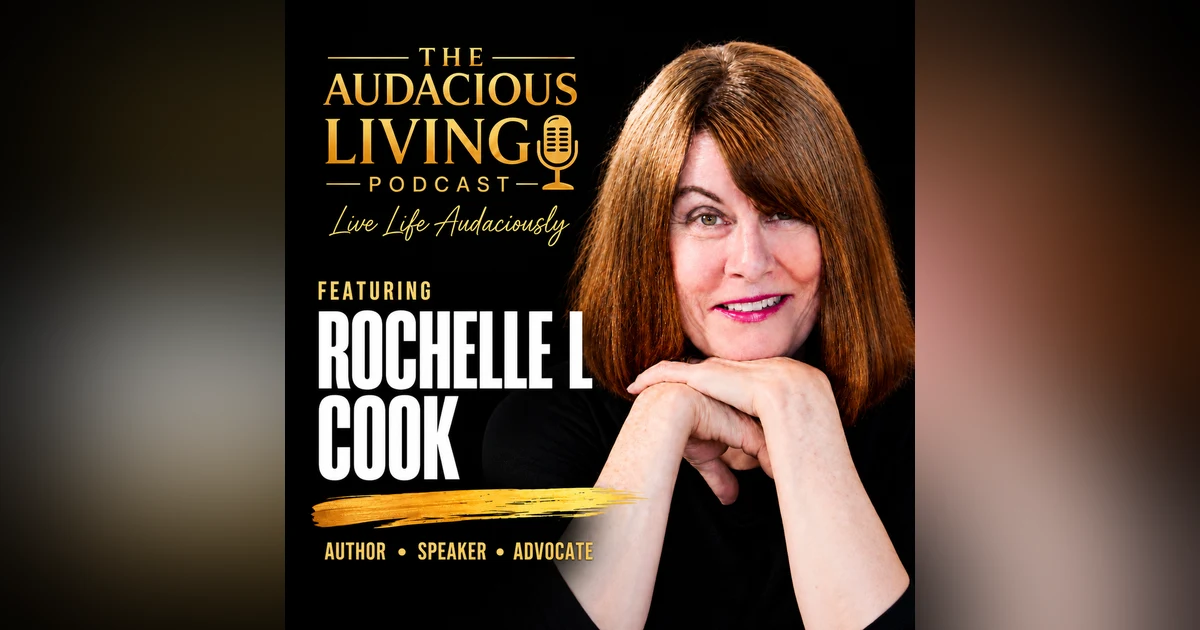

Clinical hypnotherapist Rochelle Cook explains why willpower keeps losing to the subconscious mind, and how the childhood stories we learned are still running our adult lives. She shares why worry is a prayer for what we don’t want, and the small daily practices that interrupt old patterns.


What if the reason you keep ending up in the same place has nothing to do with willpower, and everything to do with a story you learned before you were old enough to question it?
Signature Quote
"When we worry, we pray for what we don't want."
Rochelle says this about the subconscious mind, which takes our worries as instructions. It reframes anxiety not as a feeling to fight, but as a broadcast we can change.
Rochelle Cook has spent more than twenty years as a clinical hypnotherapist, working where real change happens: the subconscious mind. In this conversation she explains why willpower keeps losing, why we keep attracting the same relationships and the same struggles, and why none of it means anything is wrong with us. We simply learned a story as children, and we have been playing it out ever since. She calls it storybook syndrome.
She also brings her own story to the table. Childhood abandonment, brain surgery, a lung cancer diagnosis less than a year ago, and the long climb out of depression. She calls herself a wounded healer, and she does not speak from theory. She speaks from the chair on both sides of it.
You will hear why hypnotherapy is nothing like the stage show, where the inner critic actually comes from, and the small daily practices that interrupt old patterns: challenging the thought, writing down what disturbs your peace, and the three words she repeats to herself, I don't do that anymore.
This episode is for you if...
- You know better but keep doing the same thing anyway
- Your inner critic is loud, convincing, and exhausting
- You keep attracting the same kind of relationship or the same kind of trouble
- You are curious about hypnotherapy but carry the stage-show stereotype
- You want practical ways to challenge the thoughts running your life
Rochelle Cook, MA, Cht, is a clinical hypnotherapist with more than twenty years of practice, specializing in trauma. She is the author of The Soul's Coach: Seven Paths to Healing Your Relationship and a co-founder of Joymind.com.
Her path into this work runs through her own life. She describes herself as a wounded healer: childhood abandonment, brain surgery twelve years ago with an eight-year recovery, and a lung cancer diagnosis less than a year ago as a non-smoker. She did, in her words, all the therapies in the world, until a friend hypnotized her and her fear of public speaking vanished. She went back to school, and she has been helping people change the perception of the subconscious mind ever since.
She joined the podcast to make the case that lasting change does not live in willpower. It lives underneath it.
Connect with Rochelle: https://joymind.com
Her book, The Soul's Coach: Seven Paths to Healing Your Relationship, is available on Amazon.
Listen on Major Platforms
🎧 Spotify → https://open.spotify.com/show/2jVR6V7X2kRiCCDXE0FTyl?si=IR3TsfEWR3WA6BzfBRnVXQ
🍎 Apple Podcasts → https://podcasts.apple.com/ca/podcast/the-audacious-living-podcast/id1547447345
📦 Amazon Music → https://music.amazon.ca/podcasts/9f7902bb-dec8-4bd9-918d-d1fef21b7c67/the-audacious-living-podcast?ref=dm_sh_pGv57yQvAmAQVp2IIaXoDwtFt
Enjoying the show?
Share this episode with someone who needs to hear this.
⭐ Leave a review:
👉 https://ratethispodcast.com/audacious
Goes. Here you go. Three, two, and one. Hey, Michelle. Michelle. It's Rochelle. my goodness. I didn't even get your name right. Let's try that again. ⁓ Three, two, ⁓ and one. Hey, Rochelle. Thank you for joining me here today on the Audacious Living Podcast. I so, so appreciate you taking the time to do this.
Rochelle Cook MA Cht (00:01)
Okay.
Rochelle Cook MA Cht (00:09)
That's okay.
Rochelle Cook MA Cht (00:23)
Thank you very much, it's nice to be here.
Audley (00:25)
it's great to always I I oftentimes say it's great to engage in dialogues and ⁓ you know, we can have that will help others, you know, get themselves to, you know, a better place in their lives or or we call their their best audacious life. And ⁓ so again, I really appreciate you you you're helping us move this mission along. ⁓ y you know, you have a a a very unique background in hypnotha as a hypnotherapist ⁓ and and really focusing on ⁓
Rochelle Cook MA Cht (00:49)
see.
Audley (00:52)
the the the the blockages, if you will, that prevent people from living the life that they wanna live, the the th the audacious life. ⁓ And oftentimes these blockages are deep in our subconscious, things that we're not even aware of. Where, you know, they may have been planted maybe as it's in the child or maybe there's past trauma or something that's led to them being where they're at. And maybe and but I think the point of this is that it's it's annoying to them. And so ⁓ the work that you do is really helping
Rochelle Cook MA Cht (01:12)
⁓ you ⁓
Audley (01:20)
you know, break down some of those barriers. ⁓ and hypnotherapy is sort of outside of the the the traditional pattern of what people would use and and not there's that we're not disparaging anything wrong what's wrong with what other you know the other things that ⁓ that are out there in terms of tools that help people get better. ⁓ but you you you make a strong case for why, you know, hypnotherapy is ⁓ effective, ⁓ something people should consider, ⁓ and and and worthwhile. And so maybe as a starting point, and I know I've done a lot of talking here off the top here, but maybe
Rochelle Cook MA Cht (01:46)
⁓ I love it. ⁓
Audley (01:49)
Maybe I can get you to ⁓ introdu introduce yourself to our audience and sort of talk a little bit with the work that you do and and and what's got you to the point that you're at now.
Rochelle Cook MA Cht (01:59)
So my name is Rochelle Cook and I'm a clinical hypnotherapist. ⁓ And what we do is change the perception of the subconscious mind. We adults become what we learned as children.
Rochelle Cook MA Cht (02:13)
So we know that whatever is going on in your life, you learned a story growing up and that is playing out in your here and now. And the reason I started doing it was because of my own life, which, ⁓ you know, my husband calls me the wounded healer because of, you know, psychological child stuff, abandonment mostly, and then ⁓ health related stuff, brain surgery and cancer. I'm free of it, not coming back. And you just,
Rochelle Cook MA Cht (02:43)
Thank you. ⁓ Thank you. ⁓ And ⁓ I struggled for so long and I did all the therapies in the world. And I realized no matter how much we can study with psychology, which is very important. ⁓ it's very important until you get into that subconscious mind. It's just rules your life like driving a car and using a knife and fork and you know, all that we're doing walking, right? So that's what
Audley (03:08)
Right.
Rochelle Cook MA Cht (03:13)
brought me to hypnotherapy. And I will say I tend to focus on trauma. And ⁓ I've done this for a really long time.
Audley (03:19)
Yes.
Rochelle Cook MA Cht (03:25)
And it works. ⁓ And it works. ⁓ It's hard to suffer. Life's too short.
Audley (03:30)
I love. Of course, of course. I I I love the fact that you're waving the flag for all the benefits of hypnotherapy. ⁓ and and and I'm also glad that you that you ⁓ you identified specifically that you work within the field of trauma because hypnotherapy is used for other things as well, right? But trauma is one of the ones that you focus on. ⁓ so yeah, I just thought that's worth pointing out. So then when when when people hear c you know, a clinical hypnotherapist, I'm sure i there there's all sorts it conjures all sorts of assumptions in their mind.
Rochelle Cook MA Cht (03:46)
Yes. ⁓ Yes.
Audley (03:59)
What do you think people often get wrong about hypnotherapy?
Rochelle Cook MA Cht (04:03)
They seem to think that we are like a stage show, which exactly, which is so not true. the, it's just, it, it's ridiculous. Um, well, you know, I can't maybe bark like a dog, but I'm not quite sure. I don't know. I tell, I tell my daughter the day she's going to get married, we're taking that fiance to a stage show. And if he decides to go up on the stage and take all his clothes off, we know what's going on.
Audley (04:15)
So you're not gonna make me cluck like a chicken. Is that is that ⁓
Audley (04:22)
Okay. ⁓
Audley (04:28)
Yeah. Yeah. ⁓
Audley (04:32)
Ha ha.
Rochelle Cook MA Cht (04:33)
Then she can make her decision. Right. But no, no, no, no, none of that stuff is real. And neither is like when you go watch a movie and you have some psychiatrist telling someone to go commit crimes. ⁓ It's just not true. We can't make you do anything you don't want to do. ⁓ You know, and if you have some crazy hypnotherapists trying to make you do things, I report them, but no one's going to do that. It's not going to happen. Crazy. So we're just more.
Audley (04:35)
Right.
Audley (04:38)
Right.
Audley (04:45)
Mm. ⁓
Audley (04:57)
Sure. ⁓ Right. Right. Right. Right. Right.
Rochelle Cook MA Cht (05:03)
We're a therapeutic model and all we do, it's a heightened state of awareness ⁓ and we know how to relax you and help you feel calm so we can speak to your subconscious mind and you just feel very calm and relaxed. It's actually really simple but if you study it properly and not for a week or two,
Audley (05:16)
⁓ Gotcha.
Audley (05:21)
huh. Right.
Rochelle Cook MA Cht (05:24)
It's amazing what you can do. It is studied and it is backed by science, but you kind of, you got to know what you're doing. It's easy.
Audley (05:28)
Gotcha. And commit to it. Absolutely. No, that makes sense. That makes sense. ⁓ so let's sort let's sort of talk about the subconscious level because that that's where you believe where real change happens. ⁓ so what first convince you that, you know, that's a place for lasting change rather than just like, you know, simply my own willpower to say I'm gonna make this happen and change on the on my own?
Rochelle Cook MA Cht (05:51)
I'm just pausing because I'm thinking. ⁓
Rochelle Cook MA Cht (05:56)
experience. I was, I was minding my own business ⁓ and I'd gone through therapies and all different things that I ended up doing in my life. And a friend of mine ⁓ had gone to this school, the one that I went to and people that work with us do. And he said, you know, Rochelle, I'm going to hypnotize you. And I'm just looking at him like, huh? Cause I didn't know anything about it. ⁓ I had no clue. And I had been studied in psychology and doing all these things. I had no clue.
Audley (06:19)
Okay. Okay.
Rochelle Cook MA Cht (06:25)
So I said, well, I guess so. I mean, I didn't have any negative about it. And he hypnotized me. took a few times. And all of a sudden, you know, I was afraid of public speaking and I had some big things to do on a stage. It worked. I wasn't afraid at all. You should have seen me on the stage. People asked if they could touch me. And I was like, hmm, if this works, ⁓ why wouldn't something else work? So then I went to school and I studied it.
Audley (06:39)
Right.
Audley (06:53)
Right.
Rochelle Cook MA Cht (06:53)
And then I started working with people and I saw it and I thought, ⁓ okay, there is something to this.
Audley (06:58)
Right, right, right. And then that me and that made you a believer.
Rochelle Cook MA Cht (07:02)
Ew, it made me a believer. If I could go speak on a stage, anybody could. I was petrified. I wasn't gonna do it. It was awful. ⁓ it was funny. It was funny.
Audley (07:11)
So so let's kinda talk about the the the the subconscious here mind for just for a moment. So people fully understand ⁓ how impactful, how much it controls, how much it influences our lives on a day to day basis.
Rochelle Cook MA Cht (07:27)
I can tell you doing this over 20 years. ⁓
Rochelle Cook MA Cht (07:32)
We adults become what we learned as children. And I'll give a really good example, relationships. Parents model are what we think about a relationship. ⁓ Or what they say to you, if they don't say kind things to you, if you are a child that grew up in very difficult situations, right?
Audley (07:46)
Right.
Audley (07:58)
Mm-hmm.
Rochelle Cook MA Cht (08:01)
you're going to start thinking I'm not worthy, I'm not deserving, I don't belong, I'm not good enough, relationships are bad, people cheat, and that becomes your story. In my book I call it the storybook syndrome. It becomes your story. And then what happens is you play that out because it's what the subconscious knows. ⁓ So you find yourself getting involved in these really bad relationships because the subconscious likes the knowns even if they're not good.
Audley (08:05)
Right.
Audley (08:20)
Right.
Audley (08:29)
Right. ⁓
Rochelle Cook MA Cht (08:30)
So you're gonna do what you know. And it's so interesting because at the same time, your subconscious is saying the inner child, you know, if I can get this person to love me, then really I am good enough. So it's this vicious circle, but it has to be changed. It has to be changed or it's gonna keep going.
Audley (08:38)
Okay.
Audley (08:44)
Hmm. ⁓ Right.
Audley (08:49)
So when when when someone says they know better but they keep doing the same thing ⁓ over and over and over again, what exactly is happening?
Rochelle Cook MA Cht (09:00)
So that's the conscious mind. The conscious mind is where your logic and reasoning and willpower live. I'm gonna go to the gym. I'm not gonna eat sugar anymore. You know, I'm not gonna do this anymore. It's not a good idea. But the subconscious mind rules your life. And it's gonna say, I don't wanna go to the gym. I'm not interested. And you know that sugar has a reward. It's quite satisfying. So now I'm gonna have to do that.
Audley (09:11)
Right.
Rochelle Cook MA Cht (09:26)
And guess what happens? ⁓ It's going to win. And some people might be able to correct the problem for a short period of time, but you know what's going to happen? It's going to come right back and they're going to be struggling with it. So when you go into the subconscious, it's actually very, ⁓ it's very subtle, but it overrules the conscious. I'm going to go to the gym, the yo-yo dieting, right?
Audley (09:46)
Okay. Right. Yep. Mm-hmm.
Rochelle Cook MA Cht (09:52)
And it just, you don't think about it, the subconscious mind does it for you and you just don't think about it anymore. Cause willpower is rough. It just doesn't work. We've all tried it.
Audley (09:57)
Hm. Right. Right. Will power or self awareness. Like you you would think 'cause you you would think that well if I'm aware of something, now that I know, I could take action and change. But clearly from what you're saying and how you describe the power of the subconscious, that's not enough.
Rochelle Cook MA Cht (10:14)
It's not enough, but at least if somebody actually is aware, that's really a great thing because when they're aware, it's easy for us, easier for us to get into that subconscious because there's an awareness when we're speaking to them, we already have that lion, right? You don't have to be aware. It's okay. Believe me, you will be of the time we get done with you, but it is kind of nice if you are, and it does help you. know, studies show that positive self-talk is a huge thing in psyche.
Audley (10:33)
Right.
Audley (10:37)
Sure, ⁓ sure.
Rochelle Cook MA Cht (10:45)
really makes a difference.
Audley (10:48)
I was I was ⁓ if I think of a little cute story but I ⁓ I I was a big fan of Batman as a kid. ⁓ And ⁓ I remember this one episode I was watching this one episode and I and it always stands in my mind this one episode where there there was there was some kind of s psychological attack that was going on and you know and everyone was being attacked in their dreams and ⁓ and ⁓ the th the the bad guy was targeting
Rochelle Cook MA Cht (10:57)
Mm-hmm.
Audley (11:16)
Bruce Wayne, who was of course the ultra ego of Batman. And he was targeting Bruce Wayne's dreams. But somehow Bruce Wayne was over to able to overcome and get past it. And everyone was amazed at like, hey, how do you do that? And it like, you know, because everyone else struggled. And he and and he said, because in my head, I'm Batman. I'm not Bruce Wayne. Right? So it's to your point, it's a that thing that goes on, that conversation, ⁓ and and it gives himself this this this ultra ego that can withstand whatever force or whatever.
Rochelle Cook MA Cht (11:34)
.
Rochelle Cook MA Cht (11:41)
you
Rochelle Cook MA Cht (11:44)
anything.
Audley (11:45)
And yeah, so the self talk thing is huge, clearly.
Rochelle Cook MA Cht (11:48)
Belief at its experience ⁓ and the more you do it ⁓ the more you become it Can we help you? Of course we can but it doesn't matter you the more if you if you want to be the Batman You know, keep keep thinking keep thinking keep thinking and you will prevail like that movie the pursuit to happiness Is that what it was called? Is there any other better movie that is fantastic. He just didn't give up
Audley (11:52)
Yeah. Hmm.
Audley (12:05)
Yes.
Audley (12:09)
⁓ Yeah, yeah, the pursuit of happiness. Yeah. Yeah. No, I hear you. Well, what's really interesting is w as as we're talking, ⁓ at the say you know, it there's two sides of the coin here because as much as we can heal ourselves and make ourselves better, we can also sabotage ourselves and make us unhappy and rob our joy without even realizing it.
Rochelle Cook MA Cht (12:31)
Yeah. It's just, that's what's so hard ⁓ is you, you have these, it, there are patterns ⁓ that were formed in your storybook, you know, syndrome with children ⁓ as a child, or let's say you were a young adult and God forbid you got into a car accident. The subconscious likes the things that are like, ⁓ they get your attention, right? It holds onto it. And it's just a pattern. It's going to keep playing out and you don't even realize what you're doing. You know, when I talk to people,
Audley (12:38)
Mm.
Rochelle Cook MA Cht (13:02)
It's so amazing because I just want to hear their story. I want to hear the now and the before, right? And it is amazing how many things, which is so normal, they don't even realize what's been happening until you bring it to their attention. And then the light goes off and it's like, ⁓ and hey, maybe you can change it, but it's rough. It's hard. It's hard. It means what it is, right?
Audley (13:05)
Mm-hmm. Yeah, yeah.
Audley (13:25)
Yeah, I know, I I hear you. And it's it's it's it's again the the awareness certainly helps 'cause it gets you on that path, but there's still a conscious change, action, a change that needs to take place. ⁓ and I know you use the example of relationships, and that's a big one. I think a lot of us can relate to that, right? The that, you know, constantly attracting that same bad type of individual that doesn't work for you, it doesn't fit you, but that's what you bring into your life. ⁓ and I've I've always kind of struggled with this thing like
Rochelle Cook MA Cht (13:50)
you
Audley (13:52)
bringing this into your life is because you're not out there with a sign saying, hey, hey, hey, if you're this kind of person, come to me. But yet the the like how how does that happen? I guess I've I've still not I've never really fully understood how that how how we attract these people.
Rochelle Cook MA Cht (14:08)
relationships, ⁓ the relationships, ⁓ okay, relationships are mirrors that reflect back to you what you need to heal within yourself. So even if somebody suffers from anxiety, ⁓ anxiety is just trying to keep you safe. Unfortunately, it's not, you know, it's not a good idea, it's not doing it the right way. But if you're ⁓ afraid of cars, ⁓
Audley (14:20)
Okay.
Rochelle Cook MA Cht (14:37)
then that car is also your mirror that reflects what you need to heal within yourself. So that's how it gets your attention. But a lot of people don't realize it, they just keep living in it. They know they're afraid and they know they're uncomfortable, ⁓ but they don't understand the why behind it. ⁓ When I was growing up, my favorite book was Tell Me Why. And it makes sense. It's like, tell me why so I have an idea what's going on and then I can go figure.
Rochelle Cook MA Cht (15:06)
how to help me, am I the problem or the solution? I'm gonna be the solution. Right? But that's ⁓ why we keep attracting this stuff over and over again. It's the knowns, even if they're not good.
Rochelle Cook MA Cht (15:21)
You know, I'll tell you a little story. I used to be a sugar addict. I'm not anymore. I'm not, by the way, I'm on Donut Anonymous. Not happening. It's not happening. But I can't help it. When I see them on television or I go happen to see them somewhere, they really do look quite delicious. You know, they're, they're, yeah, they're, very cute. You know, yeah. With your little coffee or something. They're very nice. But, oh, you like donuts.
Audley (15:23)
Sure. Okay.
Audley (15:29)
All right. ⁓
Audley (15:41)
I hear ya, I hear ya.
Audley (15:50)
Well I was gonna say I was gonna say yeah, I I I can resist almost every donut except for a double chocolate. Then I get that I'm weakening these all the time, all day. Every day, all day. But but but but you know, overall I can manage. I can but those double chocolate ones, they they they got a number on me, so I I try and steer clear them. ⁓ okay, okay, yeah, yeah. Yeah. Okay.
Rochelle Cook MA Cht (15:57)
See? ⁓
Rochelle Cook MA Cht (16:05)
They're gonna getcha. They're gonna getcha. Mine are the pink sprinkled ones. ⁓ I just love them. Actually, I like most of them. But you know, when you, I was hypnotized to get off sugar. But here's, it's so weird. It's like, no, no, no. If I take, if I eat one, it's like, I can't do it. It's too sweet. I just can't do it. And it makes me so mad because they're so romantic and I just want them.
Audley (16:16)
Okay.
Audley (16:31)
Ha ha ha. ⁓
Rochelle Cook MA Cht (16:33)
Or like my candy from CBS, you know, the hot tamales and the good stuff, my sweet tarts. I really want them, but they don't taste good to me. ⁓ But it's still that association like going trick or treating for Halloween and eating donuts ⁓ and my grandma pancakes. ⁓ It's the association. So you kind of have to learn to say, ⁓ what a lovely memory. And then think for a minute. no, I can't eat that. Not going to happen.
Audley (16:36)
Sure.
Audley (16:39)
I get it. ⁓ Right.
Audley (16:50)
Understood.
Audley (16:58)
Yes.
Audley (17:03)
I love it. I love it. ⁓ we we we talked earlier about that that that ⁓ that inner dialogue that happens and and specifically I wanna sort of touch on the inner critic and and and maybe i ⁓ if you can help understand ⁓ where is this inner critic, where did it originate from? Where what's its origin story for it to be so sort ⁓ of pervasive influence in our lives and our in our minds too?
Rochelle Cook MA Cht (17:27)
So one of the first things I ask my clients is, where did you learn that? And they're not sure. And I'll say, who told you you weren't good enough? Who told you not to speak in front of public? Who told you you're, you know, you can't have money because that's only for 1 % of the population and it doesn't grow on trees. And guess what? It's usually someone that they grew up with. I'm being careful what I'm saying. It could be anybody, right?
Audley (17:56)
Absolutely.
Rochelle Cook MA Cht (17:56)
It could be the bullies at school. The parents were great, but the bullies taught you're not good enough. And they taught you to judge yourself. Oh, I love the words judgment, acceptance and permanence and peace. Those are my words. So they taught you to judge yourself as not good enough. So you're constantly criticizing yourself and that's got to go because let me remember what the numbers is 85 to 91 % of what we worry about.
Audley (18:06)
Yes.
Rochelle Cook MA Cht (18:26)
isn't true, it never happens. ⁓ And another one is when we worry, we pray for what we don't want. It's just the subconscious mind again, we learned it, it's not true. And you know, there's, if we didn't have judgment in the world, we wouldn't have war and discrimination and all these other things in life, right? ⁓ So when we judge ourselves, ⁓ that's not good, or others need to get rid of it. That's where it's learned childhood.
Audley (18:40)
Right. Right.
Audley (18:47)
Yeah, yeah, yeah, yeah. It's not that's right. Okay. It's I I'm I I'm actually glad that you sort of raised that point because when I ⁓ you know, oftentimes when we talk over that inner criticism and that judgment, it's just been about us and to know that it it act can can impact our relationships and those around us, that's a r really significant point, Rochelle.
Rochelle Cook MA Cht (19:08)
You know, I learned from my mentor who owned the, ⁓ he and his wife coined, ⁓ they're the founders, I'm sorry, of spiritual psychology, which is huge, huge, huge. And he was my mentor, Dr. Ronald Holnick. And I remember him saying, I wanted to just scream. Always say to yourself, I'm upset because ⁓ I, ⁓ and I really didn't like it, but now I love it because that means that you take back your power.
Audley (19:10)
Mm-hmm.
Audley (19:37)
Yes. Yeah. Take ownership. Yeah. Yeah.
Rochelle Cook MA Cht (19:39)
And the last, isn't it? ⁓ isn't it? And the last of the human freedoms anyone can take away from us is how we choose to think. So why are we criticizing ourself? Okay, we learned it, but do we have to continue to do it? ⁓ And if you can't do it, you know where to come to get help, but you've got to kind of at least think about it, right? This stuff's hard to do, you know, that's why you need help. It's hard. You know, go talk to someone.
Audley (19:46)
Sorry.
Audley (19:55)
That's right, that's right.
Audley (20:02)
Yes, yeah. ⁓ So w w why does it sound so ⁓ convincing? That inner critic voice, it's it's it's not that quiet murmur. It's very strong and loud and convincing. ⁓ Where did all this power come from?
Rochelle Cook MA Cht (20:20)
your belief system when you're a child, let's put it this way, you learn how to walk when you're a child. And if you're lucky, you're still walking, right, as an adult. ⁓ And no one can take that away from you. Even in hypnotherapy, we can't tell you not to walk, because ⁓ why would you not want to walk, ⁓ right? That's like stage shows and all the ridiculous stuff. You learned
Audley (20:27)
Yes.
Audley (20:31)
Yes.
Audley (20:39)
⁓ Right.
Audley (20:44)
Right.
Rochelle Cook MA Cht (20:49)
that you're not good enough, nobody's gonna want you. Like I actually hear all this stuff, it makes me sick what I hear what people do to humans. ⁓ And they do a lot of very nice things too, we have to remember that. But the kid believes it, the kid believes it. And that's why it's so convincing because you learned it like, ⁓ know how to use a fork and a knife and say please and thank you. You learned it to your very core.
Audley (20:59)
Sure. Yep. Both the two sides of the coin. Yep.
Rochelle Cook MA Cht (21:17)
So that's why it's so believable. ⁓ Like, I have to be with somebody and even though this person is abusing me, ⁓ I'm just gonna take it because I wanna be loved so badly because I was never loved and I'm never gonna be loved. It's such a core belief like cement. It's not true, it's not true.
Audley (21:29)
Right. ⁓ Mm-hmm. Yes. Right. Right. Right. Not true. Yeah. So challenge the beliefs is what I'm hearing from you loud and clear. Challenge those beliefs. ⁓ So is ⁓ it is it a matter then of quieting that inner voice or learning to live with it?
Rochelle Cook MA Cht (21:41)
Yeah, absolutely, yes.
Rochelle Cook MA Cht (21:51)
Oh no, no, no, no. We don't live with it. We stop judging ourselves, right, for thinking we're not good enough. We accept that, ah, I'm judging myself. I can't do that anymore, but I'm gonna judge my, I'm gonna accept that I'm suffering. And I also know it's impermanence because I'm not gonna keep doing this because why would I? I wouldn't drink a glass of bleach. And then,
Audley (21:58)
Mm-hmm. Yep.
Audley (22:12)
Okay.
Rochelle Cook MA Cht (22:20)
you find peace. ⁓ So no, no, no, you don't live with that. you can, ⁓ why would you, why would you live with something that you could change? Because it's going to get worse, right? It's going to be the hamster on the hamster wheel.
Audley (22:29)
Okay.
Audley (22:36)
you okay good all right okay so then we look at maybe are there are there sort of regular sort of practices that you can recommend to kind of help people I guess really what I'm thinking about is ⁓ is and you sort of allude you definitely alluded to it ⁓ is is developing healthy healthy healthier dialogues ⁓ and and right in within our minds
Rochelle Cook MA Cht (22:36)
Yeah, no, no, no, no, no, no, no, we don't do that.
Rochelle Cook MA Cht (22:56)
It's right.
Audley (22:59)
And so are there sort of regular or gener or practices that we can do to help maintain those healthy dialogues or even start them? ⁓
Rochelle Cook MA Cht (23:08)
Yeah, you want to start them. would challenge, would suggest to challenge your thoughts when you first you have to be aware of them because a lot of times we think of them and we don't even realize what we're doing. So what you do is you sit down and you write a list of what is disturbing your piece. What is disturbing my piece? Because you're bringing it to your attention, right? And then every time you think that you challenge your thoughts. And since a lot of times people don't realize it,
Audley (23:19)
Right.
Audley (23:28)
Yep. Mm-hmm.
Rochelle Cook MA Cht (23:38)
At the end of the day, you look at what disturbs my peace and you'll go, ⁓ aha, today I didn't have such a great day and aha, this is what's disturbing me. ⁓ And then you write down the truth. I am worthy and deserving. I am not a puppet to this person who is abusive. I am not a puppet to ⁓ this thought that I had that I can't speak in public. ⁓ No.
Audley (23:52)
Mm.
Rochelle Cook MA Cht (24:05)
And then because what you're doing is you're creating awareness. ⁓ You have to have awareness. And then what I love that I was told last year by someone I happen to know who I really respect, ⁓ I do this all the time. I don't do that anymore. And sometimes I'll say, I don't do that anymore. I don't do that anymore. I don't do that anymore.
Audley (24:10)
Yes.
Audley (24:25)
Right. Remind yourself.
Rochelle Cook MA Cht (24:27)
I say it all the time, it's a type of pattern interruption and you stop it at the knees ⁓ and you just don't do what another one is. My dad always told me this. You know how we'll say, well, what if this happens or what if he leaves or what if I get into whatever? Well, what if he doesn't? And what if he does, you're fine. What if you're still fine? Because you don't need anyone to make you happy. So you got to be careful of those what ifs because they're going to get you. That goes into the worry cloud.
Audley (24:47)
Mm-hmm.
Audley (24:50)
Yes. Right. Mm-hmm. That's right. That's right. Yes. I I I like the idea of presenting an alternate c you know a option, right? Okay, so what if that doesn't happen? Or what if this does happen instead, right? And and and and and and the whole and and something I oftentimes even you know in in my work is I'll say to people, Well, how do you know what you're saying is absolutely true?
Rochelle Cook MA Cht (25:06)
Absolutely.
Audley (25:18)
What what evidence yeah. What evidence what evidence or data do you have that supports this to be true? And if someone can point it's because of this, all right, well oftentimes it's well, I think. No no no. Not what you think or believe. Don't tell me what you think or believe. Tell me what you know that is actually true. Well, I really don't
Rochelle Cook MA Cht (25:19)
that one.
Audley (25:43)
No, but I think. Okay, you're thinking again. I don't want you to think, right? ⁓ I want you to try and and when you start to have that type of dialogue, that kind of conversation, you know, you hear, ⁓ I guess you're right. So I'll tell you a quick story. So a friend of mine, a little while back, ⁓ she had applied for this job.
Rochelle Cook MA Cht (25:46)
I love it. I love it.
Audley (26:02)
And ⁓ they as part of the job they give the they you know they give an assignment and here's what you're supposed to do and and so they gave it and she did the assignment and she talked about how she prepared all the all the hours, get ready for it. It took a long, long, long time and she delivered it, she felt good at what she had done ⁓ and she was like, Okay, great. ⁓ And ⁓ she happened to be speaking to someone else ⁓ who ⁓ who also you know, she had said done that assignment, like that the interview process probably a week before that person.
Rochelle Cook MA Cht (26:16)
⁓ you
Audley (26:30)
This other person comes along and goes, yeah, I'm I I just got mine and and here's what it is. And that person's take was totally different than what she understood hers to be. And and right right away it went to the ⁓ this is what it is. my goodness, I did it all wrong. my and we and it we it went down this this spiral. And and I kind of said, Well, how do you know that person is right? You're assuming you're right. How do you know that per you're you're assuming that you're wrong?
Audley (26:58)
How do you know that person maybe they've got it wrong and you did it right. Do you She's like, Yeah, I guess you're right. I don't know. And you won't know until the end of the process and then they'll know, right? But so it's just very Yeah, and that's fine, right? Like if if at the end of the day, if you made a mistake, you made a mistake. But don't don't vilify yourself before you even have the data that says you yes, you're right or no you're not, right? So
Rochelle Cook MA Cht (26:58)
⁓ you
Rochelle Cook MA Cht (27:08)
And that's okay.
Rochelle Cook MA Cht (27:19)
Especially someone that's always been told they're wrong or made to think they're wrong. They're going to go to I'm wrong.
Audley (27:22)
Well well this is where this is where it comes from. Like this is where it comes from. I and and I ⁓ and I and I'll even sort of put my hand up a little bit and own that I do a little bit of that. Like if something goes wrong or something's that there was a mistake made, I go, I must have messed it up. Sorry. And I'm already apologizing without even knowing. And I d and I and I do that subconsciously. And and I
Rochelle Cook MA Cht (27:39)
⁓ We do.
Audley (27:42)
I at least at least I know that I do it, right? And I'm more conscious about that kinda get me on that path. But yeah, we're all we're all human here you know, here's this guy talking about audacity. I'm telling you I got my own issues too. Like we all go through stuff.
Rochelle Cook MA Cht (27:49)
I hear me. ⁓
Rochelle Cook MA Cht (27:54)
Don't we? That's right. And we're human, so it's not gonna, it's gonna continue. But the more you study this stuff and you live it, you walk your talk, then the less it happens and you are more aware, which helps. You know, one of the things about how do you know if you're right or not? I'm a big believer of the authentic self. The authentic self has these answers. But sometimes people that are so, what's the word I'm looking for?
Audley (28:06)
Right.
Rochelle Cook MA Cht (28:23)
Like they're in a cult. I'm not saying a literal cult, but like cultish. You grew up being told you're not good, whatever. So what I suggest people to do ⁓ is if you're a parent, you can have a child. You say this to yourself. If my child came up and told me that they're not good enough and no one's going to want them. ⁓ So whatever you're dealing with, you say, what if my child asked me that question?
Audley (28:27)
Yeah.
Audley (28:30)
Mm-hmm. ⁓
Rochelle Cook MA Cht (28:52)
And the adult is self is going to answer that question. It happens all the time. Why would you say that about yourself? You're incredible. And they're in their minds either talking to their child. Like, don't be ridiculous. ⁓ You sit in your chair and let them come to you. ⁓ Then you know what's right. And then you really have to step up to the plate. But let's say you don't have children. Then what if a friend were to ask you? It doesn't matter. Anyone that's close to you. And it is so amazing how when we
Audley (29:15)
That's right. ⁓
Rochelle Cook MA Cht (29:21)
give advice how a lot of times it's spot on. It's like, uh oh, uh oh, then we know what we should be doing.
Audley (29:22)
Yes. ⁓ yeah. yeah.
Audley (29:30)
That's right. ⁓ That's right. That's right. ⁓
Rochelle Cook MA Cht (29:32)
That one always gets ya. I do that, you know, if I can't make a decision or something or I'm just on myself, I'll say, what would you tell Juliet? And then I just have to shake my head and oh no.
Audley (29:39)
Right.
Audley (29:42)
Yeah. Yeah. Yeah. Yeah. Yeah. So for me, if I get to a point where I have to make a decision ⁓ and I'm struggling with the decision, chances are the reason why I'm struggling 'cause I know what the right answer is. I just don't want to make it. Like I'm struggling. I know what the right answer is and I don't want to do it. And I'm s that's why ⁓ th th there therein lies the struggle. Because if you know what the right answer is, you don't hesitate to do it. Like, you know. ⁓ Right? And so and so
Rochelle Cook MA Cht (29:49)
Mm-hmm.
Rochelle Cook MA Cht (29:56)
Absolutely.
Rochelle Cook MA Cht (30:00)
That's your subconscious.
Rochelle Cook MA Cht (30:07)
there's your subconscious. Yep. That's right.
Audley (30:10)
So so now but so with me, the awareness is there that that's happening. But let's talk about those that don't have that awareness that are operating on the autopilot, because that's that's exactly what happens to them, right?
Rochelle Cook MA Cht (30:20)
Yeah. Yep, that's what happens. And they just, they don't know. That's just what they, the way it is. It's the way it's supposed to be. It's what they learned. Like they learned how to walk. They learned how to use a knife and fork. And there, that can be changed. Of course it can, but it's, it's a problem. It's a problem. And what's hard is
Audley (30:30)
Mm-hmm. ⁓
Audley (30:37)
Yeah. Yes.
Rochelle Cook MA Cht (30:47)
how common it is because people just don't live in that awareness. And remember, the subconscious likes the knowns. It's comfortable. Like, you know, I'm going to give a crazy example, but
Audley (30:49)
Yes, yes.
Audley (30:56)
Yes.
Rochelle Cook MA Cht (31:00)
Let's say a child is in a hospital because one of their parents ⁓ did bad things to them. Guess who they're going to ask for? Especially if the parent is the caregiver. It's all they know. It's all they know. So that's what our subconscious minds are doing. And what we really want to do is to nurture them and tell them it's okay. I know you're used to this, but we don't have to do that anymore. In fact,
Audley (31:13)
Parents. ⁓ Yes. ⁓ Yes.
Audley (31:28)
Yeah, yeah.
Rochelle Cook MA Cht (31:30)
We don't do that anymore. Let's do what we know is right. ⁓ But it's hard, right? It's hard to do what we know is right. Mark Twain says, he's got a quote, you can never be wrong when you do what's right. And my mom always says to me, Rachelle, as long as you can look in the mirror and you trust yourself to know that you've kind of got some kind of morals and ethics.
Audley (31:32)
That's right.
Audley (31:36)
Very, very, very, very.
Audley (31:52)
Yep. Yep. Yeah. Yep. Cons clear conscience. That's the key. Clear conscience. I I I oftentimes say I feel good about who I am because I've got a very clear conscience. I can look myself in the mirror and say, You're a pretty decent guy. It's not bad. Right? And if I can if I can do that honest and I gotta be honest with myself, doesn't make sense me lying to about my my like if I'm lying to myself, then forget it. Like I'm just didn't even bother trying to go down this healing part process, right? But so I've got to be honest with myself as a starting point. ⁓
Rochelle Cook MA Cht (31:57)
That's what it takes. That's what it takes.
Rochelle Cook MA Cht (32:06)
There you go. There you go.
Audley (32:22)
⁓ It's it's it's interesting. We talked start talking about that pathway to healing, and I and I'm so glad you sort of referenced kind of outside perspective because that is so important. I've heard I heard someone once described healing. It's like healing yourself is like painting a chair while you're still sitting in it, right? Like it it's it's it's not an easy thing to do, right? Yeah, and the outside per yeah, like the outside perspective can really ⁓ show you or reveal things to you that you can't totally see because you're still part of it, right? And so there's value in
Rochelle Cook MA Cht (32:38)
That's a good one. Ooh, that's a good one.
Rochelle Cook MA Cht (32:50)
You're part of it.
Audley (32:51)
Yeah, but there's value in bringing others in part of the process, right?
Rochelle Cook MA Cht (32:55)
Yeah, because we're going to see things ⁓ that you're not going to see. You're not going to see. ⁓ I just, you know what? The people I've helped in my lifetime, that was actually my privilege to be able to get to do this. ⁓ I've just ⁓ seen things that I, they keep me up at night and you want to know something. They become it.
Audley (33:00)
Yes.
Audley (33:10)
Yes. Beautiful. That's beautiful. I love the way you say that.
Rochelle Cook MA Cht (33:22)
Again, I know I've said that a million times that we adults become what we learned as children. And you know, it's very interesting because the other day I was walking and I don't know, I had a thought and I have to be careful the way I talk to my child because if she says, don't shrink me, I said, well, not a shrink, I can't. She goes, you can. So we were walking and I forgot what it was, but I said something and she looked at me and I said, see,
Rochelle Cook MA Cht (33:50)
That's my subconscious talking. That's just not true. It's ridiculous. Why would I say that to myself? That's just so ridiculous. And then she just kind of looked at me and I couldn't believe it. She said, you know, mom, you got a point. And I said, Oh, thank you for acknowledging it. Finally, 29 years later, so funny.
Audley (33:58)
Right.
Audley (34:08)
⁓ Gotta love kids. Gotta love our kids. ⁓ That's funny. Yeah. That's it. That's all that matters. That's where it matters first, right? In your in your head. That's what we're talking about. Like in your head, that's where it matters the most. ⁓ I I wanna talk about ⁓ I identity here because if you really think about it, you know, you have individuals who who grow up with this false negative belief, whatever that belief is, about themselves. ⁓
Rochelle Cook MA Cht (34:12)
I have the best child in the world. I know I don't but I say she is to me.
Audley (34:37)
And because they they they gravitate or attach the story, that's what they know. ⁓ And sometimes our identity is attached to so it's not what that it's not so no it's not just that's what they what they know, it's that's who I am, right? ⁓ And and and so and sometimes these are wounds that they're attaching themselves to. ⁓
Rochelle Cook MA Cht (34:50)
It's right.
Rochelle Cook MA Cht (34:56)
Right.
Audley (34:57)
And and and so the process of disattaching from that is is I think that's it's even more important that we do start that process because if we attach ourselves to the wounds, then we'll always be in that state of influx where things are never going right or we're not good or we're not worthy. And we'll we'll never get as a vicious cycle to get caught in.
Rochelle Cook MA Cht (35:08)
Yeah. ⁓
Rochelle Cook MA Cht (35:16)
I love this topic. So we are everything that we've learned in this lifetime. So we ⁓ are ⁓ what we learned as children. They become a part of us. ⁓ And when we get older, ⁓ whatever age that is, right? Whatever age that is, we get to decide who are we?
Audley (35:24)
Yes.
Rochelle Cook MA Cht (35:43)
And it's very, very difficult, you're right, because it's what we learned, it's who we are, it's what we learned, right? ⁓ So ⁓ what happens is when you can actually learn ⁓ to ⁓ separate one from the other and say, you know what?
Rochelle Cook MA Cht (36:04)
⁓ I'm not that way. I'm gonna use myself as an example. My father used to say, you're just like your mother, but he didn't mean it in a nice way. And my mom wasn't around, hence abandonment. But you know what? I'm not like my mother. I always was afraid of becoming my mother, so I overcompensated and my daughter knows she has a mother, right? Very normal. But at 63, and I started doing this work long time ago, but it's still sometimes I have to think about it. I have a fear of...
Audley (36:11)
Okay.
Audley (36:20)
Yes. Yeah. Yep. Yep. Yep.
Rochelle Cook MA Cht (36:32)
doing certain things she did that were unacceptable. But what I have to say to myself is, ⁓ so part of your psyche is this trauma. And trauma can harden my heart or soften my heart. Well, I'm a grownup now and I'm gonna say it's part of who I am, suffering is noble, wear the badge of honor, a quote by Victor Frankel, and it's okay. ⁓ But I also know who I don't wanna be.
Audley (36:35)
Yeah.
Rochelle Cook MA Cht (36:59)
And I also know that she happens to be highly intelligent, extremely spiritual, and she was reading books back then that I still don't know how she knew how to find those, but that's who she was. ⁓ So I'm going to take the good parts ⁓ and not the good parts. ⁓ And then I'm going to say, and some of the stuff from other situations in my life, I'm going to say, you know something, I know it's a part of me, but I'm just going to let that one go because I know
Audley (37:10)
Right. Mm.
Rochelle Cook MA Cht (37:28)
that that is not me, it never was. ⁓ And I don't have to be afraid of it, it's not gonna happen, right? ⁓ Or some people have taken on something, let's say somebody has an issue with anger that they learned. Well, they can go ahead and say, but I'm not that person, I'm that way because I learned it. So then the question becomes, well, then who am I? It's a really simple answer. You are a soul having a human experience. You're breathing, you're talking, you're walking.
Audley (37:30)
Gotcha. Mm. I love that. I love that.
Audley (37:38)
Yep. Mm-hmm.
Audley (37:43)
Yes.
Audley (37:57)
Yes.
Rochelle Cook MA Cht (37:57)
and you're somebody that's figuring out who you are and ⁓ everything that you experienced and how you're now changing the way you experience life, that is your identity. So we don't have to say, I'm like this one or that one or this one, because when you're doing it again, you're buying into somebody else's storybook syndrome. So I always say, I get to decide, but when you really work through it and figure out what happened ⁓ and people do what they do,
Audley (38:11)
Yeah.
Audley (38:15)
Yes, ⁓ yes, ⁓ yes, yes.
Rochelle Cook MA Cht (38:26)
And I know that a lot of times it's very, it's completely wrong. I don't like the word, but I'm going to use it. But they're doing things based on what they learned or they have a psychological illness. So you don't have to accept it or make it right, but you can say, ⁓ okay, now I can. Traumatic and heart of my heart or soften my heart. I'm going to let this go now and I'm going to go live my life. And the other thing I say to people is what do you like flowers, ⁓ dancing, reading?
Audley (38:30)
Yeah. Yeah.
Audley (38:36)
Yes, yes, yes. Yes.
Audley (38:47)
Yeah.
Audley (38:54)
Mm-hmm. Mm-hmm.
Rochelle Cook MA Cht (38:55)
What do you like? Oh, so that's who you are. And I call it a proof board. I'll say, go write everything you do that you like about yourself and put it on the bathroom mirror and keep it there for years. And you're gonna in the beginning, look at the mirror and you're gonna see it. And eventually you're gonna think, oh, I don't need this here anymore. Why is this here? But keep it there. Mine is still on for I don't know how many years, a million billion years because your subconscious still sees it. And it's so interesting.
Audley (38:59)
Okay. ⁓
Audley (39:05)
Mm-hmm.
Audley (39:10)
That's right. ⁓ Yes.
Audley (39:19)
Love it.
Rochelle Cook MA Cht (39:25)
because then you can add to it. Like, ⁓ I discovered that I want to learn to play the violin. ⁓
Audley (39:27)
Yes. Yes. Yes. Yes. We evolve. And that's part of the evolution of who we are. And and I s and I so love that because the other part of the trap that we fall into sometimes is it's like, well, that's who I am, that's what I'll ever I'll only ever be, right? ⁓ And first off, that that's who I am thing, who knows where that came from, right? We've it could it could have come from someone else, it could have come from within. Who knows? that's a starting point. We have no idea where that thing had come from.
Rochelle Cook MA Cht (39:36)
Yeah
Audley (39:55)
But everything we do after that, it supports that, whether we realize it or not. If we tell ourselves that you're always I I never have any luck in relationships, then you'll never have any luck in relationships. Cause you've told yourself that. You've told yourself that. You've convinced yours and I I don't I wouldn't even say you convince yourself because that's it you you just you you you said, yeah, this is what I am and people accept it. And so it's it's separating that piece from who you are ⁓ and and interesting when we talk about healing, you know
Rochelle Cook MA Cht (40:07)
Believe in its experience. That's right. So true.
Audley (40:25)
You know, the point I would make is, you know, people that go through the process of healing, ⁓ at the other side of that, not that there's no really end to healing because it's an ongoing process, but but the, you know, at some point, you know, we we start to see an evolution. ⁓ And that evolution, ⁓ I would say, and I'd love to get your your your your thoughts, isn't a an evolution into someone brand new. It's an evolution to uncovering what was always there.
Rochelle Cook MA Cht (40:54)
Exactly. I 1,000 % agree. back to which we've learned in spiritual psychology, somebody doesn't have to believe in this or not, but we souls come in to have a human experience. And we want those experiences. And if you don't believe that, that's okay. But you could say anytime you have a, that's an opportunity to learn, wonder what that lesson is.
Audley (41:12)
Yes.
Audley (41:22)
Yeah.
Rochelle Cook MA Cht (41:23)
And then you keep growing up the learning line of spirituality, enlightenment, ⁓ we've got evolution. ⁓ And the higher up you go, the more life is going to try to pull you down, ego is going to try to pull you down. ⁓ But then you get to decide, yeah, no, I don't do that anymore. And you keep going up and the higher you go up, the easier all of it becomes. ⁓ And ⁓ the more you study this stuff,
Audley (41:32)
Mm-hmm. ⁓
Rochelle Cook MA Cht (41:52)
When stuff gets really bad, bad, bad, bad, bad, bad, bad, rely on those studies and it doesn't mean you're not gonna suffer, but it's not as bad as somebody else would have experienced. So you have to learn to question your thoughts, evolution. We can choose or not choose. You know what's really hard is when somebody you know, especially with kids, older children or teenagers, we know the path, but no one's gonna, they're not gonna listen to us because they know everything.
Audley (42:18)
⁓ Right.
Rochelle Cook MA Cht (42:21)
So we have to accept that, they just think they know everything and let time take its time and you can't judge it how long it's going to take, but it almost kills you. It's awful. But if they could listen, my husband says the youth is wasted on the youth. If you could just, isn't it true? But ⁓ as adults, we want to make sure we're not doing that. We have to be able to question our thoughts. ⁓ Every ⁓ is a chance to go, ⁓ I'm upset because I, and sit with it. I'll go sit on my couch and just sit there.
Rochelle Cook MA Cht (42:51)
My daughter thinks I'm nuts, I'm just sitting here. But I'm thinking.
Rochelle Cook MA Cht (42:56)
the more you do it, you don't have to think so long, because you're like, yeah, aha, there I go again. And I have my own hypnotherapist that works for our company, and I see him every week. Because if I have something that I need to...
Audley (43:02)
Gotcha. Gotcha. ⁓ Okay, there you go. Okay.
Rochelle Cook MA Cht (43:11)
Nothing really sticks me because I've been doing this for really long time. ⁓
Audley (43:13)
Sure. Yeah, yep, yep. But kinda like a tune up, right? Is that kinda what is it every so often?
Rochelle Cook MA Cht (43:19)
it's a tune up and you know what maybe there is something that I wouldn't mind a little help on a little ⁓ a charge on. It's okay like taking my horrible vitamins I don't like my vitamins I like swelling pills so he's gonna help me you're going on the walk.
Audley (43:24)
Sure. Yep. Sure. Yeah, not at all.
Audley (43:31)
That's right, that's right. That's right. But you're also lead but you're also leading by example, right? You you you've committed you stood up, Rochelle, and said this is a good thing, and I know it's a good thing because I use it too or I do it too. And so, ⁓ what was that comm remember that c was that commercial? you know, I'm not only the president but I'm a client to the hair club for there was a hair club for men commercial years ago. Right? I'm not only the president. Yeah.
Rochelle Cook MA Cht (43:45)
Yeah.
Rochelle Cook MA Cht (43:52)
⁓ I remember that. ⁓ I remember that. that's an old commercial. That was a good one. ⁓ That was a good one.
Audley (43:59)
But it's very true. That's it's it's very true to this day. And so that's what it is. How has your understanding of healing changed over the years, Rochelle?
Rochelle Cook MA Cht (44:03)
Yeah.
Rochelle Cook MA Cht (44:11)
It's in the mind. ⁓ And I've gone through this pretty serious stuff. ⁓ And ⁓ some of it takes doctors. Thank God we have them. And even then, it's in the mind. It is okay to learn how to make the impossible possible. Right? And it is okay to learn ⁓
Rochelle Cook MA Cht (44:41)
My recent, I had brain surgery many years ago, about 12 years ago, horrible, took me eight years to recover. It was actually really horrible. Multiple hospital visits. It was just a really, I can't say horrible it was. And then recently, less than a year ago, and I'm a non-smoker, ⁓ they found lung cancer because I had the gene, which was actually good in my favor. It was in my favor. ⁓ So I only had to have three rounds of chemotherapy once a month, but it wasn't a pleasurable experience. ⁓ And then I had my lower left.
Audley (44:56)
Gotcha.
Audley (45:02)
Mm-hmm.
Rochelle Cook MA Cht (45:10)
lobe removed, 27 lymph nodes and they had to do exploratory surgery in the beginning to make sure they could proceed with the surgery and it hadn't spread, which my oncologist, who's fabulous, knew it didn't.
Rochelle Cook MA Cht (45:22)
But it was really, can I tell you that ⁓ what made my day and I kept saying, I'm so grateful that I'm not getting that chemotherapy every day. And I'm so grateful that I'm one of the lucky ones that isn't going to die. Because in the beginning I thought I was, and that was not funny to have to deal with. I had to really use every inch of my power of thinking. So it was like upset, then thinking, upset, then thinking. It was really hard. ⁓
Audley (45:42)
Sure.
Rochelle Cook MA Cht (45:51)
I remember everyone kept telling me how positive my attitude was. ⁓ And I mean, not that I wasn't afraid, but I was positive. And one of the large, the biggest compliment, two of them, but the biggest compliment that I've gotten in my lifetime was, ⁓ see three of them, if I think about it, was the person that helps the surgeon in the operating room and everything.
Audley (45:57)
Beautiful.
Audley (46:18)
Yeah. huh. Yep.
Rochelle Cook MA Cht (46:20)
was really nice. He went to take out that chest tube, didn't like that. Didn't take very long, but I really didn't like that chest tube thing. Well, he said, you know, Rochelle, you've the way you were so positive, you've inspired me. And I just kept thinking, but I, but I've been scared. I don't like this, ⁓ but because of my training, ⁓ and I'm really into this stuff.
Rochelle Cook MA Cht (46:48)
When I was going through the chemotherapy, I wasn't feeling good. said, Rachelle, let the medicine do its job. That's all that's happening. It's okay not to feel good. It's all right. Don't resist it. Just lay down. It's gonna be okay. And speak to myself like I was three. I really did that with my hands over my heart. It's okay. You're gonna be fine. ⁓ And I just, noticed it. It just, it's, it's, and through the brain surgery, the same thing. At least I was alive to see my daughter.
Audley (47:18)
Yeah.
Rochelle Cook MA Cht (47:18)
⁓ and ⁓ I get to be in her life. And at least when they told me, you're not gonna die, I was like, ⁓ I can go through anything, I'm not gonna die. And I have lot of compassion for people that don't get that diagnosis. It just really upsets me, that's a different conversation. But I was so full of gratitude for what I got that it made the other stuff not impossible.
Audley (47:31)
Yes.
Audley (47:35)
Yeah.
Rochelle Cook MA Cht (47:42)
It really wasn't impossible making possible. And I learned how to reframe so many situations that I think a lot of people with those two things, and before that depression, which I don't have a problem with at all now, but when you learn to refrain the impossible and make it possible, ⁓ you feel better and it's an art. ⁓ It's a study. But once you start doing it, it's good. ⁓
Audley (47:48)
Beautiful.
Audley (47:54)
Yep. Mm-hmm, mm-hmm.
Audley (47:59)
Yep. Yes. Yep. That's right. And it's and you're practicing. That's right. And practice it. And the more you do it, yes.
Rochelle Cook MA Cht (48:09)
You got to keep going. You know, I read in one of my books by Pima Children. I was just reading, minding my own business, because ⁓ the more you know, the more you don't know. And she wrote something like, you know that you're well studied when things go really wrong in your life and you know how to talk yourself through it. And I put that book down. In fact, I don't even know what book it was. I have a lot of books in this house. And I just sat and said,
Rochelle Cook MA Cht (48:38)
wow, I've done it. ⁓ Sadly, I have more to do, but I've done it. And the other one was when I had someone I deeply respect say, you're a good mother, because as a child, I was told my mother's a bad mother. And then when I got older, I was told I'm not a good mother. And that's just never been true. I know I'm a very good mother. So ⁓ doing this work will help you in very, very difficult situations. It doesn't mean it isn't hard, but it's not as bad.
Audley (48:55)
Right. Right.
Audley (49:06)
Course. ⁓ Right. ⁓ No.
Rochelle Cook MA Cht (49:08)
So that was my long-winded answer to what did I learn about healing and how do I use that?
Audley (49:14)
Well you clearly you have used it ⁓ not only to your advantage but those of your clients. So congratulations on that. Congratulations on getting through your own personal challenges. I just love the w you know, I love I love the idea of, you know, going through something but then using that to help someone else that experience, shorten someone else's learning curve, if you will, as I oftentimes say. And so congratulations on doing that, yes. ⁓ for listeners that wanted to so and you you said you had a book, right? So if they wanted to connect with you, give give us the title of your book y one more time.
Rochelle Cook MA Cht (49:32)
I'm not trying. Thank you.
Rochelle Cook MA Cht (49:43)
It's called The Soul's Coach, ⁓ Seven Paths to Healing Your Relationship, or you can just go to Amazon and type in Rochelle L. and it's there. And it's a story, it's helped a lot of people. I wrote it from my heart during brain surgery, actually.
Audley (50:00)
Well, congratulations. ⁓ well ⁓ one second here. Sor sorry Jerry, I think we're a little early. ⁓
Rochelle Cook MA Cht (50:01)
Thank you. ⁓
Audley (50:12)
So give it a second in it.
Audley (50:17)
⁓ Sure, sorry about that. ⁓ I was going to say ⁓ no so so so ⁓ sor sorry, before you interrupt there. The the title of the book again is The Soul's Journey. Coat, sorry, yeah. Mm-hmm.
Rochelle Cook MA Cht (50:26)
It's okay.
Rochelle Cook MA Cht (50:29)
Coach the souls coach ⁓ seven paths to healing your relationship.
Audley (50:34)
Got you. And for listeners that want to connect with you directly or or or learn more about your work, where where can we send them?
Rochelle Cook MA Cht (50:41)
⁓ Joymind.com ⁓
Audley (50:45)
Okay, all right. And you mentioned that Joy Mind is the one of the largest sort of a hypnotherapy ⁓ Okay. I stand corrected. Good for you.
Rochelle Cook MA Cht (50:49)
It, ⁓ it is the largest. And I take a lot of pride, we three founders for that. Cause we worked very, very hard to make that happen with good people that work with the company. You have to be a good person who really cares and knows you're not perfect, or you're probably not going to be a part of this team. ⁓
Audley (51:09)
Got you, gotcha. That's awesome, awesome. We will make sure ⁓ that all the appropriate contact details are are in the show notes. ⁓ Rochelle, this has been great. I I I really, really enjoyed this time for you. I so so appreciate the insights and lessons and learnings. ⁓ And you know, again when we think about the the the audacious path, you know, we ⁓ you know w one of the things that I I talk with individuals of oftentimes about what the things that audacity is. ⁓ And there there is a belief that it is ⁓ you
Rochelle Cook MA Cht (51:17)
Thank you. ⁓
Rochelle Cook MA Cht (51:20)
Me too.
Audley (51:38)
if you're not skydiving or ⁓ biking across a country or doing these big things that you're you're not being audacious. And that's not in fact the case 'cause in this conversation, the small action that are quiet, like challenging our thoughts, are very, very audacious. And so, ⁓ thank you thank you for that. ⁓ and I again appreciate all the insights and ⁓ thanks for being a guest on the Audacious Living Podcast.
Rochelle Cook MA Cht (51:54)
Yes. ⁓
Rochelle Cook MA Cht (52:02)
Thank you for inviting me and thank you for doing all of this work to help so many people. I know it comes from a very good place. Thank you. Thank you. Thank you. Ciao.
Audley (52:11)
Thank you. Thank you. Thank you. And and right back at you, Richelle. This is awesome.