Put Something Heavy Down with Sandra McQuade
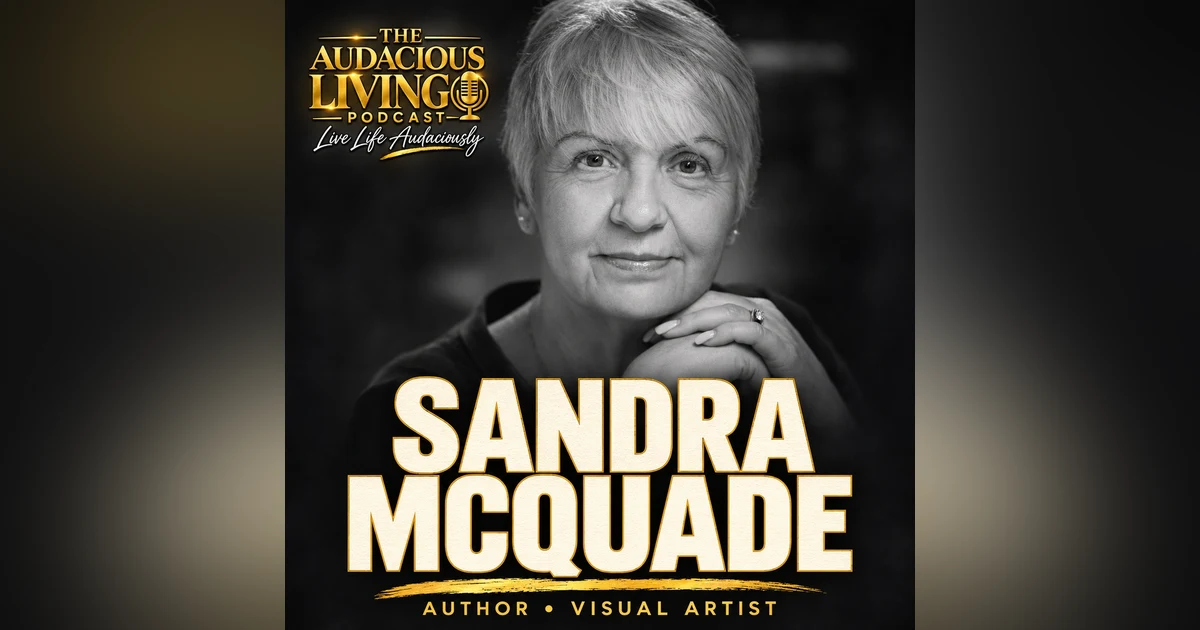

Sandra McQuade was six years old when she started forgiving her mother. Her story, The Widow, opens The Audacity to Forgive series with a simple truth: forgiveness is for you, and putting something heavy down is how the lighter feeling starts.


Sandra McQuade was six years old when she started forgiving her mother. She could feel her mother's pain before she had any words for it, and that understanding was where forgiveness began.
Signature Quote
"Forgiveness isn't about still putting up with things that hurt you. Forgiveness is for you."
Why This Quote Matters
Sandra's mother was doing her best with tools she did not have. The quote is the whole episode in one breath: forgiveness is not a favor for the person who hurt you, it is a decision about what you will keep carrying.
Sandra McQuade is a contributing author to When We Forgive, a Life to Paper anthology of fifteen stories tracing the path between hurt and healing. Her story, The Widow, is about her mother, a woman who lost her husband young, struggled with alcohol, and was called the widow by people who preyed on her vulnerability. It is the first thing Sandra ever wrote.
In this conversation, Sandra talks about forgiveness beginning as a feeling in a child who could sense her mother's pain, and the decision that kept coming for years in small acts of understanding. She talks about watching her mother spend a lifetime not forgiving her father, and what that cost. She talks about becoming a mother herself, and seeing both sides of the story at once.
This is a conversation about putting something heavy down. If you are carrying something old, something that keeps making your decisions for you, Sandra is your proof that the lighter feeling is real, and that you do not have to wait for an apology to choose it.
THIS EPISODE IS FOR YOU IF...
- You are carrying something old and heavy, and it keeps making your decisions for you.
- You have wondered whether forgiving means putting up with the same behavior again.
- You are harder on yourself than you would ever be on anyone else.
- You want to understand someone who hurt you without excusing what they did.
- You keep a journal, or you have been meaning to start one.
GUEST BIO
Sandra McQuade is an artist and a first-time author. Her story, The Widow, appears in When We Forgive, a Life to Paper anthology of fifteen stories tracing the path between hurt and healing. It is the first thing she ever wrote.
Sandra paints primarily in acrylics and is a featured member of the Oshawa Art Association. Her work earned jurors choice at the Art Guild of Scarborough in 2025 for her piece Manhattan Mist, and an honorable mention at the Oshawa Art Association Juried Art Exhibition in 2026 for The Wedge Between Us. She is a mother, and her story draws on a childhood shaped by her mother's struggles with alcohol and the long work of forgiving her.
GUEST LINKS
Connect with Sandra:
https://www.instagram.com/sandramcquadeartfulcoaching
When We Forgive, a Life to Paper anthology. All proceeds support the Life to Paper Foundation:
https://buy.bookfunnel.com/isij6z3lv0
READ THE BLOG ARTICLE
Explore the conversation further:
[https://www.bestaudaciouslife.com/audacious-insights/do-it-scared-why-waiting-to-feel-ready-is-the-real-risk-gz62r]
LISTEN ANYWHERE. LIVE AUDACIOUSLY.
Enjoy The Audacious Living Podcast on your favorite listening platform.
Choose where to listen:
https://bestaudaciouslife.com
Enjoying the show?
Share this episode with someone who needs to hear this.
⭐ Leave a review:
👉 https://ratethispodcast.com/audacious
some context the per the the podcast is is centered around audacity, right? It's all is encouraging audacious living. And so ⁓ the intent is is sort of that you know when all these interviews are done together, they'll be presented as a series under the audacity to forgive. That's really kind of what we're going. That's the angle that we're taking with it. ⁓ and so ⁓ you know you you actually you're the f you're the first you're the first author I'm connecting with so you ⁓ yeah so you say you're starting off on a great foot.
Sandra McQuade (00:26)
Awesome.
Sandra McQuade (00:29)
That's great.
Audley (00:29)
Not ⁓ everyone's gotta catch you.
Sandra McQuade (00:32)
Okay.
Audley (00:34)
So let me just ⁓ take here. I'm just going through my my I did make some notes to myself so I don't forget ⁓ and obviously
Audley (00:59)
We're gonna talk a little bit with trauma, right? That's what we're we're well
Sandra McQuade (01:03)
For sure.
Audley (01:05)
So ⁓ I will do a a quick three-to-one countdown.
Audley (01:14)
And off we go to the races. ⁓ Three, two, and one. ⁓ Hey Sandra, thank you for joining me here today on the Audacious ⁓ Living Podcast. It's a a f a treat and a pleasure to to t spend this time with you. Thank you for being here.
Sandra McQuade (01:15)
All right, let's go.
Sandra McQuade (01:30)
Thank you so much. Pleasure meeting you also.
Audley (01:33)
Yeah, no, I it's it's it's ⁓ it's I've oftentimes said it's it's it's great to connect with individuals and and be able to engage in conversation that potentially can help others in a in a phenomenal way. And so I'm always I I feel blessed to be kind of be a part of that process. ⁓ we're we're doing something special here because we are looking at the the Audacity to Forgive series and ⁓ and in that series we'll be taking a a heart the you know in depth look on on the topic of
Audley (01:58)
forgiveness and and the difference it can make in our lives and again the the the the the audacity because there is some audacity to to forgive and to step forward and make that leap if you will and so ⁓ I and and ⁓ so ⁓ you're you are a collection ⁓ of authors that contribute to an anthology it's an anthology series essentially and each contribute their own ⁓ individual stories. So maybe as a starting point
Audley (02:25)
get you to introduce yourself to our our audience and maybe sort of touch on ⁓ your your particular story, the angle or direction that you took with it when comes to forgiveness.
Sandra McQuade (02:34)
Sure, yeah, I'm happy to. So the book is called When We Forgive and there are 15 authors in the book. ⁓ I was fortunate enough to kind of stumble upon ⁓ being able to ⁓ submit a story. It's not even something that I really thought of doing, but it's ⁓ been very rewarding and... ⁓
Sandra McQuade (02:55)
It's just been amazing. ⁓ So my story is called The Widow. ⁓ And I picked that name because I wanted people maybe to be a little unsure and maybe actually somebody even asked me if the story was about me had I lost my partner or husband. But really the story is about my mom.
Sandra McQuade (03:17)
So my mother ⁓ ended up being called the widow ⁓ by some really not nice people. ⁓ So it was a label that was placed on her ⁓ when she had some trying times trying to raise us as kids.
Audley (03:33)
It interesting because one of things ⁓ I I I knew I was going to ⁓ ask ⁓ is ⁓ you know, you know, what made this topic matter enough to you to actually write about it and and clearly was connected to your to to to your mother. ⁓ could you sort of elaborate a bit further when you said some not nice people, what was what was happening or what w how that label come to be?
Sandra McQuade (03:52)
Sure. ⁓ initially we were, ⁓ my brother and I were with my parents, so my dad and my mom, and ⁓ they started having some serious struggles where it ended up that my mother ⁓ actually, you know, kind of lost ⁓ control, like lost herself. ⁓ My dad was, ⁓
Sandra McQuade (04:17)
I would say abusive. ⁓ I was maybe six or seven when I really noticed what was going on in our home. ⁓ So my dad ended up ⁓ passing away ⁓ and ⁓ my mother who wasn't very stable, ⁓ you can read in the story, she had a lot of problems, alcohol for sure. She was an alcoholic and probably had some pill issues. ⁓ She ended up, ⁓ when my dad died, she ended up taking my brother and I ⁓ with the help of my grandparents.
Sandra McQuade (04:47)
to move to Nova Scotia where she was born, thinking that that was going to help us ⁓ and help her. ⁓ And in reality, it had the opposite effect. ⁓ So because she was ⁓ so affected by alcohol and so... ⁓
Sandra McQuade (05:03)
You know, you talk about ⁓ trauma and you mentioned that earlier, you know, she had a ⁓ very traumatic experience trying to deal with my father and not having a lot of support and then being responsible for my brother and I, and she couldn't, she couldn't handle it. so ⁓ she became the widow to the people who actually ⁓ kind of preyed on her ⁓ because she was not able to protect herself ⁓ and ⁓
Sandra McQuade (05:33)
you know, my brother and I were not old enough to really do anything. ⁓ So they called her, these people called her the widow. And, ⁓ you know, I think ⁓ they probably didn't care, but they didn't realize that as a young person, I'm hearing my mother being labeled with this name, which at that time, I really didn't know what it was. ⁓ But I know it wasn't a complimentary ⁓ name to be using.
Sandra McQuade (05:59)
So that's how I got the title for the book because I wanted people to ⁓ read the book and not really understand where like right away where the term came from.
Audley (06:12)
of the story if you will.
Sandra McQuade (06:13)
Yes, that's right. So in the story also, I, I labeled the, the, I don't like to say label, but I call the people that are involved in the story by names other than their own. ⁓ So the story kind of flows that way. Like there's the widow and then other names for people in the story.
Audley (06:34)
As as the story moves through I I let's sort again the topic of forgiveness and sort of w w when does that come a key or central point of the story?
Sandra McQuade (06:42)
Okay, so forgiveness ⁓ begins pretty quick. So when I'm young and my mother is ⁓ heading towards ⁓ a nervous breakdown, she ended up in a psychiatric ward, but I would try to help her. And as a kid, like six or seven, ⁓
Sandra McQuade (07:00)
You know, I didn't really understand everything that was going on, but I ⁓ would say the forgiveness started there. So I talk in the book about my soul talking to her soul or understanding her soul, because somehow through it all, just as ⁓ being a human myself, ⁓ I...
Sandra McQuade (07:21)
could feel things. So I maybe wasn't able to name them, but I could I could feel her pain and her disappointment ⁓ and her angst. I mean, she was a mother trying to do her best, but didn't have the tools to do it. So I really felt that when I tried to, to help her with things. I mean, she in the book, I talked right away about how she shouldn't even brush her hair. ⁓
Sandra McQuade (07:48)
I mean, she had actual dust in her hair, ⁓ because she wasn't capable of looking after herself. So I began forgiving her then just because I connected, like, compassionately. Even though, like, she was my mother, you know, a very important person in my life, but I could see that something was missing. it's not out of... It wasn't out of being mean. ⁓
Sandra McQuade (08:16)
It was like she was like on an iceberg, afloat by herself. That's how it felt to me.
Audley (08:21)
Yes, yes, ⁓ yes.
Audley (08:25)
As as you're talking and and sort of describing your your experience there, ⁓ and you and and you reference understanding and and that's a key such a key aspect ⁓ of this because once you ⁓ have a better or or at least open to have s a better understanding, and you mentioned connection as well, that also helps with that connection, which makes that pathway, not say forgiveness is an easy thing to do, but it certain certainly smoothens away a little bit, I would say. Is that is that fair to say?
Sandra McQuade (08:51)
Yeah, I would agree with that. I mean, it's a process. So to say when I was little, I understood and forgave, I believe that I did, but the consequences of all of that mess were what I ended up having to deal with as I grew up and I still deal with it. But ⁓ I suppose that in forgiveness, sometimes we have to look at the intention. know, who is that person at the time? ⁓
Sandra McQuade (09:20)
⁓ they behaved in a way that hurt us. Because I know that my mother didn't start out her life wishing to have kids whose lives be, you know, who ended up in an orphanage or I don't think that's the life she wanted for herself. So sometimes we need to, if we can, ⁓ look at the other person, the person that we want to forgive and try to, where were they then? ⁓
Sandra McQuade (09:49)
Yeah, who were they when they did these things?
Audley (09:54)
I think if I were to sort of identify the hardest part of the forgiveness process, ⁓ it might be just that, what you did the point you made. Because you got to s put yourself aside, put your own feelings to the side for a moment, and focus on someone else. But that person wronged me, that person hurt me, that person harmed me, and you want me to do what? Like that's kind of, you know, and I can understand anyone that would say that, that's a natural reaction, I would say.
Sandra McQuade (10:02)
gas.
Sandra McQuade (10:21)
For sure. But I also think, like in my life, I've done things that I wish I hadn't. And I ⁓ also ⁓ have sought forgiveness. And maybe if I haven't sought it, I mean, the people who know, who feel that I've done something ⁓ wrong to them, ⁓ they also can look at me. So ⁓ I'm not exempt from wanting forgiveness or wanting to be forgiven.
Sandra McQuade (10:51)
If I'm not exempt, then who's exempt? ⁓
Audley (10:53)
Yeah. Yeah. I get it. I get it. That's a fantastic question we need to ask ourselves. ⁓ I'd I'd love to know then from your perspective when for g like if if you could the the the point when forgiveness went from like an idea to something that you knew you had to do. Like there's you know th th those are t those are two distinct islands, right? One is like one, you know, an idea or a thought, and then the action makes it an actual thing that you do. Do you kinda remember what that sequence was between the two?
Sandra McQuade (10:56)
Yeah.
Sandra McQuade (11:24)
think as I grew up and I watched her continue to struggle and because my father passed away, I really only got her side of the story. the lesson from her was she spent her lifetime not forgiving my father. So I don't wanna say wasted, but
Sandra McQuade (11:54)
But all of that effort ended up for naught. So to look at other people ⁓ and stay angry or stay wishing or stay wanting, like why didn't this happen? Why did that happen? That just keeps you stuck in all of those old feelings. And you carry those with you. Like they affect all of your relationships. ⁓
Audley (12:27)
Is there anything that surprised you about your own healing journey?
Sandra McQuade (12:32)
⁓ I ⁓ probably a lot of things. ⁓ You know, I think now about ⁓ I'm a mother myself. So when I became a mother, I sort of understood. I understood both sides. Like, like I understood how sorry I could feel for myself ⁓ and the way things went for my mother. But I could also see how things happen. ⁓
Sandra McQuade (13:00)
Right, because I'm a human also, so I made plenty of mistakes and there are things I wish I did differently, but I do know that I did the very best I could with what I knew. So, you know, that helped with the healing too. Like when I look at myself before I look at maybe someone else, ⁓ it kind of helps me understand. ⁓
Sandra McQuade (13:27)
⁓ that whose intention ⁓ is to really ⁓ ruin somebody or to really hurt someone. That was never my intention for my shortcomings. Yeah. ⁓
Audley (13:42)
I no, I understand, I understand. ⁓ it it it's look, it's it's just not an easy road to go down. I think we can all agree to that. In fact, we can ⁓ and and and then here's the thing, you know, forgiveness is something intellectually, everybody gets it. ⁓ Nobody can tell you they don't understand it. It's a new concept, it's foreign to them. ⁓ Everybody gets it. Putting it in practice, that's a whole other story, right? In fact ⁓
Sandra McQuade (14:07)
Thanks, Gary. ⁓
Audley (14:07)
In fact, o oftentimes it's easier to tell other people to forgive than for us to do it ourselves, right? Because ⁓
Sandra McQuade (14:13)
Definitely. Yeah. Yeah. It's very easy to give advice and tell other people to do it. But, you know, it is a process and it's not something that happens overnight. And I think you can like sometimes soften too. Like I think timing is also important. Right. So you need to give yourself some time, some space. And that presents more understanding and lets more compassion in, I think.
Audley (14:19)
Yeah.
Audley (14:43)
Did any as you were wr now I should back up 'cause like have you written about forgiveness in this way before this instance? So okay, so I don't know though w then what compels you to do that then?
Sandra McQuade (14:50)
Never.
Sandra McQuade (14:55)
to write about forgiveness.
Audley (14:56)
Yes, yes.
Sandra McQuade (14:58)
⁓ Well, when we started talking about doing the book ⁓ and the subject became forgiveness, it was just it was a gift for me because because I knew right away what my story was. I just I just had to process how I was going to going to get it out there. It's kind of a full circle to like to actually to tell the world. ⁓
Sandra McQuade (15:23)
you know, that I do forgive her to tell myself, like when you write something down, ⁓ it becomes more real ⁓ and right. ⁓ And ⁓ that's how I felt about my story. And my story is kind of done from, ⁓ you know, because the names are changed, it's it's got a bit of a childlike. ⁓
Audley (15:31)
Yes.
Sandra McQuade (15:46)
spin to it because I'm kind of telling it from when I was younger. So it was a very healing thing to do. So ⁓ I think if people, you know, maybe do some journaling and some ⁓ writing about their feelings, they may see a lot more there on the page than they really get just thinking.
Audley (16:01)
Yes, yes.
Audley (16:07)
Yeah, yeah. And and on that point, I think sometimes it happens is you're you're you're learning or even understandings that evolves because of ⁓ writing process. I'm curious, did your understanding of forgiveness ⁓ evolve or change or develop in any way while you're writing?
Sandra McQuade (16:24)
Yeah, I think I really, I really got to see how I truly felt. If that makes any sense, like I just by just by
Sandra McQuade (16:35)
saying the story and really, really saying what was in my heart. ⁓ I felt that, ⁓ hey, ⁓ this is what forgiveness really feels like, like the understanding of another person, because I wasn't putting myself first ⁓ as the kid that, there are plenty of times that if you... ⁓
Sandra McQuade (16:57)
you know, with my mother, it would have been great to have a mother. I I didn't even have an experience of going shopping with my mother. So I've lost out on a lot of experiences, but I've had a lot of great experiences. So it kind of made me realize that it may not be the norm, but she did teach me a lot of things ⁓ unknowingly.
Sandra McQuade (17:21)
Right? Unknowingly, ⁓ she showed me what joy could be, but very sparingly. And she showed me what heartache looks like and how another human, you know, suffers. So ⁓ it wasn't all about me. ⁓ It was also about someone else. ⁓
Audley (17:41)
I I very much a appreciate y your point around, you know, teaching and learning new lessons unknowingly. ⁓ I reflect on in my own personal life and, you know, my parents ⁓ when I was quite young, my parents split up when I was a baby.
Audley (17:54)
And I was I was six months old ⁓ and my father was gone. I was raised my entire life without this man and I and actually all that I had was his first name, oddly, because I shared his name. ⁓ And didn't there were no pictures, there was no all I had was, you know, my my mom's memory and how she described him. So I had a picture of in my head and that was it. ⁓ And it wasn't until I was ⁓ I was a father myself. ⁓ and my my actually my daughter was six months old when he resurfaced. ⁓ And
Sandra McQuade (18:04)
Okay.
Audley (18:24)
You know, you know, at that point I needed to I had a decision. Like he he was here to find his son and I had to make a decision. Now, you know, I was fortunate that I was raised in so much love in my home. I didn't feel like I was lacking. I didn't feel like I missed out on anything. I didn't feel like my life was worse off because of da da da da da. ⁓ And ⁓ I I
Audley (18:47)
reference how audacious that act of him was to find his son because he had no idea if I'm holding resentment or anger or whatnot. But I tell that story because ⁓ I oftentimes say that I learned great I I learned a great deal from him from his absence and his presence in my life. ⁓ His absence taught me the type of father that I wanted to be and how present I wanted to be engaged for my own children. But his presence also taught me that it's not too late to return. Like you know how many times we go ⁓
Sandra McQuade (19:05)
Exactly.
Audley (19:16)
Too much water on the bridge, I won't even bother, it doesn't make sense. And and so th there there are lessons I I guess we're we're going with this is that there's lessons presented in everything that come we come across or it happens to us. It's a matter of how we accept and and and receive those lessons. And so that's what that's what I thought of that as you were sharing your story.
Sandra McQuade (19:34)
Yeah, for sure. Like, thank you for telling me that. But, you know, there takes some courage on the part of your dad, because he really doesn't know what he's going to get. ⁓ you know, people, people do some things that aren't
Sandra McQuade (19:49)
aren't great and there's a, I mean there's some things that sometimes I, when we talk like this, I can hear certain people say, yeah, but could you forgive this? And they say the most horrible things. Well, ⁓ I don't know, maybe I couldn't, but I know for sure that I don't wanna carry that heavy burden of ⁓ anger and hate everywhere I go. ⁓
Sandra McQuade (20:15)
if I can spend some time trying to understand ⁓ or come to terms with and look at myself, like I'm not perfect, as I said earlier. And so ⁓ how can I be a human and not look at another human the way I would like to be looked at?
Audley (20:36)
Absolutely. ⁓ in your mind I'd love to kinda get your take on ⁓ the difference between s ⁓ forgiveness and reconciliation. ⁓ do you have a ⁓
Sandra McQuade (20:46)
yeah, ⁓ I ⁓ think it's different. So I think forgiveness isn't an invitation to ⁓ keep the same behavior, to put up with the same behavior. I think you can forgive and never tell the person. And maybe you never want to, or they're not even here ⁓ to tell. ⁓
Sandra McQuade (21:10)
And I think you can reconcile and then maybe have your boundaries different. ⁓ you learn how to, you you learn as you ⁓ get older and you go through different experiences. You know, my boundaries need to change. So again, the arrow kind of points back to you. ⁓ And as with most difficult things, that's where the arrow points. ⁓ I know. ⁓ Yeah. Yeah.
Audley (21:33)
You're right, you're right, you're right. What what I what what what I think of those two, for me in my mind, reconciling is what we do, forgiveness is what I do, right? And and and that's and that's a distinction between the two. ⁓ And ⁓ 'cause when we reconcile, ⁓ you know, the like so you you I believe it's possible where you can forgive someone and for all their transgressions ⁓ and the relationship doesn't continue on. That they don't it and it ⁓ whereas when you're reconciling, it's restoring the relationship as I see that. And so
Sandra McQuade (21:41)
⁓ that's good.
Sandra McQuade (21:57)
Yes.
Sandra McQuade (22:02)
Right.
Audley (22:03)
That's why I go we do this together, we reconcile together and we move forward, ⁓ I forgive and I move forward. That's that's why I see the two of them. I see the two.
Sandra McQuade (22:09)
I love that. love that. That's for sure. Well, in the story too. So my mother, ⁓ she had ⁓ a brother, like I had a brother and a half sister. ⁓ And ⁓ that's another part of the story. ⁓ But when she was sick, ⁓ she died, she was only 63, but she ended up with a tumor on her heart. But the interesting part of it is we were all there when she died. So
Sandra McQuade (22:39)
You know, it's still love at the end. It's still love. ⁓ there is not why didn't you ⁓ like what would that have done for me like that? Right. So it was still love. And I think like to try to rise above ⁓ and ⁓ use love as a tool for healing. That really helped me.
Audley (23:06)
slide over to self forgiveness because that's that that that is that that is a forgiveness other's not ⁓ you know has not doesn't involve anyone else except for you or I, us as as individuals. ⁓ and I I would think and and again this might I'd love to get your thoughts, I I kinda get the sense that that's harder than forgiving other people.
Sandra McQuade (23:26)
It feels like it. feels like it. Yeah, because we're so hard on we know what we're so hard on ourselves. And I think too. I don't know if we really understand the self-forgiveness, because do we really speak to the people that we feel that we've harmed? Like, do we really do the research or do we really just think?
Audley (23:29)
Why is that? Like why?
Sandra McQuade (23:53)
that hey, ⁓ I did this wrong, I did that wrong. Do we really understand ⁓ that are all the consequences that we think we've caused, did they really happen the way that we think they did? I don't know. Yeah, but it's hard, it's hard.
Audley (24:09)
Well it's yeah, involves some some sort of s ⁓ unraveling, if you will, right? Because oftentimes there's a story attached to whatever's gone gone on and so we've gotta unravel that story to get to the heart of it to truly understand and answer your question, I would say.
Sandra McQuade (24:23)
Yeah, for sure I agree with you. Yeah.
Audley (24:27)
⁓ yeah, no no, it's just it's just fun when you think about self-forgiveness because ⁓ it's it's it's it it is hard. I'm I'm curious ⁓ from your perspective, how how do we know when we're ready to forgive ourselves? ⁓ You know, it's sometimes a bit easier when it comes to other people because others are involved and maybe for the sake of the relationship you wanted to move on or maybe there's circumstances where it signals where okay, you know what, I need to put in the effort to forgive and and and and and that's where the work starts or that's where the process starts.
Audley (24:54)
But those those sort of indicators don't exist when we have to forgive ourselves. ⁓ so how how do you know when it's time to do so?
Sandra McQuade (25:02)
Yeah, ⁓ think we all can feel when we're carrying things, ⁓ you know, when we're carrying things that, ⁓ you know, thoughts or feelings that are punishing toward ourselves, ⁓ you know, that are heavy, ⁓ I think to have compassion for ourselves, like not to forget that we're also important and how we treat ourselves is really a reflection of how we treat other people.
Sandra McQuade (25:29)
So, ⁓ you know, ⁓ I believe that I did the best I could. Did I always do my best? ⁓ Maybe not the best, but I did what I could. So as a human, ⁓ I did what I could. Could I have been better? Maybe had I ⁓ had different circumstances or different information? Maybe, but then I wouldn't have been that person.
Sandra McQuade (25:56)
So self-compassion and ⁓ self-understanding too. And ⁓ we're very hard on ourselves, I think. And ⁓ can make for painful times. ⁓ And again, I love the journaling because that's a good place to get that out and really look at it and ⁓ be kind and more gentler to yourself.
Audley (26:22)
What does journaling do for us as we when you think about forgiveness and as as a as a practice or a process?
Sandra McQuade (26:28)
Journaling is a great way to get down all your thoughts and feelings. It's a safe place. ⁓ You don't have to run it by a person. You just can dump it all there and kind of examine what you're doing. See the patterns, maybe two, of what comes up that you ⁓ could change to help yourself ⁓ be more compassionate towards yourself. I think the journaling is like a safe place. You don't have to worry about a person
Sandra McQuade (26:58)
or saying the wrong thing, it's just you and the paper, or the typewriter, or whatever it is these days. I just think it's a good practice.
Audley (27:11)
you said there's no wrong there's no there's no right or wrong it's just you know s in some instances ⁓ it's just a a a mind dump right or a heart dump you're just unloading what's on you ⁓ and and and I and I think of that as a form of release right because if we hold on to these things that's where the tension and the build up is exists and and and and that has also the negative repercussions whereas allowing it to just let go and be free and whether it floats off in the air or wherever it does it at least it comes outside of you and I think too
Sandra McQuade (27:24)
Yes.
Audley (27:40)
When we see things are outside of us, i.e. see things on the paper, our perspective advantage changes.
Sandra McQuade (27:46)
Yeah, I agree with that totally. ⁓ I agree totally, yes. ⁓ Yeah.
Audley (27:50)
So w w when ⁓ did you experience a bit of that in your writing?
Sandra McQuade (27:55)
Yeah, I would say that I did. I really did. It felt good to put my truth out to the world. And it like a full circle. Like I really felt good about...
Sandra McQuade (28:21)
about how I ended up thinking about my whole childhood and my mother's ⁓ suffering. ⁓ it's not easy. It wasn't easy and it still isn't. Like being a child of an alcoholic, it's not fun. And I had my own issues with alcohol. Like I ⁓ mirrored plenty of behaviors. ⁓ But...
Sandra McQuade (28:45)
But these are the ⁓ circumstances I was given. ⁓ So I can always continue to do better and be better, but at the same time, I have ⁓ to be kind and understanding to myself as I hope people think about that. ⁓
Audley (29:04)
Sure, talk to about the vulnerability piece 'cause you have to be vulnerable and open up and share and ⁓ and you know and and and the the the let go of the fear of judgment or what people might think about you and all that kind of stuff. How hard is that for you?
Sandra McQuade (29:16)
That's hard. ⁓ Yeah, that's, you know, I did, ⁓ I did send this story to my brother ⁓ because ⁓ I was, you know, I was afraid I didn't want to hurt his feelings, I suppose in any way. But I also did say in the story that this is how I remember it. And that's the truth. So. ⁓
Sandra McQuade (29:37)
You can't dispute how I feel it or how I remember it. ⁓ So that was ⁓ that was ⁓ kind of healing to realize like, it's OK. This is this is how I remember it. And maybe the facts aren't 100 percent perfect. ⁓ But that was my experience. ⁓ So that was that was a good feeling to put that out and say this is this was my experience and hoping that other people, you know, can can be helped by that, like can say.
Audley (29:39)
Right, right. That's right. That's it.
Sandra McQuade (30:07)
⁓ Wow, so ⁓ she felt that way. I feel this way. It's okay to feel what you feel
Audley (30:15)
That's right. And I and I do love the point around perspective, right? Like it it's your perspective and it it can can't be wrong because that's the way you saw it or experienced it and others can may ⁓ maybe they may might have view v view it differently, but they can't tell you that your perspective is wrong.
Sandra McQuade (30:18)
Right.
Sandra McQuade (30:29)
Right, any more than I can tell them. Right? And we all come from different places and we see everything differently because of, you know, how we see the world.
Audley (30:32)
That's right. That's right.
Audley (30:40)
Mm-hmm. Mm-hmm.
Audley (30:45)
Yeah, no, I I just gotta tell you, Sandra, I've just r really sort of appreciated you talk about your journey and and and I guess you know and and I and I've recently ⁓ gone through a writing process where I was writing my book and I and I think about ⁓ just just my own personal learning, what came out of that and so to hear you sort of share or emulate some of that that I think I and it really even with double journaling, I think that really speaks how powerful and how how beneficial that is. 'Cause we're we're essentially, ⁓
Audley (31:12)
I was gonna say choosing peace when we ch when we we make the decision to forgive. We're choosing a pathway of of peace and ⁓ there's some courage involved with that I would say.
Sandra McQuade (31:21)
Yeah, it is courageous to do it and it's, know, sometimes it feels a little scary to put down that heavy burden. ⁓ Like, who will I be then? Like, if I forgive you now, what? You know, because I'm used to carrying that around. And if I put that down, what do I do now? ⁓ But I think it's very liberating and, ⁓ you know, it's just a lighter feeling. And if you can give yourself that gift, ⁓
Sandra McQuade (31:50)
⁓ I think it's a great gift to give yourself.
Audley (31:54)
The last thing I wanted to to to ask you about, and and you sort of alluded to earlier in the conversation, we talked about the baggage ⁓ that we carry. ⁓ and so I wanna talk about the the cost of of holding on and not, you know, and and and and ⁓ and and then mo and then and and then more specifically to ask you ⁓ what does resentment cost us emotionally when we hold on?
Sandra McQuade (32:18)
think the resentment's like a big stop sign. I don't think you can grow ⁓ hanging on to resentment. It's a stop sign. ⁓ It's kind of being stuck in the mud because you can't ⁓ drag those ⁓ heavy... ⁓
Sandra McQuade (32:39)
angry feelings around and then expect that they don't come into other parts of your life because they really do. Like, resentment is a real tough one. Yeah, ⁓ it's a tough one. But it ⁓ can leech into other parts. ⁓
Sandra McQuade (32:58)
I think if you can deal with that ⁓ and ⁓ start looking at people with a little more understanding, a little more compassion, ⁓ not at the expense of yourself, but for yourself.
Audley (33:13)
Well, you know, the interesting thing with resentment is if you're not careful, ⁓ it can quietly start to become part of your identity, right? So it's like so f so if if if if there's thing, you know, I'm resentful of this person for whatever they did and all of a sudden when someone brings that person's name up, I i it triggers me, all of a sudden I get mad or angry because like that's what I get become known for. ⁓ And and and and I think you lose a part of yourself because of that and so that's something you really need to be mindful of.
Sandra McQuade (33:21)
Good share.
Sandra McQuade (33:36)
Yes.
Sandra McQuade (33:41)
Yeah, and I think with the resentment too, when you're talking about the triggers, so when you're triggered, that's yet another opportunity to heal something. Right? So you know that if you're being triggered, what you're being triggered about is not doing you any favors. It's something to, ⁓ you that you need to spend some time with.
Audley (34:05)
What what ⁓ when when you sort of think about the the the journey that you went on, obviously the the the the writing and ⁓ and ⁓ and that the sort of cathartic sort of I guess emotions that come with that, ⁓ what would you say is sort of your your your biggest takeaway when you think about forgiveness?
Sandra McQuade (34:23)
biggest takeaway. I just want to just reiterate what I said earlier is the lighter feeling, the peace that it brings you and that it's cliche but it's not about the other person. It really is a chance for you to heal from something, put something heavy down, move forward.
Sandra McQuade (34:50)
Let that part rest. Like, I don't think you can really let things go, ⁓ but let it rest, ⁓ right? Don't let it be in your life, ⁓ like, helping you with your decisions ⁓ and spoiling things, ⁓ because it really, ⁓ like, it's a spoiler, right?
Audley (35:12)
Absolutely correct. You're absolutely correct. ⁓ Sandra, this is our our time together has been so so awesome awesome. I really thank you ⁓ for being here. ⁓ something that we like to do, I wanna I wanna I wanna have some fun here with you. We call it a the fearless fast round, it's got rapid fire questions. I throw something out at you and you sorry, let me know what comes to mind. Does that make sense? ⁓ good, I love what people are excited, yeah. It's not awesome. ⁓ okay. So w ⁓ first thing comes to mind, what has forgiveness taught you about being human?
Sandra McQuade (35:30)
great. Let's go. But yeah, I like this.
Sandra McQuade (35:43)
I'm like everybody else. I'm as capable as messing up as the next guy, ⁓ and I want to be forgiven too. ⁓ And I'm just like, I'm just flesh and blood too. ⁓ And I make plenty of mistakes.
Audley (36:02)
someone who forgives quickly or do you you're you remember things that happened twenty years ago.
Sandra McQuade (36:08)
Well, I do remember. ⁓ But, you know, I think that forgive is you can feel what that feels like. So I can remember, but I'm not dragging it around. And that's what I know that I've done the work.
Audley (36:25)
smallest or most ridiculous thing you ever held a grudge over.
Sandra McQuade (36:32)
⁓ geez, that's a tough one. The most ridiculous name. ⁓ I don't know if I have a ⁓ immediate answer to that. But ⁓ I'm sure I've done plenty of that. ⁓ if I could sit down maybe for a while and think of it, nothing comes to mind right away. Maybe it's because my subconscious ⁓ think it's embarrassing. ⁓
Audley (36:59)
Understand, understand. ⁓ what's what's one word that describes healing? Mm-hmm.
Sandra McQuade (37:04)
describes healing of freedom.
Audley (37:09)
is there a belief that you completely ⁓ change your mind about?
Sandra McQuade (37:15)
Is there a belief? ⁓
Audley (37:17)
That's right. You completely change your mind about when it comes to give forgiveness.
Sandra McQuade (37:23)
⁓ I think so. think I think with this book and and learning more about forgiveness. I think what changed is it's not all about me. And that, like I mentioned before, when I'm like looking out there and probably not looking in the right place.
Audley (37:48)
That's one thing about forgiveness that people get totally wrong.
Sandra McQuade (37:53)
I'm sorry, you cut out there a bit.
Audley (37:55)
The one thing about forgiveness that people get totally wrong.
Sandra McQuade (37:59)
that you have to put up with that person's behavior going forward. Forgiveness isn't about ⁓ still putting up with things that hurt you. Forgiveness is for you ⁓ and you don't have to keep going with the behavior. So forgiveness doesn't take away the consequences. There's still consequences.
Audley (38:22)
What's something that you're still learning?
Sandra McQuade (38:26)
⁓ everything. ⁓ That never ends. ⁓ That never ends. think, you know, like patience, understanding. ⁓ You know, ⁓ I really like to try to look at ⁓ how somebody else is seeing what I'm seeing. So if I could get curious, being more curious, I think I'm learning that.
Audley (38:32)
Yeah.
Audley (38:56)
I that one. I'm big fan of the topic of curiosity, so that's awesome. ⁓ and then and then lastly, you know, something something we ask all of our guests here, if you're to describe audacious living in one sentence, what would you say?
Sandra McQuade (38:58)
Yeah, I love it.
Sandra McQuade (39:11)
just be scared, but be brave anyway. Like, do it anyway. ⁓ know, the time is short. ⁓ Yeah, just be fearless.
Audley (39:28)
Thank you, thank you, thank you. ⁓ Sandra, this has been so so awesome. Like I said, I had I really appreciate our insight your insights you shared and had a lot of fun with you and and congratulations. Now you're you're you're you're an author already, so this is an opportunity for you to write is correct, right? Does that understand it?
Sandra McQuade (39:44)
Yeah, this is the first thing I've ever written. Yeah, so that was great. I want more of it, I think. Yeah.
Audley (39:46)
Okay.
Audley (39:51)
And well it's yours, right? Just keep forgiving, right? And you can do more. Well well thank you. Thank you for being a part of this and and congratulations on joining When We Forgive, which again is the anthology series on forgiveness. ⁓ and again, appreciate the time, Sam.
Sandra McQuade (39:54)
Yes, for sure. Thank you so much.
Sandra McQuade (40:06)
Thank you so much. Appreciate it.
Audley (40:10)
So I'm gonna press stop here, give me moment, ⁓ and it's going to