It Took 20 Years to Finish His Book: Paul Hlabse on Grief, Faith, and "Violent Disturbance"
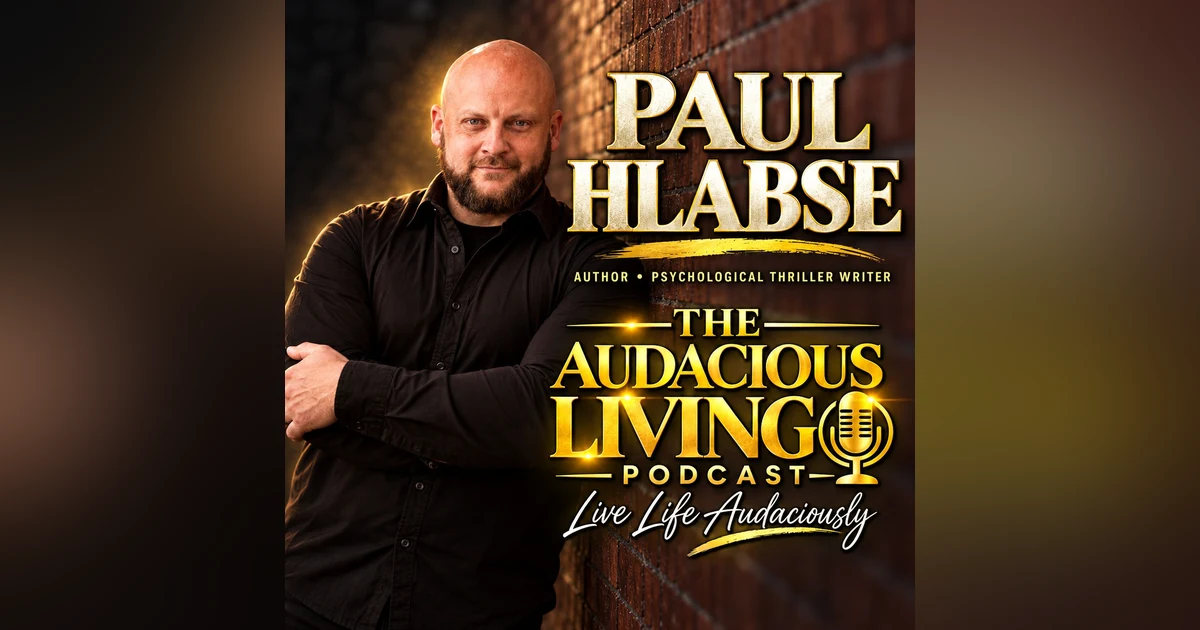


Some books take a weekend to read and twenty years to write. Paul Lapsey knows, because his sat on a shelf for eighteen of them.
Signature Quote
"Whatever you start, you have to finish it. It may not be the outcome you want, but you have to see it done."
Paul dusted off a twenty-year-old manuscript after his daughter was born, determined to show her that finishing matters more than the outcome. That decision became his debut psychological thriller, Violent Disturbance.
Paul Lapsey started writing his novel when he was a young man, put it down for eighteen years, then picked it back up two years ago after his daughter was born. He wanted her to see that whatever you start, you finish. The result is Violent Disturbance, a psychological thriller with true crime elements that asks what if, and keeps readers up at night.
In this conversation, Paul opens up about the grief that reshaped his writing, the faith that pulled him through it, and the hard question at the center of his book: what does revenge actually cost? He and Audley compare notes as two fairly new authors, including the surreal moment of holding your first finished book in your hands.
If you have ever shelved something that mattered to you, this one might be the nudge to dust it off.
This Episode Is For You If...
- You have a project sitting on a shelf that you keep meaning to finish
- You want to hear how grief and faith can shape a creative life
- You are curious what it really takes to publish your first book
- You love a thriller that leaves you thinking about it for weeks
About the Guest
Paul Lapsey is a first-time author and the writer of Violent Disturbance, a psychological thriller with true crime elements that explores grief, faith, and the cost of revenge. He started the book twenty years ago, shelved it for eighteen, and finished it after his daughter was born, determined to show her that whatever you start, you finish.
By day, Paul works full time as a process improvement manager in manufacturing plants, a career spanning twenty-five years. Writing has always been his true passion. He lives in Perry, Ohio, where his book is already finding its way into local stores.
Paul is nearly finished with his second novel and is planning a third, a prequel to Violent Disturbance. He joined the podcast to talk about finishing, faith, and what happens when you finally put your work into the world.
Connect with Paul
https://paullapsey.com
Violent Disturbance is available at Amazon, Barnes and Noble, and anywhere books are sold in the United States.
Listen on Major Platforms
🎧 Spotify → https://open.spotify.com/show/2jVR6V7X2kRiCCDXE0FTyl?si=IR3TsfEWR3WA6BzfBRnVXQ
🍎 Apple Podcasts → https://podcasts.apple.com/ca/podcast/the-audacious-living-podcast/id1547447345
📦 Amazon Music → https://music.amazon.ca/podcasts/9f7902bb-dec8-4bd9-918d-d1fef21b7c67/the-audacious-living-podcast?ref=dm_sh_pGv57yQvAmAQVp2IIaXoDwtFt
Enjoying the show?
Share this episode with someone who needs to hear this.
⭐ Leave a review:
👉 https://ratethispodcast.com/audacious
⁓ and I'll just you know, I'll just do a a three two one countdown and off we go if that works.
Paul Hlabse (00:06)
Perfect, let's go.
Audley (00:23)
We'll try it. Oops. ⁓ about your internet connection is unstable. Is your inner in internet doing funky things at all or
Paul Hlabse (00:31)
No, I'm looking pretty let's see, I've got yeah, we've got five bars. ⁓ Hmm. ⁓ It rained all day, so ⁓
Audley (00:34)
Okay.
Audley (00:38)
Okay. A little fuzzy, but I mean like so so I mean ultimately what's what's I don't know if you're familiar with Riverside, but what it does, ⁓ it doesn't rely on internet connection from a recording standpoint. It records your video locally and my video locally. At the end of it it uploads into one. So it doesn't matter how crappy or good the internet connection is, it doesn't matter. So we'll put it to the test now. ⁓
Paul Hlabse (00:59)
Okay.
Paul Hlabse (01:02)
Awesome. ⁓
Audley (01:04)
All right, here we go. Three, two and and Paul, sorry. Help me with your last name, please. I wanna make sure.
Paul Hlabse (01:09)
⁓ Yeah. It's a lab C H of silence.
Audley (01:14)
So I knew that I that's why I suspected. That's why I suspected. Okay. Here we go. Three, two, and one. Hey, greetings, Paul. Thank you for joining me here today on the Audacious Living Podcast. I'm glad you can make the time to do this.
Paul Hlabse (01:29)
Yeah, this is great. I appreciate you having me. Been following you for a while and the honor is mine.
Audley (01:34)
thank thank you. I know we were talking about ⁓ a little while connecting this way and I I ⁓ you know, I knew with my journey I was embarking upon it was gonna be really, really crazy, and so I'm glad that we did this now. ⁓ before things get crazy, right? But ⁓ in a good crazy, right? There's such a thing as good crazy, right? You would know, writing a book of being an author. ⁓ so so it's it's it's actually interesting. I hear, you know, w we come to this and we're we're both in similar stages as fairly new authors.
Paul Hlabse (01:51)
Good crazy, absolutely. Mm-hmm. ⁓
Audley (02:03)
⁓ you've got me beaten by a few months perhaps 'cause your book is already out and mine is due to be out shortly. And so ⁓ maybe as a starting point, ⁓ you're so the book is it's it's called Violent Disturbance. It's a it's a thriller, right? Mystery still thr th thriller type of novel, right? Fiction.
Paul Hlabse (02:20)
Yes, yeah, psychological thriller mixed a little bit of true crime in there and ⁓ pretty much the theme of of what if. I really explore the what if.
Audley (02:29)
Gotcha. Okay. Well then may may maybe as a starting point, ⁓ if you wouldn't mind, ⁓ Paul, maybe introducing yourself to our audience and sort of talk about what you're doing and and and ⁓ what you've got what you've been up to at this point.
Paul Hlabse (02:41)
Yeah, absolutely. my name is Paul Apsey and ⁓ it took me about 43 years to to finally publish the book, but we got it. ⁓ violent disturbance, been working on that for about 20 years now, put it down for 18, just picked it up two years ago and and decided I wanted to finish it and see at home. ⁓ outside of that, I work full time ⁓ as a process improvement manager, manufacturing plants. I've been doing that for about twenty-five years of my life. ⁓
Paul Hlabse (03:08)
Have a couple of masters and that's been my bread and butter, but my true passion has just been writing, just just putting the words on paper and just touching different people at different parts of the book and and hearing the feedback. So that's really been kinda where my passion's been lying here lately.
Audley (03:23)
So tell me that I I I'm always curious and I'll be happy to share kind of my journey to finally getting this thing done, but ⁓ h how long did you say w twenty twenty years? ⁓
Paul Hlabse (03:34)
⁓ Yeah, 20 years ago I started when I was a young man and you know the whole world's against me and everyone, you know, everything's unfair and mopey mopey. And I started writing and then I snapped out of it like you do in life. It's full of ups and downs. And you know, when I was in my lowest, writing helped me. And then when I got in my highest, I kind of put that aside. And and then 18 years later, ⁓ my daughter was born and and I I dusted it off the shelf and said, ⁓ I have got
Paul Hlabse (04:00)
To show her, it doesn't matter what age she's at, that whatever you start, you have to finish it. And it may not be the outcome you want, but you have to see it done.
Audley (04:05)
⁓ Beautiful.
Audley (04:10)
So so when you think about w you know, when you started it and you look at the finished product, are they are they close to what what you thought like what are you where you thought you would be, I guess is my question.
Paul Hlabse (04:20)
⁓ You know, I I'm glad I waited because ⁓ I saw the first five chapters that I wrote eighteen years ago and I was oof, it it was not great. They were not great. I thought that would have been ⁓ what I would have thought I would have published, ⁓ you know, fresh out of high school or early college. And now I look back and I completely took that and just threw those out and organically let it flow and and now the whole story came together in a way that I would not have imagined if I didn't have this life experience. So
Paul Hlabse (04:49)
It's it's weird how timing works, but it it does it does work out in the end.
Audley (04:53)
I w I was gonna I was gonna ask about what the difference was, but I think you said life experiences. Maybe you can expand on that further. How that life experience fueled you or informed your new your new writing?
Paul Hlabse (05:04)
Yeah, absolutely. I think ⁓ a lot of it was loss, personal loss. Everyone goes through personal loss. It it's just it's a part of life. ⁓ i in all walks. It doesn't matter your background, it doesn't matter, you know, your race, your color, any of that. We all can bond over tragedy and loss, unfortunately. And I didn't have a lot of that in my younger age. I maybe a job loss and things like that, but I didn't know true loss until you know ⁓
Paul Hlabse (05:31)
My handicapped brother, he fought cancer for years and and he passed away. And just watching him smile on his face through the end. And I thought, why why in the hell am I ever feeling down and depressed? And and and why am I not attacking life, you know, with every breath I have? And I think that's what you could see in my writing is that ⁓ every character I do put them into a situation where they have to deal with grief and loss.
Paul Hlabse (05:57)
But in the end, they also have the opportunity to come out of it. And I think that's important no matter what any of the readers are going through in their life. ⁓ There is always a bright light at the end of that tunnel. It is clichés. That is, there is always gonna be where the clouds part and all that, however you want to envision it, ⁓ but you don't stay down forever. You just have to push through.
Audley (06:10)
Mm-hmm.
Audley (06:19)
So what helped you see that bright light?
Paul Hlabse (06:21)
A lot of it was faith for me. ⁓ faith I've always been a man of faith. ⁓ And I think ⁓ I've I've kind of been, I'd say not even a seasoned ticket holder, you know, I haven't always been on God's greatest side, or I'd go and show up a few times a year and that that wasn't working and it was apparent in life. It was just the the losses after losses and not dealing with it, not coping with it. And then finally it was my dad's a man of faith, my family, they raised me up, and once I kind of embraced that.
Audley (06:24)
Okay.
Paul Hlabse (06:51)
and and even met my wife, it's been ⁓ he is the center of everything. ⁓ And once we acknowledge that, ⁓ whether it's God or or ⁓ different versions or varieties of that throughout the world, I as long as there's something that you know ⁓ exists where you have to answer to someone other than yourself and that holds you accountable. So the accountability is really in the end kind of what
Paul Hlabse (07:15)
What snapped me out of it and said, Okay, you can't just do whatever the heck you want all the time. There are consequences for every action.
Audley (07:23)
Why not? Can't I? Why can't I do what I want all the time? ⁓
Paul Hlabse (07:25)
⁓ You can. ⁓ It's a lot of fun. It's definitely a lot of fun. ⁓
Audley (07:32)
No, but in seriousness, I'm glad that you said the consequences because that is a real part of, you know, the like the way the way I often think of it is what is the cost? Everything that we do has a cost. And, you know, you you may have a a a momentary ⁓ instance of joy, good feeling, ⁓ satisfaction, but at what cost? Right? And and and and I think I think
Audley (07:57)
If more people see what what what I I I I don't think enough people ⁓ does enough people I don't think people ask themselves enough what is the cost? I think it's just react in the moment, go, and then figure out afterwards. And I wonder if and I who knows how we get the answer to the question, but just wonder if more people if they truly knew if I did this, this would be the cost, would they still go through with it?
Paul Hlabse (08:18)
Mm-hmm. ⁓ And that's I mean, that's a great point. And I that is exactly what I wrote about is I tried to examine the cost. And these characters did not know, to your point, they did not know the cost of seeking revenge or taking matters in their own hands or not trusting police or whatever it else it was and they get hit with a consequence and all of a sudden it was I I wasn't expecting that. So wouldn't that be nice if we could we can do our pro and con sheets, blah, blah, blah, all we want, but that's not really gonna get us to where we want, but
Audley (08:45)
Sure.
Paul Hlabse (08:48)
That would be great, wouldn't it? To know every action exactly. That's it. That's it. It'd be easy. ⁓
Audley (08:50)
crystal ball we only just a crystal give me a crystal ball, that's all. Give me a crystal ball and I'm ⁓ good. I'm kidding. So give me give e it's s sort of give us kinda plot of the book. It's called Violent Disturbance, ⁓ you know, suspense thriller sort of ri is is that kinda something you've always wanted to write about or or or or is that just general interest to you or how did you on that genre? I'm just curious.
Paul Hlabse (09:02)
Mm-hmm.
Paul Hlabse (09:12)
Y yeah, I kinda started out. I wanted to do a a almost a modern day Greek tragedy. I mean it's as as dark as that sounds, it's just how do I take the old stories of with all the morality involved in there and and and turn it into something modern where there is loss, ⁓ there's also happiness in it, but then there's more loss. So I I wanted to write a story that I thought you weren't expecting. And and I know
Paul Hlabse (09:36)
For a fact, a lot of people from the text and calls have been called all sorts of names for some of the ways things happened in the book. But yeah, I just wanted to write something that caught you off guard. But in the end, you you close the book and you had still think about it weeks later, like, is that really what happened? Wait, I wanted the reader to interpret it. So, so yeah, psychological thriller ⁓ starts off with a young man who loses his mom on his his 15th birthday, ⁓ and the tragedy and loss and the anger.
Audley (09:52)
Hmm.
Audley (10:03)
Well
Paul Hlabse (10:06)
just took over this young man and he wanted to seek revenge and he wasn't okay and didn't understand why why God or anyone would would take his mom away who was a beloved member of the of the community. And so darkness started to creep in and thoughts and then he started to take an action here and an action there. And ⁓ next thing you know it involved the whole community and just lots of different families. And again, his actions caused consequences that he was not ready for. And neither are the ones that loved him. And it just
Paul Hlabse (10:35)
It just snowballed to the point of in the end, would it be too late for him to pull back from from the path he was down or or not? So that's kind of the way the book goes, but in twine the whole thing is there's a lot of faith mixed in there, a lot of grief, ⁓ tragedy, ⁓ a lot of okay, I could see if I went down this path and maybe I sought revenge instead of just turning the other cheek, what would happen? So a lot of what ifs. It's almost like a choose your own adventure story, except for I'll choose that for you.
Audley (11:02)
Hmm. It's I guess as you know, when when we talk about loss and grief, those are really some powerful lessons because in i and and I this would be applied to you know most situations, if not all, but with loss and grief, there's always a choice, right? With there's always a choice and either way you can go and it really comes down to the individual. And so I think there's some when when you when you when you start when you start on a topic like that, I just think there's some really opportunities to tell some really
Audley (11:31)
Well, certainly a powerful story, but teach them really, really strong lessons. Is is that kinda when you went into is that what w when you sort of selected grief as the focus? Is that kinda some of the things you're thinking about or your themes in mind?
Paul Hlabse (11:42)
Yeah, that was that was a big one was grief and how every individual deals with it differently. ⁓ some some choose anger, some don't down the path of drugs and alcohol to c to kind of fill that void. And that's in the book as well. There's generational alcoholism that I explore with one of the families, and ⁓ other people are they turn to faith and and they just they leave that ⁓ in their God's feet. But for me, I I've seen it firsthand and I've been through a lot of those different emotions. So a lot of those characters
Audley (11:50)
Yes.
Paul Hlabse (12:12)
had what I've gone through in my life. And I thought, ⁓ okay, well, I'll do it on paper, but what if I would have chosen a different path on how to handle that grief and allow some of these readers to really look at it and say, I'm kind of glad I didn't go down that path. Or, ⁓ you know, I could see where this character's coming from and it and that maybe that'll help me heal. So I'm hoping that different ⁓ people in their walks of life can see that and say, okay, there is grief and loss and how am I going to be able to cope with it?
Audley (12:20)
Mm.
Paul Hlabse (12:41)
And maybe parts of these books and some of these characters will resonate with them.
Audley (12:45)
Got you. Did d does the story start off with a loss right away or or or how how soon does the loss come into play?
Paul Hlabse (12:52)
it's pretty quick. ⁓ so I s it ⁓ it starts off. I think Both, if you can make it to page 37, you'll be hooked. I think at that point. I always tell people. ⁓ So because ⁓ I was like, just just give me 37 pages and I know you won't stop. But but yeah, I I wanted to hit them right away and then it it doesn't stop the rest of the book. It does not stop. So there'll be, you know, every chapter has a different theme kind of ⁓ something else that
Audley (13:00)
I ⁓ like the way you say that. ⁓ Just hold on to thirty seven. Hold on to thirty seven.
Paul Hlabse (13:20)
happens or doesn't happen and and you're just I can't really put it down and for me to hear that I've been hearing that left left and right and that makes a writer feel great and hopefully you'll experience the exact same thing, no doubt in my mind when your book comes out. But when people say, hey, I just sat down and read that thing and I went, that took me twenty years to write wr to write it. You just read it in sixteen hours? Are you kidding me? Like come on. They're like, where's the next one? Give me a break. ⁓
Audley (13:44)
⁓ That's hilarious. ⁓ You know, I remember I as I said, you know, I'm I'm you know, I got my book coming out in few months here. And I and I remember ⁓ it it didn't take me quite twenty years, but it took me some time. And I know with me, ⁓ and I and I and I and I would sort of take from you the life experiences kinda help with that because ⁓ when I started I had an idea of a kind of book I wanted to write, but I didn't land on anything definitively. It was just kinda like
Paul Hlabse (13:51)
Mm-hmm.
Audley (14:13)
I think this and I think that ⁓ and because I and I remember and I remember actually you're sitting down and writing like kind of the the the first the opening, right? I wrote something in the opening and I said, okay. And I left it. I I put it on the shelf. And it sat there ⁓ I want to say about five years, not twenty, about five years in total. ⁓ And and it sat there ⁓ and life life life was lifing.
Paul Hlabse (14:34)
Okay. Good.
Audley (14:40)
Right. And and and as life is lifing, I'm seeing these parallels to sort of some of my experiences or the experience of others or stories I heard from others to what I started to write about. And then and so that's when I I I I made that connection. But I gotta tell you, if if if life did happen, that book would still be on the shelf.
Paul Hlabse (14:58)
Isn't that something? Isn't that something to know that y you felt something but you just it wasn't the right time, right? So and I I I'm sure it's the right time now. I mean what I guess what kind of motivated you once you you did feel it was a time? Was it a spark? Was it a a feeling, a thought that that had you pick it back up?
Audley (15:16)
It was actually this podcast. ⁓ I I so the the the the book the book is called Living Your Best Audacious Life Ever, How Unleashing Your Integratedness Can Change the World. I love saying that by the way. ⁓ Isn't it so cool to say the title of your book? Like when you say title, don't you feel good? It is, man. It's very cool. ⁓ It's very cool. Living your best audacious life, how unleashing your integratedness can change the world. I'll put it another time just because. But the point but in seriousness though, ⁓ I I I had gone through ⁓
Paul Hlabse (15:18)
okay.
Paul Hlabse (15:26)
Mm. It's so cool. So cool. ⁓ So cool. ⁓
Audley (15:45)
I had I had ⁓ wanted to write about something uplifting that I felt, ⁓ using personal experiences, but really focusing how when you get to those other sides of those personal experiences, ⁓ you know, the lessons you take from. That was kind of the premise going in. And so I had a few things I had written about, but then ⁓ I kind of hit a roadblock. Like I think, I think, I think the issue I think the issue I had is I ⁓
Audley (16:12)
Told some powerful stories, but they didn't go anywhere. You know, you gotta have a roadmap. So I I guess in you you you you you you need a you need a connector to bring the stories to life, to make them real to the reader, right? And so I didn't necessarily have that. I had stories, but that was about it. And it wasn't until so I stopped 'cause I'm like, okay, I just like it wasn't there. And when I started this podcast, ⁓
Audley (16:35)
The book itself wasn't about audacity. Remember, I just want to be clear. I didn't have a theme per se. I just had some stories I wanted to share and what lessons came out of them. I, you know, I I go through this whole journey ⁓ where I was compelled to start a podcast on audacity and then how to encourage that in others. And as I'm developing this thing, I'm going, wait a second, that's directly connected to what I was doing over there. And that's what brought me back.
Audley (17:00)
And then and then and then the then it just things just flowed after that. It all made sense, right? And I couldn't stop writing. But it took it took me to kinda like ⁓ and and and I and it's funny, I I I I I do this in my r you know, everyday life every so often. I run into a problem, I just kinda leave it. Like, okay, you what? I'm about to touch this, I come back to it. And and nine times out of ten I come back and like, bam, here we go, and let's go. And that's that's essentially what happened with me.
Paul Hlabse (17:22)
Mm.
Paul Hlabse (17:25)
What a great, I mean that's just a great lesson for people in life in general. If it ⁓ if you don't feel you're ready or equipped at that time or driven to ⁓ you know solve that problem, because as men, we are we are problem solvers, that's what we do. Sometimes it's really difficult to unlearn that, but to walk away and then then look at that. It's now it's been that's your bread and butter, it's it's your mantra, it's what you drive. I that's awesome. I love that. Hopefully more listeners definitely can can latch onto that. That's great. ⁓
Audley (17:35)
Right.
Audley (17:49)
Yeah.
Audley (17:53)
Well and and and I think the the piece, the underlying, you know, theme and all what I've what I'm talking about, and I see it in your story as well too, is that we all have it. We all have this thing that drives us to do these great things and it's a matter of recognizing that and then actually taking action on it. The action piece is huge, Paul, because that is the missing missing link for a lot of people.
Paul Hlabse (18:15)
Yeah, it's it's it's the action and I it ⁓ I get the question all the time. It's like, well, how do I start? I said, You just start. It it's not there's there's not a roadmap. I mean, I wrote a ⁓ I wrote a hundred and forty thousand word book because I just started. Like you just go. And and I think once you go, you'll to your point, maybe you'll put it down, maybe you'll come back up, but you're never stagnant. You're always going one direction or another, you're going forward. You can't just say stagnant.
Audley (18:21)
Start. ⁓
Audley (18:44)
⁓ in a in a book such as yours, where you've got these fictional characters ⁓ and you you you have to tell a story in all of these characters, ⁓ character development I would say is a huge part of it, being able to properly frame it. ⁓ when do you know when to stop developing the character, let them do something? Like, I mean, it gets to a point where you can develop for all so only so much, but then you gotta tell the story. How do you strike that balance?
Paul Hlabse (19:11)
Yeah, I've one of my biggest techniques is that I'll I'm I'm very descriptive, but I start with small bits and pieces and then I allow them to be a part of that situation, to be to be part of the dialogue, and then I can add in a line or two here and there. So instead of writing pages and pages of curr ⁓ character development, we can just here's the you know, here's the the bullet points up front and then as the story goes on it's you start connecting more and more dots. So I think it keeps the the
Paul Hlabse (19:39)
The reader engaged instead of just reading, you know, three to five pages of who this character is, now they're ⁓ well I can see from his mannerisms he's this way or that way. So I I just I give more ⁓ respect to the reader in their intelligence to to put those pieces together so I don't have to use as much of the book on that and can use more on the story. At least that's that's my technique.
Audley (19:59)
Mm-hmm. Mm-hmm. Mm-hmm. ⁓ centering around a fifteen year old I think is an interesting t approach too. Someone who, ⁓ on the surface, doesn't have a lot of life experience and still figure out themselves and the world around them. ⁓ what made what made that an interesting cho what made you make that choice?
Paul Hlabse (20:07)
Mm-hmm.
Paul Hlabse (20:17)
I thought ⁓ the youth, especially nowadays, they're exposed to so much and we expect them to act a certain way or be raised a certain way. And I thought at this age to experience a tragic loss would be tough for anybody. But to set the story up for for a young mind that's still not fully developed, they they thought they were going to the mall and next thing you know, they don't have their mom. And how devastating that would be and and how that would could warp a young mind, especially one that
Audley (20:33)
Mm-hmm.
Paul Hlabse (20:47)
was brought up in faith. And I ⁓ as this the story goes on, this character experiences bad decisions and and potentially other losses. It's just, ⁓ how much can I give on this the shoulders of a young man before he breaks? And that was kind of the the violent disturbance. It originally the book was called Tempest. ⁓ And that is a violent disturbance. And I changed it. ⁓ but that is Joseph Rains. He is the violent disturbance. Just a lot of pain and suffering. And I thought
Paul Hlabse (21:16)
From a young person, the impact would be greater for the reader to know the themes that I was talking about than someone like you or myself, it would still be awful. ⁓ But I think we'd be able to to handle some of that a little bit better than someone so young.
Audley (21:32)
Mm. ⁓ And and and so there and there's different care from what I see ⁓ what I saw, I don't want to understand, there's different characters doing a lot of crazy stuff. Some, you know, ⁓ some not so nice stuff, right? Like I it ⁓ so so so when people are are are out there doing, you know, on the surface things that aren't nice, there are some that who feel driven because they're
Paul Hlabse (21:41)
Yes. ⁓ Yeah.
Paul Hlabse (21:45)
Mm-hmm.
Audley (21:57)
There's a cause, there's a reason, they feel motivated, they feel justified, that there's some sort of right in what they're doing. ⁓ i is any of those characters fall into that bucket there?
Paul Hlabse (22:07)
Yes, that that was a big thing when I started writing, I wanted to do I wanted to make sure that the reader had a hard time telling the protagonist and antagonist. I wanted them to be able to to kind of relate to both sides. I mean, every single character, even the ones that were doing bad, there's a reason they did bad because they thought they were doing good. And it's based on how they were raised or the situation. And I think that's where I can relate to the every reader is, yeah, this guy is a bad guy, but
Audley (22:16)
Well
Audley (22:20)
Mm-hmm.
Paul Hlabse (22:35)
I can kinda see why he did that and that's ⁓ big for the reader. And I they're probably looking in the mirror going, Whoa, why did I almost side with him? So that's the part of there's dark and light and each one of us can see from both sides of the coin. And I and I love that you said that, but motives for everything. ⁓ a lot of good people have done bad things because they thought they were doing the right thing and we still see it today.
Audley (22:43)
Mm.
Audley (22:58)
Right. Right. Right. Well and listen and sometimes we we wanna justify our actions, right? I had to do this because they forced me to do this because or whatever their their cause is. And ⁓ at the end of the day it's what you believe in, right? More what you more what you morally believe is correct, right, or true. No one else can make you do or make you not do something. And so ⁓ I was just curious about that 'cause no knowing no
Paul Hlabse (23:03)
Mm-hmm.
Paul Hlabse (23:20)
Mm-hmm. ⁓
Audley (23:21)
No knowing that after page thirty seven hell breaks loose, I wanted to kinda get a sense of yeah, where people were at and what their what their reasoning for was for. ⁓
Paul Hlabse (23:24)
⁓ yeah. ⁓
Paul Hlabse (23:28)
Mm-hmm. ⁓
Audley (23:31)
⁓ man. When you ⁓ I I w I wonder if you could sort of talk about a and and and maybe this can help me when I get there, but when you ⁓ you picked up your book the first time and you had it in your hands and describe what that was like.
Paul Hlabse (23:47)
You know, it it was it was so I thought I was gonna cry. I did. I I was like, look, this is gonna be a dream come true. I'm forty-three. I have no problem crying. I'll cry in a good commercial if I have to. But ⁓ I I thought this was gonna be the time, but it was so surreal because you put so much work into it and you and you know you've read it and you've edited it, and you've read it again and you edited it again, and you heard your publisher say, Hey, can you you might wanna change this, this and this? And then you think about it, and then once you're like it's not a personal attack, you can change it or you can look at it.
Paul Hlabse (24:16)
Objectively, but all that work goes into it, the the the back cover. I mean, for for the people out there, ⁓ you do everything for this book. The only part you don't do is actually physically publish it. But everything else is just a lot of work. So when you get it, it was almost surreal, right? I I I didn't it didn't hit me until I sold my first copy or gave my first copy to, you know, to let my daughter hold it. And it was that's when I started tearing up. But
Paul Hlabse (24:45)
When you first open that box, it's like I made it, right? And I still am having a hard time calling myself a an author, a published ⁓ author. It's just I still feel like, you know, I'm kind of a cool guy that that wrote a ⁓ a really good story. But I'm an author and you're an author and it's it's ⁓ it all hits at once. It is really amazing. It's really cool.
Audley (25:07)
So I'm hearing oddly bring some Kleenex when you open that box, is what you're suggesting.
Paul Hlabse (25:10)
Yeah, I can see a couple I can see a couple tears from you. Yeah, no problem, big guy. You're good. ⁓ Yeah. Mm-hmm.
Audley (25:15)
⁓ And I'm okay with that. Listen, I'm I'm in touch with my feelings. I'm not holding nothing back. ⁓ it's funny, I almost feel like I'm tearing up now. ⁓ But just ⁓ that's actually kind of funny. But no. ⁓ well well, cause it represents so much, right? When you think of the journey. And and and here's the thing. Only you know, only we only know our own journey, what we've gone through and we've had to sacrifice and what we've given up, and even some of the doubts that we've had to fight past. Cause I'm certain that you had moments of going like
Paul Hlabse (25:24)
⁓ Ha ha.
Audley (25:46)
Why am I doing this? Like this this isn't possible, right? D is that is that can you relate to that?
Paul Hlabse (25:51)
Yeah, I I constantly think who's actually gonna read this? How do I get people to read this? Are they are when is my first one star review coming? 'Cause you know it's gonna come from somebody. And knock on wood, it hasn't happened yet. But I and that was kind of it. It's like I'm not a writer, but then I am a writer, right? And if you put together a well polished book that that reads well, it you're a writer. You have arrived and but there's doubts and it comes in waves, and even now it's
Audley (26:09)
That's right.
Paul Hlabse (26:19)
I'm not selling a ton of books this week or maybe I'll sell a couple this week and then there's a whole different up and down where you're doubting yourself, but it's okay. I mean, you could use that doubt and you can use it to drive you, right? And that's and and again, that's what we're talking about, taking action. You know, if you're not feeling like you're doing what you want to do, do something else. It's
Audley (26:40)
You know, ⁓ r ⁓ re readers get the finished copy, right? ⁓ the story, the final one of their hand. They don't see the writing, the rewriting, the the second guessing as you sort of alluded to, ⁓ the waiting, all of that stuff, right? They have no idea what that even looks like. They don't even know those things exist. You know that. I know that, but no one else does. When you think about that, what was the kind of most difficult part of getting this book kinda from your imagination to someone's hands?
Paul Hlabse (27:11)
The most difficult part for me was trying to figure out ⁓ what avenue do I go to publish a good copy. It there's so many different ⁓ because it and it and I'm not I'm not trying to sound conceited or anything, but for me writing is my it becomes very comfortable to me. I'm very comfortable writing, I'm very uncomfortable marketing and you know, publishing and doing those parts of it and
Paul Hlabse (27:37)
I'm lucky to have met Dom, and Dom has been great, but you don't see a lot of ethical publishing companies out there helping somebody. So I think for any of the writers out there, just the vanity press is be very careful, do your research. And the odds of you finding an agent and getting published, never publishing a book are like 0.01%. So just know that going into it. ⁓ but do your research and if you believe in your project that much, find a really good hybrid publisher or somebody that's gonna have your back like
Paul Hlabse (28:06)
like I have and it it's gonna cost you a little bit of money, but it's your product. You have control over everything and it and you have the final say so. So I think that's that's really what I was worried about most is am I gonna get ripped off and put a product out there that I wouldn't read. And thank goodness, never doubt in my mind. It's it's something I'm very proud of.
Audley (28:27)
And just for the record, Dom Dominic Damaski who who ⁓ helped you through your publishing process ⁓ and who connected us. He's a great guy. Was it was funny, I was at a conference. ⁓ you know, we we he he actually was on the podcast a while back and ⁓ I I I was sitting at a conference, ⁓ it was a a ⁓ an author's conference, and I looked to my left and he was sitting right there. I'm like, Whoa, hey, what's up man? ⁓
Paul Hlabse (28:51)
geez. ⁓
Audley (28:53)
⁓ So it's good to connect with him. So no, I he and and he is a great guy and I and I do think there's value ⁓ in in connecting with the right sort of individual that can guide guide you through the process. Cause there are ⁓ you know, we're in a day and age that there's so many different pathways to get to where you wanna go. As really find the one that suits you and is fit for you. And if you and if you find that then you you're gonna you're laughing. But if you don't, you're like, this is a painful experience.
Paul Hlabse (29:09)
Mm.
Paul Hlabse (29:17)
Fair. Facts. Yes.
Audley (29:20)
⁓ what do you think are when you when you w when this is all said and done and the reader goes, Okay, cool, I've I've I've gotten through this, I've read it, w what is in your mind, what do you what is the ultimate takeaway for your reader?
Paul Hlabse (29:34)
I want them to ⁓ leave the book with more questions than they came in. And I and I don't just mean about the storyline. It's a fictional book. I just want them to leave with questions of, you know
Paul Hlabse (29:44)
If something like this were to happen to me or someone I know, how would this have helped me deal with that? How do I move forward with the grief and pain? Or how do I I live a life that I would leave a good legacy and be proud of and and help my family through things? I I want them to to leave better than they came in, to know that yeah, it's a fictional story and and you saw the good and bad, but what are you gonna learn to apply to your life? ⁓ And and ultimately that's really would ⁓ be my goal, and especially as an author.
Paul Hlabse (30:14)
author of any time it it's to entertain but it's also to teach. ⁓ And and that's why we're here. ⁓
Audley (30:18)
Right.
Audley (30:20)
Yeah, I I you know, I think I've of I've often said that, you know, our experiences aren't meant just to be for us, right? We've gone through something and it's not like, okay, great, I gotta do nothing, I'll keep it to myself and not share. I think there's value in sharing, helping other people understand, shortening their learning curve, if you will, right? 'Cause ⁓ it's really easy when you're going through a challenge or a problem to think
Paul Hlabse (30:37)
Mm.
Audley (30:42)
Nobody on the planet has any idea what this feels like, what I'm going through. And then all of a sudden, you know, someone else comes by and goes, yeah, that that was last week's problem. this is what I did and do this and you'll be fine. You're like, Huh? Really? Is that easy? But it can be, right? We just gotta share.
Paul Hlabse (30:57)
It can be. Yeah, that roadmap. I mean, if we can provide a roadmap for someone or someone can provide it for us, I'll use the cheat code all day long. There is there is no shame in that in life to help you live a better life and be happier and have less downfalls. That is why we are here. ⁓
Audley (31:03)
Hold it. Yeah, why not?
Audley (31:13)
Mm. Mm. ⁓ I w I wanna touch on the courage to write because ⁓ there's certainly ⁓ it's it's one thing to kinda, you know, write by yourself in private and you know it's only a stay on your hard drive and go nowhere else. ⁓ but it's an entirely different thing to say, I'm gonna write this, I'm gonna put out in the world, and it's up for you to to read it, interpret it, decipher it, ⁓ make of it what you will. ⁓ both I mean, both can be vulnerable. I'd imagine one is more vulnerable than the other.
Paul Hlabse (31:41)
Yeah, I dig that is kind of what scared me towards the end is I never thought about go, it'd just be cool to write a book and see my name on a book cover. And then I thought, Whoa, dude, I'm like, you are putting yourself out in front of like seven billion people and everybody
Paul Hlabse (31:56)
Everyone's opinions now, their keyboard warriors, they are brutal out there. And you are just opening yourself up for the criticism. And I am a guy who, you know, is emotionally intelligent and I I take things to heart. So it's gonna be difficult for me to hear some things that that didn't sit well with readers, but at the same time it's like
Audley (32:10)
Right.
Paul Hlabse (32:17)
How courageous is that? And it sounds so simple. It's like, you're just putting a story out to the world, but if I can handle the criticism on a fictional book, I can handle the criticism on being a husband, being a father. I mean, that's ⁓ it's just a stepping stone for that. So
Audley (32:32)
Did you feel more excited or exposed?
Paul Hlabse (32:36)
I've been ex I've been excited. I have not felt very exposed except for when I have to put additional reels or something up on social media to try to get my name out there. I mean, that's a whole new world for me. I love talking, I love meeting people, but to just put something out there, I mean, ⁓ I mean you know you do a great job and it's just it it's hard to bring the energy all the time. It just it gets exhausting sometimes. ⁓
Audley (33:00)
No well and especially when you aren't ⁓ naturally inclined, right? And so if it's not a strength theory of yours to begin with, and you're like, I gotta do what? You want me to huh? Like, can't you do it for me? I I totally get it, right? And so and so thank you for that. I I I sort of take I but it but even I've got my moments where I'm just like, I I don't care, I can't brand. I can't, right? But I know it's part of the process and I got to, so I do my part.
Paul Hlabse (33:12)
Mm-hmm.
Paul Hlabse (33:25)
Yeah, I was gonna say I don't think I see a reel or something that you share that doesn't put a smile on my face because you have that big smile and that energy. And I was like, if the if he can bring it all the time, I gotta step it up a little bit. Like, why am I mopey? It's raining, big deal. Like to get over it, right? So that's awesome. ⁓
Audley (33:31)
Ha ha ha.
Audley (33:36)
⁓ Ha ha.
Audley (33:40)
Well thank you for thank you thank you for saying that. I I again for me it's it's it's I think I think part and and and maybe perhaps I can get your thought on this too, but I think what when you can be really co like I I so I'm really committed to the message. Like I I believe wholeheartedly in my message, I'm committed to it, and it's and and and I have ⁓ it's it's this desire where I need to share it. It's important, it's not for me alone. Like it's it's meant to be shared, and so.
Audley (34:09)
I think that's big driver for me. And I also know generally, like, you know, I've got a pretty good idea of sort of, you know, how kind of what my strengths are and what people gravitate towards, you know, what they like about me. So I'm trying to lean into that as well too. But sometimes it's tough, man. Sometimes it's tough.
Paul Hlabse (34:23)
Yeah. It's tough, especially when you don't get anyone well, you think, No, no one's clicking like or you know, they're they're getting tired of seeing my content. It's like, no, no, it they are seeing it, they're appreciating it, they just might not tell you, you might not have that gratification from from them telling you, but it matters. And as long as it matters to you, it matters to other people.
Audley (34:43)
So something that I like to to to ask people when they get to the end of a a finished product, right? Like, you know, you've taken ⁓ a story all the way through, it's it's ⁓ the publication. When you think about the process of what you've gone through, what kind of things feel possible now that didn't feel possible before?
Paul Hlabse (35:03)
feels possible now for me is that I think and I I don't even want to use the word think as I I don't do that in my profession because that's just that's just an excuse. But I I believe at this point that I'm gonna keep writing and I think I can make a career out. Well I shouldn't have said think again. I believe I'm gonna make a career out of this. So I'm trying to reframe my mind. It's even tough for me who's teaching the message. But no I I I sincerely believe I just finished my I have one more week left and I should be done with my second novel. ⁓
Audley (35:19)
Yeah. ⁓
Audley (35:22)
Yeah.
Audley (35:30)
Wow.
Paul Hlabse (35:31)
So so I kept writing and my third's gonna be a prequel to the violent disturbance. I really like the detective in there. So I I'm gonna keep writing ⁓ and ⁓ now what's possible is people want to they they
Audley (35:35)
Well
Paul Hlabse (35:43)
They're actually interested in what I have to say. And before I didn't believe that was a possibility. And now that I'm have a finished product and it it's making its rounds and circulating to the different crowds, it's I there's an audience there and and they like what I I I'm writing. So I that going forward is something I didn't have before this. ⁓
Audley (35:56)
Yeah. Beautiful.
Audley (36:01)
Beautiful. That's so amazing. That was so is is is there is there feedback that you've gotten that surprised you? Anything you could share?
Paul Hlabse (36:08)
⁓ the only I only out of all the reviews ⁓ and I've I've told everyone, good, bad or whatever, I've always had them reach out to me personally and ⁓ the only one that I thought was a little
Paul Hlabse (36:21)
Took me back for a second was that they didn't understand some of the jumping around in the story. And I I hadn't I hadn't heard that from anyone else. And that's okay. That's just one person, but they still were, yeah, five stars. We love the story. I just got a little confused early on. Fair enough. ⁓ that was something that actually Don brought up. And I thought we cleaned it up and did enough to it, but it's okay. Like it going going forward, that'll be something if I do do a lot of jumping back and forth and backstories and things like character development, I'll make sure that it is clear.
Audley (36:42)
Okay. Okay.
Paul Hlabse (36:51)
Clear unless it's supposed to be ambiguous. ⁓ So mm-hmm. ⁓
Audley (36:52)
Mm-hmm. Right. Right. Right. Right well, beautiful, beautiful. Well, ⁓ I I gotta tell you, Paul, I mean, you know, when we talk about ⁓ you know, taking that audacious step and not knowing what's around the corner, there's no question you did that, right? You you you jumped in the pool and said, Let's go and see what happens. And and I and and there there's something to be said about moving into a place of uncertainty where you don't have the answers guaranteed. Because we d we never know. Like you had no idea
Audley (37:19)
What kind of feedback, what the reviews would say, you don't know anything, you're just trying. And so to s to sort of be on the other side of that of the attempt is really cool, I would say. So congratulations.
Paul Hlabse (37:30)
I appreciate that. I just definitely jumping into the unknown is I think it's something everyone needs to do a little bit more of in life. And there's a lot of benefits to it, a lot of lessons. ⁓
Audley (37:39)
Very cool, very cool. Well we will ⁓ well actually so so l while disturbance if if listeners wanna c grab a copy of the book or or connect with you and we also want to encourage them to leave a review. That's really, really important, right? So we want to make sure that happens. So where can we send them?
Paul Hlabse (37:51)
Yes. That that definitely helps. ⁓ Yeah, go ahead. you could send them my website's paullapsey.com. Pretty simple. Just my author name. But obvious honestly, there it's available at Amazon, Barnes and Noble, anywhere books are sold in the United States. ⁓ and if you are interested in brick and mortar and you live close to me over here in Perry, Ohio, there's a number of stores, a handful of stores that are just getting on board now. So ⁓ it's starting to make its rounds.
Audley (38:19)
Very cool, very cool. We'll make sure that the the the link ⁓ is located in the in the show notes. Again, Paul, this is so so so awesome. I'm glad that we had an opportunity to connect with us. Congratulations on being a first time author. I didn't I didn't say that, so I'm glad I'm saying that now. ⁓ I know how much of a again, a jour that I'm going through that myself. So I know how much the journey is and I know what's involved, and so I wanna say th congratulations and and thank you for being a guest on the Audacious Summit Podcast.
Paul Hlabse (38:44)
This is I mean, no, it's been it's been really, really good. And if, you know, once your book comes out, if you want to have me come back, I can interview you the whole time if you want. ⁓
Audley (38:51)
There we go. There we go. There we go. Well well the interesting thing is through this journey, through this journey, I've actually been doing a lot of interviews. I've been jumping out so I've been sitting the other side of the microphone. And and and I'm like and I'm like, you know what? I think I like it on this side better. This is kinda cool. So I'm I don't know. It's like ⁓ so I sometimes I find myself a flipping back and forth and I've had I've had a couple days where I did there was one day I think I did
Paul Hlabse (39:00)
Yes, yes.
Paul Hlabse (39:05)
⁓ It is fun.
Audley (39:15)
four or five and I was it was just back and forth. Okay, I'm a guest. Okay, I'm a host. I'm a guest. I'm a host. Like it was one of those days. I was like, wow, okay. But it's it's but it's good stuff. I like it. It's all good stuff. So that's it. That's it. Appreciate it. But all the best, my friend. Thank you.
Paul Hlabse (39:18)
wow. ⁓
Paul Hlabse (39:24)
You're grind you're grinding, you're grinding.
Paul Hlabse (39:29)
I appreciate it. Thank you.