Forgive and Remember with Susan Raphael
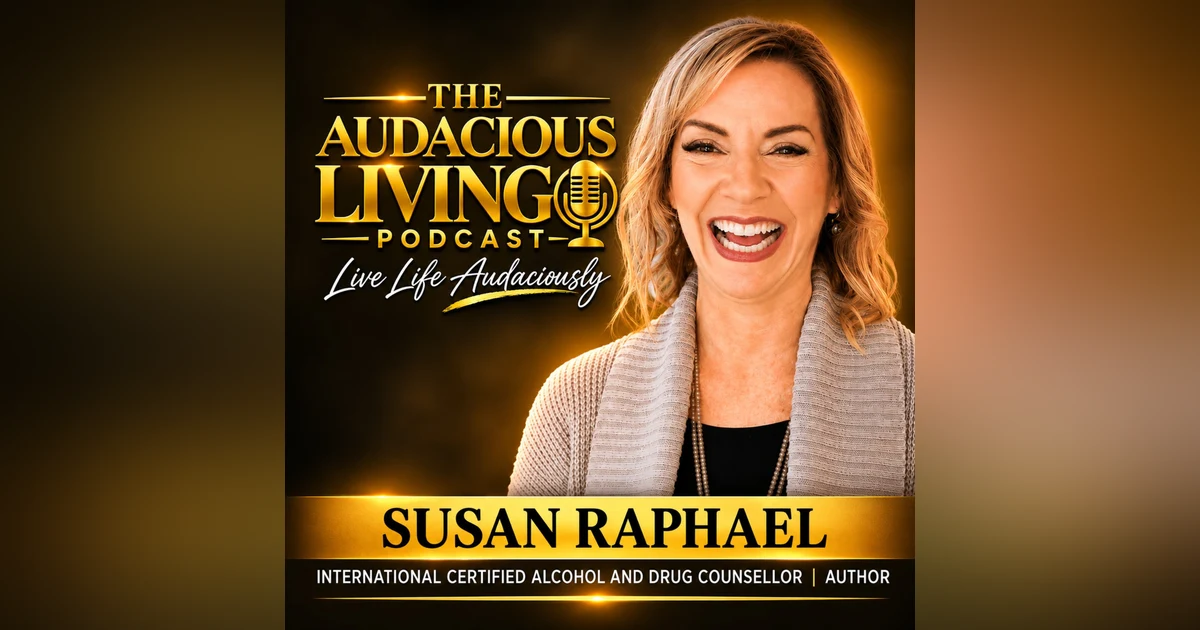

Susan Raphael returns with a story about loving someone with an addiction while in recovery herself. Forgiveness arrived as a process, not a decision, and letting go with boundaries is how she found her peace.


Susan Raphael is back, this time with a story from the When We Forgive anthology about loving someone with an addiction while she was in recovery herself. It is a story about a difficult choice: stay in a chaotic relationship, or let go and move forward, trusting that peace would follow.
Signature Quote
"You can forgive someone and let go, and it doesn't mean you have to be best buddies with them."
Why This Quote Matters
Forgiveness and reunion are two different choices. Susan forgave, wished the person well, and still chose a different path. The quote is the whole episode in one breath: you can keep your compassion and keep your peace.
Susan Raphael is a contributing author to When We Forgive, a Life to Paper anthology of fifteen stories tracing the path between hurt and healing. Her story, As We Forgive Those Who Trespass Against Us, is about loving someone with an addiction while she was in recovery herself.
In this conversation, Susan talks about why we should forgive and remember instead of forgive and forget. She talks about resentment as poison, about compassion that holds firm boundaries, and about forgiveness arriving in its own time, in dreams, in breath work, in the quiet that follows when ego steps aside. She talks about two things being true at the same time: she had not forgiven, and she could still show up for her family.
This is a conversation about letting go without losing your compassion. If you have ever wondered whether forgiving means letting someone back in, Susan is your proof that it does not.
THIS EPISODE IS FOR YOU IF...
- You are carrying resentment toward someone you still care about, and it is costing you your peace.
- You have wondered whether forgiving someone means letting them back into your life.
- You keep trying to forgive on a deadline, and it is not working.
- You love someone whose choices keep hurting you, and you do not know where the line is.
- You want to believe recovery is possible, for yourself or for someone you love.
GUEST BIO
Susan Raphael is an addiction and mental health clinician in private practice for more than twenty years, and the founder and principal of Sustainable Recovery Counselling Services in Toronto. She is an International Certified Alcohol and Drug Counsellor, a referral clinician in the NBA and NBPA Clinicians' Network, and the author of What's Wrong with My Teen? Finding Answers to Teenage Addiction and Family Crisis, a guide for parents and caregivers navigating addiction and mental health challenges with their teens.
Her own recovery journey began more than twenty-eight years ago, and it shapes how she sees addiction, healing, and family recovery. Susan first appeared on The Audacious Living Podcast in October 2025. She returns now as one of fifteen authors in the When We Forgive anthology.
GUEST LINKS
Connect with Susan:
What's Wrong with My Teen? (book and family resources)
https://www.whatswrongwithmyteen.com
Sustainable Recovery Counselling Services
https://www.sustainablerecovery.ca
When We Forgive, a Life to Paper anthology. All proceeds support the Life to Paper Foundation:
https://buy.bookfunnel.com/isij6z3lv0
READ THE BLOG ARTICLE
Explore the conversation further:
[ADD BLOG ARTICLE LINKhttps://www.bestaudaciouslife.com/audacious-insights/forgive-without-letting-someone-back-in]
LISTEN ANYWHERE. LIVE AUDACIOUSLY.
Enjoy The Audacious Living Podcast on your favorite listening platform.
Choose where to listen:
https://bestaudaciouslife.com
Enjoying the show?
Share this episode with someone who needs to hear this.
⭐ Leave a review:
👉 https://ratethispodcast.com/audacious
Yeah. ⁓ and how Tabitha works. She's she's everywhere. ⁓
Audley (00:06)
Yeah, that is, that is, that is. So ⁓ I'm ready to do like a three to one and off we go, Susan. Let you've done this before, so it's nothing it's like riding a bike, right? There you go. Here we go. ⁓ Three, two, and one. Hey Susan, thank you for being back on the podcast. ⁓ great to have you again.
Susan Raphael (00:16)
Absolutely. An audacious bike.
Susan Raphael (00:30)
Thanks very much, Audley. It's great to be here again. ⁓
Audley (00:33)
Yes, no. I I was delighted to to know that we'd have a chance to sit down and and chat. ⁓ the the last time we were here you you released your book around teen and mental health addiction teen addiction and teen and mental health. ⁓ and ⁓ we had a fabulous conversation and sort of walk away ⁓ just kind of feeling inspired for the work that you're doing in terms of helping the work that you need to help parents. And so so it's a it's a pleasure now to hear that you ⁓ you you're part of
Susan Raphael (00:38)
Mm-hmm. ⁓
Audley (00:59)
the when we forgive ⁓ anthology series which we're we're we're sort of profiling ⁓ some of the the authors have contributed. There's fifteen of you that have contributed and we've got a a few of us join for any of you joining us as part of the series. ⁓ so ⁓ maybe for our our our listeners, if we can sort of talk about your specific lady and your specific contribution and 'cause each author contributed a story to make up this entire When We Live When We Forgive series.
Susan Raphael (01:08)
What?
Susan Raphael (01:24)
Right. We weren't we weren't really given any other framework other than to s write about something around forgiveness that impacted us. So my story came to me right away. ⁓ I think because it I knew it would be something that might like I guess there's sort of some pillars of that I thought other people might benefit from 'cause I learned writing my first book that ⁓ it's about the reader and it's about
Audley (01:33)
Mm-hmm.
Audley (01:53)
Yes. ⁓ Yes.
Susan Raphael (01:54)
their experience of the story. So ⁓ my story was is about loving someone with an addiction. ⁓ And ⁓ my journey was in recovery and theirs was still in ⁓ in addiction. So I had to kind of ⁓ make the difficult choice of whether I was going to stay in something that was chaotic ⁓ and ⁓
Susan Raphael (02:20)
really unmanageable ⁓ or I was gonna let let go and and ⁓ move forward. But wasn't as easy as as the letting go its in and of itself as process. So that's what my story was about. And then it was it's also about
Audley (02:22)
Yes.
Audley (02:30)
Right.
Susan Raphael (02:38)
trusting the process. So doing painful things in the hopes that ⁓ there's going to be a silver lining or or the on the hopes in the hopes that letting go is gonna bring you peace. ⁓ there was a huge faith factor there for me. Like I had to believe in the people I was taking counsel in and ⁓ people who had been in in similar situations, ⁓ and ⁓ and I had to really trust them and and let
Audley (03:00)
Yes.
Audley (03:07)
Right.
Susan Raphael (03:08)
go ⁓ when I didn't have a whole lot of experience doing that. I was ⁓ my own recovery from addiction myself. So I didn't have a lot of trust in kind of is the universe going to provide ⁓ what with what I need if I do this difficult thing? ⁓ And ⁓ and it did. ⁓ It did. So
Audley (03:12)
Yeah, yeah.
Audley (03:16)
Sure.
Audley (03:29)
Th the the all the what ifs came to mind I'm sure, right? All the what ifs and all the everything that could go wrong could happen, that's the first thing that came to you, I bet.
Susan Raphael (03:34)
⁓ Yeah. ⁓
Audley (03:41)
You you you you said something off the top that ⁓ I think is so beautiful when you sort of talked about the story just naturally came to you. ⁓ when as you as you're talking about your forgiveness story, if you will. Is it is it something that you ever really thought about before this moment? Is it just or ⁓ or put like put in terms of putting, you know, pen to paper and telling it as a story?
Susan Raphael (03:49)
Mm-hmm.
Susan Raphael (04:02)
Not pen to paper, but I had thought of it in terms of when I'm working with others and coaching them ⁓ or ⁓ as I reflect on my life, it's like ⁓ who who would have known that letting go of this ⁓ relationship would would be would have brought me so many other blessings. ⁓ And then in my story, not to be too much of a spoiler, ⁓ but ⁓ this person ⁓
Susan Raphael (04:32)
⁓ their addiction gets worse and worse and worse. And so ⁓ when I'm kind of ⁓ stuck in my self righteousness of ⁓
Susan Raphael (04:42)
still still holding some resentment towards the the relationship ⁓ and then hearing that this person wasn't doing well ⁓ and that they were really suffering and they were really struggling that immediately kind of permeated my defensiveness and my ⁓ self righteousness ⁓ and and hit compassion. ⁓ It's like ⁓ who am I to think I'm, ⁓ you know, right or or that I did ⁓
Audley (05:05)
Right.
Susan Raphael (05:12)
You know, like it's just it just immediately cut through that and I got to a place of immediate compassion. Like, wow, like how selfish of me to be thinking about like they've got so much to to be focused on that doesn't have anything to do with me or a relationship like this was a romantic relationship. So ⁓ it ⁓ yeah, so the forgiveness is really interesting the way it grabs on to us sometimes.
Audley (05:25)
Right.
Audley (05:41)
Yes.
Susan Raphael (05:42)
⁓ rather than us ⁓ intending to forgive. It kind of for me it's happened in in ⁓ in those ⁓ moments of clarity where it's like, wow, I'm not carrying anymore. ⁓ I feel lighter. ⁓ There's an absence of ⁓
Audley (05:54)
Yes.
Susan Raphael (06:00)
an absence of kind of the bitterness or resentment or whatever I was holding on to, all of a sudden it's like it's it's gone and ⁓ exactly sure how it happened, but ⁓ but it happens. ⁓
Audley (06:08)
Right.
Audley (06:13)
It it's it's interesting because when you when you think about ⁓ forgiveness at w you know, ⁓ like at one point it's come it's an idea or just a thought, if you will, but then there's it bec then so it moves there's a there's a shift from this idea or concept to actually something you put in practice. I'm just sort of curious that in between ⁓ things, that's all the that's off the linchpin between the two. What what what was was there a specific event or situation or was a process for you?
Susan Raphael (06:39)
I think it's a process and I think what gets in the way, at least in for me what gets in the way, and that's interesting you put that, yeah, because there's kind of the cognitive like ⁓ I know it's the right thing to do to forgive and I know ⁓ that I would like to forgive and I have the intention to forgive. ⁓ but sometimes it's just not happening. ⁓
Susan Raphael (07:01)
in that whatever metaphysical way. ⁓ And I think they my ego would get involved. That part of me that's, you know, self-righteous or that proud part that doesn't want to admit that, you know, A, I had a part in things too, ⁓ and then I'm perfect, believe it or not, you know, I'm fallible. ⁓ so I think it's ego that gets in the way for me. ⁓ And then often ⁓ in other experiences, forgiveness has come to me in a dream.
Susan Raphael (07:31)
⁓ Or it's come to me in a non-ego state, ⁓ like doing ⁓ body work or doing breath work or doing something where I'm super relaxed and super chill. ⁓ I'll and the ego is aside. ⁓ I'll have glimpses of like real peace that of course ⁓ I don't think peace and and resentment can exist ⁓ you know at the same time fully. So ⁓ that sort of answers the question about what
Audley (07:54)
Right. ⁓ Right.
Susan Raphael (08:00)
what comes in between. But it's ⁓ Yeah. I think in prayer prayer certainly helps. Like ⁓ for me that's letting go and also asking for ⁓ I do believe in sort of a a a good orderly direction, a God of sorts in a spiritual sense. So asking ⁓ for ⁓ clarity or or that got orderly direction ⁓ and that that sort of helps get from one state to ⁓ another.
Audley (08:06)
Okay.
Audley (08:16)
Yes.
Audley (08:29)
Right, right, right. ⁓
Susan Raphael (08:30)
A process, definitely a process and not ⁓ instantaneous ⁓
Audley (08:34)
Yeah. No snappy really, just snappy finger there, right? ⁓
Susan Raphael (08:39)
⁓ magic wand, you are forgiven.
Audley (08:44)
⁓ I we we've all heard the expression, you know, forgive and forget. ⁓ but do you ever really truly forget? I've often every time I hear that I wonder like well like like not wonder, I I don't believe you can totally forget. Just curious to get your thoughts on that concept of forgiving and forgetting.
Susan Raphael (09:00)
I don't know who came up with that, but I think that's hogwash, right? Forgive and ⁓ smell like forgive and remember for next time. Forgiving and remember. Forgiving doesn't mean ⁓ yeah. And also forgiving doesn't mean forgetting the way that we've been treated. So I don't know about the forgive and forget. ⁓ There's ⁓ for forgiveness and ⁓ and now I know, you know, fool me once, fool me twice, whatever. ⁓
Audley (09:02)
⁓ Right.
Audley (09:07)
Yeah.
Susan Raphael (09:28)
⁓ it f fool me twice, it's my it's on me. ⁓ so forgive, but now I have more knowledge of whatever my tenderness of heart or my vulnerability, so I have to take better care of myself or I don't think that we forgive and forget. I think ideally we forget and let go of the resentment. ⁓ yeah also ⁓
Audley (09:44)
Gotcha.
Audley (09:50)
Yeah. I can yeah, I can c I can co sign with that for sure. Yeah.
Susan Raphael (09:56)
informs us, like it informs me going forward that ⁓ that I've changed as a result of this experience. ⁓
Audley (09:57)
And hold on.
Audley (10:04)
Right, right, right. ⁓ so h how how does ⁓ addiction change the conversation of forgiveness?
Susan Raphael (10:13)
Mm. That's a that's a good question. ⁓
Susan Raphael (10:16)
I think i in my experience I know that ⁓ I have to keep my side of the street clean. I have to ⁓ try and be honest ⁓ and I have to try and live without resent see resentments can be the start of ⁓ of a real negative way of thinking and a negative look and that could lead me to relapse. At least that's how ⁓ that's how I
Susan Raphael (10:46)
learned in the addiction recovery model was very much if I don't ⁓ let go of the things that are bothering me and it's it goes back to what people say about resentment is like ⁓ drinking poison and hoping the other person dies. ⁓
Audley (11:05)
Right.
Susan Raphael (11:07)
As as someone in recovery, I I can't afford to hold that on to that poison because it might lead me to pick up in my case drug of choice, alcohol. It might lead me to pick up a drink if I'm full of ⁓ resentment and ⁓
Susan Raphael (11:23)
Yeah, so it's I think it's tied closely to relapse, to a relapse sort of state of mind. We often talk about relapse happening before we pick up the substance because it's a state of mind. ⁓ And then ⁓ and then to keep that state you know, to ⁓ feed that state of mind we have to in indulge in the substance or we have to pick up the substance. So it's
Audley (11:29)
Mm.
Audley (11:35)
Okay.
Audley (11:38)
Right.
Audley (11:50)
Right, right, right, right. I I I guess I also think about f families who are say looking to forgive the the individual individual that's going through these addiction challenges ⁓ and and and being able to ⁓ forgive the relapse as as Rosa like it's very we talk about forget it's very, very different than someone so this person wronged me. They did this thing to me, they wronged me, right? We're talking about ⁓ they they they relapsed, they're they're they're they've succumbed to this addiction.
Audley (12:18)
And as a result, they've done these X, Y, and Z things that have hurt or impacted or affected others. ⁓ but that's very, very different than someone did this act to me and they've hurt me and I'm upset with them about that act. It's a it's a larger it's a larger conversation, I would say, right?
Susan Raphael (12:33)
Yes, and ⁓ often we'll say with addiction it's it's like hate the disease, ⁓ don't hate the individual and s the b behaviors that come from active addiction ⁓ are the behaviors are maybe not forgivable the behavior, but we ⁓ we can forgive the individual for struggling with this. ⁓
Audley (12:39)
Mm.
Audley (12:48)
Right.
Audley (12:52)
Right.
Susan Raphael (12:53)
particular kind of affliction. But within families it's very difficult, yeah. Like we ⁓ it the family disease we call it a family disease of addiction and then it's recovery is also a family endeavor. Everyone is impacted and everyone can be involved. ⁓ And sometimes it's the family member that recovers and not necessarily the the designated ⁓ person who's struggling with the addiction.
Audley (12:55)
Yeah, yep.
Audley (13:07)
Yes. Part of it. Yes. Yeah.
Audley (13:18)
Yeah. I g I I gotta tell you that making that distinction, the disease in the individual, is is a tough it's a very thin line, I would say, and it's a very, very challenging and hard and and there's some who just can't make that distinction.
Susan Raphael (13:32)
There there are, yeah, they they can't they're they're grappling with the kind of the cognitive but how how could they have done this? Well ⁓ when you have diabetes you have responses to certain stimuli ⁓ and it's not don't take don't take it personally that I can't eat the sugar because I have diabetes and I need to r rely on insulin. Well, when y ⁓ you're in active addiction and ⁓ you need to ⁓ certain behaviors that go along
Audley (13:39)
Right.
Susan Raphael (14:02)
With active addiction, they are very universal. They're not they're not ⁓ directed at any one person. They're very universal. Lots of people all over the globe will behave in similar ways when they're struggling with active addiction. So ⁓ that can be a very powerful distinction, but it's yeah, sure. It doesn't mean that that person's behavior is not going to affect us. ⁓ Of course it's gonna affect us, ⁓ but we don't have to take it as personally. It's not really directed at us, it's a symptom of
Audley (14:05)
Yes.
Audley (14:13)
Yes.
Audley (14:30)
Nice. Yep.
Susan Raphael (14:32)
⁓ disorder. Easier said than done though. Easier said.
Audley (14:34)
⁓ Mm. Well yeah, yeah, no, with w without question. And and I think it leads to and you mentioned earlier, compassion, a C word, right? How important having that compassion is. ⁓ recognizing that this person ⁓ is ill. It's an illness. It's no different. Yeah, if someone else had another type of illness and you visit them at the hospital, let's say, you'd show compassion. ⁓
Susan Raphael (14:56)
Yes. ⁓ Yes. ⁓
Audley (14:56)
But it's harder again, it's it's not it's not easy for f for everyone to be able to do and that compassion is what le opens the door to forgiveness.
Susan Raphael (15:05)
Absolutely. And compassion also doesn't mean that we condone ⁓ that we condone any behavior. It's ⁓ we can be compassionate and ⁓ hold healthy limits and healthy boundaries. ⁓
Susan Raphael (15:20)
and and stay away from a person if their behavior is dangerous or maybe it just feels dangerous to us because ⁓ we're susceptible to maybe manipulation or ⁓ being ⁓ being asked for money or and if we can't hold if we can't take care of ourselves, it's okay to be compassionate and step back and take care of oneself. ⁓ So you can forgive someone and let go ⁓ and s ⁓ it doesn't mean you have to be best buddies with them or ⁓ or ⁓ you know show
Audley (15:31)
Mm-hmm.
Audley (15:41)
Yes.
Susan Raphael (15:50)
share a coffee at the at the s local Starbucks, it just it it can mean whatever is feels safe and and peaceful for you. And sometimes that doesn't mean distance. ⁓ Compassion with distance and compassion with boundaries. ⁓ or it could be compassion also with with tenderness and closeness and affection. It's entirely up to the individual and the situation. ⁓
Audley (15:54)
Right.
Audley (15:59)
Yes.
Audley (16:12)
Hmm.
Susan Raphael (16:16)
For me, it's usually meant taking a step, a a big step back and taking ⁓ putting the ⁓ putting the emphasis on taking care of myself and not obsessing about a situation that I really don't have any control over.
Audley (16:21)
Right.
Audley (16:30)
Right. Right. No, yeah, I think that's that's a really good point. If you to obsess over something that you can't control, that you have no influence on, you're you you're spinning your wheels, you're wasting your time, you burning yourself out. That's all you're doing, right? And you need to be mindful of that.
Susan Raphael (16:42)
Yeah. And I'm not living my life. I'm not staying in my lane and focusing on this one precious life that I have to live, right? ⁓ that's ⁓ that can be hard to learn too as we're involved in ⁓ sometimes inter ⁓ the the interlocking web of relationships with others. ⁓
Audley (16:52)
Well, well.
Audley (17:04)
Yes. Yes. Yes. Yes. Nor are you living audaciously, right? And that's what we we you know w one of the things that we continue to encourage about how important that and and it's interesting th all of these things block or get in the way of doing just that, living audaciously.
Susan Raphael (17:18)
A hundred percent 'cause can you live audaciously and while you're not forgiving and while you're holding on to things that are not yours really to hold on to or yeah. Yeah.
Audley (17:29)
Right. Mm-hmm.
Audley (17:33)
I as as as as you sort of think about the the your your story, Susan, as you as you're sharing it, ⁓ were there was there ⁓ anything you just kinda learned about yourself as you went through that process of writing?
Susan Raphael (17:46)
how hard writing is ⁓ again. ⁓ How ⁓ and and how inspiring it is when you're thinking about conveying a message to the reader and ⁓ kind of trying to translate those ⁓ moments ⁓ of
Audley (17:48)
⁓ Yeah, yeah. That would be a
Susan Raphael (18:05)
emotional ⁓ I don't know learning or understanding and trying to convey that into words so that someone else can can get something out of it or learn something ⁓ from it, whether it's kind of moral of the story. ⁓ and in my case it it kept it kept growing ⁓ to the point where my my last sort of ⁓
Susan Raphael (18:29)
⁓ my last bit of of forgiveness ⁓ was ⁓ seeing this person ⁓ really in dire straits on on the street, ⁓ homeless presumably in panhandling ⁓ and ⁓ in a really decrepit kind of a state and ⁓ anything that any kind of ⁓ resentment or bitterness that I was feeling just melted away and I was ⁓ I was brought to tears in in a sense of empathy.
Susan Raphael (18:59)
⁓ Immediately and not even necessarily knowing there was still emotion there. It was years and years later, ⁓ but that ⁓ that release for me was very ⁓ cathartic and brought ⁓ brought a lot of sense of serenity and ⁓ and as I said empathy and compassion too ⁓ for the still suffering individual. Yeah. ⁓
Audley (19:23)
I just think of ⁓ see these scenarios in which ⁓ you know, that this person that we love that we're involved with, relationship with, and they continually make the the mistakes and the choices that aren't productive or healthy or positive. ⁓ i i it it it gets to a point because n because you're emotionally invested, right? And you're watching this happen and you're and w although they're doing it to themselves, you're you're also feeling it because of that connection. ⁓
Audley (19:49)
I I think more than ever ⁓ more more than any time than any that that the importance of of making that those clear boundaries, 'cause that's what you need that needs to happen, or you're going down with a ship too, so to speak.
Susan Raphael (20:01)
Absolutely, even in and even like secondarily, vicariously, like, you know, for me to be standing ⁓ watching, ⁓ shaking my head, going here they go again. I can't believe you know, that's that's me entangling myself in someone else's path. ⁓ And ⁓ and at the same time ⁓ I can see that and think, you know, but for the grace of God, they're like I don't know why I'm here and they're there ⁓ doing the same thing over and over again. But thank
Audley (20:18)
Yes.
Susan Raphael (20:31)
⁓ Thank God it can make me so full of gratitude ⁓ for where I'm at and that I've stayed on the other side. ⁓
Susan Raphael (20:40)
of addiction and I've stayed in recovery and I've done the work ⁓ that that ⁓ one day at a time keeps me ⁓ on the straight and narrow. ⁓ really bring also along with that compassion a sense of true gratitude that thank thank God I'm on this side of it. And I don't know what makes me I don't think I'm ⁓ maybe willingness, maybe maybe surrender. I really don't know. It's kind of the magic of what happened
Susan Raphael (21:10)
in in recovery and in the process of healing. It's like, I think the things I'm doing are contributing, ⁓ but I just gotta keep doing it and in ⁓ in hope that I don't ⁓ I don't end up on the on the wrong side for f yeah.
Audley (21:28)
And and also recognize it's a process too, right? Th the p the process of healing is a process. ⁓ it doesn't happen overnight, it doesn't have the snap of the fingers and waving of the wand. ⁓ and and and there are moments in that process where you you you might you might you might have a bit of a relapse even, right? In in in in tur in terms of your healing and understanding and and forgiving. ⁓ and I think again when we talk about compassion, self compassion is exactly where that needs to exist, right, in those moments.
Susan Raphael (21:56)
Yeah, having compassion for ourselves for making mistakes or for ⁓ maybe picking up the phone when we don't want to or connecting or focusing on ⁓ and worrying about another when we should be worrying about ourselves and what we can control. ⁓ Absolutely having compassion for ourselves too. ⁓ the we say like recovery is not linear, it doesn't just you don't just go it's like one step forward, like sometimes five steps back and absolutely set backs. ⁓ I
Audley (22:18)
Right.
Susan Raphael (22:25)
say like ⁓ failing isn't ⁓ it's not failure it's feedback like we fail forward we fail but we're still moving with a willingness and a and a hope and ⁓ at the same time I also believe that recovery is possible ⁓ no matter how far down ⁓ someone is
Audley (22:32)
Yes, it is.
Audley (22:41)
Yes.
Susan Raphael (22:50)
is seeming that recovery is always possible because I know it's happened for me, ⁓ so I have that experience ⁓ and I see it happen for others every single day.
Audley (22:53)
Yeah. ⁓
Audley (23:02)
⁓ I I certainly I I ⁓ I love the you viewpoint on on failure because it absolutely is an opportunity to get feedback and data. ⁓ and and and I truly believe that I don't you know people are afraid to make you know to to to make a mistake or f afraid to fail. ⁓ And I truly believe that, you know, a failure truly isn't a mistake unless you walk away with the experience without the lesson. So they're they're in life, there's a lesson to everything that we go through, everything that we experience. ⁓ And if you miss a lesson,
Audley (23:30)
You're kinda doomed to make that mistake again until you actually get it.
Susan Raphael (23:33)
⁓
Susan Raphael (23:34)
That's well said. That is well said. Yes, and I do believe that ⁓ and when we see others that we care about repeating patterns and you think, why can't they see it? Everybody else can see it, but we don't tend to see our own pattern. ⁓ but but yeah, w I do believe that too. The the universe just keeps giving you the same the same scenario or a similar scenario, maybe a different individual, ⁓ t until you learn that lesson.
Susan Raphael (24:04)
And ⁓ whether we're attracting it or whether the universe is kind of it's more of a whatever it is, yeah, we're gonna get the same until we learn and move forward. ⁓ And that the failing ⁓ failing forward, I ⁓ I I think we need to embrace failure and learn ⁓
Audley (24:22)
It's so hard. It's so hard to ⁓
Susan Raphael (24:24)
We're all imperfect and there's there's a freedom in that to ⁓ be like I make mistakes and ⁓ and ⁓ it's okay to apologize like to your kids and say, I'm not a perfect parent. I made a mistake. ⁓ I'll try I'll try and do better. Like that it that humbling. I I don't know, I grew up w I had so much pride and it it really I think held me back. ⁓ It was really a false sense of pride. It was like I cannot show you that ⁓ I've done wrong or that I am wrong.
Audley (24:26)
Right.
Susan Raphael (24:54)
So it it resulted in a lot of secrets and a lot of going underground and a lot of fear of you thinking ill of me or having disdain for me because I made a mistake. Like that thing actually makes me more human than than pretending that I'm I'm I've got it all together.
Audley (25:15)
Right, right. No, you're right, you're right. ⁓ is is so when you think about forgiveness, ⁓ i i from your perspective, is it possible to forgive even though the trust isn't there? Like you have 'cause you you you know, th there's things have happened, the trust has been broken. ⁓ can forgiveness still exist in those scenarios?
Susan Raphael (25:26)
⁓ Okay.
Susan Raphael (25:33)
think that yes, I think you and that's where we don't forget, we forgive ⁓ and we ⁓ may ⁓ take take ⁓ great ⁓ better care of ourselves to not be ⁓
Audley (25:40)
that's where the forget came from then. Remember we double forgive it. Yeah.
Susan Raphael (25:50)
to be injured in the same way 'cause ultimately if I'm ⁓ it's like ⁓ how am I feeling if I'm not forgiving? ⁓ I'm I'm hanging on to something that's not mine. It for me it would be like a resentment, a bitterness, ⁓ a thinking ⁓ thinking too much about somebody else, period. ⁓ And and it's not serving me. So that if I'm not forgiving, that's the kind of state of mind. And it's not a peaceful state of mind for me. And it's not a ⁓
Audley (25:57)
Mm-hmm.
Susan Raphael (26:20)
a serene state of mind for me. So I want to be able to let go of that stuff so I can ⁓ live my audacious life.
Audley (26:30)
Agree. No, I hey, I absolutely with you a hundred percent on that. ⁓ so then l let's talk about why it's difficult for people to forgive. ⁓ I I don't think there's just one answer field, but I'm curious what your sort of what your your your thoughts as to what possible reasons might be.
Susan Raphael (26:50)
That's a good question. I don't I don't know that ⁓ I learned a lot about ⁓ forgiving. I mean my story also touches on like quotes from the Lord's Prayer 'cause it's something that I heard when I was growing up ⁓ and would recite ⁓
Audley (27:07)
Mm-hmm.
Susan Raphael (27:11)
thou shalt forgive those, you know. And it ⁓ and but the words didn't ⁓ didn't mean a lot 'cause I didn't have a lot of experience with ⁓ holding ⁓ on to. So I I think that there's probably a sense of I'm right and and they're wrong. ⁓
Susan Raphael (27:30)
that wasn't really ⁓ how I experience forgiveness, but I think for a lot of people it is right fighting kind of that I need to admit. I I can't admit that I w I'm wrong ⁓ and that that they're right, so I have to hang on to ⁓ believing ⁓ my way is is the better way. I'm not really sure. I think there's ⁓ there's ⁓ definitely ⁓ something they're invested in ⁓
Audley (27:58)
Right.
Susan Raphael (27:58)
in their way of thinking. They're definitely invested in their way of thinking. ⁓ It's so working with somebody around that as helping them understand ⁓ their way of thinking and how it might not be serving them. ⁓
Audley (28:12)
Right, right. And the he the heels are dug in and they're not budging. ⁓
Susan Raphael (28:16)
Yeah, and what's that about for them and what what what look like if they if they didn't have that. Like you don't wanna invalidate them and say, Well, you should really ⁓ change the way that you're thinking about this, ⁓ let it go and move on. Like they're they're not gonna dig that. They're not gonna ⁓ be all over that. So you can have ⁓
Audley (28:33)
Right. No. No. ⁓ You're not you're not wooding anyone over with that approach, I don't think.
Susan Raphael (28:38)
⁓ anybody over with that, right? Like so ⁓ it's more of a that's it's a softer approach of really understanding ⁓ what they're ⁓ where they're coming from, their perspective, their point of view, ⁓ and how maybe things aren't quite so black and white. ⁓
Audley (28:55)
Mm-hmm. Mm-hmm. ⁓ I I know I know we we we we talked about ⁓ the difficulty forgiving others. Maybe let's turn around and and and talk about forgiving ourselves. And we I know we talked about self forgiv forgiveness earlier, but that also is something that's difficult for individuals to do, forgive themselves. ⁓ what do you think is happening there in those scenarios?
Susan Raphael (29:15)
Yeah, I think we love to be our own worst enemy, ⁓ You know, to beat our beat ourselves up in some respects. And again, these are things that block us from living our life and our our ⁓ one audacious life, right? ⁓ If we're ⁓ if we're hanging on to something and we're beating ourselves up with something ⁓
Audley (29:28)
Yes. Yeah. You're right.
Susan Raphael (29:36)
It's ⁓ i it's another blockade for ⁓ for living my truth or taking kind of taking responsibility and ownership for ⁓ what I can control and what I can choose to think about. ⁓ So yeah, I think self-forgiveness is very freeing as well, and that there's a surrender in that ⁓ sure I can sit here and beat myself up ⁓ or I can ⁓
Susan Raphael (30:03)
Take some actions and do some things ⁓ that maybe are gonna make me feel better about myself and others. ⁓ Or help and that's what getting out of oneself is is so ⁓ crucial in kind of a recovery mindset. ⁓ Get out of the self, get out of the I self, me, ⁓ all of that ⁓ thinking, whether it's I'm thinking of myself as better than or I'm thinking of myself as ⁓ I'm really terrible because I you know.
Audley (30:18)
Yes.
Audley (30:21)
Yep. Yep.
Susan Raphael (30:33)
can't ⁓ I can't forgive myself and ⁓ whatever the thinking I'm still thinking about me and so if I get out of myself ⁓ and think about another ⁓ then I'm connecting then I'm having real life ⁓ interactions and ⁓ and that's where ⁓ healing real healing happens in that connection right ⁓
Audley (30:40)
Right. Yeah. Yep. Yep.
Audley (30:50)
Yeah.
Audley (30:55)
Yeah, and and just and getting out of your head. And and that's why even even like shame, like that's another one, 'cause that will block the healing and what and the problem with shame is to your point, it's about us and me and me and that shin that that I'm expert, particularly in the addictions context, right, we talked about.
Susan Raphael (31:11)
Mm-hmm. A lot of shame, a lot of ⁓
Susan Raphael (31:15)
Yeah, and it it it's it's more complex than feeling bad about myself or feeling like I'm a bad person. It's it's really seeing the world through this lens of me, how others see me, how I see me, how I like it's just way too much me. ⁓ And there is there is a me in shame. I never thought about that. So I get ⁓ yeah. ⁓ And shame is it's very sticky feeling.
Audley (31:30)
Yes.
Audley (31:33)
It's all about me, right?
Audley (31:39)
⁓ That's a good point. That's a good point. So it's really
Susan Raphael (31:45)
too. ⁓ yeah, I think shame is a very s it's ⁓ it's sticky and it's hard to let go of. It's it's kinda gooey and ⁓ messy. ⁓
Audley (31:46)
Yes, yeah.
Audley (31:54)
Yeah. Yep. And and and the truth of the matter, there's nothing good that comes out of shame, right? And and I and and it's interesting because I think in society I think we try to use shame like as a way of either belittling people or trying to correct them or you know, you should be ashamed or you're shameful. And and I don't think any good comes out of shame at all. 'Cause who likes to feel ashamed? Who enjoys that feeling?
Susan Raphael (32:18)
Exactly.
Susan Raphael (32:19)
With somebody and if there i if there is anything adaptive about shame, it's protecting us ⁓ from something. ⁓ But I w the way that you ⁓ you ⁓ gave those examples is a way that yes, society or ⁓ or perhaps religion or ⁓ different different schools of thought have have ⁓ yeah, made us believe that there is a good way and there is a a god way or there is a ⁓ right way.
Audley (32:37)
Right. Mm-hmm. Yeah, another good one.
Audley (32:48)
Right.
Susan Raphael (32:49)
way of doing things and the shaming as an as an instrument of ⁓ yeah, othering othering people or pushing them out I think has ⁓ has been really ⁓ ill ill used. Not not ⁓ not very not very healthy ⁓ use of ⁓ of ⁓ yeah. ⁓
Audley (33:04)
Mm.
Audley (33:07)
No. Not at all.
Audley (33:12)
⁓ so then as as we sort of talk about you know like you know we were just talking about sort of self-forgiveness and and and that and and compassion of ourselves, ⁓ you know, is it is it ⁓ is it even possible to kind of truly f move forward without self-forgiveness and forgiving ourselves?
Susan Raphael (33:32)
I think there I think there's something that's required to move forward and I think ⁓ and I I know that to be true for me is a willingness. ⁓ And I think, you know, even if I'm not ready to forgive entirely or not, if there's a willingness ⁓ and there's an openness towards so ⁓ maybe I'm not quite ready yet, but I'm willing to be ready. ⁓
Audley (33:37)
Mm-hmm.
Audley (33:46)
Uh-huh.
Susan Raphael (34:00)
more ready tomorrow or I'm willing to then I can move forward. ⁓ so it's I don't think it has to be an absolute. Like I have forgiven and and therefore I move forward. I think that it is this process, but we can't ⁓ we can't force a process. ⁓ We can only be willing to ⁓ be ready for it. And like I've said ⁓ earlier, some of my forgiveness has come to me in kind of in a dream form for someone who I haven't even seen in years. ⁓
Audley (34:21)
Nice.
Audley (34:27)
Okay.
Susan Raphael (34:30)
I've forgiven them in a dream, like something's transpired, and I wake up feeling lighter, and I wake up feeling like something has has been resolved. ⁓ And and it's been it's been not in the physical world, it's been in ⁓ i it wh wherever dreams come from. So that's and I and I feel lighter and I'm moving forward ⁓ in a new way, and I haven't really intentionally ⁓ so I think I think there's a lot that happens, like you said or ri initially when we started.
Audley (34:32)
Mm-hmm.
Audley (34:40)
Right. ⁓
Audley (34:44)
Right. ⁓ Yeah.
Audley (34:47)
Yeah, yeah.
Susan Raphael (35:00)
It off that ⁓ forgiveness is a concept as a cognitive concept. And then there's there's all the stuff that happens around it. It's like it's got all these moving parts ⁓ that involve really our mind, our body, and our our spirit too, right? Our heart, ⁓ what we know to be true. ⁓ deep questions, deep philosophical questions with ⁓
Audley (35:07)
Yes.
Audley (35:10)
Yes, yes.
Audley (35:14)
Right, right.
Audley (35:22)
Well yeah, we're we we we're we're we're I think we're analyzing this thing 'cause I think the other part about this too is ⁓ is ⁓ what what I I believe would be helpful ⁓ is if we're recognizing that as a process. So, you know, the the forgiveness as a process. So we're not necessarily saying, Okay, ⁓ I can't go on a step two until I completely step one 'cause who knows how long step one may take and not you know, and we're not gonna stop living our lives because we didn't go through steps in succession in order.
Audley (35:51)
And and and who knows, maybe instance where we we we kind of go back. We talk about relapsing earlier, right? Which is part of the process. And so I think if we bear in mind that it is a process that we move through and we might go back, that can help us sort of absorb and accept what's happening in the moment. Because it's really easy to go, I'm you know, I messed it all up and why even bother? I'm not gonna do this, I screwed up and I'm I'm a failure and da-da-da, and shame ourselves and all these kind of things. But it's hey, it's a process. Forgive yourself and move on.
Susan Raphael (35:51)
Right.
Susan Raphael (36:20)
Yeah, and and life happens in those greys gray areas, not in the black and the white. Like I have to compl forgive before I can move forward. Well, and and ⁓ let's give a real life example. So say say, you know, you're going to the family Christmas dinner and you really haven't forgiven somebody in the family. Well, two two things can be true at the same time. Like ⁓ I cannot have forgiven Uncle Benny ⁓ and I can still go to the family dinner and whether
Audley (36:26)
Yes.
Susan Raphael (36:51)
I ⁓ say hello to Uncle Benny or whether I don't, ⁓ I can still, you know, have not forgiven and yet show up and be s loosely connected to Uncle Benny. Do you know what I mean? Like we can have and and I think when we allow ourselves those those process oriented ⁓ kind of ⁓ in
Audley (37:03)
Yeah. ⁓
Susan Raphael (37:13)
real life situations because we we do have to function ⁓ in with people that we may not ⁓ feel f complete forgetfulness for. ⁓ And if if we choose to. I mean we can also we can also be estranged from Uncle Benny and that's cool too. Whatever works for you. But maybe I wanna see everybody else at Christmas ⁓ and it means ⁓
Audley (37:21)
Yeah. ⁓
Susan Raphael (37:36)
being in touch with somebody that I haven't forgiven, that's okay. Like take take what you take what you like and kind of leave the rest. You don't have to be alone with Uncle Benny. You don't have to, you don't shake Uncle Benny's hand or hug him. Like you can just show up and be who you need to be and then leave. ⁓ and so that that just that willingness to to be ⁓ yeah to to be ready when you're ready. I think that openness to a process and
Audley (37:56)
So
Audley (38:03)
Yep. I like that.
Susan Raphael (38:06)
And and ⁓ and certainly not beating yourself up for it. And knowing that you can ⁓ you know you can still be ⁓
Susan Raphael (38:14)
free ⁓ and maybe not have forgiven entirely. ⁓ and when you do, if you do, you may feel freer. But it's it's ⁓ it's up to it's up to you. And sometimes it's up to the universe because it does it works in mysterious ways and I could wake up tomorrow and feel ⁓ completely different towards somebody that but usually it involves some work on my part. That's what I find. Usually involves some work. Yeah.
Audley (38:23)
Yeah. Yeah. Yeah.
Audley (38:28)
I I I ⁓ Yes. ⁓ Absolutely.
Audley (38:40)
Yes. Gotcha. Gotcha. ⁓ Well, I I do like that be ready when you're ready, right? Like that's that's beautiful. I think that sums it I mean that frames it beautifully because it's only it's all up to us when we are ready to move forward. So it's awesome, awesome. It's very cool.
Susan Raphael (38:55)
Yeah, not force, not to try to force anybody into into it because people have good reasons for maybe hanging on to what they're hanging on to. And ⁓ as a as a counselor and someone who listens to a lot of people's angst ⁓ and and kind of ⁓ these these types of feelings, ⁓ it's ⁓ I never wanna invalidate someone for feeling what they're feeling, but ⁓ I just wanna ⁓ let them know there might be a another side. ⁓
Audley (38:58)
That's right.
Audley (39:24)
Course.
Susan Raphael (39:25)
where they might feel ⁓ better about themselves and better in their life.
Audley (39:32)
Absolutely. So this has ⁓ been an awesome conversation, my goodness. I I really just appreciate the the the the the the the perspective and the viewpoints and ⁓ I opened my eyes a little bit as well. particularly ⁓ I I've never I to be honest, I've never really put a lot of thought into ⁓ f ⁓
Audley (39:51)
So sort of addictions ⁓ forgiveness in the addictions context and to what's happening 'cause it cause 'cause the the impact is not just for you, it's what's happening to the people around you and and and forgiveness is even more important. But the compassion which opens the door to forgiveness is key in all this. And so thank you for sharing that. So give us a the the the the title of your the story that you contributed to when we forgive.
Susan Raphael (39:54)
Yeah.
Susan Raphael (40:12)
My story is called ⁓ As We Forgive Those Who Trespass Against Us.
Audley (40:17)
⁓ okay. Okay. That's very powerful. Very fitting too, actually. Very fitting. Very fitting. Well well and for for listeners soon that wanted to connect with you di directly. ⁓ I again you got other works and other writings that you have, ⁓ your first book rather. ⁓ where where can we send them?
Susan Raphael (40:32)
They can find me at What's Wrong with My Teen as in teenager.com ⁓ and Instagram Susan Raphael or Sustainable Recovery, which is my business name.
Audley (40:45)
Very, very cool, very cool. And we'll make sure that's in the show notes for for our listeners. Thank you for this, Susan. This is so so awesome. I appreciate this.
Susan Raphael (40:52)
Thank you, Audacious Audley. ⁓ It's been my pleasure.
Audley (40:54)
⁓ All right, be well. ⁓ All right, take care.
Susan Raphael (41:00)
Bye for now. ⁓