2. Viral
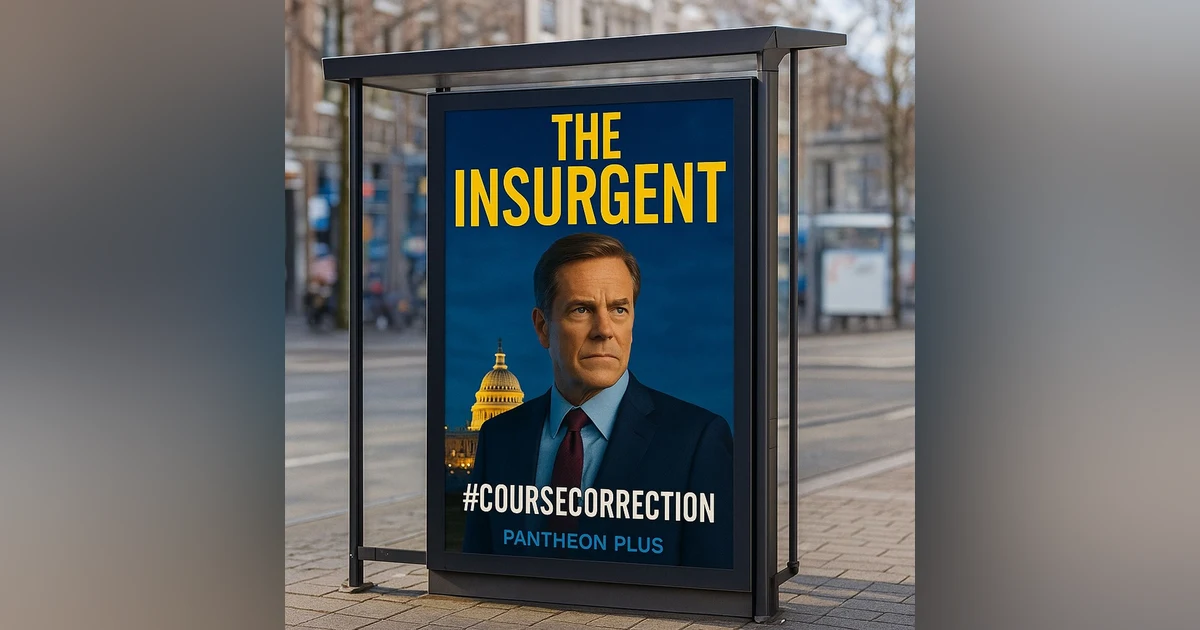
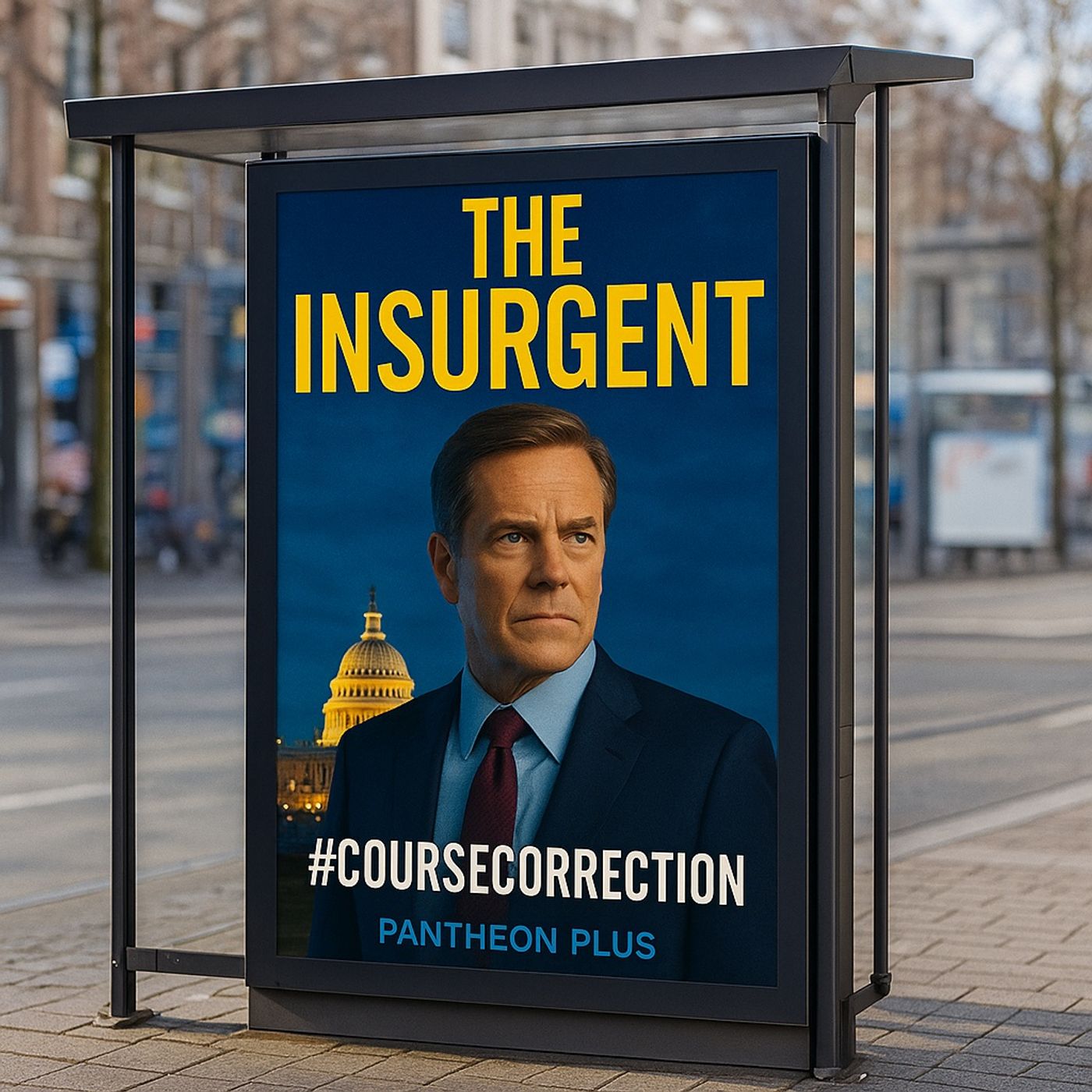
Bennett dismisses Harding's dangerous suggestion, yet can't shake the unsettling way it echoes his streaming show's plot. When Pantheon Plus launches a provocative marketing campaign with billboards declaring "AMERICA NEEDS A COURSE CORRECTION," the...

Bennett dismisses Harding's dangerous suggestion, yet can't shake the unsettling way it echoes his streaming show's plot. When Pantheon Plus launches a provocative marketing campaign with billboards declaring "AMERICA NEEDS A COURSE CORRECTION," the line between Bennett's fictional character and real-life persona grows dangerously thin. As "The Insurgent" dominates social media and political discussion, Harding persists, inviting Bennett to a secretive meeting with mysterious associates.
Meanwhile, Garrett Fisher's "Insurgent Theory" podcast dissects the viral phenomenon, noting disturbing parallels to real politics. Just as Bennett struggles to maintain control of his public image, a Secret Service agent appears at his door with warnings about extremists who believe his show contains coded messages—leaving him caught between government suspicion and a conspiracy he never agreed to join.
Unlock an ad-free podcast experience with Caloroga Shark Media! Get all our shows on any player you love, hassle free! For Apple users, hit the banner on your Apple podcasts app which seays UNINTERRUPTED LISTENING. For Spotify or other players, visit caloroga.com/plus. No plug-ins needed! You also get 20+ other shows on the network ad-free!
0:03 Calarugus Shark Media. Welcome to Acting President, Episode two viral. Bennett stared at his former chief of staff, momentarily speechless. Victor Harding's suggestion hung in the air between them, outrageous and tempting all at once. You can't be serious, Bennett finally said, forcing a laugh. That's treason. Victor Harding's expression didn't change. Is it treason to save a country from itself?
0:52 To intervene when the constitutional mechanisms are failing, when foreign powers are gaining influence through a compromised administration? He took a sip of a scotch. I'm simply posing a thought experiment like your show. Bennett stood up, needing to move to put distance between himself and the dangerous ideas Harding was planting. It's a television drama, not a political manifesto or an instruction manual, of course, Harding replied smoothly. I'm merely suggesting that art sometimes anticipates reality. The show is resonating because people's sense the system is broken. Bennett turned to face him. What exactly are you proposing here? Nothing concrete, just opening a conversation. Harding set his glass down and rose to leave. Think about it, Jimmy, the difference between being remembered as an actor who played a governor and a leader who changed history. After Harding left, Bennett poured himself another drink and walked to the edge of his property, where his manicured lawn gave way to the steep cliff above the Pacific. The ocean stretched endlessly before him, dark and mysterious in the night. What Harding suggested was insane, impossible, and yet Bennett couldn't deny the brief flicker of interest he'd felt, the what if that had flashed through his mind.
2:19 His phone buzzed with a text from Emma. The ratings for episode two just came in, even bigger than the premiere network ecstatic call me. That night's sleep eluded Bennett. He tossed and turned his mind, replaying Harding's words, interspersed with scenes from The Insurgent, the lines between his character and himself becoming increasingly blurred. The following morning, Emma arrived at his house with a stack of newspapers and print outs of online coverage. They're calling it the defining show of the decade, she announced, spreading the materials acrod ross his Kitchen Island. Political scientists are writing op eds about it.
3:04 Conservative outlets are claiming its liberal wish fulfillment fantasy. Progressive outlets are saying it's a warning about populist authoritarianism. Everyone's watching and everyone's talking. Bennett skimmed the headlines. His face stared back at him from every page, sometimes from publicity stills, sometimes from his gubernatorial days. The juxtaposition was unsettling. The president's press secretary made a comment. Emma continued, said it was interesting that Governor Bennett chose this particular story to tell at this particular time, not exactly subtle. Bennett's stomach tightened. It's just a show, Emma, is it, though she fixed him with her publicist analytical gaze. You've been approached about running.
3:51 Your approval ratings when you left office were historically high. This show is keeping you in the spotlight in a way that's politically potent. I didn't take the role as some elaborate campaign strategy, Bennett protested, maybe not consciously. Emma shuffled through her papers. Anyway. Pantheon Plus is launching a marketing campaign that's going to make things even more confusing for people who can't separate you from your character. What do you mean? Emma pulled up an image on her tablet. It was a billboard mock up with Bennett's face and the slogan America needs a course correction, a direct quote from the show. They're putting these up in ten major cities starting tomorrow. Emma explained. There's also going to be a social media campaign with similar messaging, deliberately ambiguous whether it's promoting the show or some kind of political statement.
4:45 Bennett frowned. That seems irresponsible. That's entertainment, Emma shrugged. They're capitalizing on the buzz. The showrunner says, you should embrace it. Do some appearances where you stay partially in character, keep people guessing. I'm not sure that's a good idea. Why not? It's great publicity. Unless Emma studied him, did something happen you see him off? Bennett considered telling her about Harding's visit, but decided against it. The less people who knew about that conversation, the better. I'm just tired, he said. The press tour is intense. Later that day, as predicted, the marketing campaign launched and immediately went viral. Hashtag course correction became the top trender. Cable news devoted segments to debating whether the show was dangerous. Bennett's old political rivals issued statements condemning the reckless blurring of entertainment and political rhetoric.
5:46 Bennett watched it all unfold with growing unease. What had seemed like an interesting creative challenge playing a fictionalized version of himself now felt like something he couldn't control. His phone rang Victor Harding again. Quite the marketing campaign, Harding said, when Bennett answered, almost like they're testing the waters for you. It's just publicity for a TV show. Bennett replied firmly, if you say so. Harding paused, have you thought about our conversation, There's nothing to think about. What you suggested isn't just illegal. It's impossible. Nothing's impossible with the right people involved, Harding said quietly, And I know the right people, Jimmy, people who are concerned about the direction of this country, people with resources and influence, people who remember your leadership and wish you were still in a position of power.
6:40 I'm hanging up now, Bennett said, of course, But before you do, there's a restaurant in Malibu Junipero Tomorrow night eight, private room in the back. No obligation to do anything but listen. Some people I think you should meet. Bennett ended the call without responding, but the invitation lingered in his mind. Just listening couldn't hurt, could it? He wasn't agreeing to anything. That evening, Bennett watched episode two of The Insurgent alone in his home theater. It was a strange experience seeing himself deliver lines he'd spoken months ago during filming, playing a character that was simultaneously him and not him. In this episode, his character began assembling a team of like minded individuals, a retired general disillusioned with the civilian leadership, a tech billionaire with concerns about national security, a former intelligence official worried about foreign influence. The fictional Bennett was still reluctant, still insisting he just wanted to raise awareness, not lead a movement. While being inexorably drawn deeper into the conspiracy. The parallels to his current situation were becoming uncomfortable.
8:06 Welcome back to Insurgent theory. I'm Garrett Fisher, and holy hell, did you all see episode two of The Insurgent? Because the Internet is on fire right now. If you thought the premiere set the stage for something big, Episode two just kicked the door down. We're watching Bennett's character cross that line from concerned citizen to active conspirator, and I've got to say the man can act that scene where he meets the General at the driving range, the reluctance, the moral conflict, the slow realization that he's being pulled into something bigger than himself. That's Emmy worthy stuff right there. But let's talk about what everyone's really talking about. This marketing campaign. America needs a course correction. Billboards popping up overnight in major cities, social media flooded with cryptic messages that could either be promoting a TV show or launching a political movement. Pantheon Plus is deliberately playing with fire here, and it's genius. Some context for those who might not remember, when Bennett was governor, course correction was actually one of his favorite phrases. He used it in at least three major addresses to describe his policy adjustments. So this isn't just pulling from the show, it's pulling from Bennett's actual political history. The question on everyone's mind is this just brilliant marketing for a streaming show, or is Bennett testing the waters for a return to politics. The line is getting so blurry it's practically invisible. Now. About those coincidences
9:39 I mentioned last week, they're getting even harder to swallow. The retired General Wilson character is clearly modeled after General Thomas McKinney, who publicly criticized President Stillman last year. The tech billionaire character might as well be wearing a name tag that says hi, I'm basically you know who. And don't get me started on the intelligence official who somehow has access to classified information even though he's retired. That's not how clearances work, people. But here's my biggest issue with episode two. Bennett's character keeps insisting he's just raising awareness, not leading a movement, while doing exactly the thing someone would do if they were, in fact building a movement.
10:25 It's like the writers want to have it both ways, present a character planning something unprecedented while maintaining his moral high ground. Still, I'm hooked, and based on the viewership numbers, so is everyone else in America. Episode three drops next Sunday, and the preview suggests we'll see Bennett's character making some kind of public statement that could be interpreted as political positioning. Can't wait to see how that plays out. If you're loving these breakdowns follow insurgent theory from Calarroga Shark Media, wherever you get your Until next week, I'm Garrett Fischer reminding you that in today's world, sometimes the most dangerous fiction is the one that feels like it could actually happen.
11:13 Bennett found himself staring at the restaurant website on his phone. He hadn't committed to attending Harding's meeting, but he hadn't definitively refused either. His doorbell rang unexpected. His home was gated and secured. Visitors needed to be cleared through security. Bennett checked the security camera feed on his phone. A woman in a dark suit stood at his door, her posture rigid and professional. She looked directly into the camera. Mister Bennett, my name is Catherine Mills. I'm with the United States Secret Service. I need to speak with you regarding a matter of national security. Bennett felt a chill run through him. Had someone reported Harding's conversation. Was he already implicated in something he hadn't agreed to? He opened the door cautiously. What can I do for you? Agent Mills?
12:02 She held up her credentials. May I come in? This is a sensitive matter. Bennett led her to his living room, mind racing through possibilities. Had Harding been under surveillance? Was the insurgent being interpreted as some kind of threat, mister Bennett, Agent Mills began once they were seated, I'll be direct. The Secret Service has received information about a potential threat to national security that may involve you involved me. How We've been monitoring certain individuals with concerning connections to extremist ideologies. Your name has appeared in their communications repeatedly over the past week. Initially we believe they were simply discussing your television show, but recent intelligence suggests something more concerning. Bennett's mouth went dry. What exactly are they saying about me?
12:54 They appear to believe you're sending coded messages through your show that your signaling willingness to lead some kind of political restructuring. To put it delicately, Bennett almost laughed with relief. That's absurd. It's just a television drama. We understand that, but these individuals are taking it very seriously and We've learned they may attempt to make contact with you. Make contact, how Agent Mills's expression remain neutral. That's what I'm here to ask you. Has anyone approached you recently with unusual political propositions, particularly anyone suggesting actions outside normal democratic processes.
13:36 Bennett felt like the air had been sucked from the room. Should he tell her about harding about the meeting scheduled for tonight. Before he could decide, his phone buzzed with a text. He glanced down reflexively. The message was from an unknown number. Don't tell her about tonight. Your house is bugged, Your phones are monitored. Trust no one in government. Meeting location changed, will send and secure details. Delete this message. Bennett looked up at Agent Mills, who was watching him expectantly. Mister Bennett, is there something you'd like to tell me?
14:24 Acting President has been a production of Cala Rogua Shark Media Executive producers John McDermott and Mark Francis. Elements of AI have been used in the production of this episode.