

Rebranding the Brain: Neurodiversity, Psychological Safety & the Future of Hiring with Dave Thompson
What if the way we’ve been thinking about brains at work is fundamentally broken? What if accommodations aren’t about fixing people, but about unlocking talent we’ve been filtering out for decades? In this powerful episode, Lori sits down with Dave Thompson to explore how neurodiversity is the biggest shift in human capital in a generation, and why the companies that get it right will lead the future of work.


What if the way we’ve been thinking about brains at work is fundamentally broken? What if accommodations aren’t about fixing people, but about unlocking talent we’ve been filtering out for decades? In this powerful episode, Lori sits down with Dave Thompson to explore how neurodiversity is the biggest shift in human capital in a generation, and why the companies that get it right will lead the future of work.
In this episode, you’ll discover:
Why “rebranding the brain” matters, and how moving from a deficit model to an ecological, strength-based framework changes everything for individuals and organizations
The four levels of psychological safety (inclusion, learner, contributor, and challenger safety) and what they actually look like when done well — not as buzzwords
Why hiring is broken for everyone, and how job descriptions, ATS systems, and rigid requirements filter out some of the most brilliant talent before they even get a chance
The difference between accommodations and “success enablers” and why Dave’s “desk tour” approach unlocks self-advocacy without labels or paperwork
How ERGs can become true business resource groups, and why emotional labor and self-advocacy deserve recognition, not just a bullet on a job description
About Dave Thompson:
Dave Thompson is a strategist, author, and internationally recognized speaker focused on redesigning systems that support the full range of human cognition. A program coordinator and visiting scholar at Vanderbilt University’s Frist Center for Autism and Innovation, two-time TEDx speaker, and advisor to Fortune 100 companies, he translates lived experience as an early-identified ADHDer and dyslexic thinker into practical change. His book Brainstorm: Neurodivergent Talent and the Future of Work is available now wherever books are sold.
Timestamps:
[00:00] Cold open — What if brains at work are fundamentally misunderstood?
[01:10] Intro — Meet Dave Thompson
[02:00] Dave’s why — From cheese club to systems change
[04:30] Rebranding the brain — The rainforest analogy for neurodiversity
[08:00] Belonging & psychological safety — The four levels explained
[14:30] Hiring is broken — Job descriptions, ATS bias & filtering out brilliance
[21:30] Success enablers vs. accommodations — Dave’s desk tour approach
[26:00] Self-advocacy & recognition — Not everyone wants a birthday party
[33:00] ERGs that actually work — From afterschool clubs to business drivers
[40:00] Brainstorm the book — What Dave hopes readers take away
[43:30] Outro — Patreon exclusive teaser + calls to action
Want more? Dave joins us in the Difference Makers community on Patreon for an exclusive: watch here.
Find Dave Thompson at:
Website: brainstormneurodiversity.com
Book: Available on Amazon, Barnes & Noble, bookshop.org, and wherever books are sold
Subscribe, leave a review at https://www.aworldofdifferencepodcast.com/reviews/new/, and share this episode.
Visit https://www.aworldofdifferencepodcast.com for more resources.
Learn more about your ad choices. Visit megaphone.fm/adchoices
Follow the podcast at:
- https://www.youtube.com/@aworldofdifference
- https://www.aworldofdifferencepodcast.com
- https://www.linkedin.com/company/aworldofdifference/
- https://www.instagram.com/aworldof.difference/
Join our Difference Maker membership community for a ton of exclusive content for as little as $5/month. (The price of your a latte at your local coffee shop to enjoy a whole month of content.) Lori's Travel Tips are included as well as exclusive minisodes with our guests not available anywhere else. Join for deeper conversations and a little fun today at https://www.patreon.com/aworldofdifference
Keep making a difference wherever you are!
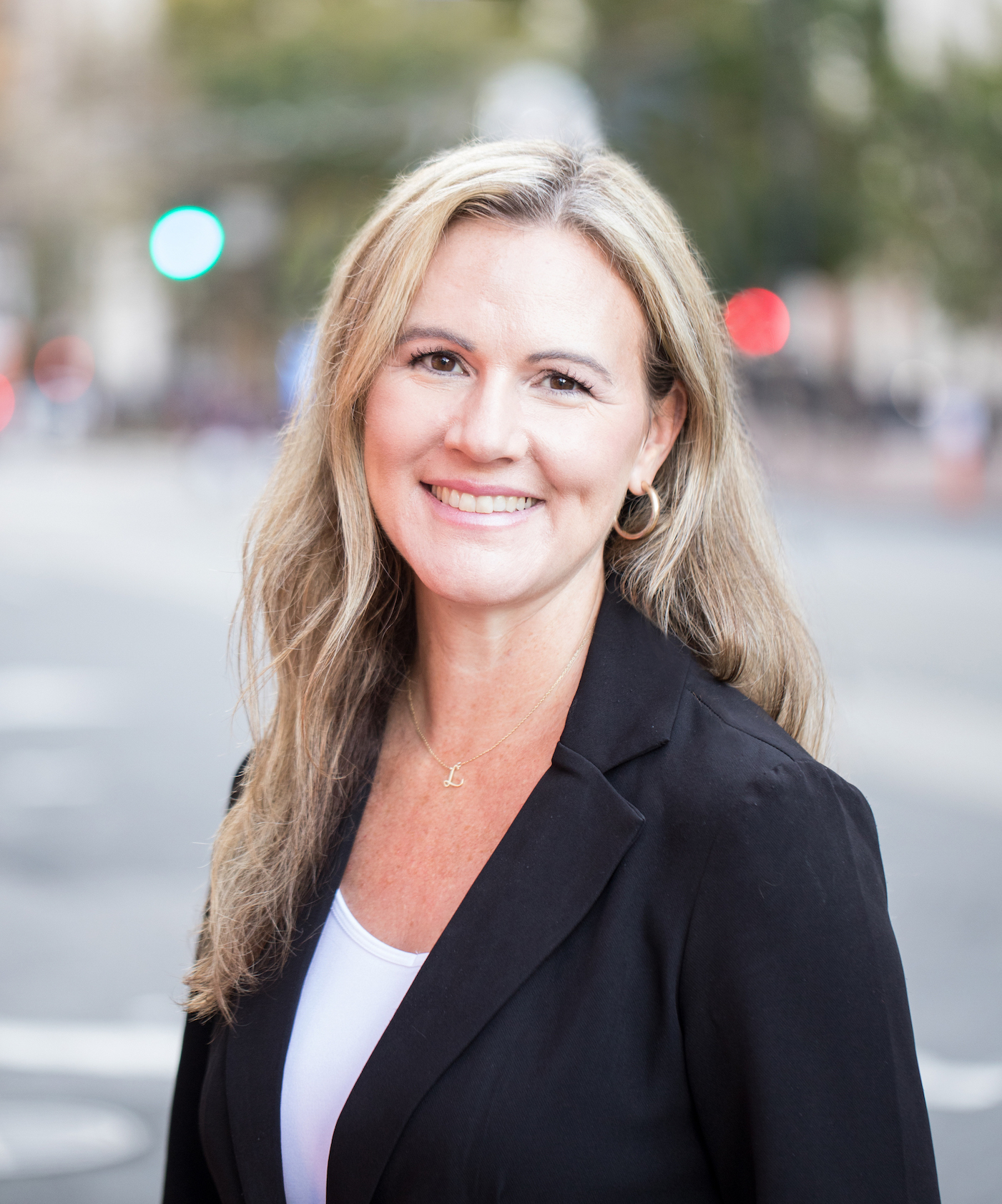
Lori Adams-Brown, Host & Executive Producer
A World of Difference Podcast
Rebranding the Brain: Neurodiversity, Psychological Safety & the Future of Hiring with Dave Thompson
A World of Difference Podcast | Host: Lori Adams-Brown | Guest: Dave Thompson | aworldofdifferencepodcast.com
What if the way we've been thinking about brains at work is fundamentally broken? What if accommodations aren't about fixing people, but about unlocking talent we've been filtering out for decades? My guest today is rebranding the brain, reimagining hiring, and showing us what belonging actually looks like when it's done right. This is a conversation that will change how you think about neurodiversity, psychological safety, and the future of work.
I'm so excited to introduce today's guest. Dave Thompson is a strategist, author, and internationally recognized speaker focused on redesigning systems that support the full range of human cognition. An early-identified ADHDer and dyslexic thinker, he has spent his career translating lived experience into practical change. Dave is a program coordinator and visiting scholar at Vanderbilt University's Frist Center for Autism and Innovation, where he works across research, education, and industry. A two-time TEDx speaker, he advises Fortune 100 companies, universities, and social enterprises. His book, Brainstorm: Neurodivergent Talent and the Future of Work, drops globally on March 3rd. I'm excited to welcome Dave to A World of Difference.
Hi, Dave. A very warm welcome to A World of Difference Podcast today.
Thank you so much. It's awesome to be here. Great to finally meet you, Lori.
Yes, you too. I'm really excited to talk about the incredible work you do, all of your brilliance, what you've learned, what you're applying to your work. And I guess my main question to start out with you is: give us your why. Why is it you do this work?
Great. So I was early identified many, many years ago with ADHD and dyslexia. Now I know today what that means for me and that I have a couple of other things going on between my ears. But back then at age five, it was just a medical diagnosis of those things. Then growing up through the traditional idea of what that looks like — special ed classroom and things like that — because of that, I was really kind of counted out from a young age. I missed out on a lot of opportunity.
Compared to my sister, who is late-identified neurodivergent — she was in accelerated classes as a kid and did a million extracurriculars. Coming out of college, the only extracurricular I had on my resume was that I was in the cheese club in college, which is exactly what it sounds like. All we did was eat cheese. And that's why it worked for me — no prerequisites, and it fit within my interest. But what does that say about me? Not much besides my interest in cheese.
I was kind of an idealist but didn't realize that I was good at a lot of stuff yet. So I got into human services, got into the world of supporting people who needed support. Wasn't even really connecting that to my brain. Eventually I did. I was so disappointed with the lack of meaningful opportunity for folks from underserved groups — whether that was within the disability community, the juvenile justice system, or through the Missouri Office of Mental Health in New York City. I was grossed out by the low level of support and monetary aid and all that stuff.
So I got into working on helping folks to get jobs and supporting them in that, and then realized that there really wasn't much available. So I got passionate about fixing systems instead. Long story short, I've spent the vast majority of my career on doing that — on fixing the world of mostly work, but also school and community life to work for everybody. And in doing so, I learned a lot about myself and what I bring to the table, and also that this stuff just kind of helps everyone.
In that time, we've learned collectively as a society that there's a lot more difference going on between our ears than we previously realized. The conversation has changed a lot. And I've always prided myself on being on top of that, which brings me to working with a lot of Fortune 100 companies and small mission-driven organizations and universities and things like that.
Incredible. I'm always amazed at how here we are in the year 2026. We're recording this the first day into the Year of the Horse. Happy Chinese New Year and Lunar New Year to everyone who celebrates. I'm really excited about galloping into this year because the Year of the Snake was not my best. There were a lot of snakes out there — trying to shed that off.
But when I think about education in particular and children like you that are growing up in systems that were not created for them — meant for people like you who are way more common than we previously realized — it's just heartbreaking to think of all the little kids growing up and still being lost in the system. We have a lot of systems changers here that listen to the podcast, because I think many of us, for whatever our niche is, we've gotten to a point where we realize taking care of the bodies downstream is not maybe where we want to be at this moment — as opposed to going upstream and fixing why they're falling downstream in the first place.
And so you talk about rebranding the brain. What does that really mean in practice, and how does it change the way we think about differences and how people learn, work, and communicate?
Yeah, so like I said, I was raised through a deficit-based or medical model of what it looks like to have ADHD. I like to talk about ADHD and dyslexia because those are my identities — and who am I to talk too much about something like autism, although I have spent many years supporting and working alongside autistic folks. But when you think about it in that way, it can be very dead on arrival, very limiting — for individuals to only see what people can't do and what their deficits are.
So the idea of neurodiversity is taking it outside of that medical or deficit-based framework and looking at it neutrally. I like to compare it to ecology. First of all, neurodiversity is all of us. Not one person can be diverse — only groups of people can be diverse. Everyone contributes their own billions of neurons and their own fingerprint, snowflake, whatever you want to call it, of a brain to a collective idea of what it means to be human, of neurodiversity. And that's a good thing.
In nature, biodiversity means a more resilient, flexible, and adaptive environment. If you look at something like the rainforest with waterfalls and bright green plants and monkeys and beautiful flowers and frogs — that is a strong ecosystem. The reason those incredible animals can live there is because of the environment.
The problem is that the systems we are expected to survive in don't allow us to thrive. We're spending too much energy and time just surviving, rather than thriving in an environment that works for us. There is this incredible neurodiversity within humanity that's largely untapped because of things like school and work and community life being designed for not one kind of thinker, but a very finite idea of what it means to be productive, to work, to solve problems, and to communicate.
So rebranding the brain is just that. It's looking at this with a neutral or even strength-based approach to how people show up differently and saying not everyone is going to be a jack of all trades, natural at all of the things — and that's okay. Yes, of course, it's not all pretty or perfect. I do have things that are internal, intrinsic to me that are challenging no matter what my environment is like. But if we focus on systems and call that the problem rather than making it a personal one, that's very empowering to individuals and very effective in moving the needle — not just for us, but for every single person, no matter how they identify.
Beautifully said and actually so powerful. I think many of us — me included — I grew up near rainforest. I grew up near the Amazon in Venezuela and then I lived in Singapore very close to rainforest, and then in Indonesia as well. So many of you around the world, if you're listening and you're picturing that, you know exactly what he's talking about. But even if you've only seen it on National Geographic, that diversity is some of the things that I think we are so proud of as humans about this planet. It's so inspiring.
And yet you're setting the stage for what we're about to talk about next, which is belonging and psychological safety. We've gotten away from the DEI terminology here in the United States, but that is something that globally, people are still — even Fortune 100s — really having to measure because of different laws in different places. But I think it goes beyond laws and it goes beyond metrics of who we hire and who we promote. It's really the culture we're cultivating.
Do we have a rainforest culture? Is it safe for little green tree frogs to be here alongside spider monkeys, or whatever? Or are we only centering one voice, one type of individual? So help us understand with belonging and psychological safety — because they get talked about a lot at work, and I think both of those have become real buzzwords lately — but what do these concepts actually look like when they're really done well?
Yeah, totally. And I like your tree frog–spider monkey analogy. We could just keep talking about animals all day. But to me, psych safety is absolutely a buzzword right now, and so is belonging. But really, let's get down to it — forgetting about any sort of buzzy terminology, even DEI or diversity, equity, and inclusion, any of that word salad — what we're talking about is being able to show up and feeling okay at work. And that's not just for underserved groups. It's for everybody.
Neurodiversity is a really helpful lens to look at these things, because no matter what color you are, what gender you are, what kind of positional power you occupy at work, your brain is different from anybody else's — guaranteed. And you have things that you need to be set up for success, and you have feelings and passions and perspectives.
So to me, psychological safety is being able to show up as yourself, whatever that looks like. We can get really deep into whether people should be completely themselves at work. In neurodiversity, we talk about masking a lot, which is hiding your neurodivergent traits — which also hides your strengths. But no one acts exactly at work the way they do at home. So we're not necessarily talking about that, but showing up as yourself and feeling included and valued as part of a team.
That would be like the bottom rung. There are four levels of psychological safety. The first is inclusion safety. If you don't feel welcomed and valued as part of the team, you're not going to hit the rest.
Next would be learner safety — the safety to ask questions, make mistakes. Part of learning is making mistakes. That needs to be normalized and okay. Seeking support, saying, "Hey, I know we already talked about this, but I need it again." Or "Can I have the transcript from that meeting? Because I was fully dialed in — I wasn't taking notes." People don't grow or learn or get better if they don't have the safety to do that. And we're not all fitting into these rigid, cookie-cutter job descriptions that we're supposed to.
Next would be contributor safety. Am I being taken seriously? Can I raise my hand and say, "Hey, I have a big idea"? Am I being credited properly for that? Especially for neurodivergent folks who tend to over-index in areas that they're interested in and passionate about — especially us ADHDers — is it filling my cup? Is it valuable to the employer and scratching the itch for me? Or do I just feel like a cog in a machine, even if it's a valuable cog? I don't want to feel like a cog. So having autonomy and support in doing that.
And then last would be challenger safety, which is exactly what it sounds like — the ability to raise your hand, not disrespectfully, but being respected in raising your hand and saying, "Hey, I know our whole company uses Apple computers, but here's why we should use Linux or Windows." Or "I know the ice cream fridge is way in the back of the ice cream shop, but it should be right by the door right before people leave." Just challenging the way things are done.
That doesn't mean we need to turn companies on their head. It doesn't mean we need to accommodate all these challenges. It means we're creating time and space to have these conversations. And when it's a no, people get context around why it's a no. And when it's not a no — when you really listen to your people and welcome that kind of feedback — you're going to change the whole way work works for the better.
We see that all the time with companies saving millions of dollars by just saying, "Hey, if you see anything that should be different — and sure, there's that suggestion box in the lobby that's dusty and never checked — but really, I want to know. Tell me." When you really listen to your people and welcome that, even if it's 0.5% of what you're getting, that will change your business for the better and drive you forward. So that to me is psychological safety.
And you can't get to that "let's change this all" space if you can't just show up as yourself and feel good about being there. That's foundational, of course.
Incredible perspective. I did a lot of corporate training and built whole key leadership programs that were global across multiple continents and cities. One of the things I would train on is this whole notion that we are all unique in terms of how our brains work — yes, neurodiversity, but also, as you mentioned, all of us.
I think Temple Grandin's work — Thinking in Pictures, which I read back in my Singapore years, and of course I love the movie Claire Danes portrays her in — just the understanding that one of her messages is that the world needs all different kinds of brains. And the reality is the world has all different kinds of brains. If we only acknowledge that in our educational systems with little kids in school, in our workforce — it's only going to make it better to say, "How exciting, we all see this differently. The possibilities are endless for how innovative we can be."
And yet so often I see, again and again — basic corporate comms professionals, even some that we've had on the podcast, I'm thinking of Alejandra Ramirez Wells, who said to us that giving the "why" is just basic when it comes to corporate comms. Why is this change happening? And then the work of Center for Creative Leadership, which I've been involved in and been on the advisory board for, is around co-creating — how leadership really has been changing. There's a reason we want that, because change management works so much better when you're getting people's input.
So if we're serious about building this kind of environment that you're mentioning, we really have to start at the beginning — at hiring. It's broken. I sit here in Silicon Valley. I'm in a talent field myself. We have LinkedIn Easy Apply getting 10,000 applications for a role. And in the end, the head of talent I met recently said, "Does anybody know a good technical recruiter?" Because the reality is it's so difficult. AI has its own bias. Humans have our bias. It's never been perfect, but it's just incredibly wild.
So I'd love your perspective on this. Many systems filter out really great candidates — whether it's AI doing it or humans doing it or both. What do you think needs to change if companies really want to tap into the full talent pool, especially neurodivergent talent that often gets filtered out pretty quickly?
Yeah. And I think the biggest problem is for neurodivergent talent, but I appreciate your framing — hiring right now stinks for companies too. This is a mess that we've gotten ourselves into with all these ATS systems, these automated systems, even before AI integration and now with that. It's no wonder why, based on the candidate experience, what the employer is seeing is such a mess — folks that have two out of 20 of the qualifications applying, AI-written cover letters, and things like that.
I don't have the statistics off the top of my head, but they're in my book — on average, folks only look at a job description on Indeed or something for a couple of seconds, like 38 seconds or something like that, before deciding whether to apply or not. Because this whole thing is a mess.
But I think it's a great place to start logistically in how we fix it. It's also just a great thing to look at because a resume and a job description are these two finite, concrete pieces of paper that we can look at and say, "What's wrong here? What's the disconnect?"
One of my favorite things to do — once I have safety and belonging with one of my clients, like a huge employer — is tearing apart those job descriptions and saying something like, "I would never work here." And they say, "Well, why, Dave?" And I say, "Because what I'm seeing on the screen right now and how I've gotten to know you folks is not reflected at all in the way you're communicating these positions." They're like copies of copies of copies with all this boilerplate language. So redo the whole thing.
First of all, so much information doesn't need to be on there, and then the rest is vague. As far as requirements — I don't think anyone's looking for a cheese club alumni, right? But I have a lot to contribute. I didn't have these pedigrees from big schools, and now I work for one of the top universities in the country in a leadership role. It took me a long time to get here, not because there was anything wrong with me, but because people were expecting that to show up differently.
I know a high school dropout who's dyslexic, who has been an engineer for 30 years and has 26 patents in his name — because patents only go to individuals, not companies. He's spent his career at an energy company making things safer and more efficient for people on oil rigs, and he has something like 26 patents. And he would not be able to get that same job today. That's because of newer requirements.
And then as far as job descriptions — talk about what it actually is. Things like "proficient in Excel" can mean almost anything. I use spreadsheets every day. I would not call myself proficient in Excel. I have no business doing certain things and I don't want to. So that would make me self-select out, even though I use spreadsheets every single day and even though, even if I couldn't do that one function of the job, I'd over-index or over-deliver on the other 19 bullet points. So say what you mean and mean what you say, but also have more flexibility in what this role might look like.
I've been very lucky to work at companies where I write my own job descriptions. Having flexibility and saying, "Hey, this super-organized, natural project manager with the same role as me loves doing that and really doesn't like dealing with people or doing learning and development stuff. And Dave loves that. Why don't we just trade?" That would be great. I know it's hard in the big corporate world. I know it's hard. But I also see what happens in these small, kind of siloed pilot programs that companies have around neuro-inclusion. And what we see is incredible.
If you want human capital, you have to be human and show humanity and understand that people are showing up in all different ways with strengths and passions and perspectives. And yes, challenges. And we need to be ready for that.
Also — invite people in. I could talk about job descriptions all day. How are you actually letting people know that this may not guarantee it'll work for them, but what does it look like to work at your company, and that they're welcome? They're welcome to show up as themselves and think differently at work.
I tell clients: "Do me a favor. On a virtual call or something, Google the name of your company and 'autism' or 'autistic' and see what comes up." And it's a good thing you're sitting down — if the first thing is Reddit or TikTok, right? This stuff — neurodiversity, the understanding and enthusiasm and expectation of employers that's come about in the last couple of years around this concept — has just exploded and it's not going anywhere. We need to acknowledge it out loud.
Incredible. I just love listening to your perspective because the reality is any of us — you, me included — who's written job descriptions, also co-created my own job descriptions. This is so key. And although it is changing so much with AI, we can't outsource this. It's so key because there's something so humane when we do it right, because the work we do — and I mean, in the United States we are definitely way too identified with the work that we do. Our friends from around the world give us that feedback and it's absolutely fair.
But I would say anywhere in the world, work is important to everyone. And when we gatekeep that in such a way as to harm our organization because we're filtering out some of the very most brilliant minds that we want and need — because let's just be honest, people that we considered to be the geniuses of history were so often neurodivergent. Einstein is a very clear case, many others. And so when we think about that — Silicon Valley prides itself on having these brilliant, even neurodiverse, CEOs and founders of major companies and startups. And it's wild to think about that we kind of relegate that to the engineering field where we just assume 80% of them are probably autistic. But it's not enough if we gatekeep that.
And so I really want to talk about — once people walk in the door, the work doesn't stop there. We really need to cultivate an environment where we're bringing out the uniqueness of each of us, the fingerprint that we all have, the snowflakes that we all are.
I want to talk about the self-advocacy that you talk about in a really compelling way. I bring this up because yesterday, I was at this conference in Berkeley where we were talking about recognition for employees. There was research from this big organization that studied something like 38,000 people globally and what they found about just being recognized. And the reality is, every employee — whether they identify as neurodivergent or not — is going to have a preference on how they want to be recognized when they do something great.
If you're a strong introvert, whether you're autistic or not, maybe you're an engineer and you hate public recognition. Like, that would be an actual thing that would make you want to leave the company if you were told, "Let's bring you up on stage and give a speech." Whereas some people — maybe the Enneagram threes, the performers — that's what they work for: stage time. Even when it comes to just recognition, we need to be having these conversations. How do you work best? What works for you?
But then there's this other side of the same coin, which is the self-advocacy piece, which can be very, very difficult. So help walk us through your reframing about accommodations as success enablers. Why does that shift really matter? And how does it change the way employees advocate for themselves with their managers and everybody else?
I love everything that you just said, and so many things I want to touch on. I'll say that in my new book, I have these doodles in Sharpie, and one of them is called FOBI — you know, FOMO is fear of missing out, but there's also fear of being included. So it's a doodle of someone that is not happy to be at their own birthday party.
I like to tell people: not everyone wants a birthday party in the break room. I do, because I love cake and I love attention. But not everybody does.
We'll get into success enablers, but a lot of those are social. When we think of accommodations — accommodations and the Americans with Disabilities Act and rights and laws are really important, and I would never downplay that. But when you think of accommodations, and I've asked rooms full of people before what they think, they think of wheelchairs and Braille. They mostly think of physical disabilities. And also complicated, dusty paperwork. Scary. Not everyone has the safety to do those things. It's certainly not about whether or not I have a birthday party as an accommodation.
So my idea of success enablers is just that. We all, no matter how we're wired, have our own stuff that sets us up for success — whether that's something like how you like to be recognized, whether you want to be in the company newsletter or not, how we communicate, all the way down to those more accommodation-type things like noise-canceling headphones, meeting transcriptions, a standing desk, LED lights, natural light, flexible work-from-home policies. This really runs the gamut of all the things that set you up for success.
I like to share mine — to give people a tour, a virtual tour of my desk. And they go beyond my desk because it's not just the hardware and software and fidgets and stuff that I use. It's also that I have a lot of autonomy to do what I do. I'm kind of an entrepreneur, but I have a very approachable team that's eager to support and bounce ideas off of. So it's not just physical.
But when you share those — when I share my "Dave's desk tour," or when teams share with each other what sets them up for success without necessarily putting a label on it — like, you don't need an excuse to get what you need to be productive and efficient and happy at work — when you do that, everybody else does that. When you explore your own, embrace your own, and share them, other people feel empowered to do the same. And it is an incredible thing, what happens on teams when you just share that stuff.
So I always encourage managers, people managers — it doesn't need to be about your brain and it certainly doesn't need to have a label tied to it. But if you say, "Listen, I'm late on Tuesdays because of X," or "I really have trouble rotating PDFs and working in Outlook — I used to work in Gmail at my old company, I really appreciate your support in this" — when you show that kind of vulnerability and you just share something that you could use support or understanding with, that goes a really long way for psychological safety and belonging.
When other people do too, people want to help. People want to support each other. And you learn so much about each other. And when you explore them for yourself, you learn a lot about yourself too. You'll be asking yourself questions that you've never even asked yourself before. So it's really exciting. So that's basically success enablers.
And I do want to say — because you commented on Einstein — I think you'd agree it's not our business to diagnose Einstein, right? But Einstein was a different dude. Einstein was showing up different. And if you look at a picture of Einstein's desk, if you Google "Einstein's desk," the same old black-and-white picture comes up. It is a lot like my desk. It is a mess. But it is Einstein's mess.
If he was alive today, he'd probably have three monitors and a lot of sticky notes and stuff like me. We're part of the same club. But imagine if Einstein had to show up to work every day and, when he left, his desk had to be clear. So he showed up to a clear desk, made it a mess, and then had to clean it up again before he left. And they brought him into an office and said, "Dude, Albert, you really have to do something with that hair. You're doing great with the theory of relativity or whatever, but you can't be looking like that."
Our understanding of time and space might be different because of Einstein not being able to show up as himself. So think about everything that we're missing out on. Not only is it the right thing to do for individuals, but think about all the stuff that we've missed out on because of people not being able to get what they need and be who they are.
Yes. And that should haunt everyone who works in any working environment, because we don't want to just relegate people such as Einstein to being a professor in the labs. We really would benefit from having them innovating and iterating in our tech workforce here in Silicon Valley.
But we are increasingly living in a time where we're treating human beings like cogs in a wheel. We thought we had sort of moved away from this with the Industrial Revolution learnings of our history — or even the more recent history where we have incredible data to show that when the world shut down with COVID-19, productivity rose with remote workers. And now we have all these return-to-office mandates.
If it's based on something truly about innovation where you've really cultivated a scenario where these people in this physical location are going to be together for that purpose, then it is true. But if it's just, at worst, a measure of control based on the fact that the CEO just likes to see that people are working — if it feels like a "worker bee" sort of scenario — it's not ultimately going to result in what we hope, because the data shows us otherwise.
And then some companies will just stamp an ERG — an employee resource group — situation and act like that's the solver. You've thought deeply about when these actually work. Not only are ERGs everywhere, but when do they actually drive meaningful change? And when do they become more of just something symbolic — a check-the-box part of our organization instead of truly impactful?
I love that you mentioned ERGs and BRGs. Traditionally, employee resource groups are kind of seen as almost like an after-school club, a support group, for folks who want to do it. Meanwhile, BRGs — business resource groups — are seen as an asset. They help shape policy and drive the company forward.
I would really like companies that are leaning on and taking credit for employee resource groups to call them business resource groups, because that's what they're doing. It is good for the business that these folks are self-advocating, supporting each other, having conversations about the neurodivergent experience at work. There has been an absolute explosion in employee resource groups around neurodiversity and mental health and disability over the past several years — in all different ways. Sometimes neurodiversity is within the disability group, or sometimes it's combined with mental health. But no matter what, when you're making space for these conversations, that is for the betterment of not just the stakeholders within it, but the company.
I will say a few tips as far as running ERGs. Don't gatekeep. You shouldn't need to show your neurodivergent card to be a part of it. People are looking for safe places to explore this stuff. Also, neurodiversity is all of us — the whole point. Why build more walls when we're trying to knock them down?
But of course, when you're having neurodiversity conversations — nothing about us without us. If you're planning an Acceptance Month talk or something like that, it best include neurodivergent people. Not just speaking or hosting trainings, but in the planning of that.
As far as what employers can do — we've seen a lot of challenges around doing anything that can be perceived as DEI on the systems level, at least in the United States lately. We're seeing more progress happen from the workforce, the wider workforce, than we're seeing at the systems level. But they're not funded properly. They're not credited properly. They're not taken seriously.
Even at some of the best big companies doing their own inclusion work right now, their ERG folks — this is not part of their job. They're sneaking around or working extra hours to help run a subgroup of 3,000 people globally, which then the company is taking credit for. That's gross. This is great stuff and we should be taking it seriously. We should be listening. And when you listen, you've got to act. You should show your people that what they're doing matters and that great things happen when you come together and ideate and brainstorm around what the future of work looks like at your organization.
Yes. When I think through that and when you say it out loud the way you do — I've had this kind of in the back of my mind as I've seen ERGs and BRGs in places that I've worked and in friends' companies here. It is exactly what you're saying. It's sometimes treated as if it's a volunteer position, but you're working in it. You're not probably going to be promoted for it. It may be this invisible work that you do, but it's often very visible. It's just not visible in the sense that this would be a stepping stone for what's next for you in the company. And yet it's a significant amount of labor — especially if you think about a neurodivergent ERG when it comes up for Autism Awareness Month or anything like that. They're going to have a ton of work with speakers and events.
It really does seem as though we should hire for these roles. It could be a hybrid role where they're doing ERG work part of the time and then there's some other job function they're performing. It doesn't have to be their full-time job. But surely we can get to the point of not just, as you say, the company taking credit for something that's not going to really help this person grow in their career or get promoted for it, or even be recognized for the work that they do — which is a significant amount of work and really benefits the company.
I'll say also that emotional labor is labor. Self-advocacy and advocacy and this kind of stuff — they want folks talking on a panel during Autism Acceptance Month or something like that. That is a risk for people.
The fact that when you Google my name, the first things that come up are me talking on big stages about what I'm bad at — that means I feel very vulnerable in that way. I'm very lucky that I'm not going anywhere. I've been doing this for my entire career. But if I didn't want to anymore and I wanted to go be an accountant or something at a Big Four organization, I would not be able to do it.
So self-advocacy and emotional labor is labor. And when I say credited properly, I'm not just saying it's another bullet point on their job description. I'm saying it's a heavy bullet on their job description. Being vulnerable and sharing your lived experience and sharing what would work better for you out loud is a thing — and a thing that should be respected and taken very seriously.
Oof, well said. And I loved your quote earlier — I feel like it's worth revisiting — that if we want human organizations, we need to be human. It's like if we expect humanity, we need to be human. Isn't that just the call for all of us right now? It feels somewhat controversial, or that we need a campaign for it, which is wild that this is the state of humanity. But this is, alas, where we are.
But your book — I want to talk about that as we close out here. It drops very soon. Congratulations. I love the name. I'm a big fan of good book names and I think it's an awesome one. What's the one thing you hope readers walk away understanding differently about neurodivergent talent after they finish Brainstorm?
I think that what neurodiversity is, is everyone. What neuro-inclusion is, is good for everyone. And that what's happening right now — Brainstorm is a bit of a double meaning for "brainstorm" like problem-solving, but also "brainstorm" like a shift in reality right now. The weather is changing.
The fact is that just like our conversations around AI, or before that the dot-com boom, or before that "you've got to start faxing or have a beeper" — these big changes that we have in work, you mentioned the Industrial Revolution — people say you just can't get away from them. Right now it's AI. This is one of those things. This is the biggest thing to happen to human capital since probably women's lib and things like that — in many decades.
The fact that "neurodivergent" is googled more than Taylor Swift tickets are googled is a big deal. That's a new stat from my book. It's like — you've got to get on board. That's my big thing. There is a lot of the "how" in the book, but I think the mindset — what it is, why it's good, and that you'll be better for it — is essential framing.
As long as this is still very much in the exploratory, startup phase — practice is way ahead of research and things like that — but as long as you have the mindset, a growth mindset and that understanding, and you're well-meaning and you want to see companies do better and people do better, that is where you start. There's lots of the "how," but I'm super stoked on the "why." And I think the more people understand the why, the better.
Love it. Everybody go order Brainstorm. Where can they find you and where can they find your book?
Thank you for asking. Just go to brainstormneurodiversity.com and my contact is on there. All my TED Talks, media, and my offerings as well as the book are on there. But you can get it anywhere books are sold — Amazon, Barnes & Noble, your local bookshop at bookshop.org — wherever you find your books.
Thank you so much, Dave. This has been a fascinating conversation. I've learned so much from you and I know that all the Difference Makers have as well. As we finish up here, I'll have you join us in our Patreon community. If you're not there, everybody go join us at patreon.com/aworldadifference where we'll have an exclusive with Dave. Thanks for being on the show today, Dave. You're so brilliant and so insightful. I've really appreciated this conversation.
Thank you. You too. This is great. I'll come back anytime.
If this conversation resonated with you, I'd love for you to do three things. First, subscribe to A World of Difference wherever you listen to podcasts. Second, leave a review wherever you listen — it helps more people find these conversations, like this one with Dave and so many other great guests we've had, leaders from all around the world. And third, share this episode with five people who need to hear it.
Visit aworldofdifferencepodcast.com for more resources. And if you want access to the bonus content — that's exclusive — like the question I just asked Dave, join our Patreon community. Because over there, I asked him this question around whether he has a different, maybe unpopular opinion that the larger neurodivergent community maybe doesn't share. And he gave a two-pronged answer which was absolutely fascinating. I highly resonated with it. I really hope that you go there and check it out, because it was incredibly insightful. And I think sometimes when we bring these new perspectives and give an element of pushback, it helps broaden the conversation.
And isn't that really what this whole podcast is about? Helping us understand, as Dave mentioned, that really we are all a part of a neurodiverse community in a sense, because the world has helped us understand with its incredible research that not only do we have different perspectives from our cultures, our languages, our personalities, the teachers we had growing up, our birth order and umpteen things — but in addition to maybe labels that have been given such as ADHD, autistic, and a long list of things, the reality is we're all as unique as our fingerprint, and the way that we think and filter conversations is very, very unique to us.
It was a good reminder from Dave about why differences matter, why bringing differences to the table matters, and that we can best make a difference when we listen to one another, hear those perspectives, and bring those into our innovative ideas of how we're changing systems around the world, across industries, to make the world a better place.
You're not alone. Your voice matters. Thank you so much for listening, and please remember to keep making a difference wherever you are.
A World of Difference Podcast | Host: Lori Adams-Brown
Subscribe & review: aworldofdifferencepodcast.com/reviews/new
Website: aworldofdifferencepodcast.com
Patreon: patreon.com/aworldadifference
Guest: Dave Thompson | brainstormneurodiversity.com