

Signs of Hope and Community: Revitalizing Church Life with Rachel Metheny

 Apple Podcasts
 Spotify
 RSS Feed
 Show Notes: To Be and Do Podcast
Host: Phil Amerson
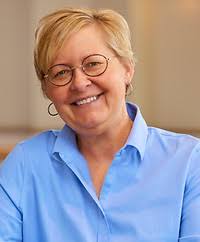
Guest: Rachel Metheny, Lead Pastor at Meridian Street United Methodist Church, Indianapolis
Episode Overview:
In this thoughtful and energizing episode, Phil Amerson sits down with longtime friend and colleague Rachel Metheny, lead pastor of Meridian Street United Methodist Church in Indianapolis. Their conversation delves deeply into what it means for churches—and church leaders—to be relevant, vibrant, and true to their mission in a time of rapid cultural and societal change. From the unique struggles facing aging congregations to the surprising resurgence of young families and the craving for authentic community, Rachel Metheny shares stories and insights from her decades in ministry.
Three Key Takeaways:
1. The Power of Tradition Mixed with Relevance
Despite national trends of declining church attendance, Rachel Metheny has witnessed new growth at Meridian Street—especially among younger families. Interestingly, what draws many is not “cool” trends or high-tech worship but rather traditional liturgy and music peppered with honest conversation about relevant issues. Young people expressed appreciation for a worship space that resists screens and bands in favor of classic practices, finding security in ritual while engaging candidly with modern challenges. As Rachel Metheny observes, community members welcomed traditional worship complemented by discussions on justice, inclusion, and contemporary life concerns.
2. Community and Connection Trump the Latest Church Trends
Both speakers reflect on the irony of churches chasing ever-newer strategies—program trends, entertainment, sports leagues—when the true lifeblood of congregational renewal is community. Rachel Metheny shares, “I think there’s a hunger for these young people to be a part of a community... just getting together and eating together.” The simplest acts—sharing meals, supporting one another, showing up—fuel deeper bonds and a spiritual home for many who feel isolated in an increasingly digital world.
3. A Shift from Charity to Justice
A new wave of leaders and congregants, especially among young adults, are less interested in traditional “charity” models and more passionate about systemic justice. Rachel Metheny describes how the congregation responded to national immigration issues, organizing not just to give but to act for change. This move toward direct justice work, catalyzed by new, energetic members, reflects a broader generational shift in what it means to live out faith in the world.
This episode is a compelling listen for anyone interested in the evolving landscape of faith, community, and what makes church truly matter today. Tune in to hear authentic dialogue, wisdom from years in ministry, and hope for the church’s future.
Phil Amerson [00:00:01]:
Hello everyone, it's Phil Amerson again with the To Be and Do podcast, where we check in to see if what we say we are matches with what we do, and how we live matches with what we believe. And it's not always easy, at least not for me. And I try to find good people who help us think about the way we live and the world where we live. During this Lenten Season 2026, we've been talking with pastors and folks who are shaping the future of the church. And one of the people I am so glad we can speak with is— I'm going to embarrass you now— the Reverend Dr. Rachel Matheny, who is the lead pastor at Meridian Street United Methodist Church in Indianapolis. She reminded me that we've known each other for 30-plus years.
Rachel Metheny [00:01:00]:
Wow, long time.
Phil Amerson [00:01:02]:
Welcome, Rachel. It's great to have you.
Rachel Metheny [00:01:05]:
It is great to be here.
Phil Amerson [00:01:08]:
You have been, uh, well, tell me a little bit about why you're a minister. I mean, come on, there are a lot of other things you could be doing.
Rachel Metheny [00:01:22]:
I know, I was just thinking about this this morning because how long I've known you. I was an intern at Broadway in Indianapolis when you were the senior pastor, going to seminary, wondering if I actually wanted to get ordained. Um, many times thought I was not going to, and our mutual friend Mike Mather said, just do it. And get ordained. And if you don't want to do it after it, then you can do something else, but just go through the process and do it. And look, I'm here 30 years later, so I listened to Mike. That's why I'm a pastor.
Phil Amerson [00:02:00]:
Well, we were laughing earlier because we both have survived time with Mike Mather, and you have much longer than I. I mean, how many years did you and Mike work together?
Rachel Metheny [00:02:11]:
We were— well, 18 years the second time at Broadway.
Phil Amerson [00:02:15]:
Wow.
Rachel Metheny [00:02:16]:
I know, I deserve an award for that.
Phil Amerson [00:02:18]:
You do. And from Broadway you went— was, was that when you went to Kokomo?
Rachel Metheny [00:02:25]:
No, from Broadway, when my first appointment was at Navon for a year.
Phil Amerson [00:02:30]:
Oh, okay.
Rachel Metheny [00:02:31]:
Then I did 2 years at Bel Air, which is closed, and what, south part of Broad Ripple. And then I went out to Berkeley to work on my PhD. Then I came back to Broadway, worked with Frank Sablon for a bit, and then Mike came back.
Phil Amerson [00:02:48]:
Wow, wow.
Rachel Metheny [00:02:50]:
And even at one point, even at one point, I want— after my sabbatical, I thought about leaving. You know, I was already on honorable location, so, you know, I'm just going to turn in my credentials. I don't need them. And Mike comes in my office and quotes some passage, and about Jeremiah telling them to buy land in a foreign land even though they're not there. And he's like, you know, you might need this later on. And so I listened to him again, and I'm still here. And of course, the church has changed so much with the split, and I'm glad I stuck it out.
Phil Amerson [00:03:28]:
Well, I actually was lucky enough to be a part of your dissertation committee where when you finished your PhD. And I am so pleased that, uh, you listened to Mike, or maybe you didn't listen to Mike, but that you've continued in ministry. And you're now at Meridian Street Church in Indianapolis. Tell us a little bit about that congregation.
Rachel Metheny [00:03:57]:
Well, it's north of downtown here in Indianapolis in a, you know, probably one of the most wealthy areas of Indianapolis. The governor's house is just down the street. And, you know, it's also an aging congregation when I came here. Still very active, still very vibrant. You know, we still had, I think they still had 150, 200 worshiping on Sunday. But COVID really kind of hit them hard. And they also had some conflicts around when they came out with a statement of full inclusion, had some issues, some struggles around when we had all the Black Lives Matter protests. So I came into this church in a really heavy spot for the church, but it still had lots of life.
Rachel Metheny [00:04:51]:
Not a lot of young families with kids. I remember my first children's moment. Now this is July, so families aren't always around. I think I had like 4 kids at the kids' moment. And I'm like, where's all the kids? Where's all the families? I thought we were going to eat with that. And, but in the last 2 years, I think I mentioned to you about a year ago, we started getting all these young couples showing up. With small kids, and they just kept coming, and then they've joined, and now they're really active and involved. So very different than when I came in 4 years ago.
Phil Amerson [00:05:34]:
So I read something you wrote, I think it was— I read it on Ash Wednesday about signs of hope for the future, not only of Meridian Street but beyond that. Could you share some of that?
Rachel Metheny [00:05:48]:
Well, I wondered if what you got was our annual report. I'm not sure.
Phil Amerson [00:05:52]:
Could be. I don't know.
Rachel Metheny [00:05:54]:
Might have been because we, you know, because, you know, I've been in the church for 30 years and I think about since I've been in the church, the church has been in decline, you know, which is one of the reasons like why stay in this dying church? And I always wondered, you know, why are students going to seminary and becoming United Methodist pastors? We're just dying. And All of a sudden, at least my understanding is that's kind of leveling out, they're saying. And of course, I've seen that in my church, which, with all this kind of growth— we had, you know, 26 new members last year, and I, you know, the majority of them were probably in their late 20s, early 30s with young kids. And, um, and I was just thinking about this, you know, I have one of the congregations that does not have screens in worship. And they've talked about it for years here, and there's really no nice way to put them in. Although we again thought about it, we had the money, we were going to put them in, and, you know, just decided not to. And then you talk to these young people and they're like, yeah, we don't want screens in church, we're on our screens all the time, we don't want a band. I thought, well, you live— you're in the church long enough What everyone was doing 30 years ago is no longer sort of in vogue, at least here now.
Rachel Metheny [00:07:17]:
Maybe we're getting unique kind of folks, but they're not interested in what the church was trying to offer with the screens and the bands and so forth.
Phil Amerson [00:07:27]:
So what are they interested in?
Rachel Metheny [00:07:30]:
Well, the ones that are coming in here are very interested in justice work. Just recently, after all that happened in Minnesota with the ICE raids, they said, "We want to do something." And so they started meeting. And I think the first meeting they had about 30 people there. And they have, I mean, they're organized and they're planning and they just want to make a difference. And so, And, you know, Meridian Street has had elements of that here, although they've always been more focused on, you know, helping people who are poor, giving, you know, more focused on charity work. So doing this kind of work is really different. And they're just bringing so much energy and excitement. You know, this past summer we did a series on the Gospel According to Broadway musicals.
Rachel Metheny [00:08:30]:
And they just loved it. I mean, they were clapping. I mean, there was just so much energy, and they brought so much energy. Now, there were other people in the congregation who were like, well, we don't really like all the clapping, and can they not do that?
Phil Amerson [00:08:46]:
So you've also been, if I'm following correctly, doing sermons around movies.
Rachel Metheny [00:08:55]:
Yeah, we did. You know what I found, at least here, you know, I used to never be someone that did sermon series. I followed the lectionary and sort of got that from Mike, who's always like, well, the lectionary makes you deal with scripture passages that you don't want to deal with. And, and, um, but here, you know, these kind of lighthearted ways, um, to come at difficult issues, because, you know, we did the the Broadway series. We did Rent, we did Hamilton, we did Les Misérables. And you deal with, you know, a lot of tough issues, but in a way you come at it in a way that's a little more, I guess, entertaining, or they can handle. And then, yeah, we just did Pixar.
Phil Amerson [00:09:40]:
So yeah, well, and I've heard some of these sermons that you're not devoid of scripture. You bring scripture to the—
Rachel Metheny [00:09:47]:
no, we do have script. No, there is scripture. But yes.
Phil Amerson [00:09:50]:
Yeah, well, so the argument that's going on just beneath the surface in the nation, in the United States, is, is there, um, is there a revival of, of the church? And I'm not sure there is, but when I look at places like Meridian Street, and I see it in other places, they're little boomlets of new life and growth.
Rachel Metheny [00:10:17]:
I like that, boomlets.
Phil Amerson [00:10:19]:
Yeah, yeah. I don't know if it will last. I still remember when we began to welcome gay and lesbian folks at Broadway Church. I was so naive that I thought, well, this won't affect the Sunday school. And to my surprise, these folks had children, and suddenly we needed to— well, it didn't ever fill out that building, but we started started to need to have elementary and junior high school Sunday school classes because I had not understood the new population that was beginning to come to that congregation. And I said, so how many children would you have on a Sunday morning at Meridian Street now?
Rachel Metheny [00:11:10]:
Um, I mean, 20 to 30 probably.
Phil Amerson [00:11:13]:
Oh my gosh.
Rachel Metheny [00:11:14]:
They come up and then maybe there's more in the, in the, um, that don't come to church. I'm just thinking the kids that come up for the— I mean, at Easter last year, you know, they had to put out extra chairs for worship, and they said, we haven't done this in years here. And we had, you know, it felt like 35, 40 kids up there for Easter. And so it is, you know, and so we do have a revival sort of going on here. I'm not sure why. These young people that are coming here have already been churched, but they were at probably more non-denominational megachurches, and one of the things they said was, "We finally looked around and said, 'We don't agree with any of this.'" So I think we provided that place for some of these young adults who went to those megachurches because they had all these kids' programs and they had a band and it was entertaining, but they realized, yeah, that's not who we are. That's not what we want to be a part of.
Phil Amerson [00:12:17]:
Your music and your liturgy is pretty traditional.
Rachel Metheny [00:12:21]:
We're very traditional. We sing the, um, Gloria Patria. I've never done that anywhere. Never. We didn't do it at Broadway, did we?
Phil Amerson [00:12:35]:
No, no, no, no, no.
Rachel Metheny [00:12:37]:
I know, I know. Yes.
Phil Amerson [00:12:39]:
Wow.
Rachel Metheny [00:12:41]:
Someone told me the other day, we had two recently graduates from Butler are coming here and they want to join. And so I asked them, you know, what do they like about it? They said, well, we do like the tradition, but we also see it as it's still laid back and you still talk about things that are relevant to us.
Phil Amerson [00:12:59]:
Wow. So it's, so yeah, so traditional worship is So what do you see as the future?
Rachel Metheny [00:13:11]:
Well, right now I'm sort of living in the moment and enjoying this because I feel like I never, um, I never got to experience this really, to, um, to see this kind of growth, um, and excitement and energy. And so I hope it continues.
Phil Amerson [00:13:38]:
Well, I have a theory. You know me.
Rachel Metheny [00:13:42]:
Okay. I figured you had researched this. I hadn't.
Phil Amerson [00:13:47]:
Well, my friend Ed Kilburn, who was on this podcast a few weeks back, said that he calls contemporary music temporary music. And that there is something about, even though you maybe don't agree with all the theology of the old hymns or all of the liturgy, like really the Gloria Patri, that there's something about the liturgy that holds you even when you, you know, move beyond it, and it gives you something to push against and to think anew. And my sense is that, well, I think Minnesota and what happened there has re-informed the power of the church. I mean, I love people marching in the streets singing and gathering then in churches that evening to sing together. And it seems to me that, that, and of course part of it is those darn Lutherans in Minnesota and that deep tradition, but it seems they tapped into some hunger that's there for, uh, again, something that we can both appreciate and push against.
Rachel Metheny [00:15:19]:
Well, and also here with some of these young couples coming. I remember one of them told me, you know, I was just searching for community. And, you know, I think people— I mean, we know this, right? People are less connected. They might only have one friend, good friend. And I think, I think there's a hunger for, for these young people to be a part of a community because they come to, like, a lot of the events we have that are just focused on getting together and eating together. You know, they're there for everything. And I think they're really wanting that.
Phil Amerson [00:15:56]:
I think you're spot on.
Rachel Metheny [00:15:57]:
I'm hoping we're gonna— I'm hoping, you know, that pendulum's gonna go back to more people caring about community and getting involved in community. Because we lost a lot of that.
Phil Amerson [00:16:10]:
Yeah, we have. We have. And ironically, the church of all places got off on these jags about some kind of technique, or should we have pickleball teams, or what, you know, what's the newest expression that will bring young people in. And it may be as simple as loving your neighbor.
Rachel Metheny [00:16:37]:
Yeah, well, and one thing Mike taught me is just having meals together for no reason other than having meals. And we do that a lot here. You know, I remember one of the young families said, gosh, you're feeding me on Tuesday for the pancake thing. You're going to feed me on Friday for the Pixar movie. You're going to feed me Sunday for the mission breakfast. And you know, it's just getting together for no other reason than to enjoy each other's company. And I think there's a hunger for that. Because I think we're seeing the damage done with that certain generation that got so addicted to the iPhones, their lack of friendship and community, you know.
Phil Amerson [00:17:22]:
I think you're right on. I just had coffee this morning with a friend who said, I was sitting in my chair at home realizing I had 3 screens around me I could grab, and none of them could really be my friend.
Rachel Metheny [00:17:39]:
No. Yeah.
Phil Amerson [00:17:43]:
Well, the Reverend Dr. Rachel Matheny, we're going to talk with you next time.
Rachel Metheny [00:17:51]:
And it's a doctor that's a PhD, not a demon.
Phil Amerson [00:17:54]:
Yes, yes, let's get that correct.
Rachel Metheny [00:17:56]:
Yes, because—
Phil Amerson [00:17:57]:
yes, yeah, Reverend PhD doctor. Who ironically, you don't wear that on your sleeve. I don't see all these stripes when you stand before me.
Rachel Metheny [00:18:09]:
I don't wear the collar or anything, yes.
Phil Amerson [00:18:13]:
Oh, shame, you know. What on earth? Yeah, I always— well, that's another topic, but I always get a little chuckle out of people who have to put all of their degrees behind their name. And what you put behind your name is community builder, and that's pretty darn good. Thank you. Thank you, Reverend Doctor with a PhD who doesn't need to show it off, Rachel Matheny. And next time we're going to talk about some of the spiritual practices that you engage in and We won't tell them one of them right now, but you've been doing a lot of walking around the world, and I want to hear more about that. That's Phil Emerson for the To Be and Do podcast, and this is Rachel Matheny at Meridian Street United Methodist Church in Indianapolis. Thanks for this time, Rachel, and we look forward to the next time when we'll visit further.
Phil Amerson [00:19:26]:
God bless.