

Mind the Gap: Building Community and Belonging with Ken Medema and Phil Amerson
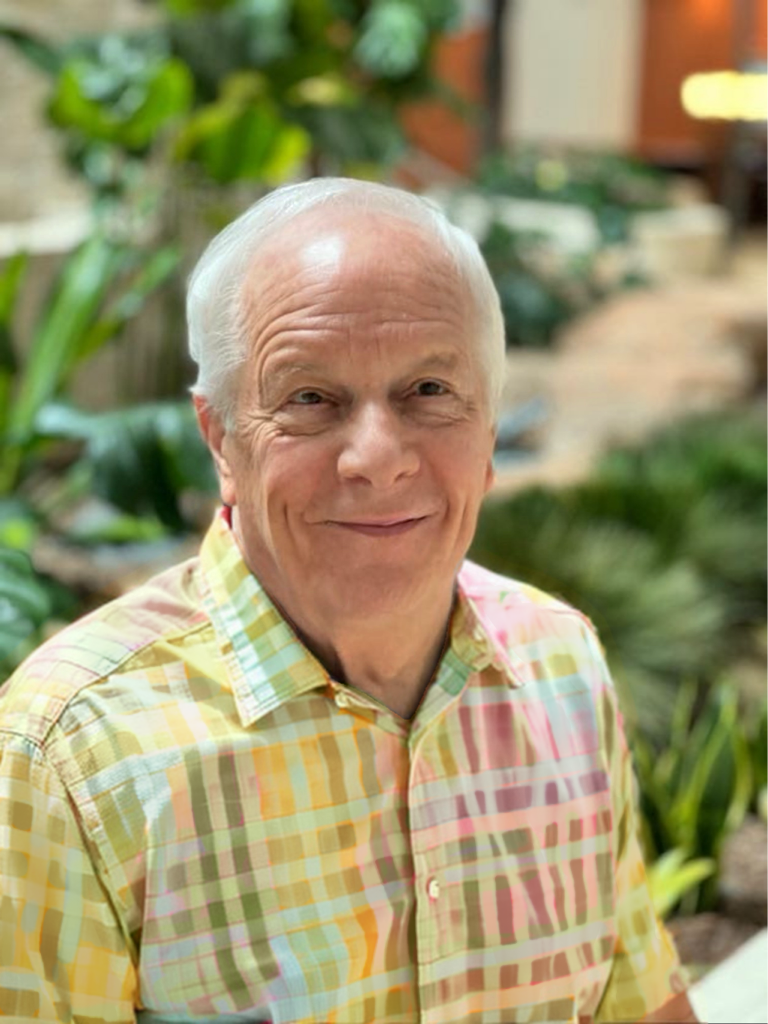


In this uplifting episode of the To Be and Do podcast, host Phil Amerson welcomes his longtime friend and musical collaborator Ken Medema <https://www.kenmedema.com/> for a heartfelt conversation about the importance and challenges of community. Both speakers blend humor, music, and serious reflection as they discuss their experiences and hopes for fostering deeper connections among people.
Three Key Takeaways:
- Community Is a Gift, Not Just an EffortPhil Amerson shares insights from his years spent in intentional communities, highlighting how genuine community cannot simply be manufactured—it is fundamentally a gift. However, we can create the context in which this gift is received, such as through diverse gatherings or the annual picnic tradition that has grown over the years. The episode encourages listeners to focus on setting the stage for community rather than trying to force it.
- Minding the Gap: Addressing Division and Isolation Drawing on a metaphor from European train travel—“Mind the gap”—the hosts discuss the increasing sense of division in society. Ken Medema and Phil Amerson both stress that while division is a reality, much of it is actively created rather than innate. Their ongoing work (including the Belonging Exchange and upcoming retreats for pastors) aims to close these gaps by fostering environments where people can truly connect, feel seen, and be reminded they are loved.
- Compassionate Action Toward the Marginalized The conversation shifts to the role of community in serving those on the margins, especially people with disabilities and those affected by poverty or incarceration. Ken Medema shares powerful stories from his foundation’s work in Mississippi, highlighting the vulnerable reliance on dwindling resources and the importance of advocating for "nothing about us, without us." Both speakers challenge listeners to not keep such populations "out of sight, out of mind," but instead to create inclusive communities where everyone’s voice matters.
Bonus Moment:
Enjoy Ken Medema’s poignant song on longing for connection, isolation, and the hope of unity—a musical reminder of the episode’s core message.
Connect Further:
Learn more about the Belonging Exchange, retreats for pastors, and Ken’s musical and community-building initiatives at interluderetreats.org.
Final Thought:
“Come on, my friend, let's join together and help nudge the future in a direction toward one that the followers of Jesus all are called to do.”
Phil Amerson [00:00:00]:
Greetings again, everyone. This is Philip Amerson with the To Be and Do podcast, where we focus on the importance of community in our life, in our world. And some of you know that the music you hear when the podcast begins is from my friend, Ken Medema Coffee time again. And, well, we've. We've been looking forward to being together. And now he's here.
Ken Medema [00:00:30]:
Yeah. Thank you, my friend. It's good to be with you. Always good to be with you. Usually when we're together, there's a good bit of laughter. We both have a gift for snark and love it. So I'm hoping we can get in some good snarky bits this morning.
Phil Amerson [00:00:54]:
I teach a course in snarkography, so.
Ken Medema [00:00:58]:
Yeah, well, listen. Yeah. When you pronounce my name correctly, a lot of people pronounce it wrong. Mitima or Mitima or whatever. And several years ago, I was on this TV program, one of these Christian TV programs back in the 70s, and the guy who was the host said, now I want to make sure I pronounce Ken's name right. And my manager said, it's Medema And he practiced it and practiced it. So all through the show, we're with Ken Medema
Ken Medema [00:01:31]:
It's wonderful to be with Ken Medema So at the end of the show, he says, so how will people get in touch with you? I looked in the camera. I said to me, Ken Mitima, new or diet? I thought he was gonna wet his pants. It was just.
Phil Amerson [00:01:53]:
But you know what?
Ken Medema [00:01:54]:
That's fun.
Phil Amerson [00:01:56]:
Well, what people don't know is that when we're together and not in a public or a video, I tease you all the time, making up different ways to pronounce Medema It's because I don't have Dutch background.
Ken Medema [00:02:16]:
Well. And if you're not Dutch, you're not much, so. That's.
Phil Amerson [00:02:20]:
Right. Hey, you're going to Hope College. That's one of my favorite places.
Ken Medema [00:02:25]:
I love that place. I love that place. And I'll be going there tomorrow. Hey. Okay, I need to know a little bit about the podcast that I'm on, Because I really didn't know. Is this some kind of, like, you.
Phil Amerson [00:02:43]:
Know.
Ken Medema [00:02:46]:
Terrorist infiltration or are you recording? Recording? Are you recruiting people for the Cabal or what are you doing?
Phil Amerson [00:02:53]:
Anyway, we have 14 listeners, all in Albania. Actually, I've been surprised. I keep thinking we've got a couple of hundred that are signed up, but recently I looked and there were over a thousand people that had picked up on something, and I hope they didn't Drop it too quickly. So.
Ken Medema [00:03:18]:
Wonderful.
Phil Amerson [00:03:19]:
Well, yeah.
Ken Medema [00:03:20]:
So tell me. Tell me what.
Phil Amerson [00:03:22]:
Here's what it is. So you know that. Well, years and years and years ago, Elaine and I were part of an intentional community. And you and Jane had experience in that. And that was an important part of our life and our shaping as young Christians. We had many friends in Washington, D.C. and Philadelphia and Holland, Michigan, who were in communities. As a matter of fact, in those years, Richard Rohr was a part of the New Jerusalem community in Cincinnati, and we met together.
Phil Amerson [00:03:59]:
So the importance of linkage with others and the value of building community has been critical. We learned some important lessons. I know you all did as well. One lesson was you can't make community. Community is a gift. But what you can do, you can set the context where that gift can be received. Yes. And so we, ever since those early years, have been trying to set contexts for receiving the gift of community.
Phil Amerson [00:04:33]:
And for. Beginning in about 2012, we started hosting a summer picnic just to bring together people we might otherwise not see, but more importantly, people who otherwise wouldn't know one another. And we deliberately made it diverse racially and in terms of social class and in terms of background. And that little picnic went to from 30 to 40 to 50. And by 2024, we had over 200 people that were doing the picnic together. And as a matter of fact, you were going to join us. And then COVID got in the way.
Ken Medema [00:05:18]:
Covid got in the way.
Phil Amerson [00:05:19]:
That's right. And. And so the picnic, what we did, we said, okay, we've done this. Now you all do picnics. And so this last year, I got maybe 20 people who said, well, this was how. What we did for our picnic, bringing different people together. And instead of doing picnics, we said, let's do two things. One, let's do a retreat for pastors who are lonely and let them know about the joy of possibility of building a wider network.
Phil Amerson [00:05:53]:
And number two, let's do a podcast and. And a blog. And so that started in the fall of 2024. And the idea is just to introduce a wide range of people with, honestly, my favorite people.
Ken Medema [00:06:13]:
And as we're doing that, we're doing that retreat for pastors next April.
Phil Amerson [00:06:19]:
That's right. April, I think. 13th to 16th.
Ken Medema [00:06:22]:
Yeah, we're starting that. And that's. That's really. I'm. Look, I'm really looking forward to that.
Phil Amerson [00:06:28]:
Well, Ken, what's. What's exciting is, is as we invite them, and you've taught me about this, Invite the ones you see that most can benefit. And as we've invited. We've now got a full house, we've got 16 and that are coming. And it's. It's become so popular, we may need to do this twice a year just to be sure that these pastors know and. And as you have taught me, let's just give them the chance to know that they're loved. And so that's really what the Belonging Exchange is.
Phil Amerson [00:07:07]:
It's a chance to introduce people to one another and for them to discover how deeply they are loved.
Ken Medema [00:07:15]:
Well, as always happens, a song comes to mind O.
Ken Medema [00:07:32]:
Locked inside our skin we live so far apart what I wouldn't give to hear the beating of your heart Trapped inside this flesh as if inside some shell Isolation is a game we play so very well Here we stand so many separate people who are longing to be known Trying to deal with the aches that we feel because we hate to be alone God of uniting we stand in your presence and this is what we pray Close the gap with every passing day. We dream the day will dawn we'll know and will be known all things will be new again and all the world be one but this is not that day Tomorrow's not yet here.
Ken Medema [00:09:24]:
Dare.
Ken Medema [00:09:24]:
We take the risk of love and join to face our fears Here we stand so many separate people who are longing to be known Trying to deal with the hate that we feel because we hate to be alone God of uniting we stand in your presence and this is what we pray Close the gap with every passing day.
Phil Amerson [00:10:22]:
The God who closes gaps. You know, I'm sure you know this, but when you're on those trains or buses and Europe, as you. As the door opens and you leave, the words are come over the loudspeaker now Mind the gap.
Ken Medema [00:10:47]:
Yes.
Ken Medema [00:10:48]:
Yeah, yeah, yeah, yeah, yeah.
Ken Medema [00:10:51]:
Mind the gap.
Phil Amerson [00:10:52]:
So that's kind of what we're trying to do with the Belonging Exchange, is minding the gap that we're in a nation right now and in a world where. Well, I heard Tom Friedman recently. The New York Times columnists said we're not a divided people so much as we are a people being divided.
Ken Medema [00:11:18]:
Oh, I like that. I like that. We.
Phil Amerson [00:11:23]:
I.
Ken Medema [00:11:24]:
Some of the stuff that I have been doing now with our little foundation in terms of fundraiser concerts for. For ministry and for people, especially people who are doing justice work. I was in Mississippi recently at a wonderful, wonderful mission in the little town of Rolling Fork, Mississippi.
Phil Amerson [00:11:49]:
And the Rolling Fork.
Ken Medema [00:11:51]:
Yeah. And really there is a town called Rolling Fork. Fifty years ago, a little group got Started that call themselves Mississippi Christian Family Ministries. They were committed to dealing with and assisting the lives of disabled people. This is dirt poor country, and there were so many families who had disabled kids and no facility for them. So over 50 years, this thing has developed. Now they have physical therapists, occupational therapists, social workers. So wonderful, wonderful.
Ken Medema [00:12:30]:
And they have communal housing for people who cannot live alone, independent apartments for people who do live alone, volunteer apartments for people who want to come down and work at the mission. So we did a big celebration of their 50 years. And then the day after, I was sitting with the director, I said, so where does your funding come from? And there was a long silence. She said, Medicaid.
Phil Amerson [00:13:00]:
Oh.
Ken Medema [00:13:02]:
And then she said, we could be decimated any second now.
Phil Amerson [00:13:07]:
Oh, yeah.
Ken Medema [00:13:12]:
It's one thing to hear it in the news. It's another thing to be sitting there when. When you're told that. And so I've become more and more passionate and more and more insistent and more and more urgent about the fact that whatever I can do to help people who are doing work with the least and the lost, whatever I can do, our foundation is pretty much committed to doing that wherever we can.
Phil Amerson [00:13:44]:
So it's so our society today. You're out in the Bay Area where you call home. I'm still in the heartland here in Indiana, but in both places, our tendency is to want to have people out of sight and out of mind.
Ken Medema [00:14:08]:
Oh, yeah.
Phil Amerson [00:14:10]:
And so one of the things that comes from the Belonging developmentally disabled community that I love, and I. I quoted it without attributing it recently, and. And a woman came and wanted to remind me, and it is. It is simply this. Nothing about us, without us.
Ken Medema [00:14:34]:
Oh. Oh. I like.
Phil Amerson [00:14:37]:
And that's. As you know, I've been working in my hometown on folks want to build a new jail, but they want to get it out of town and put it out somewhere on 25 acres so that we don't have to see these families and people that are struggling. And so that's when I quoted it. And the woman who came up said, you know, there's a link between people who are in jail and people who often have disabilities. And she went on to explain that to me, and I knew a lot of it, but I didn't know it was as deeply embedded as it is.
Ken Medema [00:15:22]:
I did not know that it was that much of a connection. But it makes sense. It makes sense. I mean, people who are trying to find some way just to survive.
Phil Amerson [00:15:38]:
Yeah. 70, over 75% of people who are in county jails haven't even had a trial. And they are there. And here's the irony. They have to pay for the privilege of being locked up.
Ken Medema [00:15:56]:
Oh, oh, oh.
Phil Amerson [00:15:58]:
They are charged room and board. They are charged for telephone calls. There so many who, many who enter as people impoverished leave in deeper in poverty and meanwhile their families are more and more damaged and in trouble.
Ken Medema [00:16:15]:
So, yeah, and you know, there's so much work to be done in these areas. And I think people who are doing this work, people like you and me and people who are listening to this podcast, people who are doing this kind of work can, can be, can be washed out in a hurry when they try to do it alone. And boy, that just says, it just says to me, we, we desperately need communities where we can strengthen each other, where we can nudge each other to higher quality work, where we can support each other, where we. When, when, when it gets too hard, we could just like William Stringfellow used to do, go have a party and laugh and.
Phil Amerson [00:17:06]:
That's right.
Ken Medema [00:17:07]:
Come out of that song.
Phil Amerson [00:17:07]:
That's right. That's right. So that's why we have a Belonging Exchange to help people know that they're not alone as they do this. You know, our time has come to a close too, too quickly. Will you do this with me again sometimes?
Ken Medema [00:17:25]:
Yeah, you better. I will. I'll be glad to.
Phil Amerson [00:17:28]:
Okay, we thank Ken Medema Or is it Medima or. Well, give me a break, Philip, come on. And we will post your contact information online so people can be in touch. And I'm sure you wouldn't be too disappointed if people contributed to Interlude and to other ways that you're seeking to build community. Interludes interluderetreats.org okay, thank you, Ken M. And this is Philip Amerson for the Belonging Exchange, saying, well, you know, it's coffee time again. It's a time of love and laughter.
Phil Amerson [00:18:16]:
So come on, my friend, let's join together and help nudge the future in a direction toward one that the followers of Jesus all are called to do.


