

Composing Change: Ken Medema’s Journey from Concerts to Justice Through Music
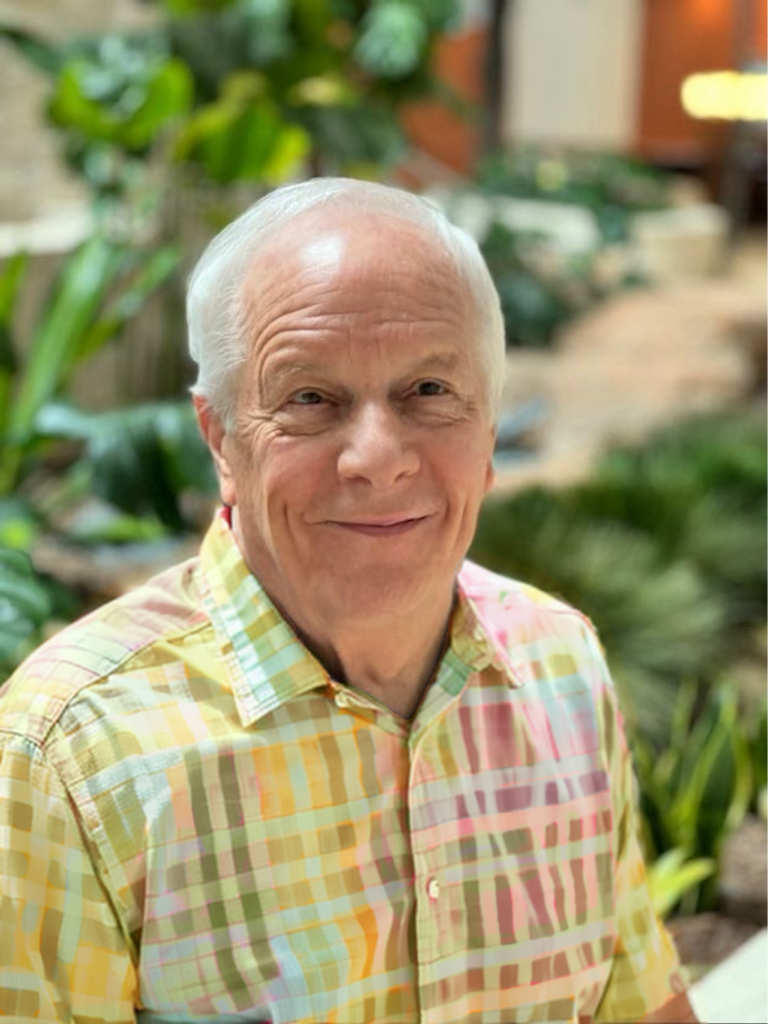


Composing Change: Ken Medema’s Journey from Concerts to Justice Through Music
In this uplifting episode of the "To Be and Do" podcast, host Phil Amerson welcomes renowned composer, performer, and all-around creative force Ken Medema for a conversation brimming with humor, heart, and musical insight. From the outset, it's clear that their friendship is built on decades of camaraderie and good-natured ribbing, instantly putting listeners at ease and drawing them into an authentic dialogue.
The episode begins with Phil Amerson highlighting the many hats worn by Ken Medema—artist, composer, performer, and advocate for justice. Ken Medema describes his multifaceted work, from performing concerts in churches and fundraising for nonprofits, to nurturing a unique house church for Broadway entertainers who have felt alienated by traditional church environments. Through his Interlude foundation, Ken Medema not only brings music to diverse communities, but also creates spaces of belonging and support, especially for artists who often find themselves on the fringes.
A touching centerpiece of this episode comes when Phil Amerson shares an experience involving a homeless woman on a cold Midwestern morning and the simple but profound offer of a cup of coffee from a stranger. Ken Medema, with his signature improvisational brilliance, turns this story into a heartfelt song, capturing the human longing to be seen and the transformative power of small acts of kindness.
Throughout their conversation, Ken Medema and Phil Amerson reflect on the importance of community and interdependence, especially through music. They discuss the unique, holy moments shared by choir members breathing in unison before singing—a metaphor for working together towards something none could achieve alone. Ken Medema expresses his passion for choirs, both in church and the wider community, noting how these gatherings foster support and leadership beyond their musical contributions.
Key Takeaways:
- Small Acts, Big Impact: Simple gestures—like offering coffee to someone in need—carry profound meaning and are opportunities for connection and compassion.
- Music as Community: Choirs and communal singing create deep bonds, offering not just harmony in music but also support and togetherness, especially important as church choirs wane and community choirs rise.
- Inclusive Spiritual Spaces:
- Ken Medema
- 's work with the Interlude foundation shows the power of creating alternative spiritual communities where everyone, especially those who feel marginalized, can belong.
- The Power of Story and Song:
- Ken Medema
- demonstrates how stories, when set to music, can help us see one another more clearly and honor the sacredness in everyday encounters.
Listeners are left inspired by the gentle wisdom and creative spirit that define both this episode and the enduring friendship at its core.
Phil Amerson [00:00:02]:
Well, good morning again, or good day, wherever you are. It's great to have you with us. This is Philip Amerson with To Be and Do Podcast. And this is a video, a record, audio recording I have been looking forward to for, well, quite a while. We're delighted to have my friend Ken Medema with us. I've known Ken for three months, but it feels like 50 years. Wait a minute.
Ken Medema [00:00:33]:
Yeah, right.
Phil Amerson [00:00:34]:
I've known Ken for 50 years, but it feels like three months.
Ken Medema [00:00:40]:
I love it, Philip.
Phil Amerson [00:00:41]:
Those of you who. Those of you who are listening, tuning in need to know that Ken and I have been known to tease one another. So.
Phil Amerson [00:00:52]:
If we get. If we get too silly, we. Well, just join us.
Phil Amerson [00:01:00]:
Ken, for those, for the few.
Phil Amerson [00:01:05]:
That maybe have never heard of Ken Mittema, he is a remarkable artist, composer, recording artist, performer.
Phil Amerson [00:01:18]:
He's a Renaissance man. I think he started in the 14th, 15th century.
Ken Medema [00:01:27]:
Yeah, I've slept since then.
Phil Amerson [00:01:32]:
A true rip. Band me to my story.
Phil Amerson [00:01:37]:
Ken, tell us a little bit about what you're doing these days. I could try, but among all the. Not only your performance, but you're working with Broadway entertainers, you're working with church musicians, you're working with pastors, you're working with. Tell us about what's going on in your.
Ken Medema [00:01:56]:
Well, there's a whole lot of stuff going on. Number one, I'm a composer and performer, so I'm doing a lot of concerts in churches, in colleges, concerts that are fundraisers for nonprofits.
Ken Medema [00:02:16]:
Because we have a little foundation called Interlude that allows me to do that. In the past, I've worked for people like American Cancer Society and people like that. Right now I'm doing a lot of concerts for organizations that are doing justice work and mission work of various kinds, like in places like Kenya and Zambia. So there's a lot of conflicts. Concert work, whether it's in a. In a big church. I was just recently in a big Presbyterian church outside in Memphis. I'm going to be.
Ken Medema [00:02:53]:
Re. Soon enough. I'm going to be in a big choir concert with 300 singers. So it's a lot of that stuff. And then.
Ken Medema [00:03:03]:
My little foundation, it's called Interlude, and we, we do several things, one of which is. My little foundation, it's called Interlude, and we, we do several things, one of which is.
Ken Medema [00:03:12]:
A kind of a house church for Broadway entertainers, actors, musicians, dancers, whatever. These are people who, many of them don't go to church or can't get to church or have been alienated by church, who have been cast out because they're too strange. A kind of a house church for Broadway entertainers, actors, musicians, dancers, whatever. These are people who, many of them don't go to church or can't get to church or have been alienated by church, who have been cast out because they're too strange.
Ken Medema [00:03:37]:
But, but.
Ken Medema [00:03:37]:
So we meet in a living room, a big old living room on West 82nd that some friends of ours have. And we usually have 30 or 35 people. And we tell stories, we sing to each other, we hold each other in love.
Ken Medema [00:03:56]:
I recently had one of our friends who said, you know, all my life I've been like an atheist, but heck, if church is going to feel like this, maybe I should give it a shot.
Ken Medema [00:04:09]:
And so.
Ken Medema [00:04:11]:
That thing has been ongoing for a while and usually when I'm in New York, then we also make a stop at the Bowery Rescue Mission and sing for the people who are being fed and who are homeless and being helped by the mission.
Ken Medema [00:04:30]:
Another thing I'm in the middle of is some retreats for church musicians who, many of whom are overworked, underpaid, have cantankerous pastors to work with. Yeah. Like Amerson.
Phil Amerson [00:04:48]:
You got me.
Ken Medema [00:04:49]:
Yeah. And we do a free of charge retreat in the Sower, a three day retreat. And we usually, we do two retreats. We usually have about, oh, 30 people at these gatherings. And it's a time to talk, share, relax, rest and renew.
Ken Medema [00:05:10]:
So these are plus one more thing. I'm writing a lot of new choral music now that's kind of exciting and most of it is not necessarily church stuff, but it's, it's a lot of justice stuff. We just, we just wrote a song called.
Ken Medema [00:05:34]:
What'S the Elegy? Elegy for a Glacier about the first Icelandic glacier to die. Oh, wow. We wrote, we set to, we set to music.
Ken Medema [00:05:47]:
Some of the dissent that was written by Justice Sotomayor when the Supreme Court made that really gave Trump a lot of immunity last, what, last year and Sotomayor wrote this dissent. We set part of that to music. We just finished a song by a wonderful black American poet who is the immediate past poet laureate of Rock Hill, South Carolina, a piece called Cry Yourself a Freedom Song. So a lot of that kind of work I'm doing right now, so I'm, I'm kind of keeping busy.
Phil Amerson [00:06:31]:
Wow. Indeed. Well, and you're some, I don't know that I've shared with our audience, but you're going to help me kick off a time with pastors from inner city and rural settings.
Phil Amerson [00:06:45]:
Many of them don't have many resources and we're going to do a retreat and we're learning from you and what you have been doing through interlude and other places. We're doing that next April.
Ken Medema [00:06:57]:
Next April. I'm really excited about it because I think it's going to be, this will be a model and if this works, the way we think it will, then we want to do a lot of these here and there.
Phil Amerson [00:07:10]:
Wow. So I met you, I think it was 1976 or 7, at Asbury Theological Seminary. And they said, we want you to speak. And after that, we've got a gospel music singer that's going.
Phil Amerson [00:07:29]:
And I thought, oh, great, that's all I need. So I did my little sermon lecture, whatever it was, and I thought, oh, no, here comes the gospel music guy. And you went to the piano, and within three minutes, the front of my shirt was wet. I was weeping because you had taken my puny little sermon and turned it into a symphony of meaning. It was just a great experience.
Ken Medema [00:07:59]:
Now, people, let me just tell you, let me in on a little secret.
Ken Medema [00:08:04]:
Don't tell him I said this, but his sermon was number one, not puny, and number two, it was really quite beautiful.
Phil Amerson [00:08:13]:
Well, you're kind. Well, I'm going to put you on the spot, Mr. Minama.
Ken Medema [00:08:17]:
All right.
Phil Amerson [00:08:19]:
So I want to tell you a story that happened to me just two days ago. I walked from my apartment, my condo, and we're like many college towns across the country, but especially in the Midwest, like Ann Arbor and Madison and.
Phil Amerson [00:08:40]:
Urbana, there's a Main street where there are a lot of restaurants. So I was walking to meet a friend from breakfast. And as I went by, there was a woman curled up in the doorway of a barber shop. And she had slept there, and she'd been sleeping on the streets for several nights. I knew her. We'll call. I won't give you her real name, but we'll call her Emma. And Emma was asleep when I.
Phil Amerson [00:09:06]:
When I walked by. And then I had breakfast with a friend and walking home back to my apartment, I saw Emma up. I knew she was struggling with some mental illness, and she was walking in circles, and her blankets were tossed over away from the door. And there was a man there. And I thought, oh, no, this gentleman is hassling Emma who lives on the streets. But as I got closer, I heard him, as he was turning to go in the Exchange, say to her, would you like coffee or hot chocolate?
Phil Amerson [00:09:43]:
And my heart just melted. And. And I thought of, you know, those passages in Mark 9 and Matthew 10. If you give a cup, even a cup of water, it's not just a. Even a cup of water. Could be a gallon, even a cup of water in my name. I'll be with you. And I thought people living on the street in cold Midwestern weather right now, I think to ask if they would like coffee or hot Chocolate speaks volumes.
Phil Amerson [00:10:18]:
So I give it to you, sir.
Ken Medema [00:10:36]:
All the people walk by one after another. All the people walk by and they never do notice. All the people walk by and still I stand here in my confusion, frightened and wondering. Other people walk by, they've got so much to do. All the people walk by and they won't notice me. And the people walk by. And that's when I saw you standing.
Ken Medema [00:11:10]:
There.
Ken Medema [00:11:13]:
Just about to go inside. And I thought to myself, one more people who just walks by.
Ken Medema [00:11:24]:
One more people, people who won't notice me. One more people will go inside and you'll get his breath and you'll walk out happy. And you'll never know that I was never know that I was never know that I was here.
Ken Medema [00:11:48]:
And that was the moment I did not expect.
Ken Medema [00:11:53]:
That was the moment that you turned to me. That was the moment when you looked in my eyes. Looked in my eyes and you noticed me. Oh my God, you noticed me.
Ken Medema [00:12:13]:
That was the moment when you opened your mouth open. You said to me, would you like coffee or hot Chocolate? I could not believe you were talking to me. And I said, coffee, please.
Ken Medema [00:12:30]:
That was the moment you walked inside and you came outside with that cup of coffee. And I swear to you, I've never had a better cup of coffee. Oh, my life.
Phil Amerson [00:12:52]:
Thank you.
Phil Amerson [00:12:56]:
Thank you. I've always been amazed at the gifts that you bring, even for someone from Grand Rapids, you know, it's.
Phil Amerson [00:13:09]:
Rascal. You.
Phil Amerson [00:13:13]:
Oh, I thought. I thought if you grew up in Calvinist country, you only learned six hymns and sang those over and over again.
Ken Medema [00:13:20]:
Yeah, and. And another thing you learn is you're never supposed to enjoy anything.
Ken Medema [00:13:28]:
You. You heard the story about. About the girl from Grand Rapids who came to Duke.
Phil Amerson [00:13:34]:
No, she was.
Ken Medema [00:13:34]:
She was. Oh, she was talking to Dean Williman when he was still the dean there, the dean of the chapel. And she said, you know, Dr. Willamet, I just am not happy here. And I don't know what's wrong, but I just feel like something is missing. And Dr. Willamette said, well, little lady, where'd you come from? She said, well, I'm from Grand Rapids. He said, ah, that's the problem, you see.
Ken Medema [00:14:05]:
You're not getting enough. Total depravity. Because we kind of think you're getting better day by day.
Phil Amerson [00:14:18]:
So we caught you. We're recording this the day before Halloween.
Ken Medema [00:14:25]:
That's right. That's right. So.
Ken Medema [00:14:29]:
Go ahead. Actually, I'm going to. I leave tomorrow for Michigan. I'm going to be in the town of Holland, Michigan, there's a choral festival. I have a friend who's an organist who lost his arm in a terrible auto accident several years ago. And one of the things he's done is to start a foundation. And he does these huge choral festivals all over the country. We've done them in Los Angeles, we've done them up in Maine, all kinds of places.
Ken Medema [00:15:01]:
We're doing a choral festival in Holland, Michigan, and there's a choir of 300 singers. I can't believe it.
Ken Medema [00:15:10]:
Is performing a few of my pieces. And I'm going to get to go there and do some solos and be a part of that, which will be really, really fun.
Phil Amerson [00:15:21]:
Well, that's great.
Ken Medema [00:15:23]:
And then after that, we go to Dallas, where a church is doing a choral Exchange. A choir festival, and two choirs are coming together in Dallas. So it's just, you know, one thing after another. It's just all fun.
Phil Amerson [00:15:39]:
So I want to tell you something I read recently, and I thought of you. And it. It has stayed with me, especially around this podcast. And our emphasis is interconnection, not independence, but interdependence. And the linkage, by the way, that passage in Matthew begins with.
Phil Amerson [00:16:03]:
The followers, the apostles, the disciples, all being linked together. But here was what I read. It talked about the two holy moments when a choir is together.
Phil Amerson [00:16:19]:
Are singing. One is that one wonderful holy moment when they all take a breath together just before they sing.
Ken Medema [00:16:29]:
Yes.
Phil Amerson [00:16:30]:
And it's like that's the time when they're aware they're going to make something beautiful together.
Phil Amerson [00:16:39]:
And the other holy moment is when they have finished the music and they can breathe in the knowing that together with others, they did something they could not have done alone.
Ken Medema [00:16:55]:
And there's that wonderful silence at the very end just before the audience begins to clap. Wonderful silence when the choir is like.
Ken Medema [00:17:06]:
Wow, we did this. We did this.
Ken Medema [00:17:10]:
That's one of the reasons I'm so hot on choirs. And as churches are losing choirs, communities are taking up the mantle. Community choirs are. Are going, getting, growing like crazy. People want to sing. They want to sing, and they want the community that arises from singing.
Ken Medema [00:17:35]:
They want to be.
Phil Amerson [00:17:36]:
I'm beginning to see more and more of that in communities and also in churches that are going back to choirs. Yep, it's. I won't mention the name of the church, but we have one in our area that had given up on choirs entirely. And now I'm watching every Sunday as they've gone from seven or eight people to 15 or 16 people, 30 to 35 people. All singing together and they sing, you know, old traditional things mostly. But I've been watching as the choral director, who understands what she is doing, begins to introduce them to new music.
Phil Amerson [00:18:23]:
Little by little.
Ken Medema [00:18:24]:
Yeah, that's, that's exciting to me because what I've always said to choirs when I go, when I meet with them.
Ken Medema [00:18:35]:
Is you become, you become a support group. And you are leading the church not just by doing music, but the rapport between you, the way you interact with each other. That is a leadership thing, too.
Phil Amerson [00:18:52]:
Yeah. Well, this has been terrific, Ken. I wish we. Well, we will. We're going to do another recording. This is ken Mitima, my what, 3 month old, 50 year old.
Phil Amerson [00:19:11]:
And Philip Amerson for the Belonging Exchange, the BE&DE podcast. Thank you, Ken. Me out.


